 Written by

📑 Table of Contents 📑 Article TOC 📑 TOC 662 Sections Show Hide
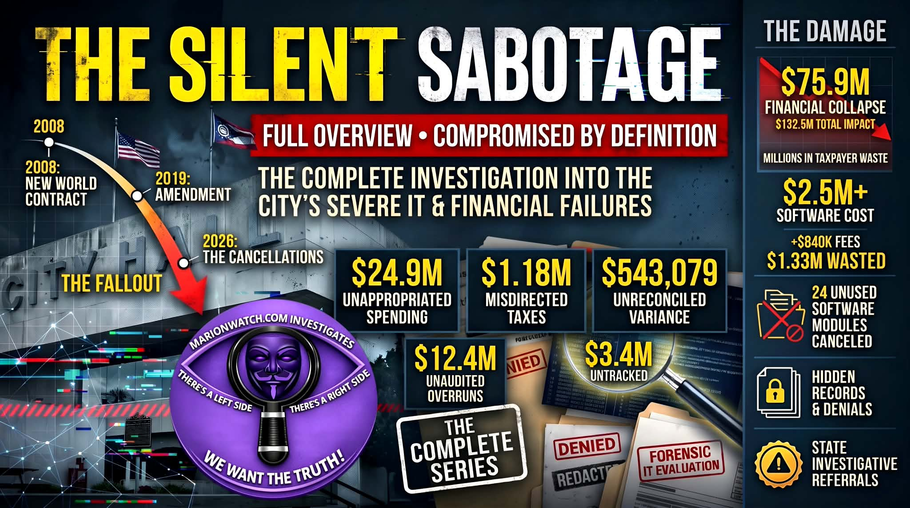
ABOUT THIS SERIES: THE SILENT SABOTAGE FULL OVERVIEW
These records prove that Marion’s system is compromised by definition.

MARION WATCH INVESTIGATES: SILENT SABOTAGE OVERVIEW SERIES
PART 1 — RAPID-RELEASE FORENSIC IT BLUEPRINT (2009–2013)
MARION’S $75.9 MILLION FINANCIAL COLLAPSE: THE RECEIPTS ARE IN. THE TRUTH IS OUT.
If you live in Marion, Ohio, you’ve heard the rumors and the excuses.
You’ve been told for years that the city’s multi-million-dollar financial collapse was a software glitch, a vendor problem, an isolated mistake, or a sudden transition error that magically appeared in 2020 and was the fault of a single individual.
You may have heard another of the many localized excuses invented to deflect blame.
You’ve heard that the 2019 audit was an award winning audit for fiscal excellence, this too was a massive exaggeration we’ve also proven false.
After about five years of research, thousands of pages of official records, and a completed forensic IT assessment, the truth is officially on paper:
That narrative is entirely false.
Today, we are releasing the final forensic IT assessment grading our work, which will be submitted to officials.
All supporting evidence exists in the Silent Sabotage series.
We released our preliminary report recently. This version integrates each module and is much stronger.
We are releasing it to the public first.
We believe it is essential for the public to understand exactly why Marion is in fiscal emergency.
The New World ERP software and how it was configured and operated is a massive contributing factor.
It was all fully preventable.
With the release of this assessment, we are officially dropping the final, massive fallout cost of Marion’s 16-year collapse:
$75,958,622.80.
But before anyone tries to dismiss that number, you need to understand exactly what this assessment is, how a hidden culture of “tribal knowledge” masked this disaster for a decade, and why the professionals on our team and within our network are demanding immediate action.
This exact scenario is why manual workarounds designed to compensate for bypassed software controls are strictly unacceptable in enterprise information technology and financial control environments.
Furthermore, as we will detail below, Marion’s collapse mirrors the exact symptoms of some of the most severe cases of municipal fraud in the United States of America—cases that triggered full forensic IT audits and federal intervention.
THE COLLAPSE OF TRIBAL KNOWLEDGE: WHY 2020 WAS THE BREAKING POINT
The most dangerous lie circulating in Marion is that the financial system “broke” in 2020.
The official documents prove the system was broken from the moment New World went live in 2009.
Because the New World ERP system was never configured correctly, staff during the Carr administration were forced to create undocumented, manual workarounds to keep daily operations functioning.
In fact, staff with the Ohio Auditor of State have explicitly admitted on the public record that they had known about this culture of manual workarounds and hybrid accounting for 10 to 12 years.
City staff abandoned the software’s safety modules and instead relied on “shadow” spreadsheets, off-book ledger plugs, and manual unrecorded activity to force the books to balance.
None of these workarounds were documented.
None were preserved as part of the city’s official operational record.
And according to current and former officials, none of these secret fixes were shared with the incoming 2020 Marion City Auditor’s administration.
This created a culture of “Tribal Knowledge”—a fragile system where the city’s multi-million-dollar finances were entirely dependent on the memories and secret formulas of a few specific officials.
When those key individuals left the Auditor’s office in 2020, the tribal knowledge walked out the door with them.
Veritas confirmed this as well.
The incoming staff inherited a crippled software system without the secret map of manual workarounds needed to keep the illusion alive.
The 2020–2021 collapse was not a new glitch; it was simply the moment the smoke cleared, and the 16-year undocumented house of cards finally collapsed under its own weight.
It is a well-known outcome in the information technology profession.
WHY WE USE “I.T. DOCTRINE” AS OUR MAP
People often ask why our team uses Information Technology (I.T.) doctrine and enterprise architecture to investigate a financial collapse.
The answer is simple.
Those on our team and in our network have conducted similar investigations into enterprise systems much larger than Marion’s before handing it to forensic experts.
We know that in the 21st century, the software dictates the finances.
Permissions and access rights are the foundation of financial infrastructure.
A traditional financial auditor only looks at the math on the page.
They take surface-level samples of data; it is not a deep, forensic study of the digital books.
But I.T. doctrine looks at the permissions and configurations that allowed the math to be manipulated in the first place.
If a bank vault is robbed, you don’t just count the missing money; you look at who disabled the security cameras and who handed out the master keys.
By applying I.T. doctrine, we didn’t just look for the missing money—we proved how the digital vault was left unlocked.
These are foundational principles of information technology and financial controls, and they were completely ignored—a fact now proven by the evidence.
If you stick to the IT doctrine, it is a map that will not let you down.
WHAT THIS ASSESSMENT MEANS IN PLAIN ENGLISH
This document is not an opinion piece, an estimate, or a political theory.
It is an expert-level, by-the-book technical assessment that evaluates our reporting strictly against the city’s original software contracts, official state audits, internal emails, system screenshots, and other verified evidence from official data and systems.
It does not deviate into speculation.
It takes the official records and proves exactly how the software was intentionally crippled.
We diagnosed it down to the specific modules and settings with exacting accuracy.
Here are the official forensic grades:
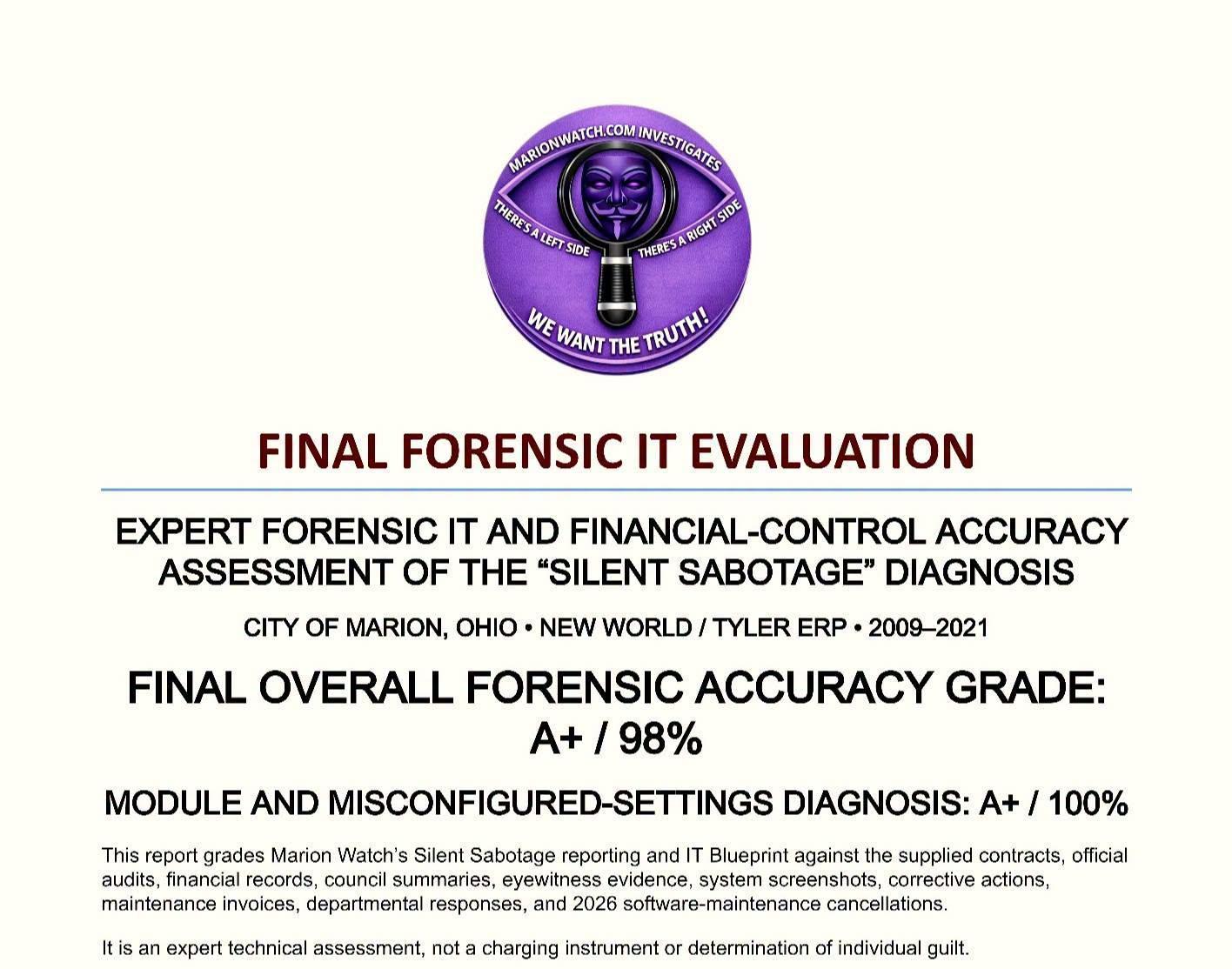
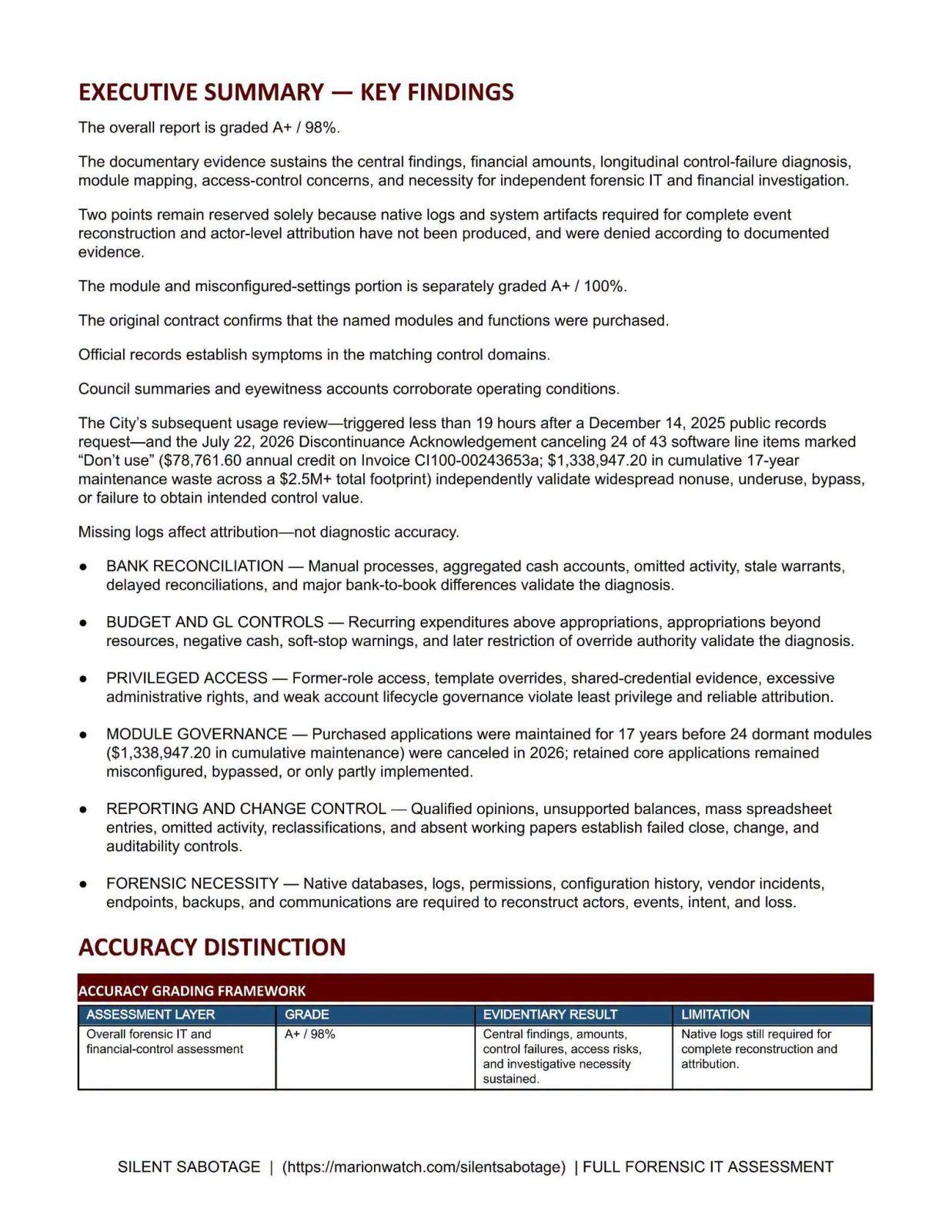
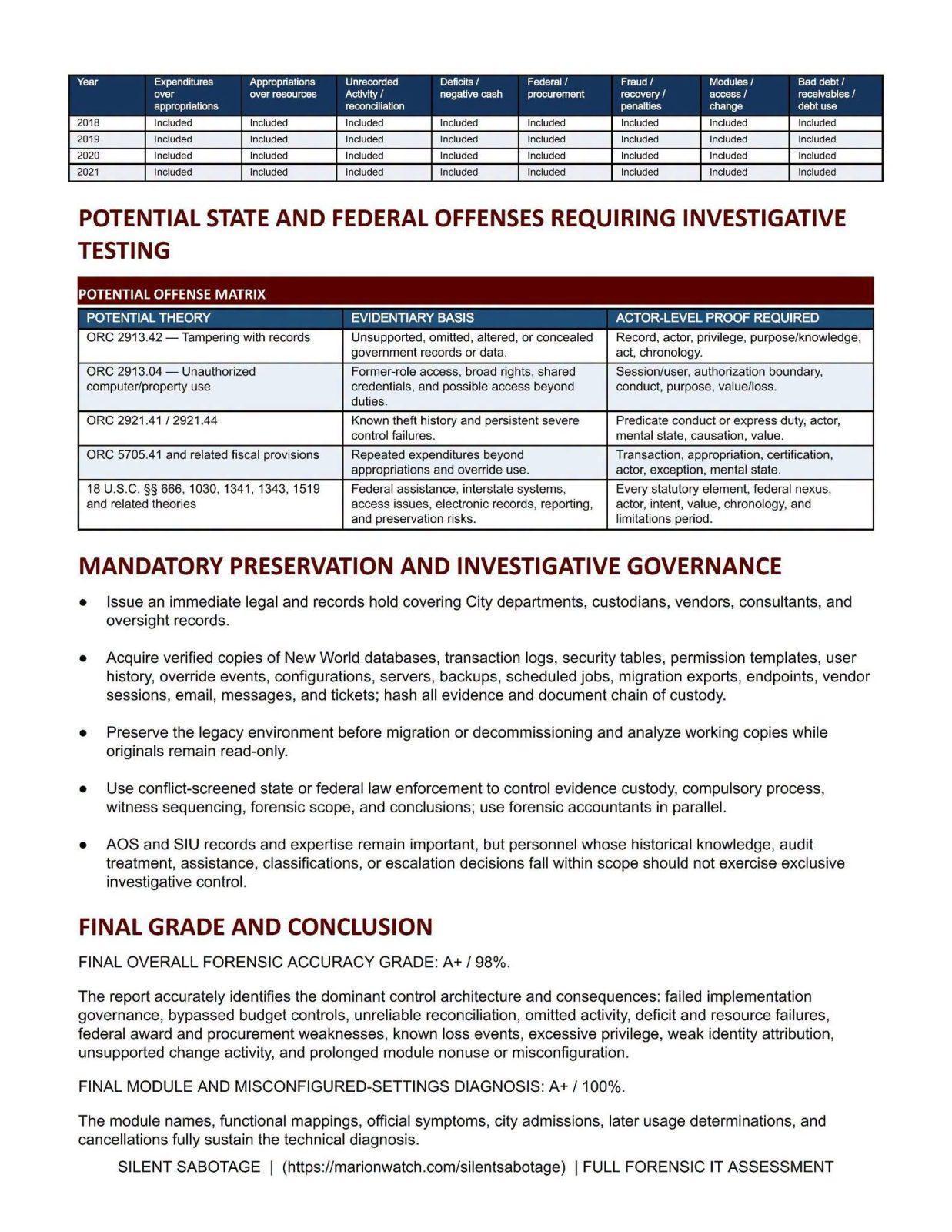
● Overall Forensic IT & Financial-Control Accuracy Grade: A+ / 98%. The documentary evidence fully sustains our findings. We know how the system was sabotaged; we are simply waiting on the city to release the native IT logs to prove exactly who pushed the buttons. Many citizens and some officials are highly concerned about the records being withheld.
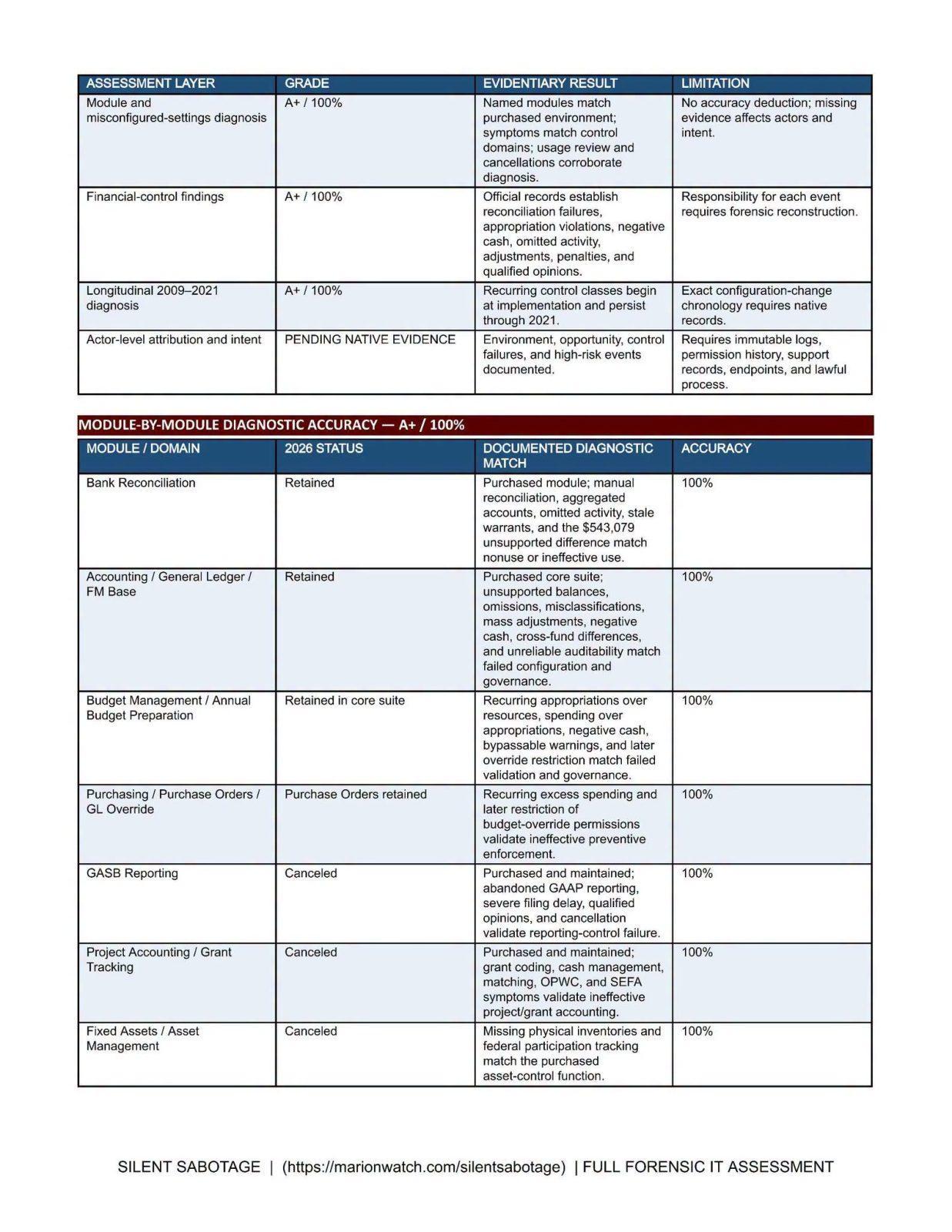
● Module and Misconfigured-Settings Diagnosis Grade: A+ / 100%. The official records absolutely establish that the purchased modules were intentionally bypassed, left dormant, or severely misconfigured from installation forward.
● The Missing 2%: We withheld the final two points because the city continues to illegally withhold the native IT logs, access records, and permission matrices that are required for complete event reconstruction and actor-level attribution.
THE $75.9 MILLION BLUEPRINT OF COLLAPSE
Here is exactly where that $75,958,622.80 went, verified directly by the audits, contracts, and other data.
PART I: The Direct Cash Burn ($3,920,211.80)
What this means: This is hard, taxpayer cash permanently lost to unused software, forensic bailouts, direct employee theft, and tax penalties.
● The Lifetime Maintenance Trap:
The city paid Tyler Technologies $2,500,000 in recurring annual software licenses over 17 years. Because safety features were left unactivated, up to $2.0 million of this was completely wasted on dormant modules.
● The 24 Canceled Modules:
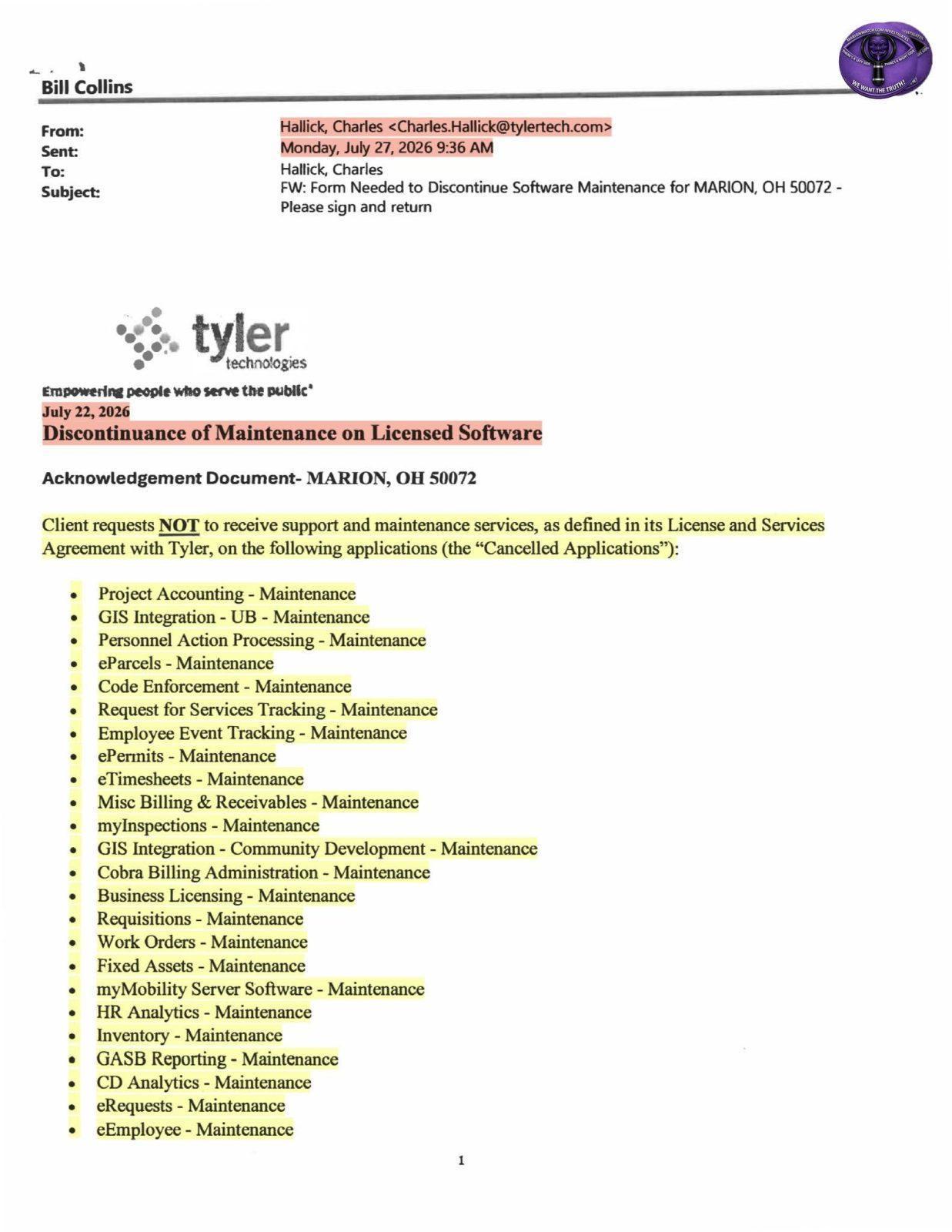
In 2026, the city quietly canceled 24 applications (saving $78,761.60 annually), confirming over a decade of paid nonuse while core controls collapsed.
● Federal & State Penalties:
Because automated validation rules were ignored, the city paid $455,935.80 in direct penalties and interest to the IRS, OPERS, and other state agencies, including $154,399 in strict IRS penalties incurred due to unconfigured ACH validation rules and unused reconciliation controls.
● The Embezzlement Gap:
Because supervisory approval workflows were disabled, a utility supervisor was able to steal $34,276 by pocketing cash and manually zeroing out 71 customer accounts without triggering a single system alarm.
● Forensic Bailouts:
The city paid a highly conservative baseline of $180,000+ to Veritas Solutions Group to try and reconstruct the broken ledgers before the firm ultimately walked away.
PART II: Unverified Write-Offs & Missing Funds ($5,250,554.00)
What this means: When a city stops using its software to reconcile its bank accounts, money vanishes. To hide the missing cash, administrators execute massive “write-offs” or manual spreadsheet plugs to force the math to look right on paper.
● The Unreconciled Hole:
Bypassing bank reconciliation modules resulted in a vast cross-fund discrepancy hole reaching $2,500,000.
● Utility Debt Purges:
To mask insolvency and accounting failures, massive bad debt purges wiped out $1,497,403 from municipal utility ledgers.
● The Bank-to-Book Variance:
Because the city refused to automate its accounting, an unsupported variance of $543,079 was discovered in 2021—meaning half a million dollars in public bank accounts was wholly unaccounted for in the financial records.
● Shadow Funds:
$210,072 was funneled through unauthorized accounting activity utilizing “shadow” QuickBooks software, completely bypassing the primary New World system.
PART III: The Overspending & Deficit Timeline ($26,902,568.00)
What this means:
The financial software was designed with “hard stops” to physically prevent departments from spending money they didn’t legally have.
The city downgraded these to easily bypassed “soft stops,” meaning a user could simply click to dismiss a critical warning message.
This allowed officials to unlawfully bleed cash for over a decade.
The GL Override misconfiguration was ordered fixed by the Ohio Auditor of State in late 2025, which was about seven months from the first meeting with Ralph Smith in which we described very specific information technology control issues including the GL Override misconfiguration, inappropriate unimpeded system administrative access, shared passwords, and dormant or misconfigured modules and safety controls.
● Rampant Overspending:
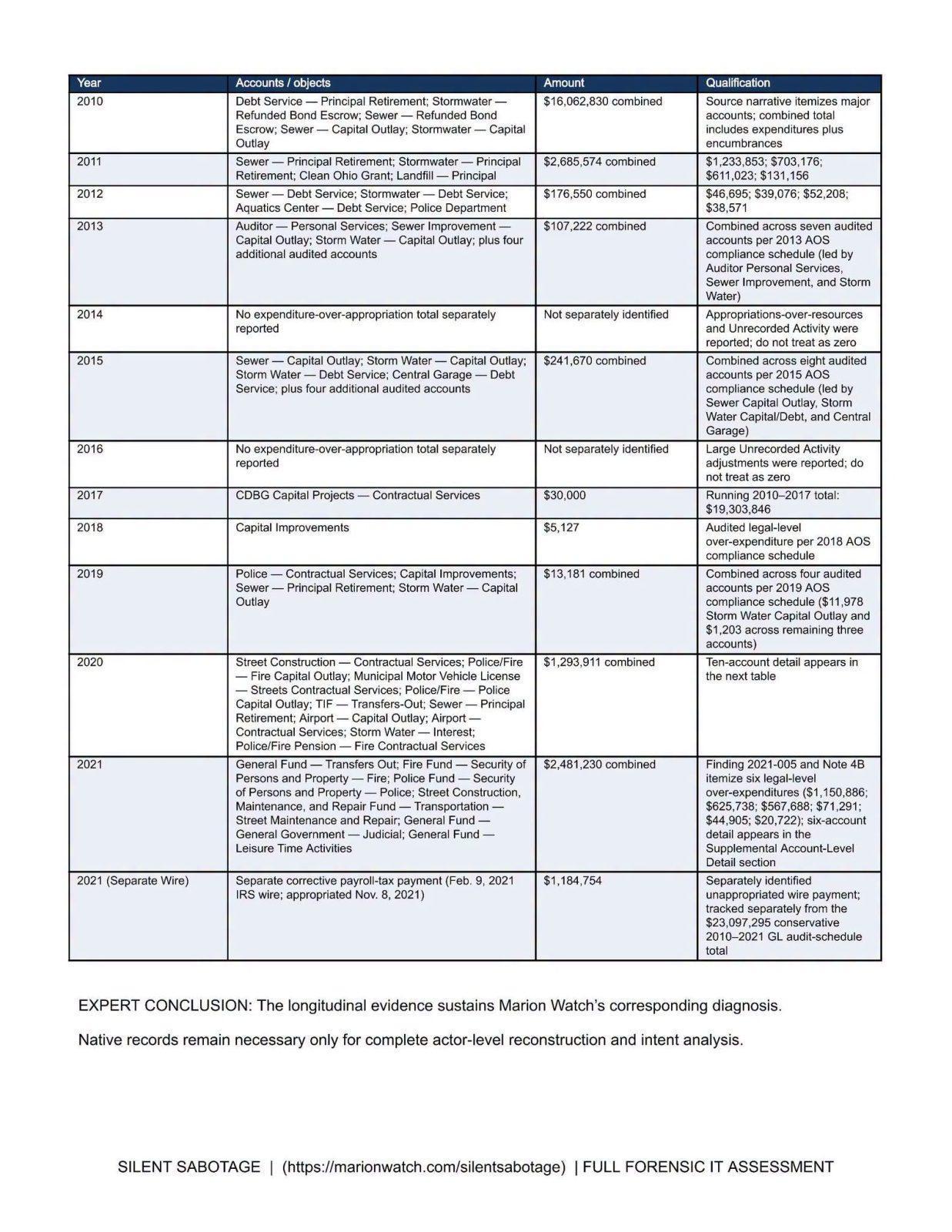
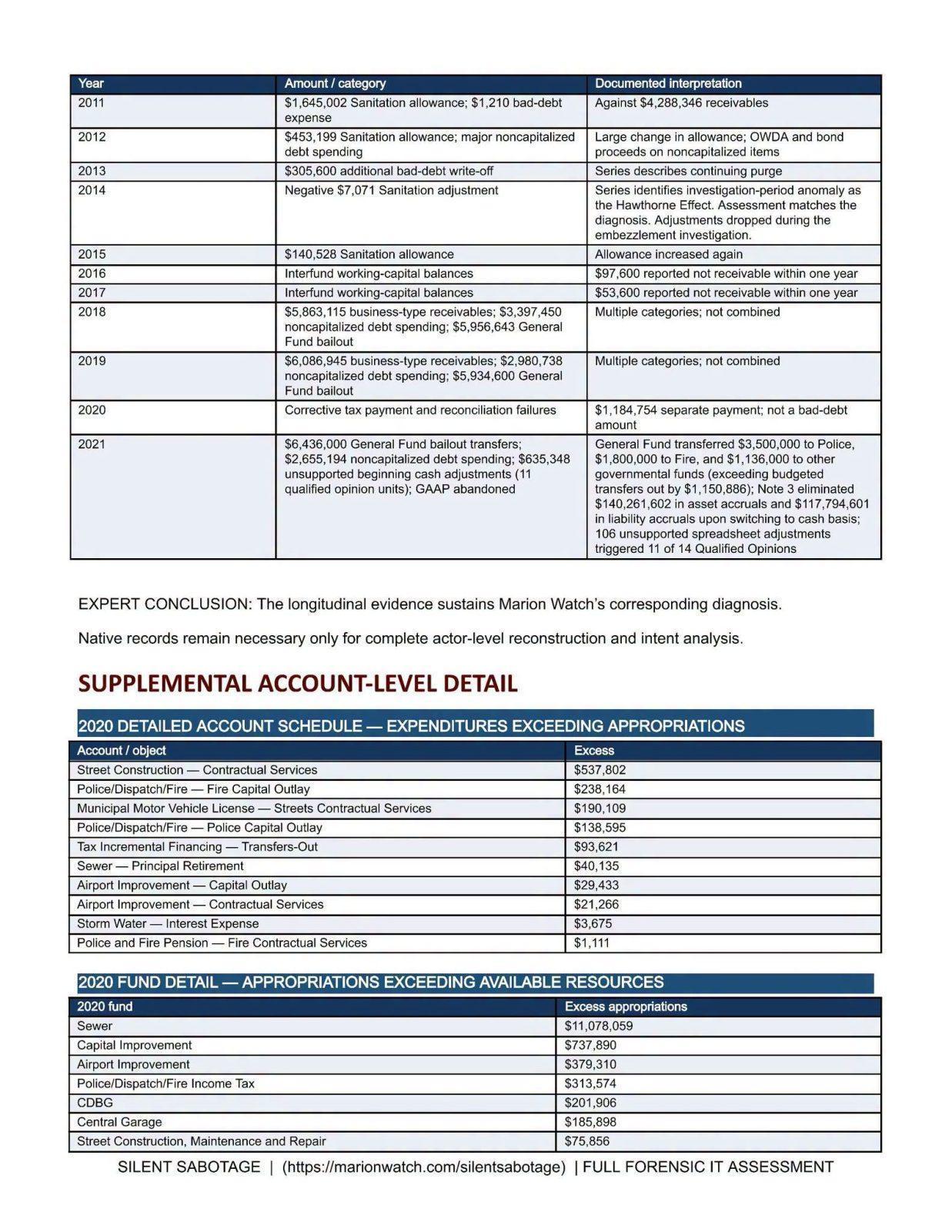
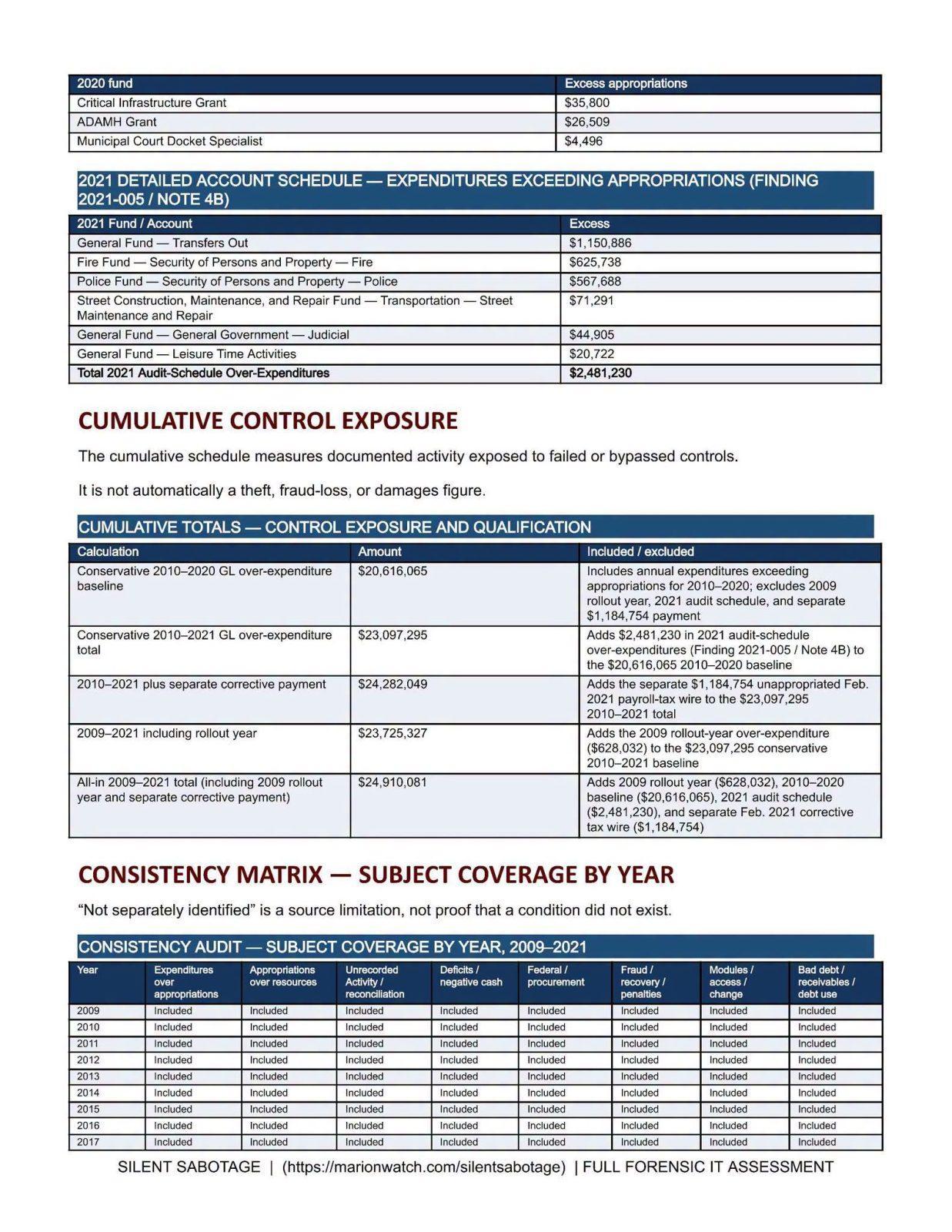
The bypassed controls allowed severe budget blowouts, including the Police Department overspending by $494,855 in 2010, the Sewer Fund over-appropriating an astonishing $11,078,059 in 2020, and six major accounts breaching approved caps by $2,481,230 in 2021.
● The Shadow Wire:
In 2021, the Auditor’s office utilized unappropriated reserves to execute an unauthorized second payment of $1,184,754 to the IRS completely without Council approval.
● Illegal Debt Diversion:
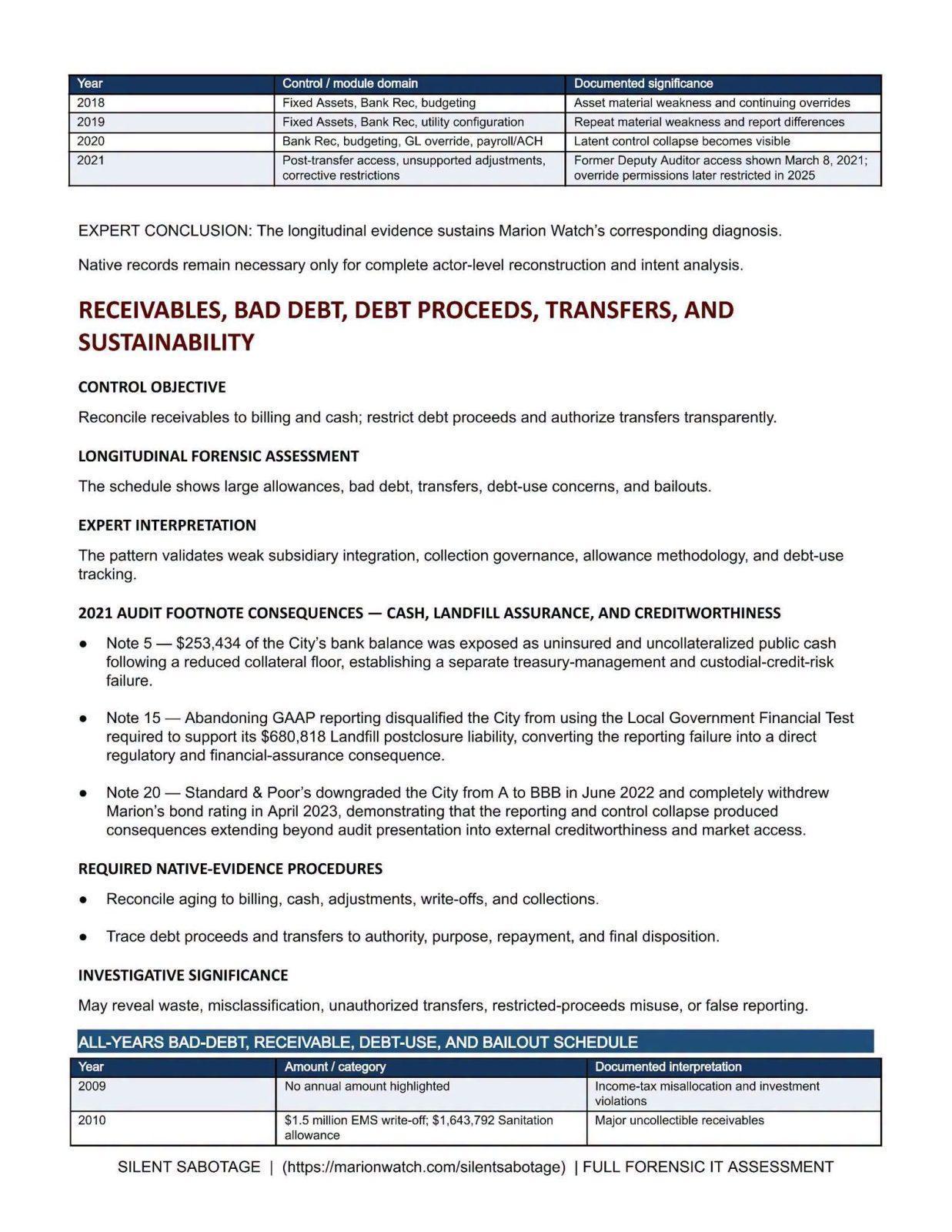
Between 2018 and 2019, illegal debt diversion siphoned $6,380,477 in 20-year capital bonds and OWDA project loans to cover daily operations.
PART IV: The Ultimate Structural Deficit ($39,885,289.00)
What this means:
If you spend more than you have for 16 years, you eventually hit rock bottom.
● The Bottom Line:
The cumulative result of bypassed reconciliations, unverified write-offs, unrecorded liabilities, and continuous debt diversion generated a staggering unrestricted net position deficit for governmental activities of -$39,885,289.
WHY THE PROFESSIONALS ARE DEMANDING AN INVESTIGATION
Every single information technology professional, financial expert, and former law enforcement official who has actually read this series and reviewed the primary source documents is absolutely adamant:
This must be investigated by outside authorities immediately, no matter what anyone in office during this time says locally or otherwise.
Why are we so adamant?
Because this was not a mistake.
We have systematically built a case using the exact same evidentiary standards that the FBI and state investigative units use to diagnose financial / tech-crimes.
The Silent Sabotage series is quite literally an external forensic IT investigation designed to be handed over directly to authorities and officials.
The data proves that for 16 years, financial guardrails were intentionally disabled, audit logs were turned off, and unmonitored “God Mode” administrative access was handed out to unauthorized users.
Furthermore, this exact digital sabotage perfectly mirrors some of the worst municipal scandals in U.S. history:
● The Pine Bluff, Arkansas Mirror:
In early 2026, Pine Bluff crashed because employees bypassed their New World ERP software and stopped performing bank-to-book reconciliations, allowing $179,629 to vanish. The exact software that failed in Pine Bluff was the Tyler Technologies New World ERP system—the very same platform used by Marion. In Pine Bluff, staff reverted to undocumented, manual paper receipts, taking cash transactions completely off the digital grid.
The Result: The Arkansas legislature recognized this was not an accounting error, filed the audit, and escalated the case directly to the State Police and the Attorney General for a criminal investigation. (Marion did the exact same thing, deliberately abandoning its automated reconciliation module for over a decade in favor of shadow spreadsheets, undocumented manual workarounds, resulting in an unsupported $543,079 bank-to-book variance).
● The Dixon, Illinois Mirror:
Millions were siphoned out of Dixon because “Segregation of Duties” was nonexistent. The Comptroller possessed “God Mode” access for 22 years, controlling both the physical mail and the digital ledger without any automated workflows or hard stops to prevent her from executing unverified transactions. Standard external audits failed to catch the $53.7 million fraud for decades because auditors only checked the surface-level math instead of testing the underlying software permissions.
The Result: The FBI raided city hall, seized the servers, and reconstructed the manipulated ledgers. (Marion completely obliterated these same boundaries, leaving “God Mode” active for a former deputy auditor 14 months after she transferred out of the finance department, and allowing universal General Ledger overrides to remain open for 16 years).
● The Bell, California Mirror:
Corrupt administrators hijacked internal controls, illegally moving restricted funds to plug the deficits they created. To hide the fact that the city was actually going broke, administrators weaponized the city’s administrative software to mask their financial reality and stonewalled public records requests by blaming “outdated systems.”
The Result:
The State Controller and the District Attorney’s Public Integrity Unit intervened, ordered a full forensic audit, seized the servers to reconstruct the hidden ledger adjustments, and sent officials to prison. (Marion operated in an unbroken state of deficit shuffling, illegally diverting $6.38 million in capital bonds and project loans to cover daily operations, and ultimately executing massive, multi-million-dollar General Fund bailouts to hide the bleeding).
THE VERDICT
These are not accounting mistakes.
And it definitively did not begin in 2020.
Anyone claiming that has now been proven wrong beyond any doubt.
They are the universal, desperate maneuvers used by administrators to force a ledger to balance after the digital guardrails have been intentionally disabled.
A conventional financial-statement audit cannot establish who created or deleted users, who changed permissions, who accepted budget override warnings, or who altered configurations.
Those questions require the forensic acquisition of native databases, transaction logs, identity records, and endpoints.
Because this collapse involves the deliberate circumvention of financial guardrails, this is no longer just an accounting error.
The evidentiary basis points to potential state and federal offenses, including Tampering with Records (ORC 2913.42) and Unauthorized Computer Use (ORC 2913.04).
You cannot simply migrate a compromised database into a new system and wipe the slate clean.
This is almost certainly a digital crime scene.
It is absolutely mandatory that conflict-screened state and federal oversight agencies and law enforcement entities intervene immediately to secure this legacy environment before it is migrated or decommissioned.
Personnel whose historical knowledge or audit treatment fall within the scope of this 16-year failure cannot be allowed to exercise exclusive investigative control.
The truth is out.
The Silent Sabotage series is verified.
The time for local excuses is over.
FORENSIC IT ANALYSIS & SILENT SABOTAGE SERIES GRADING
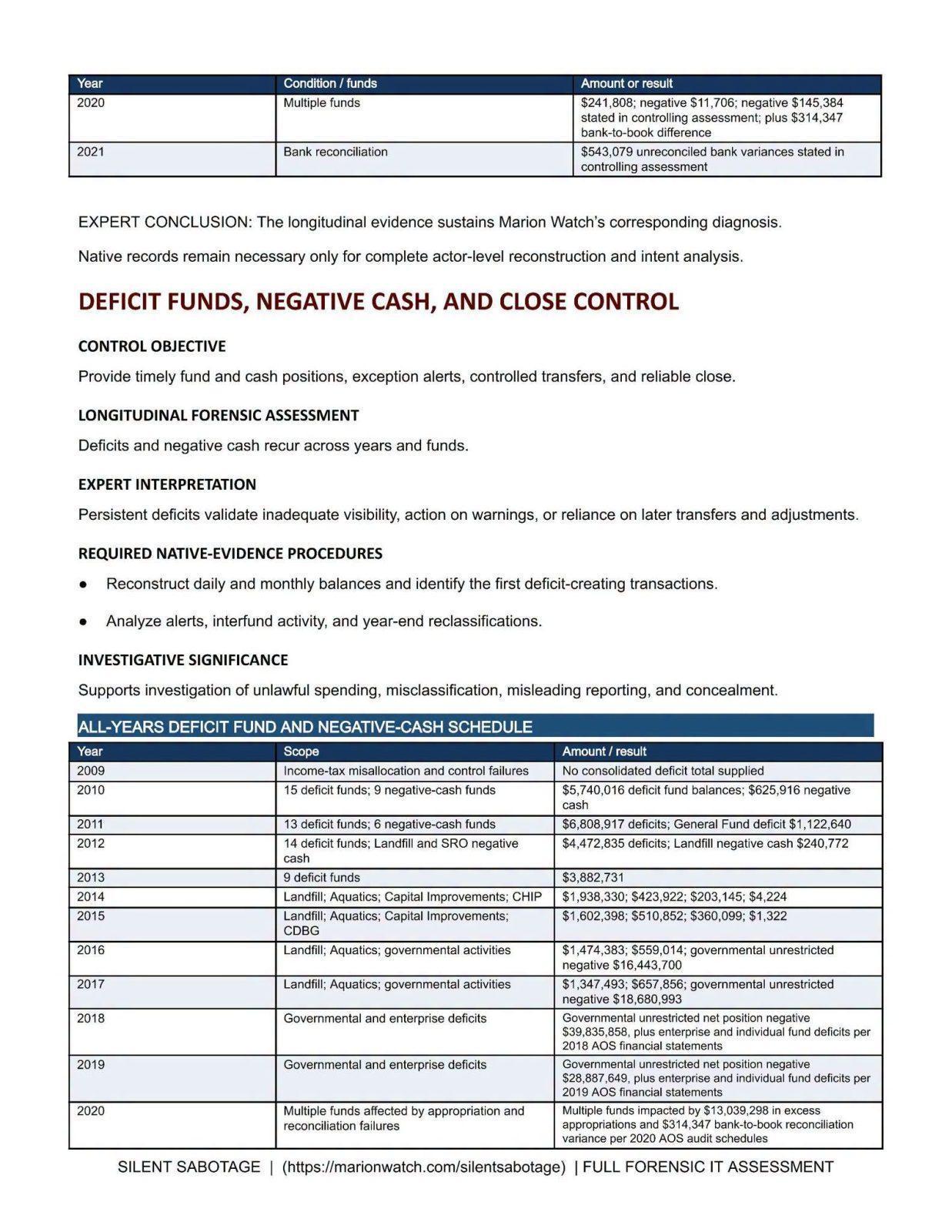
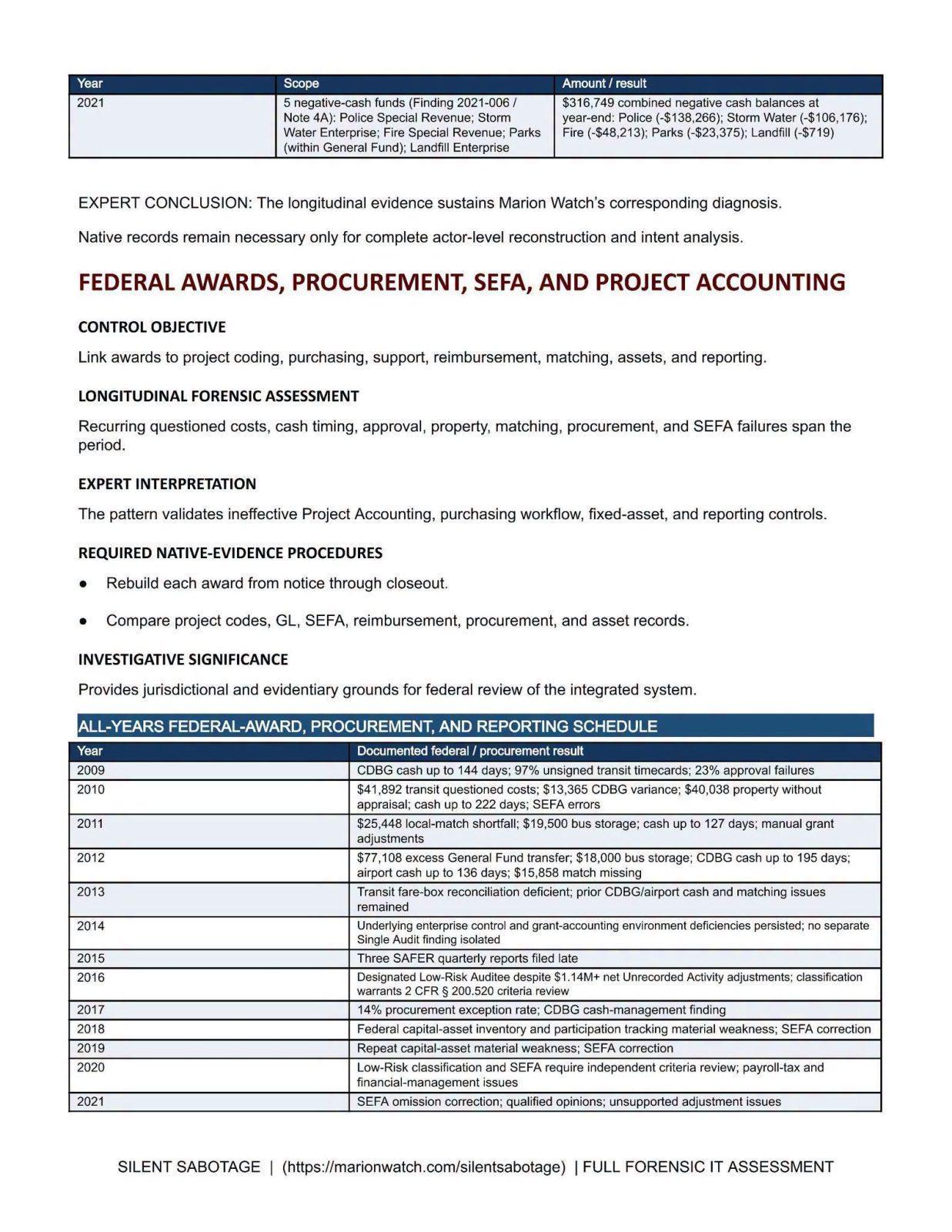
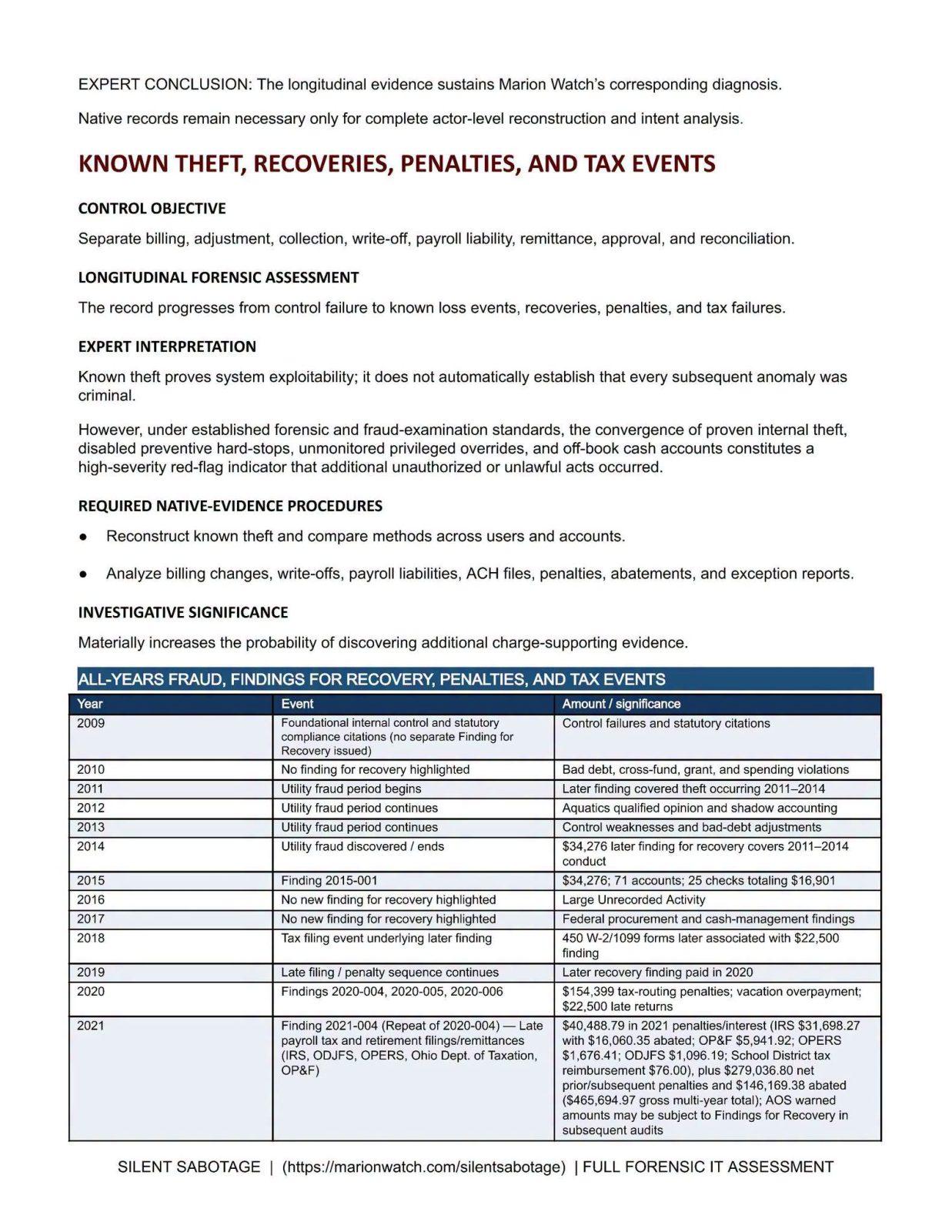
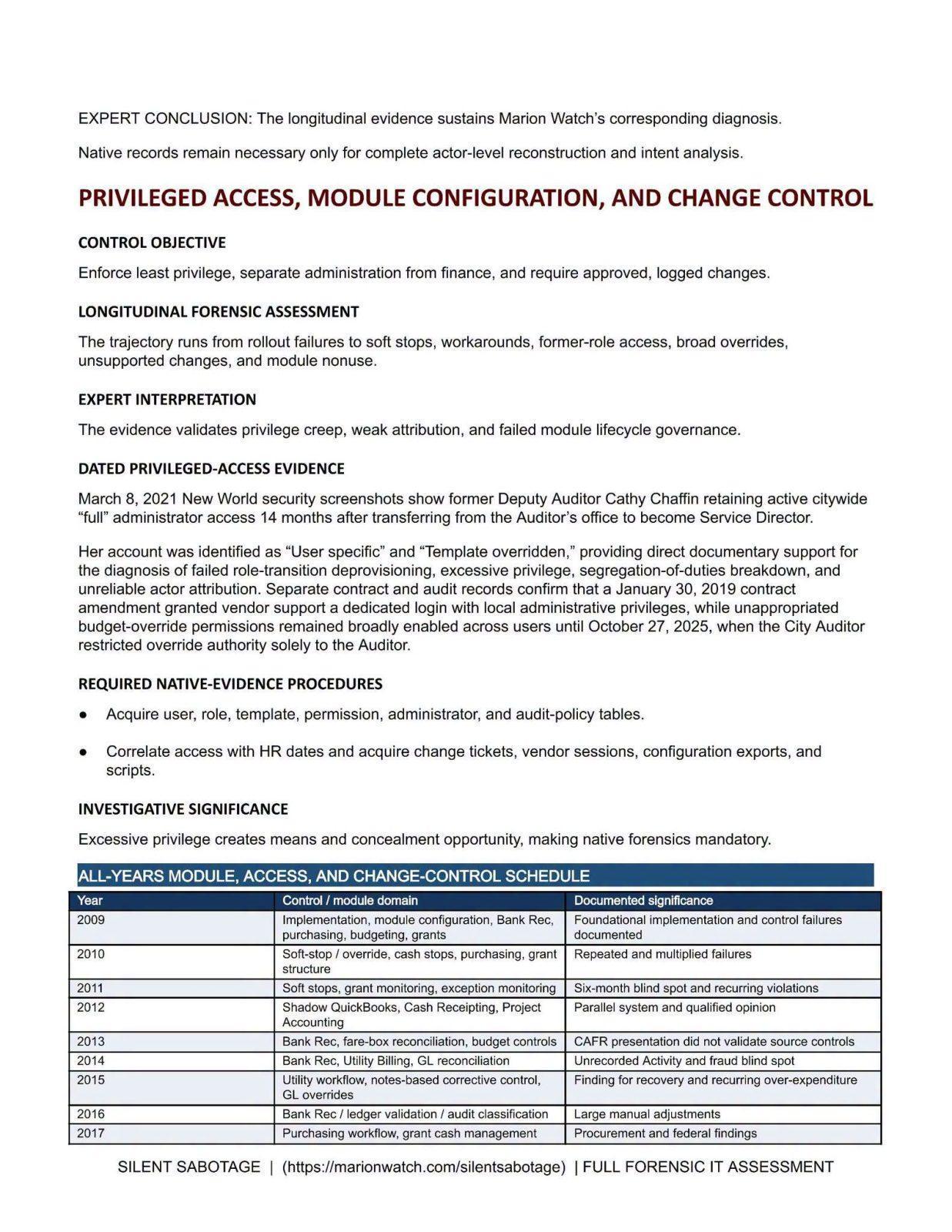
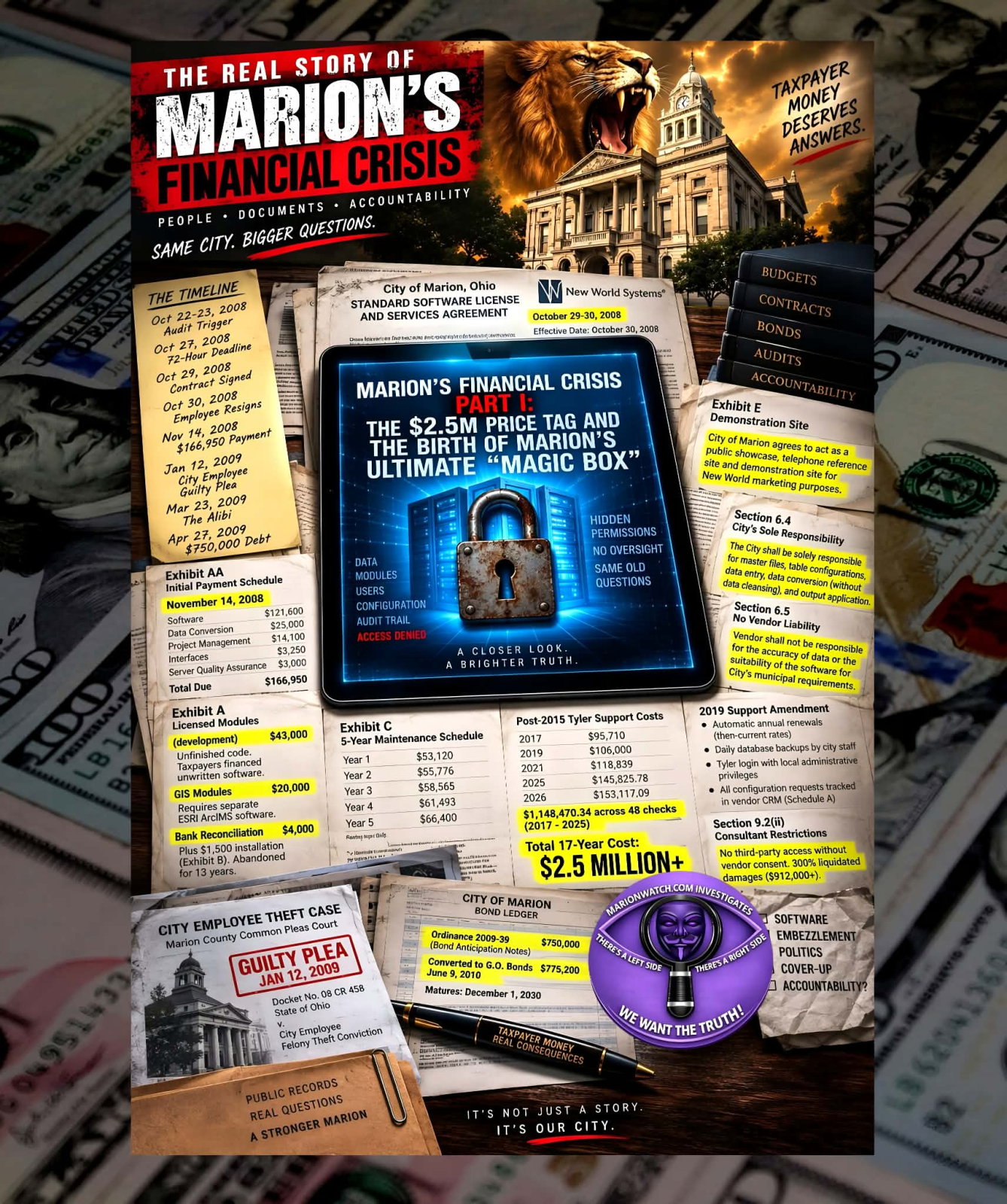
MARION’S FINANCIAL CRISIS PART I: THE $2.5M PRICE TAG AND THE BIRTH OF MARION’S ULTIMATE “MAGIC BOX”
THE REAL STORY OF MARION’S FINANCIAL COLLAPSE
Between 2006 and early 2009, the City of Marion, Ohio was trapped in a deepening fiscal crisis, and had several other issues including the growing addiction, overdose, and lack of treatment options crisis.
Marion was one of the hardest hit by the addiction crisis nationwide.
Facing severe revenue shortfalls, the administration routinely drained municipal carryover reserves just to balance the annual operating budgets.
During sewer rate debates in March 2006, Councilman Dr. Gilsdorf warned that with $4.2 million in long-term debt backed by only $2 million in cash reserves, “technically the city is bankrupt”.
By January 2007, an additional $856,752 was stripped from carryover, and council was warned that $2.5 million was urgently needed to cover unfunded long-term liabilities.
READ THE FULL ARTICLE TO LOOK CLOSER:
By December 26, 2007, the fiscal warnings escalated into explicit alarms. Dr. Gilsdorf cautioned the public that Marion had accumulated $4.5 million in unfunded sick and vacation leave liabilities against just $2 million in available cash, testifying on the public record:
“It’s like a credit card… bond it out, over 20 years plus interest, your children and grandchildren for the money that’s going to paid out right now… Would you steal money from your children and grandchildren?”
When Mayor Scott Schertzer and Auditor Kelly Carr took office in January 2008, the administration acknowledged the instability by passing Ordinance 2008-1 as a temporary 90-day operating budget, admitting they needed time to locate the city’s true carryover funds.
By January 12, 2009, cash depletion forced City Council to freeze 2.6% wage increases for non-bargaining employees to stave off imminent layoffs.
Against this backdrop of acute austerity, committing nearly three-quarters of a million dollars to a municipal computer system was fiercely contentious.
To neutralize budget hawks, the former administration deployed a dual strategy: manufacturing an artificial “emergency” software transition timeline while orchestrating the disclosure of an internal embezzlement scandal to serve as an unassailable political alibi.
In enterprise information technology, surprise software expirations do not exist.
Commercial ERP vendors publish end-of-life and support termination roadmaps years in advance to protect clients and ensure orderly transitions. Bypassing standard municipal procurement and technical governance, the administration chose to completely ignore the city’s Information Systems Committee—a structural “Ghost Committee” that had sat dormant without holding a single meeting for 19 years.
Instead, leadership orchestrated a tight, behind-the-scenes contract execution that collided down to the exact 24-hour window with the discovery of the Zoning and Engineering department theft:
○ October 22 to 23, 2008 (Internal Audit Trigger):
The Auditor’s office flags an irregular disbursement voucher in the Zoning and Engineering office. An internal review uncovers that 41-year-old administrative assistant—a 22-year city veteran who began her career in Utility Billing—had been systematically pocketing excavation bond deposits and driveway/sidewalk permit fees throughout 2007 and 2008, hiding her tracks by substituting photocopied receipts for original cash entries.
○ October 27, 2008 (The 72-Hour Pressure Deadline):
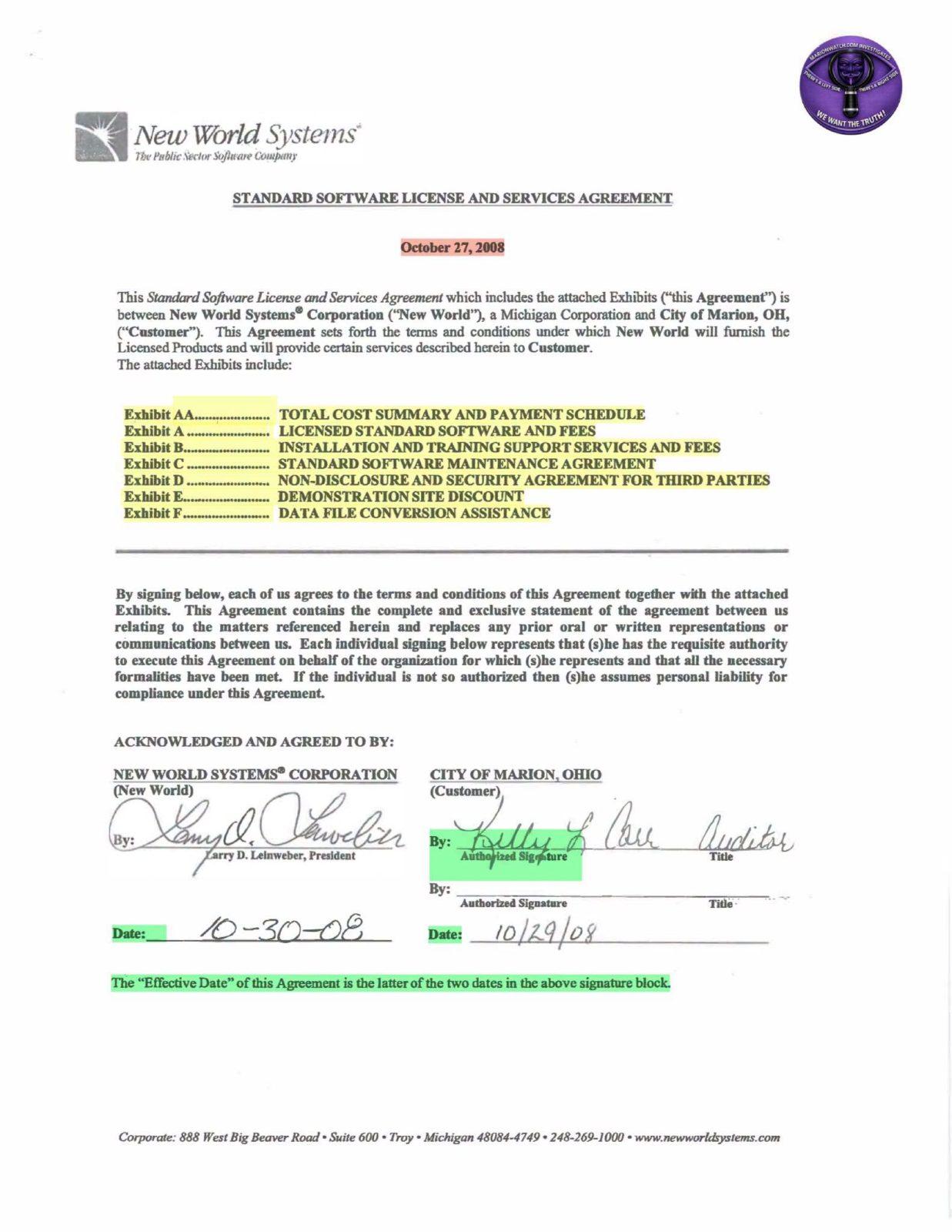
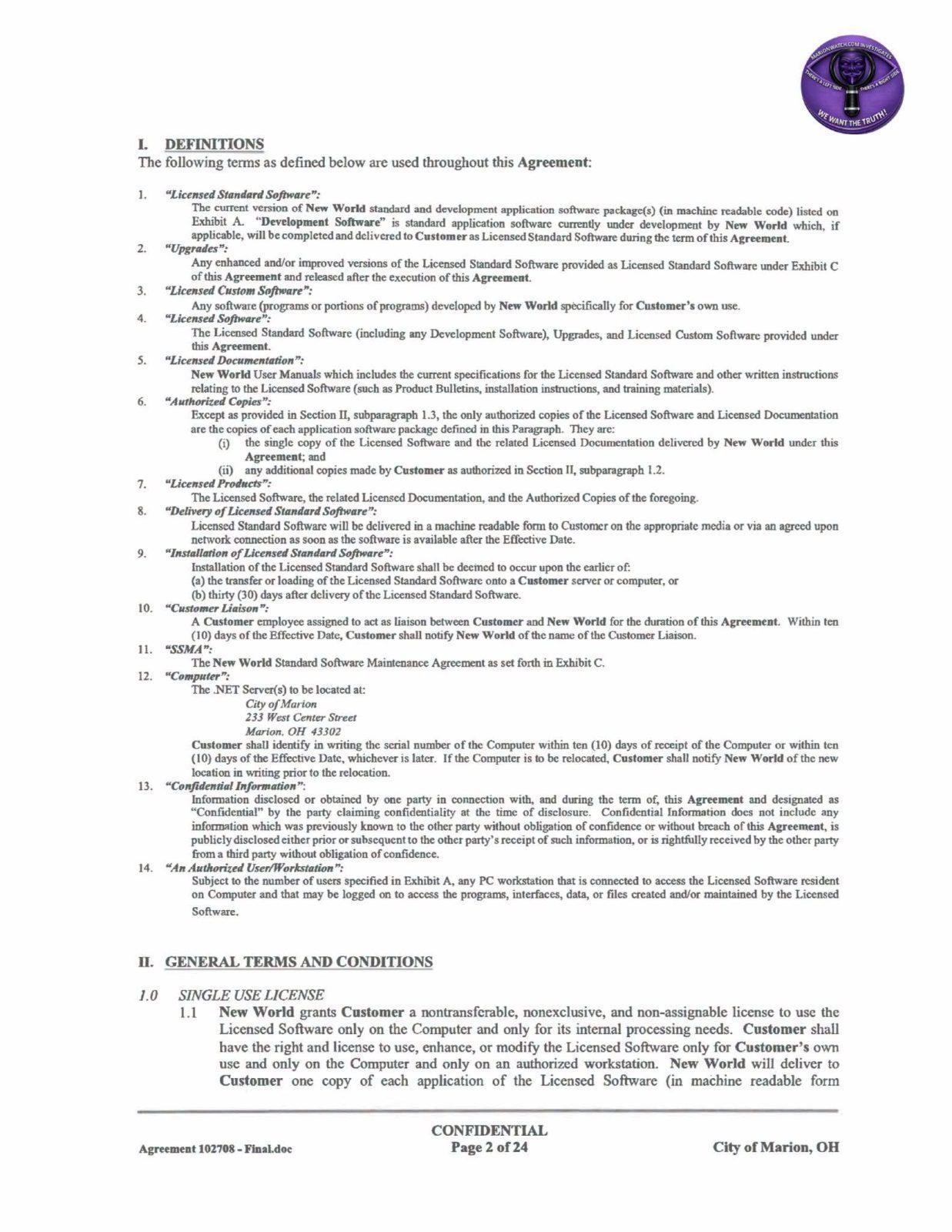
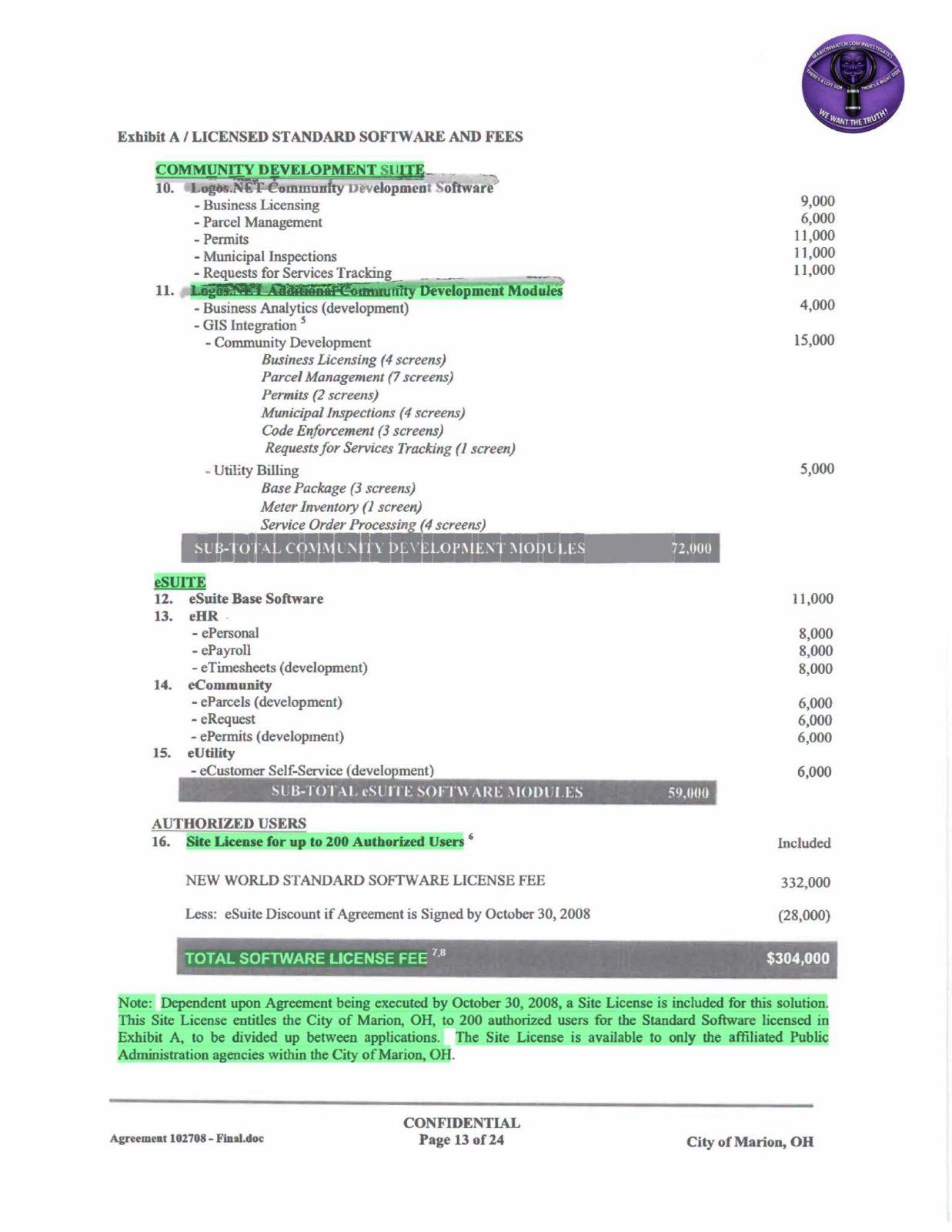
New World Systems drafts the 24-page Standard Software License and Services Agreement, embedding an artificial 72-hour expiration clause demanding execution by October 30, 2008, to lock in a $28,000 eSuite discount and a 200-user site license.
○ October 29, 2008 (Suspension and Initial Execution):
Service Director Jay Shoup places the employee on administrative leave. On that exact same day, Auditor Kelly Carr and Mayor Scott Schertzer sign the $649,500 New World contract, formally certifying under their signatures that “all the necessary formalities have been met”.
○ October 30, 2008 (Resignation and Counter-Execution):
City employee submits her resignation. On that exact same day, New World President Larry D. Leinweber countersigns the agreement, establishing October 30, 2008, as the official legal “Effective Date”.
○ November 14, 2008 (The First Multi-Thousand-Dollar Bill):
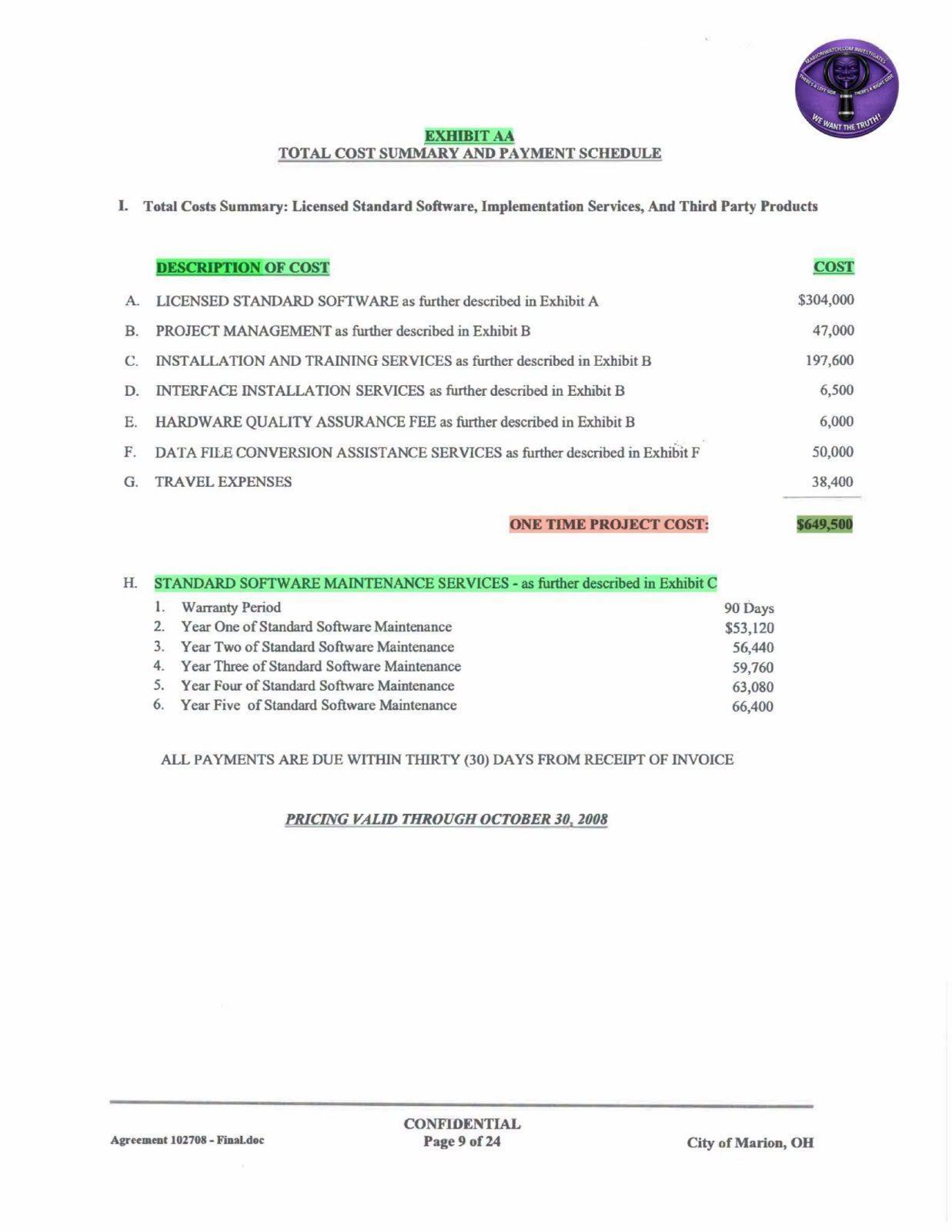
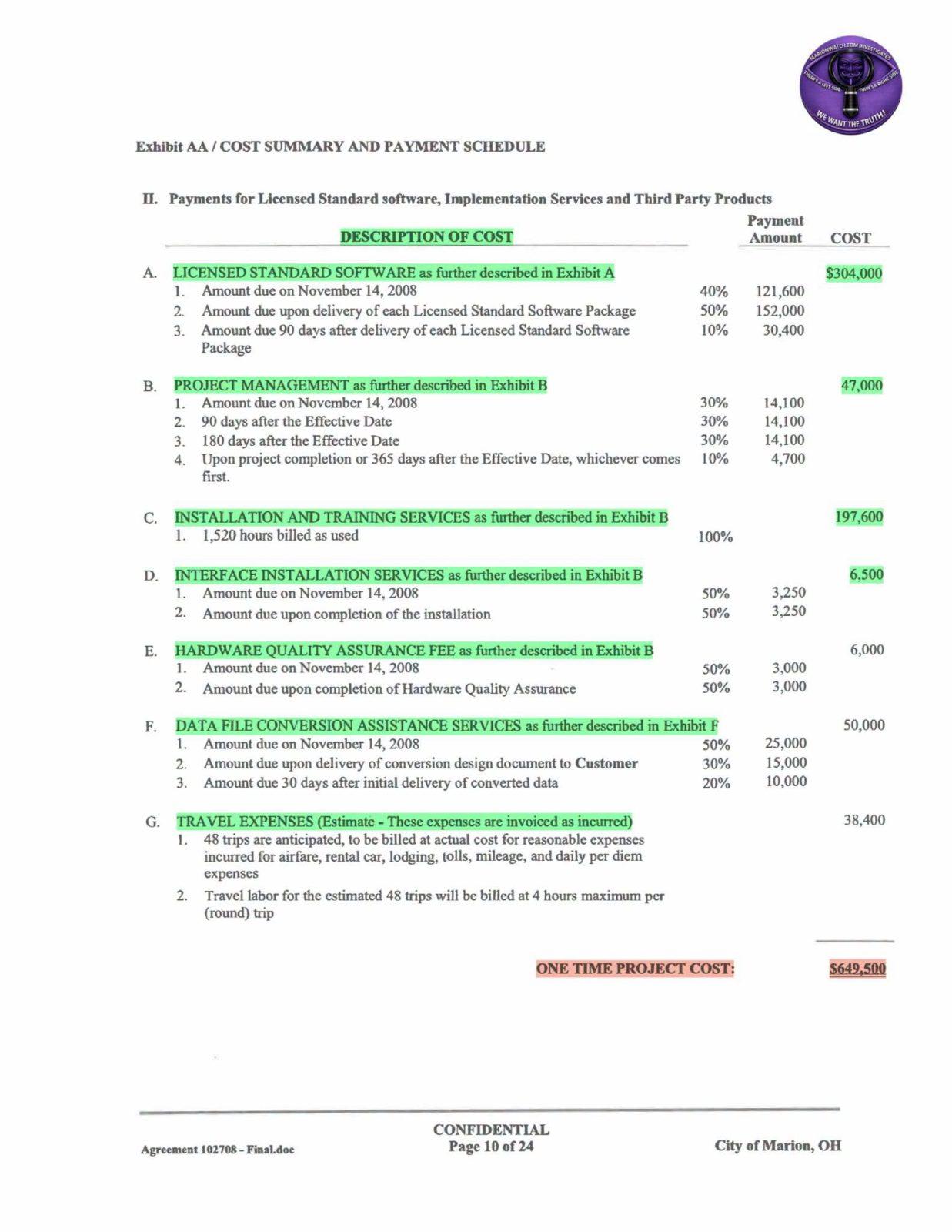
Just 15 days after contract execution, Exhibit AA requires Marion to wire $166,950.00 in upfront cash installments ($121,600 for software, $25,000 for data conversion, $14,100 for project management, $3,250 for interfaces, and $3,000 for server quality assurance)—months before City Council is ever briefed on the software or asked to authorize financing.
○ January 12, 2009 (Guilty Plea and Continued Silence):
The city employee responsible for the theft used to justify the New World purchase pleads guilty to felony theft in Marion Common Pleas Court. City Council remains entirely unnotified. That same night, Councilman Ratliff challenges the administration’s spending priorities, attacking the approval of a “$700,000.00 computer system for City Hall” while employees are denied cost-of-living adjustments.
○ March 23, 2009 (Weaponizing the Theft):
Five months after the internal audit, Safety Director Tom Robbins finally briefs City Council on the employee’s conviction. When Councilman Ratliff excoriates the administration for the five-month cover-up, Auditor Kelly Carr immediately seizes the moment to defend the New World contract, testifying on the public record that the office previously operated on “paper, pencil, and very little computer technology” and claiming the new software would eliminate “the human factor” by enforcing automated internal controls.
○ April 27, 2009 (Pushing Through the Emergency Debt):
Having successfully leveraged the specter of employee theft to disarm fiscal critics, the administration introduces Ordinance 2009-39. Over Councilman Ratliff’s sole dissenting vote, the measure is rammed through under emergency suspension, issuing $750,000 in bond anticipation notes to fund the acquisition. This short-term debt was subsequently rolled into $775,200 of 20-year unvoted General Obligation Bonds on June 9, 2010, permanently encumbering taxpayers through December 1, 2030.
FINANCIAL ANATOMY: THE TRUE COST OF THE 2008 AGREEMENT
A granular review of Exhibit AA, Exhibit A, and municipal bonding ledgers reveals the exact financial mechanisms used to obligate the city. The project was launched with $750,000 in short-term notes under Ordinance 2009-39, which were later converted into $775,200 of 20-year General Obligation Bonds issued on June 9, 2010.
This left an immediate $100,500 financing surplus against the $649,500 upfront New World contract price, which vanished into unallocated capital accounts.
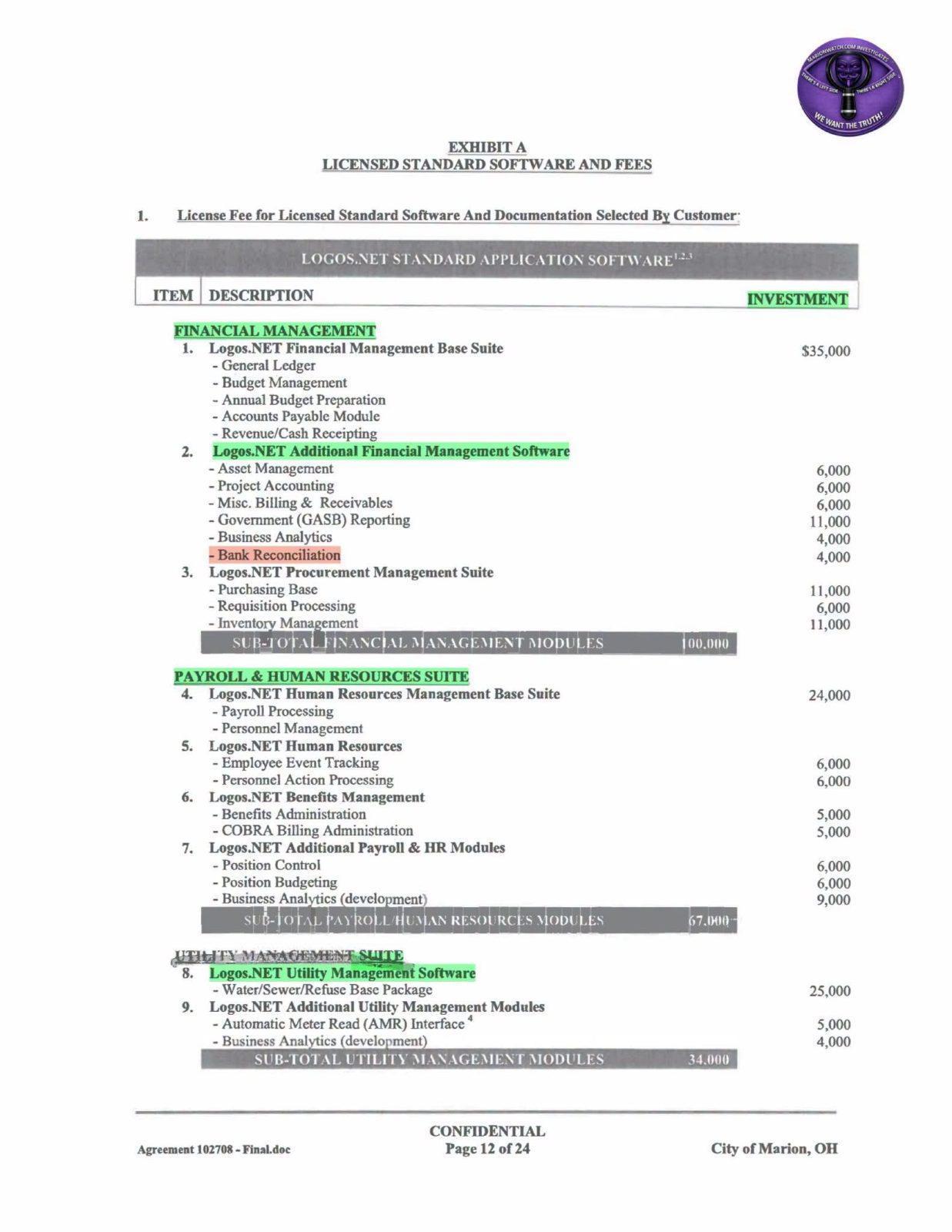
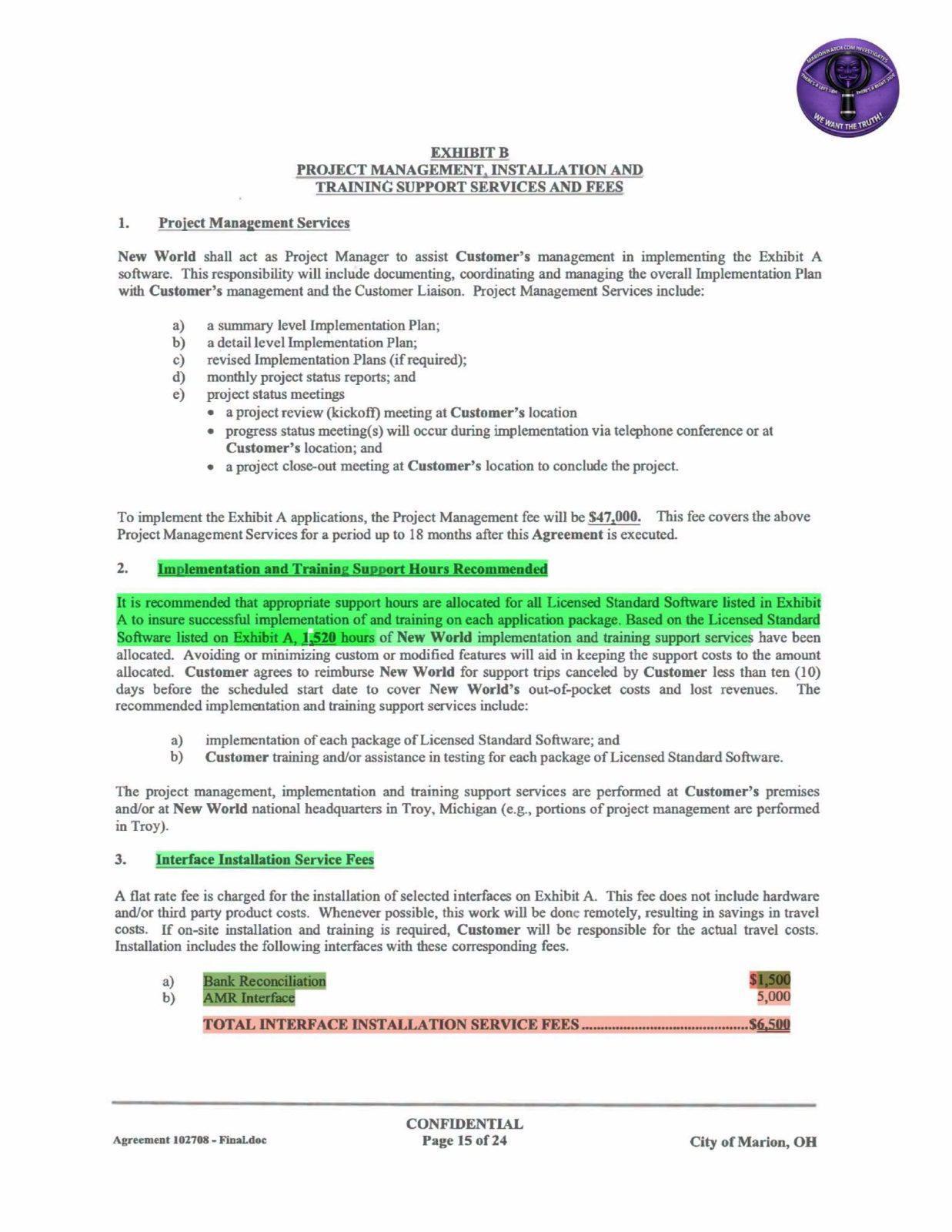
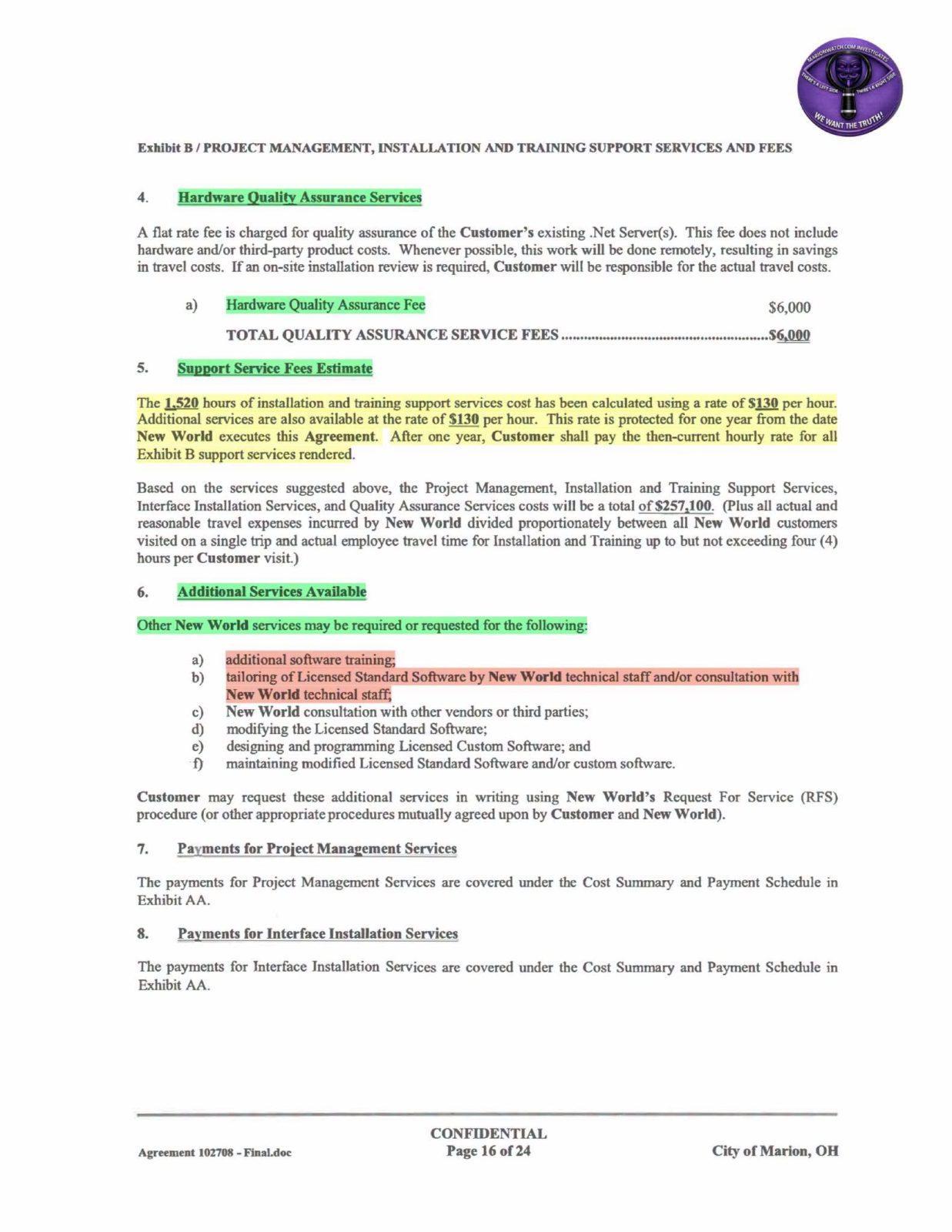
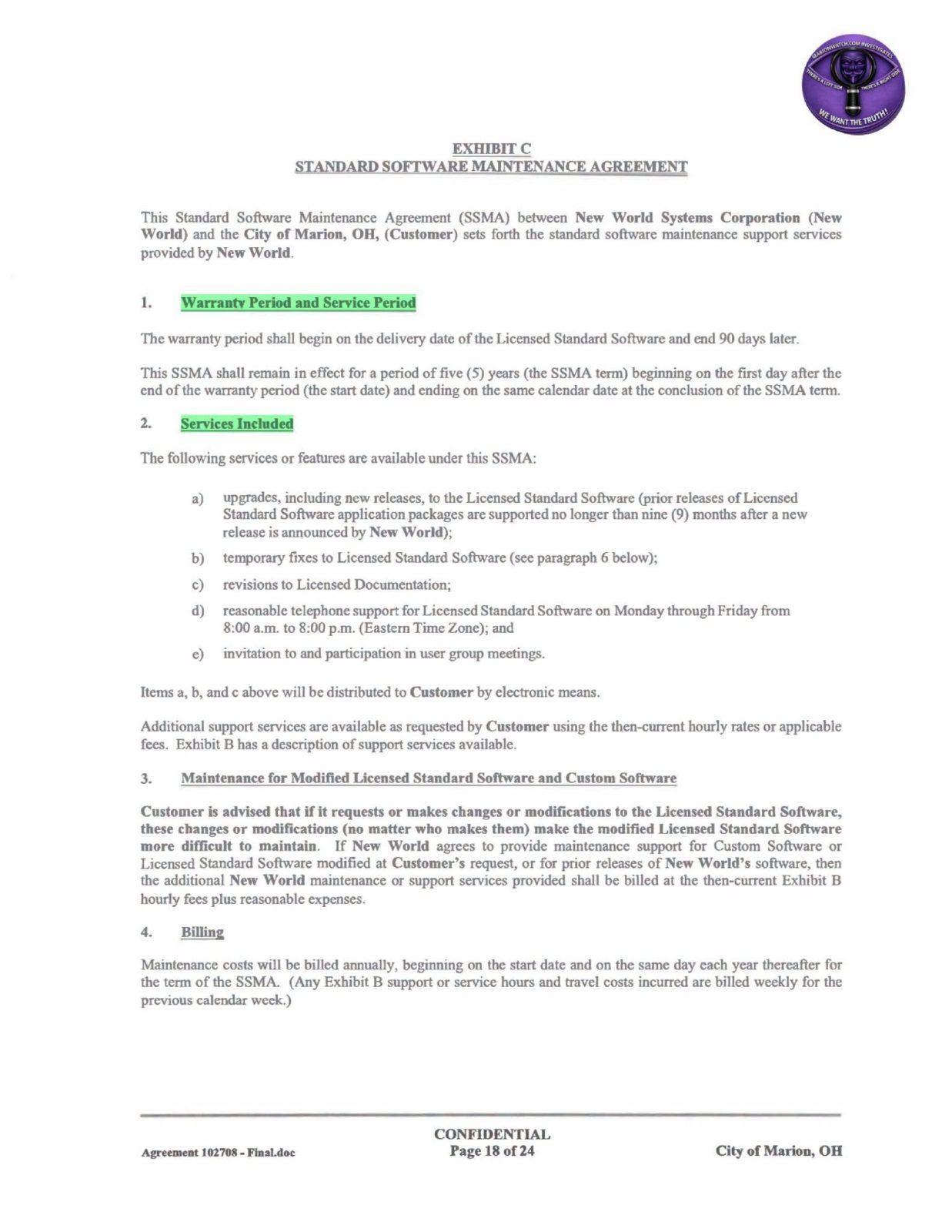
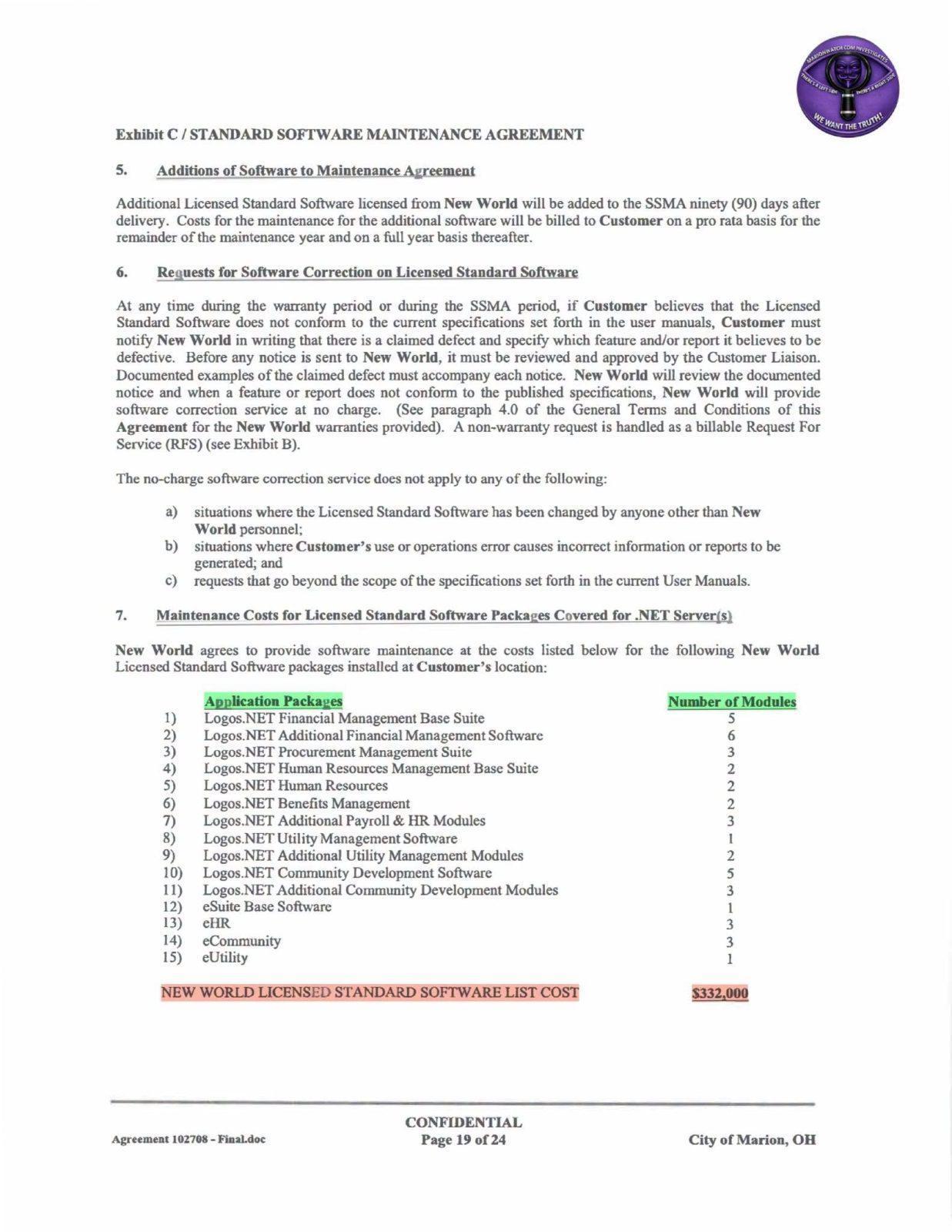
The upfront capital cost breakdown specified in Exhibit AA included $304,000 net for standard software licenses ($332,000 list price across 15 packages and 42 modules minus the $28,000 eSuite deadline discount), $197,600 for 1,520 implementation and training hours billed at $130 per hour, $50,000 for data file conversion assistance across 7 legacy databases, $47,000 for 18 months of project management, $38,400 for estimated travel expenses across 48 trips, $6,500 for interface installations (Bank Reconciliation and AMR), and $6,000 for server quality assurance.
The financial hemorrhage, however, did not stop at the capital acquisition.
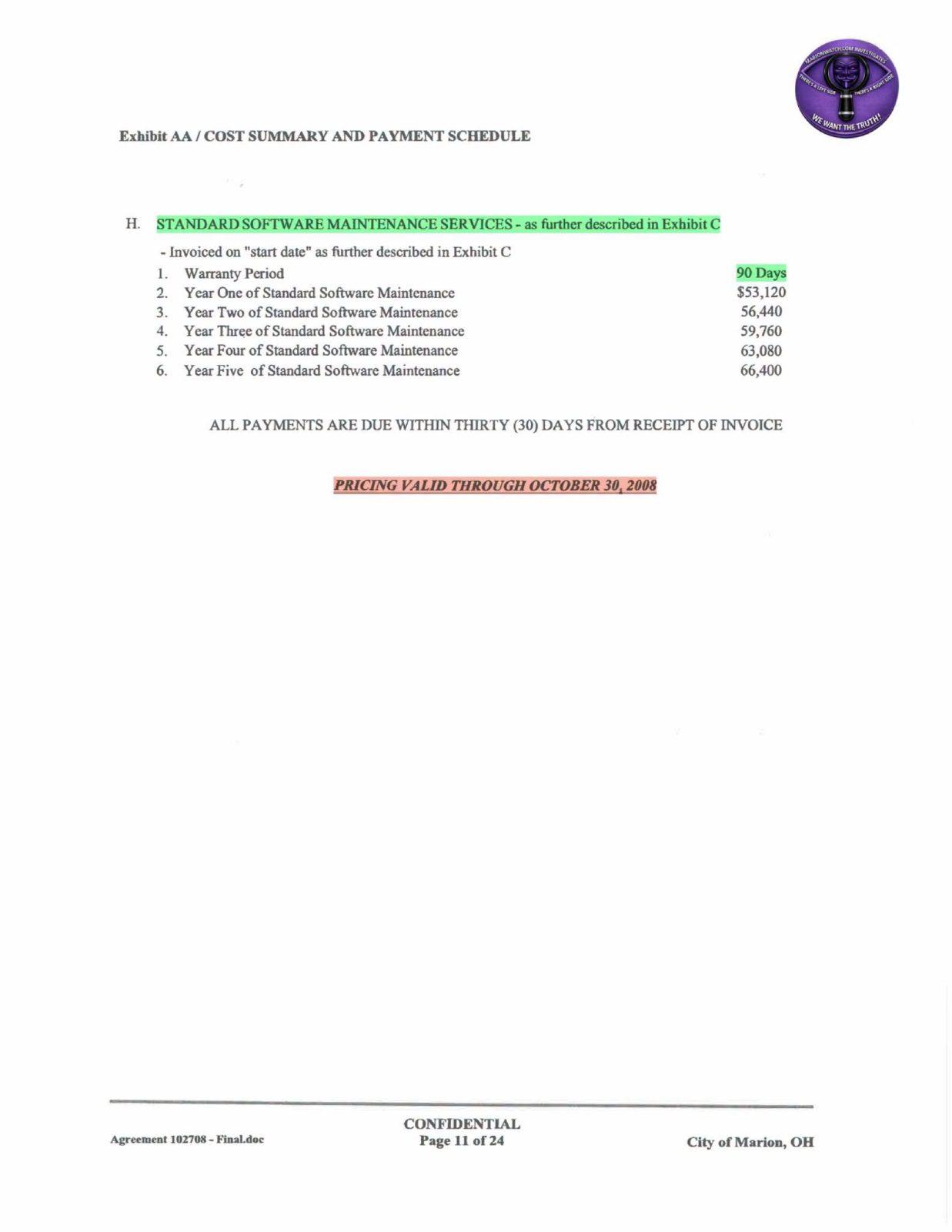
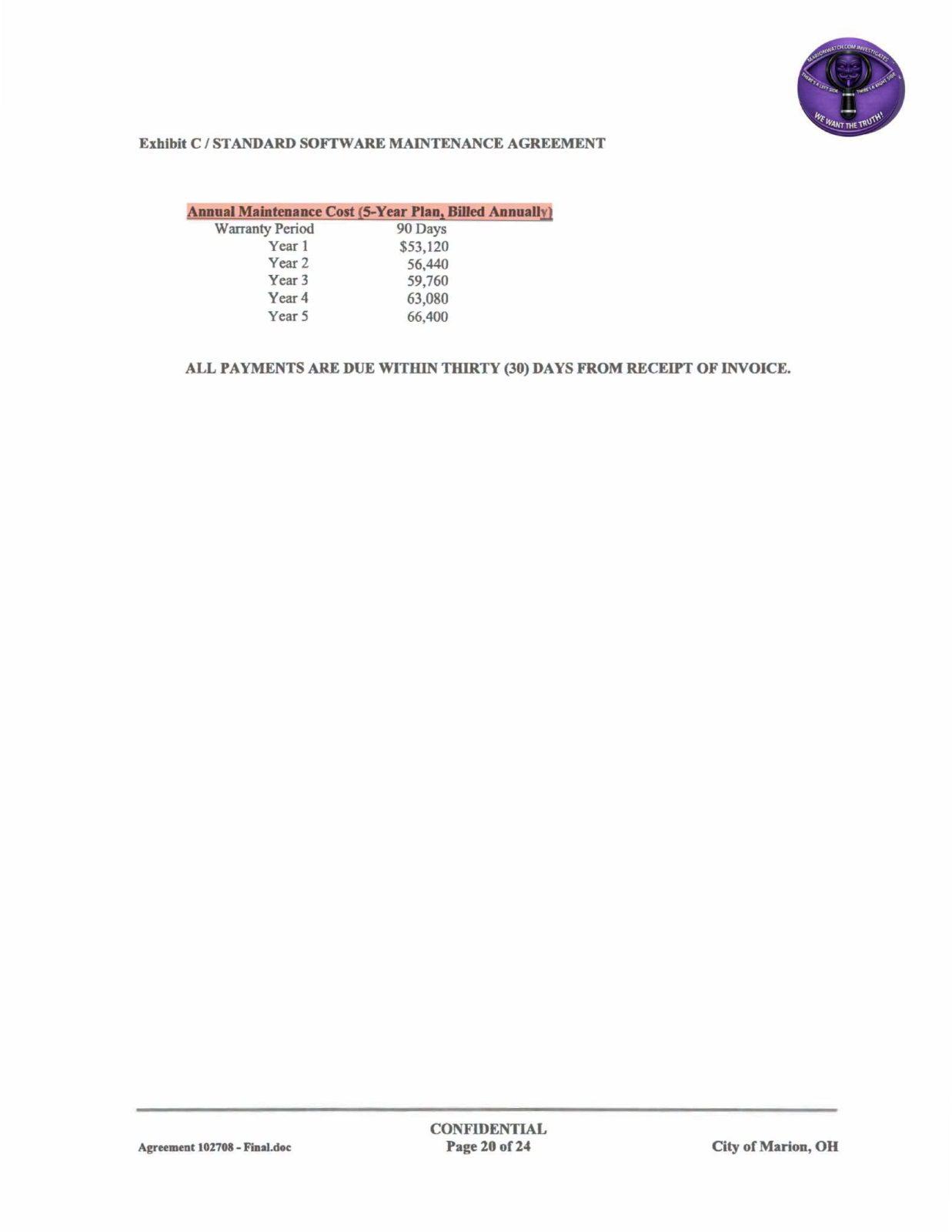
Exhibit C established an introductory 5-year maintenance schedule starting at $53,120 in Year One and stepping up to $66,400 in Year Five.
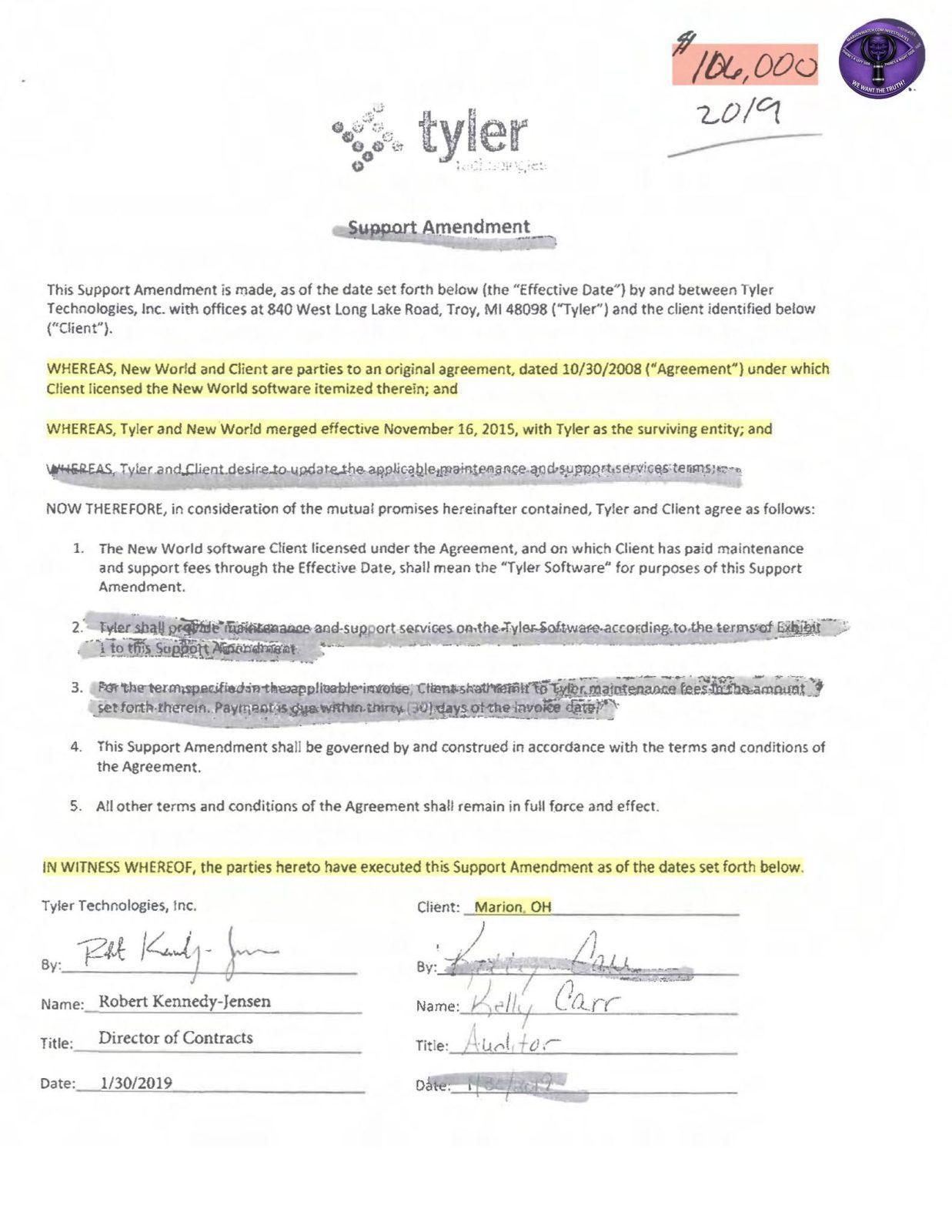
But following Tyler Technologies’ merger with New World in November 2015, Auditor Kelly Carr signed a January 30, 2019 Support Amendment committing the city to uncapped annual renewals billed at Tyler’s “then-current rates”.
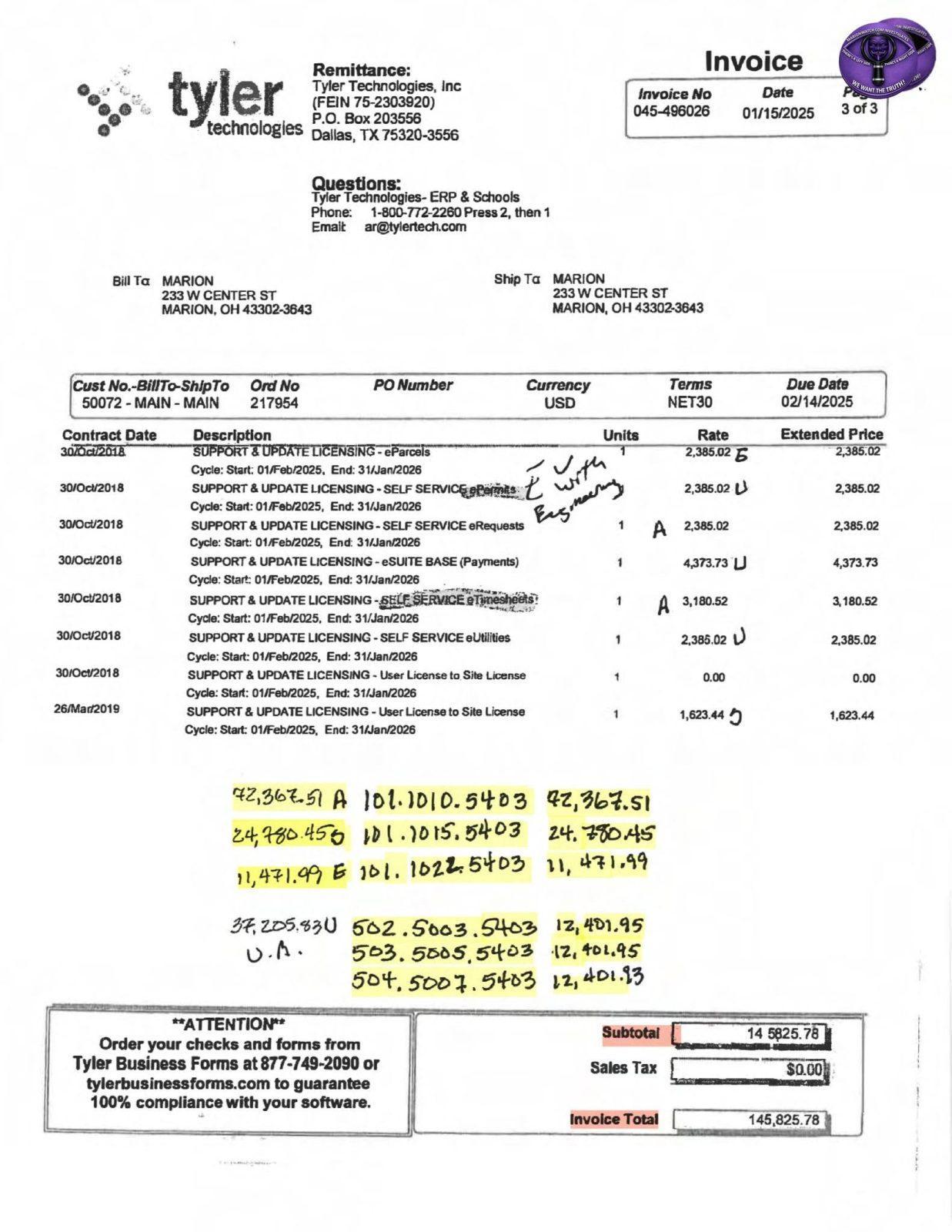
Because the administration rubber-stamped automatic 5% compounding annual rate increases year after year without auditing active module utility, support costs skyrocketed from $95,710 in 2017 to $106,000 in 2019, $118,839 in 2021, $145,825.78 in 2025, and $153,117.09 by 2026.
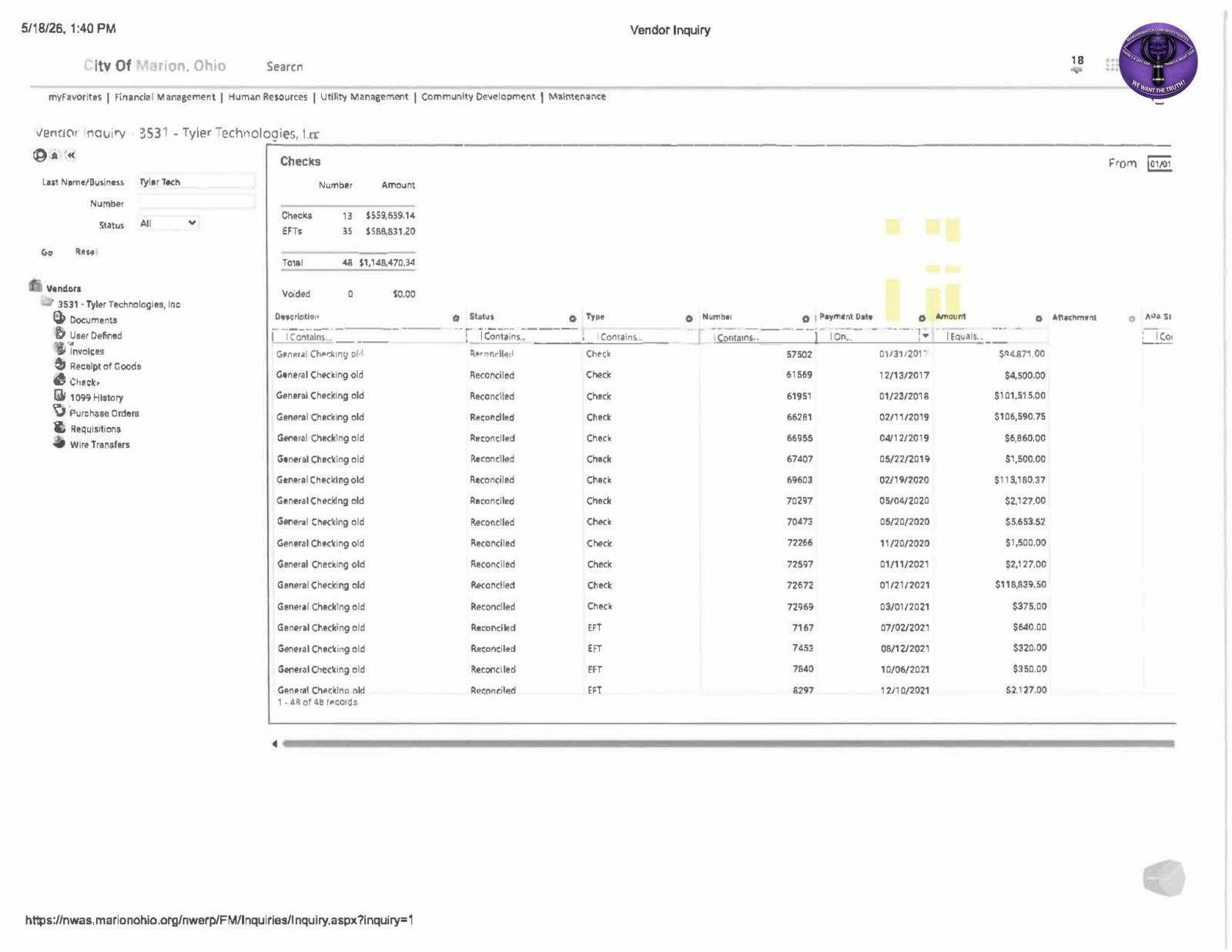
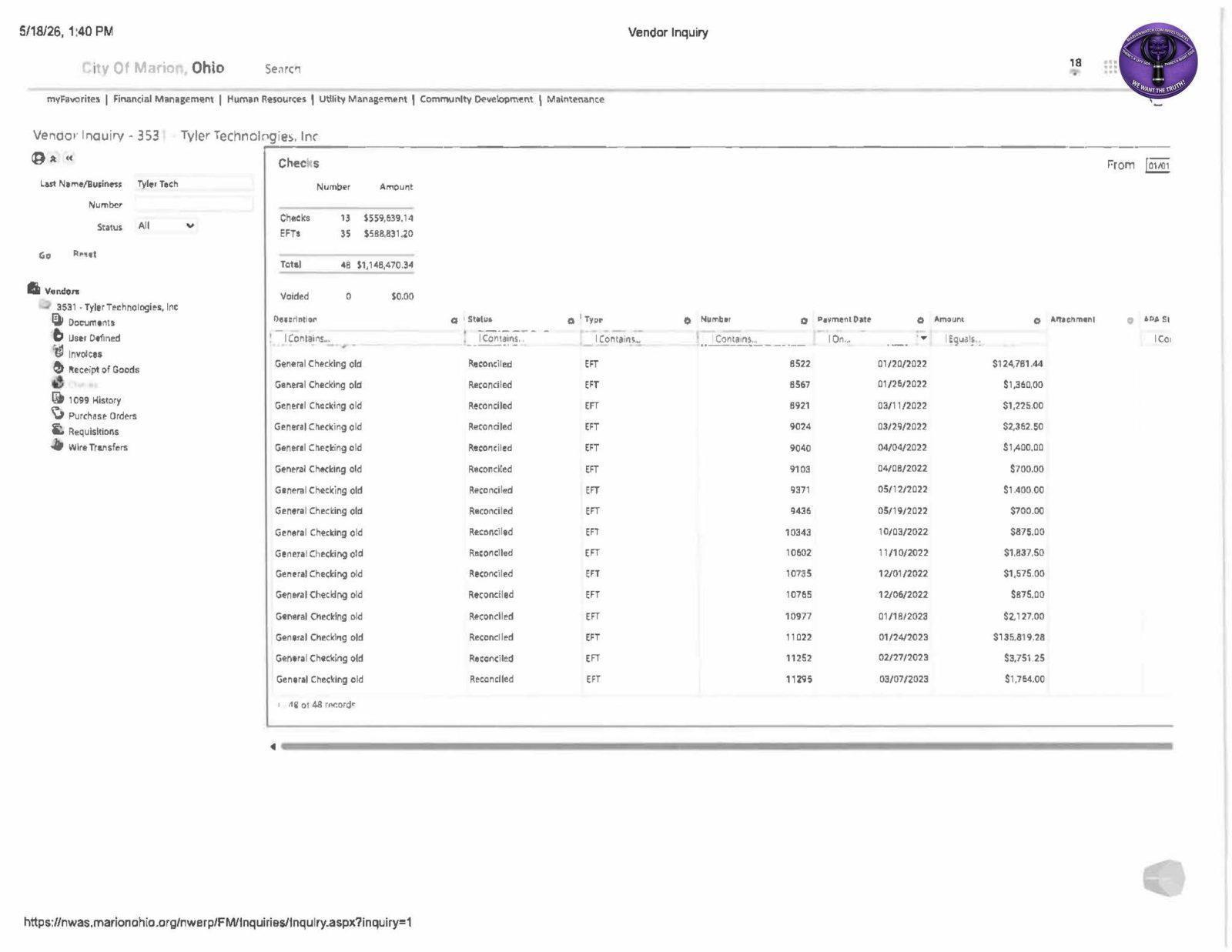
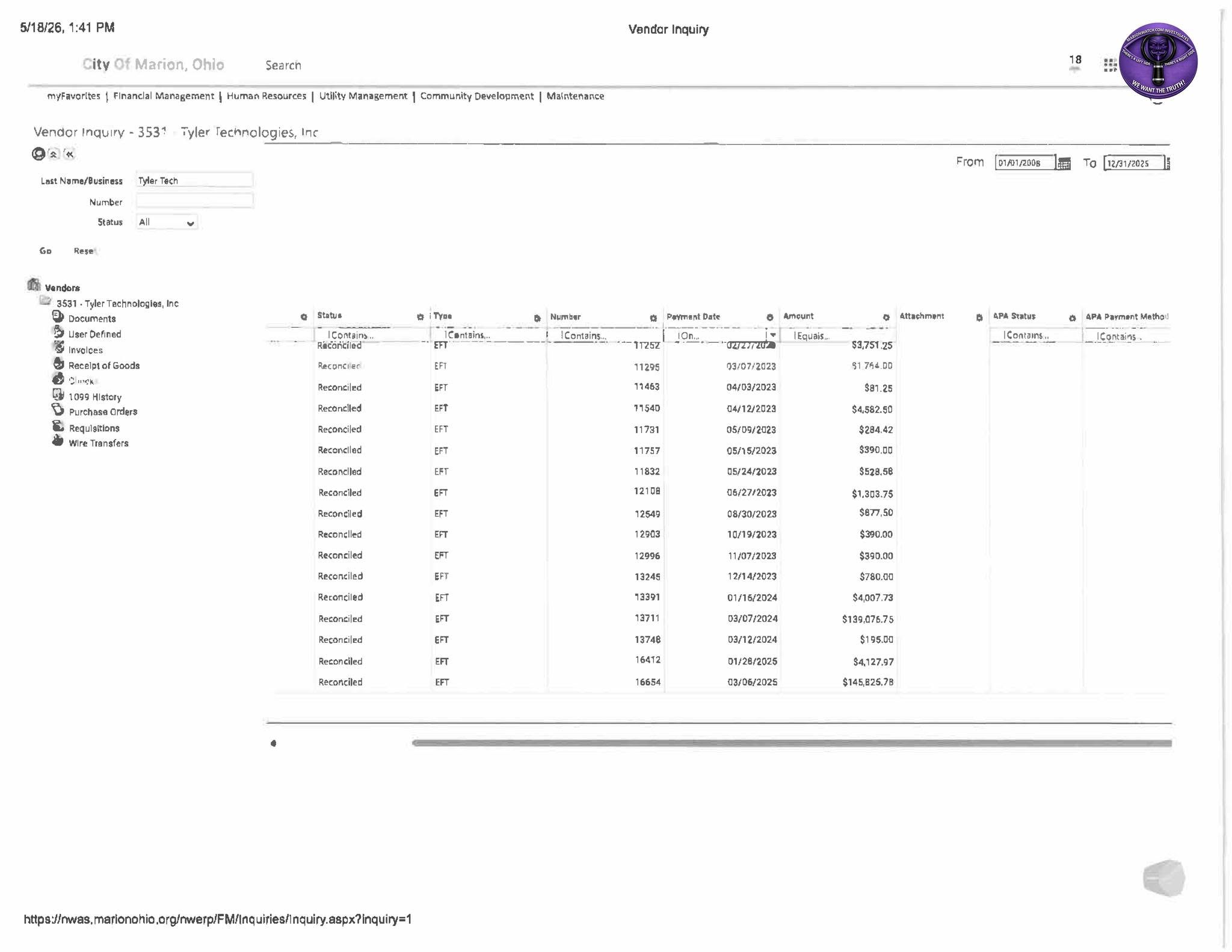
Documented vendor inquiries show Marion paid Tyler Technologies $1,148,470.34 across 48 separate checks and EFT disbursements between January 2017 and March 2025 alone, driving the total 17-year taxpayer expenditure for New World well past $2.5 million.
TEN RED FLAGS BURIED IN THE CONTRACT TEXT
Legal and technical analysis of the New World agreement contract and the 2019 Support Amendment exposes ten high-risk structural anomalies that financial watchdogs should never have permitted:
○ Purchasing Unfinished “Development” Software (Definition 1 & Exhibit A):
The contract explicitly licensed seven modules totaling $43,000 marked (development) because New World had not even finished programming them. Taxpayers financed unwritten code.
○ The “Demonstration Site” Compromise (Exhibit E):
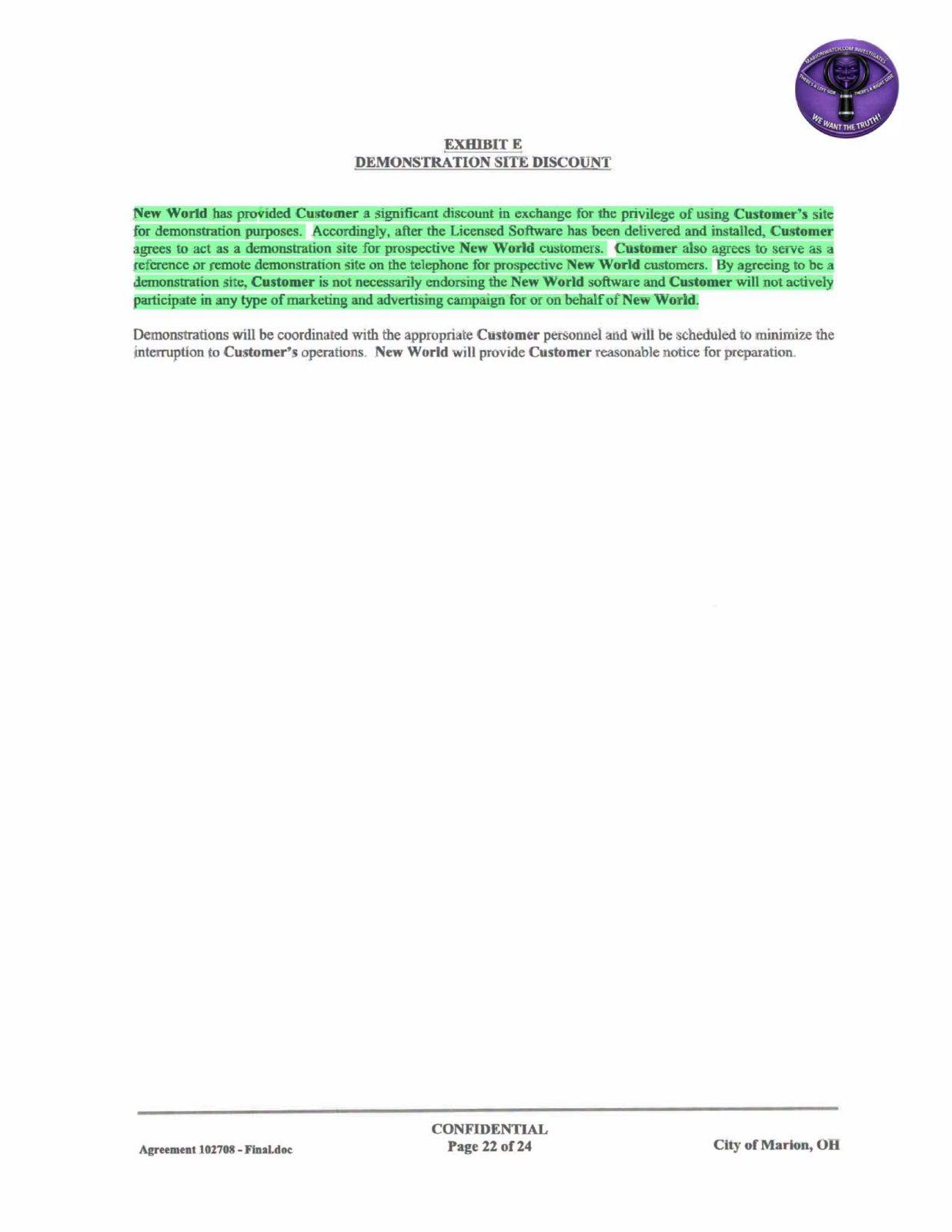
Marion accepted a financial discount to act as a public showcase and telephone reference site for prospective New World customers, marketing software that leadership ultimately failed to configure.
○ The 30-Day Automatic Installation Clock (Definition 9 & Exhibit C):
Software was legally deemed “installed” 30 days after delivery regardless of server deployment, triggering the 90-day warranty and recurring maintenance billing automatically.
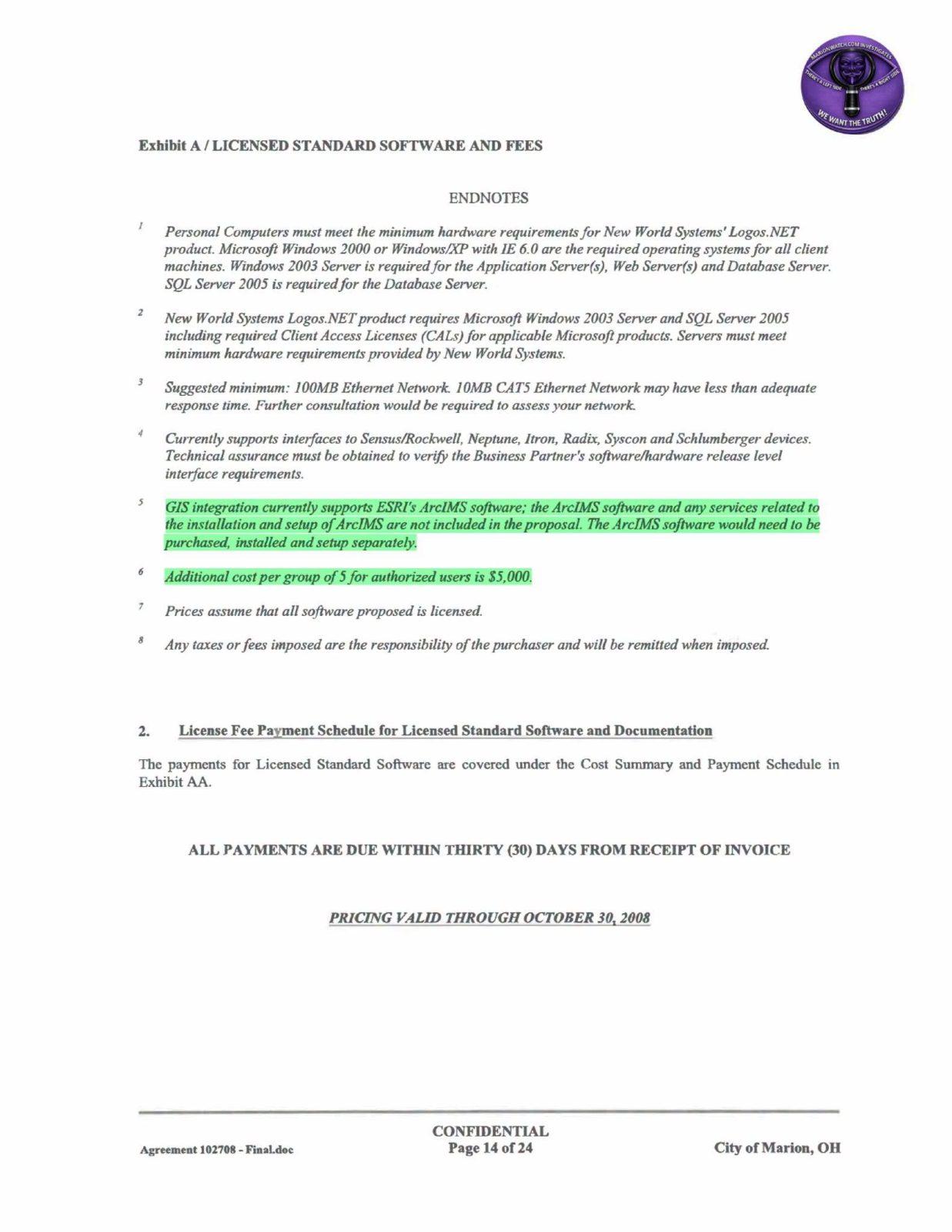
○ Un-supported GIS Modules (Exhibit A, Endnote 5):
The city paid $20,000 upfront plus annual maintenance for two GIS integration packages while Endnote 5 buried the requirement that third-party ESRI ArcIMS software had to be purchased and installed separately.
○ Paying Twice for Bank Reconciliation (Exhibit A & Exhibit B, Section 3a):
Marion paid $4,000 to license Bank Reconciliation in Exhibit A plus a $1,500 installation fee in Exhibit B, yet abandoned the module for 13 years while running manual spreadsheets.
○ The “No Data Cleansing” Conversion Loophole (Exhibit F):
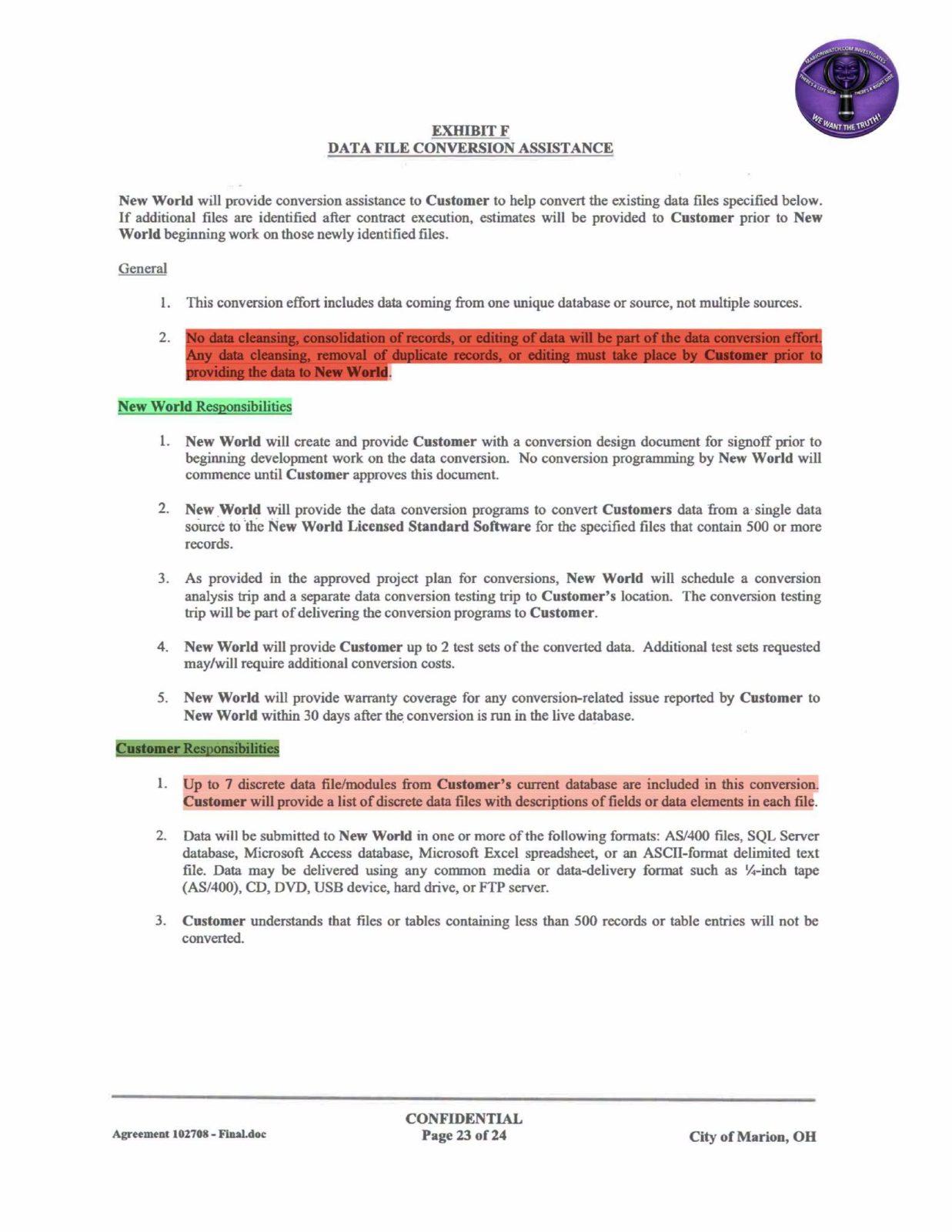
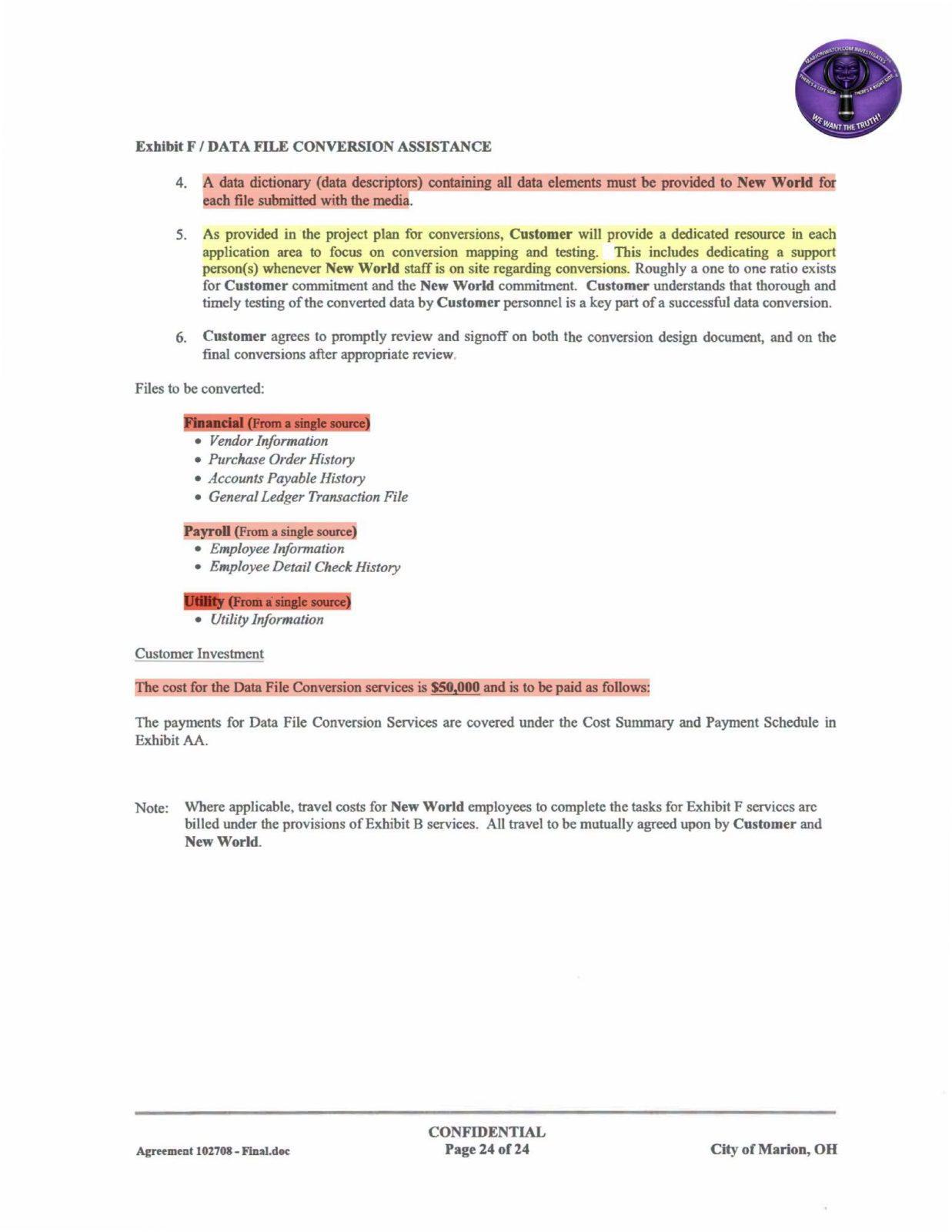
Exhibit F barred New World from cleansing or editing legacy data, refused tables under 500 records, and terminated conversion warranty support after 30 days, guaranteeing that messy historical data would corrupt the database on day one.
○ Violating Internal Access Restrictions (Section 6.0 & Section 9.2):
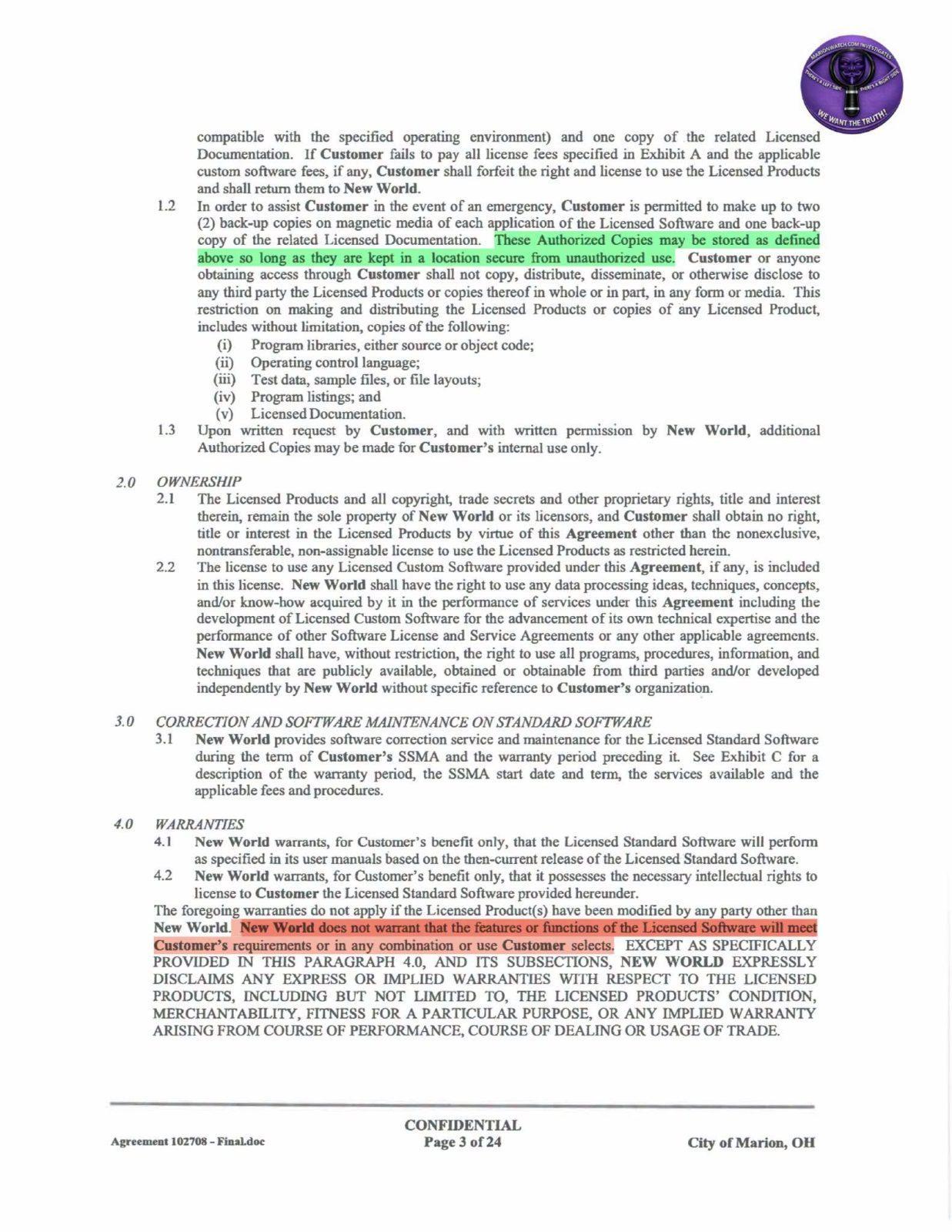
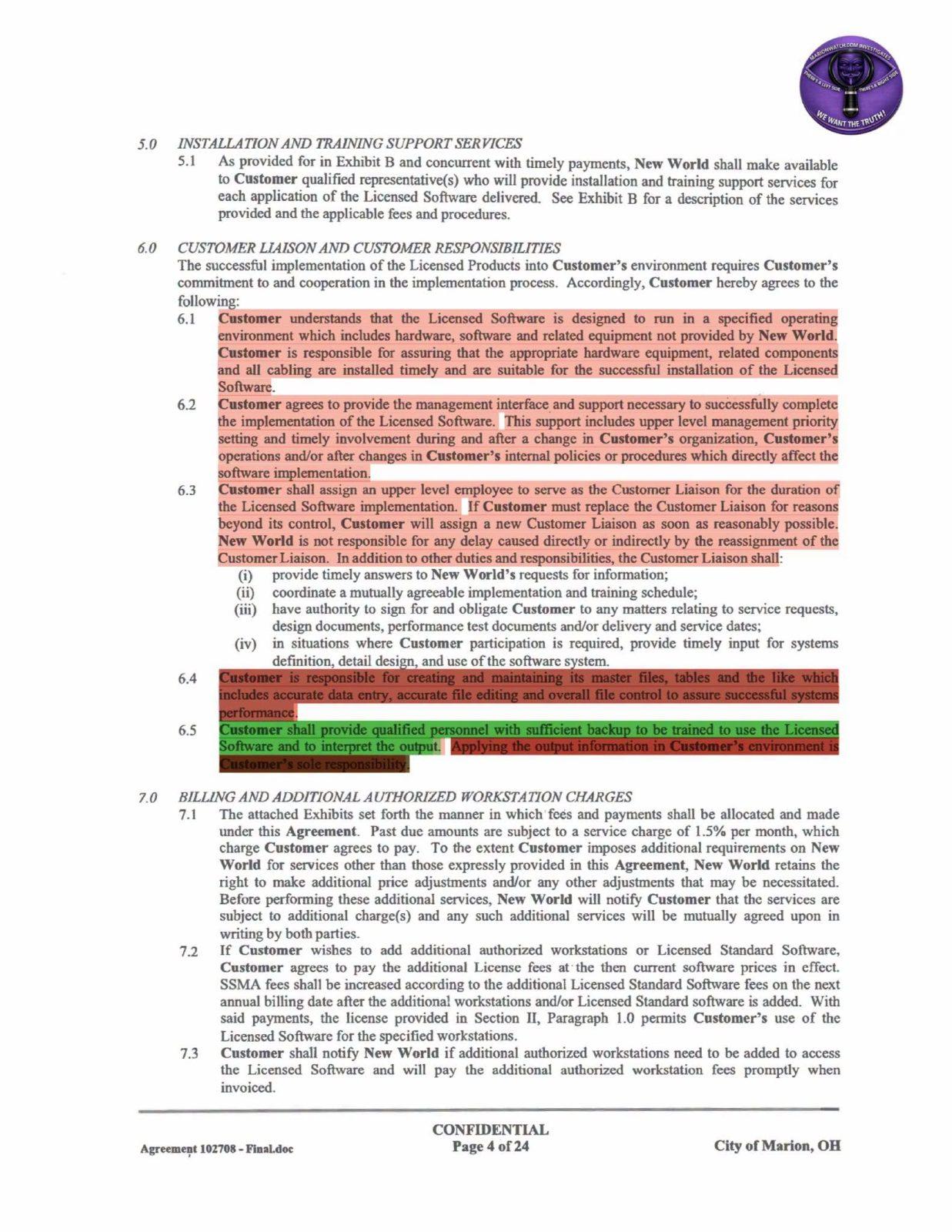
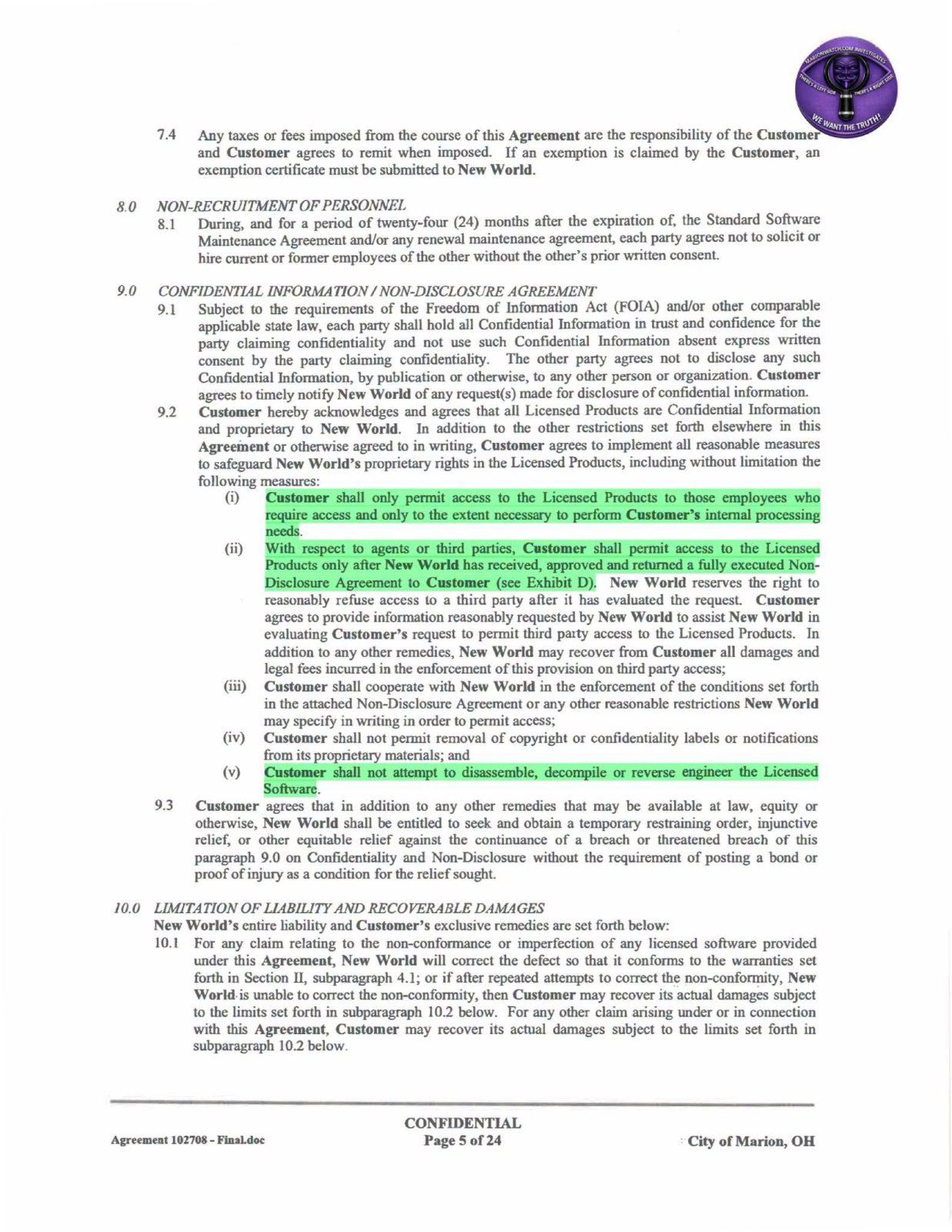
Section 9.2(i) mandated restricting software access strictly to employees requiring it for operational processing, directly contradicting the unmanaged password sharing and unchecked “God Mode” access later uncovered.
○ Consultant Gag Orders and 300% Liquidated Damages (Section 9.2(ii) & Exhibit D):
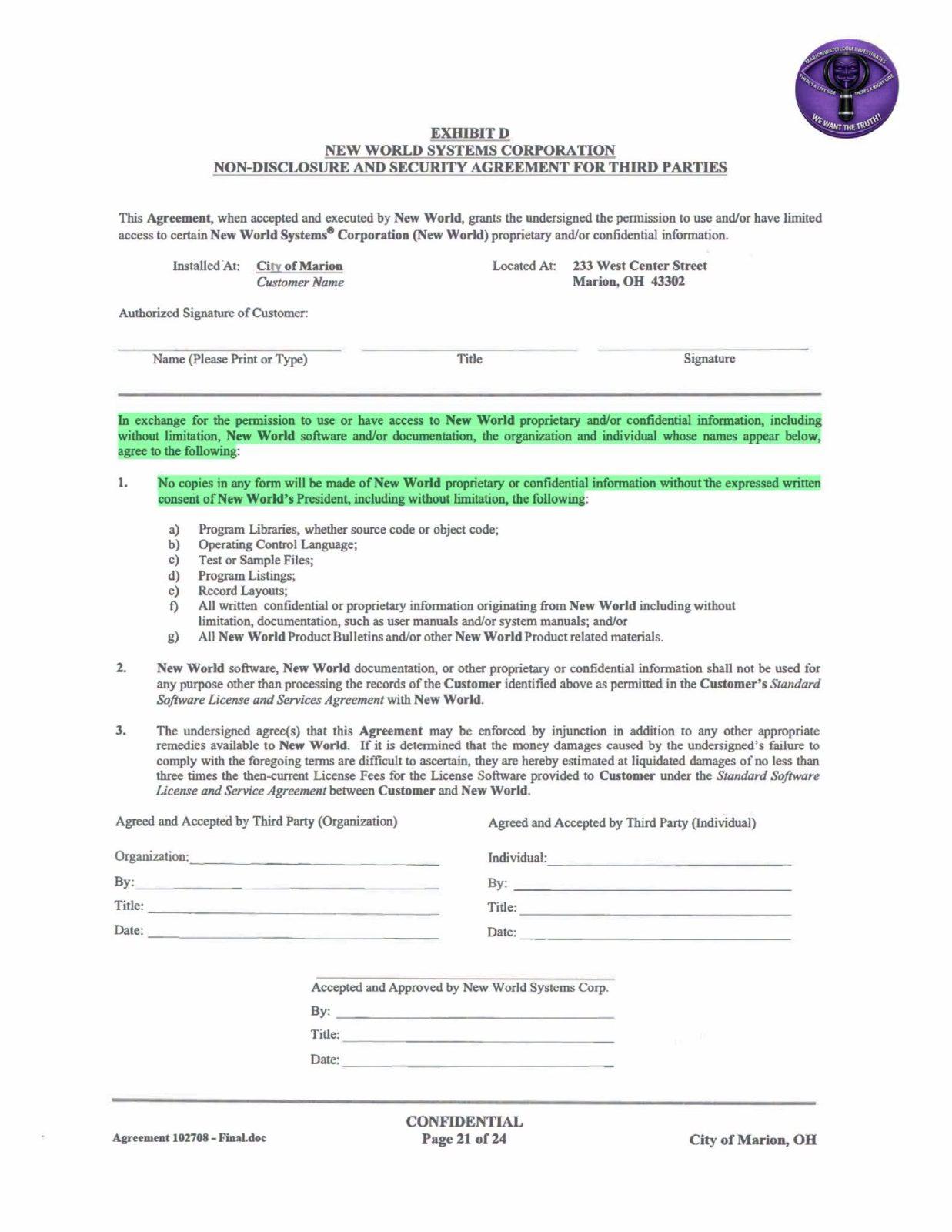
The contract barred third-party consultants or auditors from accessing software files without New World’s written consent, attaching punitive liquidated damages of three times current license fees ($912,000+) for unauthorized inspection.
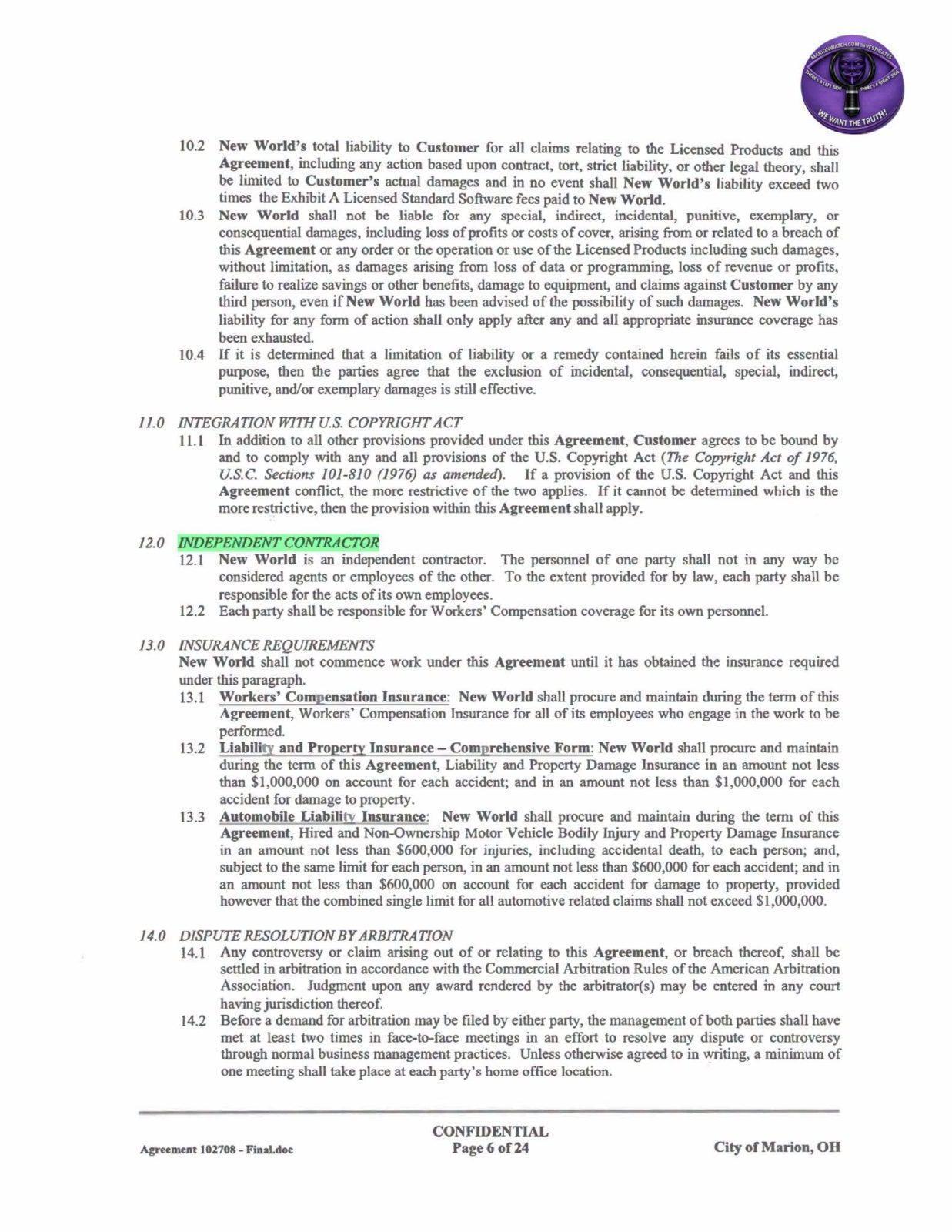
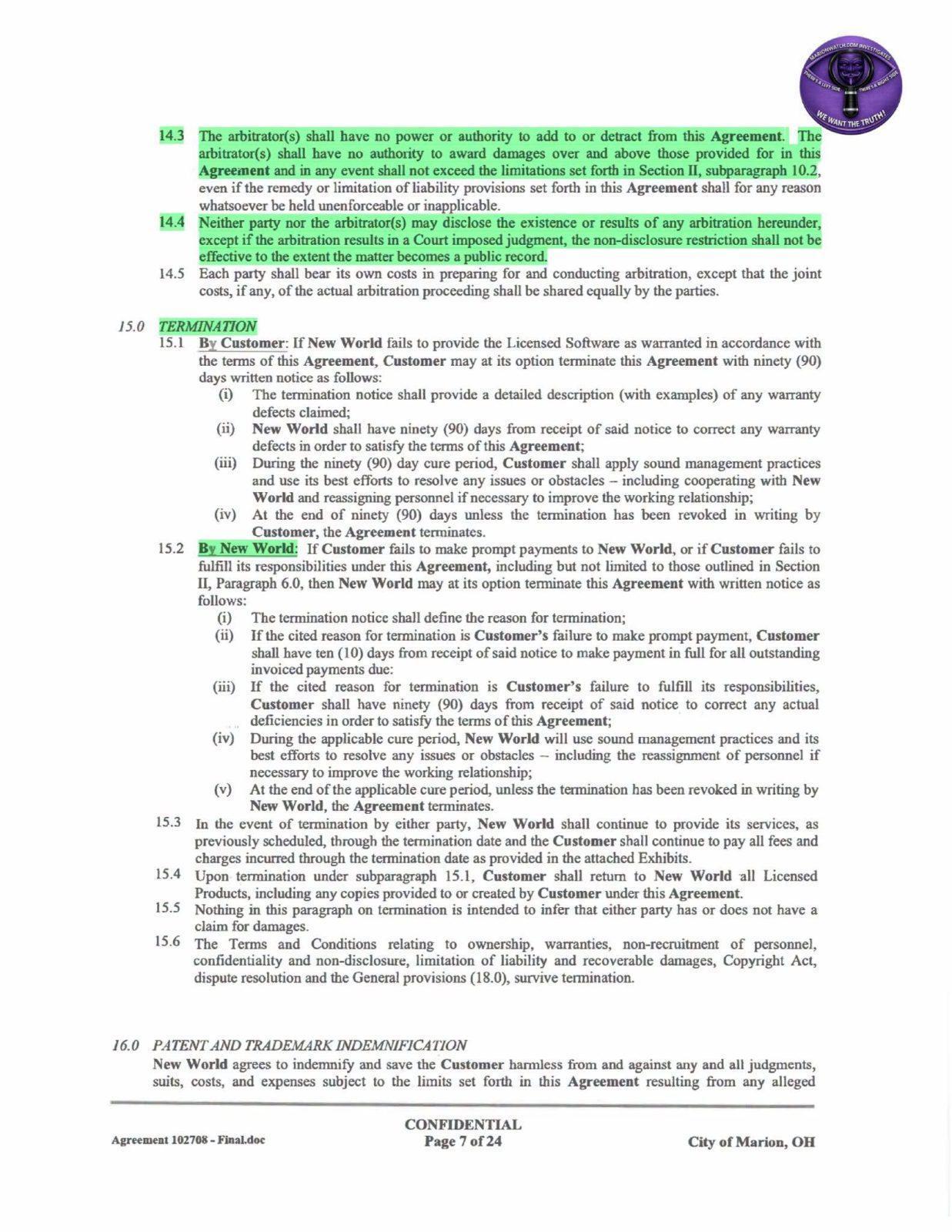
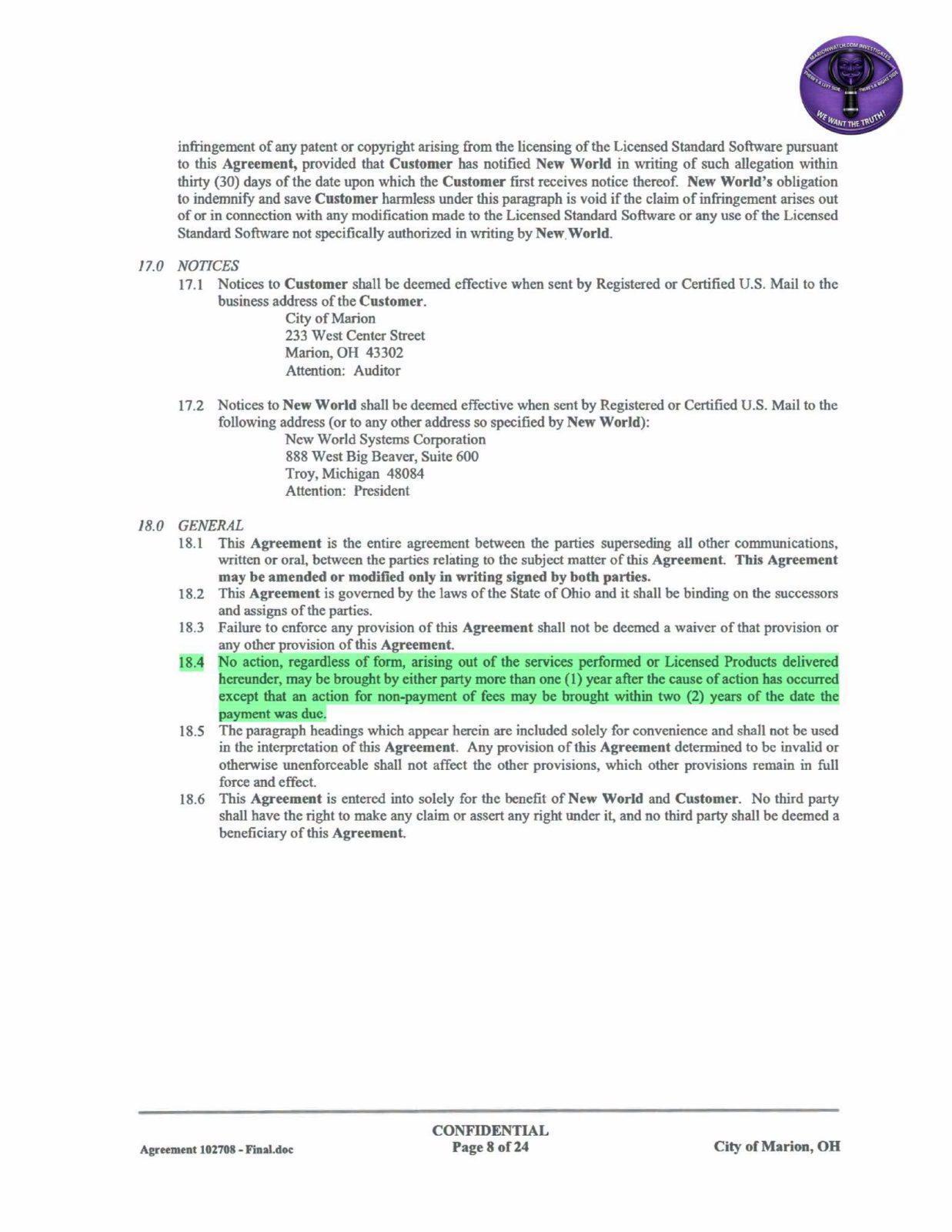
○ Secret Michigan Arbitration and the One-Year Sue Limit (Sections 14.0 & 18.4):
Disputes were forced into confidential arbitration after mandatory meetings in Troy, Michigan, while the city’s window to sue for software defects was slashed to one year (while New World retained two years to sue for non-payment).
○ The 2019 Support Amendment Backdoor (Exhibit 1):
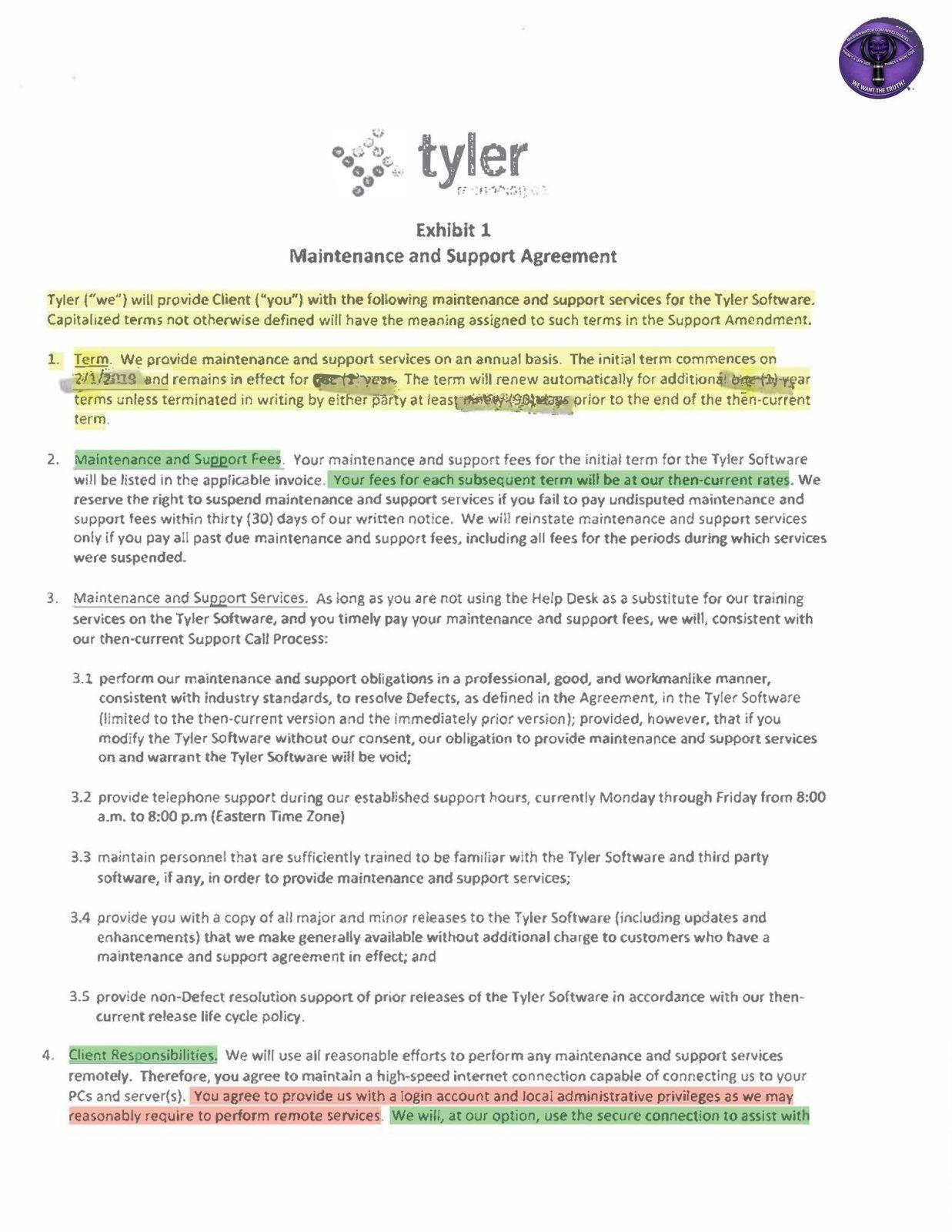
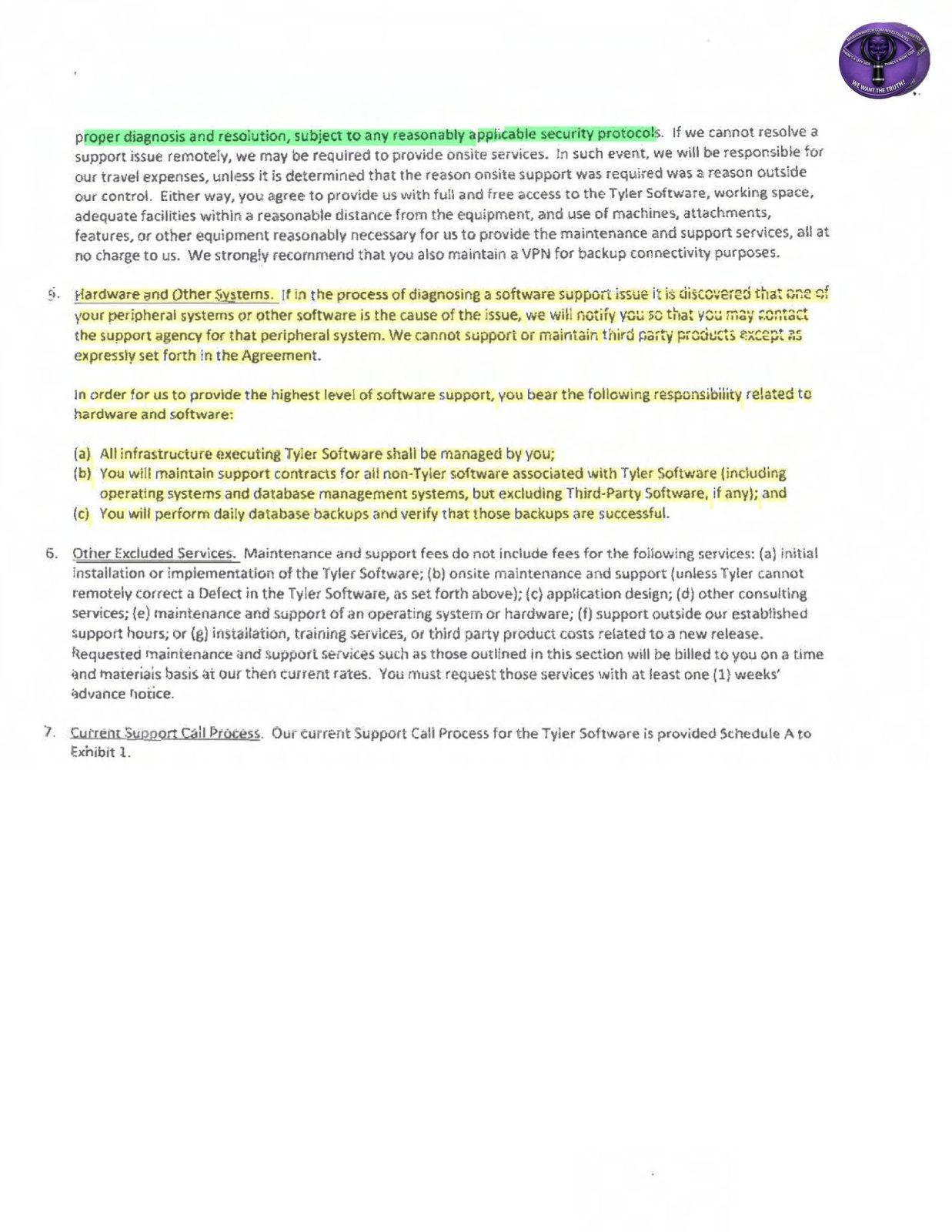
Signed by Kelly Carr in January 2019, this amendment locked in automatic annual renewals, mandated daily database backups by city staff, and forced the city to grant Tyler Technologies a dedicated login with local administrative privileges.
THE VENDOR REALITY AND THE MIGRATION TRAP
As the failure of New World becomes impossible to hide, officials have periodically floated software migration. However, municipal governance standards issue a severe warning: Do not migrate to a new platform without a comprehensive forensic IT audit.
The 2008 contract proves the vendor is not at fault for Marion’s collapse:
○ 100% City Liability (Section 6.0 & Section 4.2):
Section 6.4 places total responsibility on the city for master files, table configurations, data entry, and file control. Section 4.2 disclaims any warranty that features will suit municipal requirements.
○ Configured by Client Instruction:
State Auditor Belinda Miller confirmed on November 8, 2021, that the hybrid cash/accrual flaw was created in 2008 based entirely on internal personal preference and local office policy.
○ Operating as Designed:
Veritas managing director Greg Blate confirmed on January 22, 2024, that New World operated exactly as designed, warning council on July 24, 2023, against jumping to a new vendor before fixing internal workflows.
○ Vendor CRM Audit Trails:
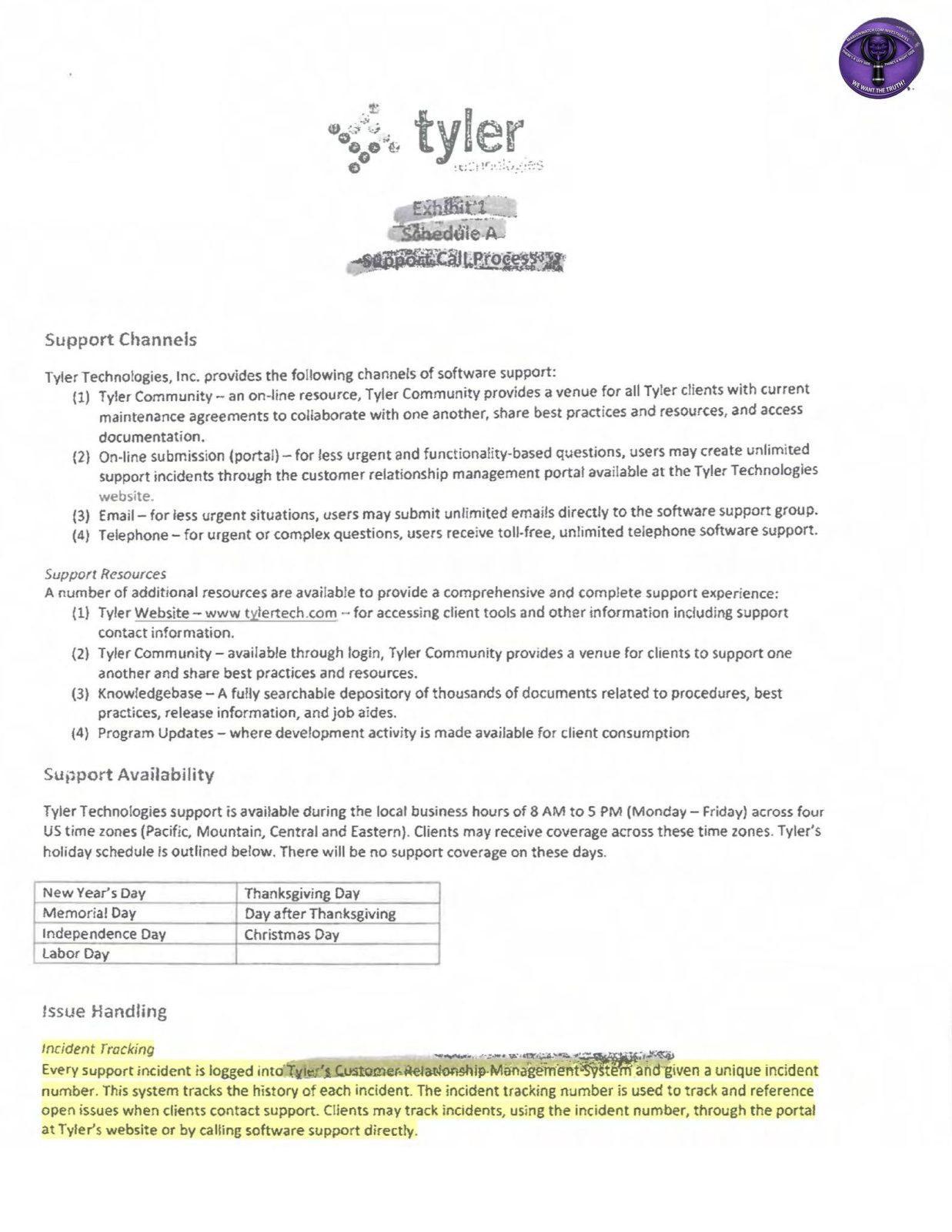
Schedule A of the 2019 Support Amendment proves every configuration request is permanently recorded in Tyler Technologies’ CRM system with a unique incident number.
Exporting 17 years of corrupted ledgers, phantom utility revenue, and manual plugs into a new platform without a forensic audit is textbook Garbage In, Garbage Out.
CONCLUSION: COMPROMISED BY DESIGN
When you strip away the political spin, the manufactured software emergency, and the polished veneer of the 2008 contract documents, the hard evidence points to an inescapable conclusion: the City of Marion’s financial management software was compromised by design from the very day it was installed.
This was never a simple administrative oversight, nor was it a sudden technical glitch born in 2020.
The structural absence of basic internal controls, the deliberate abandonment of automated safety modules, the active sheltering of super-user “God Mode” permissions, and the rubber-stamping of automatic rate hikes on empty shelfware reveal an enterprise environment engineered to operate without oversight.
A system that has been hollowed out from the inside cannot fix itself, and a digital vault intentionally left unlocked cannot produce trustworthy numbers.
This is precisely why a comprehensive, independent forensic IT audit from installation forward is no longer optional—it is mandatory if the citizens of Marion ever expect to see the full, unvarnished truth.
OFFICIAL EXHIBITS & PRIMARY SOURCE RECORDS (New World Waste)
MARION’S FINANCIAL CRISIS PART II: THE $1.33M “MAGIC BOX” GHOST MODULE SCANDAL AND THE DECADE CONTROL COLLAPSE
THE REAL STORY OF MARION’S FINANCIAL COLLAPSE
Every symptom-based forensic IT warning published by Marion Watch since 2019 has been vindicated by the city and state of Ohio’s own records.
Half-measures and political deflections will no longer suffice.
This is why we have dedicated years of research, using our nationwide network to expose this preventable catastrophe, and why we will not allow it to be swept under the rug.
If local and state officials will not do what every single IT and financial professional who have actually read the Silent Sabotage study knows needs to be done, we will escalate higher.
Marion is a textbook case study in what NOT to do in enterprise-grade IT and finance.
It proves why manual workarounds are strictly forbidden, why rule-based access controls are non-negotiable, why undocumented tribal knowledge is an existential threat to governance, and why ignoring foundational architecture guarantees catastrophic failure—truths known by qualified IT professionals globally.
When leadership treats enterprise software as a political prop rather than an instrument of statutory compliance, accountability evaporates.
Bypassing budgetary hard-stops, leaving paid controls dormant, and tolerating unrestrained “God Mode” permissions does not modernize government; it engineers a digital vault designed to operate in the dark.
For nearly two decades, the illusion of balanced books was sustained by unverified ledger plugs, non-capitalized debt borrowing, and off-book shadow systems.
A system corrupted at its foundation cannot heal itself.
Migrating to a new platform without purging seventeen years of bad data will simply automate the next generation of fiscal ruin.
A comprehensive, independent forensic IT and financial audit from installation forward, backed by state and federal law enforcement oversight, is the only way to sanitize the ledgers.
The hidden logs must be unsealed, the full chain of custody exposed, and this multi-million-dollar “Magic Black Box” of institutional negligence blown wide open!
All signs of fraud, waste, and abuse are present and the involvement of state and federal oversight and law enforcement is more than justified.
In enterprise information technology and municipal finance, software architecture does not lie.
READ THE FULL ARTICLE
TO LOOK CLOSER:
When a Tier-1 municipal Enterprise Resource Planning (ERP) platform suffers a terminal mathematical collapse, culminating in a state-mandated Fiscal Emergency and Modified/Qualified Audit Opinions across 11 of 14 opinion units, the failure is never the product of a sudden, overnight software glitch, single individuals mistake.
Under established IT governance frameworks (including ISACA COBIT and COSO internal control standards), catastrophic ledger corruption is the terminal detonation of technical debt and latent control collapse accumulated over more than a decade.
In our first installment, MARION’S FINANCIAL CRISIS PART I: THE $2.5M PRICE TAG AND THE BIRTH OF MARION’S ULTIMATE “MAGIC BOX”, we exposed how city leadership used a manufactured software emergency and an internal theft scandal to saddle taxpayers with a compromised financial system.
PART I AT A GLANCE: THE BIRTH OF THE “MAGIC BOX” AND SUSPICIOUS ORIGINS
○ The Crisis & The Alibi:
Between 2006 and 2009, while draining carryover reserves and freezing employee wages to stave off layoffs, the former administration bypassed the city’s 19-year dormant Information Systems “Ghost Committee” to force through the $649,500 New World ERP contract.
○ The 24-Hour Collision:
Leadership executed the contract on October 29 and 30, 2008, under an artificial 72-hour vendor deadline on the exact same days a Zoning and Engineering employee was suspended and resigned for pocketing bond and permit cash. The administration hid the felony conviction from City Council for five months, then weaponized it on March 23, 2009, claiming New World would replace “paper, pencil, and very little computer technology” and eliminate “the human factor”.
○ The Vanished Surplus & $2.5M+ Price Tag:
The city wired $166,950 on November 14, 2008, five months before Council passed Ordinance 2009-39 ($750,000 in notes, leaving an unallocated $100,500 surplus above the $649,500 contract price) and rolled it into $775,200 of 20-year bonds through 2030. Rubber-stamped 5% compounding hikes under a 2019 Support Amendment drove annual bills to $153,117.09 by 2026, with $1,148,470.34 paid across 48 checks and EFTs from 2017 to 2025 alone.
○ The Contract Red Flags & 100% City Liability:
The 2008 contract billed taxpayers $43,000 for seven unwritten (development) modules, $20,000 for GIS modules lacking required ESRI software, and twice for Bank Reconciliation ($4,000 license plus $1,500 interface), while turning Marion into a marketing “Demonstration Site” (Exhibit E), barring data cleansing (Exhibit F), threatening 300% liquidated damages ($912,000+) against third-party auditors (Exhibit D), and placing 100% legal responsibility on the city for master files, table configurations, and data entry (Sections 4.2 and 6.4).
PART II: TOTAL SOFTWARE WASTE AND THE ACCURACY OF SYMPTOM-BASED FORENSICS
While Part I exposed the traps buried in the 2008 contract text, Part II exposes what happened after the ink dried: over the next 17 years, city leadership quietly abandoned 70% to 80% of the software platform from day one while disabling the safety switches on the rest.
Despite purchasing a 200-user site license and agreeing under Section 6.0 to assign a dedicated Customer Liaison responsible for master files and table control, the city operated without an IT trouble-ticketing system, coerced employees into sharing passwords, and left critical safety modules sitting untouched on the shelf.
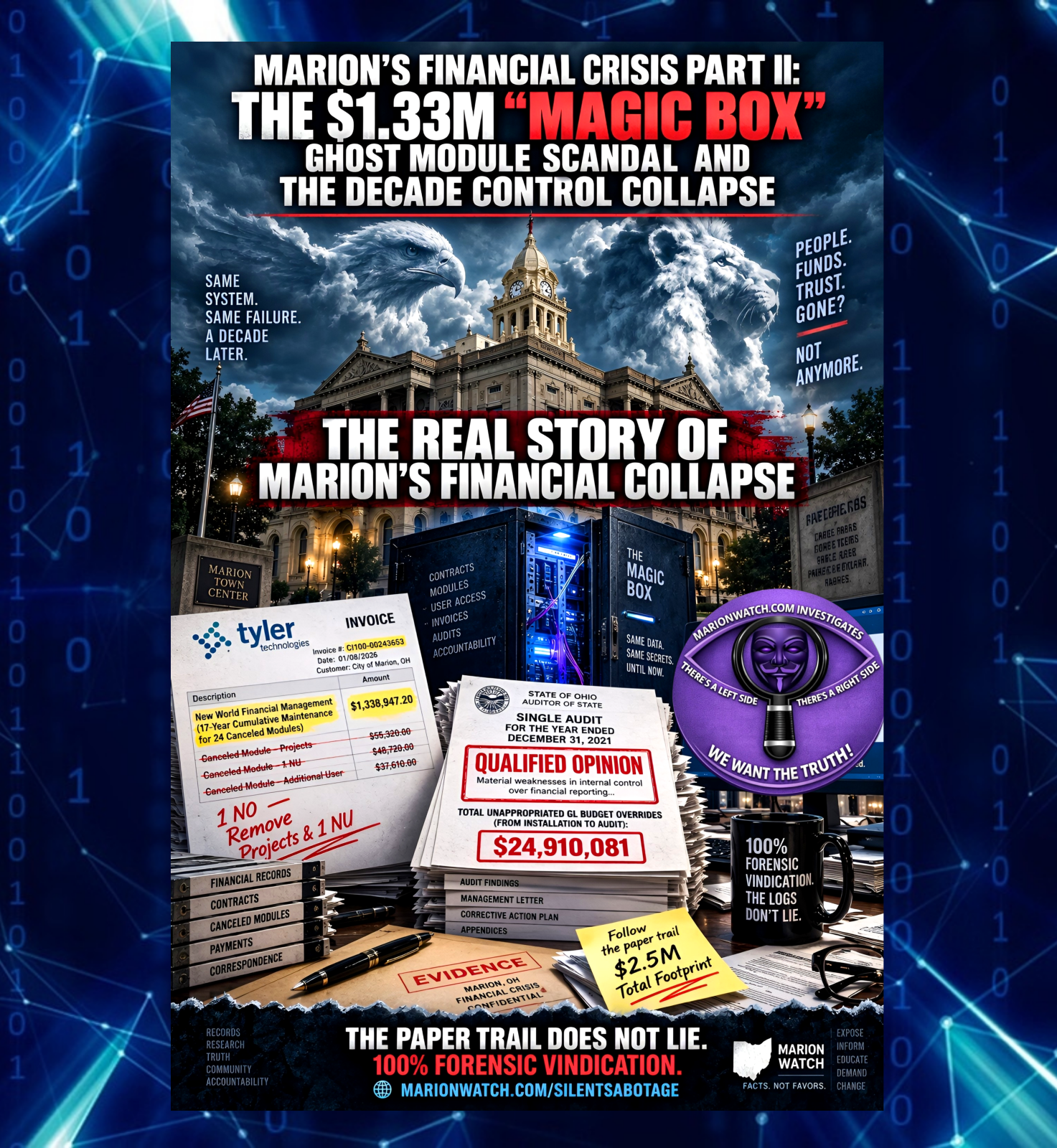
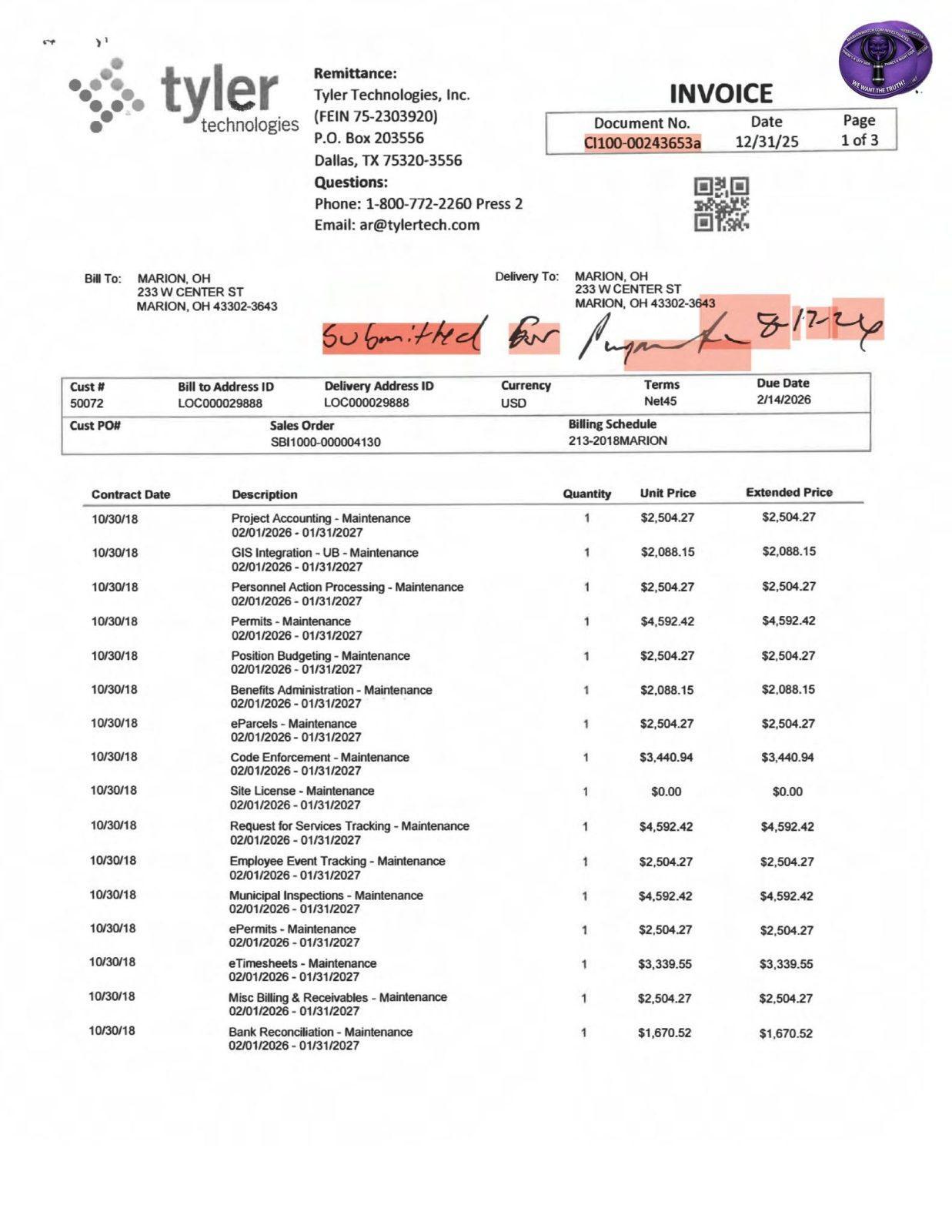
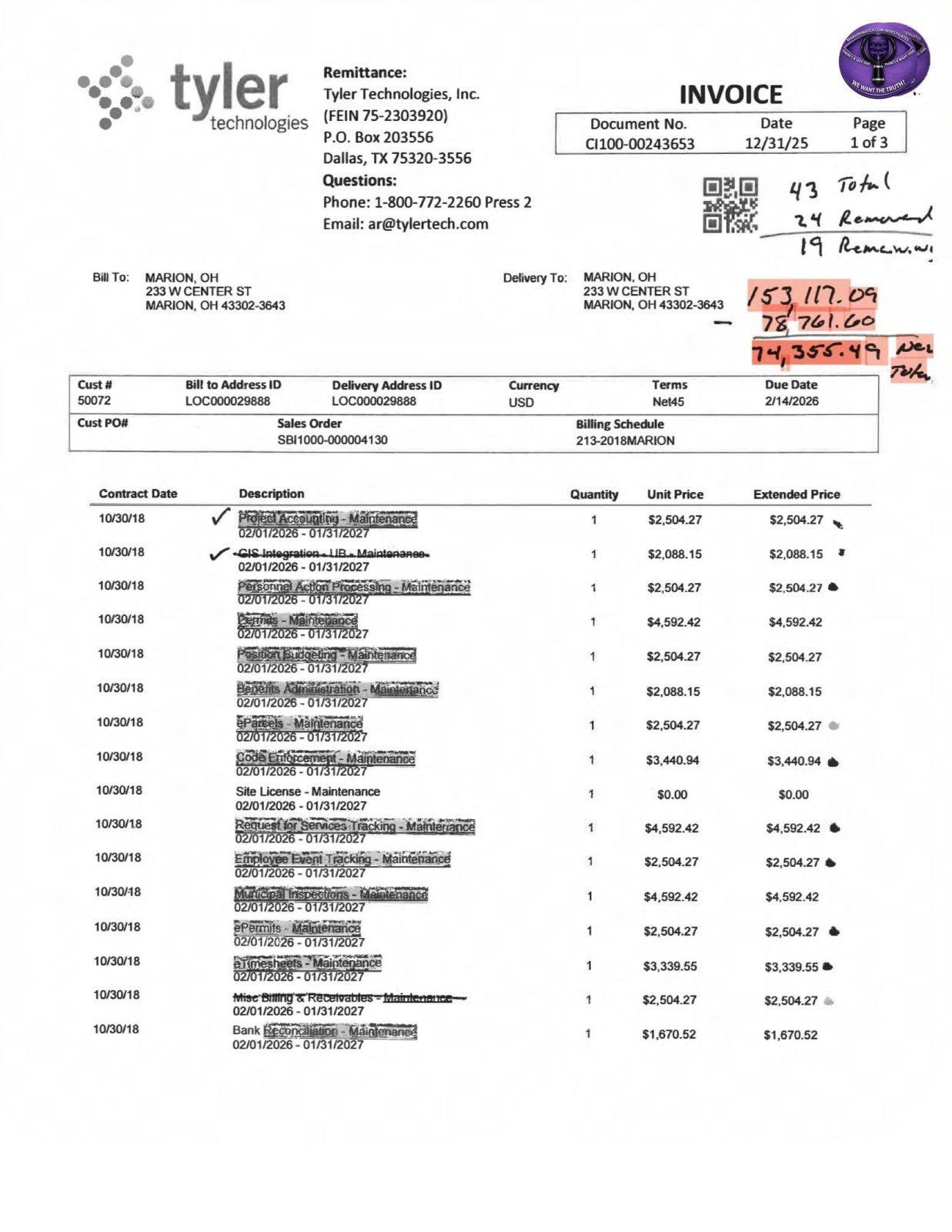
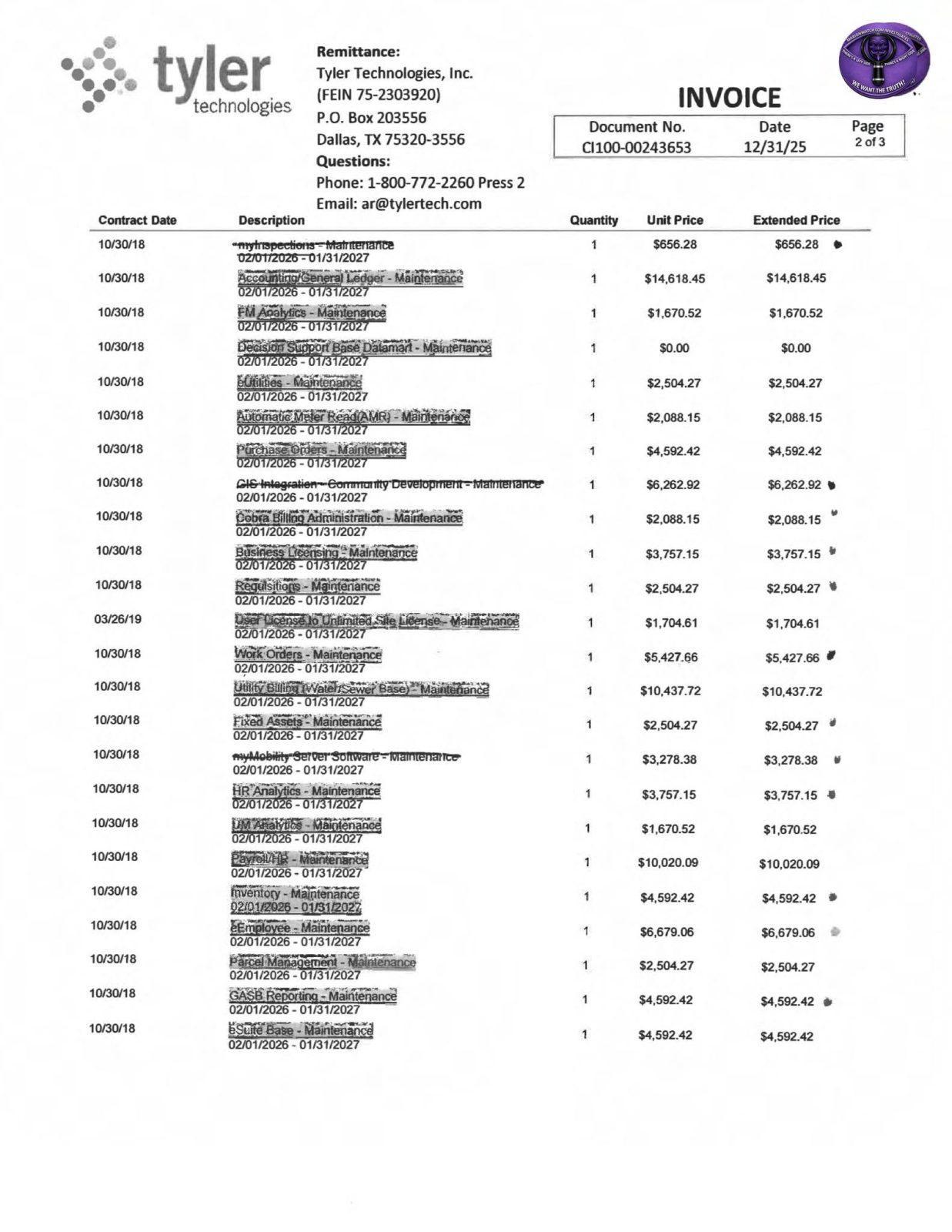
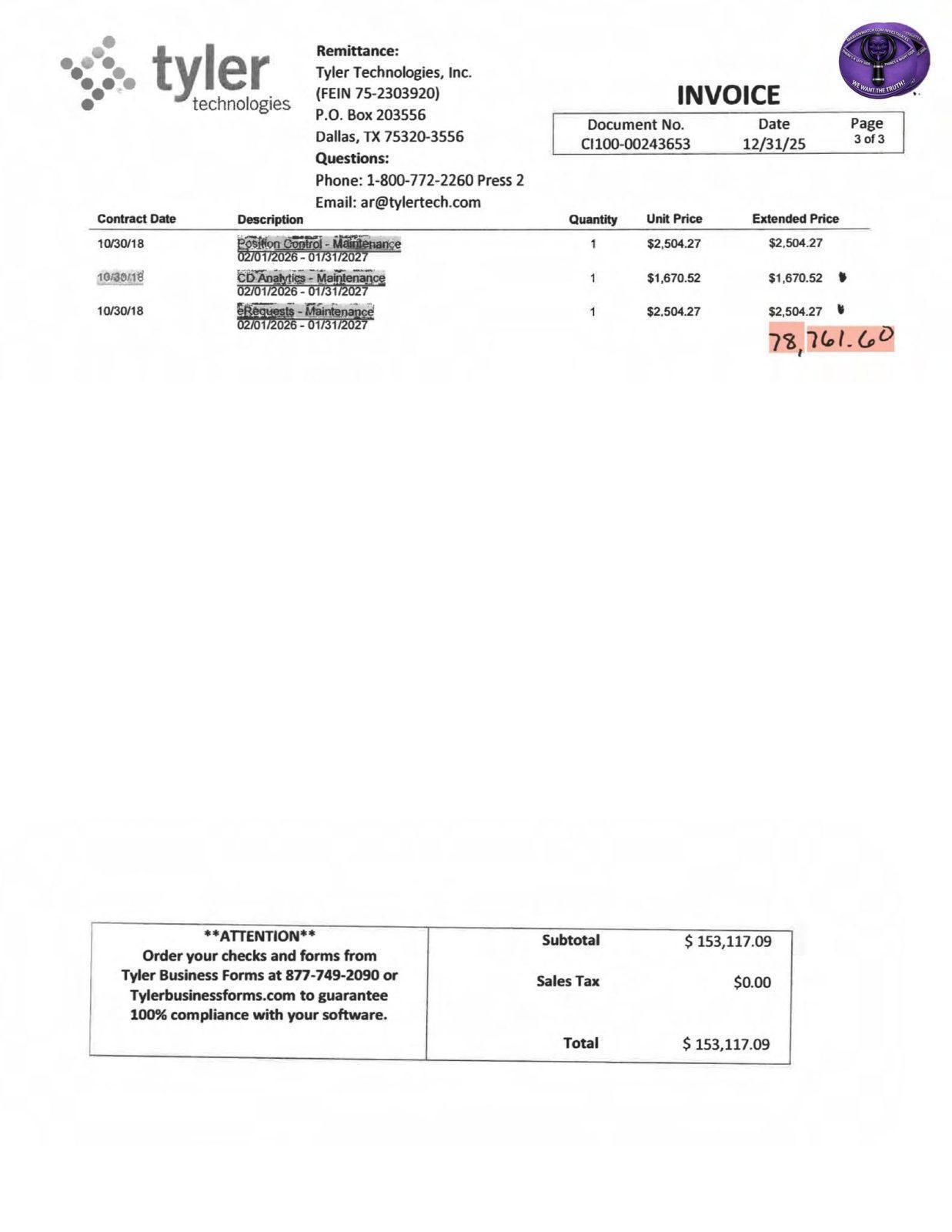
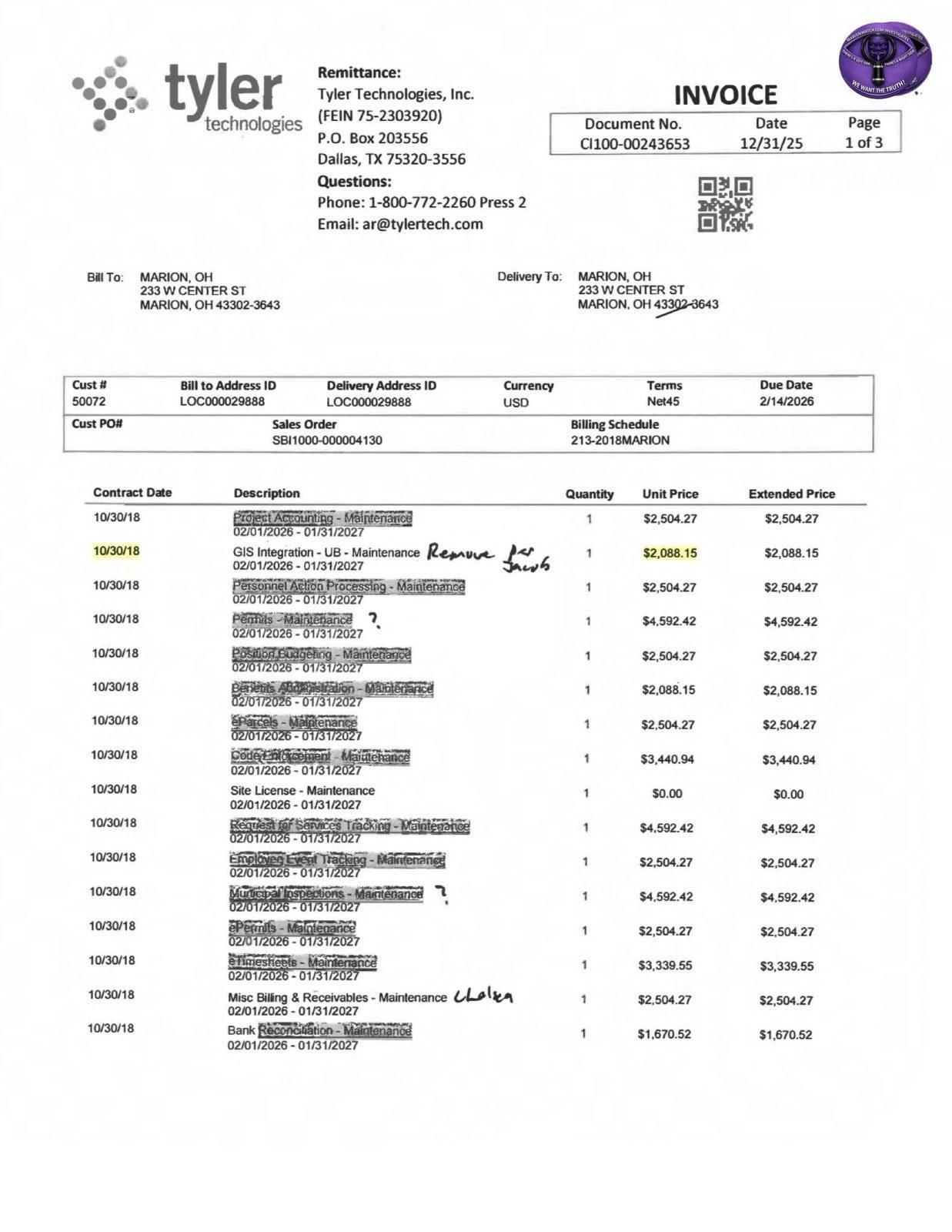
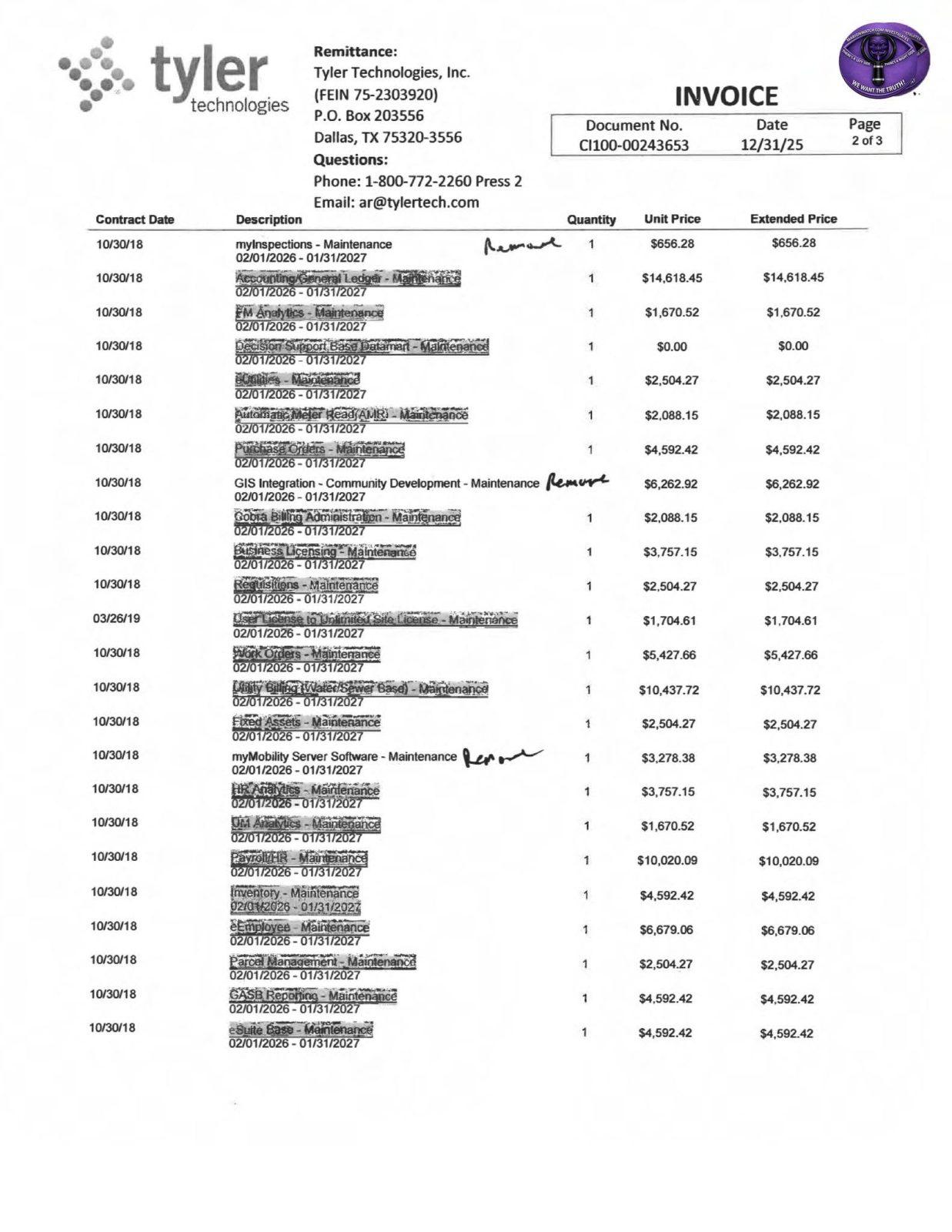
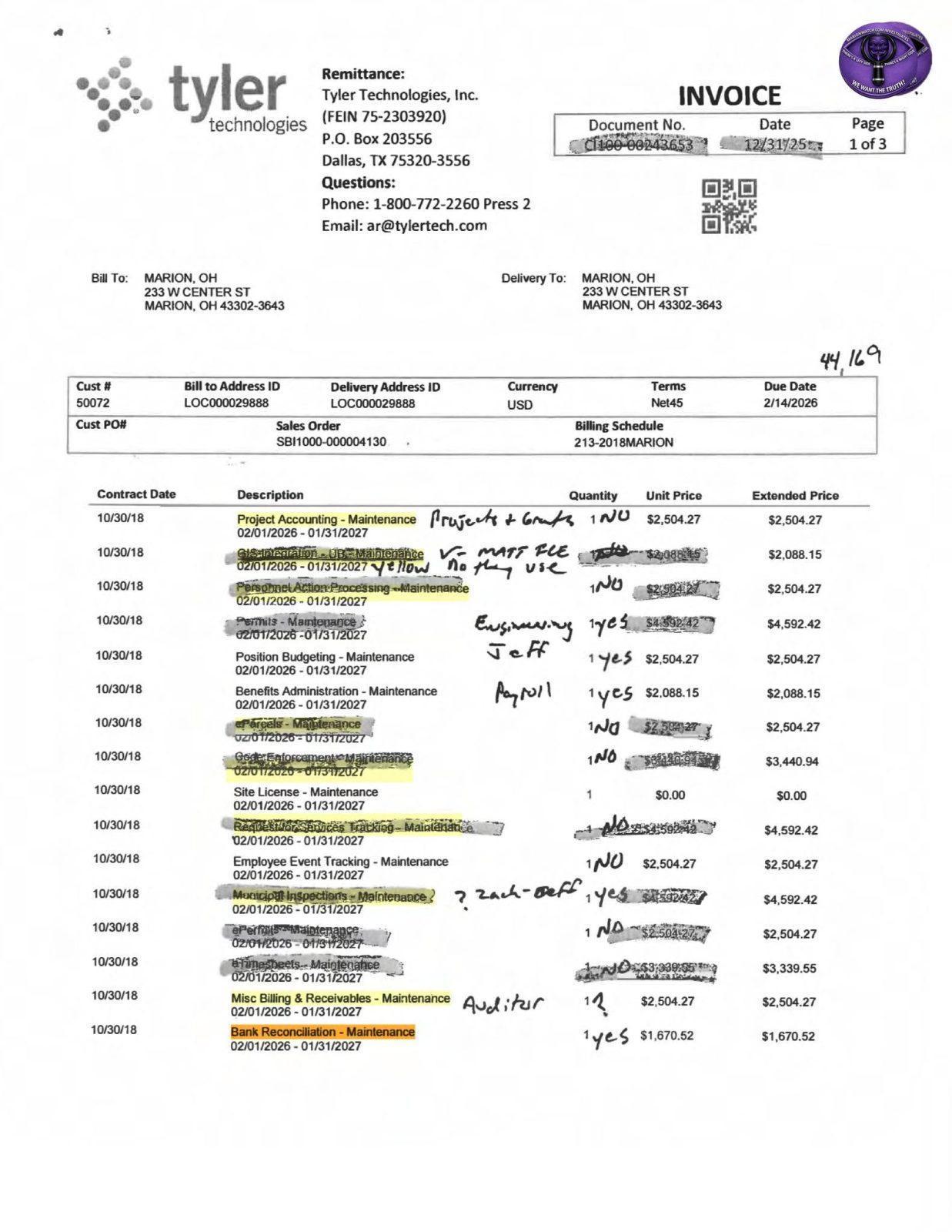
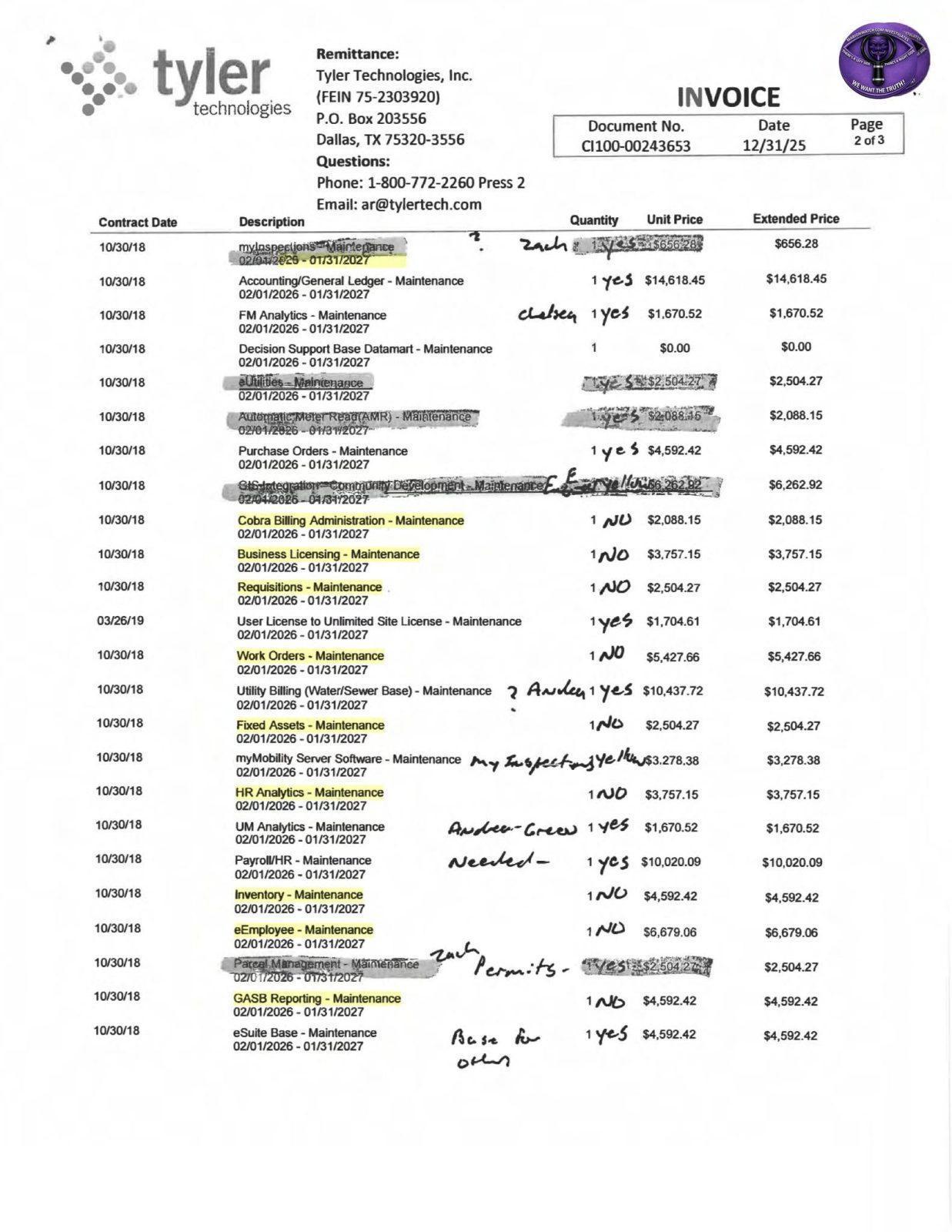
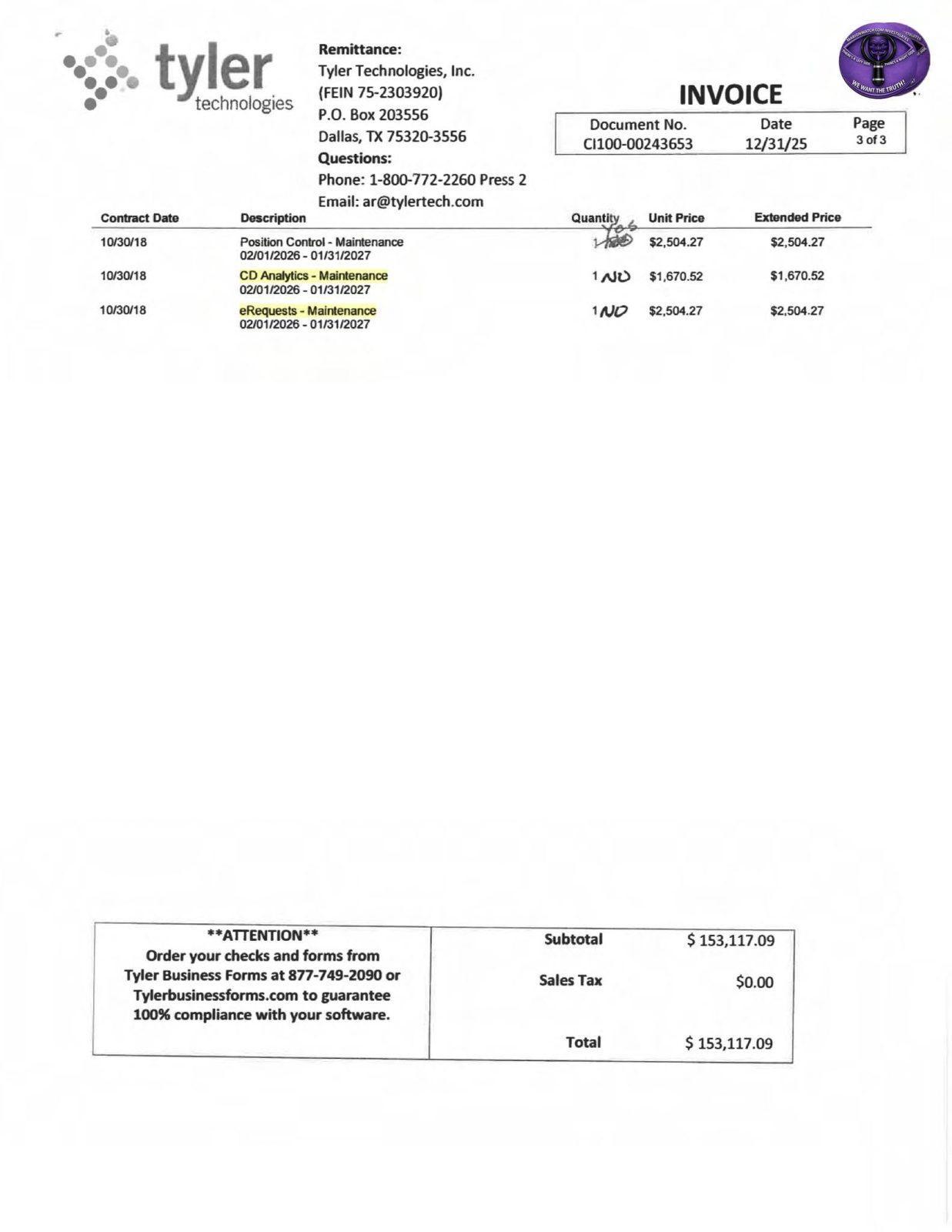
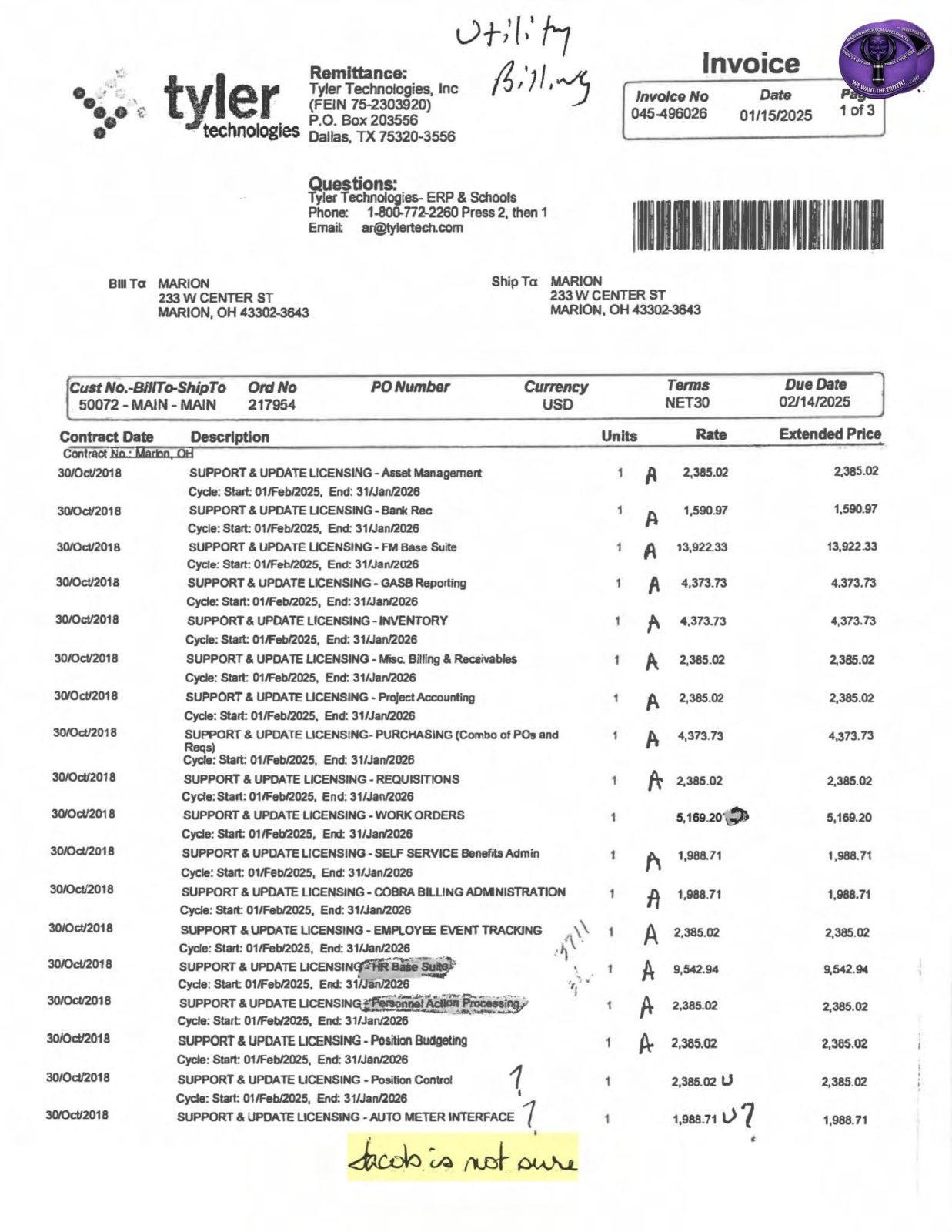
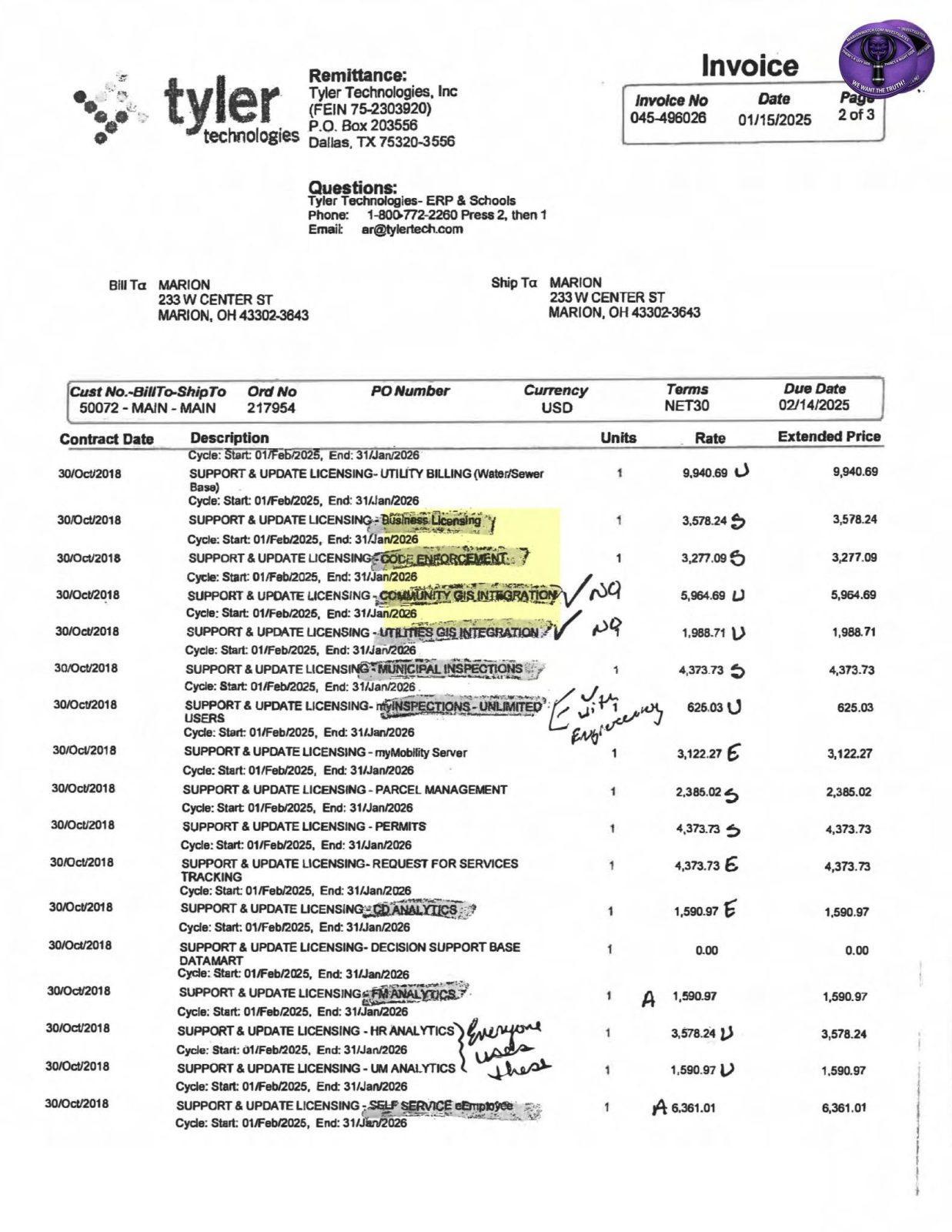
Internal city billing review sheets for Invoice CI100-00243653 ($153,117.09 across 43 items) show officials scribbling ink notes directly across the invoice lines.
At the top of the first page, an official tallied the exact breakdown: “43 Total, 24 Removed, 19 Remaining, 153,117.09 Total, 78,761.60 Credit, 74,355.49 Net”.
Beside Project Accounting ($2,504.27/yr), an official wrote “Projects & 1 NU” (Never Used).
Down the invoice margins next to 17 different modules, officials wrote “1 NO”.
Next to inspection and GIS lines, staff wrote “Remove” and “My Inspection Yellow”.
Next to Misc. Billing & Receivables ($2,504.27/yr), notes read “Auditor 1 ?” and “Chelsea,” while a note on the 2025 invoice next to Auto Meter Interface ($1,988.71/yr) admitted: “Jacob is not sure”.
That last comment is highly concerning, an IT administrator should know the software being used inside and out.
They are supposed to be the local subject matter experts.
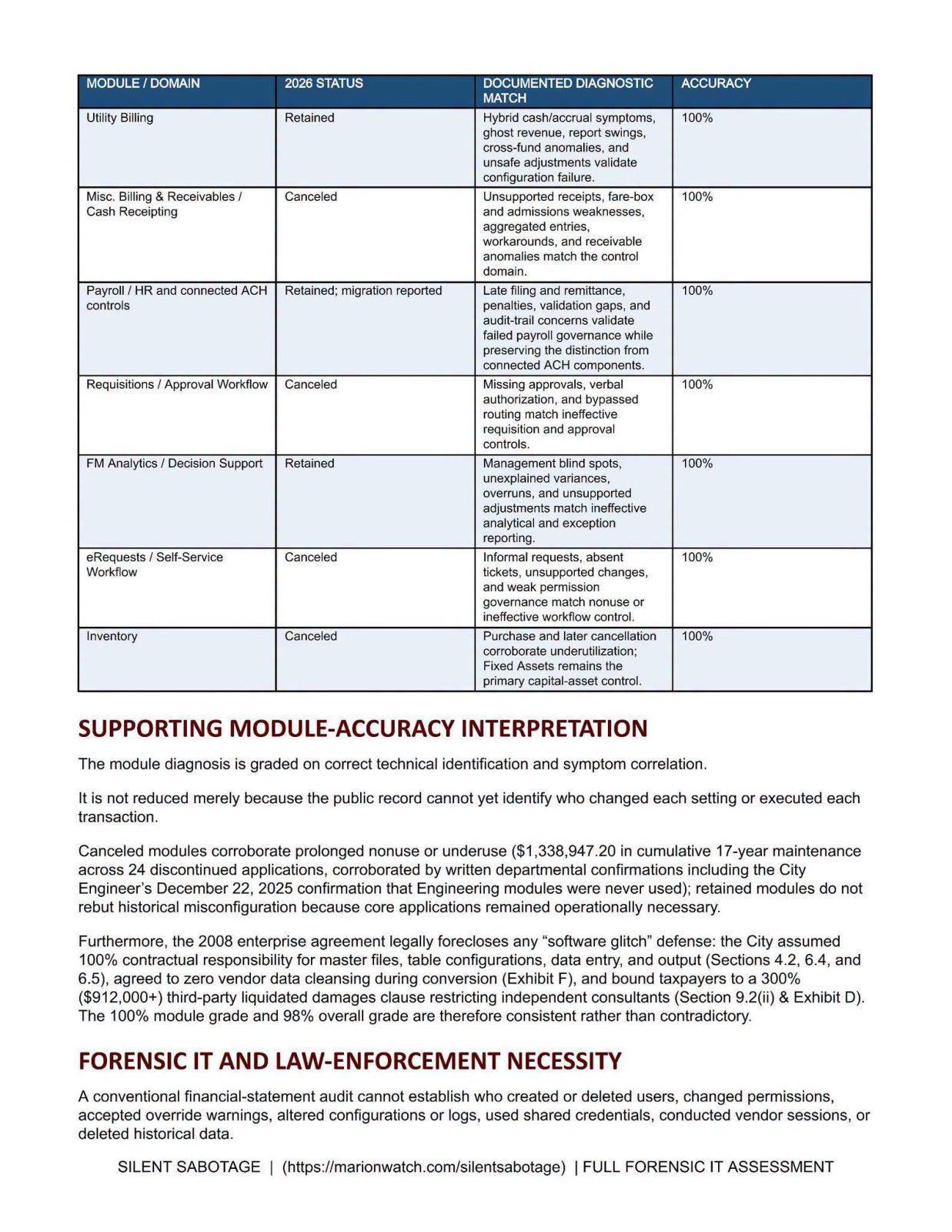
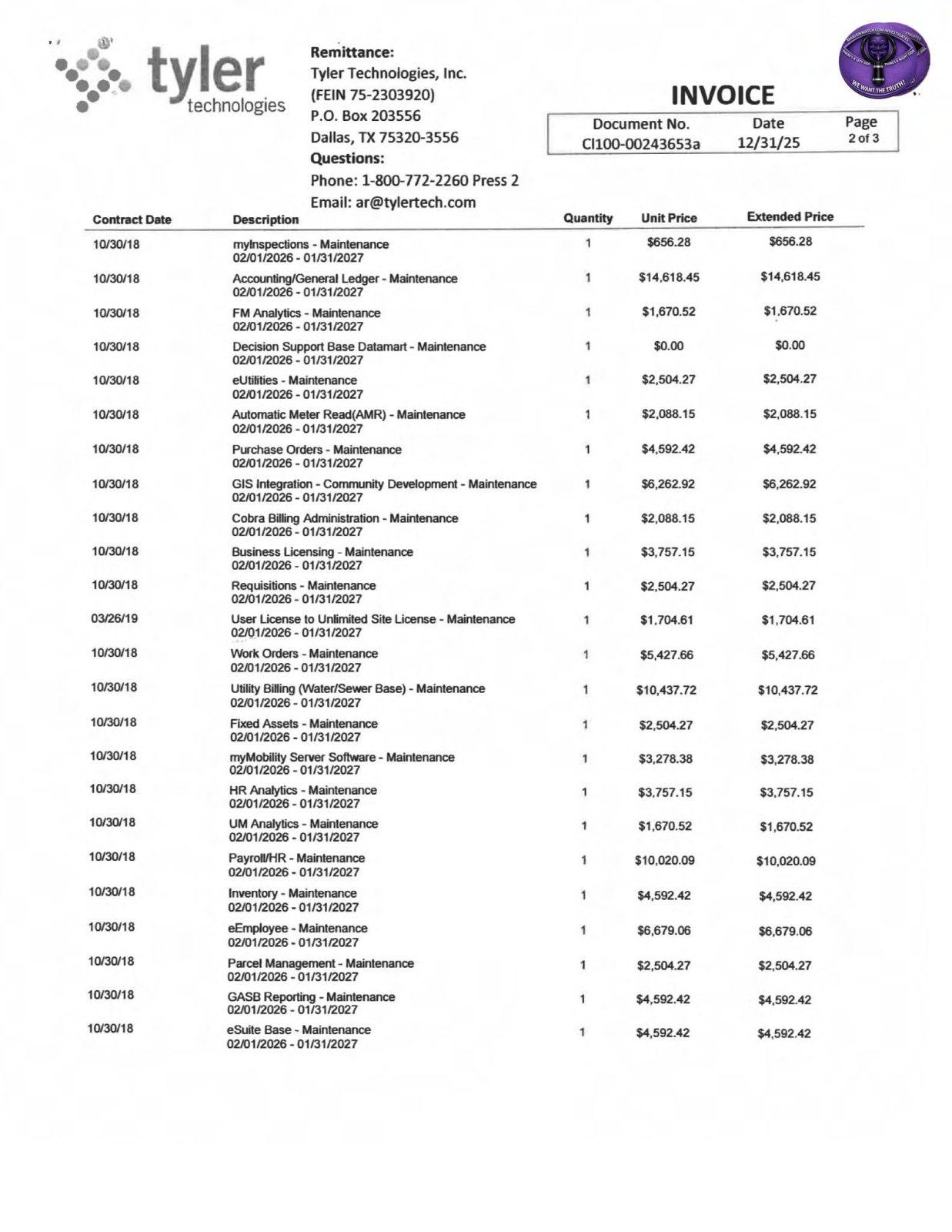
Here are the 24 applications Marion officially canceled after paying to keep them dormant for 17 years:
○ eEmployee: $6,679.06/yr
○ GIS Integration (Community Development): $6,262.92/yr
○ Work Orders: $5,427.66/yr
○ Request for Services Tracking: $4,592.42/yr
○ Inventory: $4,592.42/yr
○ GASB Reporting: $4,592.42/yr
○ Business Licensing: $3,757.15/yr
○ HR Analytics: $3,757.15/yr
○ Code Enforcement: $3,440.94/yr
○ eTimesheets: $3,339.55/yr
○ myMobility Server Software: $3,278.38/yr
○ Project Accounting: $2,504.27/yr
○ Personnel Action Processing: $2,504.27/yr
○ eParcels: $2,504.27/yr
○ Employee Event Tracking: $2,504.27/yr
○ ePermits: $2,504.27/yr
○ Misc. Billing & Receivables: $2,504.27/yr
○ Requisitions: $2,504.27/yr
○ Fixed Assets: $2,504.27/yr
○ eRequests: $2,504.27/yr
○ GIS Integration (Utility Billing): $2,088.15/yr
○ Cobra Billing Administration: $2,088.15/yr
○ CD Analytics: $1,670.52/yr
○ myInspections: $656.28/yr
At $78,761.60 per year, paying for these 24 unused applications across 17 years represents approximately $1,338,947.20 in wasted maintenance alone, on top of the $158,000 spent upfront in Exhibit A of the 2008 contract just to license them.
HOW ABANDONED MODULES DIRECTLY CAUSED MARION’S AUDIT FAILURES
In municipal governance, ERP modules are not optional accessories; they enforce statutory compliance.
Leaving these 24 tools dormant or drastically misconfigured directly caused a decade of state and federal audit citations, examples include:
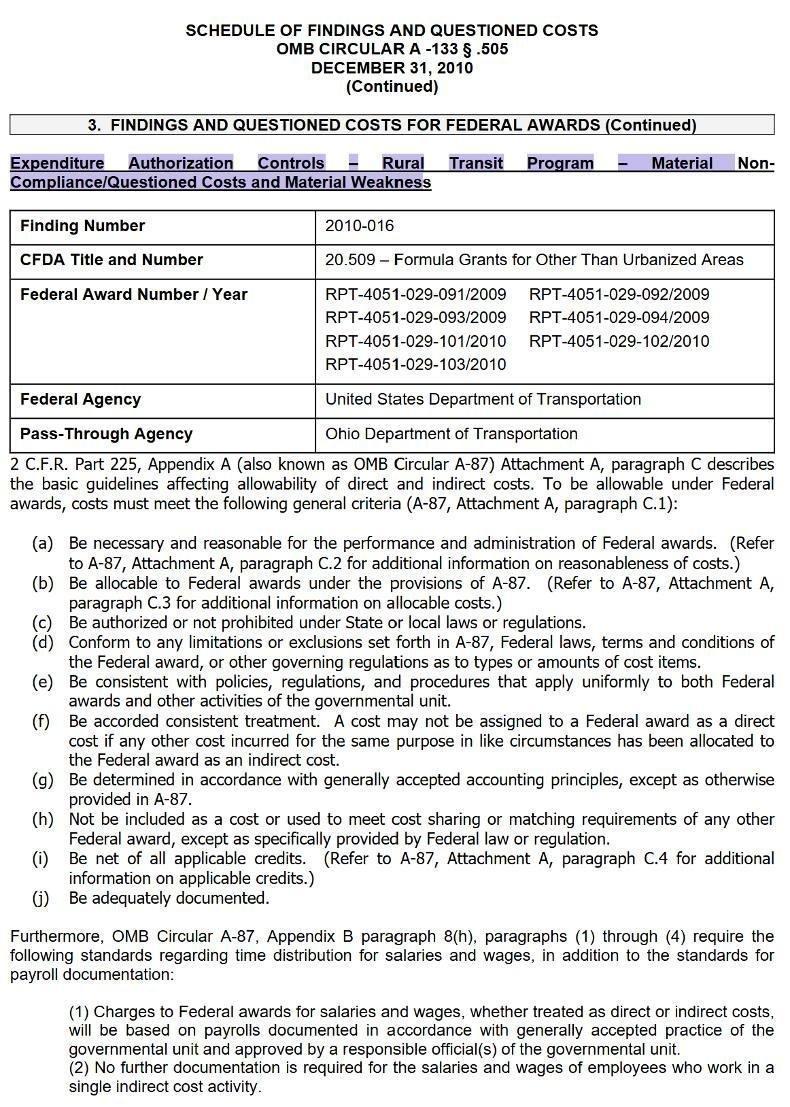
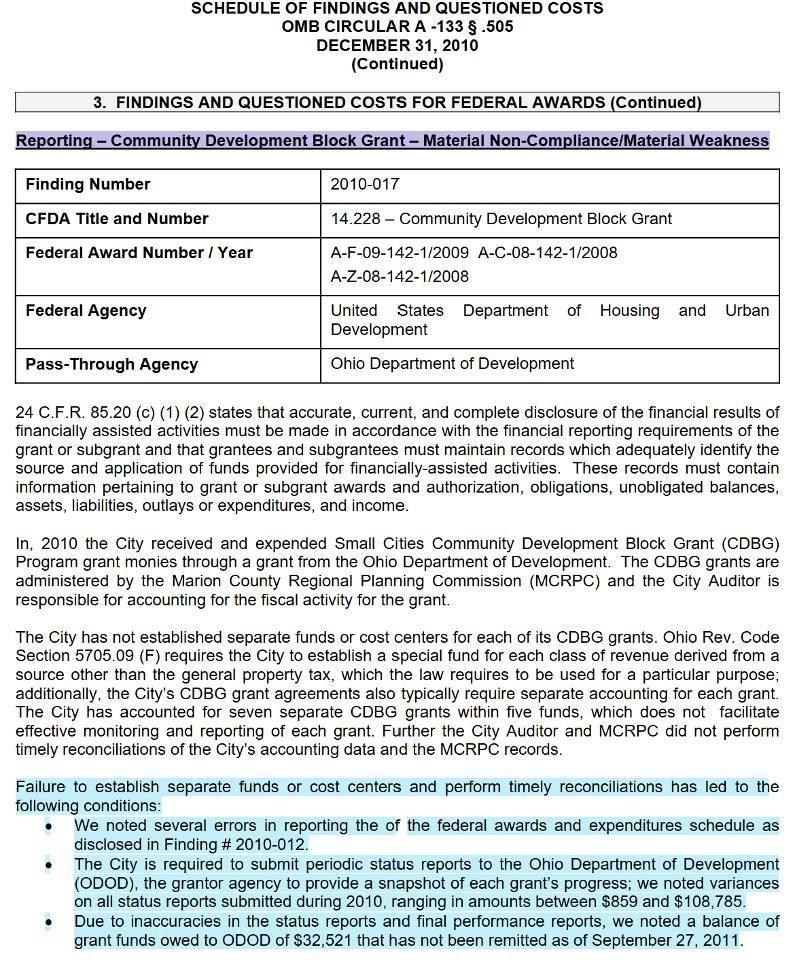
Leaving Project Accounting ($2,504.27/yr) unused caused the city to commingle seven CDBG grants across five funds (Findings 2010-010, 2010-017, 2011-010, and 2012-009), violate the 15-day federal cash drawdown rule for up to 222 days (Findings 2009-009, 2010-018, 2011-011, and 2012-010), lose track of a half-million-dollar ODOT transit grant for six months in 2011, run an off-book “Shadow QuickBooks” ledger in 2012 that over-drained $77,108 from the General Fund (Finding 2012-007), and omit $33,952 in Police Helmets grants in 2020 and $634,680 in OPWC infrastructure grants in 2021 (Finding 2021-003).
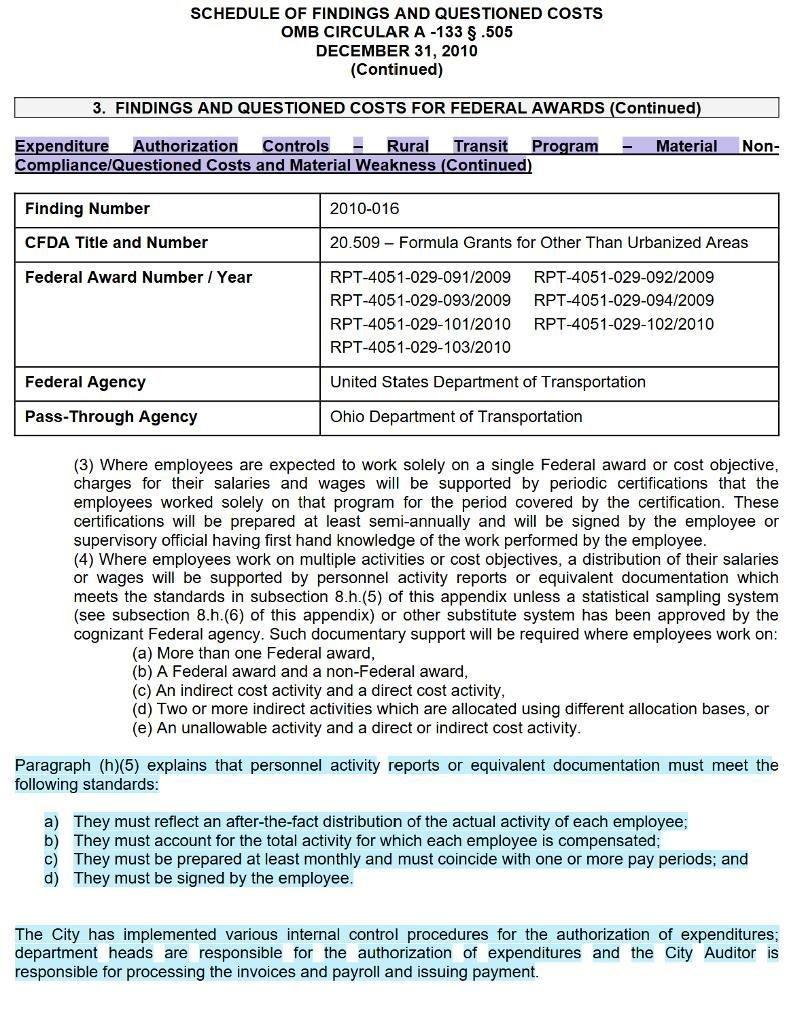
Leaving Fixed Assets ($2,504.27/yr) and Inventory ($4,592.42/yr) dormant triggered a 2011 financial restatement and consecutive Federal Material Weaknesses in 2018 (Finding 2018-001) and 2019 (Finding 2019-001) after the city failed to conduct physical asset inventories for over two years. Bypassing Requisitions ($2,504.27/yr) and eRequests ($2,504.27/yr) allowed 22% to 30% of tested purchase orders in 2009 and 2010 to clear without department head approval via “verbal” authorizations (Findings 2009-007, 2010-006, and 2010-020) and caused a 2017 Federal Material Weakness (Finding 2017-001) when 14% of CDBG purchases violated procurement rules.
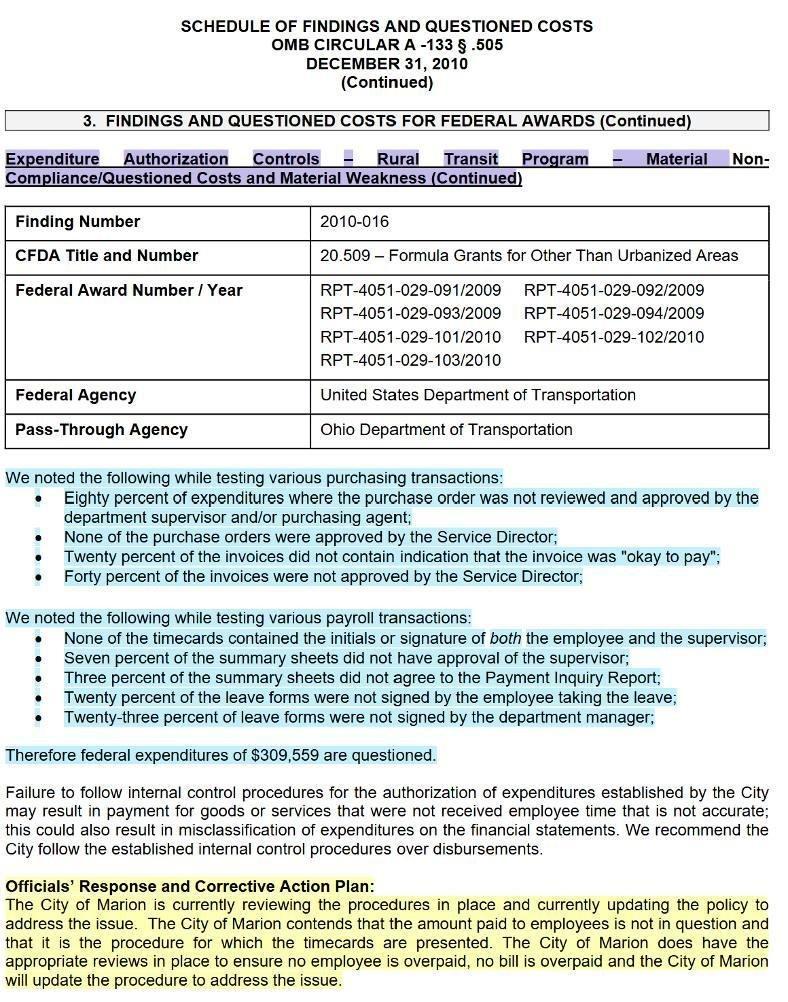
Abandoning Misc. Billing & Receivables ($2,504.27/yr) and eTimesheets ($3,339.55/yr) produced recurring Transit farebox citations (2010 to 2013), a 2012 Qualified Audit Opinion on the Aquatics Center Fund (Finding 2012-005) where $271,288 in cash receipts was plugged under aggregated receipt numbers, and $309,559 in questioned federal transit payroll costs (Findings 2009-010 and 2010-016) where 97% to 100% of timecards lacked signatures. Finally, leaving GASB Reporting ($4,592.42/yr) unused culminated in the 2021 surrender of GAAP reporting (Finding 2021-001), wiping $140,261,602 in asset accruals and $117,794,601 in liability accruals off the balance sheets, disqualifying Marion from the EPA financial test for its $680,818 landfill liability, and causing Standard & Poor’s to withdraw the city’s bond rating in April 2023.
THE OTHER HALF OF THE SABOTAGE: THE 19 RETAINED MODULES
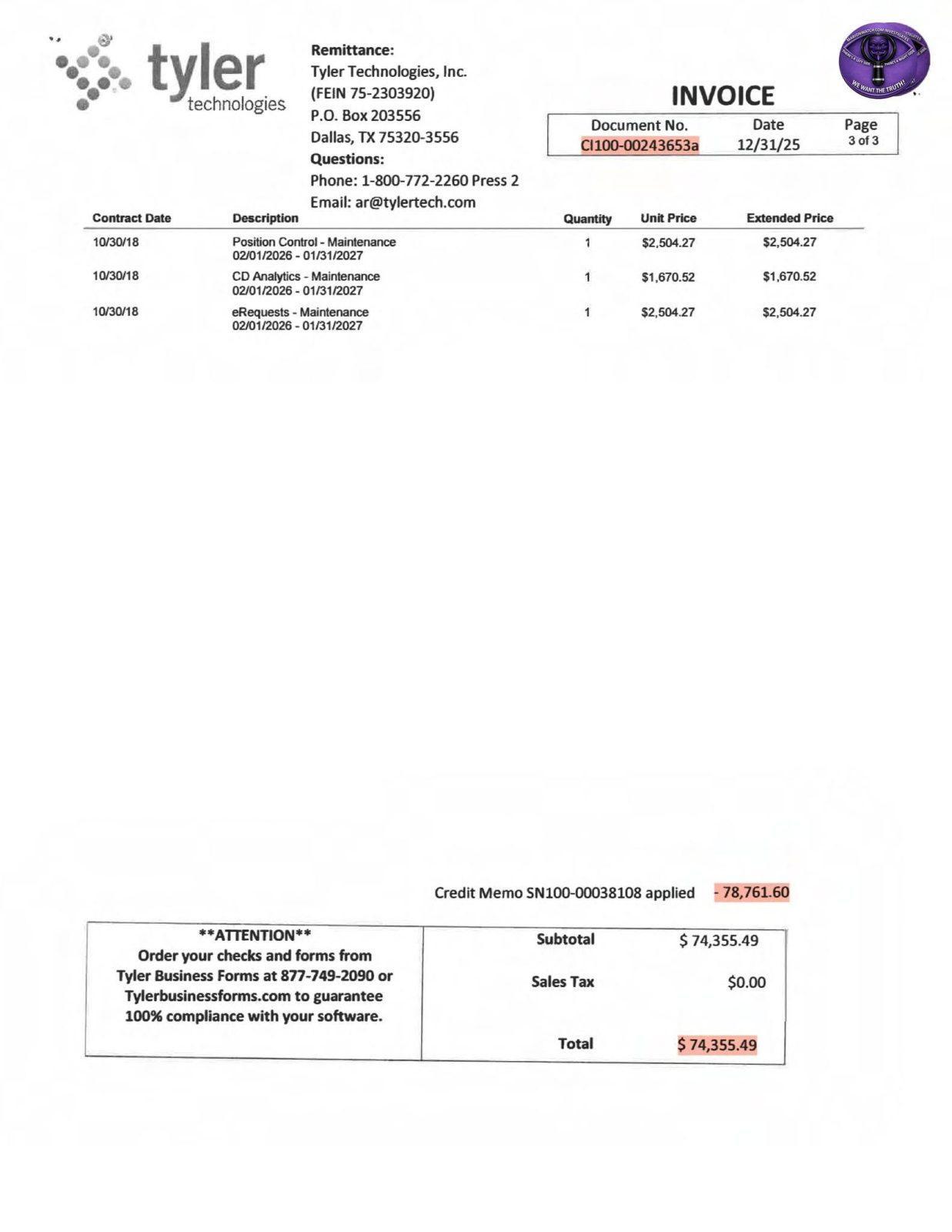
Canceling 24 ghost modules saves $78,761.60 a year, but the remaining 19 modules ($74,355.49/yr) housed the active backend sabotage that drove Marion into Fiscal Emergency:
○ Bank Reconciliation ($1,670.52/yr):
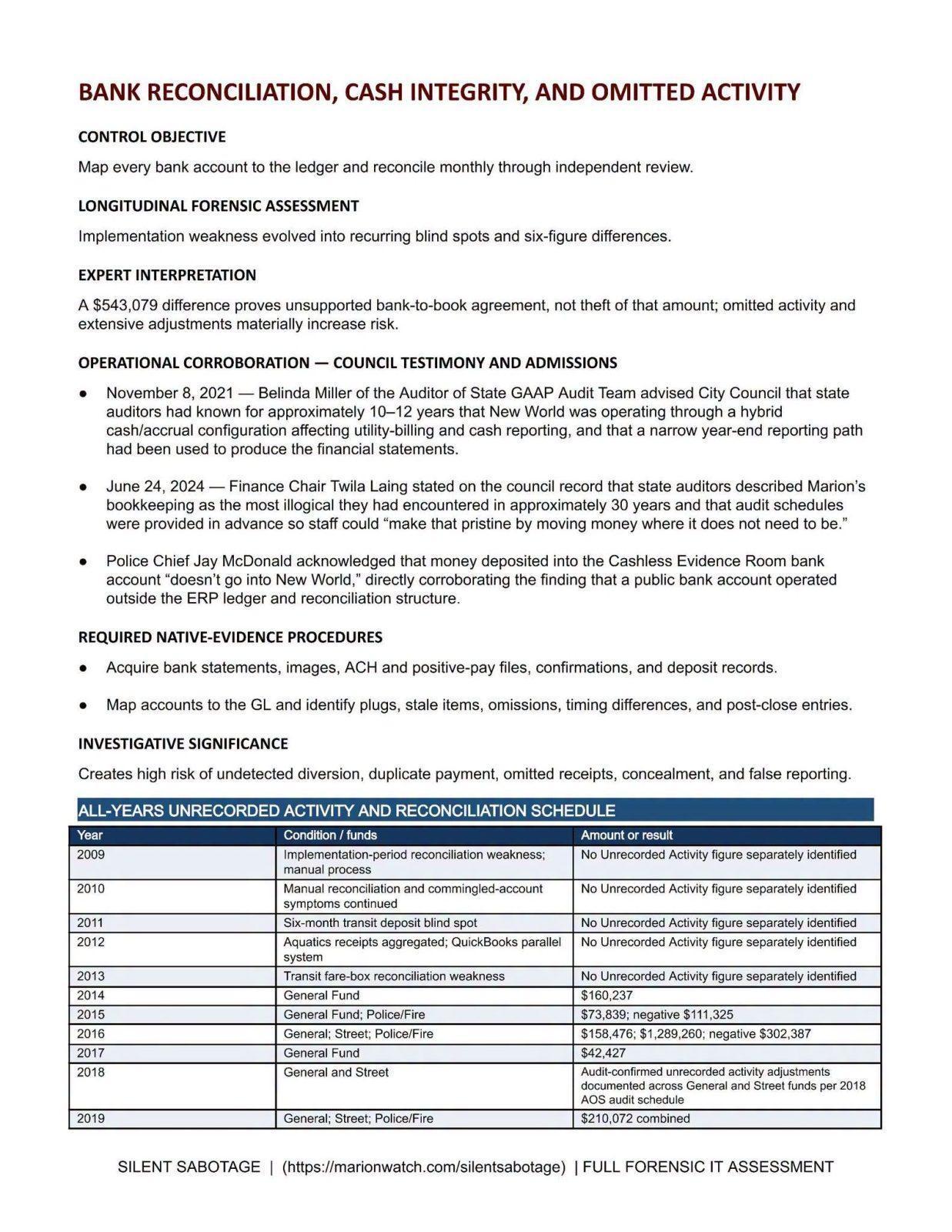
Abandoned from July 2009 until mid-2022 while nine bank accounts were lumped into one General Ledger code. This 13-year blackout hid massive “Unrecorded Activity” plugs ($160,237 in 2014; $158,476 General Fund and $1,289,260 Street Fund in 2016; $210,072 in 2019), an off-book “Cashless Evidence Room” bank account, and a $543,079 bank-to-book variance in 2021 (Finding 2021-002).
○ Accounting/General Ledger ($14,618.45/yr) & Purchase Orders ($4,592.42/yr):
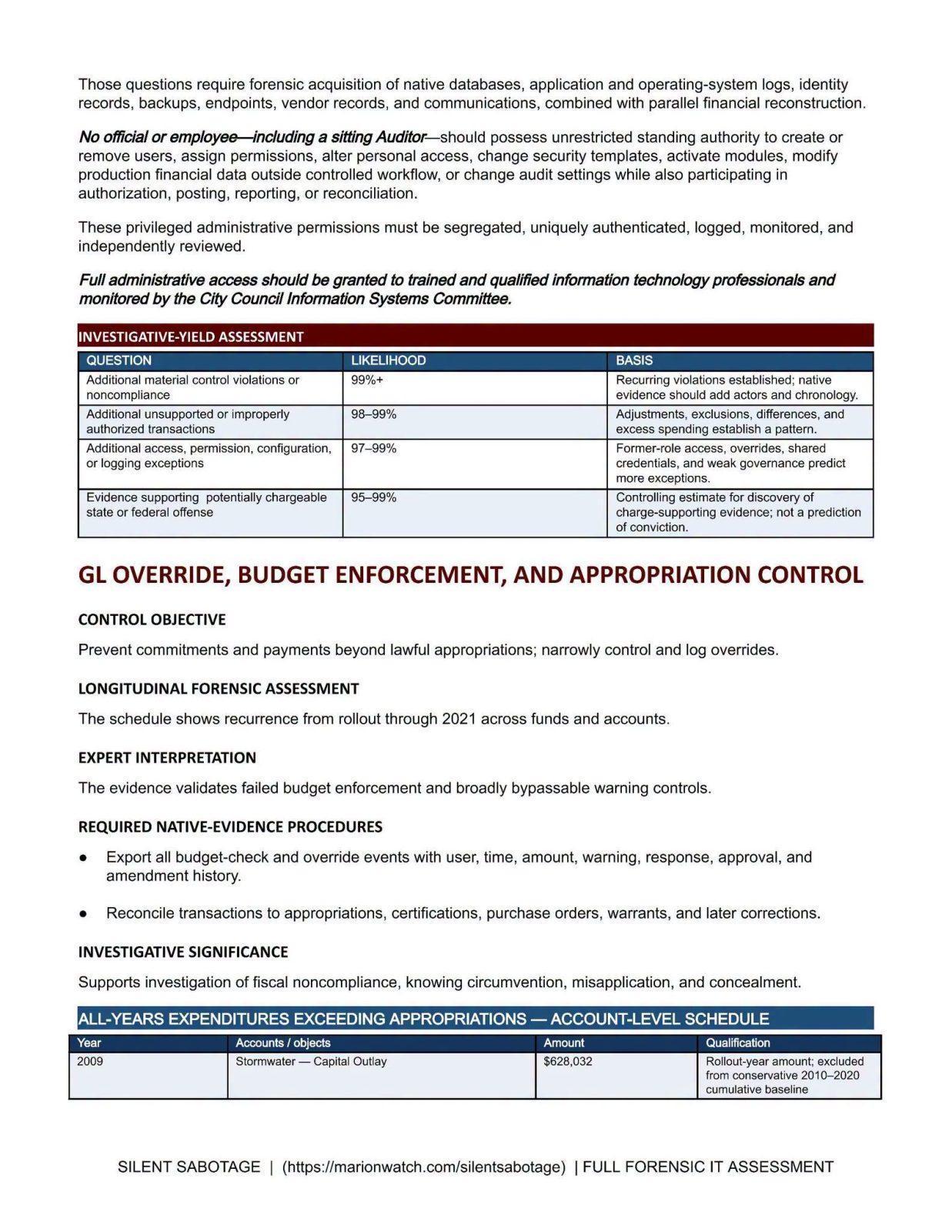
Configured with “Soft Stop” pop-up warnings instead of mandatory “Hard Stops,” allowing staff across departments to override budgets and force through $24,910,081 in unappropriated spending from 2009 through 2021 ($628,032 in 2009; $16,062,830 in 2010; $2,685,574 in 2011; $2,481,230 in 2021) until universal override permissions were finally stripped on October 27, 2025 (Findings 2021-005 and 2021-006).
○ Utility Billing Water/Sewer Base ($10,437.72/yr):
Configured in 2008 on a contradictory hybrid cash/accrual setup that booked unpaid utility bills, NSF checks, and credits directly to cash. According to Veritas and city officials, only one person understood how this flawed architecture functioned, demonstrating a dangerous reliance on undocumented tribal knowledge. State Auditor GAAP specialist Belinda Miller admitted on November 8, 2021, that state auditors knew about this flaw for “10 to 12 years.” This setup generated millions in phantom cash, triggered a $137,000 report swing from toggling a single checkbox, drove a $2.4M to $2.5M cross-fund discrepancy in 2021, enabled the $34,276 Brenda Nwosu utility theft (2011 to 2014), and masked operational insolvency through over $1.5 million in unverified sanitation bad debt purges.
○ Payroll/HR ($10,020.09/yr):
Still billed on the 2026 invoice (marked “Needed – 1 yes”) even though Auditor Miranda Meginness stated in the Finding 2021-004 Corrective Action Plan that the city is converting to ADP payroll! Disabled Magic-Wrighter ACH audit trails and missing vendor masks allowed $1,184,754 in 2020 federal payroll taxes to be misrouted to the State of Ohio for seven months (wired to the IRS on February 9, 2021 without appropriation until November 8, 2021), generating $465,694.97 in multi-year tax and pension penalties and interest.
○ “God Mode” Access & The 106 Excel Plugs:
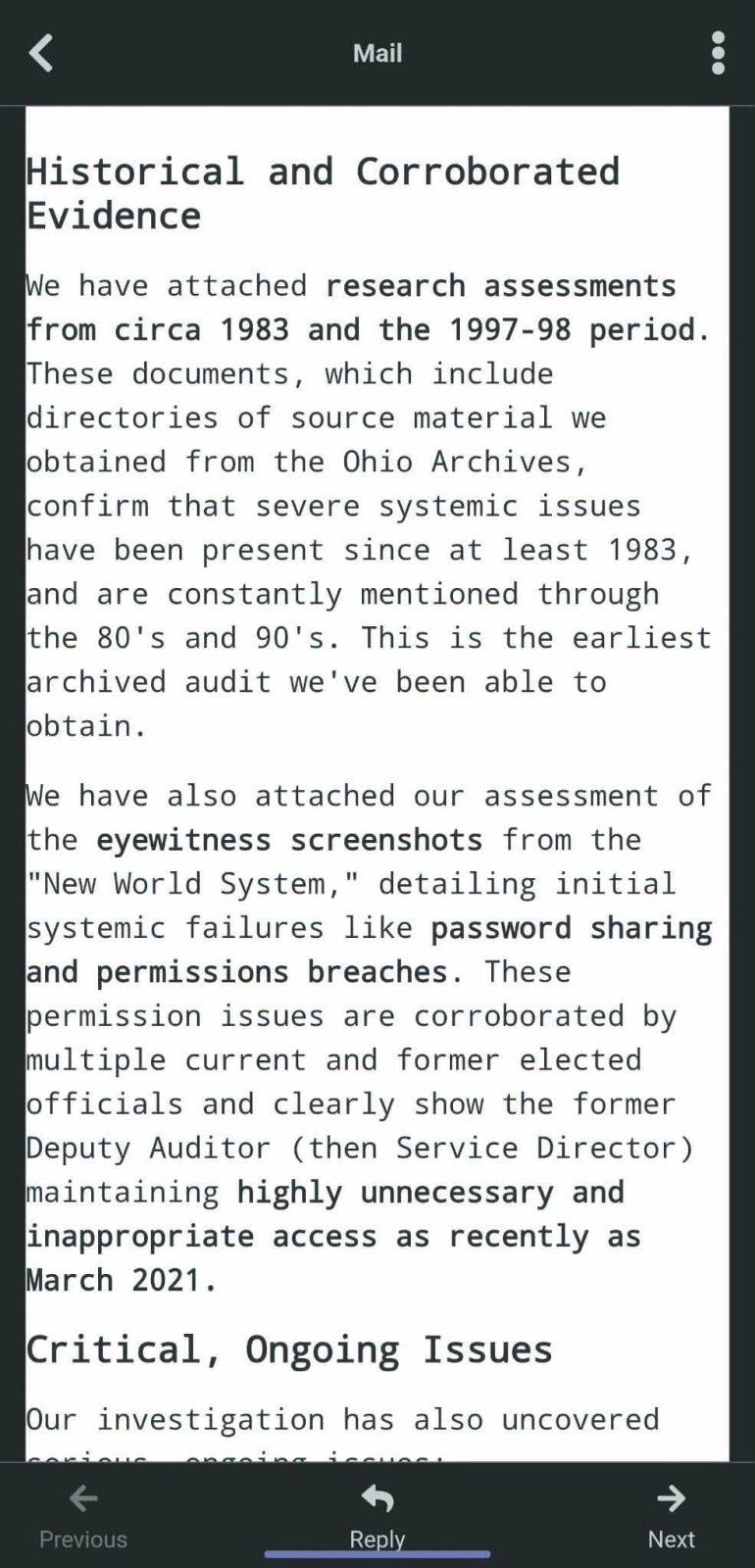
March 8, 2021 screenshots confirm former Deputy Auditor Cathy Chaffin retained “User specific / Template overridden” full admin access across all modules 14 months after becoming Service Director. When Veritas Solutions Group found $600,000+ report variances back to 2019, Council and the state barred them from adjusting 2019 or auditing Utility Billing. Veritas walked away without providing working papers, and the City Auditor blindly imported 106 Veritas Excel adjustments (54 for 2020, 52 for 2021) into New World, triggering 11 Qualified Opinions in 2021 ($635,348 in unsupported beginning cash variances) and shattering Marion’s illegal five-year Low-Risk Auditee streak (2016 to 2020).
THE MIGRATION TRAP AND THE URGENT OPERATIONAL QUESTION
As proven in Part I, the vendor only configures what the city orders, and exporting 17 years of unverified balances and manual plugs into a new system without a forensic IT audit is textbook Garbage In, Garbage Out.
The NEW SOFTWARE VENDOR themselves should be demanding the data be sanitized before migration, assuming they were even made aware of issues.
Furthermore, canceling those 24 modules raises an urgent operational question: In the Finding 2021-001 Corrective Action Plan, the City Auditor promised the state that Marion will return to full GAAP-basis financial reporting for FY 2026 (by June 30, 2027).
If the city just terminated support for Fixed Assets, Inventory, Project Accounting, Requisitions, Misc. Billing & Receivables, Work Orders, and GASB Reporting because staff “Don’t use” them, how is Marion tracking tens of millions in capital assets, monitoring grants, and compiling GAAP accrual statements right now?
Is the city right back to offline spreadsheets and “paper and pencil”?
Every diagnostic warning issued by Marion Watch has been proven 100% accurate.
A wall-to-wall, independent forensic IT audit from installation forward is mandatory.
THE PAPER TRAIL: HOW MARION WATCH FORCED THE TRUTH INTO THE LIGHT
For years, a false political narrative claimed that Marion’s financial collapse began suddenly in 2020.
Applying standard IT doctrine and root-cause analysis, Marion Watch recognized as early as 2016 through 2019 that systemic mathematical failures in enterprise software do not happen overnight; they are symptoms of a long-standing history of loose controls and compromised configurations.
Nobody was talking about this little secret until we ruined the fun. The chronological paper trail proves how our symptom-based forensic diagnostics forced these hidden records into the open:
○ Late 2024 to Early March 2025 (The Relaunch and IT Diagnosis):
Following our return online, Marion Watch meets with Councilman and IT Oversight Committee Chairman Ralph Smith in early March 2025, presenting our symptom-based diagnosis of the New World ERP system developed from pre-2020 audit research.
○ July 21 to September 29, 2025 (Council Floor Address and State Escalation):
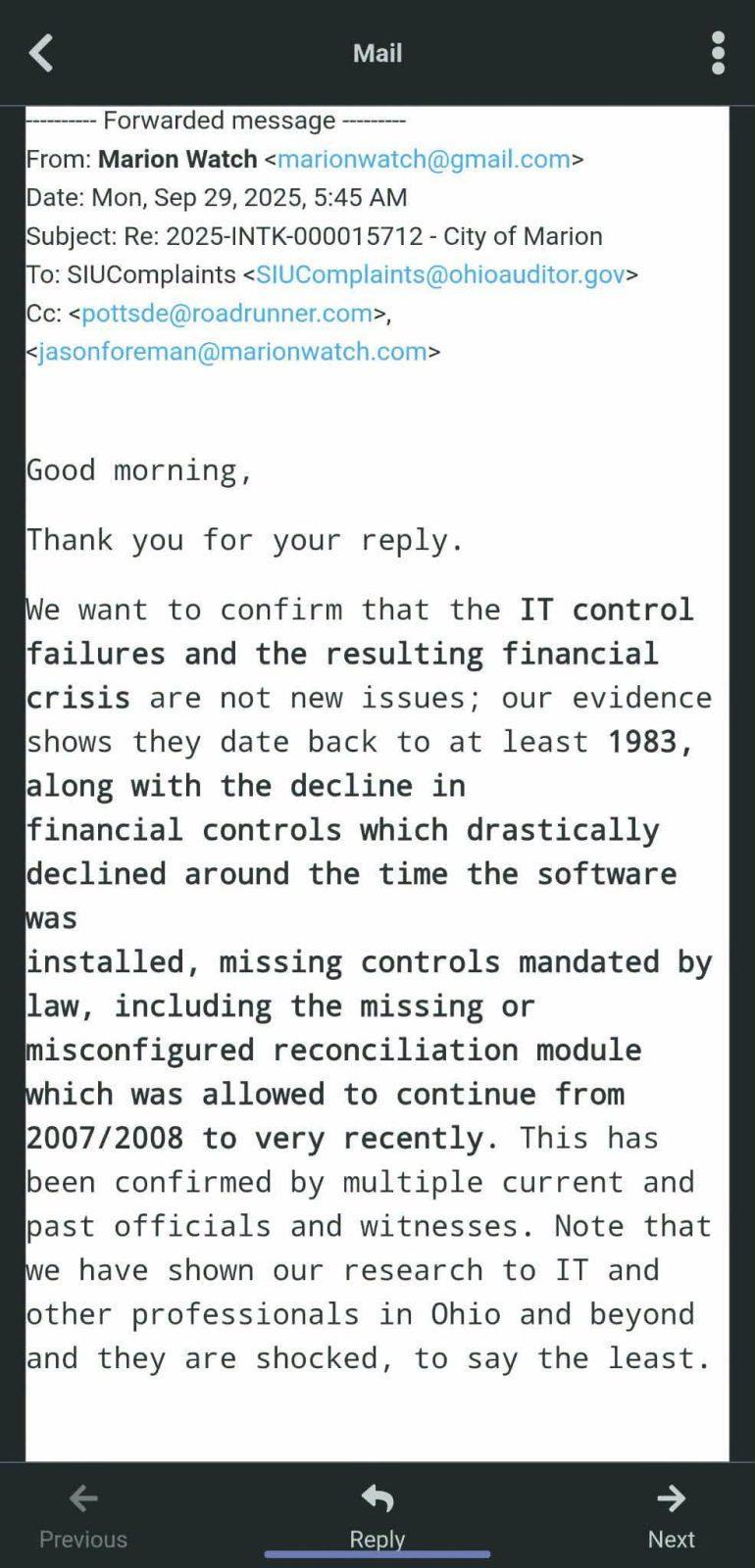
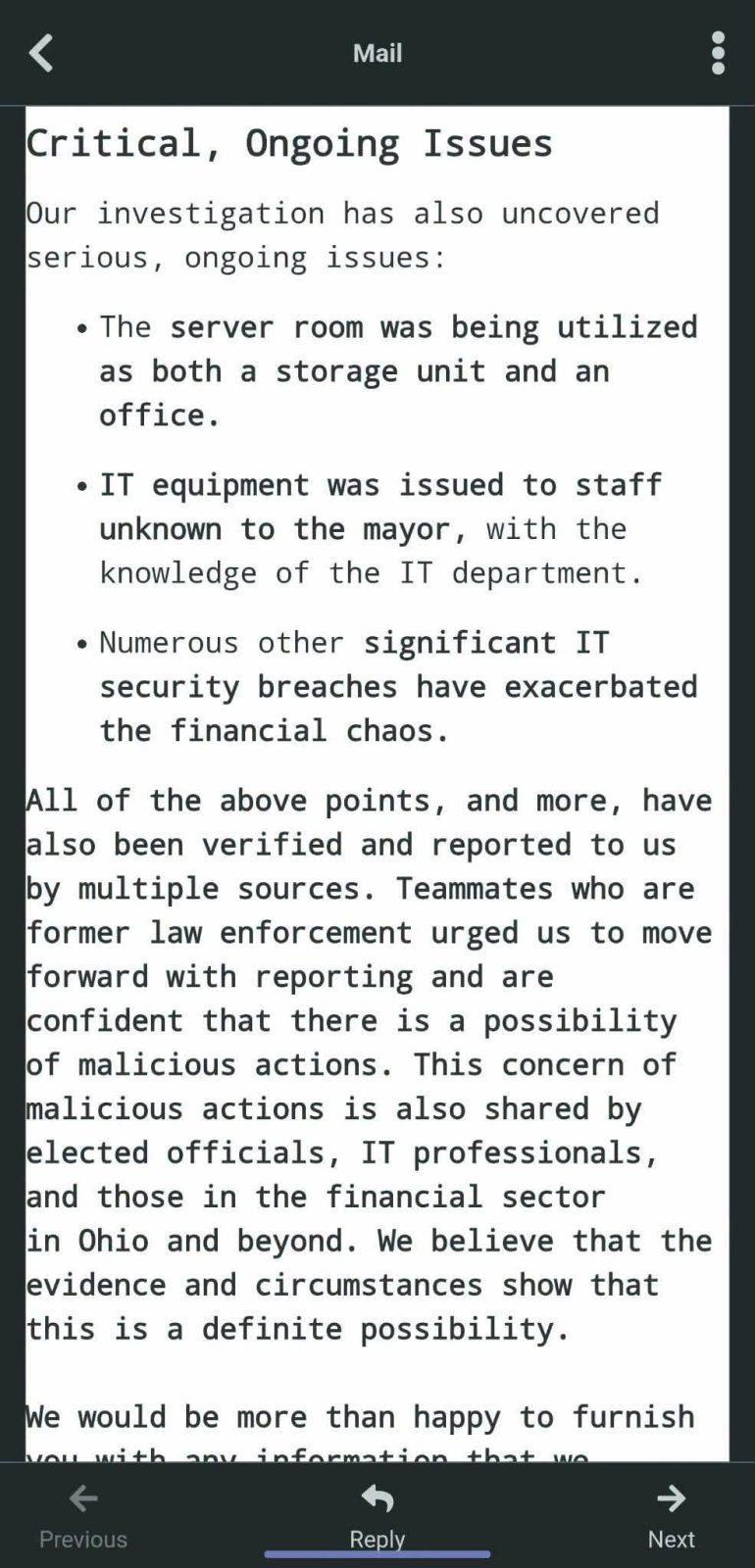
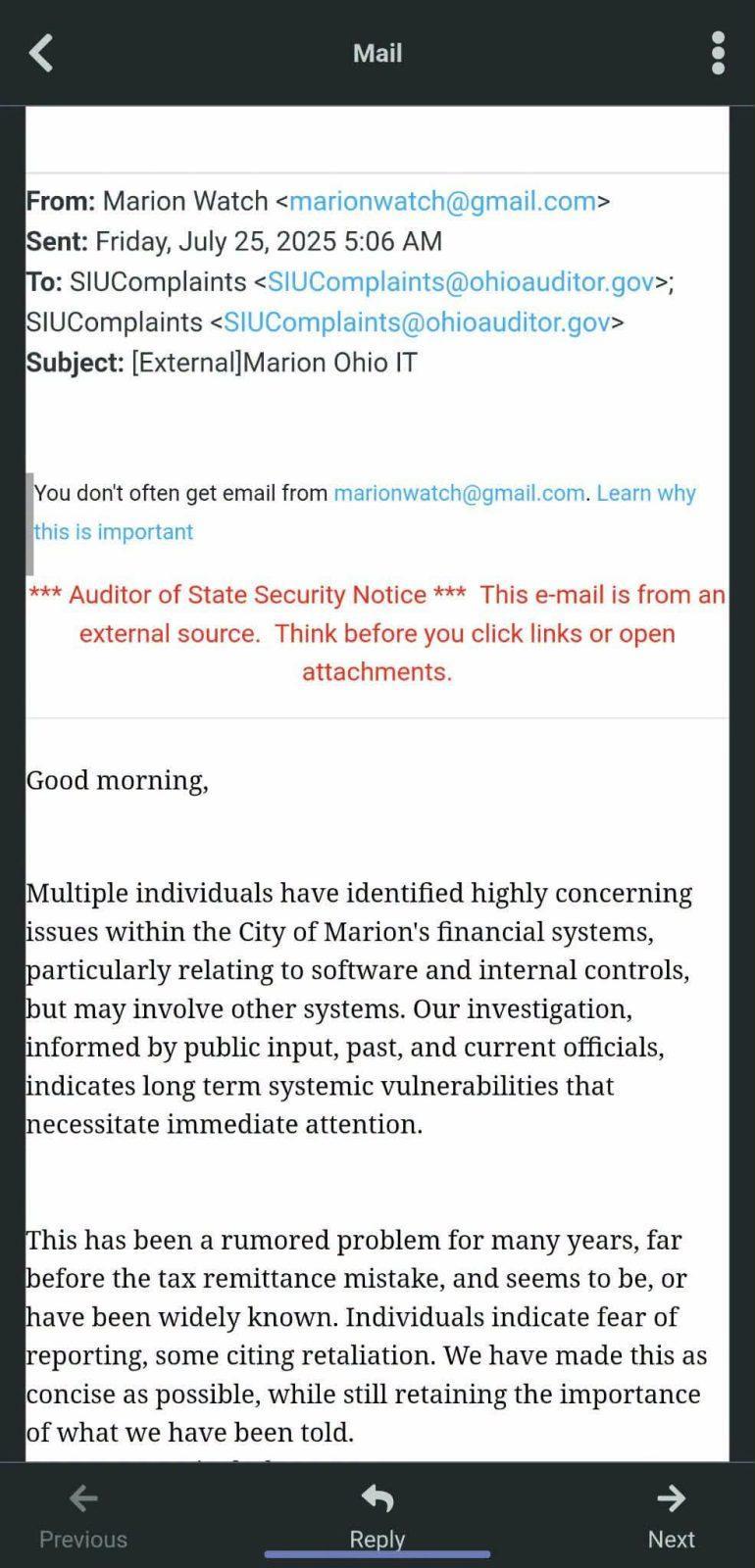
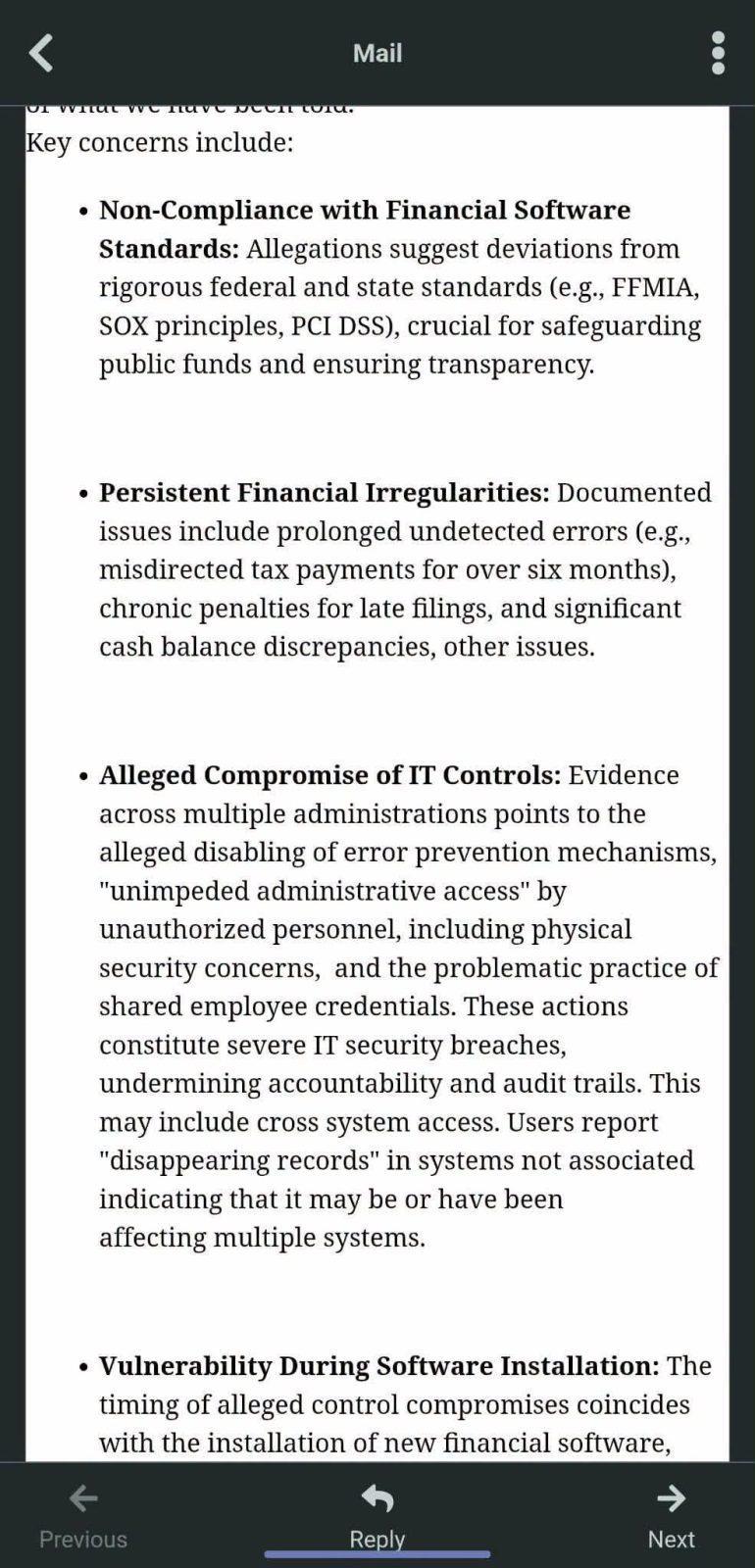
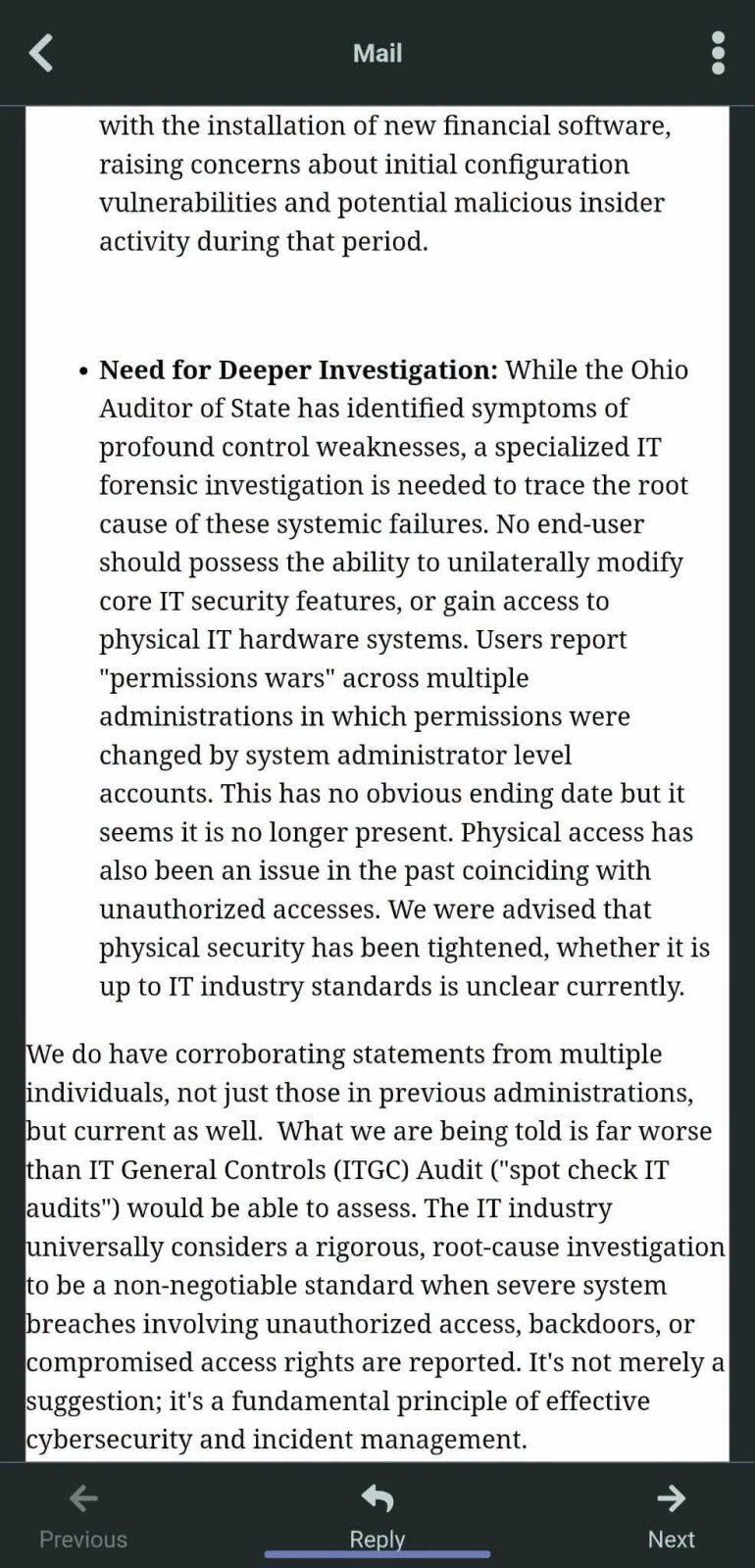
On July 21, 2025, Marion Watch formally addresses City Council on the public record regarding disabled safety switches, coerced password sharing, and unimpeded administrative access. On July 25, 2025, we submit a formal forensic threat assessment to the Ohio Auditor of State Special Investigations Unit (SIU). After the SIU forwards our complaint to the Special Audit Task Force on September 25, 2025, we submit native ERP screenshots proving “God Mode” access and server room security breaches on September 29, 2025.
○ October 15 to November 13, 2025 (The 2021 Audit Detonation and Override Lockdown):
The State Auditor signs the three-year-late 2021 Single Audit on October 15, 2025 (certified November 13, 2025), issuing Qualified Opinions across 11 of 14 opinion units and stripping Marion of its Low-Risk Auditee status. On October 27, 2025, the City Auditor finally strips universal budget override permissions from all New World users except the Auditor, validating our warnings.
○ December 14 to December 22, 2025 (The Public Records Catalyst):
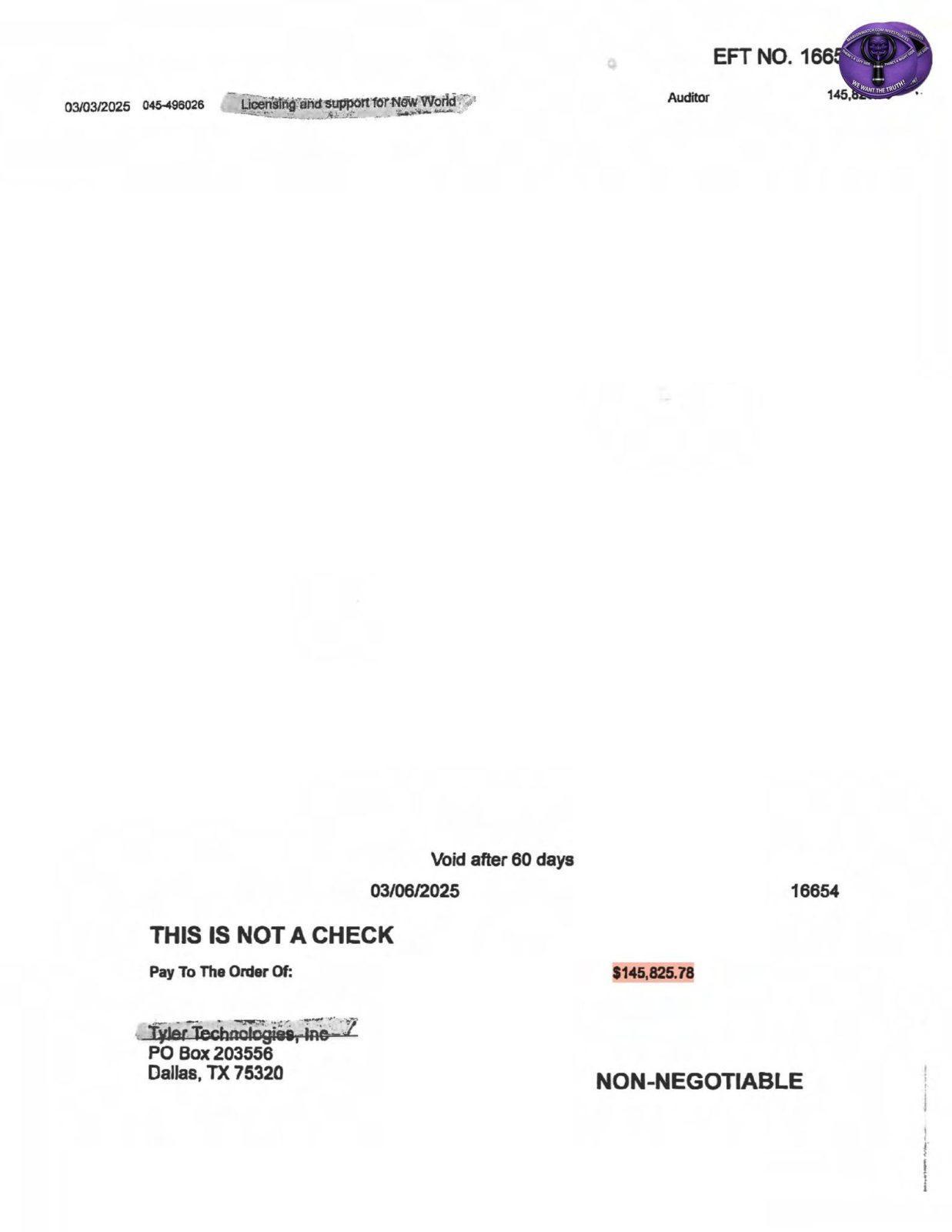
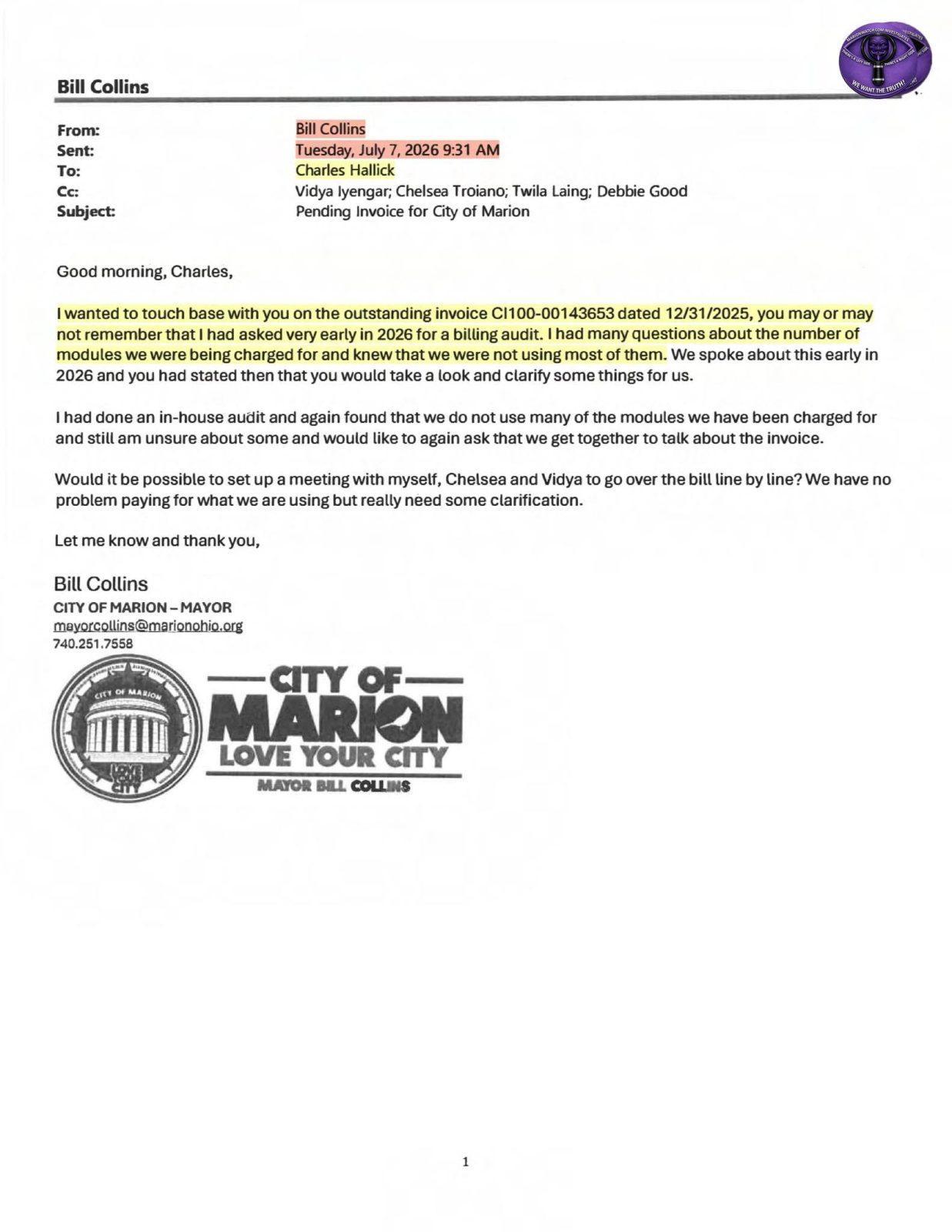
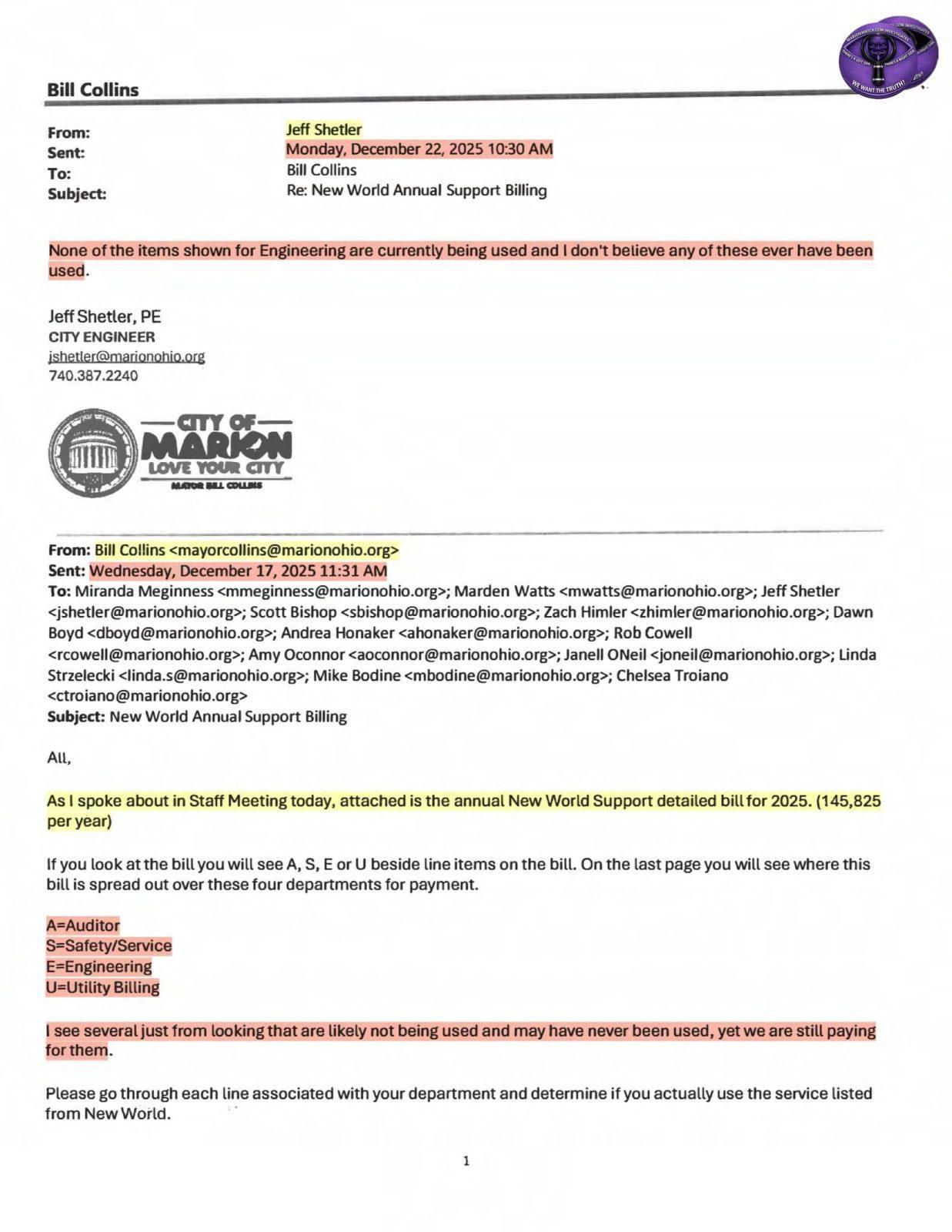
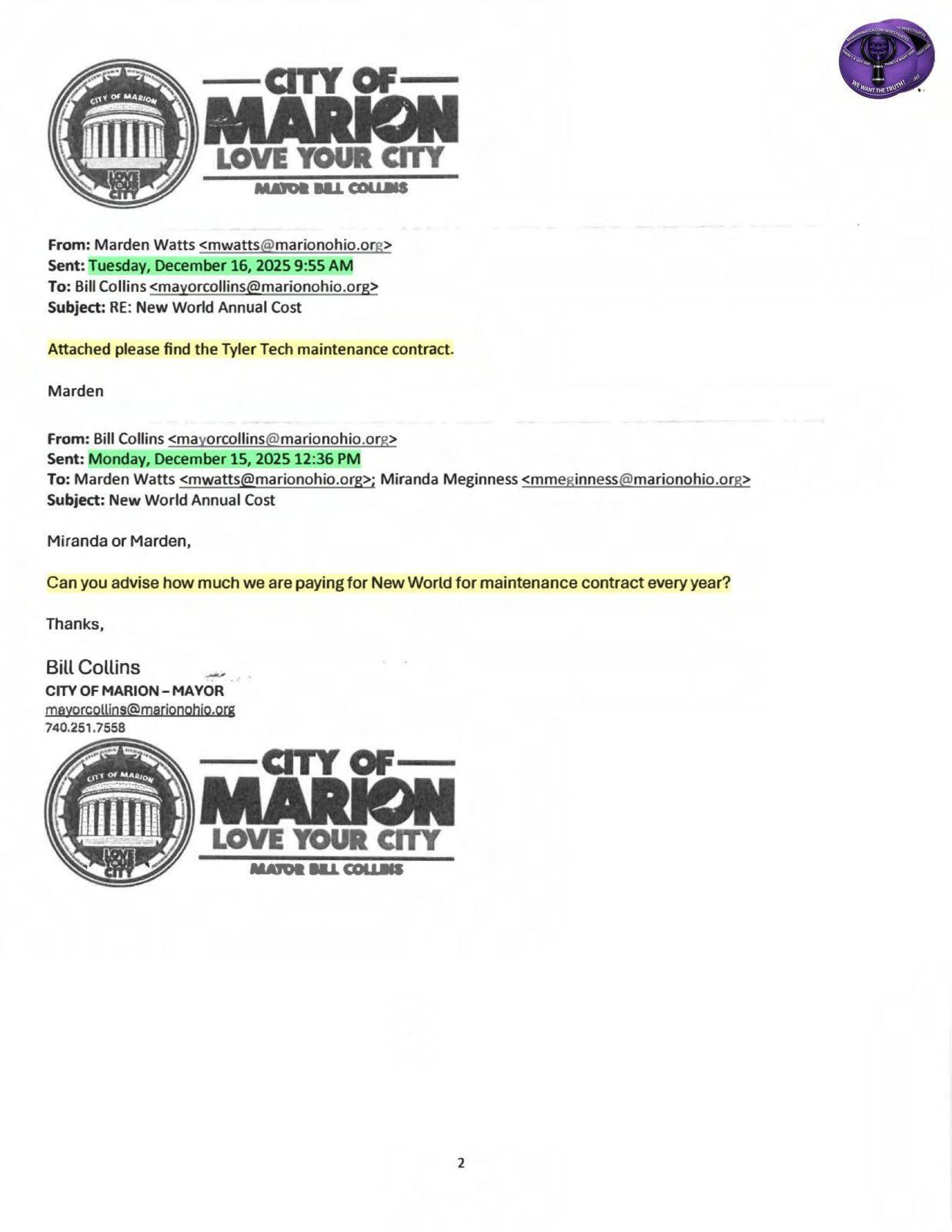
On December 14, 2025, at 6:13 PM, Marion Watch files a public records request with Mayor Bill Collins and NOW Treasurer Twila Laing for the Original Purchase Manifest, User Permissions List, and Tyler Help Desk Logs to investigate “the potential purchase of unused modules”. Less than 19 hours later, on December 15 at 12:36 PM, Mayor Collins emails the Auditor’s office asking how much the city pays annually for New World. After receiving the $145,825.78 bill for 2025 (paid via EFT #16654 on March 6, 2025), Collins emails all department heads on December 17 stating several modules “may have never been used, yet we are still paying for them”. On December 22, 2025, City Engineer Jeff Shetler replies in writing: “None of the items shown for Engineering are currently being used and I don’t believe any of these ever have been used”.
○ January 5 to January 16, 2026 (The 80% Confession):
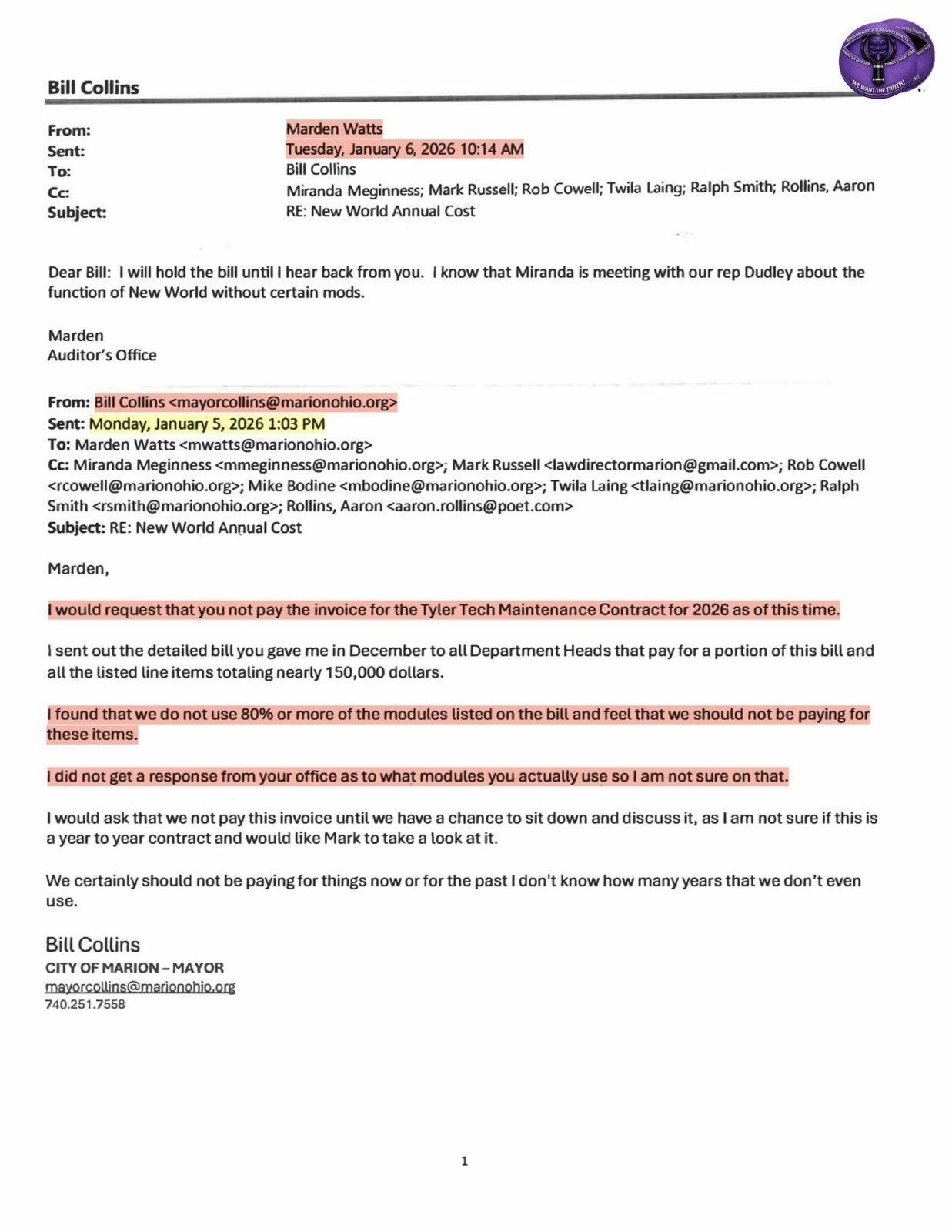
On January 5, 2026, Mayor Collins orders Deputy Auditor Marden Watts to hold payment on the 2026 Tyler invoice, writing: “I found that we do not use 80% or more of the modules listed on the bill and feel that we should not be paying for these items”. On January 16, 2026, Treasurer Twila Laing confirms on The Watchmen’s Report that New World “was not set up correctly to begin with,” safety switches were turned off, and staff were threatened with write-ups if they refused to share passwords.
○ April 11 to July 6, 2026 (Follow-Up and the Permission Log Cover-Up):
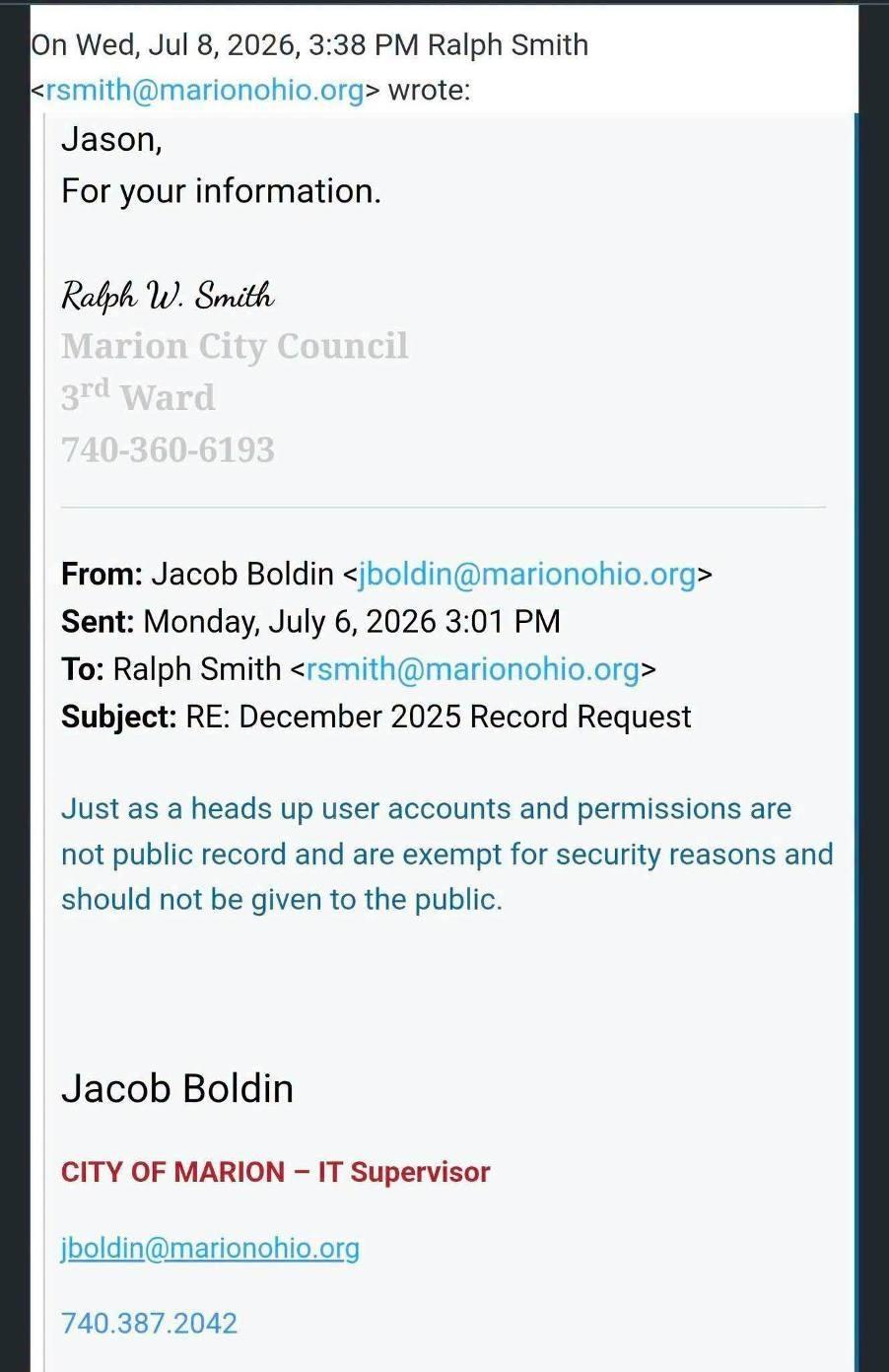
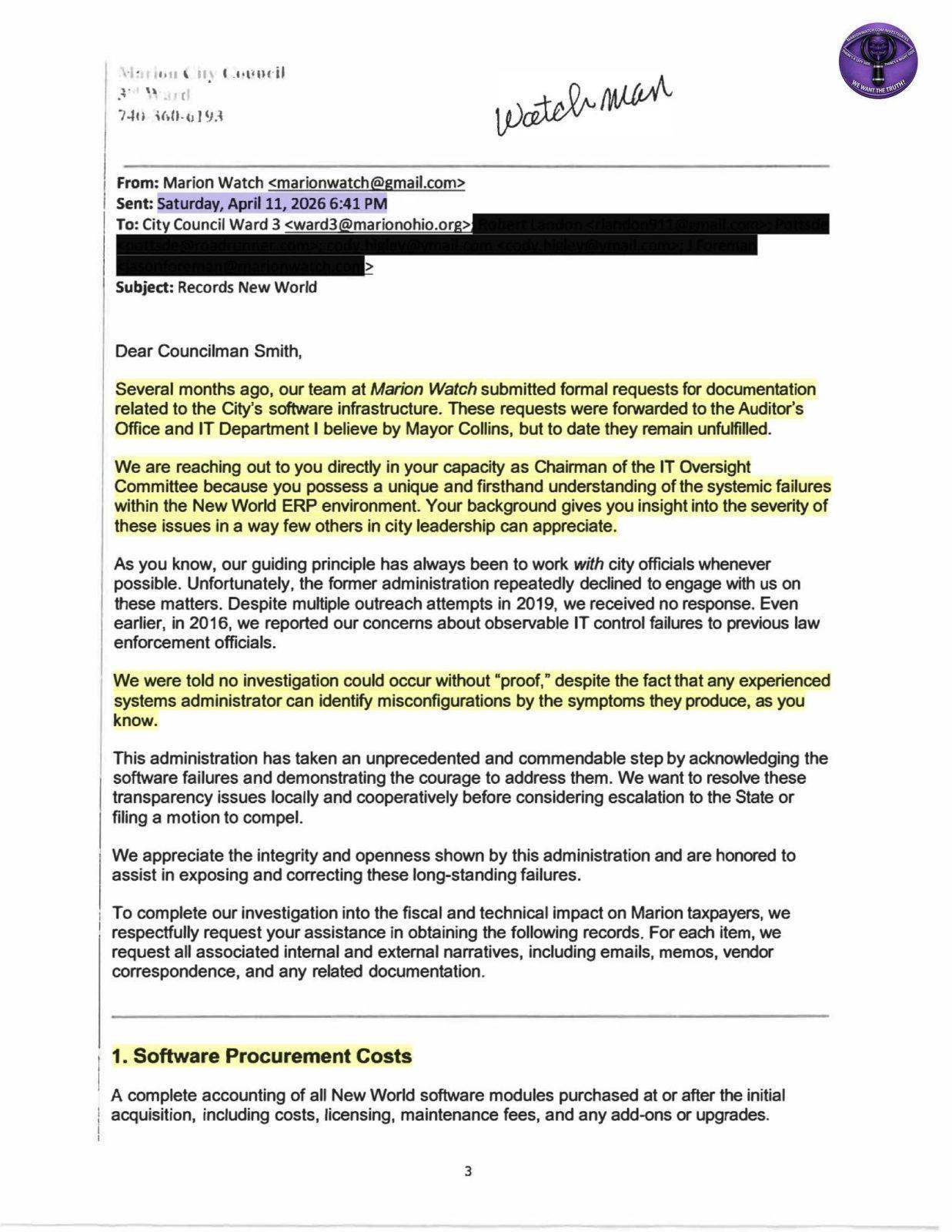
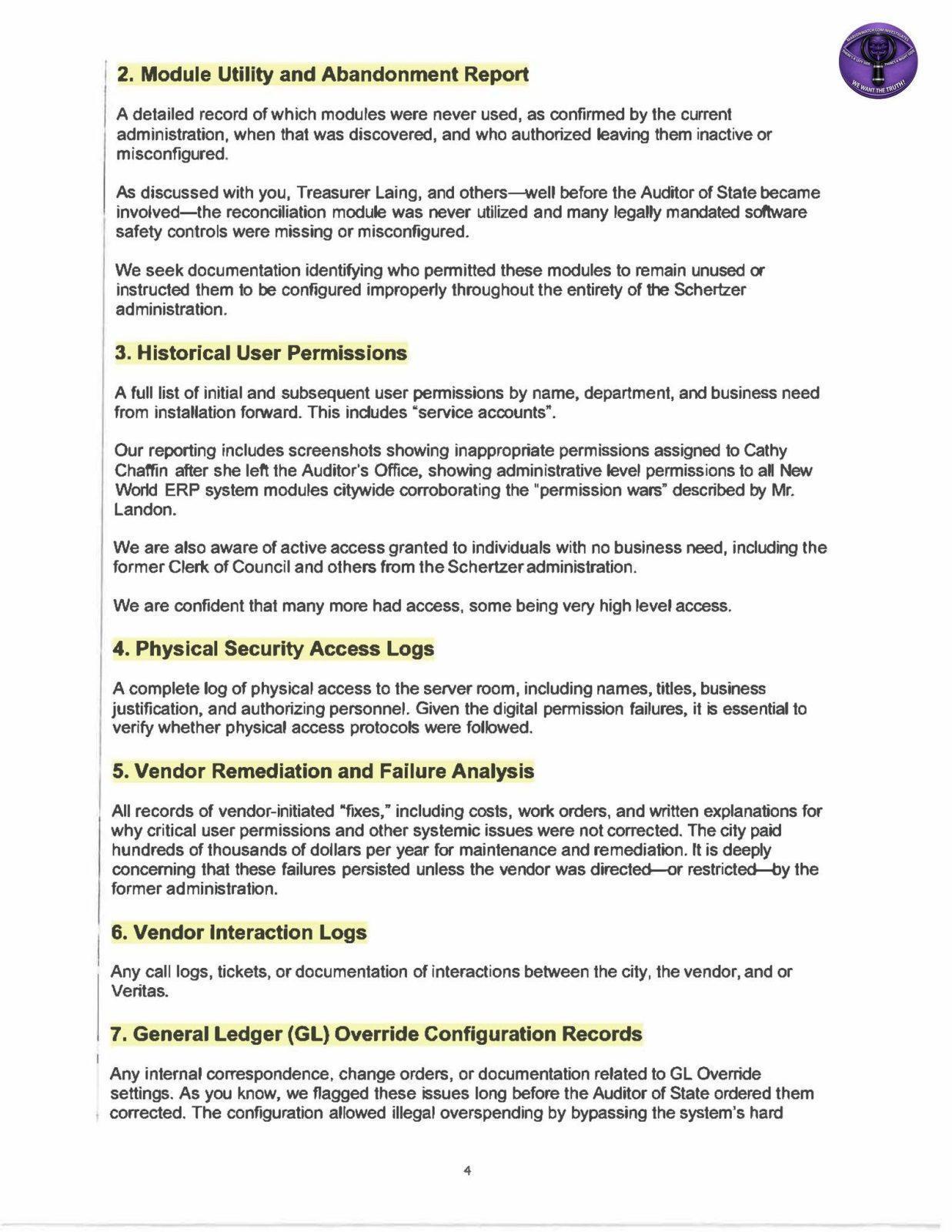
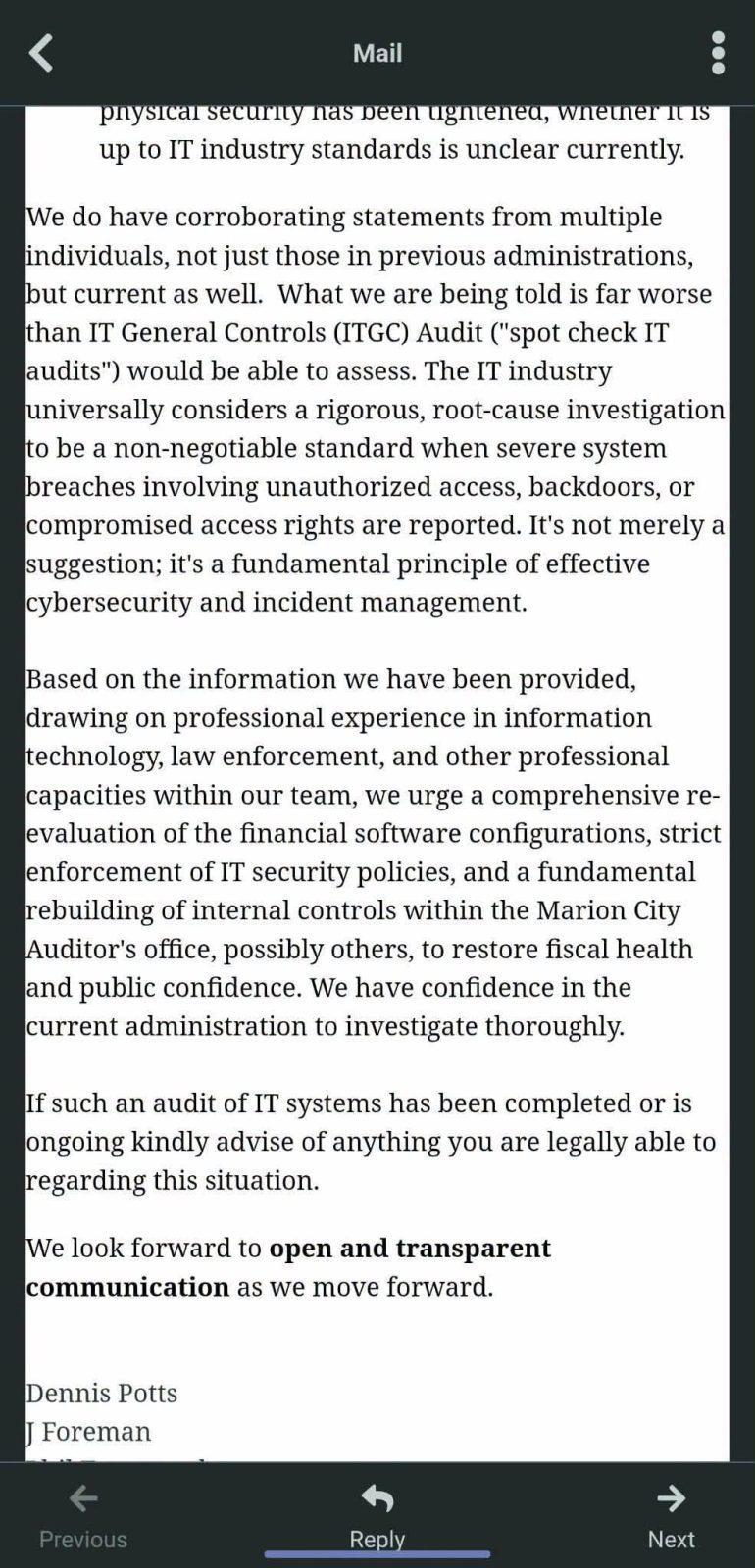
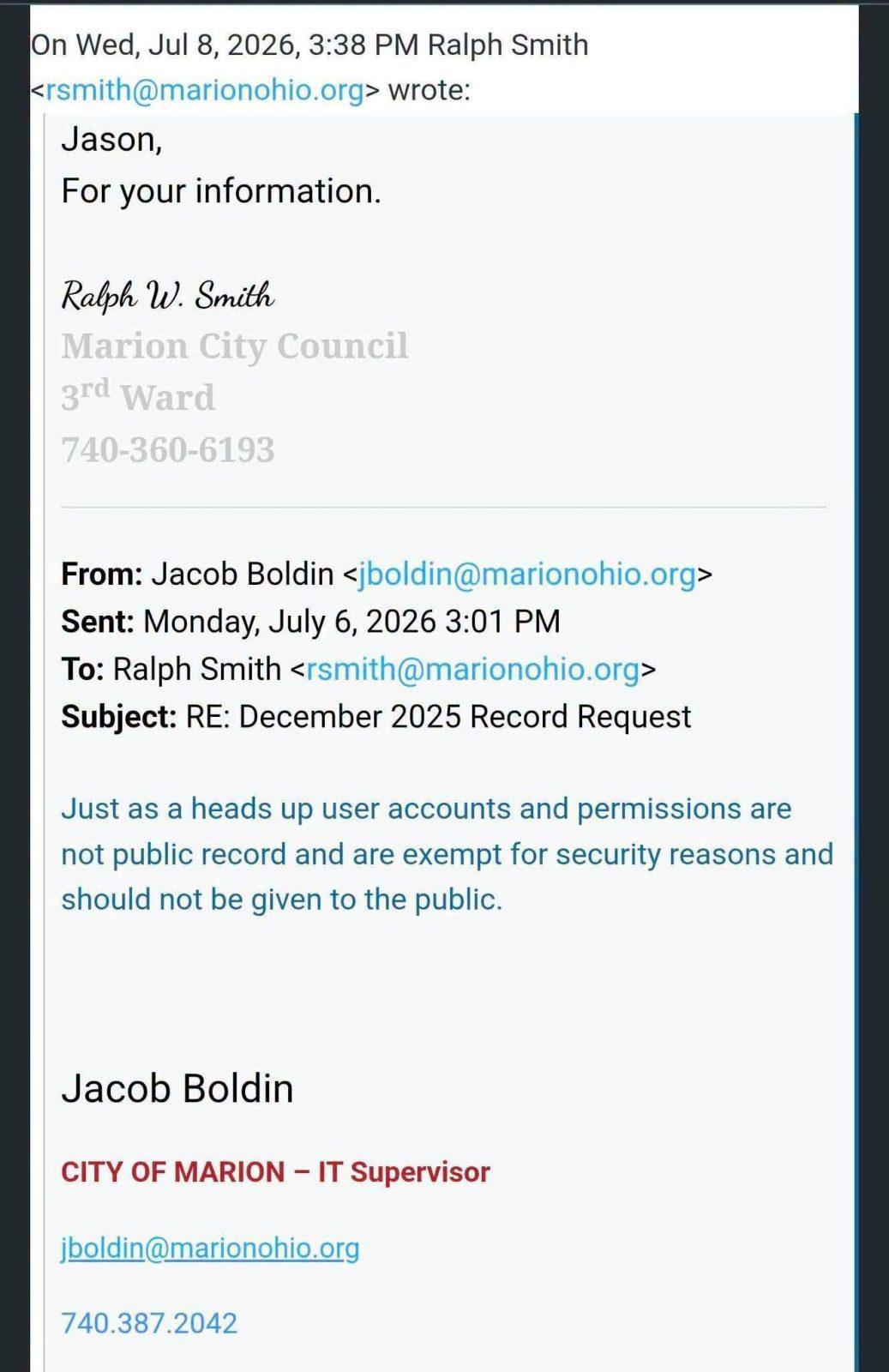
After Marion Watch presses Councilman Smith on April 11, 2026, for the unfulfilled Module Abandonment and User Permission records, IT Supervisor Jacob Boldin emails Smith on July 6, 2026, issuing a blanket denial claiming user accounts and permissions “are not public record”.
○ July 7 to August 17, 2026 (The 24-Module “Don’t Use” Cancellation):
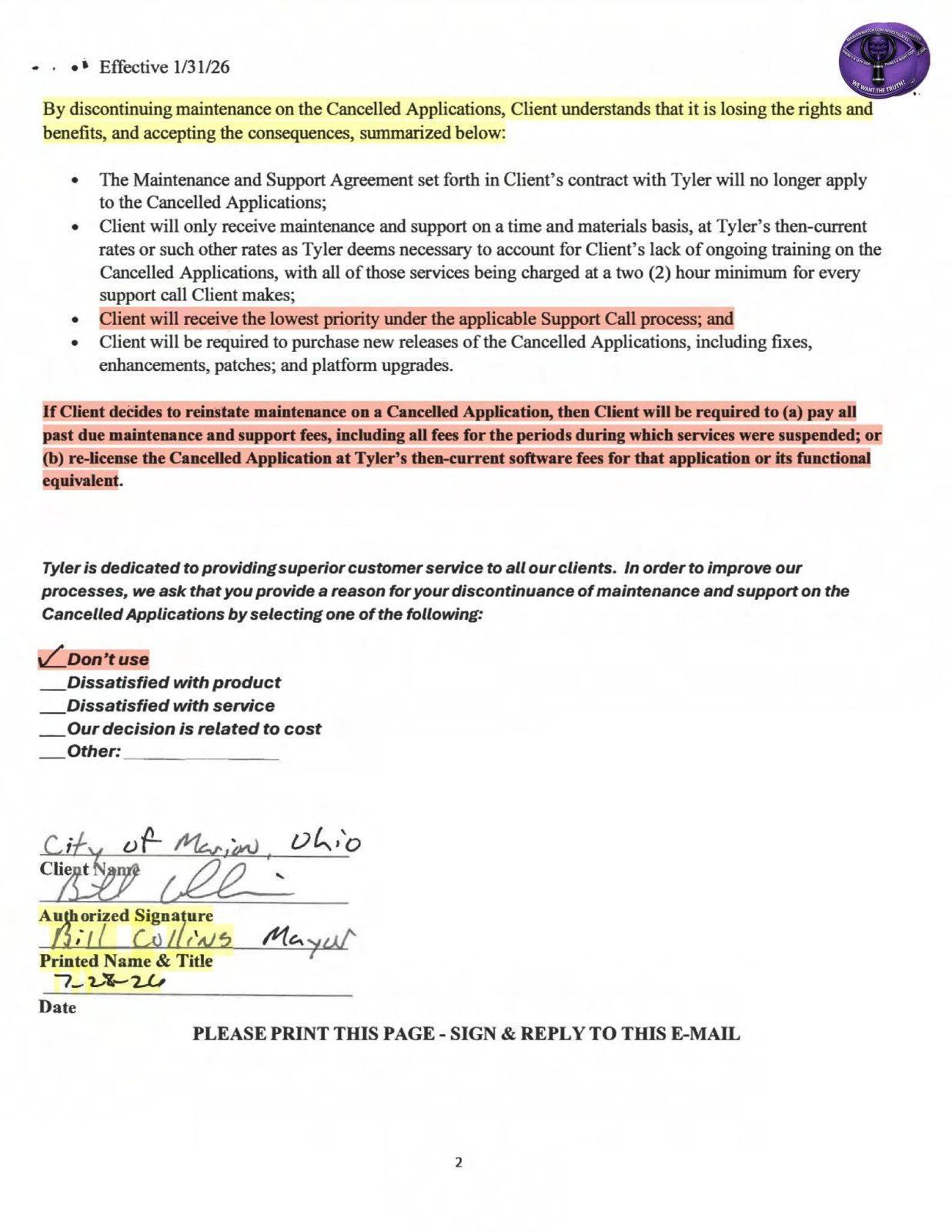
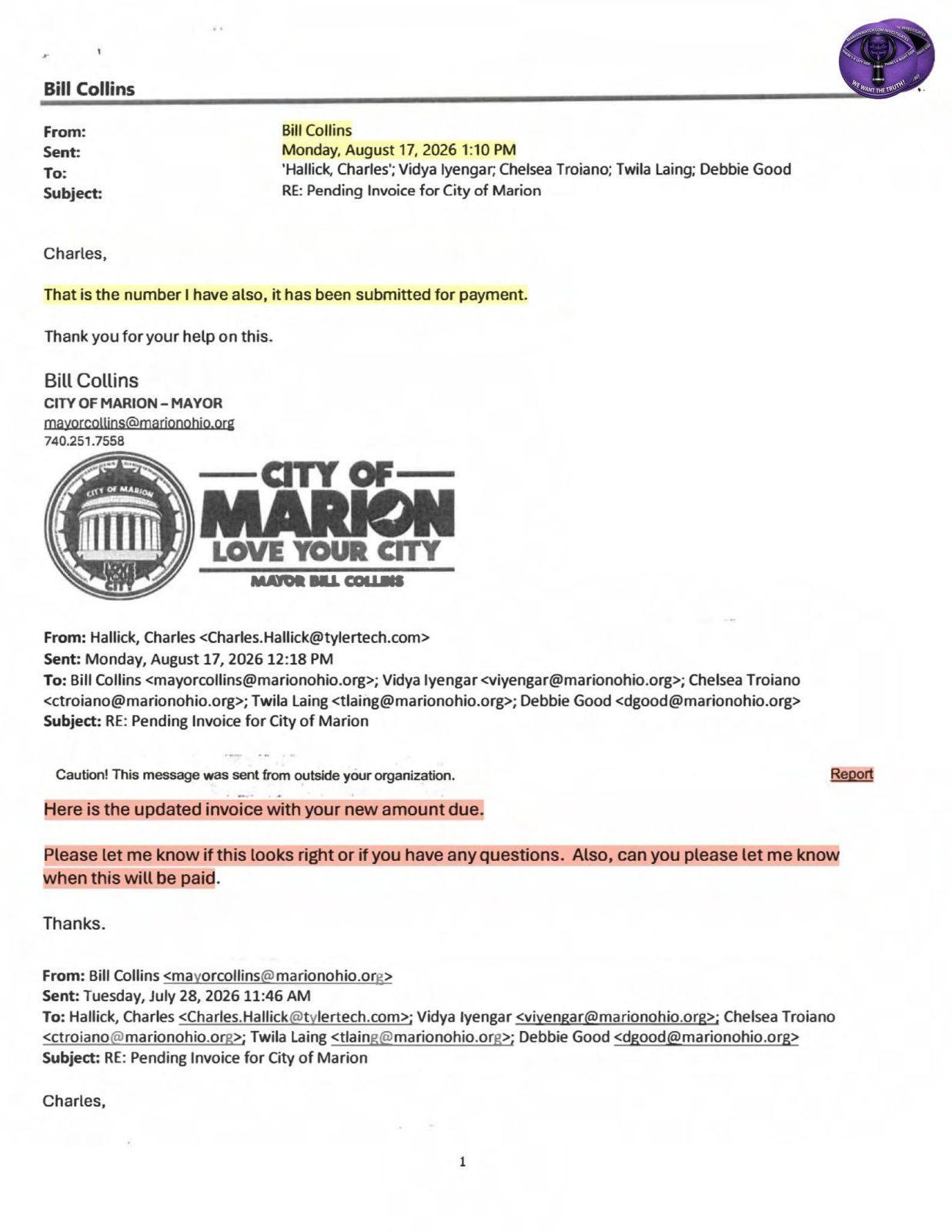
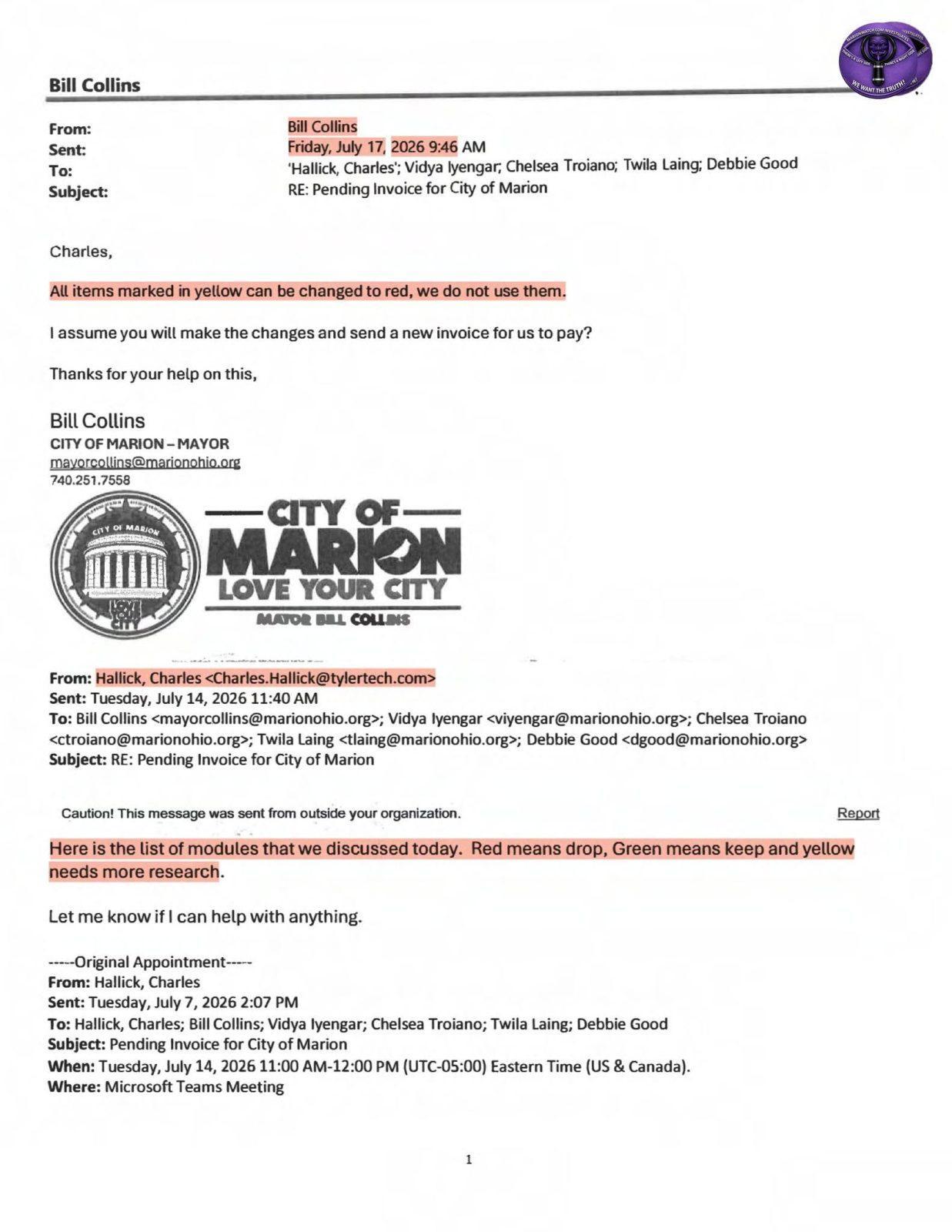
Following a July 14, 2026 line-by-line review of the $153,117.09 invoice (CI100-00243653) with Tyler Technologies, Mayor Collins instructs Tyler on July 17: “All items marked in yellow can be changed to red, we do not use them”. On July 22, 2026 (signed July 28, effective January 31, 2026), the city executes Tyler’s official Discontinuance Acknowledgement Document canceling 24 applications and checking the reason box: “Don’t use”. On August 17, 2026, Tyler issues revised Invoice CI100-00243653a with Credit Memo SN100-00038108 for $78,761.60, dropping the net bill to $74,355.49.
OFFICIAL EXHIBITS & PRIMARY SOURCE RECORDS (New World Waste)
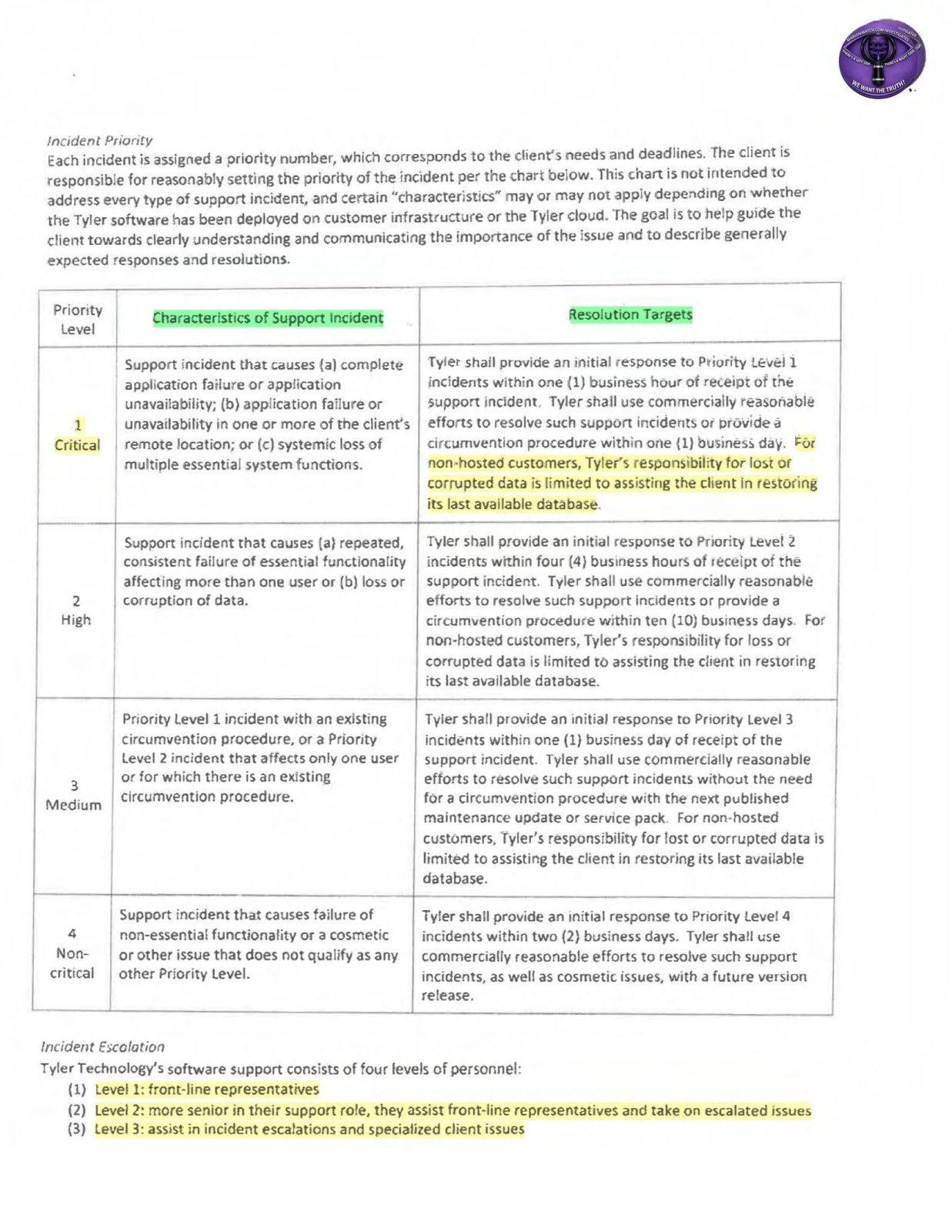

ANATOMY OF MARION’S FINANCIAL COLLAPSE 2009: RAPID-RELEASE BLUEPRINT OF SILENT SABOTAGE
This is the first installment of our rapid-release series detailing the systemic financial and IT control failures that drove the City of Marion into a fiscal emergency.
The forensic IT blueprint below correlates official State of Ohio audit findings directly to the software architecture, demonstrating how the intentional deactivation or misconfiguration of specific New World ERP modules or associated settings was fully or partially responsible for these catastrophic failures year after year.
Enterprise ERP systems do not spontaneously disable their own safety modules; bypassing default hard-stops and segregation of duties requires active, intentional administrative intervention.
As confirmed by official records, accountants, and recent administration admissions, it wasn’t just these core modules—various other critical safety controls, physical security protocols, and basic IT functions and practices were also completely bypassed, misconfigured, or left entirely non-functioning.
When the City of Marion purchased the million-dollar New World ERP software, taxpayers were promised a high-tech digital vault that would lock down public funds and eliminate human error.
Instead, the administration deliberately compromised the system from the inside immediately upon its rushed 2009 implementation.
By intentionally leaving critical safety modules dormant, disabling automated bank reconciliations, misconfiguring backend software controls, granting unrestricted “God Mode” override permissions to general users, and allowing inappropriate software access rights including shared passwords, city officials engineered an environment explicitly equipped to bypass legal spending limits.
Modern day ERP software is specifically designed to prevent these failures and the need for manual backend workarounds.
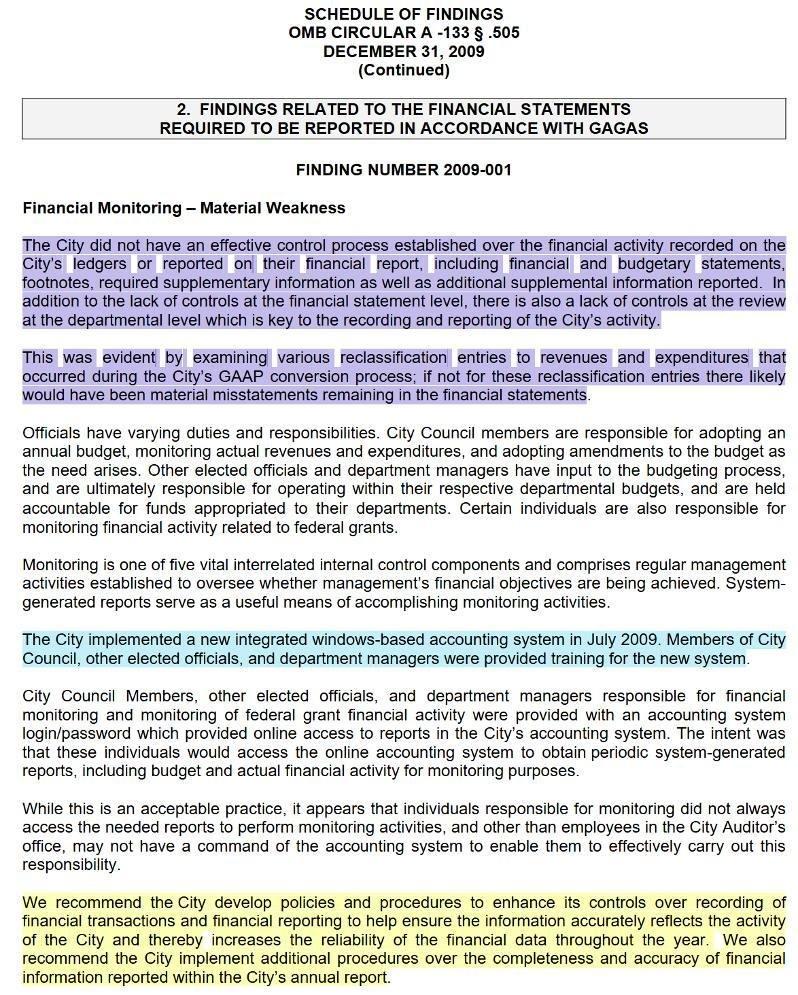
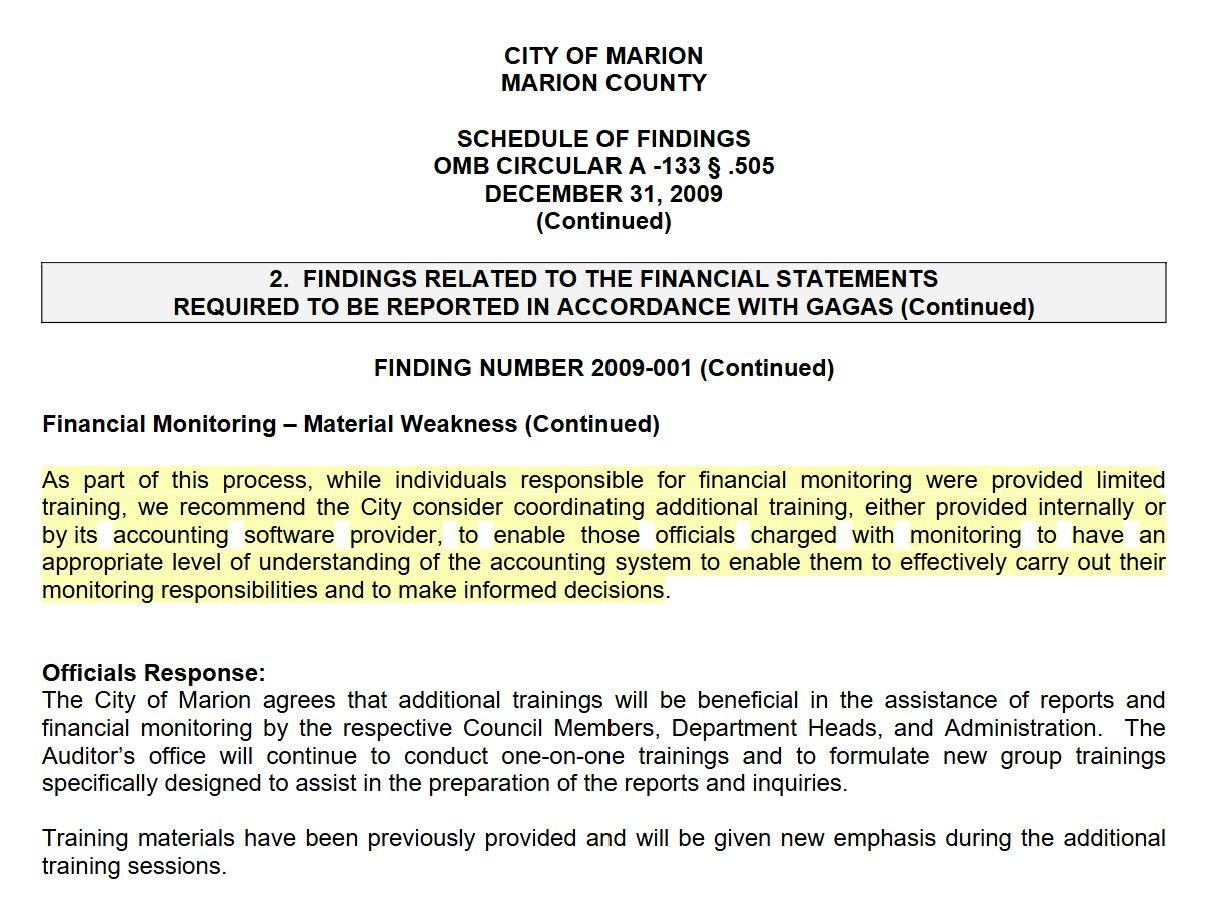
The 2009 State of Ohio Audit exposes exactly how the foundation of Marion’s financial collapse was poured on day one.
By the end of this rapid-fire portion of the Silent Sabotage Overview Series, we will definitively prove that Marion’s financial situation is historic in nature and was covered with creative accounting and other questionable activities.
It is all there, in black and white, if you know where to look and what you are looking at.
The series highlights the exact information and external forensic IT observations that got our attention in 2018 when we started looking much closer.
This is meant to be a concise portion of the series and does not go into extreme detail.
2009 AUDIT FINDINGS (THE “INSTALLATION FORWARD” BLUEPRINT)
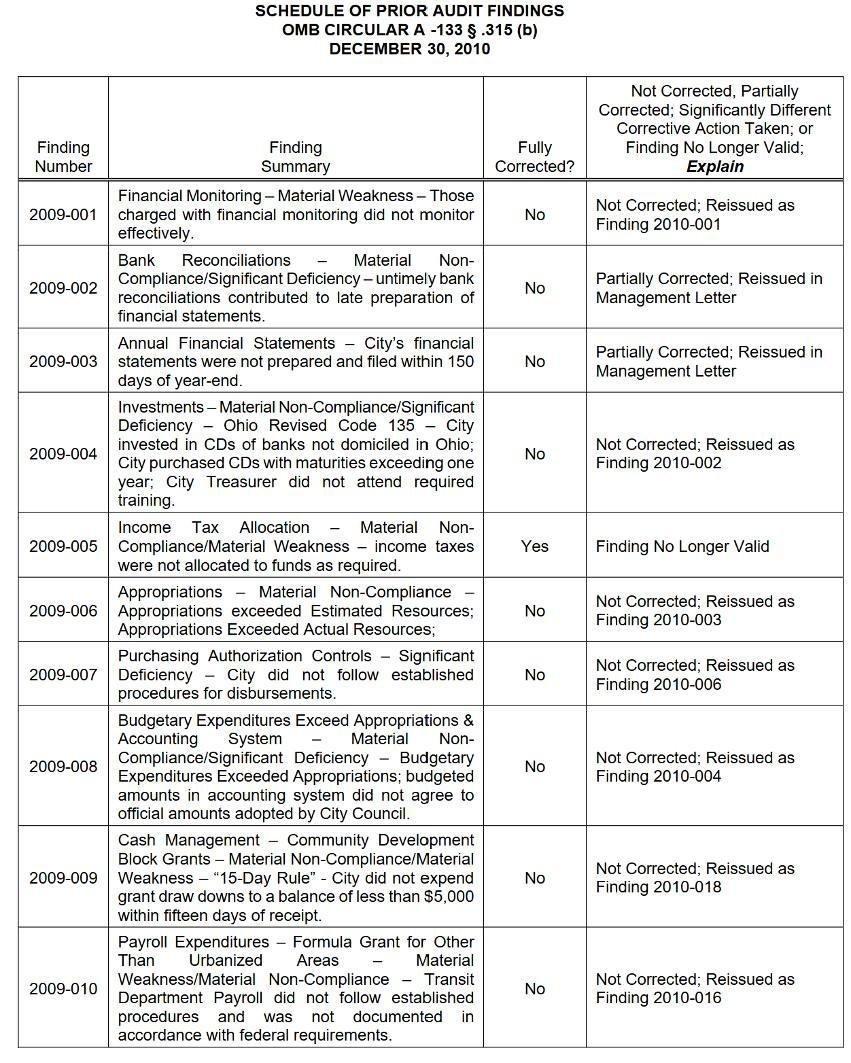
• FINDING 2009-001 (FINANCIAL MONITORING) — [Module Configuration]:
The paid FM Base Suite included role-based dashboards and automated exception alerts that were definitively capable of generating periodic management reports and flagging anomalous entries, but they were never configured to do so or drastically misconfigured.
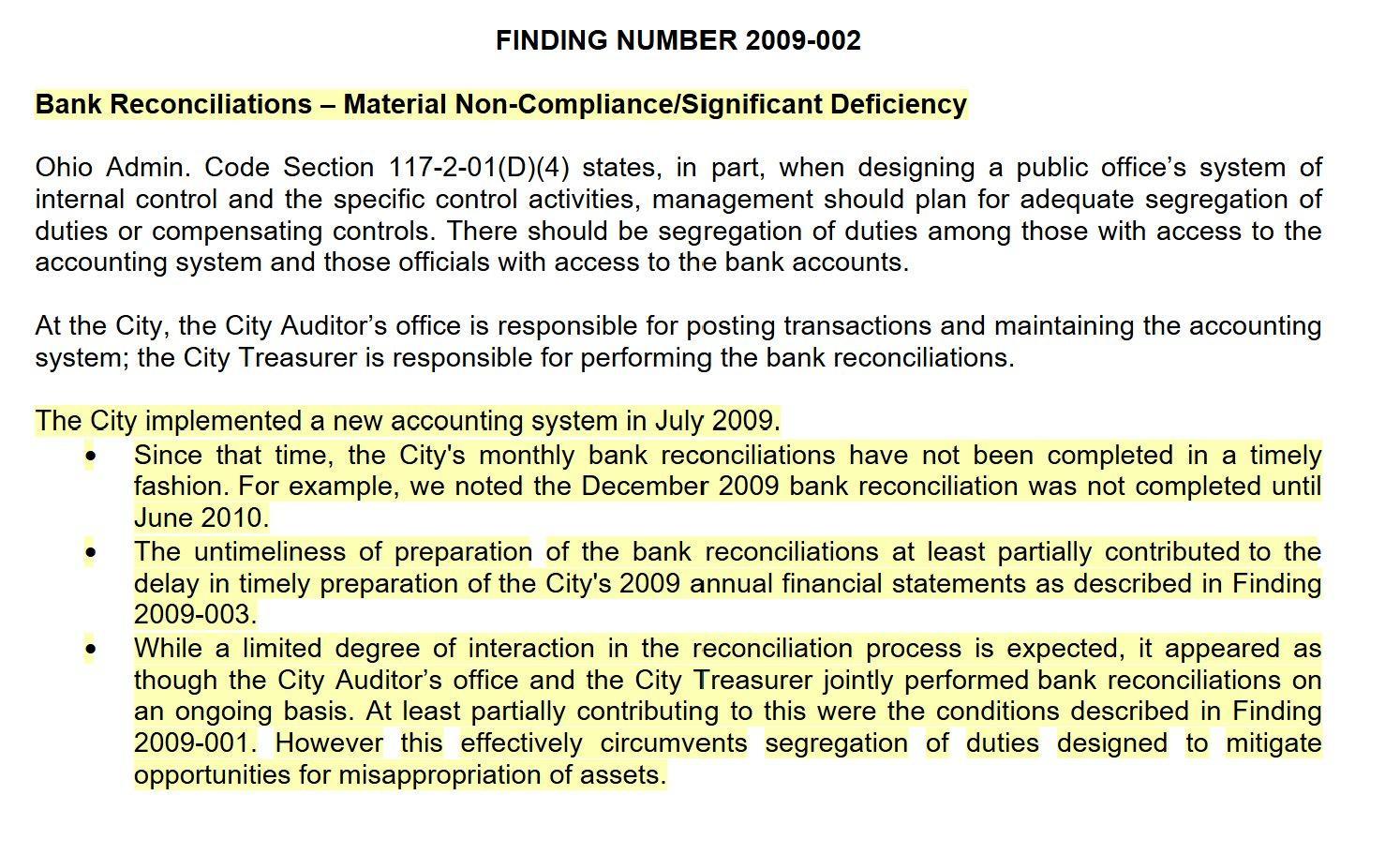
• FINDING 2009-002 (BANK RECONCILIATIONS) — [Permission / Module Configuration]:
The Bank Rec module—a specifically billed component of the software suite—was left inactive from install forward. This module definitively controls segregation of duties through role-based access and automates ledger matching. By bypassing it, the Auditor and Treasurer improperly reconciled accounts jointly on manual spreadsheets.
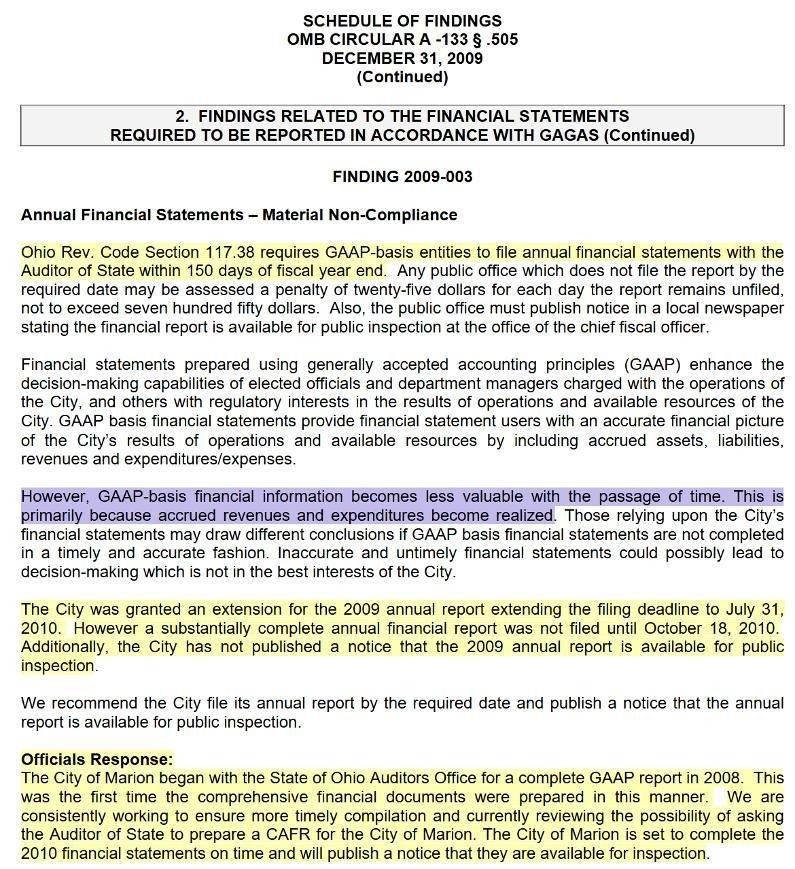
• FINDING 2009-003 (ANNUAL FINANCIAL STATEMENTS) — [Module Configuration]:
The GASB Reporting module was paid for, but the chart of accounts was configured exclusively for cash-basis accounting. This deliberately bypassed the system’s definitive capability to automatically compile GAAP-basis accrual statements.
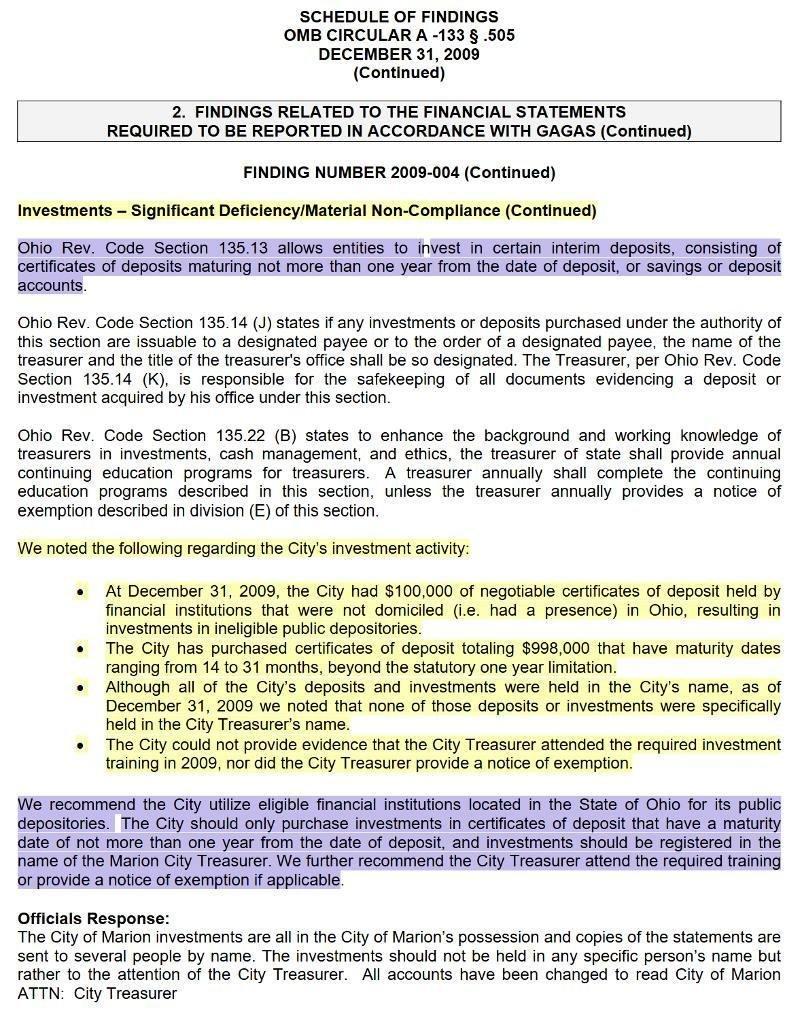
• FINDING 2009-004 (INVESTMENTS) — [Module Configuration]:
The FM Base Suite contains compliance calendaring and automated maturity tracking that definitively alerts staff to expired depository contracts and term limits, but these features were left dormant or were drastically misconfigured.
• FINDING 2009-005 (INCOME TAX ALLOCATION) — [Module Configuration]:
The FM Base Suite definitively controls revenue distribution via automated splitting tables. Because these tables were never configured, all municipal income taxes were forced into a single fund.
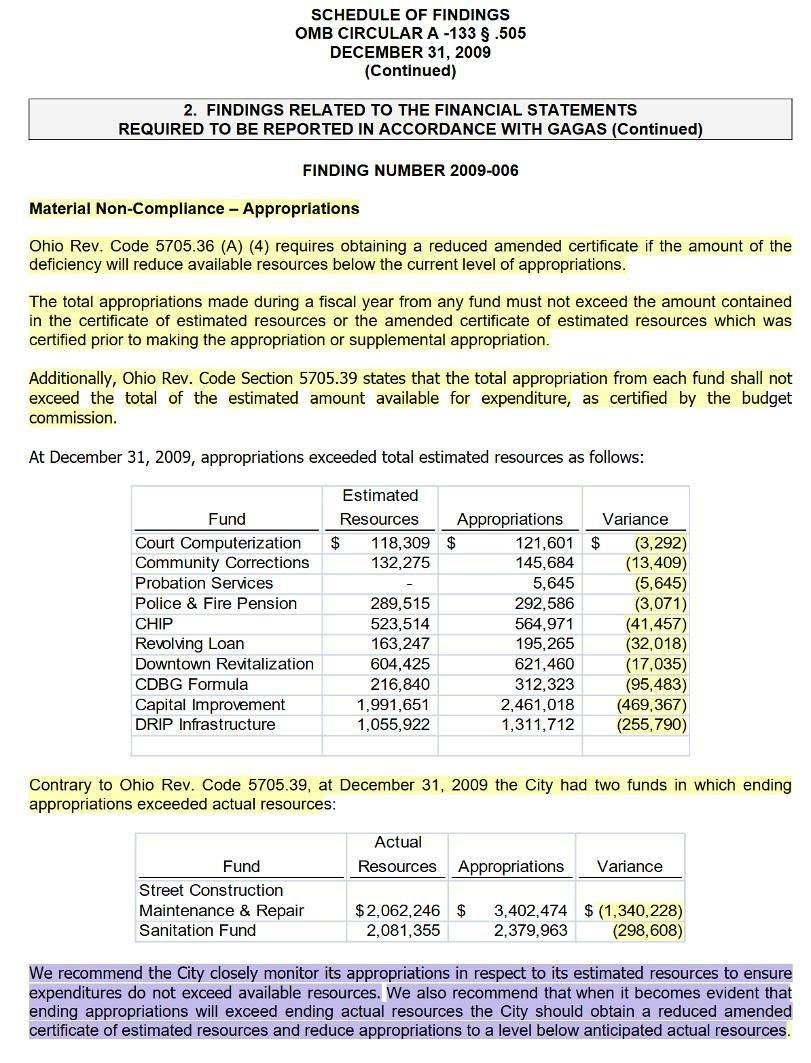
• FINDING 2009-006 (APPROPRIATIONS EXCEEDING RESOURCES) — [Module Configuration]:
The system’s validation feature against the County Budget Commission certificate definitively acts as a planning hard stop to prevent the entry of a mathematically impossible budget, but it was left inactive or was misconfigured.
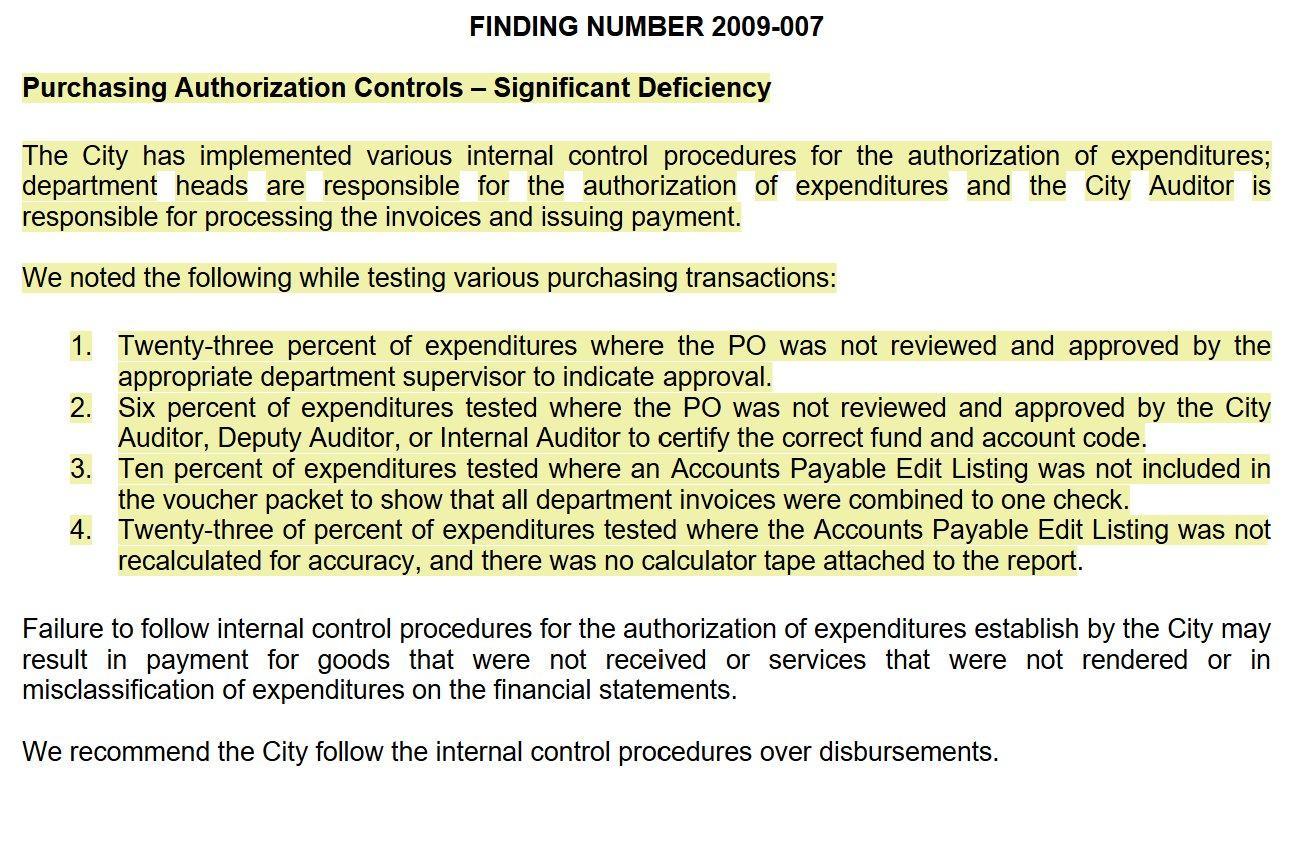
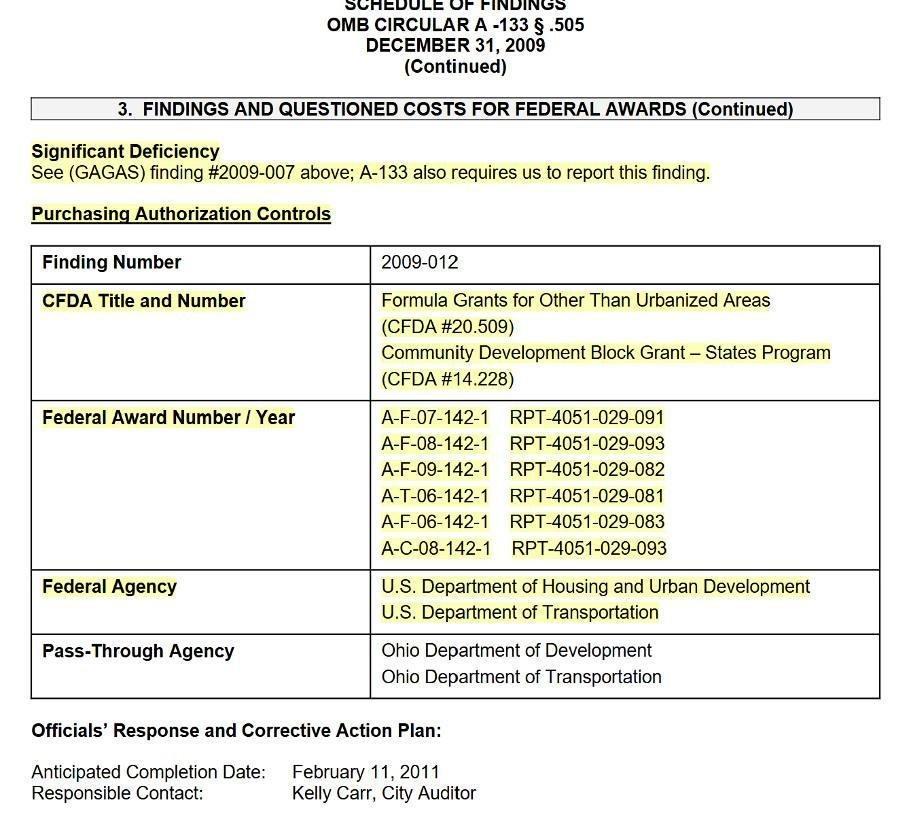
• FINDING 2009-007 (PURCHASING AUTHORIZATIONS) — [Permission / Module Configuration]:
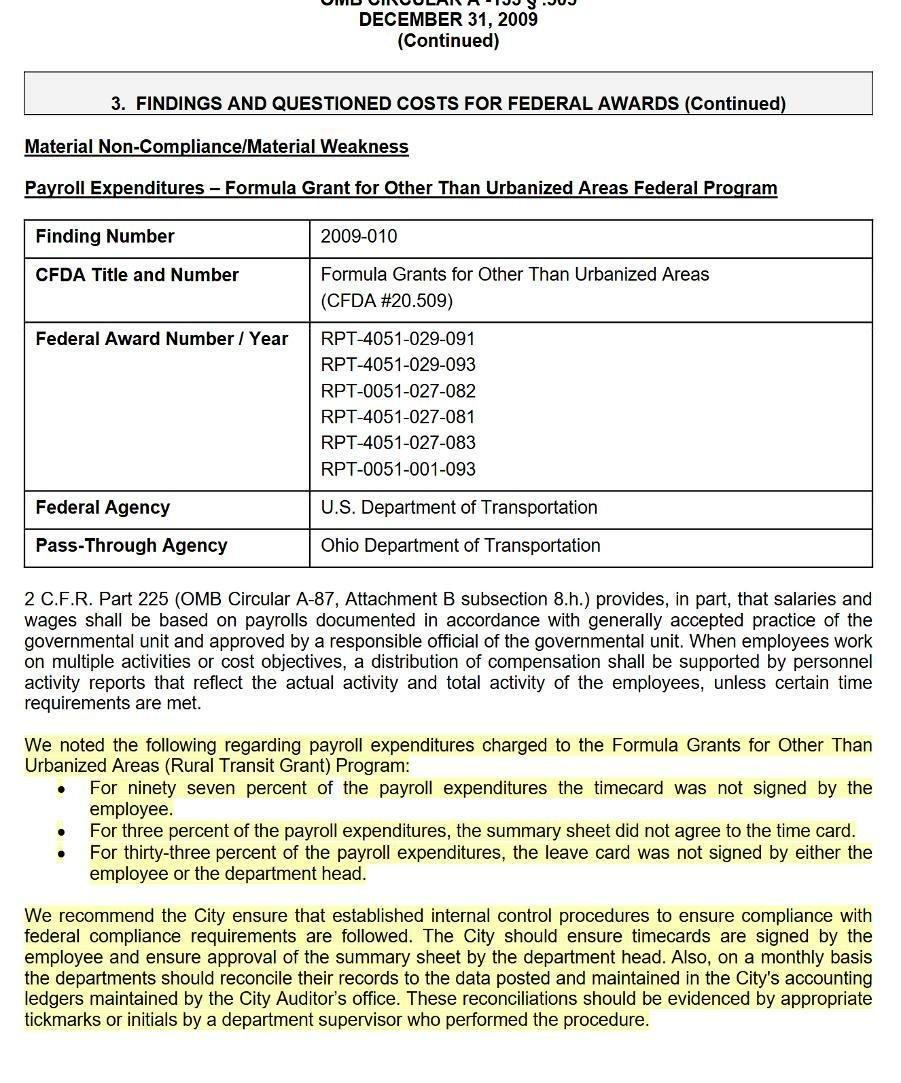
The billed Purchasing and Requisitions modules definitively enforce electronic approval workflows. These were bypassed by configuring migrated legacy purchase orders as “pre-approved,” allowing 23% of disbursements through without supervisor approval.
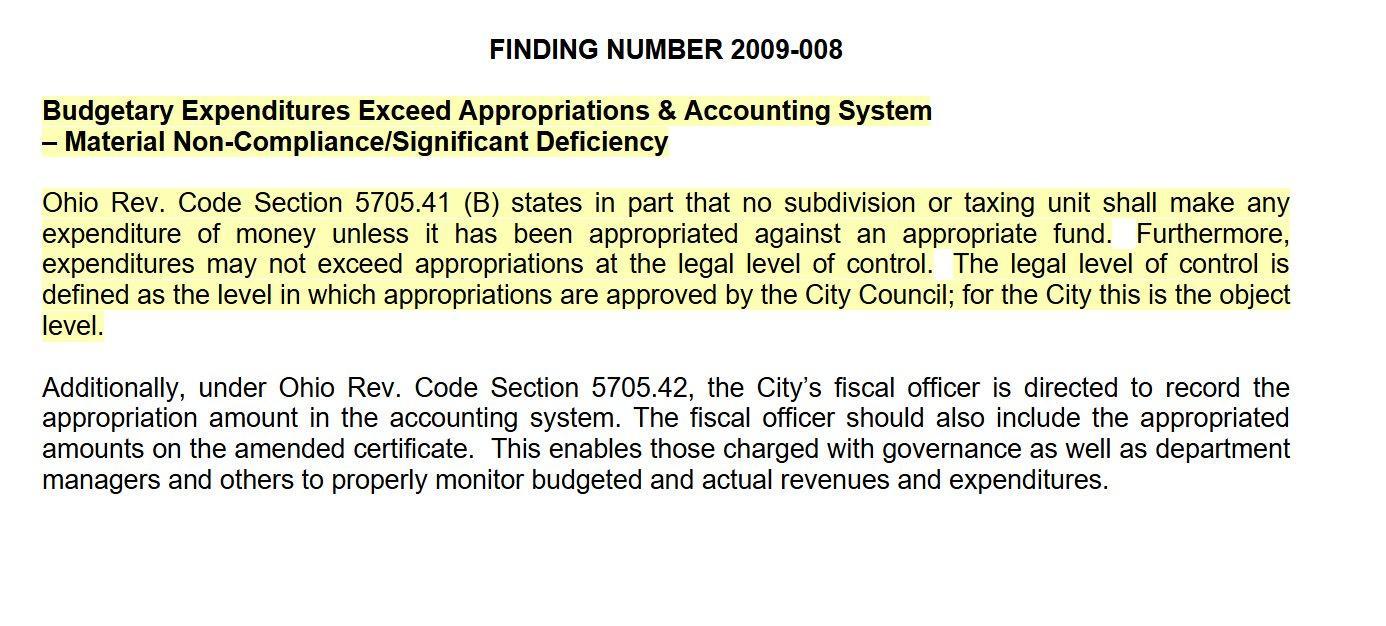
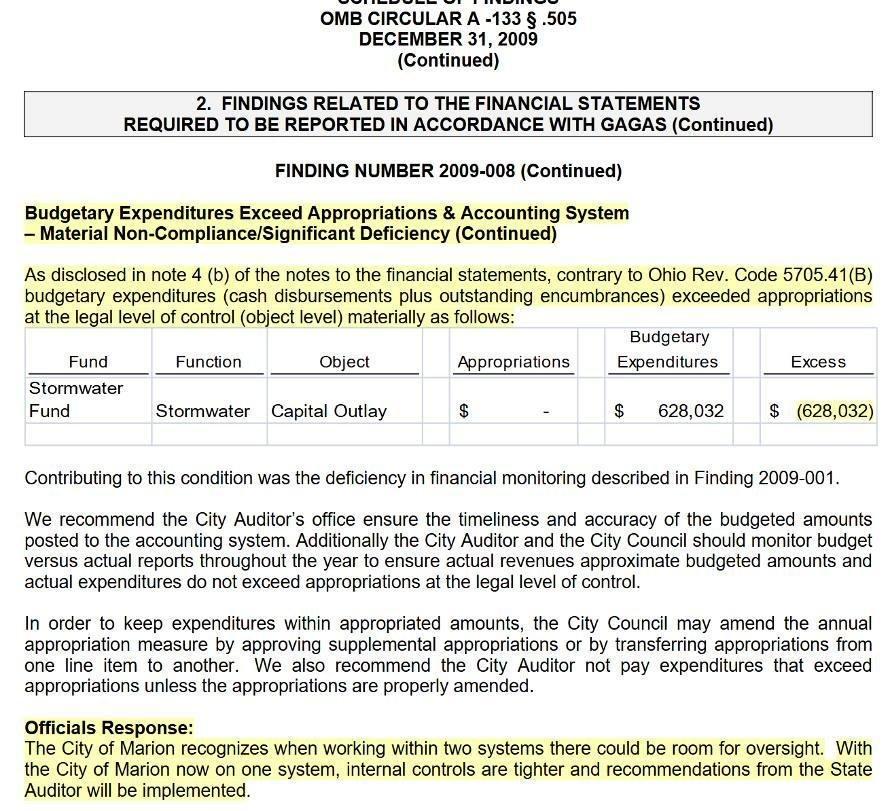
• FINDING 2009-008 (GL OVERRIDE / EXPENDITURES EXCEEDING APPROPRIATIONS) —
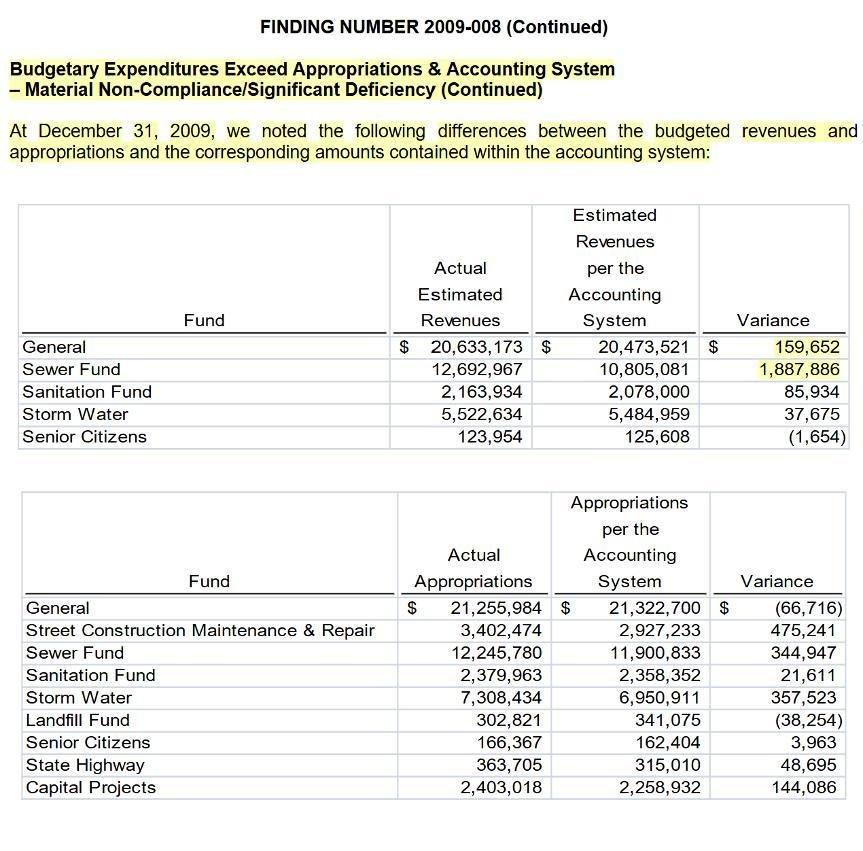
[Permission / Module Configuration]: Systemic budgetary hard stops in the Purchasing module were disabled. General Ledger override rights were assigned to virtually every user profile, bypassing the system’s definitive ability to freeze unauthorized spending. Over-Appropriation Amount: The Stormwater Fund exceeded appropriations by $628,032 for Capital Outlay.
*THE OFFICIAL ADMISSION:
In the audit, the City Auditor formally confessed to control failures during the software rollout, stating on the record: “The City of Marion recognizes when working within two systems there could be room for oversight. With the City of Marion now on one system, internal controls are tighter…”
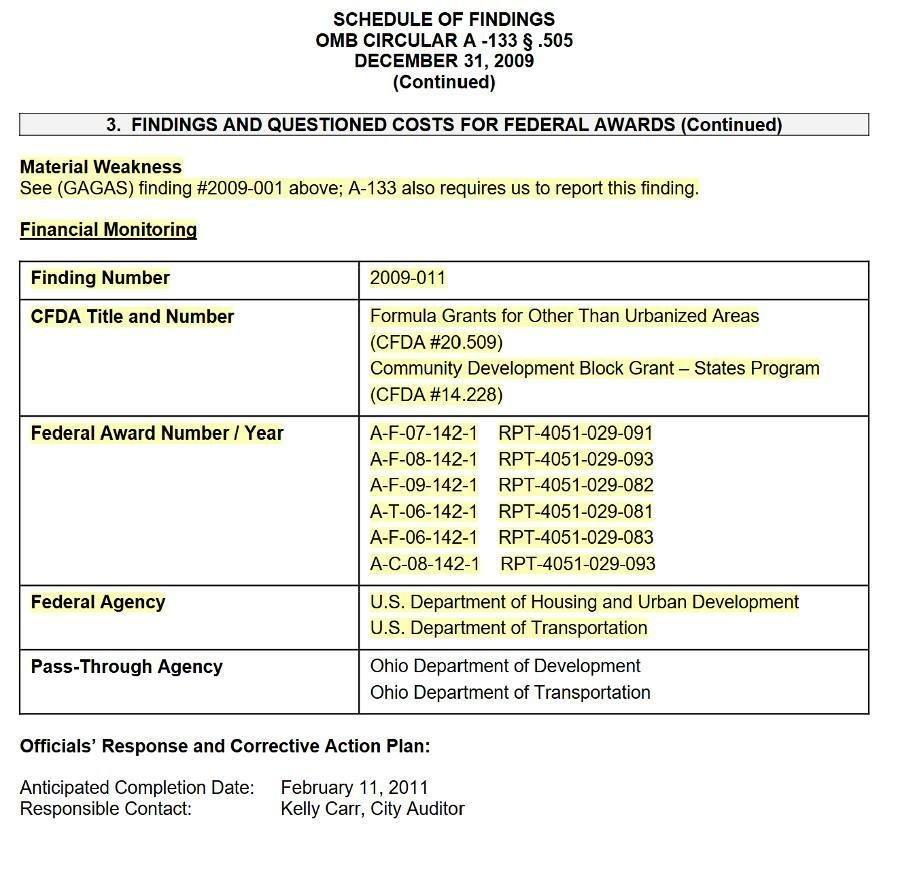
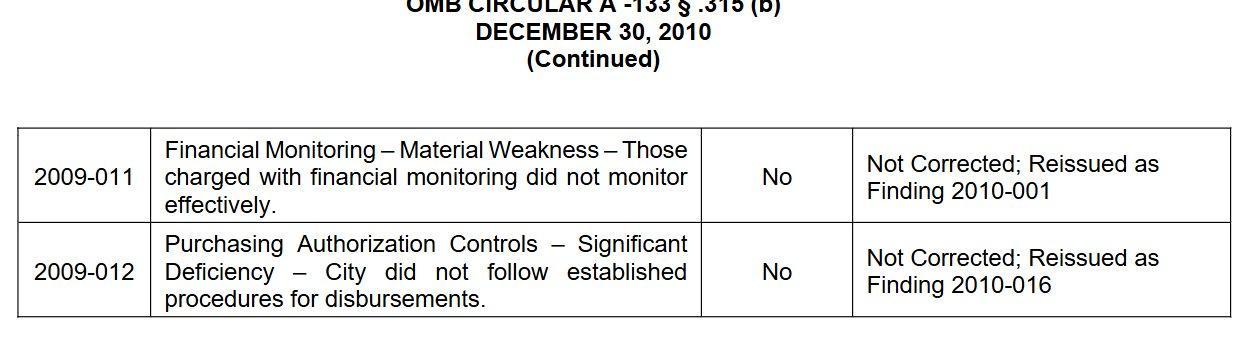
• FINDINGS 2009-009, 2009-011, 2009-012 (FEDERAL GRANTS MATERIAL WEAKNESSES) — [Permission / Module Configuration]:
The paid Project Accounting module definitively controls grant-specific budgets, allowable cost tables, and routing. It was left dormant, and grant-specific approval routing was completely bypassed.
NEGATIVE BALANCES & FINANCIAL IRREGULARITIES
• INCOME TAX MISALLOCATION:
Beginning balances were corrupted because $941,667 was incorrectly held in the General Fund, depriving the Street Construction Fund of $776,136 and the Capital Improvement Fund of $165,531.
• ILLEGAL INVESTMENTS:
The city purchased $100,000 in negotiable CDs from ineligible out-of-state institutions, and locked $998,000 in CDs with 14- to 31-month maturities, bypassing statutory one-year limits.
YEAR-END SUMMARY: STATE LAWS & FEDERAL NONCOMPLIANCE
• FEDERAL NONCOMPLIANCE:
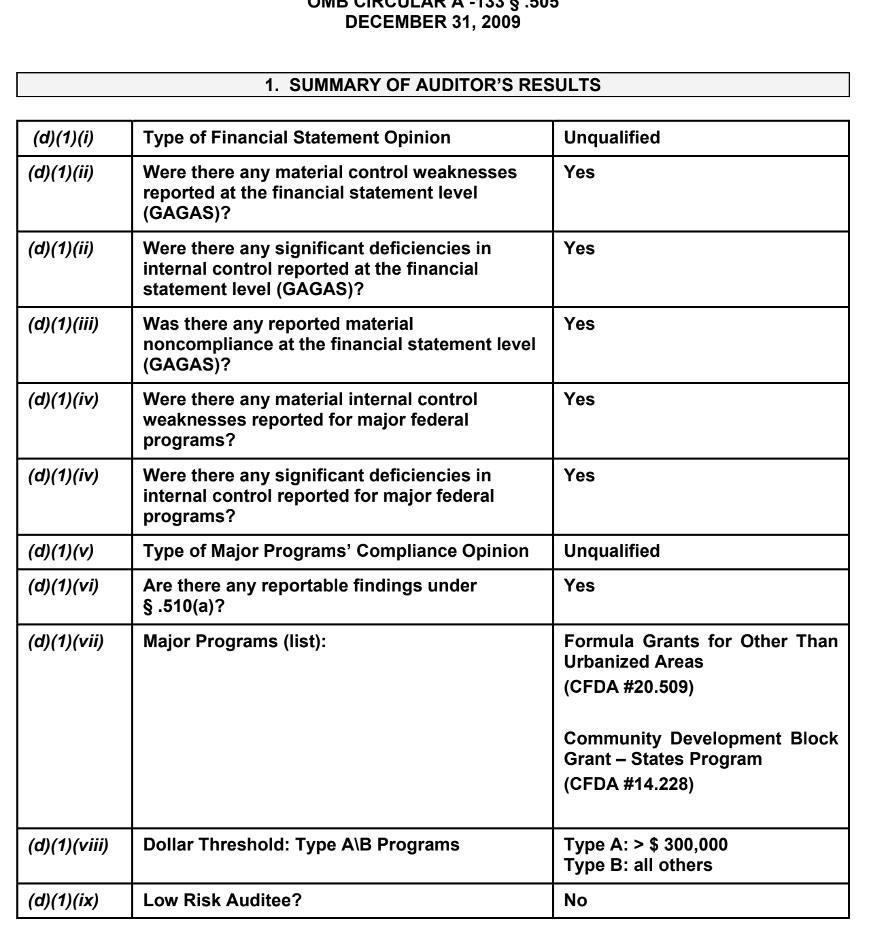
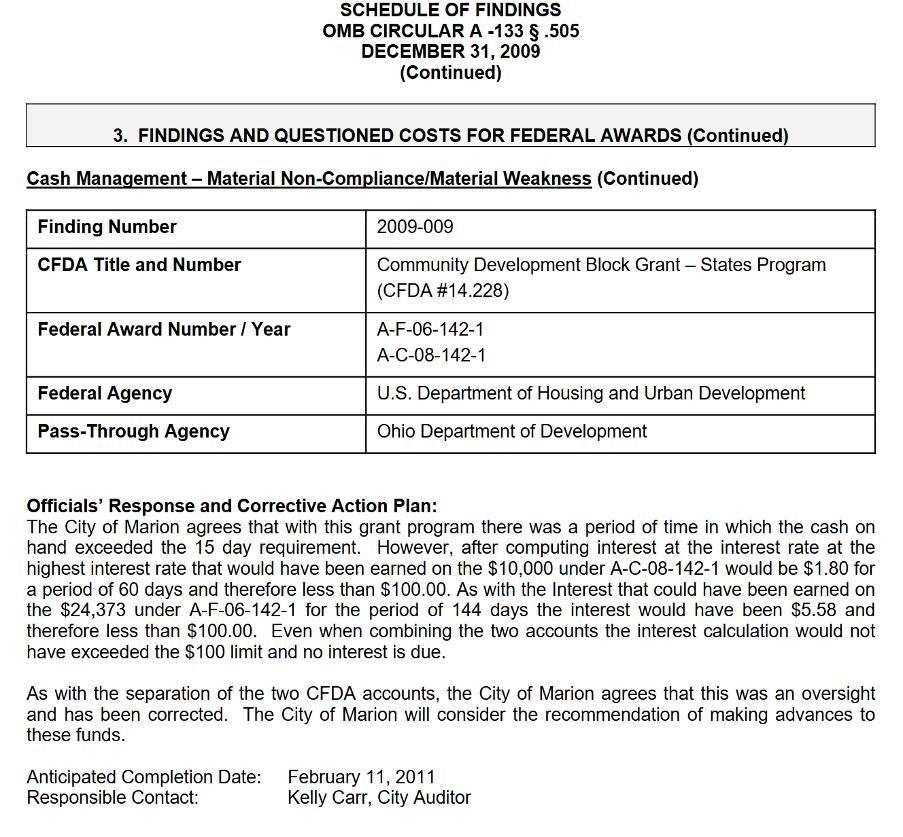
Cash management 15-day disbursement rule violated (CDBG funds held up to 144 days); 97% of transit payroll timecards lacked required signatures; 23% of federal purchases bypassed supervisor approval.
• STATE LAWS: ORC § 5705.41(B) (spending over appropriations),
ORC §§ 5705.36/39 (appropriating over resources), ORC §§ 135.03/08/13/14 (Uniform Depository Act), ORC § 117.38 (GAAP reporting), ORC § 5705.10(D) (revenue allocation), OAC § 117-2-01(A)&(D) (internal controls & segregation of duties).
OFFICIAL EXHIBITS & PRIMARY SOURCE RECORDS (2009 IT Blueprint)
ANATOMY OF MARION’S FINANCIAL COLLAPSE 2010: THE PROBLEMS MULTIPLY RAPID-RELEASE IT BLUEPRINT OF SILENT SABOTAGE
The systemic bypass of New World ERP safety controls and or modules was formally admitted to on the record by the City Auditor during the 2009 software rollout.
It continued to be admitted in 2010.
Under normal, compliant conditions, General Ledger (GL) overrides should be an exceptionally rare event executed only by the auditor under strict oversight.
Instead, as officially confirmed during the March 25, 2024, City Council meeting, the administration configured the software to issue a simple “warning that pops up”.
This “Soft Stop” provided “no stop for appropriate expenditures, other than supervisory approval,” allowing deputy auditors and clerks to click past the alert and spend accounts into the negative.
Evidence of this and many other role-based and hard-stop control bypasses exists from installation forward.
A Soft Stop is entirely inappropriate for securing public funds.
Why leave the digital doors so wide open?
Because closing them would prevent the administration from hiding the bleeding.
We have been advised by current and past officials and city employees that this GL Override misconfiguration allowing illegal spending was abused widely.
This seems to be a widely known occurrence over a period of many years, reportedly since installation.
In 2010 alone, the GL Override misconfiguration allowed illegal spending over appropriations totaling $16,062,830.
During a subsequent June 24, 2024, council meeting, it was admitted on the record that the city makes its books “pristine by moving money where it does not need to be” before state audits.
The State Auditor’s office reportedly called this “the most illogical bookkeeping and accounting they had ever seen in their 30 years”.
To legally force the system to accept this illogical bookkeeping and illegal cross-fund subsidization, officials had to severely misconfigure, bypass on the fly, or disable the software at the root level.
This would be easily accomplished by unimpeded administrative access, which we have proven existed, and the lack of a standard, enforced process for requesting permissions and configuration changes lays the groundwork for the possibility of an unknown amount of potential crimes.
Some of this is evident in the Ohio Auditor of State audits, in which they cite each and every law and statute broken per citation.
Many others seem to have been ignored, which seems to have been a pattern in Marion dating back to at least the 1980’s, which is the oldest Marion City Audit in our possession.
With such drastic failures in information technology controls, including inappropriate administrative access, settings could be manipulated on the fly.
The city of Marion has never had and still does not possess an IT ticketing system.
This is a grave failure of modern day globally recognized IT standards, and a practice that has been in place for at least as long as multi-user computer interfaces which were introduced in the Vietnam era.
Most evidence of this sort will need to be obtained via vendor Helpdesk Logs and historic permissions matrices—both of which we asked for and were denied, seven months later, in direct contradiction to high court rulings that such information is public record.
Looking at the resulting data, the deliberate sabotage of the software is undeniable and includes:
• We know for a fact the automated Bank Reconciliation module was not used properly, forcing manual spreadsheet tracking that bypassed automated ledger matching. This was not corrected until the Collins administration took office.
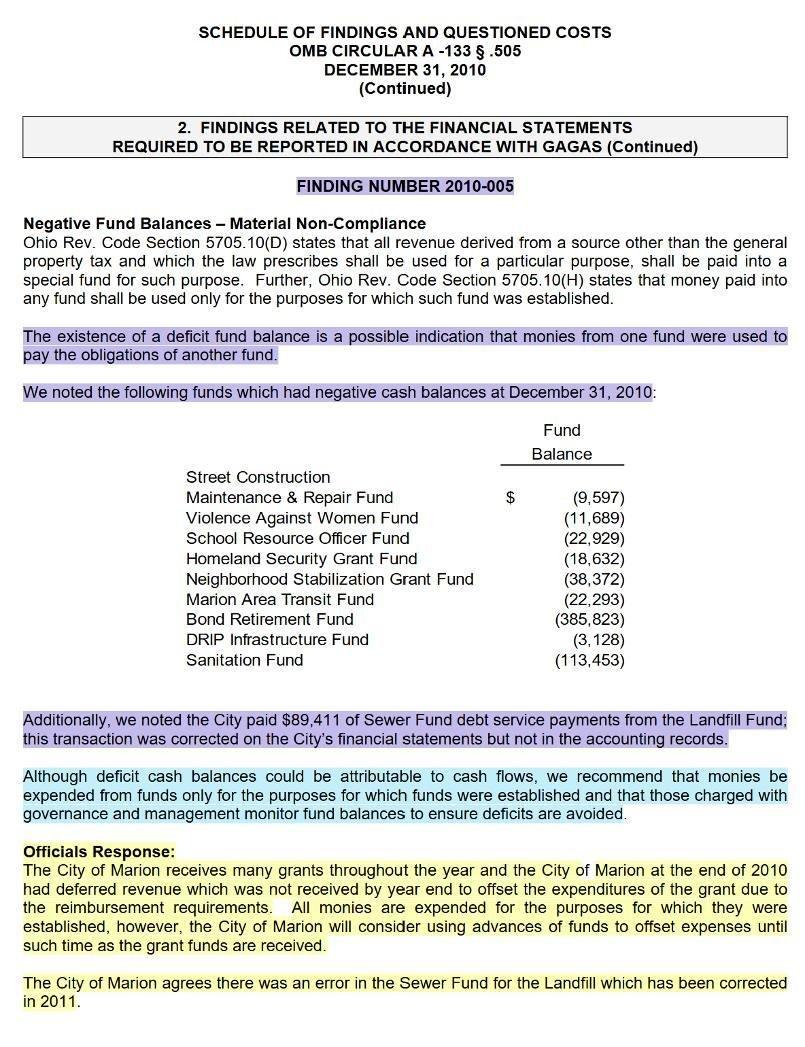
• Fund-level cash stops were disabled, misconfigured, or bypassed on the fly, which allowed $89,411 in restricted Landfill cash to illegally pay off Sewer debt—a critical error the city officially admitted to in its 2010 audit response.
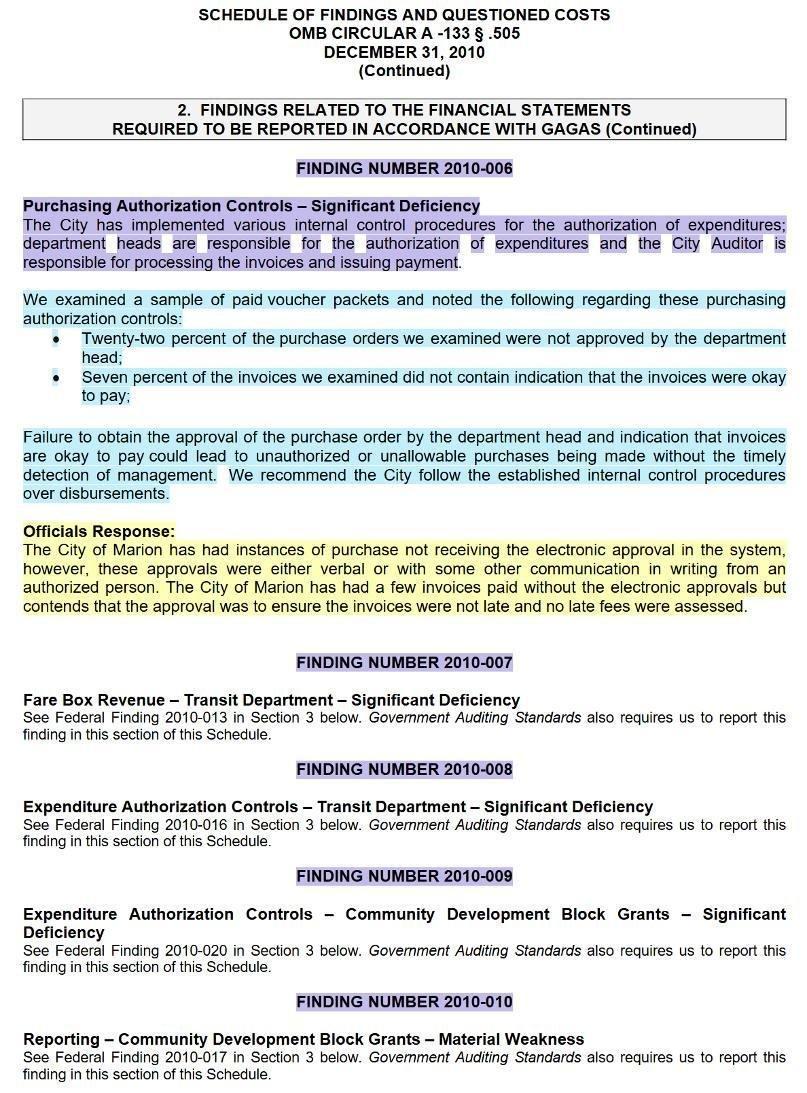
• Electronic Purchasing Approvals within the Purchasing module were bypassed. City officials formally confessed in the 2010 audit that they bypassed the software’s mandatory electronic routing in favor of “verbal” authorizations to avoid late fees.
This was the first full year operating exclusively on the New World ERP system.
It displays classic indicators of a drastically misconfigured and fundamentally compromised system.
Modern enterprise ERP software is specifically designed to prevent these exact failures, if configured properly.
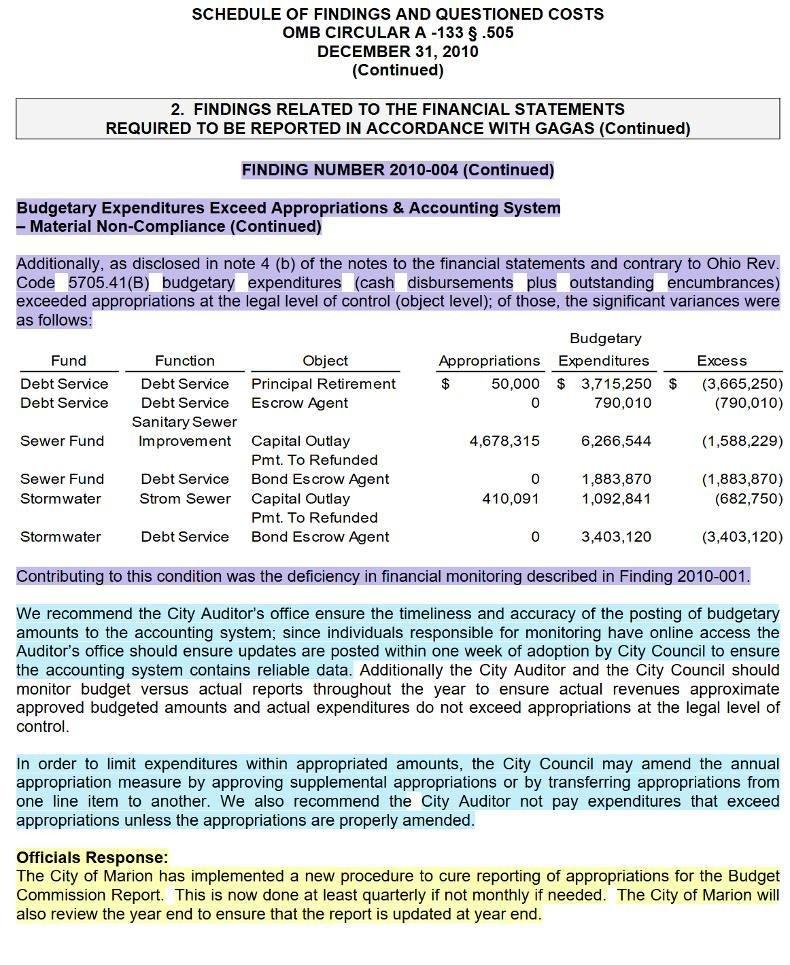
While the city offered a generic deflection regarding their massive budget overrides in the 2010 audit, their written responses admitting to the illegal cross-fund transfers and bypassed purchasing approvals prove the systemic safeguards were deactivated or drastically misconfigured.
Instead of addressing the disabled or bypassed hard-stops, the City Auditor simply stated:
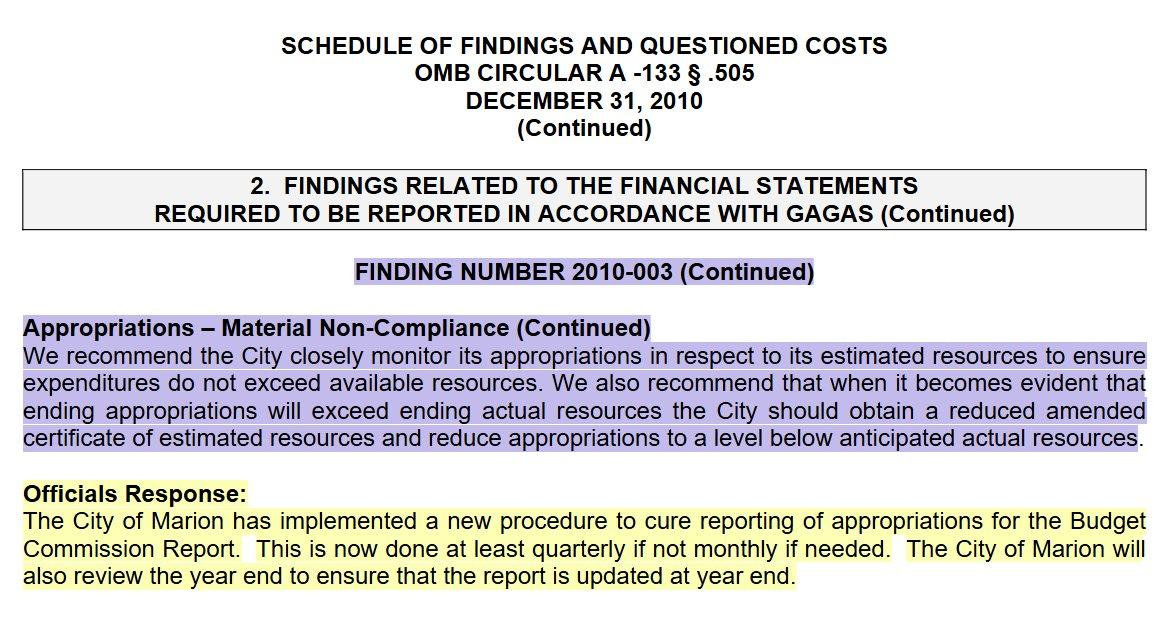
“The City of Marion has implemented a new procedure to cure reporting of appropriations for the Budget Commission Report. This is now done at least quarterly if not monthly if needed. The City of Marion will also review the year end to ensure that the report is updated at year end”.
In the 2009 audit the Marion Auditor admitted to the General Ledger (GL) override misconfiguration and stated that they will work on oversight.
The 2009 official response stated:
“The City of Marion recognizes when working within two systems there could be room for oversight. With the City of Marion now on one system, internal controls are tighter…”.
SYSTEMS FAILURE & FORENSIC IT ANALYSIS
In the realm of forensic IT, these official statements and “procedures” serve as stunning admissions of improper software configuration.
Modern Enterprise Resource Planning (ERP) systems like New World are architected with definitive, automated safeguards.
If an ERP system is properly configured, it is digitally impossible to bypass mandatory electronic routing for “verbal” authorizations, nor is it possible to spend beyond appropriated limits without triggering a hard-stop which must be approved by the Marion City Auditor.
The fact that the Auditor’s office had to rely on manual, outside “procedures” to fix reporting, or could process payments without system approval to avoid late fees, definitively proves that the software’s foundational security modules and hard-stops were either drastically misconfigured, intentionally disabled, or bypassed on the fly by users with high-level administrative access.
By cross-referencing the city’s actual New World Systems software invoice against the State Auditor’s findings, the sheer volume of defeated hard-stops serves as undeniable proof.
The city paid for a digital vault, but administration officials deliberately left the doors wide open, and/or manipulated the system on the fly.
The State of Ohio formally cited the City for failing to correct major 2009 violations, explicitly documenting repeat failures including:
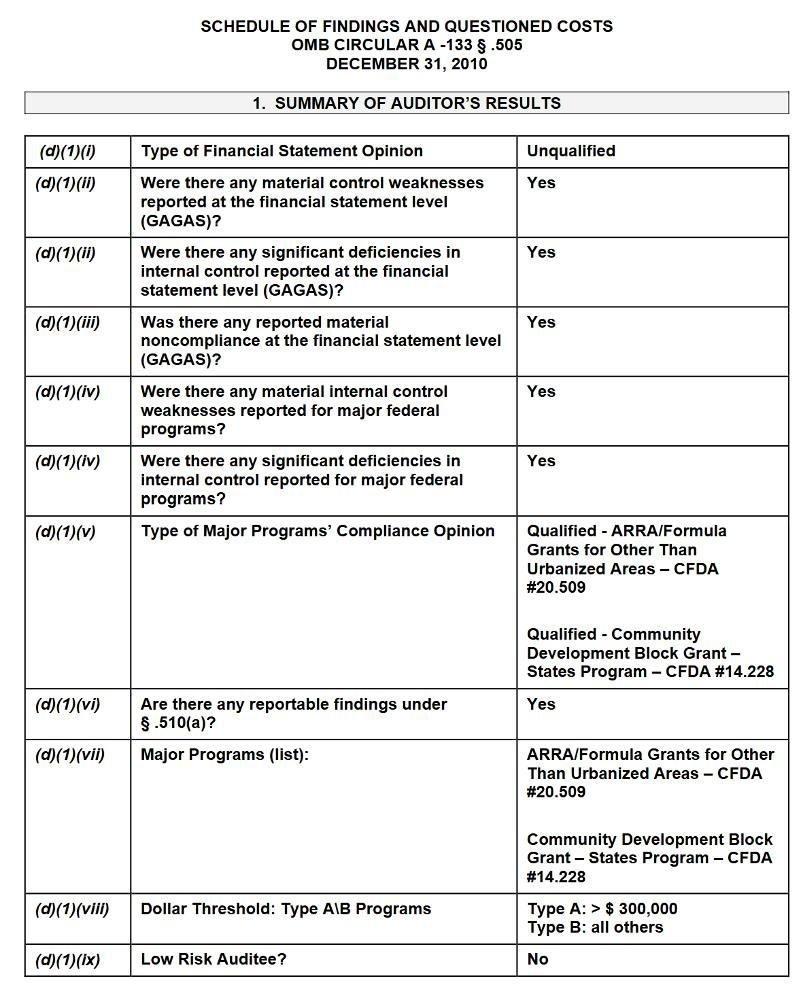
• Financial Monitoring
• Illegal Investments
• Appropriations Exceeding Resources
• Budgetary Overrides
• Purchasing Authorization Controls.
This second installment of our rapid-release series outlines how these uncorrected software misconfigurations multiplied the financial damage during the 2010 audit year.
These are the “software complexities” that the Ohio Auditor of State’s office has repeatedly spoken of.
The city could have hired a competent IT expert to fix this at the beginning, but they did not.
They intentionally chose to allow this system to continue compromised.
Multiple sources and city council summaries state that at least some Ohio Auditor of State employees knew about these failures early on; these are not “software complexities” they are a complete failure in onboarding and configurations.
Clearly, Marion’s official audits show signs of the problems.
The forensic IT blueprint below correlates the official 2010 audit findings directly to the specific software modules the city purchased.
This is exactly what caught the attention of the information technology professionals within Marion Watch and our investigative network.
THE TRUE COST OF THE SABOTAGE: BY THE NUMBERS
When you calculate the sum of every single instance where expenditures plus encumbrances exceeded appropriations in the 2010 audit, the total amount of illegal spending processed through the compromised software in just one year is a staggering $16,062,830.
Furthermore, because the system’s foundational fund-level cash stops and definitive deficit hard stops were deactivated, misconfigured, or bypassed on the fly, the software allowed fifteen separate funds to crash into negative fund balances totaling $5,740,016, alongside nine completely exhausted funds running deficit cash balances totaling $625,916.
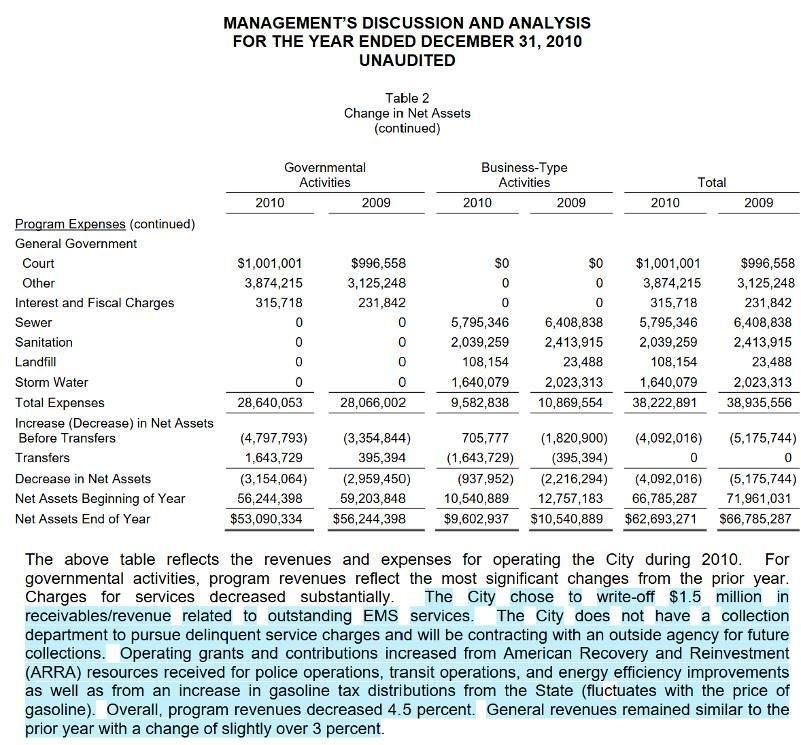
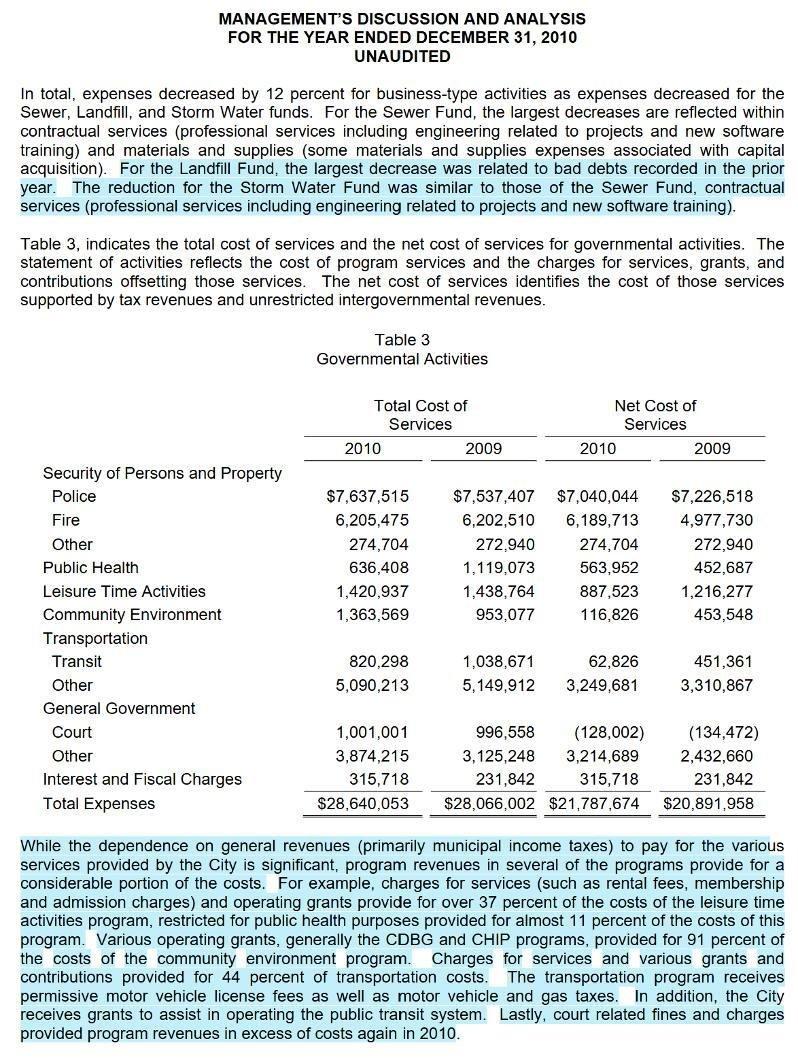
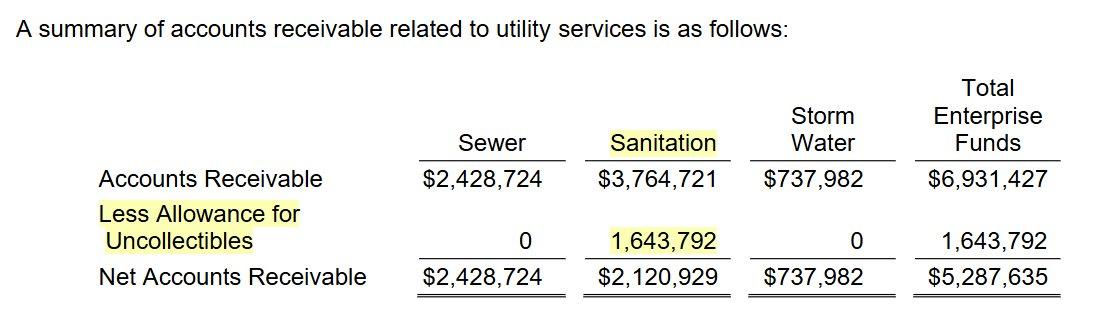
On top of the illegal spending and deficit balances, the city hemorrhaged over $3.14 million in uncollected revenues and bad debt. The administration explicitly admitted to writing off $1.5 million in outstanding Emergency Medical Services (EMS) billing simply because they did not have a collection department to pursue delinquent charges. Furthermore, out of $3.76 million in billed Sanitation receivables, a staggering $1,643,792 was recorded as an “Allowance for Uncollectibles”—meaning nearly half of the city’s sanitation billing was recognized as bad debt.
2010 AUDIT FINDINGS (THE PROBLEMS MULTIPLY)
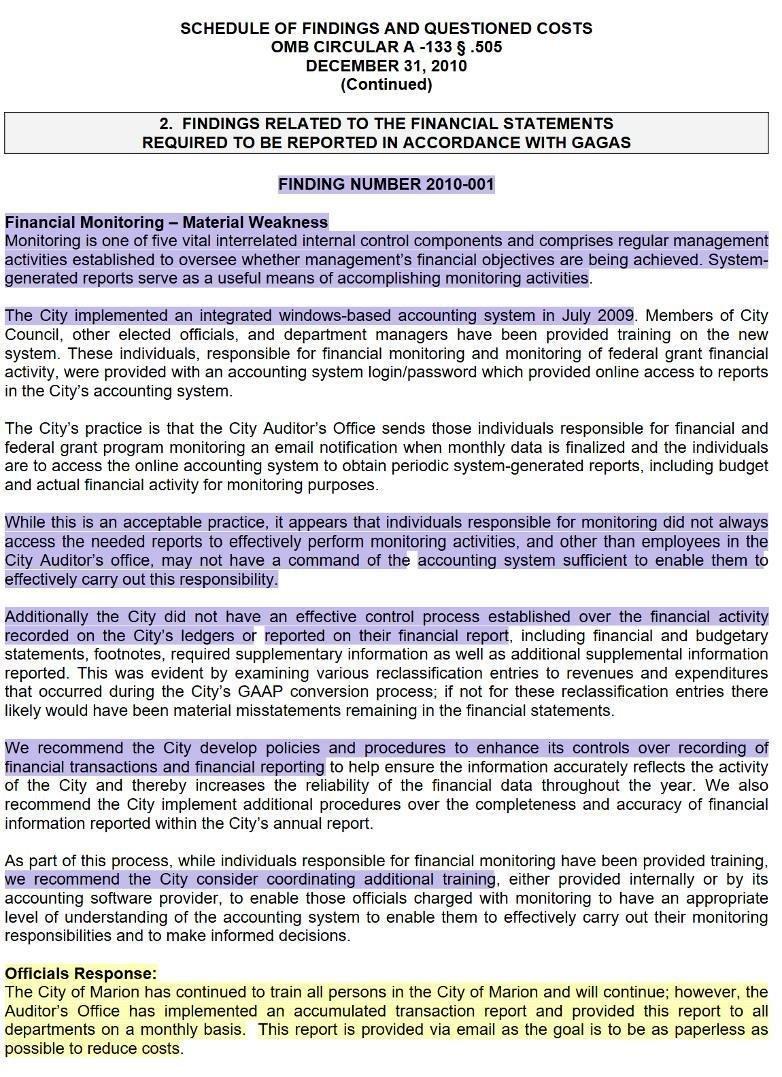
• FINDING 2010-001 (FINANCIAL MONITORING) [REPEAT OF 2009-001] — [Module Configuration]:
The FM Base Suite’s role-based dashboards and reporting tools remained unconfigured, leaving officials without adequate financial oversight.
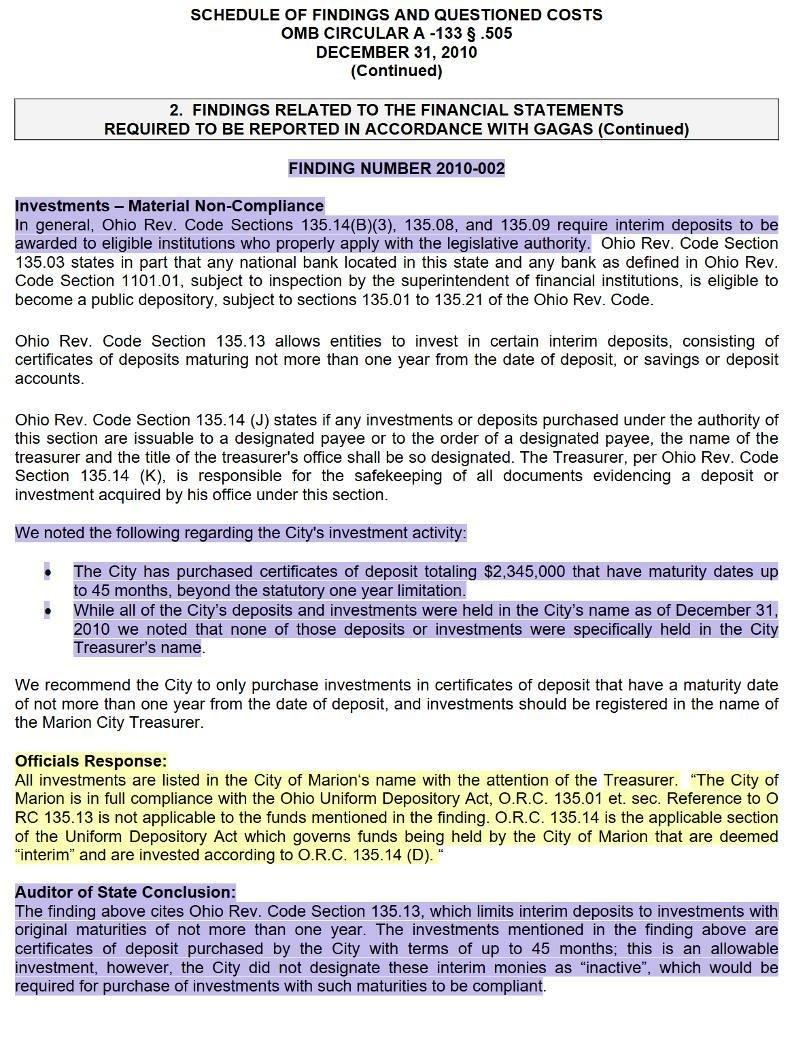
• FINDING 2010-002 (INVESTMENTS) [REPEAT OF 2009-004] — [Module Configuration]:
The FM Base Suite’s compliance calendaring remained inactive; $2,345,000 in CDs were purchased exceeding statutory term limits.
• FINDING 2010-003 (APPROPRIATIONS EXCEEDING RESOURCES) [REPEAT OF 2009-006] — [Module Configuration]:
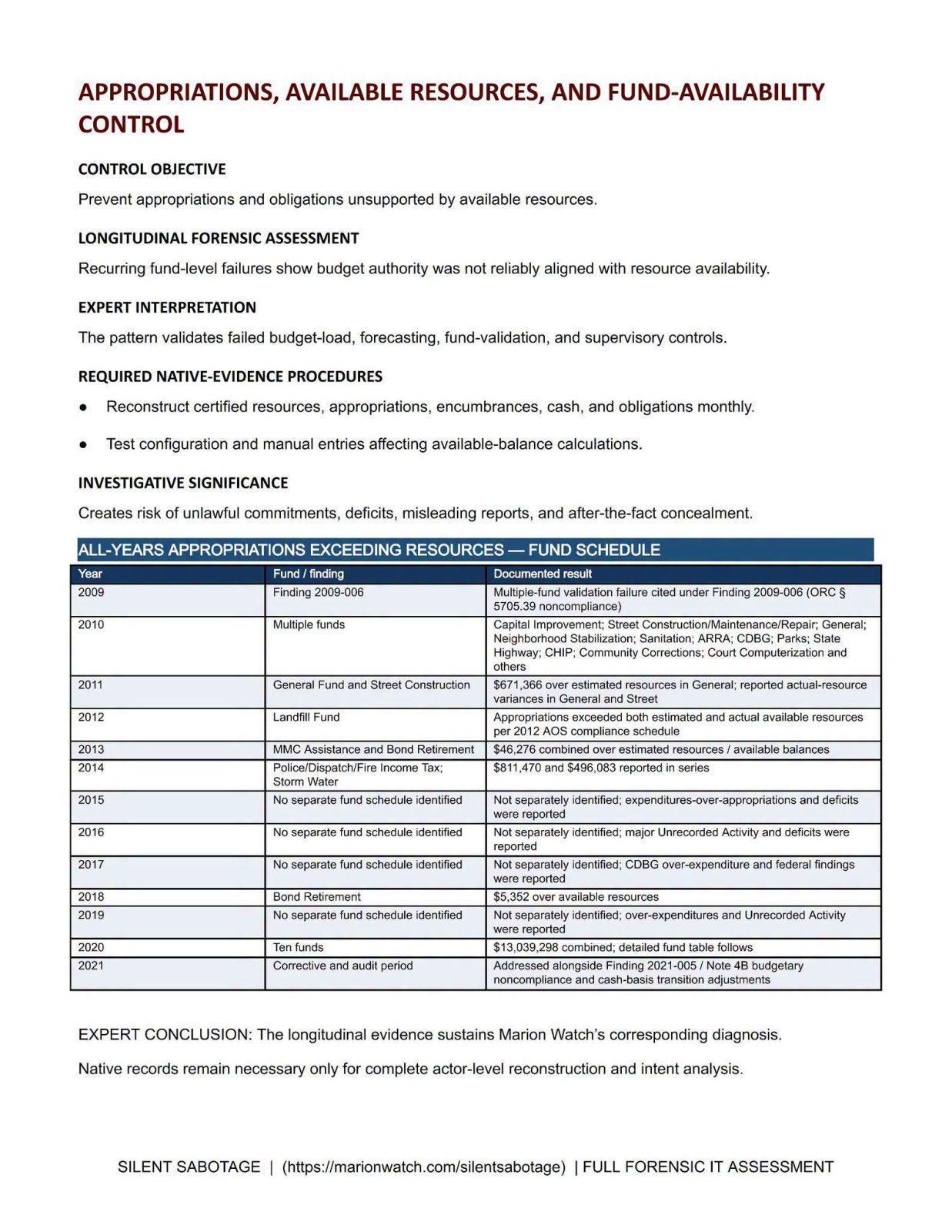
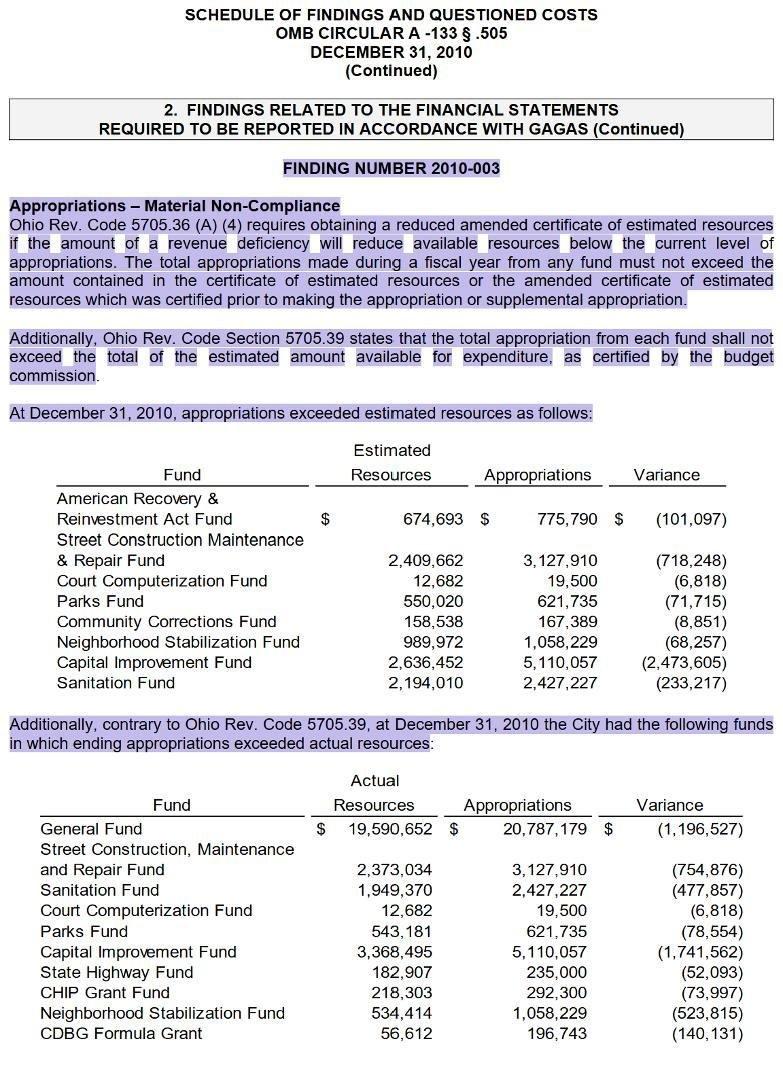
The Budgeting module validation remained unconfigured, programming the system with a mathematically impossible budget and resulting in massive over-appropriations. Appropriations exceeded estimated and/or actual resources across numerous funds, including: Capital Improvement Fund ($2,473,605 over estimated; $1,741,562 over actual); General Fund ($1,196,527 over actual); Street Construction, Maintenance and Repair Fund ($718,247 over estimated; $754,876 over actual); Neighborhood Stabilization Fund ($68,256 over estimated; $523,815 over actual); Sanitation Fund ($233,217 over estimated; $477,857 over actual); CDBG Formula Grant ($140,131 over actual); American Recovery & Reinvestment Act Fund ($101,097 over estimated); Parks Fund ($71,715 over estimated; $78,554 over actual); CHIP Grant Fund ($73,997 over actual); State Highway Fund ($52,093 over actual); Community Corrections Fund ($8,851 over estimated); and Court Computerization Fund ($6,818 over estimated).
• FINDING 2010-004 (GL OVERRIDE / EXPENDITURES EXCEEDING APPROPRIATIONS) [REPEAT OF 2009-008] — [Permission / Configuration]:
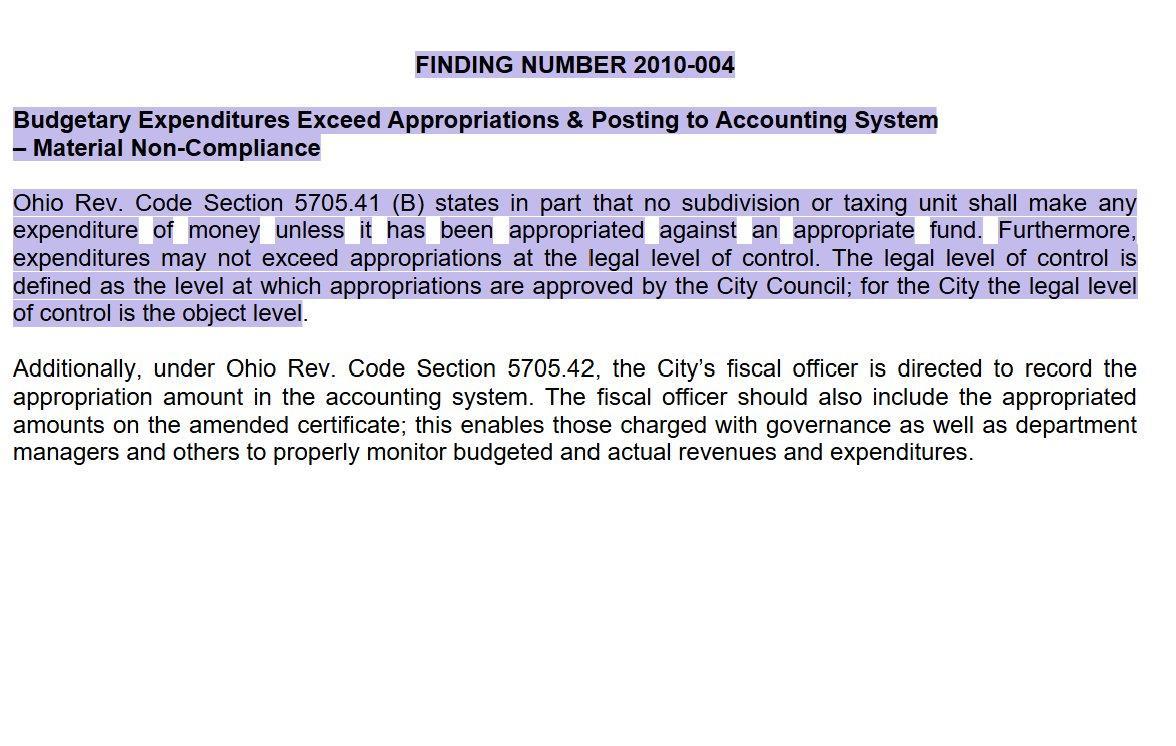
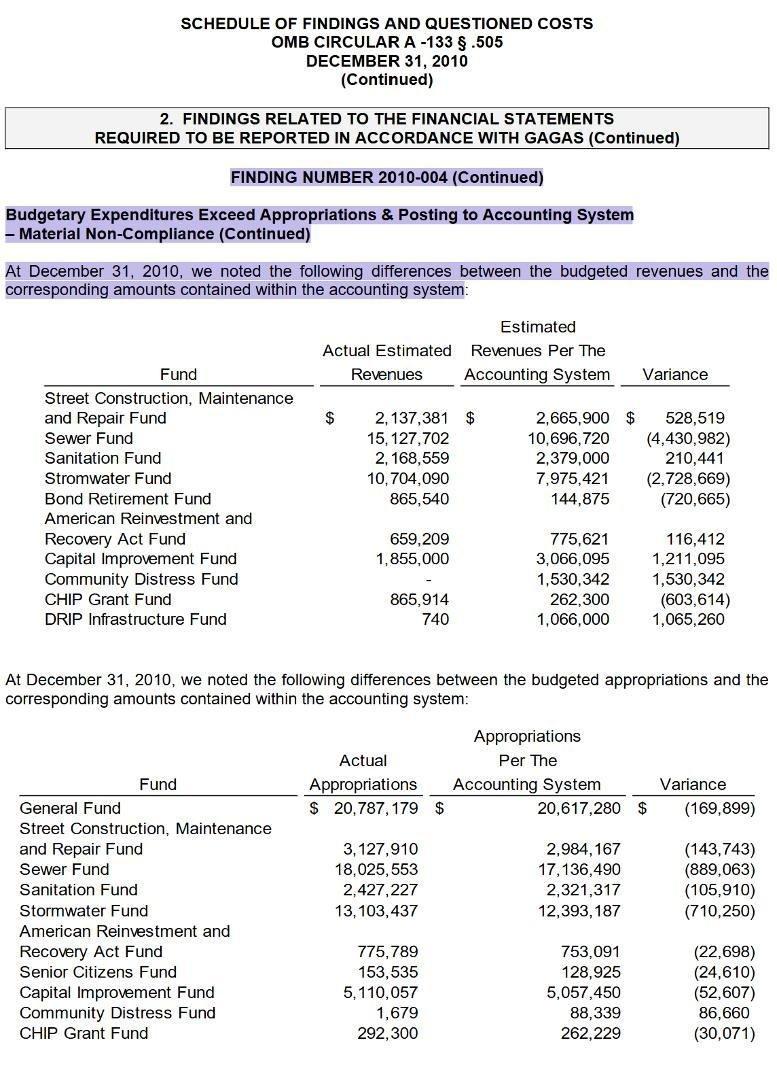
Budgetary hard stops in the Purchasing module remained disabled or bypassed on the fly, and General Ledger override permissions remained universally assigned across departments, enabling illegal expenditures. Over-Appropriation amounts allowed to process included: Debt Service Principal Retirement ($3,665,250); Stormwater Payment to Refunded Bond Escrow Agent ($3,403,120); Sewer Fund Payment to Refunded Bond Escrow Agent ($1,883,870); Sewer Capital Outlay ($1,588,229); Debt Service Payment to Refunded Bond Escrow Agent ($790,010); and Stormwater Capital Outlay ($682,750).
• FINDING 2010-005 (NEGATIVE FUND BALANCES / CROSS-FUND SHIFTS) — [Module Configuration]:
The General Ledger module’s definitive deficit hard stops were inactive, permitting an unauthorized cross-fund payment.
• FINDING 2010-006 (PURCHASING AUTHORIZATIONS) [REPEAT OF 2009-007] — [Permission / Module Configuration]:
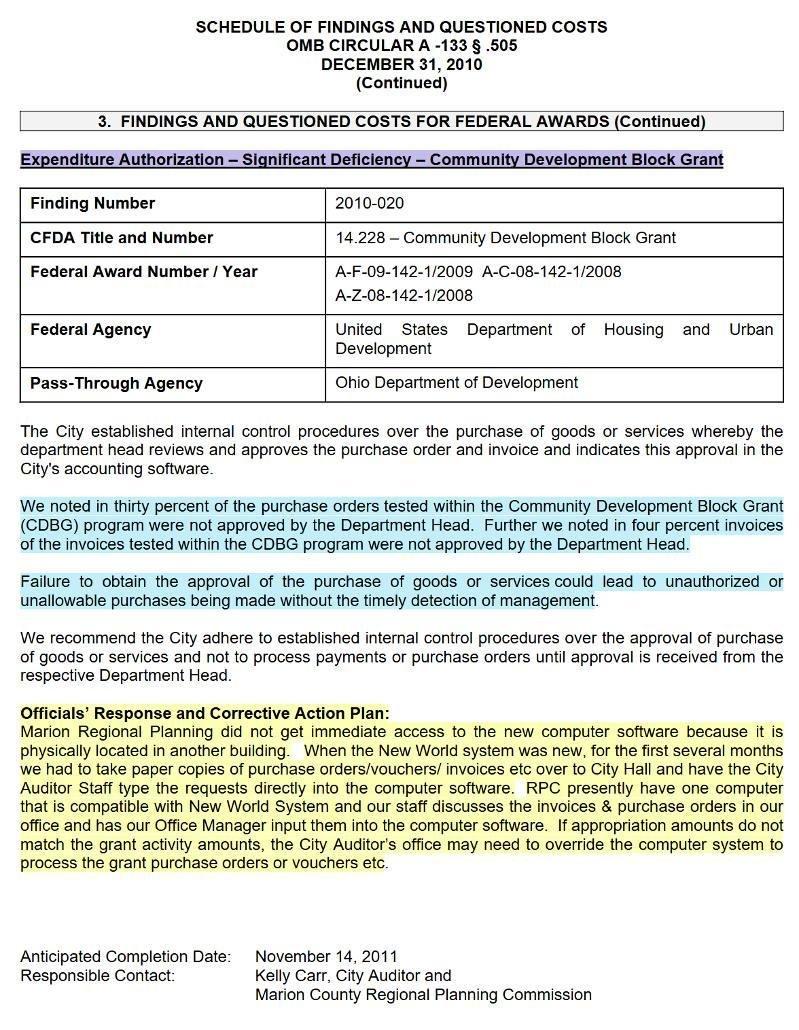
The Purchasing and Requisitions modules’ approval workflows remained unenforced; 22% of POs lacked department head approval.
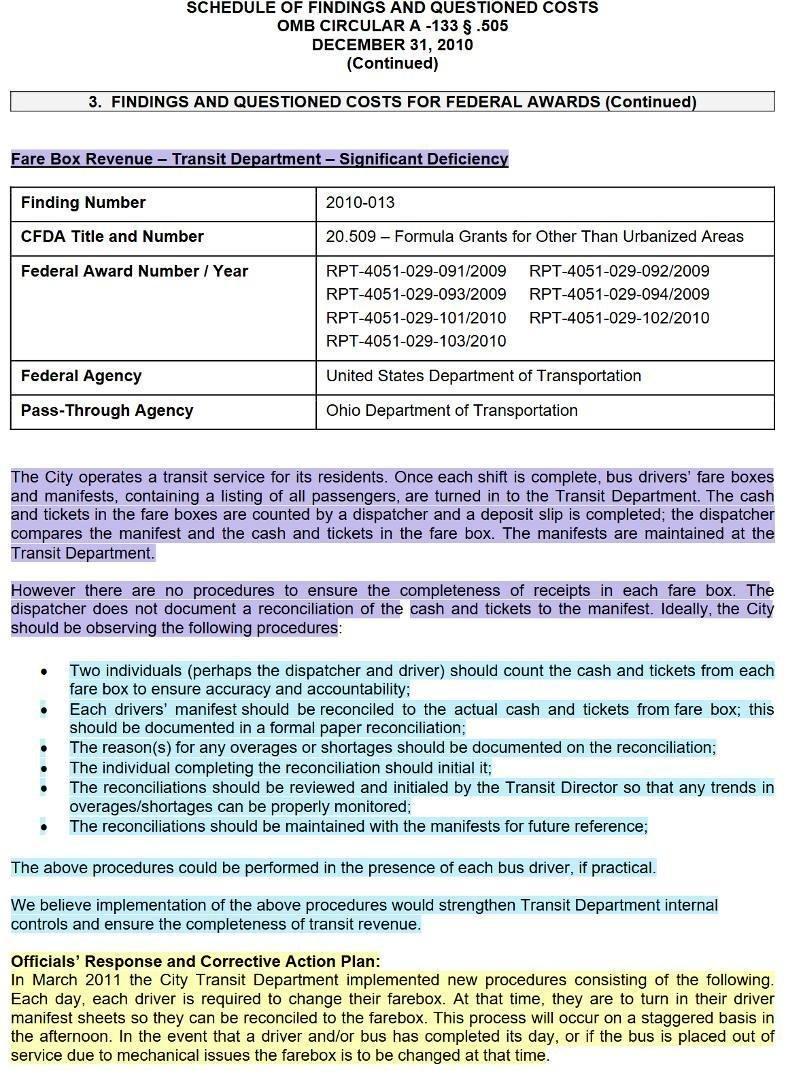
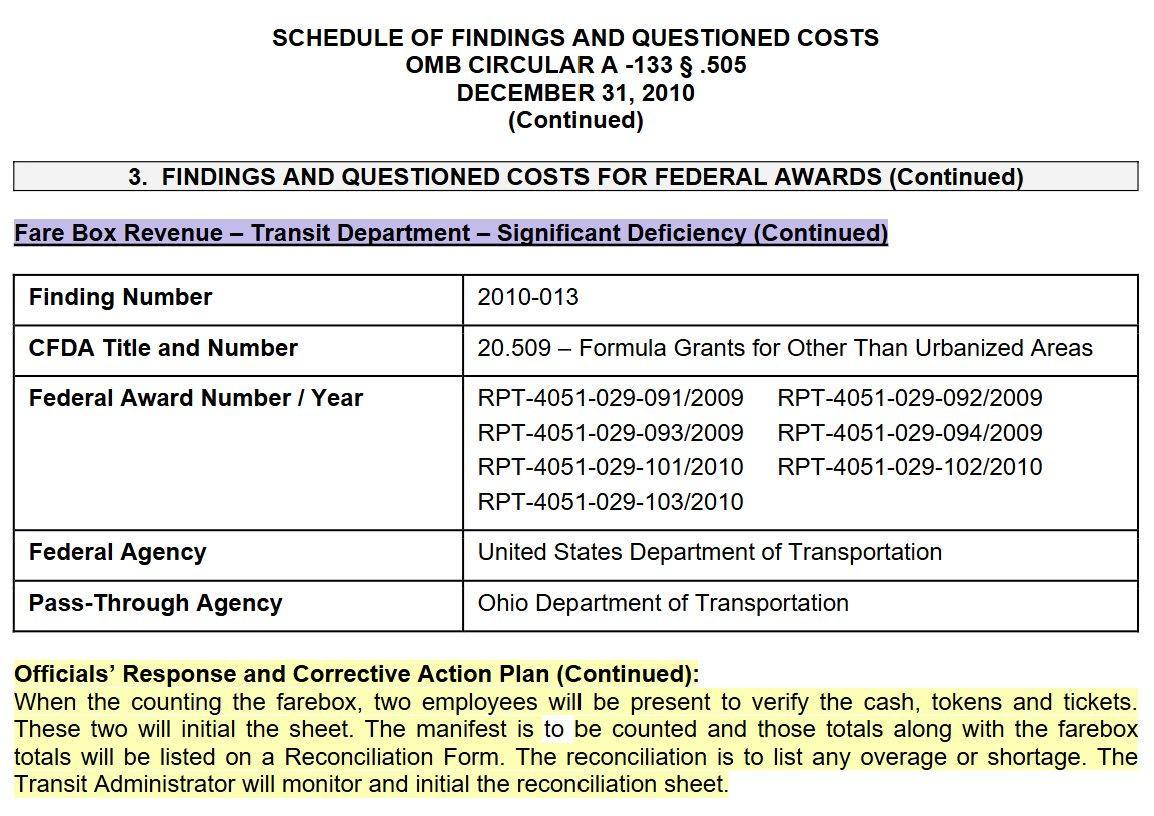
• FINDINGS 2010-007 & 2010-013 (FARE BOX REVENUE) — [Permission / Module Configuration]:
The billed Misc. Billing & Receivables (Cash Receipting) module definitively controls transit revenue through mandatory dual-entry reconciliation. This was left unconfigured, leaving fare box revenue completely unverified.
• FINDINGS 2010-008 & 2010-016 (FEDERAL EXPENDITURE AUTH & ALLOWABLE COSTS) [REPEAT OF 2009-010] — [Module Configuration]:
The Project Accounting module lacked approved cost rate validation tables. Unapproved labor rates and debt allocations generated $41,892 in questioned transit costs.
• FINDINGS 2010-009 & 2010-020 (FEDERAL CDBG EXPENDITURE AUTH) — [Permission / Module Configuration]:
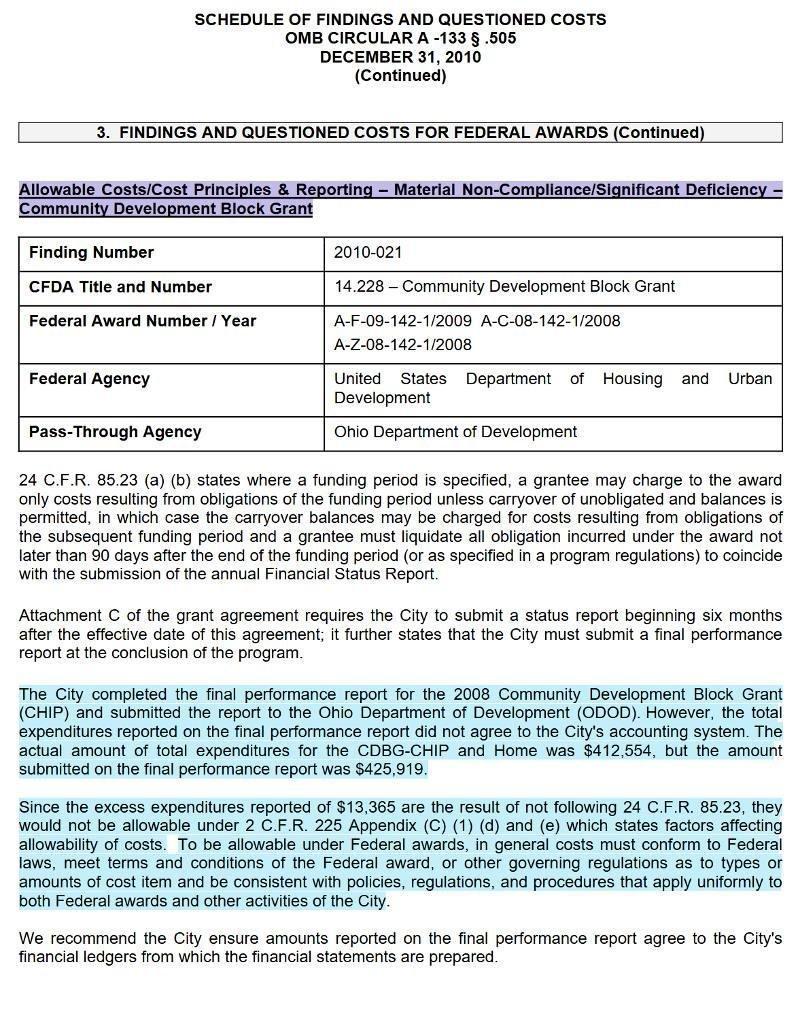
Universal overrides in the Purchasing and Project Accounting modules allowed CDBG expenditures to exceed the grant budget by $13,365.
• FINDINGS 2010-010 & 2010-017 (CDBG REPORTING / FUND STRUCTURE) — [Module Configuration]:
The General Ledger was not configured with separate fund codes or project codes for individual federal grants, commingling seven CDBG grants in five funds.
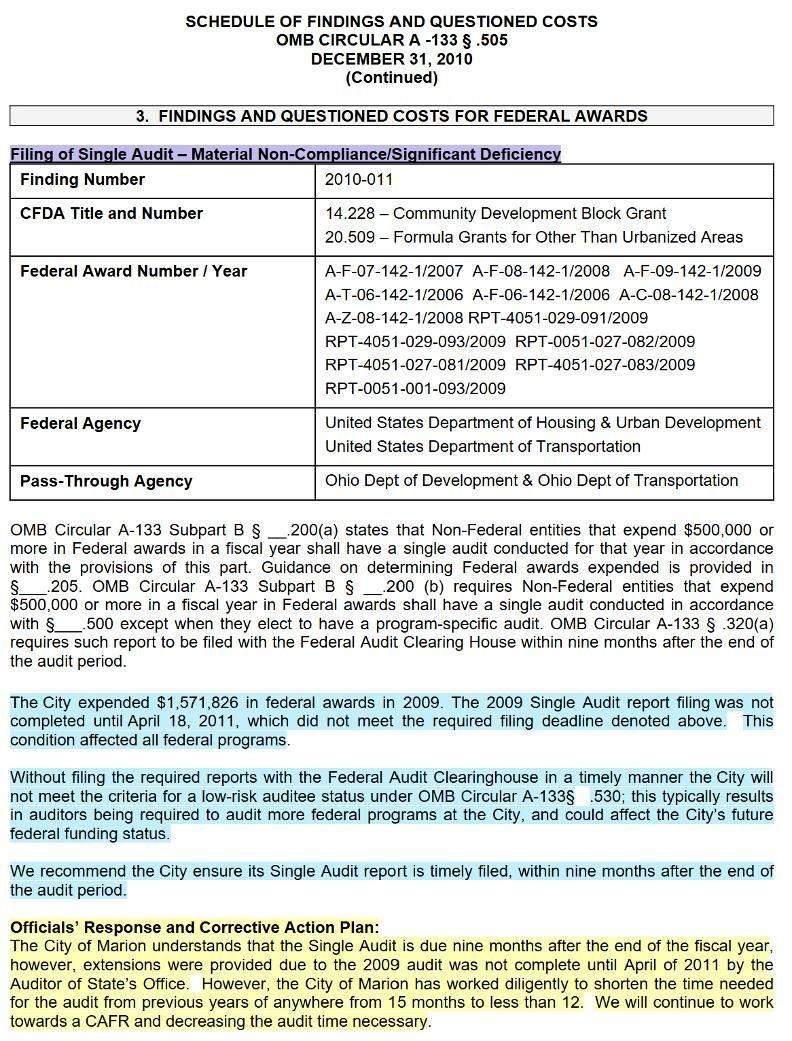
• FINDING 2010-011 (SINGLE AUDIT LATE FILING) — [Module Configuration]:
Inability of the GASB Reporting module to execute automated year-end close workflows delayed the federal reporting package by more than six months.
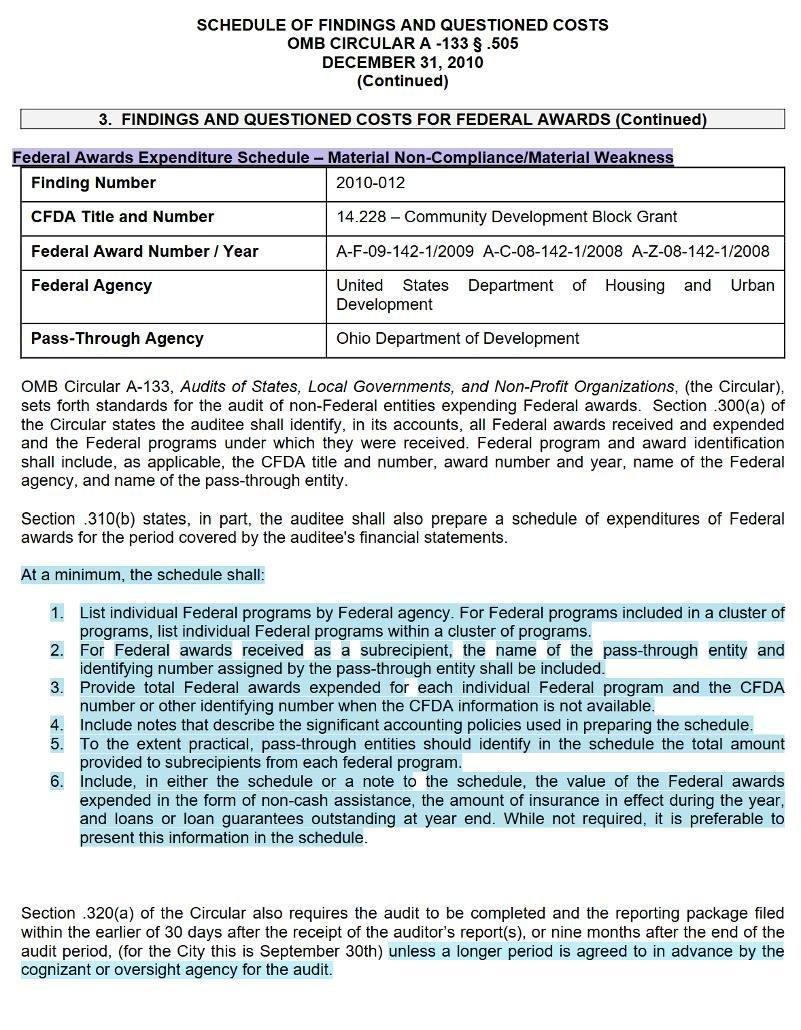
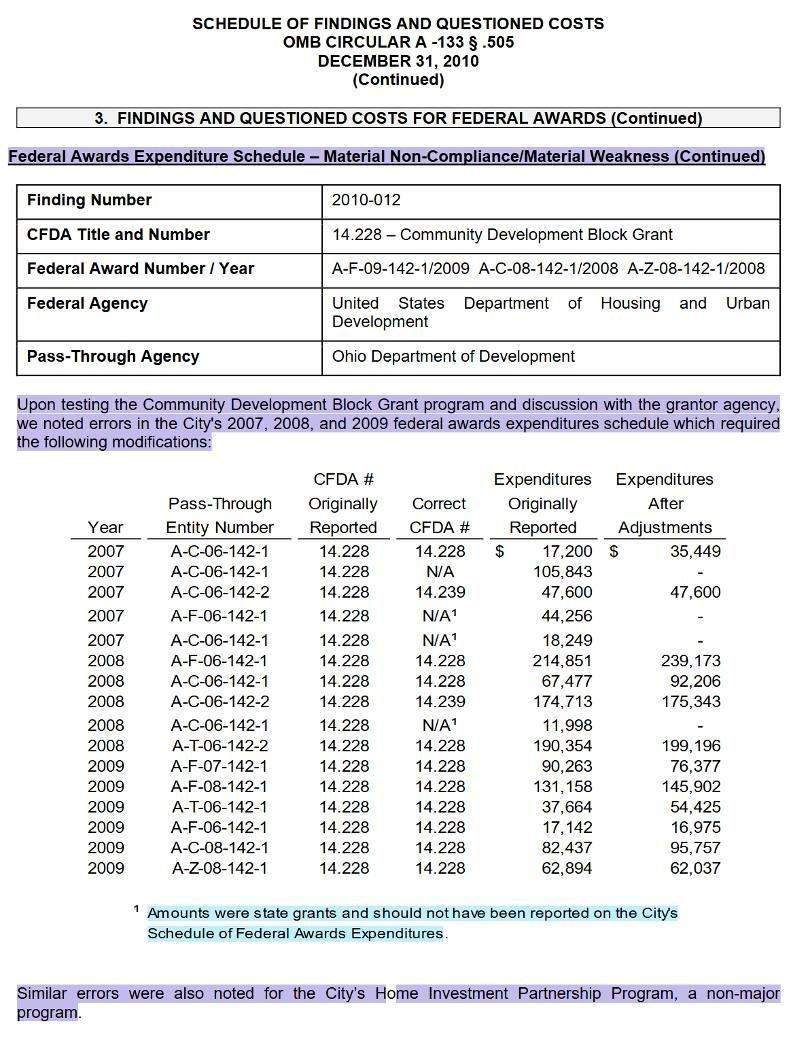
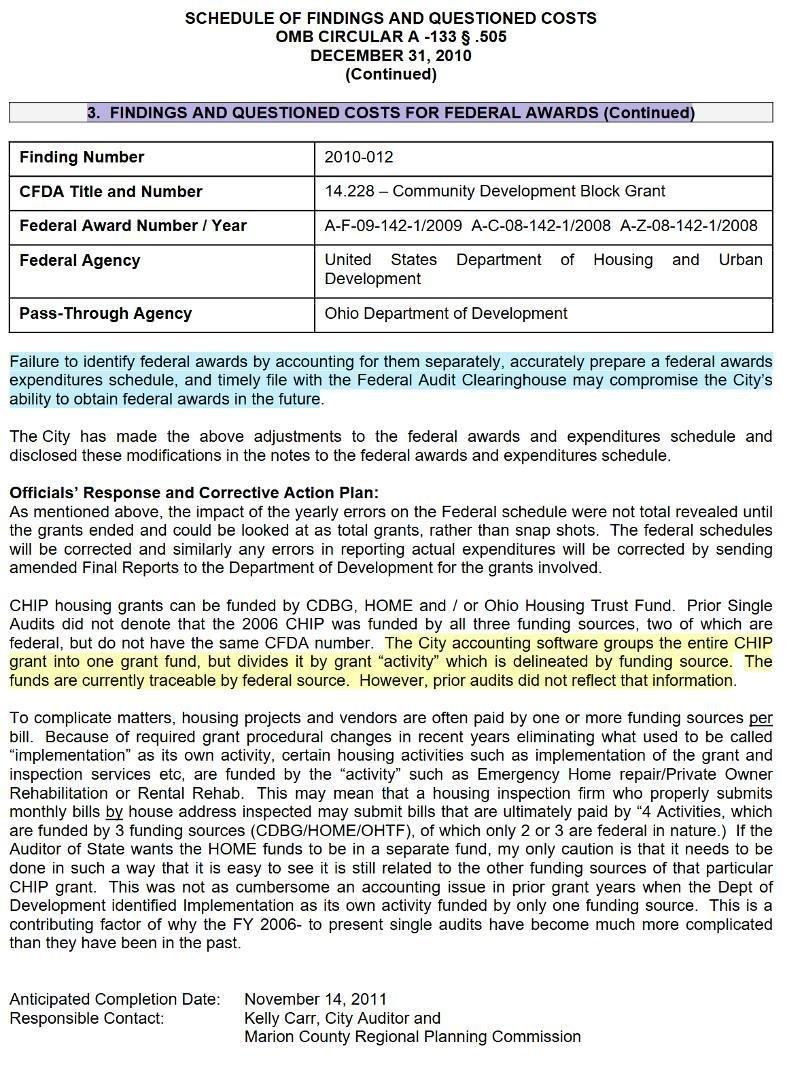
• FINDING 2010-012 (FEDERAL AWARDS EXPENDITURE SCHEDULE) — [Module Configuration]:
The General Ledger’s chart of accounts commingling caused errors in the SEFA spanning 2007, 2008, and 2009.
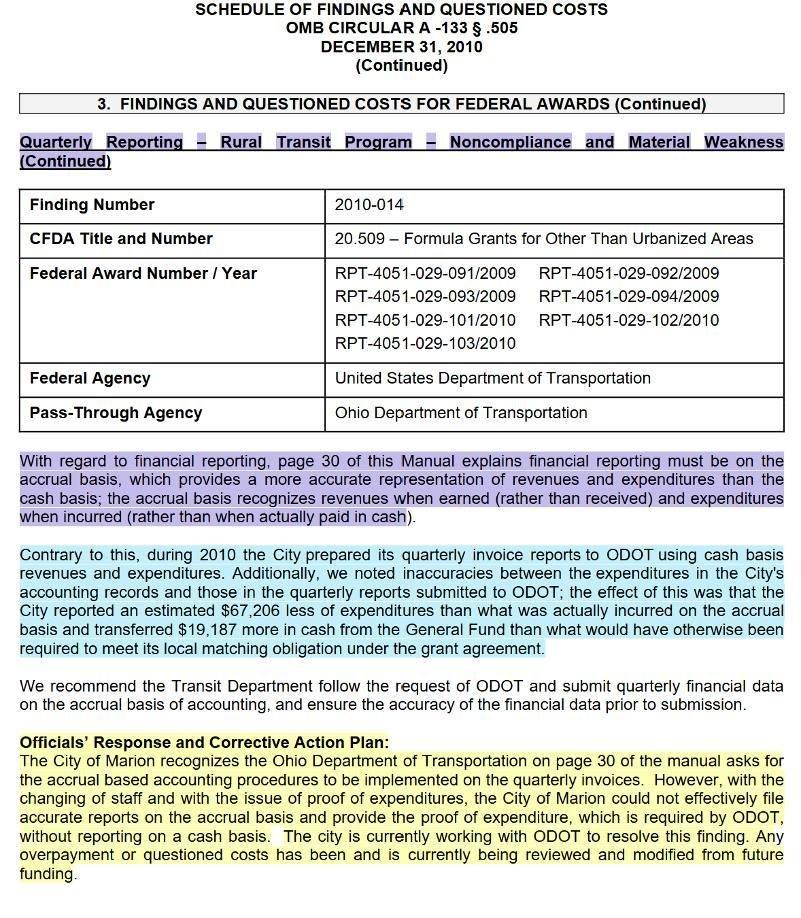
• FINDING 2010-014 (QUARTERLY REPORTING – TRANSIT) — [Module Configuration]:
The Grant Management module was not configured to maintain the accrual reporting basis requirement, causing the city to submit incorrect cash-basis reports to ODOT.
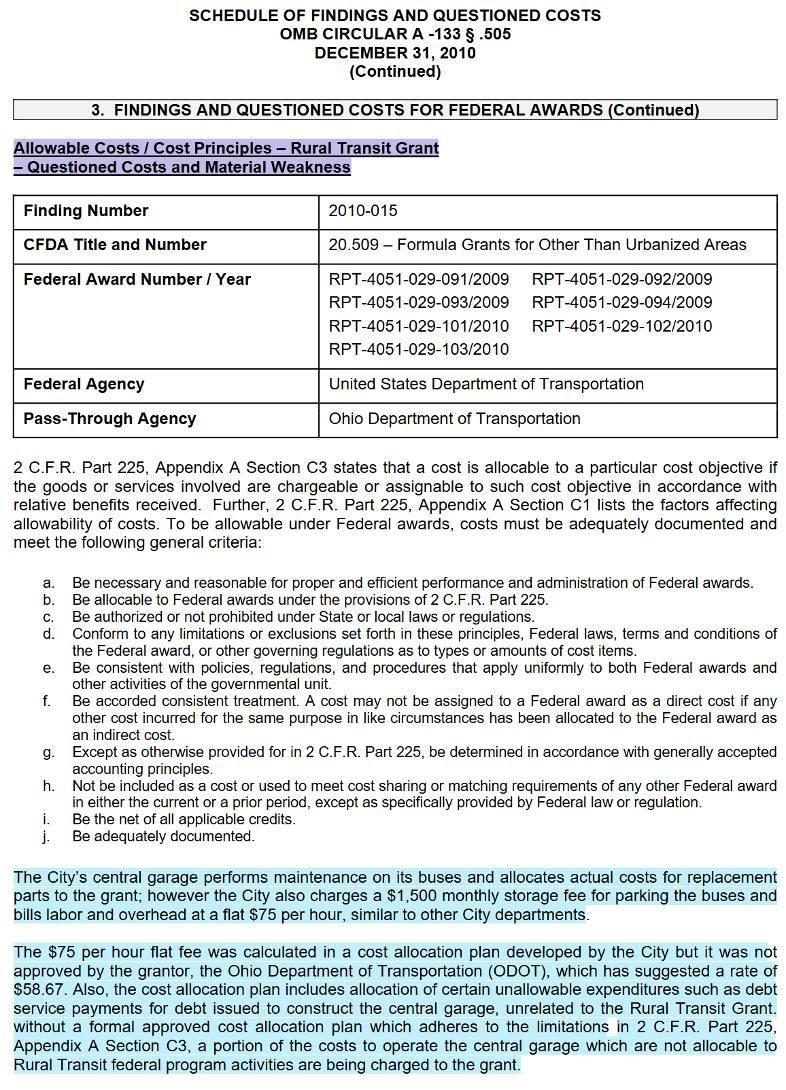
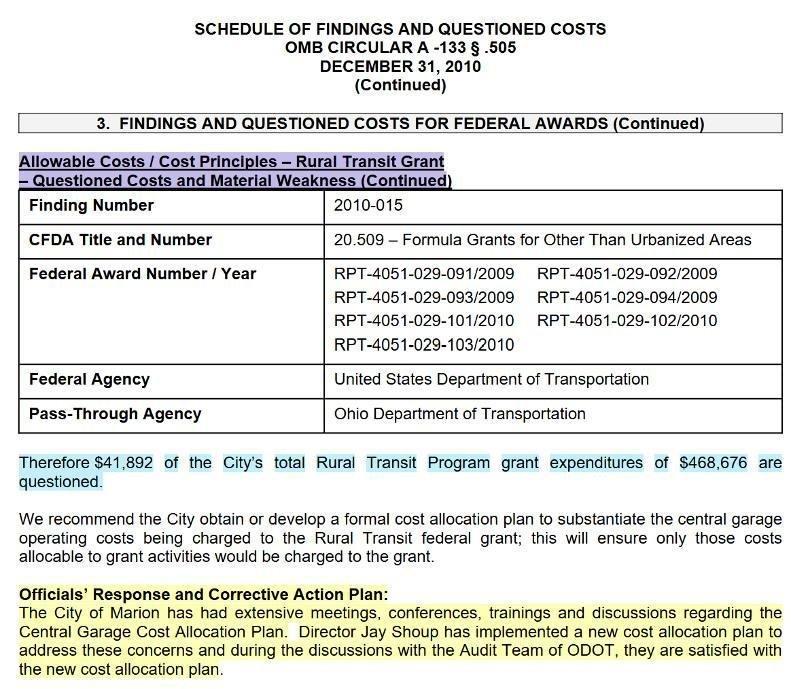
• FINDING 2010-015 (ALLOWABLE COSTS – TRANSIT) — [Module Configuration]:
The ERP’s Project Accounting module lacked grant-specific compliance configurations for transit capital grants, resulting in $41,892 in questioned costs due to unapproved flat-rate billing.
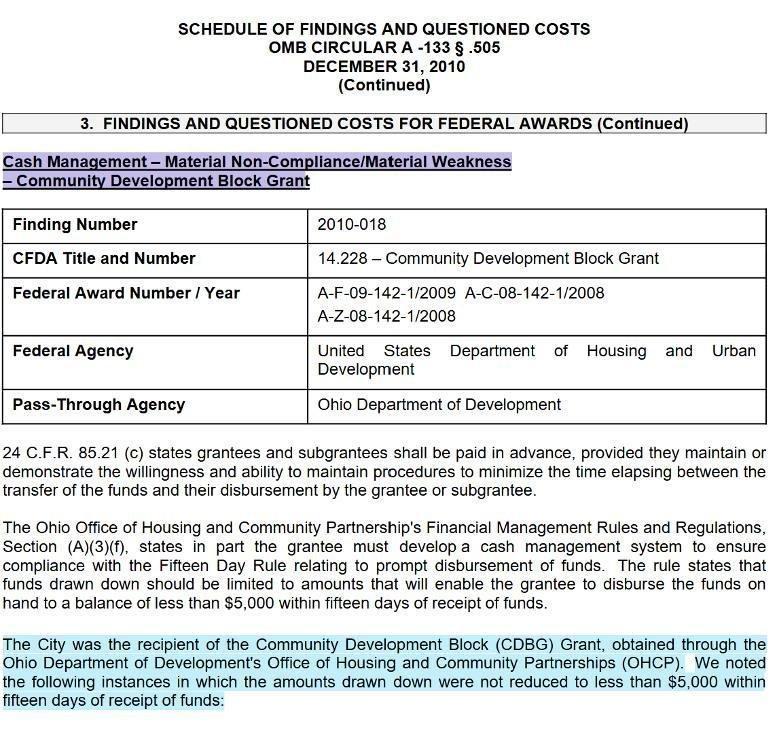
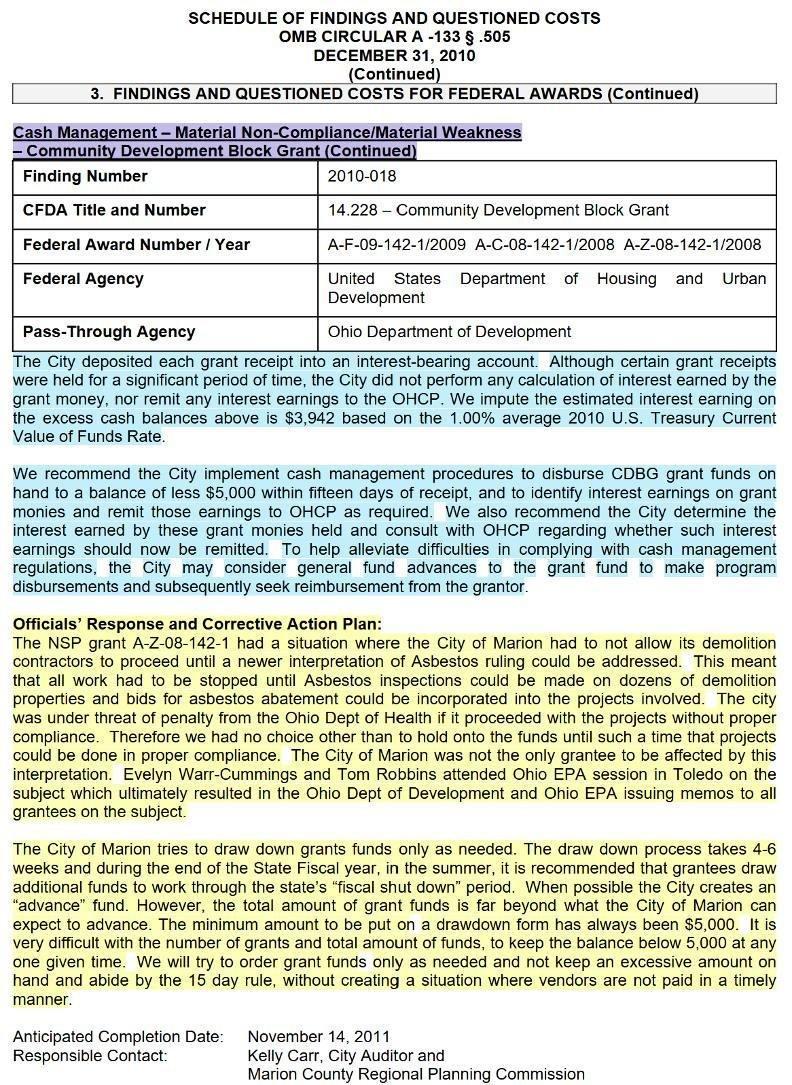
• FINDING 2010-018 (CDBG CASH MANAGEMENT) [REPEAT OF 2009-009] — [Module Configuration]:
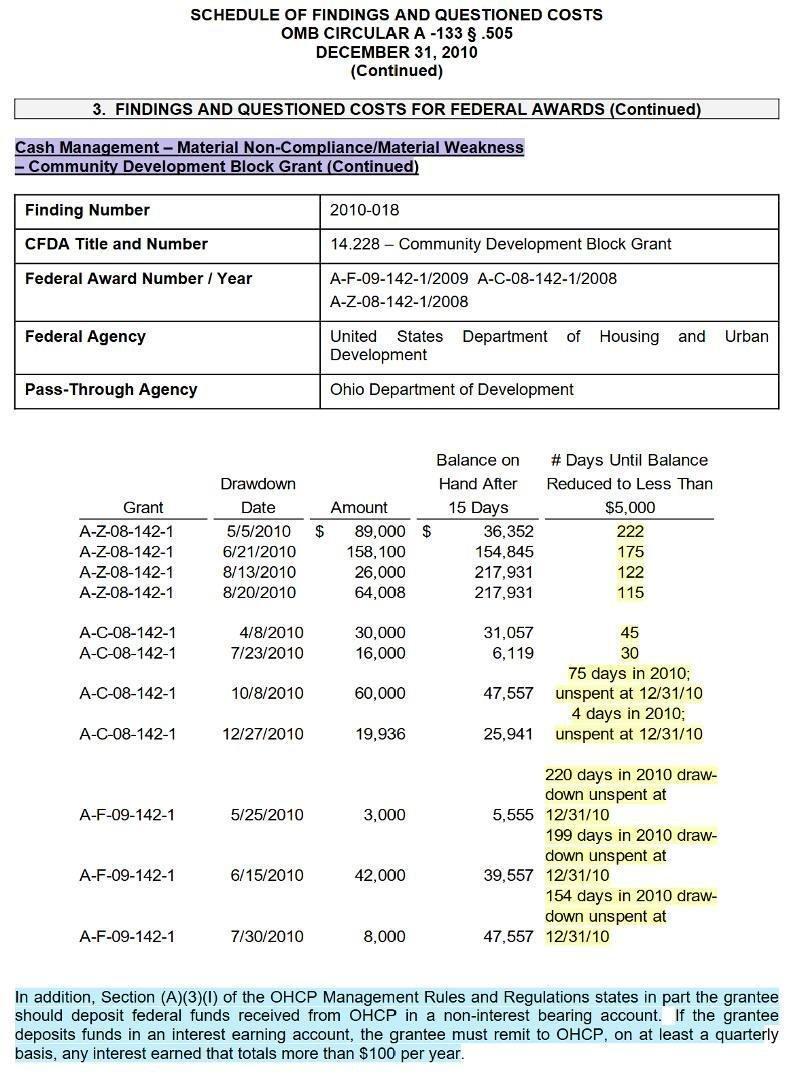
The Project Accounting module definitively controls drawdown timers and alerts, but lacked configuration, allowing federal cash to be held in interest-bearing accounts for up to 222 days.
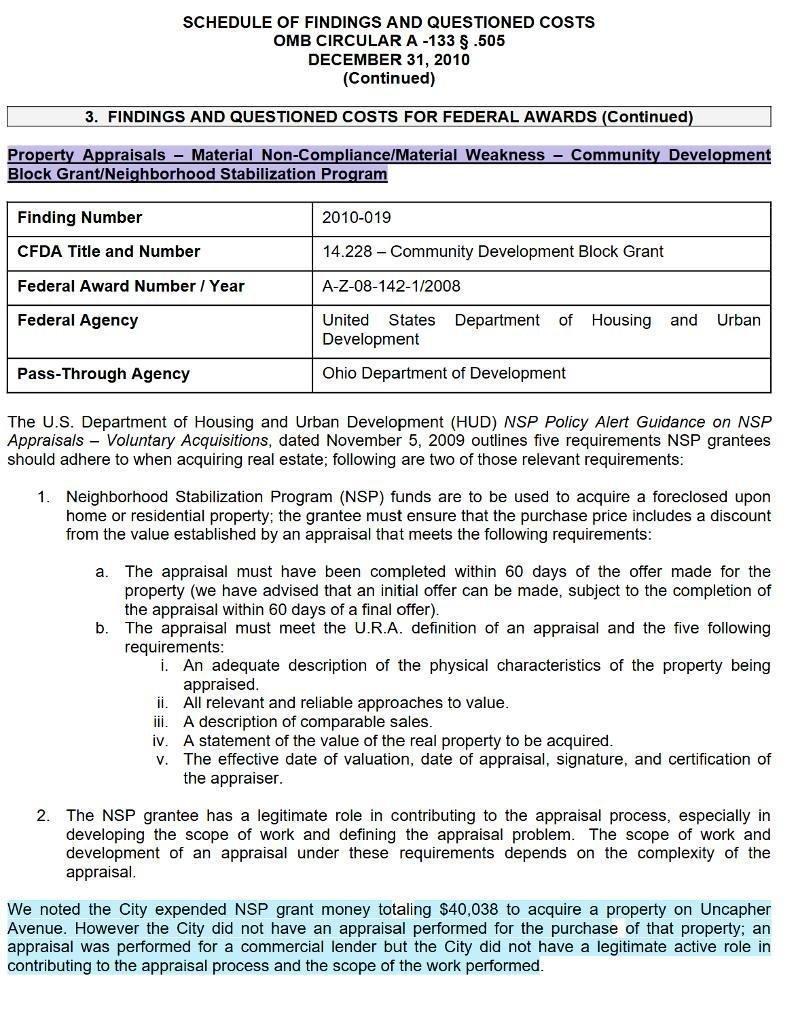
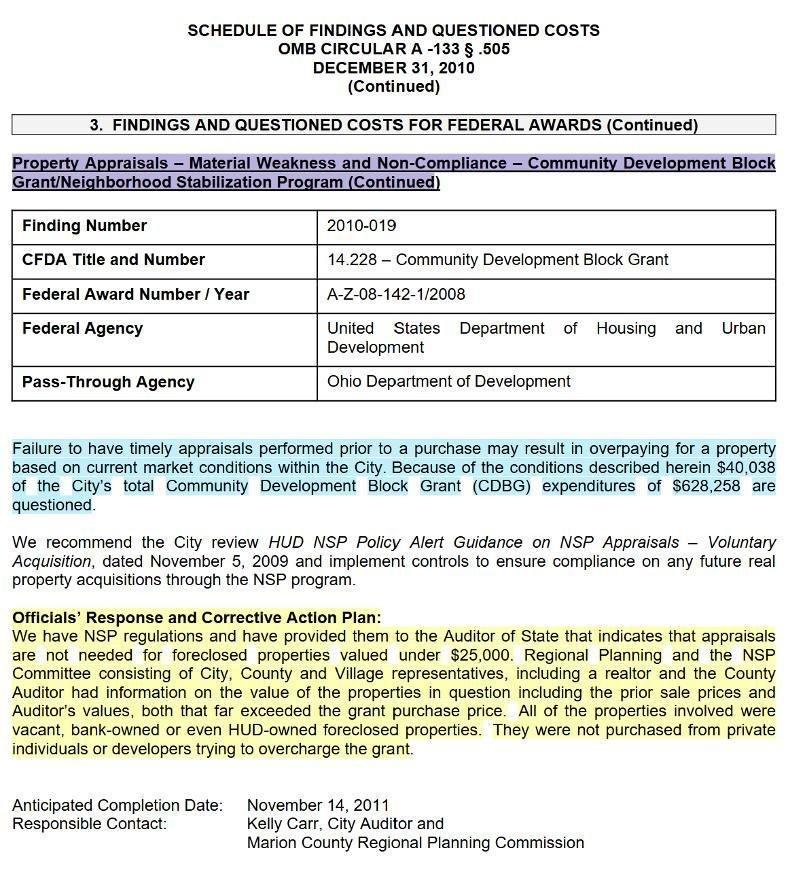
• FINDING 2010-019 (REAL PROPERTY ACQUISITION – CDBG) — [Module Configuration]:
Project Accounting workflows lacked real property compliance tracking, resulting in $40,038 spent on property acquisition without an independent appraisal.
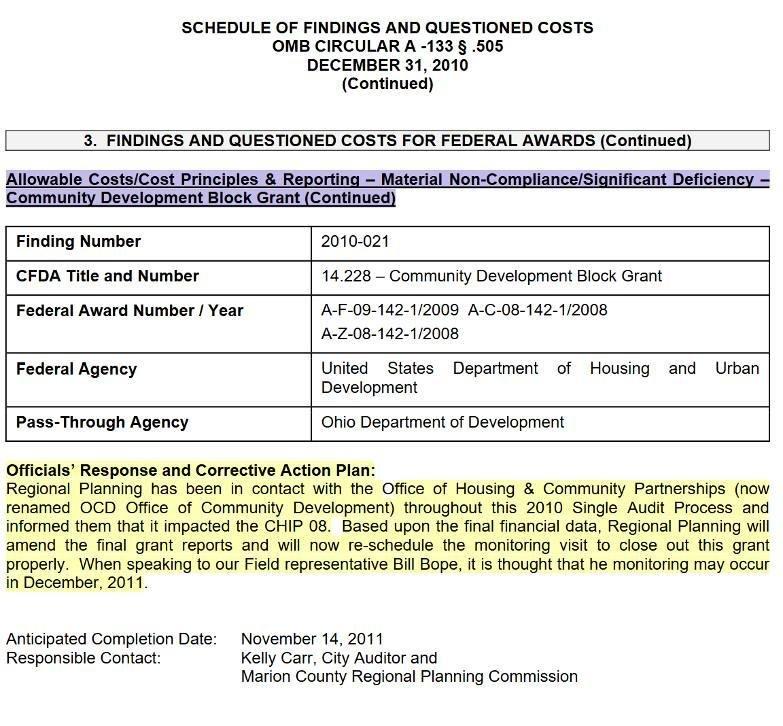
• FINDING 2010-021 (ALLOWABLE COSTS – CDBG) — [Module Configuration]:
The Purchasing module lacked an allowable cost matrix, allowing reported expenditures to exceed actual ledger totals by $13,365.
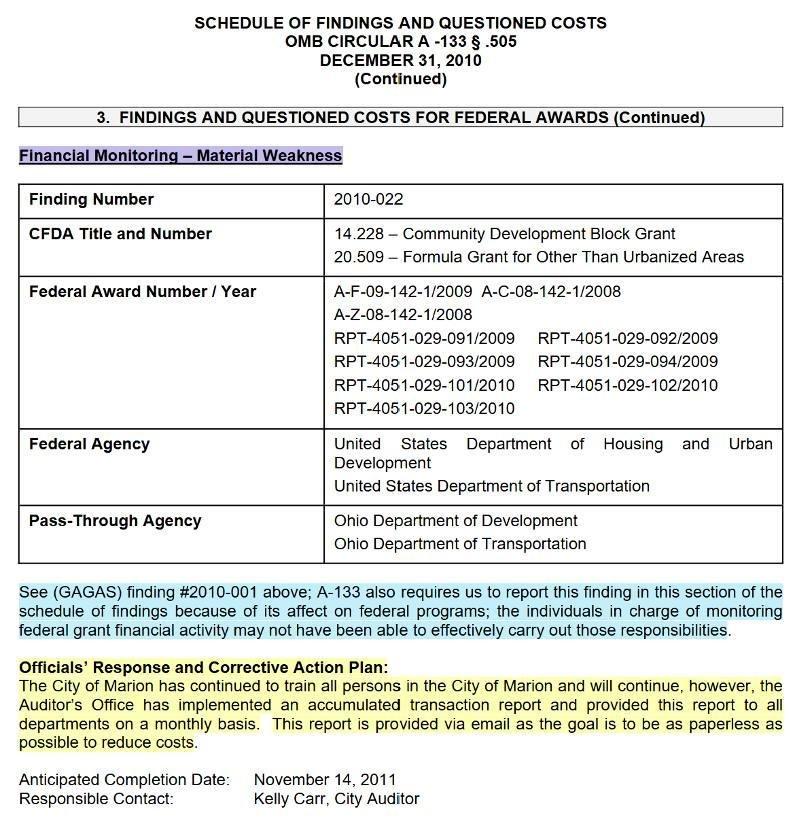
• FINDING 2010-022 (AGGREGATE FEDERAL MONITORING) [REPEAT OF 2009-011] — [Module Configuration]:
Systemic failure across all modules (including FM Base Suite and Project Accounting) to configure grant-specific budgets, rate tables, and compliance requirements.
• DEFICIT FUND BALANCES:
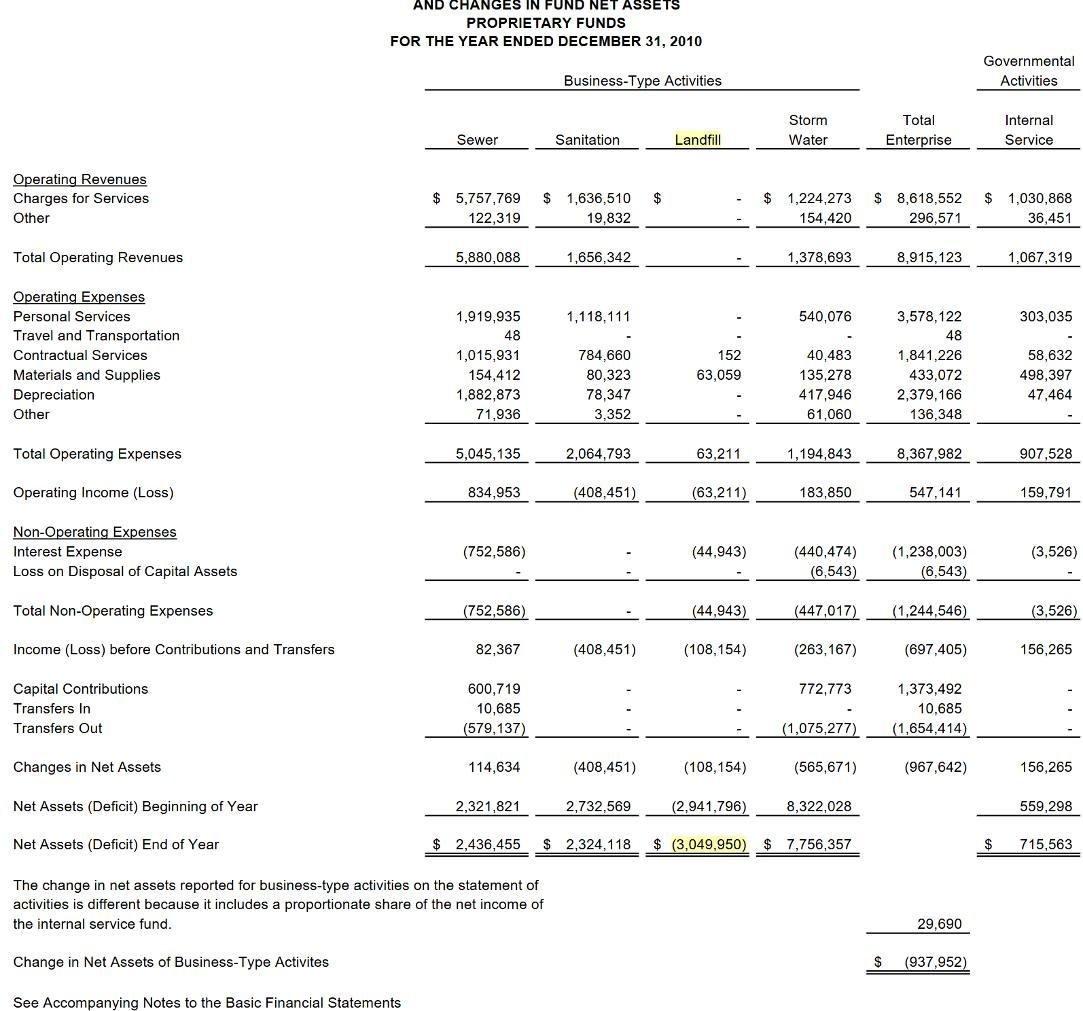
A staggering indicator of the system’s breakdown, fifteen separate funds ran deficit fund balances by year-end. These included: Landfill Enterprise Fund ($3,049,950); General Fund ($1,421,555); Bond Retirement Fund ($385,823); Neighborhood Stabilization ($275,126); Street Improvement ($181,378); Police and Fire Pension ($94,230); Community Corrections ($77,337); Airport Improvement ($71,353); Marion Area Transit ($69,715); School Resource Officer ($47,146); Violence Against Women ($22,358); Homeland Security Grant ($18,632); Parks ($17,174); Harding Centre Loan ($5,111); and DRIP Infrastructure ($3,128).
• DEFICIT CASH BALANCES:
Because the system’s fund-level cash stops were deactivated, misconfigured, or bypassed on the fly, nine different funds completely exhausted their cash and were allowed to run into the negative, including Bond Retirement ($385,823), Sanitation ($113,453), Neighborhood Stabilization ($38,372), Marion Area Transit ($22,293), School Resource Officer ($22,929), Homeland Security ($18,632), Violence Against Women ($11,689), Street Construction & Maintenance ($9,597), and DRIP Infrastructure ($3,128).
• ILLEGAL CROSS-FUND SUBSIDIZATION:
The system allowed $89,411 restricted to the Landfill to be illegally diverted to pay Sewer debt.
• MISALLOCATED GRANT REVENUES:
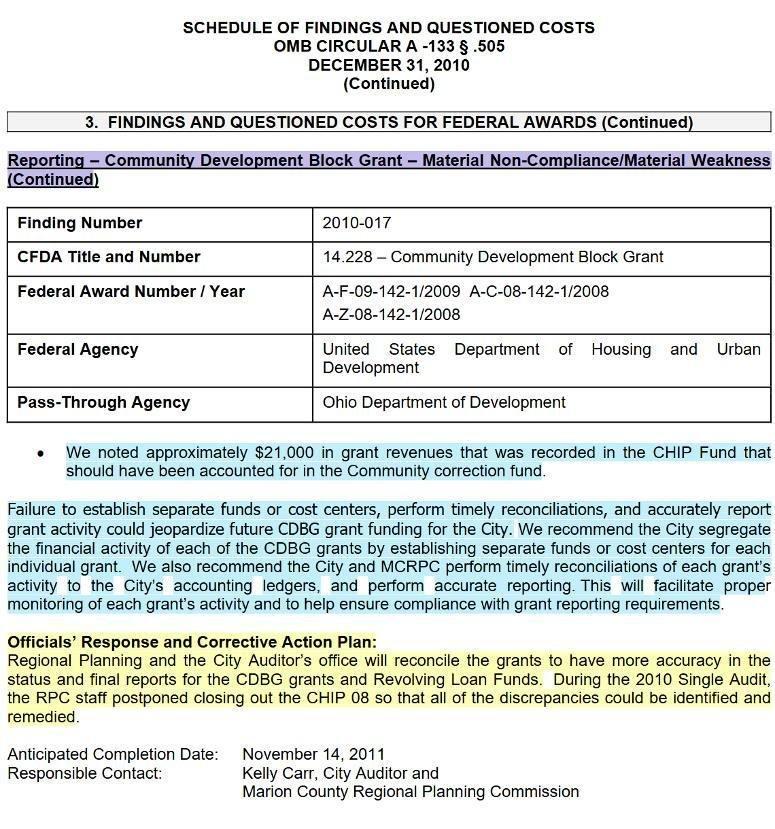
Due to commingled ledgers and bypassed reporting structures, approximately $21,000 in federal grant revenues were illegally recorded in the CHIP Fund instead of the Community Corrections Fund.
YEAR-END SUMMARY: STATE LAWS & FEDERAL NONCOMPLIANCE
• FEDERAL NONCOMPLIANCE:
CDBG cash held up to 222 days ($89,000 balance); $41,892 in questioned transit costs due to unapproved labor rates and debt allocation; $13,365 in CDBG grant overspending; $40,038 CDBG property acquired without a required independent appraisal; Schedule of Federal Awards (SEFA) compiled with errors spanning three years.
• STATE LAWS BROKEN:
ORC § 5705.41(B) (overspending), ORC § 5705.10(D)&(H) (cross-fund payments), ORC §§ 5705.36/39 (appropriating over resources), ORC § 135.13 (investments).
OFFICIAL EXHIBITS & PRIMARY SOURCE RECORDS (2010 IT Blueprint)
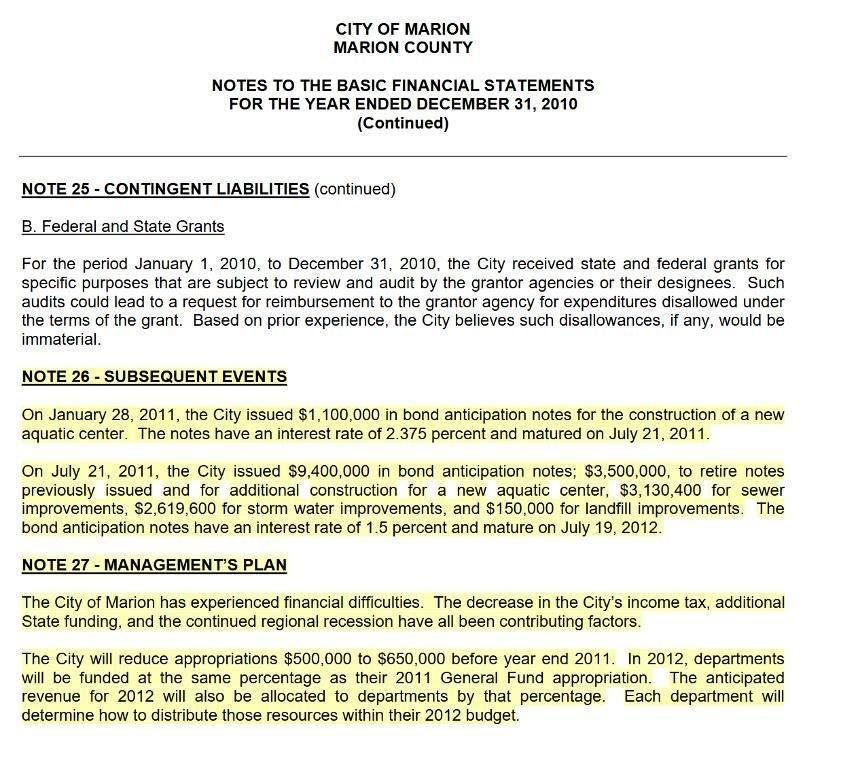
WRITE OFF FUNDS-NOT AUDITED
WRITE OFF FUNDS-NOT AUDITED
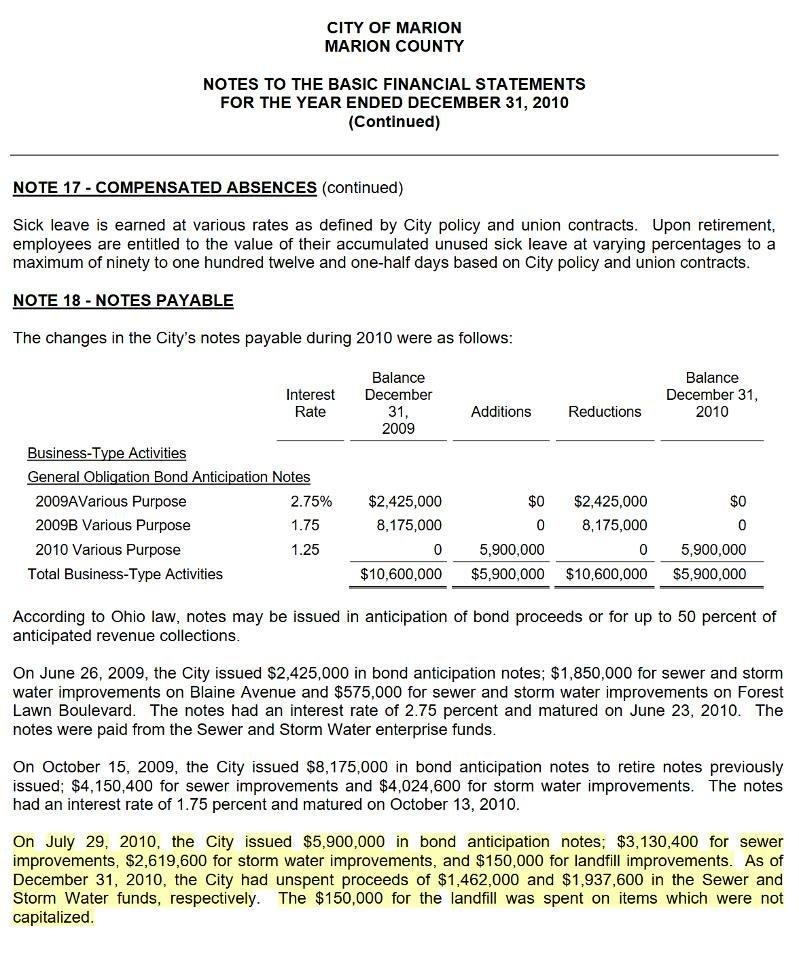
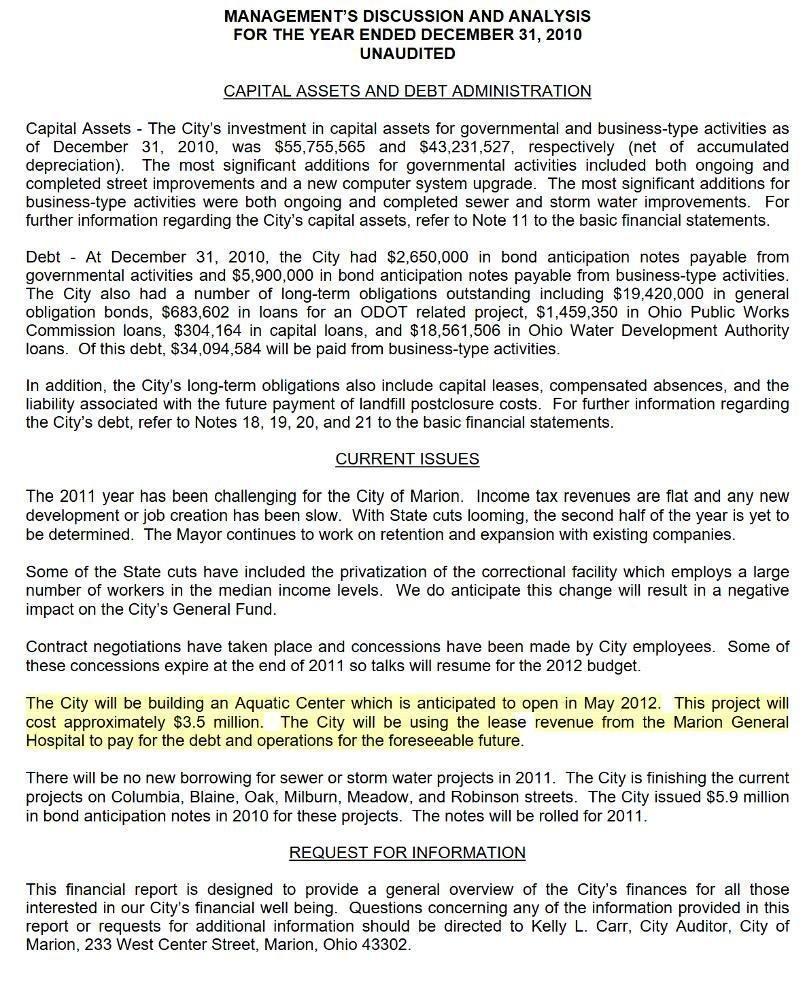
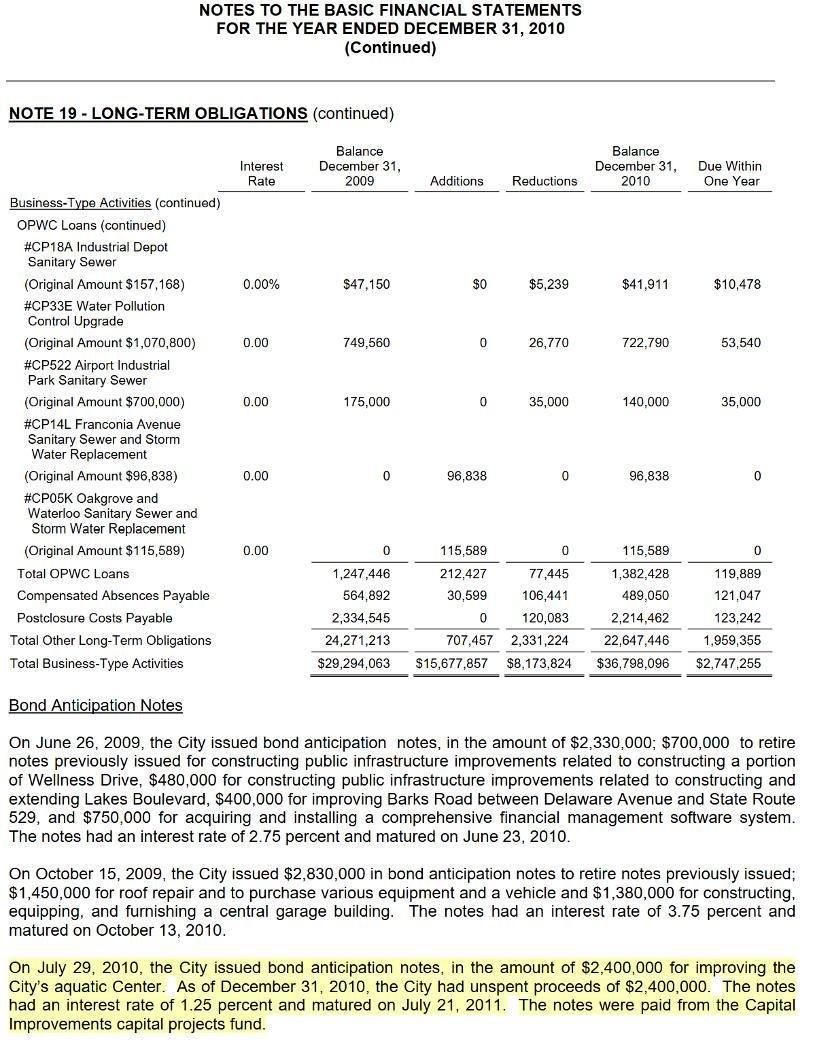
WRITE OFF FUNDS
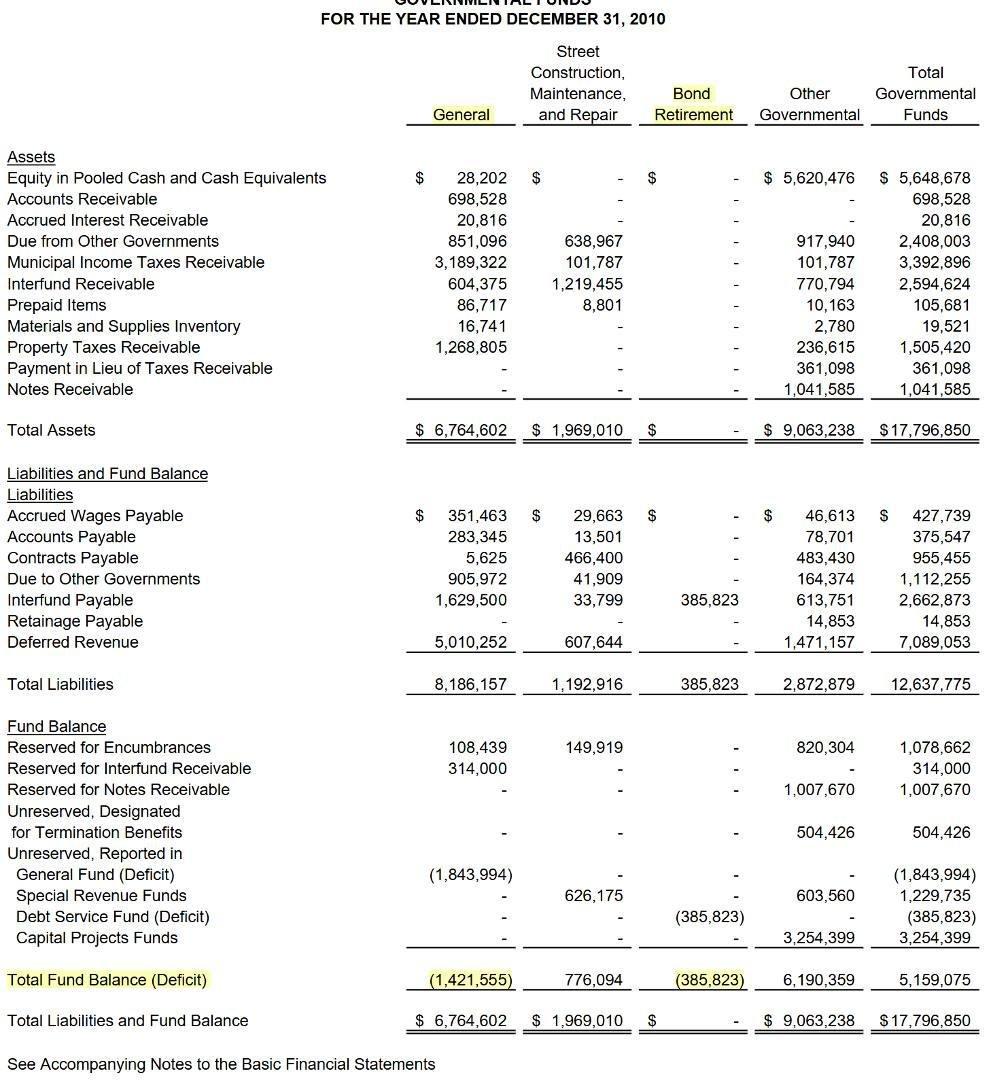
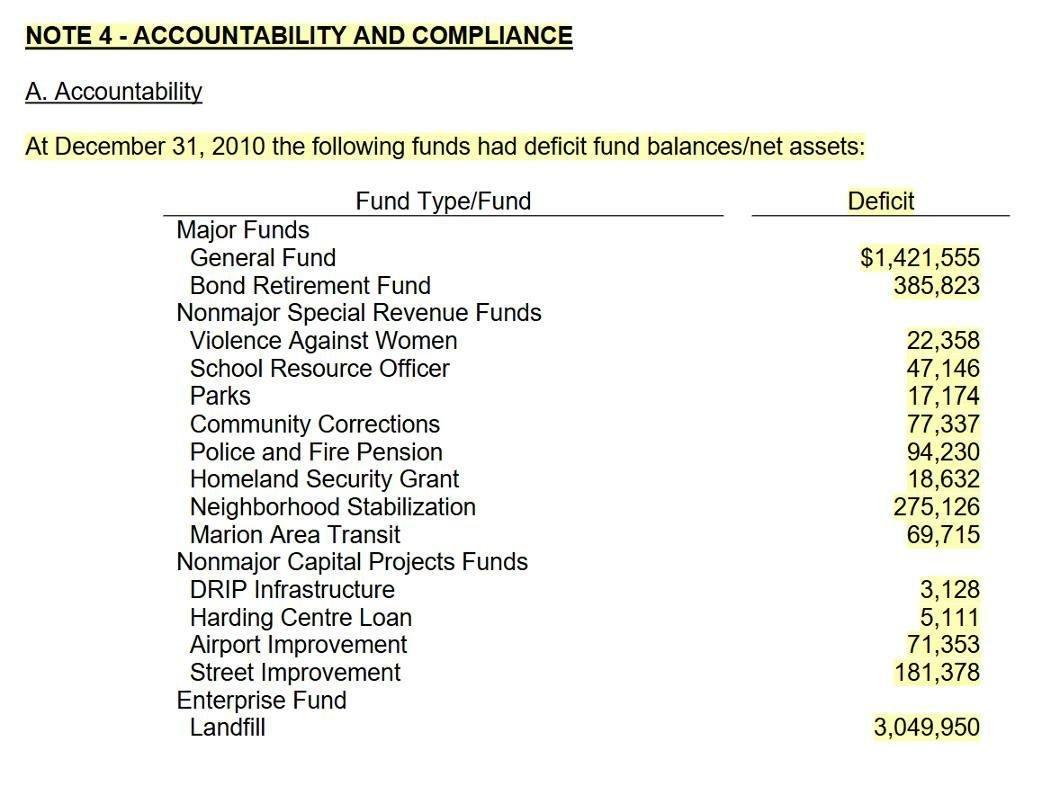
ILLEGAL SPENDING OVER APPROPRIATIONS
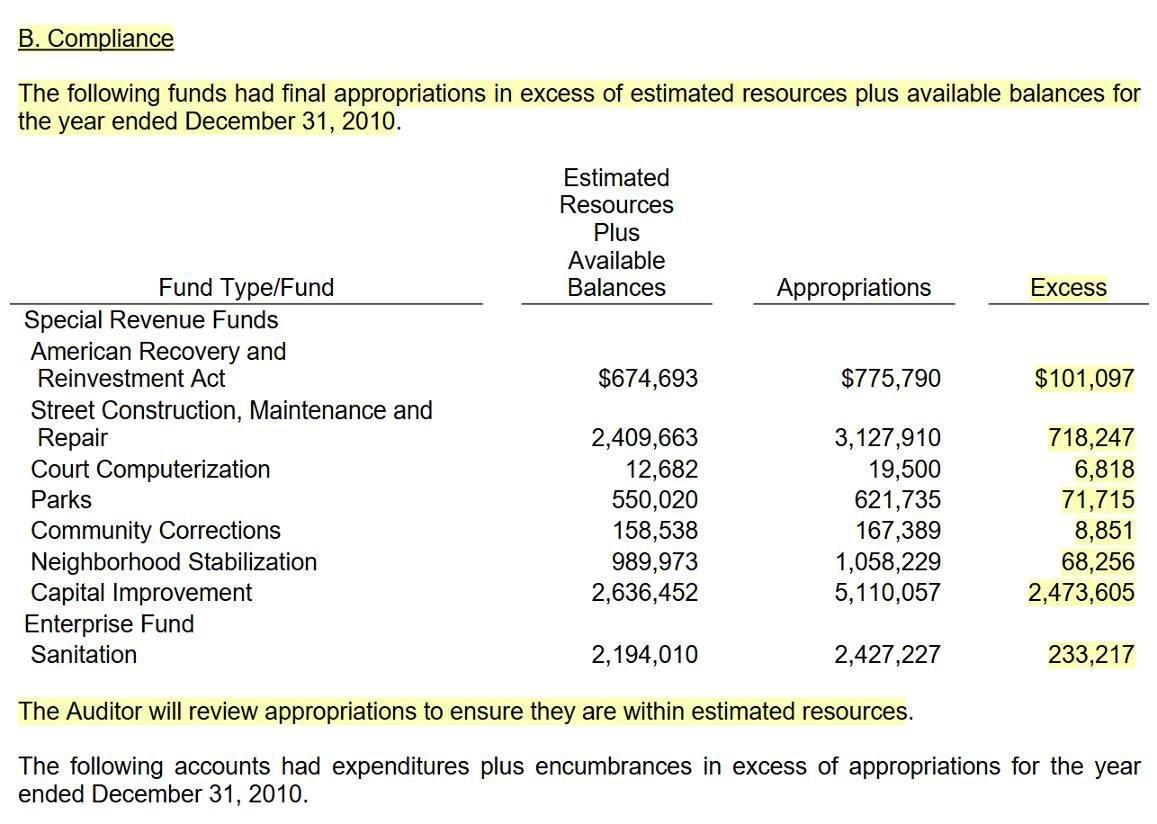
ILLEGAL SPENDING OVER APPROPRIATIONS
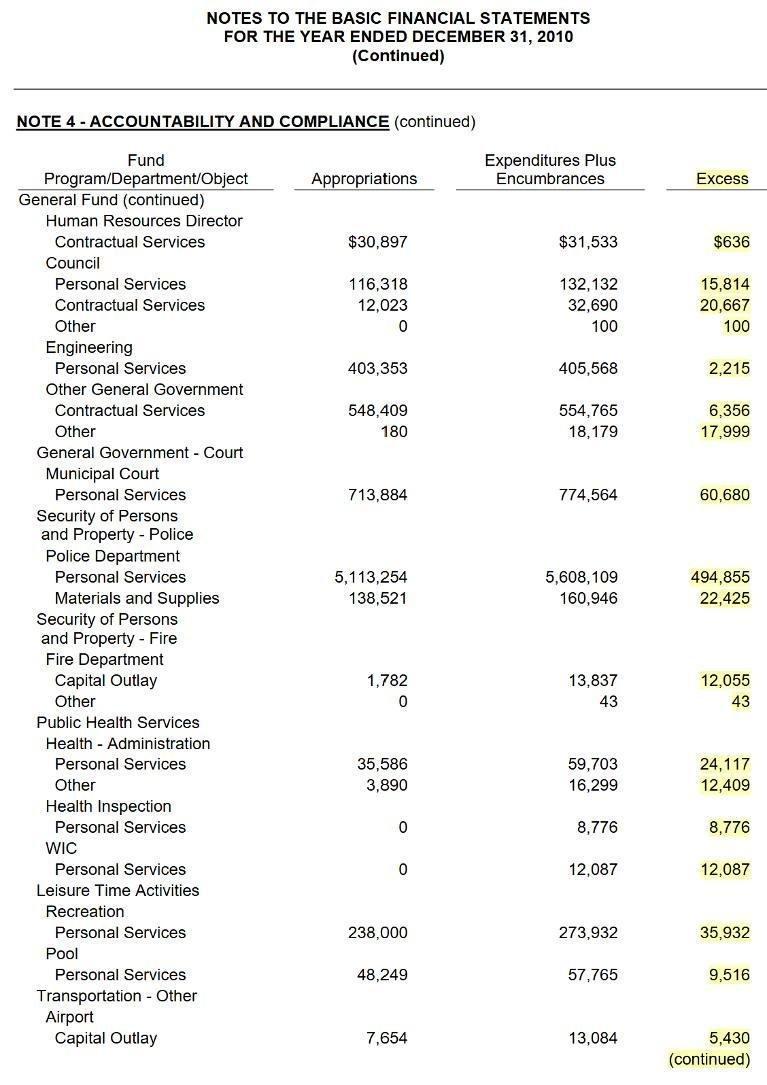
ILLEGAL SPENDING OVER APPROPRIATIONS
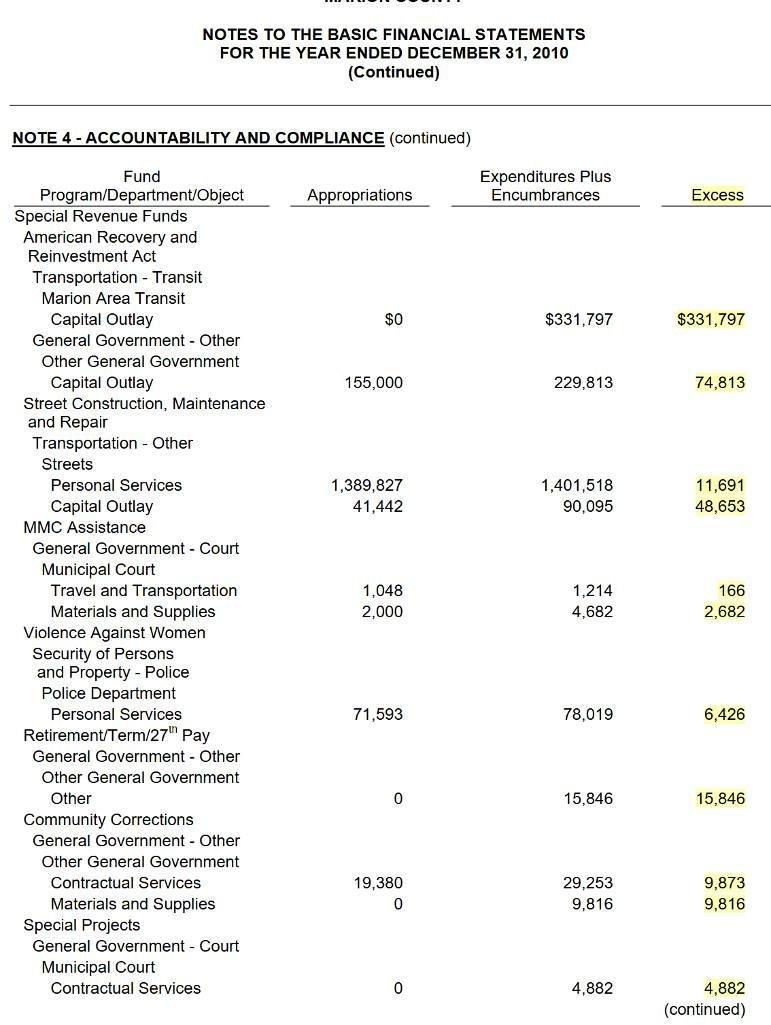
ILLEGAL SPENDING OVER APPROPRIATIONS
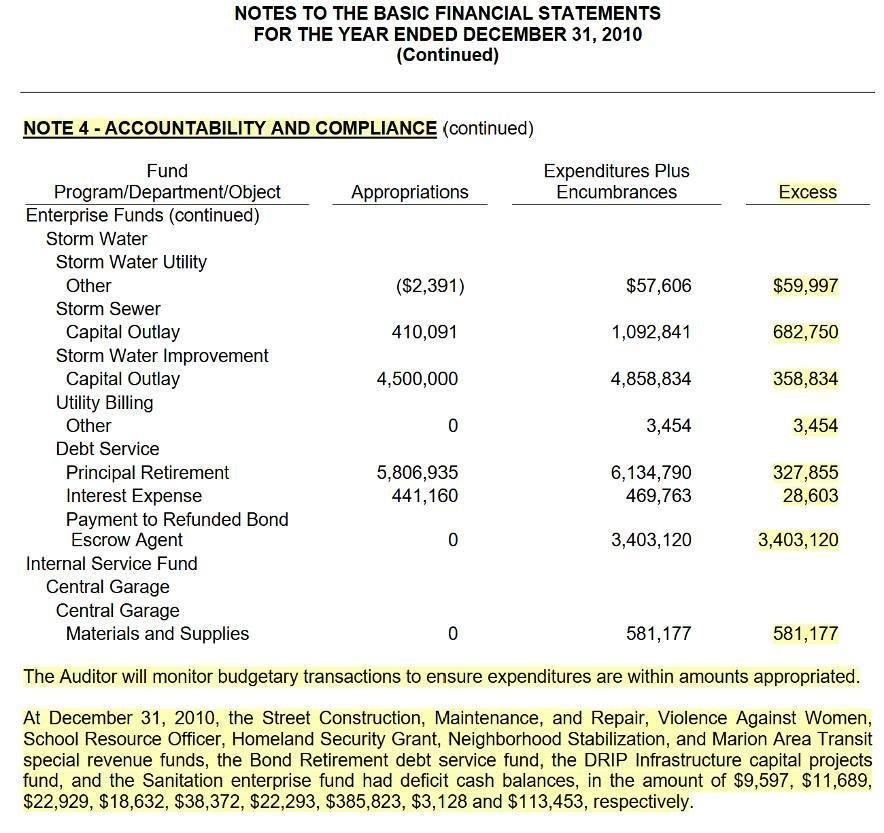
ILLEGAL SPENDING OVER APPROPRIATIONS
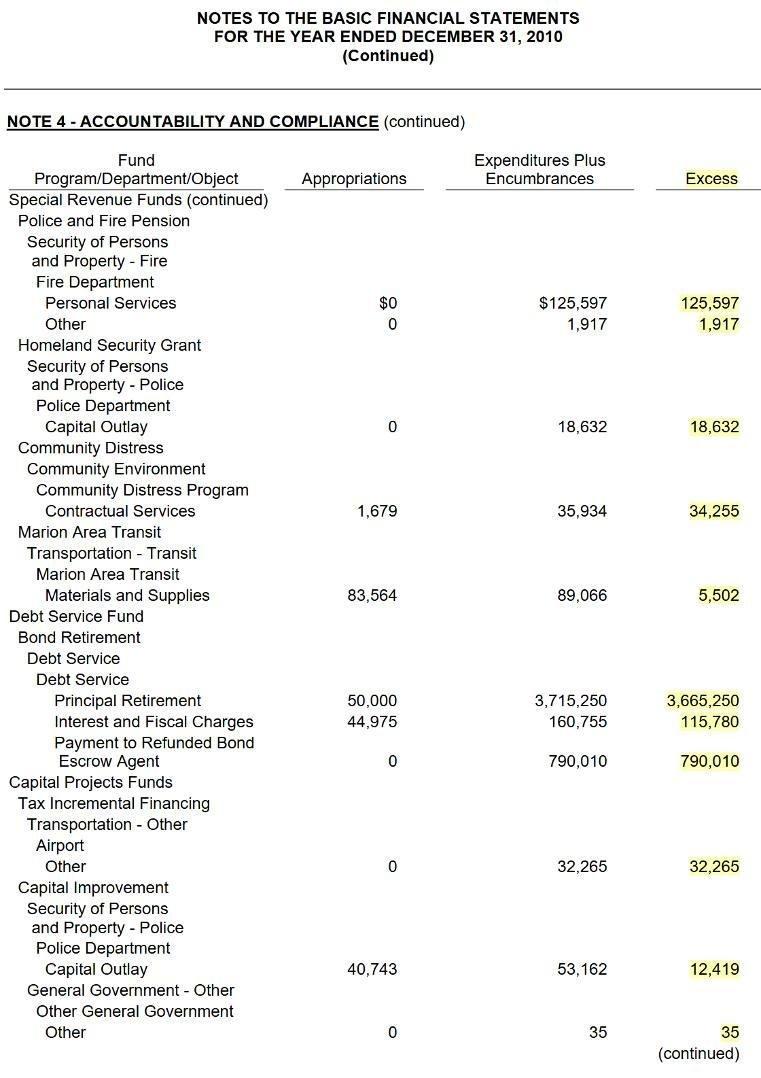
ILLEGAL SPENDING OVER APPROPRIATIONS
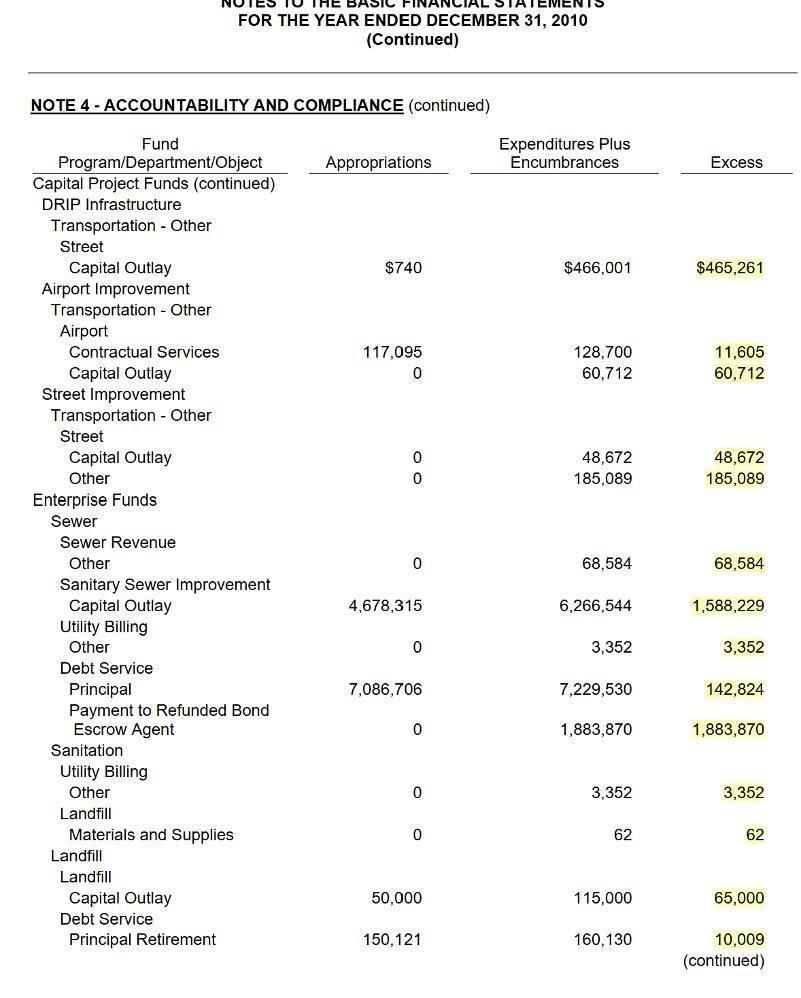
ANATOMY OF MARION’S FINANCIAL COLLAPSE 2011: THE BLEEDING CONTINUES RAPID-RELEASE IT BLUEPRINT OF SILENT SABOTAGE
Up next in our rapid release Information Technology Blueprint portion of the Silent Sabotage Overview Series is the 2011 Marion City Audit.
This marks the beginning of the Brenda Nwosu utility billing theft which went on for three years undetected due to the misconfigurations in the New World ERP system.
By 2011, the systemic bypass of the New World ERP safety controls was no longer just an onboarding failure—it was standard operating procedure.
These are the signs and symptoms that caught the attention of information technology professionals on the Marion Watch team and network when we began looking closer at this system in 2018.
It is a very bad case study in what not to do in enterprise grade information technology and finance.
Instead of locking down the digital vault after the catastrophic multi-million-dollar bleeding of 2010, the administration kept the doors propped wide open.
General Ledger (GL) override abuse, deactivated cash stops, and bypassed electronic routing workflows were utilized continuously throughout the 2011 fiscal year.
In the realm of municipal IT, a system is only as secure as its configurations.
If administration officials wanted to stop illegal spending, they simply had to activate the hard stops.
They deliberately chose not to.
Furthermore, the longer an entity waits to attempt to correct poorly configured systems, the more difficult it becomes.
We know the Collins administration had severe difficulty with this when they began hardening the New World system.
We had many discussions with the administration, including Twila Laing after it was mentioned when we addressed council in July 2025.
Prior to that we discussed it with Ralph Smith in early March 2025, as mentioned in previous articles.
The “Soft Stops” remained in place, allowing supervisors, deputy auditors, and reportedly some clerks to click past critical budget warnings.
Administrative “God Mode” access continued unchecked, and the city still operated without an IT ticketing system to track who was requesting these permissions, allowing possible manipulation of the ledgers on the fly.
This lack of digital oversight cultivated an environment ripe for “Ghost Accounting” and manual data manipulation to make the books look pristine before the state auditors inspected.
SUSPICIOUS ANOMALIES & “GHOST” ACCOUNTING IN 2011
When you look past the raw numbers and examine the behavior within the 2011 audit and official council records, highly suspicious, undocumented manual workarounds and political smokescreens appear across the city’s ledgers:
• THE UNION CONCESSION SMOKESCREEN:
The 2011 council minutes reveal a stunning level of administrative hypocrisy. While the administration was secretly bypassing GL overrides to illegally overspend millions of dollars off the books, they were publicly using the “budget crisis” to force severe financial concessions from the police and fire unions. Official council summaries from April 2011 show the administration threatening to lay off five police officers unless the safety forces agreed to furloughs, slashed benefits, and cuts. They weaponized austerity against the city’s safety forces while leaving their own digital vault wide open to spend without limits.
• MANUAL GRANT ADJUSTMENTS (GHOST DATA):
Because the system was not properly configured with separate cost centers for federal grants, officials had to manually adjust the ledgers. The state auditor caught them making nine separate adjustments just to “correct errors in reporting of grant expenditures among the grant funds”. Consequently, there were variances on every single status report submitted to the state in 2011.
• CASH VS. ACCRUAL MANIPULATION:
The transit department deliberately submitted cash-basis financial information to the state instead of the required accrual-basis data. By manipulating how the expenditures were reported, the city shorted its required local matching obligation by $25,448.
• ILLEGAL CROSS-FUND SUBSIDIZATION:
The city was caught using federal transit grant funds to pay a flat $1,500 monthly fee for bus storage—a totally unapproved and unallowable cost that drained $19,500 from the grant.
• UNREGISTERED INVESTMENTS:
The city purchased $1.56 million in certificates of deposit using interim monies with maturity dates up to 45 months—far beyond the statutory one-year limit. Suspiciously, several of these deposit and investment accounts were not registered in the Marion City Treasurer’s name, a direct violation of state law designed to prevent theft and fraud.
These are not “software complexities.”
They are deliberate actions taken by individuals operating outside the boundaries of enterprise software controls.
These are blatant red flags that definitely prove to a qualified IT Systems Administrator that a drastically misconfigured software environment is operating.
Knowingly operating a compromised municipal financial system is highly illegal, directly violating the Ohio Administrative Code 117-2-01 mandate to prevent fraud, ORC 5705 spending limits, and federal OMB Circular A-133 tracking regulations.
These and other issues highlighted throughout our rapid-release IT Blueprint series definitively prove the City of Marion easily qualifies for federal and state law enforcement to perform a full forensic IT audit.
The symptoms cross the line from standard mismanagement into systemic control circumvention.
Manipulating federal grants with manual “ghost data” and altered cash-basis reports triggers direct federal oversight jurisdiction.
Furthermore, deliberately deactivating the software’s native guardrails to force through massive illegal over-appropriations destroyed the system’s structural integrity.
This culture of intentionally bypassed controls rendered the ledgers mathematically un-auditable—culminating in the catastrophic 2021 Qualified Audit Opinion—proving a forensic IT audit is the only mechanism left to uncover the truth.
THE TRUE COST OF THE SABOTAGE: BY THE NUMBERS
When the software is stripped of its ability to say “no,” the financial collapse accelerates.
The 2011 audit reveals exactly how much damage the administration allowed to process through the compromised system:
• MILLIONS IN GL OVERRIDES & ILLEGAL SPENDING:
Because budgetary hard stops remained disabled or bypassed on the fly, massive over-expenditures cleared the system at the legal object level. This included $1,233,853 illegally overspent in Sewer Principal Retirement, $703,176 overspent in Stormwater Principal, $611,023 overspent in the Clean Ohio Grant, and $131,156 overspent in Landfill Principal for a grand total of $2,685,574 for 2011 alone.
• THE RUNNING TOTAL for GL OVERRIDE:
GL override abuse allowing illegal spending over appropriations from the first full year with New World in 2010 to 2011 is an astronomical $18,748,404.
• MATHEMATICALLY IMPOSSIBLE BUDGETS:
The Budgeting module remained unconfigured, allowing the administration to program the General Fund with an inherently illegal budget—appropriating $671,366 more than the city had in estimated resources.
• OVER $1.64 MILLION IN BAD SANITATION DEBT:
While the city finally hired an outside firm to chase down EMS bills after abandoning $1.5 million the year prior (a massive write-off admitted to in the unaudited Management’s Discussion and Analysis section of the 2010 report), the Sanitation fund continued to hemorrhage cash. In the fully audited 2011 financial statements, out of $4,288,346 in billed sanitation accounts receivable, a staggering $1,645,002 was officially recorded as an “Allowance for Uncollectibles”—meaning the system recognized nearly 40% of its sanitation billing as uncollectible bad debt. Furthermore, the city booked an additional, direct “Bad Debt” operating expense of $1,210 against the Sanitation fund for the year.
• CATASTROPHIC NEGATIVE BALANCES:
Unlike illegal spending which accumulates over time, fund balances are a year-end snapshot—and by 2011, the structural rot had expanded.
The total deficit across crashed funds expanded from $5.7 million in 2010 to a staggering $6,808,917 by the end of 2011. The city’s General Fund alone crashed into a $1,122,640 deficit fund balance. Worse, actual cash accounts ran completely dry. Six separate funds operated with negative cash balances, including the General Fund (-$155,801), Marion Area Transit (-$62,260), COPS Grant (-$46,694), Sanitation (-$35,723), Street Construction, Maintenance, and Repair (-14,983),and State Highway (-$11,580).
• THE 6-MONTH GRANT BLIND SPOT:
Because the ERP’s Grant Management and automated Bank Reconciliation modules were left inactive, the city completely lost track of its own cash flow. According to July 11, 2011, City Council minutes, the state stopped sending the city’s Transit grant funds in February, and the administration did not even notice until July—six months later. The Auditor admitted on the public record: “we really did not know there was a problem… When you start reviewing it that is when it was found”. In a functioning enterprise system, missing a half-million-dollar grant deposit triggers an instant hard-stop alert; in Marion, it took half a year to notice they weren’t being paid.
2011 AUDIT FINDINGS (THE RECURRING FAILURES)
The State of Ohio formally cited the City for failing to correct major violations from 2009 and 2010.
The forensic IT blueprint below correlates the 2011 audit findings directly to the specific software modules and bypassed controls using the City of Marion’s New World Invoice.
• FINDING 2011-001 (DEPOSITS & INVESTMENTS) [REPEAT FINDING] — [Module Configuration]:
Compliance calendaring in the FM Base Suite remained inactive. The city purchased $1.56 million in CDs exceeding statutory term limits, and multiple investment accounts were not held in the City Treasurer’s name.
• FINDING 2011-002 (APPROPRIATIONS) [REPEAT FINDING] — [Module Configuration]:
The Budgeting module validation remained unconfigured. Appropriations exceeded estimated resources in the General Fund by 671,366, and appropriation exceeded actual resources in both the General Fund ($319,447 variance) and Street Construction Fund ($27,121 variance).
• FINDING 2011-003 (BUDGETARY EXPENDITURES EXCEEDING APPROPRIATIONS)— [REPEAT FINDING] — [Permission / Configuration]:
Budgetary hard stops in the Purchasing module remained disabled or bypassed on the fly. This universal GL override access enabled massive illegal expenditures to process, including Clean Ohio Grant ($611,023 excess), Sewer Principal Retirement ($1,233,853 excess), and Stormwater Principal Retirement ($703,176 excess).
• FINDING 2011-004 (NEGATIVE CASH BALANCES) [REPEAT FINDING] — [Module Configuration]:
The General Ledger module’s definitive deficit hard stops were inactive, permitting six separate funds to operate with completely exhausted, negative cash balances.
• FINDING 2011-005 (LATE SINGLE AUDIT FILING) [REPEAT FINDING] — [Module Configuration]:
The inability of the GASB Reporting module to execute automated year-end close workflows delayed the federal reporting package, which was not filed until November 28, 2011, keeping the city in “high risk” status.
• FINDING 2011-006 (TRANSIT FARE BOX REVENUE) [REPEAT FINDING] — [Permission / Module Configuration]:
The billed Misc. Billing & Receivables (Cash Receipting) module was left unconfigured, leaving transit fare box revenue exposed without documented, paper-reconciled controls.
• FINDING 2011-007 (REPORTING/MATCHING – TRANSIT) — [Module Configuration]:
The Grant Management module was not configured to maintain the accrual reporting basis requirement, causing the city to submit incorrect cash-basis reports to ODOT and shorting their required local match by $25,448.
• FINDING 2011-008 (ALLOWABLE COSTS – TRANSIT) [REPEAT FINDING] — [Module Configuration]:
The ERP’s Project Accounting module lacked grant-specific compliance configurations, resulting in $19,500 in questioned costs due to unapproved flat-rate bus storage billing.
• FINDING 2011-010 (CDBG REPORTING / FUND STRUCTURE) [REPEAT FINDING] —[Module Configuration]:
The General Ledger was not configured with separate fund codes or project codes for individual federal grants, resulting in manual ledger adjustments (Ghost Data) and variances on every single status report submitted to the state.
• FINDING 2011-011 (CDBG CASH MANAGEMENT) [REPEAT FINDING] — [Module Configuration]:
The Project Accounting module definitively controls drawdown timers and alerts, but lacked configuration, allowing federal cash to be held up to 127 days, generating imputed interest owed back to the state.
NEGATIVE BALANCES & FINANCIAL IRREGULARITIES
• DEFICIT FUND BALANCES:
Thirteen separate funds ran deficit fund balances by year-end.
These included: Landfill Enterprise Fund ($2,705,610);Aquatics Center ($2,438,108); General Fund (1,122,640); Street Improvement ($250,000); Police and Fire Pension ($102,260); Marion Area Transit(83,230); School Resource Officer ($27,659);Violence Against Women ($26,321); Airport Improvement ($20,853); Community Distress ($19,015); Harding Centre Loan ($5,364) ; State Highway ($4,979); and COPS Grant ($2,878).
• DEFICIT CASH BALANCES:
Because the system’s fund-level cash stops were deactivated, six different funds completely exhausted their cash and ran into the negative: General Fund (-155,801), Marion Area Transit (-$62,260), COPS Grant (-$46,694), Sanitation (-$35,723), Street Construction, Maintenance, and Repair (-$14,983), and State Highway (-$11,580).
YEAR-END SUMMARY: STATE LAWS & FEDERAL NONCOMPLIANCE
• FEDERAL LAWS & REGULATIONS BROKEN:
OMB Circular A-133 §.320(a) (Late Single Audit filing stripping low-risk status); 24 C.F.R. § 85.21(c) (Violating the 15-day federal cash drawdown rule by holding funds up to 127 days); 2 C.F.R. Part 225, Appendix A (Charging unallowable costs to federal transit grants); 24 C.F.R. § 85.20(c) (Failure to maintain accurate financial reporting, resulting in manual ghost data adjustments); and 49 U.S.C. § 5311(g)(2) (Earmarking violations and deliberate cash-basis reporting manipulations shorting local matches).
• STATE LAWS BROKEN:
Ohio Admin. Code 117-2-01 (Failure to maintain internal controls to prevent fraud), ORC § 135.13 (Investments beyond one year/not in Treasurer’s name), ORC §§ 5705.36/39 (Appropriating over resources), ORC § 5705.41(B) (Budgetary expenditures exceeding appropriations), and ORC § 5705.10(D)&(H) (Negative cash balances).
OFFICIAL EXHIBITS & PRIMARY SOURCE RECORDS (2011 IT Blueprint)
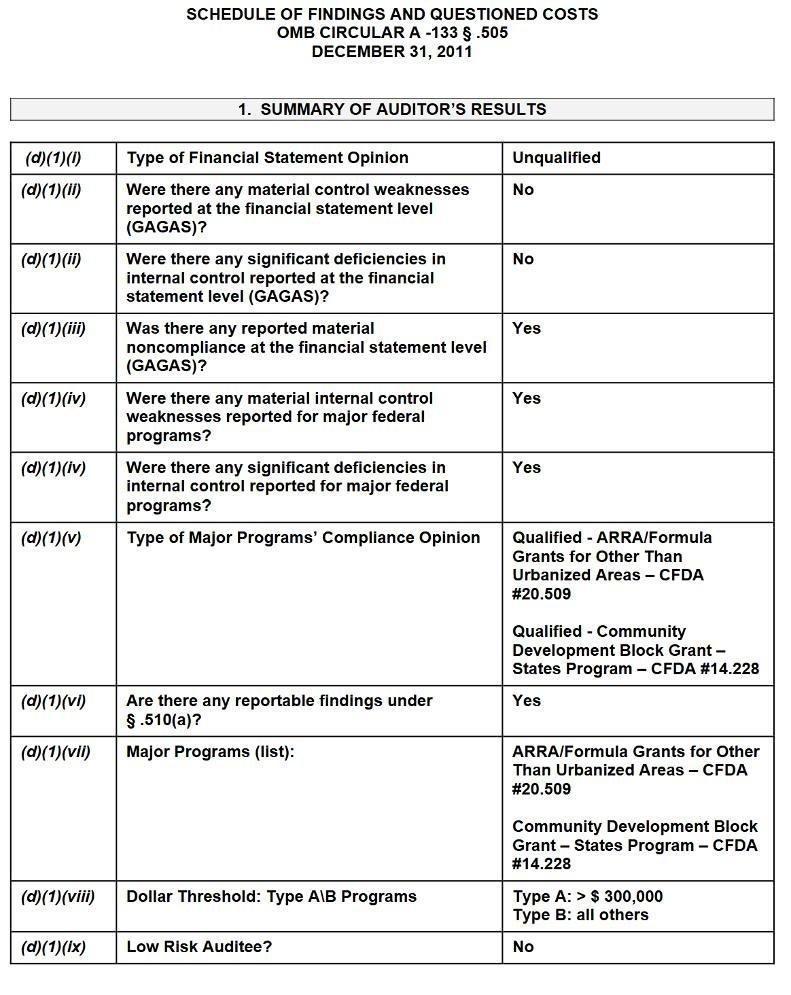
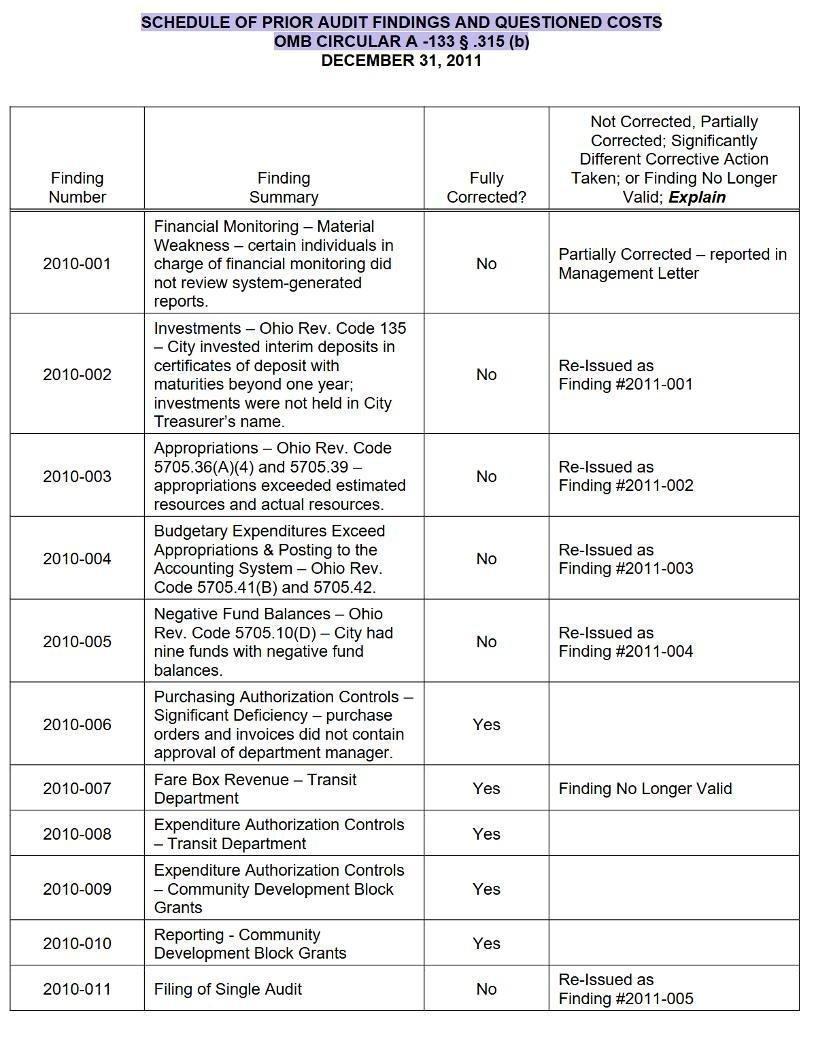
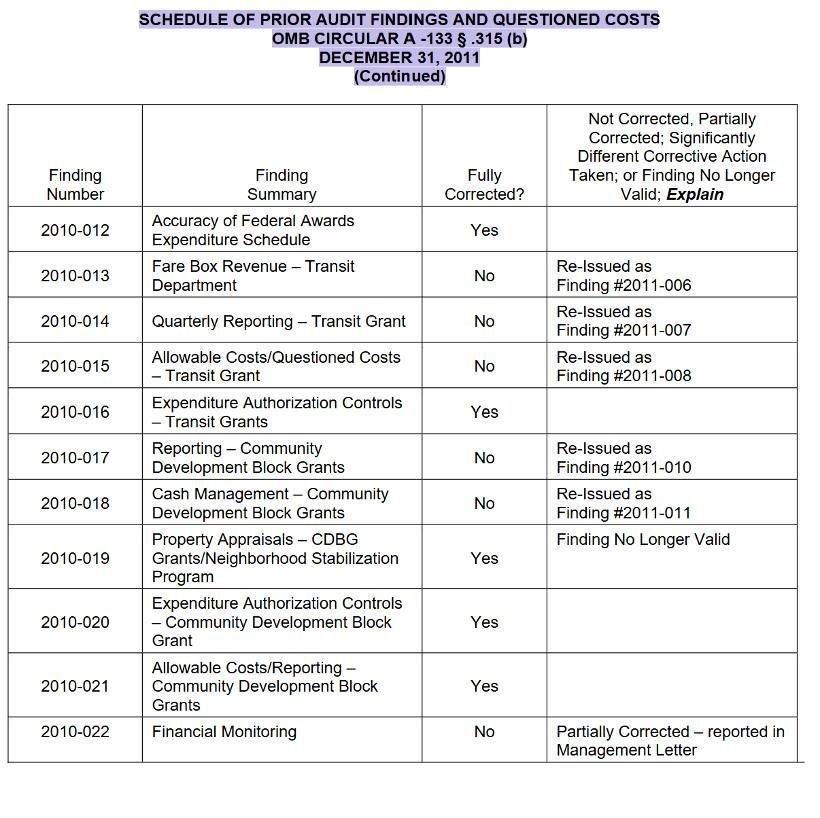
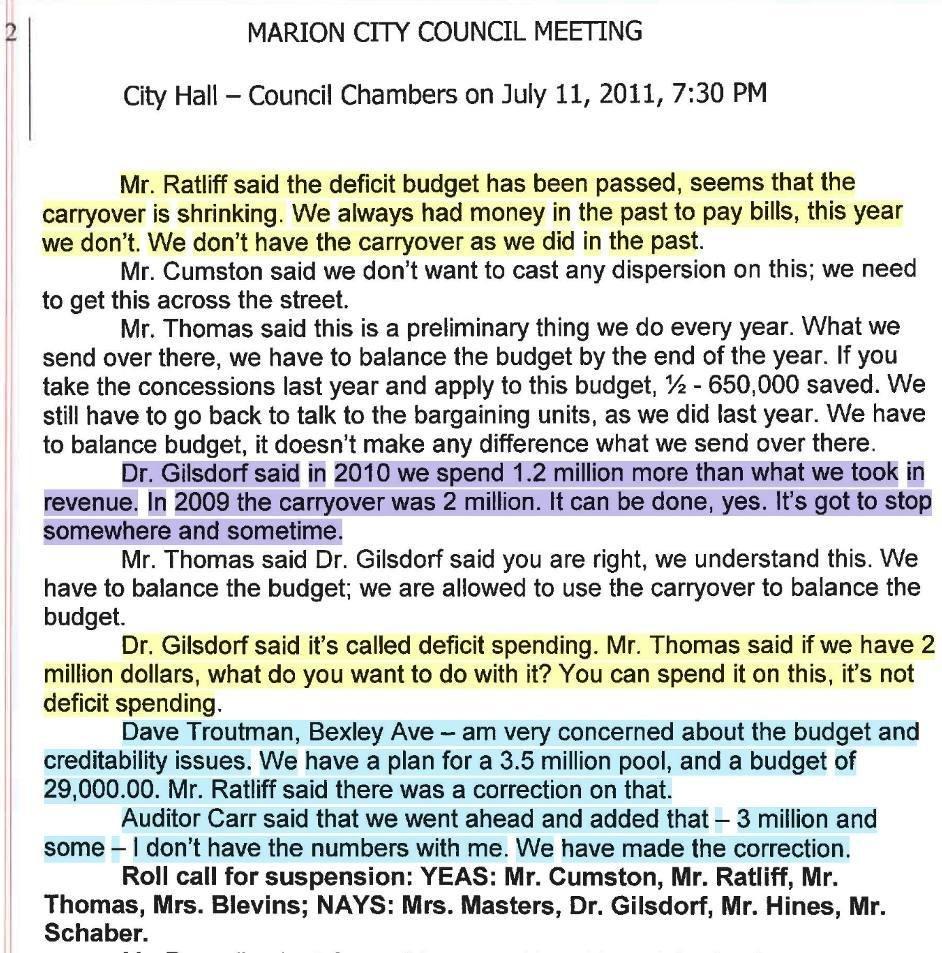
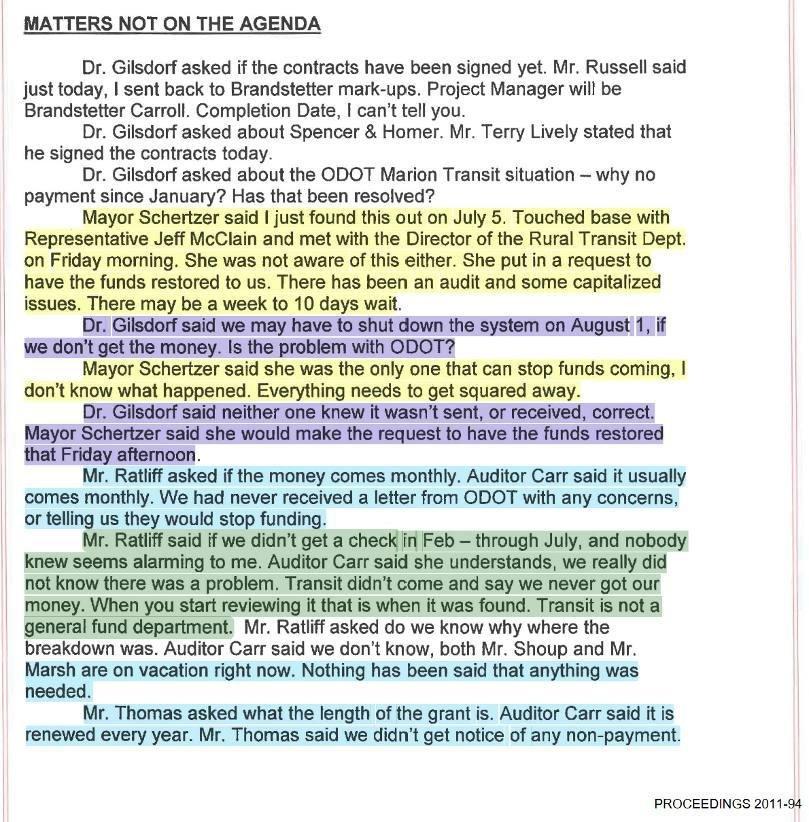
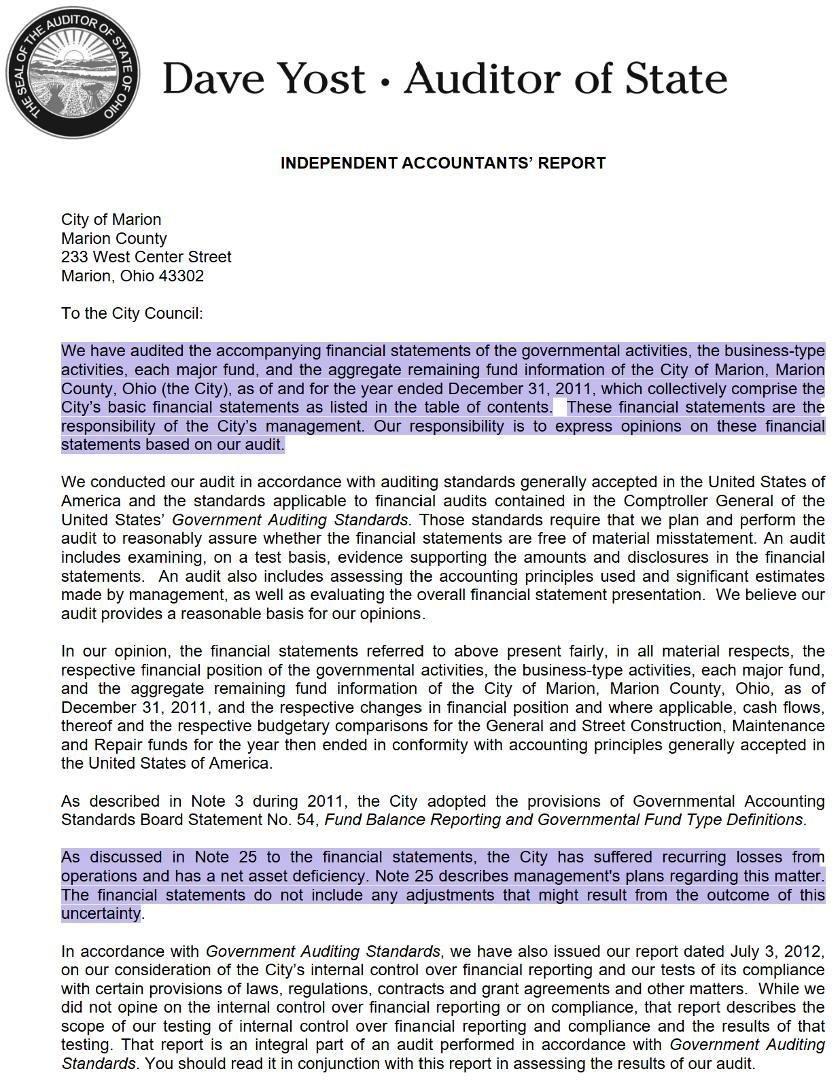
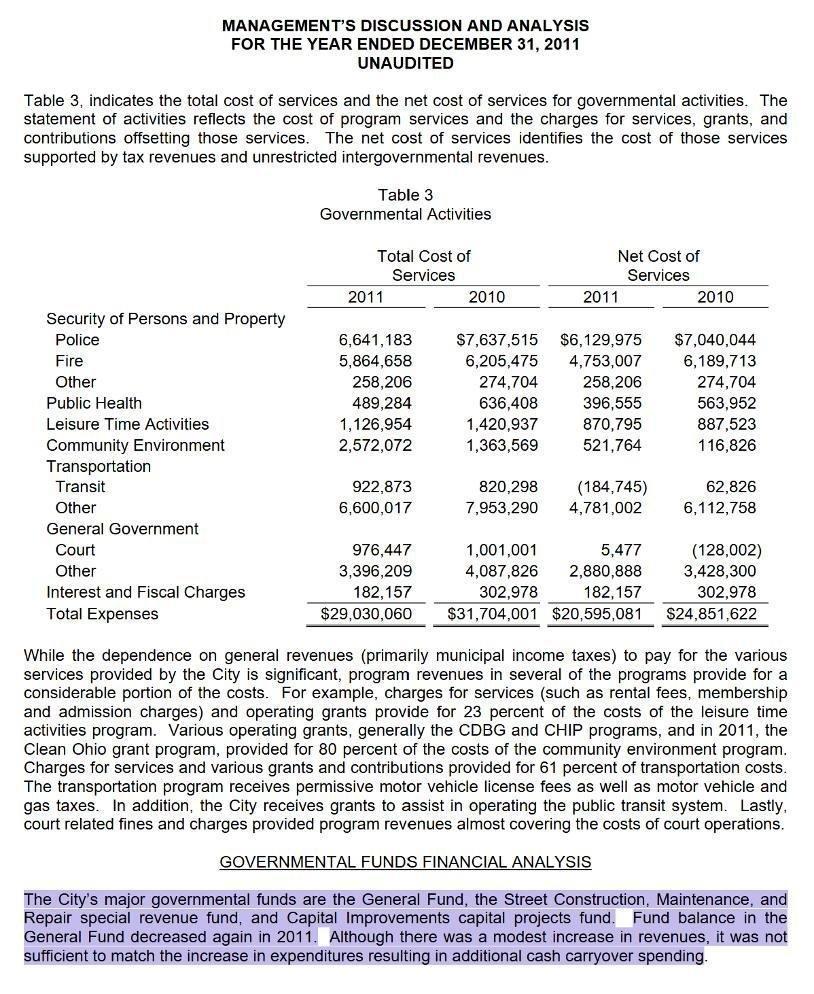
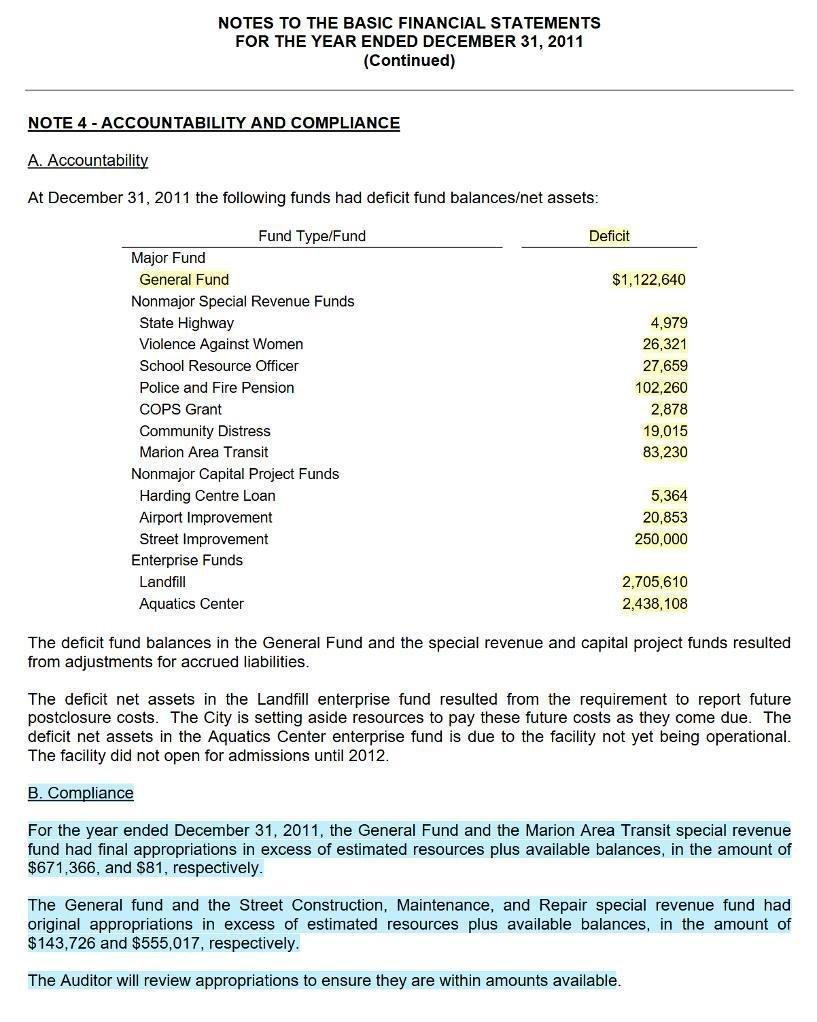
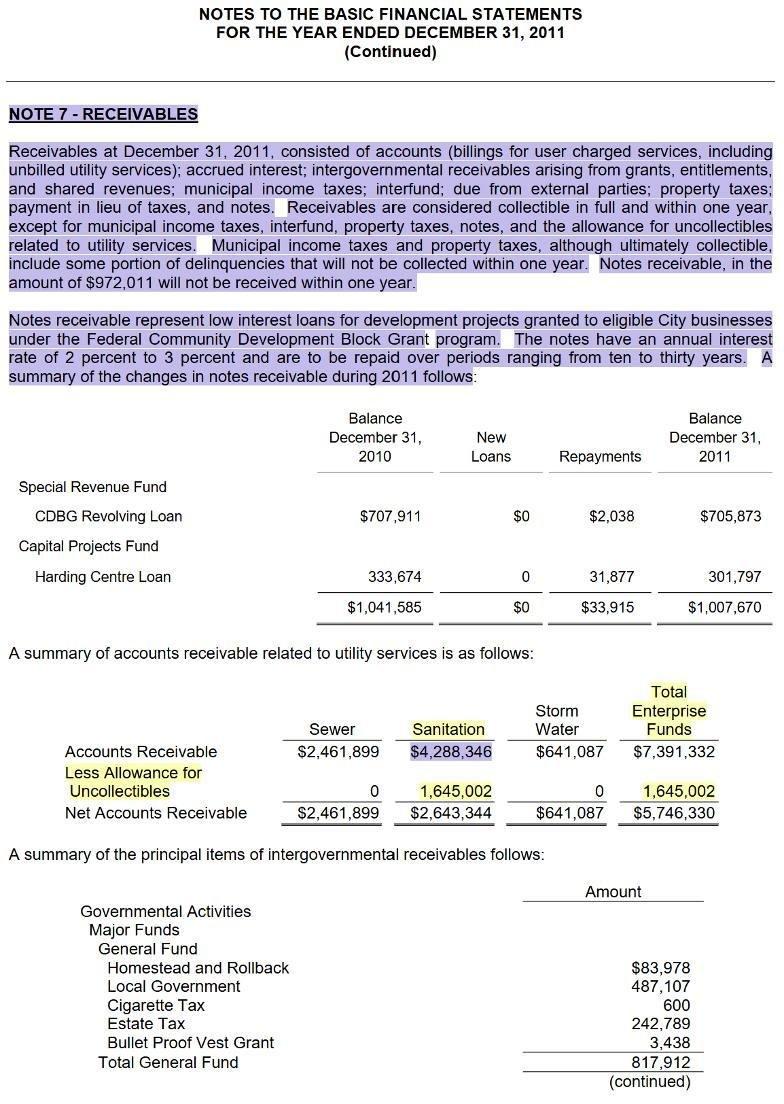
ILLEGAL SPENDING OVER APPROPRIATIONS
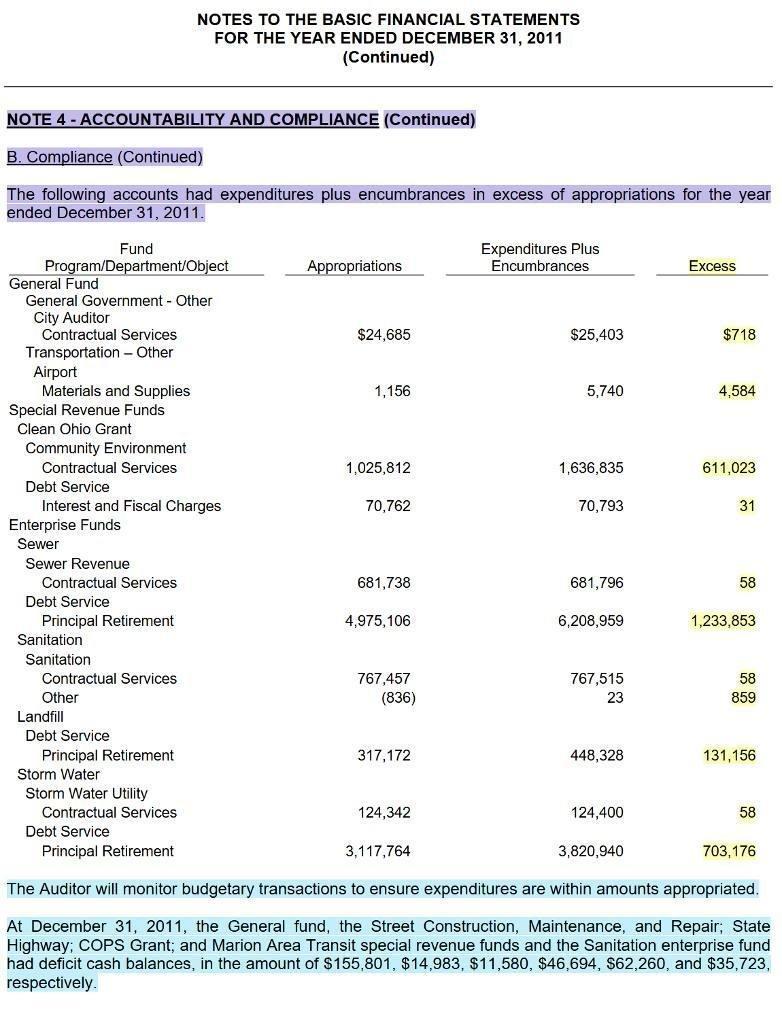
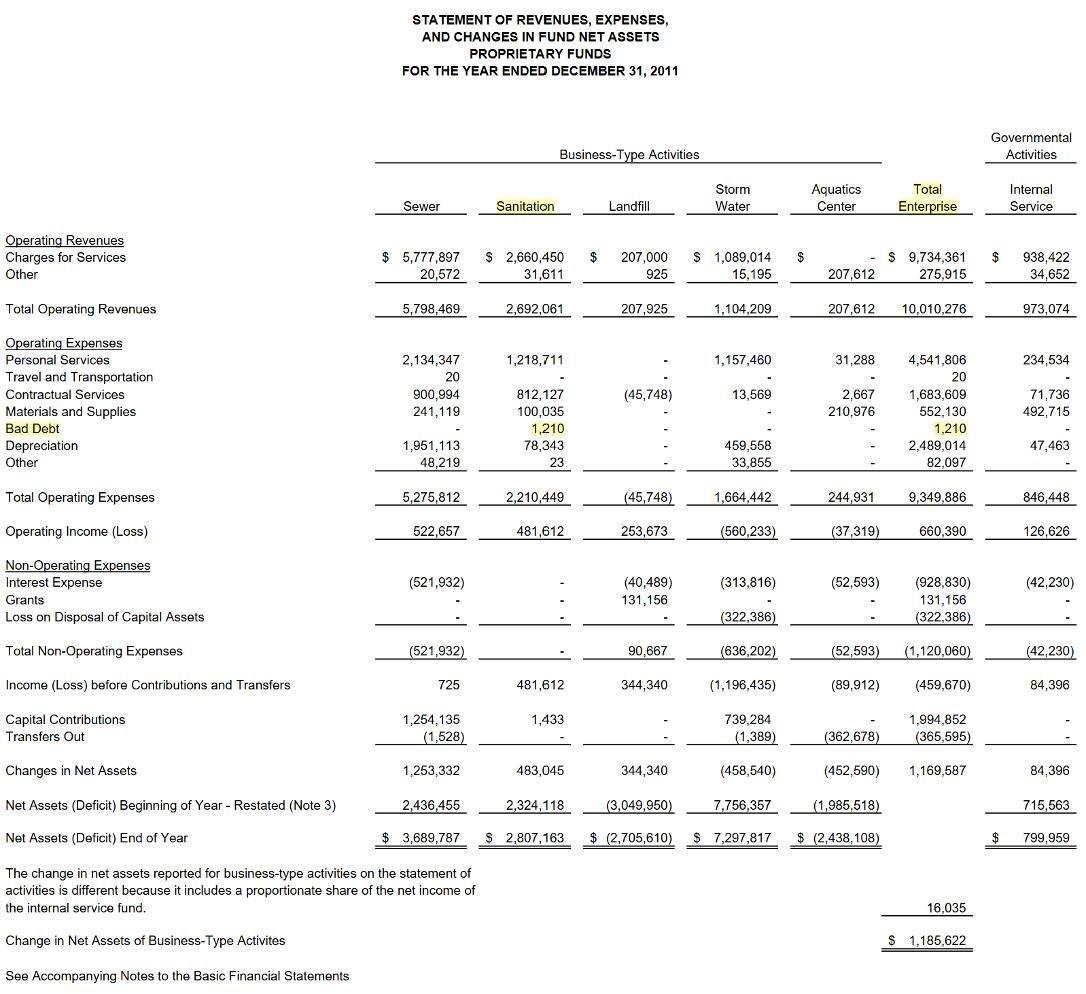
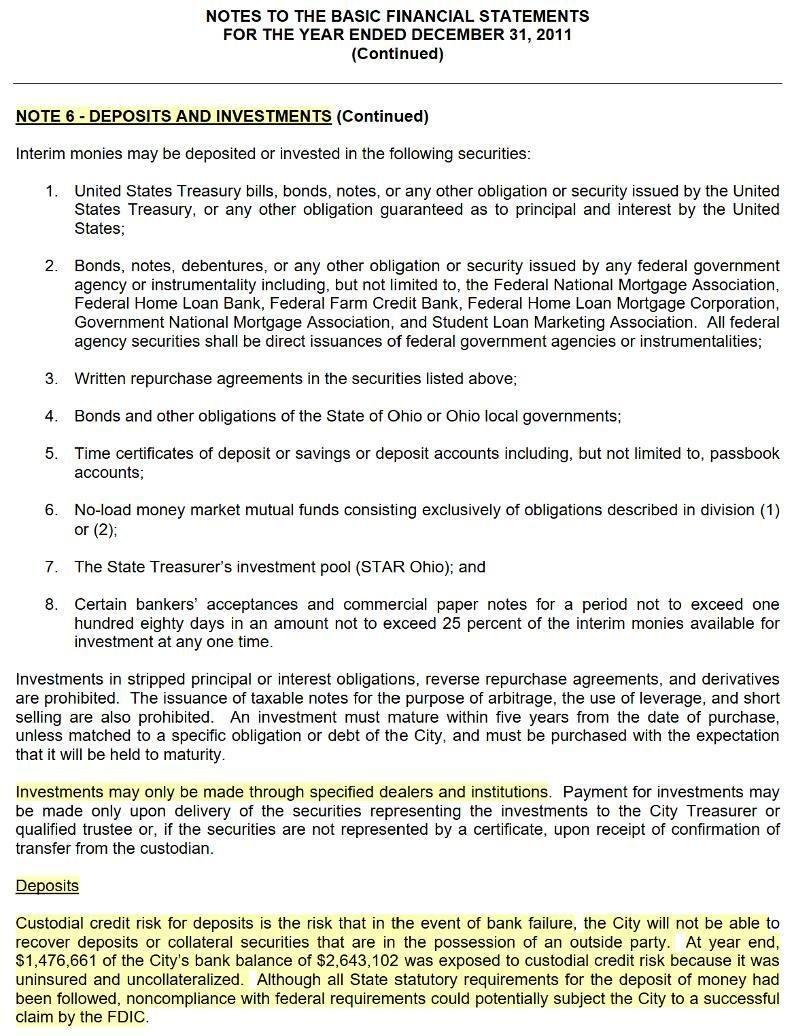
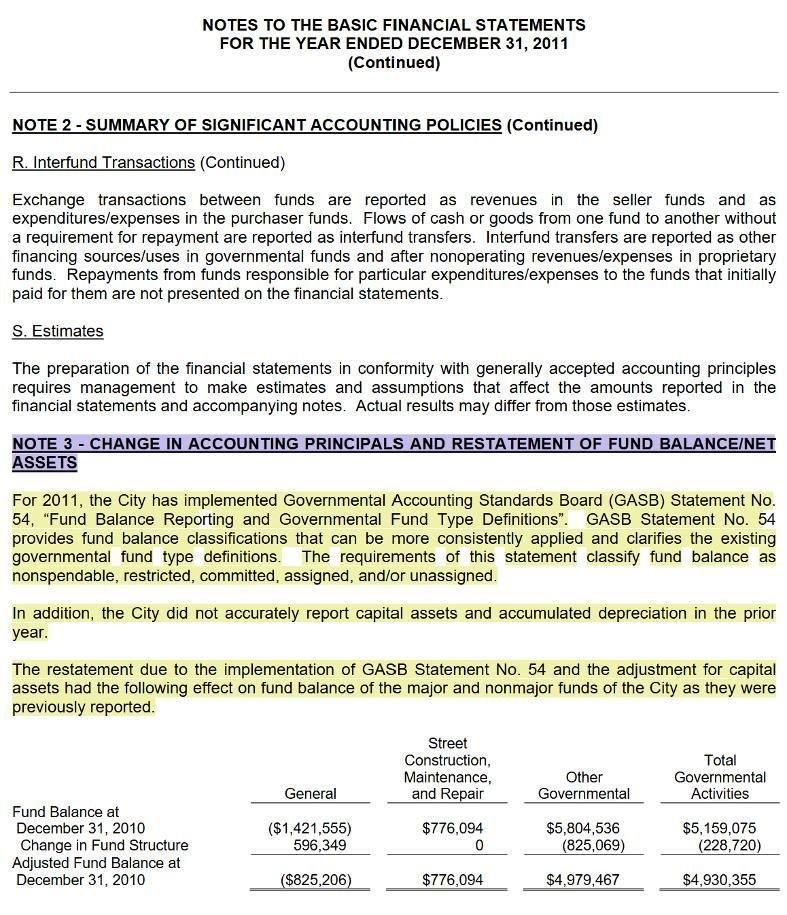
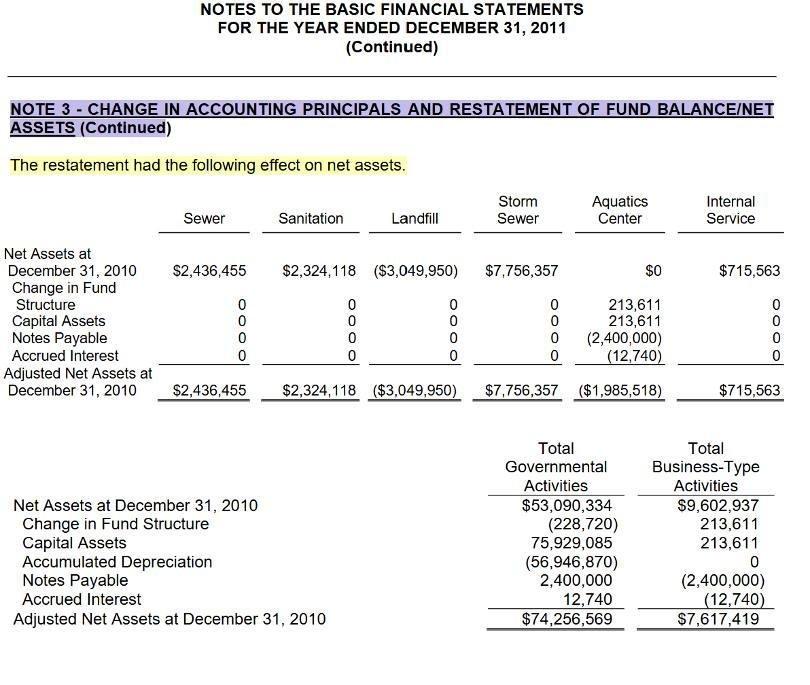
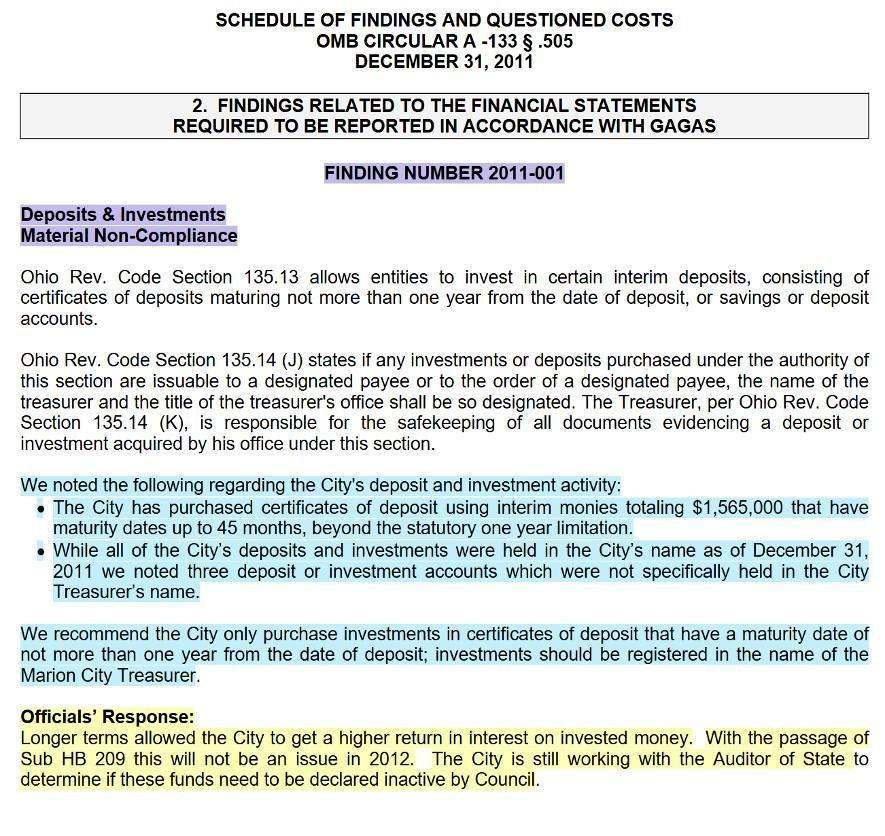
ILLEGAL SPENDING OVER APPROPRIATIONS
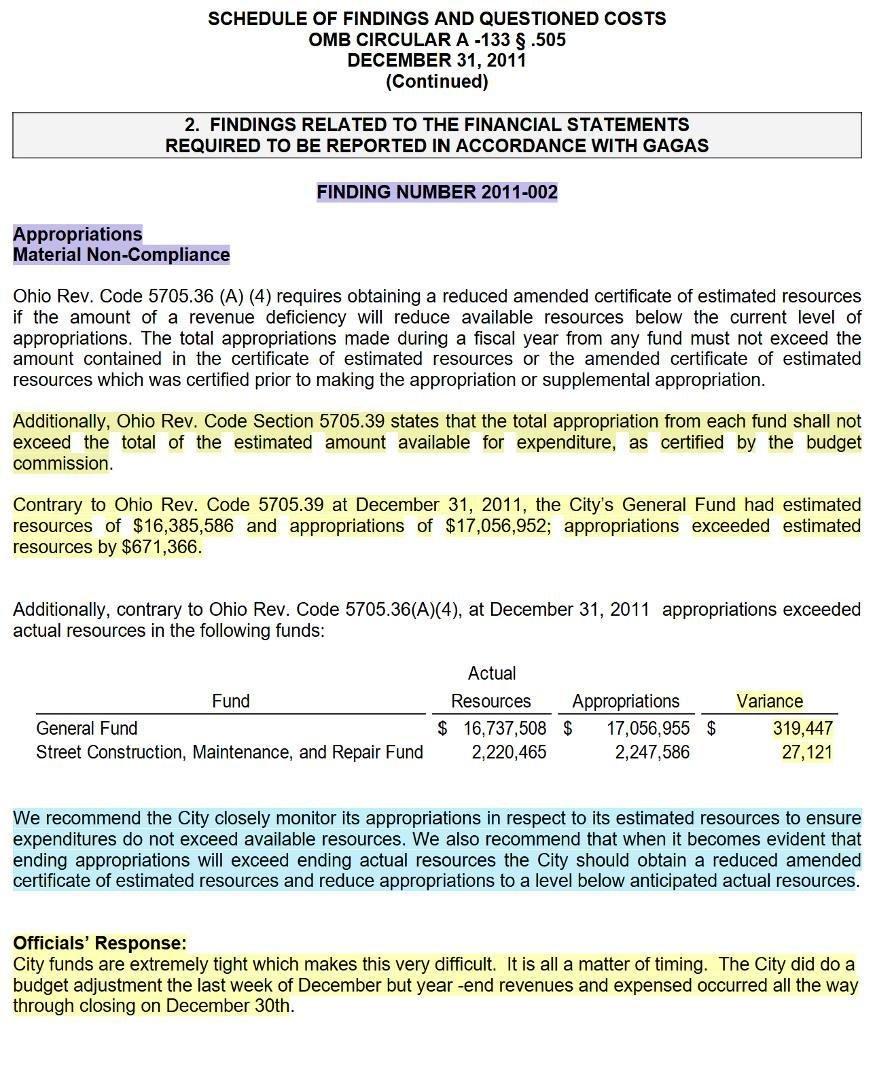
ILLEGAL SPENDING OVER APPROPRIATIONS
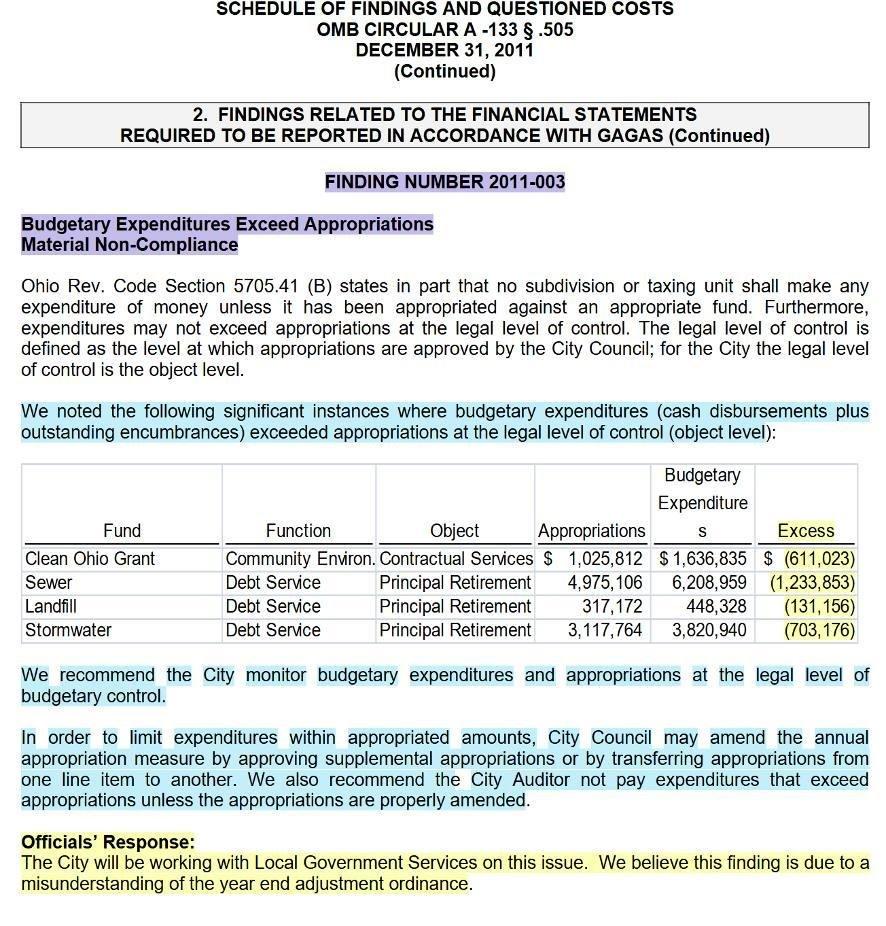
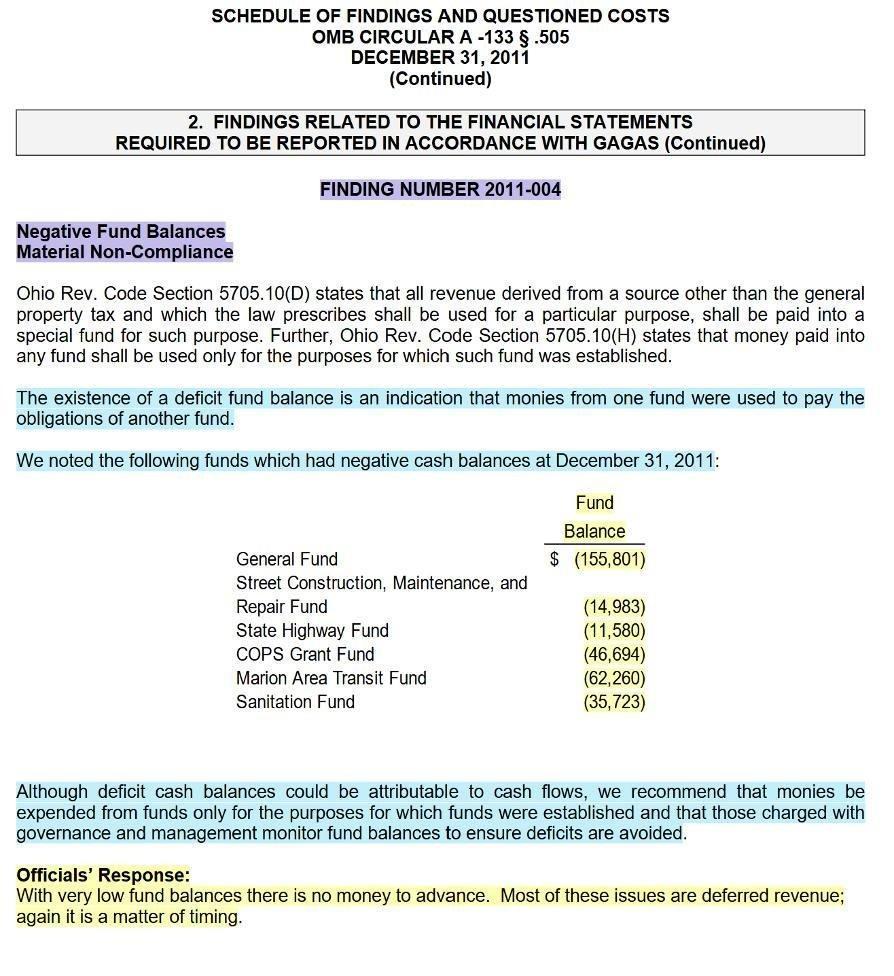
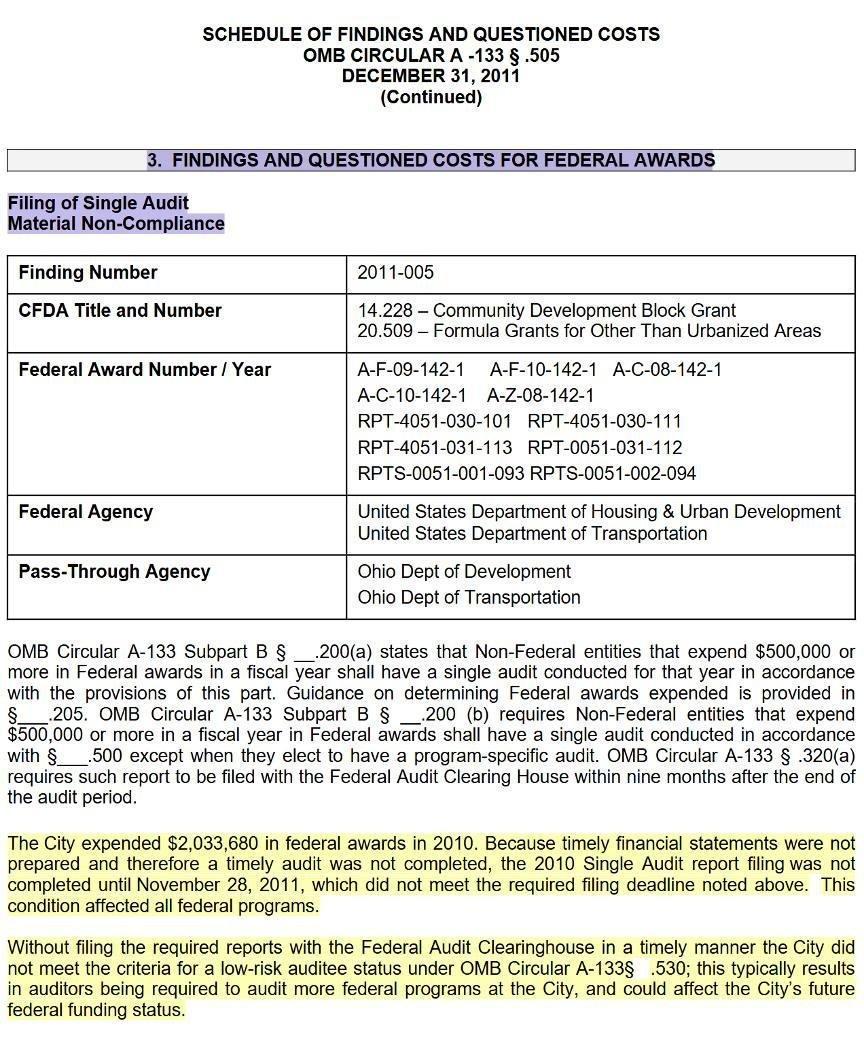
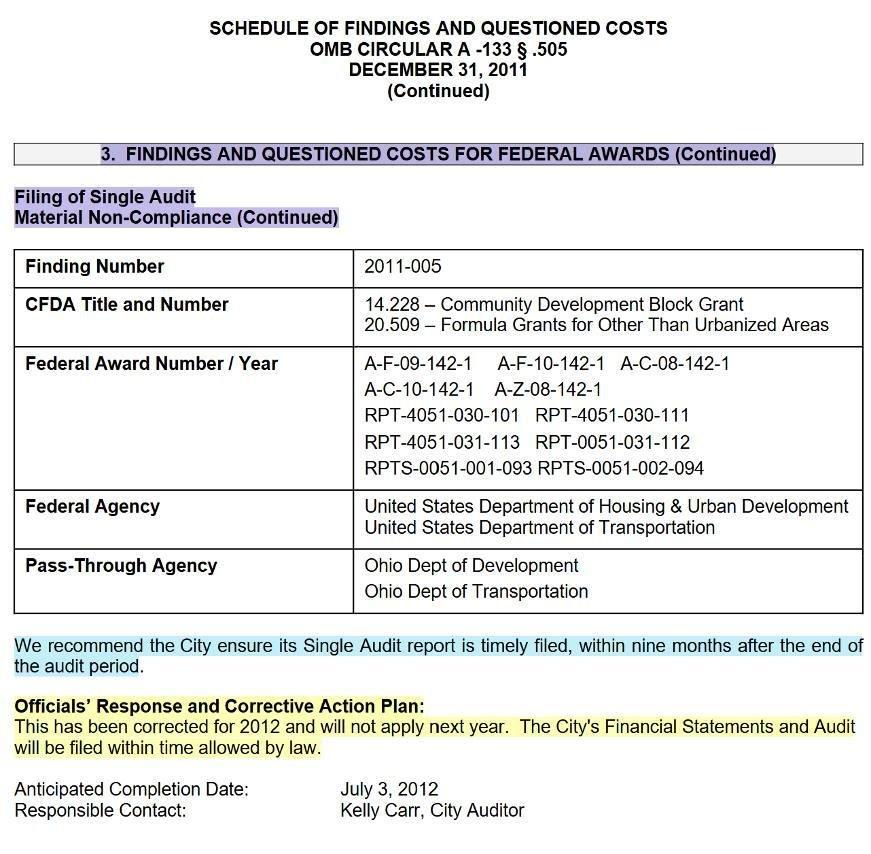
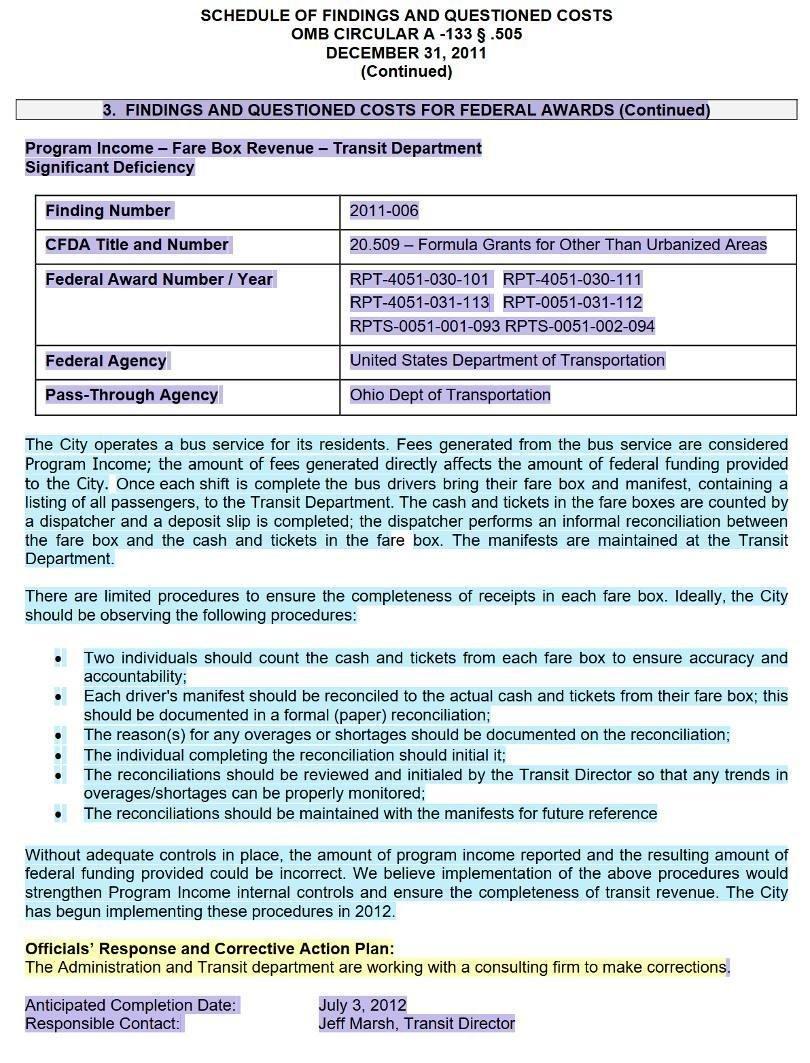
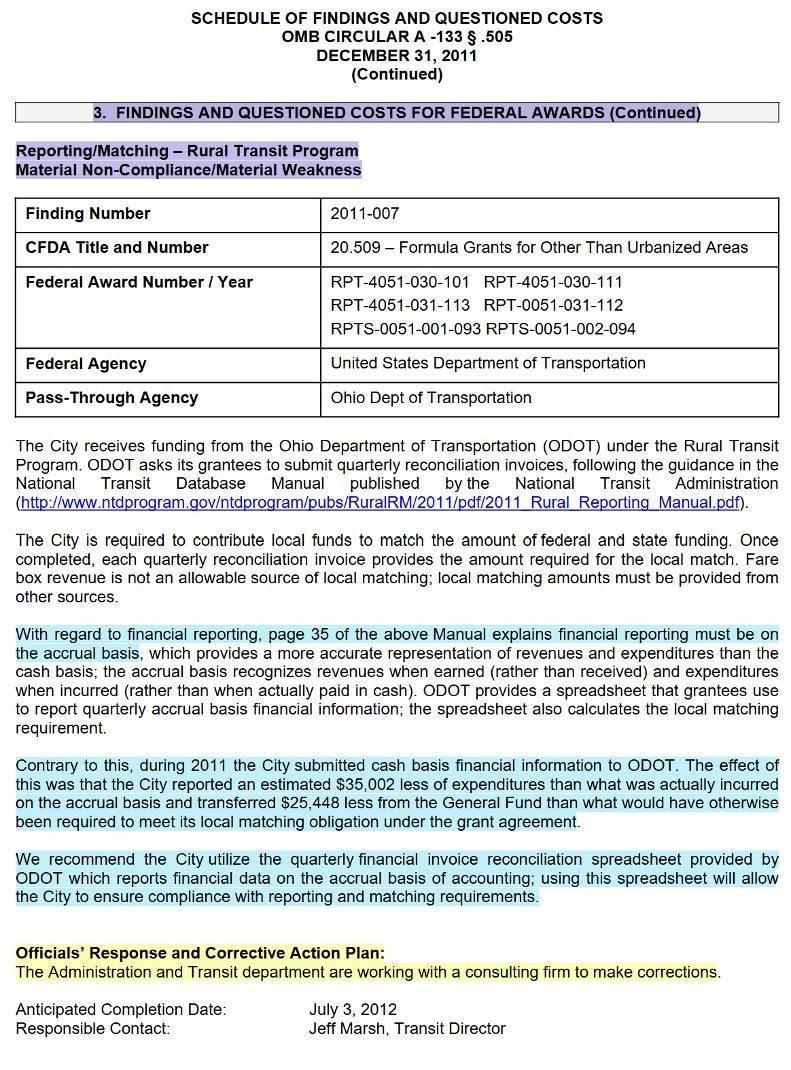
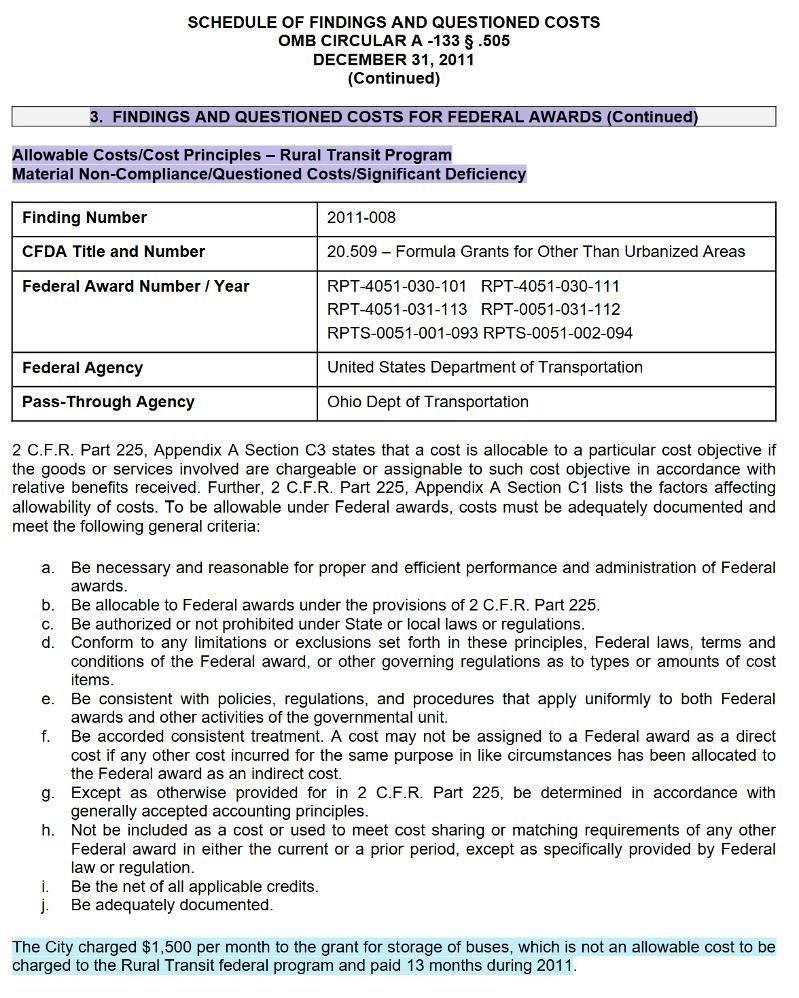
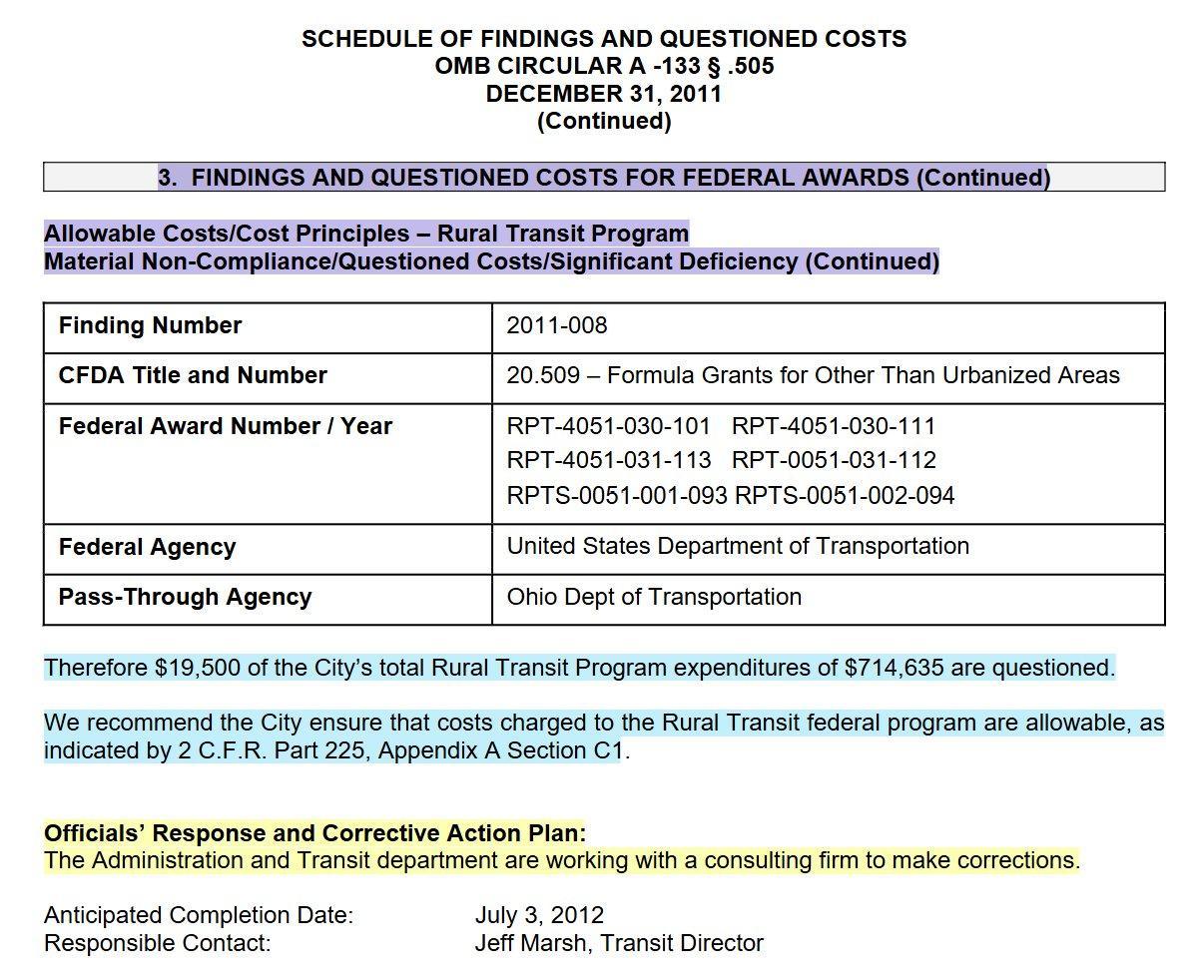
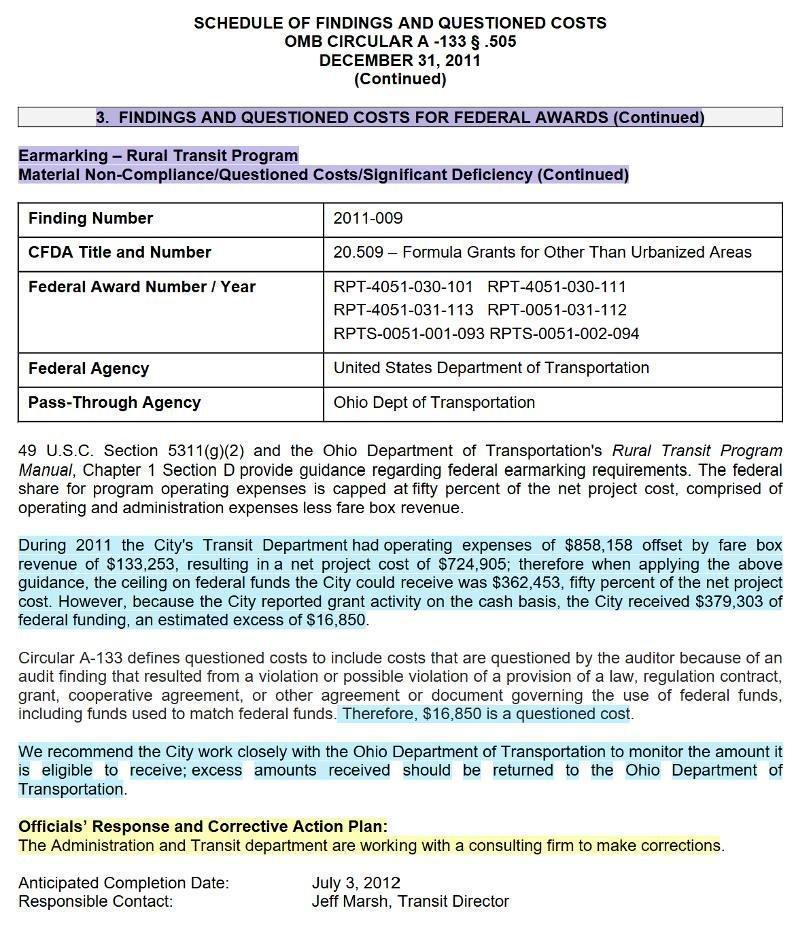
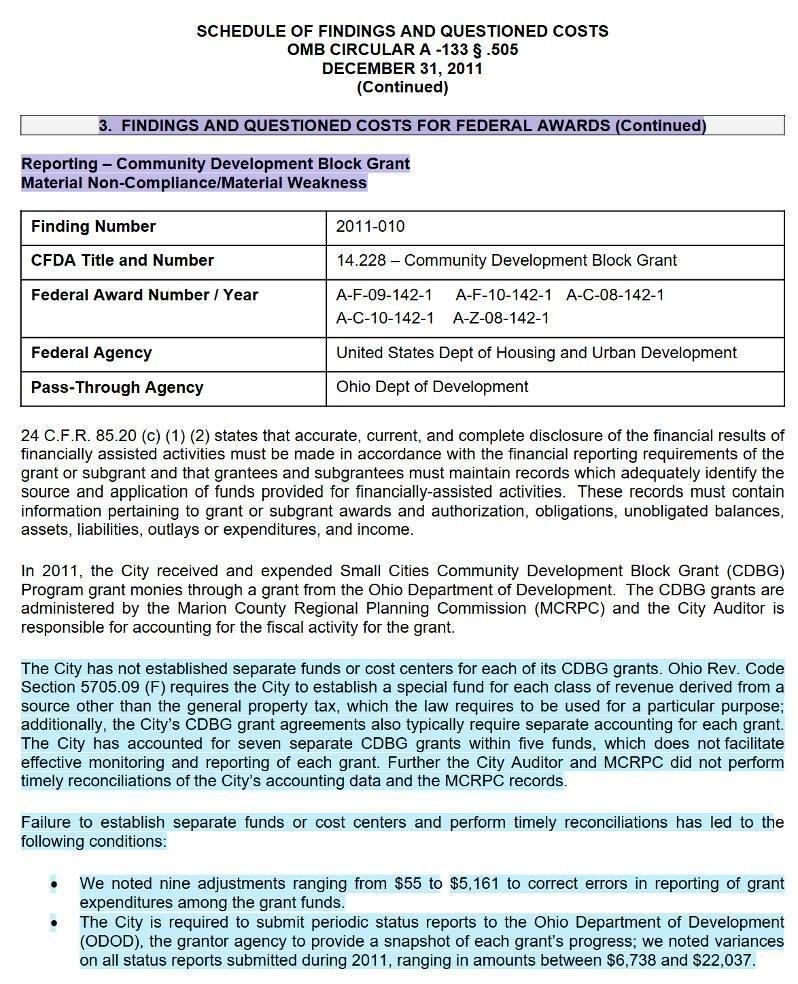
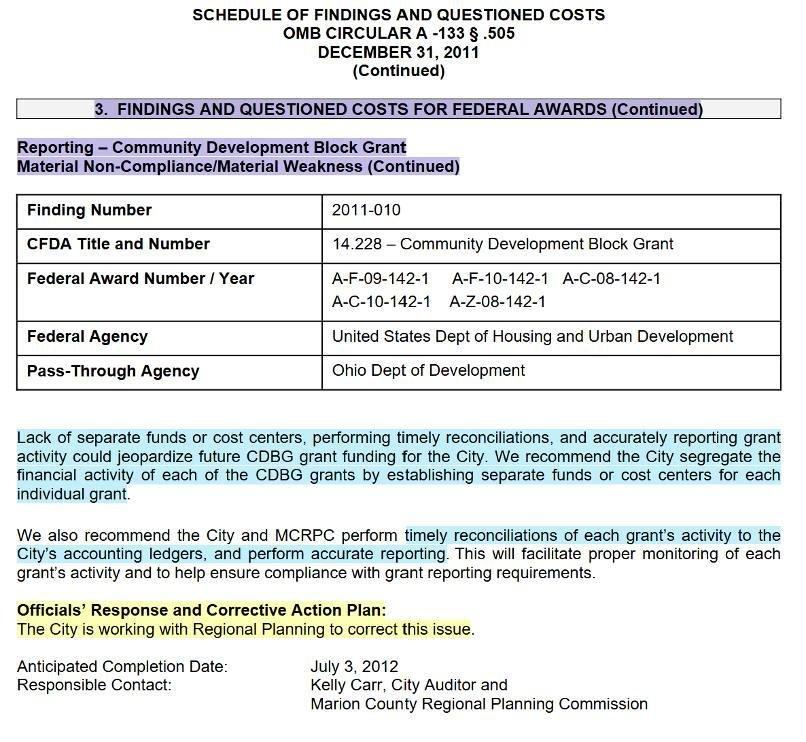
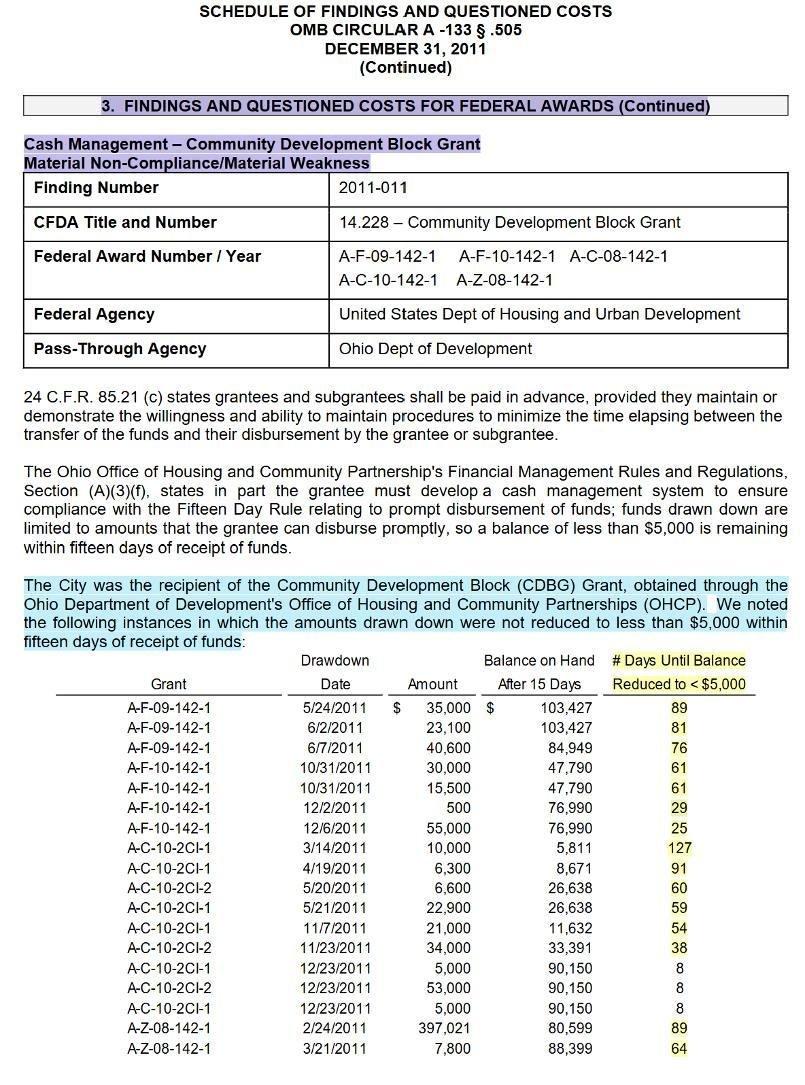
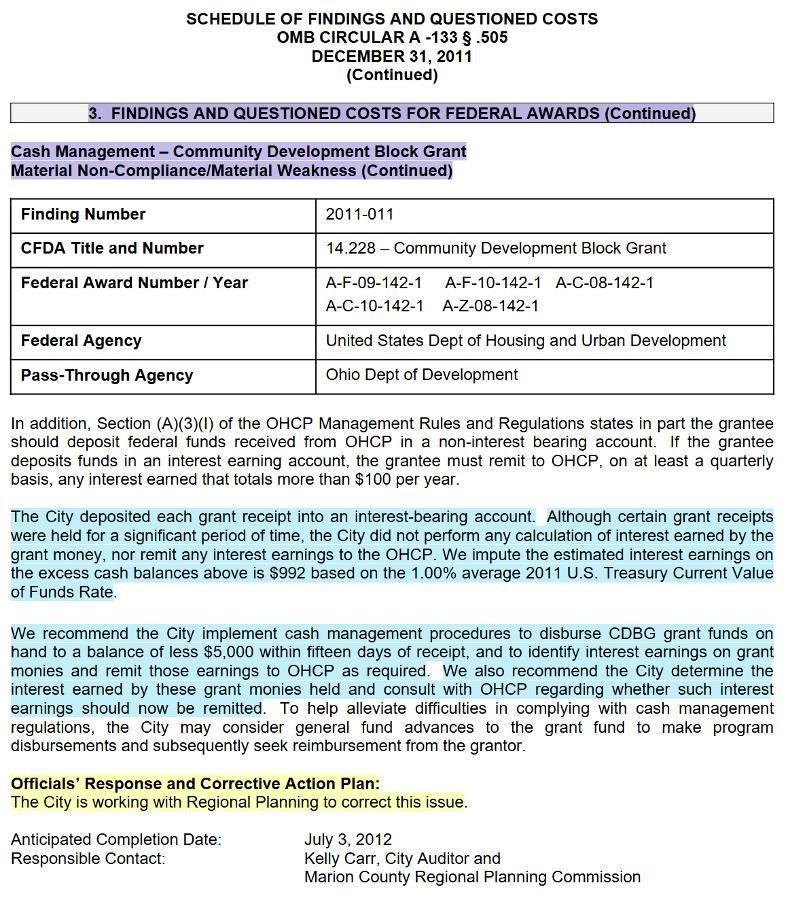
ANATOMY OF MARION’S FINANCIAL COLLAPSE 2012: SHADOW LEDGERS & MANUAL WORKAROUNDS — RAPID RELEASE IT BLUEPRINT OF SILENT SABOTAGE THE REAL STORY OF MARION’S FINANCIAL COLLAPSE
Anyone claiming Marion’s financial collapse began in 2020 is either illiterate in enterprise architecture or deliberately gaslighting the public.
Information technology systems administrators look past bad math directly to the structural integrity of the digital environment.
In modern day finance, the digital infrastructure configuration is essential.
More often than not, severe financial issues are tied to misconfigured software.
The forensic reality is undeniable: Marion’s New World ERP system was compromised and bleeding out a full decade earlier.
The catastrophic 2021 Qualified Audit Opinion, the state-mandated GL Override fix, and the resulting Fiscal Emergency declaration did not mark the start of a crisis—they were the formal autopsy of a system sabotaged in 2009.
Blaming 2020 is a political smokescreen, engineered to protect the secret of propping the digital vault doors open and leaving them that way.
You can see this smokescreen in action within the official 2023 City Council minutes.
Former Mayor Schertzer aggressively weaponized the crisis, falsely claiming the collapse was a “catastrophe that 22 months of not reconciling the books” caused, and demanding to “hold the person accountable that got us here”.
This tall tale falls apart immediately when you look closer at the audits and other primary documents.
The truth is that tribal knowledge of the manual workaround culture left, taking their undocumented workarounds with them.
This is why such things are STRICTLY FORBIDDEN in the information technology and financial sectors.
Robert Landon did do reconciliations just not in the preferred format of the Auditor of State.
If you read the actual receipts, instead of listening to the politically charged narratives, this becomes blatantly obvious.
Nice try though 😉 !
While politicians were busy pointing fingers at a 22-month window, the city’s own hired financial fixers at Veritas quietly admitted the truth.
Something Marion Watch has known since we began looking at this closely in 2018.
When Veritas addressed the City Council, official summaries reflected their admission that the reconciliation failures were an inherited, systemic problem that existed long before 2020.
Veritas also warned about underutilized system tools and configurations inviting theft.
The 2012 audit proves exactly how far back this failure goes, and city officials themselves later confirmed it.
When financial firm Veritas later addressed City Council during the fallout of the 2020 collapse, official council summaries reflect their admission that bank reconciliations appeared to have been a major, systemic problem long before 2020.
Veritas also warned about other systems issues, and the configurations inviting theft.
Because the administration deliberately abandoned the New World ERP’s automated Bank Reconciliation module at installation—alongside deactivating budgetary hard stops and bypassing other standard accounting controls—they completely lost the ability to balance the city’s books accurately.
During a March 2023 City Council Finance Committee meeting, the city’s own auditor explicitly admitted that the New World Bank Reconciliation module was “never used prior to 2022.”
Without automated reconciliation, the system ran blind.
The proof of this systemic failure is documented every year from install forward:
• 2010–2012 (The Utility Theft):
The lack of digital reconciliation allowed the Brenda Nwosu utility billing theft to hemorrhage public funds completely undetected for three years.
• 2011 (The 6-Month Blind Spot & Late Filing):
Without automated bank reconciliations, the city lost track of its own cash flow, failing to notice a missing half-million-dollar federal transit grant deposit for six straight months. The state also cited the city for a “late Single Audit filing” because the system couldn’t execute automated year-end close workflows.
• 2012 (Shadow Ledgers & Ghost Data):
The state formally cited the city for its “failure to establish separate accountability and perform timely reconciliations,” which forced administrators to make manual “ghost data” adjustments across federal grants. Meanwhile, transit invoice reconciliations were being calculated on an illegal cash-basis using off-book “Shadow QuickBooks” software.
• 2020–2021 (The Collapse):
This decade of abandoned controls culminated in the state’s Fiscal Emergency declaration, which officially noted that accurate monthly bank reconciliations were still not available for audit.
The 2012 Marion City Audit introduces the next devastating phase of the Silent Sabotage:
instead of fixing the broken million dollar New World software, the administration simply moved the accounting off the grid.
ENTER “SHADOW QUICKBOOKS” & ILLEGAL PLUGGING
When enterprise software configurations fail, users inevitably build undocumented manual workarounds to survive.
In 2012, the structural rot inside Marion’s IT infrastructure became so severe that the administration resorted to “shadow IT”—deploying secondary software to bypass their own compromised database.
Modern enterprise ERP systems like New World are specifically engineered with Point of Sale and Cash Receipting modules designed to make these exact types of accounting anomalies impossible.
Yet, the 2012 audit reveals blatant cash “plugging” at the newly opened Aquatic Center, obliterating any remaining trust in the city’s revenue stream.
• THE “SHADOW QUICKBOOKS” LEDGER:
Because the New World ERP system was not properly configured to track federal transit grants on the legally required accrual basis, the city secretly installed off-the-shelf QuickBooks software to run “parallel to the City’s normal accounting system”. Running parallel, off-book accounting software inside a municipal government is a massive security and audit vulnerability.
• THE QUICKBOOKS FAILURE:
Even with their shadow ledger, the administration still failed to calculate the math correctly. During 2012, the city used cash-basis data from this parallel system, resulting in the city illegally draining $77,108 more from the General Fund than was actually required to meet its local grant matching obligation.
• AQUATIC CENTER CASH “PLUGGING”:
After forcing through a highly controversial $3.5 million bond to build the Lincoln Park Aquatic Center, the city opened the facility in 2012 with virtually zero revenue controls. The state auditor found that the city failed to maintain duplicate receipts or sufficient support for daily cash admissions and memberships.
• AGGREGATING RECEIPTS TO HIDE VARIANCES:
To force the books to balance without duplicate receipts, the administration resorted to plugging the data. The state auditor explicitly caught the city posting receipts to the accounting system “by aggregating several amounts from several different purposes and posting them using one receipt number”. This practice makes it impossible to track missing cash or trace specific transactions, completely blinding management and auditors.
• BANKING IN A SANCTIONED INSTITUTION:
The administration kept public funds in the Ohio State Bank without an active depository agreement. Worse, they did this after the bank entered a written consent agreement with the FDIC and the state, explicitly prohibiting the bank from accepting public deposits due to unsound financial conditions.
• THE $1.2 MILLION BAD DEBT ERASURE:
In 2011, the city flagged a staggering $1,645,002 as uncollectible bad sanitation debt. In 2012, that allowance magically dropped to $453,199.
They didn’t collect it—the administration simply wrote off the uncollectible accounts to make the receivables look healthier before the audit.
• MASKING COSTS WITH DEBT (NON-CAPITALIZED BORROWING):
The city utilized long-term debt to bleed millions into non-capitalized items, masking the true cost of operations.
The 2012 audit admits they burned $2,883,615 in OWDA sewer loans, $570,969 in OWDA landfill loans, $622,731 from 2012 General Obligation Bonds, $356,160 from 2010 General Obligation Bonds, and $150,000 from 2011 Landfill notes all on non-capitalized expenses.
• THE 2012 QUALIFIED AUDIT OPINION & DENIED “LOW-RISK” STATUS:
Because the Aquatic Center’s cash controls were so compromised, the Auditor of State formally issued a “Qualified Opinion” on the Aquatics Center Fund. The state declared they were “unable to obtain sufficient appropriate audit evidence regarding the Aquatics Center charges for services” which totaled $271,288 for the year. Furthermore, due to this failure to maintain accurate financial reporting, combined with aggregating cash receipts and running shadow ledgers, the Auditor of State explicitly denied Marion its “Low-Risk Auditee” status again in 2012. While we will cover the state’s later, highly suspicious reinstatement of this “low-risk” designation in future rapid-release reports, the 2012 audit makes one thing clear: a city cannot claim financial excellence when the state officially refuses to trust its cash admission receipts.
THE TRUE COST OF THE SABOTAGE: BY THE NUMBERS
The 2012 audit proves the bleeding did not stop; it simply compounded.
• ONGOING GL OVERRIDES:
Budgetary hard stops remained deactivated. General Ledger overrides allowed the city to illegally overspend appropriations at the legal object level across multiple funds, including $46,695 in Sewer Debt Service, $39,076 in Stormwater Debt Service, $52,208 in Aquatic Center Debt Service, and $38,571 in the Police Department.
• THE RUNNING TOTAL for GL OVERRIDE:
GL override abuse allowing illegal spending over appropriations from the first full year with New World in 2010 through 2012 now sits at an astronomical $18,924,954. (The 2012 audit added $176,550 in illegal legal-object-level over-expenditures to the previous $18.74 million total).
NEGATIVE BALANCES & FINANCIAL IRREGULARITIES DEFICIT FUND BALANCES
Fourteen separate funds ran deficit fund balances by year-end, totaling $4,472,835. These included:
• Landfill Enterprise Fund: $2,818,821
• General Fund: $562,167
• Street Improvement: $471,000
• Aquatics Center: $303,586
• Airport Improvement: $82,999
• Clean Ohio Assistance: $70,618
• Capital Improvements: $42,823
• School Resource Officer: $28,119
• Marion Area Transit: $23,400
• Violence Against Women: $20,000
• CDBG: $16,869
• Harding Centre: $12,282
• COPS Grant: $11,441
• SAFER Grant: $8,710
• DEFICIT CASH BALANCES:
Because the system’s fund-level cash stops were bypassed, the Landfill Enterprise Fund operated with a completely exhausted, negative cash balance of $240,772. The School Resource Officer fund also ran a negative cash balance of $125.
2012 AUDIT FINDINGS (THE RECURRING FAILURES)
The forensic IT blueprint below correlates the 2012 audit findings directly to the bypassed New World software controls and off-book ledgers:
• FINDING 2012-001 (DEPOSITS & INVESTMENTS) [REPEAT FINDING] — [Treasurer Controls]:
The city continued to operate with multiple deposit and investment accounts that were not specifically held in the City Treasurer’s name, violating state law designed to prevent fraud.
• FINDING 2012-002 (APPROPRIATIONS) [REPEAT FINDING] — [Financial Management – Budgeting]:
The ERP Budgeting module validations remained unconfigured. Landfill Fund appropriations ($553,114) massively exceeded both estimated resources ($421,959) and actual resources ($183,425).
• FINDING 2012-003 (BUDGETARY EXPENDITURES EXCEEDING APPROPRIATIONS) [REPEAT FINDING] — [Financial Management – Purchasing]:
Budgetary hard stops remained disabled, allowing illegal GL overrides to force through thousands of dollars in unappropriated expenditures across the Police, Sewer, Stormwater, and Aquatic Center funds.
• FINDING 2012-005 (COMPLETENESS OF RECEIPTS) — [Financial Management – Cash Receipts]:
The Cash Receipting configurations were abandoned at the Aquatic Center, resulting in aggregated “plugged” receipt numbers, missing duplicate receipts, and a complete inability to verify $271,288 in cash revenue.
• FINDING 2012-006 (TIMELY DEPOSITS) — [Internal Controls]:
The city failed to deposit 40 out of 58 tested Aquatic Center receipts by the next business day, leaving public cash exposed to loss or misappropriation.
• FINDING 2012-007 (REPORTING/MATCHING – TRANSIT) [REPEAT FINDING] — [Shadow IT / QuickBooks]:
The city deployed an off-book QuickBooks ledger to bypass the New World ERP, yet still failed to report accrual-basis data, illegally bleeding $77,108 from the General Fund to cover matching obligations.
• FINDING 2012-008 (ALLOWABLE COSTS – TRANSIT) [REPEAT FINDING] — [Financial Management – Project/Grant Accounting]:
The system lacked grant-specific compliance configurations, resulting in the city illegally charging $1,500 per month ($18,000 total) to the Rural Transit program for unallowable bus storage fees.
• FINDING 2012-009 (CDBG REPORTING) [REPEAT FINDING] — [Financial Management – General Ledger]:
The General Ledger was still not configured with separate funds or cost centers for federal grants, forcing the city to manually inject nine “ghost data” adjustments ranging up to $13,188 to correct reporting errors.
• FINDING 2012-010 (CDBG CASH MANAGEMENT) [REPEAT FINDING] — [Financial Management – Project/Grant Accounting]:
Without automated drawdown timers, federal cash was illegally held for up to 195 days without being disbursed, violating the 15-day federal rule.
• FINDING 2012-011 (AIRPORT GRANT CASH MANAGEMENT) — [Financial Management – Project/Grant Accounting]:
Federal Airport Improvement Grant funds were drawn down and left sitting in interest-bearing accounts for up to 136 days before being expended, violating federal prompt disbursement laws.
• FINDING 2012-012 (AIRPORT GRANT MATCHING) — [Financial Management -Project/Grant Accounting]:
The city completely failed to provide its legally required 5% local match ($15,858) for the Construct Taxiways project, resulting in questioned federal costs.
YEAR-END SUMMARY: STATE LAWS & FEDERAL NONCOMPLIANCE
By systematically bypassing ERP controls, deploying shadow ledgers, and abandoning automated reconciliations, the administration committed overarching violations of both state and federal mandates to maintain secure internal controls.
• FEDERAL LAWS & REGULATIONS BROKEN:
Overarching violation of OMB Circular A-133 §.300(b) (Knowingly operating a compromised financial system lacking effective internal controls to safeguard federal funds); 24 C.F.R. § 85.21(c) (Violating the 15-day cash drawdown rule by holding funds up to 195 days); 2 C.F.R. Part 225, Appendix A (Charging unallowable bus storage costs to federal grants); 24 C.F.R. § 85.20(c) (Failure to maintain separate grant accountability, resulting in manual adjustments); and 49 C.F.R. § 18.24 (Failure to provide required local matching funds).
• STATE LAWS BROKEN:
Overarching violation of Ohio Admin. Code 117-2-01(A) (Knowingly operating a compromised financial system and failing to maintain internal controls to prevent fraud); Ohio Admin. Code 117-2-02 (Failure to maintain accounting records to ensure completeness of receipts/plugging data); ORC § 9.38 (Failure to deposit public monies timely); ORC § 135.14 (Investments not in Treasurer’s name); ORC § 5705.36/39 (Appropriating over resources); ORC § 5705.41(B) (Budgetary expenditures exceeding appropriations via GL overrides); and ORC § 5705.10(D)&(H) (Negative cash balances).
OFFICIAL EXHIBITS & PRIMARY SOURCE RECORDS (2012 IT Blueprint)
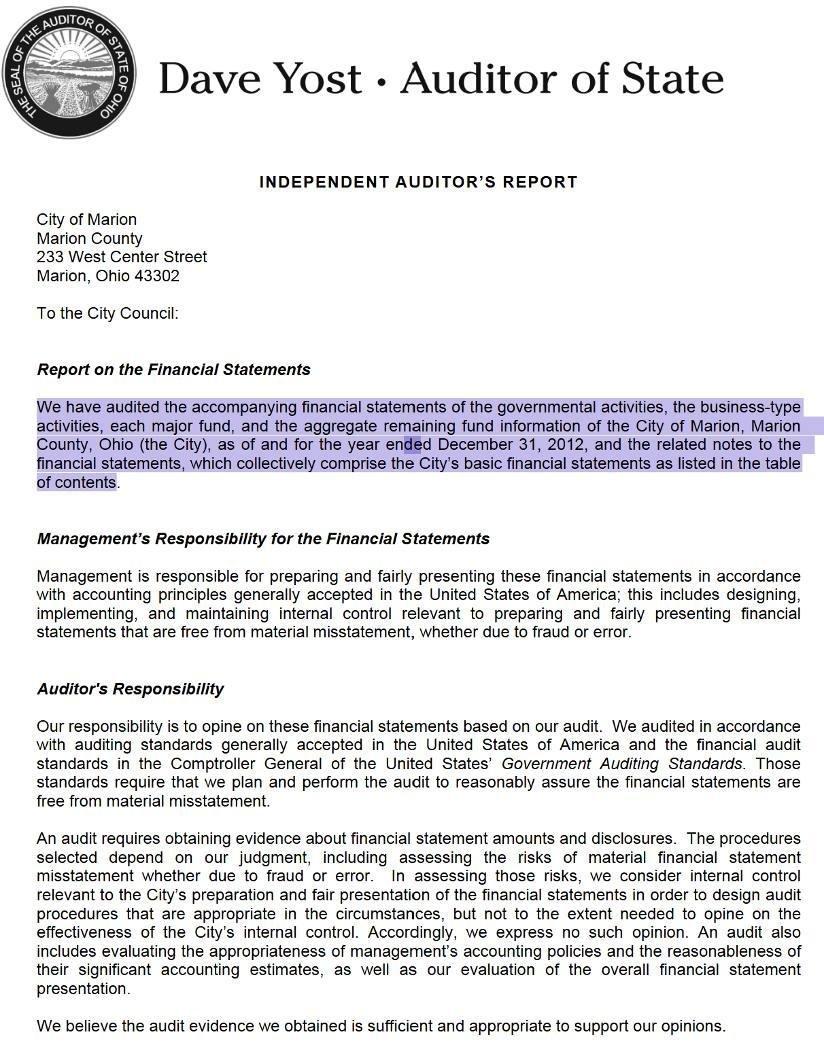
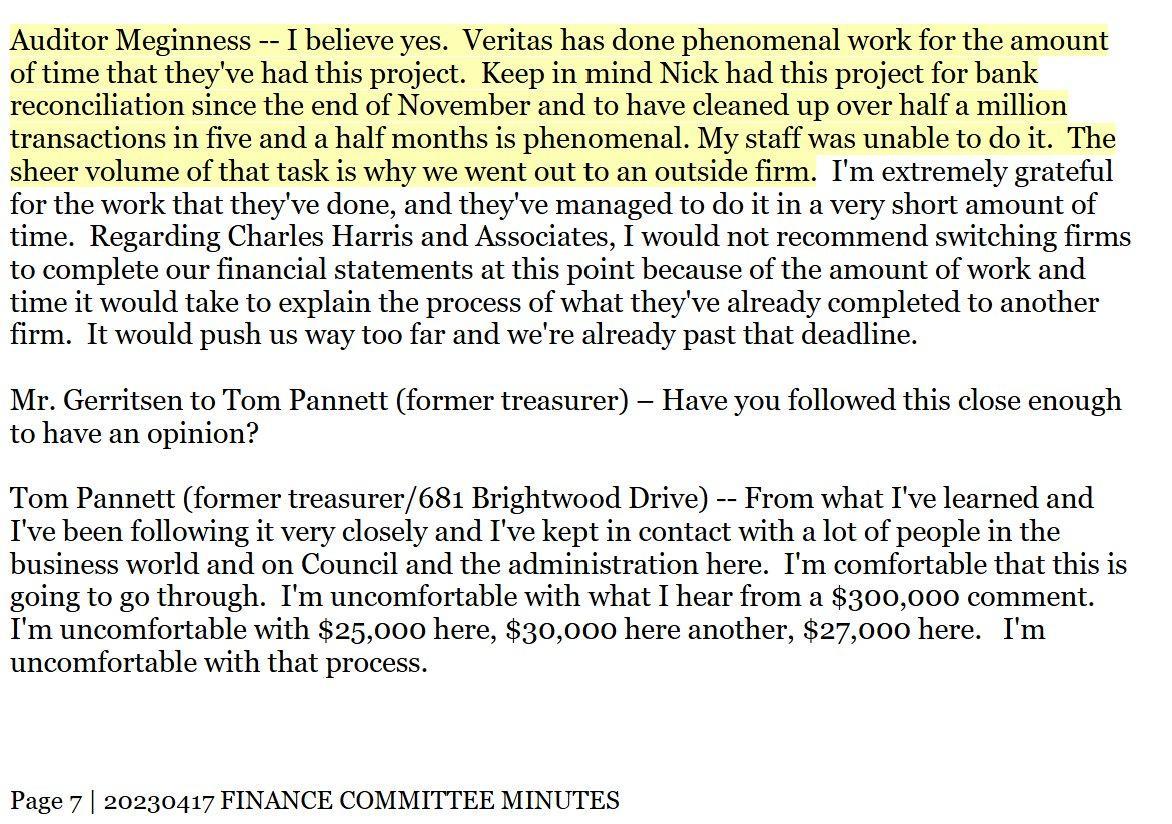
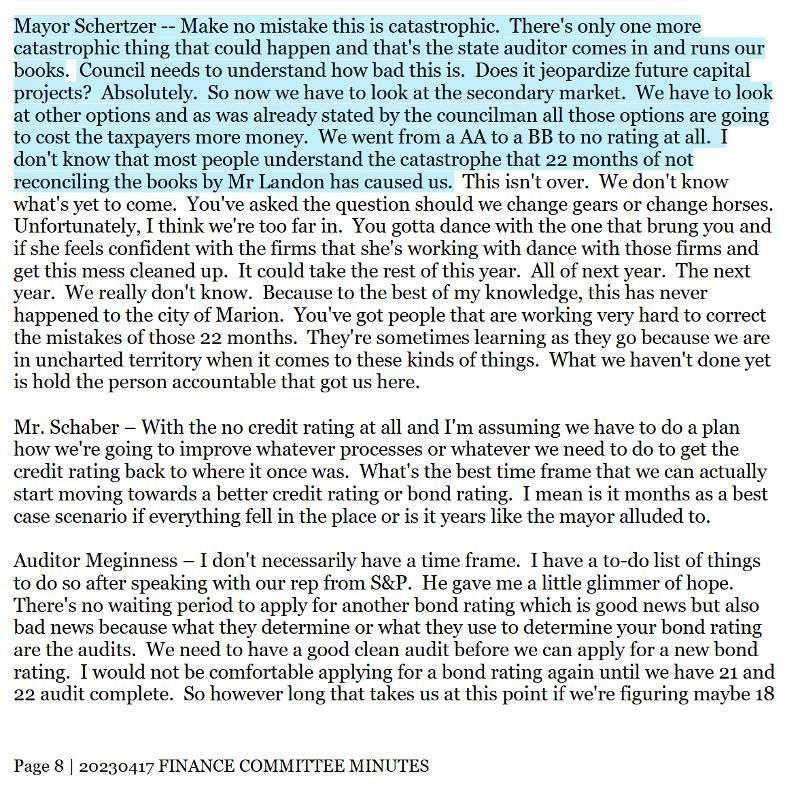
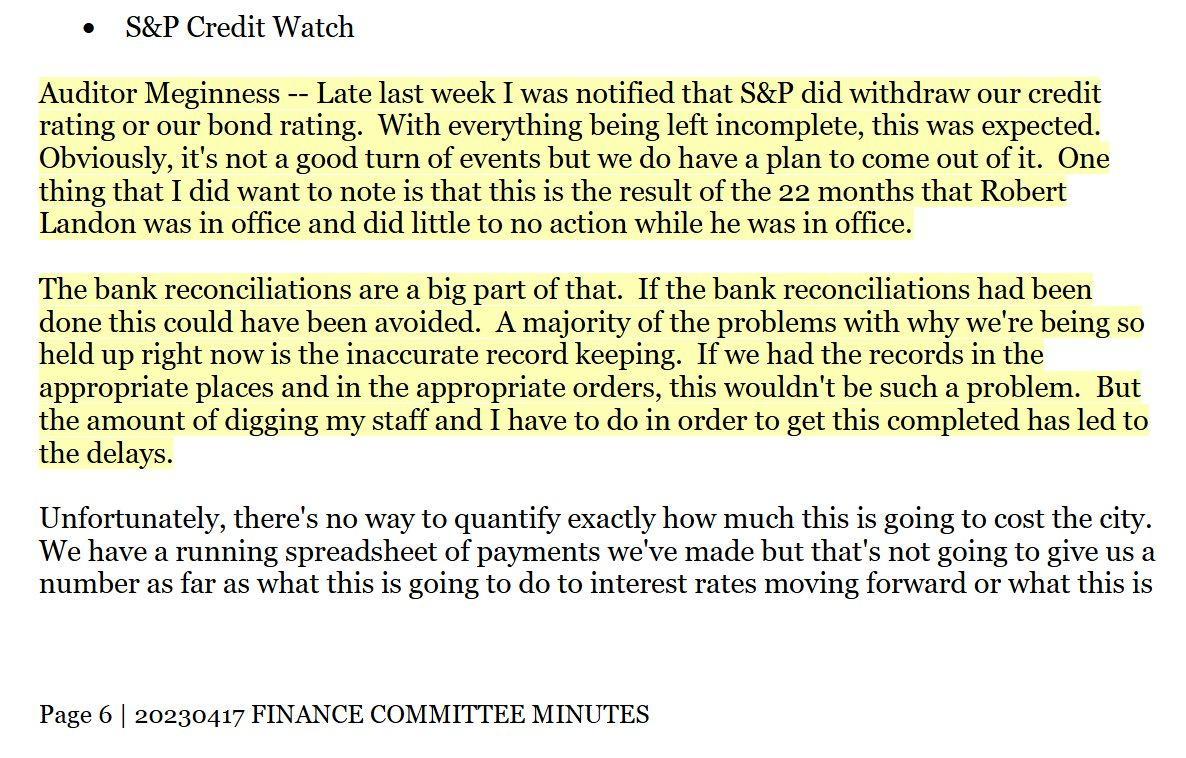
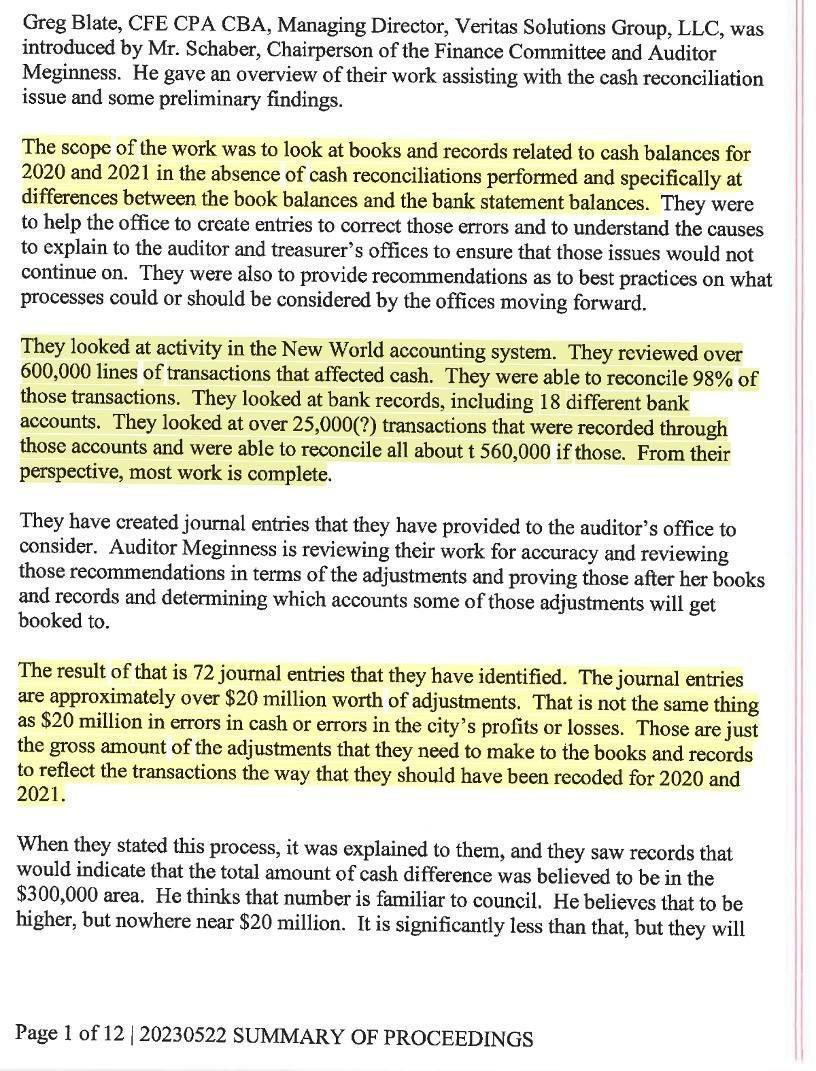
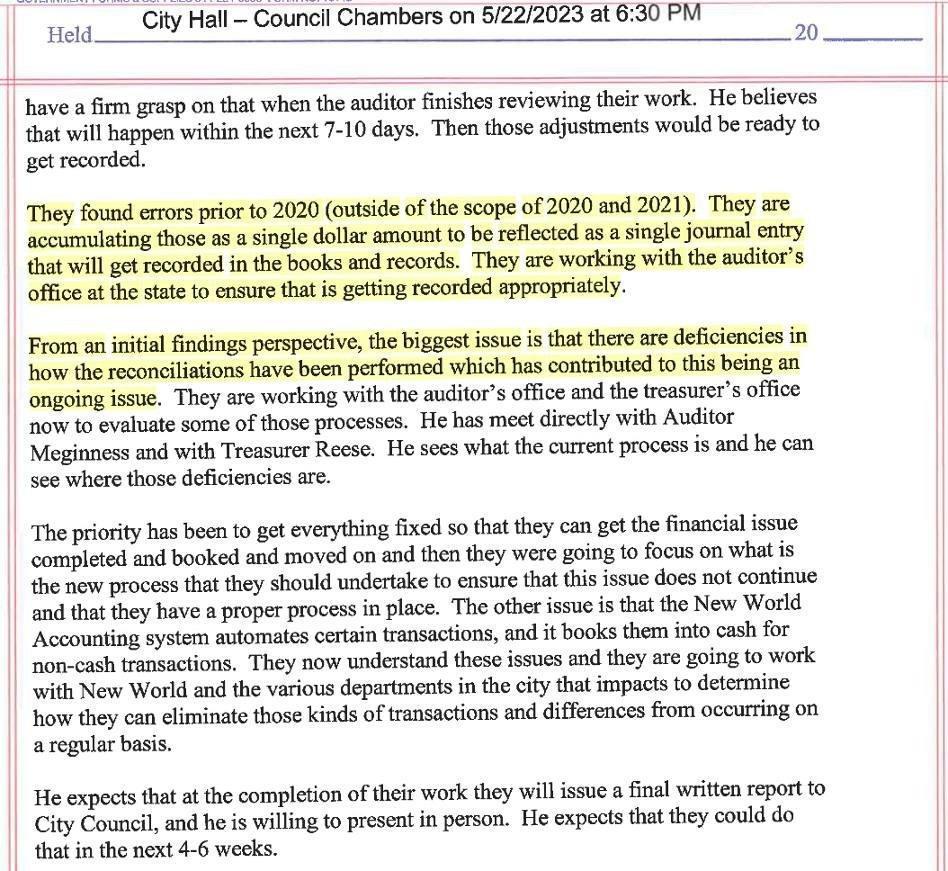
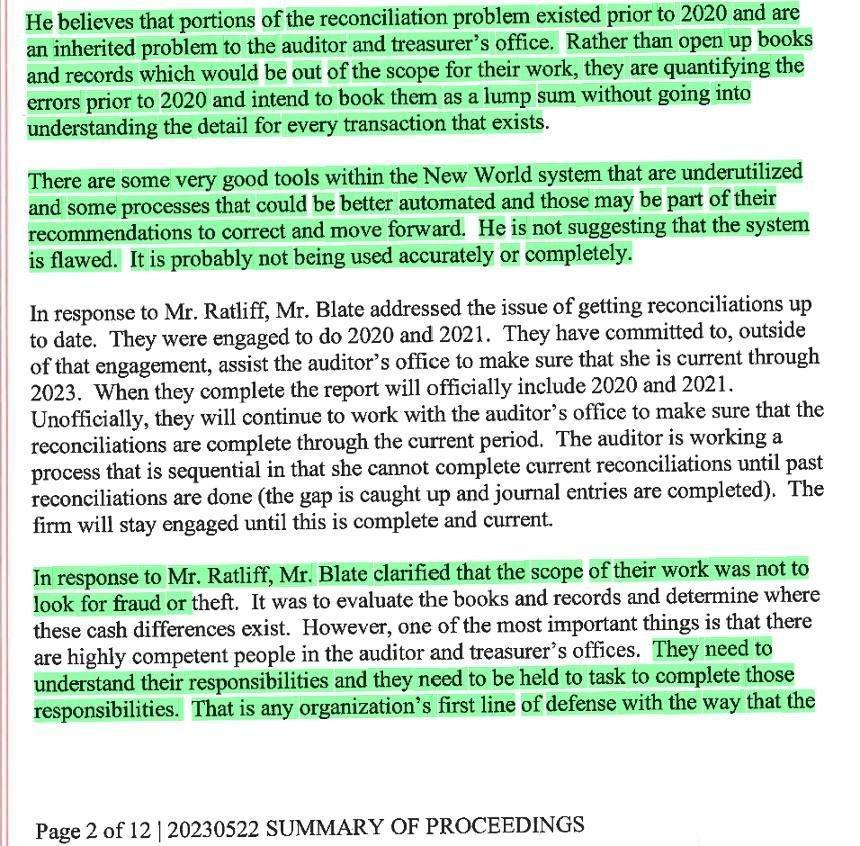
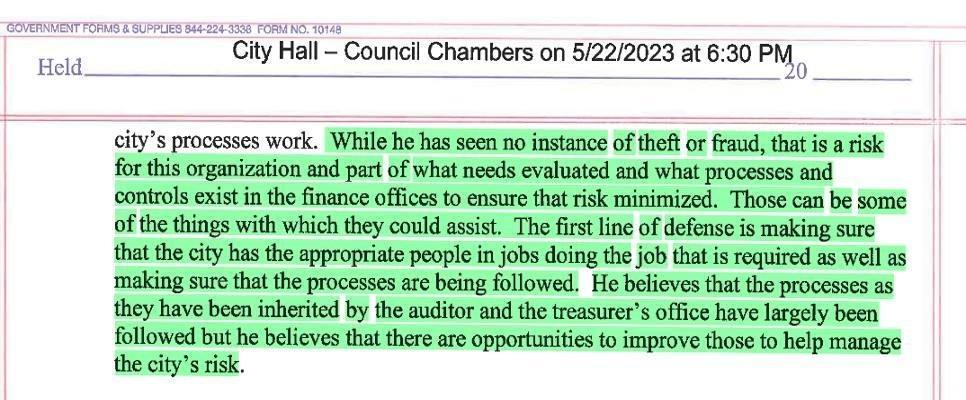
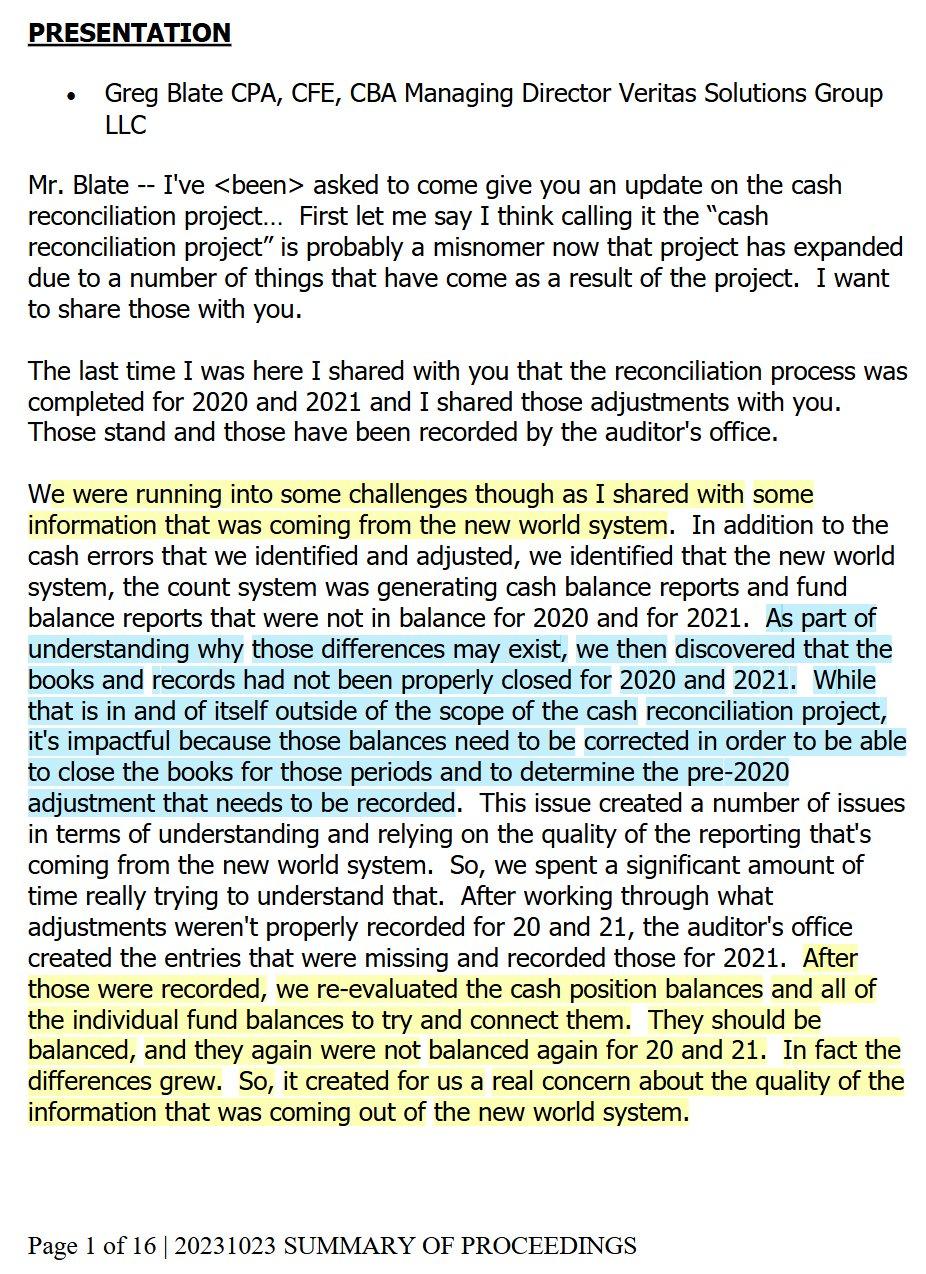
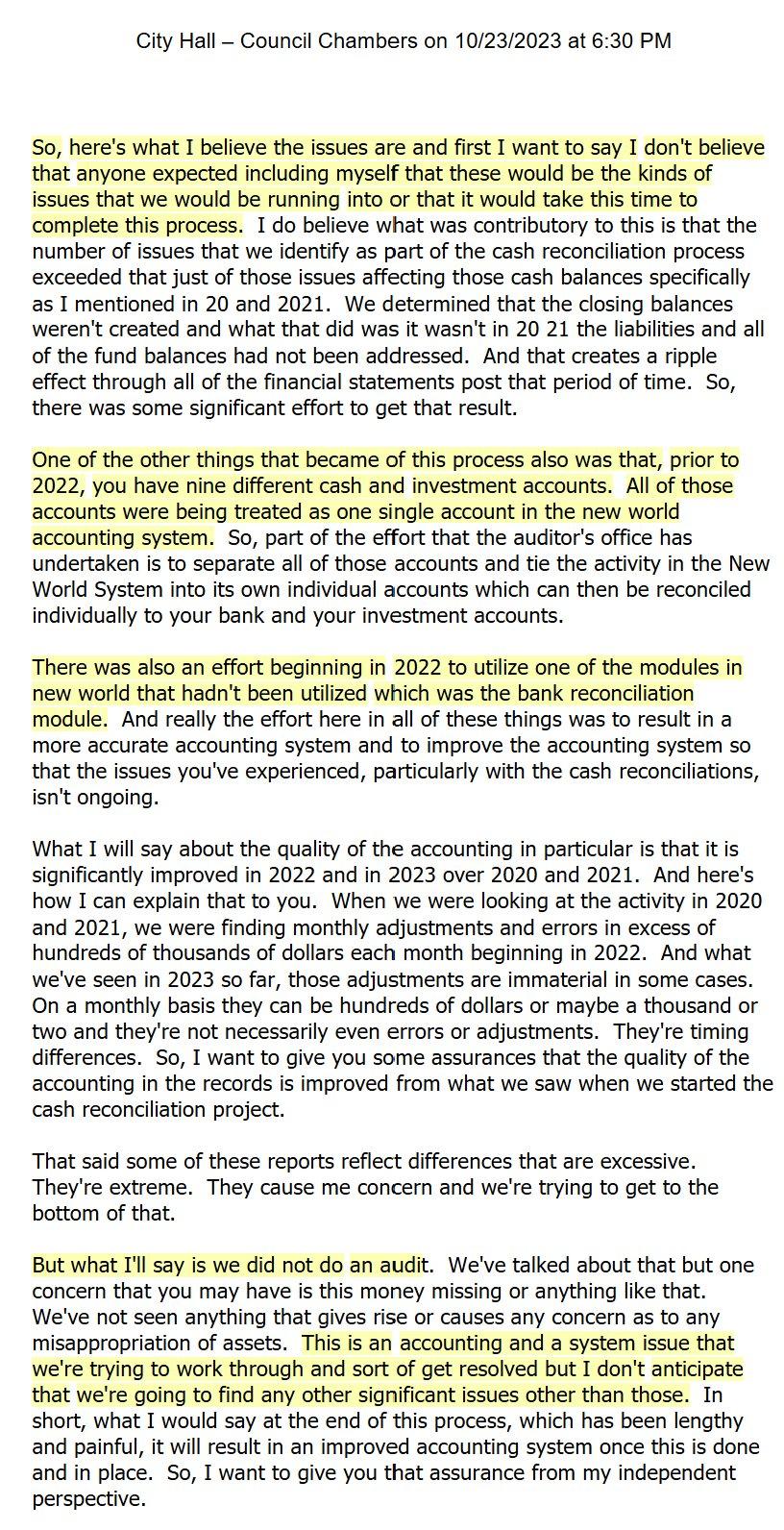
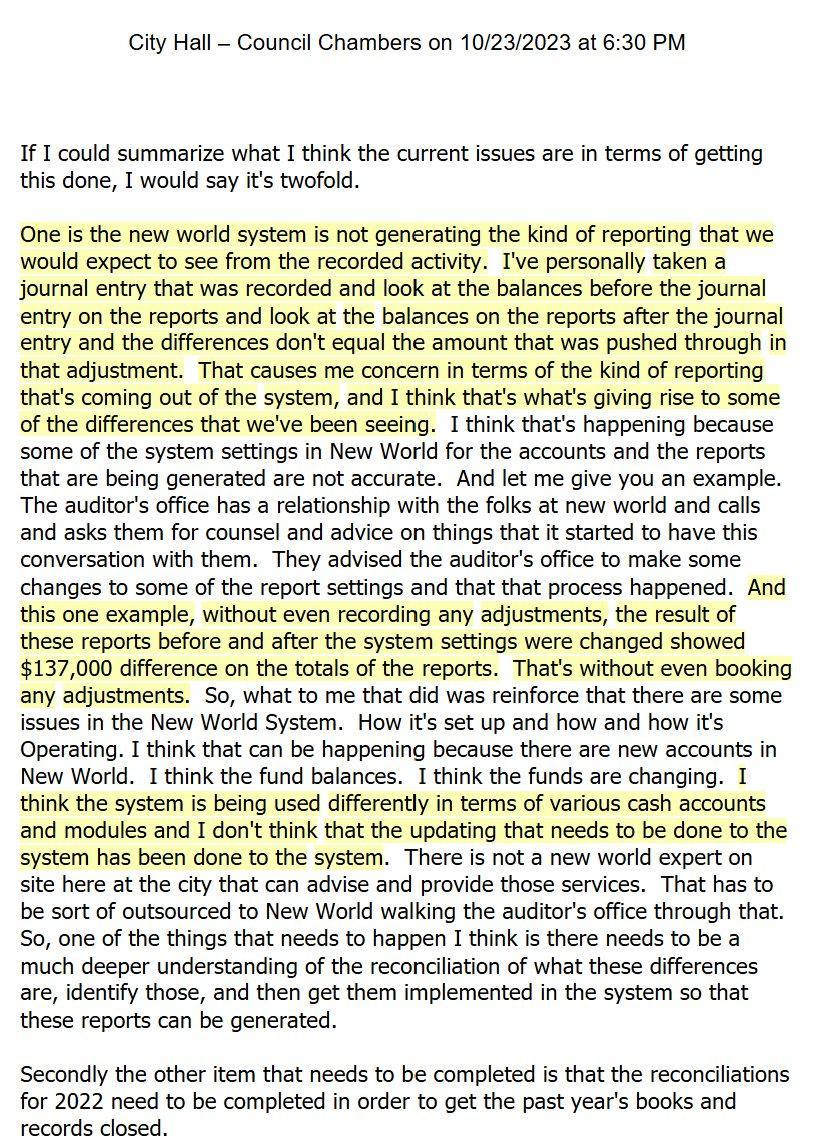
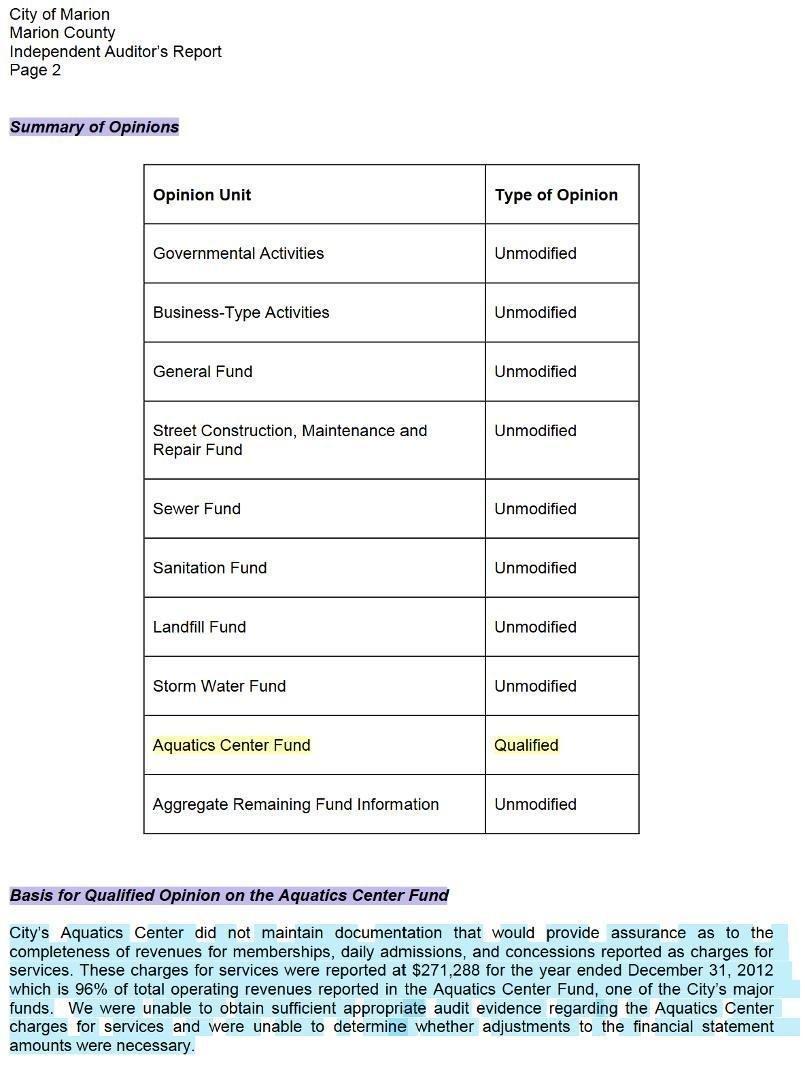
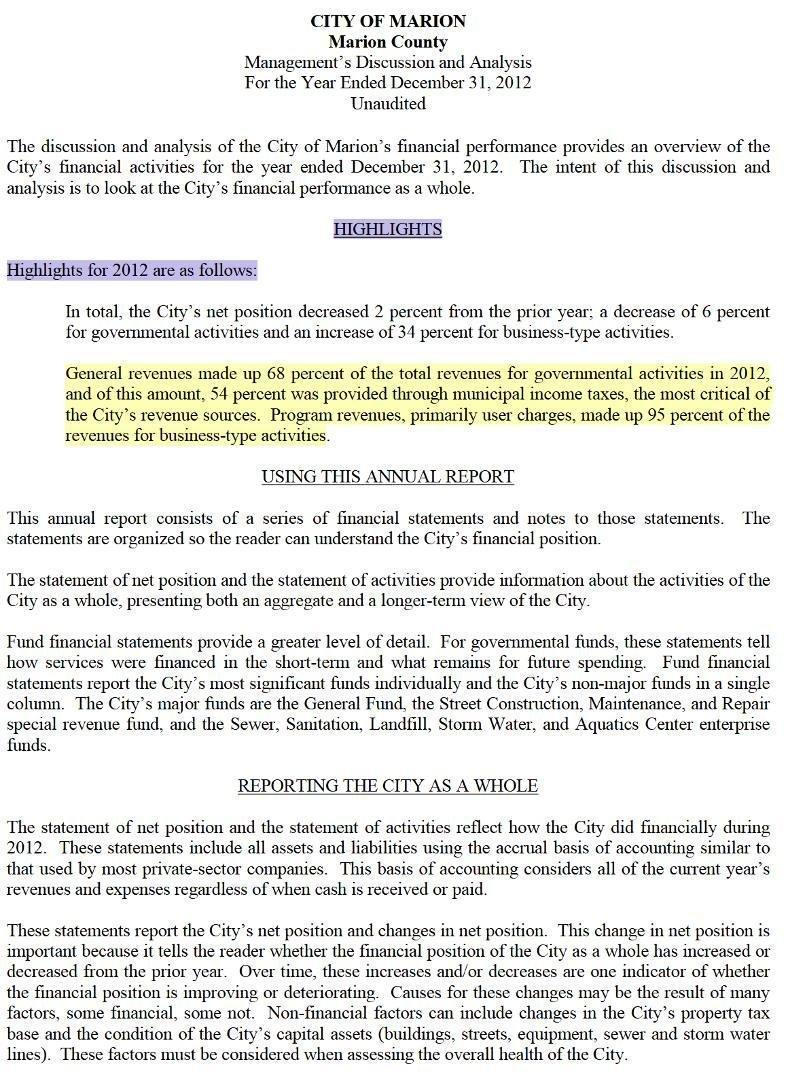
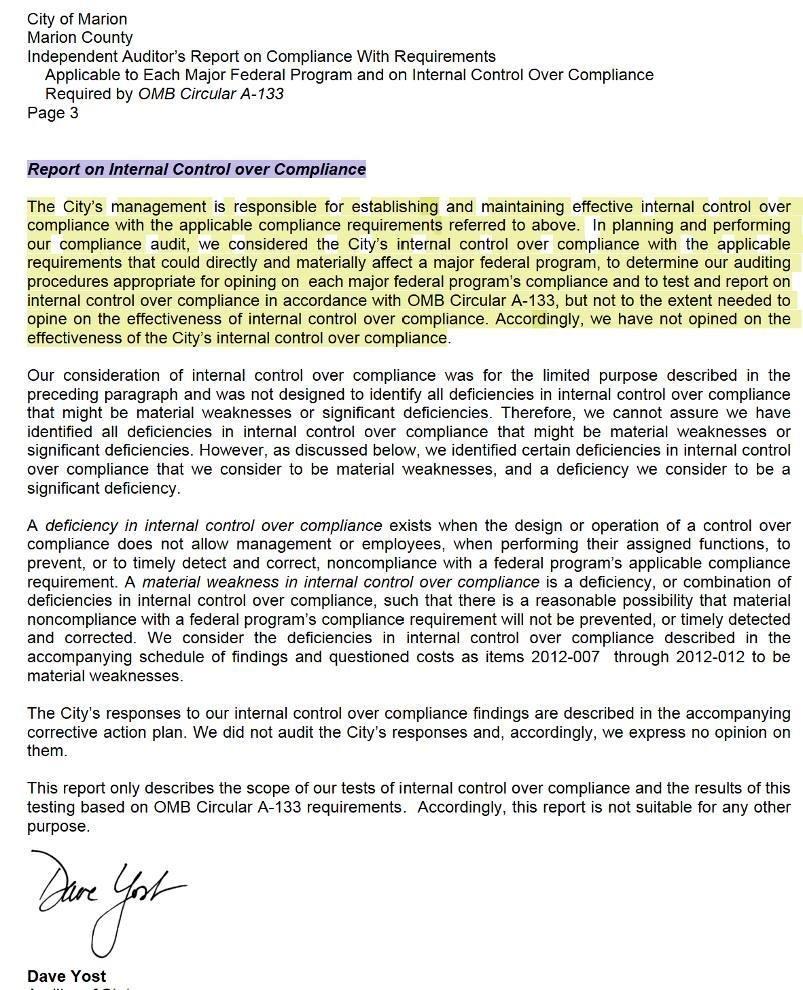
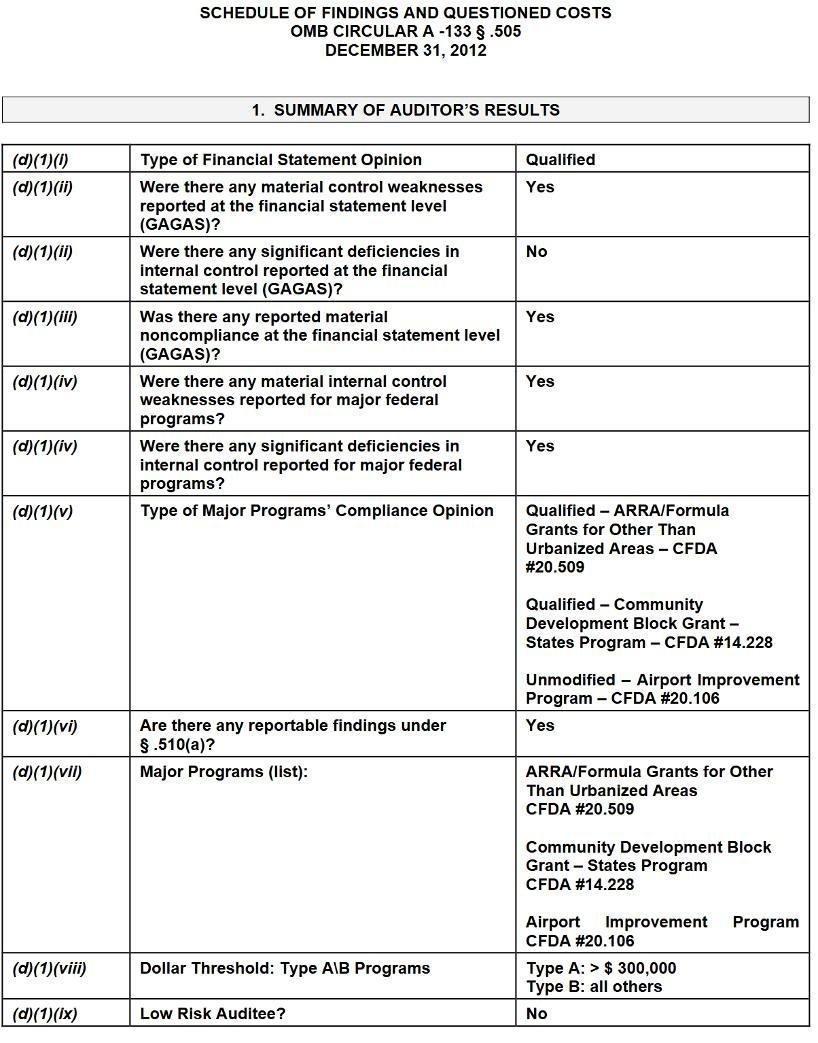
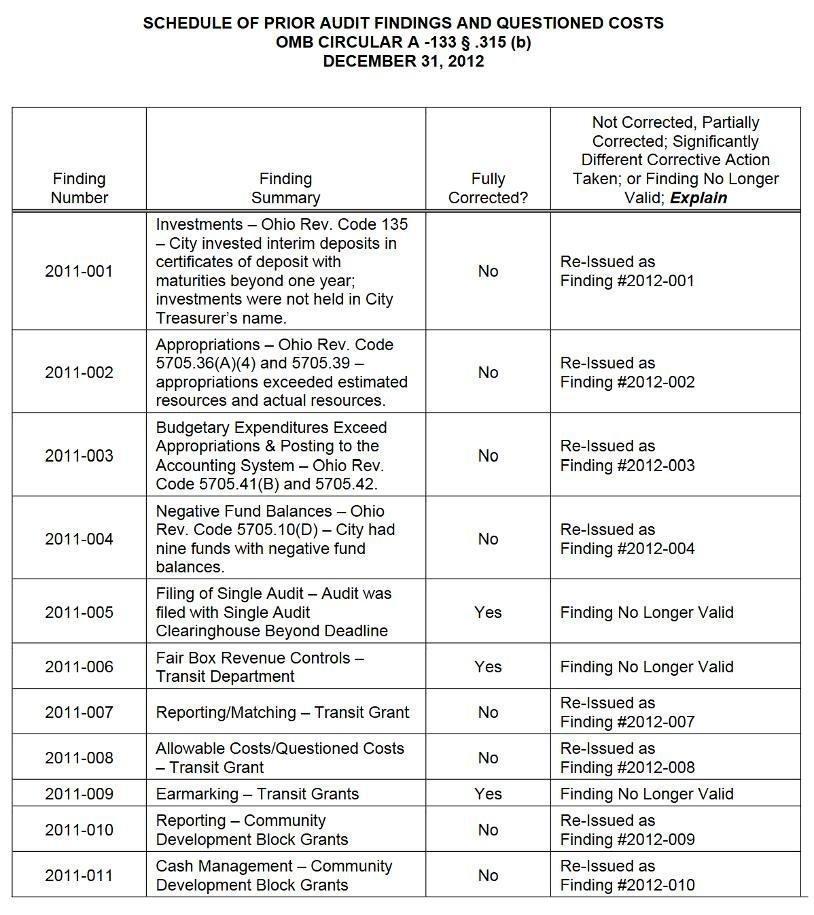
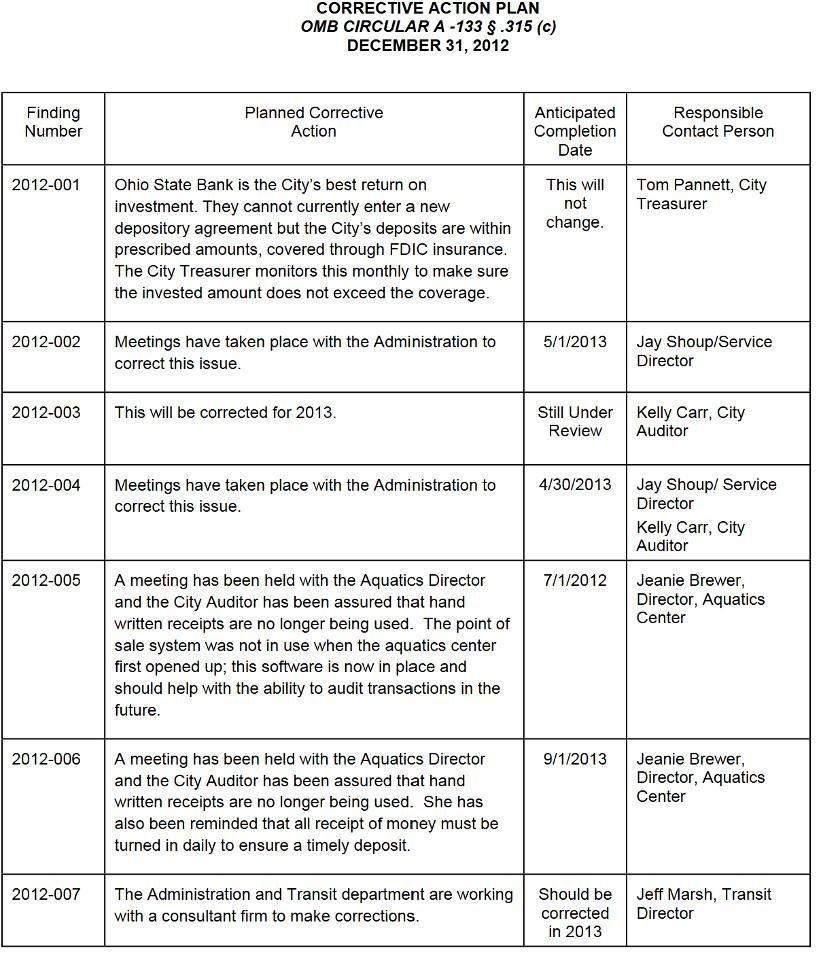
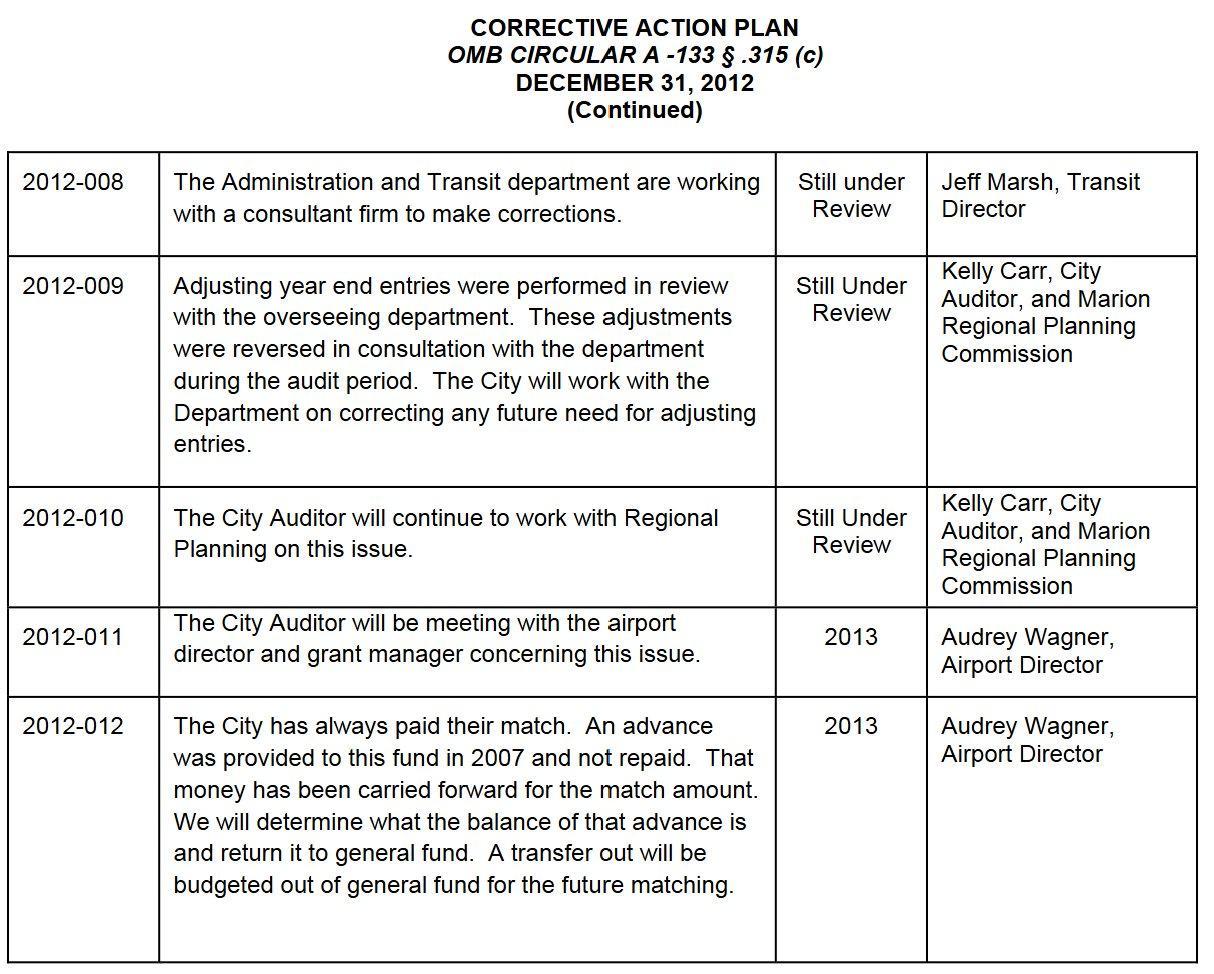
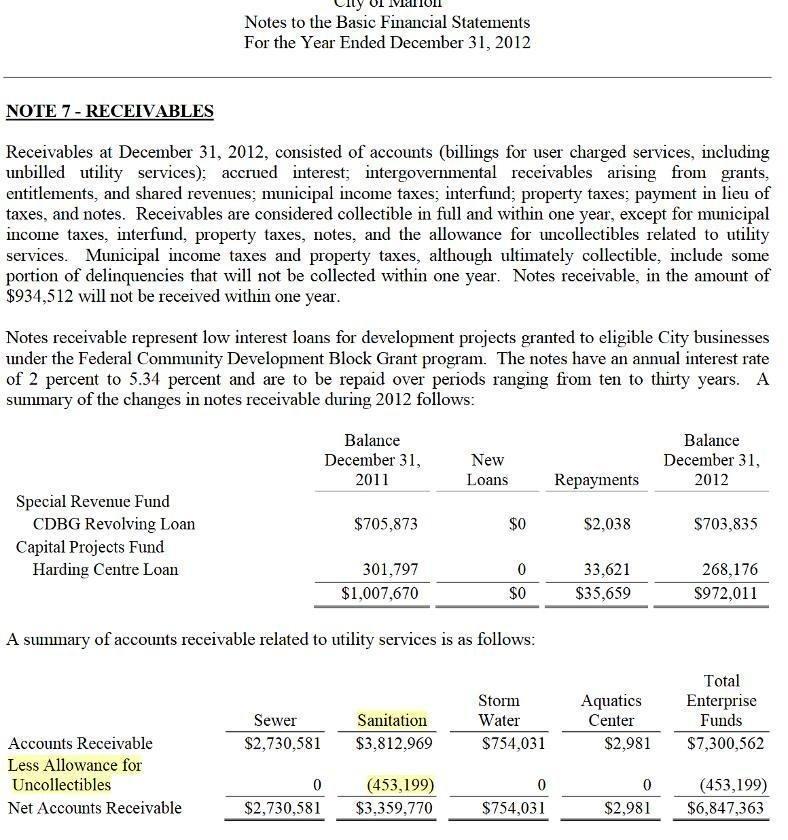
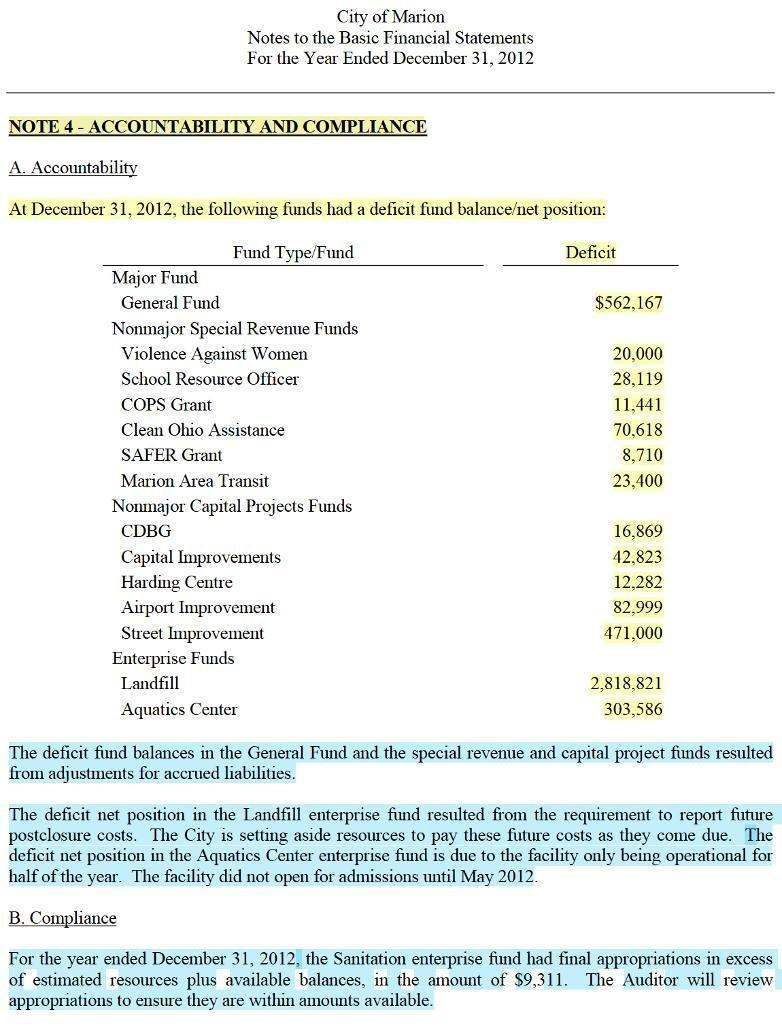
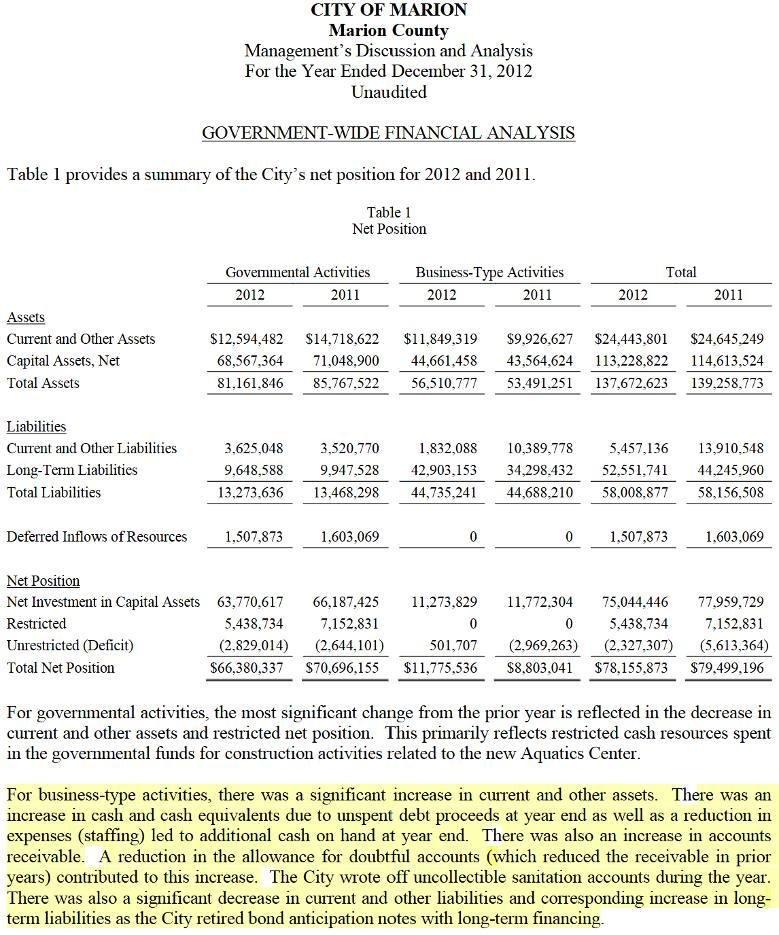
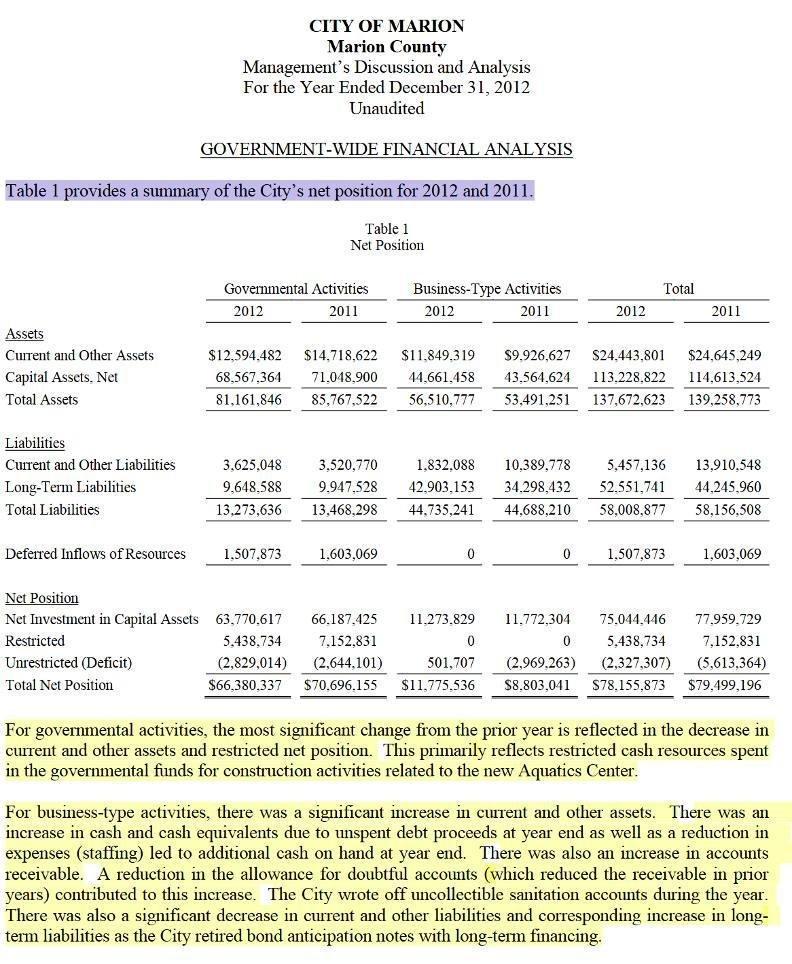
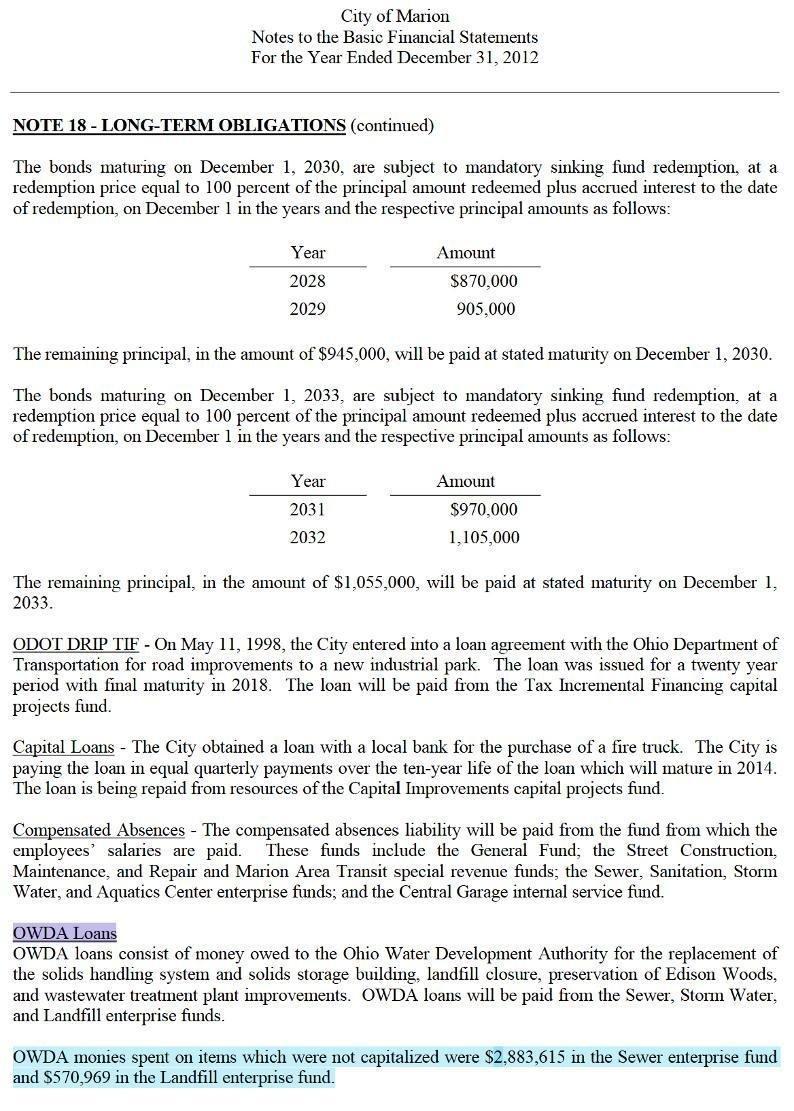
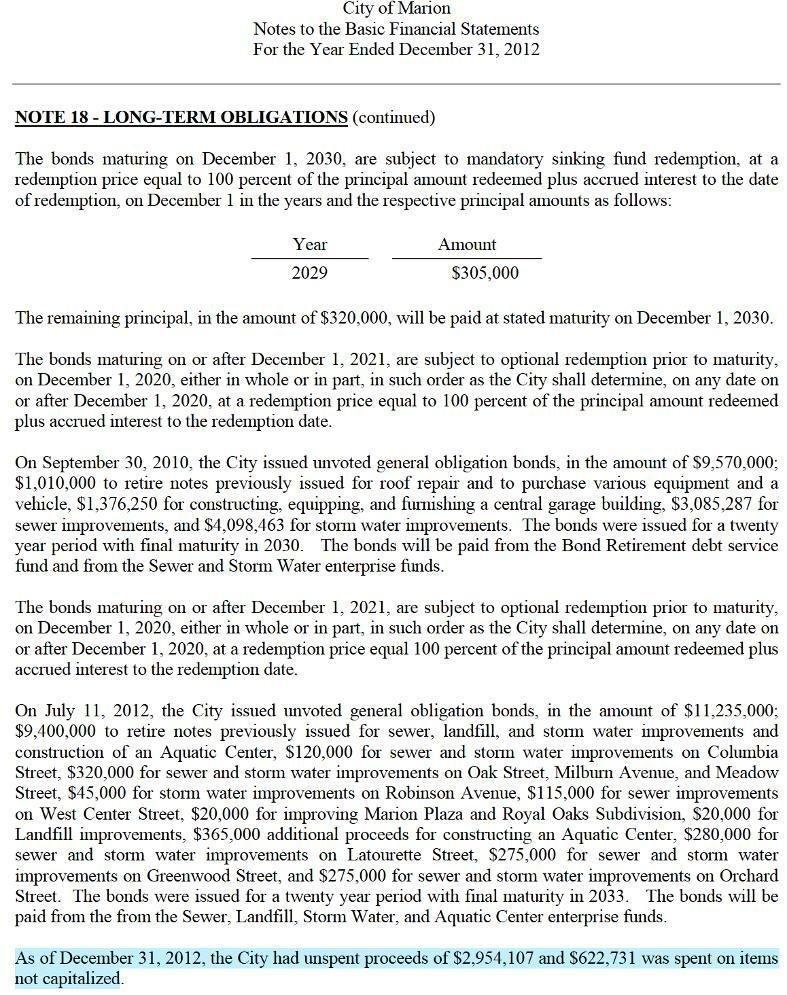
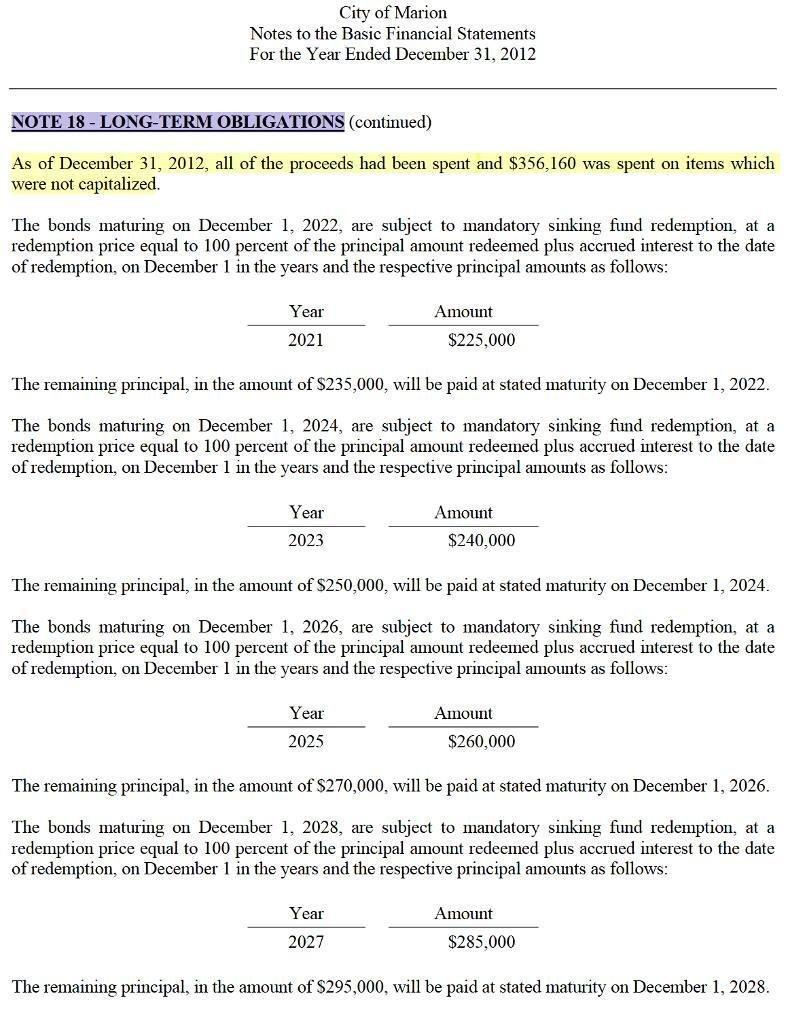
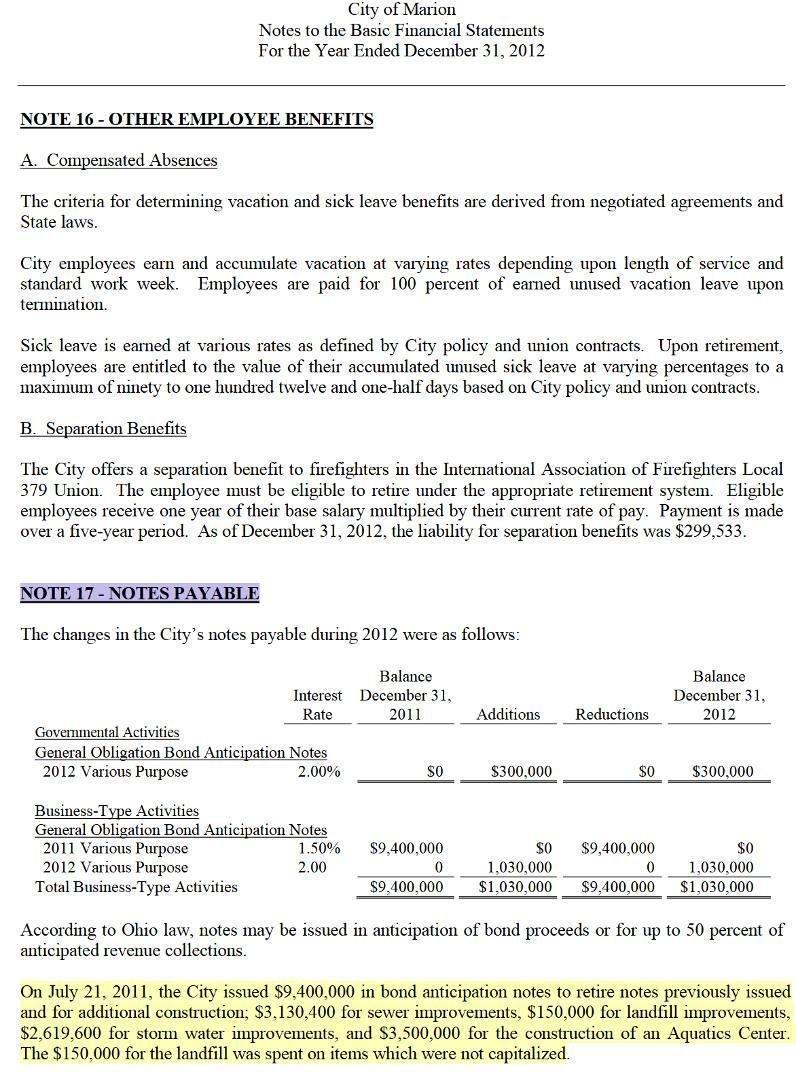
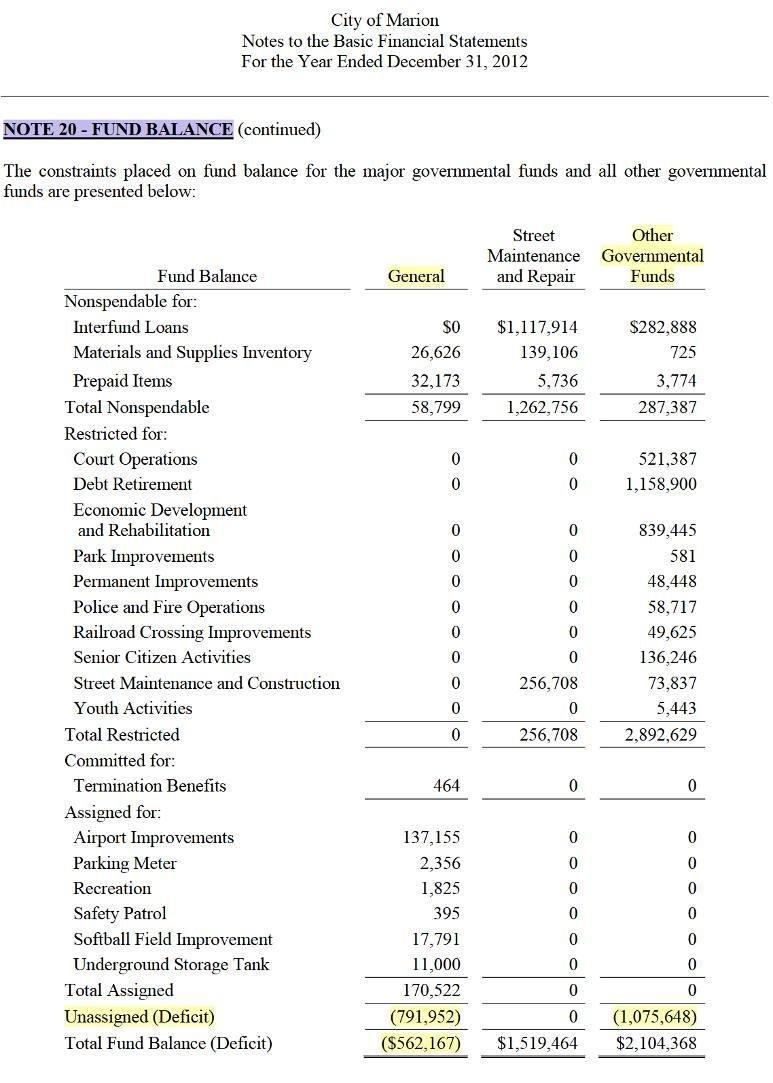
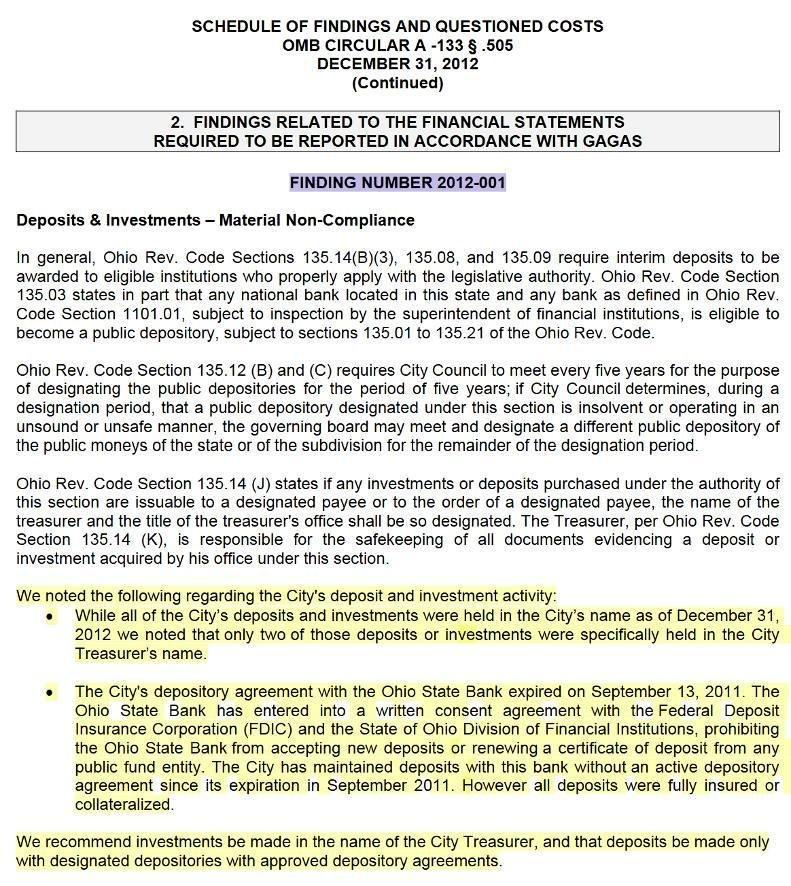
ILLEGAL SPENDING OVER APPROPRIATIONS
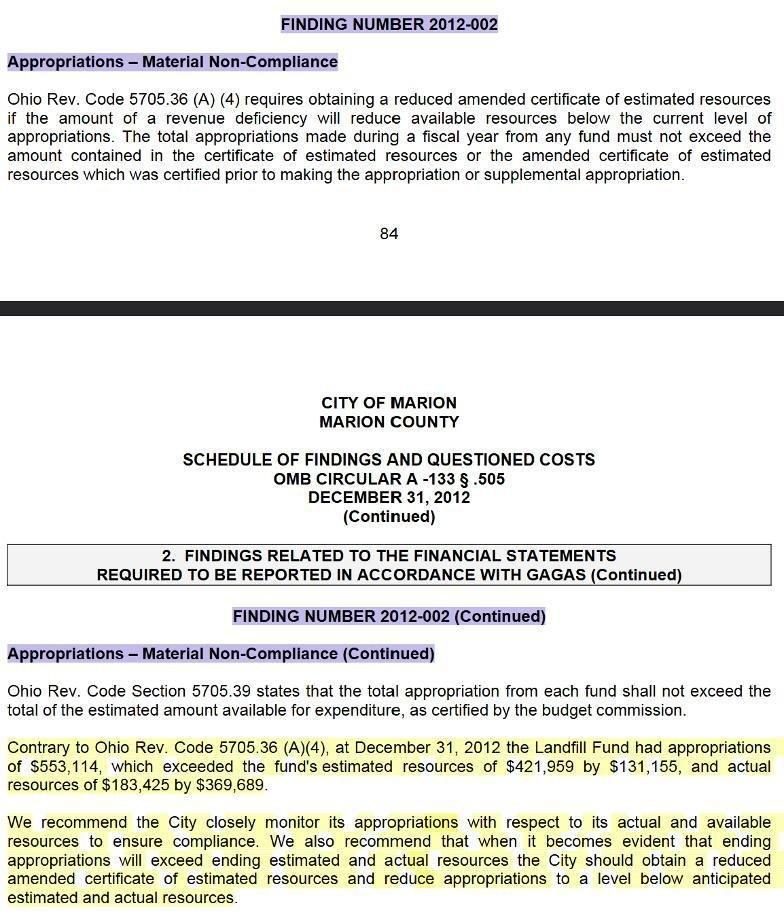
ILLEGAL SPENDING OVER APPROPRIATIONS
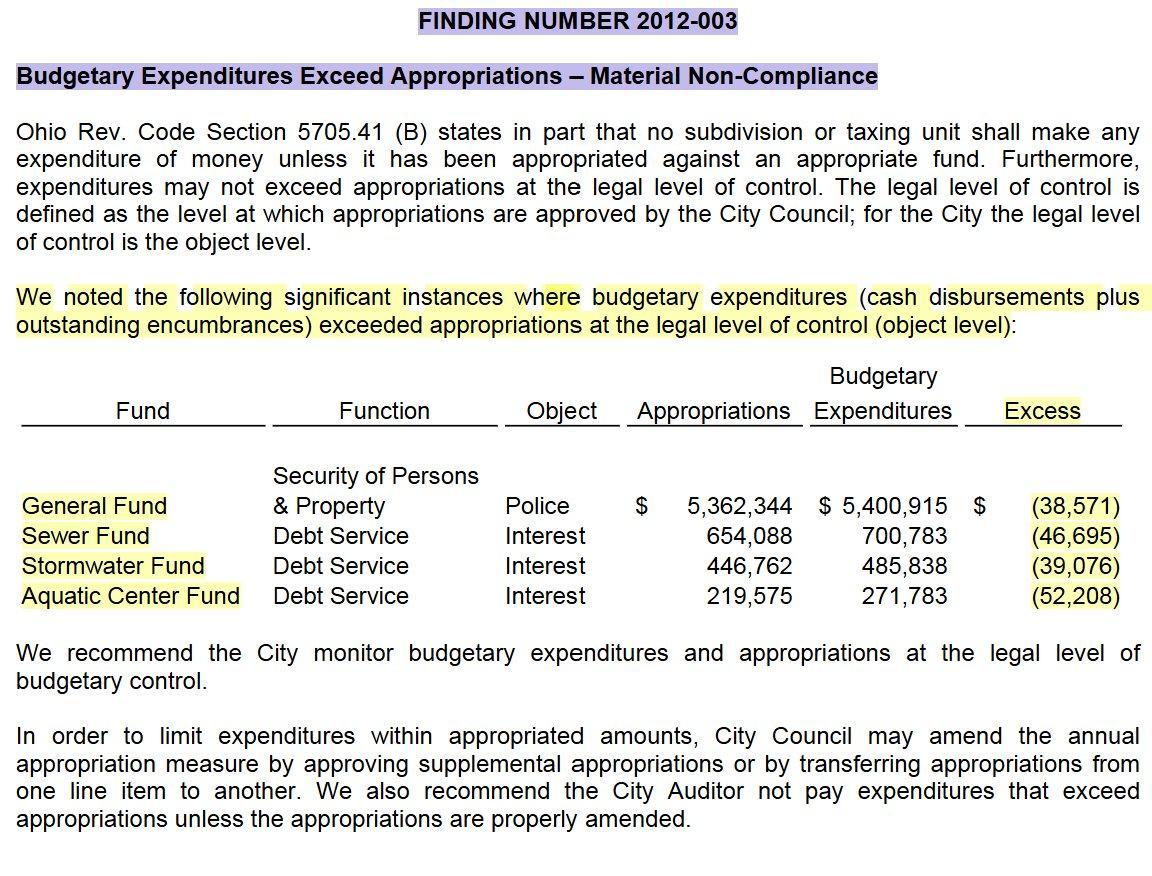
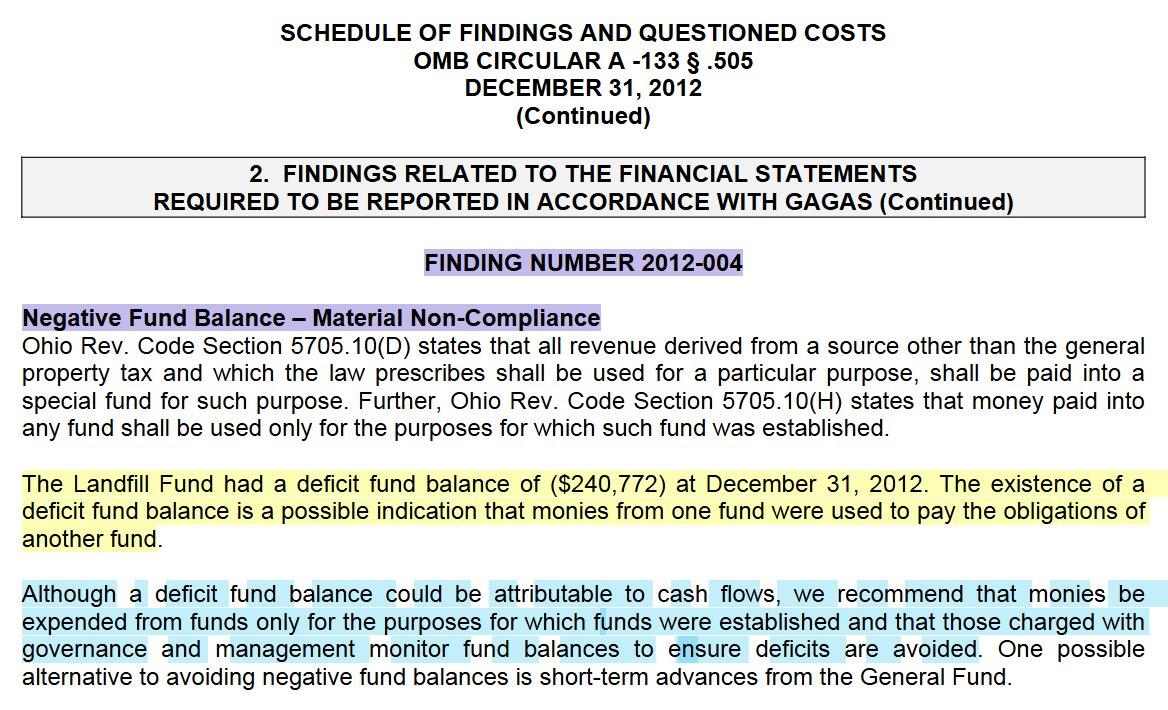
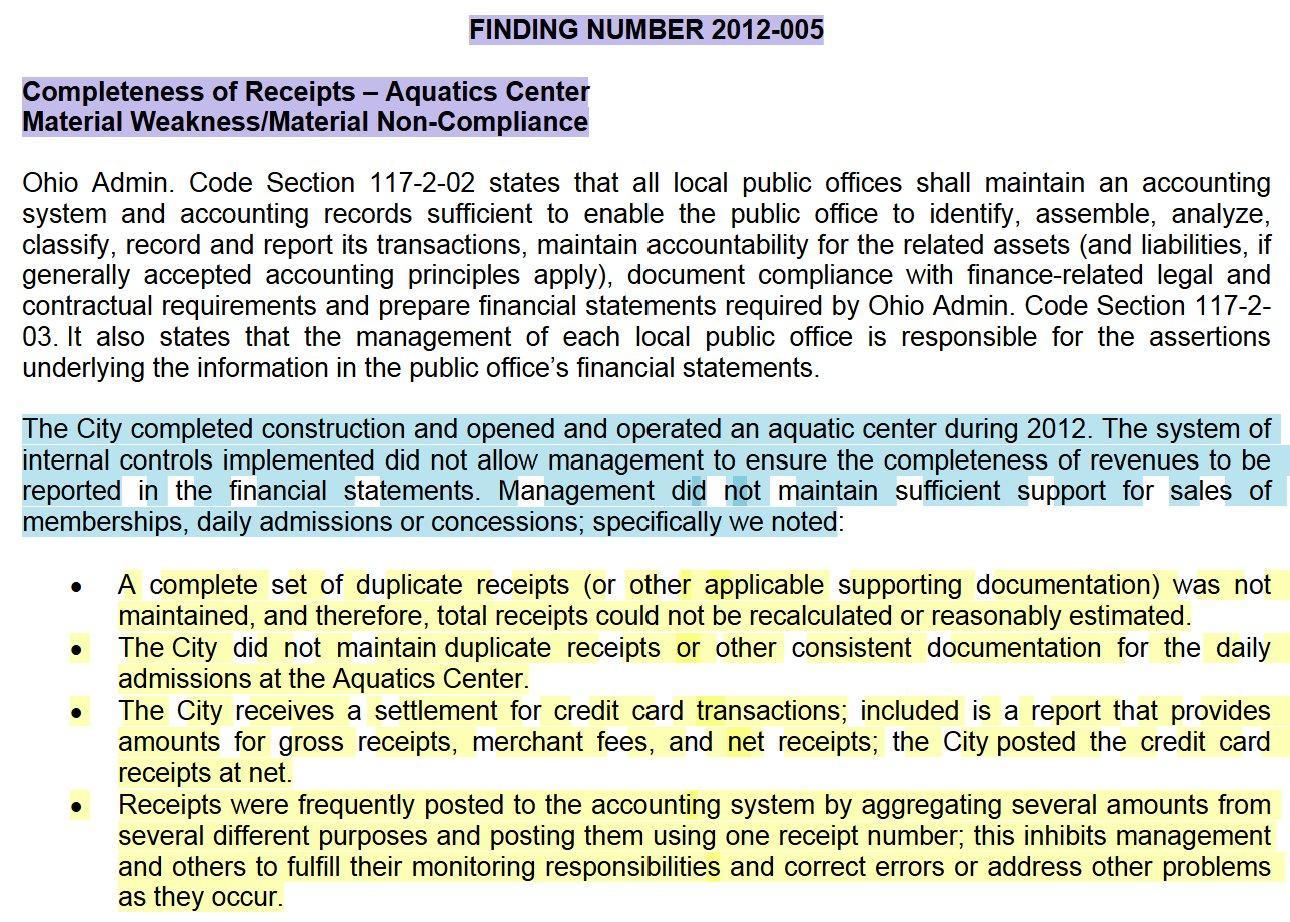
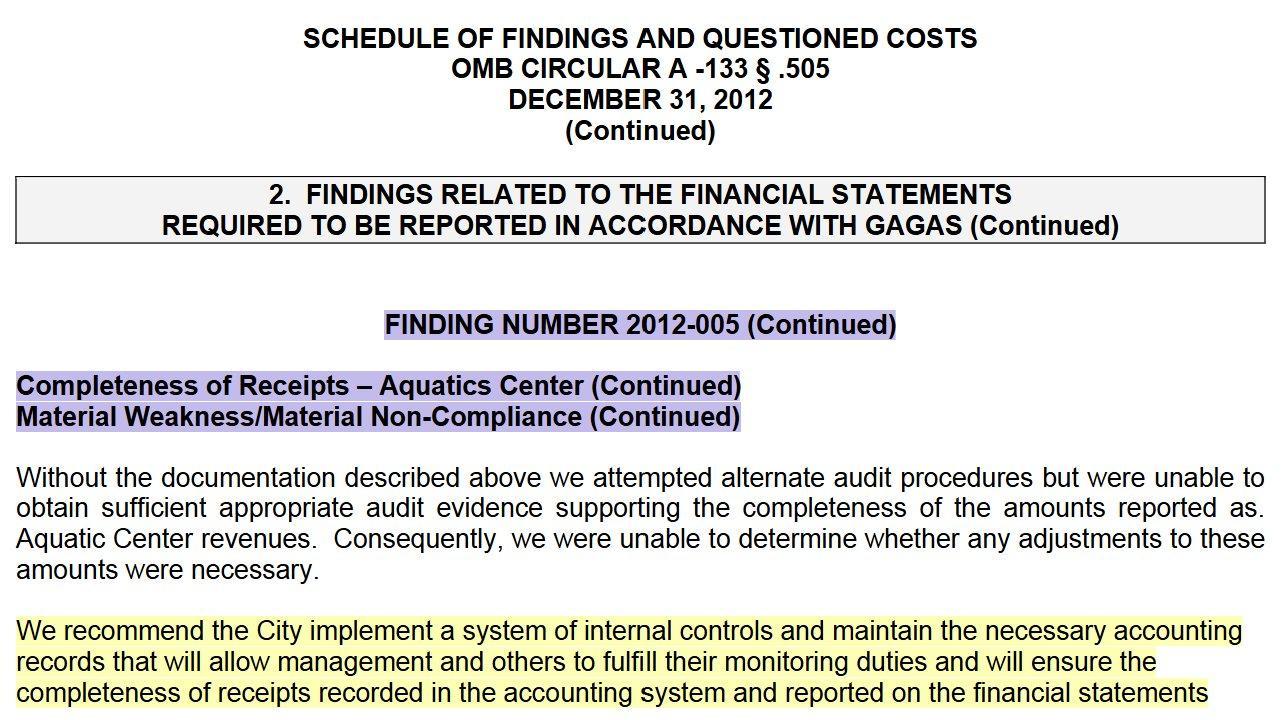
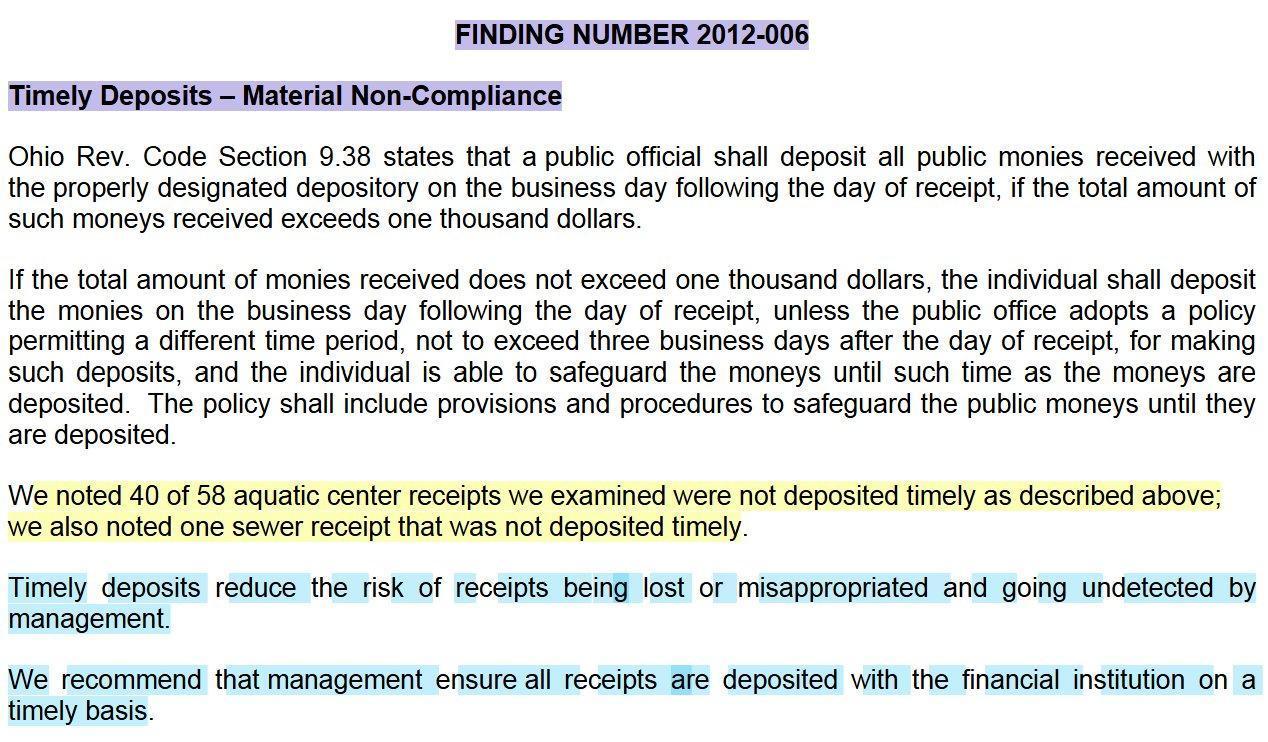
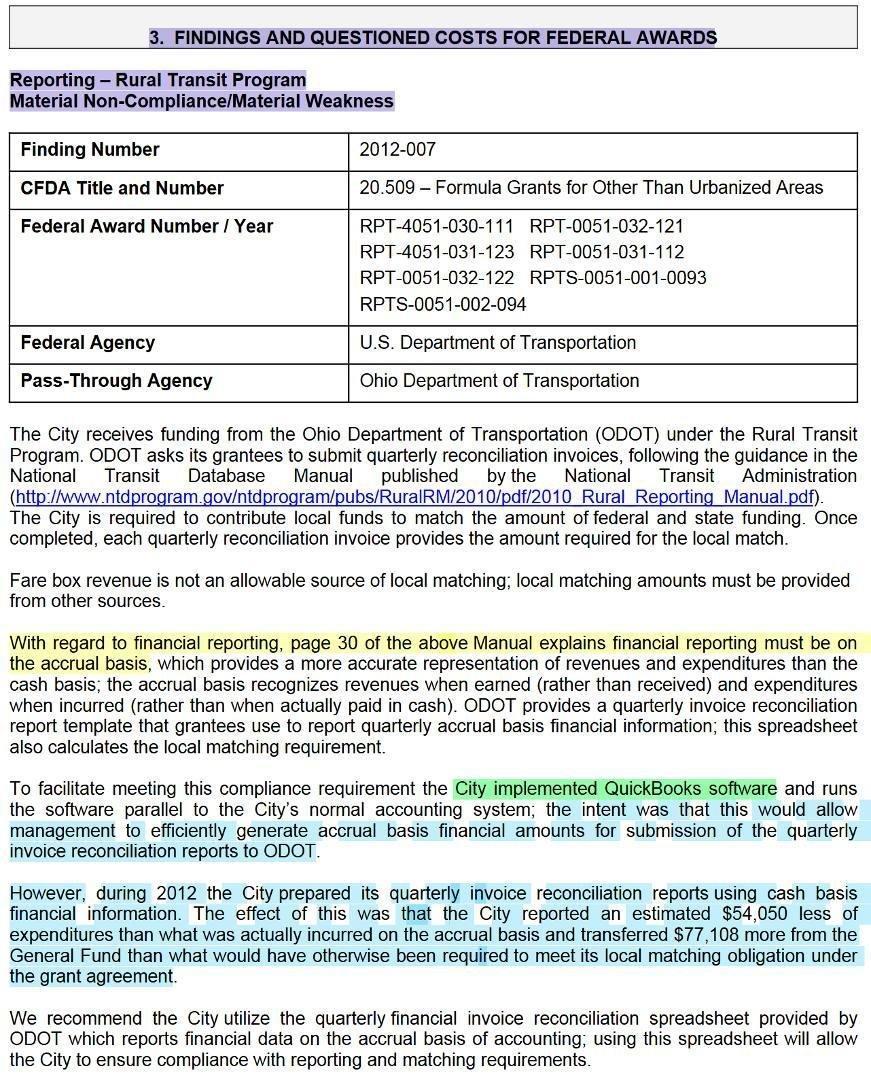
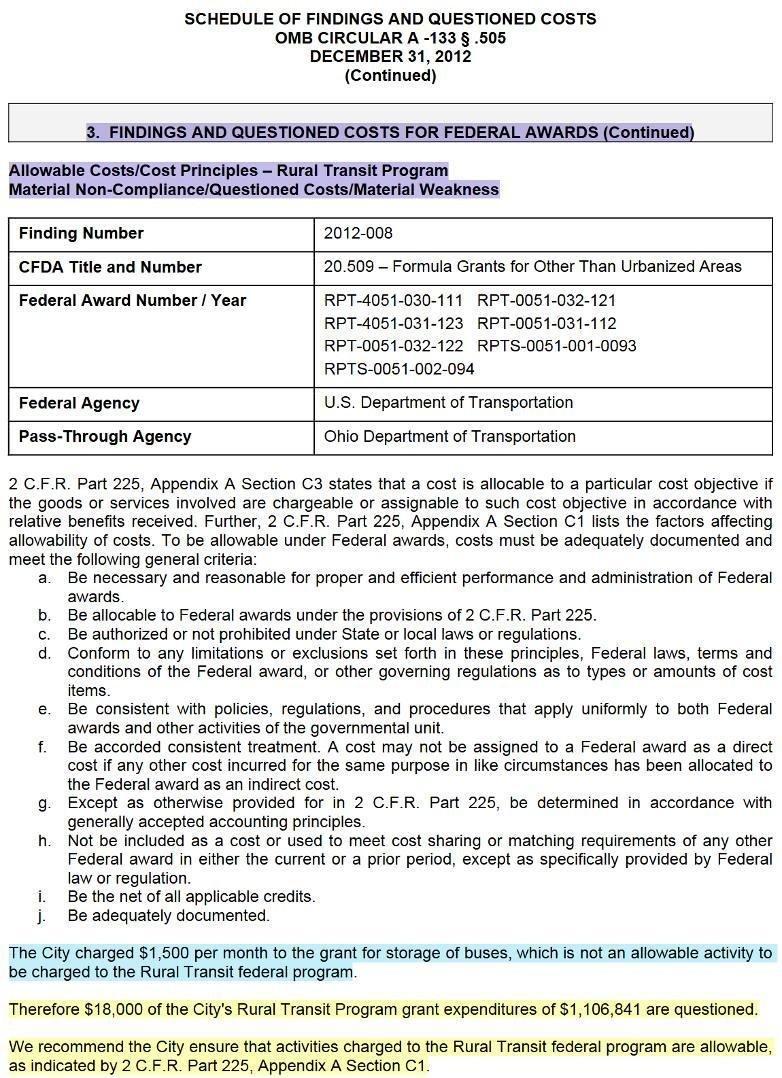
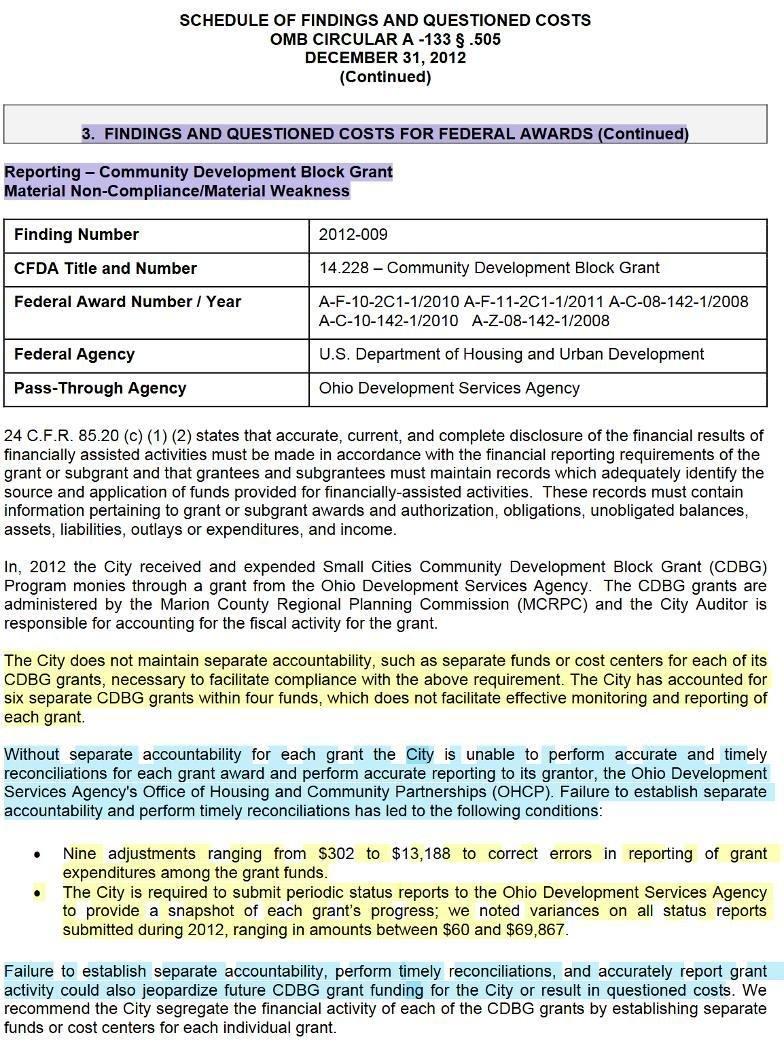
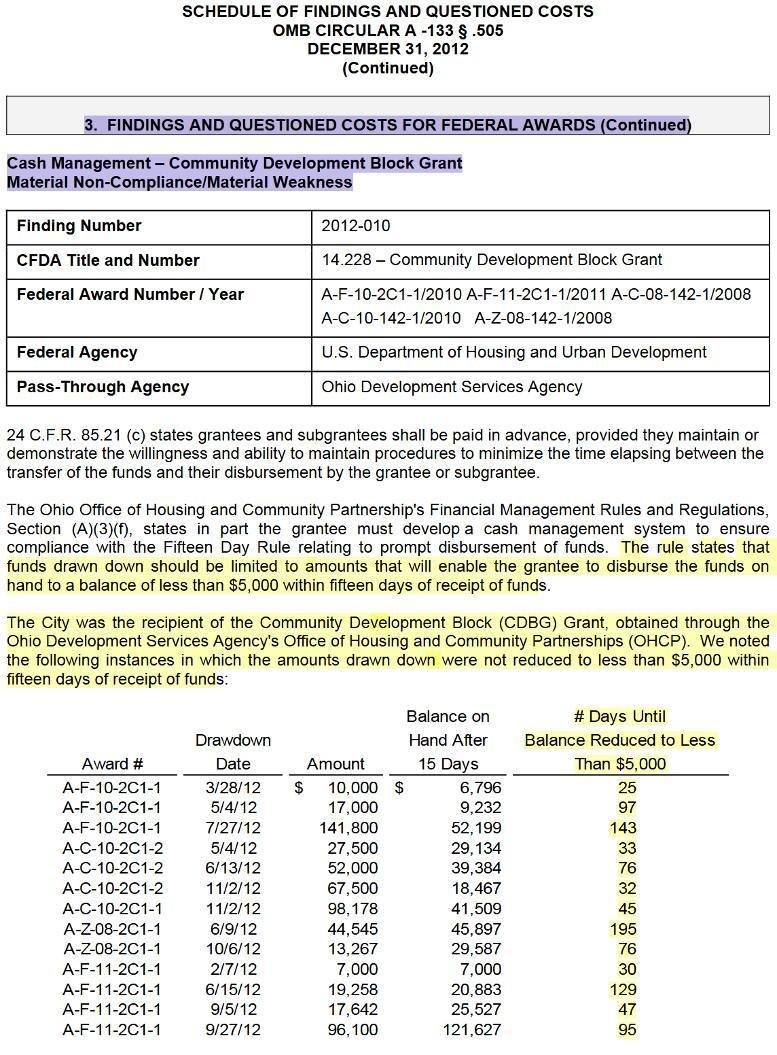
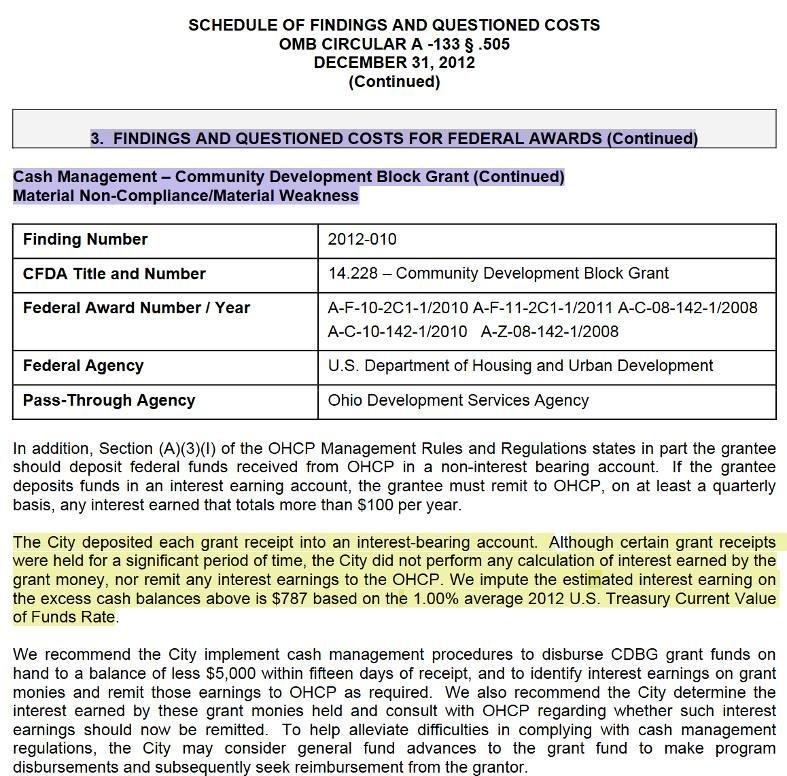
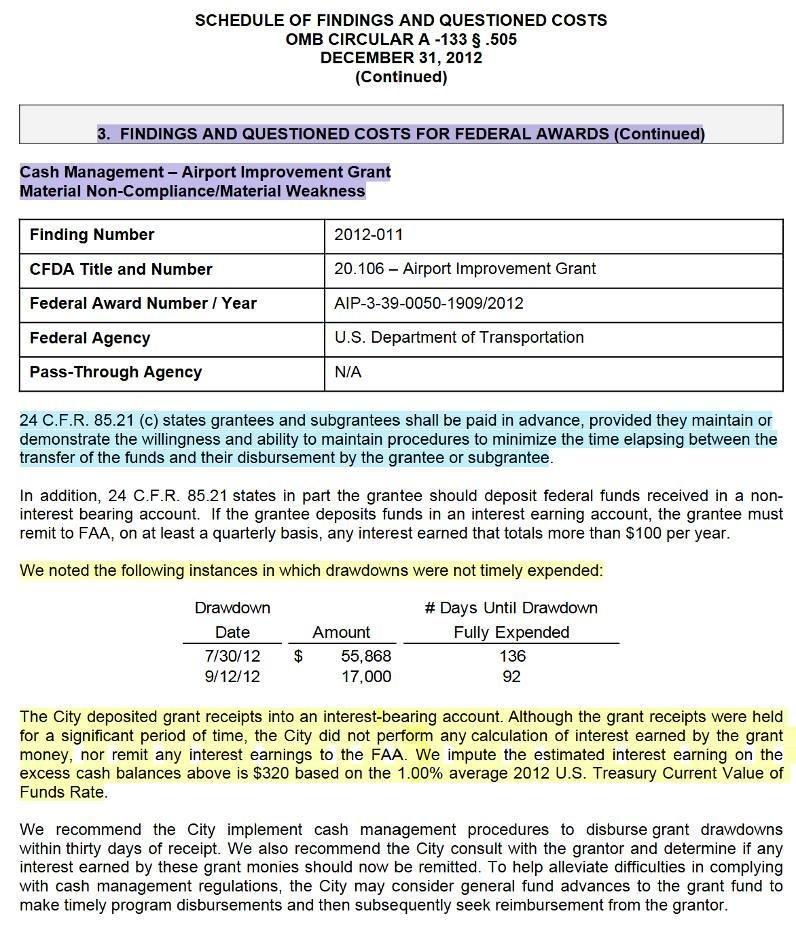
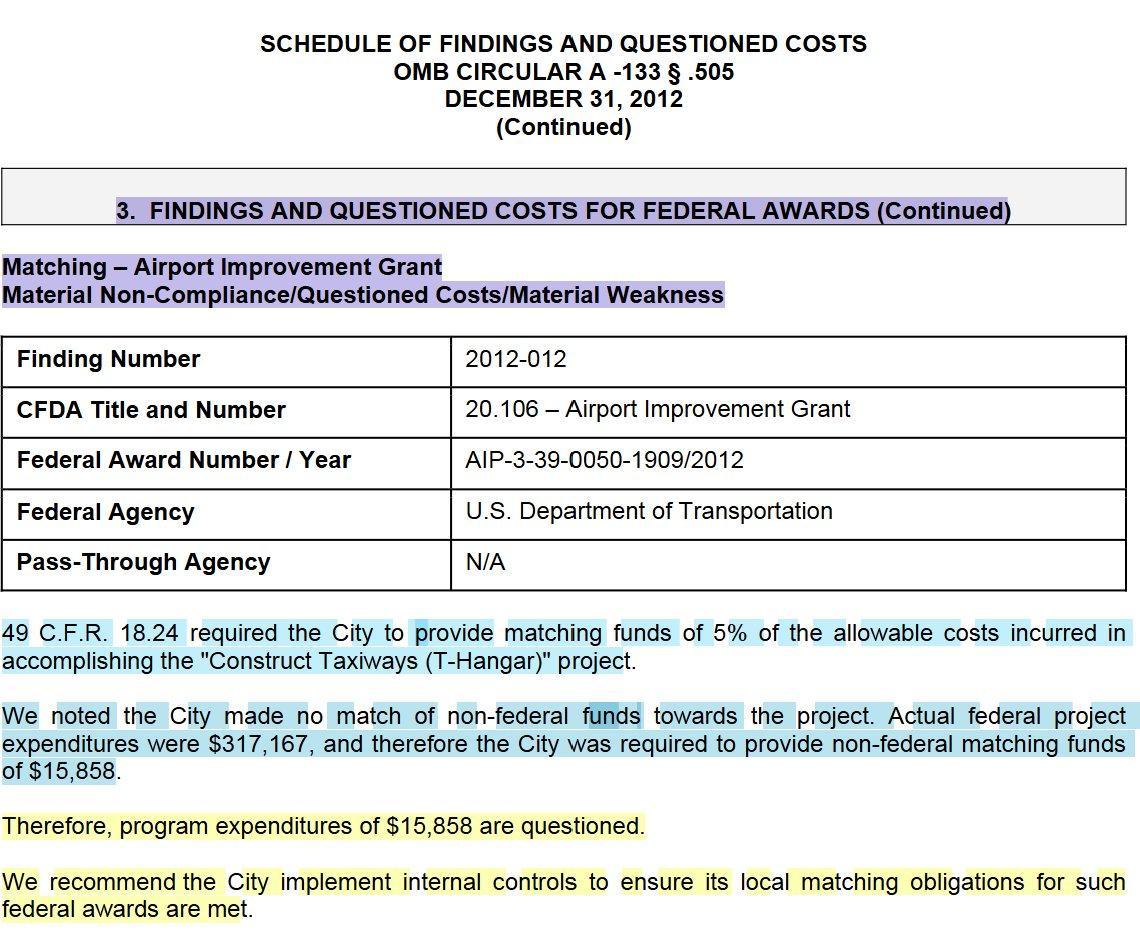
ANATOMY OF MARION’S FINANCIAL COLLAPSE 2013: HOW TO HIDE A COMPROMISED SYSTEM IN PLAIN SIGHT – RAPID-RELEASE IT BLUEPRINT OF SILENT SABOTAGE
When you spend decades building, managing, and securing enterprise IT environments, you know exactly what a compromised system looks like, and can diagnose it simply by the symptoms—even when it is dressed up in an award-winning format.
The year 2013 marks a critical, deceptive pivot in the history of Marion’s financial collapse.
It provides yet more evidence that Marion’s financial catastrophe has been a long time coming and did not start in 2020.
The misconfiguration of the New World ERP system is largely to blame.
Marion’s current fiscal emergency is the predictable outcome in the IT sector when undocumented manual workarounds are used, inappropriate access is granted including unimpeded administrative access, and failure to use the built-in safety controls runs rampant.
Facing mounting scrutiny over consecutive years of double-digit audit citations, illegal shadow ledgers, and massive unrecorded activity, the administration needed a new smokescreen.
Their solution was not to admit to the system being compromised or fix the broken million-dollar New World ERP software.
Instead, they changed the packaging.
For the first time in the administration’s history, Auditor Kelly Carr prepared a Comprehensive Annual Financial Report (CAFR).
In her official transmittal letter to the citizens, she proudly announced the city was submitting this “first CAFR” to the Government Finance Officers Association for a prestigious financial reporting award, boasting that the city’s finances were “stabilizing”.
It was a masterful exercise in impression management.
Here is a more concise breakdown to our already released overview and full Silent Sabotage series publications.
The overview series is full of never before released treasures we have been holding onto.
The full overview series links are at the bottom of each post.
By wrapping a dying digital infrastructure in a glossy, award-seeking document, the administration created the ultimate illusion of perfection.
But as IT professionals know, a shiny new reporting format does not fix a fundamentally broken, misconfigured system.
The CAFR format wasn’t just about looking professional—it provided the perfect hiding place.
Its dense, hundreds-of-pages structure allowed the administration to start burying the evidence of systemic IT breakdowns, massive deficits, and illegal GL overrides deep within the footnotes (specifically Note 4) rather than exposing them as glaring failures on the front page.
Behind the CAFR’s professional formatting, the New World ERP system remained completely compromised.
The automated Bank Reconciliation module was still abandoned.
Budgetary hard stops were still disabled or drastically misconfigured.
And the manual workaround culture—the undocumented “tribal knowledge” that would eventually trigger the 2020 collapse—was thriving.
Here is the forensic reality of what was actually happening behind the pages of the 2013 CAFR:
THE DATA-ERASURE ERA: THE $305,600 BAD DEBT PURGE
In 2009, the administration weaponized the 2007-2008 “Ghost Theft” to justify buying the New World software, promising it would act as an impenetrable digital vault to increase controls and eliminate theft and fraud.
It did neither.
Yet, instead of locking down cash handling, they configured the software using a disastrous hybrid cash/accrual setup that artificially inflated cash balances with “ghost revenue”.
To keep this underlying insolvency hidden and avoid the political nightmare of utility rate hikes, which we are now seeing under fiscal emergency, the administration began manipulating the accounts receivable to force the ledgers to balance.
After quietly wiping out $1.19 million in uncollectible sanitation accounts in 2012, the 2013 CAFR reveals the administration did it again, executing another massive, unverified purge of $305,600 in bad debt.
This “Data-Erasure Era” along with the compromised New World ERP system provided the ideal digital camouflage for ongoing theft.
It is no coincidence that this exact timeframe overlaps with Utility Supervisor Brenda Nwosu exploiting inactive approval workflows to quietly wipe customer bills to zero without triggering a single supervisory alarm.
The mass write-offs perfectly masked the internal hemorrhage. Many past and current officials and city employees insist that the full sum of the theft could not be fully calculated.
This makes sense considering the state of failure the system was in.
The New World software has been compromised since installation and its data cannot be fully trusted which is why a full forensic IT audit is now mandatory.
“GOD MODE” & THE $19 MILLION RUNNING TOTAL
Properly configured enterprise software freezes illegal spending.
If a department exceeds its legal budget, the system initiates a “hard stop.”
In Marion, “God Mode” was actively overriding the guardrails.
Budgetary hard stops remained deactivated, allowing administrators to manually bypass standard accounting controls.
Current and former officials and city employees have advised that unimpeded administrative access, which Marion Watch proved existed, was also running rampant as far back as 2010.
• ONGOING GL OVERRIDES:
Because the hard stops were disabled, the system allowed users to illegally force through $107,222 in unappropriated spending across seven different accounts in 2013. This included illegal overspending in the Auditor’s own Personal Services line, the Sewer Improvement Capital Outlay, and Storm Water Capital Outlay.
• THE RUNNING TOTAL for GL OVERRIDE:
GL override abuse allowing illegal spending over appropriations from the first full year with New World in 2010 through 2013 sat at an astronomical $19,032,176.
• APPROPRIATING GHOST MONEY:
The system also allowed the MMC Assistance fund and the Bond Retirement debt service fund to appropriate $46,276 more than the city actually had in estimated resources and available balances.
THE “STABILIZATION” MYTH & SHIFTING DEFICITS
The administration used the 2013 CAFR to brag about a “drastic improvement” and the elimination of the General Fund deficit.
The system data proves this was just another shell game.
They didn’t fix the deficit; they simply shifted the bleeding into other accounts.
By year-end, nine separate funds ran deficit balances totaling $3,882,731.
How did they magically “fix” the General Fund deficit?
By bleeding out the newly created Police, Dispatch, and Fire Income Tax fund instead.
The 2013 deficit accounts included:
• Landfill Enterprise Fund: $2,262,320
• Police, Dispatch, and Fire Income Tax: $1,131,129
• Aquatics Center: $386,092
• Marion Area Transit: $42,166
• Airport Improvement: $38,691
• COPS Grant: $9,169
• CDBG: $7,131
• Police and Fire Pension: $5,169
• School Resource Officer: $864
THE 3-CITATION MIRAGE & UNCORRECTED FEDERAL FAILURES
On the surface, the 2013 audit looked like a massive improvement, dropping from 12 citations in 2012 down to just three “new” findings.
But when you look past the CAFR formatting to the “Schedule of Prior Audit Findings” buried at the back of the report, the illusion completely cracks.
They didn’t actually fix their systemic failures.
The state simply allowed them to roll them over.
• UNCORRECTED FEDERAL FAILURES:
The audit confirmed the city still had not corrected their illegal federal cash management practices from 2012. They continued to hold federal CDBG and Airport grant cash in non-interest-bearing accounts long past the strict 15-day and 30-day disbursement rules, directly violating federal law. The city also admitted it still failed to provide the legally required non-federal matching funds for the Airport Improvement Grant, relying on an unpaid advance from 2007 to skirt the rules.
• FINDING 2013-001 (THE SANCTIONED BANK VIOLATION):
Despite being caught the previous year, the city continued to leave public funds in the Ohio State Bank. The bank was under a written consent agreement with the FDIC explicitly prohibiting them from accepting public funds, and the city’s depository agreement had expired two years prior.
• FINDING 2013-003 (MISSING RECONCILIATIONS):
In a devastating blow to the administration’s claim that the New World software was purchased to secure cash handling, the state cited the Transit Department for failing to maintain internal controls and failing to reconcile driver manifests with the cash fare boxes, jeopardizing the accuracy of their reported federal program income.
YEAR-END SUMMARY: STATE LAWS & FEDERAL NONCOMPLIANCE
By systematically maintaining disabled ERP controls, abandoning automated reconciliations, and ignoring previous federal citations, the administration continued to violate overarching state and federal mandates regarding secure internal controls.
• FEDERAL LAWS & REGULATIONS BROKEN:
Overarching violation of OMB Circular A-133 (Failure to maintain adequate internal controls over transit program income reconciliations); 24 C.F.R. § 85.21(c) (Failure to correct cash management violations, holding CDBG and Airport grant funds past federal disbursement deadlines); and failure to provide required non-federal matching funds for the Airport Improvement Grant.
• STATE LAWS BROKEN:
Overarching violation of ORC § 135.14 and related depository laws (Failure to maintain investments in the Treasurer’s name and holding public deposits in a sanctioned bank without an active agreement); ORC § 5705.41(B) (Budgetary expenditures exceeding appropriations via GL overrides); ORC § 5705.39 (Appropriations exceeding estimated resources in the MMC Assistance and Bond Retirement funds); and ORC § 5705.10 (Operating nine separate funds with deficit balances).
THE ROT REMAINS
The 2013 CAFR was a beautiful document designed to mask a dying digital infrastructure.
It provided the perfect cover for a systemic lack of transparency, allowing the administration to continue their undocumented manual workarounds, disabled safety switches, and ghost data manipulations.
But you cannot out-format a compromised system.
When the people holding the system together with duct tape finally left the Auditor’s office, they took their tribal knowledge with them, guaranteeing the total collapse that would follow in 2020.
This is why undocumented workarounds are never acceptable in information technology.
Don’t fall for the smokescreen.
OFFICIAL EXHIBITS & PRIMARY SOURCE RECORDS (2013 IT Blueprint)
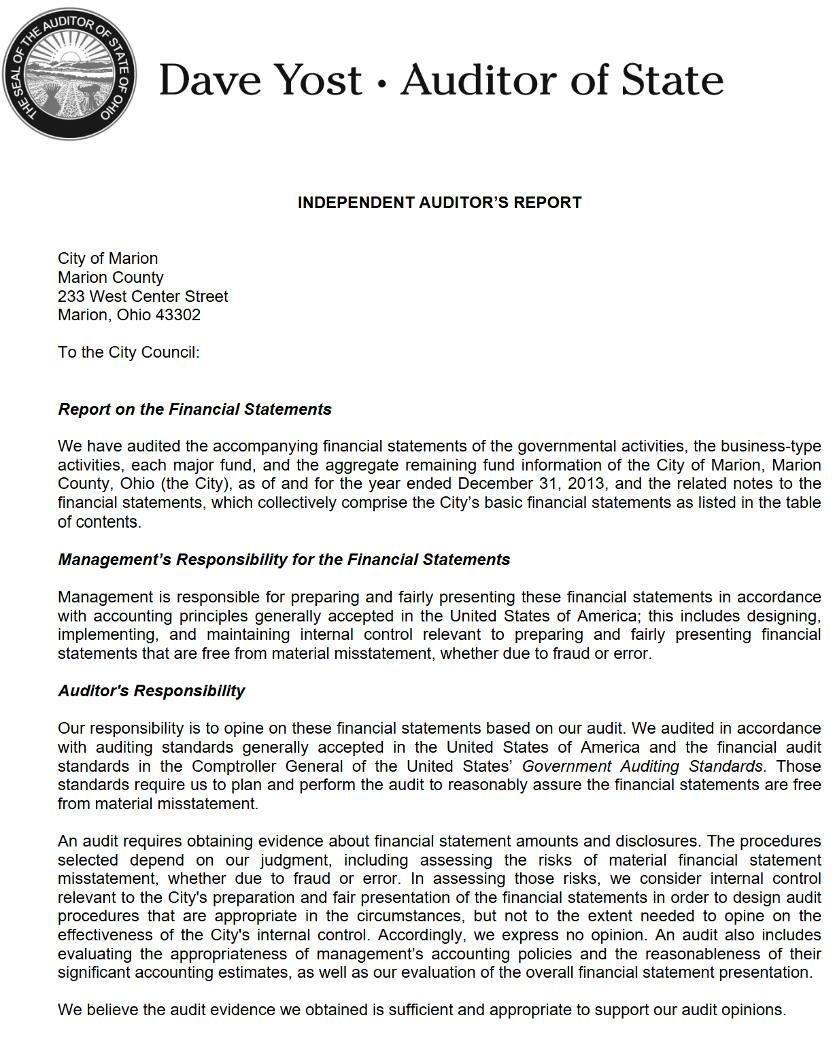
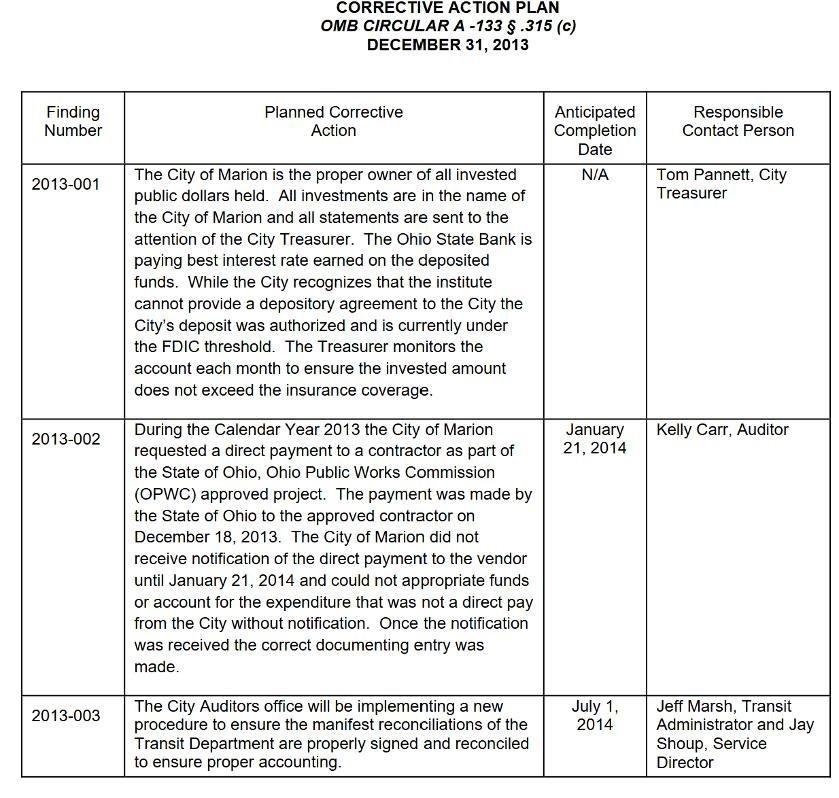
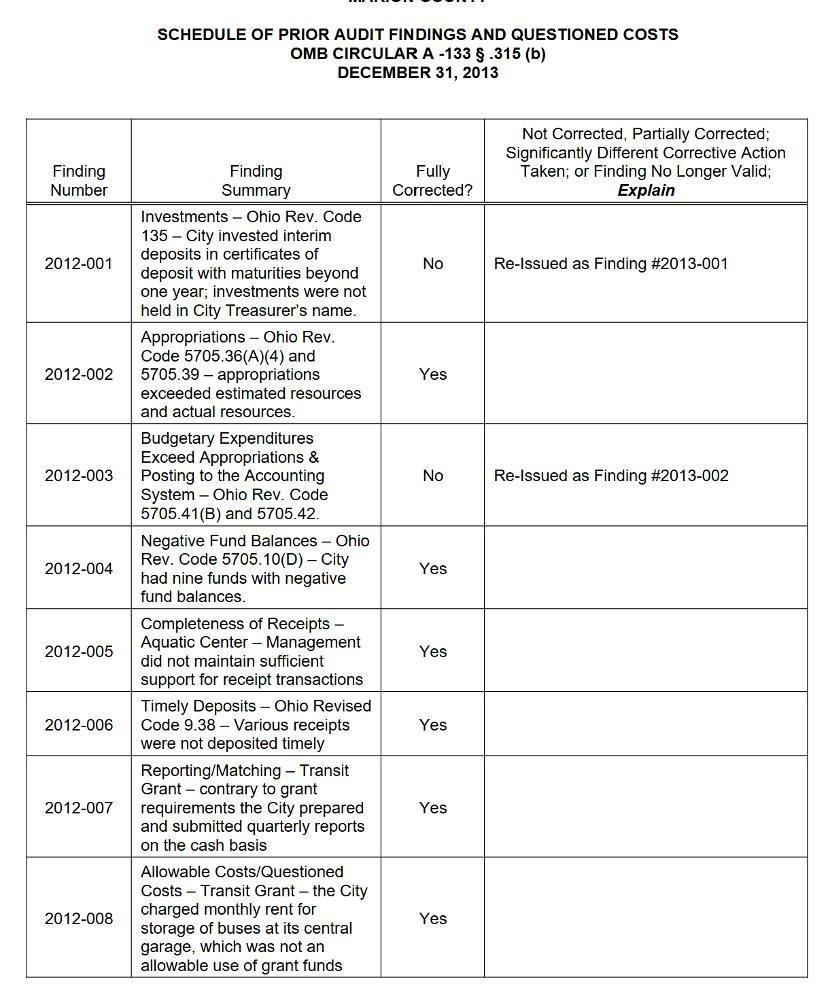
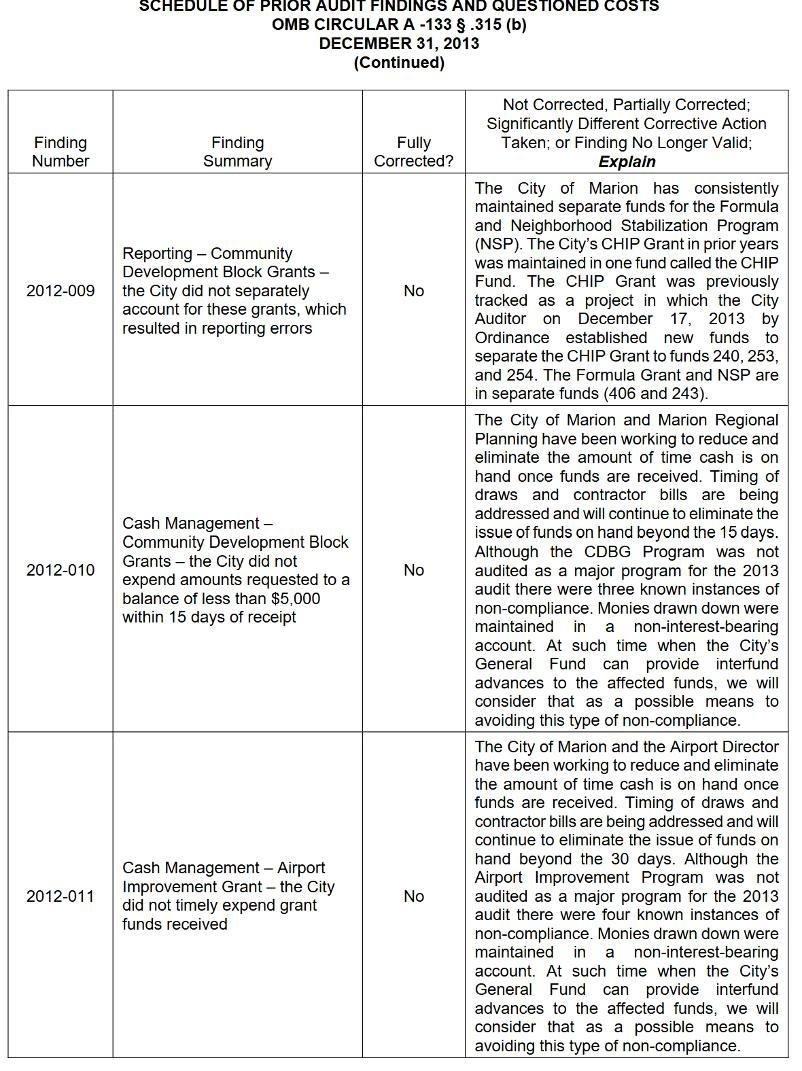
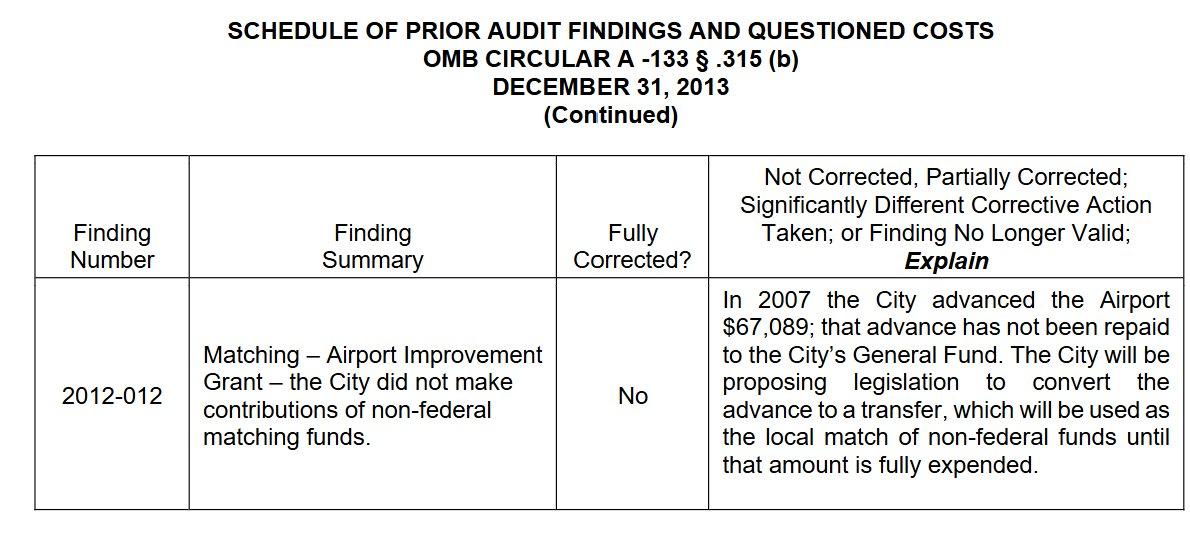
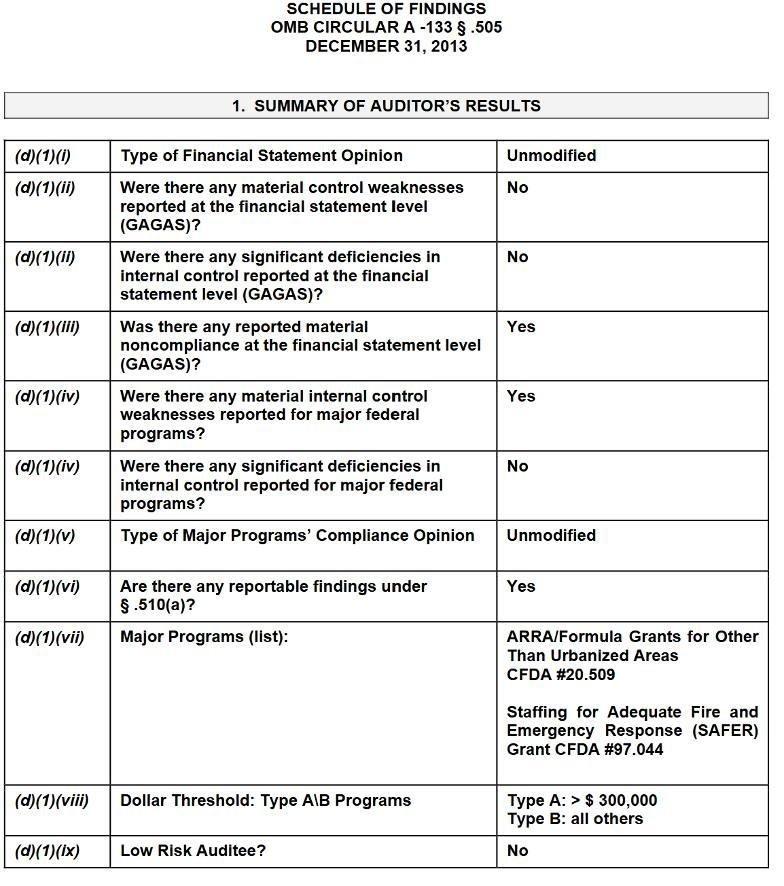
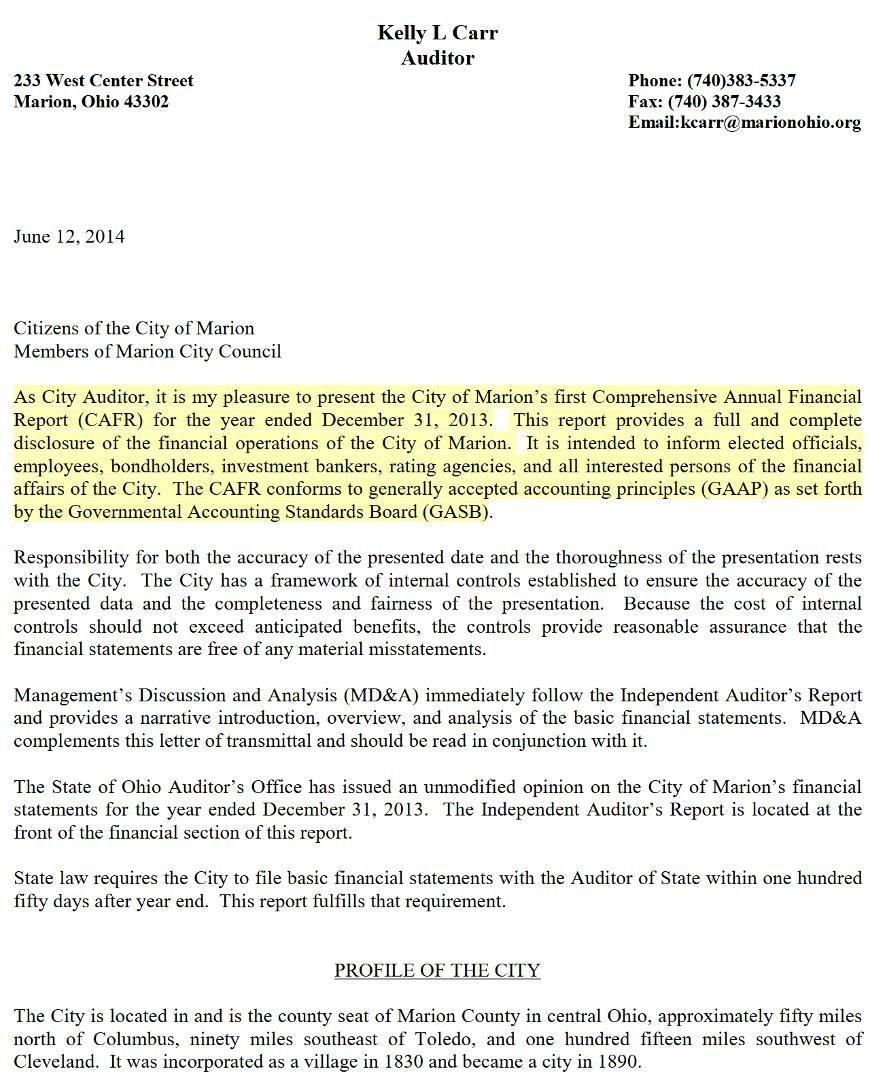
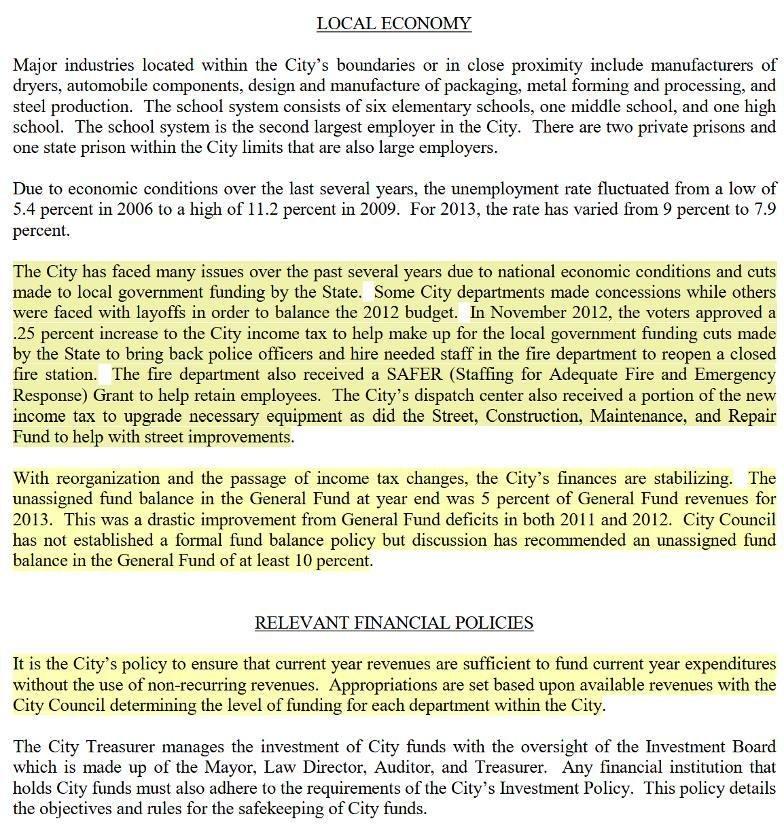
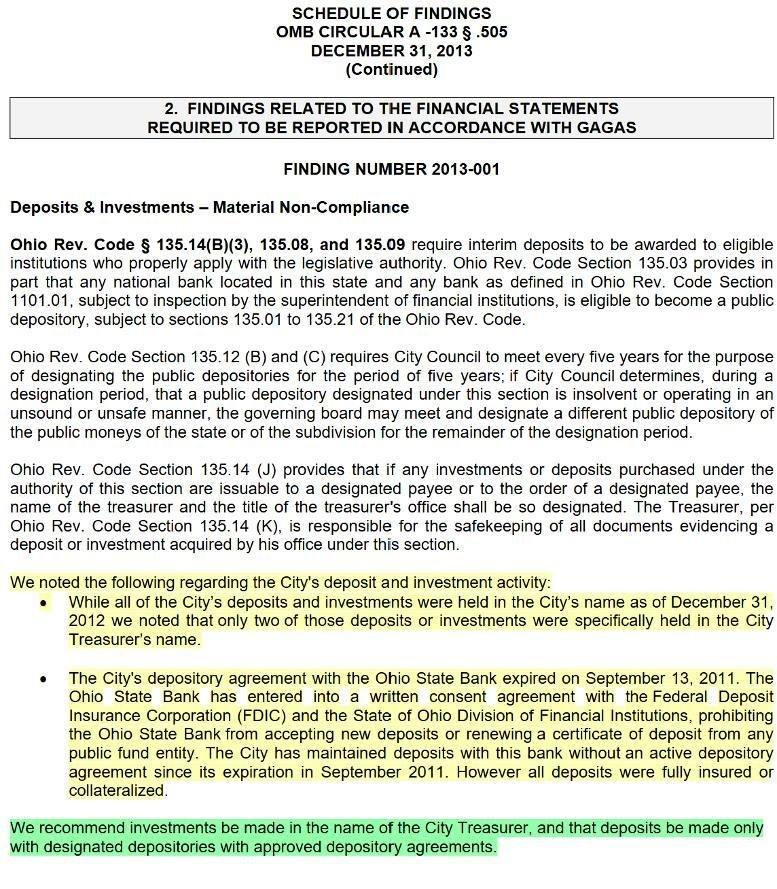
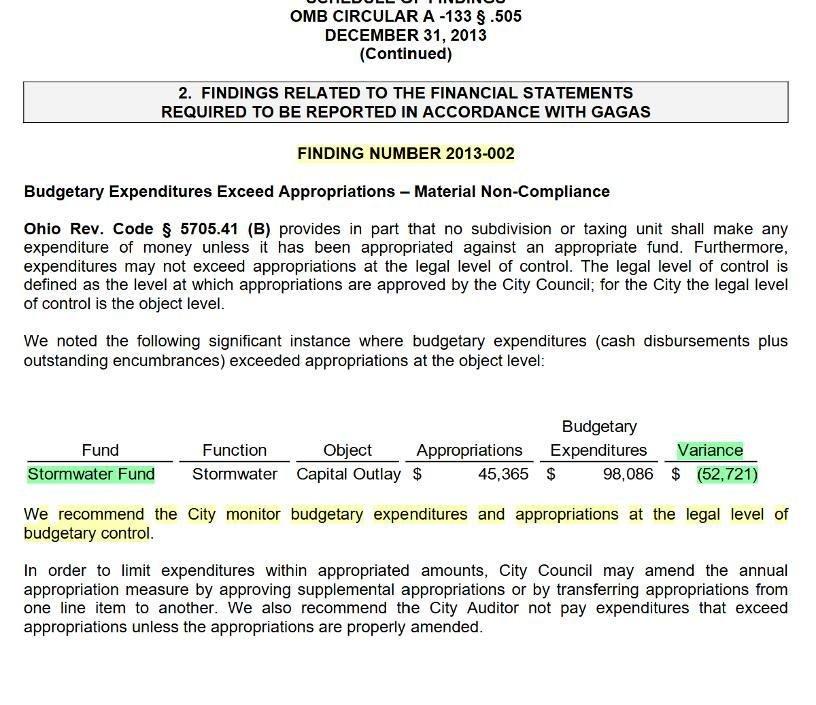
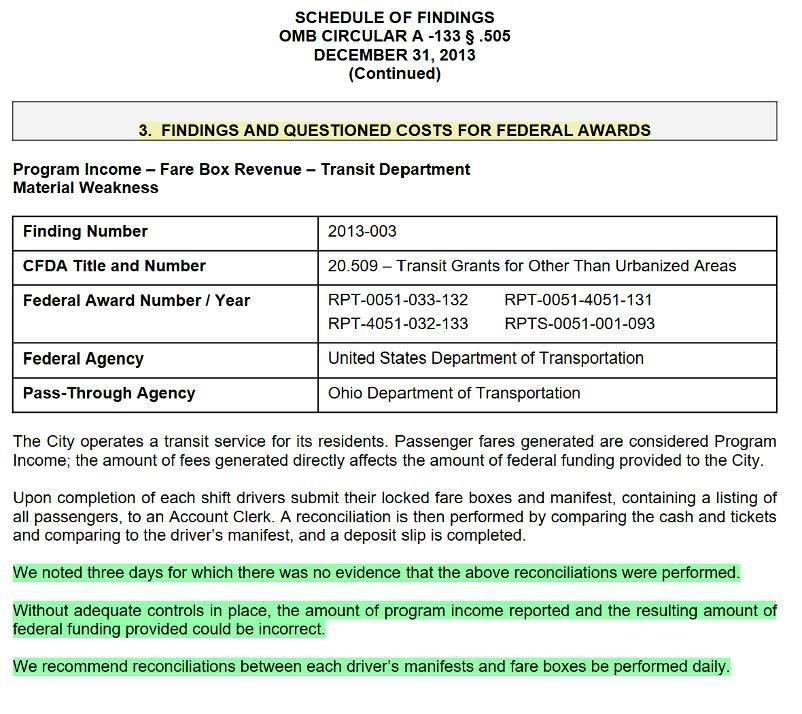
ILLEGAL SPENDING OVER APPROPRIATIONS
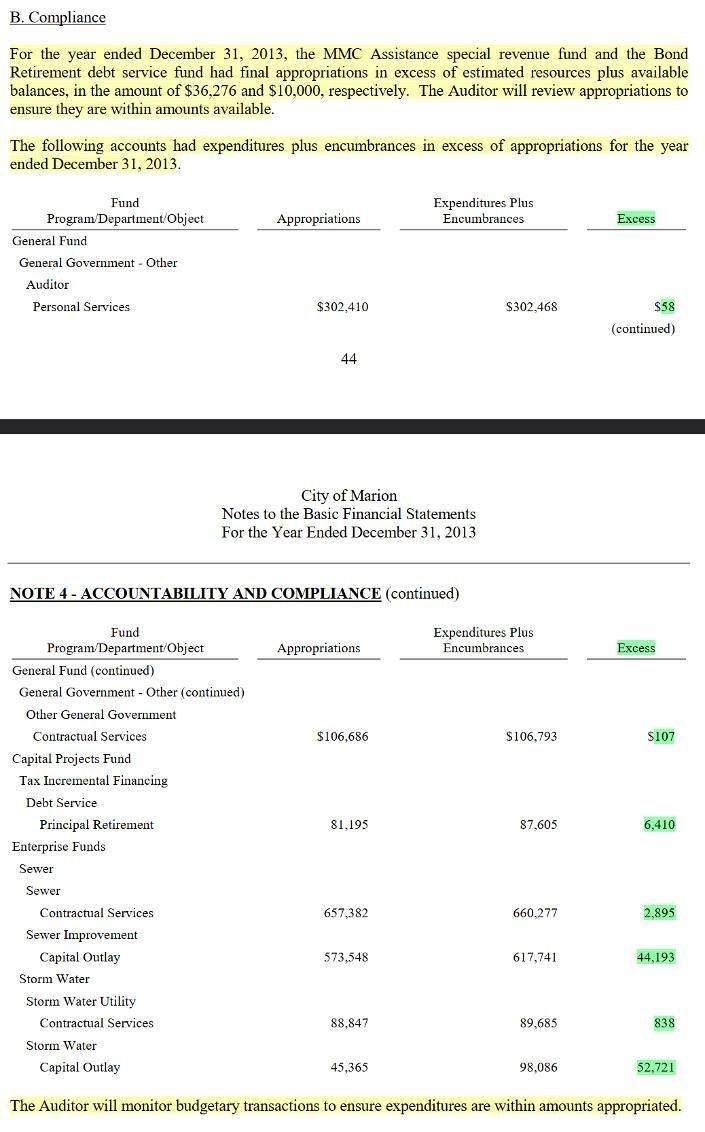
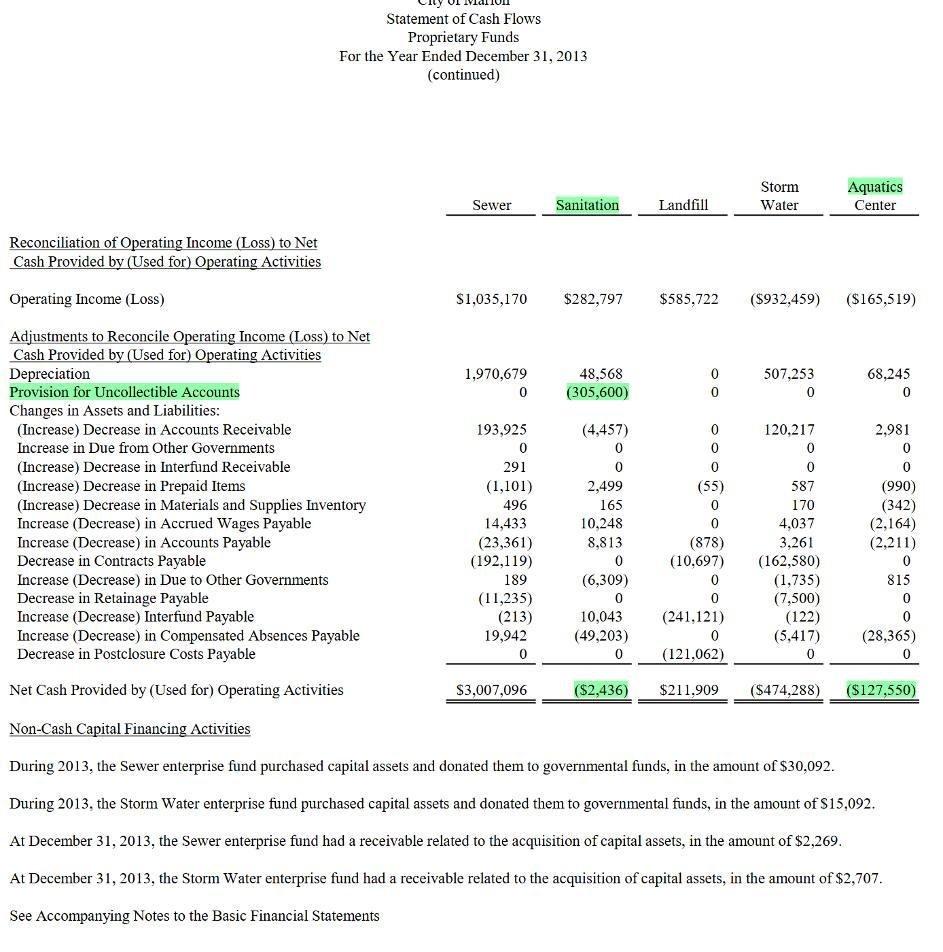
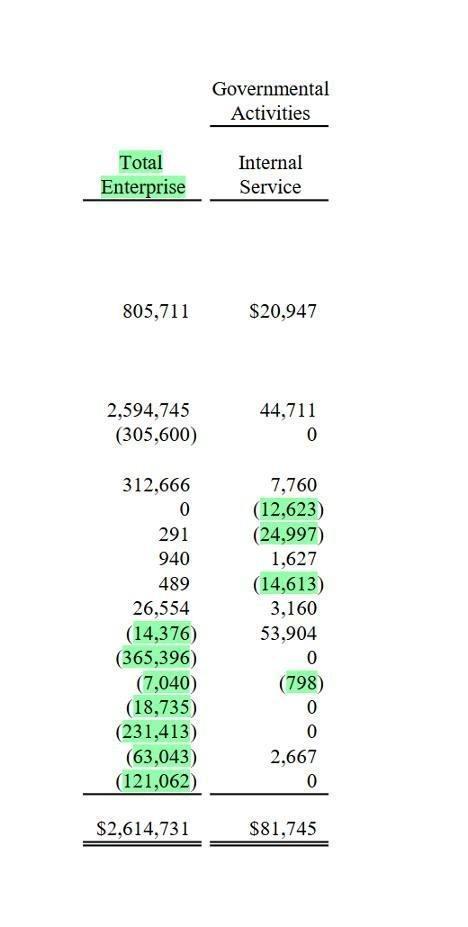
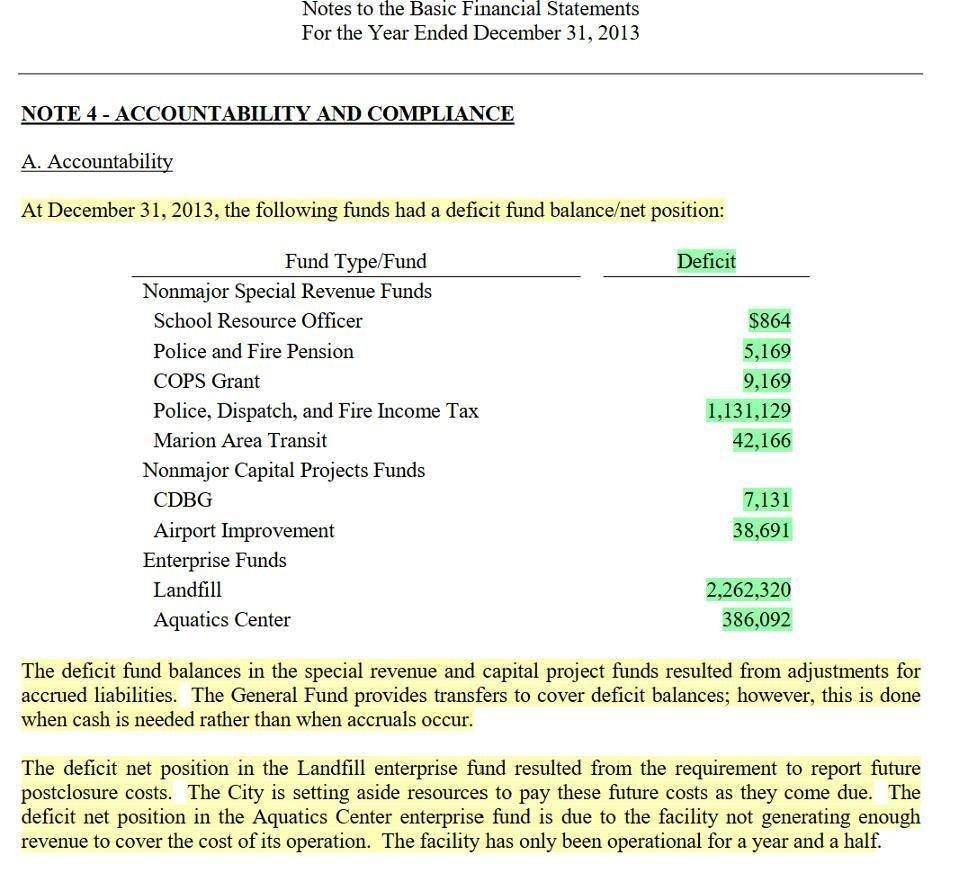
DEFICIT IS APPROX 5% OF GENERAL FUND REVENUES
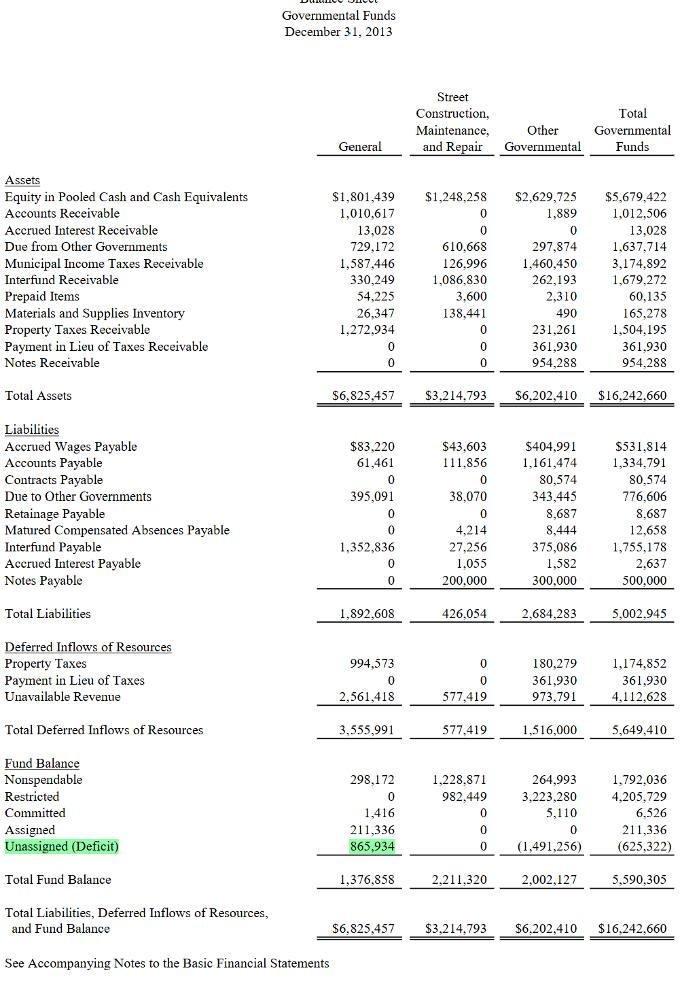
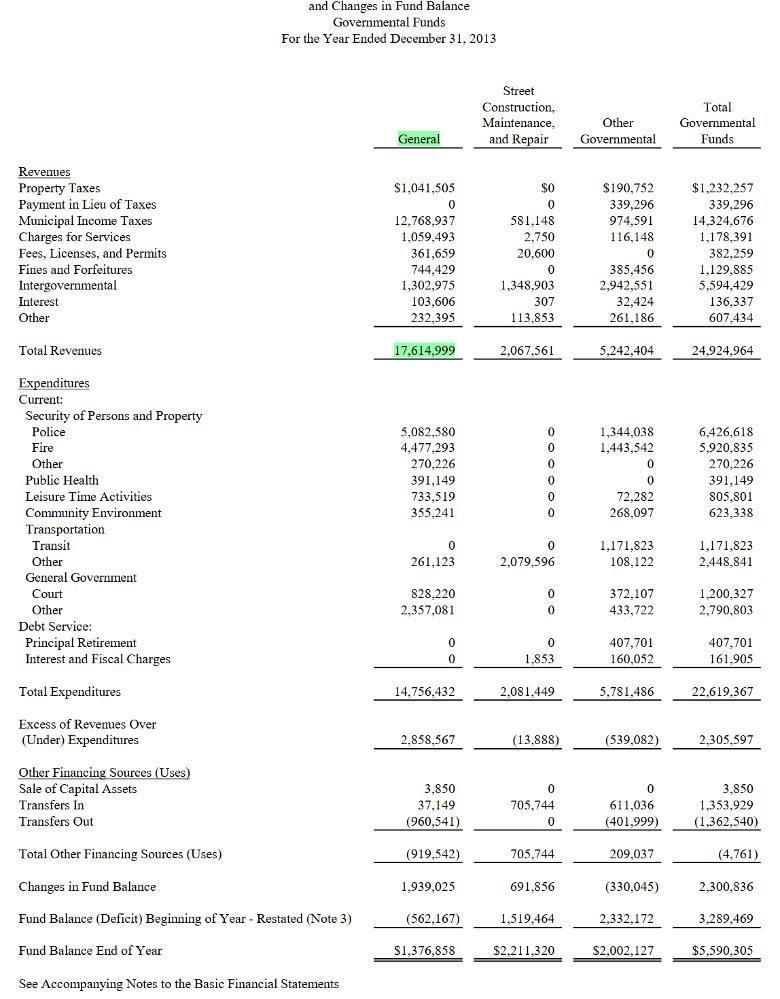

MARION WATCH INVESTIGATES: SILENT SABOTAGE SERIES
PART 2 — RAPID-RELEASE FORENSIC IT BLUEPRINT (2014–2021) & FINAL FORENSIC SCORECARD
ANATOMY OF MARION’S FINANCIAL COLLAPSE 2014–2015: THE ILLUSION OF PERFECTION & THE UTILITY THEFT FALLOUT RAPID-RELEASE IT BLUEPRINT OF SILENT SABOTAGE
This one is a little shorter, but it is very interesting.
We will be wrapping up the IT blueprint portion of the Silent Sabotage Overview series this week.
Before we do, we will be releasing newly obtained data to the public to show how accurate our predictions have been based solely off symptoms we first began looking closer at in 2018.
Immediately following this, we will release a solid figure that shows the total cost of this now proven compromised system.
The forensic IT evidence lies within the audits and other primary source information and was glaringly obvious to the Marion Watch information technology professionals and those in our network who manage enterprise infrastructure.
The 2014 and 2015 fiscal years demonstrate exactly how self-prepared Comprehensive Annual Financial Reports (CAFR) were utilized to project an illusion of perfection while a dying digital infrastructure bled public funds.
The 2014 CAFR was heralded as a “clean” audit, officially reporting zero material weaknesses and zero significant deficiencies in internal controls.
Yet, this professionally packaged document completely missed an ongoing felony happening right under the administration’s AND THE STATE’S nose, and actively buried severe financial violations deep within the footnotes.
Between January 2011 and August 2014, Utility Supervisor Brenda Nwosu exploited inactive or misconfigured approval workflows within the UTILITY BILLING (Water/Sewer Base) module to quietly embezzle $34,276.
Because the New World ERP system’s foundational guardrails and Segregation of Duties were actively bypassed, Nwosu was able to manually adjust 71 customer accounts to reduce balances and redirect 25 Sheriff’s sale checks without triggering a single supervisory alarm from the software.
This redirection of funds was only possible because the core FM Base Suite lacked basic input masks and automated deposit validation, allowing a check issued by the Sheriff’s office to be manually forced into unrelated customer accounts without throwing a hard relational database error.
THE RECONCILIATION BLACKOUT PRECEDENT
This culture of disabled controls was established long before the 2014 utility theft.
Immediately after the New World software went live in July 2009, the city entered a six-month “blackout” period where monthly bank-to-book reconciliations simply stopped.
Because the automated Bank Rec module was deliberately abandoned at installation, staff were forced to rely on manual spreadsheets.
This initial failure to utilize the automated matching tools destroyed the segregation of duties and created the exact blind spots necessary for fraud to thrive undetected for years.
There are symptoms of reconciliation issues from install forward.
Accounting firm Veritas mentioned this.
THE HAWTHORNE EFFECT AND THE HALTED PURGE
The forensic footprint of this cover-up appears highly visible through what strongly suggests the Hawthorne Effect.
This is defined as a psychological and behavioral phenomenon where people change or improve their behavior simply because they know they are being observed or studied, rather than because of external changes in their environment To mask underlying insolvency, the administration had previously executed massive, unverified bad debt purges to artificially balance the utility ledgers.
However, the moment criminal investigators began pulling records in 2014, the uncollectible adjustments in the Sanitation Fund abruptly plummeted to just a negative $7,071.
This sudden plunge in write-offs happened during the exact same timeframe as the embezzlement scandal, strongly suggesting the administration realized they were being watched and halted the data-erasure practices that provided digital camouflage for the theft.
By 2015, the uncollectible accounts provision shot back up to $140,528.
This is a key detail to forensic IT investigators and caught the eye of retired MCSO Detective Dennis Potts and others on our team and within our network as well.
We have been holding onto this for quite some time. The Silent Sabotage Overview series is the first time we have mentioned it, and several other serious issues.
GHOST ACCOUNTING & THE 2014 “CLEAN” AUDIT MIRAGE
The 2014 audit was not clean; the failures were simply hidden in the fine print.
Because the automated bank reconciliations were abandoned, the system could not balance mathematically.
To force the CAFR to tie out, the administration resorted to undocumented manual ledger plugs.
Buried in Note 4 of the 2014 audit, the city admitted to manually plugging $160,237 in “Unrecorded Activity” just to balance the General Fund. In 2015, they did it again, injecting $73,839 in ghost data into the General Fund and negative $111,325 into the Police/Fire fund.
You do not get six-figure “unrecorded activity” lines unless the users are flying completely blind and forcing the math at year-end.
Even more glaring was the legal deception reported to the State of Ohio.
By forcing the math to balance with manual journal entries in 2014, the administration managed to avoid a direct citation for overspending appropriations (ORC 5705.41B).
They then used this temporary blind spot to officially declare in the 2014 Schedule of Prior Audit Findings that their previous GL Override problems were “Fully Corrected”.
It was a total fabrication, as proven by later years.
While they didn’t get caught spending past zero that specific year, they were caught legally authorizing the spending of ghost money (ORC 5705.39).
The very next year, the overspending exploded again, proving the relational database hard stops were never turned on.
The Ohio Auditor of State ordered the GL Override misconfiguration fixed in late 2025, many months after we had brought it and many other issues to the attention of Marion officials, and escalated to the state.
GL OVERRIDES & THE $19.2 MILLION RUNNING TOTAL
The 2015 audit proved the budgetary hard stops within the FM Base Suite were never fixed; they were still completely disabled.
Buried in Note 4 of the 2015 CAFR, the system allowed the city to illegally overspend appropriations at the legal object level across eight different accounts.
This included excess Capital Outlay in the Sewer Fund ($65,354) and Storm Water Fund ($79,881), along with Storm Water Debt Service ($50,493), Central Garage Debt Service ($19,265), and four other accounts. The total for GL Override misconfiguration illegal spending in 2015 alone was $241,670.
This brings the running total for GL Override abuse allowing illegal spending over appropriations from the first full year with New World in 2010 through 2015 to a staggering $19,273,846.
2014 & 2015 AUDIT FINDINGS: THE IT BLUEPRINT
The forensic IT blueprint below correlates the 2014 and 2015 audit findings directly to the bypassed New World software controls:
• 2014: THE “CLEAN” AUDIT MIRAGE & BURIED FOOTNOTES [Module Configuration: Budgeting Validation]:
While reporting zero official findings, massive violations were buried in Note 3: the Police, Dispatch, and Fire Income Tax fund appropriated $811,470 more than it had in estimated resources, and the Storm Water fund appropriated $496,083 in excess. The system’s Budgeting module validation remained unconfigured, permitting the city to legally authorize the spending of ghost money (ORC 5705.39).
• 2014: THE “FULLY CORRECTED” LIE [Permission Configuration: GL Overrides:
Because the city dodged an expenditure citation (ORC 5705.41B) in 2014, they formally reported in the Schedule of Prior Audit Findings that their previous over-appropriation failures were “Fully Corrected”. The 2015 audit proves this was false, as the system’s core hard stops remained completely disabled within the FM Base Suite.
• FINDING 2015-001 (UTILITY THEFT & ACCOUNT MANIPULATION) [Permission / Module Configuration: Segregation of Duties & Workflows]:
A formal Finding for Recovery confirmed $34,276 was embezzled from the Marion City Utility Department. Because Segregation of Duties and automated workflow approvals were deactivated in the UTILITY BILLING (Water/Sewer Base), 71 customer accounts were manually adjusted to reduce balances to conceal the theft of cash, and proceeds from 25 Sheriff sales checks were posted to unrelated accounts.
• FINDING 2015-001 CORRECTIVE ACTION PLAN (THE HONOR SYSTEM) [Permission / Module Configuration: Internal Controls / Relational Database Violation]:
When forced to address these embezzlement vulnerabilities in the 2015 Corrective Action Plan, the administration’s official “fix” required that “Adjustments must include detailed information added to the notes in the system”. Instead of activating system hard-stops and the SELF SERVICE eRequests workflow engine, they implemented an honor-system workaround—a manual text-field control that any user with administrative access could effortlessly forge or bypass, ensuring the audit trail remained permanently broken.
• FINDING 2015-002 (FEDERAL REPORTING FAILURES) [Module Configuration: Grant Management]:
The Grant Management module lacked grant-specific compliance configurations, resulting in the city failing to file three of its quarterly Hiring Performance Reports by the required deadlines for the Staffing for Adequate Fire and Emergency Response (SAFER) grant.
NEGATIVE BALANCES (THE DISABLED DEFICIT STOPS)
The General Ledger’s deficit hard-stops remained disabled. Despite the polished CAFR formatting, deficit fund balances continued to plague the city:
• In 2014, the Landfill Enterprise Fund ran a deficit of $1,938,330, the Aquatics Center ran a deficit of $423,922, the Capital Improvements fund ran a deficit of $203,145, and the CHIP Grant ran a deficit of $4,224.
• By 2015, the Landfill deficit sat at $1,602,398, the Aquatics Center deficit deepened to $510,852, the Capital Improvements deficit expanded to $360,099, and the CDBG fund recorded a deficit of $1,322.
YEAR-END SUMMARY: STATE LAWS & FEDERAL NONCOMPLIANCE
• FEDERAL LAWS & REGULATIONS BROKEN:
44 C.F.R. § 13.40(b)(1) (Failure to submit timely quarterly performance reports for the SAFER grant, risking the delay or withholding of federal funds).
• STATE LAWS BROKEN:
Overarching violation of Ohio Admin. Code § 117-2-01(A)&(D) (Failure to design and operate internal controls and maintain proper segregation of duties, enabling the multi-year utility embezzlement); Ohio Admin. Code § 117-2-02 (Failure to maintain accurate accounting records, resulting in massive “Unrecorded Activity” ledger plugs); ORC § 117.28 (Finding for recovery for misappropriated public monies); ORC §§ 5705.36/39 (Appropriations exceeding estimated resources and available balances in multiple funds); ORC § 5705.41(B) (Budgetary expenditures exceeding appropriations via GL overrides); and ORC § 5705.10 (Operating multiple funds with deficit balances).
OFFICIAL EXHIBITS & PRIMARY SOURCE RECORDS (2014–2015 IT Blueprint)
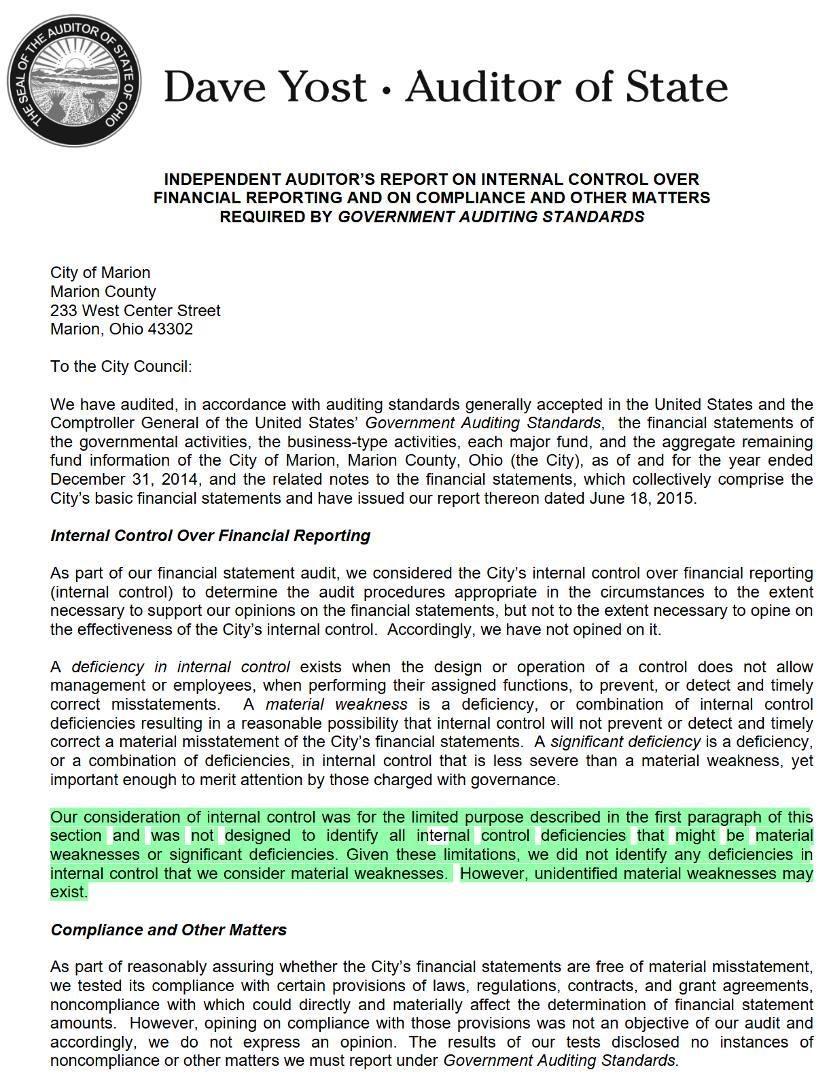
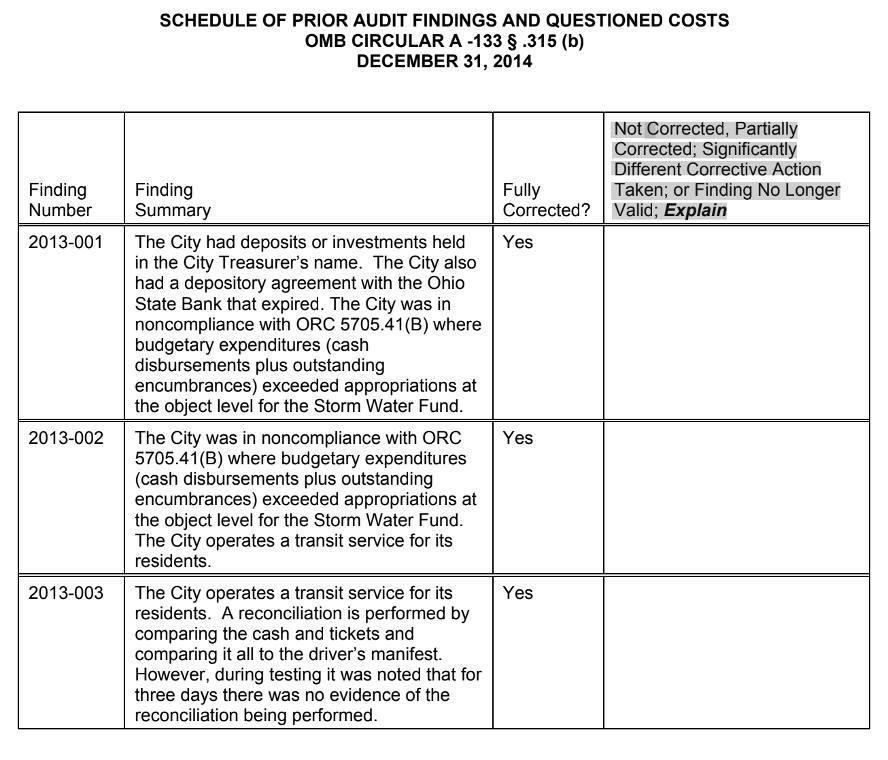
HAWTHORNE EFFECT
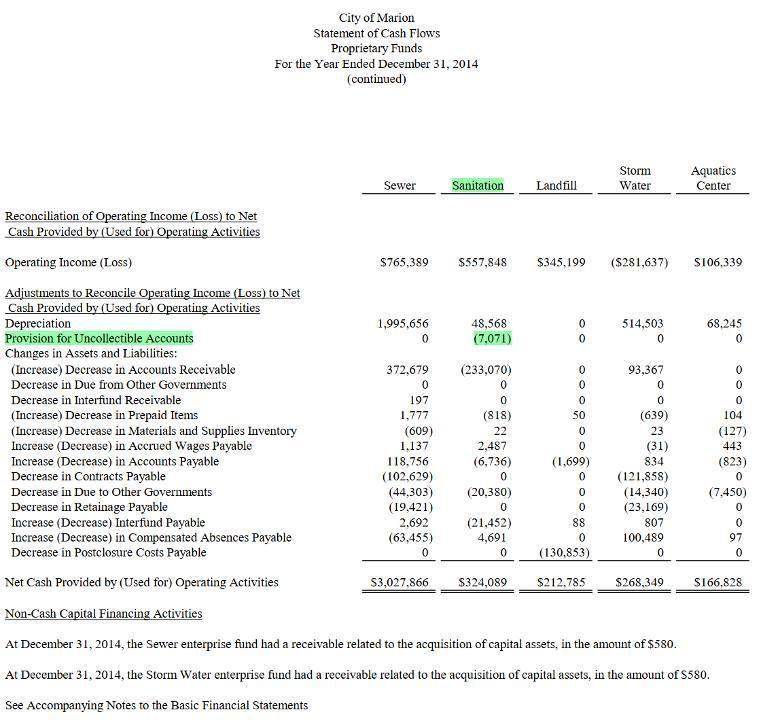
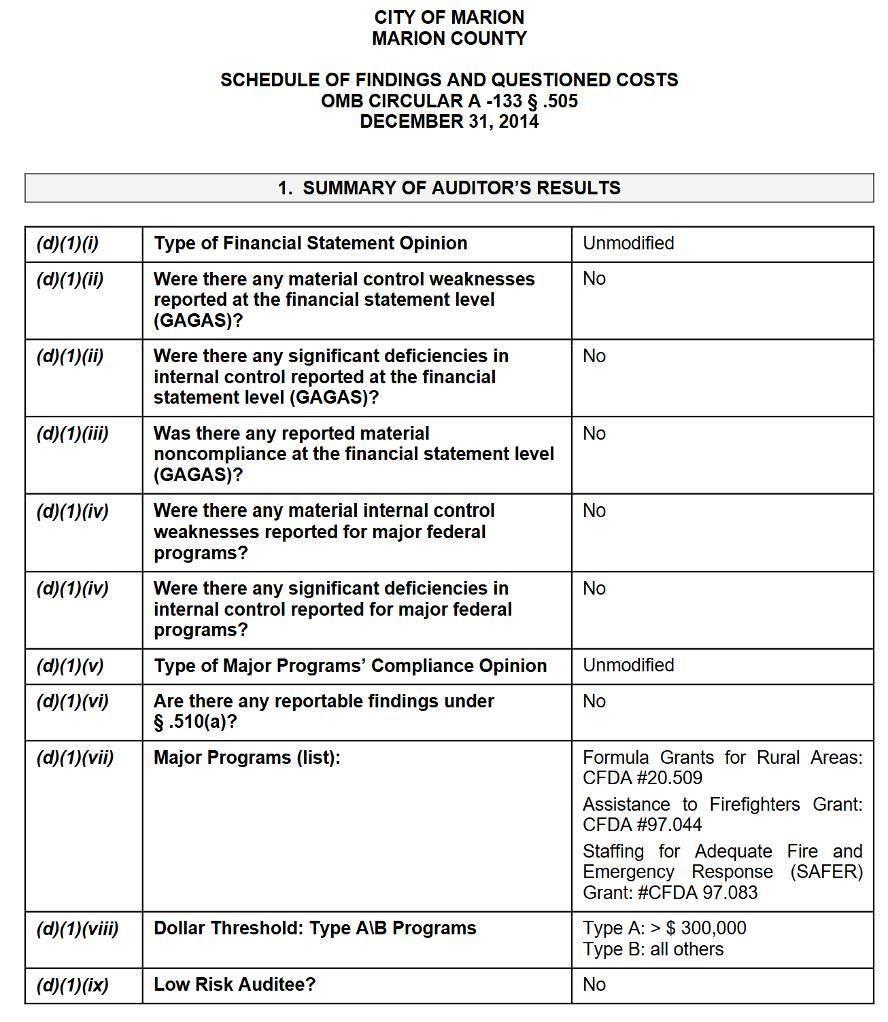
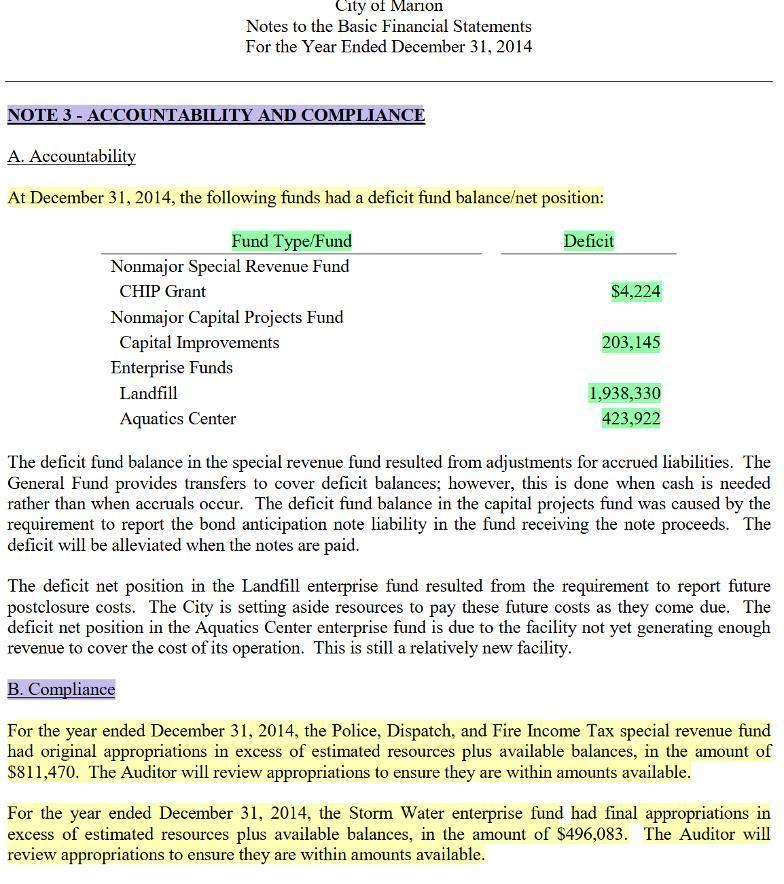
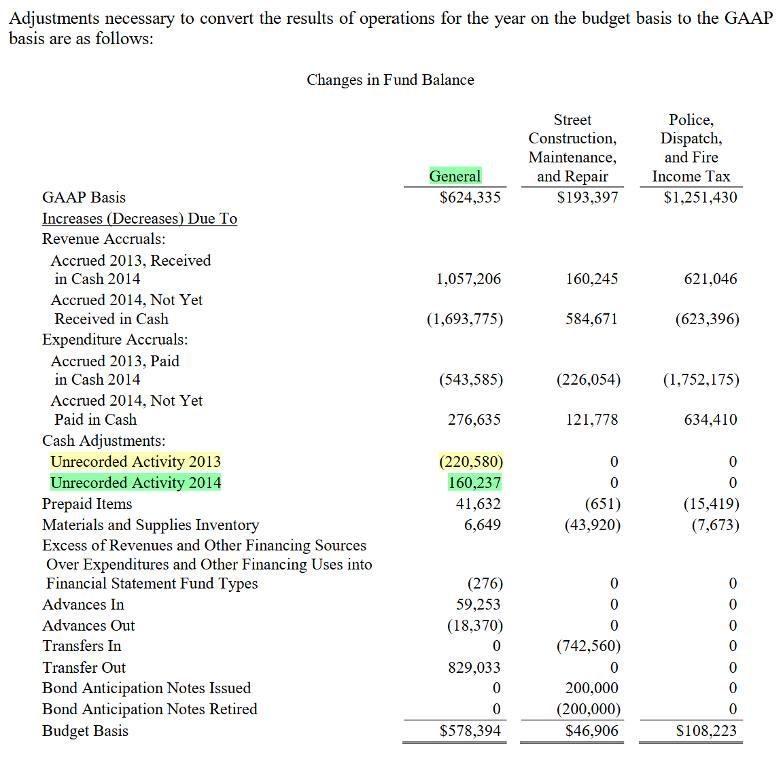
THEFT
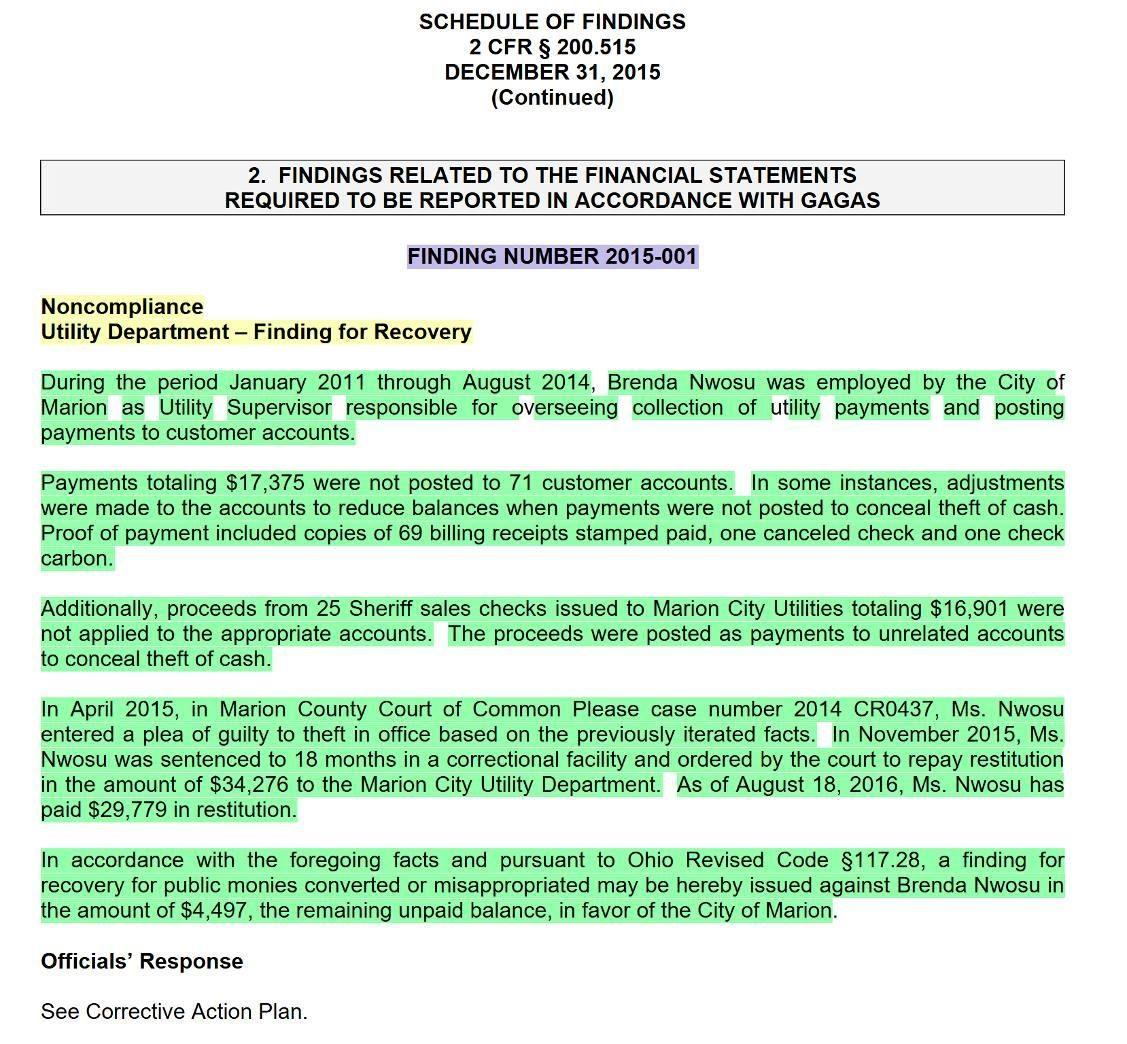
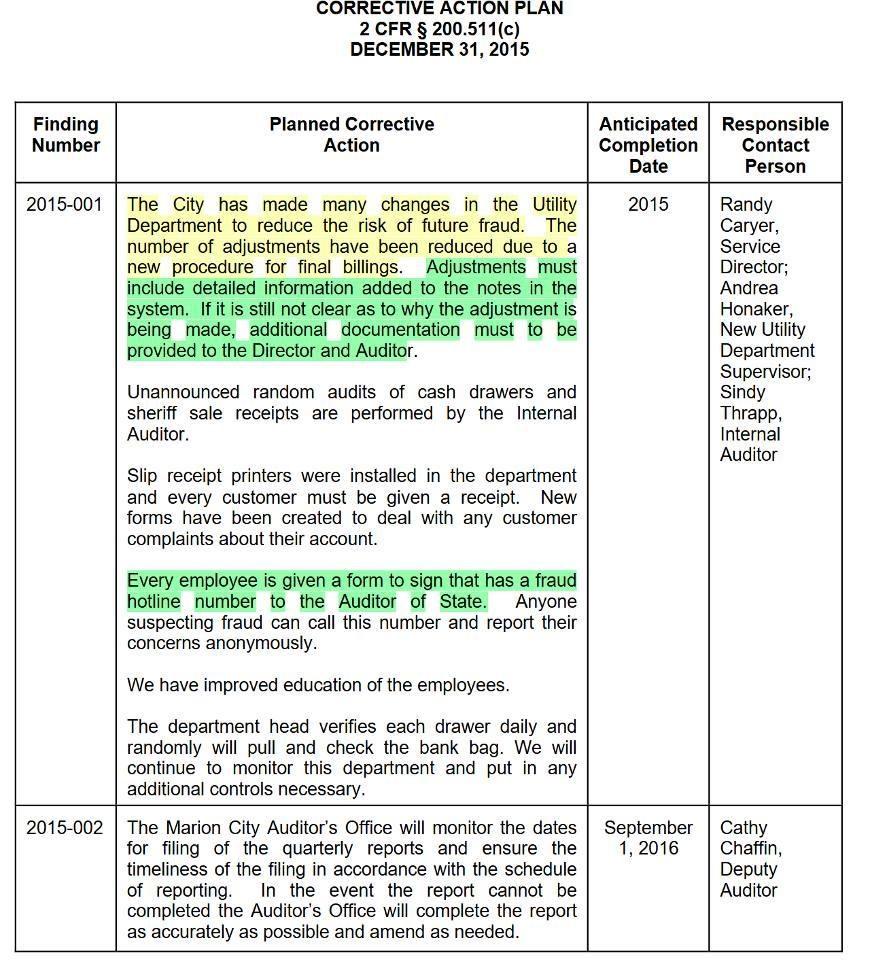
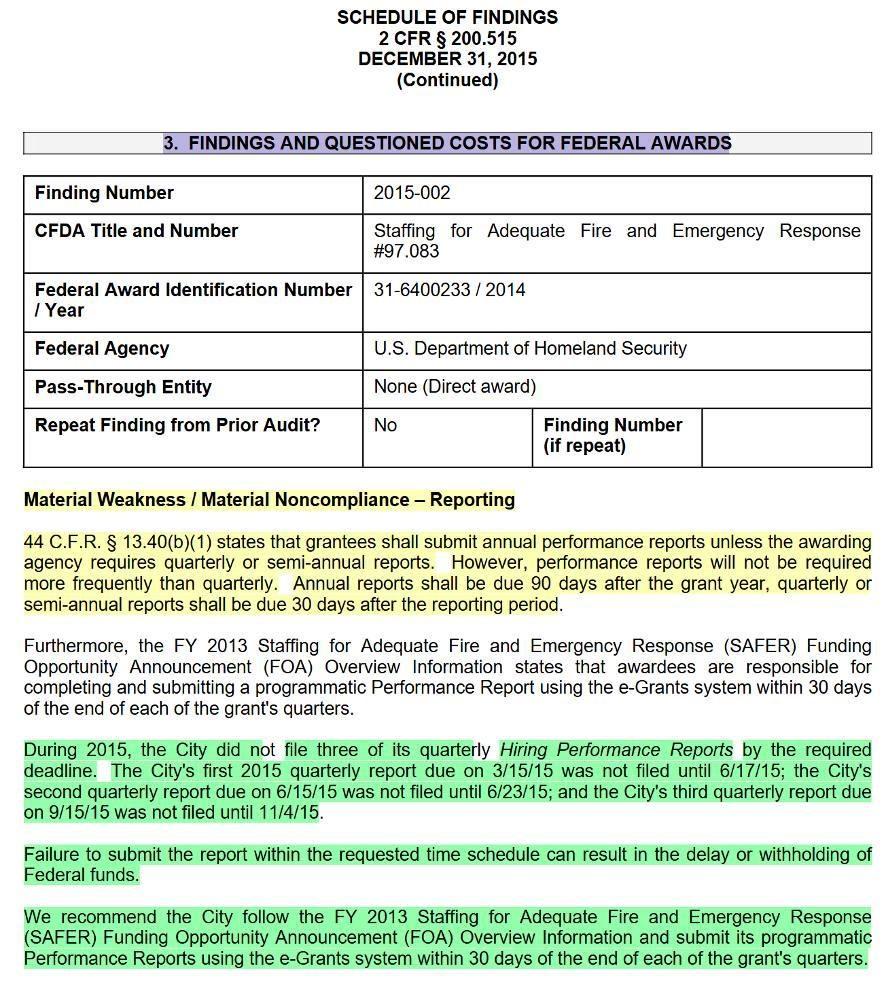
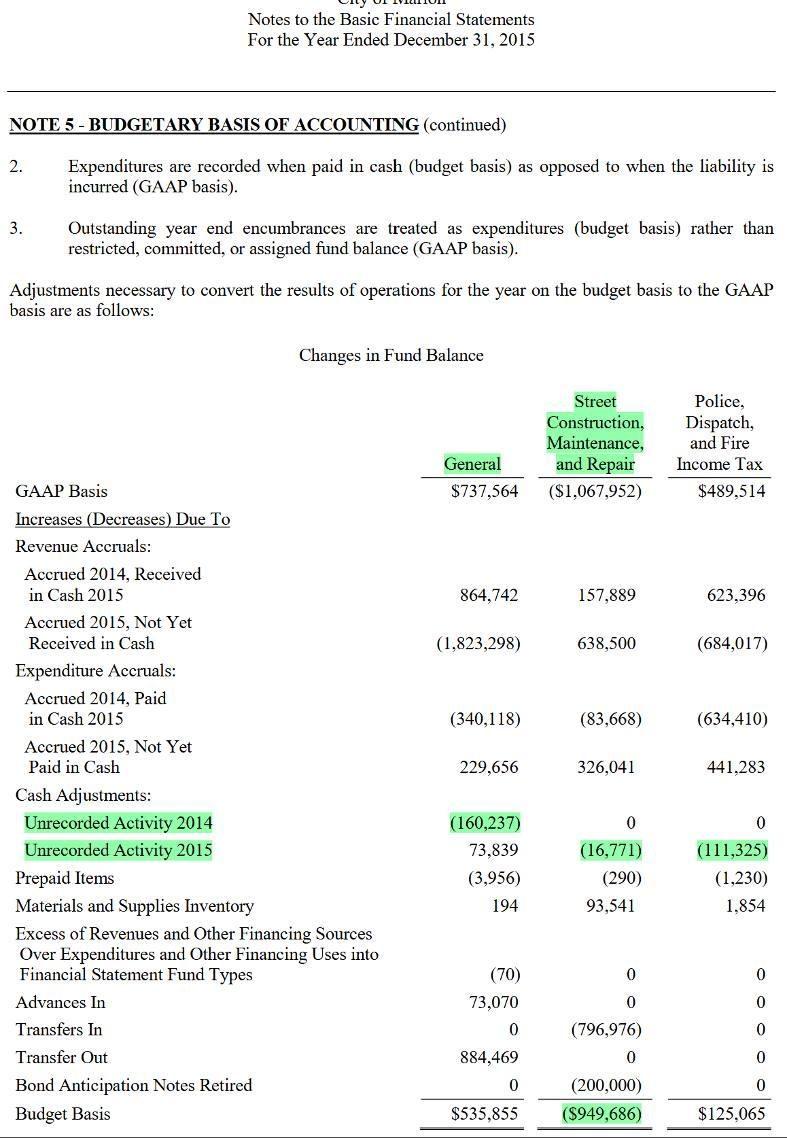
ILLEGAL SPENDING OVER APPROPRIATIONS
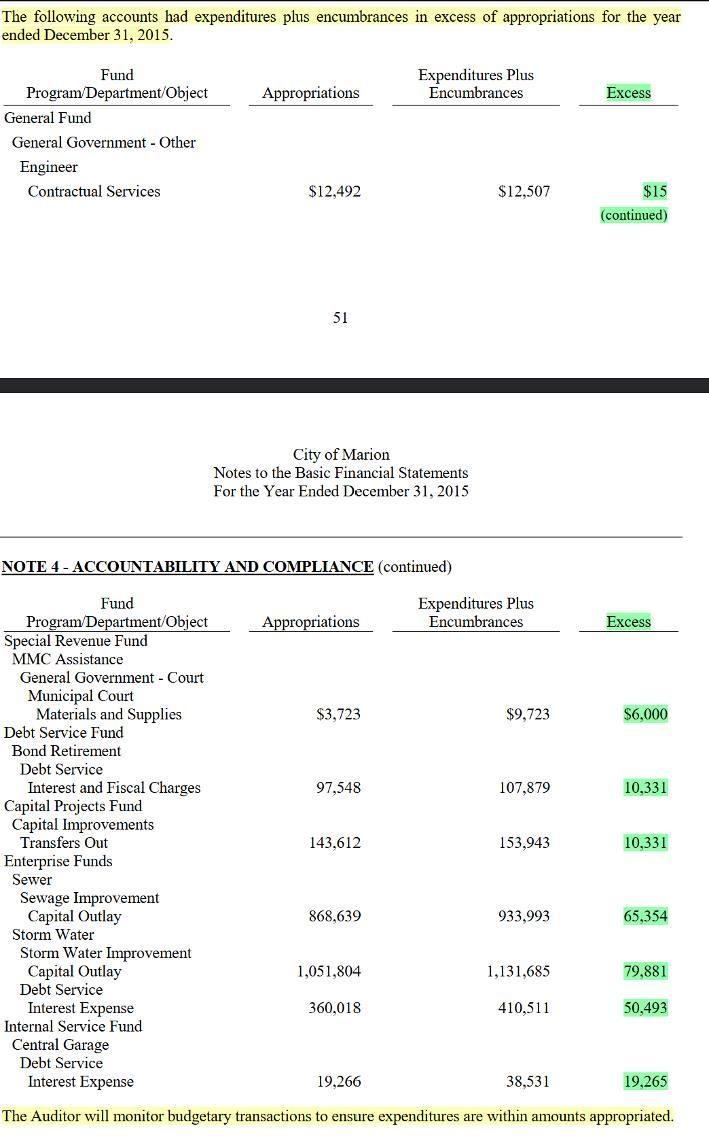
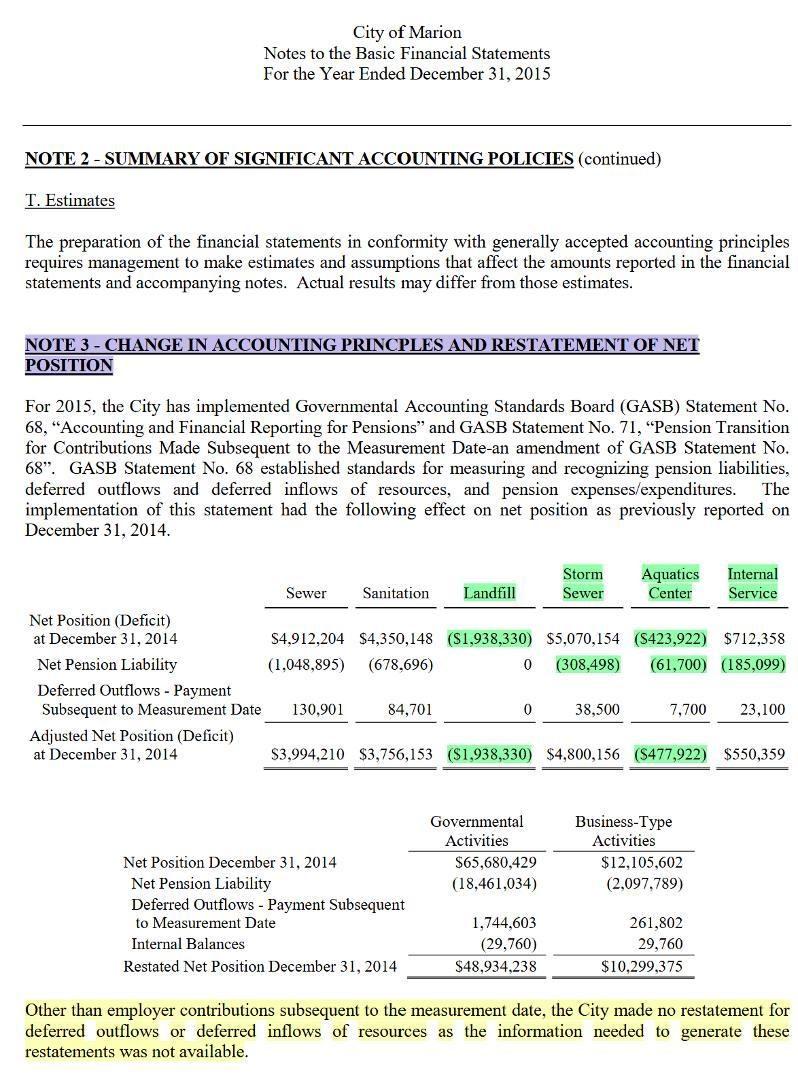
ANATOMY OF MARION’S FINANCIAL COLLAPSE 2016–2017: THE “LOW-RISK” LIE EXPOSED & THE CAFR CON THE RAPID-RELEASE IT BLUEPRINT OF SILENT SABOTAGE
The forensic IT evidence of Marion’s financial collapse lies within the audits and other primary source information and was glaringly obvious to the Marion Watch information technology professionals and those in our network who manage enterprise infrastructure when we began looking closer at the system in 2018.
We will be concluding this overview series this weekend. It will include newly obtained data regarding the New World system, as well as a combined multi-state multi-IT disciplined forensic analysis of our findings based on all evidence presented. Essentially, a grade of our work from industry professionals from inside and outside of the Marion Watch team.
After that, we will drop the entire price tag for the issues from 2009 to present.
This will effectively eliminate the prior administrations rhetoric and definitively prove the system is compromised and has been since installation. It will also definitively prove that Marion’s financial catastrophe is largely attributed to the lack of IT and financial controls and most certainly DID NOT suddenly and unexpectedly begin in 2020.
The full Silent Sabotage and social media Silent Sabotage Overview Series has proven that City of Marion, Ohio easily qualifies for a full forensic IT audit and easily justifies state and federal law enforcement and oversight body involvement.
It is A MASSIVE AMOUNT OF MONEY, and SHOCKING!
The 2016 and 2017 fiscal years mark an ongoing era where the administration perfected the art of hiding a compromised IT infrastructure inside the dense, hundreds-of-pages Comprehensive Annual Financial Report (CAFR).
By burying the symptoms of a failed software system deep within the footnotes, the administration continued to project an illusion of perfection while the unrestricted deficit for governmental activities collapsed to a staggering negative $16.4 million in 2016 and plummeted further to a negative $18.6 million in 2017.
THE FEDERAL “LOW-RISK” OVERSIGHT FAILURE & COMPLIANCE BLOCK
The most devastating element during this two-year window wasn’t just the city’s ghost data—it was a catastrophic failure in federal oversight that shielded the administration from deep forensic scrutiny.
In both the 2016 and 2017 Schedule of Findings, the Ohio Auditor of State officially designated the city as a “Low-Risk Auditee” under 2 CFR 200.520.
This was a completely improper classification.
Under federal Uniform Guidance, an auditor cannot legally grant “Low-Risk” status if the municipality carried a Material Weakness on a major federal program in either of the two preceding years.
Because the city received a formal Material Weakness in 2015 (Utility Theft and SAFER Grant reporting failures), they were legally disqualified from receiving this status in 2016.
Furthermore, because Marion committed additional major federal program non-compliance in 2017—specifically receiving Material Weaknesses and non-compliance findings on their CDBG major program (Finding 2017-001 for Procurement bypass under 2 CFR 200.320 and Finding 2017-002 for Cash Management violations under 2 CFR 200.305)—they were legally blocked for an additional two years from qualifying for Low-Risk status.
Municipalities must complete two full years without compliance issues before a “Low-Risk” status can be given.
By erroneously granting the Low-Risk designation in both years, the state auditors artificially suppressed the federal testing threshold from 40% down to 20%. This oversight failure inadvertently shielded the bleeding digital vault from the rigorous, high-risk federal testing that should have blown the doors off the compromised software environment.
THE CUMULATIVE DAMAGE: A DECADE OF DIGITAL SABOTAGE (2009–2017)
Before examining the granular details of the 2016 and 2017 audits, we must look at the digital wreckage the administration had already accumulated. By the end of 2017, the city’s IT infrastructure was not just failing; it was being actively manipulated to conceal systemic insolvency.
The forensic footprint from 2009 through 2017 reveals a Tier-1 software environment that was systematically hollowed out from the inside, establishing devastating multi-year trends:
• GL OVERRIDES & UNAPPROPRIATED SPENDING:
Budgetary hard-stops were completely abandoned at the software level, escalating from early warnings into a system that authorized over $19.3 million in illegal, unappropriated spending across city funds by 2017.
• UNRECORDED ACTIVITY & GHOST ACCOUNTING:
The automated bank reconciliation module was bypassed immediately after installation. This forced administrators into a worsening trend of using undocumented manual ledger plugs—growing into millions of dollars in unverified cash adjustments—to blindly force the CAFR to tie out at year-end.
• ENTERPRISE DEFICITS & MASKED INSOLVENCY:
With system controls deactivated, enterprise funds ran massive, unchecked negative balances. The unrestricted deficit for governmental activities crashed from millions into the tens of millions negative, while administrators quietly executed unauthorized, long-term loans to float the bleeding General Fund.
• SEGREGATION OF DUTIES BYPASSED:
Master-level “God Mode” permissions were left active for end-users throughout the decade, circumventing automated workflow approvals and directly enabling the 2014-2015 utility embezzlement.
The administration had nearly a decade to properly configure the New World ERP.
Instead, they knowingly operated a compromised financial system and adapted to the blind spots they created.
GHOST ACCOUNTING & THE “UNRECORDED ACTIVITY” PLUGS
Because the New World ERP’s automated Bank Reconciliation module remained abandoned and the system was plagued by a hybrid cash/accrual misconfiguration, the software could not balance mathematically.
To force the CAFR to tie out at year-end, the administration continued to rely on undocumented manual ledger plugs buried in Note 5 (Budgetary Basis of Accounting).
In forensic IT terms, “Unrecorded Activity” means millions of dollars moved in and out of real bank accounts without ever being logged into the software.
When the system’s math inevitably failed to match the bank statements during the audit, administrators blindly injected massive, unsubstantiated numbers into the ledgers to force the final report to balance.
In 2016, the city was forced to manually plug a staggering $158,476 into the General Fund, $1,289,260 into the Street Fund, and a negative $302,387 into the Police/Fire Fund for “Unrecorded Activity” from the prior year.
In 2017, they did it again, plugging another $42,427 into the General Fund.
You do not get six-figure and million-dollar “unrecorded activity” lines if a Tier-1 financial system is properly tracking cash.
These massive manual adjustments are the direct forensic footprint of users flying completely blind outside established audit trails.
GL OVERRIDES & THE $19.3 MILLION RUNNING TOTAL
Because the budgetary hard stops remained deactivated in the FM Base Suite, the system continued to allow unappropriated spending.
While the administration managed to hide the vast majority of their 2016 overspending using the massive “Unrecorded Activity” ledger plugs mentioned above to balance the books, they slipped up in 2017.
The 2017 CAFR (Note 4) proves the hard stops were still completely disabled. The system allowed the CDBG capital projects fund to illegally overspend its legal appropriations by $30,000 for contractual services.
This brings the running total for GL Override abuse allowing illegal spending over appropriations from the first full year with New World in 2010 through 2017 to a staggering $19,303,846.
ILLEGAL “LONG-TERM” LOANS (NOTE 12)
With structural deficits masked by ghost data, the administration began quietly executing unauthorized long-term loans between funds to keep the city afloat.
Buried in Note 12 (Interfund Receivables/Payables) of both the 2016 and 2017 audits, the city confessed to holding balances due to the General Fund consisting of “loans made to provide working capital for operations or projects”.
The audit explicitly notes that $97,600 in 2016 and $53,600 in 2017 would “not be received within one year”.
Using restricted or operational funds as a long-term, zero-interest bank to float the General Fund is a massive red flag for systemic insolvency.
2016 & 2017 AUDIT FINDINGS: THE IT BLUEPRINT
The forensic IT blueprint below correlates the 2016 and 2017 audit findings directly to the bypassed New World software controls:
• 2016: THE FAKE “CLEAN” AUDIT MIRAGE [Module Configuration: Bank Rec / Ledger Validation]:
The city reported zero official GAGAS or Federal findings in 2016. However, this was achieved by forcing the math with over $1.1 million in net “Unrecorded Activity” ledger plugs across three major funds. Furthermore, the state auditors erroneously granted “Low-Risk” federal status, improperly lowering the audit testing threshold. The system’s foundational ledger validation remained completely compromised.
• 2016 & 2017: THE “LOW-RISK” COMPLIANCE FAILURE [Module Configuration: Federal Compliance / GASB Reporting]:
The system lacked the automated compliance tracking required to accurately report federal risk status. The city was improperly designated as a Low-Risk Auditee in both 2016 and 2017, a direct violation of 2 CFR 200.520 guidelines that artificially shielded the system from mandatory forensic testing.
• FINDING 2017-001 (PROCUREMENT BYPASSED) [Permission / Module Configuration: Purchasing & Workflow Engine]:
The audit revealed the city did not have proper internal controls in place to ensure compliance with Federal procurement requirements. Because the Purchasing module’s automated workflows and input masks were disabled or bypassed, 14% of the tested expenditures failed to follow the proper method of procurement by small purchase procedures.
• FINDING 2017-002 (FEDERAL CASH MANAGEMENT) [Module Configuration: Grant Management / Project Accounting]:
The Grant Management module definitively controls federal drawdown timers and alerts, but lacked configuration. This allowed federal Community Development Block Grant (CDBG) cash to be held in local accounts past required deadlines without being disbursed, violating federal cash management rules and exposing the funds to unallowable interest accumulation.
NEGATIVE BALANCES (THE DISABLED DEFICIT STOPS)
The General Ledger’s deficit hard-stops remained disabled. Despite the glossy CAFR formatting, deficit fund balances continued to drain the city’s enterprise operations:
• In 2016, the Landfill Enterprise Fund ran a deficit of $1,474,383, and the Aquatics Center ran a deficit of $559,014. The total unrestricted deficit for Governmental Activities crashed to a negative $16,443,700.
• By 2017, the Landfill deficit sat at $1,347,493, and the Aquatics Center deficit deepened to $657,856. The total unrestricted deficit for Governmental Activities collapsed further to a staggering negative $18,680,993.
YEAR-END SUMMARY: STATE LAWS & FEDERAL NONCOMPLIANCE
• FEDERAL LAWS & REGULATIONS BROKEN:
18 U.S.C. § 1001 (False Statements and Concealment via falsifying material facts in federal reporting); 2 CFR § 200.302 (Financial Management violations for failing to provide accurate, current, and complete financial disclosures); 2 CFR § 200.303 (Failure to establish and maintain effective internal controls over Federal awards); 2 CFR § 200.520 (Improperly receiving Low-Risk Auditee status to suppress testing thresholds despite 2015 and 2017 program non-compliance); 2 CFR § 200.320(b) (Failure to utilize small purchase procurement procedures); and 2 CFR § 200.305(b) (Violating federal cash management rules by failing to minimize the time between the transfer of funds and disbursement).
• STATE LAWS BROKEN:
ORC § 2913.42 (Tampering with Records by using undocumented ledger plugs to alter data and conceal true cash positions); ORC § 2921.44 (Dereliction of Duty for knowingly operating a compromised Tier-1 financial system without automated reconciliations or deficit hard-stops); Ohio Admin. Code § 117-2-01(A)&(D) (Failure to design and operate internal controls to prevent fraud and maintain proper procurement workflows); Ohio Admin. Code § 117-2-02 (Failure to maintain accurate accounting records, resulting in massive “Unrecorded Activity” ledger plugs); ORC § 5705.41(B) (Budgetary expenditures exceeding appropriations via GL overrides); and operating multiple funds with deficit balances.
OFFICIAL EXHIBITS & PRIMARY SOURCE RECORDS (2016–2017 IT Blueprint)

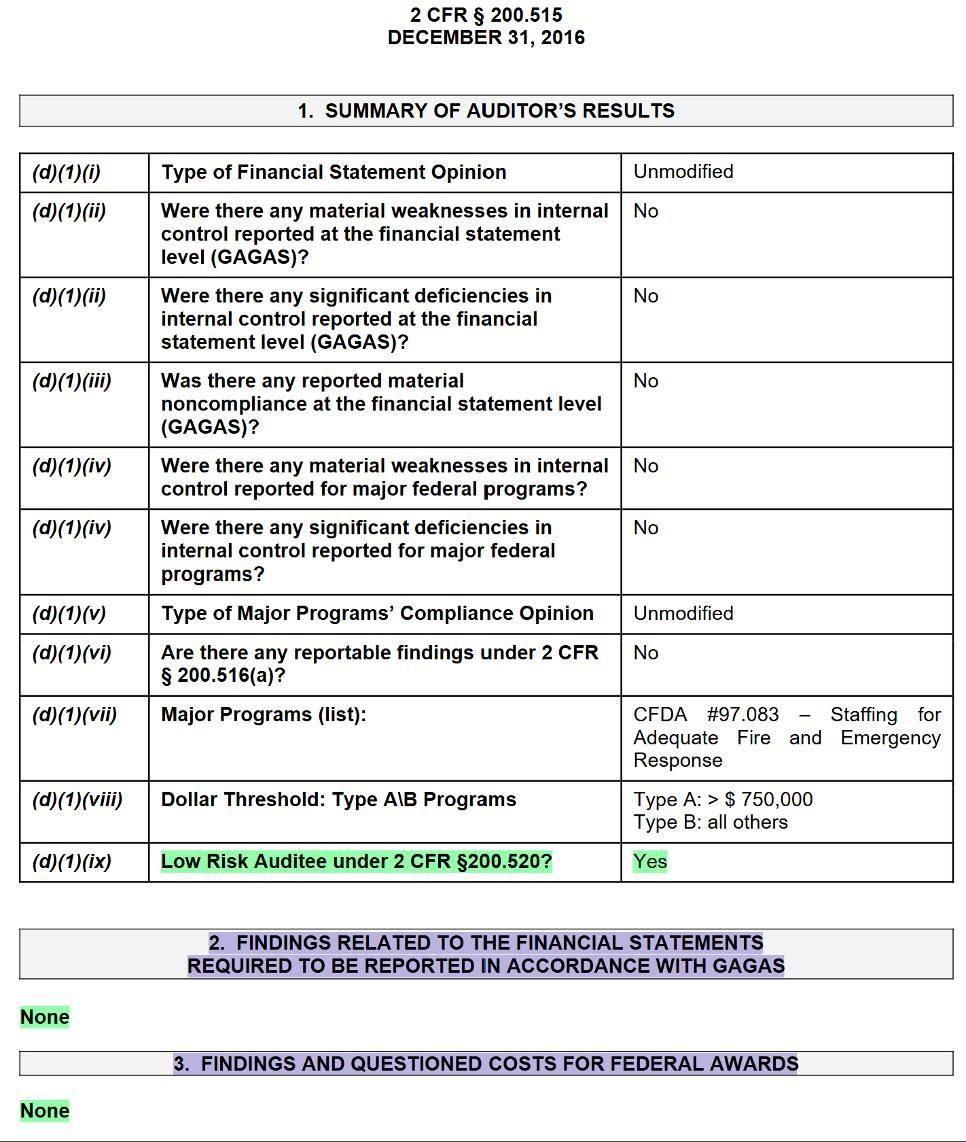
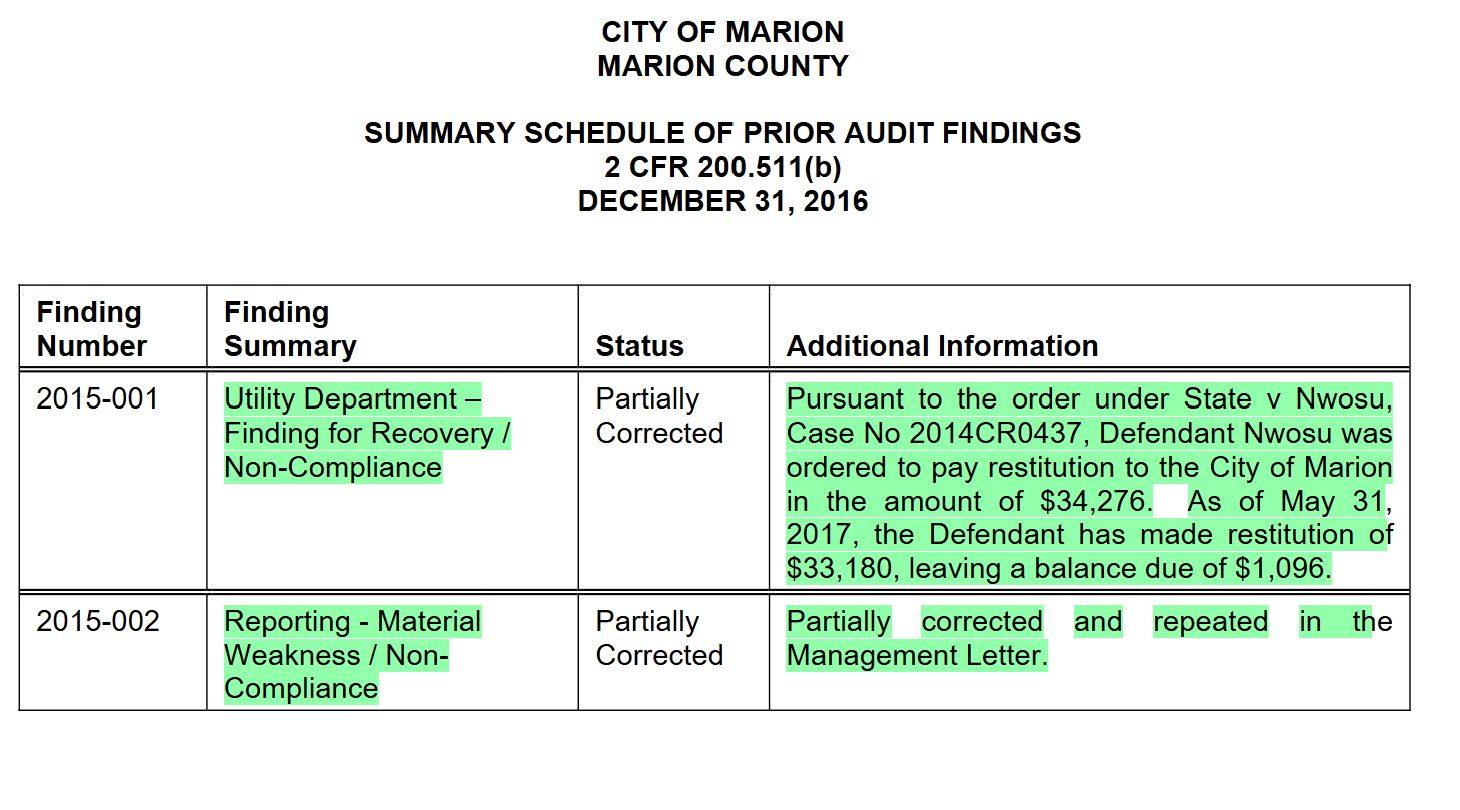
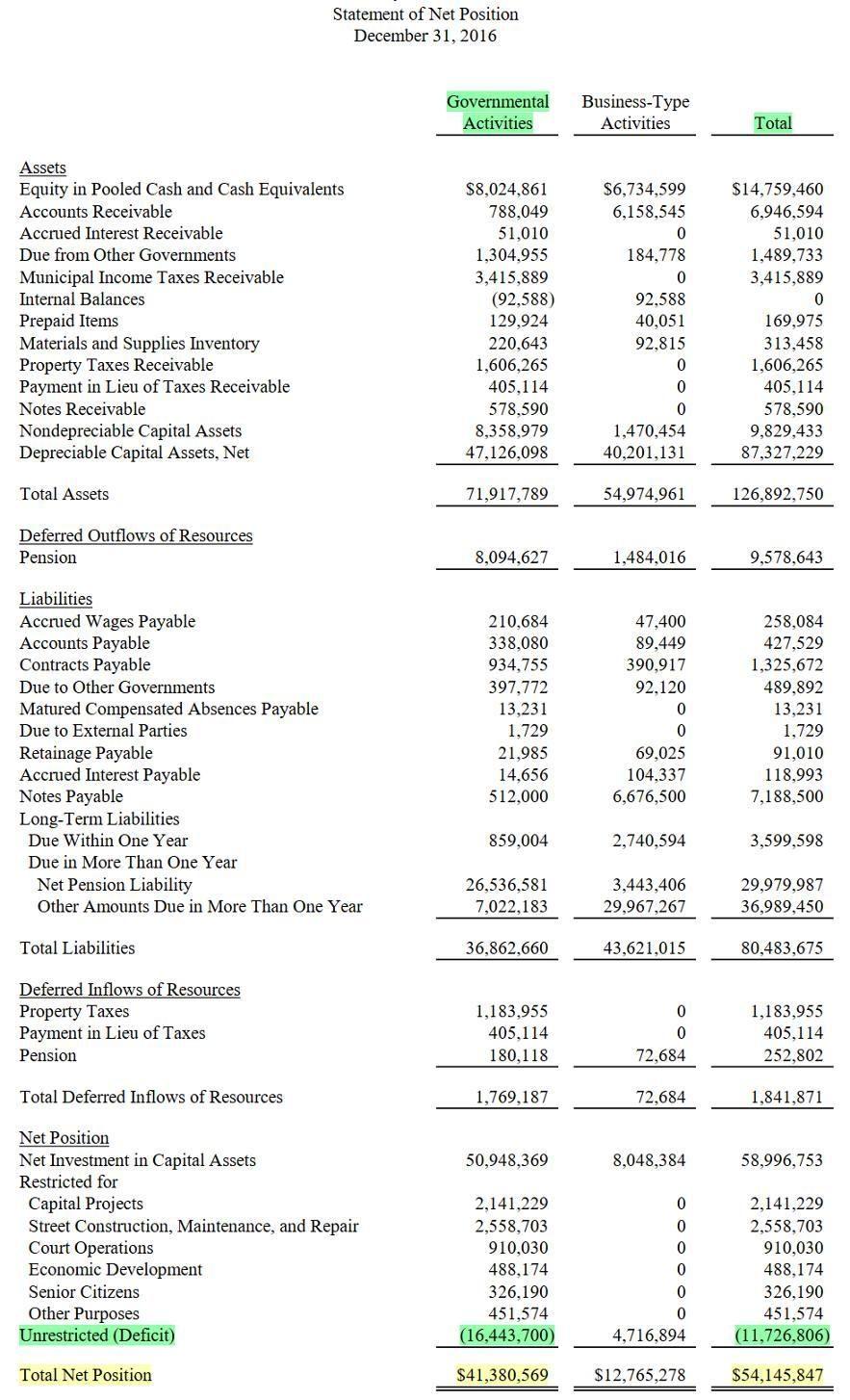
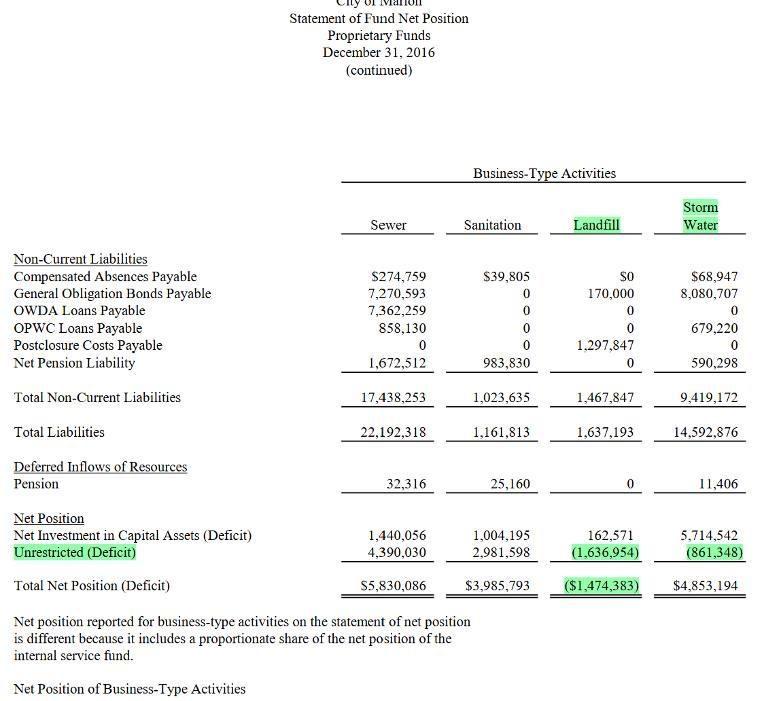
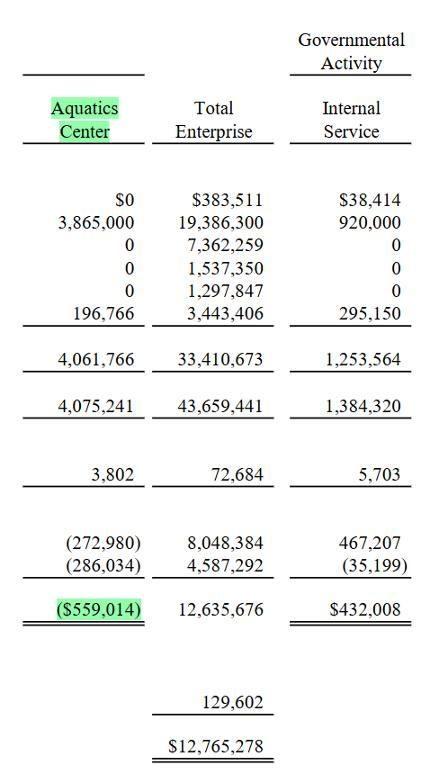
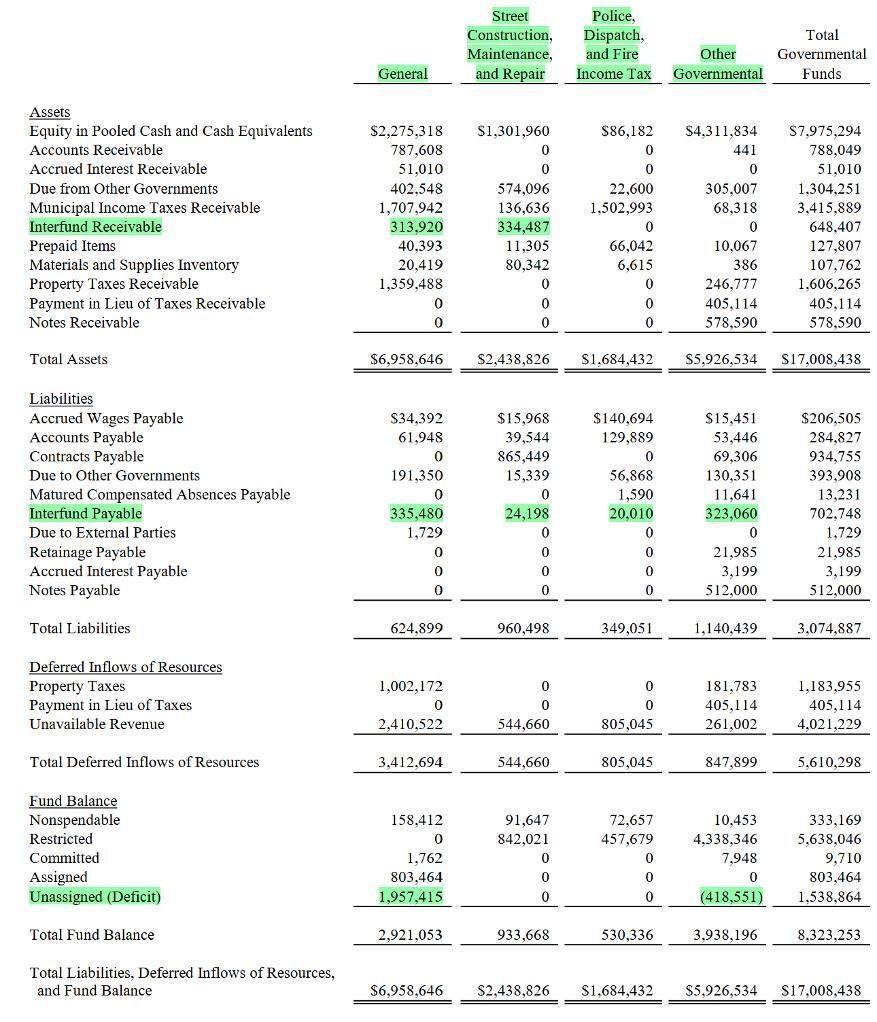

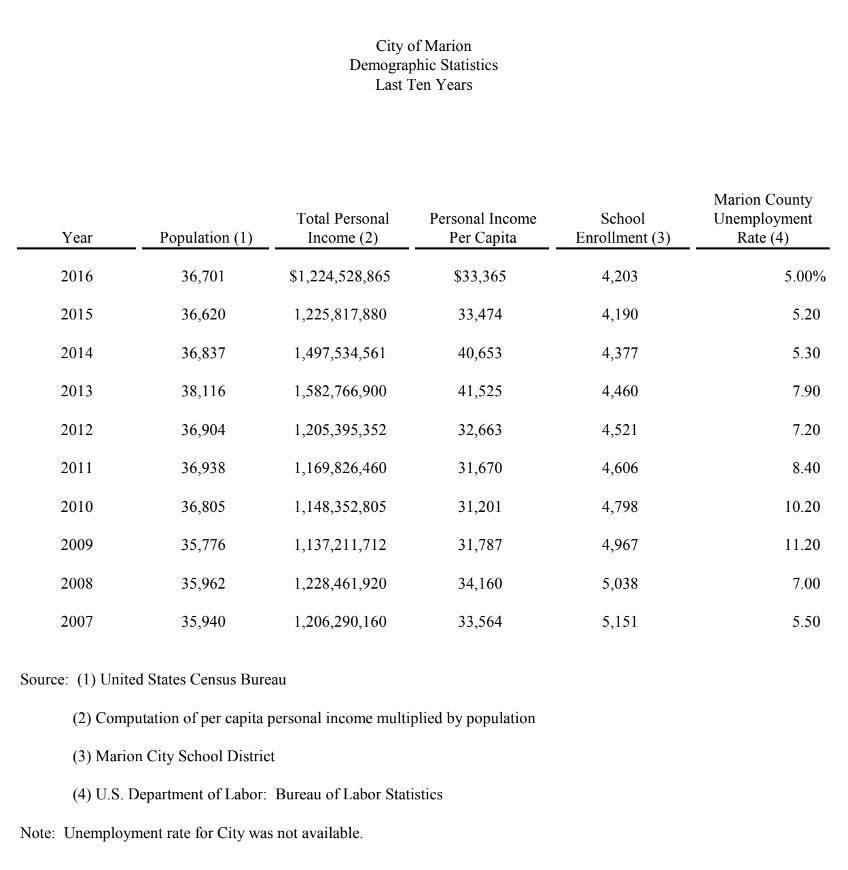
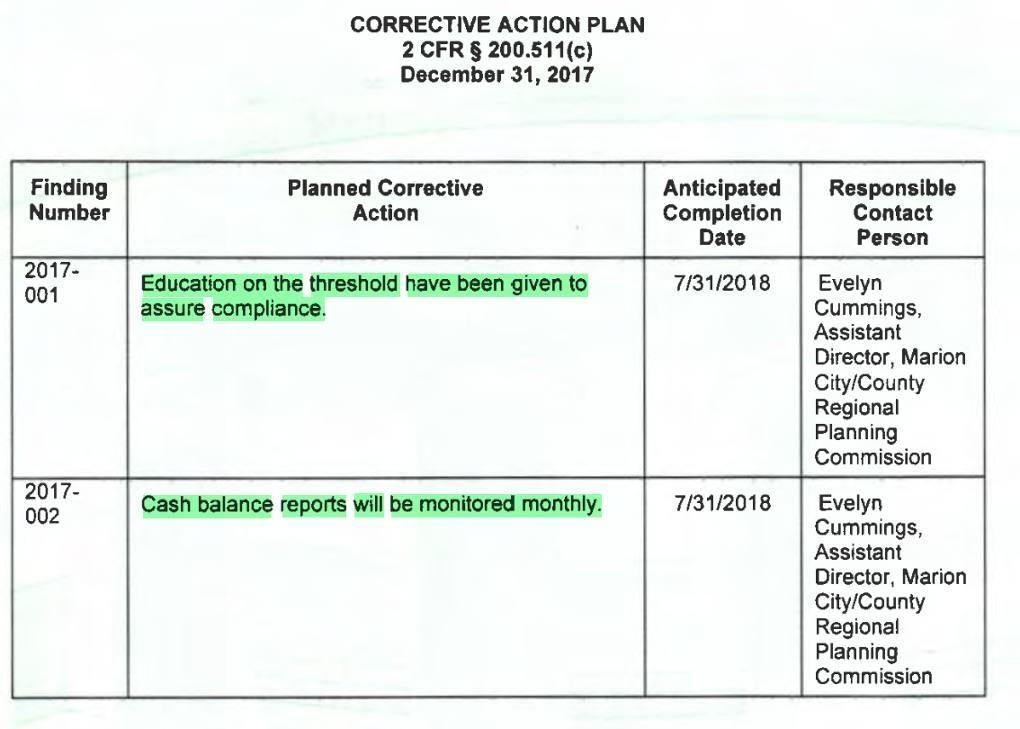
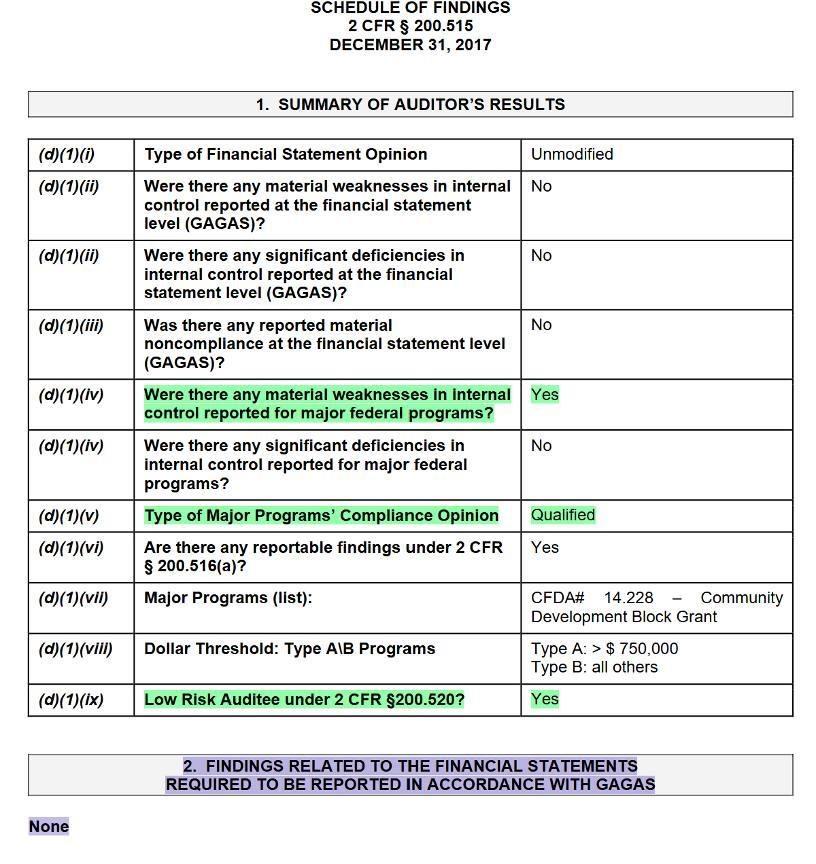
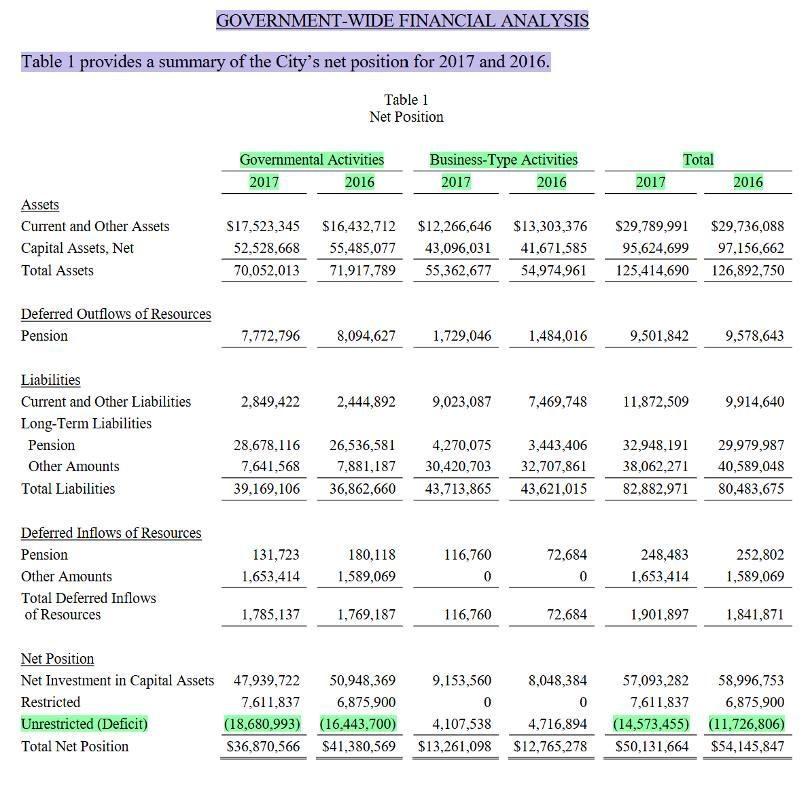
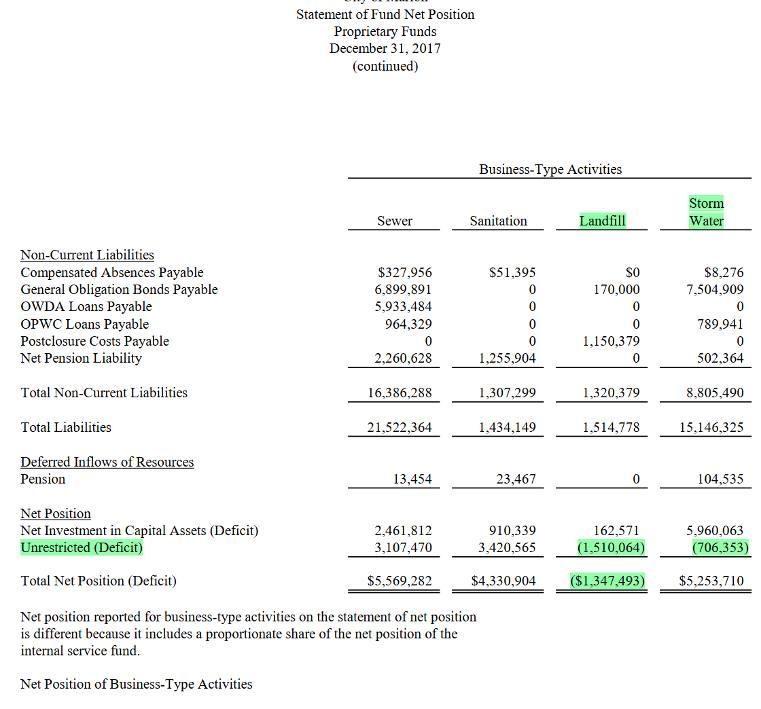
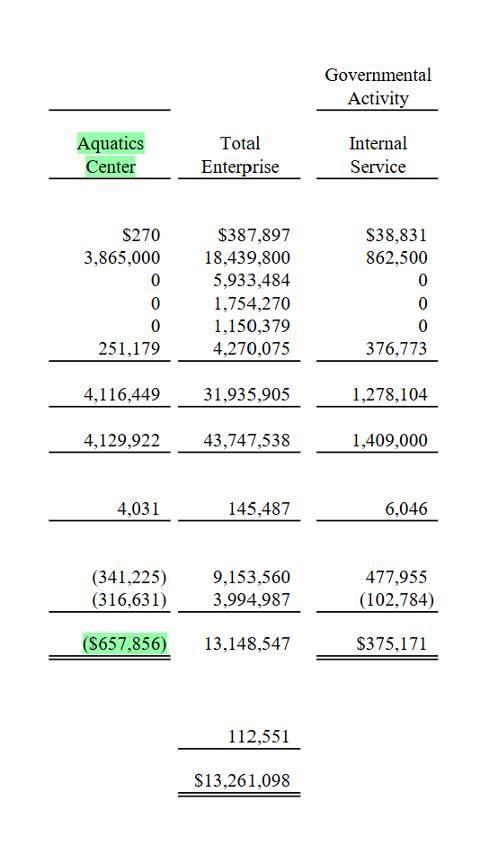
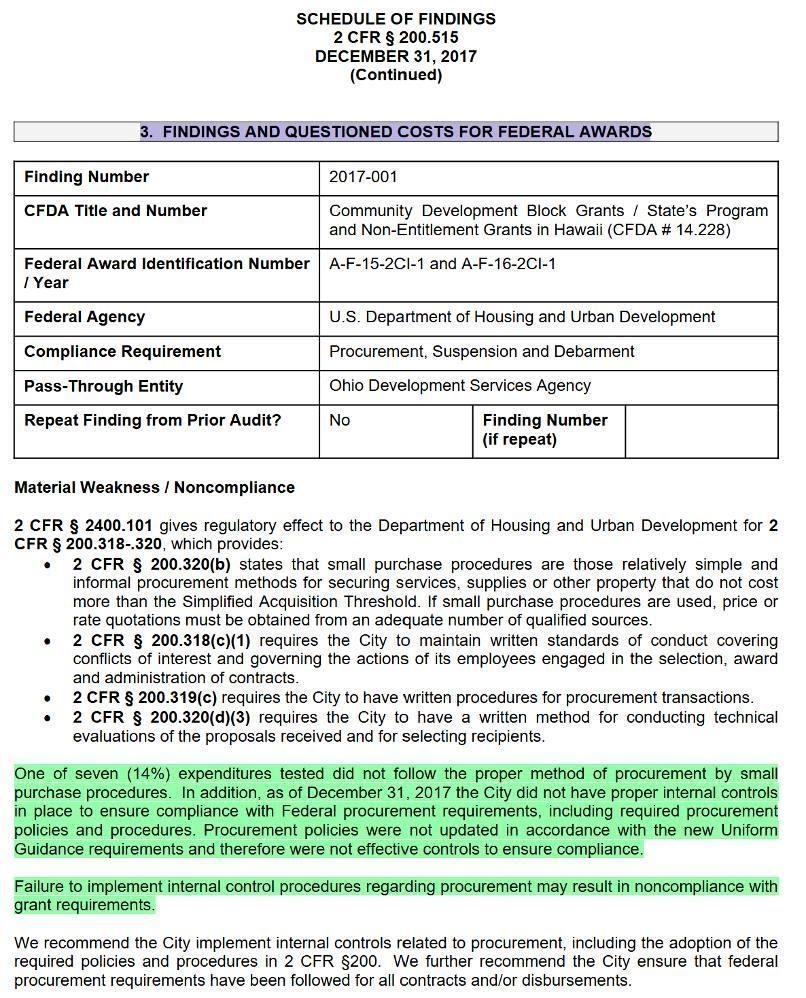
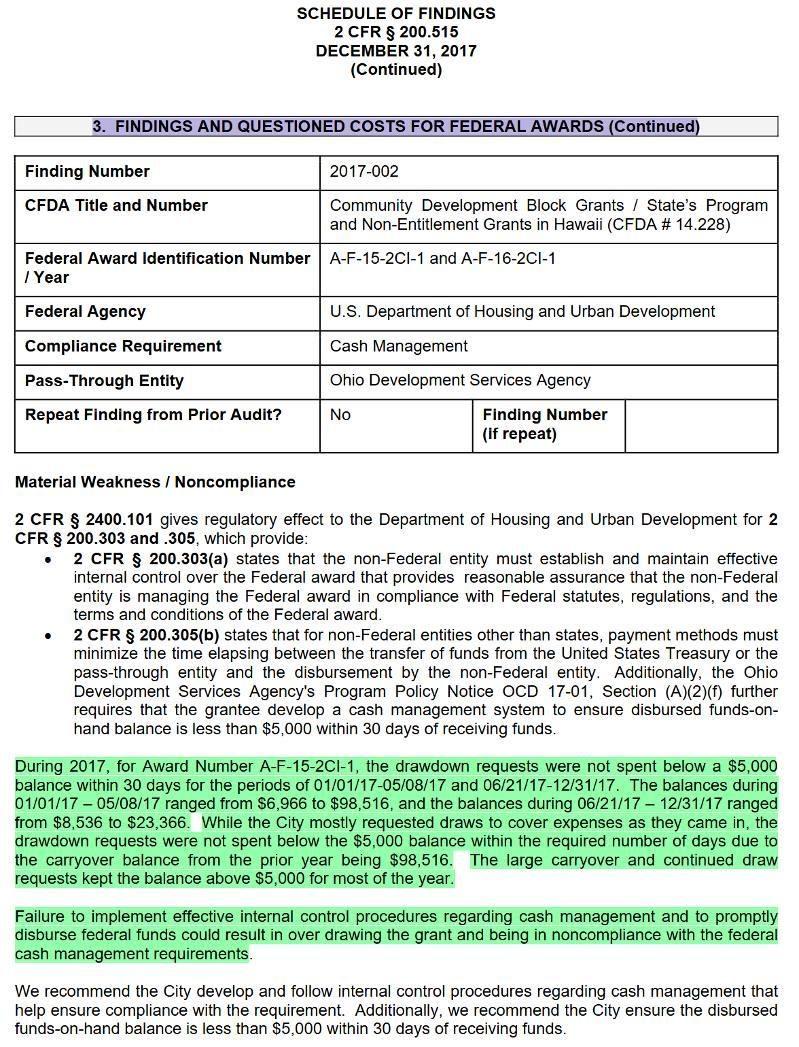
DEFICITS AND ILLEGAL SPENDING OVER APPROPRIATIONS
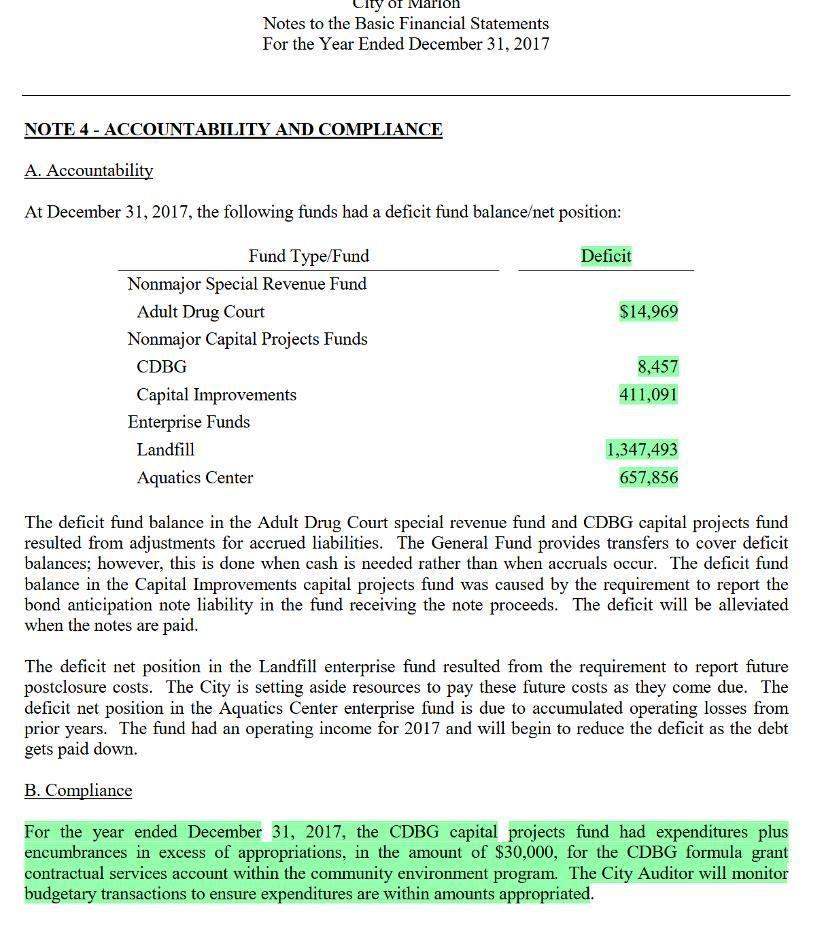
ANATOMY OF MARION’S FINANCIAL COLLAPSE 2018-2020: THE “AWARD-WINNING” CAFR MYTH, THE TRIBAL KNOWLEDGE CRASH & THE 5-YEAR “LOW-RISK” LIE THE RAPID-RELEASE IT BLUEPRINT OF SILENT SABOTAGE
The forensic IT evidence buried in state audits has been obvious to Marion Watch enterprise information technology and infrastructure specialists since 2018: Marion’s financial collapse did not suddenly begin during a “22-month” window in 2020, nor was it ever the fault of a single person or event.
Marion Watch has independently verified with multiple past and present city officials and employees—including those who worked directly in the Auditor’s office and other financial and city departments pre- and post-2019—that shared passwords, GL Override abuse, and inappropriate administrative permissions were widely known, and protected under the threat of retaliation during the former administration.
When Marion Watch formally requested the New World permissions matrices and Tyler Technologies helpdesk logs in December 2025, the city sat on the request before issuing a blanket denial in July 2026, by IT Director Boldin seemingly acting rogue and citing “security concerns.”
There is one glaring problem with this excuse: our network of IT professionals, carrying between 15 to 35 years of enterprise infrastructure experience, knows exactly what constitutes a public record.
Historical permission logs are foundational audit trails, not active security threats.
Following our recent receipt of updated New World module and contractual data, we re-requested these critical IT logs this week. Mayor Bill Collins responded stating:
“There is no public record which would be responsive to your request in the Office of Mayor.”
The Office of the Mayor did not strictly “possess” the module list or the vendor contracts either, yet they managed to produce those.
The obstruction to accessing the root digital logs continues.
It is drawing sharp suspicion from former law enforcement and legal professionals on our team and within our network as well as from all IT professionals who have experience having been involved in forensic IT audits and similar investigations.
Everyone is asking: WHAT LIES HIDDEN IN THESE RECORDS.
We can answer that question: It is the final piece of the puzzle that is the New World ERP and City of Marion Auditor’s office Pandora’s Box that can tie specific permissions and actions to our already extensive IT and financial investigation we lovingly call “Silent Sabotage”.
The Sabotage is the system, and the way it was configured and operated. The rest of the series is at the bottom of each post.
Marion Watch will obtain these records; if it requires filing suit in the Court of Claims, that is exactly what we WILL DO.
Marion Watch is more than prepared and connected to escalate this as high as necessary if the city and state officials fail the Marion Taxpayers by not looking into this devastating situation.
A situation that ran parallel with one of the largest addiction, overdose, and treatment crises in the United States of America.
Marion did not respond to the issues quickly, and the evidence shows that they likely could NOT respond due to the games being played with this compromised system.
The taxpayers deserve answers, and the evidence easily supports a thorough forensic investigation as well as state and federal law enforcement.
WHAT IS NEXT?
• This 2018-2020 installment delivers the definitive kill-shot to that political myth—acting as our battlefield softener before tonight’s IT Blueprint of the 2021 audit release.
• Sunday, we will drop a combined multi-disciplined professional grade forensic IT grading of our research accuracy.
• The Grand Finale of the IT related portion of the Silent Sabotage Overview series we will be dropping the full cumulative price tag of the Silent Sabotage from 2009 to the present by Monday afternoon.
With that being said, we will now dig into the receipts and forensic IT and financial indicators of Marion’s Silent Sabotage.
These are the Forensic IT indicators that got the attention of our team and network in 2018.
Placing the final two “award-winning” CAFRs (2018-2019) beside the 2020 turnover proves the system was already fatally compromised: bleeding millions in ghost data, burning 20-year infrastructure bonds on operating expenses, incurring IRS penalties, and operating under an illegal federal “Low-Risk” designation years before the administration changed hands.
When the personnel holding the crippled New World ERP together with undocumented workarounds exited in January 2020—taking their tribal knowledge with them while secretly retaining backdoor “God Mode” permissions—the illusion instantly collapsed.
In enterprise IT governance (ISACA COBIT and COSO doctrines), this is textbook Latent Control Collapse and Technical Debt Detonation. Masking a botched 2009 deployment with manual ledger plugs creates fatal Key-Person Dependency.
When those individuals depart, an unknowing incoming administration inherits a decade of compounded ghost data and architectural landmines blindfolded—causing the original rollout catastrophe to repeat immediately in an exponentially more violent form.
This is why automated software controls, hard-stops, and immutable audit logs are
NON-NEGOTIABLE!
A culture marked by unimpeded administrative access, on-the-record eyewitness confirmations of password sharing, and the mandatory surrender of user credentials—combined with deactivated safety hard-stops and other severe issues diagnosed by industry symptoms—is the textbook definition of a compromised software environment.
This total destruction of access control and digital chain of custody is precisely why Marion must undergo an independent, deep forensic IT investigation.
THE SUMMARY OF INSANITY HIGHLIGHTS: A DECADE OF DIGITAL SABOTAGE (2009-2017)
Before examining how the 2018-2020 handoff detonated the city’s books, look at the below highlights of the sheer insanity already baked into Marion’s New World ERP environment from installation:
• 2009 (SABOTAGED ON DAY ONE):
After weaponizing a $4,890 “Ghost Theft” to sell City Council a million-dollar digital vault, the administration bypassed the Information Systems Committee and left 70% to 80% of paid safety modules inactive. Operating with zero IT trouble-tickets, they abandoned automated Bank Reconciliations, configured Utility Billing to book unpaid bills directly to cash (“ghost revenue”), and enabled universal “Soft Stop” General Ledger (GL) overrides that allowed $628,032 in illegal overspending in year one.
• 2010-2011 (THE 22-CITATION EXPLOSION):
In strict accordance with predictive IT control doctrine, those disabled hard-stops allowed $16,062,830 in illegal spending across 22 audit citations in 2010, followed by $2,685,574 in 2011. The chaos compounded: 15 funds crashed into deficit (-$5.74 million), $1.64 million in Sanitation bills were booked as uncollectible bad debt, and a 6-month blind spot allowed the state to cut off Transit deposits completely unnoticed.
• 2012-2013 (SHADOW LEDGERS & DEBT PURGES):
Rather than fix the ERP, officials ran a parallel, off-book “Shadow QuickBooks” system, draining $77,108 from the General Fund. Plugged cash receipts triggered a formal Qualified Audit Opinion at the Aquatics Center in 2012. Meanwhile, the city purged $1.49 million in utility bad debt ($1.19M in 2012; $305k in 2013) and debuted its first glossy CAFR to bury systemic deficits inside footnotes.
• 2014-2015 (THE “CLEAN” AUDIT & THE HAWTHORNE EFFECT):
The 2014 CAFR falsely declared prior GL overrides “Fully Corrected,” balanced by plugging $160,237 in “Unrecorded Activity” ghost cash. In reality, Utility Supervisor Brenda Nwosu was actively exploiting deactivated workflows to embezzle $34,276, altering 71 accounts without a single software alert. The moment investigators pulled records in 2014, the massive utility write-offs abruptly plunged to -$7,071 (the Hawthorne Effect), only to re-explode later.
• 2016-2017 (THE -$18.6M PLUNGE):
Governmental unrestricted deficit crashed to -$16.4 million in 2016 and -$18.6 million in 2017. Officials manufactured a fake “clean” 2016 audit by injecting over $1.14 million in net “Unrecorded Activity” ledger plugs. In 2017, they executed unauthorized multi-year interfund loans and allowed $30,000 in CDBG over-appropriations, bringing the 2010-2017 GL override total to $19,303,846.
THE 5-YEAR FEDERAL “LOW-RISK” LIE PEAKS (2016-2020)
The federal oversight failure that began in 2016 reached peak absurdity between 2018 and 2020.
Under federal Uniform Guidance (2 CFR § 200.520), a municipality must complete two consecutive years without a federal Material Weakness to qualify as a “Low-Risk Auditee”. Because Marion received two major federal Material Weaknesses on its CDBG program in 2017, the city was legally barred from Low-Risk status in 2018 and 2019.
Worse, they were already illegally shielded in 2016 despite 2015 Material Weaknesses.
Then, in both 2018 and 2019, the city was hit with brand-new Federal Material Weaknesses and Noncompliance citations on its U.S. Department of Transportation Formula Grants for Rural Areas program (Finding 2018-001 and Repeat Finding 2019-001) for failing to conduct a physical inventory of capital assets for over two fiscal years and failing to track federal participation percentages in the Fixed Asset System.
Those 2018 and 2019 Material Weaknesses legally disqualified Marion from Low-Risk status in 2019, 2020, and 2021.
Yet on the official Schedule of Findings for 2018, 2019, and 2020, the Ohio Auditor of State checked “Yes” for “Low Risk Auditee under 2 CFR § 200.520” every single time—completing a five-year illegal streak (2016-2020) that suppressed federal audit testing and shielded the compromised database from forensic scrutiny.
Even the city’s federal grant schedules (SEFA) were wrong across all three years: Note F of the 2018 SEFA confessed to omitting 2017 federal expenditures; Note F of the 2019 SEFA confessed to improperly including $7,196 (2018) and $1,686 (2017) in DOJ Drug Court funds; and Note F of the 2021 SEFA confessed that $33,952 in Police Helmets grant expenditures (AL #16.034) were omitted from the 2020 SEFA.
THE “AWARD-WINNING” CAFR MYTH, THE -$39.8 MILLION DEFICIT & GHOST ACCOUNTING
Former officials repeatedly pointed to GFOA Certificate of Achievement awards in the 2018 and 2019 CAFRS as “proof” that the city’s finances and software were pristine prior to 2020.
The actual audit numbers expose catastrophic structural decay hidden behind glossy formatting:
• THE -$39.8 MILLION UNRESTRICTED DEFICIT:
By December 31, 2018, the unrestricted net position for governmental activities collapsed to a staggering negative $39,835,858 (and sat at negative $28,887,649 at the end of 2019 solely due to a statewide OP&F retiree health care stipend change).
• THE 2018-2019 “UNRECORDED ACTIVITY” PLUGS:
Because the New World Bank Reconciliation module was never used prior to 2022, and not fully used until very recently, the system could not reconcile cash to the general ledger. In Note 5 of the 2018 CAFR, the administration plugged -$3,299 into the General Fund and -$200 into the Street Fund for “Unrecorded Activity” (alongside carrying over -$42,427 from 2017).
• THE 2019 PLUG EXPLOSION (-$210,072):
In 2019—the final year prepared using the former administration’s manual year-end workarounds—Note 5 reveals that “Unrecorded Activity” cash adjustments exploded to -$210,072 across three major funds: -$82,374 in the General Fund, -$8,873 in the Street Fund, and -$118,825 in the Police, Dispatch, and Fire Income Tax Fund. Over $210,000 moved through the city’s accounts completely off the digital books in a single “award-winning” year.
• VERITAS CONFIRMED $600,000 VARIANCES & THE 2019 WALL:
During a July 24, 2023 presentation to City Council, Veritas Managing Director Greg Blate confirmed that running standard fund balance versus cash position reports out of New World generated unexplained differences of “upwards of $600,000” in 2019, 2020, and 2021. Yet when Veritas attempted to adjust the 2019 baseline to fix the math, City Council members admitted on the February 12, 2024 council record that they explicitly ordered Veritas not to go back into 2019.
• VERITAS EXPOSED DORMANT CONTROLS, INHERITED FAILURES & THEFT RISKS:
Veritas explicitly warned City Council that the city’s severely underutilized system tools and unconfigured safety controls left the municipality dangerously exposed, inviting a high risk for internal theft and fraud. The firm confirmed the reconciliation failures were an “inherited problem” predating 2020, noting that the built-in Bank Reconciliation module had never been utilized, and that nine different municipal cash accounts had been improperly lumped into a single generic account in the software.
• VERITAS EXPOSED UTILITY BILLING “GHOST REVENUE” & $137,000 GLITCHES:
Blate isolated the historically problematic Utility Billing module, confirming the software was improperly configured as a hybrid cash/accrual model. This catastrophic setup generated massive “ghost revenue,” automatically inflating cash balances the moment a bill was generated—even if the resident had not actually paid. The configuration was so corrupted that toggling a single system report setting swung totals by $137,000 without booking an actual adjustment.
• 72 JOURNAL ENTRIES, THE 2021 AUDIT CRASH, & THE “WALK AWAY”:
To attempt to fix the 2020-2021 mess, Veritas drafted 72 journal entries totaling over $20 million in gross adjustments. However, because the administration and council deliberately restricted their access from examining pre-2020 baseline data or diving deep into Utility Billing root causes, Veritas ultimately walked away from the engagement. The 2021 State Audit subsequently cited the city because those dozens of adjustments were blindly posted to the ledgers without supporting documentation or working papers from the firm, triggering the devastating Qualified Audit Opinions.
• THE 2020 TRIBAL KNOWLEDGE CRASH & THE STATE AUDITOR’S CONFESSION:
In January 2020, former Deputy Auditor Cathy Chaffin transferred to become Service Director—taking the undocumented manual reconciliation workarounds with her, while secretly retaining “User specific / Template overridden” full “God Mode” administrative permissions in New World for 14 months after leaving the office (as proven by March 8, 2021 system screenshots).
Without that insider workaround, the December 31, 2020 reconciliation immediately failed by $314,347 (plus $47,462 in unsupported deposits in transit), triggering Finding 2020-001—and leaving $635,348 in “Unsupported City Adjustments” on the December 31,2020 balance sheet ($476,417 Governmental and $158,931 Business-Type) that later triggered the 2021 Qualified Audit Opinions.
As State Auditor GAAP Team representative Belinda Miller confessed to City Council on November 8, 2021, state auditors had known for “10-12 years” that Marion’s software was misconfigured on a hybrid cash/accrual basis that booked unpaid utility bills directly to cash, relying on a narrow year-end workaround path that collapsed when reports were not generated in a tiny window on December 31, 2020.
GL OVERRIDES, THE $13 MILLION GHOST BUDGET & THE $20.6 MILLION RUNNING TOTAL
Throughout 2018, 2019, and 2020, budgetary hard-stops in New World remained deactivated—operating as “Soft Stops” where staff simply clicked past pop-up warnings to spend accounts into the negative:
• 2018 GL OVERRIDES (NOTE 4B):
The Capital Improvements fund bypassed controls to overspend appropriations by $5,127, while the Bond Retirement fund illegally appropriated $5,352 more than its available resources.
• 2019 GL OVERRIDES (NOTE 4B):
Four separate funds bypassed budgetary hard-stops to overspend legal appropriations by a combined $13,181: Police Contractual Services ($237), Capital Improvements ($9), Sewer Principal Retirement ($957), and Storm Water Capital Outlay ($11,978).
• 2020 APPROPRIATING $13,039,298 IN GHOST MONEY (FINDING 2020-002):
With the Budgeting module’s certificate validation disabled and the manual year-end cover-up gone, ten funds were targeted in 2020 with appropriations exceeding certified estimated resources by a combined $13,039,298. This massive over-appropriation wasn’t a sudden 2020 anomaly; it was the direct, systemic symptom of a broken foundation dating back to 2009—an architectural flaw that State Auditor GAAP Team member Belinda Miller officially confessed auditors had known about for “10-12 years” before the workflow collapsed:
• Sewer Fund: $11,078,059 excess
• Capital Improvement Fund: $737,890 excess
• Airport Improvement Fund: $379,310 excess
• Police, Dispatch, and Fire Income Tax Fund: $313,574 excess
• CDBG Fund: $201,906 excess
• Central Garage Fund: $185,898 excess
• Street Construction, Maintenance, and Repair Fund: $75,856 excess
• Critical Infrastructure Grant Fund: $35,800 excess
• ADAMH Grant Fund: $26,509 excess
• Municipal Court Docket Specialist Fund: $4,496 excess
• 2020 GL OVERRIDE EXPLOSION (FINDING 2020-003): Universal GL override permissions allowed ten budgetary accounts to illegally overspend appropriations by $1,293,911 at year-end 2020:
• Street Construction, Maintenance, and Repair (Contractual Services): $537,802 excess
• Police, Dispatch, and Fire Income Tax (Fire Capital Outlay): $238,164 excess
• Municipal Motor Vehicle License (Streets Contractual Services): $190,109 excess
• Police, Dispatch, and Fire Income Tax (Police Capital Outlay): $138,595 excess
• Tax Incremental Financing (Transfers-Out): $93,621 excess
• Sewer Fund (Principal Retirement): $40,135 excess
• Airport Improvement (Capital Outlay): $29,433 excess
• Airport Improvement (Contractual Services): $21,266 excess
• Storm Water (Interest Expense): $3,675 excess
• Police and Fire Pension (Fire Contractual Services): $1,111 excess PLUS: An unappropriated $1,184,754 corrective tax payment made on February 9, 2021 that was kept off the accounting books until November 10, 2021 and not appropriated until November 8, 2021—nine months after the cash left the bank!
• THE RUNNING TOTAL:
Adding the 2018 ($5,127), 2019 ($13,181), and 2020 ($1,293,911) schedule over-expenditures to the 2010-2017 total ($19,303,846) drives the cumulative General Ledger (GL) Override running total from 2010 through 2020 to an astronomical $20,616,065 (and $21,800,819 when including the unappropriated $1.18 million IRS payment cited in Finding 2020-003).
To be fair and completely objective, we were actually kind in our baseline calculations by excluding the 2009 rollout year—conceding that the software was not yet fully utilized across all departments during its initial launch.
However, if you add back that initial 2009 Stormwater Fund override ($628,032), the true cumulative running total from day one through 2020 erupts to $21,244,097 (and an astonishing $22,428,851 all-in).
From an IT forensics perspective, this level of override usage is an absolute indictment of the system’s governance.
In a properly structured enterprise architecture, a General Ledger override is a high-security emergency valve that should only be executed by the City Auditor under strict, documented executive oversight.
It is designed to be an exceptionally rare event—certainly not something utilized casually, let alone recurring in the tens of millions of dollars, or hundreds of thousands to millions of dollars per year across multiple funds.
Bypassing budgetary hard-stops to clear unappropriated spending year after year destroys the relational database’s structural integrity and transforms an expensive “digital vault” into an open-air cash register.
THE IRS TAX NIGHTMARE: PROVEN ACROSS BOTH ADMINISTRATIONS
Politicians tried to blame 2020 for the city’s IRS troubles, but the 2020 Single Audit proves the IRS compliance failures began under the Carr administration and were magnified by disabled IT controls:
• FINDING 2020-006 (KELLY CARR’S $22,500 IRS FINDING FOR RECOVERY):
The State Auditor issued a formal Finding for Recovery for $22,500 against former Auditor Kelly Carr and her bonding company (Auto-Owners Insurance) because her office filed 450 Forms W-2 and 1099 late on February 20, 2019 (for tax year 2018), incurring a $50-per-return IRS penalty that the city paid in November 2020.
• FINDING 2020-004 (THE $154,399 ACH TAX ROUTING FINDING FOR RECOVERY):
Beginning in June 2020, 3rd and 4th quarter federal payroll tax withholdings ($1,184,754) were erroneously remitted to the Ohio Department of Taxation instead of the IRS via the Magic-Wrighter ACH system, going undetected until January 2021 and triggering a $154,399 Finding for Recovery for late penalties and interest against former Auditor Robert Landon III. As former Auditor employee Kimberly Hutchison detailed in her sworn deposition, city IT staff never enabled audit logging in the Magic-Wrighter ACH system, vendor validation masks were absent, an inactive “ghost employee” was inserted into a payroll batch, and a former payroll specialist was caught logging in during off-hours (nights and weekends). Had the New World Bank Reconciliation module and ACH validation controls been active, a $1.18 million routing mismatch would have been flagged within 30 days.
BURNING 20-YEAR BONDS ON NON-CAPITALIZED EXPENSES & THE $6.08M UTILITY BLOAT
How did the city keep operating in 2018 and 2019 while its governmental unrestricted net position was -$39.8 million underwater?
• RAIDING LONG-TERM INFRASTRUCTURE DEBT FOR OPERATING EXPENSES:
In Note 18 of the 2018 CAFR, the city confessed to spending $3,397,450 of 20-year General Obligation Bond and OWDA loan proceeds on items that were “not capitalized”: $425,040 from the 2010 Bonds, $837,731 from the 2012 Bonds, $929,287 from the 2018 Bonds, and $1,205,392 from OWDA Sewer loans. In Note 17 of the 2019 CAFR, the city reported $2,980,738 in long-term debt spent on non-capitalized items ($326,800 from 2010 Bonds, $827,731 from 2012 Bonds, $903,036 from 2018 Bonds, and $923,171 from OWDA Sewer loans).
• HOARDING $6.08 MILLION IN “GHOST” UTILITY RECEIVABLES:
Because the administration stopped purging bad debt after the 2014 embezzlement investigation and left Utility Billing on a hybrid setup, uncollected business-type accounts receivable bloated to $5,863,115 in 2018 and $6,086,945 in 2019 to mask the insolvency of the enterprise funds on paper.
• UNINSURED PUBLIC CASH (CUSTODIAL CREDIT RISK):
Note 6 of the 2018 CAFR admitted that $730,959 of the city’s bank balance was exposed because it was left completely uninsured and uncollateralized when the city allowed a bank to reduce its collateral floor to 50%. They did it again in 2019 ($18,439) and 2020 ($31,280), leaving taxpayer money legally exposed to bank failure due to neglected treasury management workflows.
2018-2020 AUDIT FINDINGS: THE IT BLUEPRINT
The forensic IT blueprint below correlates the 2018, 2019, and 2020 audit findings directly to the bypassed New World ERP modules and controls:
• FINDINGS 2018-001 & 2019-001 (CAPITAL ASSET INVENTORY MATERIAL WEAKNESSES) [Module Configuration: Asset Management / Fixed Assets]:
The city paid $2,385.02 annually for the New World Asset Management module, yet left it dormant, misconfigured, or unconfigured. As a result, the city failed to conduct a physical inventory of capital assets for over two fiscal years and failed to track federal participation percentages in the Fixed Asset System, triggering back-to-back Federal Material Weaknesses in 2018 and 2019.
• 2018, 2019 & 2020: THE 5-YEAR “LOW-RISK” COMPLIANCE FAILURE [Module Configuration: Federal Compliance / GASB Reporting]:
Despite major federal program Material Weaknesses in 2015, 2017, 2018, and 2019, the city lacked automated federal compliance tracking and was illegally designated a “Low-Risk Auditee” under 2 CFR § 200.520 in 2018, 2019, and 2020—completing a five-year streak of suppressed federal audit testing.
• 2018 & 2019 NOTE 5 + FINDING 2020-001 (BANK-TO-BOOK RECONCILIATION COLLAPSE) [Permission / Module Configuration:
Bank Rec & Hybrid Cash/Accrual Setup]: The billed Bank Rec module ($1,590.97/year) was left completely unused until 2022, and not fully utilized until very recently, while Utility Billing was misconfigured on a hybrid cash/accrual basis that posted non-cash billings directly to cash—inflating New World revenue figures without actual cash transactions taking place. After forcing the CAFR to balance with -$3,499 (2018) and -$210,072 (2019) in manual “Unrecorded Activity” plugs, the loss of undocumented workarounds in 2020 left the December 31, 2020 bank-to-book reconciliation out of balance by $314,347 (plus $47,462 in unsupported deposits in transit) and left $635,348 in “Unsupported City Adjustments” at year-end 2020.
• FINDING 2020-002 (APPROPRIATIONS EXCEEDING ESTIMATED RESOURCES) [Module Configuration: FM Base Suite / Budgeting Validation]:
The Budgeting module’s hard-stop validation against County Budget Commission certificates was left inactive, allowing $5,352 in excess appropriations in 2018 (Note 4B) before exploding into $13,039,298 in excess appropriations across ten funds in 2020—including $11,078,059 in the Sewer Fund alone.
• 2018 & 2019 NOTE 4B + FINDING 2020-003 (GL OVERRIDES / EXPENDITURES EXCEEDING APPROPRIATIONS) [Permission / Module Configuration: Purchasing & GL Override Soft-Stops]:
Because budgetary hard-stops were reduced to a pop-up warning and GL override permissions were left active across user profiles until October 27, 2025, users forced through $5,127 (2018), $13,181 (2019), and $1,293,911 (2020) in line-item over-appropriations, plus an unappropriated $1,184,754 corrective tax disbursement.
• FINDINGS 2020-004 & 2020-006 (IRS FINDINGS FOR RECOVERY – $176,899 TOTAL) [Permission / Module Configuration: Payroll, Compliance Calendaring & Magic-Wrighter ACH Logging]:
Lack of automated tax filing alerts resulted in Kelly Carr’s $22,500 Finding for Recovery for filing 450 W-2/1099 returns late in February 2019 (Finding 2020-006).
Disabled ACH audit trails, missing vendor validation masks, and abandoned bank reconciliations allowed $1,184,754 in 2020 federal payroll taxes to be misdirected to the State of Ohio for seven months, resulting in a $154,399 Finding for Recovery (Finding 2020-004).
• FINDING 2020-005 (VACATION LEAVE OVERPAYMENT FINDING FOR RECOVERY) [Module Configuration: HR / Payroll Leave Accrual Validation]:
Unconfigured leave-payout validation rules allowed an overpayment of vacation leave, resulting in a formal Finding for Recovery in 2020.
NEGATIVE BALANCES & GENERAL FUND BAILOUTS (THE DISABLED DEFICIT STOPS)
With the General Ledger’s deficit hard-stops disabled, structural deficits and massive bailout transfers drained the city across all three years:
• THE POLICE & FIRE BAILOUT BLEED:
In 2018, the Police, Dispatch, and Fire Income Tax Fund brought in $7,988,842 in revenue but spent $13,878,239, requiring a $5,956,643 bailout transfer from the General Fund. In 2019, it brought in $8,161,451 against $13,924,308 in expenditures, requiring another $5,934,600 General Fund bailout.
• THE TRANSFER TIMING SHELL GAME (NOTE 4A):
The Auditor explicitly confessed to manipulating the books to hide these insolvencies. In Note 4A across these audits, the administration admitted: “The General Fund provides transfers to cover deficit balances; however, this is done when cash is needed rather than when accruals occur.” They were intentionally timing bailout transfers to mask their true accrual deficits at year-end.
• ILLEGAL LONG-TERM INTERFUND LOANS (NOTE 12):
The city used the General Fund as an unauthorized lending bank to prop up other struggling funds. Note 12 of the 2018 and 2019 CAFRs explicitly admitted that the balance owed to the General Fund “consists of loans made to provide working capital for operations or projects”—and that tens of thousands of dollars would “not be received within one year.”
• 2018 DEFICIT BALANCES (NOTE 4A & STATEMENT OF NET POSITION):
Governmental Activities unrestricted net position crashed to -$39,835,858; the Landfill Enterprise Fund ran a total deficit of -$1,196,546 (-$1,359,117 unrestricted); the Aquatics Center ran a total deficit of -$772,832; Storm Water ran an unrestricted deficit of -$925,848; and the Adult Drug Court fund ran a deficit of -$3,945.
• 2019 DEFICIT BALANCES (NOTE 4A & STATEMENT OF NET POSITION):
Governmental Activities unrestricted net position sat at -$28,887,649;the Landfill deficit sat at -$979,282 (-$755,248 unrestricted); Storm Water ran an unrestricted deficit of -$842,347; the Marion Area Transit fund fell into a -$1,576 deficit; and the Municipal Court Docket Specialist fund ran a -$1,035 deficit.
YEAR-END SUMMARY: STATE LAWS & FEDERAL NONCOMPLIANCE (2018-2020)
• FEDERAL LAWS & REGULATIONS BROKEN:
18 U.S.C. § 1030 (Computer Fraud and Abuse Act violations via unauthorized “God Mode” administrative access); 18 U.S.C. § 1001 (False Statements to federal agencies regarding financial integrity); 2 CFR § 200.302 & 2 CFR § 200.303 (Failure to establish and maintain effective internal controls over financial management systems); 26 U.S.C. §§ 3102(a), 3402(a), 3403 & 7501(a) (Failure to remit withheld federal payroll taxes held in trust for the United States, resulting in a $154,399 Finding for Recovery); 26 U.S.C. § 6071 & 26 CFR §§ 31.6051-2, 31.6071(a)-1(a) (3) & 301.6721-1 (Failure to timely file 450 W-2/1099 information returns by January 31, resulting in a $22,500 Finding for Recovery against Kelly Carr); 2 CFR § 200.313(d) & 2 CFR § 1201.1 (Failure to conduct biennial physical inventories of federal capital assets and maintain required property records in 2018 and 2019); 2 CFR § 200.510(b) (Submitting inaccurate Schedules of Expenditures of Federal Awards requiring prior-year corrections in 2018, 2019, and 2021); and 2 CFR § 200.520 (Improperly receiving Low-Risk Auditee status in 2018, 2019, and 2020 despite active Material Weaknesses in 2017, 2018, and 2019).
• STATE LAWS BROKEN:
ORC § 2913.04 (Unauthorized use of a computer, system, or network via retained administrative permissions); ORC § 2913.42 / § 2921.44 (Tampering with records via undocumented ledger plugs and dereliction of duty in operating a compromised financial system); ORC § 117.28 (Findings for Recovery issued for $22,500 and $154,399 in illegal expenditures of public money for avoidable IRS penalties and interest, plus vacation leave overpayment); ORC § 5705.39 (Appropriations exceeding certified estimated resources by $5,352 in 2018 and $13,039,298 across ten funds in 2020); ORC § 5705.41(B) (Budgetary expenditures exceeding appropriations via GL overrides in 2018, 2019, and $1,293,911+ in 2020, plus spending $1,184,754 without appropriation for nine months); Ohio Admin. Code §§ 117-2-01 & 117-2-02 (Failure to maintain internal controls, accurate accounting records, and monthly bank-to-book reconciliations, resulting in -$213,571 in 2018-2019 “Unrecorded Activity” plugs, a $314,347 unreconciled variance in 2020, and $635,348 in unsupported 2020 year-end adjustments); and ORC § 135.18/ § 135.182 (Leaving $18,439 in public bank deposits uninsured and uncollateralized in 2019).
OFFICIAL EXHIBITS & PRIMARY SOURCE RECORDS (2018–2020 IT Blueprint)
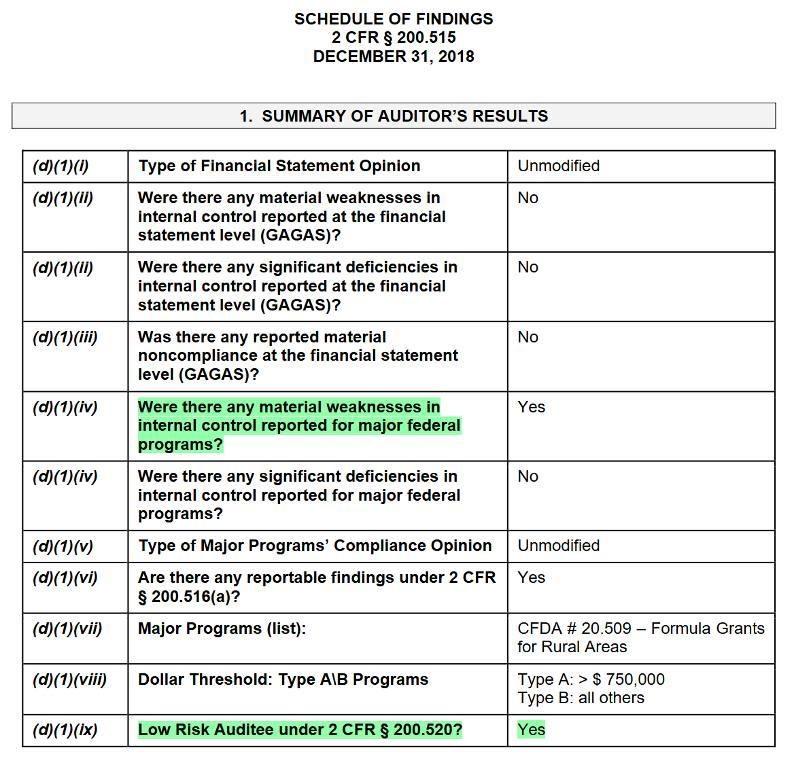
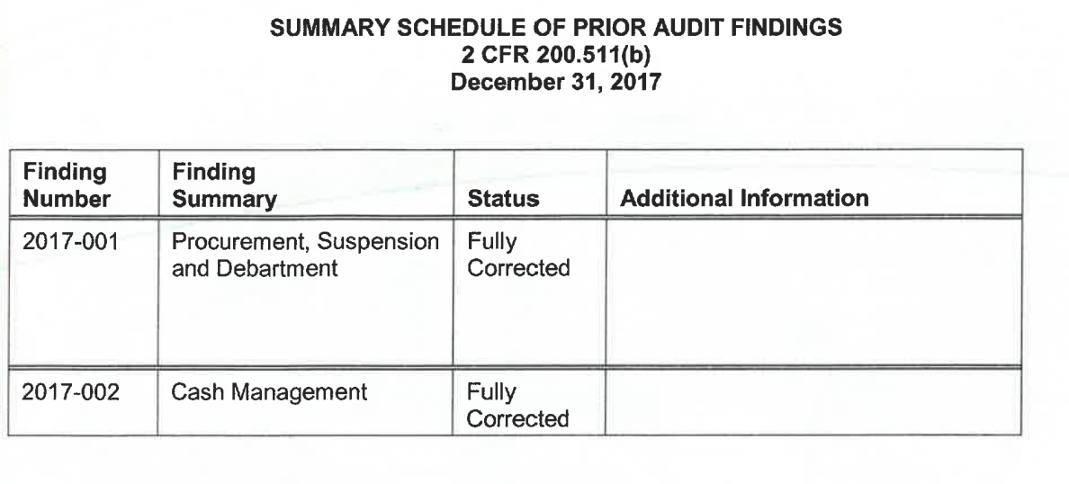
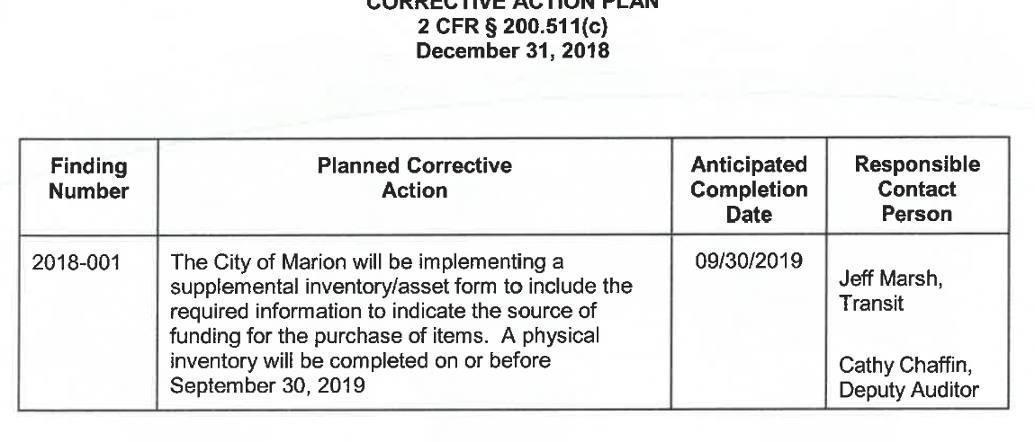
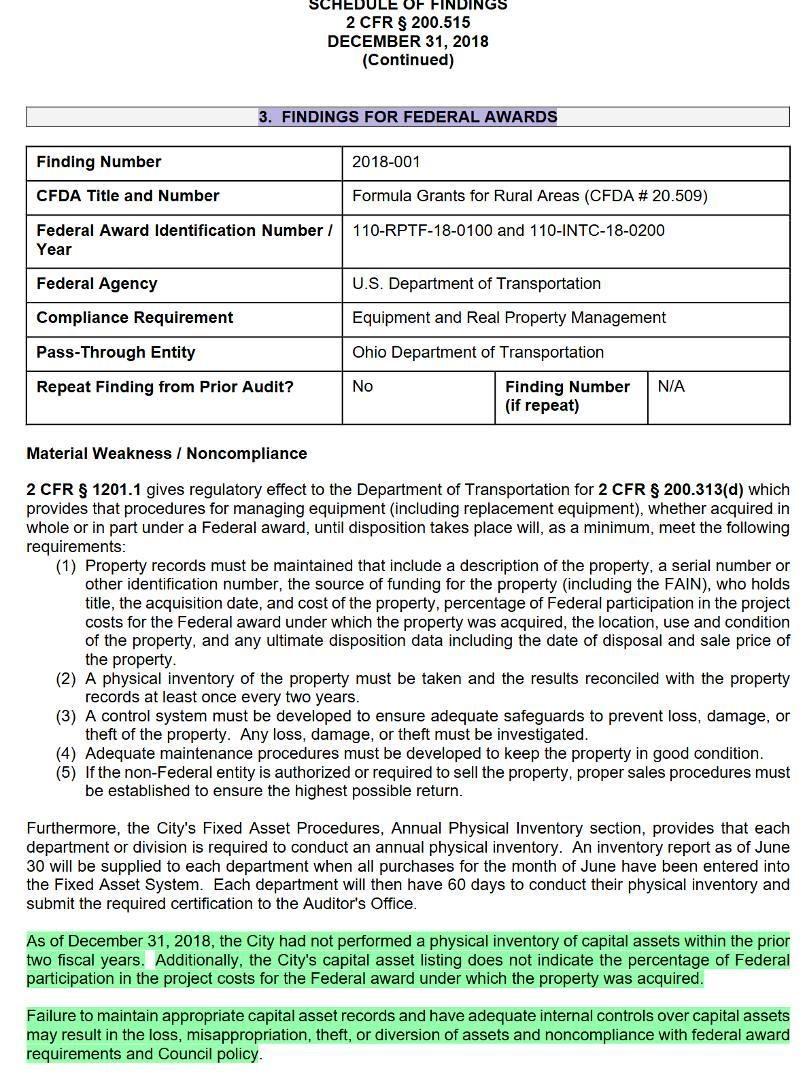
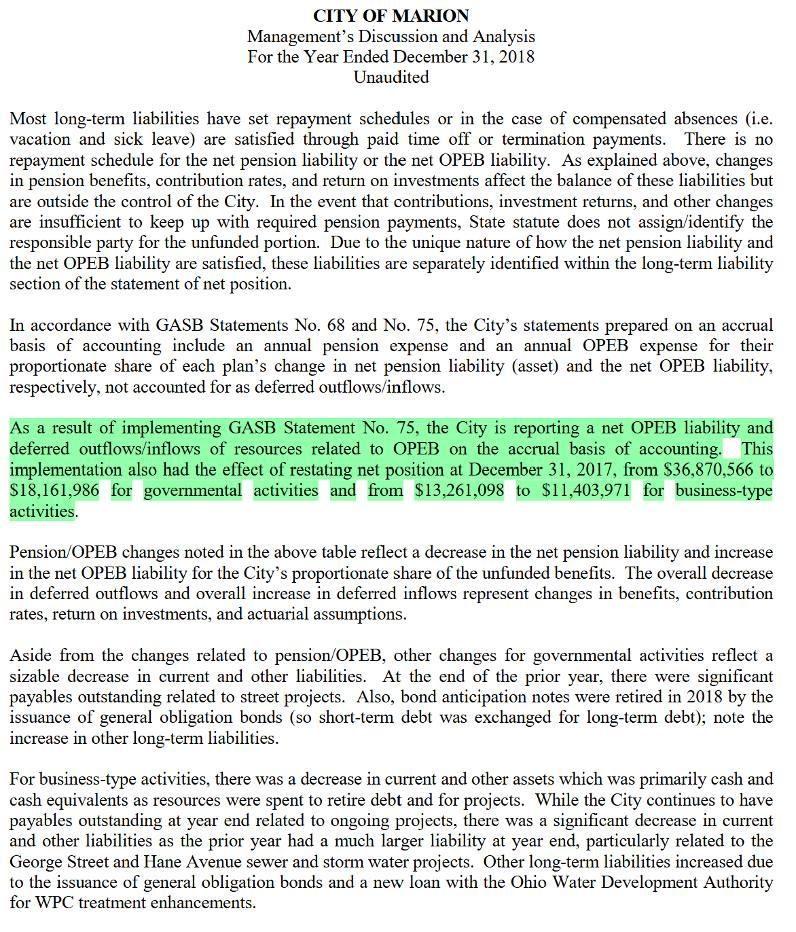
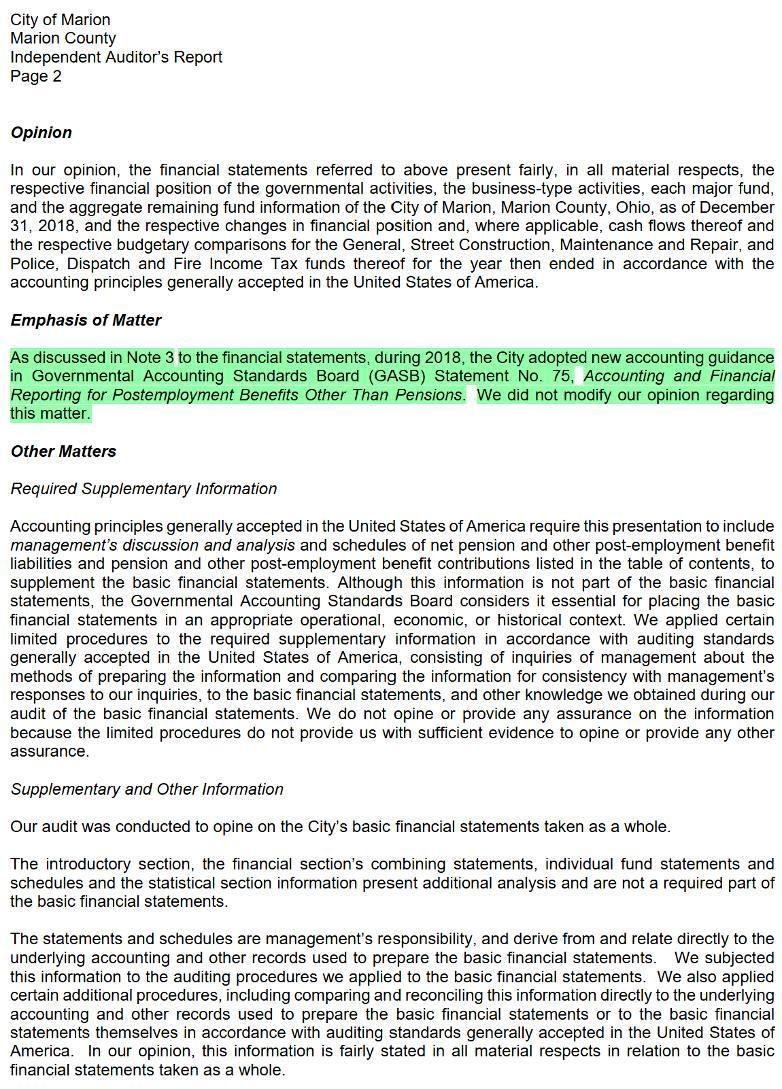
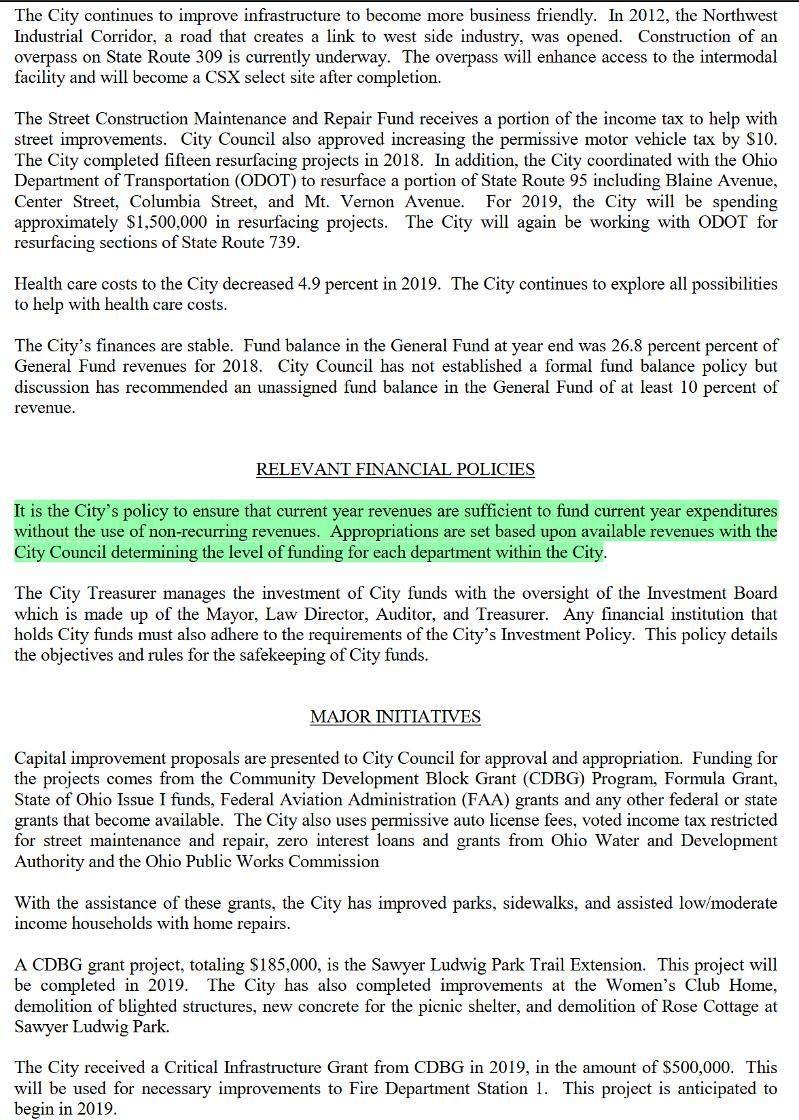
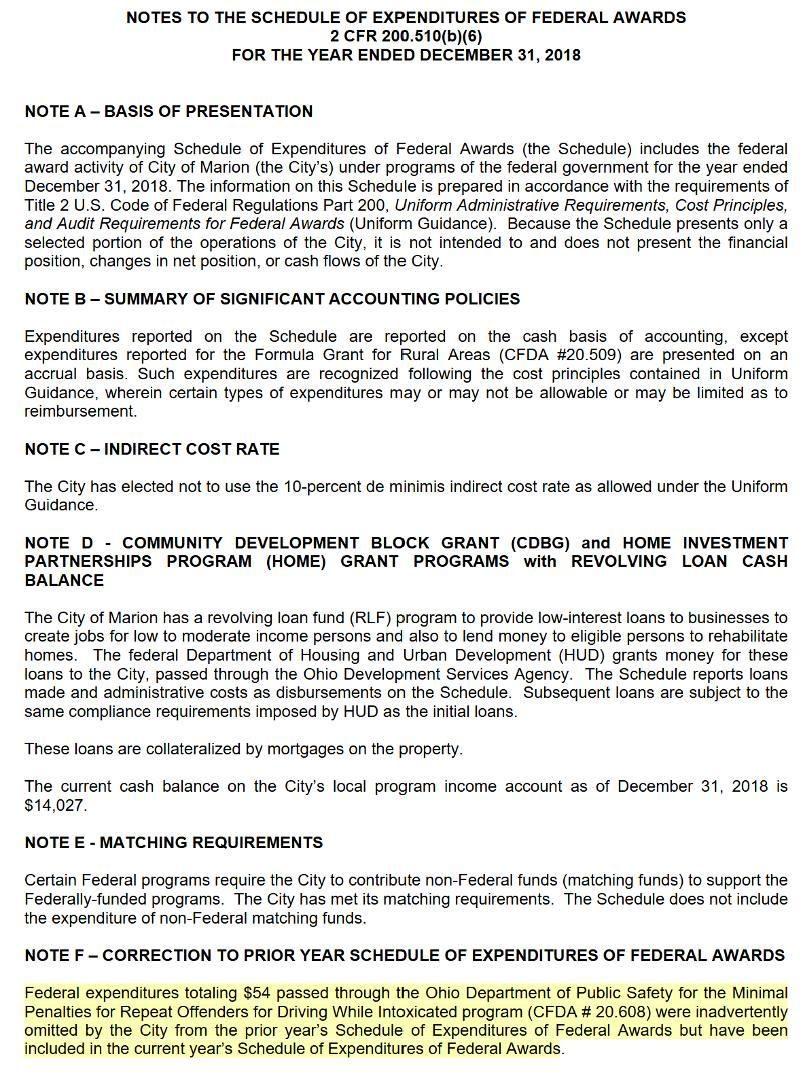
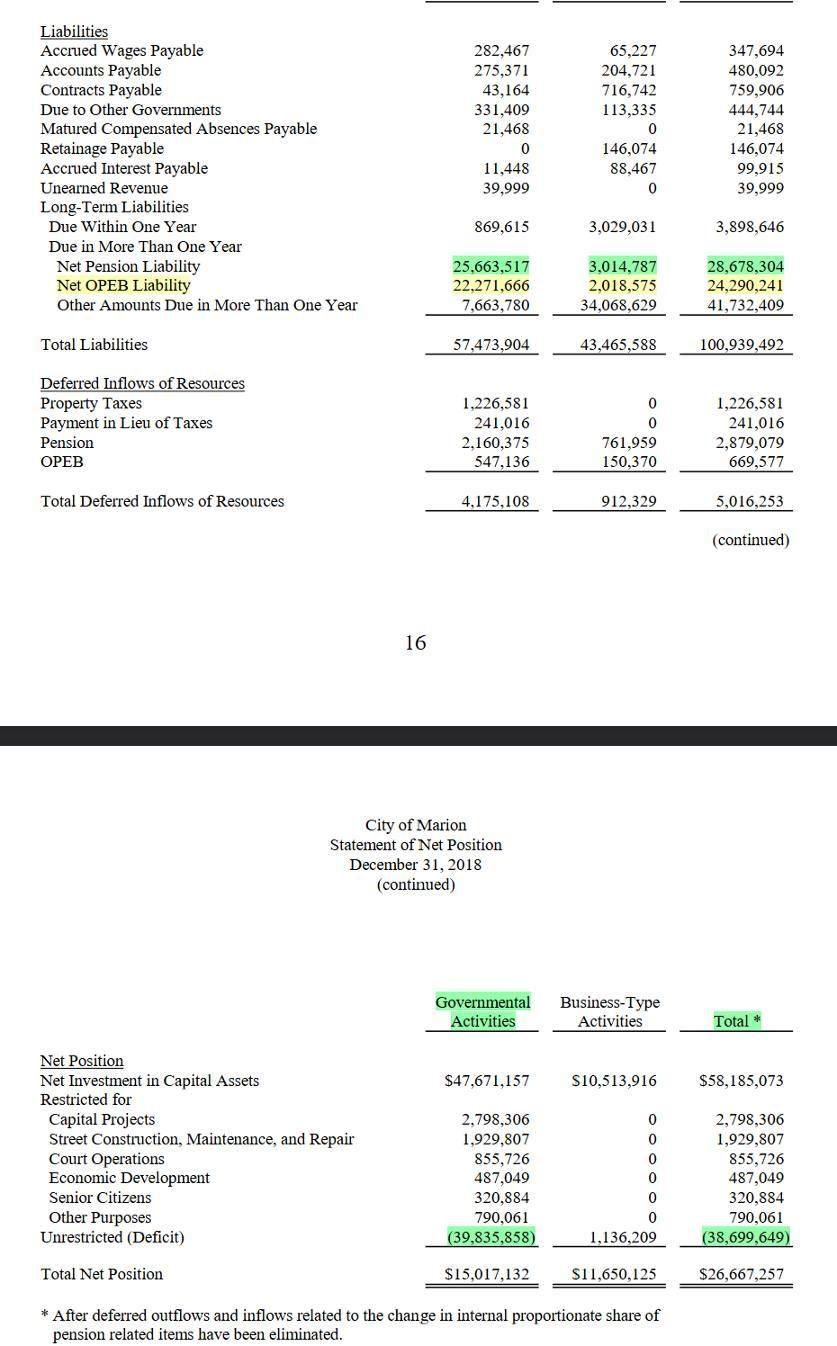
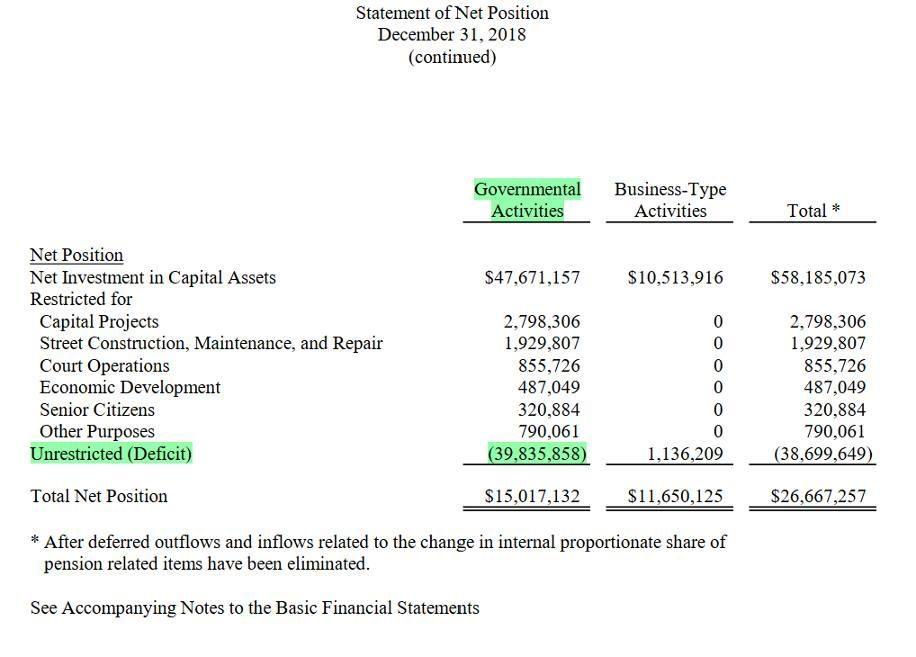
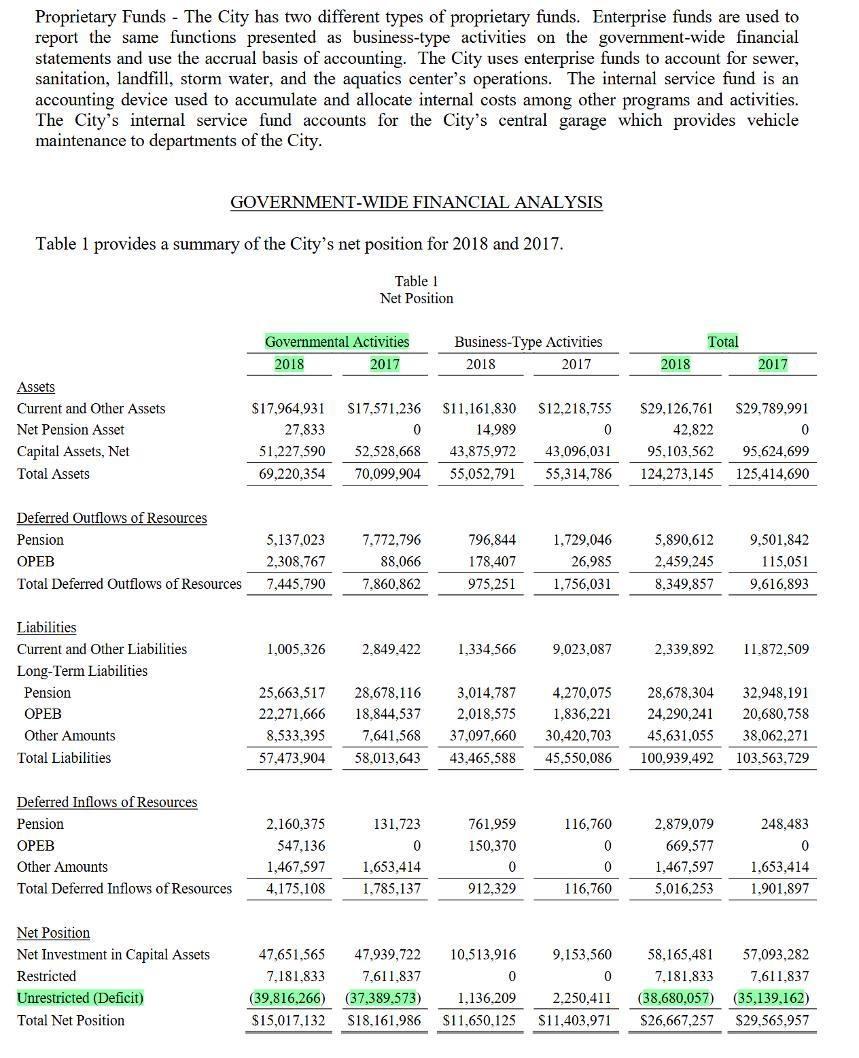
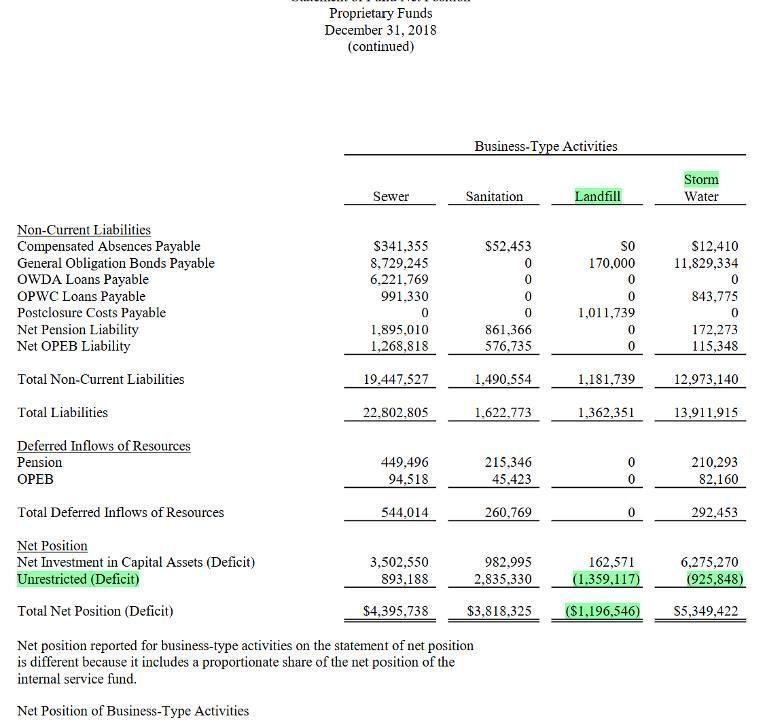
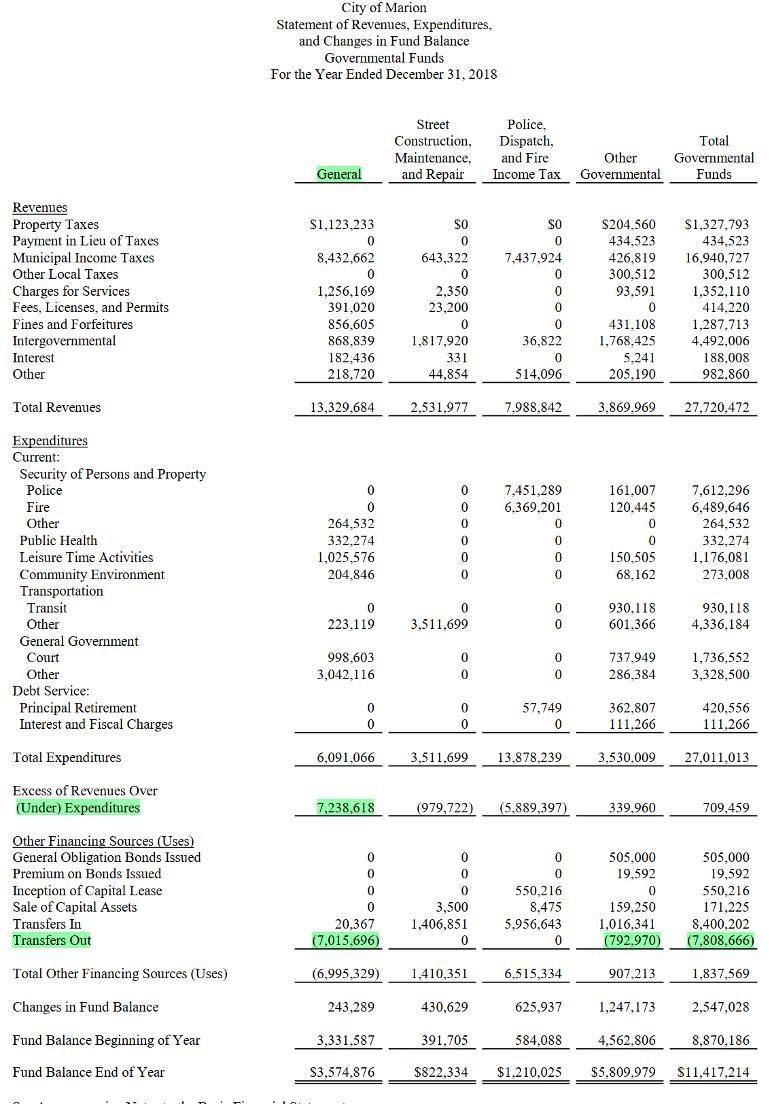
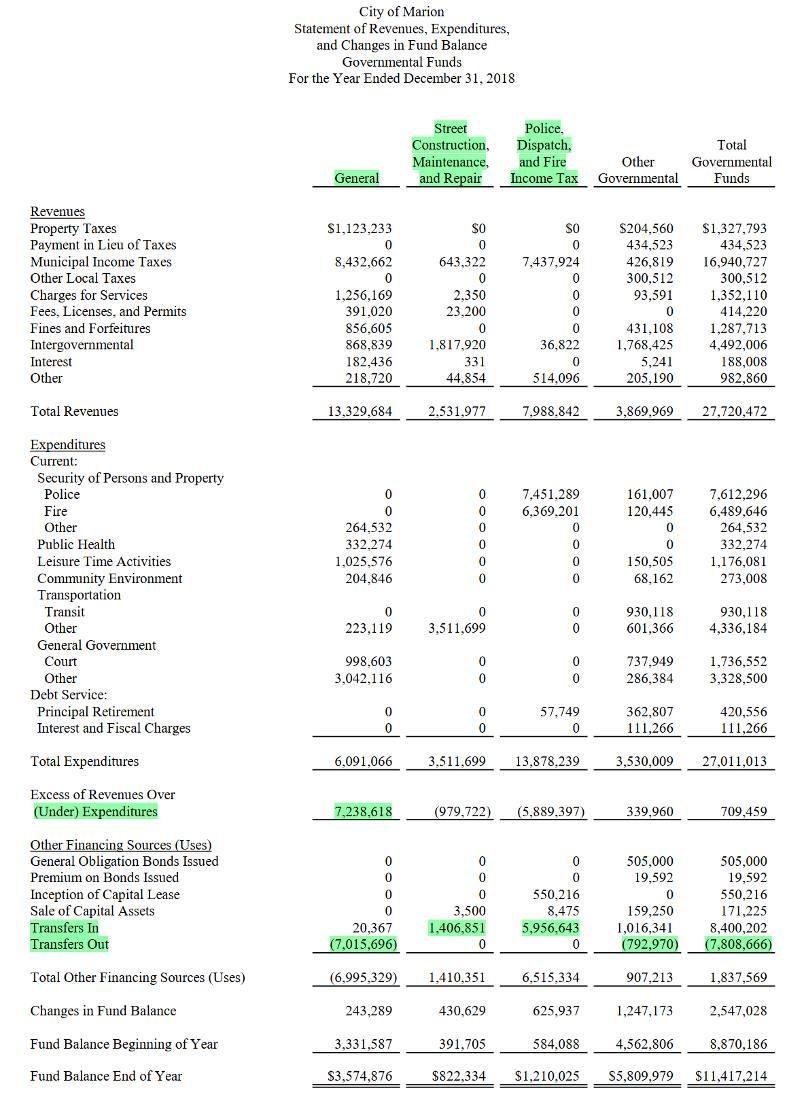
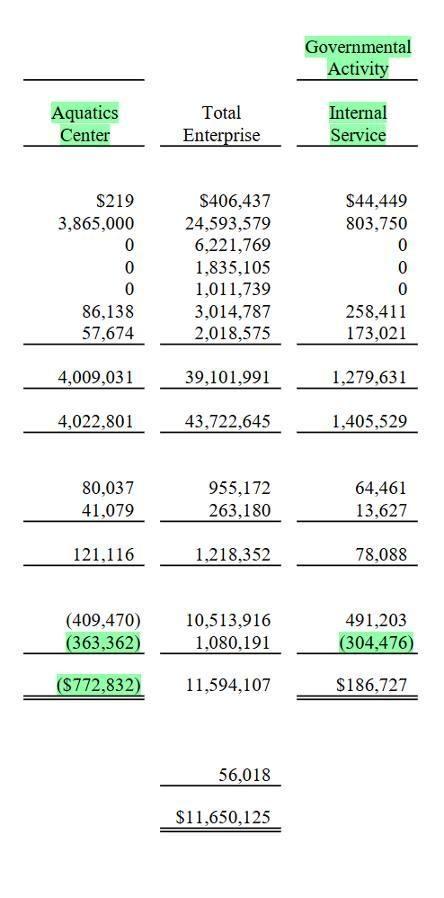
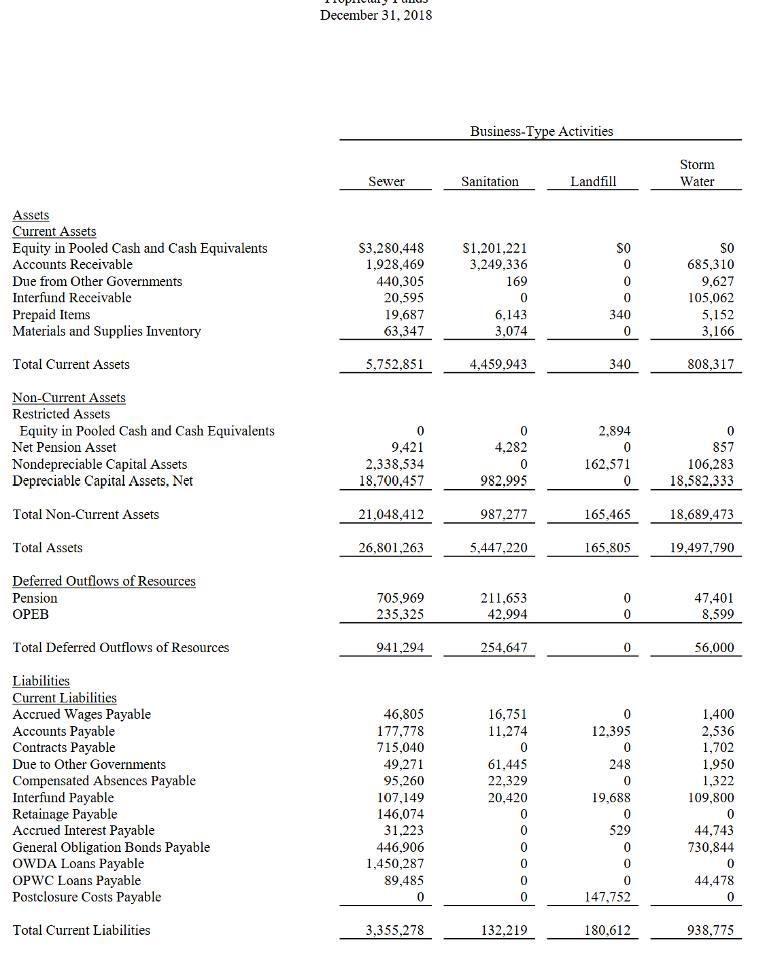
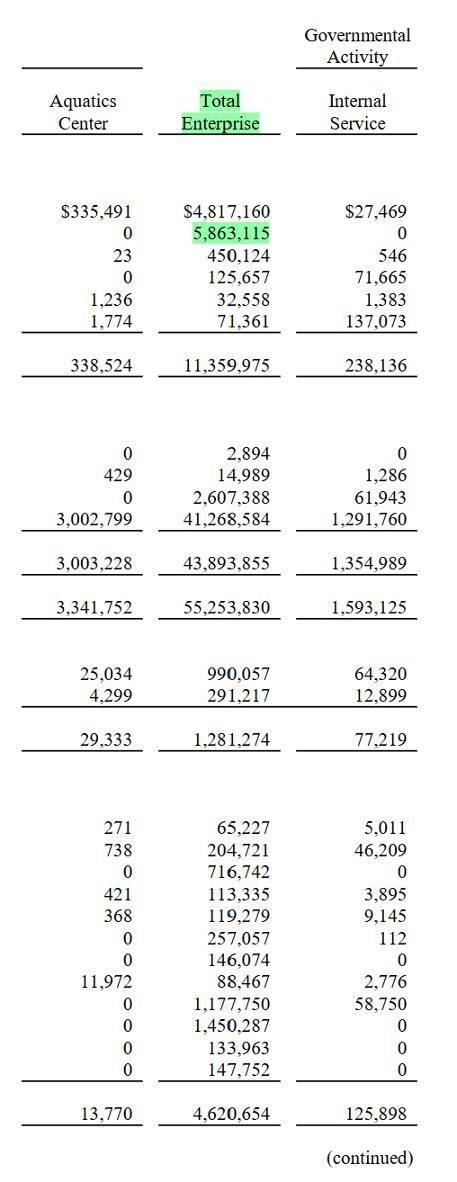
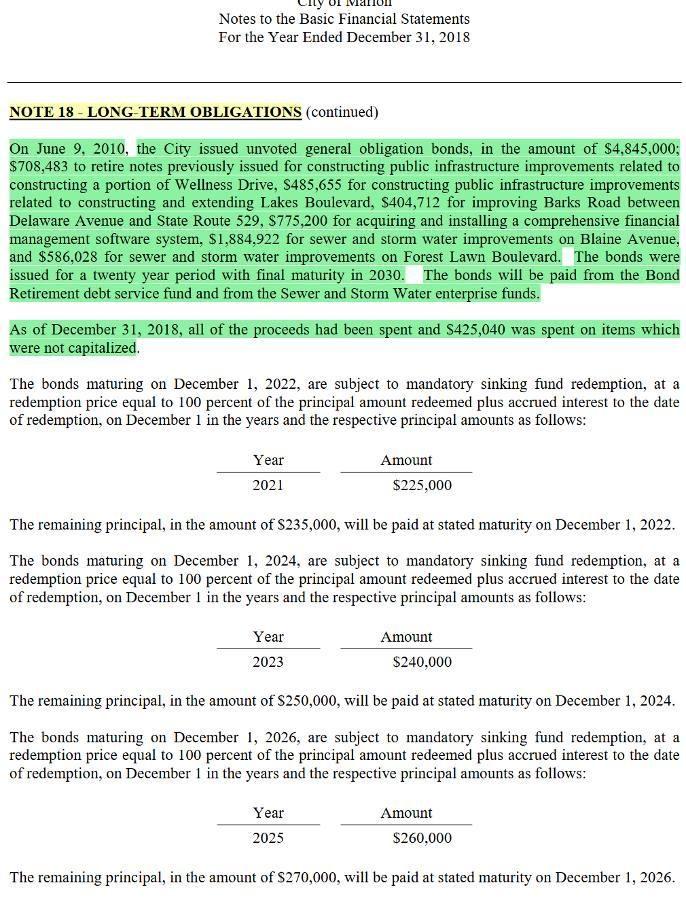
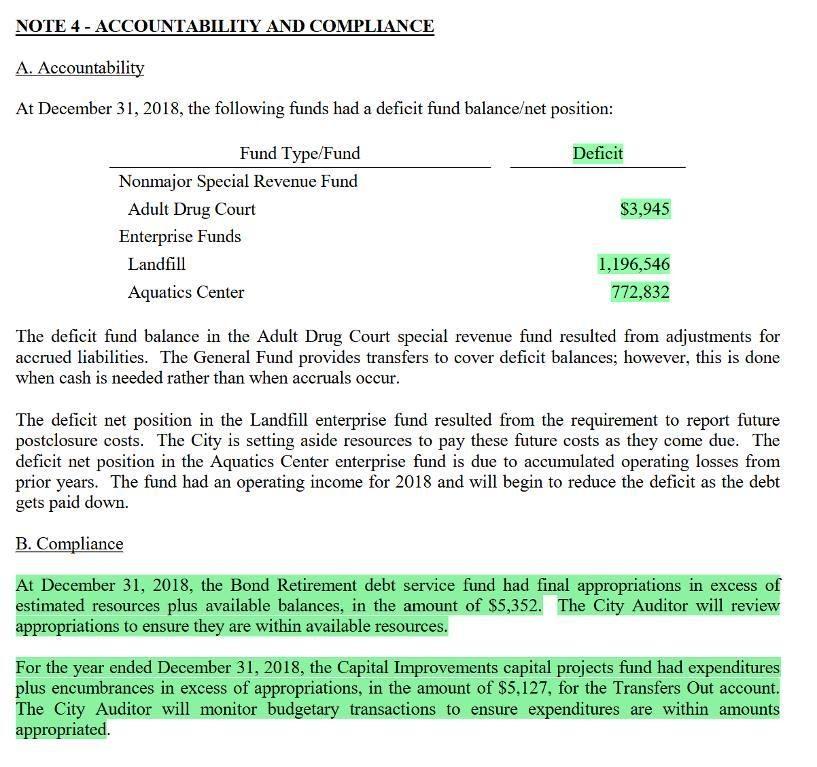
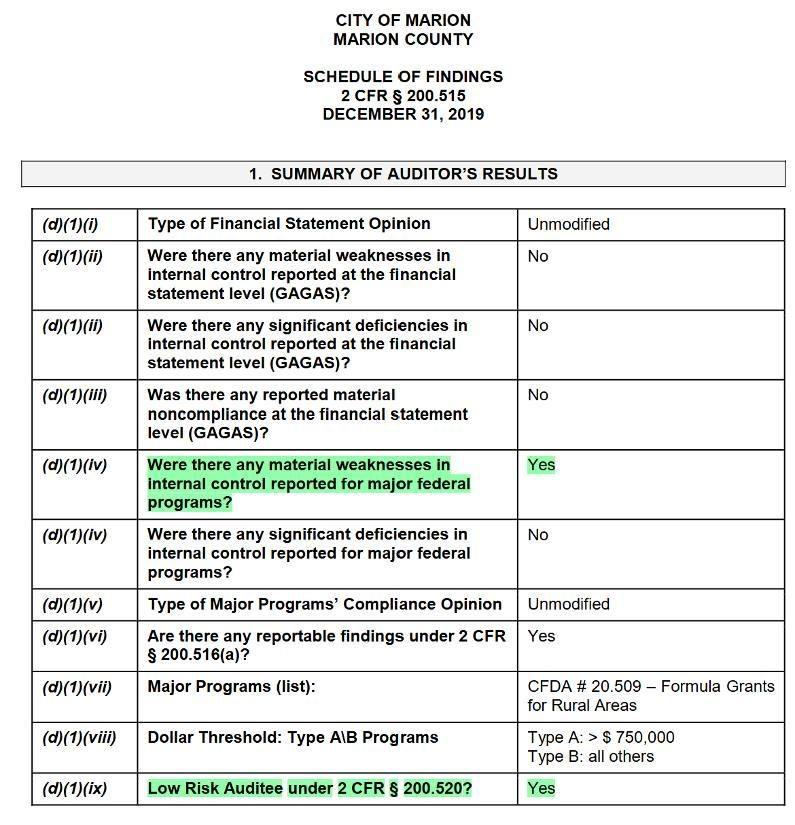
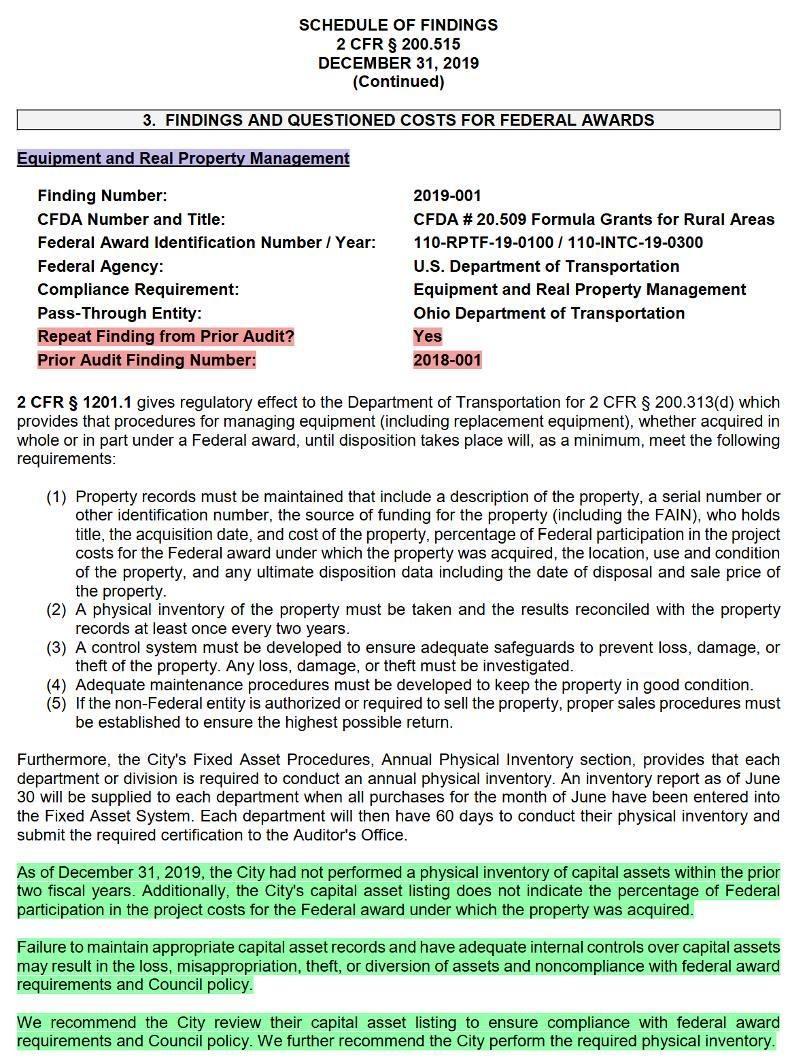
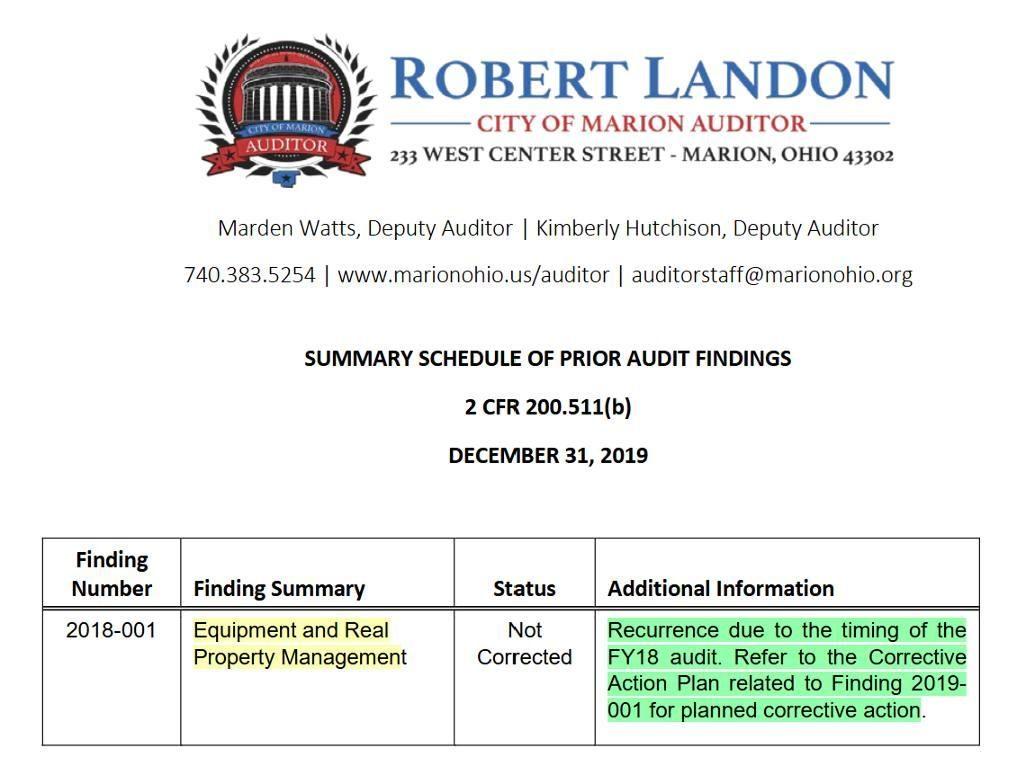
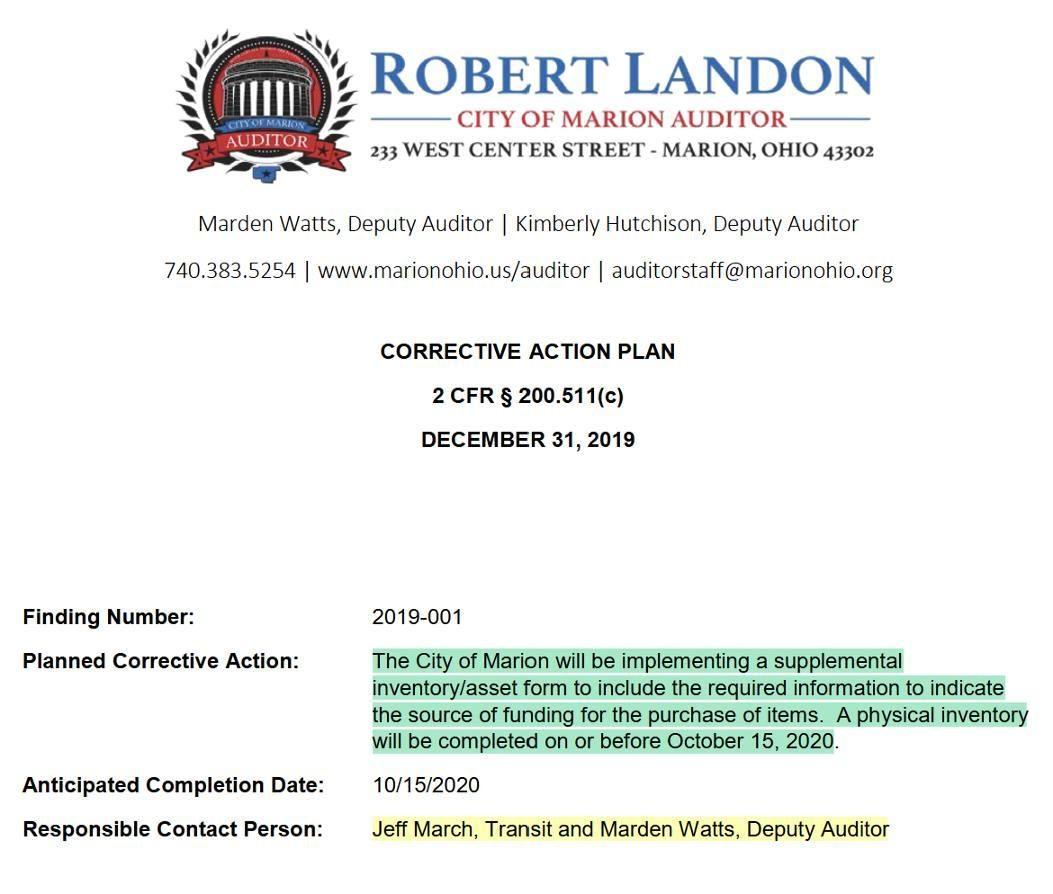
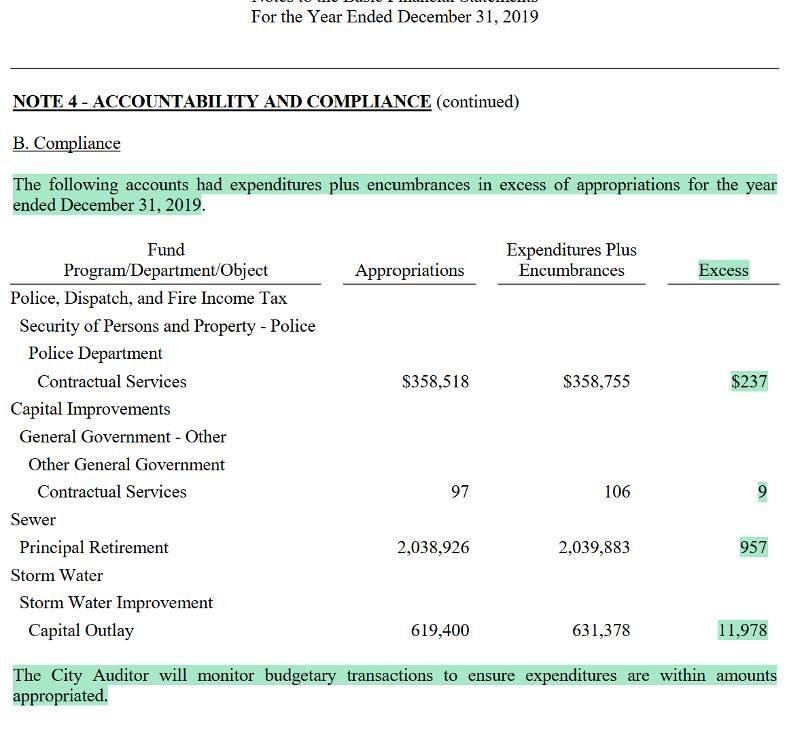
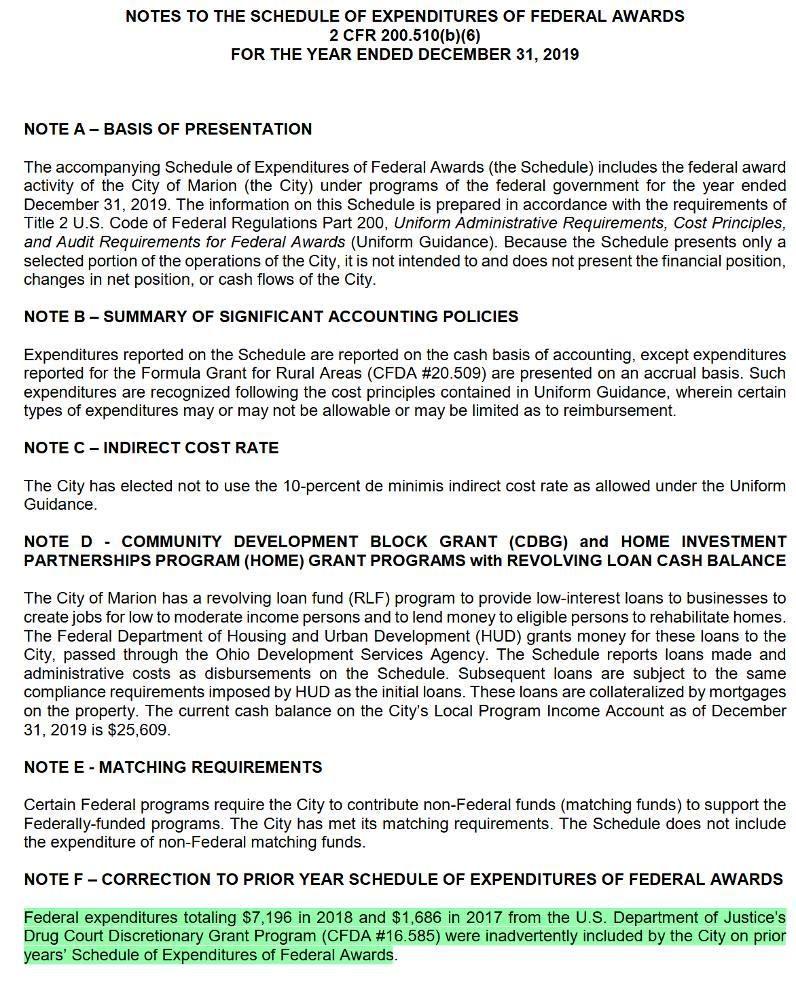
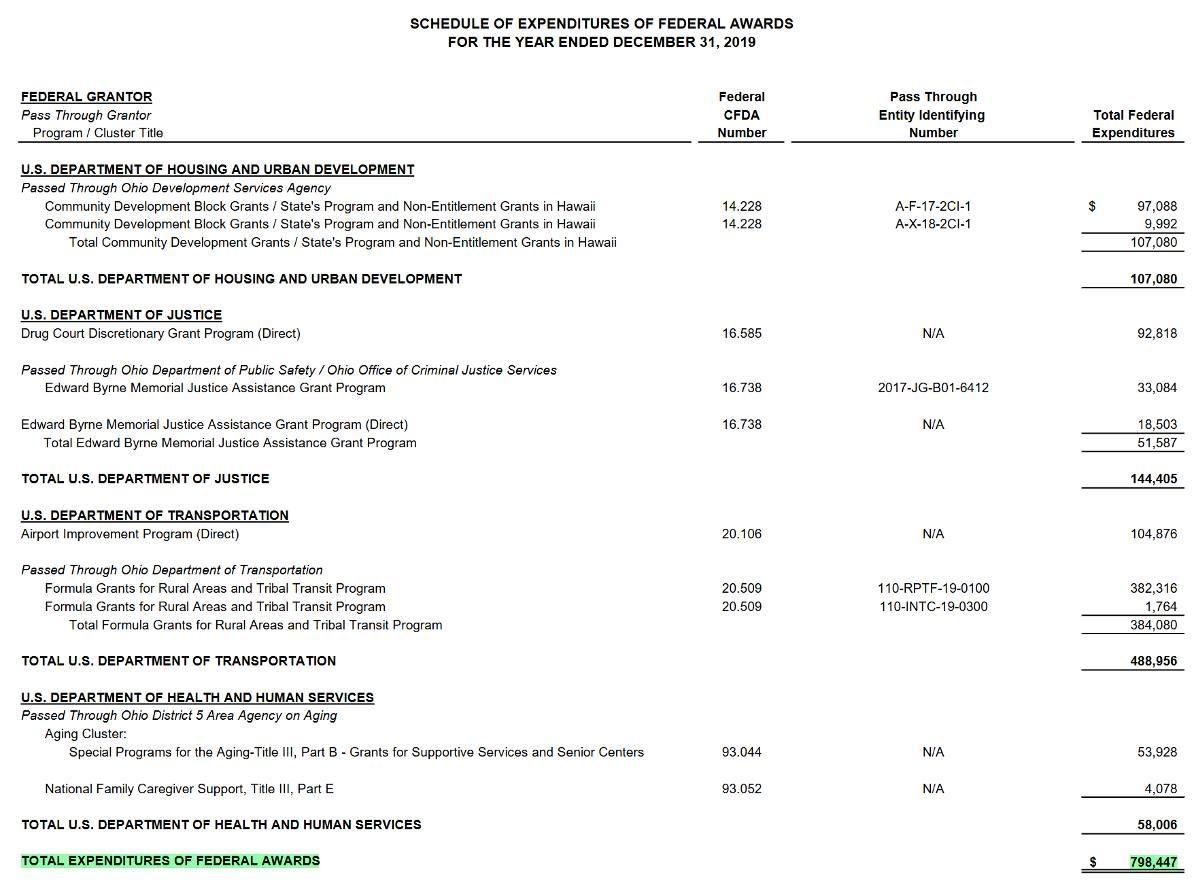
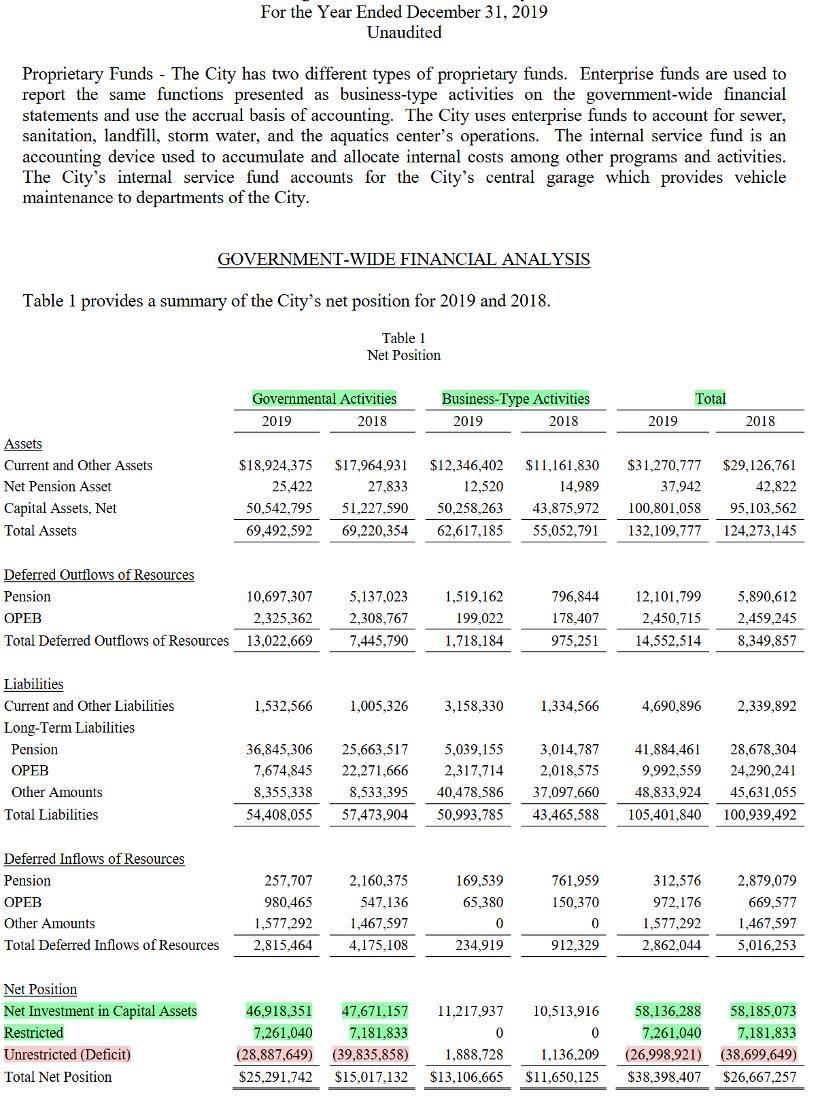
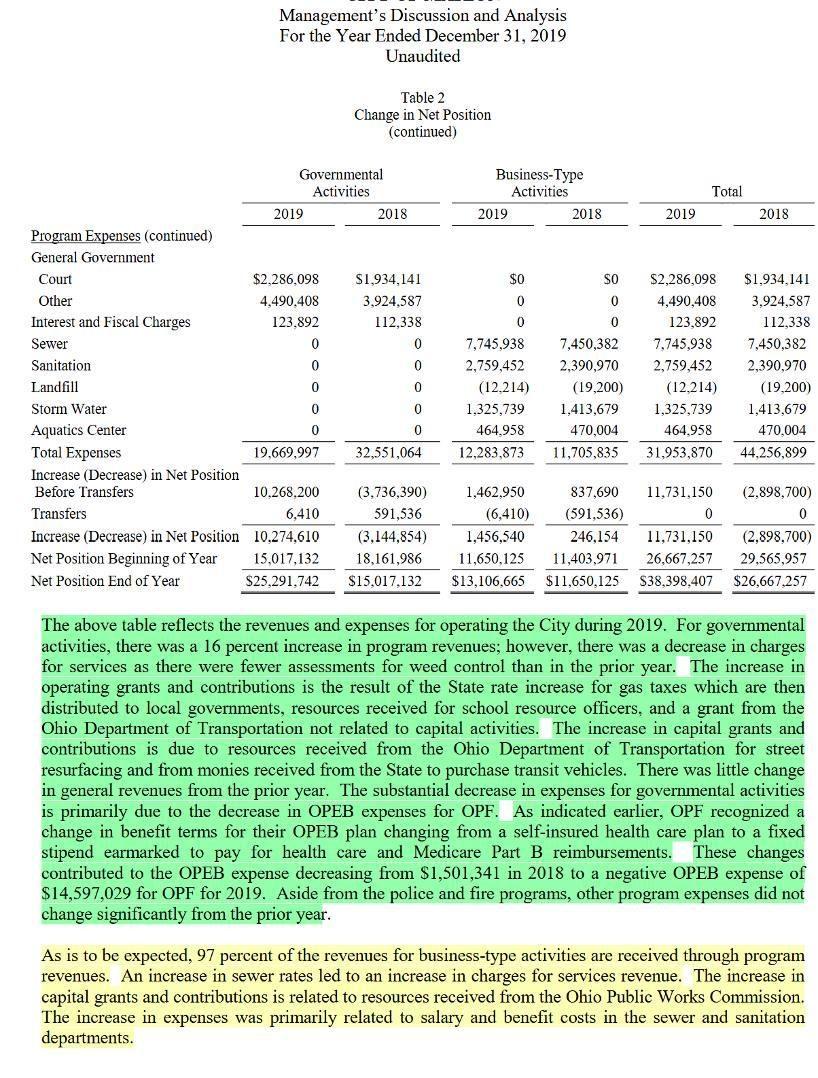
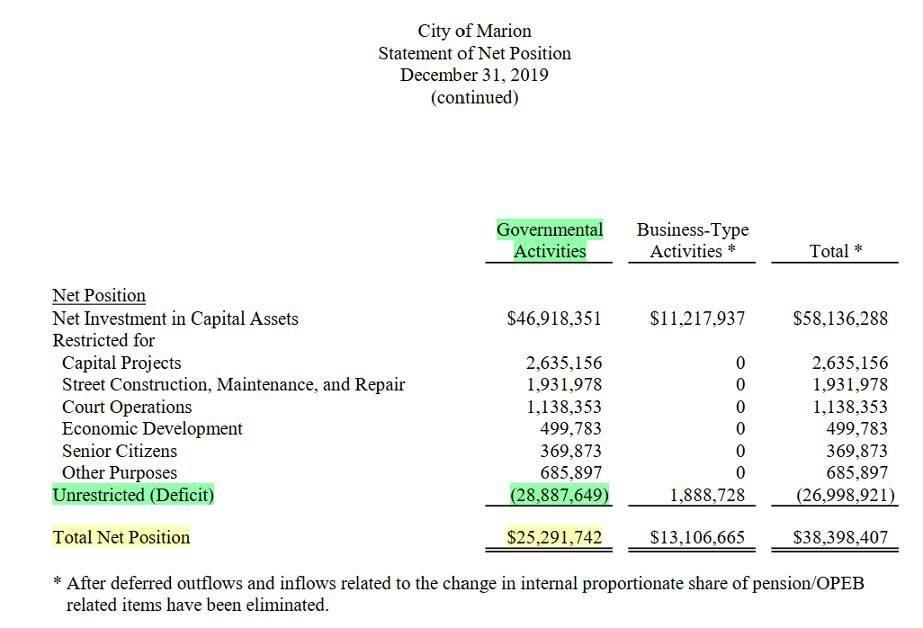
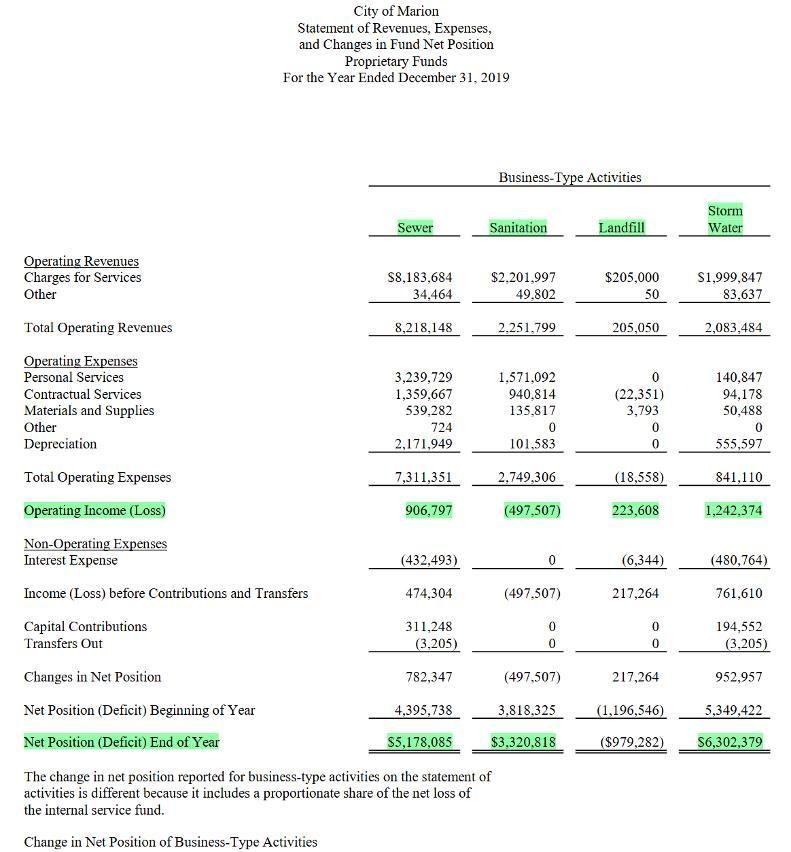
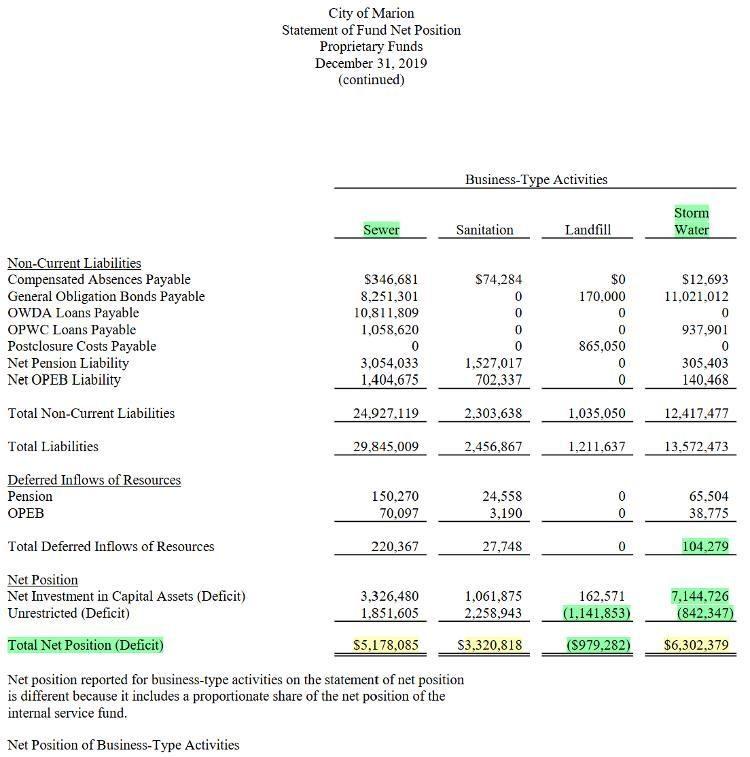
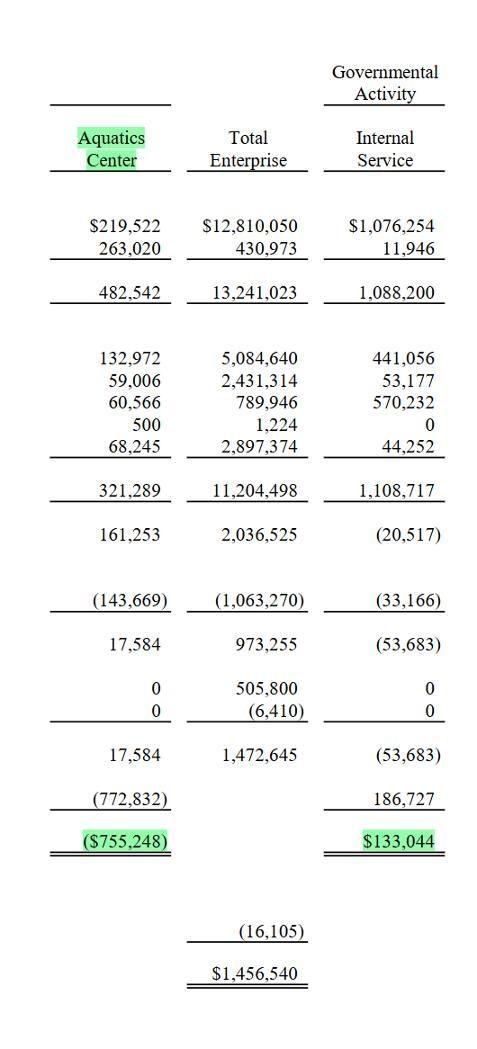
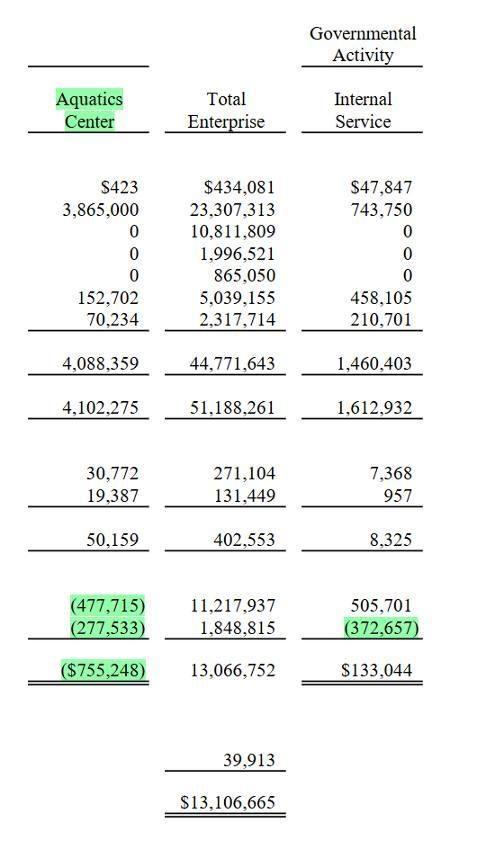
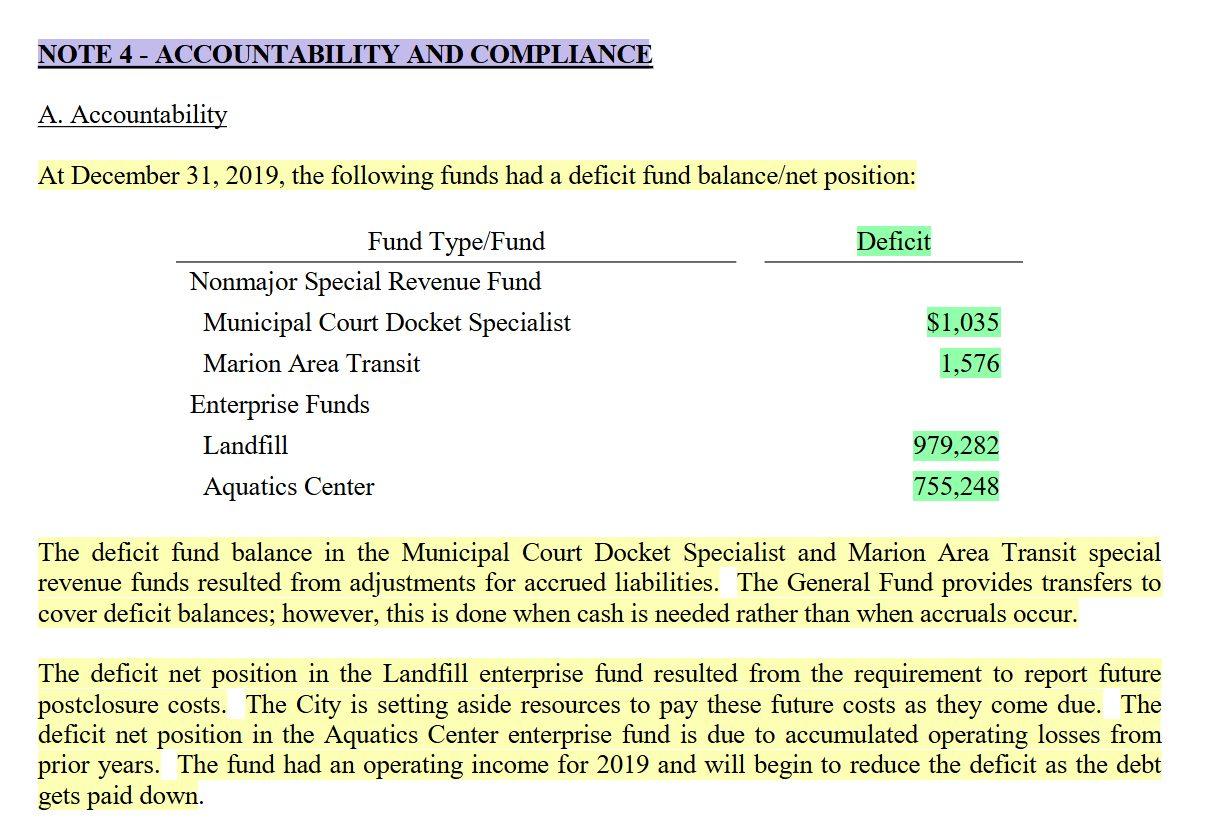
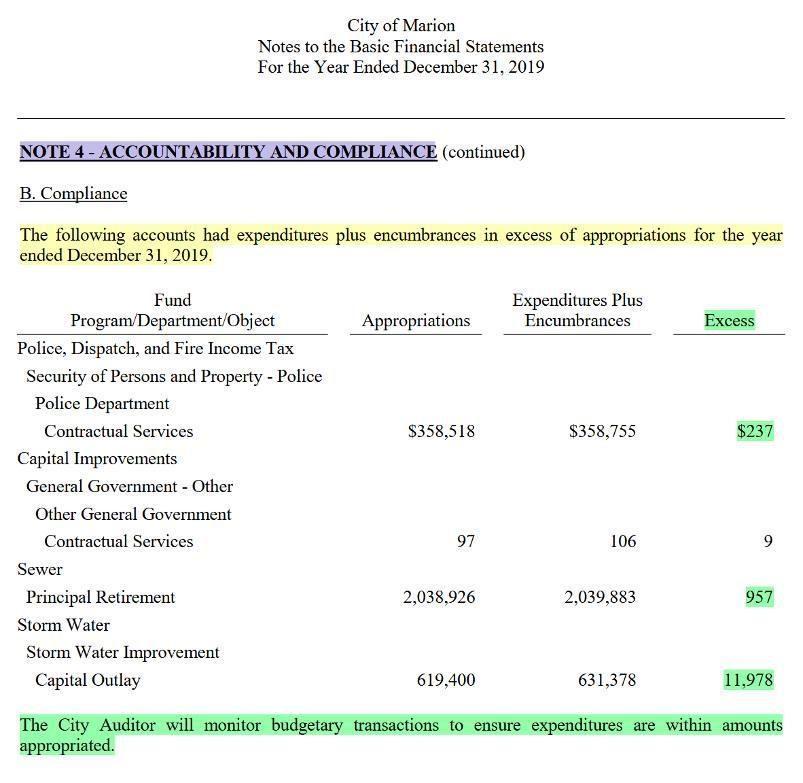
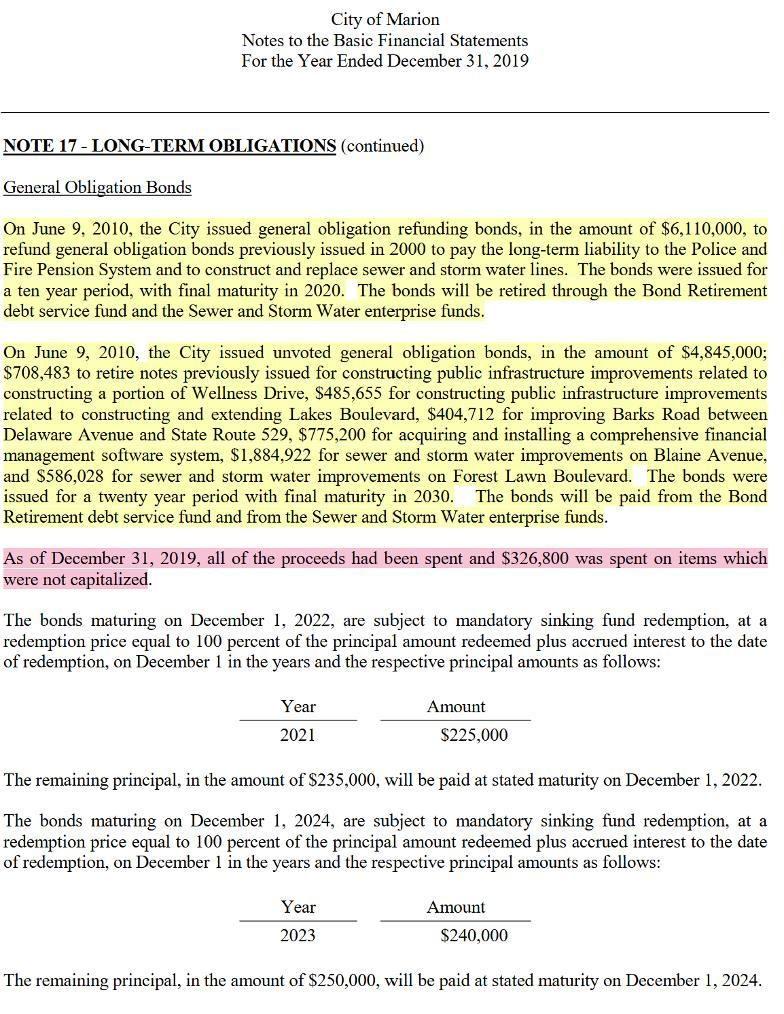
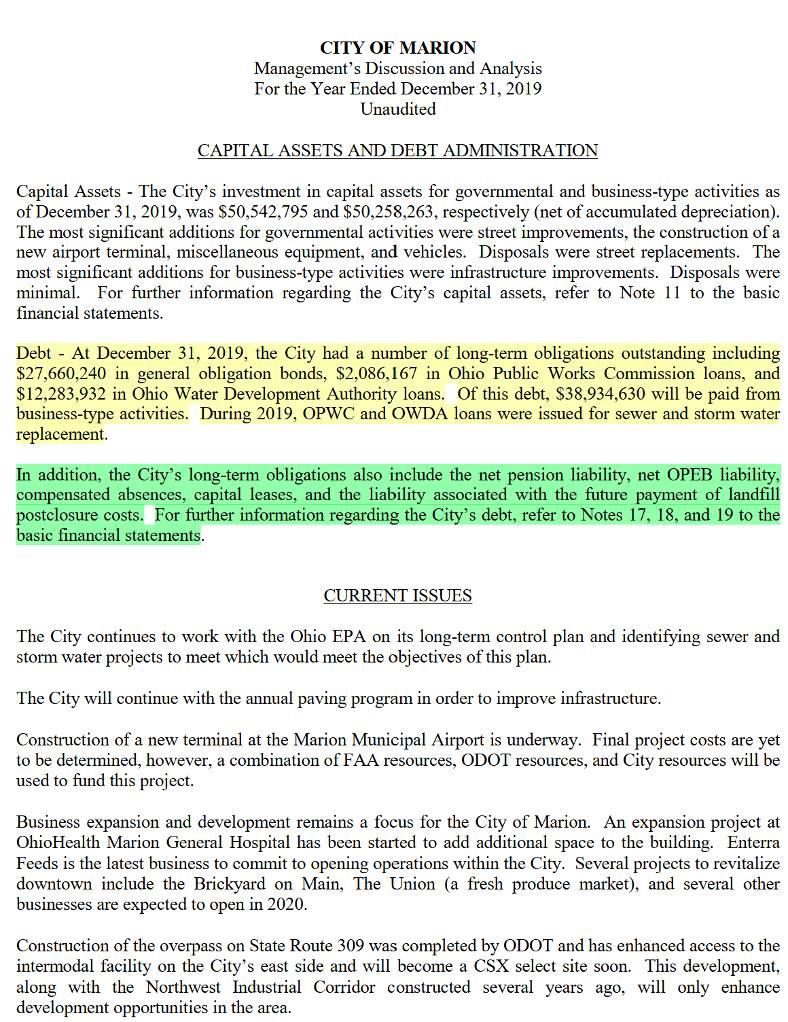
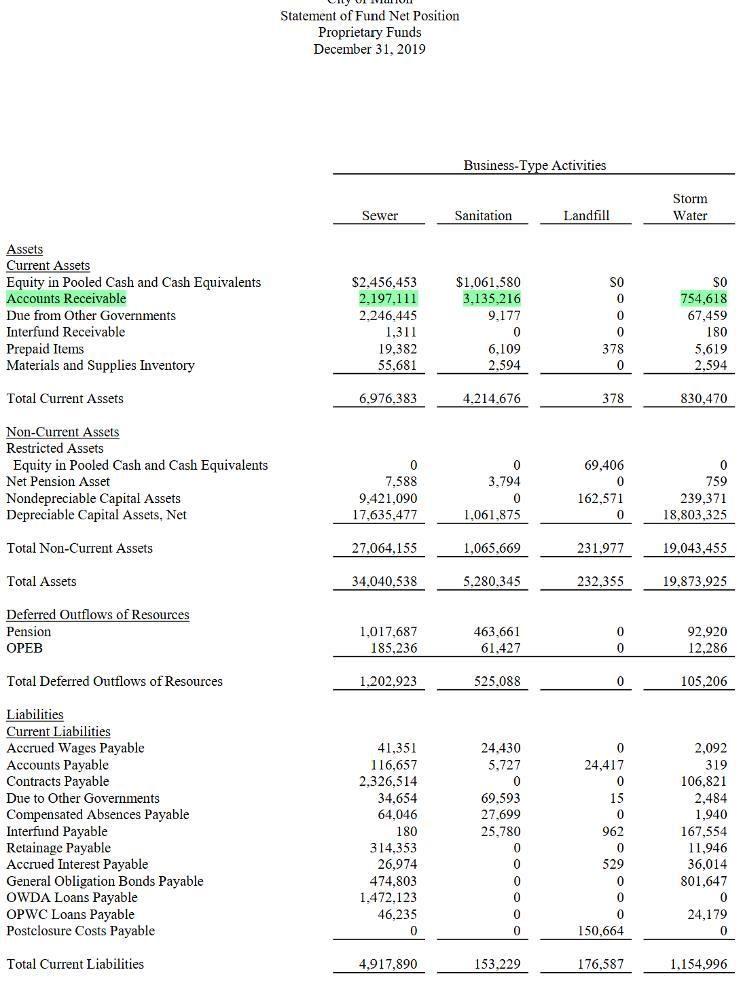
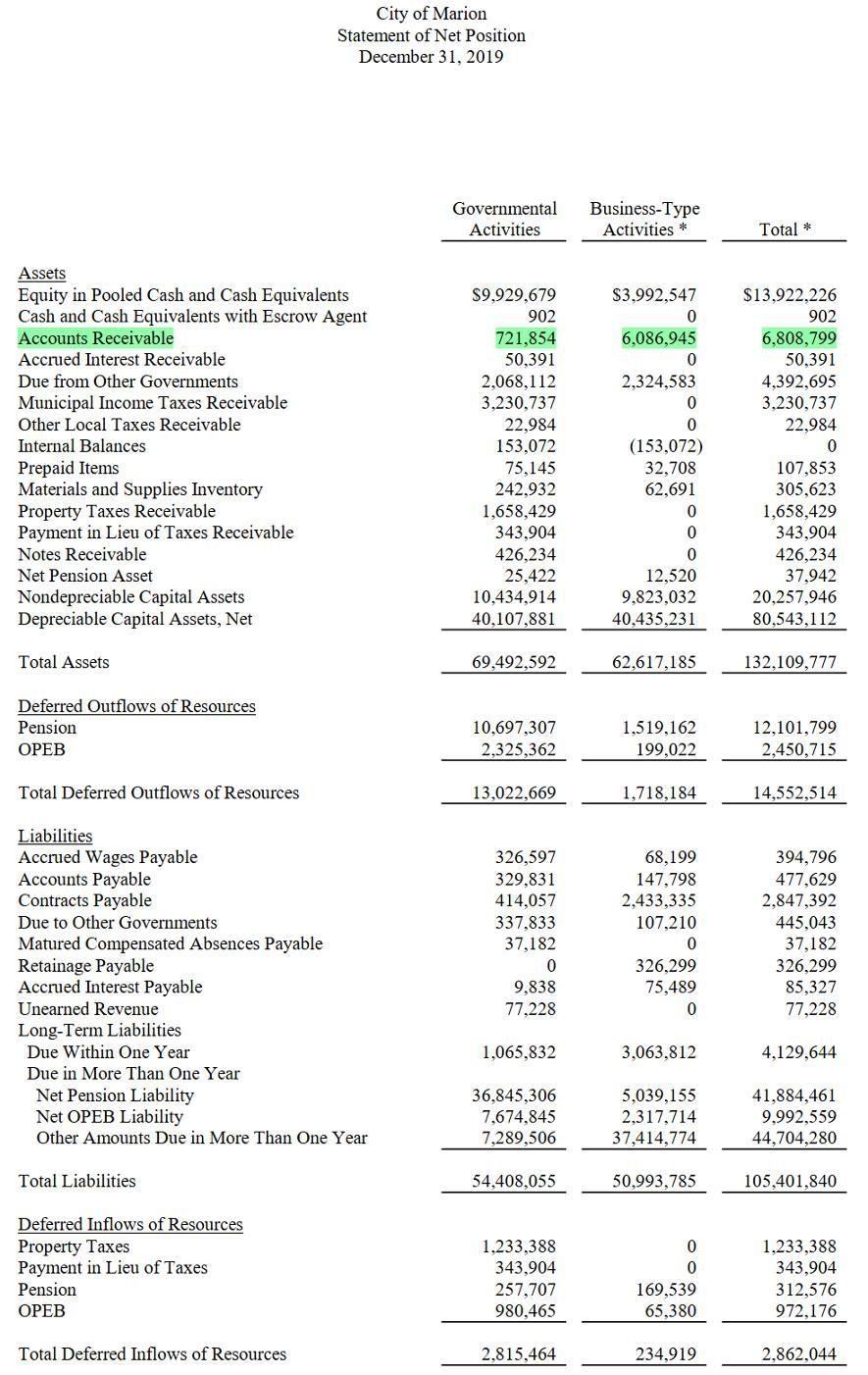
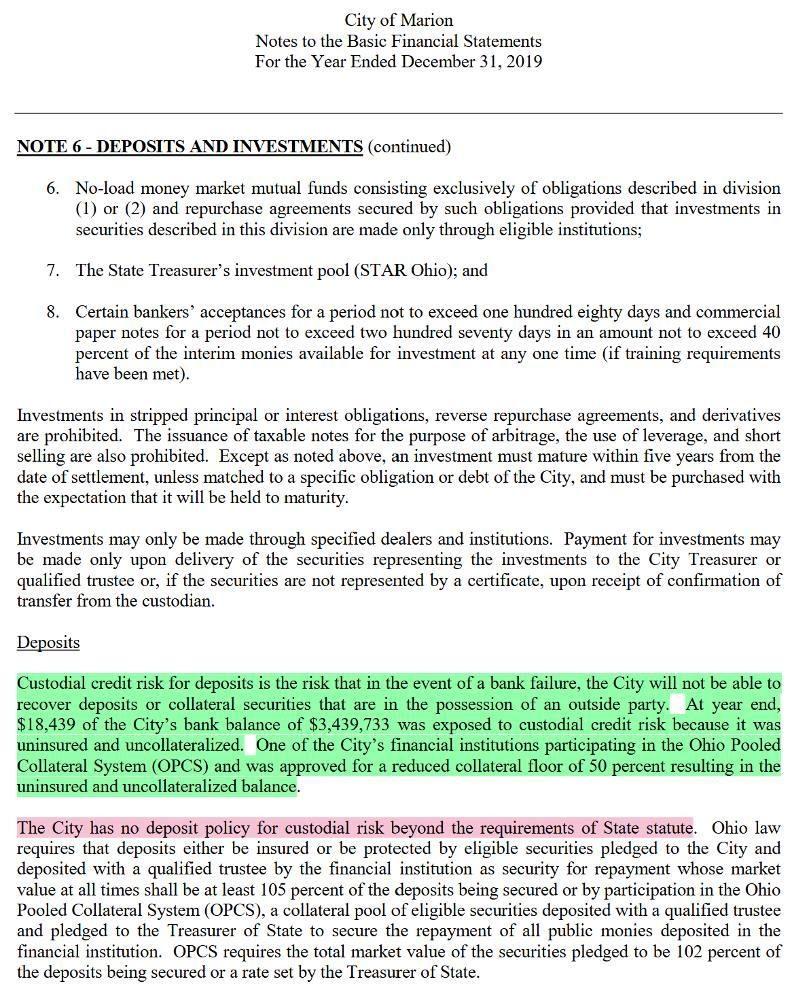
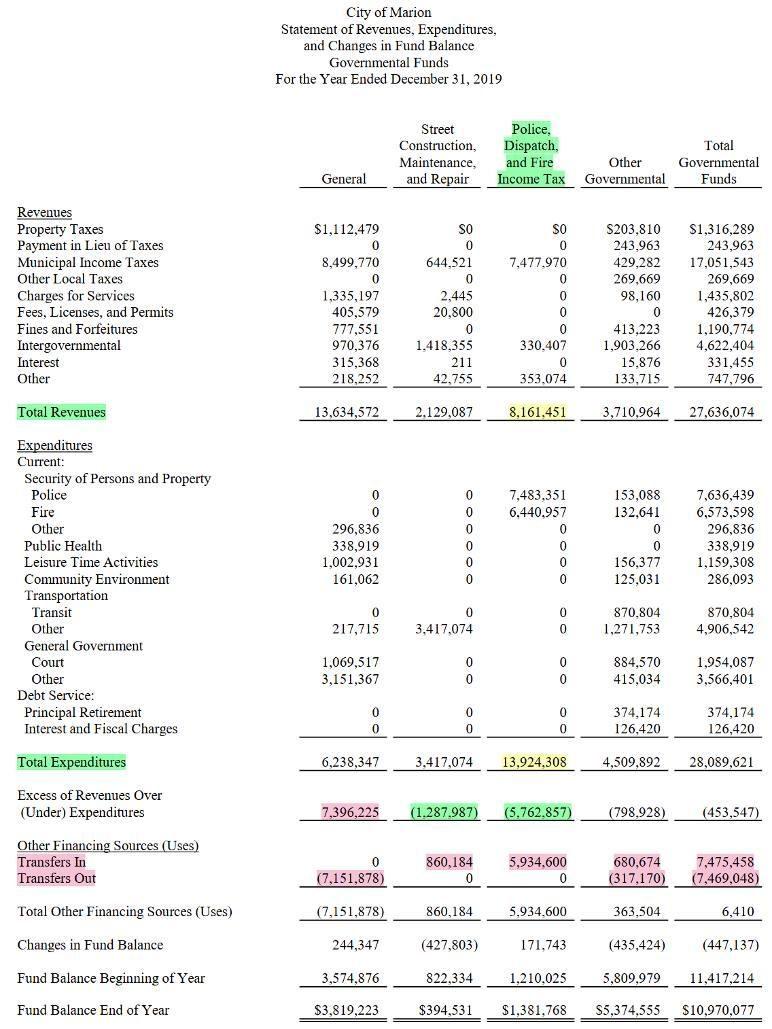
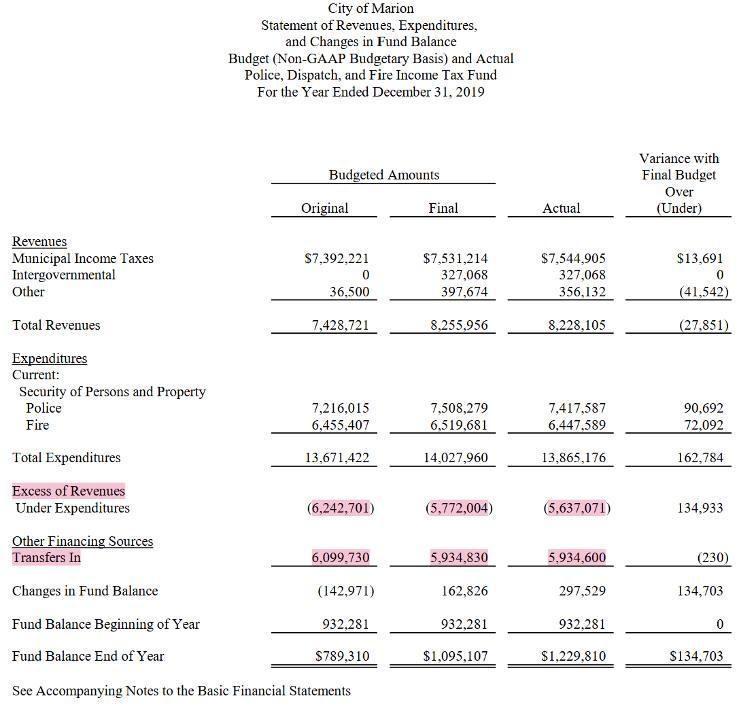
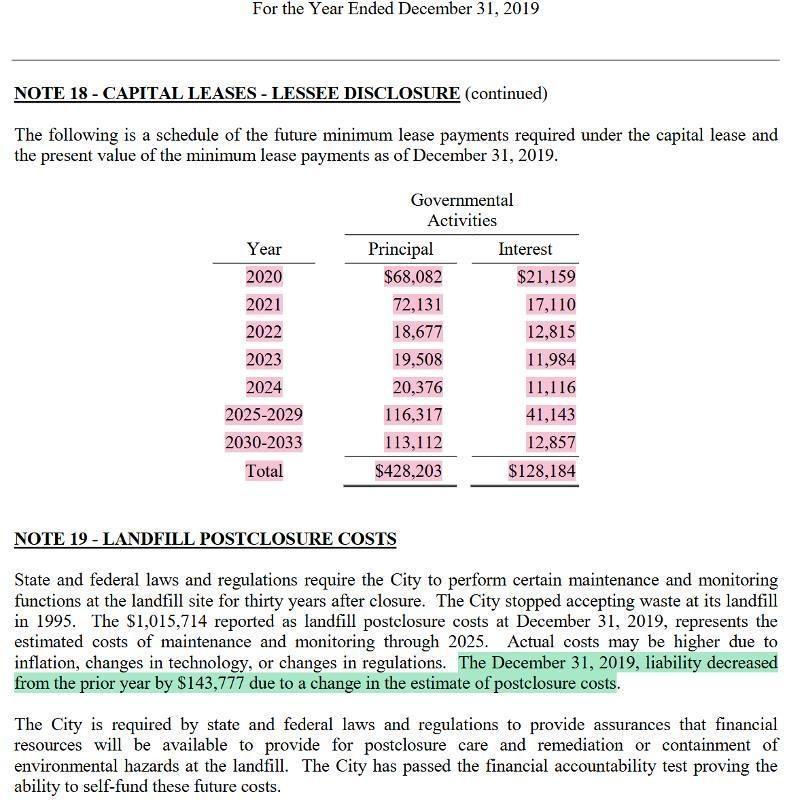
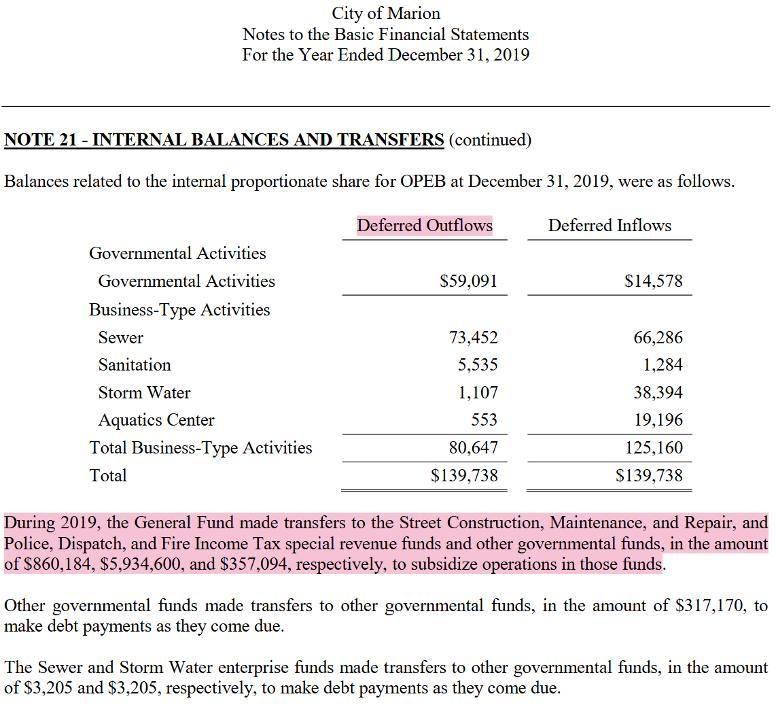
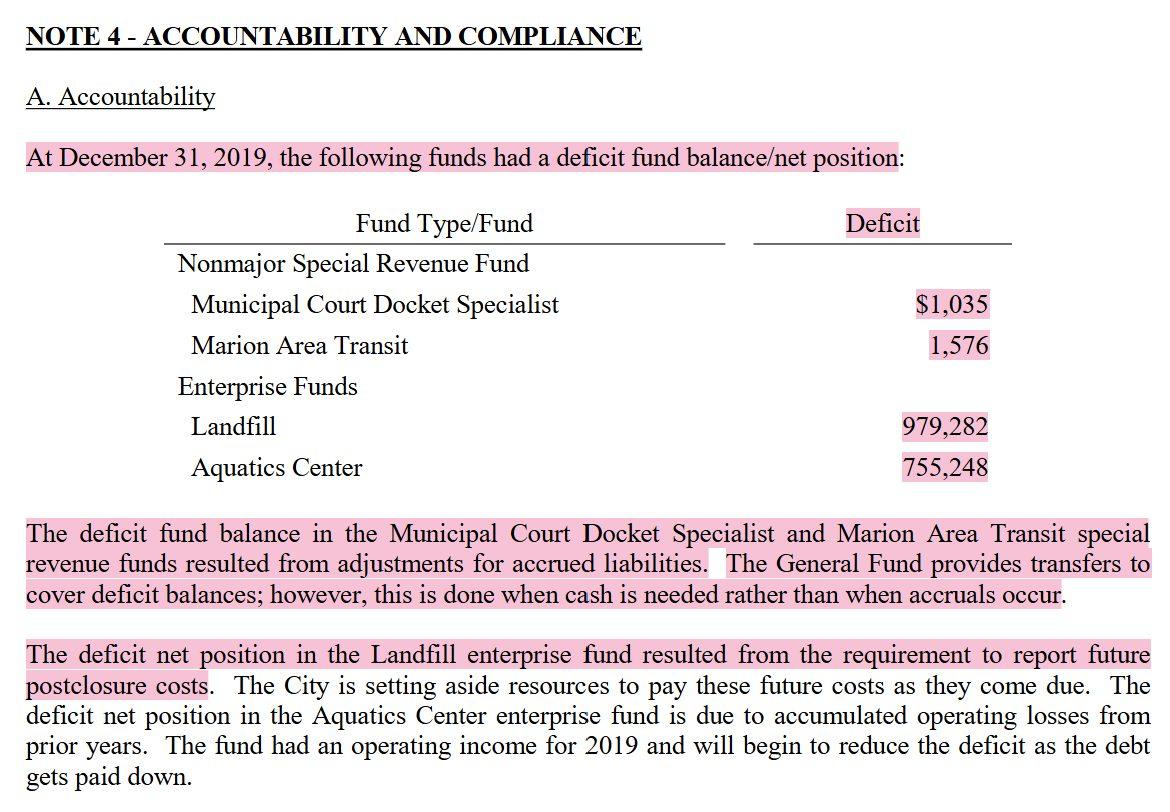
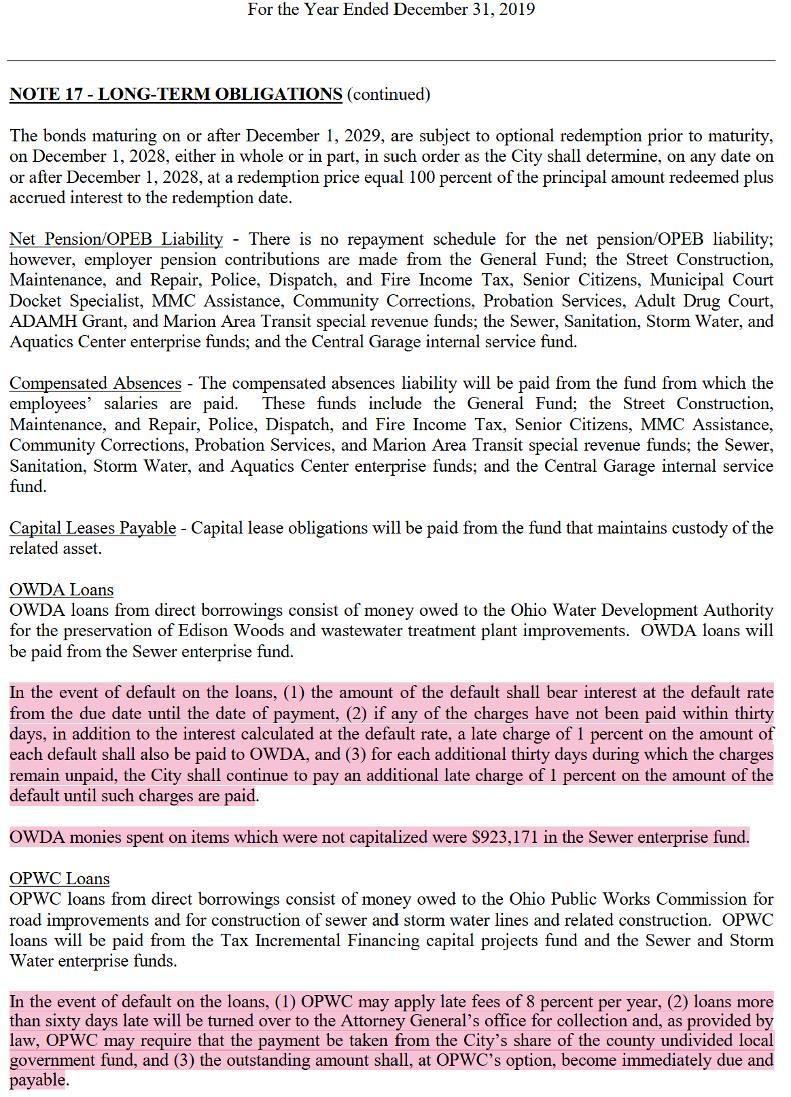
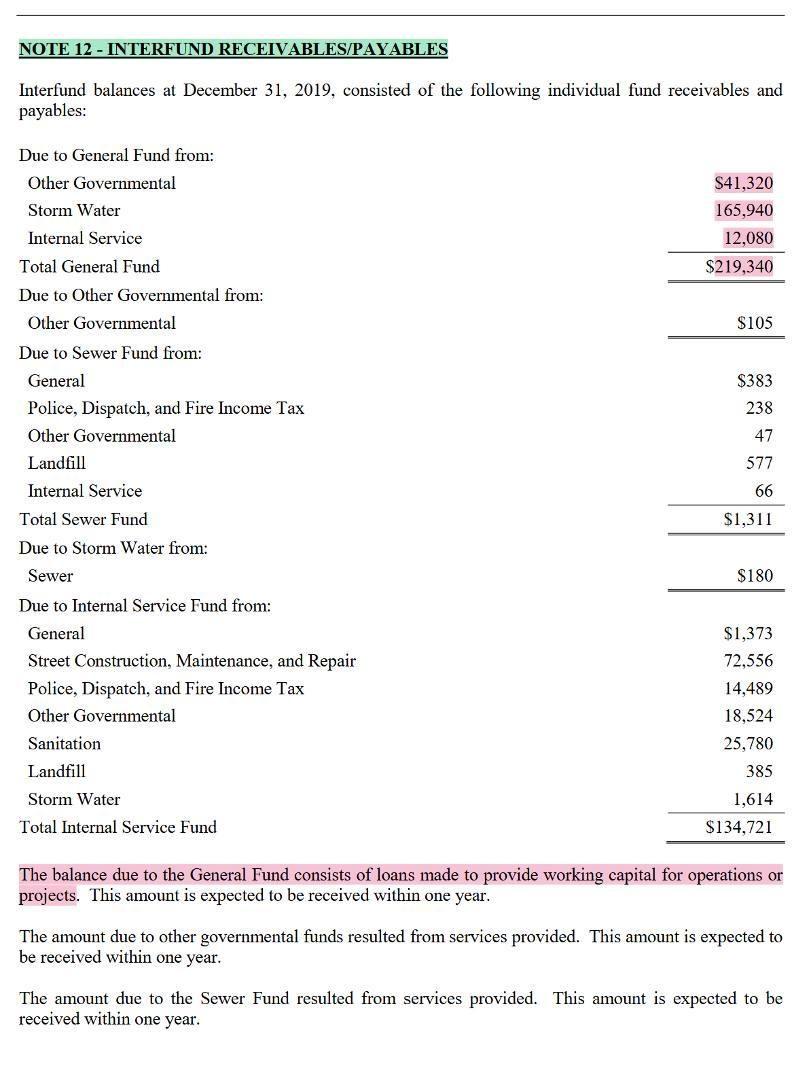
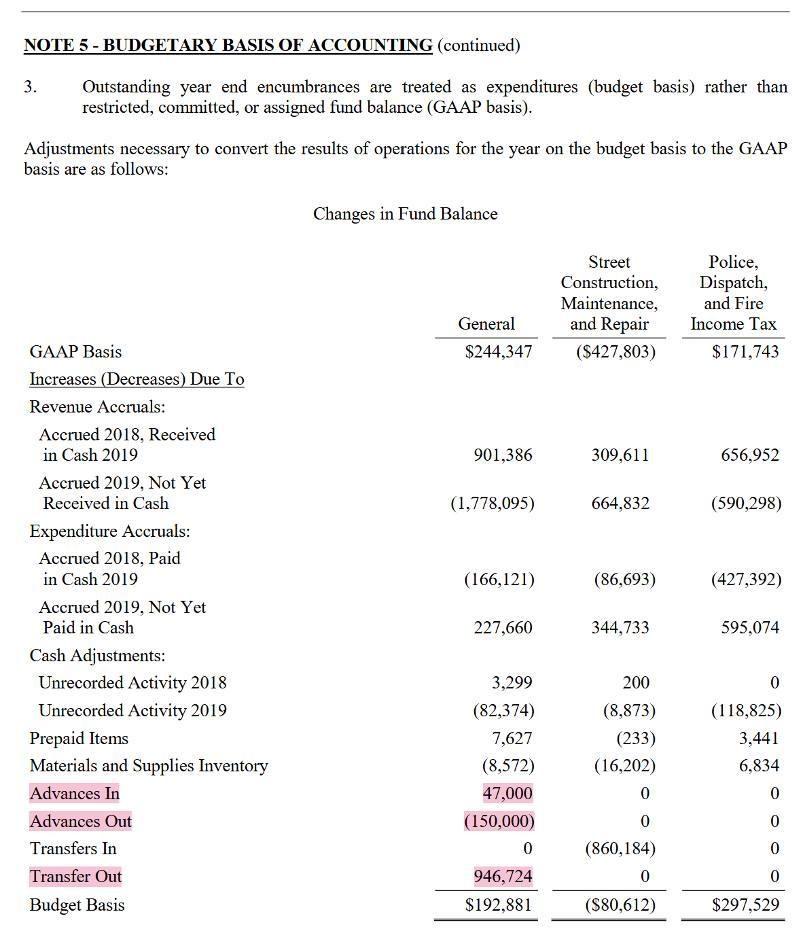
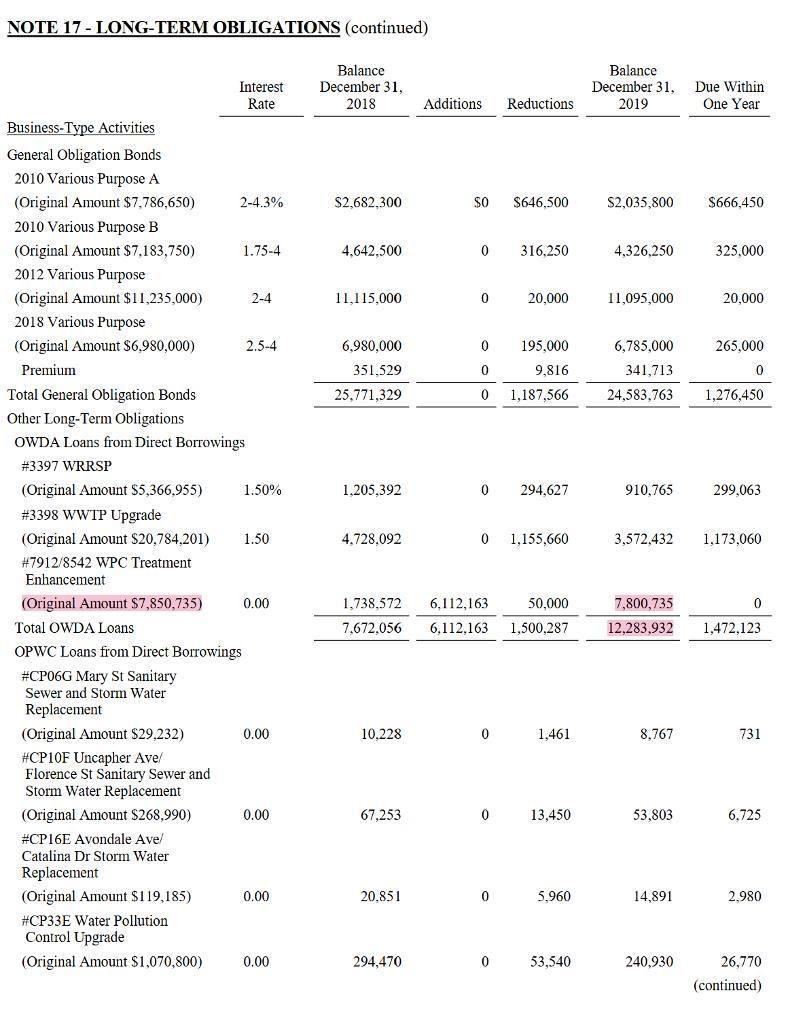
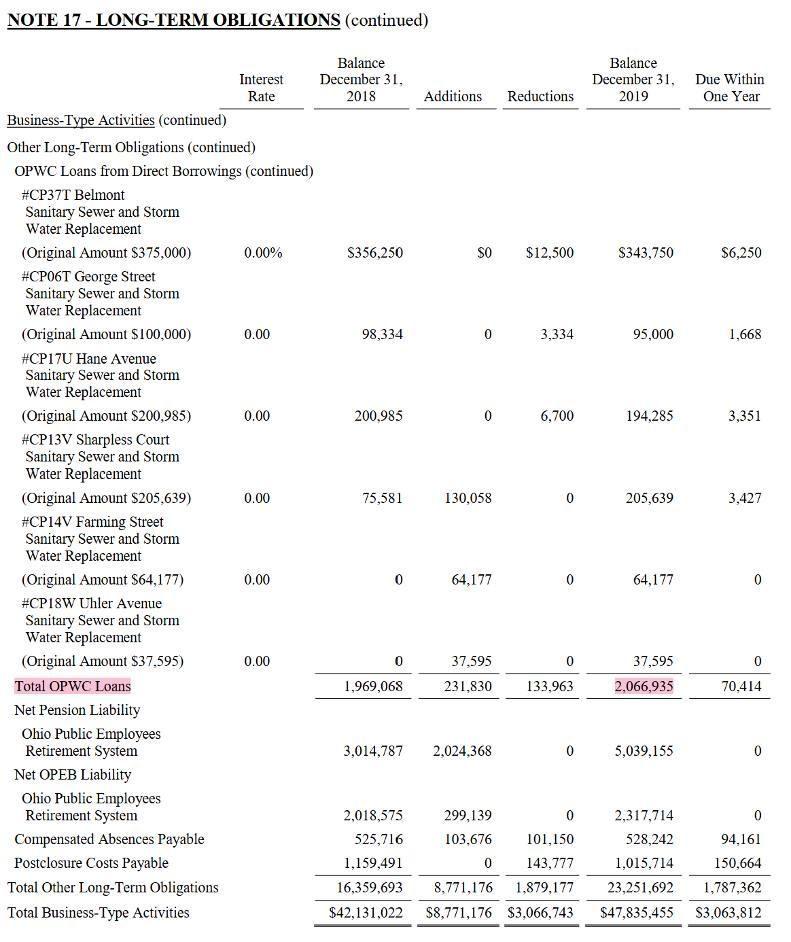
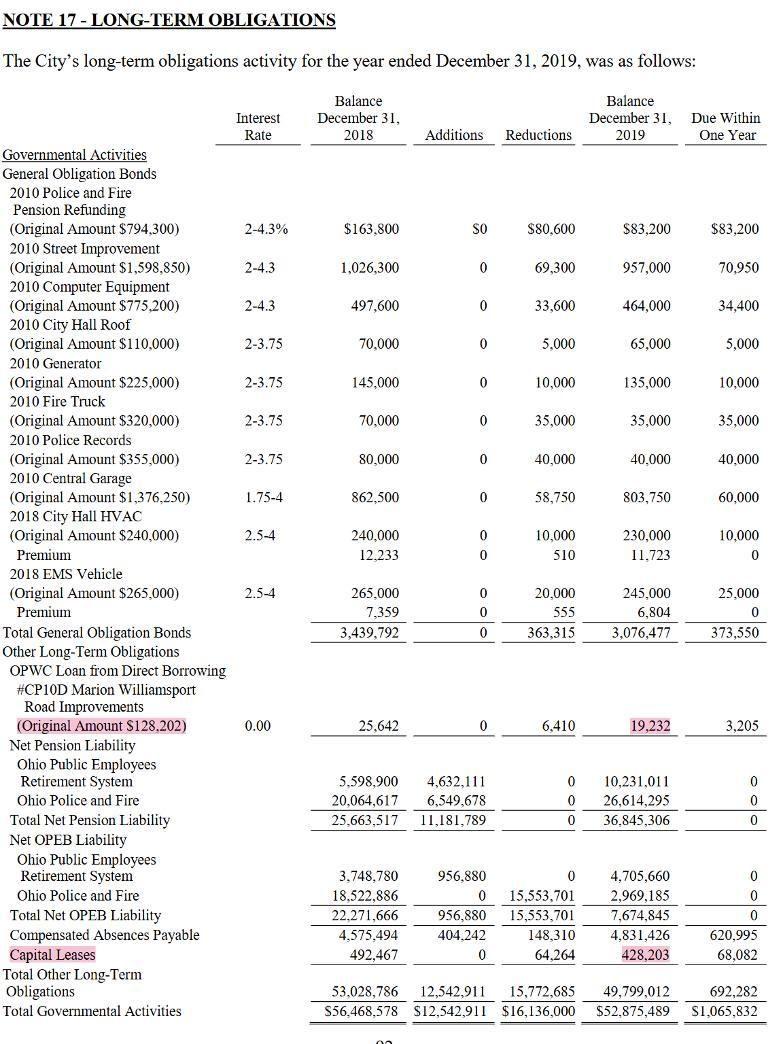
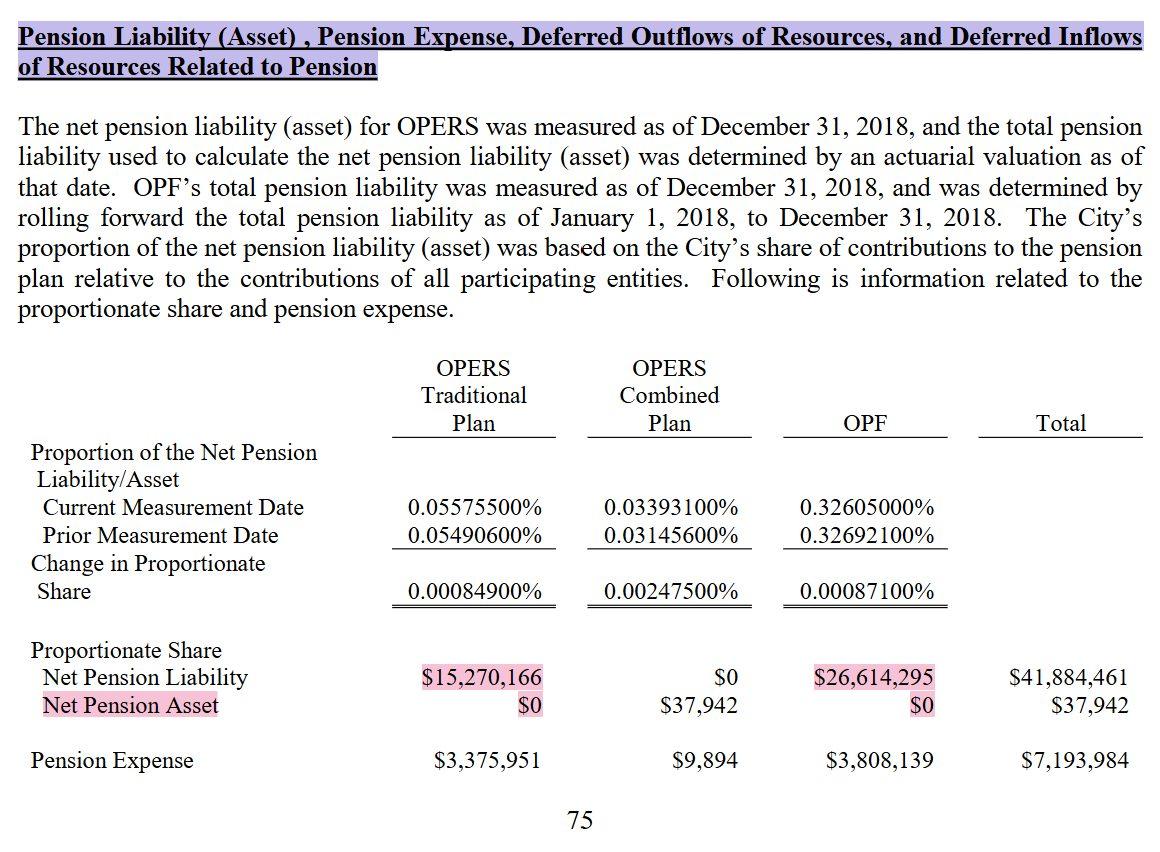
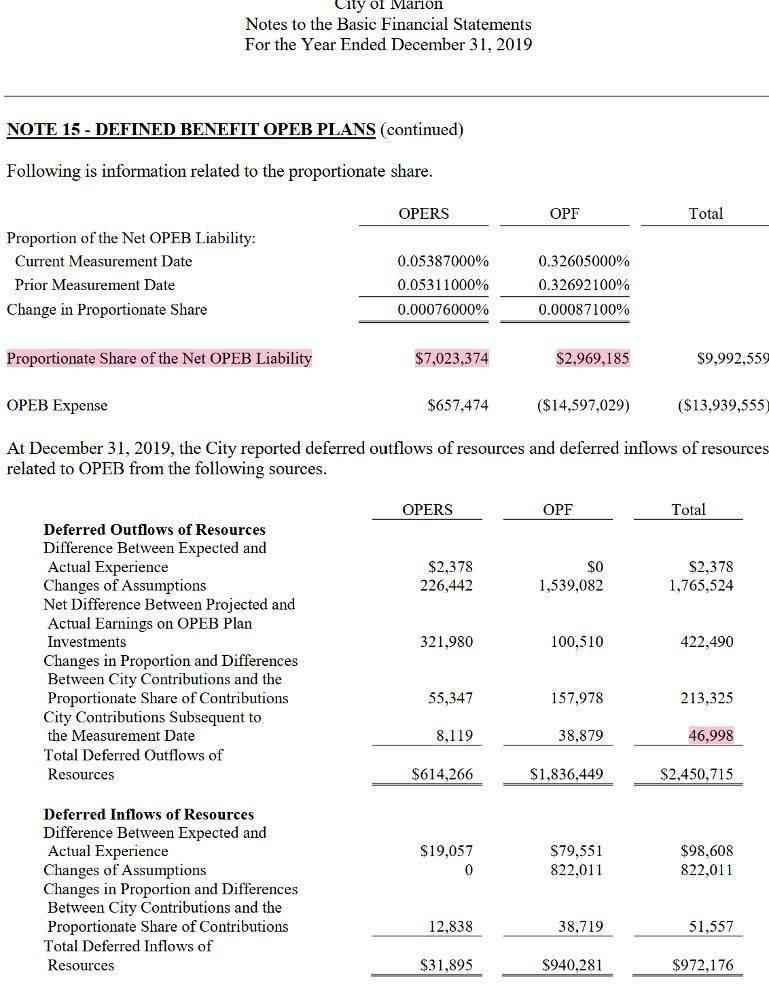
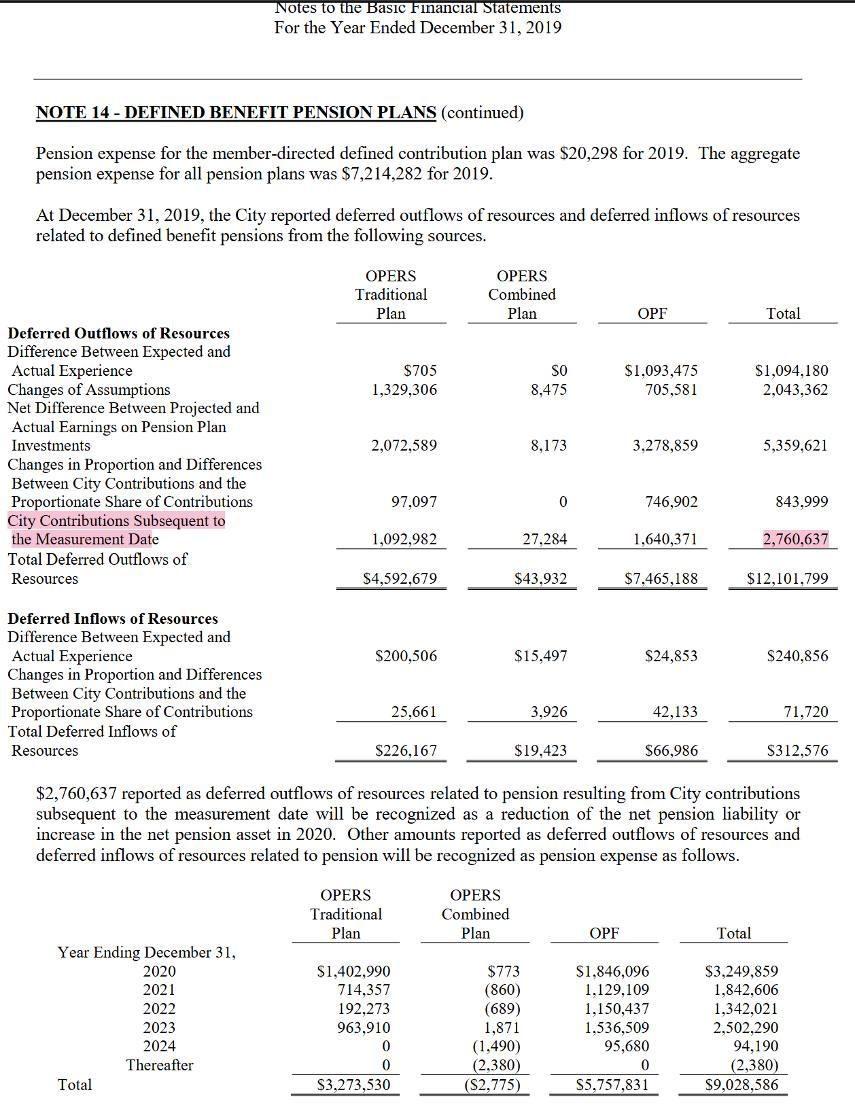
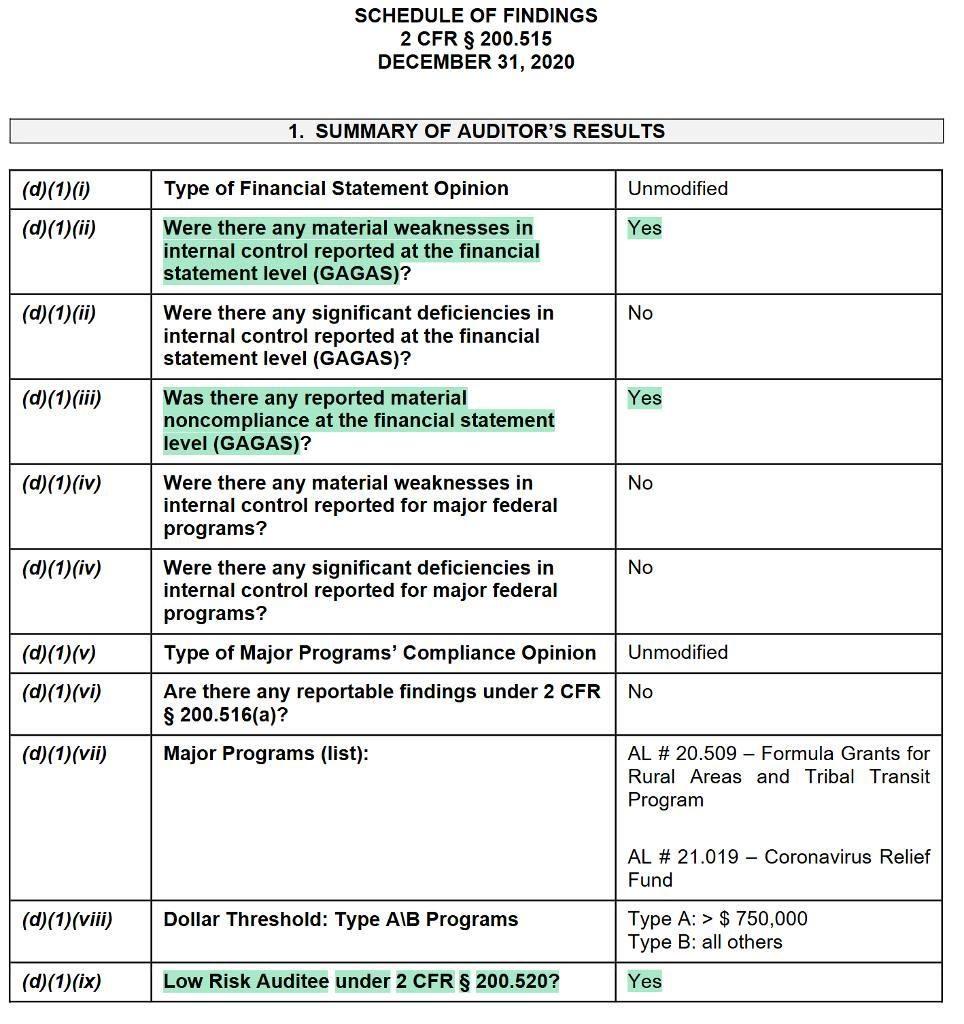
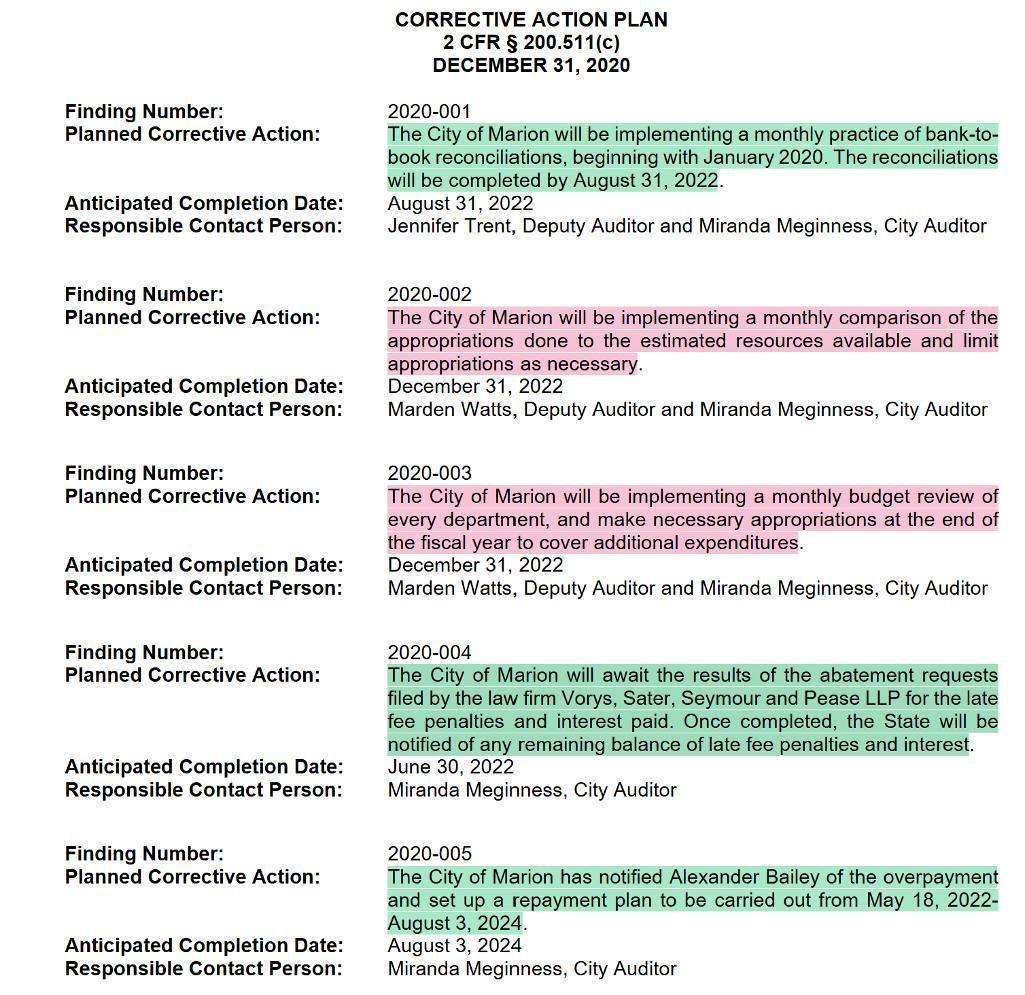
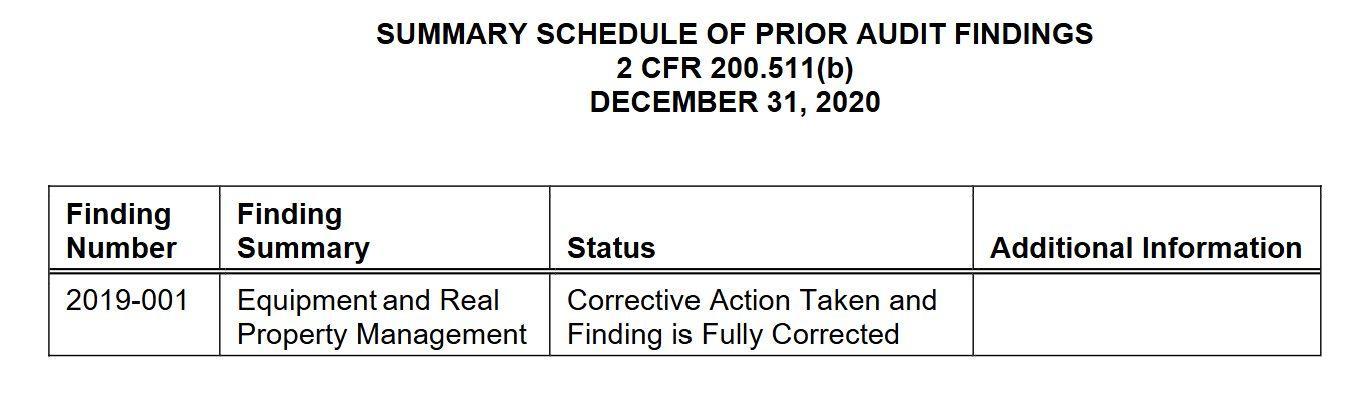
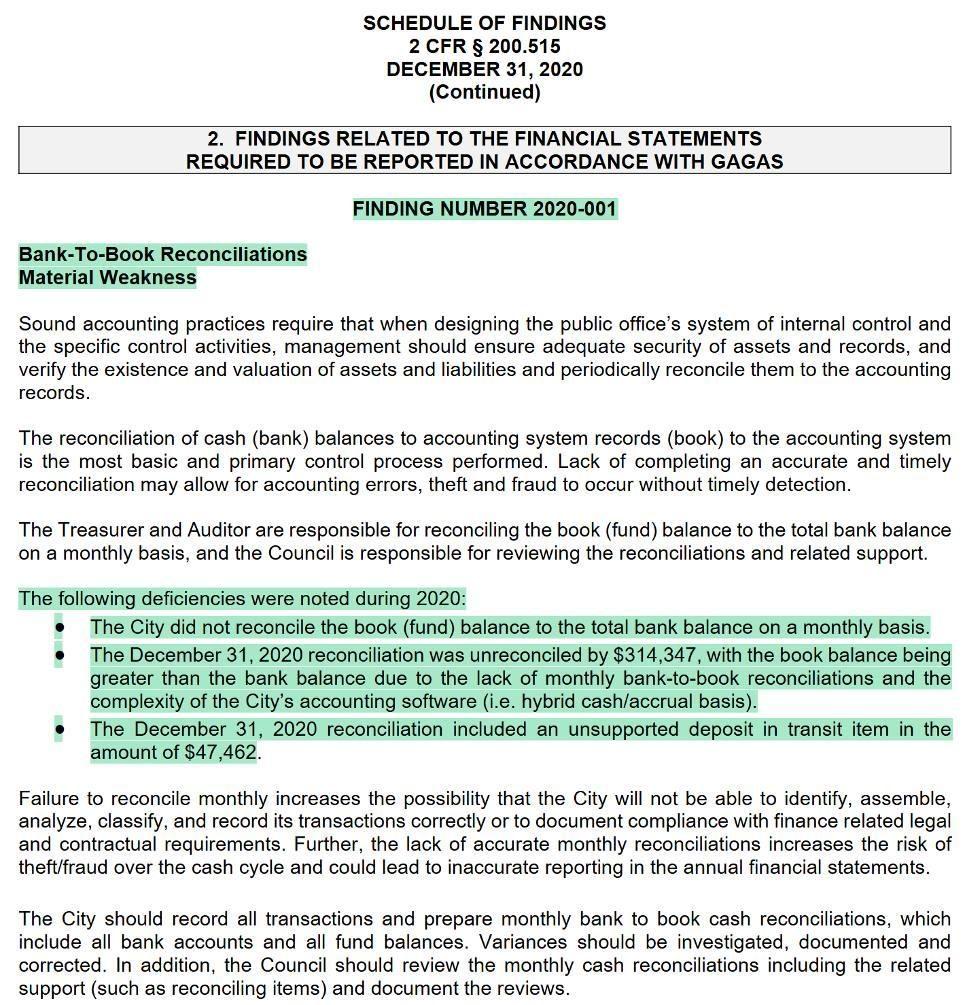
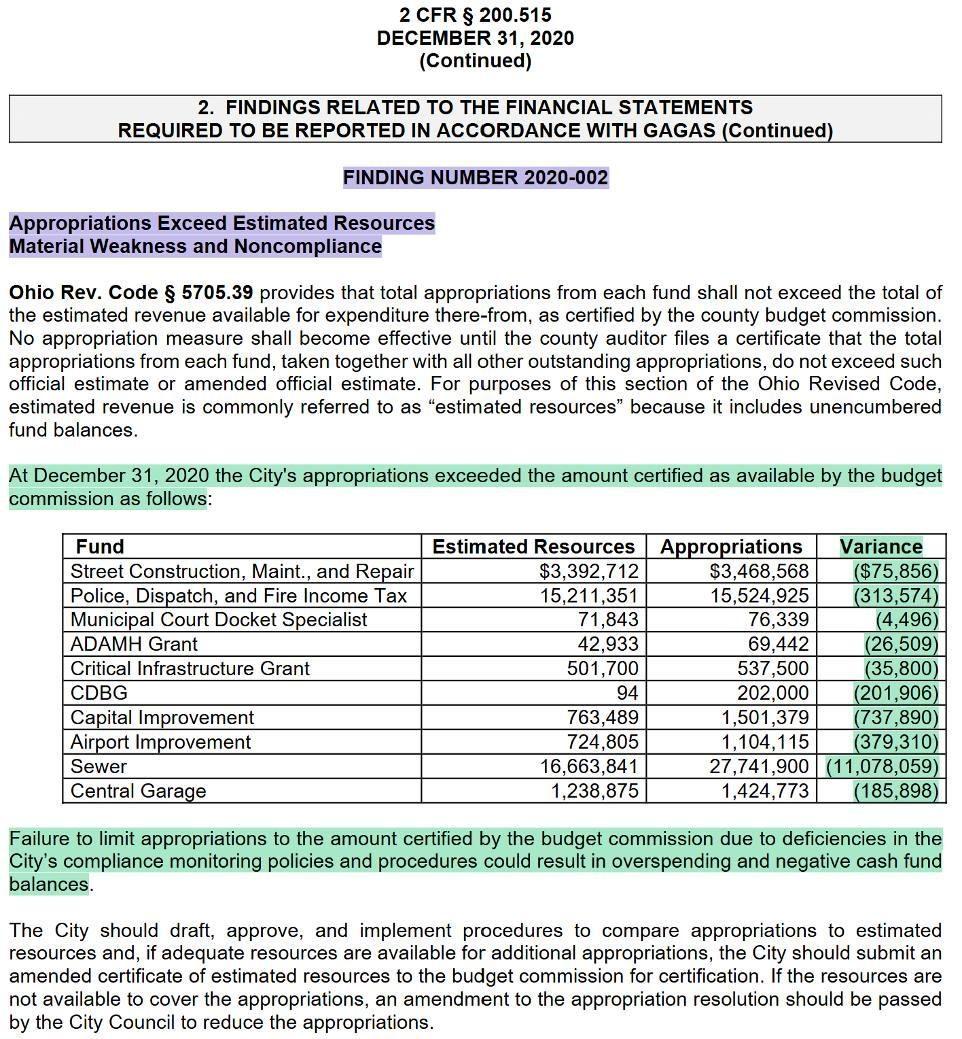
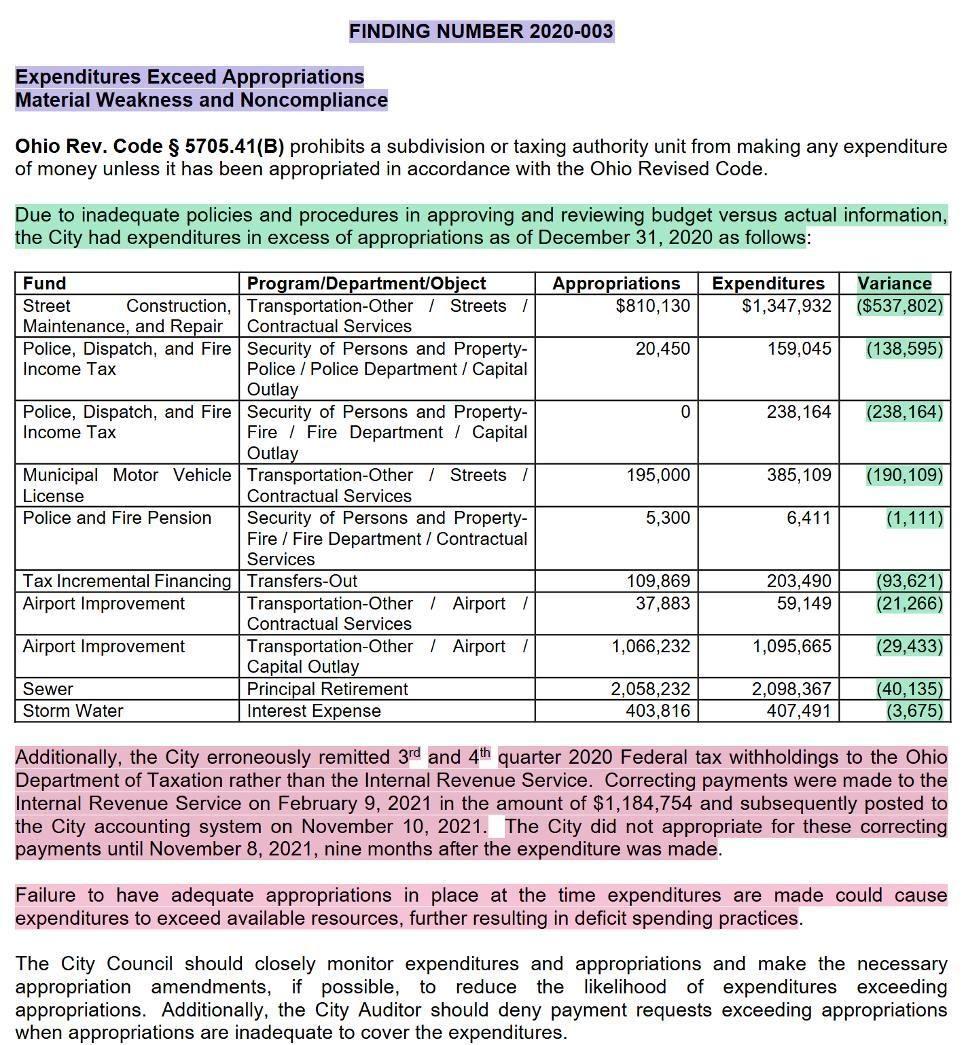
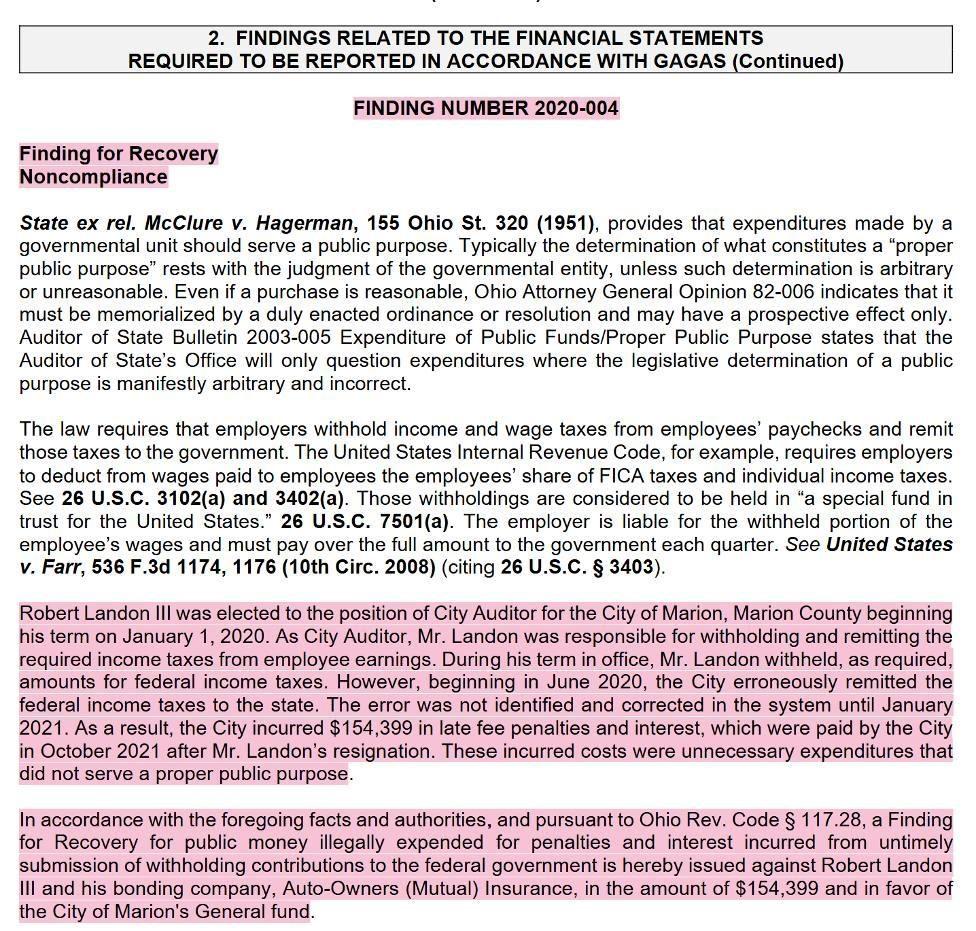
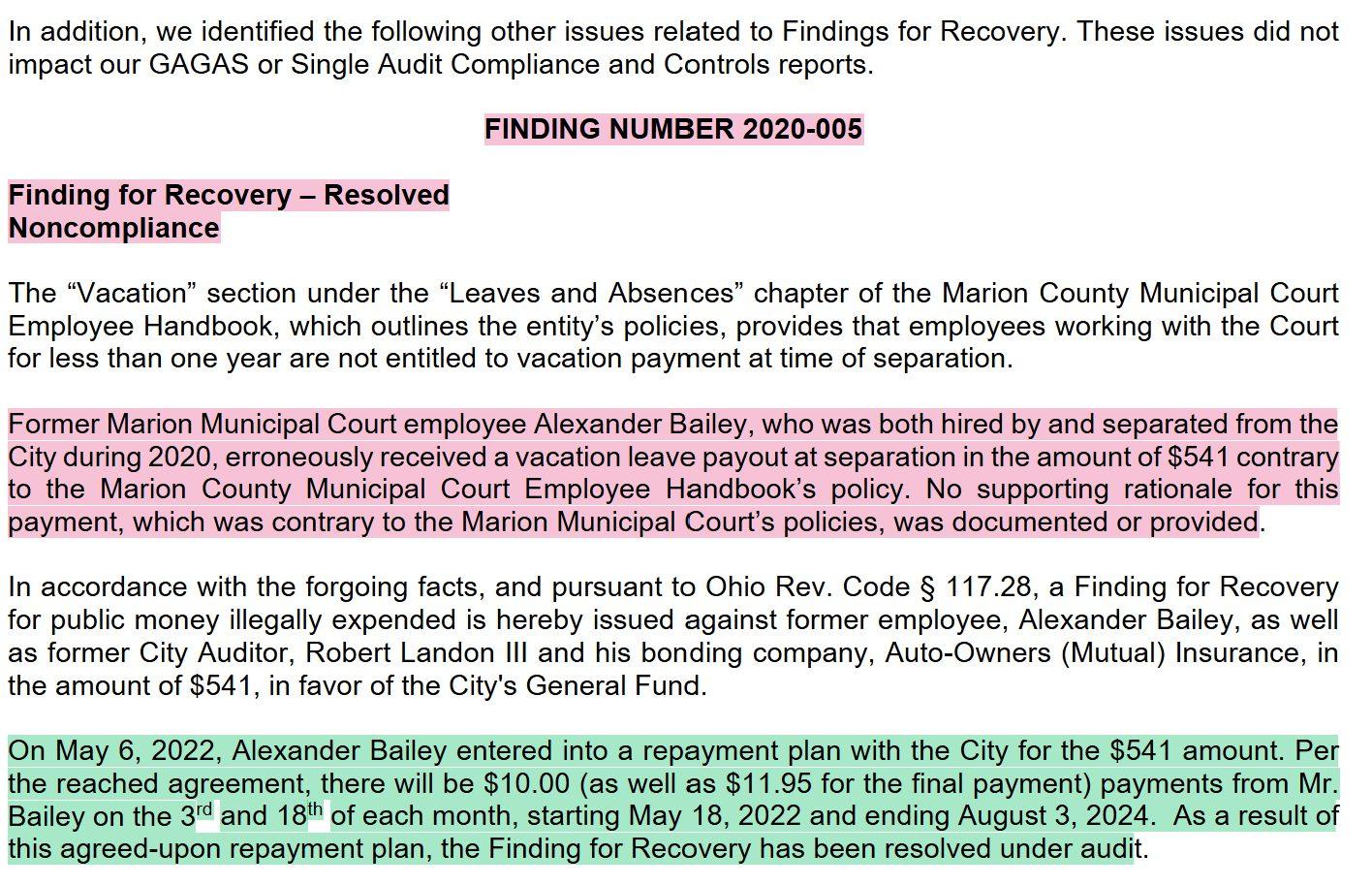
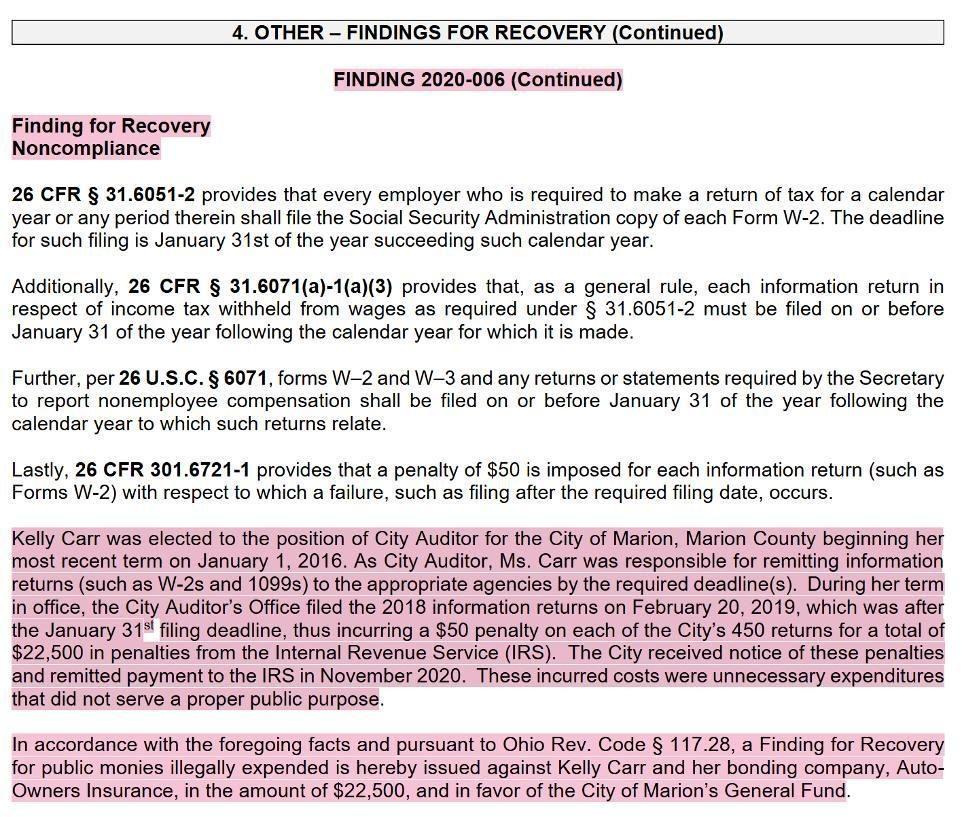
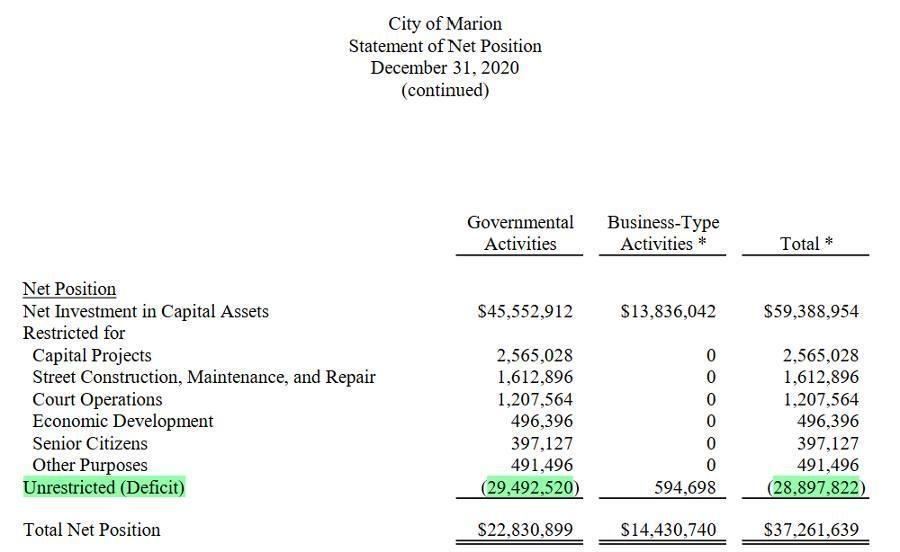
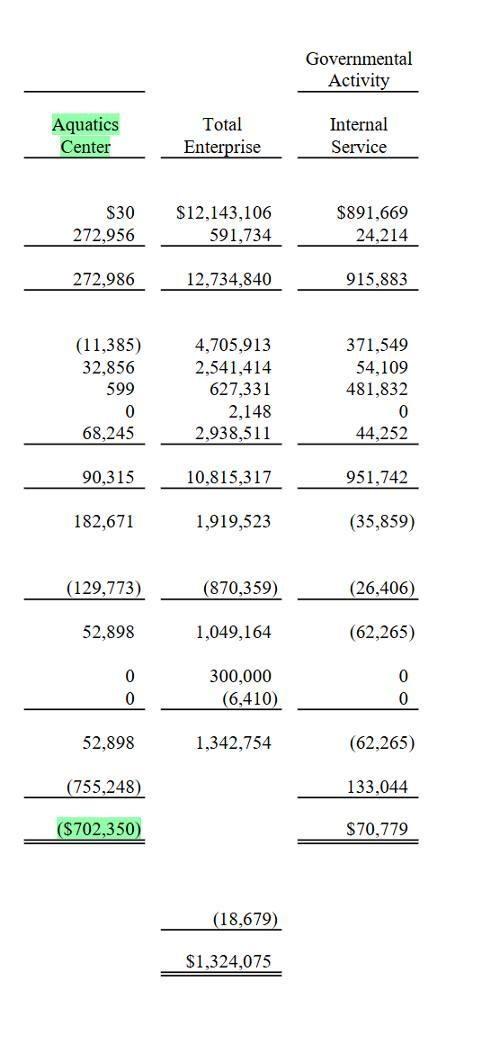
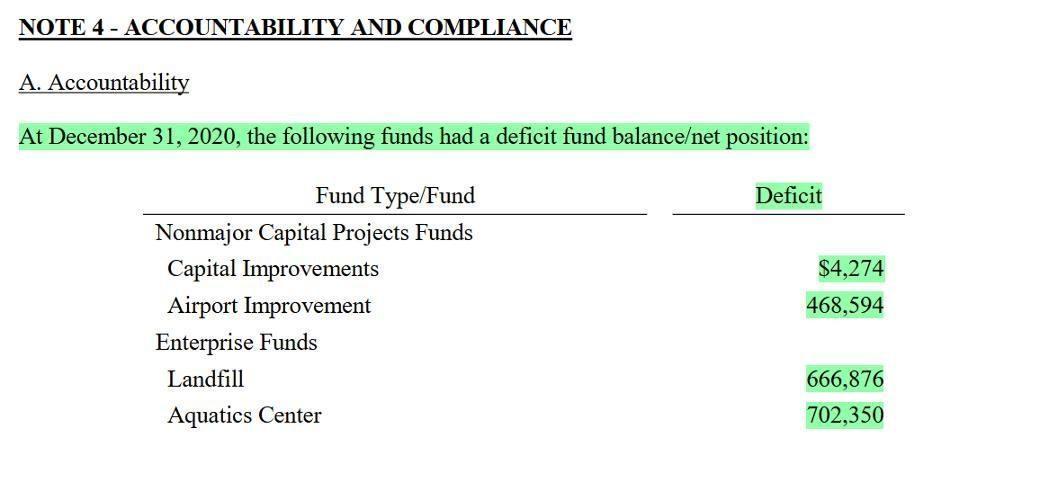
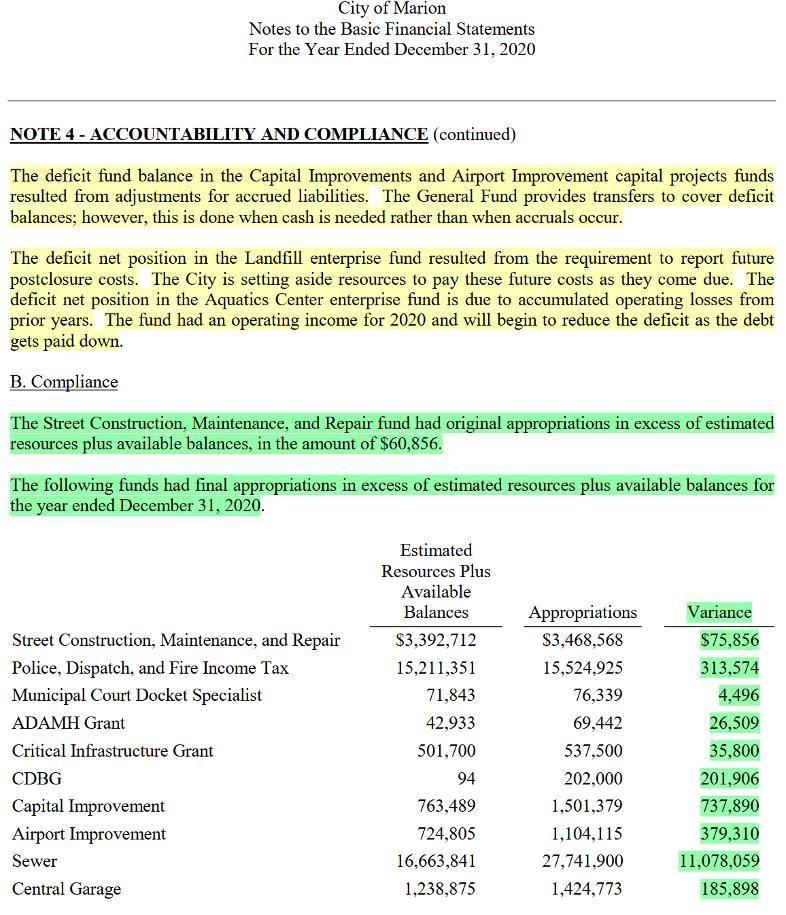
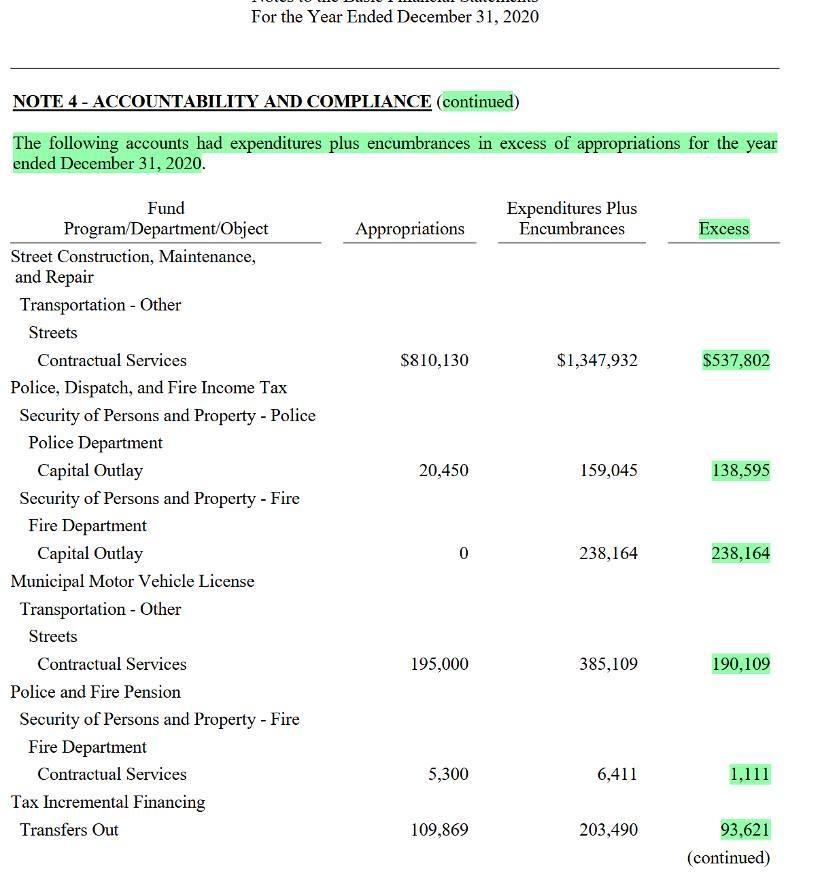
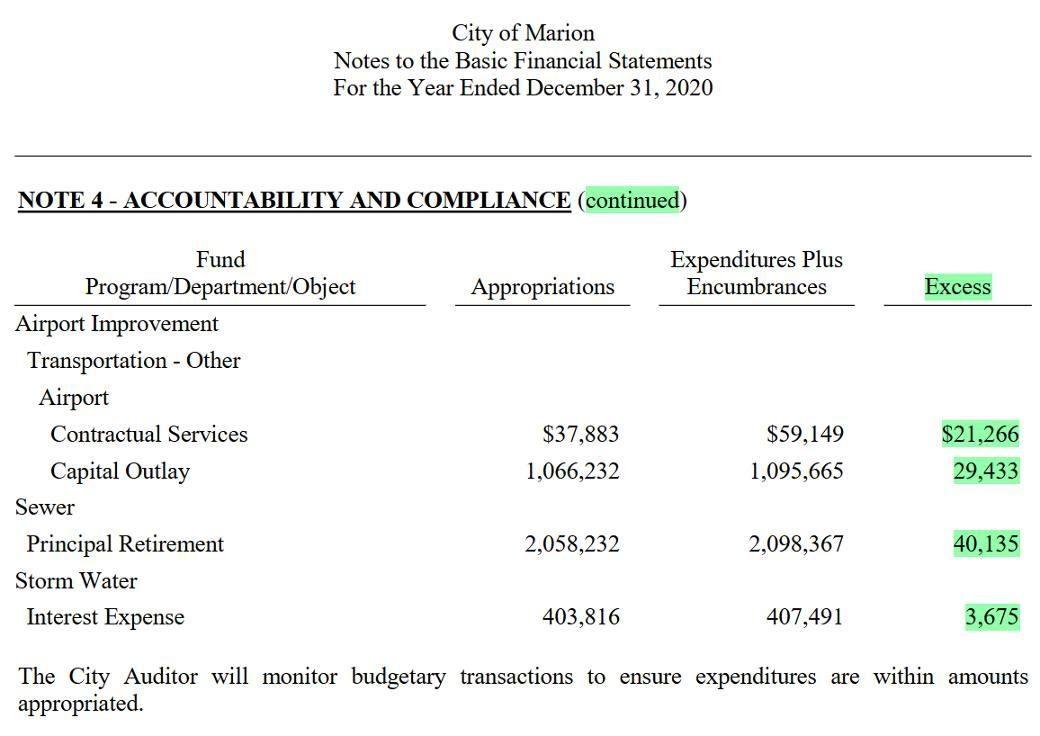
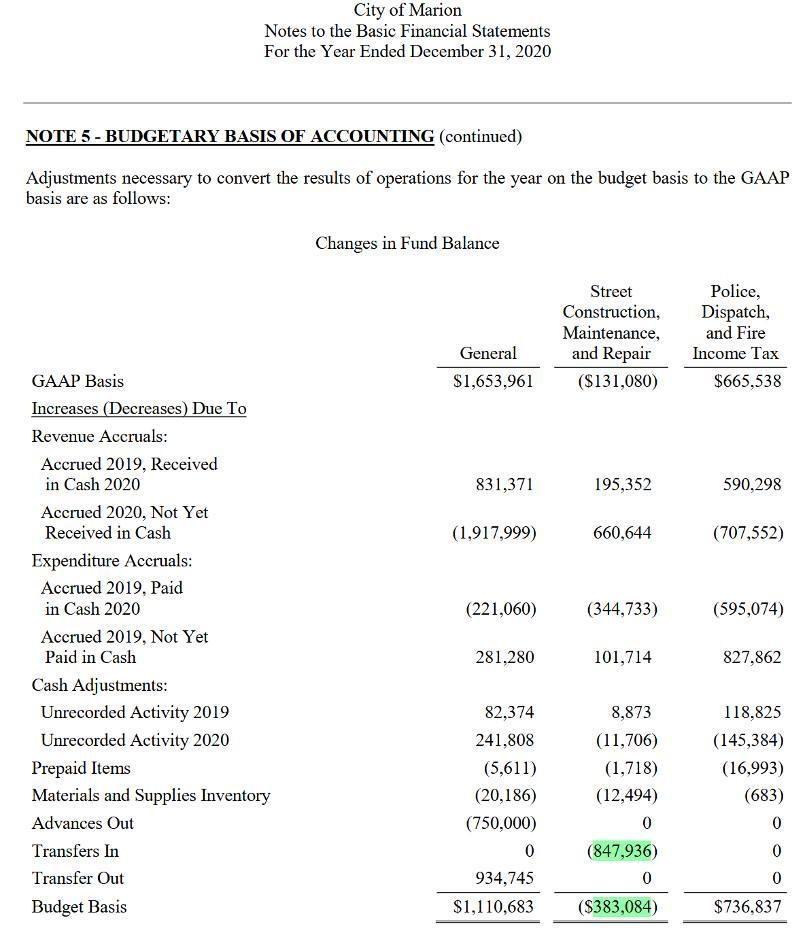
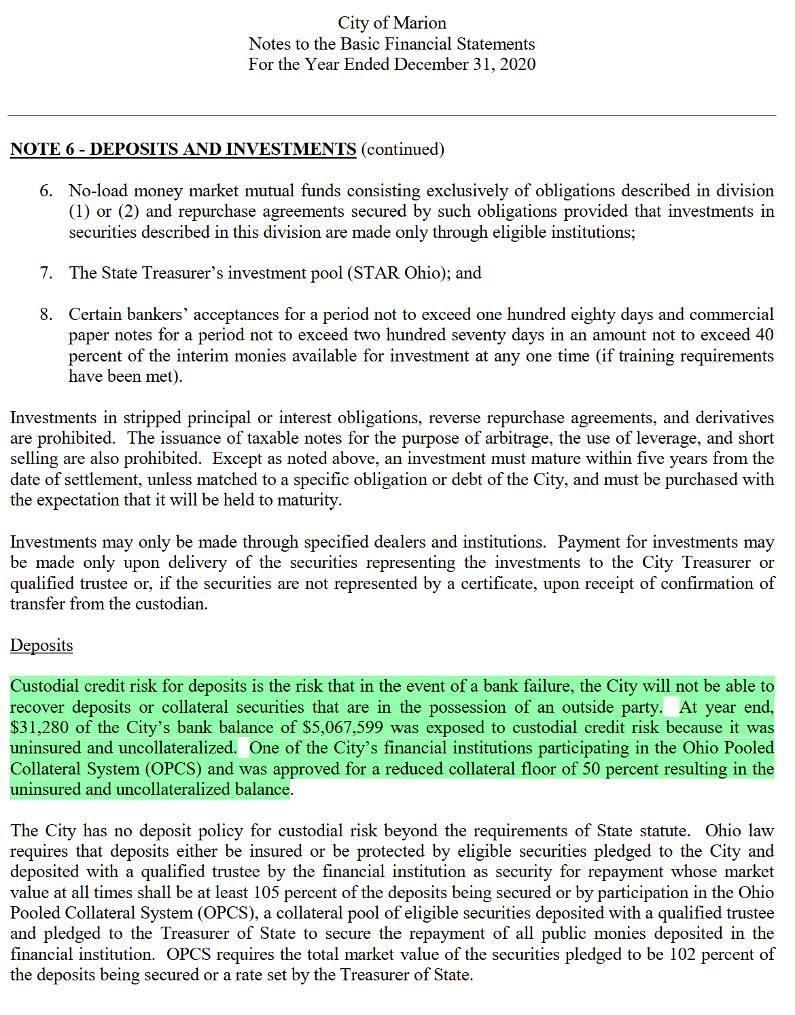
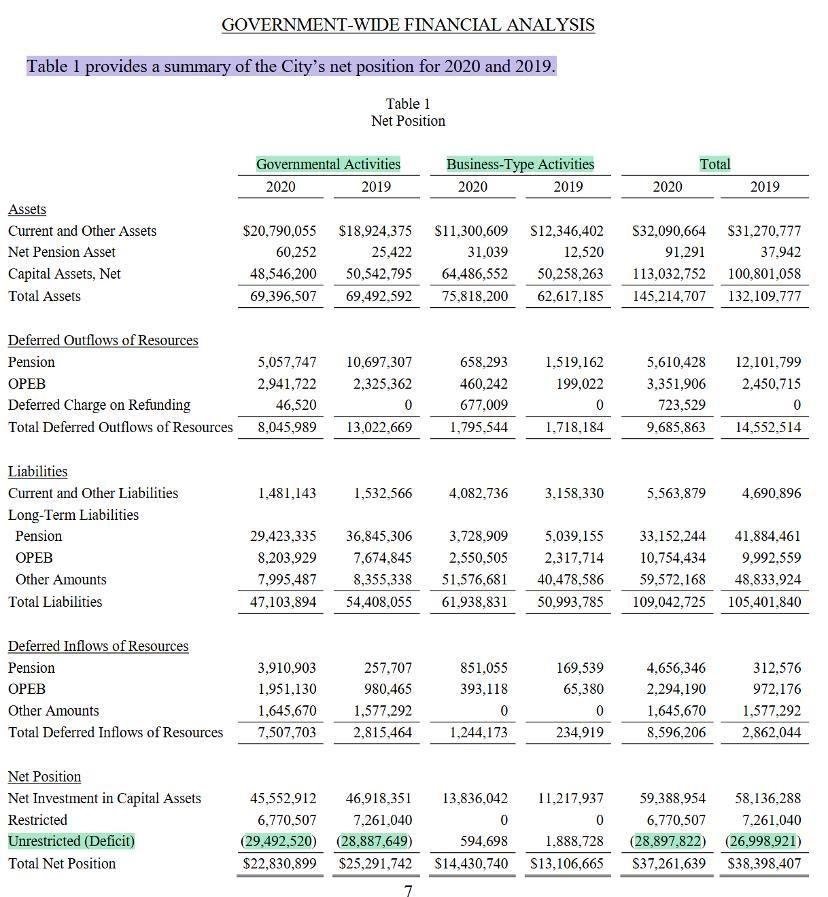
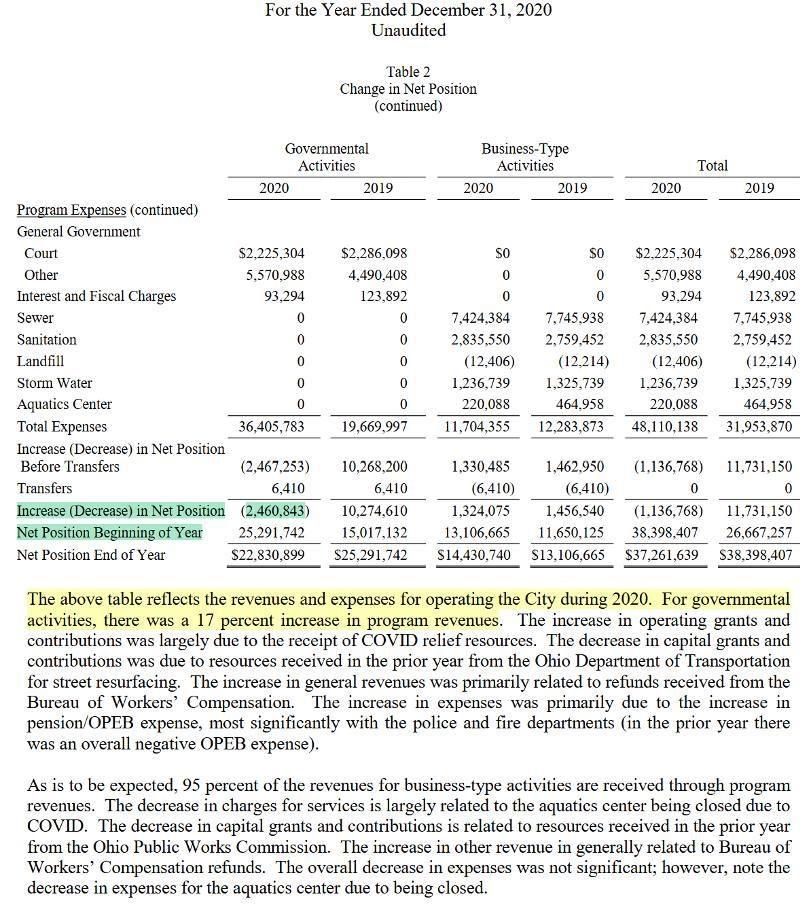
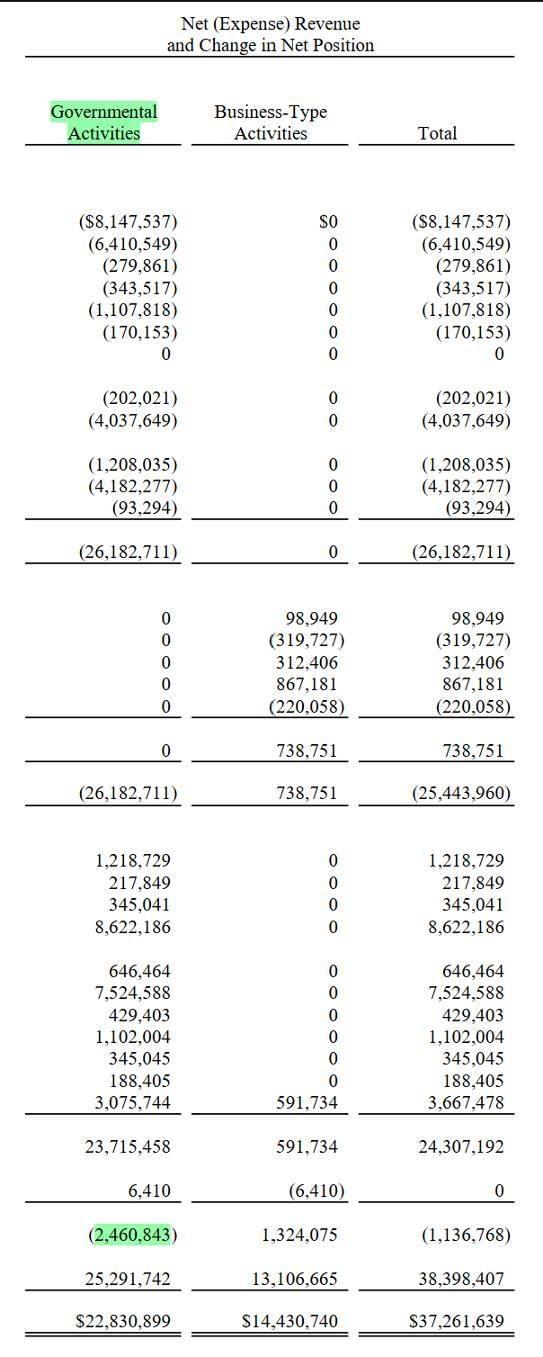
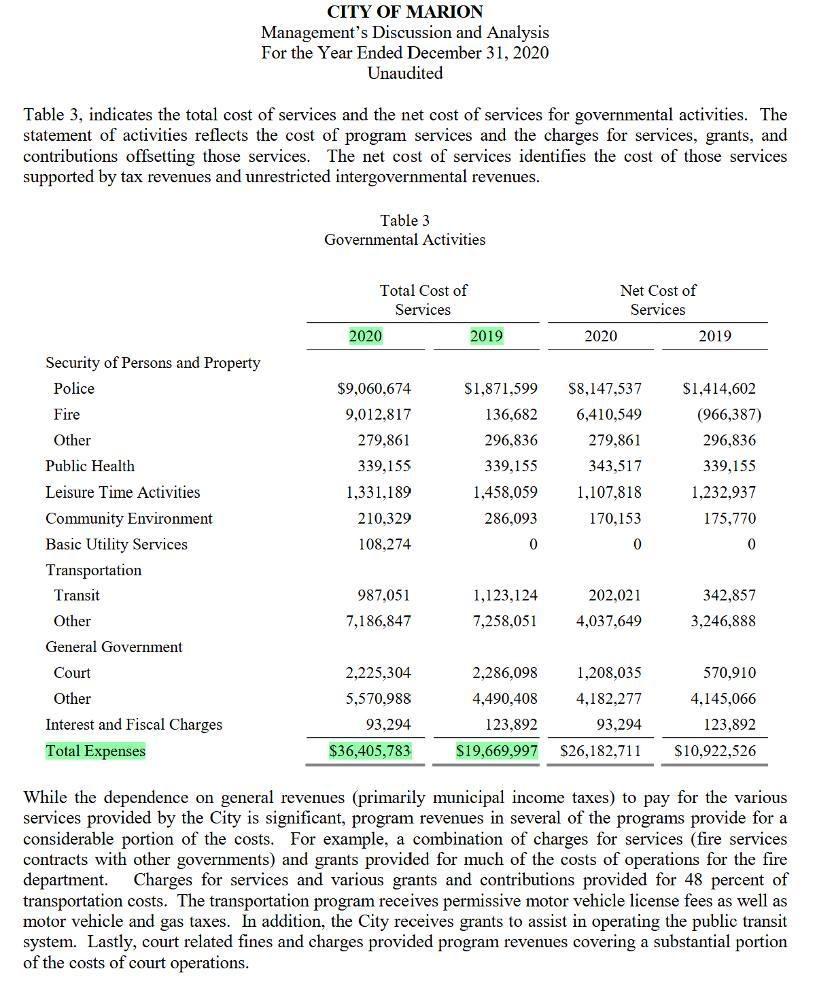
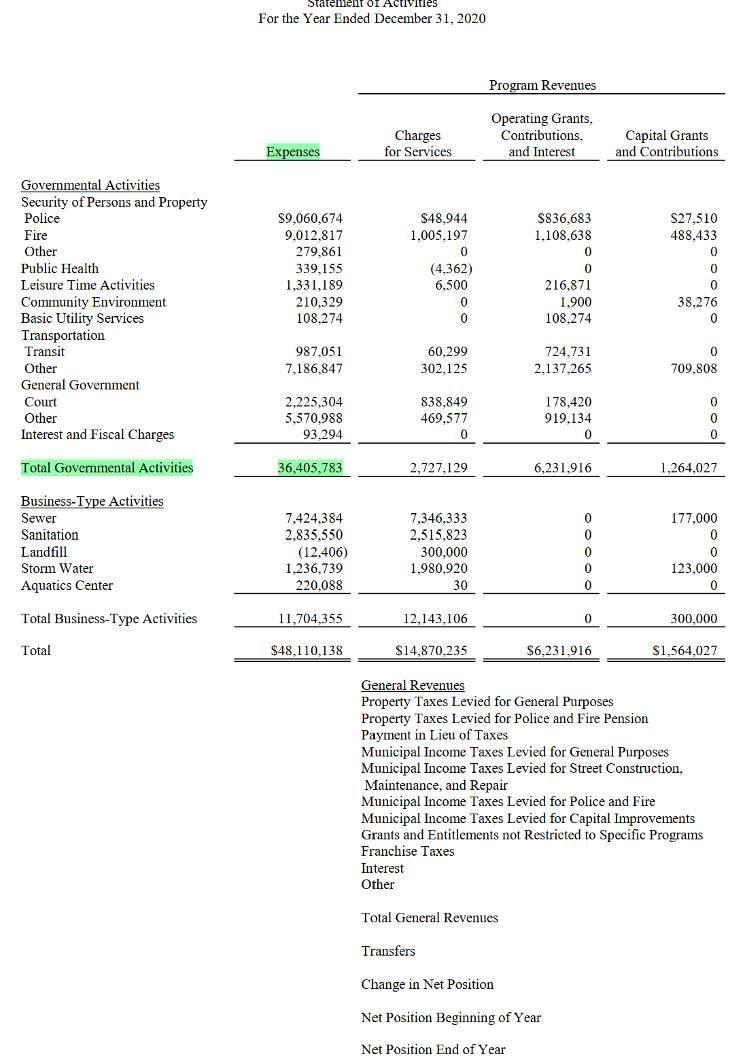
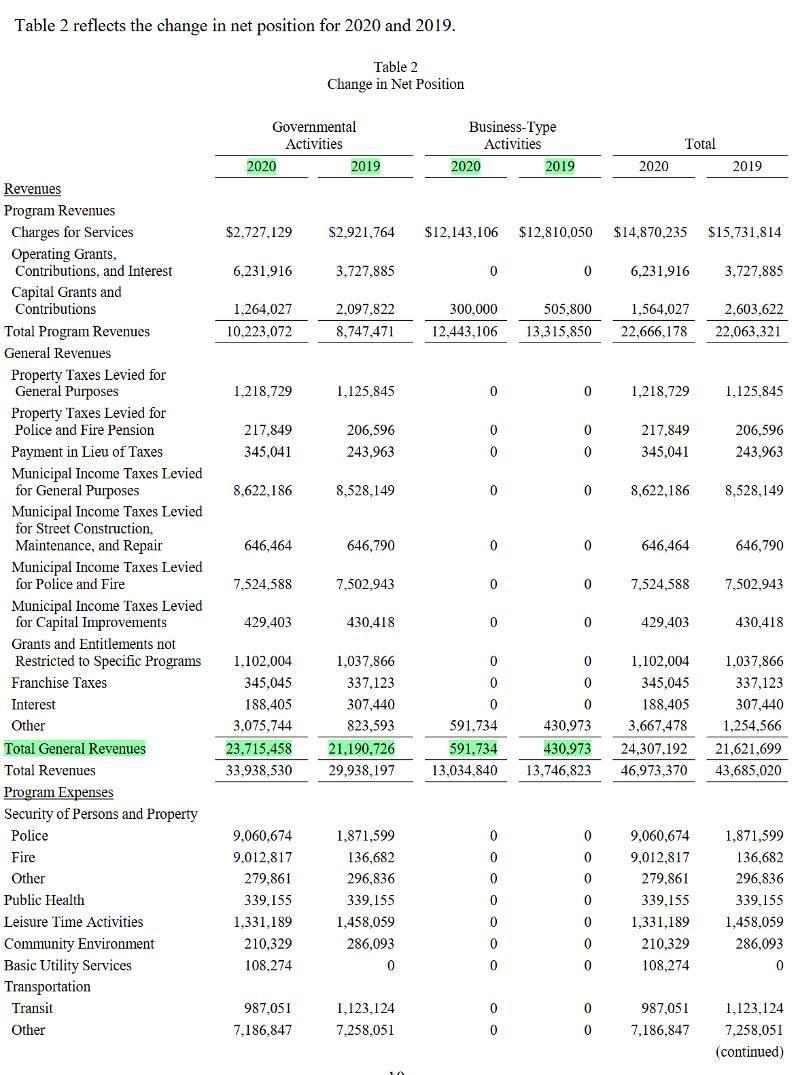
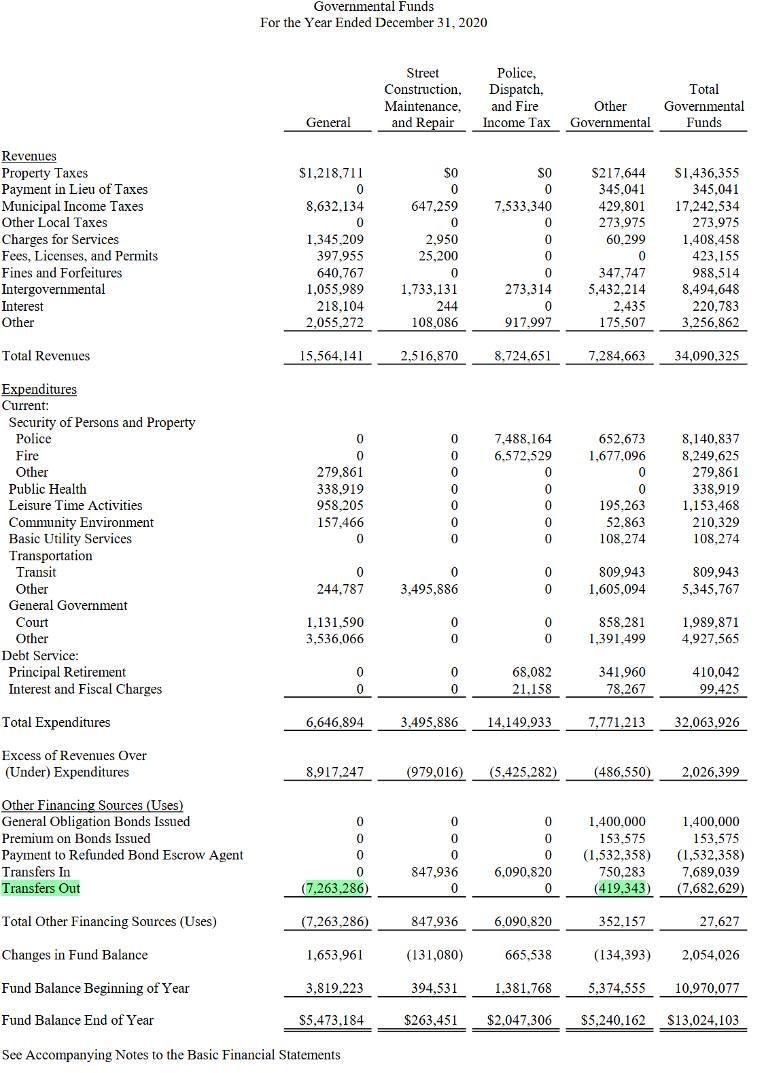
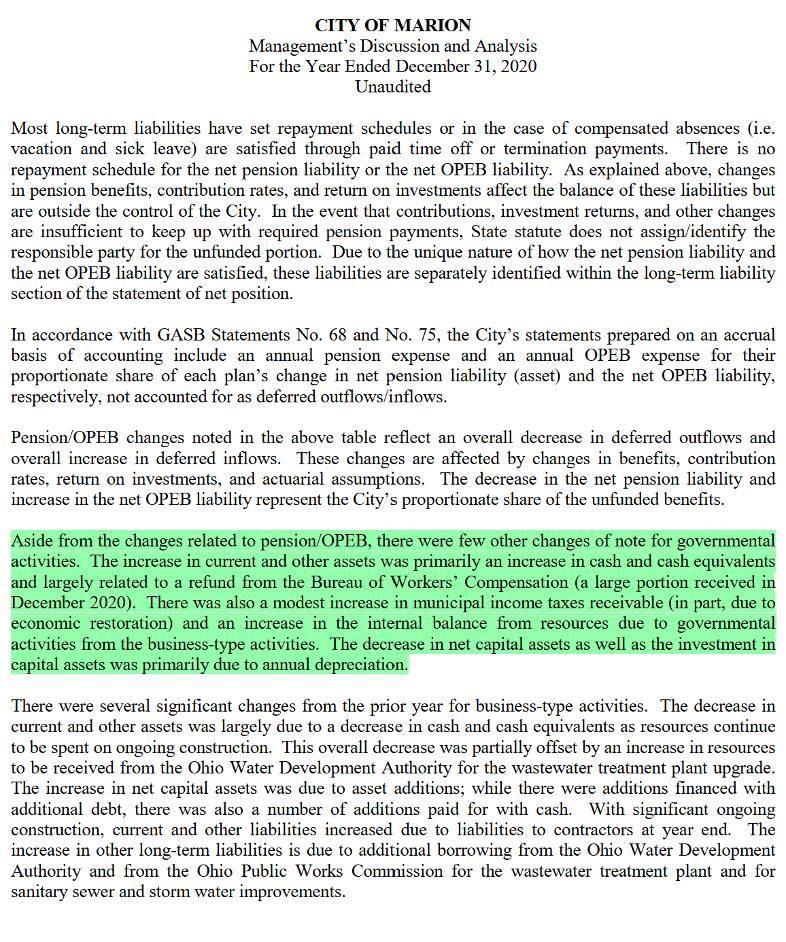
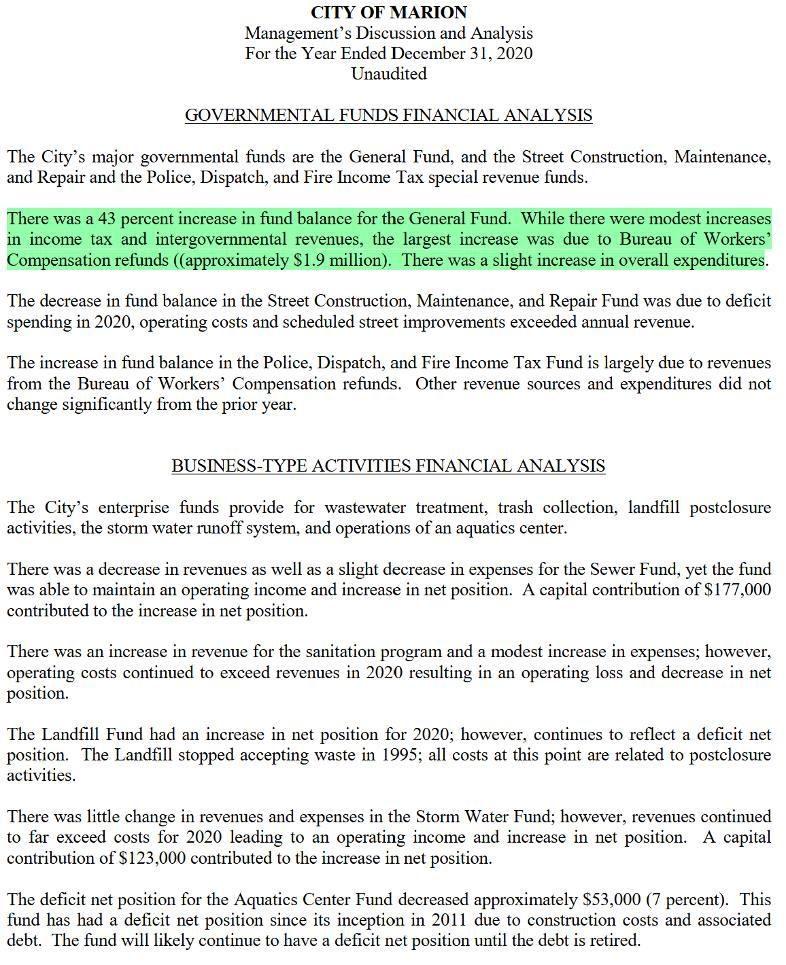
THE REAL STORY OF MARION’S FINANCIAL COLLAPSE CONFIRMED: NOW THE RECORDS AGREE WITH THE “SILENT SABOTAGE”
Since 2018, Marion Watch’s Silent Sabotage investigation argued that based on external forensic IT symptoms and observations taken from official Ohio Auditor of State Audits, the City of Marion’s New World ERP environment suffered from catastrophic failures: unverified ledgers, broken reconciliations, dormant software modules, ghost revenue, override-driven spending, and a complete breakdown of administrative oversight.
Ultimately landing Marion in Fiscal Emergency.
When those reports were first published, local officials and establishment figures dismissed them as political noise.
Our public facing teams and network, as well as our families and anyone known to associate with us were attacked while we were asking hard questions and publishing in 2019.
The antics began again this time.
This includes verbally attacking minor children and spouses of those involved with our work.
We paid dearly to bring the truth to WE THE PEOPLE!
WE WILL CONTINUE TO DO SO!
We will be releasing a total dollar figure impact from 2009 to present hopefully by tomorrow, as well as a full-length investigative article on the below records and possibly some other previously unreleased treasures.
The full Silent Sabotage Overview series is at the bottom of this post, and the full series can be seen at marionwatch.com/silentsabotage, and is an extensive fact-based investigation compiled by professionals in IT, finance, law enforcement, law, and other applicable areas of expertise.
Council will be reading the Special Investigation Resolution tomorrow night at City of Marion, Ohio City Council meeting. If it is enacted Marion Watch and our network will assist council in targeting what needs to be targeted, similar to how we diagnosed this mess, to get the citizens the answers they deserve.
After matching years of reporting against state audits, secret invoices, internal screenshots, council admissions, maintenance records, eyewitness statements, newly obtained New World documents, and other treasures the truth is undeniable, and the sacrifice has paid off:
THE CORE SILENT SABOTAGE DIAGNOSIS WAS 100% VALIDATED. WHO PREPARED THE FORENSIC ASSESSMENT?
The forensic assessment was prepared by Marion Watch Investigates IT and members of the Marion Watch Network—a dedicated team of IT professionals specializing in enterprise systems, infrastructure, cybersecurity, governance, and IT auditing spanning multiple states.
The findings are built on hard data, primary sources, public records, and official state documents, adhering strictly to our core standard: Marion Watch does not play politics; we provide the receipts.
We require a credible source for every claim made, NO Exceptions!
THE FORENSIC SCORECARD
• Overall Silent Sabotage Accuracy: A+ / 98%
• Module and Misconfiguration Diagnosis: A+ / 100% The assessment concluded that our longitudinal findings regarding software nonuse, bypassed budget controls, reconciliation failures, and structural accounting corruption were entirely supported by official records.
The sole two-point reservation in the overall score stems entirely from the fact that local officials have withheld or blocked access to native database logs and historic permission matrices—records we continue to demand via public records requests.
THE RECEIPTS DON’T LIE: WHAT MARION WATCH CLAIMED VS. WHAT THE AUDITS CONFIRMED
Marion Watch claimed:
• The New World software was misconfigured on a hybrid cash/accrual model that booked unpaid utility bills directly to cash.
• Budgetary hard-stops were disabled as “soft warnings,” enabling illegal overspending.
• Administrative permissions were dangerously broad and unmonitored.
• Bank reconciliations were abandoned, leaving massive unreconciled gaps.
• Public funds and accounts were operated completely off the books.
Later official records confirmed:
• State auditor Belinda Miller admitted on November 8, 2021, that state auditors knew about the hybrid software defect for 10 to 12 years.
• Auditor Miranda Meginness’s October 27, 2025 Corrective Action Plan confessed that universal GL override permissions had been active across departments for 16 years and were finally locked down.
• March 8, 2021 New World screenshots proved former Deputy Auditor Cathy Chaffin retained full “God Mode” administrator access 14 months after becoming Service Director.
• The 2021 Single Audit exposed a $543,079 unreconciled bank variance and cited an off-the-books “Cashless Evidence Room” bank account where Police Chief Jay McDonald admitted funds “don’t go into New World.”
THE PRICE TAG OF SILENT SABOTAGE
The documentary record reveals staggering financial and operational consequences:
• Approximately $145,825.78 per year paid to Tyler Technologies for software maintenance and support.
• $24.91 million in cumulative General Ledger overrides and unappropriated spending from 2009 through 2021.
• 1,130 days late: The 2021 Single Audit was legally due on March 1, 2022, but was suppressed until April 4, 2025.
• 11 of 14 opinion units issued Qualified / Modified audit opinions in 2021 due to 106 unverified Excel spreadsheet adjustments imported with zero supporting working papers.
• S&P bond rating withdrawal: Chronic reporting failures caused S&P to downgrade Marion to BBB in June 2022 and completely withdraw the city’s bond rating in April 2023.
THE MODEL CITY MYTH & THE 24 CANCELED APPLICATIONS
Under the original 2008 contract, Marion was intended to serve as a showcase demonstration site for New World. Instead, it became a cautionary tale of software abandonment.
Recent utilization reviews and software cancellation records reveal that out of 43 applications reviewed; city officials quietly removed 24 applications from maintenance—saving $78,761.60 annually in maintenance fees.
This raises the most damning question for taxpayers: If the city spent well over $1.3 million over the life of the system maintaining applications that officials later admitted they didn’t use, why were citizens forced to foot the bill for dormant software while core financial controls collapsed? And if reporting, project accounting, and workflow tools were abandoned, what safeguards replaced them today?
WHY A FULL FORENSIC IT INVESTIGATION REMAINS MANDATORY
Traditional financial audits only flag the symptoms after the damage is done. They cannot answer the critical questions of accountability:
• Who altered the permissions?
• Who accepted the override warnings?
• Who modified configurations or deleted audit trails?
• Were records altered outside approved workflows?
These questions cannot be answered by recycling polite audit summaries. They require a rigorous, uncompromised forensic examination of native databases, system logs, endpoint histories, and vendor records.
BOTTOM LINE
The warning signs were real. The diagnosis came years before the official receipts caught up.
The records did not weaken our investigation—they reinforced every warning we issued.
The taxpayers of Marion deserve absolute financial transparency, unedited documentation, and a complete forensic accounting of how their public trust was compromised. Facts don’t lie. People do.
Accountability cannot be deleted.
OFFICIAL EXHIBITS & PRIMARY SOURCE RECORDS (2009–2021 Final Forensic Assessment & Scorecard)
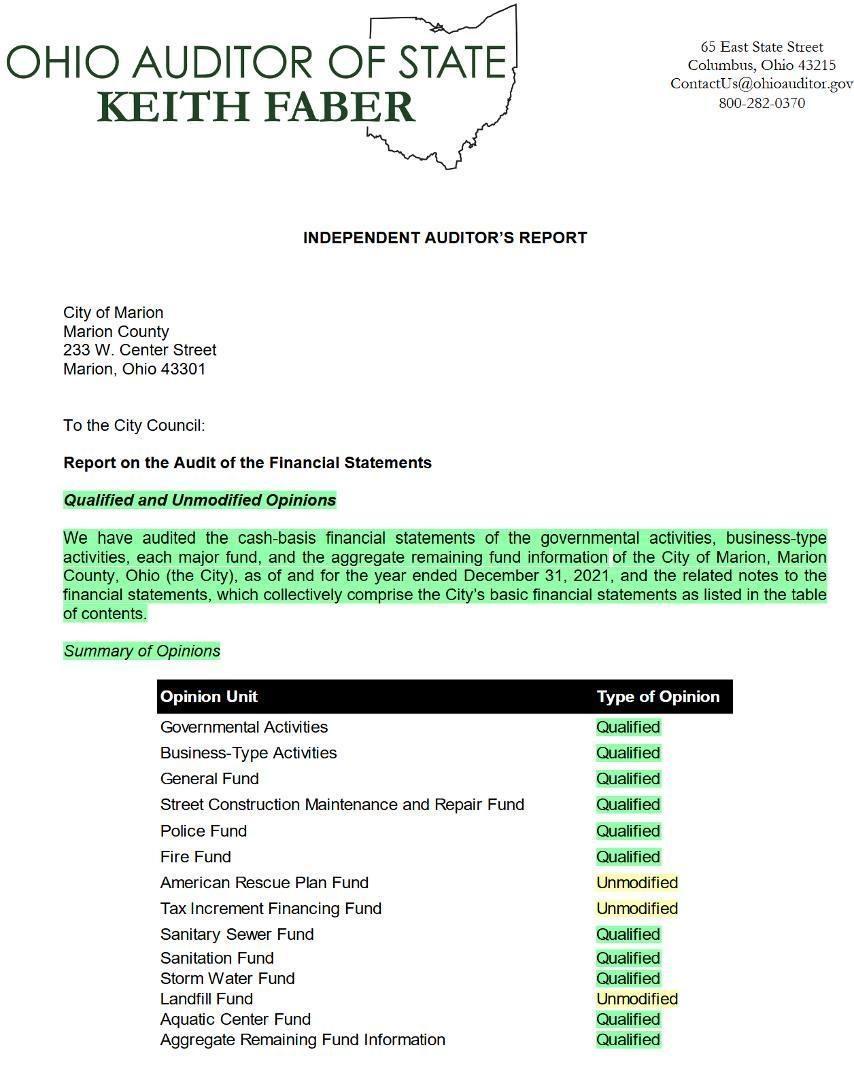
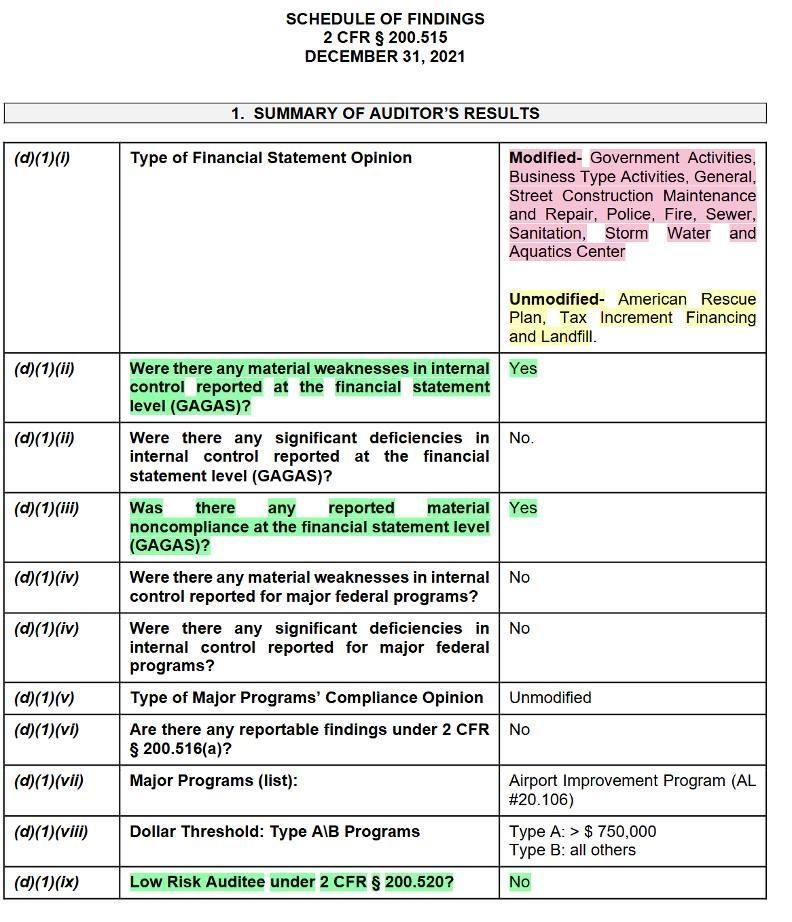
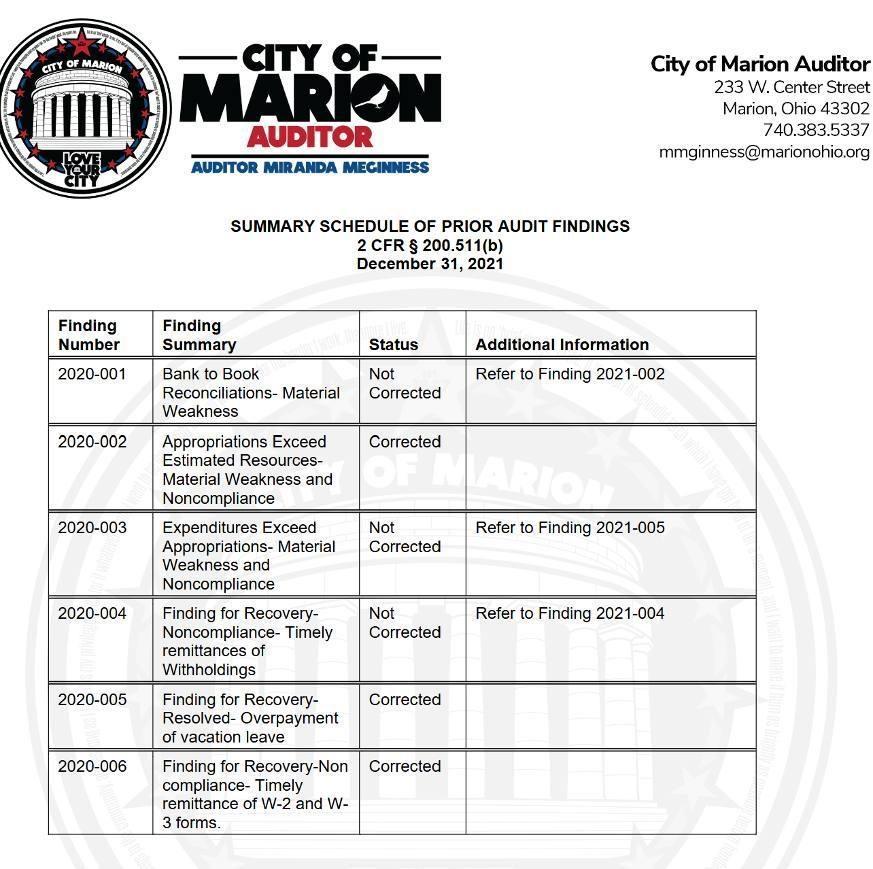
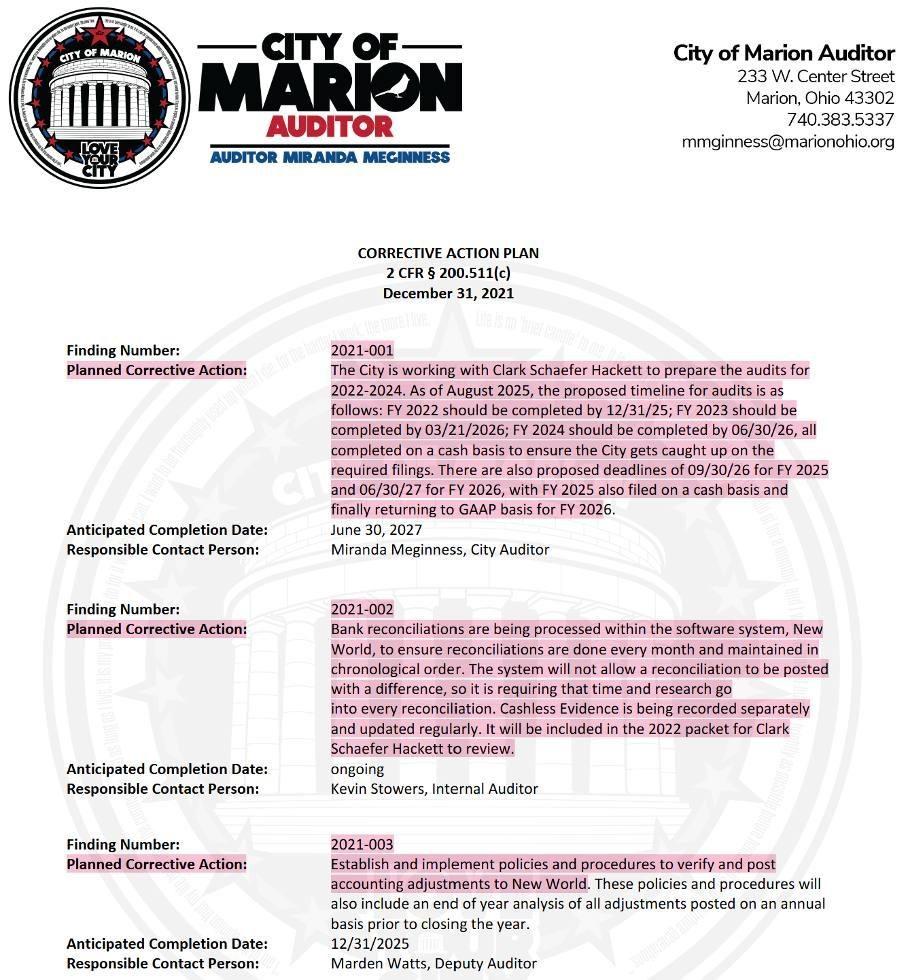
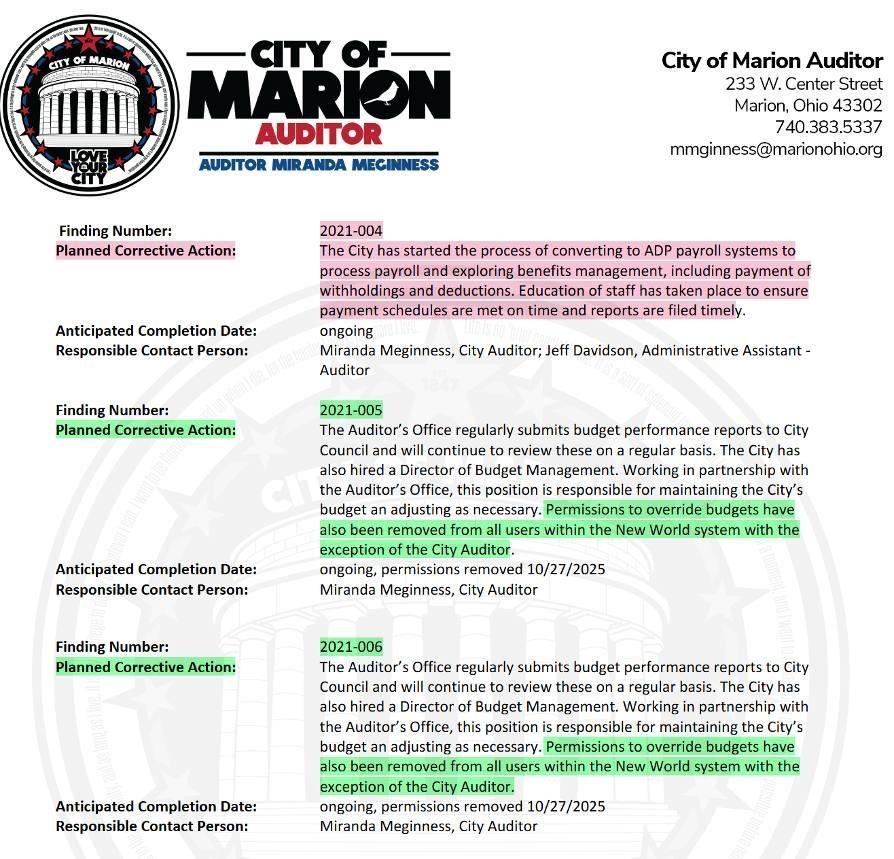
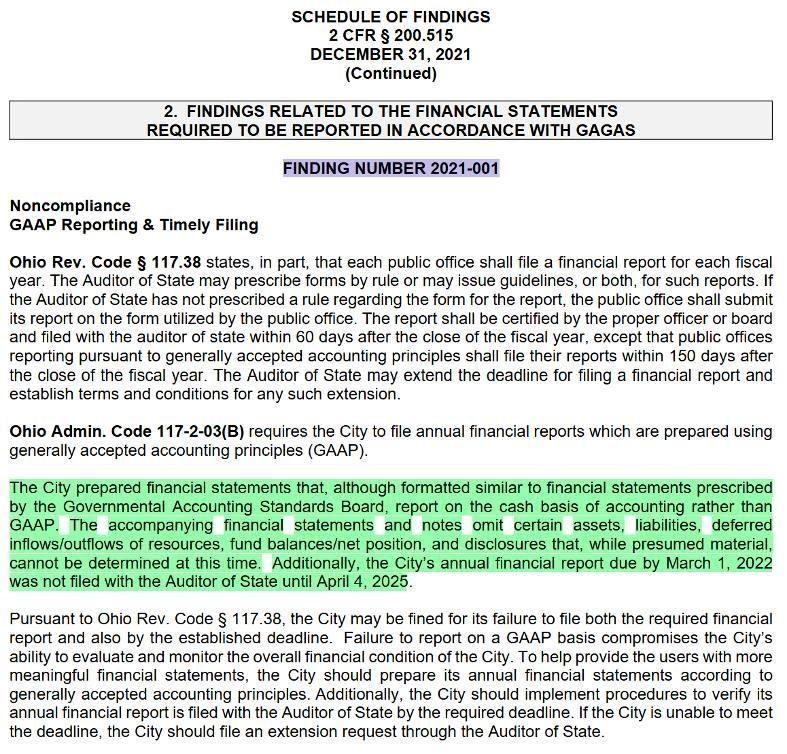
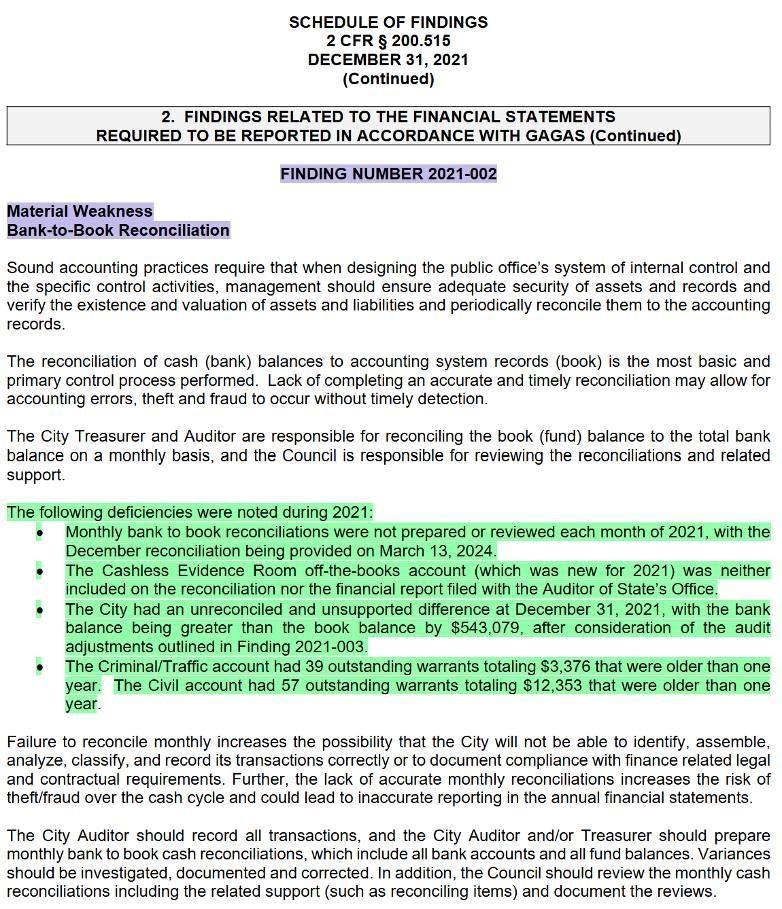
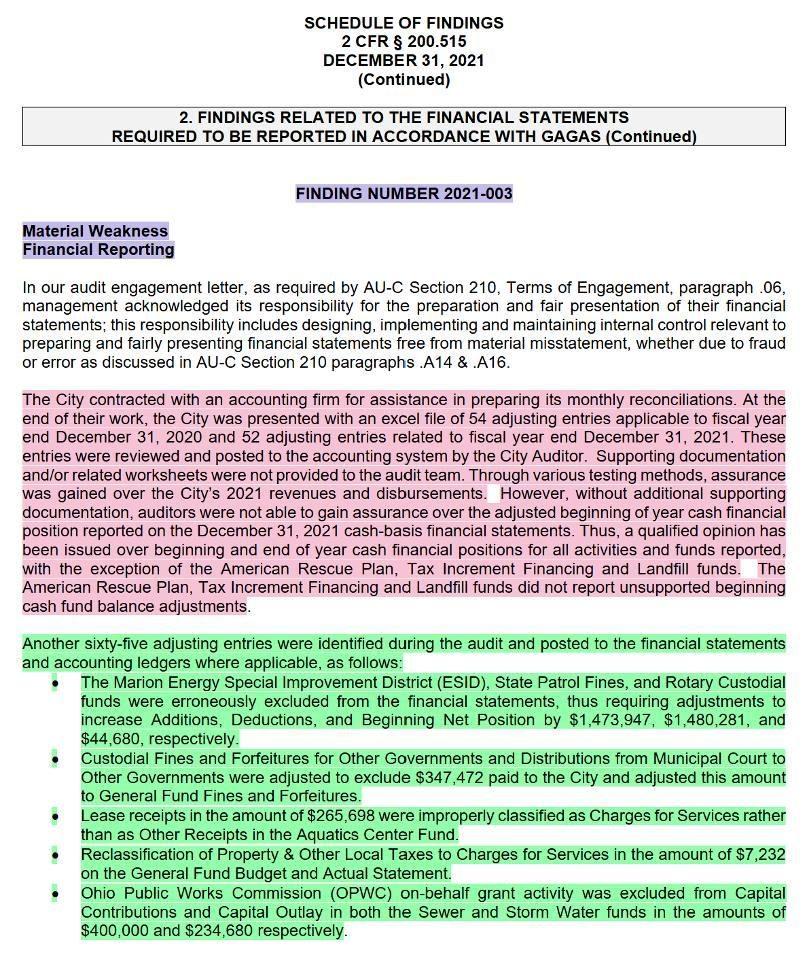
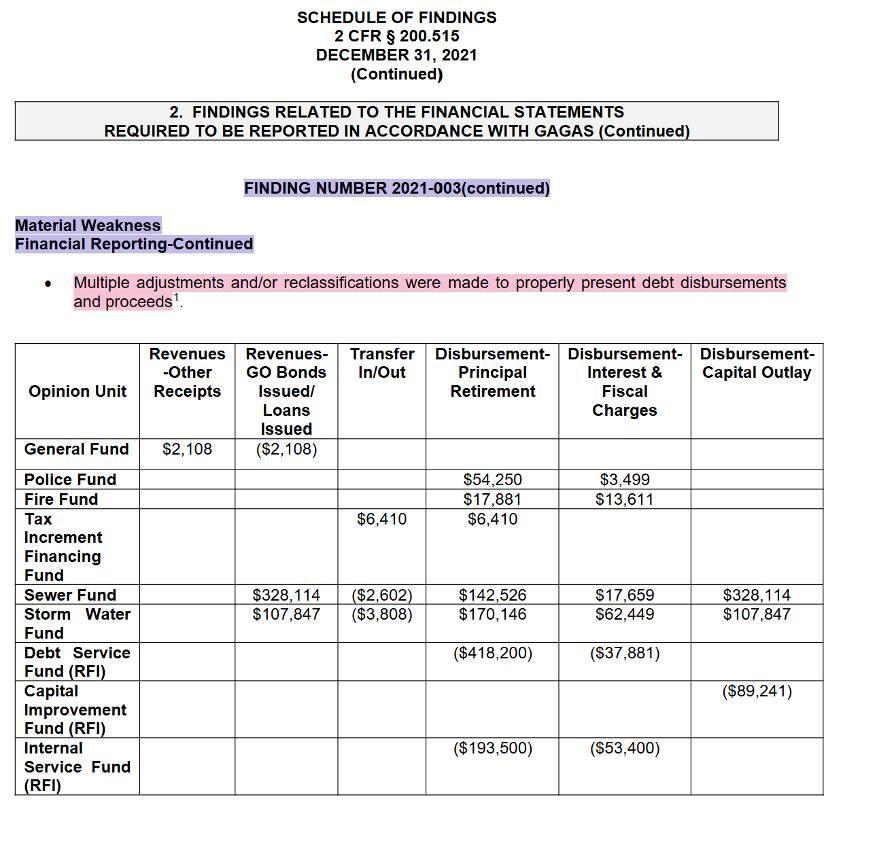
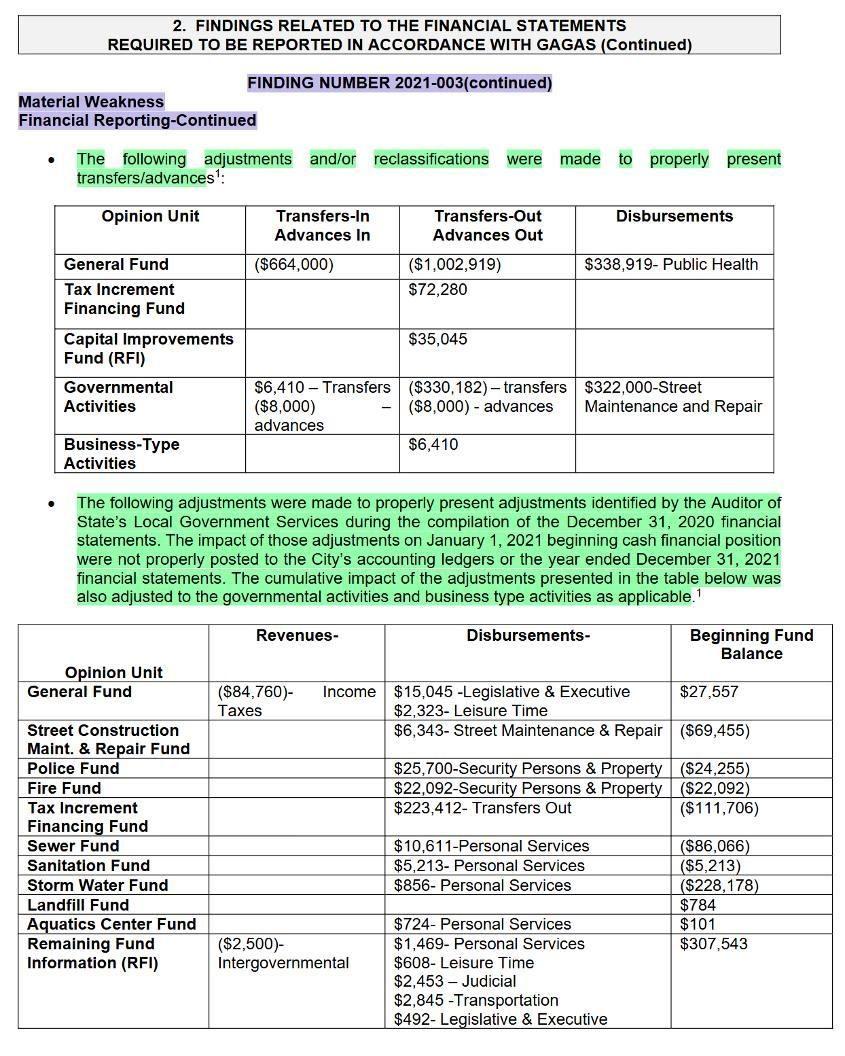
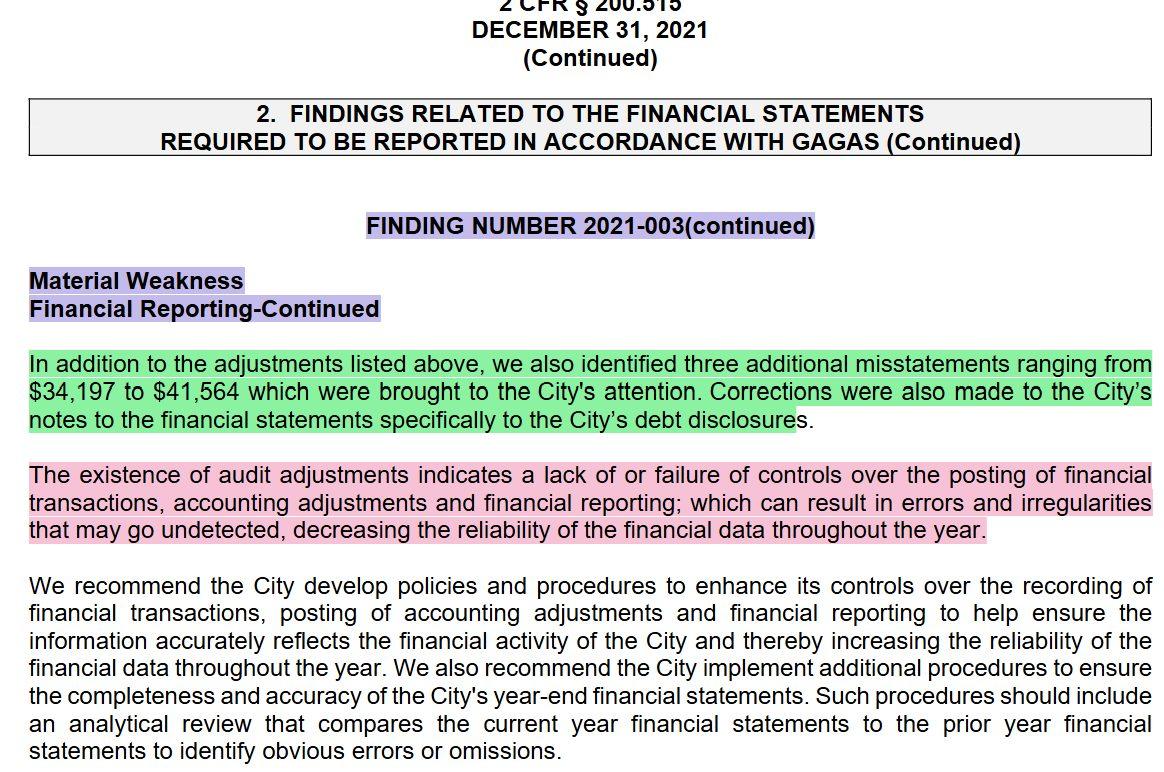
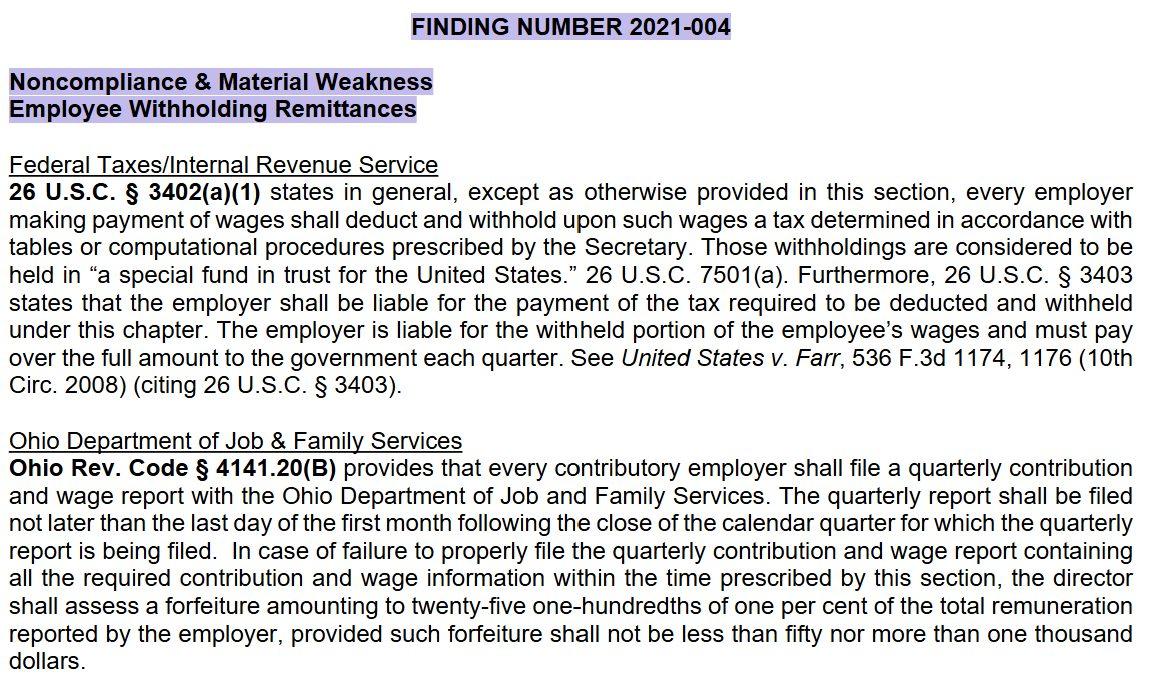
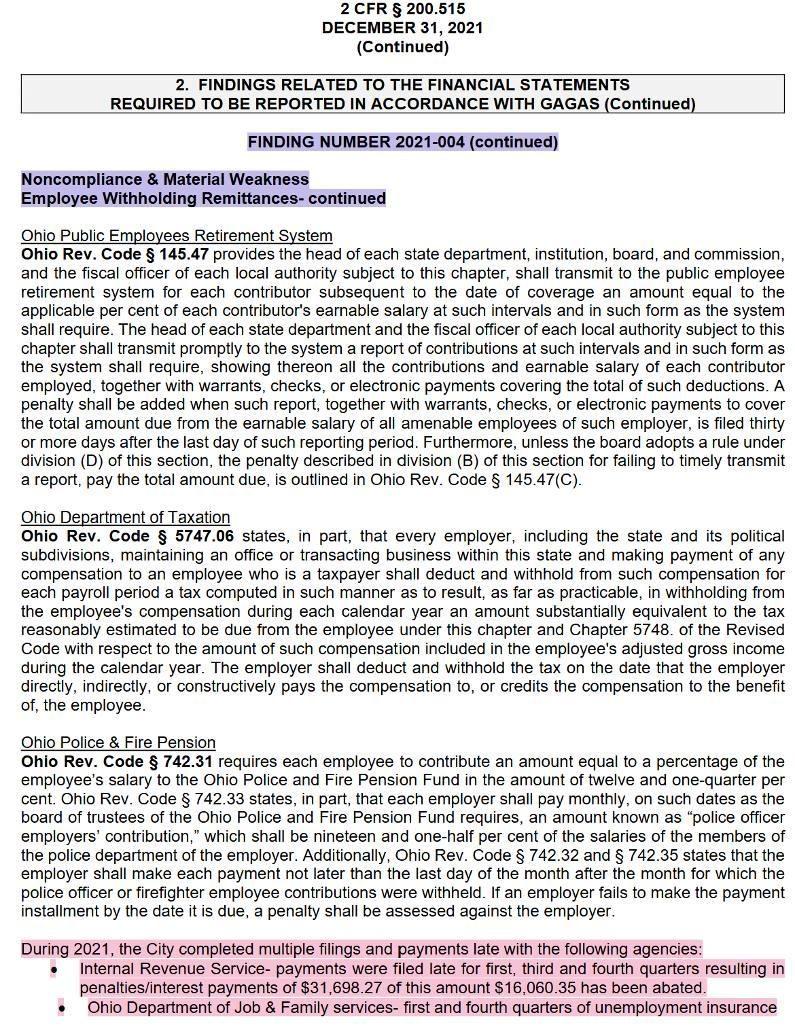
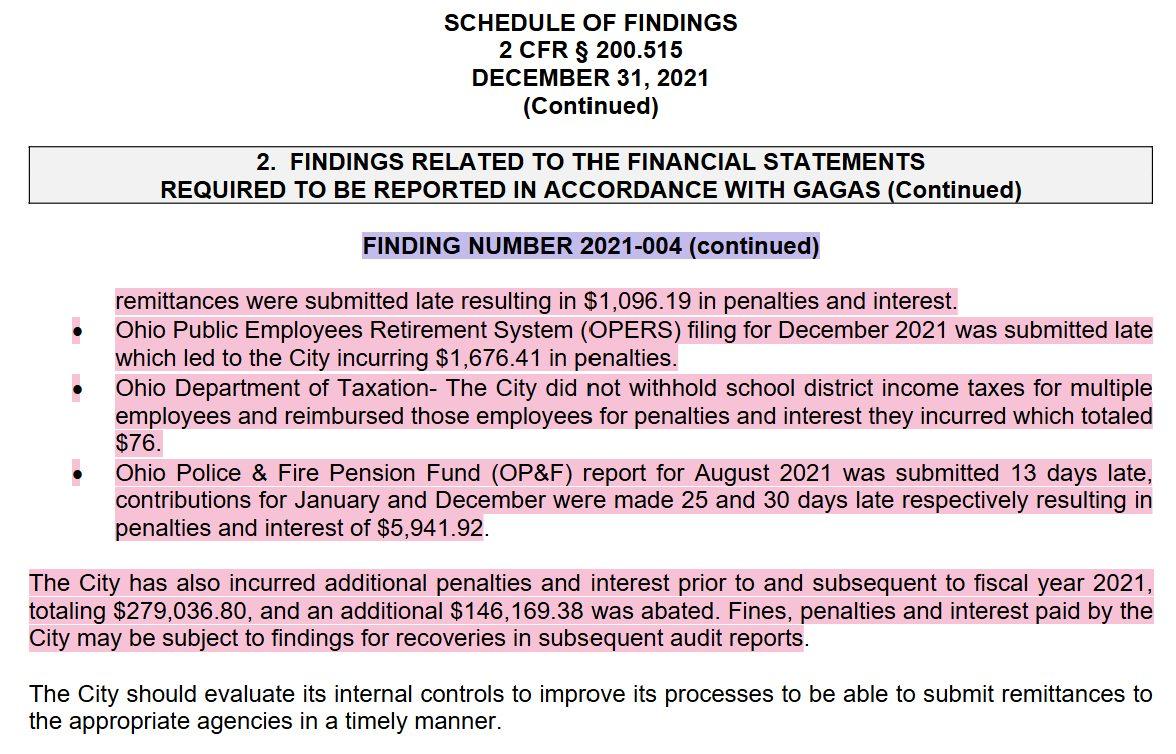
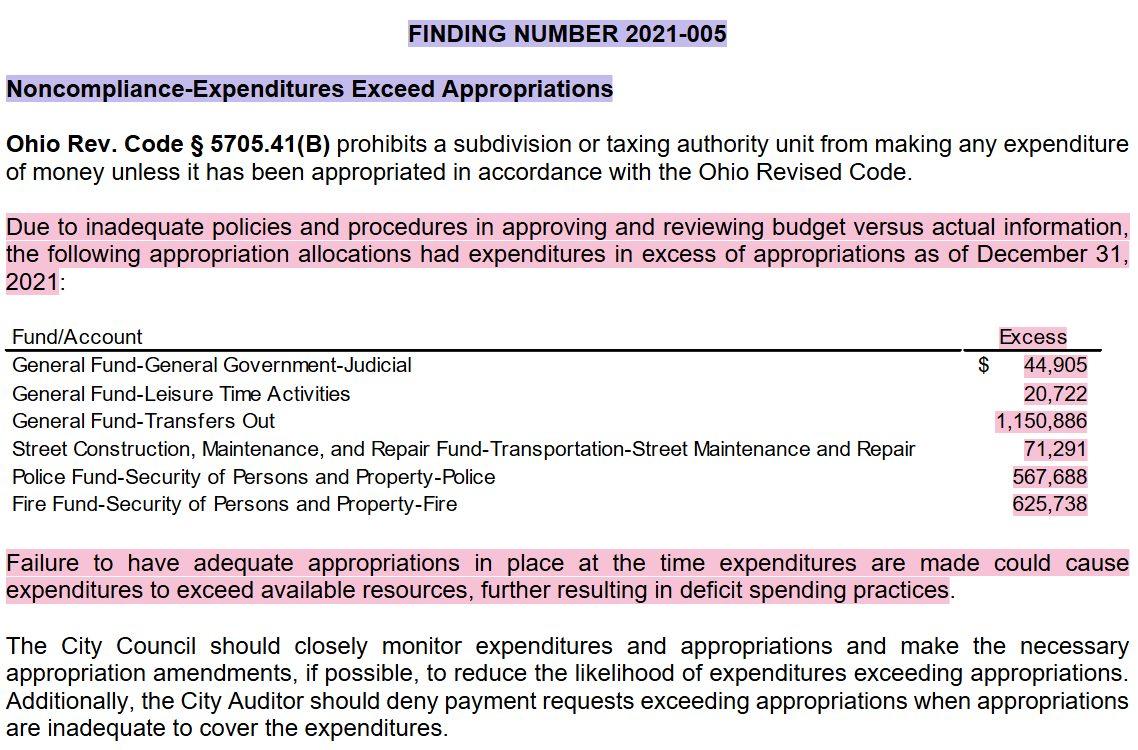
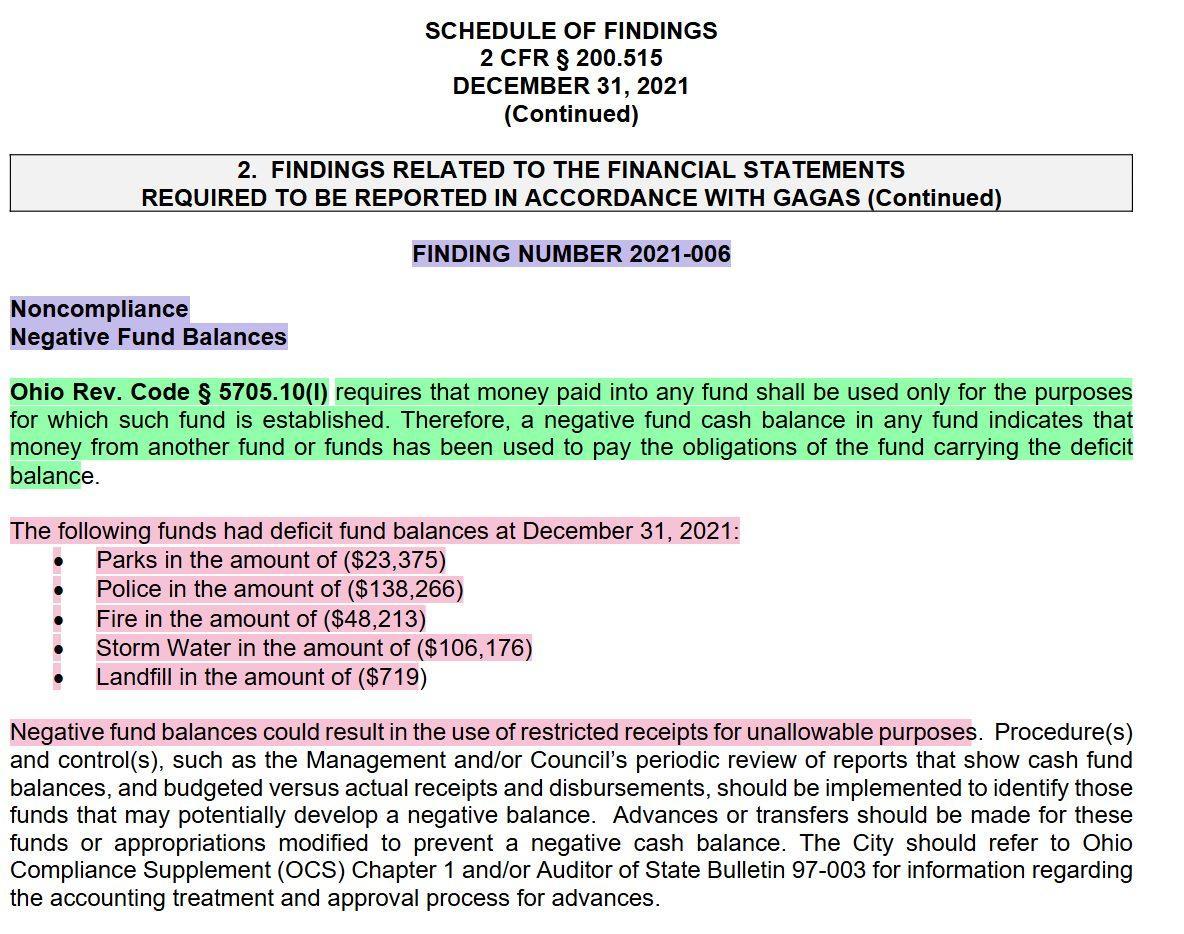
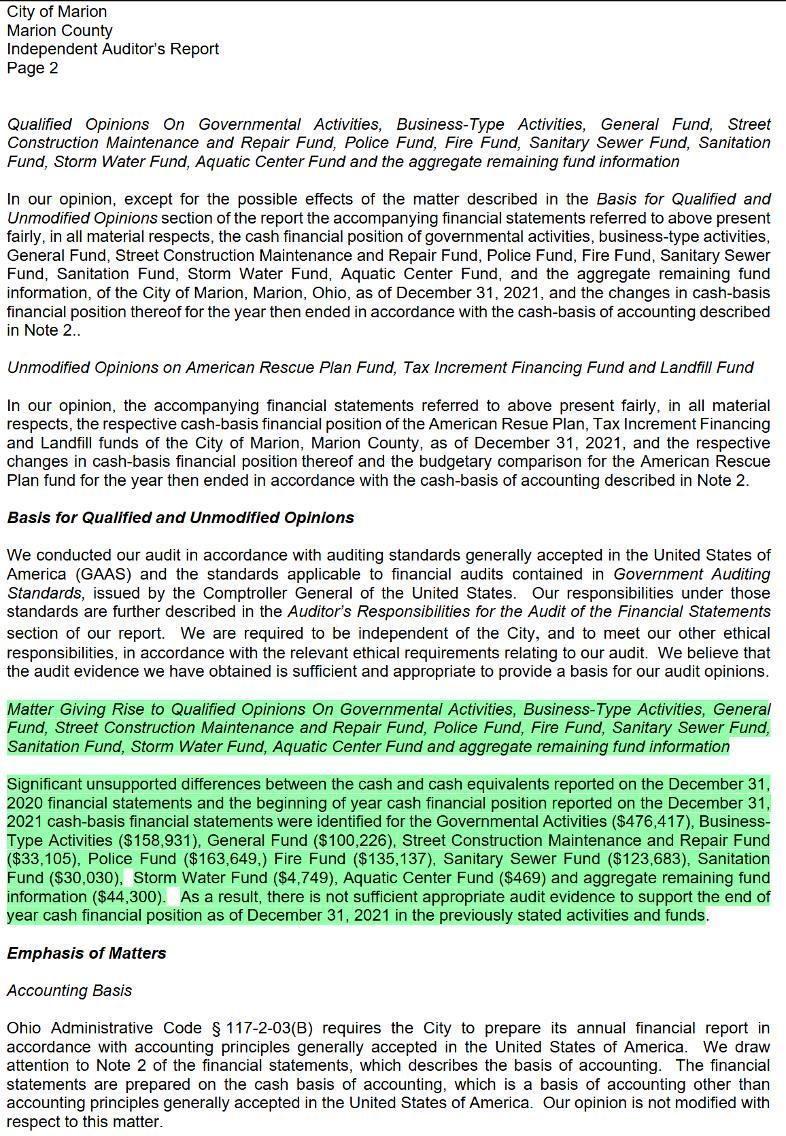
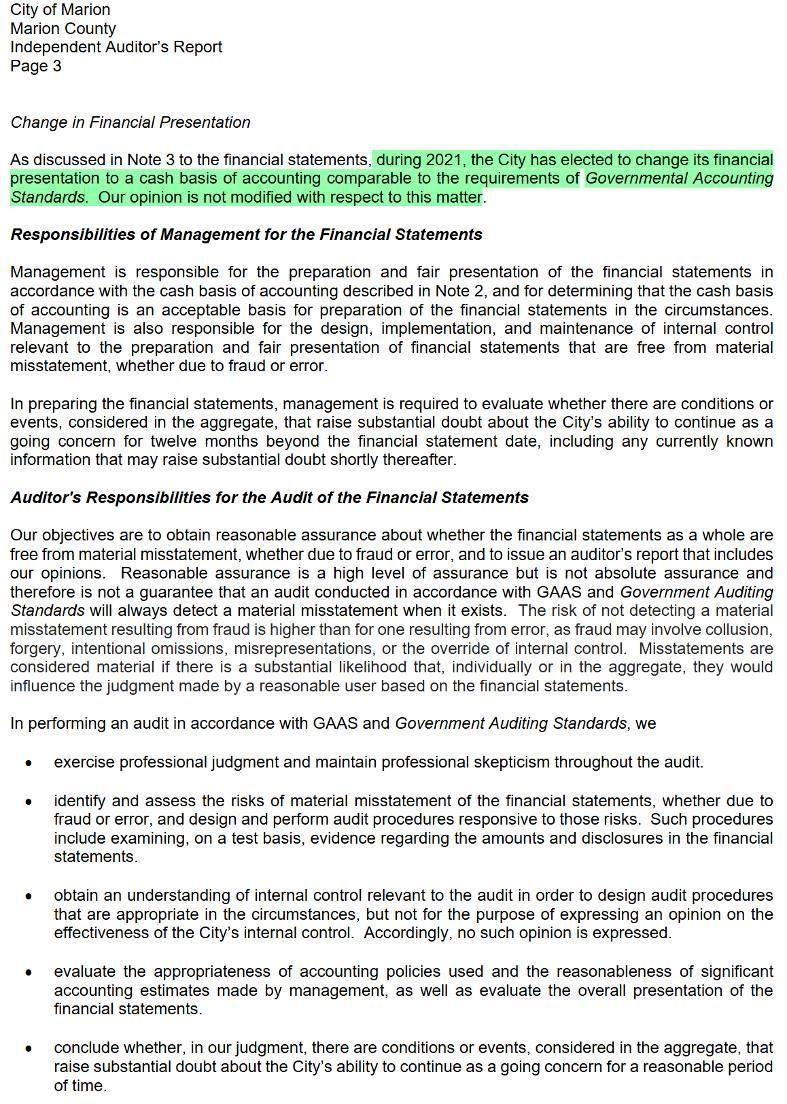
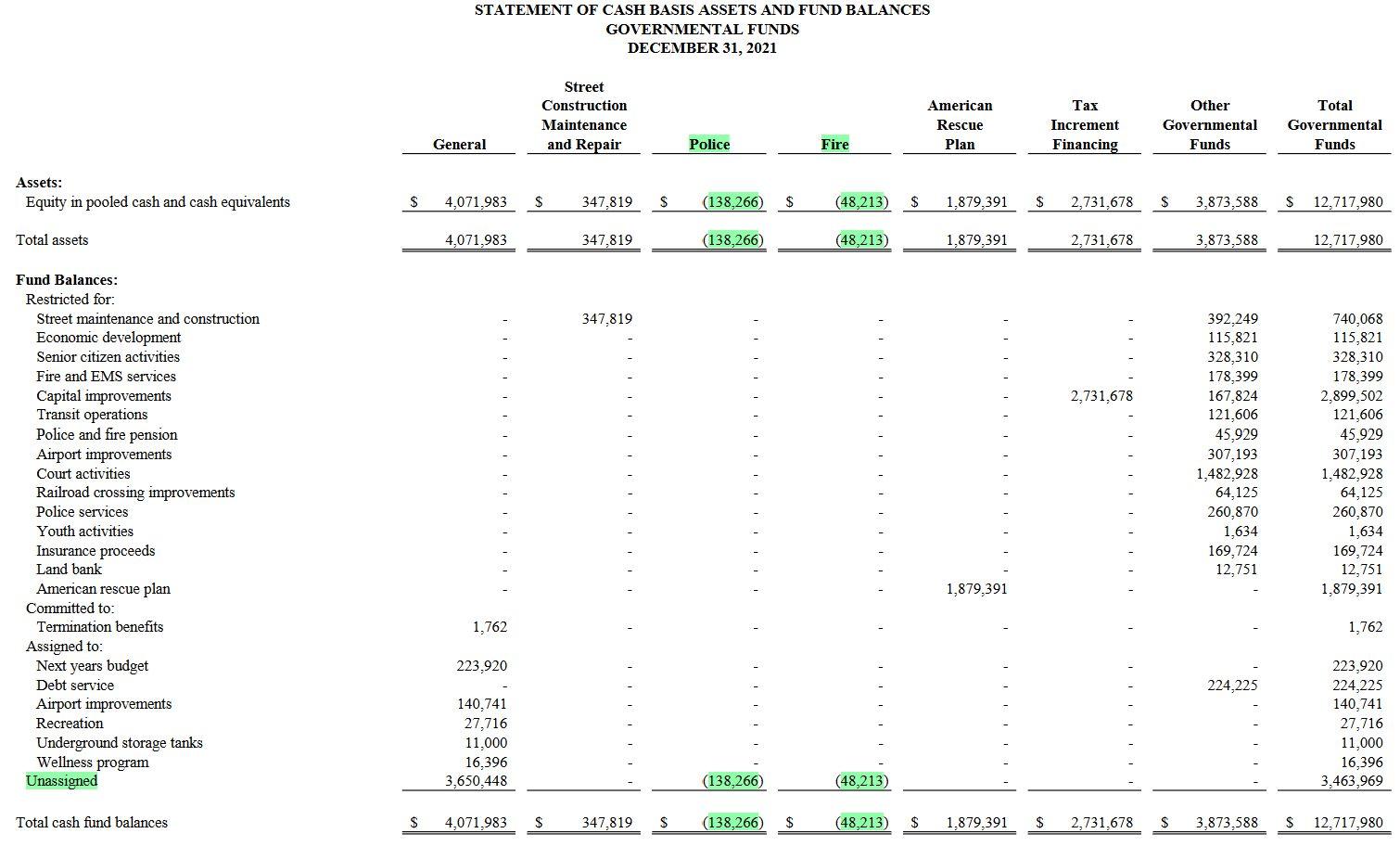
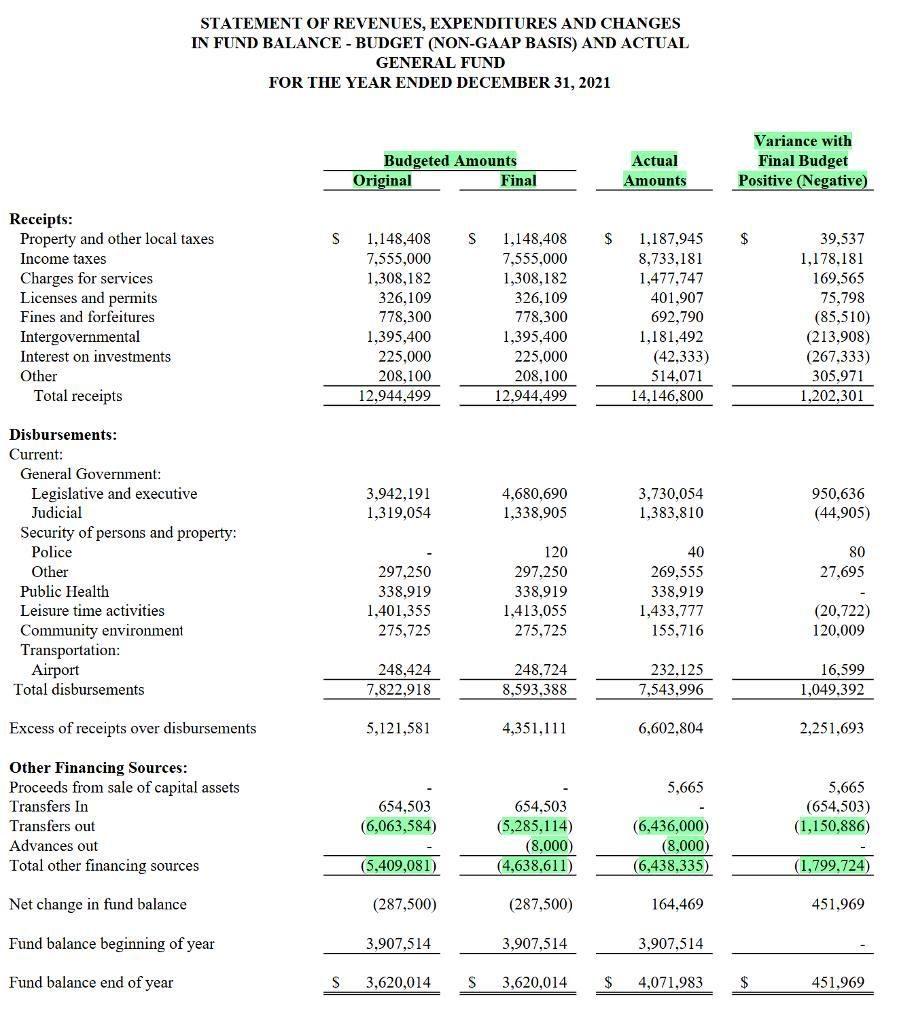
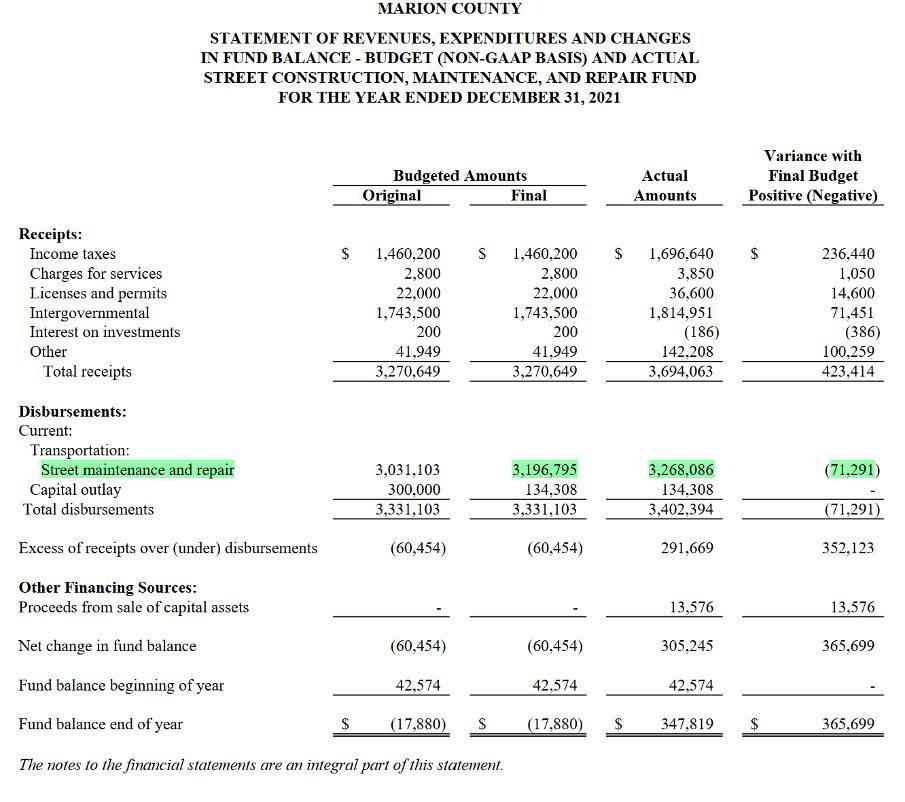
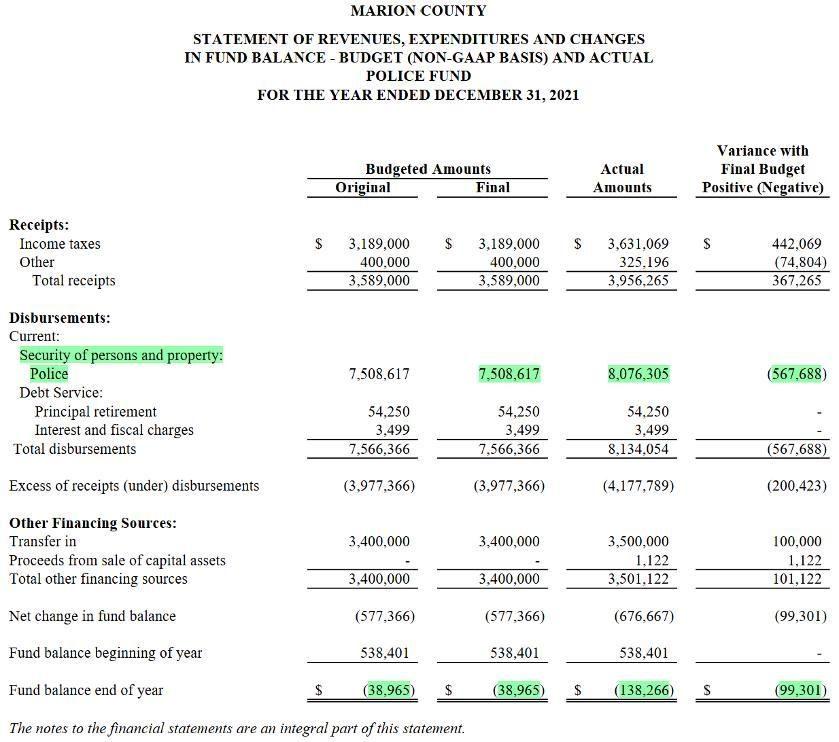
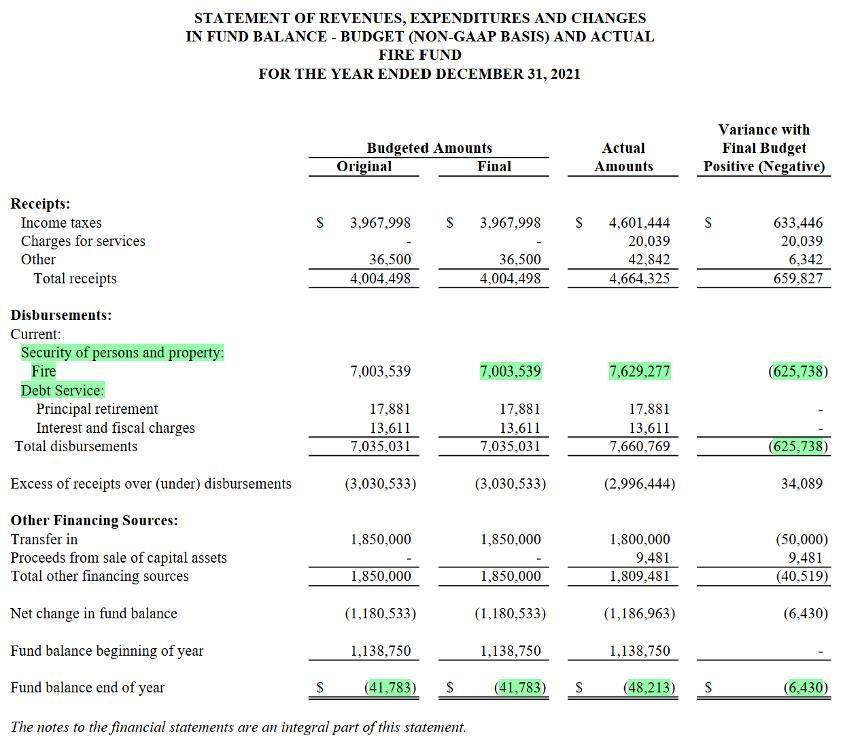
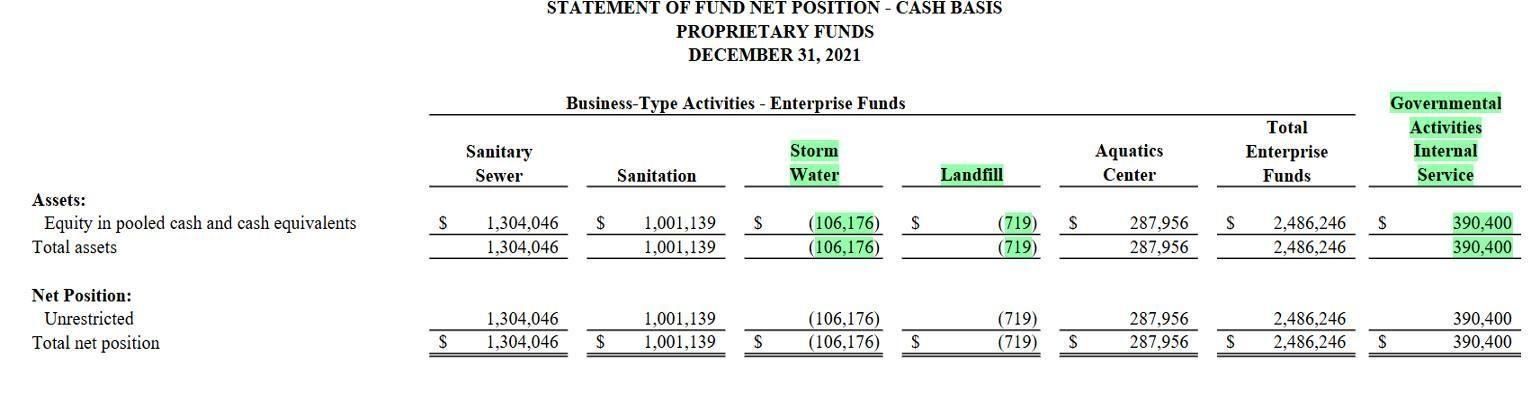
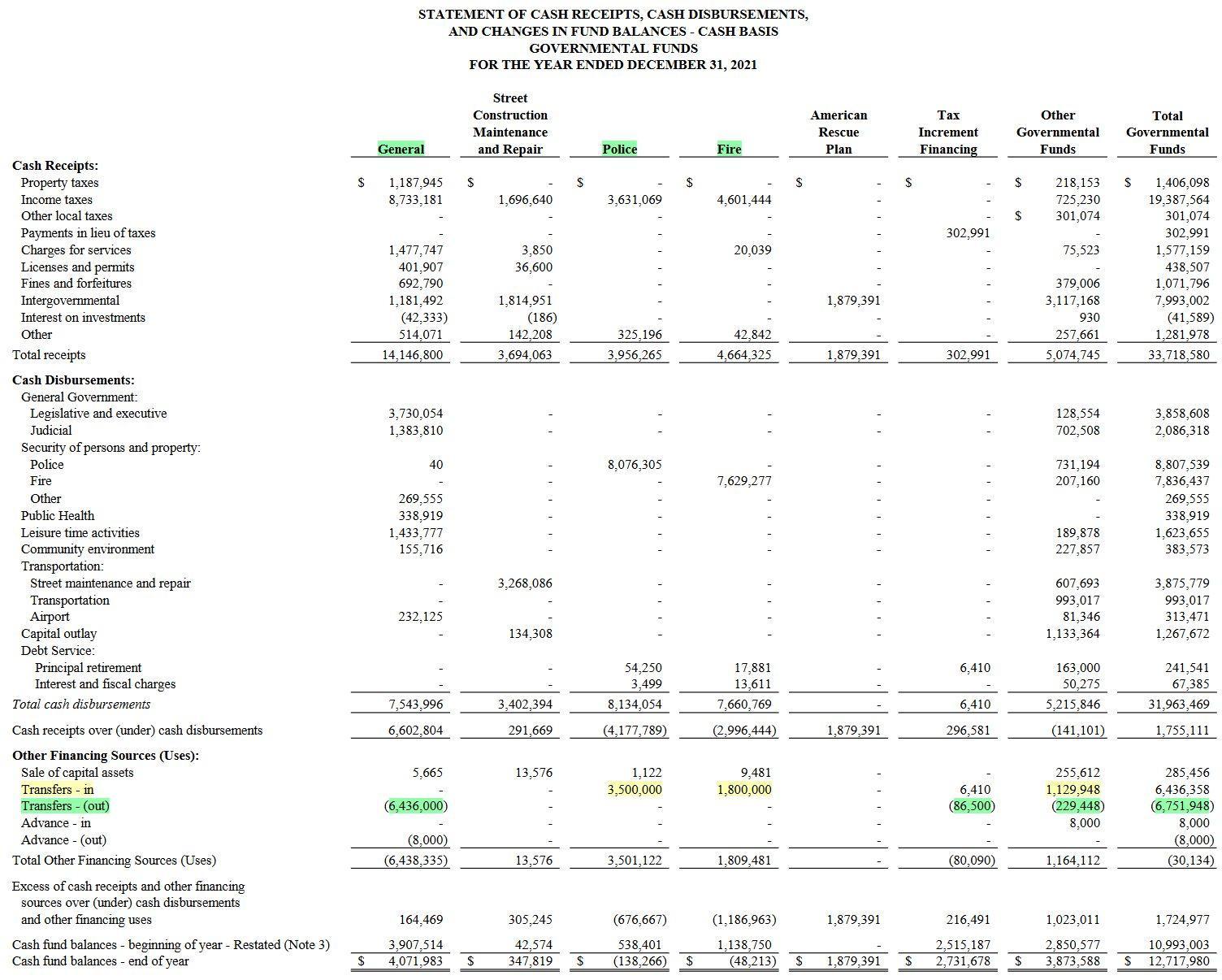
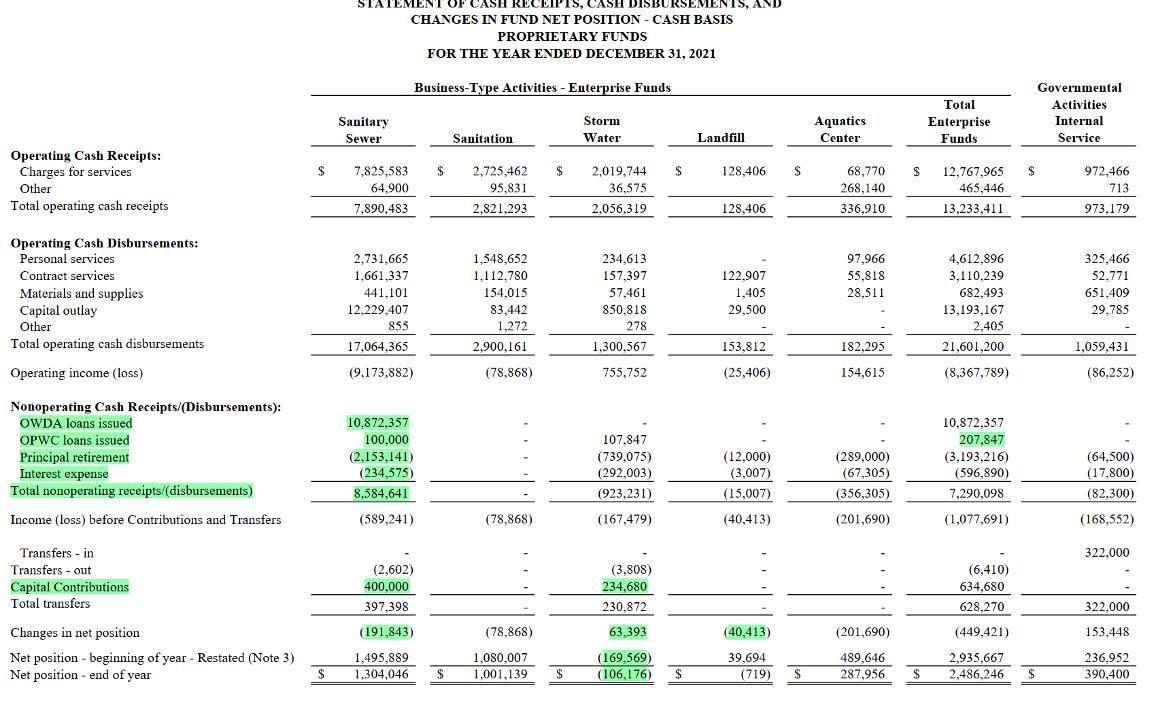
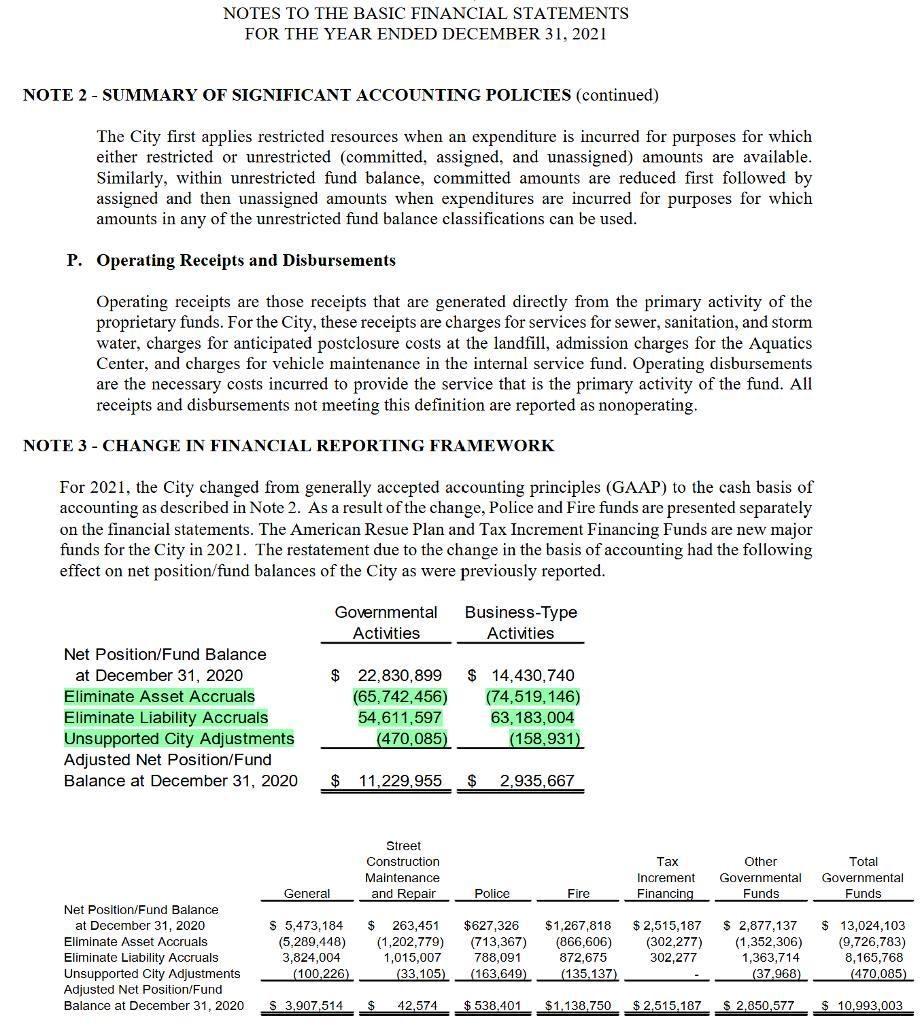
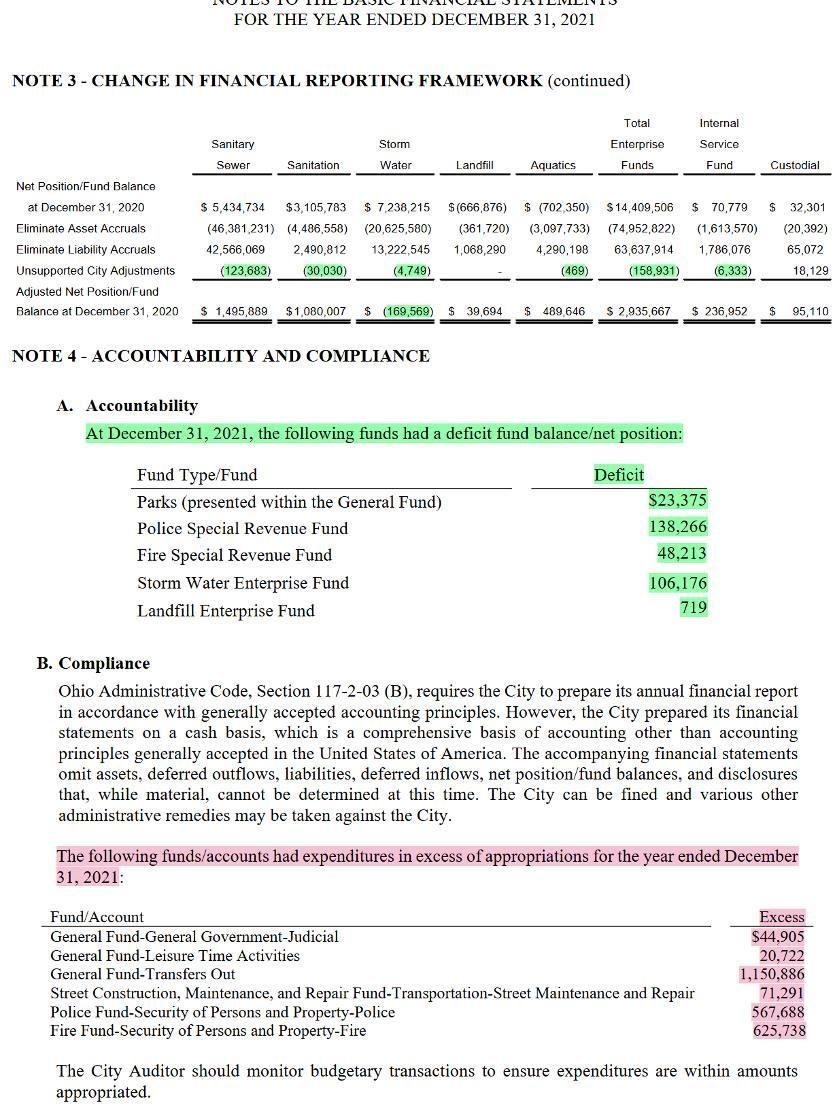
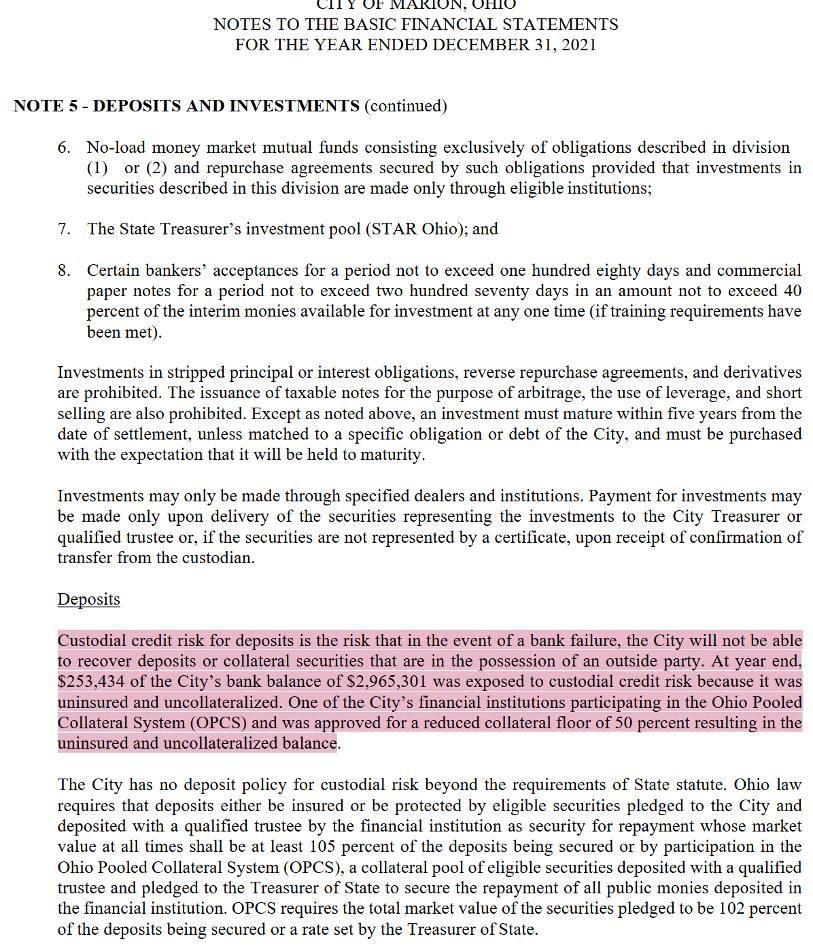
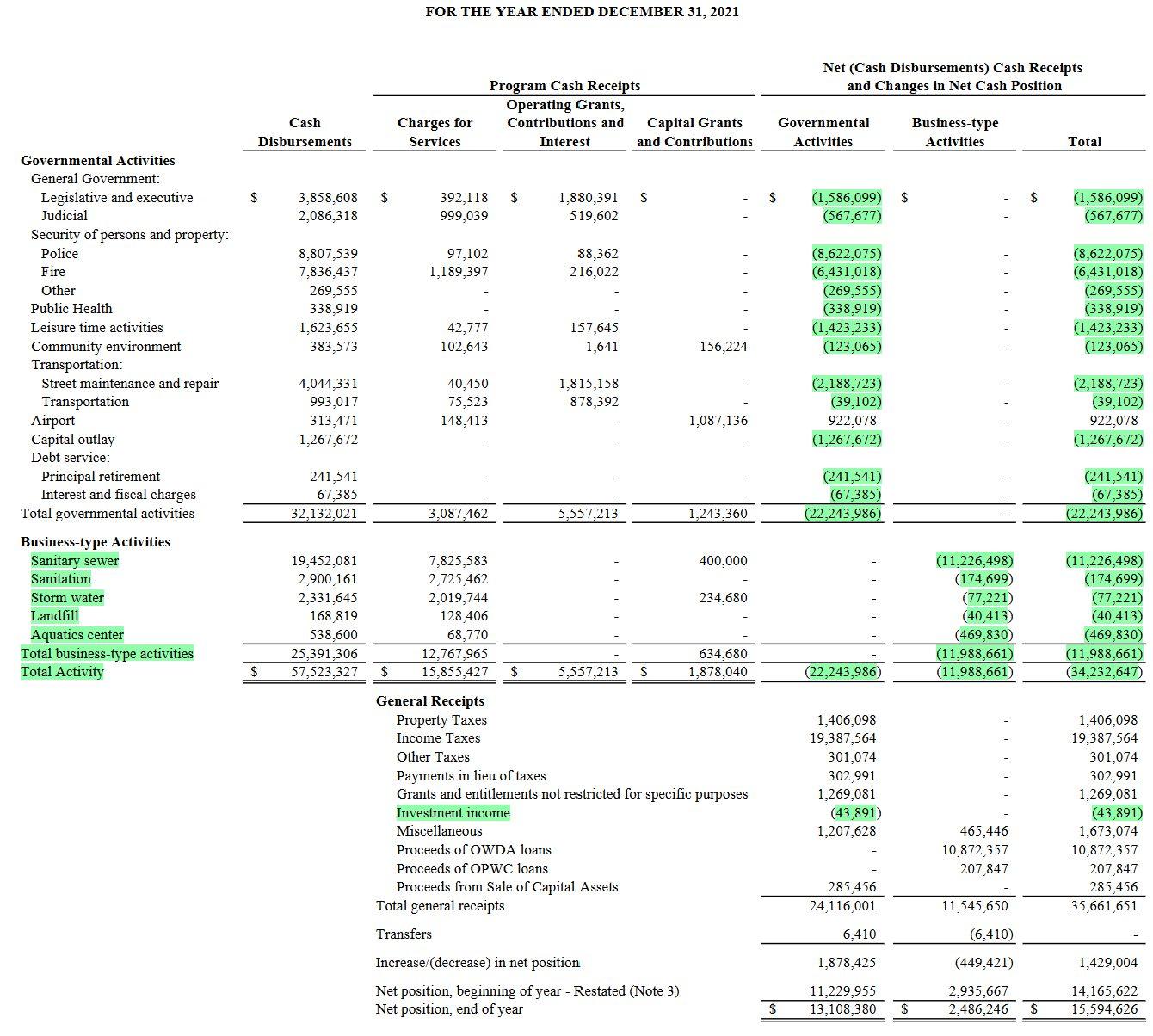
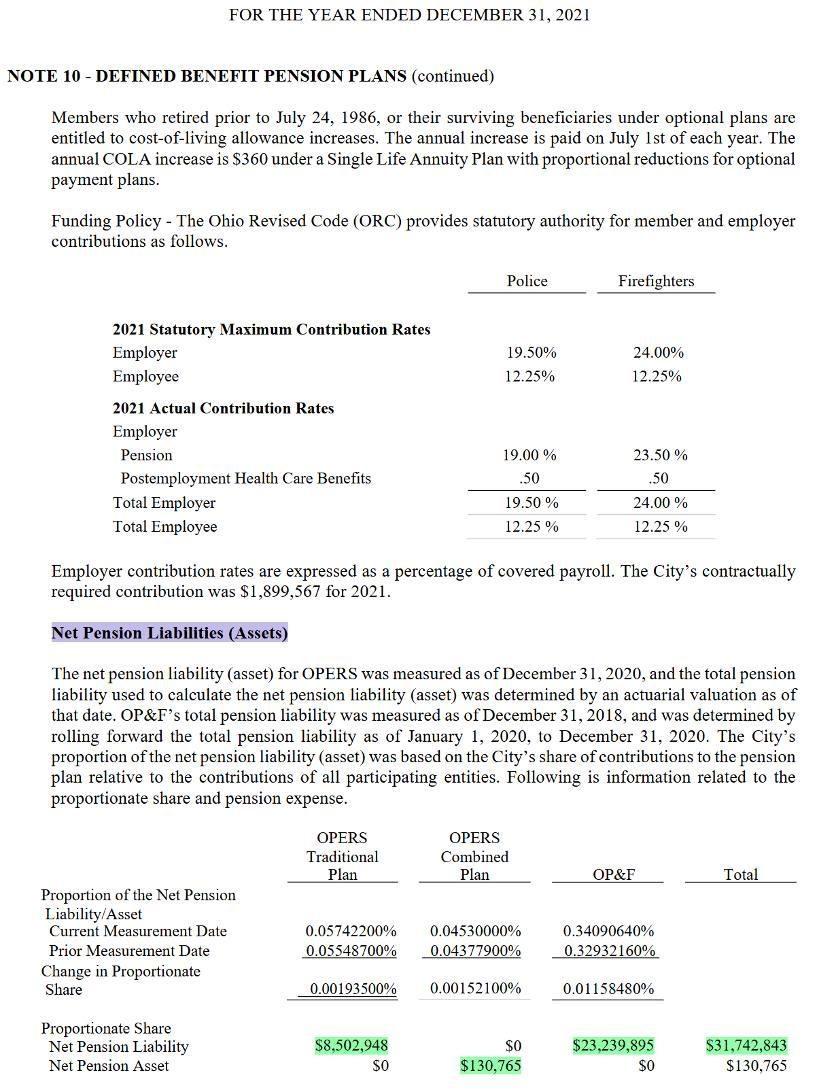
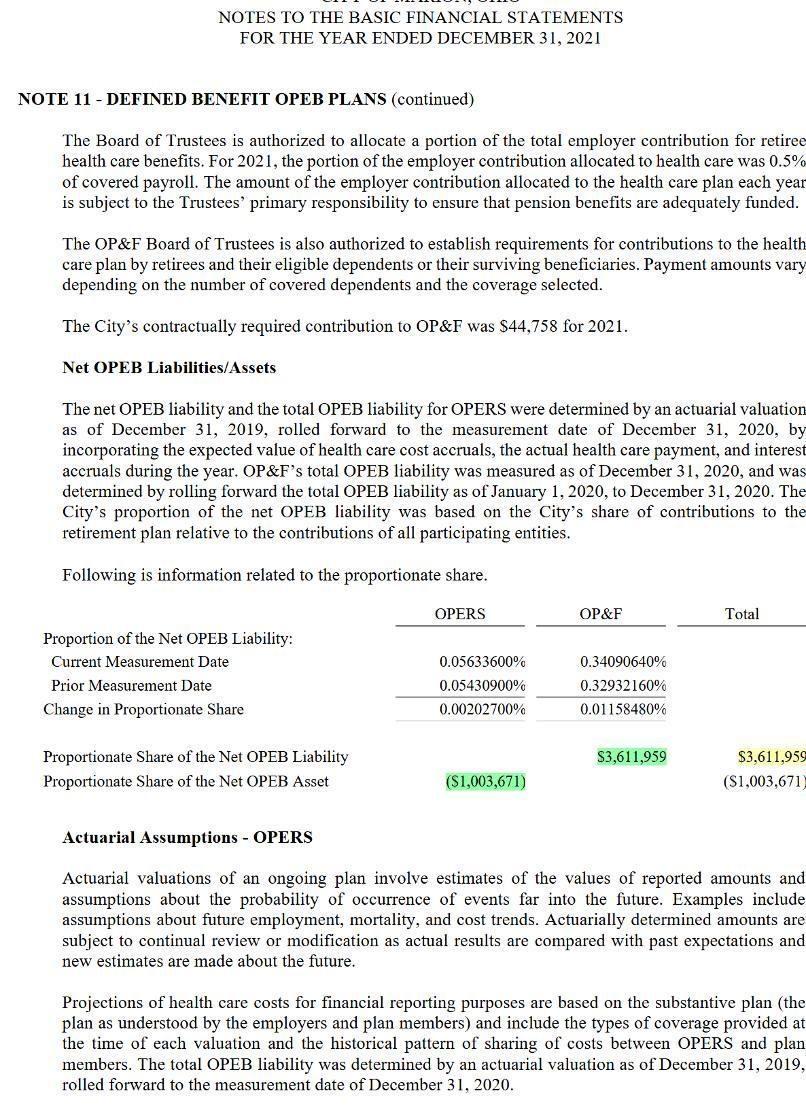
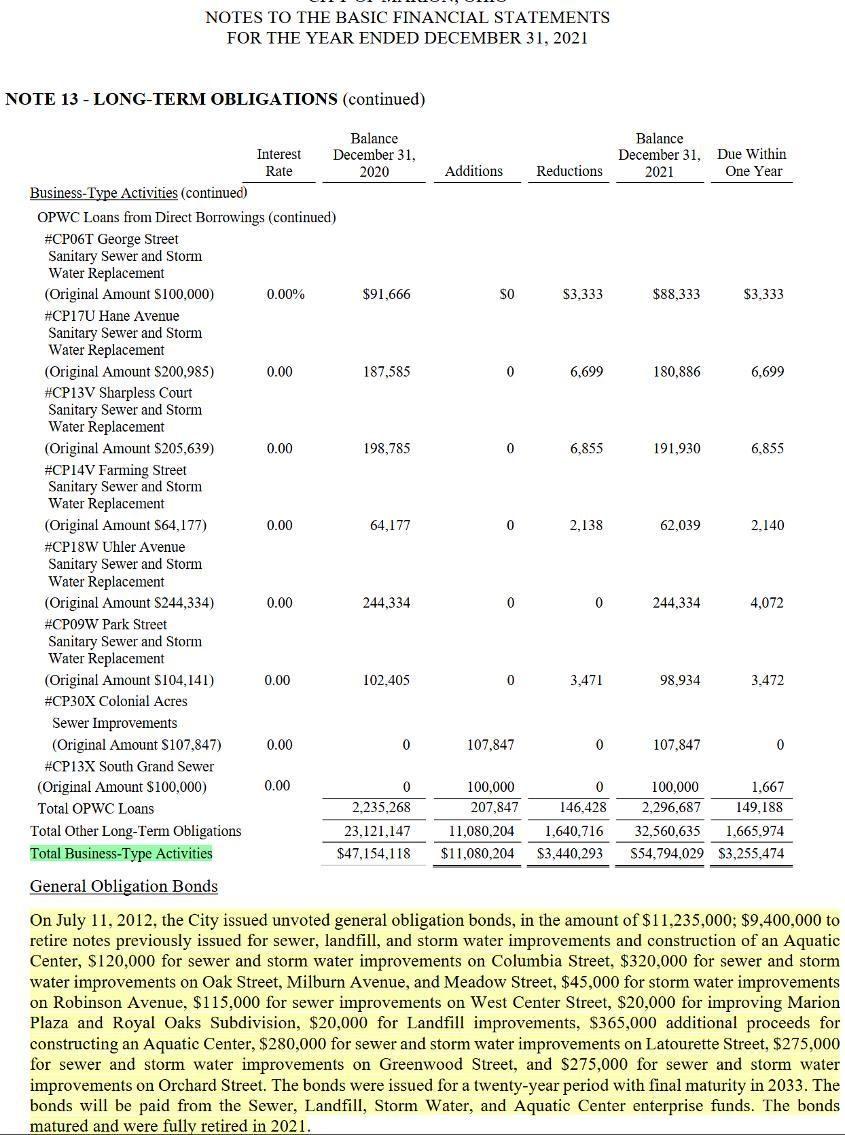
SUPPLEMENTAL EXHIBITS: J. FOREMAN IT & FORENSIC STATEMENTS (2009–2026)

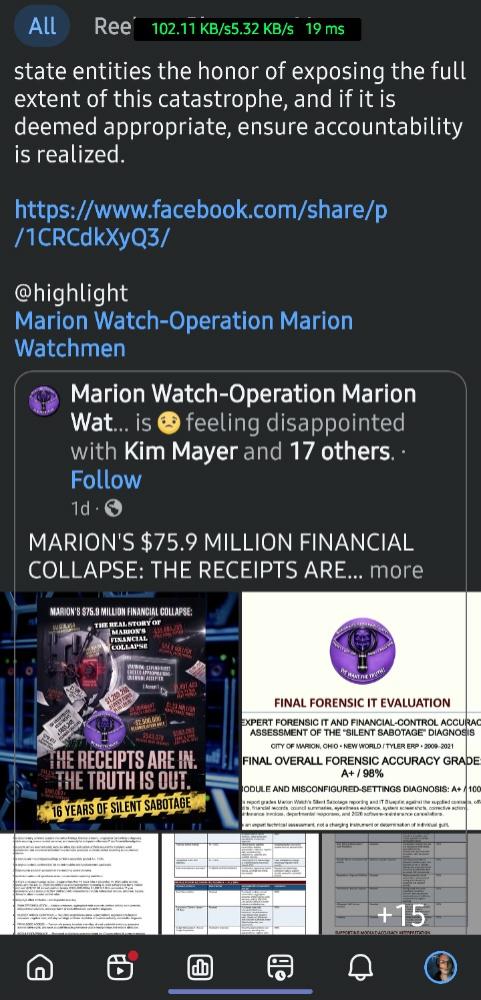

MARION WATCH INVESTIGATES: SILENT SABOTAGE SERIES
PART 3 — CHRONOLOGICAL OVERVIEW SERIES (2010–2015)
YEAR END 2010 AUDIT & THE FORENSIC IT SIGNS OF SILENT SABOTAGE: WHY THIS IS NOT OK (THE 22 CITATIONS YEAR)
ALWAYS REMEMBER: Marion Watch does not always publish everything we know.
Should city council demand an independent, external audit of all historical software permission logs to see exactly who authorized these systemic overrides and what else is buried? According to industry standards in the financial and IT sector the answer is YES!
The year-ending 2010 audit is an absolute train wreck and proof, a pattern that would improve a little bit with manual manipulation and undocumented workarounds substituting software safety controls for reasons unknown.
The forensic IT signs of a compromised system remain present from 2009 forward.
Today, we are laying out the forensic baseline of City of Marion, Ohio’s IT and financial control train wreck.
The 2010 financial audit provides the definitive forensic IT indicators of a city running a modern enterprise financial software system that was intentionally misconfigured, bypassed, and gutted.
The catastrophic deficits and rampant illegal spending in 2010 were not clerical accidents—they were the direct consequence of running municipal finances with the General Ledger (GL) override active, budget enforcement set to “soft warn” instead of hard block, roughly 80 percent of software modules left untouched, and the reconciliation module completely abandoned. ALL
THINGS THAT WE HAVE BEEN WARNING ABOUT FOR YEARS!
Scorching Auditor of State (AOS) Findings The Auditor of State did not mince words regarding Marion’s collapsed internal controls and software failures:
• Financial Monitoring Material Weakness (Finding 2010-001):
Officials and department managers failed to log in, review system-generated reports, or monitor financial activity. Massive reclassification entries were required just to prevent material misstatements during GAAP conversion.
• Fabricated Software Ledgers (Finding 2010-004):
The budgeted revenues and appropriations entered into the accounting system did not match the official amounts legally adopted by City Council.
• Bypassed Purchasing Controls (Finding 2010-006):
22% of tested purchase orders were never approved by department heads, and 7% of invoices had zero authorization before payment was issued.
• Illegal Fund Co-Mingling (Finding 2010-005):
The AOS warned that recurring negative balances proved money from restricted funds was being used to cover obligations in other funds—including $89,411 of Sewer Fund debt illegally paid out of the Landfill Fund.
• Illegal Investments (Finding 2010-002):
The City purchased certificates of deposit totaling $2.345 million with maturities stretching up to 45 months, violating Ohio statutory limits.
Complete Breakdown:
Negative Accounts & Deficit Fund Balances The AOS cited unmanaged “accrued liabilities” and postclosure mandates across every major sector of city government:
• Enterprise Fund: Landfill: $3,049,950
• Major Funds: General Fund: $1,421,555 | Bond Retirement Fund: $385,823
• Special Revenue Funds: Neighborhood Stabilization: $275,126 | Police & Fire Pension:
$94,230 | Community Corrections: $77,337 | Marion Area Transit: $69,715 | School Resource Officer: $47,146 | Violence Against Women: $22,358 | Homeland Security Grant: $18,632 | Parks: $17,174
• Capital Projects Funds: Street Improvement: $181,378 | Airport Improvement: $71,353 | Harding Centre Loan: $5,111 | DRIP Infrastructure: $3,128
• Depleted Cash Balances (Actual Cash Deficits): Sanitation: $113,453 | Bond Retirement: $385,823 | Neighborhood Stabilization: $38,372 | School Resource Officer: $22,929 | Marion Area Transit: $22,293 | Homeland Security: $18,632 | Violence Against Women: $11,689 | Street Construction: $9,597 | DRIP: $3,128
• Unchecked Spending: Over-Appropriations & Line-Item Blowouts Software controls should have locked the doors when funds ran dry. Instead, appropriations blew past legally certified resources across eight major funds:
• Capital Improvement: Appropriated $2,473,605 over resources
• Street Construction, Maintenance & Repair: Appropriated $718,247 over resources
• Sanitation: Appropriated $233,217 over resources
• ARRA Grant Fund: Appropriated $101,097 over resources
• Parks Fund: Appropriated $71,715 over resources
• Neighborhood Stabilization: Appropriated $68,256 over resources
• Community Corrections: Appropriated $8,851 over resources
• Court Computerization: Appropriated $6,818 over resources Line-Item Expenditures Exceeding Appropriations (Object Level):
• Police Department: Personal Services exceeded appropriations by $494,855 ($5,608,109 spent vs. $5,113,254 appropriated) and Materials/Supplies by $22,425. Police Capital Outlay in Capital Improvements exceeded appropriations by $12,419; Homeland Security Police Capital Outlay exceeded appropriations by $18,632; and Violence Against Women Police Personal Services exceeded appropriations by $6,426.
• Fire Department & Pension: Fire Department Capital Outlay exceeded appropriations by $12,055; Police & Fire Pension Fund Fire Personal Services exceeded appropriations by $125,597.
• Administration & Courts: Law Director Personal Services exceeded appropriations by $54,061; Municipal Court Personal Services exceeded appropriations by $60,680; City Council exceeded appropriations by $36,581 combined; Health Administration exceeded appropriations by $36,526 combined.
• Enterprise & Capital Projects: Sewer Capital Outlay blew budget by $1,588,229; Storm Water Capital Outlay exceeded appropriations by $1,041,584 combined; Central Garage Materials exceeded appropriations by $581,177; DRIP Street Capital Outlay exceeded appropriations by $465,261; ARRA Transit Outlay exceeded appropriations by $331,797; and Bond Retirement Principal Retirement exceeded appropriations by $3,665,250.
IN SHORT
The city had the digital tools to enforce spending limits, manage debt, and prevent multi-million-dollar fund collapses, but chose to operate with the safety switches turned off.
BUT WAIT THERE IS MORE, MUCH, MUCH MORE!
2010-001: FINANCIAL MONITORING (MATERIAL WEAKNESS)
Officials and department managers failed to properly use or review the online accounting system’s financial reports, leading to severe monitoring failures and requiring significant reclassification entries to prevent material misstatements.
2010-002: INVESTMENTS (MATERIAL NON-COMPLIANCE)
The city illegally invested in certificates of deposit with maturities stretching up to 45 months (violating the one-year statutory limit) and failed to register deposits specifically in the City Treasurer’s name.
2010-003: APPROPRIATIONS (MATERIAL NON-COMPLIANCE)
Appropriations illegally exceeded the official certificate of estimated resources in eight funds, and ending appropriations exceeded actual available resources in ten funds.
2010-004: BUDGETARY EXPENDITURES EXCEED APPROPRIATIONS AND SYSTEM POSTING (MATERIAL NON-COMPLIANCE)
The budgeted revenues and appropriations entered into the accounting software did not match the official amounts adopted by City Council, and actual expenditures exceeded legal appropriations at the object level across dozens of accounts.
2010-005: NEGATIVE FUND BALANCES (MATERIAL NON-COMPLIANCE)
Nine funds operated with negative cash balances, and the city improperly used resources from the Landfill Fund to pay $89,411 in Sewer Fund debt service.
2010-006: PURCHASING AUTHORIZATION CONTROLS (SIGNIFICANT DEFICIENCY)
During testing, 22 percent of purchase orders lacked department head approval, and 7 percent of invoices were paid without any indication they were approved for payment.
2010-007: FARE BOX REVENUE – TRANSIT (SIGNIFICANT DEFICIENCY)
A cross-reference to Federal Finding 2010-013 regarding the lack of controls over cash collections in the transit department.
2010-008: EXPENDITURE AUTHORIZATION CONTROLS – TRANSIT (SIGNIFICANT DEFICIENCY)
A cross-reference to Federal Finding 2010-016 regarding bypassed purchasing and payroll approvals in the transit department.
2010-009: EXPENDITURE AUTHORIZATION CONTROLS – CDBG (SIGNIFICANT DEFICIENCY)
A cross-reference to Federal Finding 2010-020 regarding bypassed purchasing approvals for Community Development Block Grants.
2010-010: REPORTING – CDBG (MATERIAL WEAKNESS)
A cross-reference to Federal Finding 2010-017 regarding the failure to properly segregate grant funds and reconcile accounting data.
2010-011: FILING OF SINGLE AUDIT (MATERIAL NON-COMPLIANCE / SIGNIFICANT DEFICIENCY)
The city failed to file its 2009 Single Audit report with the Federal Audit Clearinghouse within the required nine-month timeframe, jeopardizing future federal funding.
2010-012: FEDERAL AWARDS EXPENDITURE SCHEDULE (MATERIAL NON-COMPLIANCE/ MATERIAL WEAKNESS)
The city submitted inaccurate federal expenditure schedules for 2007, 2008, and 2009, including double-booked funds and incorrect grant identification numbers.
2010-013: FARE BOX REVENUE – TRANSIT (SIGNIFICANT DEFICIENCY)
The transit department failed to establish procedures to reconcile daily cash and tickets from bus fare boxes against drivers’ passenger manifests to ensure all revenue was deposited.
2010-014: QUARTERLY REPORTING – TRANSIT (MATERIAL NON-COMPLIANCE /MATERIAL WEAKNESS)
The city submitted quarterly transit grant reports using cash-basis accounting instead of the required accrual basis, causing expenditures to be underreported by $67,206 and forcing the General Fund to overpay its local match by $19,187.
2010-015: ALLOWABLE COSTS / COST PRINCIPLES – TRANSIT (MATERIAL NON-COMPLIANCE / MATERIAL WEAKNESS)
The central garage charged the transit grant a flat $75 per hour fee without an approved cost allocation plan, improperly charging unallowable costs (like building debt service) to the federal grant and resulting in $41,892 in questioned costs.
2010-016: EXPENDITURE AUTHORIZATION – TRANSIT (MATERIAL NON-COMPLIANCE /MATERIAL WEAKNESS)
The transit department bypassed massive controls: 80 percent of purchase orders were not reviewed by a supervisor, no timecards contained both employee and supervisor signatures, and 40 percent of invoices lacked the Service Director’s approval, resulting in $309,559 in questioned costs.
2010-017: REPORTING – CDBG (MATERIAL WEAKNESS)
The city improperly commingled seven separate CDBG grants into five funds rather than establishing dedicated cost centers, leading to inaccurate status reports, missing reconciliations, and an unpaid balance of $32,521 owed to the state.
2010-018: CASH MANAGEMENT – CDBG (MATERIAL NON-COMPLIANCE / MATERIAL WEAKNESS)
The city violated the federal “15-Day Rule” by failing to disburse drawn-down grant funds in a timely manner (holding some funds for over 200 days) and illegally kept the money in interest-bearing accounts without remitting the estimated $3,942 in earned interest.
2010-019: PROPERTY APPRAISALS – CDBG / NSP (MATERIAL NON-COMPLIANCE / MATERIAL WEAKNESS)
The city spent $40,038 in federal Neighborhood Stabilization Program funds to acquire a property on Uncapher Avenue without obtaining a proper, timely appraisal.
2010-020: EXPENDITURE AUTHORIZATION – CDBG (SIGNIFICANT DEFICIENCY)
Within the CDBG program, 30 percent of purchase orders and 4 percent of invoices were processed and paid without the required approval from the department head.
2010-021: ALLOWABLE COSTS AND REPORTING – CDBG (MATERIAL NON-COMPLIANCE / SIGNIFICANT DEFICIENCY)
The final performance report submitted for the 2008 CDBG grant reported $425,919 in expenditures, which did not match the $412,554 recorded in the city’s actual accounting system, resulting in $13,365 in unallowable excess reported costs.
2010-022: FINANCIAL MONITORING – FEDERAL GRANTS (MATERIAL WEAKNESS)
Because of the city-wide financial monitoring failures detailed in Finding 2010-001, officials lacked the necessary system understanding to effectively monitor federal grant financial activity.
OFFICIAL EXHIBITS & PRIMARY SOURCE RECORDS (2010 Overview: The 22 Citations Year)
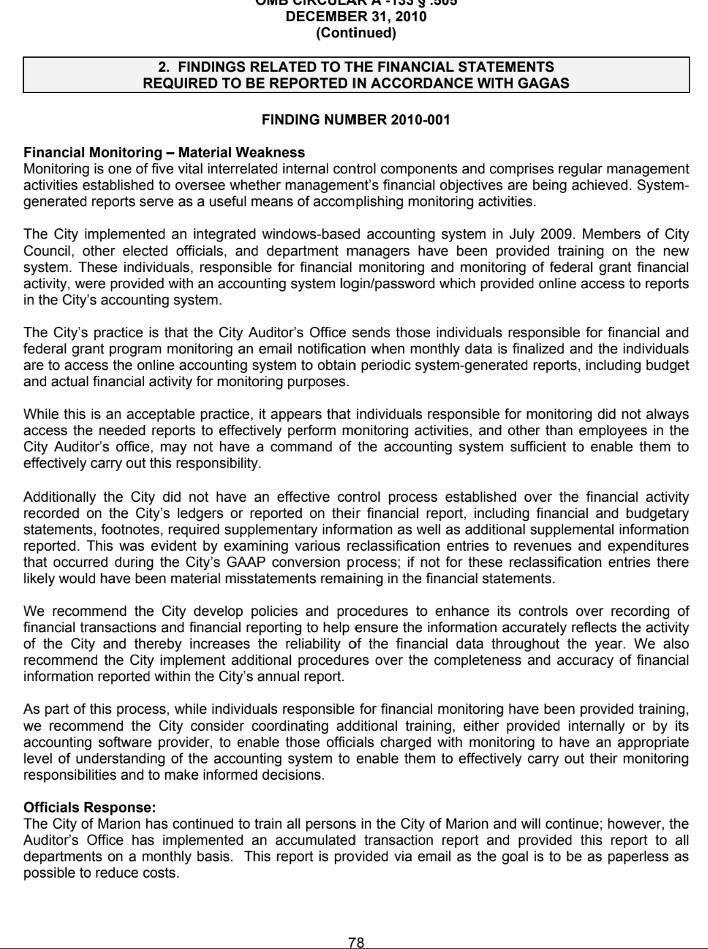
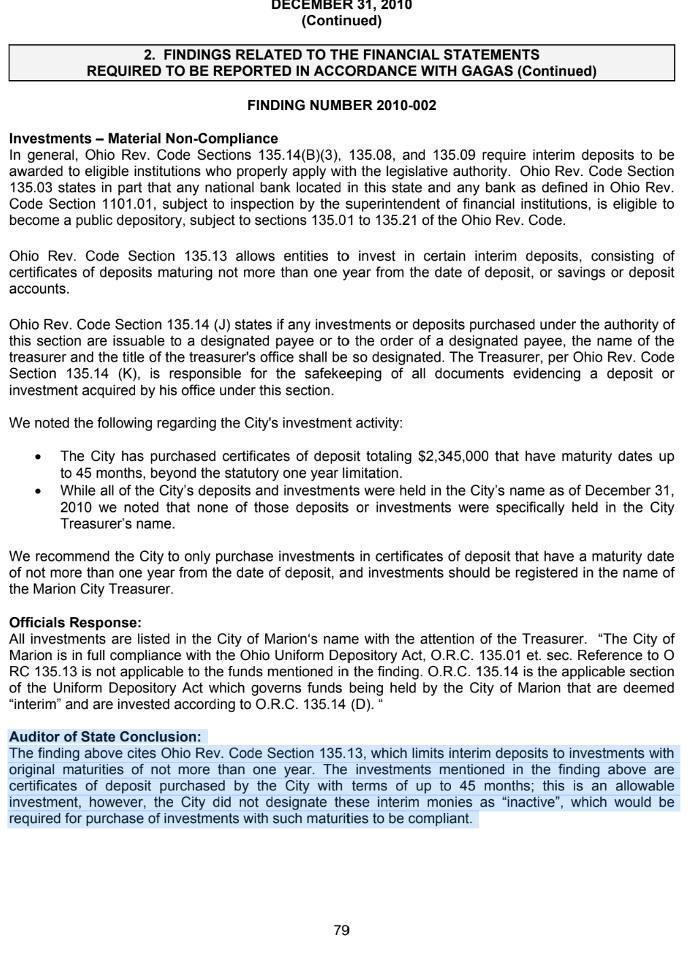
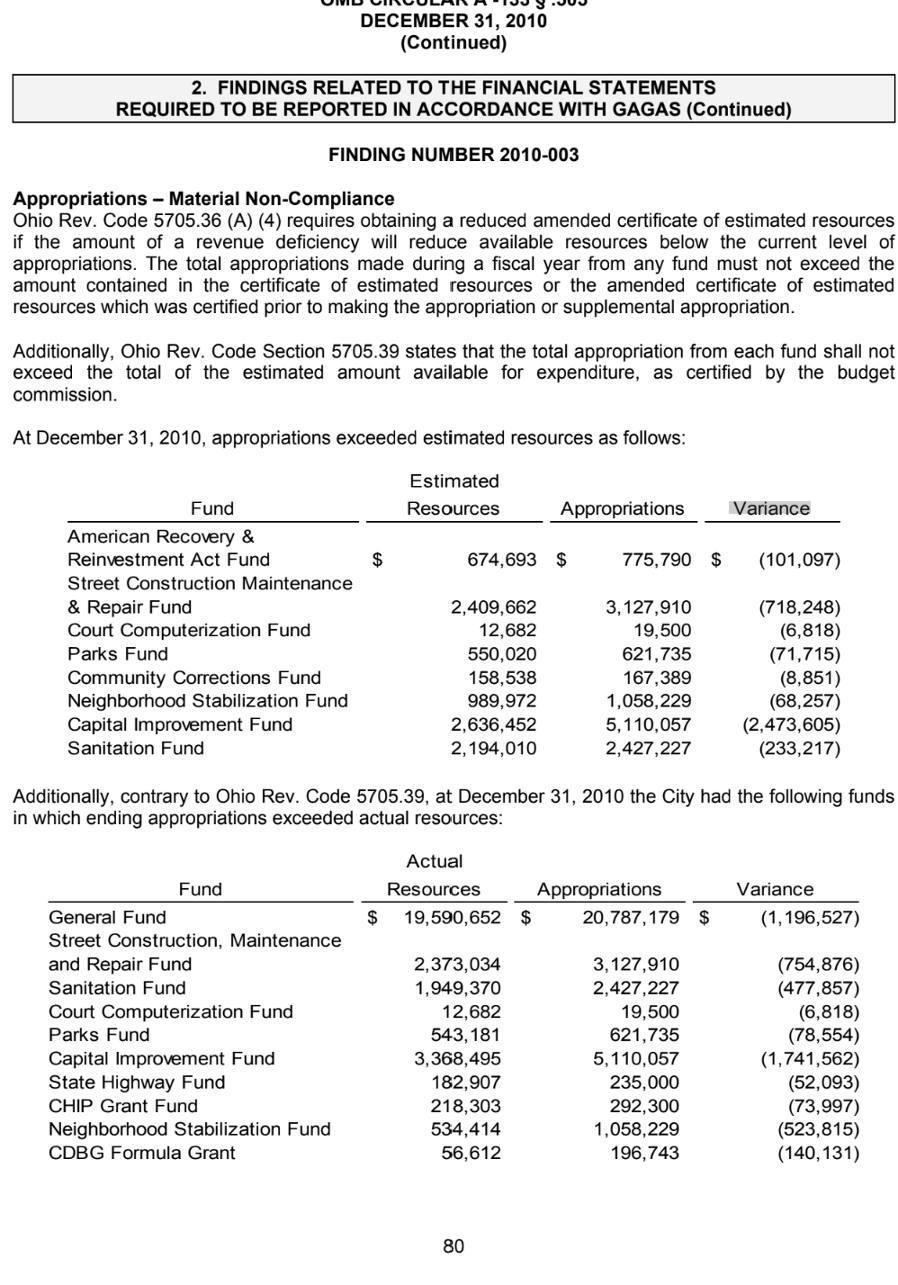
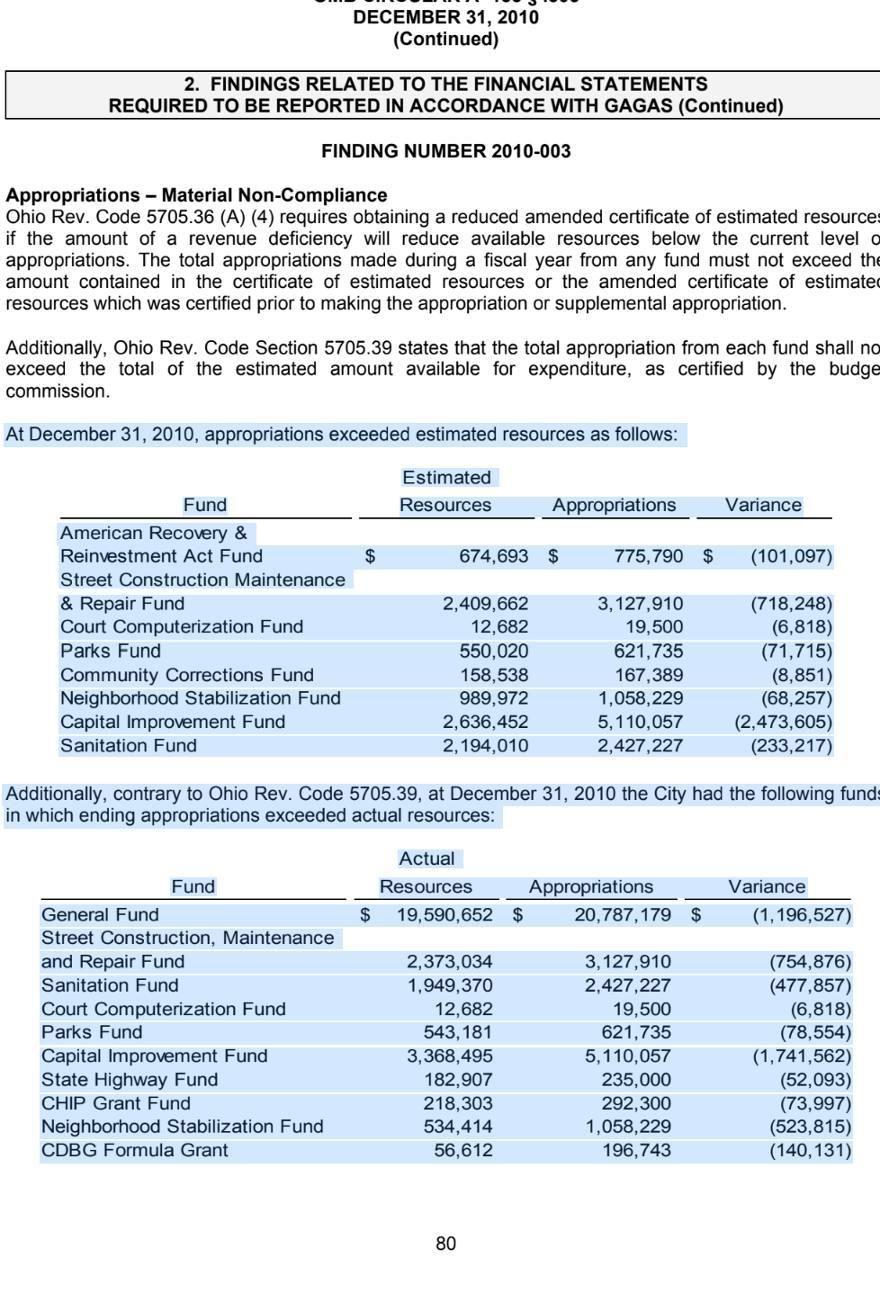
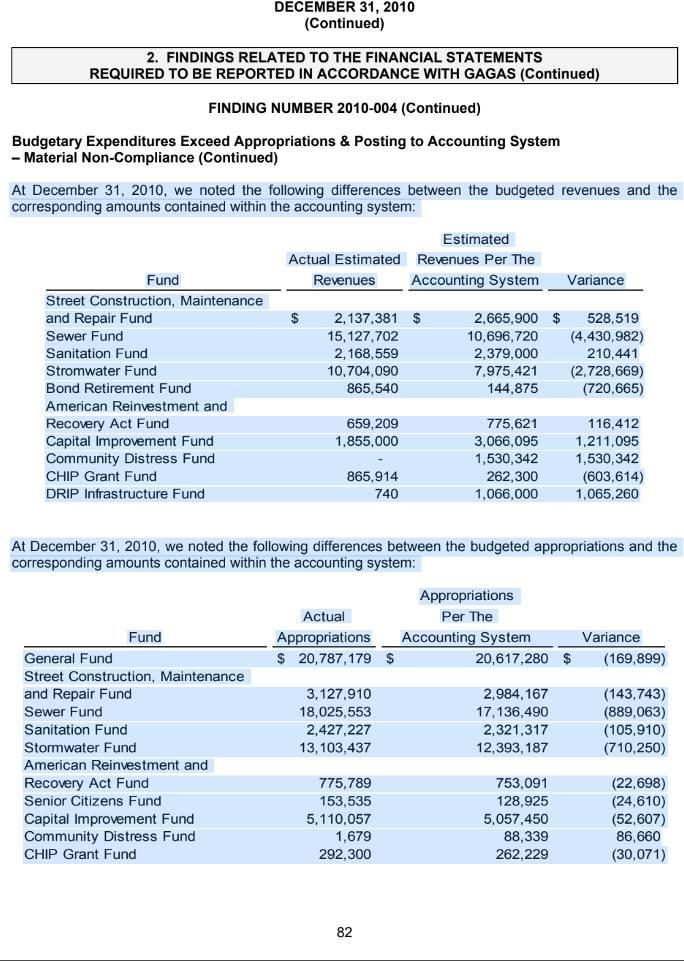
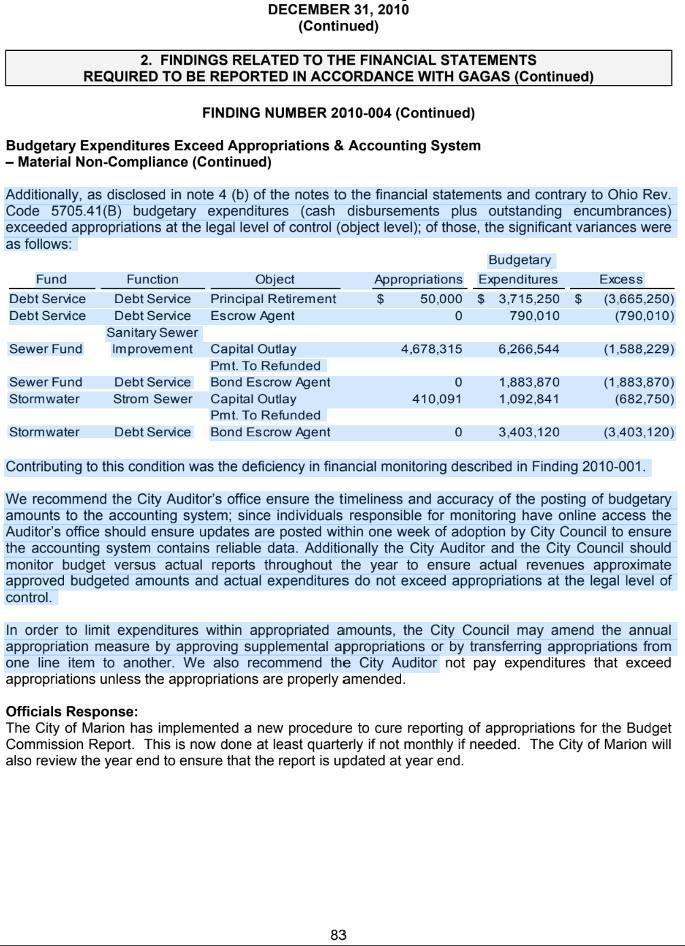
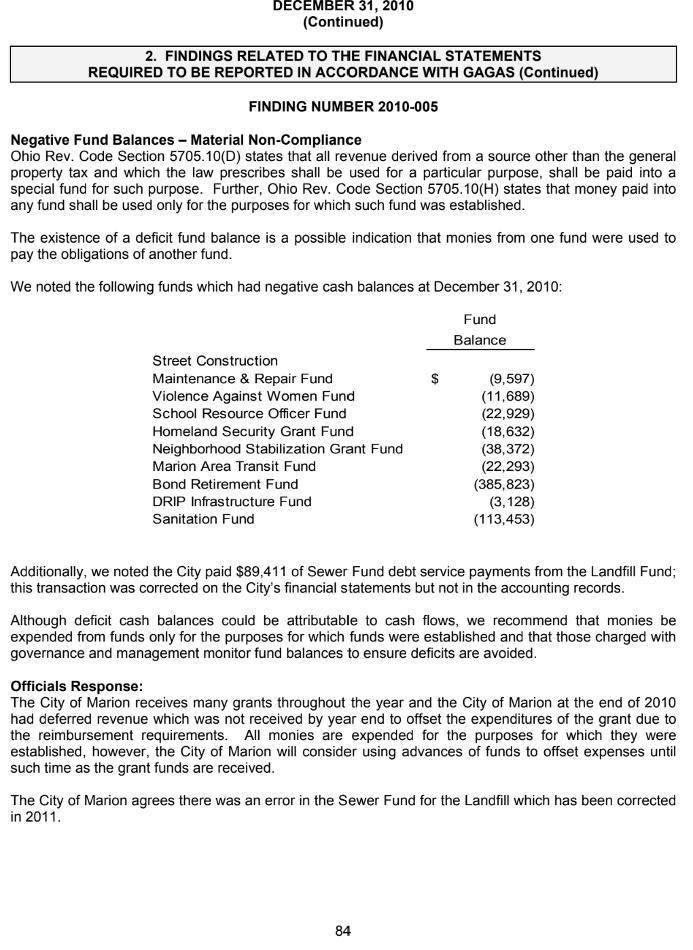
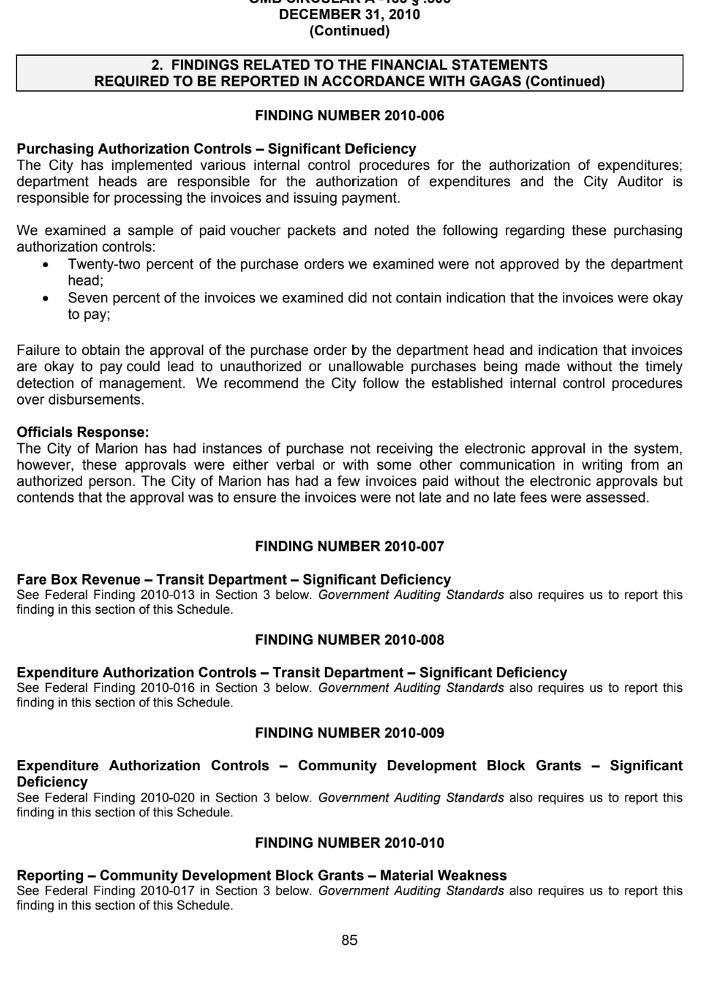
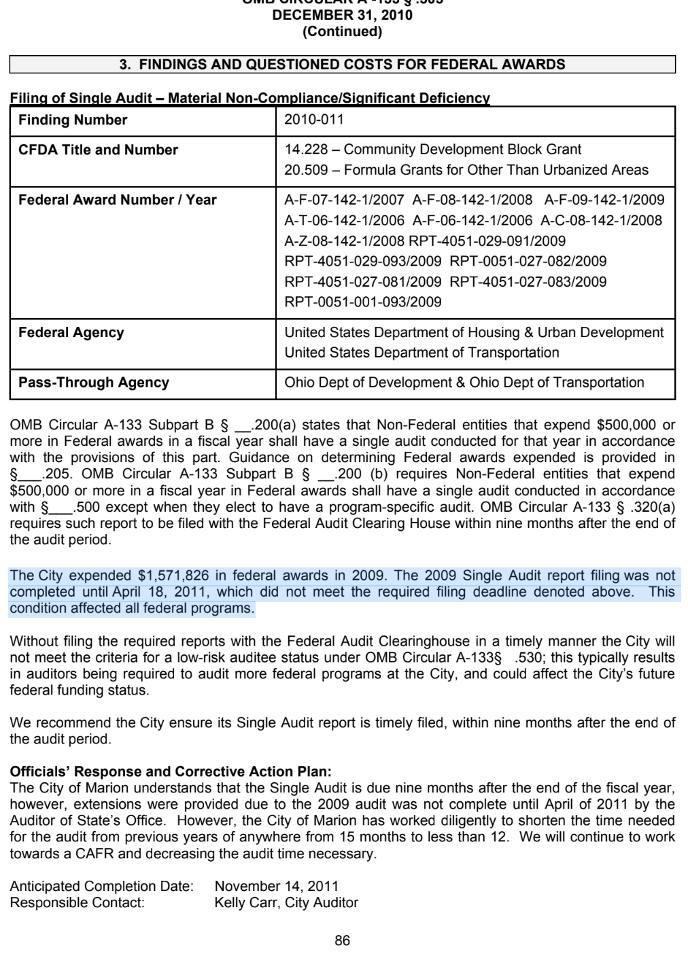
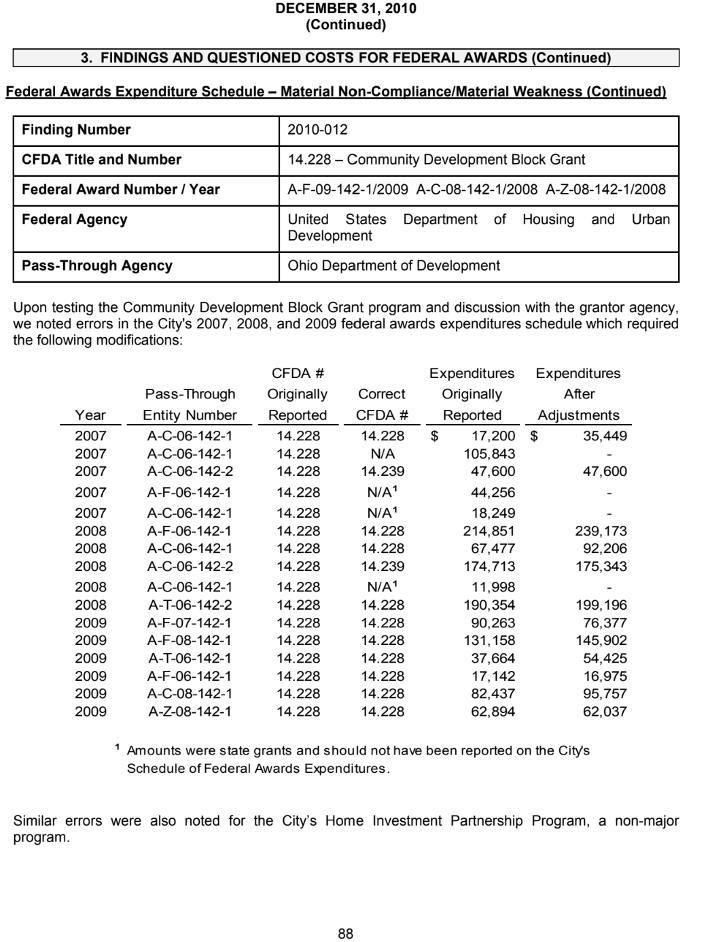
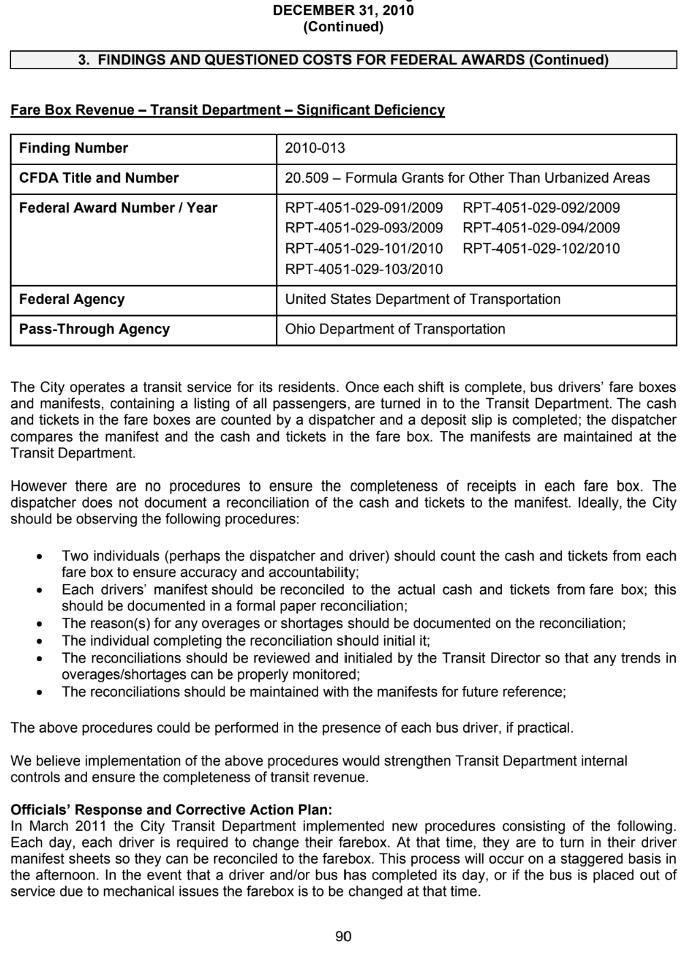
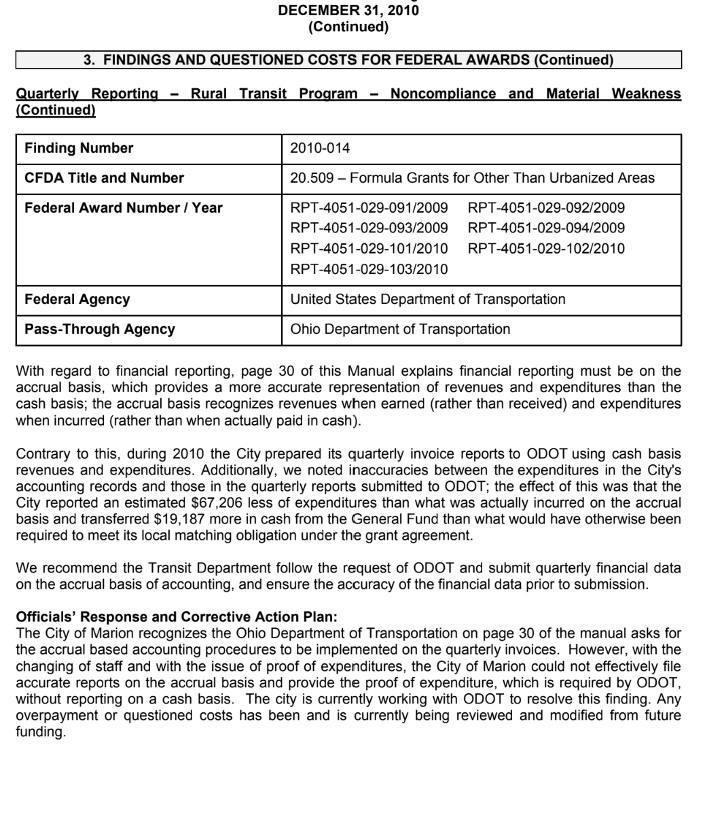
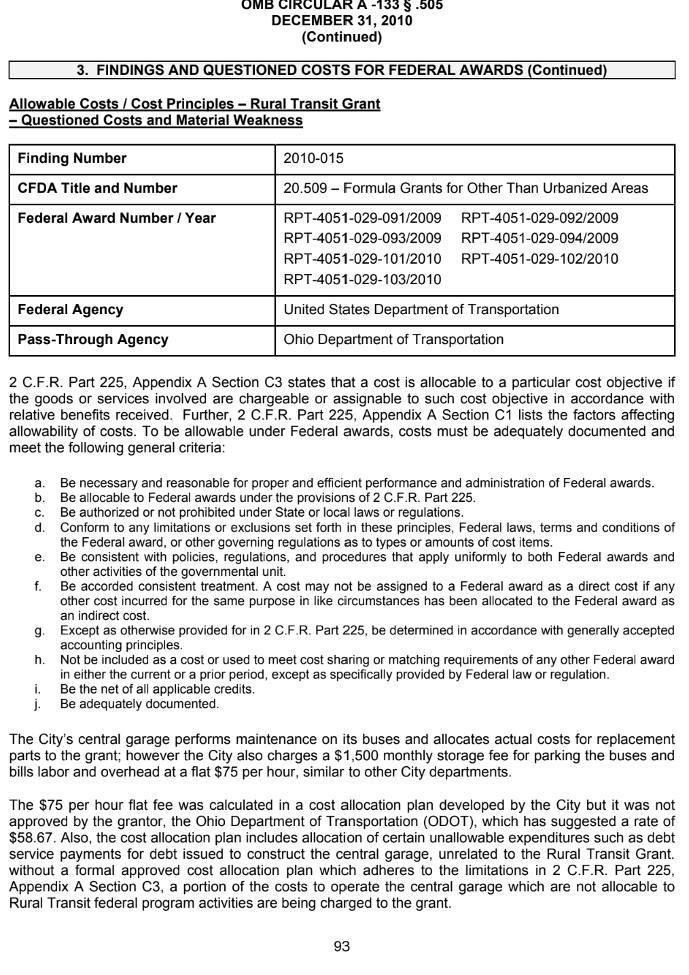
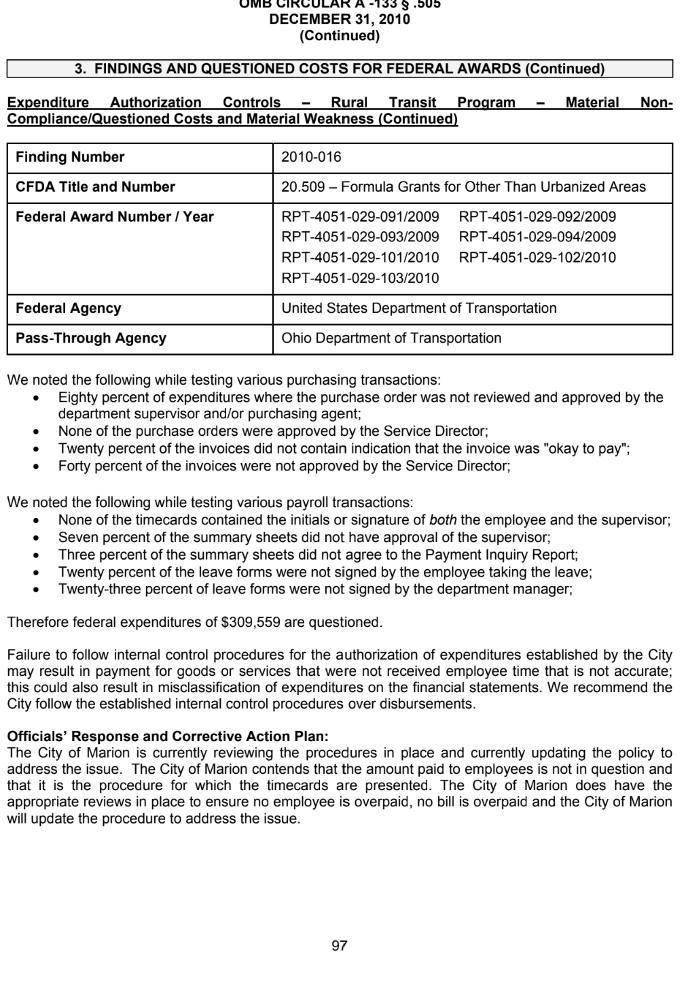
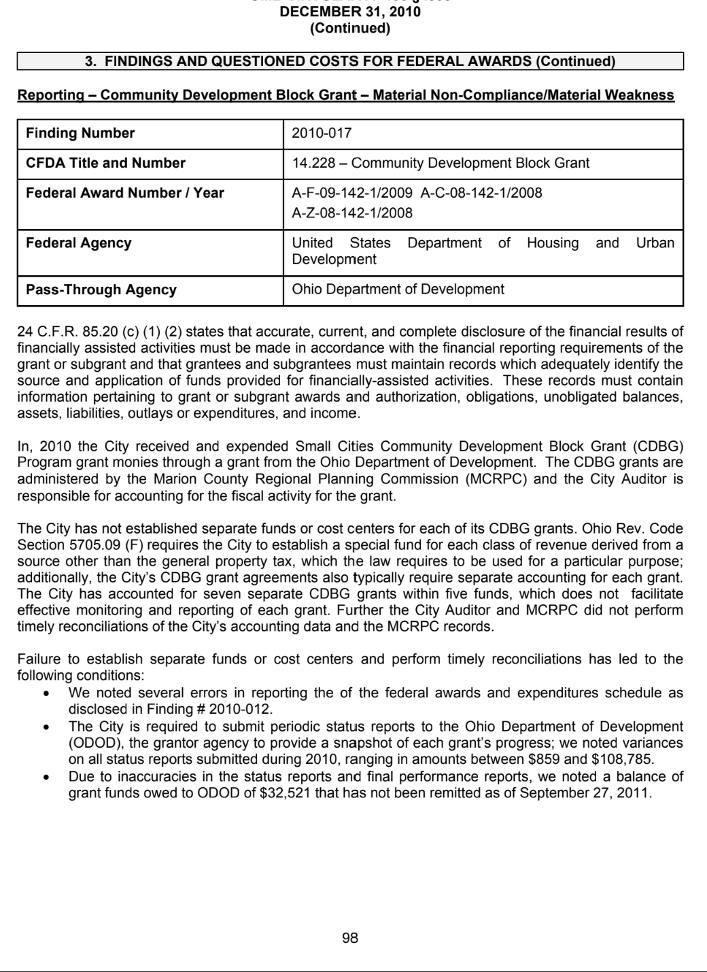
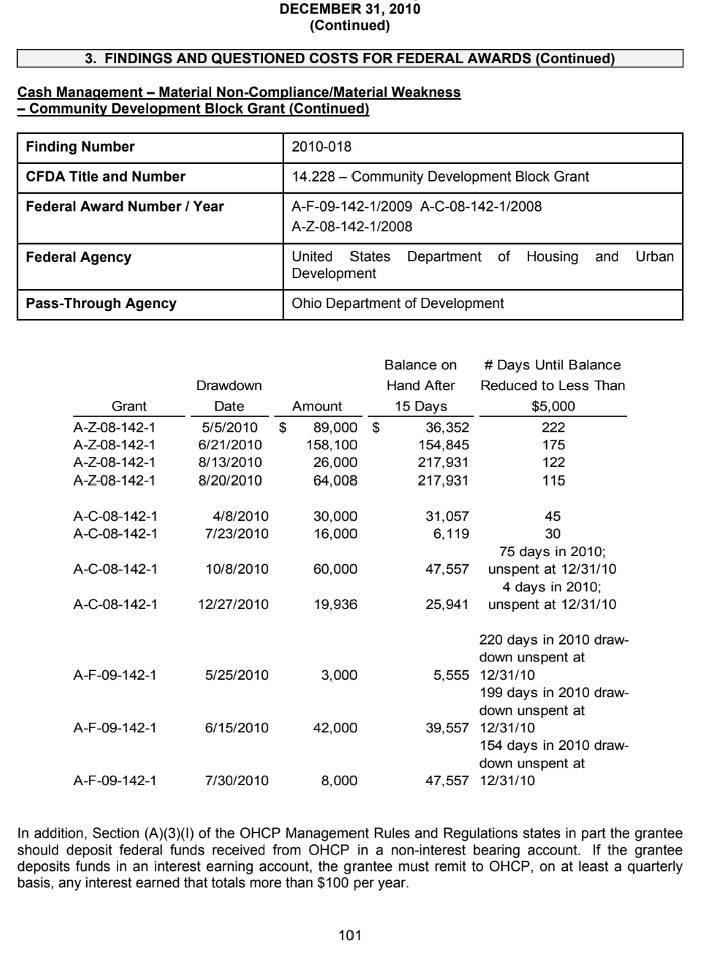
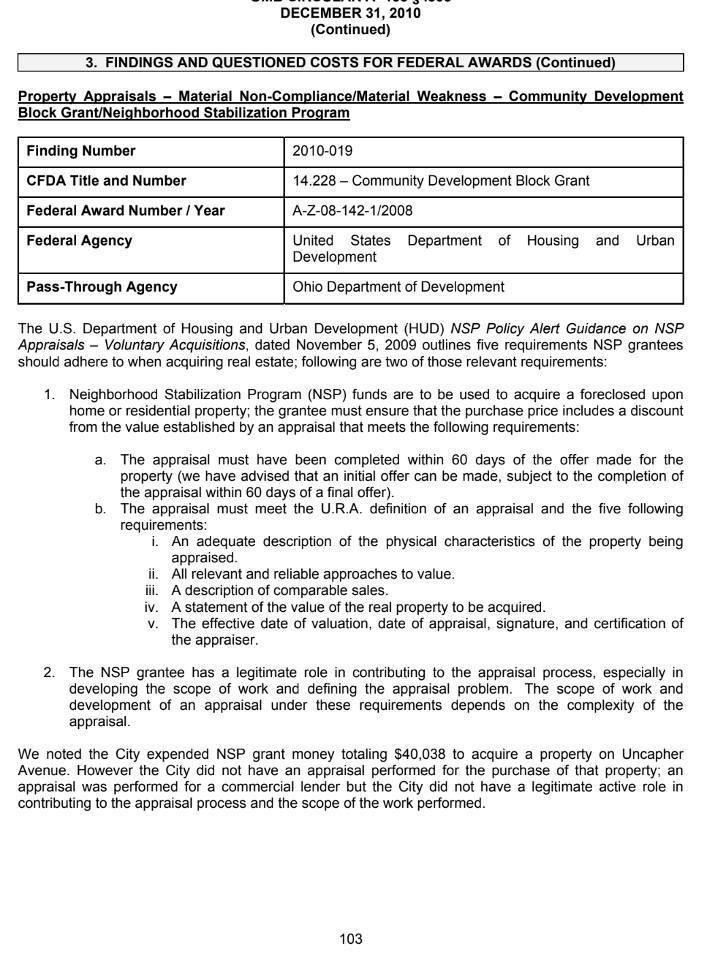
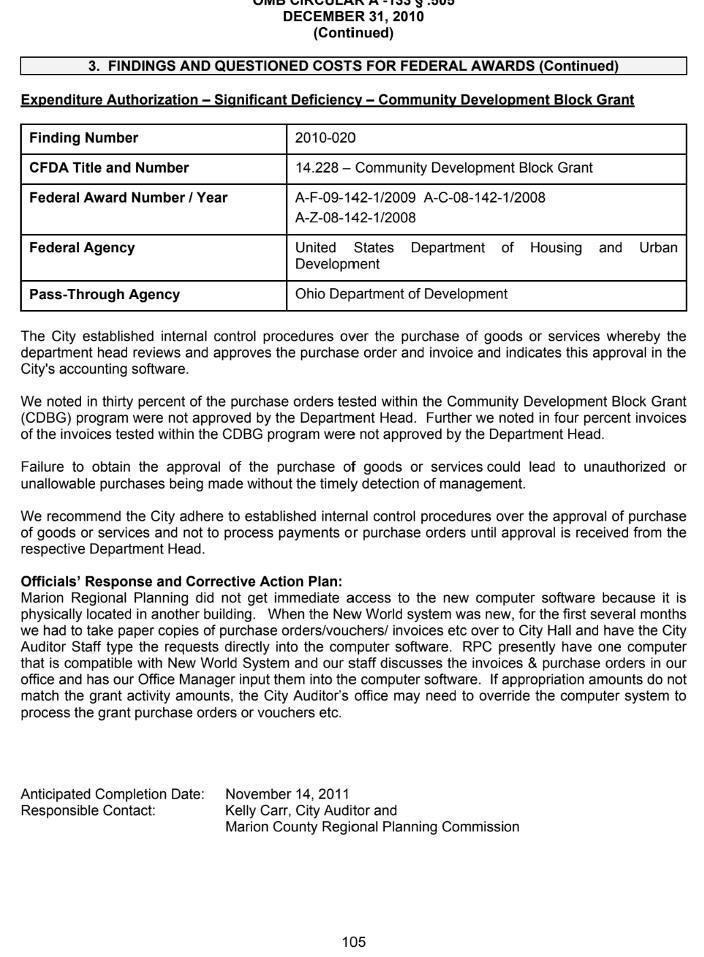
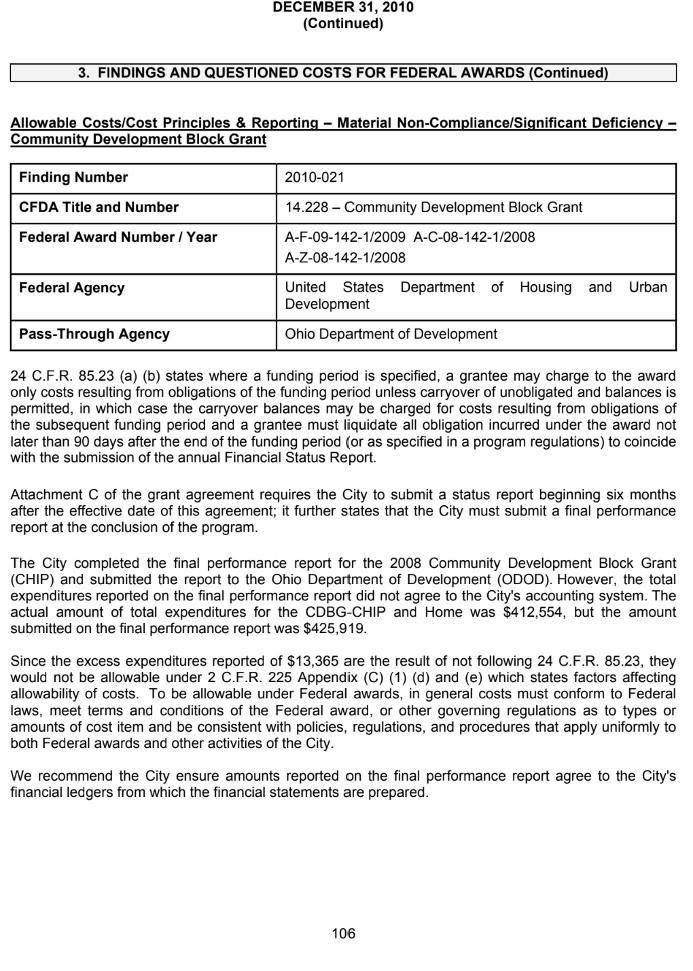
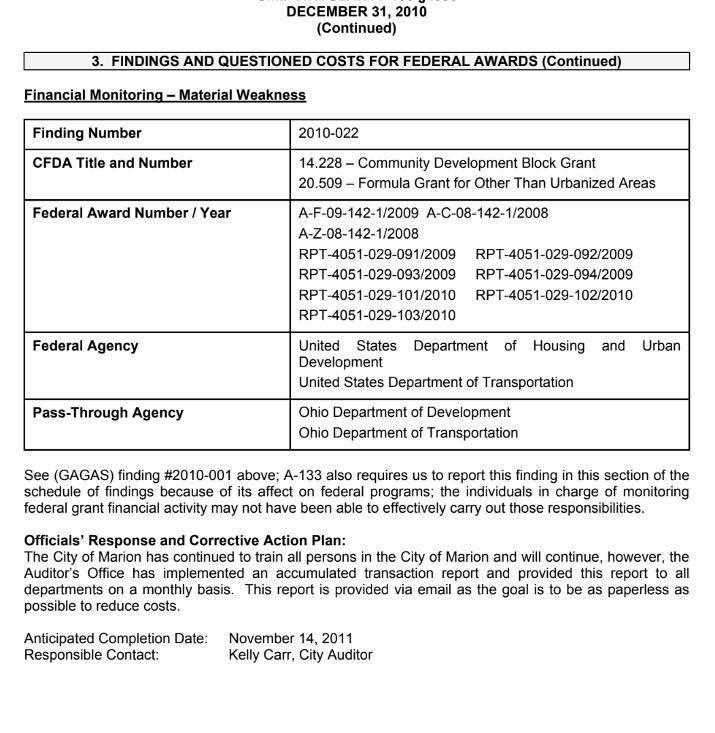
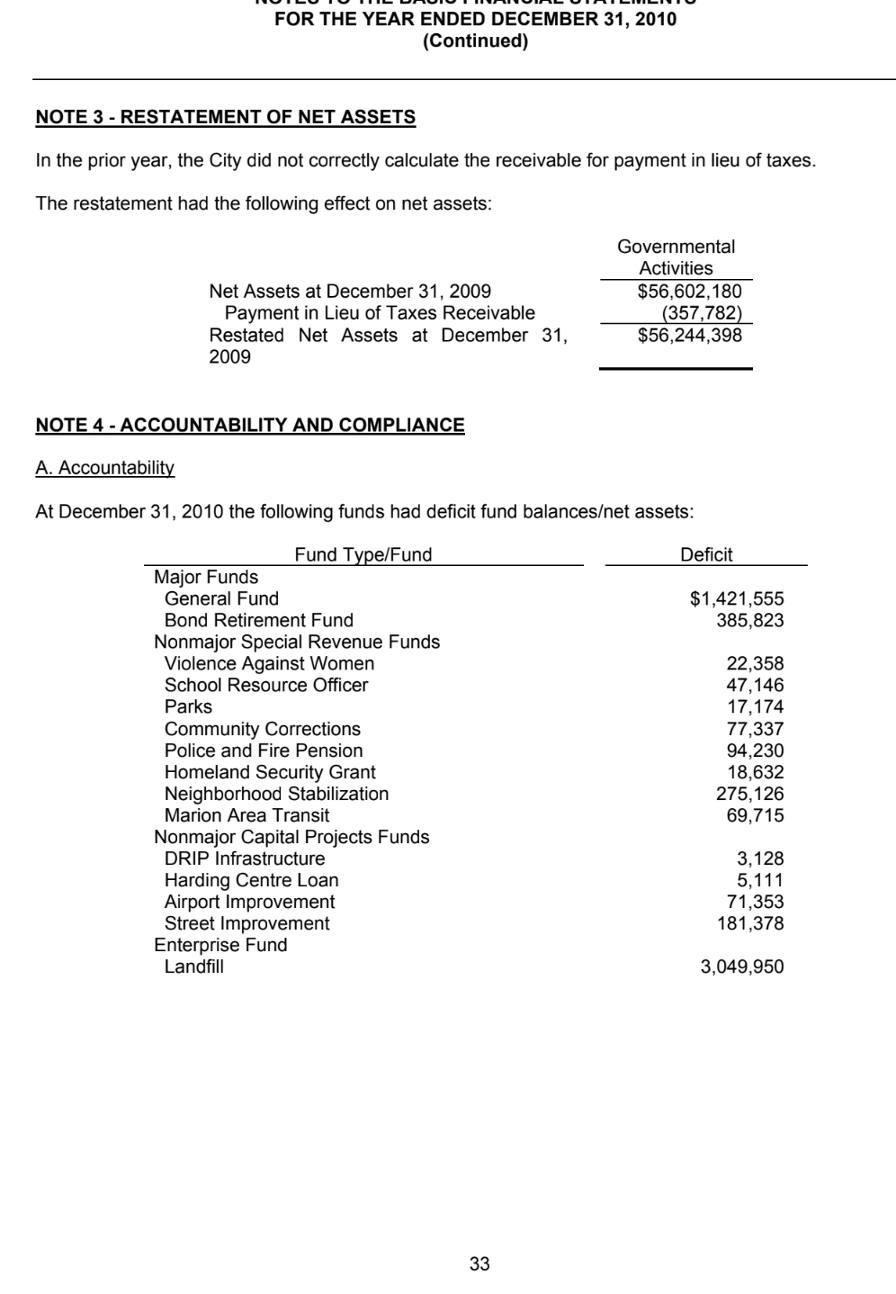
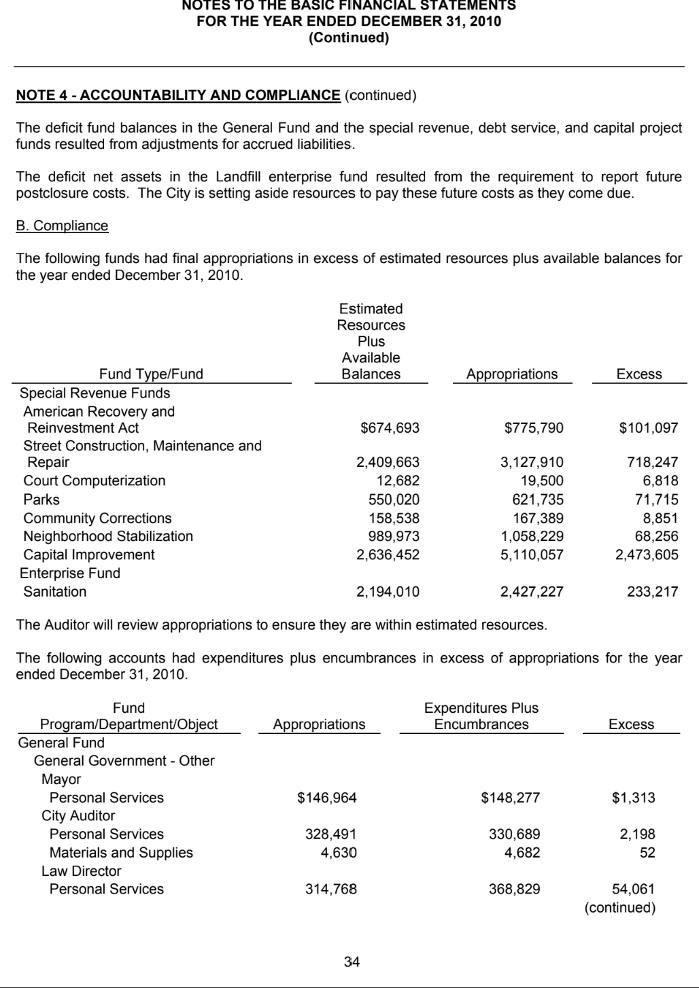
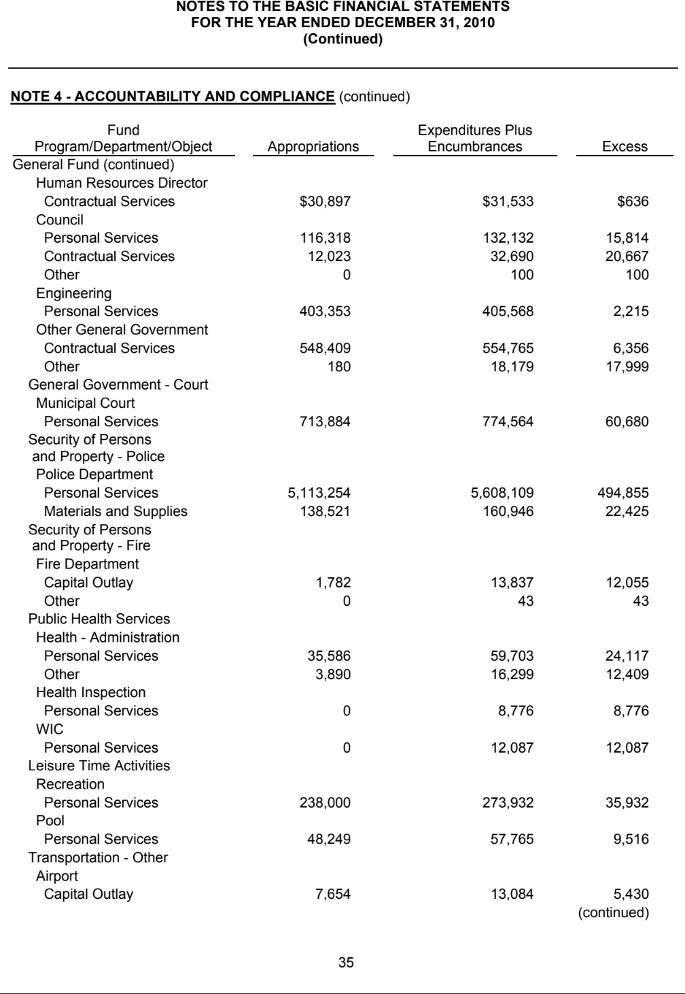
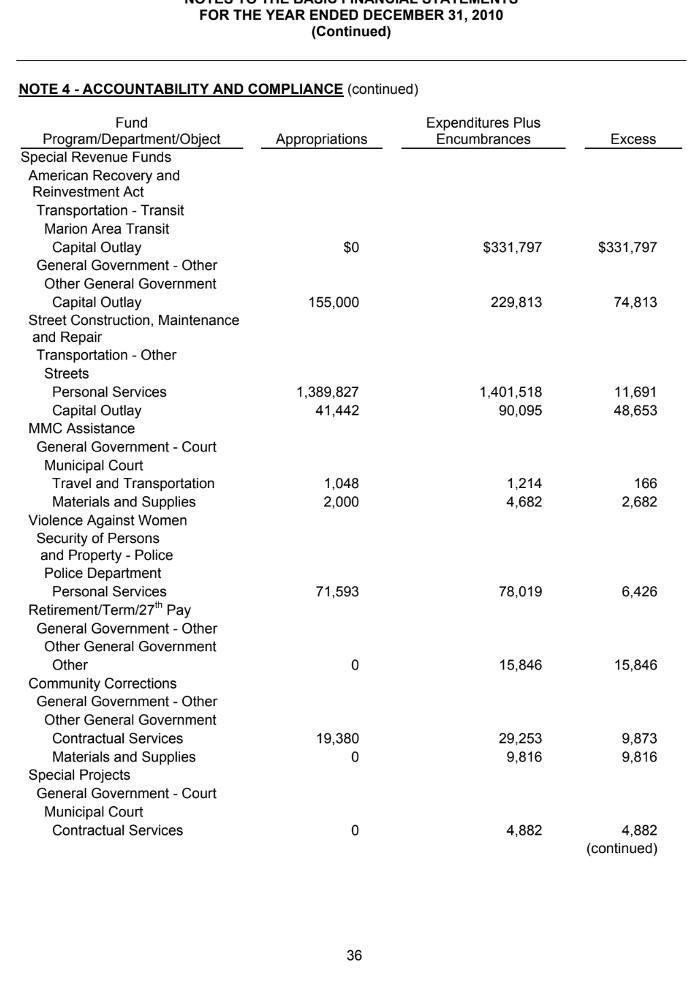
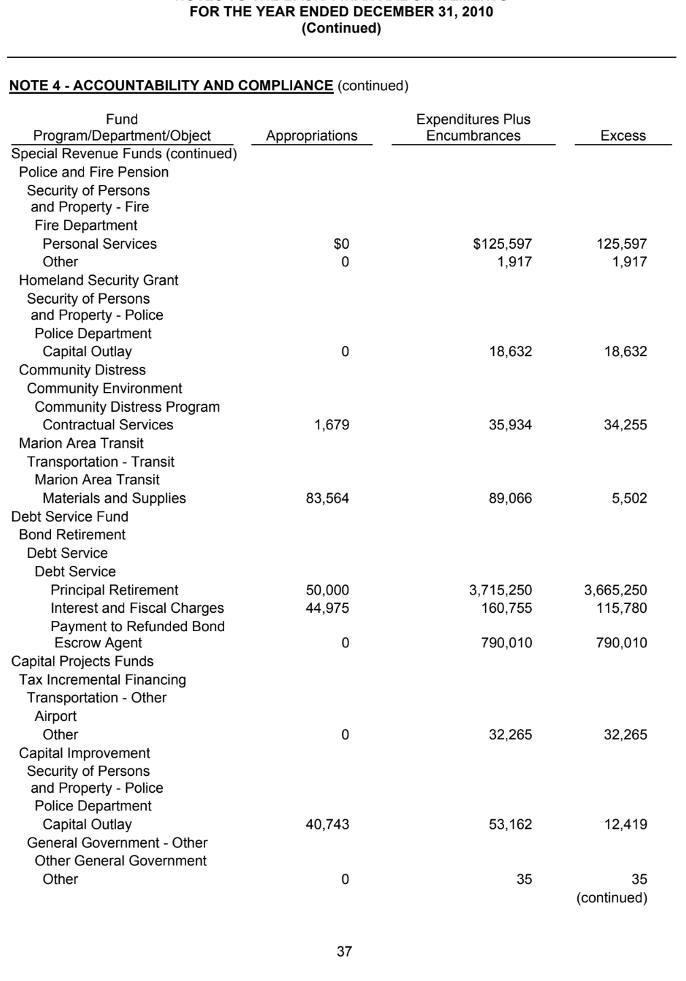
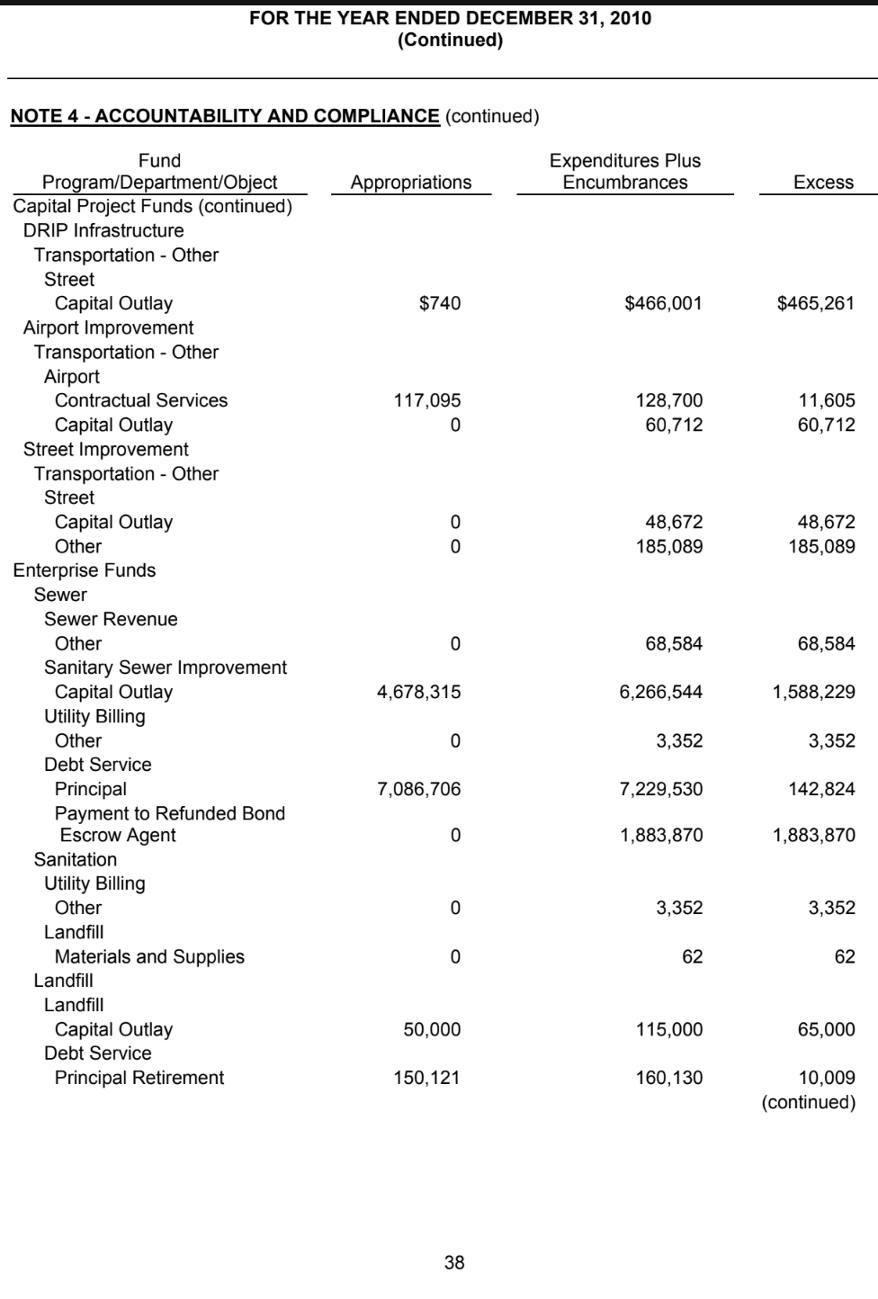
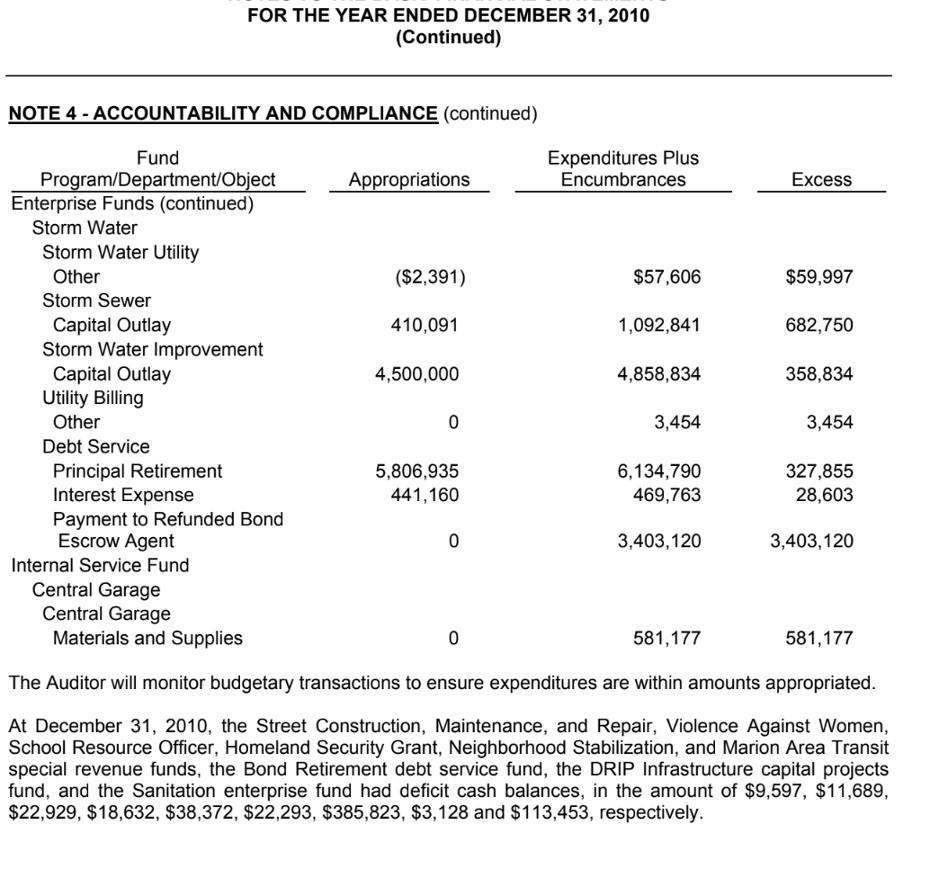
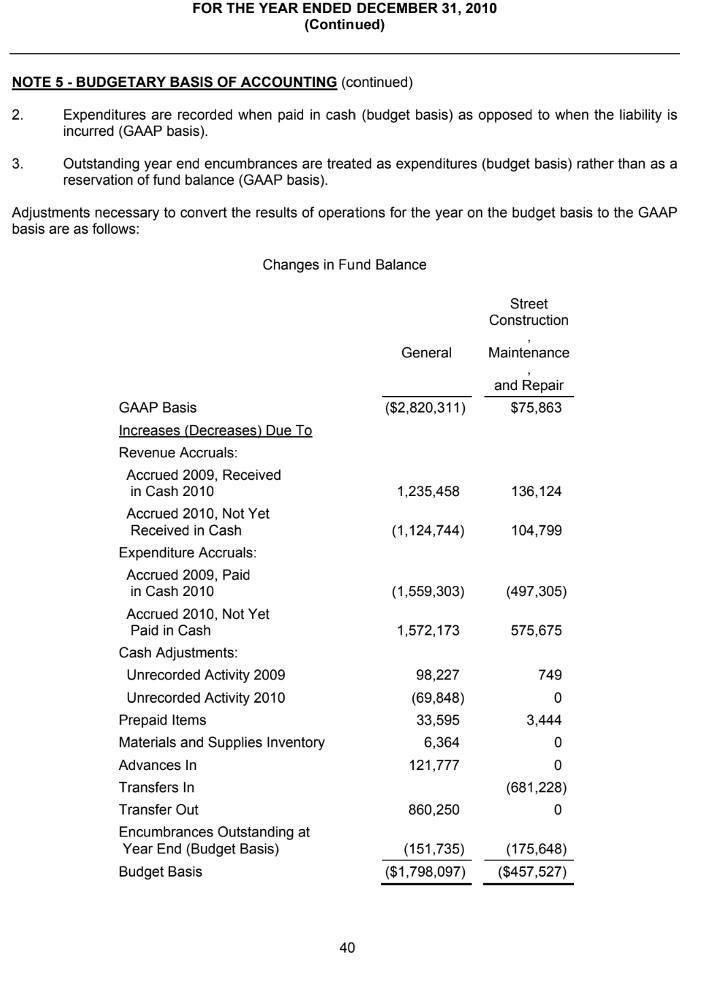
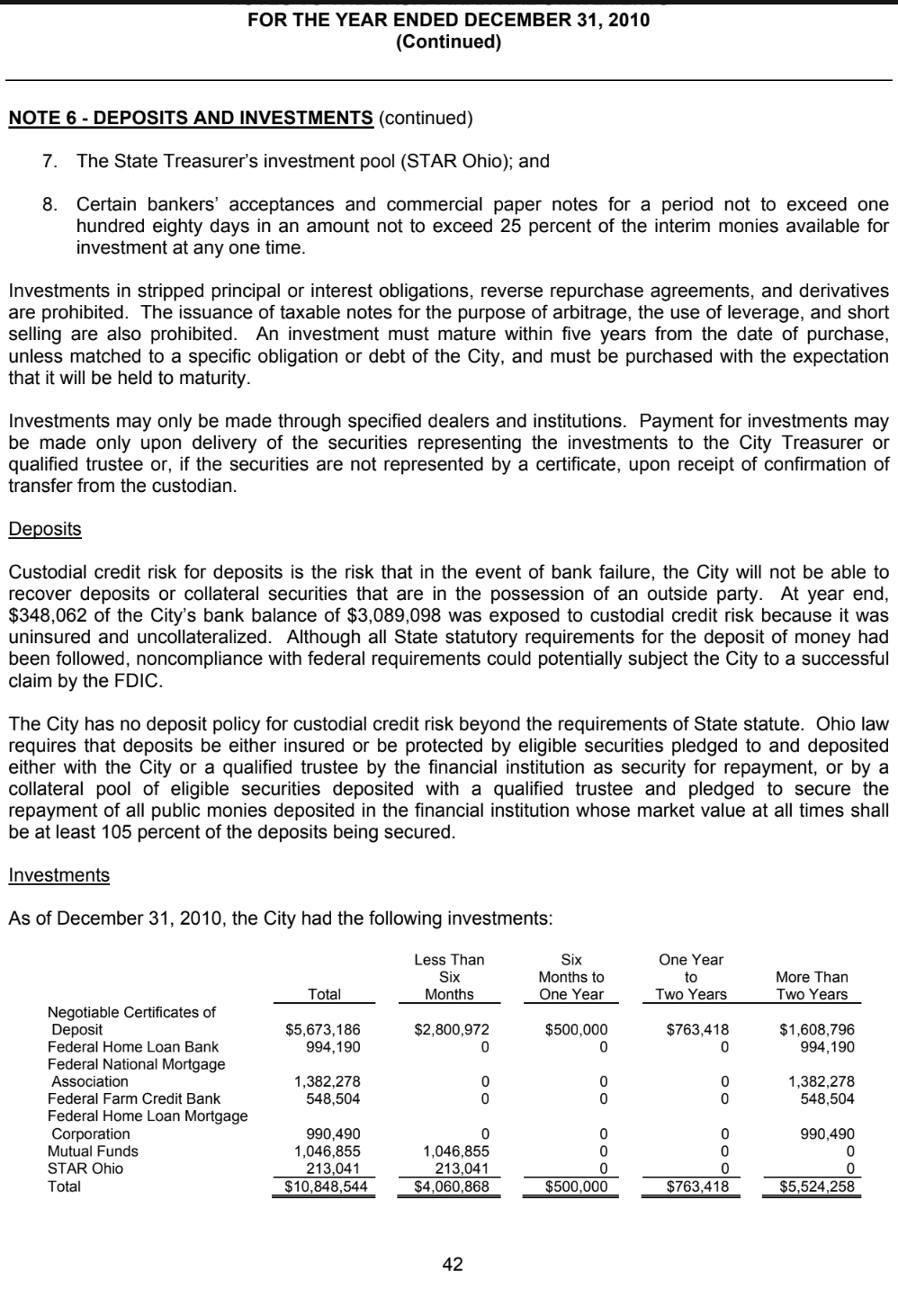
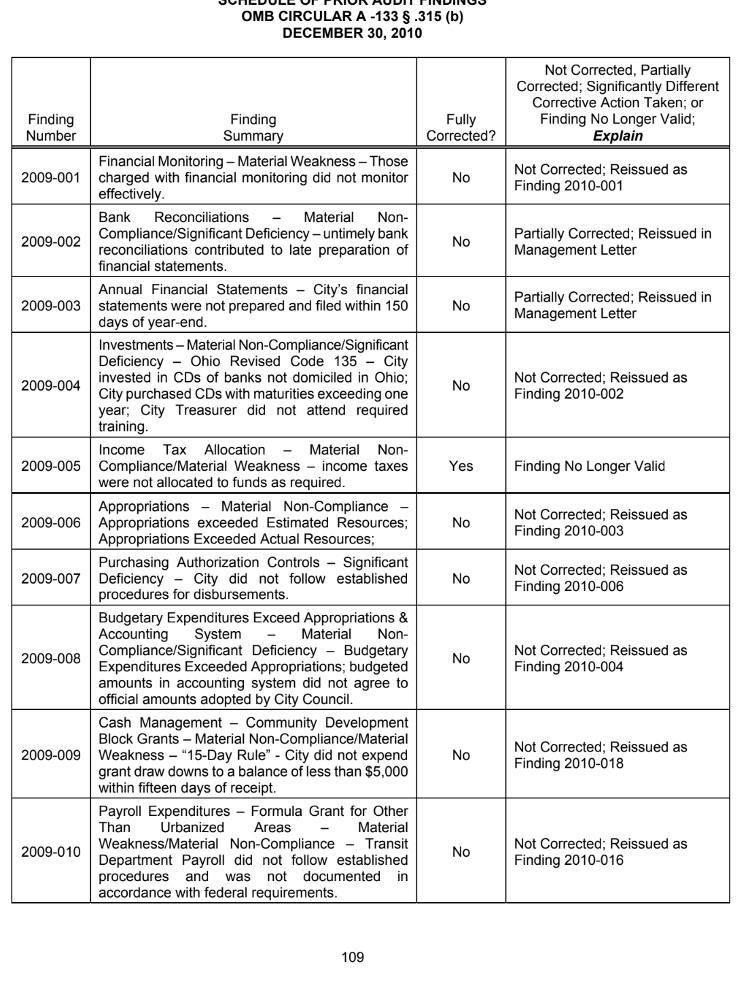
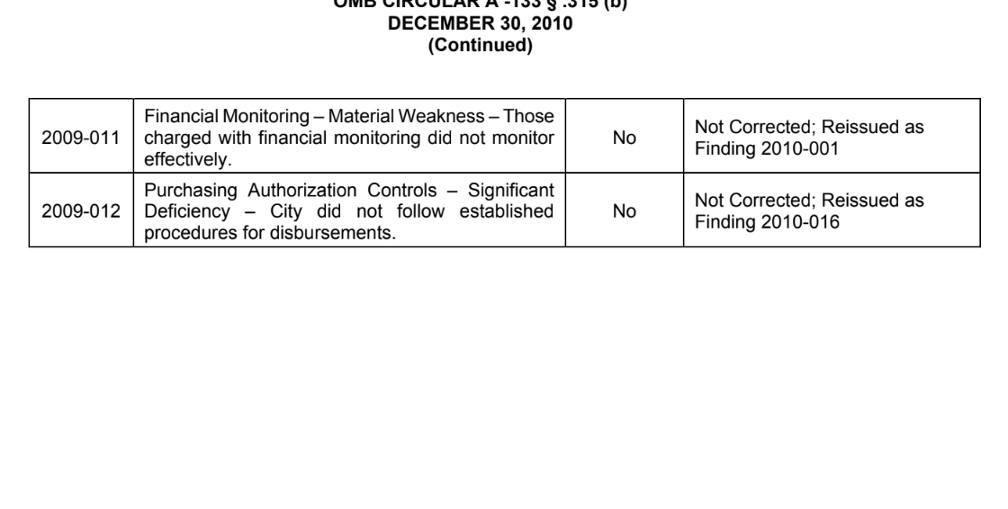
YEAR END 2011 AUDIT & THE FORENSIC IT SIGNS OF SILENT SABOTAGE: WHY THIS IS NOT OK (THE RECURRING FAILURES)
ALWAYS REMEMBER: Marion Watch does not always publish everything we know.
Should city council demand an independent, external audit of all historical software permission logs to see exactly who authorized these systemic overrides and what else is buried?
According to industry standards in the financial and IT sector the answer is YES!
The year-ending 2011 audit is absolute proof that the pattern of software bypasses and manual manipulation was not a one-time anomaly, but a deeply embedded practice that substituted software safety controls with undocumented workarounds for reasons unknown.
The forensic IT signs of a compromised system remain present and glaring.
Today, we are laying out the forensic baseline of City of Marion, OhioIT and financial control train wreck.
The 2011 financial audit provides MORE definitive forensic IT indicators of a city running a modern enterprise financial software system that was intentionally misconfigured, bypassed, and gutted.
The catastrophic deficits and rampant illegal spending in 2011 were not clerical accidents—they were the direct consequence of running municipal finances with the budget enforcement failing to hard block, reconciliation modules ignored, and required tracking features intentionally abandoned.
ALL THINGS THAT WE HAVE BEEN WARNING ABOUT FOR YEARS! SCORCHING AUDITOR OF STATE (AOS) FINDINGS
• Missing Cost Centers & Broken Reporting (Finding 2011-010):
Instead of utilizing the software’s ability to create dedicated cost centers, the city jammed seven separate Community Development Block Grants (CDBG) into just five funds. This destroyed the ability to properly track the money, leading to variances on all status reports submitted to the state (ranging from $6,738 to $22,037) and forcing manual adjustments outside the system.
• Off-System Transit Accounting (Finding 2011-007 & 2011-009):
The city ignored the accrual-basis reporting built into municipal accounting, submitting transit reports on a cash basis instead. This bypass caused the city to underreport expenditures by $35,002, short its local General Fund match by $25,448, and illegally draw down an excess $16,850 in federal funds.
• No Fare Box Reconciliations (Finding 2011-006):
In the Transit Department, there were no formal, documented paper reconciliations connecting the cash in the bus fare boxes to the drivers’ passenger manifests.
• Illegal, Off-Books Investments (Finding 2011-001):
The city illegally locked up $1,565,000 of interim monies in certificates of deposit for up to 45 months, shattering the one-year statutory limit. Worse, three of these deposit/investment accounts were not held in the City Treasurer’s name, breaking the chain of custody.
COMPLETE BREAKDOWN: NEGATIVE ACCOUNTS & DEFICIT FUND BALANCES
The AOS cited unmanaged “accrued liabilities” and postclosure mandates across every major sector of city government:
• Enterprise Funds: Landfill: $2,705,610 | Aquatics Center: $2,438,108
• Major Funds: General Fund: $1,122,640
• Special Revenue Funds: Police & Fire Pension: $102,260 | Marion Area Transit: $83,230 | School Resource Officer: $27,659 | Violence Against Women: $26,321 | Community Distress: $19,015 | State Highway: $4,979 | COPS Grant: $2,878
• Capital Projects Funds: Street Improvement: $250,000 | Airport Improvement: $20,853 | Harding Centre Loan: $5,364
• Depleted Cash Balances (Actual Cash Deficits): General Fund: $155,801 | Marion Area Transit: $62,260 | COPS Grant (Police): $46,694 | Sanitation Fund: $35,723 | Street Construction, Maintenance, and Repair: $14,983 | State Highway: $11,580
UNCHECKED SPENDING: OVER-APPROPRIATIONS & LINE-ITEM BLOWOUTS
Software controls should have locked the doors when funds ran dry. Instead, appropriations blew past legally certified resources across multiple funds:
• General Fund: Appropriated $671,366 over its estimated resources. It also appropriated $319,447 more than the actual resources it had in the bank.
• Street Construction, Maintenance, and Repair Fund: Appropriated $27,121 beyond its actual available resources.
Line-Item Expenditures Exceeding Appropriations (Object Level):
• Enterprise & Capital Projects: Sewer Debt Service Principal blew budget by $1,233,853; Storm Water Debt Service Principal exceeded appropriations by $703,176; and Landfill Debt Service Principal exceeded by $131,156.
• Community Environment: Clean Ohio Grant Contractual Services exceeded appropriations by $611,023.
• Administration & Other: Transportation (Airport Materials) exceeded by $4,584; City Auditor (Contractual Services) exceeded by $718; Sanitation Contractual Services exceeded by $58; and Storm Water Utility Contractual Services exceeded by $58.
THE REISSUED FINDINGS: A CULTURE OF IGNORING THE RULES
Perhaps the most damning evidence of “Silent Sabotage” is found in the Schedule of Prior Audit Findings.
The 2011 audit proves that city officials actively ignored the state’s warnings from 2010.
Ten distinct material weaknesses and non-compliance citations from 2010 were explicitly marked as “Not Corrected” and were officially reissued by the Auditor of State in 2011.
The systemic issues they refused to fix included:
• Reissued Finding 2011-001 (formerly 2010-002):
Illegal Investments.
• Reissued Finding 2011-002 (formerly 2010-003):
Appropriations Exceeding Resources.
• Reissued Finding 2011-003 (formerly 2010-004):
Budgetary Expenditures Exceeding Appropriations & System Posting Failures.
• Reissued Finding 2011-004 (formerly 2010-005):
Negative Fund Balances and Commingling.
• Reissued Finding 2011-005 (formerly 2010-011):
Failure to Timely File the Single Audit.
• Reissued Finding 2011-006 (formerly 2010-013):
Missing Transit Fare Box Reconciliations.
• Reissued Finding 2011-007 (formerly 2010-014):
Improper Quarterly Transit Grant Reporting.
• Reissued Finding 2011-008 (formerly 2010-015):
Unallowable Transit Costs / Questioned Costs.
• Reissued Finding 2011-010 (formerly 2010-017):
Improper CDBG Reporting and Cost Center Failures.
• Reissued Finding 2011-011 (formerly 2010-018):
Cash Management Violations (The 15-Day Rule).
Additionally, the massive Financial Monitoring weaknesses from 2010 (Findings 2010-001 & 2010-022) were still only “Partially Corrected” and lingered into 2011.
IN SHORT
The city had the digital tools to enforce spending limits, manage debt, and prevent multi-million-dollar fund collapses, but chose to operate with the safety switches turned off—and when they were caught in 2010, they intentionally kept the switches off for 2011.
BUT WAIT THERE IS MORE, MUCH, MUCH MORE!
2011-001: DEPOSITS & INVESTMENTS (MATERIAL NON-COMPLIANCE)
The city illegally invested in certificates of deposit totaling $1,565,000 with maturities stretching up to 45 months (violating the one-year statutory limit) and failed to register three deposit accounts specifically in the City Treasurer’s name.
2011-002: APPROPRIATIONS (MATERIAL NON-COMPLIANCE)
General Fund appropriations illegally exceeded the official certificate of estimated resources by $671,366, and ending appropriations exceeded actual available resources in both the General Fund and Street Construction, Maintenance, and Repair Fund.
2011-003: BUDGETARY EXPENDITURES EXCEED APPROPRIATIONS (MATERIAL NON-COMPLIANCE)
Actual expenditures exceeded legal appropriations at the object level across major accounts, including Sewer Debt Service Principal by $1,233,853 and Clean Ohio Grant Contractual Services by $611,023.
2011-004: NEGATIVE FUND BALANCES (MATERIAL NON-COMPLIANCE)
Six funds operated with negative actual cash balances, including the General Fund (-$155,801 cash deficit) and Sanitation Fund (-$35,723 cash deficit).
2011-005: FILING OF SINGLE AUDIT (MATERIAL NON-COMPLIANCE)
The city failed to file its 2010 Single Audit report with the Federal Audit Clearinghouse within the required timeframe (not completed until November 28, 2011), jeopardizing its low-risk auditee status and future federal funding.
2011-006: PROGRAM INCOME – FARE BOX REVENUE – TRANSIT (SIGNIFICANT DEFICIENCY)
The transit department lacked controls over cash collections, failing to have dual counts or formally document paper reconciliations of actual cash and tickets against drivers’ passenger manifests.
2011-007: REPORTING/MATCHING – RURAL TRANSIT PROGRAM (MATERIAL NON-COMPLIANCE / MATERIAL WEAKNESS)
The city submitted quarterly transit grant reports using cash-basis accounting instead of the required accrual basis, causing expenditures to be underreported by $35,002 and forcing the General Fund to transfer $25,448 less for the required local match.
2011-008: ALLOWABLE COSTS / COST PRINCIPLES – RURAL TRANSIT PROGRAM (MATERIAL NON-COMPLIANCE / QUESTIONED COSTS / SIGNIFICANT DEFICIENCY)
The city improperly charged the transit grant a flat $1,500 per month fee for 13 months for “bus storage,” which is an unallowable cost, resulting in $19,500 in questioned costs.
2011-010: REPORTING – CDBG (MATERIAL NON-COMPLIANCE / MATERIAL WEAKNESS)
The city improperly commingled seven separate CDBG grants into five funds rather than establishing dedicated cost centers, leading to nine adjustment errors, inaccurate status reports with variances up to $22,037, and missing reconciliations.
2011-011: CASH MANAGEMENT – CDBG (MATERIAL NON-COMPLIANCE / MATERIAL WEAKNESS)
The city violated the federal “15-Day Rule” by failing to disburse drawn-down grant funds in a timely manner (holding some funds for up to 127 days) and illegally kept the money in interest-bearing accounts without remitting the estimated $992 in earned interest to the state.
2011-009: EARMARKING – RURAL TRANSIT PROGRAM (MATERIAL NON-COMPLIANCE / QUESTIONED COSTS / SIGNIFICANT DEFICIENCY)
Because the city reported grant activity on the cash basis, it received an estimated excess of $16,850 in federal funds beyond the allowable 50 percent cap of the net project cost.
OFFICIAL EXHIBITS & PRIMARY SOURCE RECORDS (2011 Overview: The Recurring Failures)
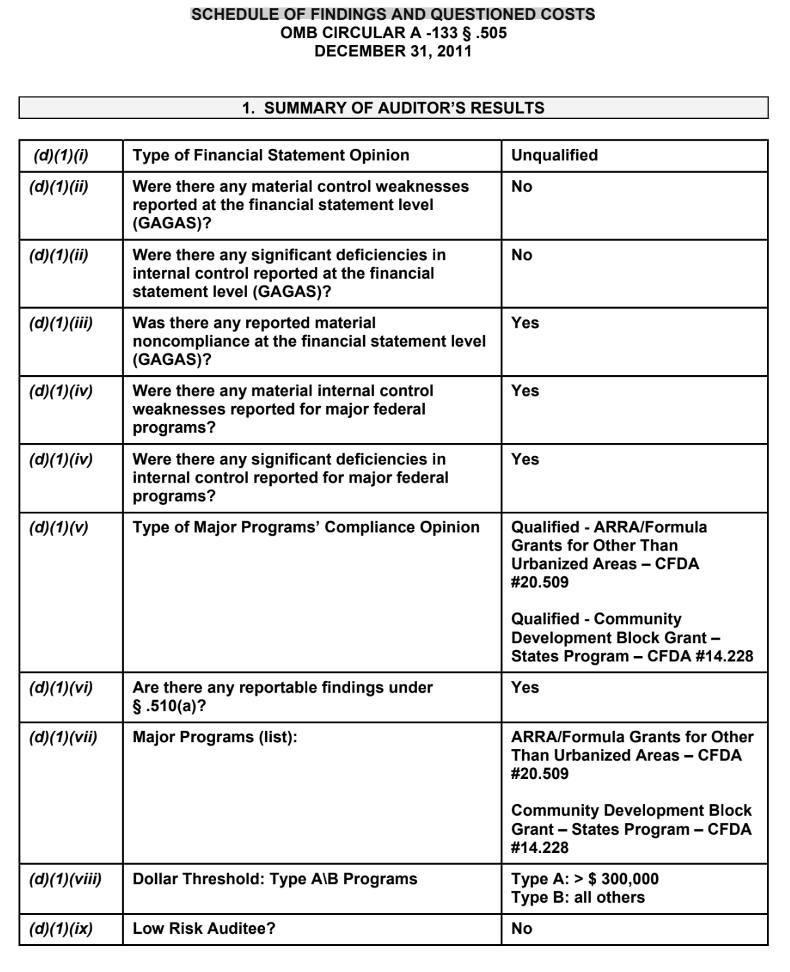
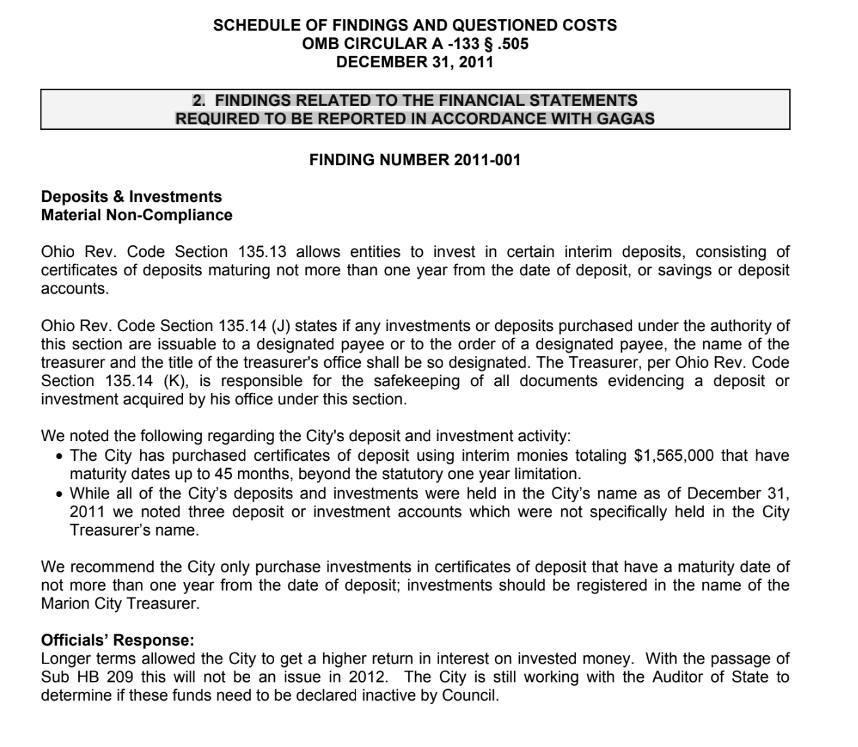
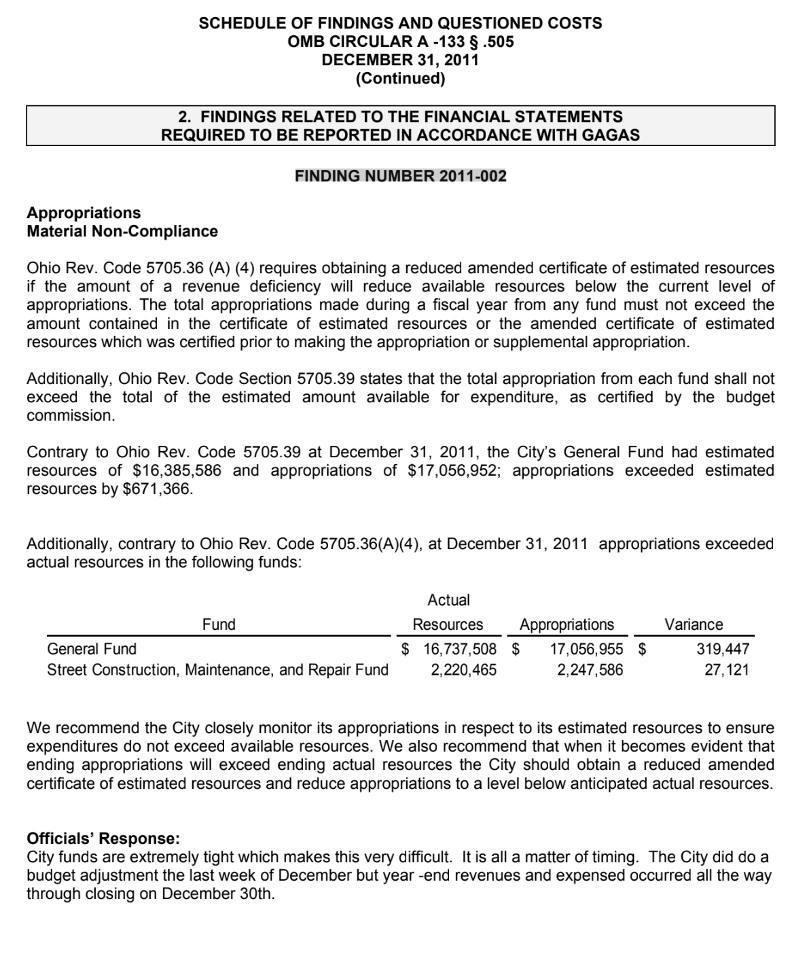
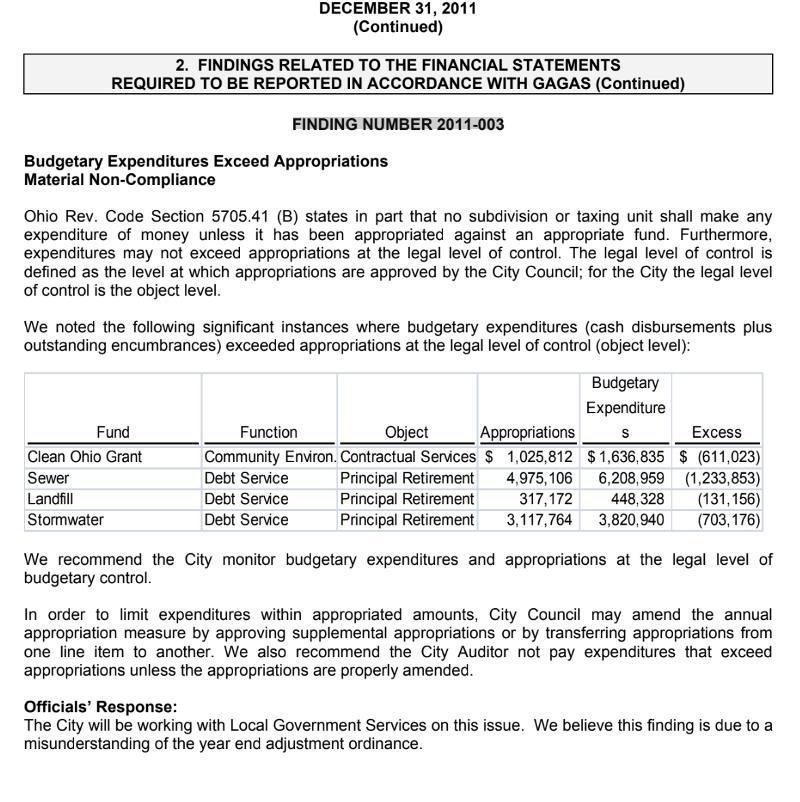
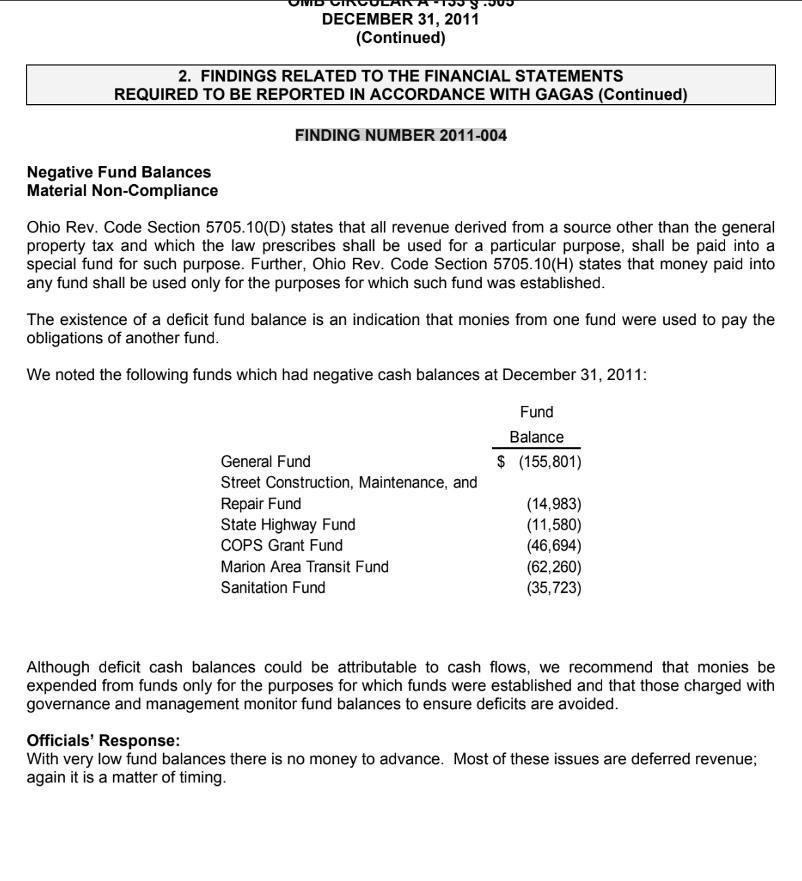
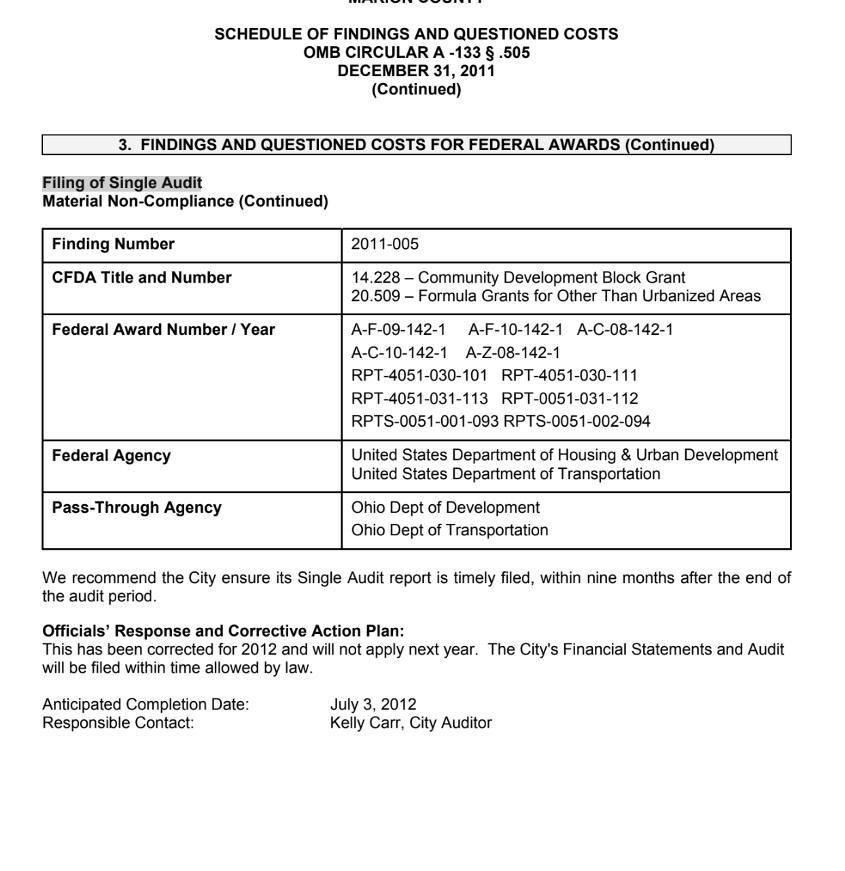
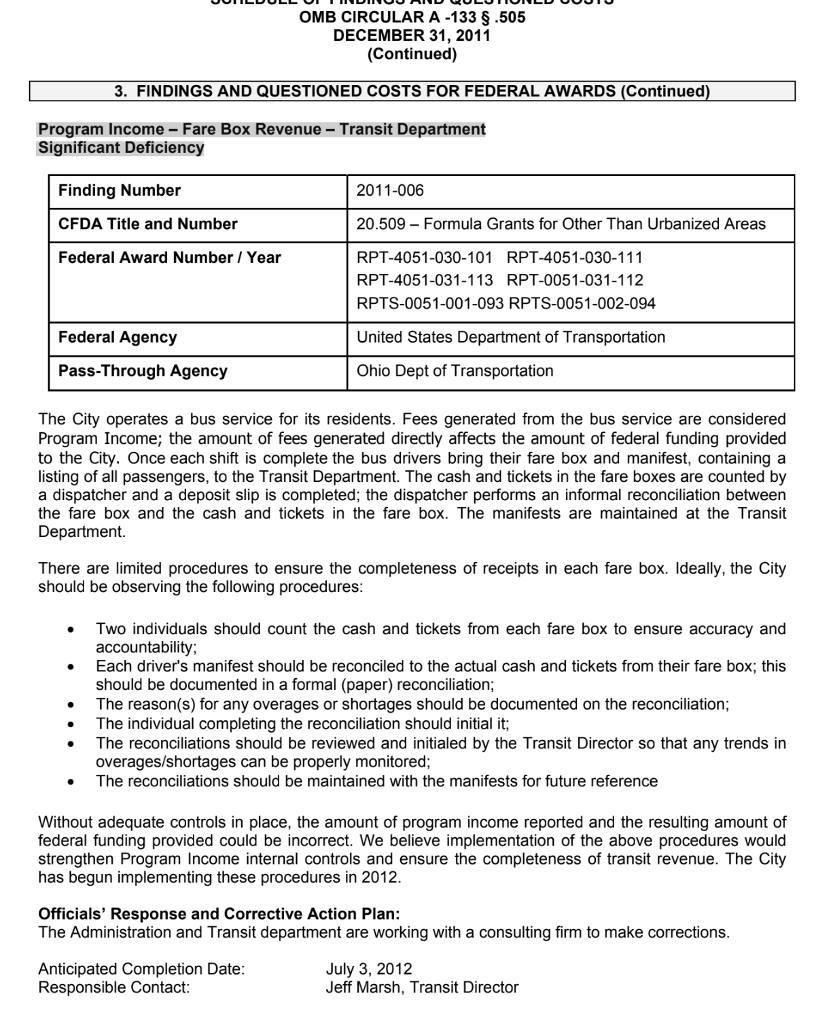
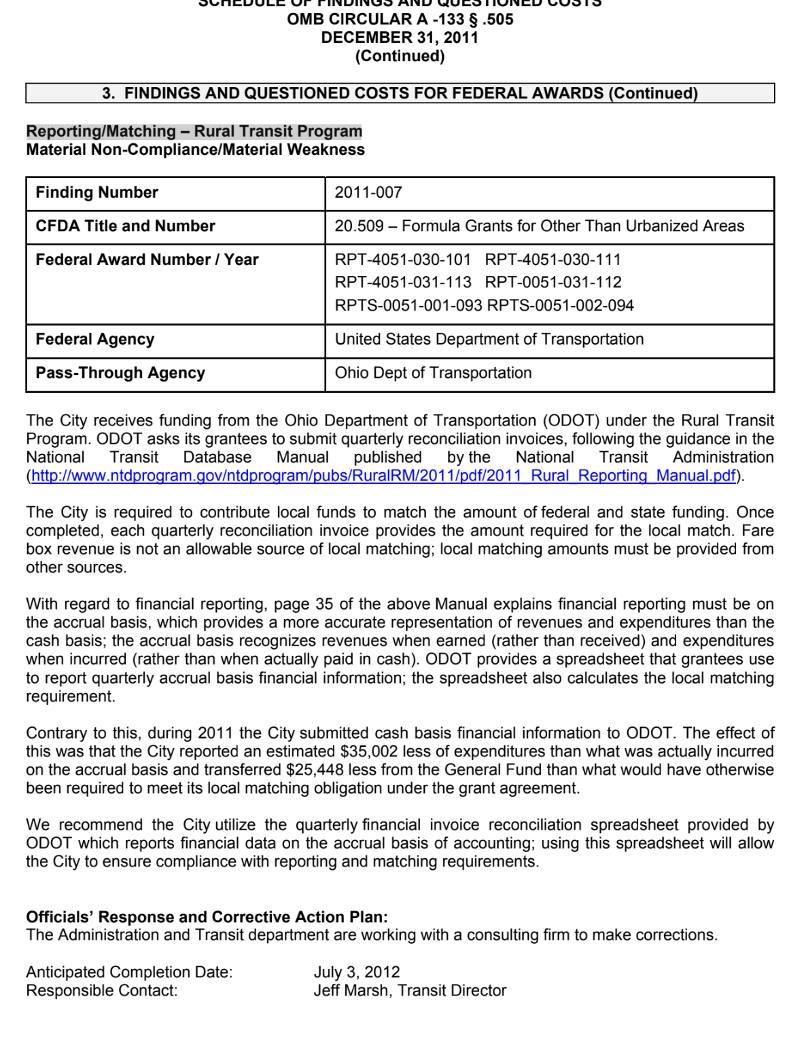
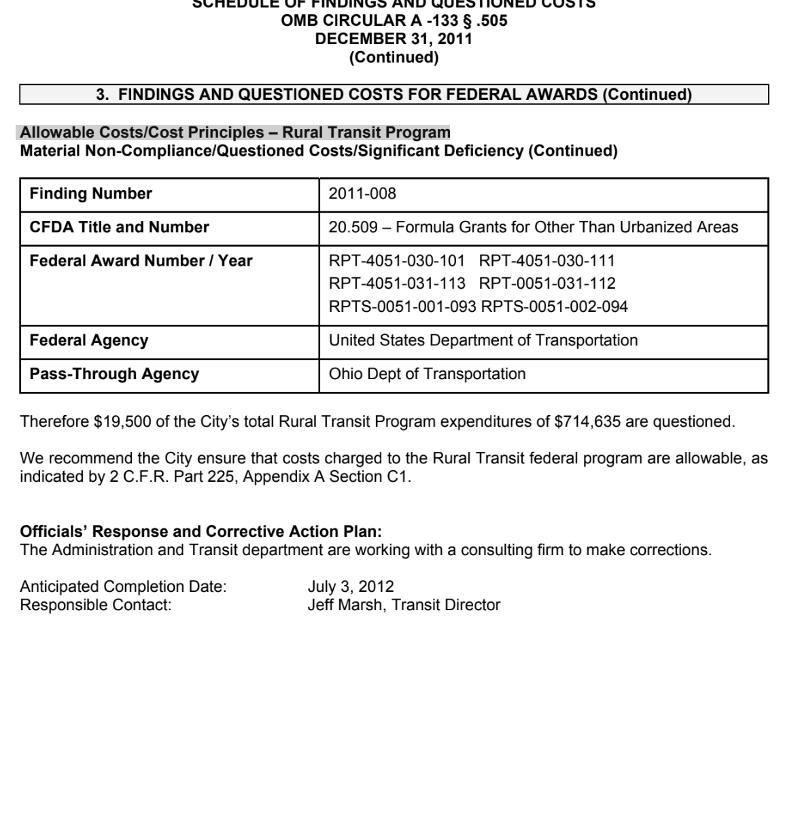
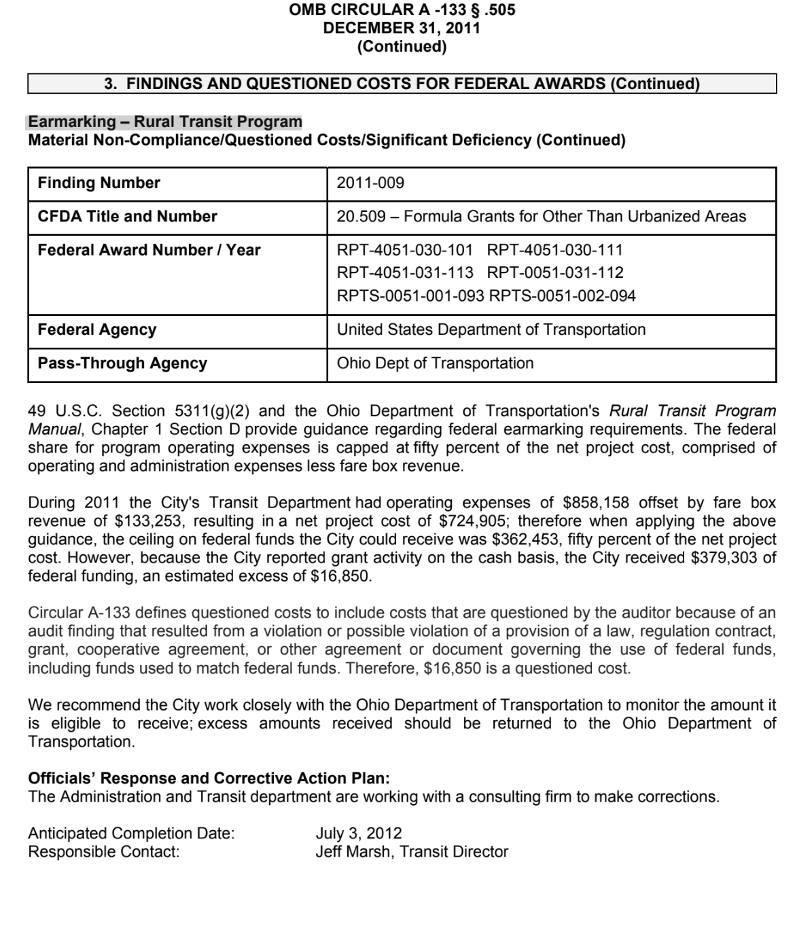
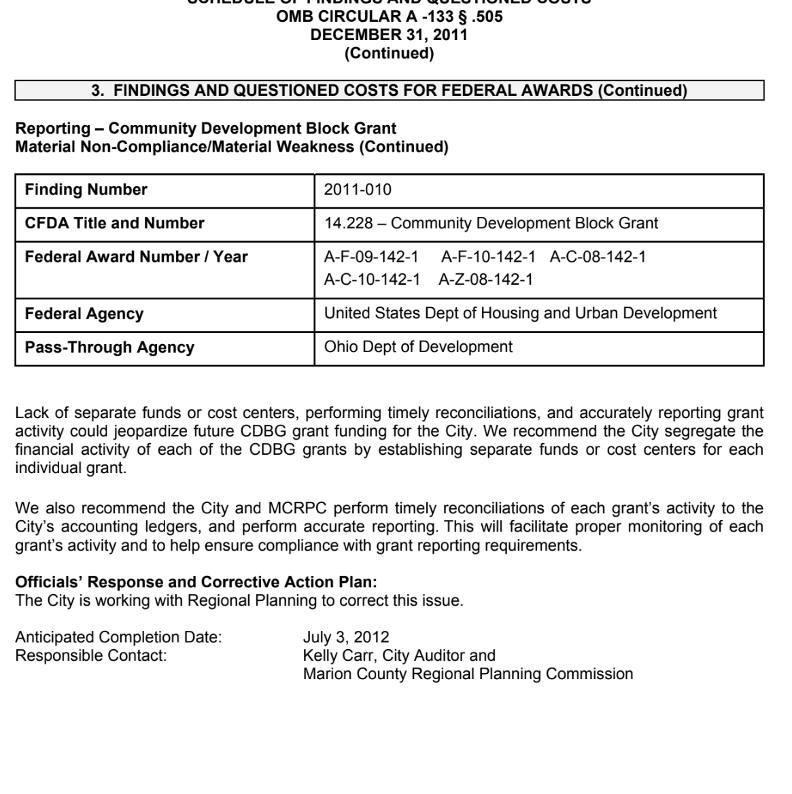
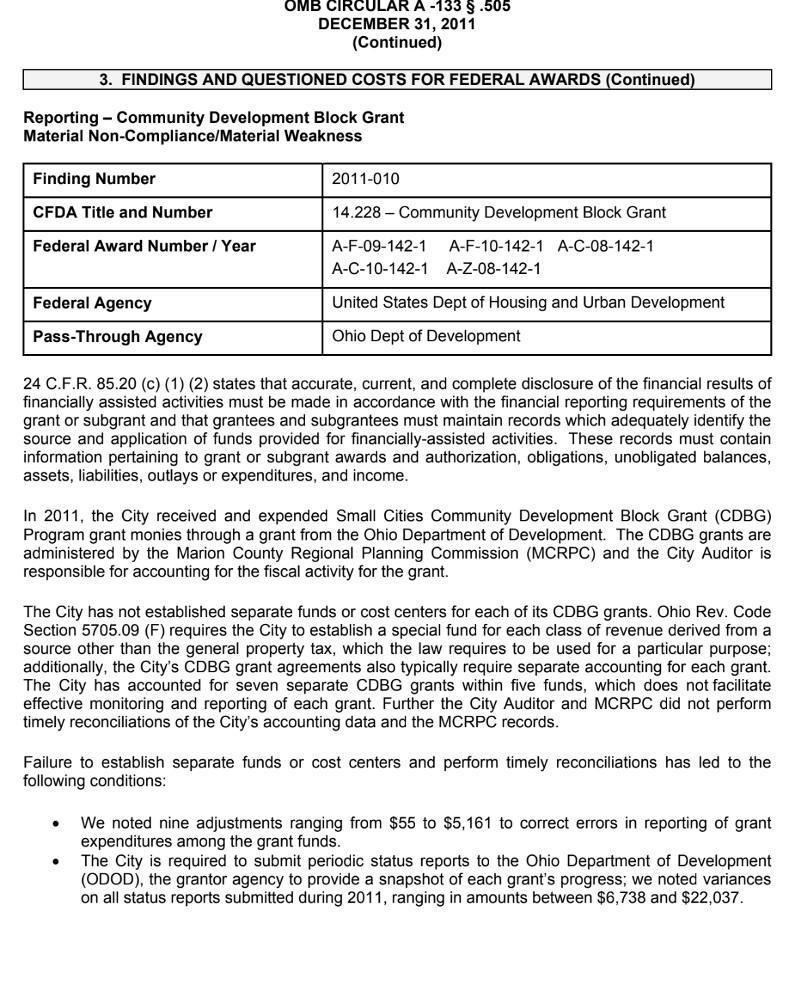
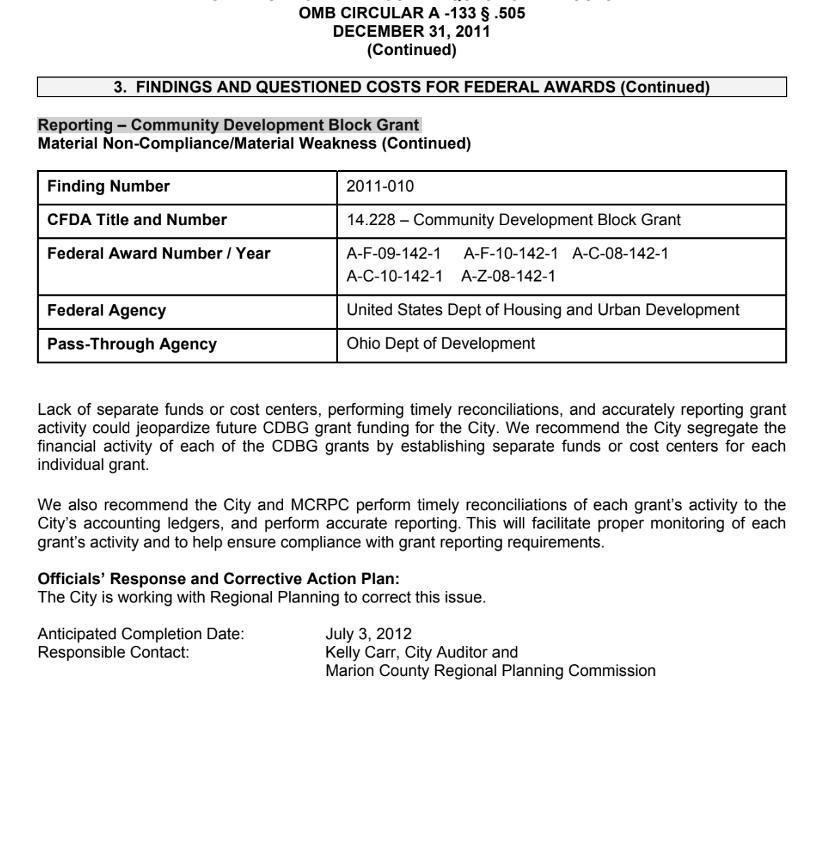
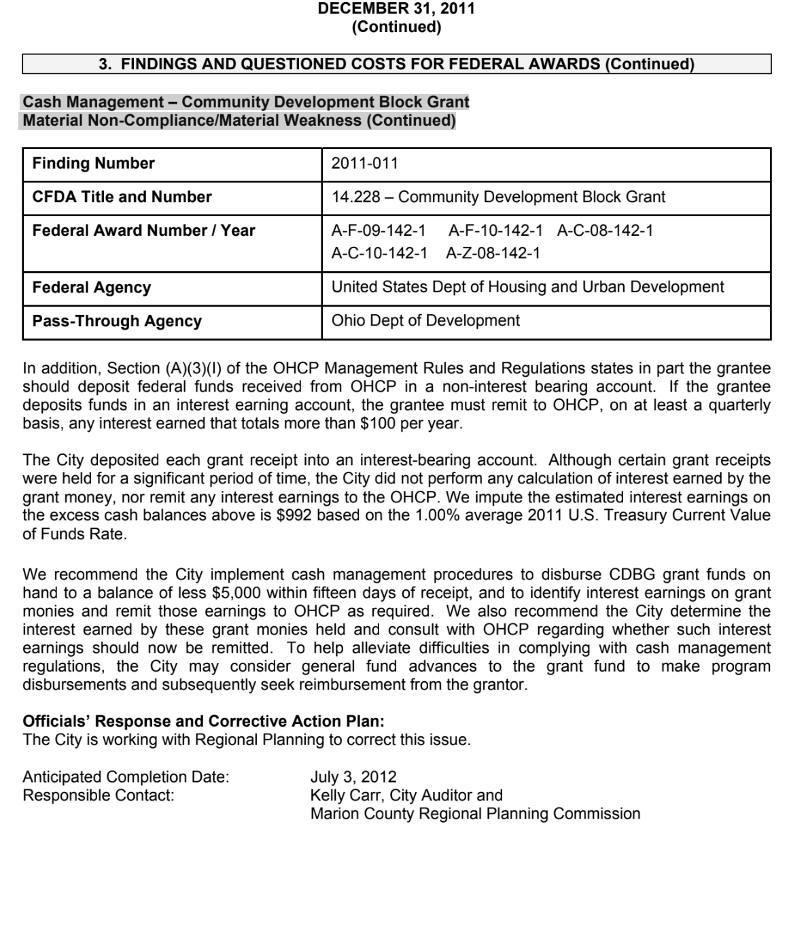
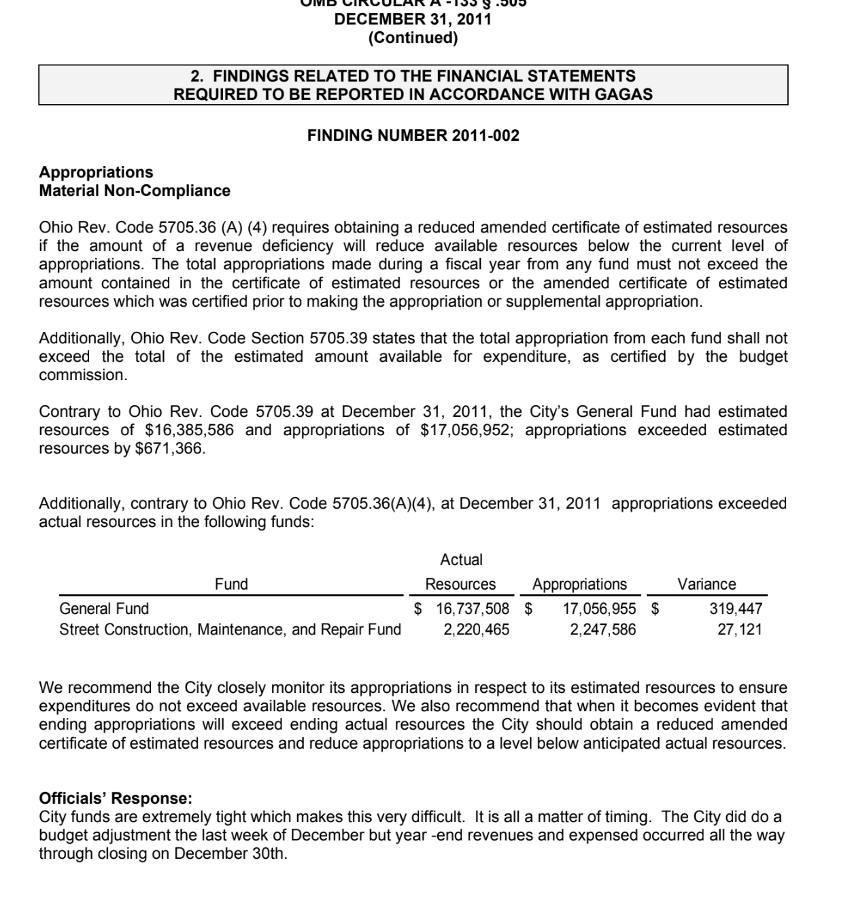
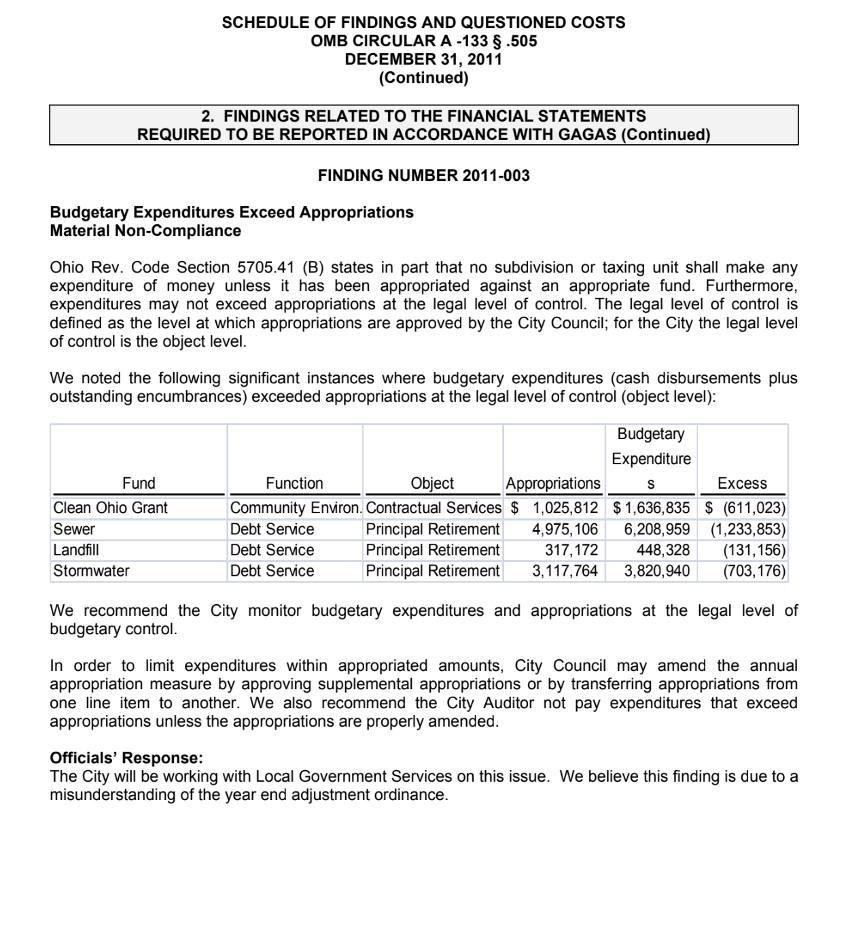
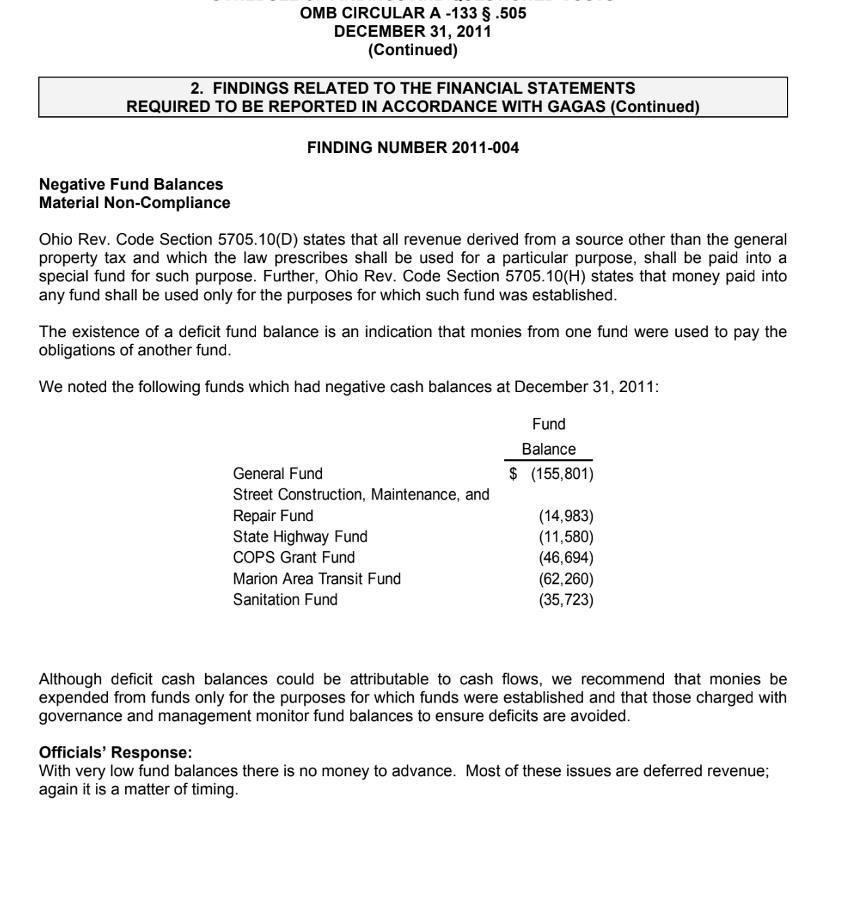
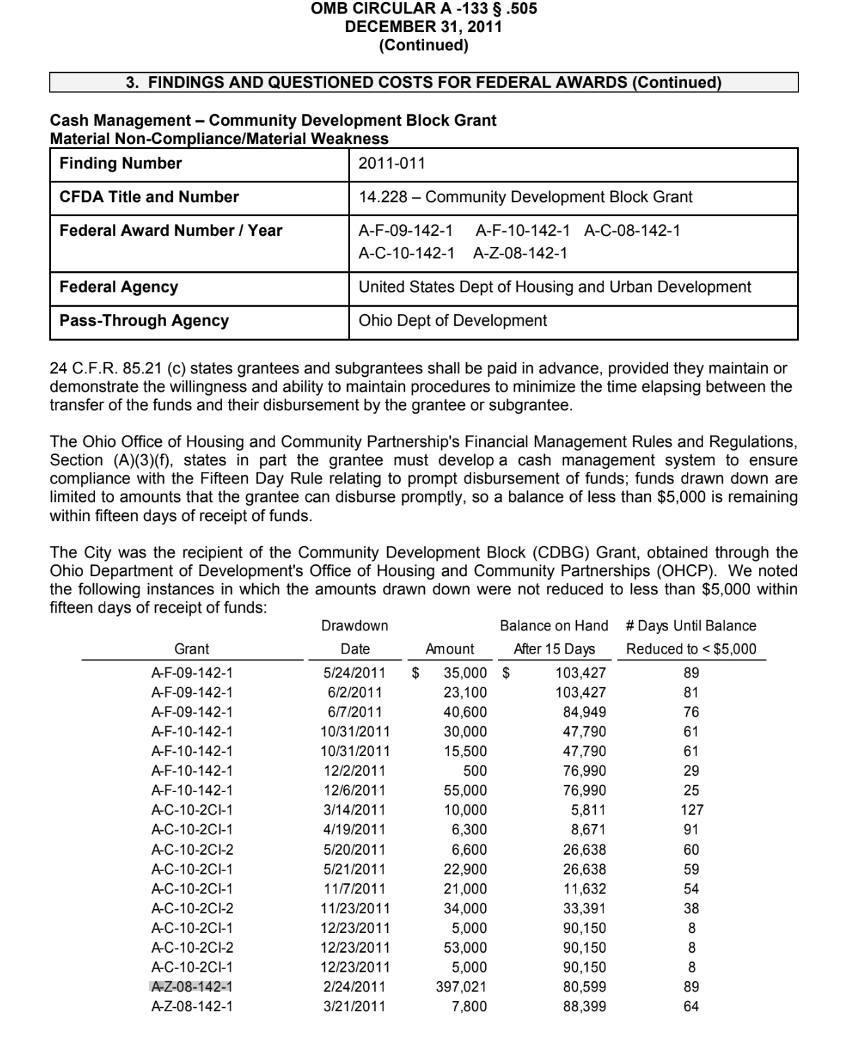
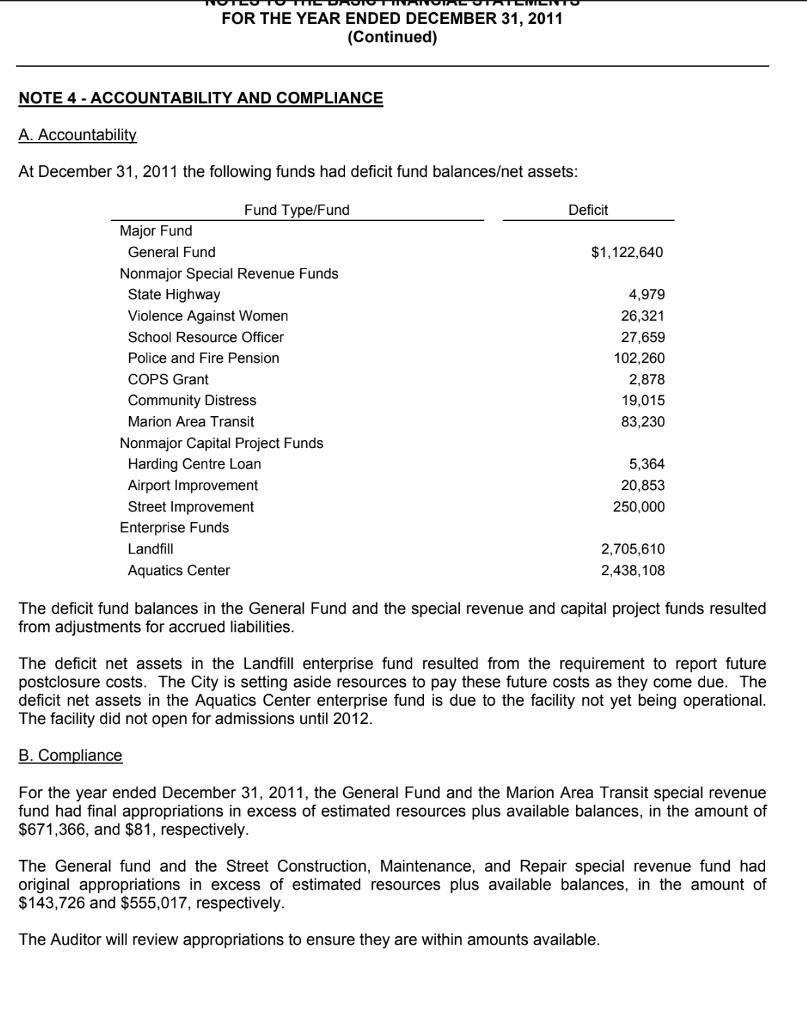
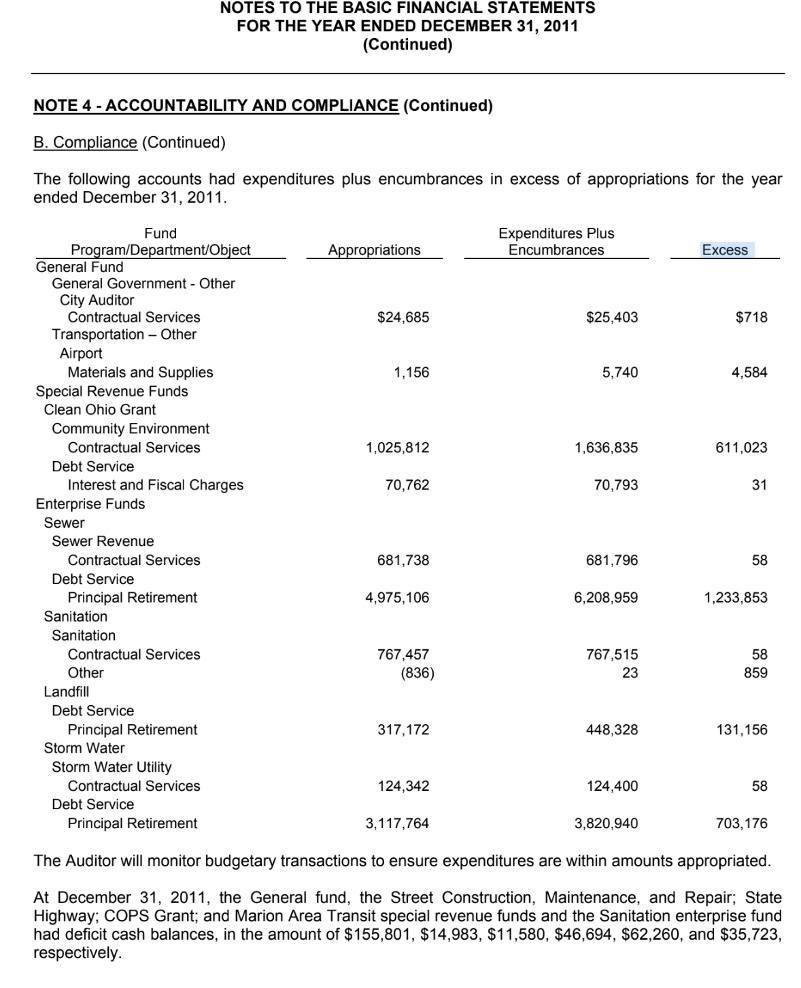
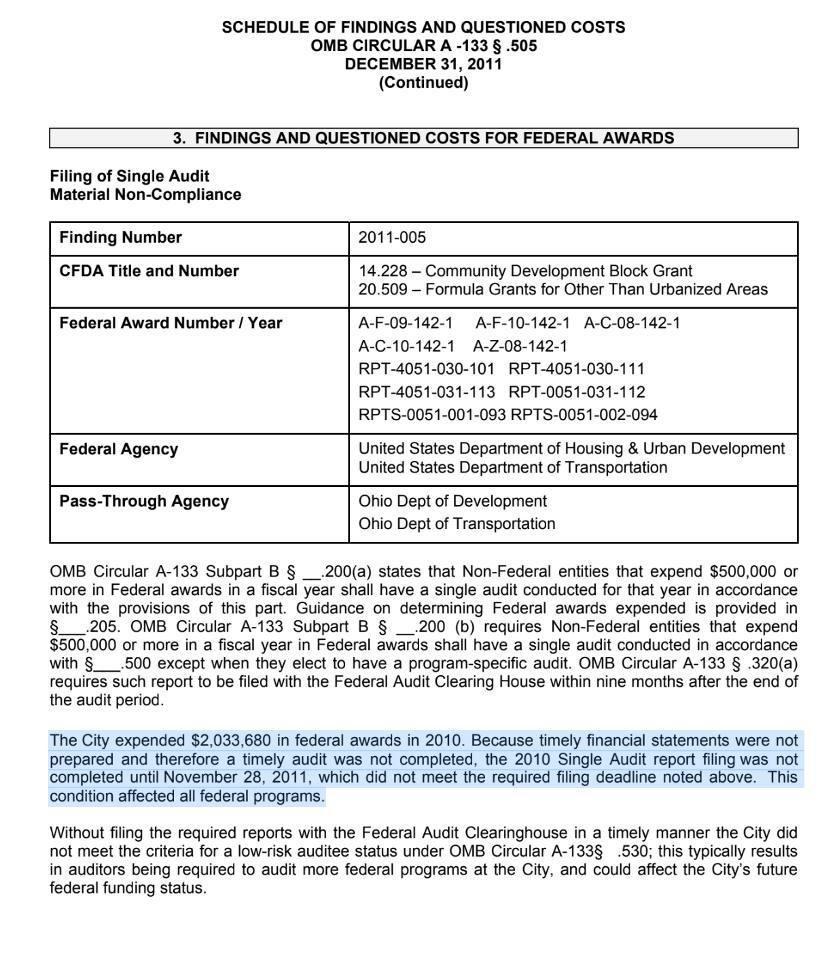
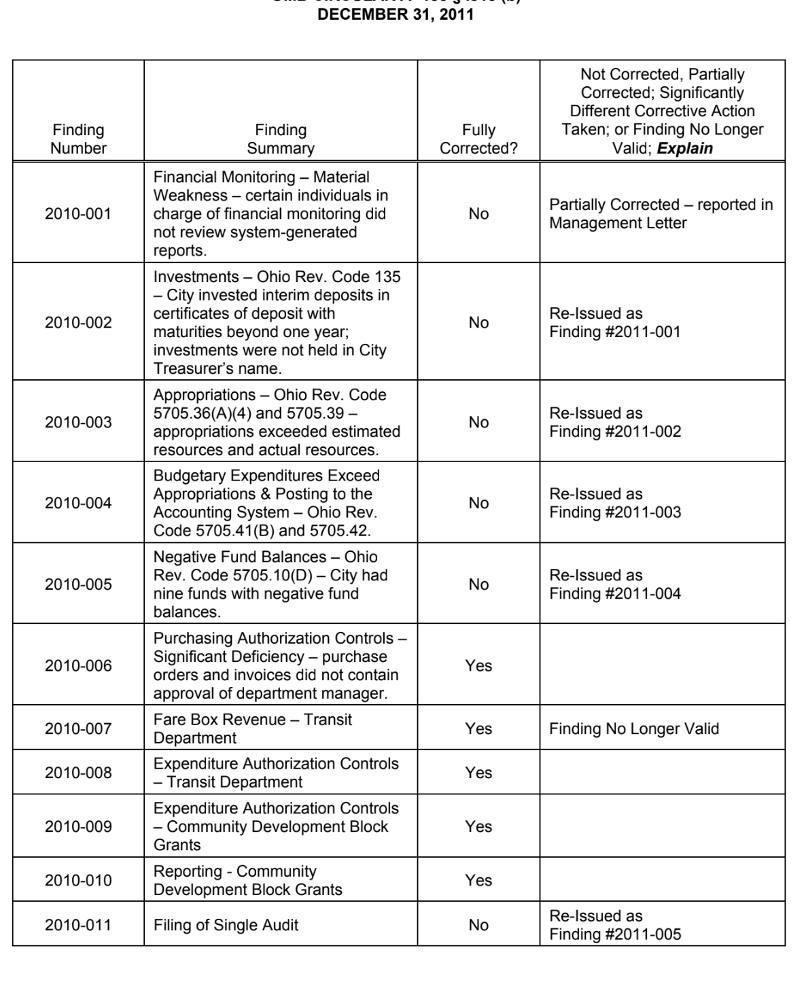
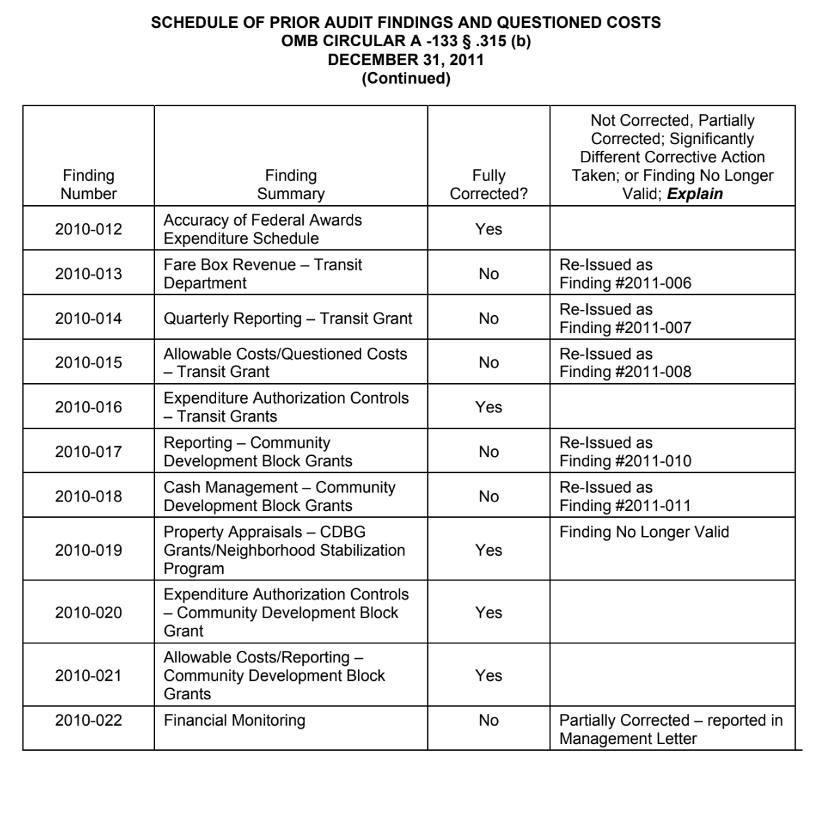
YEAR END 2012 AUDIT & THE FORENSIC IT SIGNS OF SILENT SABOTAGE: WHY THIS IS NOT OK (THE QUALIFIED OPINION & SHADOW “QUICKBOOKS” ACCOUNTING YEAR)
ALWAYS REMEMBER: Marion Watch does not always publish everything we know.
There’s something extra special in this audit!
We have known but have not yet gone into this ridiculousness… It’s extra, extra special !!
Should city council demand an independent, external audit of all historical software permission logs to see exactly who authorized these systemic overrides and what else is buried? According to industry standards in the financial and IT sector the answer is YES!
The year-ending 2012 audit is YET ANOTHER absolute train wreck and marks a severe escalation in Marion’s financial collapse: for the first time, the Auditor of State (AOS) was forced to issue a formal Qualified Audit Opinion because the city could not produce basic records or point-of-sale data to verify where hundreds of thousands of dollars in cash receipts went.
But there’s a twist.
Despite the multi-million dollar New World ERP system being in place, the city decided to use QUICKBOOKS software alongside the New World ERP system.
WHY THIS IS HIGHLY INAPPROPRIATE
QuickBooks is not designed to run municipal finances.
It is a small-business bookkeeping tool with no governmental fund accounting, no appropriation enforcement, no grant compliance modules, no GASB reporting, no fund segregation, no audit trails required for public finance, and no internal control framework for public money.
Running QuickBooks in parallel to a government ERP system destroys financial integrity, bypasses required controls, and creates unverifiable numbers.
YET ANOTHER REASON FOR A FORENSIC IT AUDIT!
This is why the AOS flagged it as a major failure.
The forensic IT signs of a compromised system remain present and glaring from 2009 forward.
Today, we are laying out the forensic baseline of the City of Marion, Ohio IT and financial control train wreck.
The 2012 financial audit provides the definitive forensic IT indicators of a city running a modern enterprise financial software system that was intentionally misconfigured, bypassed, and gutted.
The catastrophic deficits, rampant illegal spending, and missing revenues in 2012 were not clerical accidents—they were the direct consequence of running municipal finances with budget enforcement failing to hard block, reconciliation modules completely ignored, point-of-sale controls abandoned, and a shadow QuickBooks accounting system deployed outside the main enterprise network.
ALL THINGS THAT WE HAVE BEEN WARNING ABOUT FOR YEARS! SCORCHING AUDITOR OF STATE (AOS) FINDINGS
• Qualified Audit Opinion – Missing Cash Documentation (Finding 2012-005):
The AOS issued a formal Qualified Opinion on the Aquatics Center Fund because management failed to maintain duplicate receipts, cash logs, or Point of Sale (POS) software records for $271,288 in memberships, daily admissions, and concessions (representing 96% of the facility’s operating revenue). Credit card receipts were improperly posted net of merchant fees, and multiple revenues from different sources were lumped together under single receipt numbers, making an audit of actual cash impossible.
• Shadow QuickBooks System Deployed (Finding 2012-007):
In an undeniable admission that the primary enterprise software was not functioning as intended, the city stood up QuickBooks to run parallel to its main accounting software specifically to calculate grant reconciliations.
Despite running this second system, staff still filed reports to ODOT using cash-basis numbers, underreporting transit expenses by $54,050 and overpaying General Fund matching subsidies by $77,108.
• Untimely Cash Deposits (Finding 2012-006):
40 out of 58 tested Aquatics Center receipts and a Sewer receipt were held for days instead of being deposited on the next business day as required by Ohio law, creating an environment ripe for loss and theft.
• Unapproved & Expired Banking Depositories (Finding 2012-001):
Only two of the city’s deposit and investment accounts were held in the City Treasurer’s name. Worse, the city maintained public deposits in Ohio State Bank for over a year after its depository agreement expired in September 2011, during which time the bank entered into an FDIC consent agreement prohibiting it from accepting or renewing public entity deposits.
• Missing CDBG Cost Centers (Finding 2012-009):
The city accounted for six separate CDBG grants within just four funds, creating variances on every single status report submitted to the state (ranging up to $69,867) and forcing nine manual corrections.
COMPLETE BREAKDOWN: NEGATIVE ACCOUNTS & DEFICIT FUND BALANCES
The AOS cited unmanaged “accrued liabilities” and postclosure mandates across every major sector of city government:
• Enterprise Funds: Landfill: $2,818,821 | Aquatics Center: $303,586
• Major Funds: General Fund: $562,167
• Capital Projects Funds: Street Improvement: $471,000 | Airport Improvement: $82,999 | Capital Improvements: $42,823 | CDBG: $16,869 | Harding Centre: $12,282
• Special Revenue Funds: Clean Ohio Assistance: $70,618 | School Resource Officer: $28,119 | Marion Area Transit: $23,400 | Violence Against Women: $20,000 | COPS Grant: $11,441 | SAFER Grant: $8,710
• Depleted Cash Balances (Actual Cash Deficits): Landfill Fund: $240,772 | School Resource Officer: $125
UNCHECKED SPENDING: OVER-APPROPRIATIONS & LINE-ITEM BLOWOUTS
Software controls should have locked the doors when funds ran dry.
Instead, appropriations blew past legally certified resources:
• Landfill Fund (Finding 2012-002):
Appropriations of $553,114 exceeded certified estimated resources ($421,959) by $131,155, and exceeded actual available resources ($183,425) by $369,689.
• Sanitation Fund: Final appropriations exceeded estimated resources plus available balances by $9,311.
LINE-ITEM EXPENDITURES EXCEEDING APPROPRIATIONS (OBJECT LEVEL)
• Police Department:
General Fund Police Personal Services exceeded appropriations by $38,571 ($5,400,915 spent vs. $5,362,344 appropriated). Violence Against Women Police Personal Services exceeded appropriations by $2,888.
• Enterprise Debt Service Blowouts:
Aquatics Center Debt Interest exceeded appropriations by $52,208; Sewer Debt Interest exceeded appropriations by $46,695; Storm Water Debt Interest exceeded appropriations by $39,076; and Landfill Debt Interest exceeded appropriations by $2,238.
• Courts & Capital Projects:
Municipal Court Capital Outlay in the Court Assistance Fund exceeded appropriations by $12,471; TIF Capital Projects Debt Principal exceeded appropriations by $6,410.
• Federal Transit & Airport Questioned Costs:
The Transit Department improperly charged $1,500/month for bus storage ($18,000 questioned costs under Finding 2012-008). The city also failed to pay its required $15,858 local match for the Airport Taxiway project ($15,858 questioned costs under Finding 2012-012).
THE REISSUED FINDINGS: 4 CONSECUTIVE YEARS OF RECURRING VIOLATIONS
(2009-2012) The 2012 Schedule of Prior Audit Findings provides the definitive proof of “Silent Sabotage.”
City leadership established a multi-year culture of simply ignoring state audit citations. Eight major findings in the 2012 audit were direct, uncorrected repeat violations from 2011, 2010, and 2009:
• [REPEAT VIOLATION: 2009, 2010, 2011, 2012] Finding 2012-001 (formerly 2011-001, 2010-002, 2009-004):
Four consecutive audit cycles of illegal investments, unapproved depositories, and failure to hold public accounts in the City Treasurer’s name.
• [REPEAT VIOLATION: 2009, 2010, 2011, 2012] Finding 2012-002 (formerly 2011-002, 2010-003, 2009-006):
Four consecutive audit cycles of appropriations illegally exceeding estimated and actual resources.
• [REPEAT VIOLATION: 2009, 2010, 2011, 2012] Finding 2012-003 (formerly 2011-003, 2010-004, 2009-008):
Four consecutive audit cycles where expenditures exceeded appropriations at the legal level of control because budget-checking override permissions were left wide open.
• [REPEAT VIOLATION: 2009, 2010, 2011, 2012] Finding 2012-010 (formerly 2011-011, 2010-018, 2009-009):
Four consecutive audit cycles of federal CDBG cash management violations (“15-Day Rule”), holding federal cash for up to 195 days without spending it down and failing to remit earned interest.
• [REPEAT VIOLATION: 2010, 2011, 2012] Finding 2012-004 (formerly 2011-004, 2010-005):
Three consecutive audit cycles of negative fund balances and illegal cross-fund subsidization.
• [REPEAT VIOLATION: 2010, 2011, 2012] Finding 2012-007 (formerly 2011-007, 2010-014):
Three consecutive audit cycles of submitting cash-basis transit reports when accrual reporting was required.
• [REPEAT VIOLATION: 2010, 2011, 2012] Finding 2012-008 (formerly 2011-008, 2010-015):
Three consecutive audit cycles of illegally charging $1,500/month bus storage fees to federal grants, generating questioned costs.
• [REPEAT VIOLATION: 2010, 2011, 2012] Finding 2012-009 (formerly 2011-010, 2010-017):
Three consecutive audit cycles of commingling CDBG grants and failing to configure separate cost centers in the software.
IN SHORT
The city had the digital tools to enforce spending limits, manage debt, track cash receipts, and prevent multi-million-dollar fund collapses, but chose to KNOWINGLY operate with the safety switches turned off—resulting in unverified revenues, highly inappropriate parallel shadow systems, and a formal Qualified Audit Opinion from the State of Ohio.
BUT WAIT THERE IS MORE, MUCH, MUCH MORE!
2012-001: DEPOSITS & INVESTMENTS (MATERIAL NON-COMPLIANCE) [REPEAT VIOLATION: 2009, 2010, 2011, 2012]
The city failed to hold deposit and investment accounts in the City Treasurer’s name (only two accounts were compliant) and maintained public funds with Ohio State Bank for over a year after its agreement expired in September 2011, during which time the bank entered into an FDIC consent agreement prohibiting it from accepting public deposits.
2012-002: APPROPRIATIONS (MATERIAL NON-COMPLIANCE)[REPEAT VIOLATION: 2009, 2010, 2011, 2012]
Landfill Fund appropriations ($553,114) illegally exceeded estimated resources by $131,155 and exceeded actual resources in the bank by $369,689.
2012-003: BUDGETARY EXPENDITURES EXCEED APPROPRIATIONS (MATERIAL NON-COMPLIANCE) [REPEAT VIOLATION: 2009, 2010, 2011, 2012]
Actual expenditures exceeded legal appropriations at the object level across major accounts, including Police Personal Services by $38,571, Aquatics Center Debt Interest by $52,208, Sewer Debt Interest by $46,695, and Storm Water Debt Interest by $39,076.
2012-004: NEGATIVE FUND BALANCE (MATERIAL NON-COMPLIANCE) [REPEAT VIOLATION: 2010, 2011, 2012]
The Landfill Fund ended the year with an illegal deficit fund balance of $240,772, indicating monies from other funds were improperly used to pay its obligations.
2012-005: COMPLETENESS OF RECEIPTS – AQUATICS CENTER (MATERIAL WEAKNESS / MATERIAL NON-COMPLIANCE) [NEW VIOLATION]
Management failed to maintain duplicate receipts, cash logs, or POS software records for $271,288 in admissions, memberships, and concessions (96% of operating revenues), posted credit card receipts net of fees, and bundled multiple revenues under single receipt numbers, triggering a Qualified Audit Opinion.
2012-006: TIMELY DEPOSITS (MATERIAL NON-COMPLIANCE) [NEW VIOLATION]
40 of 58 Aquatics Center receipts and a Sewer receipt were not deposited on the next business day as required by Ohio Revised Code Section 9.38, leaving public funds vulnerable to loss or theft.
2012-007: REPORTING – RURAL TRANSIT PROGRAM (MATERIAL NON-COMPLIANCE / MATERIAL WEAKNESS) [REPEAT VIOLATION: 2010, 2011, 2012]
Despite implementing a secondary QuickBooks system, the city continued submitting cash-basis reports to ODOT instead of accrual-basis reports, underreporting expenditures by $54,050 and overpaying General Fund local match subsidies by $77,108.
2012-008: ALLOWABLE COSTS / COST PRINCIPLES – RURAL TRANSIT PROGRAM (MATERIAL NON-COMPLIANCE / QUESTIONED COSTS / MATERIAL WEAKNESS) [REPEAT VIOLATION: 2010, 2011, 2012]
The city improperly charged the federal grant a $1,500 monthly fee for bus storage, resulting in $18,000 in questioned costs.
2012-009: REPORTING – CDBG (MATERIAL NON-COMPLIANCE / MATERIAL WEAKNESS) [REPEAT VIOLATION: 2010, 2011, 2012]
The city failed to establish separate funds or cost centers for six CDBG grants across four funds, resulting in nine reporting adjustments and status report variances up to $69,867.
2012-010: CASH MANAGEMENT – CDBG (MATERIAL NON-COMPLIANCE / MATERIAL WEAKNESS) [REPEAT VIOLATION: 2009, 2010, 2011, 2012]
The city violated the federal 15-Day Rule by holding grant drawdowns for up to 195 days without spending them down below $5,000, and failed to remit an estimated $787 in interest earned on federal cash.
2012-011: CASH MANAGEMENT – AIRPORT IMPROVEMENT GRANT (MATERIAL NON-COMPLIANCE / MATERIAL WEAKNESS) [NEW VIOLATION]
The city held federal airport grant drawdowns for 136 days and 92 days without timely expenditure, and failed to remit $320 in earned interest to the FAA.
2012-012: MATCHING – AIRPORT IMPROVEMENT GRANT (MATERIAL NON-COMPLIANCE / QUESTIONED COSTS / MATERIAL WEAKNESS) [NEW VIOLATION]
The city failed to provide its required 5 percent local match ($15,858) on a $317,167 federally funded taxiway project, resulting in $15,858 in questioned costs.
OFFICIAL EXHIBITS & PRIMARY SOURCE RECORDS (2012 Overview: The Qualified Opinion & Shadow QuickBooks)
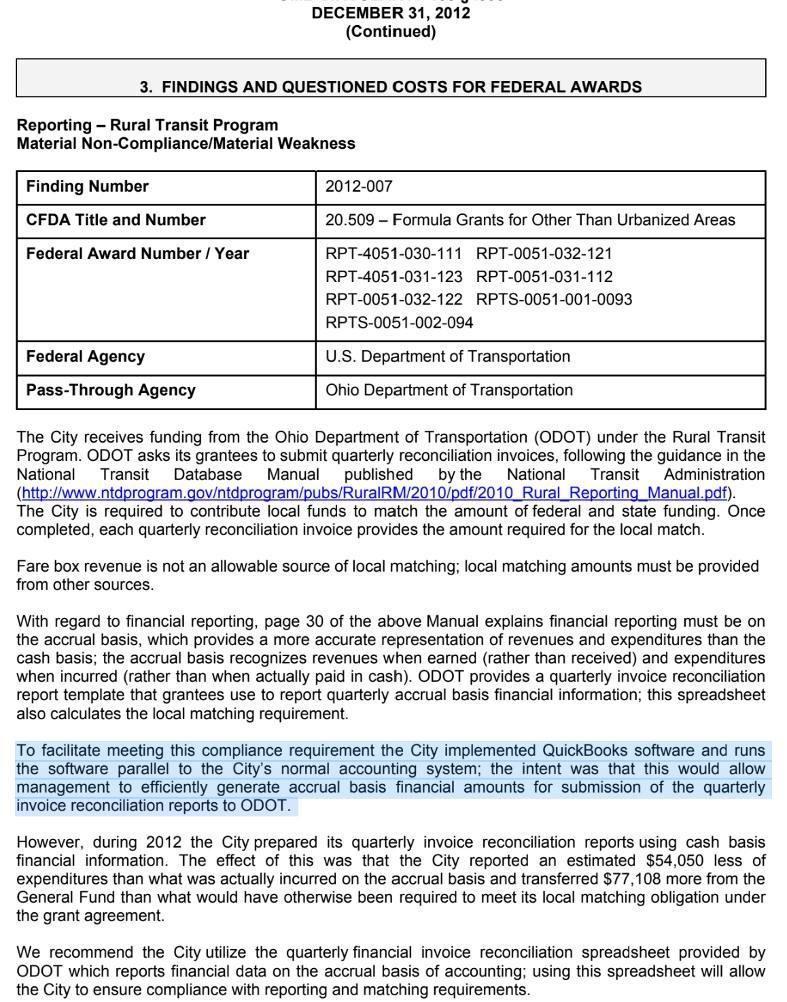
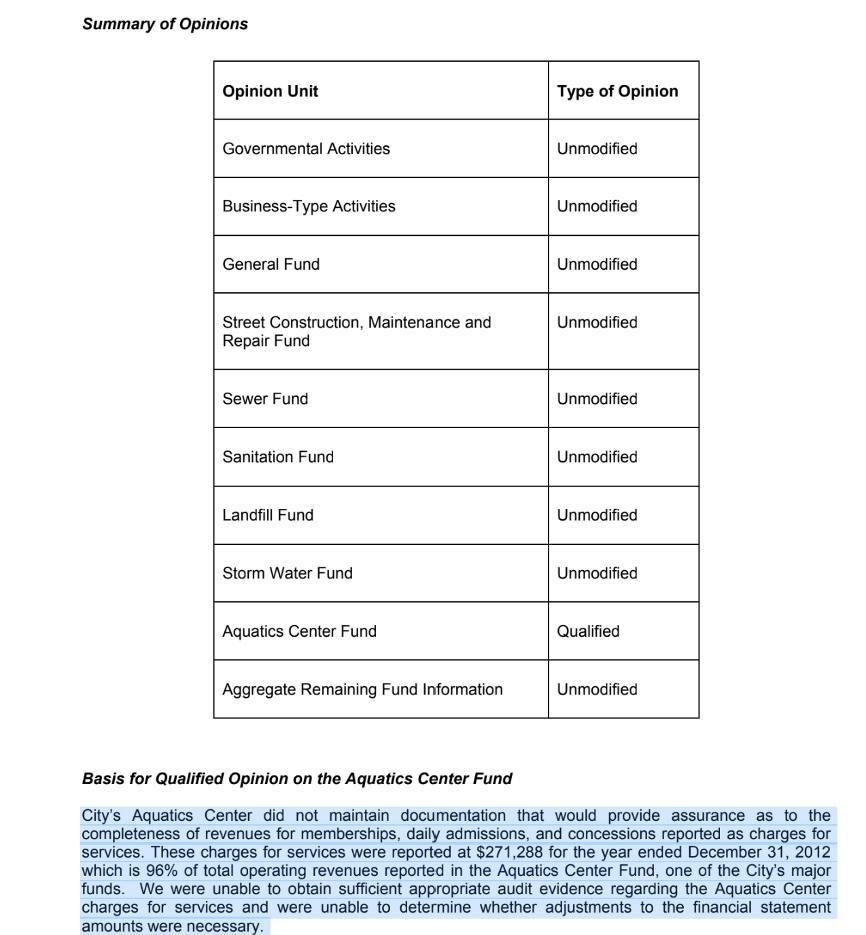
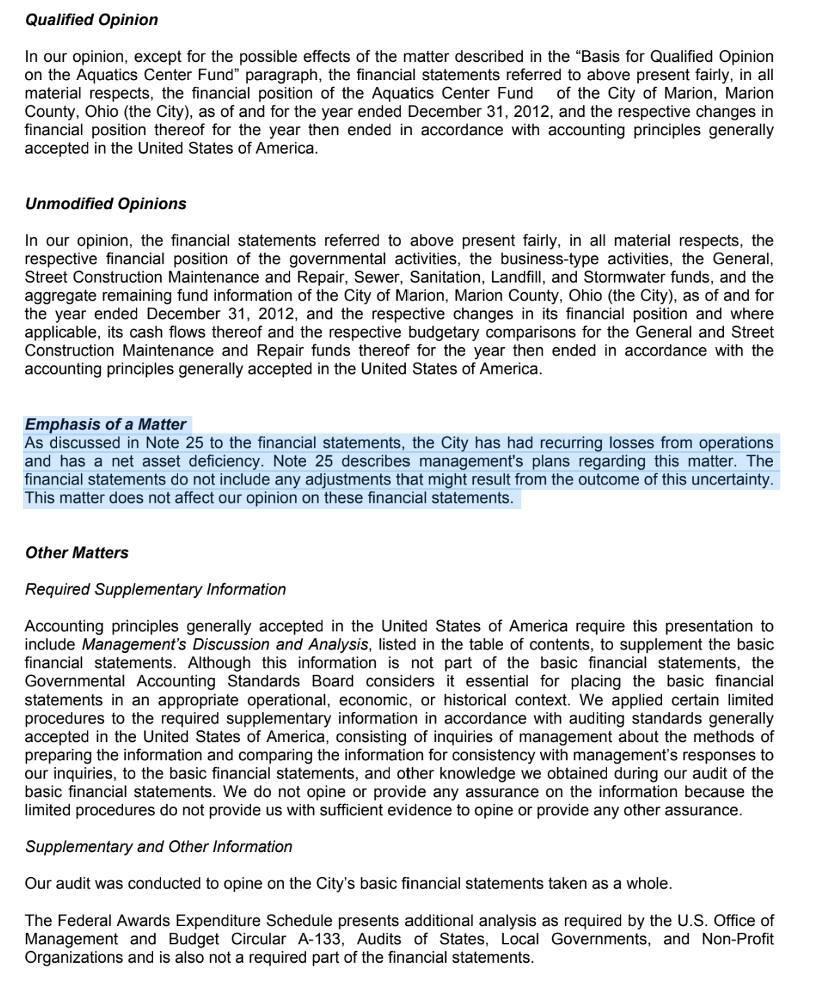
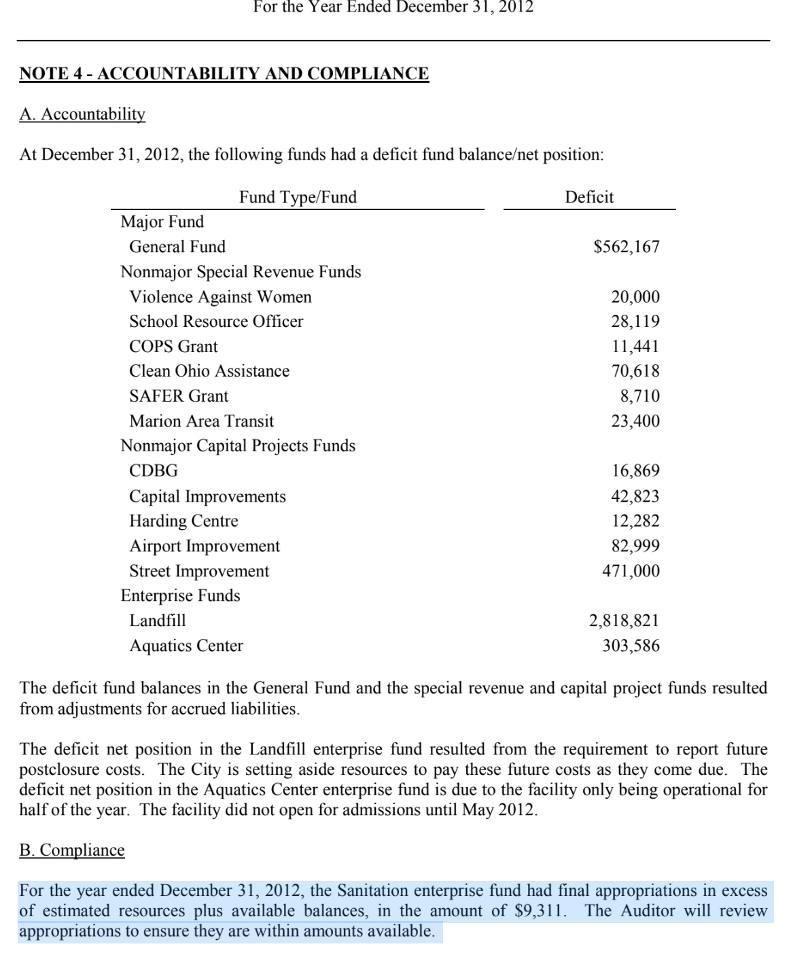
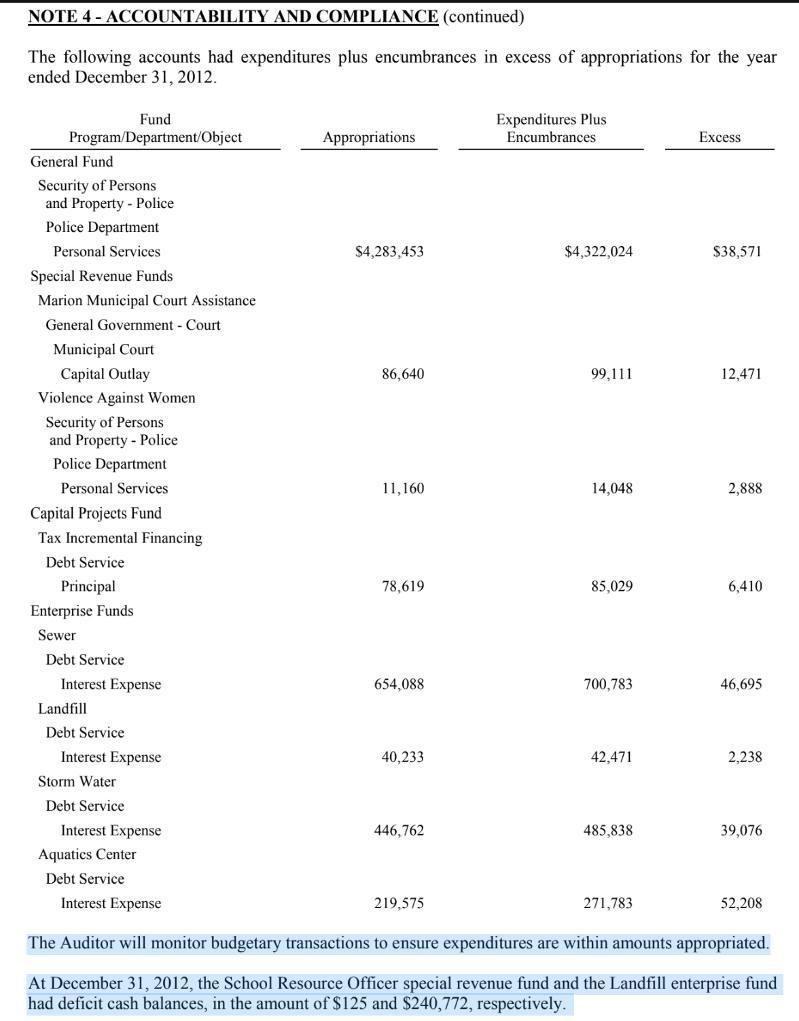
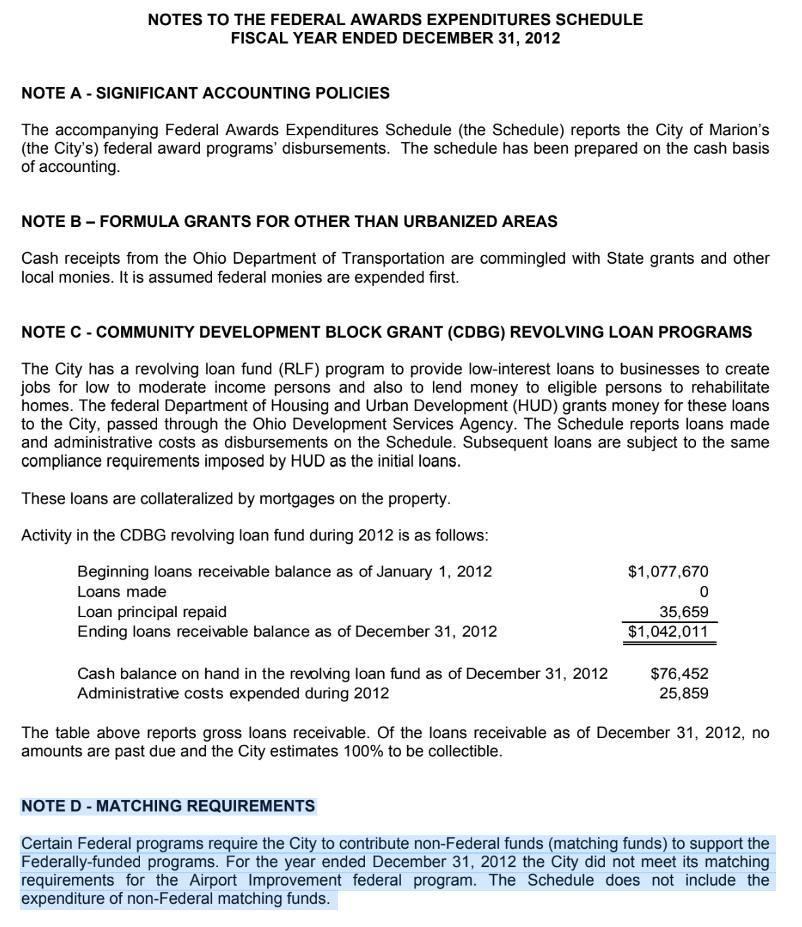
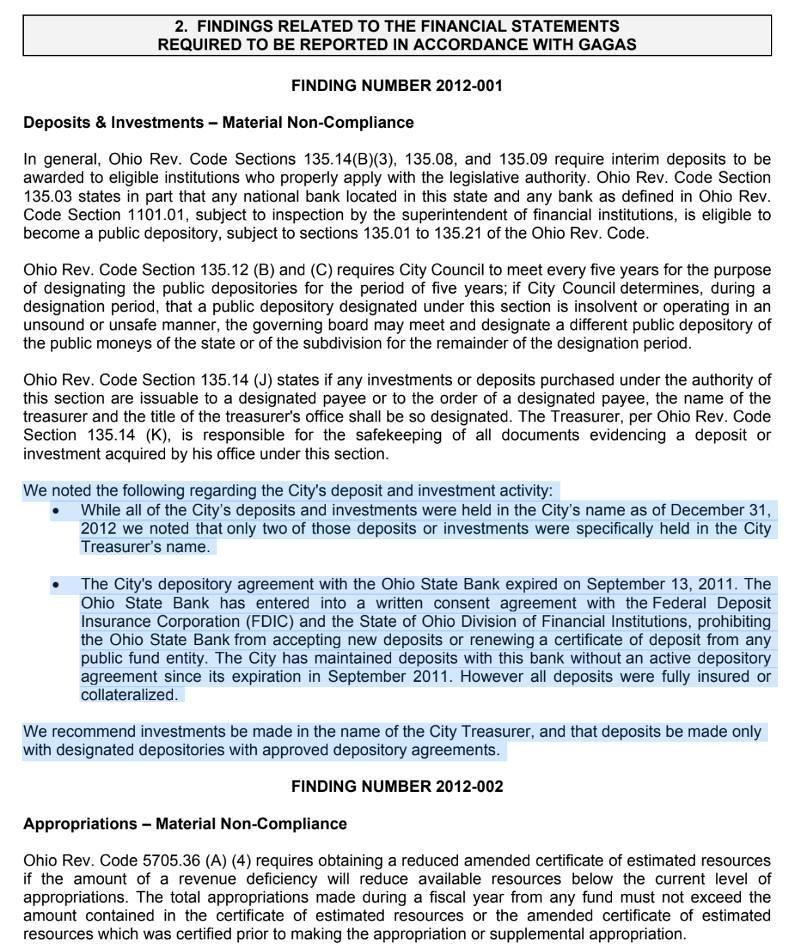
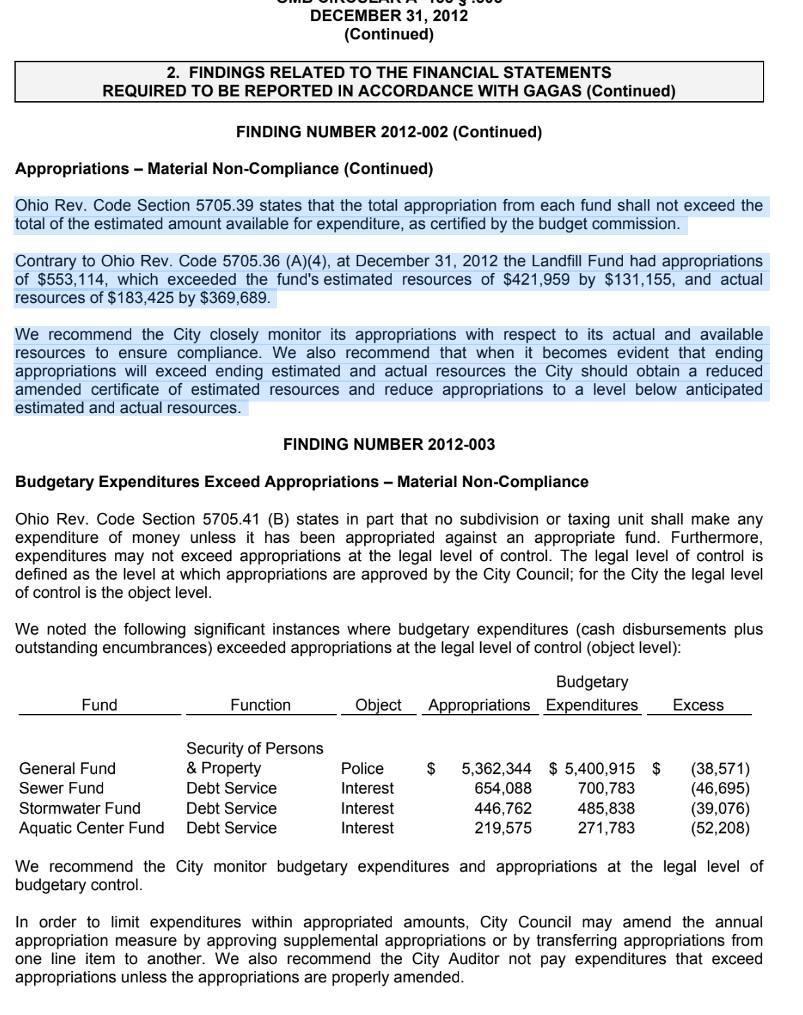
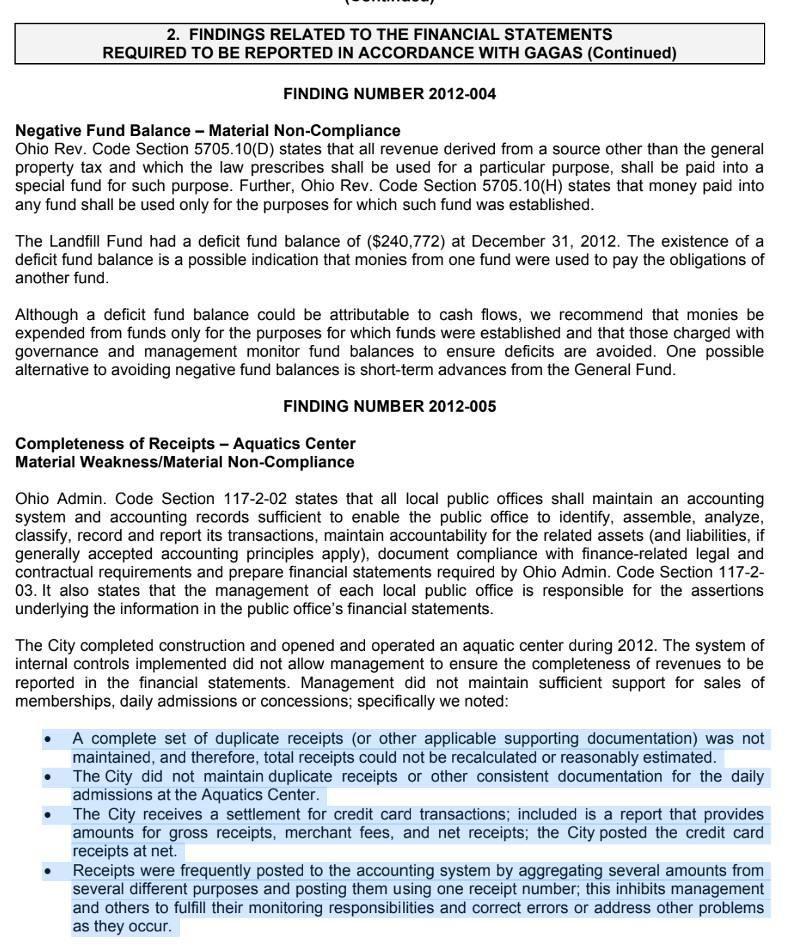
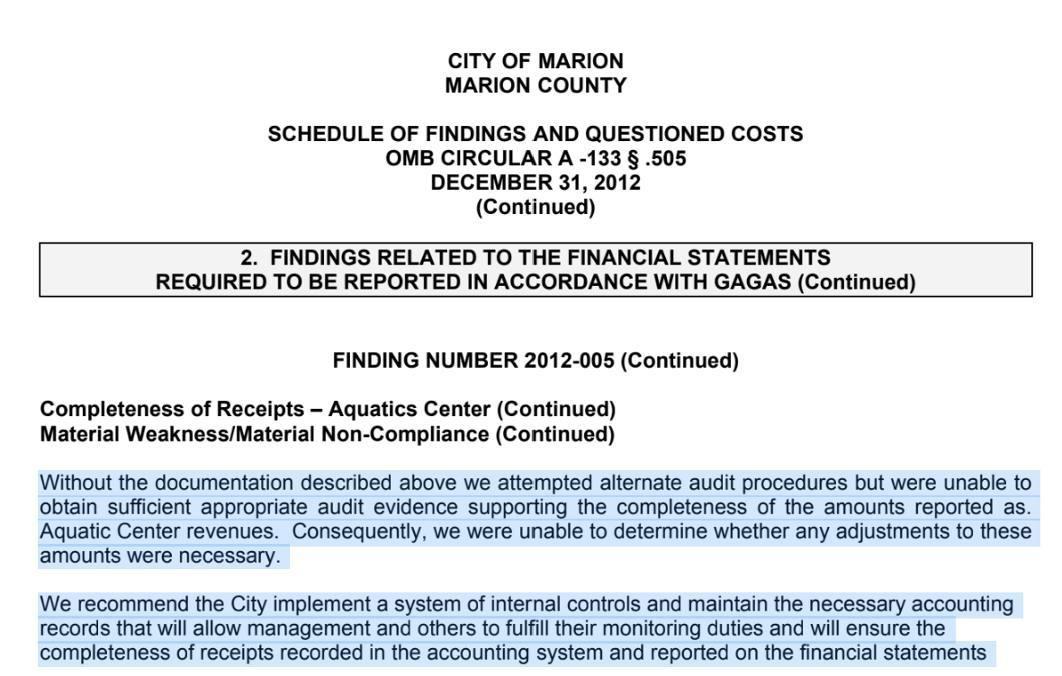
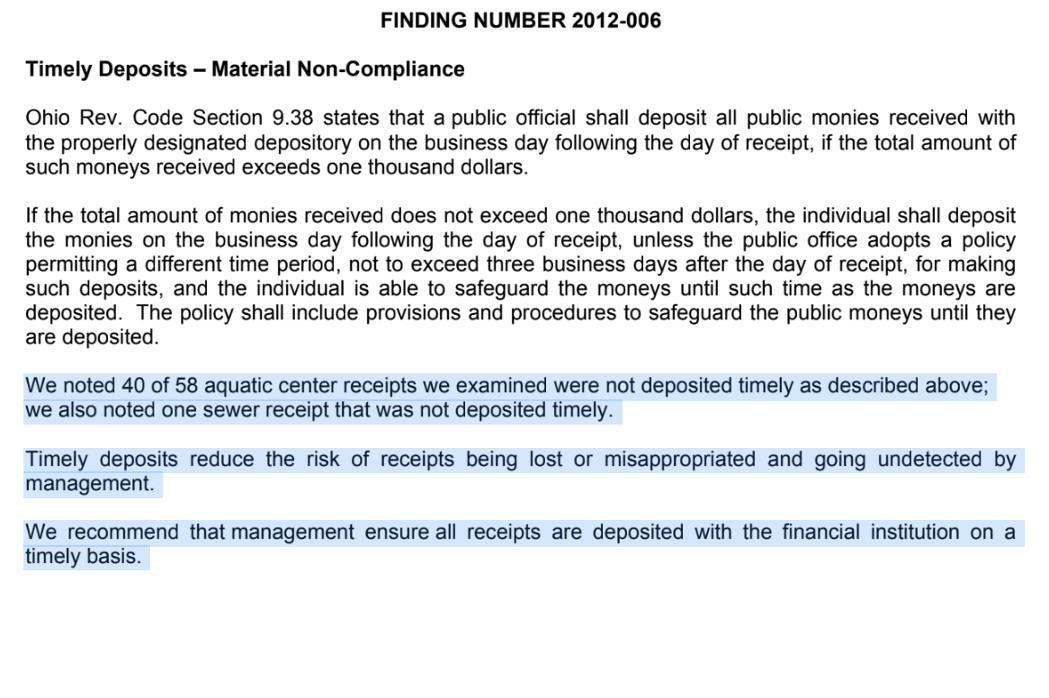
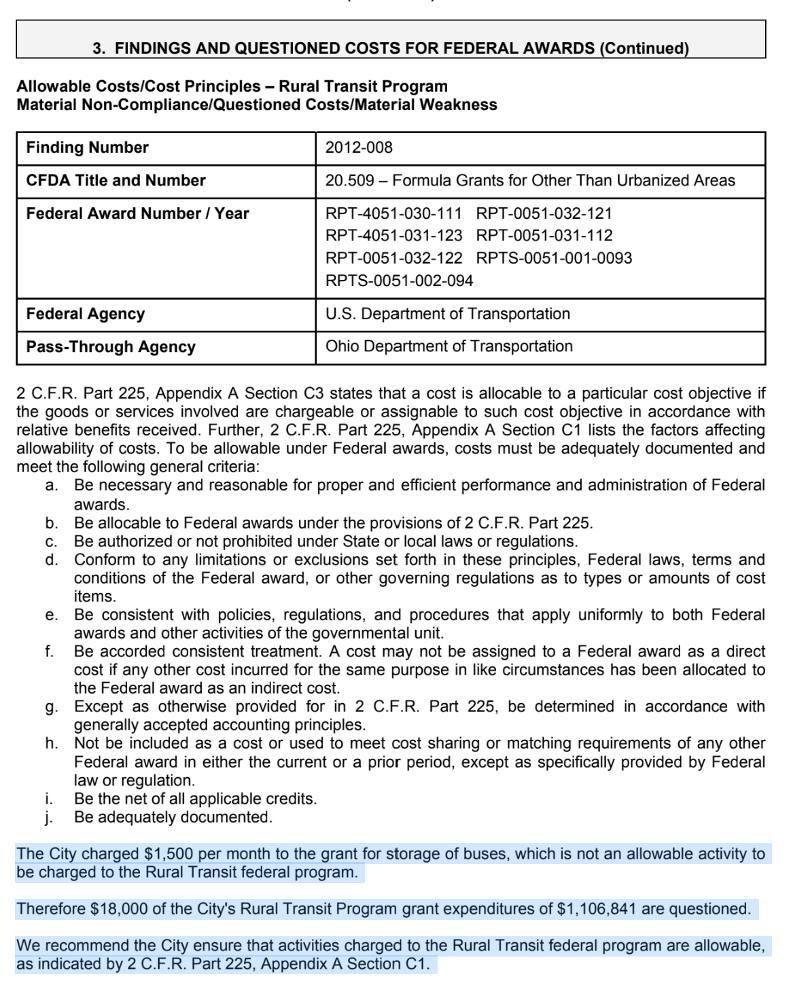
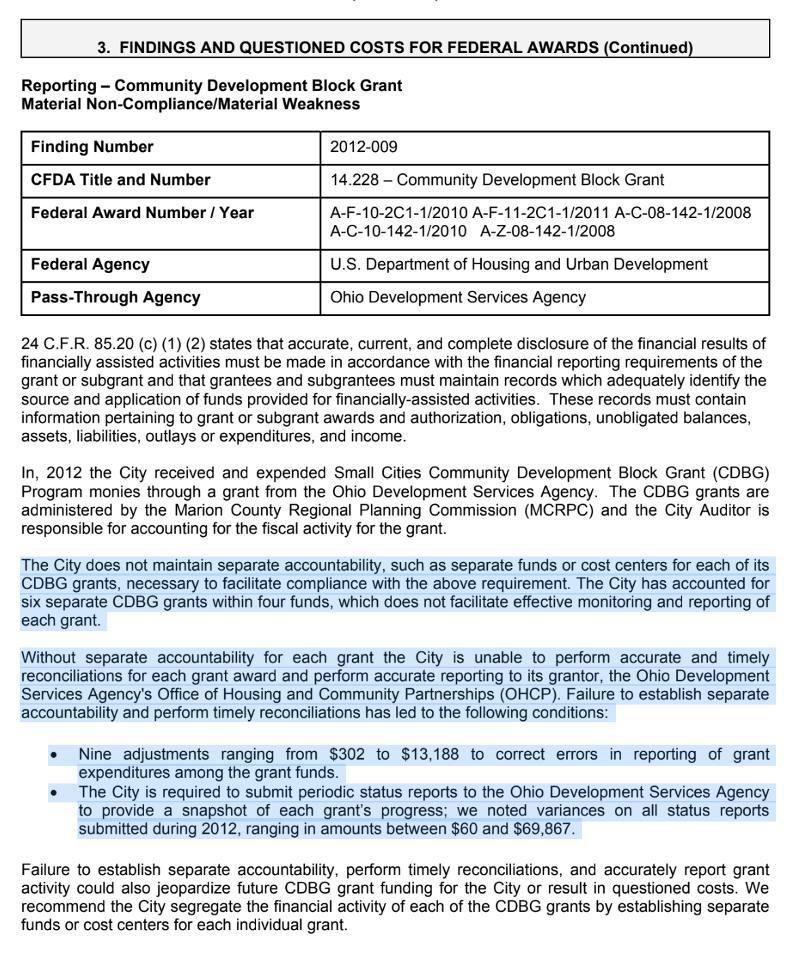
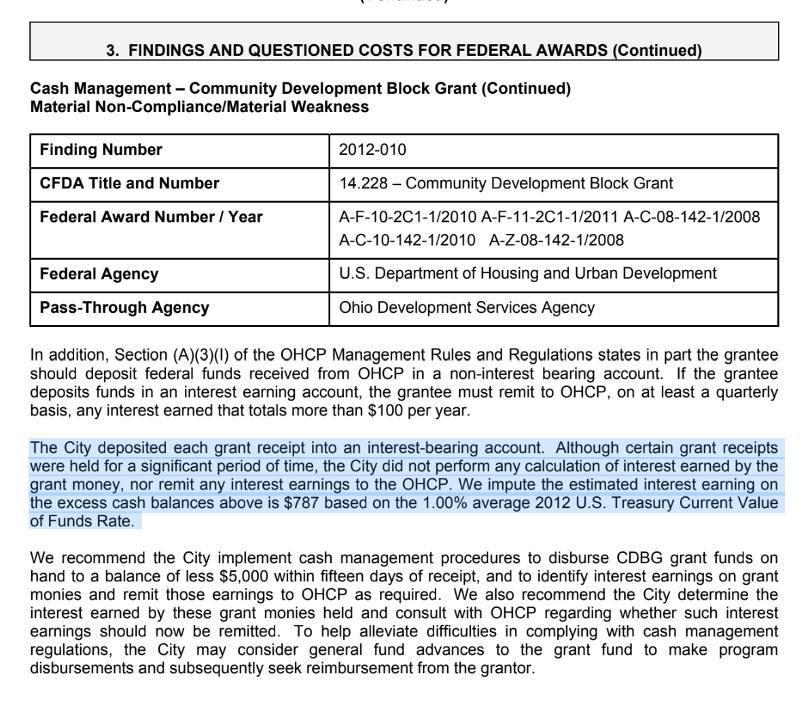
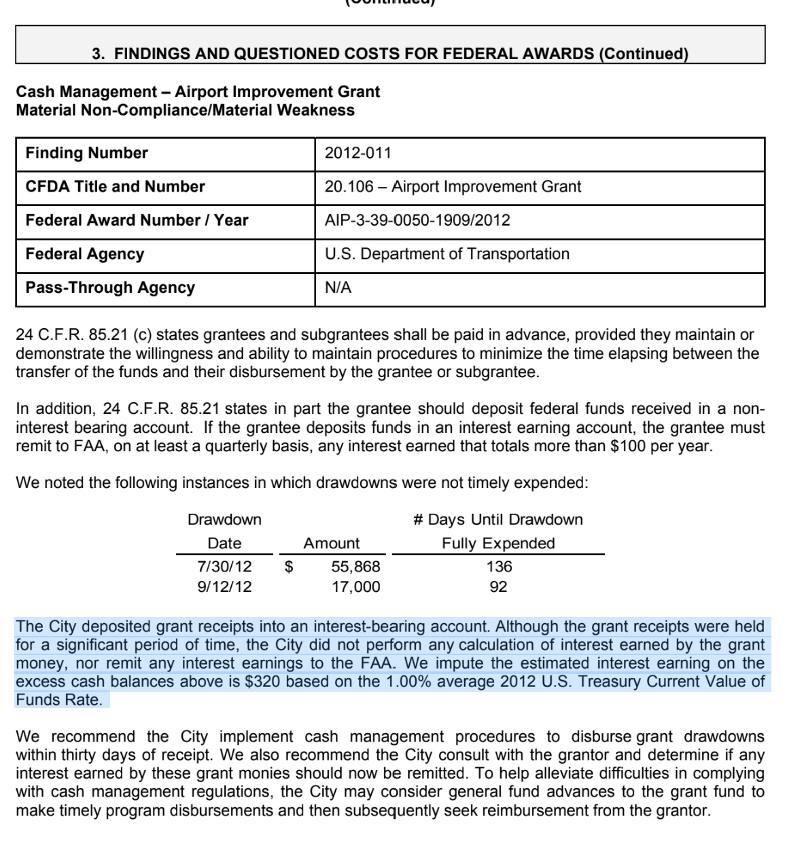
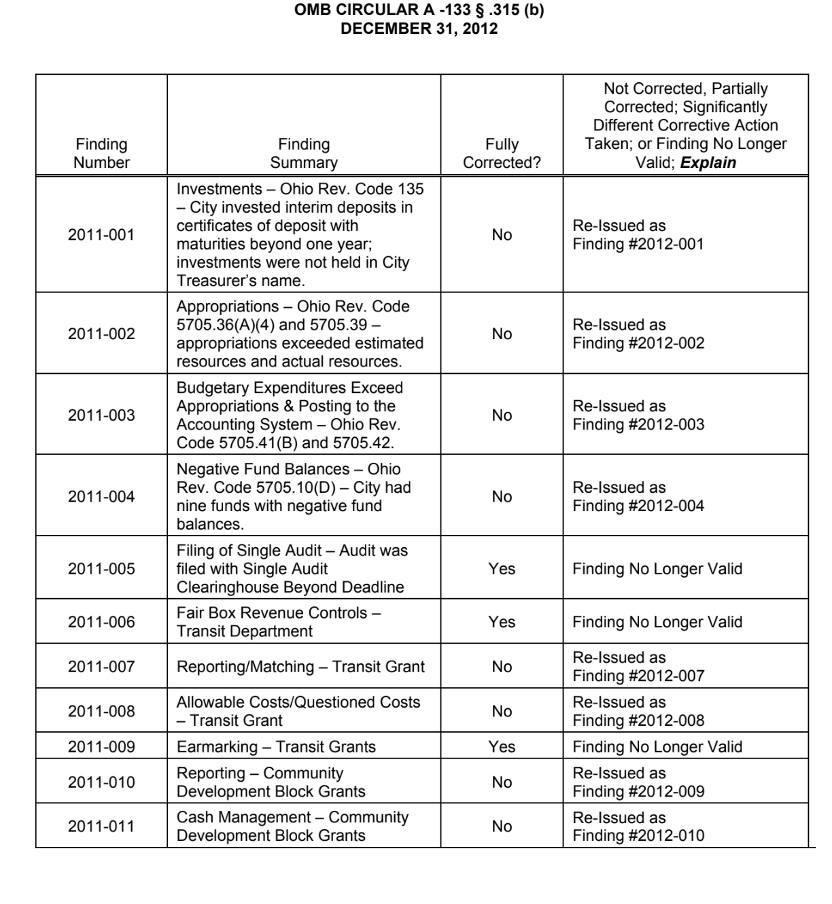
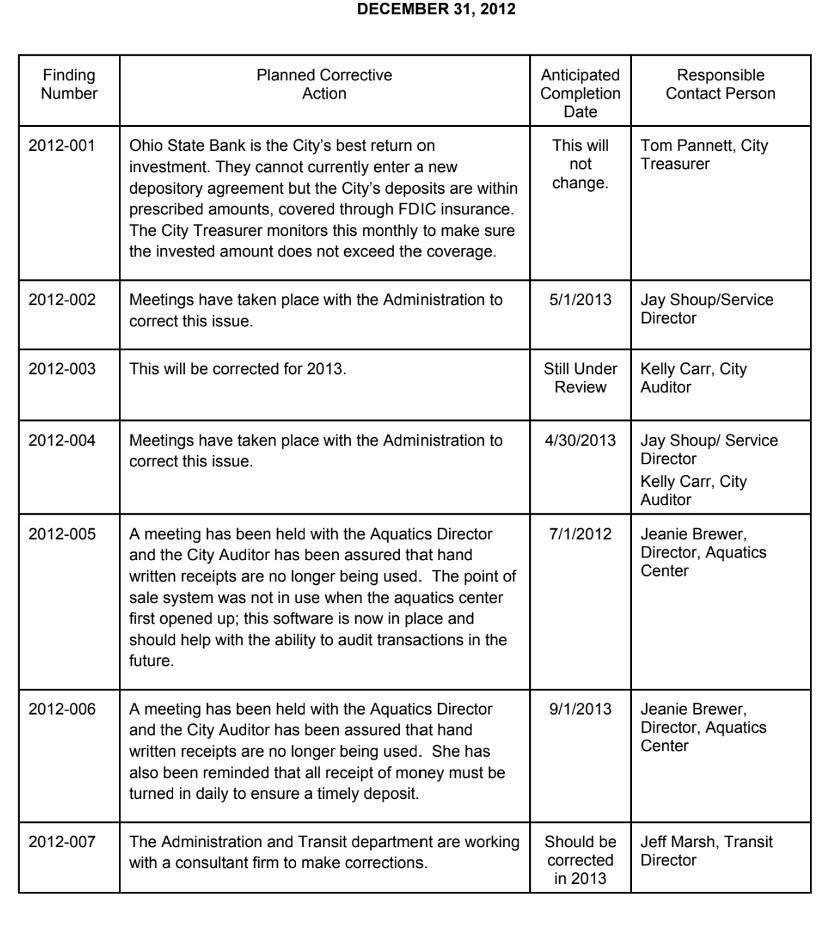
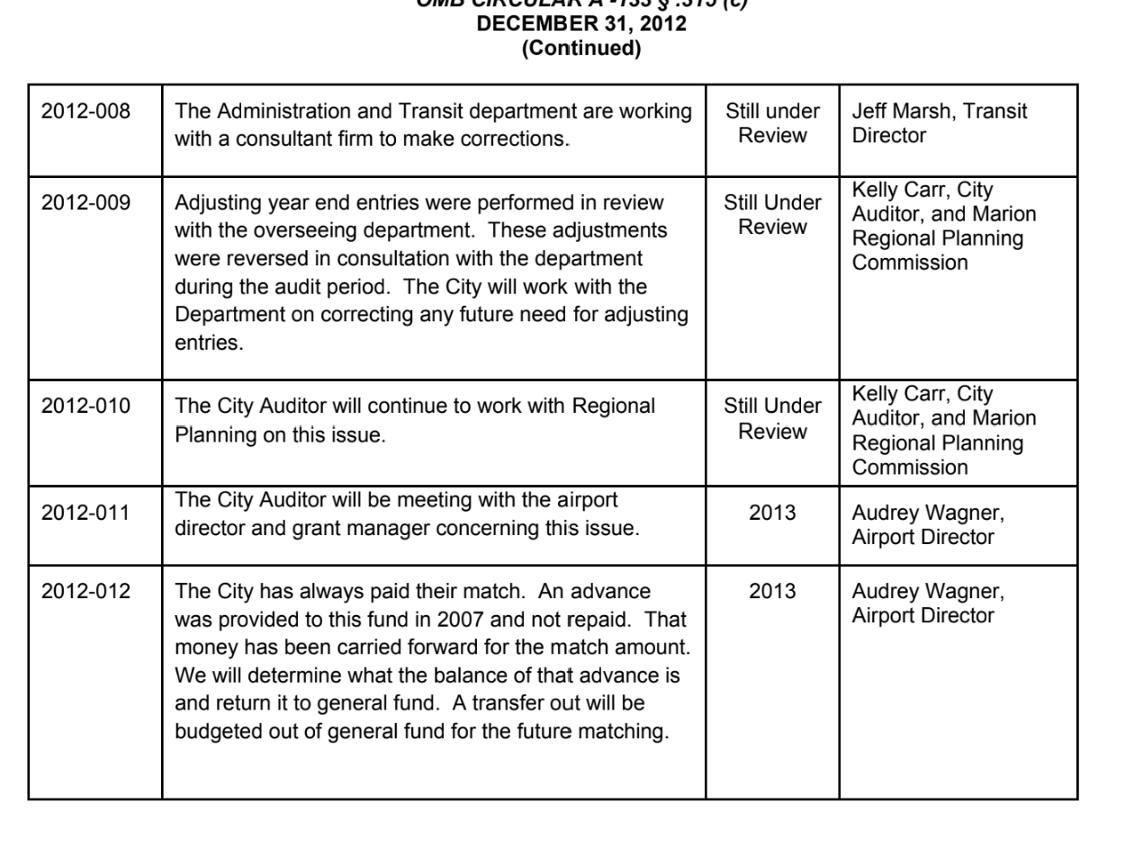
YEAR END 2013 AUDIT & THE FORENSIC IT SIGNS OF SILENT SABOTAGE: WHY THIS IS NOT OK (THE FIRST CAFR & THE ILLUSION OF PERFECTION)
ALWAYS REMEMBER: Marion Watch does not always publish everything we know.
Should city council demand an independent, external forensic IT audit of all New World and associated systems to see who authorized these systemic overrides and what else is buried?
According to industry standards in the financial and IT sector, the answer is YES.
THE ILLUSION OF PERFECTION VS. THE REALITY OF THE AUDIT
The year-ending 2013 audit is a masterclass in municipal misdirection.
To truly understand the 2013 financial collapse, you must first understand the massive difference between a CAFR (Comprehensive Annual Financial Report) and an Auditor of State (AOS) Single Audit.
In 2013, the City Auditor proudly produced the City of Marion, Ohio very first CAFR. A CAFR is the city’s self-produced, management-crafted report—a polished narrative intended to showcase financial stability and present complex statistical tables to the public and bondholders.
The Auditor of State Single Audit, on the other hand, is the independent, legally mandated watchdog sampling examination that tests whether the numbers inside that glossy CAFR are actually real and checks compliance with state and federal laws.
While the 2013 CAFR presented a narrative of stabilizing finances, the AOS Single Audit ripped the curtain back to reveal the truth: the underlying New World ERP software was still actively bypassed, millions of dollars were bleeding into negative balances, and the exact same material non-compliance violations had rolled over into an unbroken five-year chain of failure.
All signs of a compromised and flawed system.
THE ELEPHANT IN THE ROOM: THE THEFT SMOKESCREEN
While the city was busy preparing its first CAFR, a utility supervisor was actively embezzling cash. From January 2011 through August 2014, she successfully skimmed physical cash payments across 71 accounts and used her “elevated permissions” software rights to manually wipe out customer debts to cover her tracks.
Neither the self-produced CAFR nor the independent 2013 AOS audit caught the ongoing theft.
However, cross-referencing the financial statements reveals exactly how the crime was camouflaged.
Right in the middle of the theft timeline, the city executed massive, undocumented purges of utility accounts. In 2012, the city wrote off $1,191,803 in uncollectible sanitation accounts.
In 2013, the city did it again, wiping out another $305,600 in the Sanitation Fund.
By purging nearly $1.5 million in bad utility debt over two years with the software’s internal approval workflows deactivated, the city provided the perfect smokescreen.
The thief’s 71 illicit adjustments blended seamlessly into the thousands of legitimate account wipes the city was actively processing.
We’ll go deeper into exactly how this was possible, and why it should not have been possible with a properly functional ERP system later.
SCORCHING AUDITOR OF STATE FINDINGS
The Auditor of State did not mince words regarding Marion’s collapsed internal controls hidden behind the 2013 CAFR:
Budgetary Expenditures Exceed Appropriations (Finding 2013-002):
The budget override remained wide open. Despite the glossy CAFR, actual expenditures blew past legal appropriations at the object level once again, explicitly highlighted by a massive $52,721 illegal overrun in Stormwater Capital Outlay.
Unapproved & Expired Banking Depositories (Finding 2013-001):
Only two of the city’s deposit and investment accounts were actually held in the City Treasurer’s name. Furthermore, the city illegally maintained public deposits in Ohio State Bank for two full years after its depository agreement expired in September 2011, openly defying an FDIC consent agreement that prohibited the bank from accepting public entity deposits.
Missing Transit Reconciliations (Finding 2013-003):
The Cash Receipting module was still bypassed. The Transit Department was cited for having absolutely no evidence that driver manifests were reconciled to physical fare box cash on multiple days, exposing federal program income to high risk and resulting in a Material Weakness.
COMPLETE BREAKDOWN: NEGATIVE ACCOUNTS & DEFICIT FUND BALANCES
Despite the CAFR’s narrative of stabilization, the AOS cited unmanaged accrued liabilities and postclosure mandates across every major sector of city government:
Enterprise Funds: Landfill: $2,262,320 | Aquatics Center: $386,092 Special Revenue Funds: Police, Dispatch, and Fire Income Tax: $1,131,129 | Marion Area Transit: $42,166 | COPS Grant: $9,169 | Police and Fire Pension: $5,169 | School Resource Officer: $864 Capital Projects Funds: Airport Improvement: $38,691 | CDBG: $7,131
UNCHECKED SPENDING: OVER-APPROPRIATIONS & LINE-ITEM BLOWOUTS
Software controls should have locked the doors when funds ran dry. Instead, appropriations blew past legally certified resources:
MMC Assistance Special Revenue Fund: Final appropriations exceeded estimated resources plus available balances by $36,276.
Bond Retirement Debt Service Fund: Final appropriations exceeded estimated resources plus available balances by $10,000.
Line-Item Expenditures Exceeding Appropriations (Object Level):
Enterprise Funds: Storm Water Capital Outlay exceeded appropriations by $52,721; Sewer Improvement Capital Outlay exceeded appropriations by $44,193; Sewer Contractual Services exceeded by $2,895; and Storm Water Utility Contractual Services exceeded by $838.
Capital Projects: TIF Debt Service Principal Retirement exceeded appropriations by $6,410.
General Fund: Auditor Personal Services exceeded appropriations by $58; Other General Government Contractual Services exceeded by $107.
THE AUDIT HYPOCRISY: THE UNBROKEN 5-YEAR CHAIN OF FAILURE (2009–2013)
The 2013 Schedule of Prior Audit Findings provides more definitive evidence of “Silent Sabotage.”
The city produced a beautiful 160-page CAFR to hand to the public, while simultaneously and intentionally ignoring the exact same state audit citations year after year.
The city didn’t even pretend to fix several core issues, allowing them to roll into an unbroken 5-year streak of citations:
5-YEAR REPEAT VIOLATION – Finding 2013-001 (formerly 2012-001, 2011-001, 2010-002, 2009-004):
Five consecutive audit cycles of illegal investments, unapproved depositories, and failure to hold public accounts in the City Treasurer’s name.
5-YEAR REPEAT VIOLATION – Finding 2013-002 (formerly 2012-003, 2011-003, 2010-004, 2009-008):
Five consecutive audit cycles where expenditures exceeded appropriations at the legal level of control because budget-checking override permissions were intentionally left wide open.
4-YEAR REPEAT VIOLATION – Finding 2013-003 (formerly 2012-006, 2011-006, 2010-013):
Four consecutive audit cycles of transit fare box revenue controls missing basic reconciliations between driver manifests and cash collected.
UNCORRECTED PRIOR ISSUES:
The AOS explicitly noted that the city failed to correct Finding 2012-009 (CDBG Separate Accounting), Finding 2012-010 (CDBG Cash Management 15-Day Rule), Finding 2012-011 (Airport Cash Management), and Finding 2012-012 (Airport Match) from the prior year.
IN SHORT
The city produced its first Comprehensive Annual Financial Report to create the illusion of a flawless accounting department, while the Auditor of State proved the digital tools to enforce spending limits, manage debt, and track cash receipts were still intentionally bypassed—resulting in a half-decade of repeated state citations and providing cover for an active embezzlement.
How much longer did it take for leadership to finally lock down the override permissions and utilize the software they have been paying for?
At least until 2025 and 2026.
The admission of 70 to 80 percent of modules unused and misconfigurations, and the quick rush for new software are yet more smoking cannon in a long line of smoking cannons that demand a non-negotiable full forensic IT audit of Marion’s New World and associated systems according to global IT and financial standards!
OFFICIAL EXHIBITS & PRIMARY SOURCE RECORDS (2013 Overview: The First CAFR & The Illusion of Perfection)
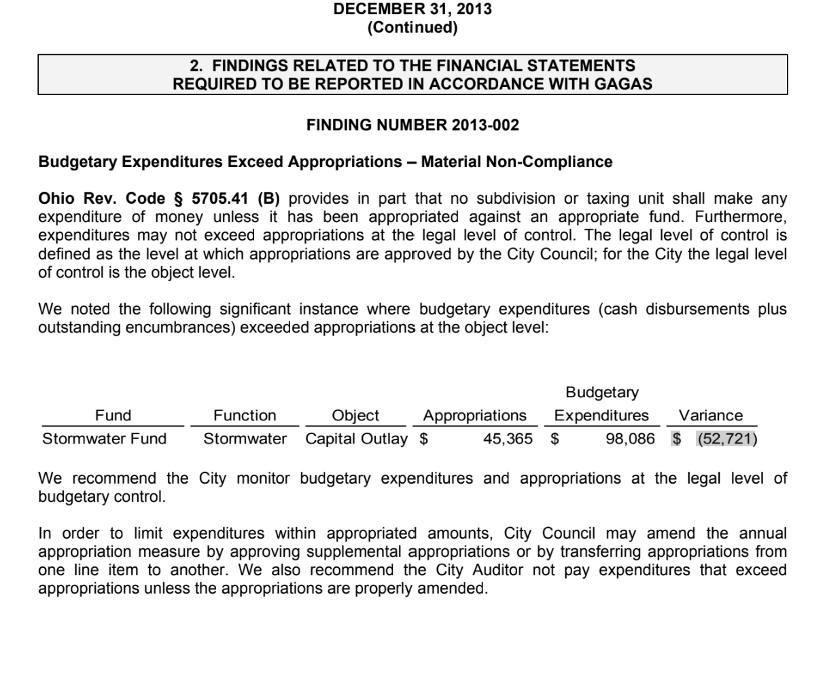
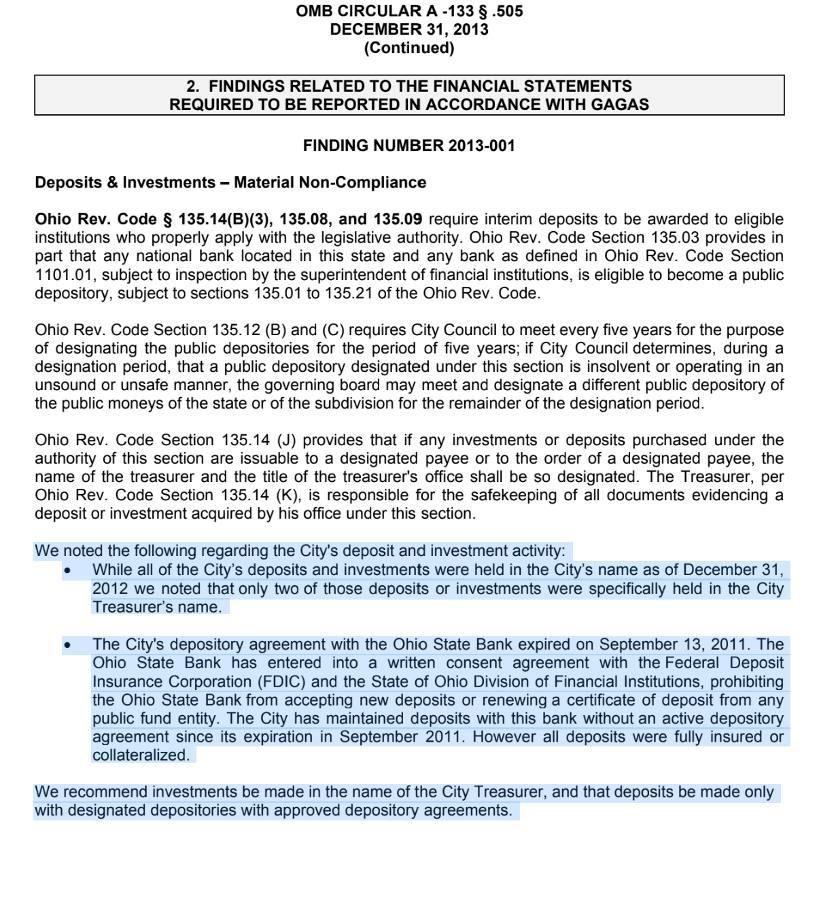
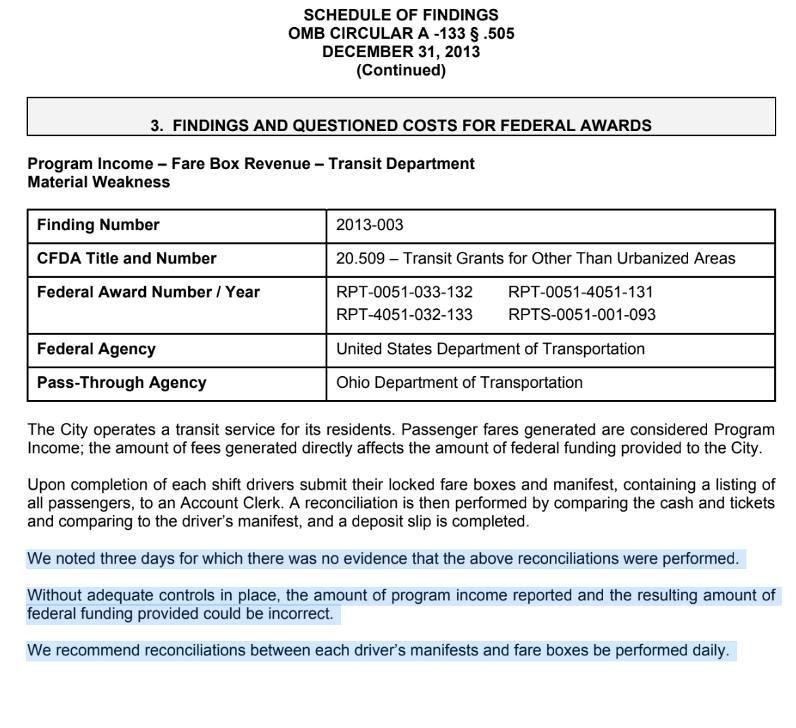
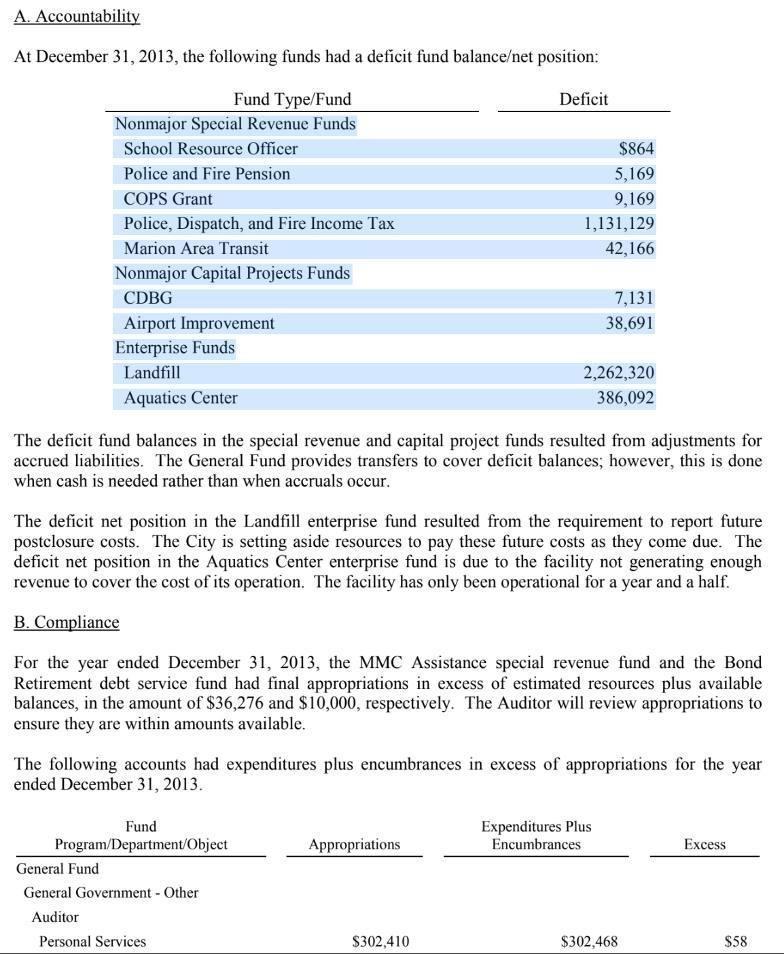
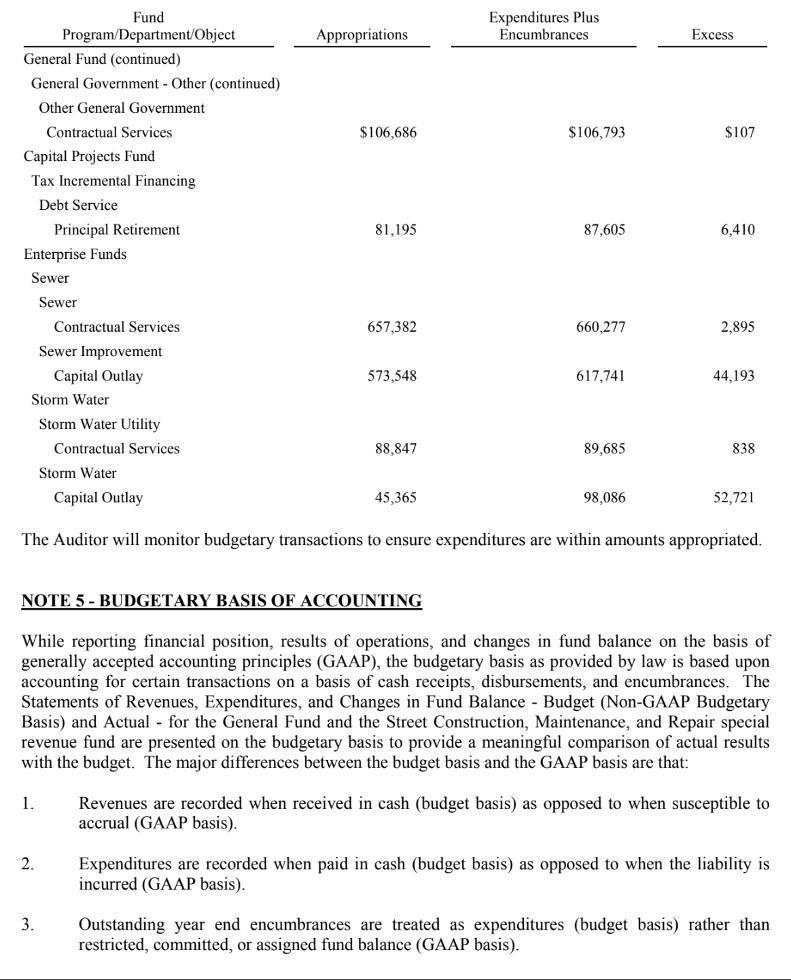
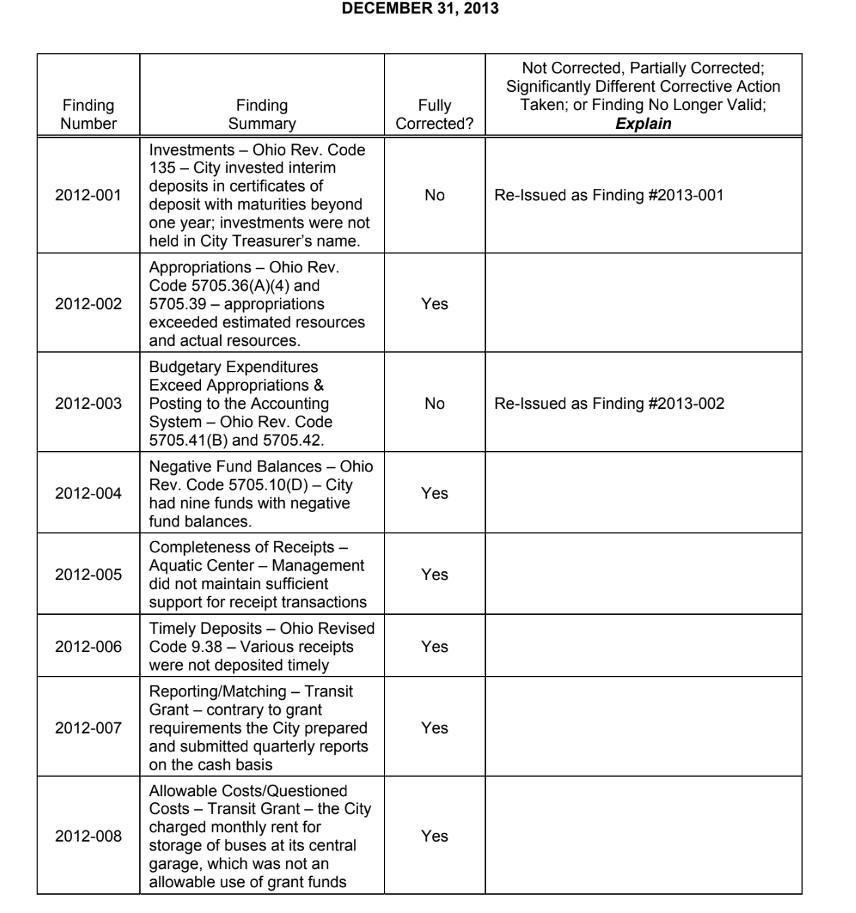
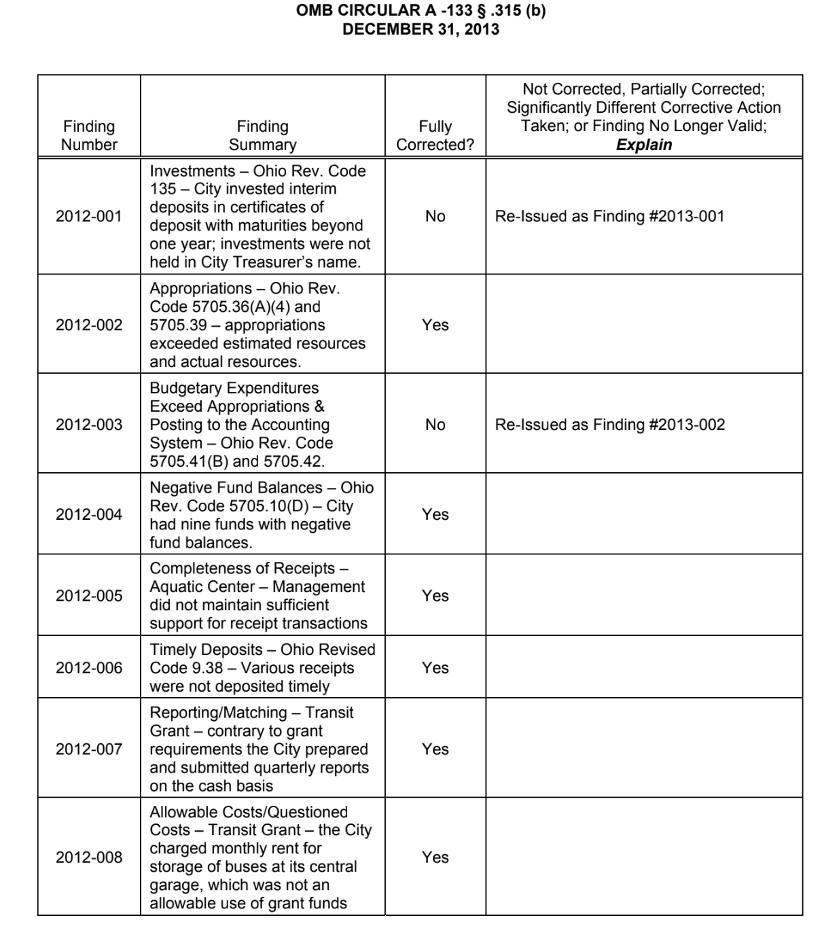
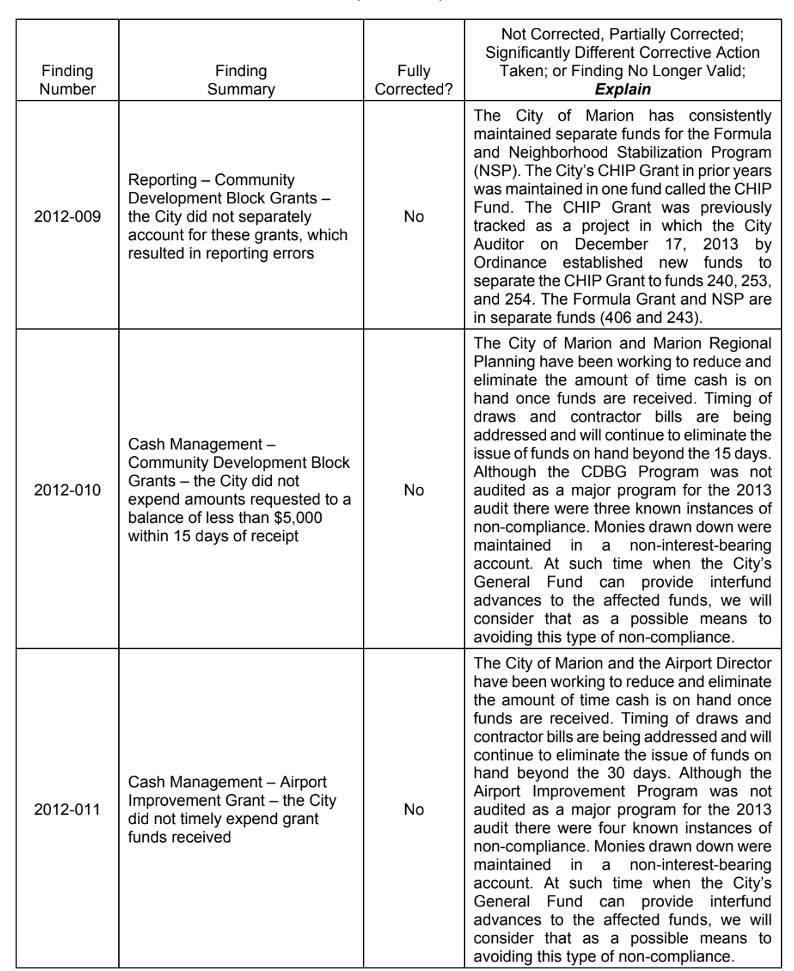
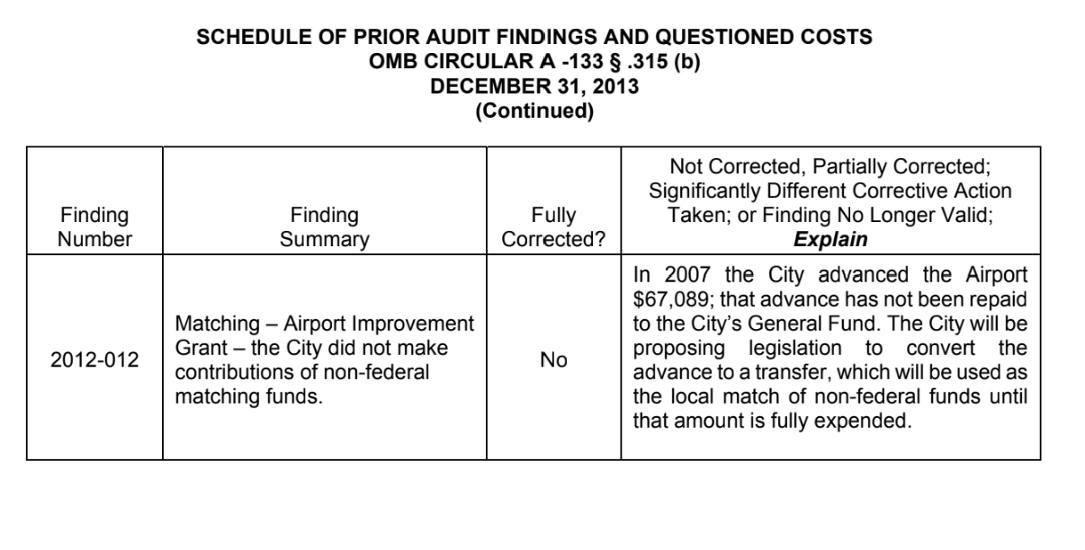
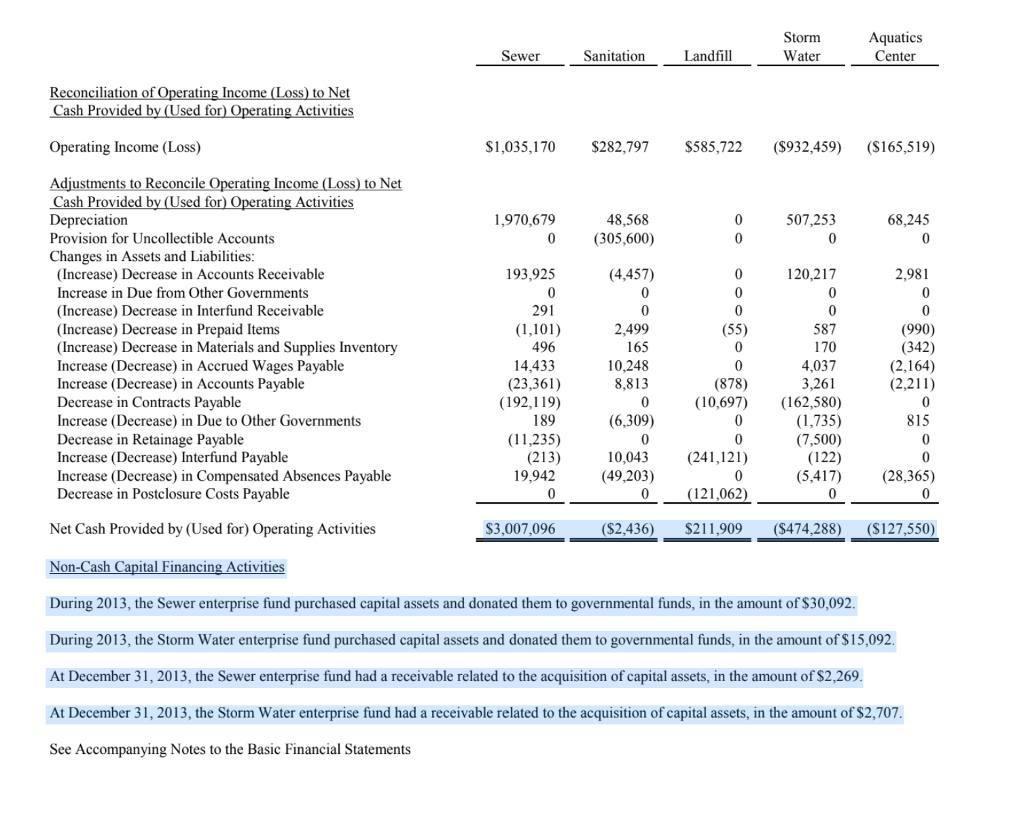
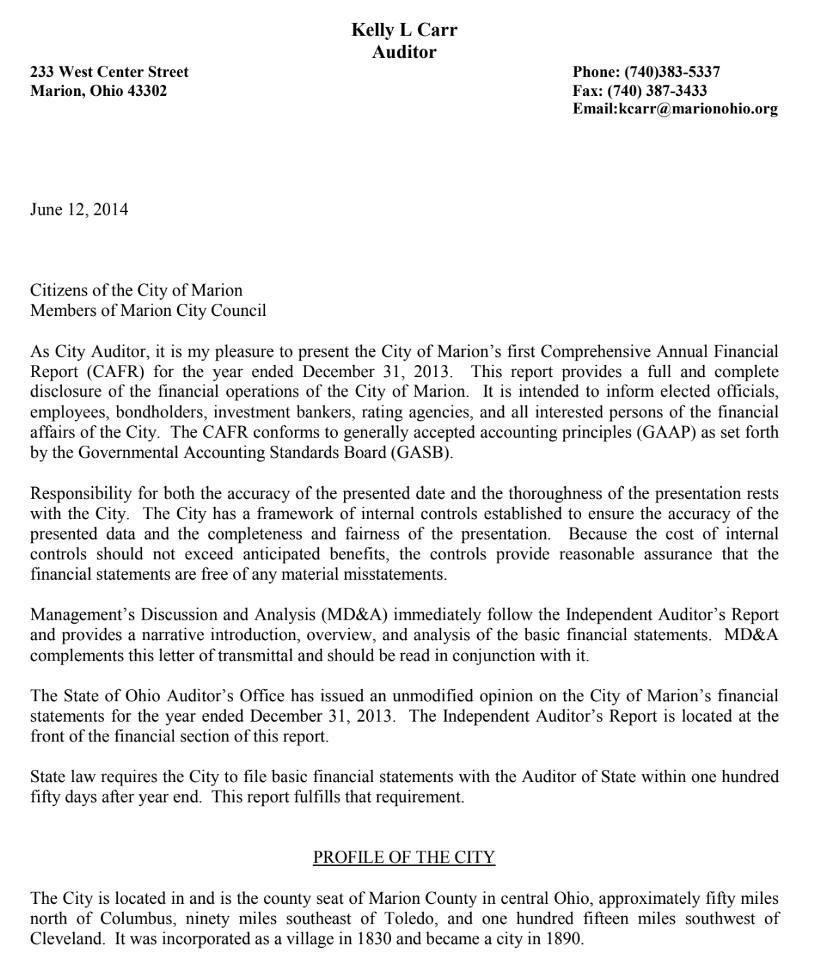
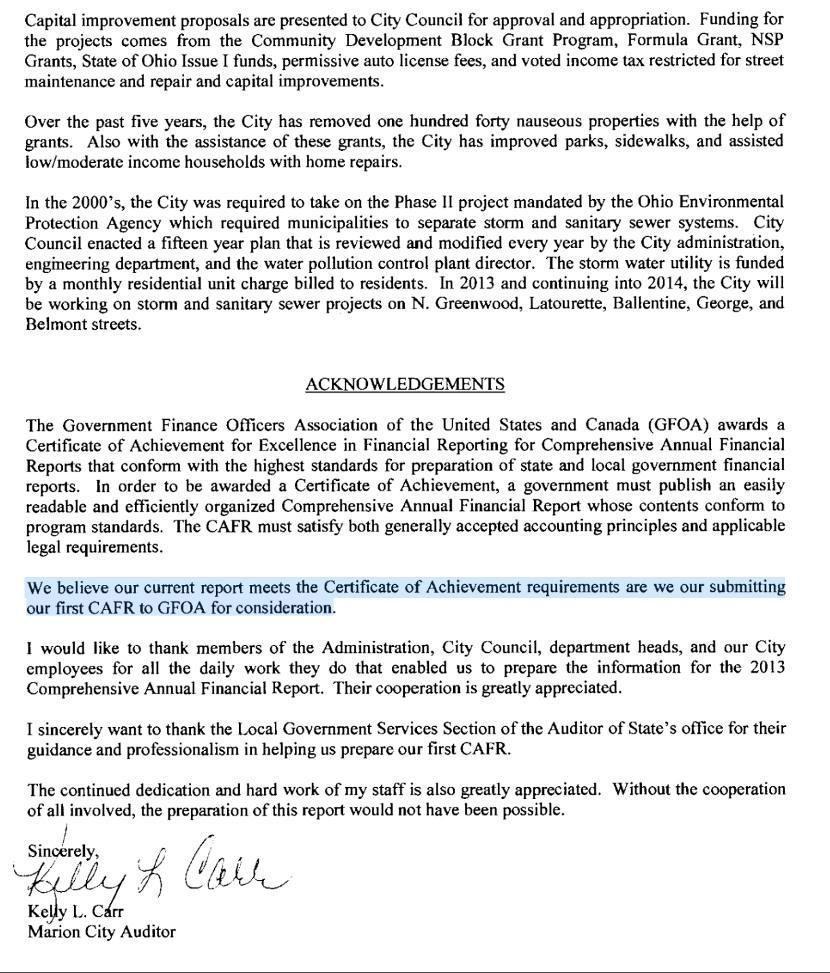
YEAR END 2014 AUDIT & THE FORENSIC IT SIGNS OF SILENT SABOTAGE: THE “CLEAN” AUDIT THAT MISSED A FELONY
ALWAYS REMEMBER: Marion Watch does not always publish everything we know. At least not immediately ;-)!!
Should City of Marion, Ohio council demand an independent, external audit of all historical software systems to see exactly who authorized these systemic overrides and what else is buried?
According to industry standards in the financial and IT sector, the answer is YES.
All signs of a compromised system are present, have been present, and although the issues were covered, they were not covered sufficiently.
AUDIT SAMPLING & THE HIGH-RISK PARADOX
It is crucial to remember what a state audit actually is.
An Auditor of State (AOS) financial audit does not check every penny. It relies on sampling—examining a fraction of data to form a general opinion. The AOS explicitly warns in their reports that their review is not designed to catch every internal control failure.
However, a glaring question must be asked: Why didn’t the AOS dig deeper into Marion’s finances? According to the state’s own 2014 Single Audit Schedule of Findings, Marion was explicitly denied status as a “Low Risk Auditee.” By checking “No” on the Low-Risk Auditee classification, the state officially treated the city as a high-risk entity.
This was not a one-time penalty. Under federal guidelines, Marion operated under this official high-risk designation for seven consecutive years—from 2009 through 2015.
This distinction is critical.
A standard, low-risk audit only requires the state to test 25 percent of total federal expenditures.
A high-risk audit legally forces auditors to test at least 50 percent of the data.
When a city is officially designated as high-risk for seven straight years, and auditors are mandated to double their testing footprint, why did the state rely on basic sampling instead of demanding a full teardown of finances and the New World software?
How does an expanded, high-risk audit completely miss an active felony?
THE ILLUSION OF PERFECTION: THE “CLEAN” 2014 AUDIT
A Comprehensive Annual Financial Report (CAFR) is a narrative written by city management to project competence. The AOS Single Audit is supposed to be the independent test to see if the city’s claims are true.
In a shocking twist, the 2014 AOS Single Audit came back completely clean: zero material weaknesses, zero significant deficiencies, and zero noncompliance citations.
Furthermore, the state auditors officially marked the city’s brutal, five-year streak of prior violations—including illegal investments and blown budgets—as “Fully Corrected.”
But the state’s logic completely falls apart on paper: In 2013, the state auditors hammered the city for spending money it did not legally have.
Yet in the 2014 CAFR footnotes, the city openly admitted it was still overspending and blowing past line-item budgets.
The state auditors did absolutely nothing and issued a clean bill of health anyway.
THE ELEPHANT IN THE ROOM: THE THEFT THEY MISSED & THE VANISHING WRITE-OFFS
The 2014 audit was perfectly clean on paper, yet 2014 was the exact year the Brenda Nwosu utility embezzlement scheme reached its climax.
From January 2011 through August 2014, a utility supervisor was actively skimming cash and intercepting Sheriff’s sale checks.
She used overarching “elevated” software rights to manually wipe out customer debts and bypass the system’s approval workflows.
She was charged late 2014 or early 2015 and plead guilty to two counts of theft in office (third-degree felonies) and one count of tampering with records (fourth-degree felony) in April of 2015.
The AOS auditors issued a clean bill of health while a felony was actively in progress for eight months of that exact fiscal year.
Looking deeper into the 2014 financial data reveals a brilliant confirmation of the smokescreen we identified in 2012 and 2013.
In 2012, the city quietly wrote off $1,191,803 in “uncollectible” sanitation accounts. In 2013, they wrote off another $305,600.
This massive, chaotic purge provided the perfect cover for the thief to manually wipe out individual accounts while pocketing the cash.
Nwosu’s theft ended in August 2014.
When you look at the 2014 financial statements, the massive write-offs in the Sanitation Fund suddenly plummet to a minor adjustment of just $(7,071).
The million-dollar purges that provided her camouflage completely stopped the exact same year she was caught.
THE GHOST MODULES: HOW THE THEFT WAS TECHNICALLY POSSIBLE
Tyler Technologies’ New World ERP is an enterprise-grade financial platform.
Under proper configuration, it uses Role-Based Access Control (RBAC) and electronic workflow engines to enforce strict “Segregation of Duties.”
Simply put: the software is natively designed so that the person handling physical cash can never be the same person altering the digital books without triggering mandatory, secondary executive approvals.
Bypassing these built-in safeguards requires deliberate intervention.
Recently, Mayor Bill Collins confirmed that the city was not using up to 70-80 percent of the software modules it was paying for.
By cross-referencing the modules listed on the city’s maintenance invoice with the mechanics of the embezzlement, we can see exactly which unused or drastically misconfigured New World modules allowed the theft to occur undetected:
• SUPPORT & UPDATE LICENSING – UTILITY BILLING (Water/Sewer Base) ($9,940.69/year):
This module dictates the core customer ledger. In a properly secured New World environment, this module utilizes RBAC to enforce strict segregation of duties, ensuring the individual handling the physical cash cannot unilaterally authorize account adjustments without secondary executive approval. Even as a supervisor, granting overarching “elevated permissions” rights was a drastic misconfiguration of system security. It allowed a single user to act as both the cashier and the approving authority, entirely bypassing the native approval workflow engine and adjustment lock-outs.
• SUPPORT & UPDATE LICENSING – Misc. Billing & Receivables ($2,385.02/year):
This module manages the intake of third-party or non-standard payments, locking them to specific delinquent property profiles. By drastically misconfiguring or ignoring these database validation rules, incoming checks were manually floated or applied to totally unrelated accounts to mask the stolen cash.
• SUPPORT & UPDATE LICENSING – Bank Rec ($1,590.97/year):
This module performs automated matching between the system’s cash receipts and the actual cleared bank deposits.
Because the city left this module unused to do reconciliations manually via offline spreadsheets, the software could not throw the automated alarm flags that would have immediately caught the missing $17,375.
• SUPPORT & UPDATE LICENSING – SUITE BASE (Payments) ($4,373.73/year):
This payment suite controls point-of-sale transactions and daily cash drawer balancing. It creates the hard-link between physical cash and the General Ledger. Deactivating or drastically under-utilizing this module destroyed the daily forced accountability necessary to prevent skimming.
• SUPPORT & UPDATE LICENSING – UM ANALYTICS ($1,590.97/year):
These engines automatically generate exception reports and dashboards. If a user manually wipes dozens of account balances to zero, this module generates an immediate anomaly report for city executives. Instead, because it was left completely unused, the database was never mined for fraud.
Taxpayers were paying roughly $19,800 a year just to maintain these five specific enterprise safety modules, yet the administration left them parked, inactive, or drastically misconfigured.
THE CONFESSIONS BURIED IN THE CAFR NOTES
Even with a clean audit report, the city could not hide the truth entirely. Buried deep within the footnotes of the 2014 CAFR, the City Auditor confessed that the city was still breaking the rules and running funds into the red:
• Deficit Fund Balances:
Despite the narrative of stabilization, the city’s own notes admitted to severe deficits, including a $1,938,330 deficit in the Landfill Fund and a $423,922 deficit in the Aquatics Center.
• Unchecked Spending:
Software controls are designed to prevent a city from appropriating money it does not possess. Yet, the city admitted they bypassed these controls. The Police, Dispatch, and Fire Income Tax Fund’s original appropriations exceeded available resources by a massive $811,470.
• Blown Budgets:
The State Auditor officially marked the city’s 5-year streak of overspending as fully corrected. However, the city’s own CAFR listed exact instances where actual spending still blew past legal limits in 2014, proving the budget override permissions were still actively being abused.
IN SHORT
The 2014 audit is the ultimate proof of “Silent Sabotage.” The state auditors gave a High-Risk city a free pass, ignoring the very violations they cited them for just one year earlier.
Behind this inexplicable clean audit opinion, the underlying ERP software was drastically misconfigured, line-item budgets were still being blown out, and the total lack of segregation of duties allowed a thief to actively embezzle public funds without triggering a single system alarm.
A clean audit doesn’t mean the IT infrastructure is secure.
It just means they learned how to hide the overrides better or the state did not look in this particular area, for some reason.
WHAT COMES NEXT: A GLIMPSE INTO 2015 & BEYOND
While the 2014 audit shows the limits of high-risk sampling, the 2015 financial record—the year the embezzlement is finally acknowledged on paper—reveals the often-paradoxical world of Marion’s municipal compliance.
In our upcoming assessment of the 2015 audit, we will explore the strange realities of how financial risk was measured.
We will look at how filing a fire department grant report a few weeks late earned the city a severe “Material Weakness” citation, while a four-year utility theft somehow did not.
We will also examine the city’s official “Corrective Action Plan” to ask why a municipality paying for enterprise-grade software told the state its ultimate solution for stopping fraud was installing basic slip receipt printers and manually counting cash drawers.
Most importantly, we will highlight the ultimate Marion auditing paradox: how a financial record can officially document a multi-year embezzlement scheme on one page, while legally declaring the city’s financial internal controls had zero material weaknesses on the page right before it.
Looking beyond 2015, we will also begin to dismantle the “accrual only” misunderstanding.
For years, administration defenders used a convenient technical alibi: they claimed the New World software was strictly accrual-based and mathematically incapable of balancing with physical cash accounts.
That excuse is a complete misunderstanding. Financial software like New World is legally required to be able to do this type of hybrid accounting.
The software is an enterprise-grade platform explicitly designed to bridge cash and accrual, and municipalities across the country successfully use it to do exactly that.
It would take a decade before forensic experts from Veritas Solutions Group finally arrived to confirm what the data always showed—the software wasn’t fundamentally broken, the accounting configuration was engineered to fail from the start.
Because the system was rolled out on this mutilated foundation and allowed to run for over a decade, it cannot simply be “fixed.”
Millions of dollars in fabricated data are now baked into the historical ledgers.
Attempting to turn the native rules back on today would trigger massive, un-reconcilable variance errors and catastrophically crash the system.
The 2014 audit shows us what the sampling process missed.
The 2015 audit will show us exactly how the system reset without ever addressing those root software failures.
OFFICIAL EXHIBITS & PRIMARY SOURCE RECORDS (2014 Overview: The ‘Clean’ Audit That Missed a Felony)
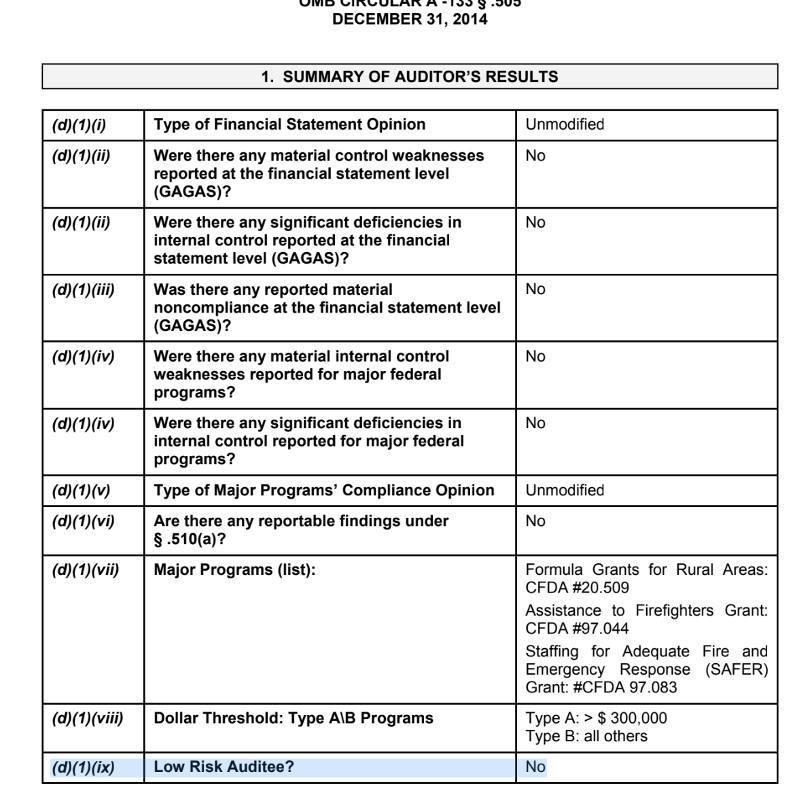
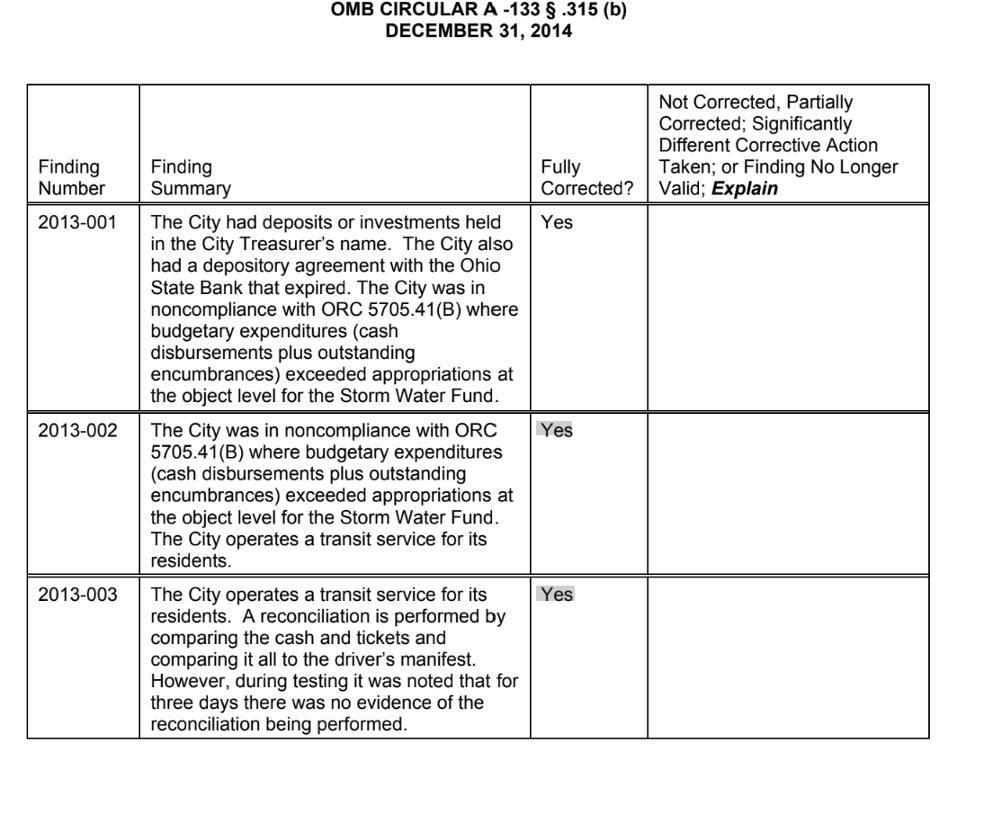
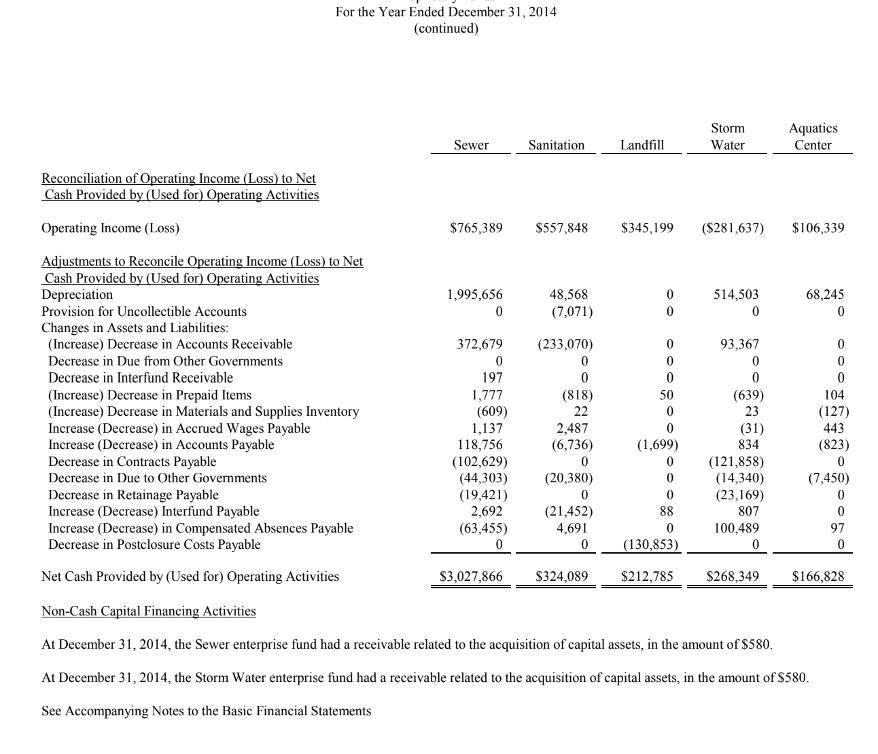
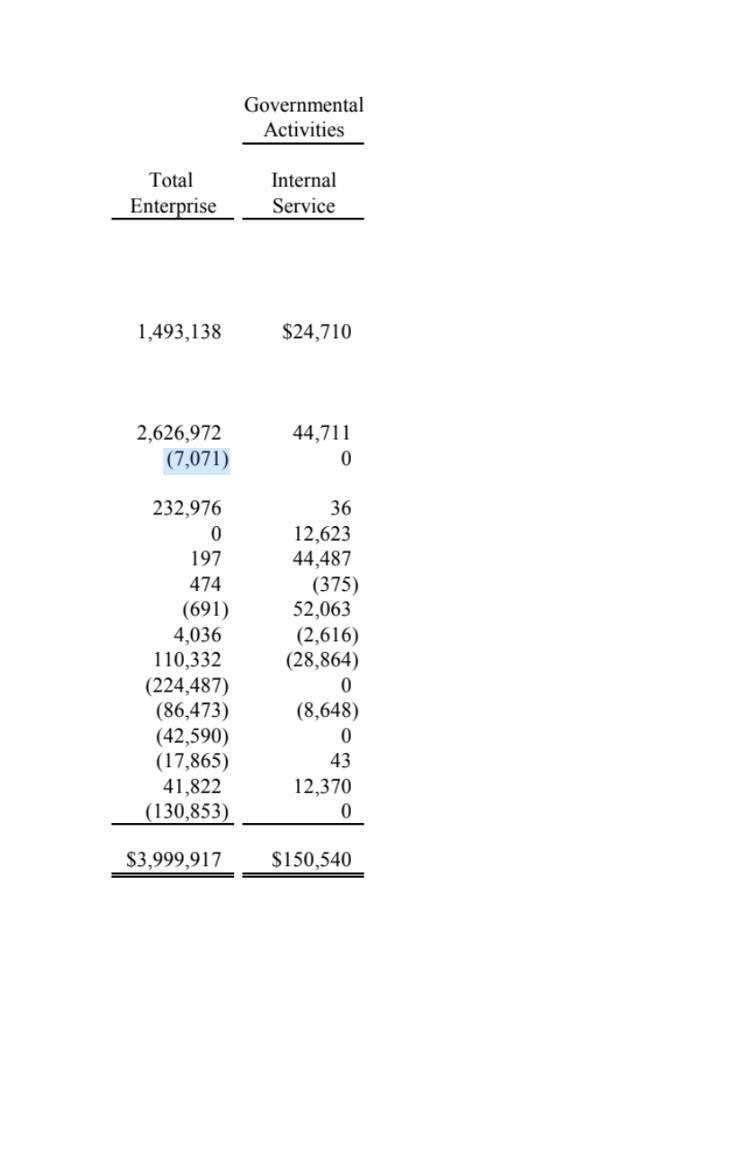
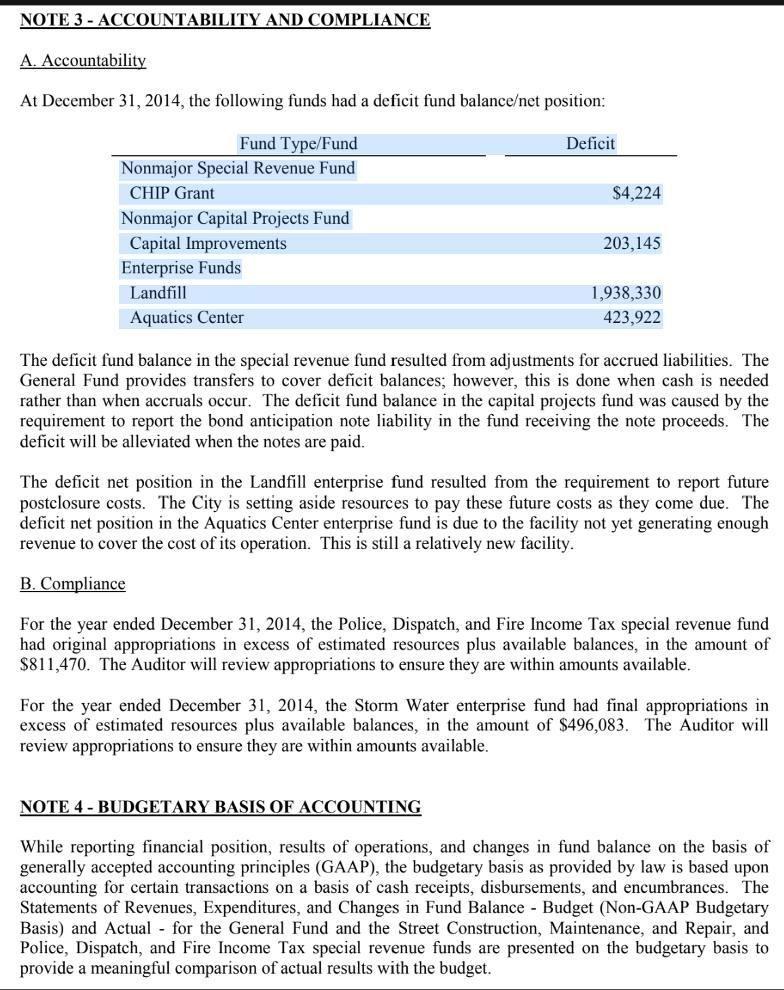
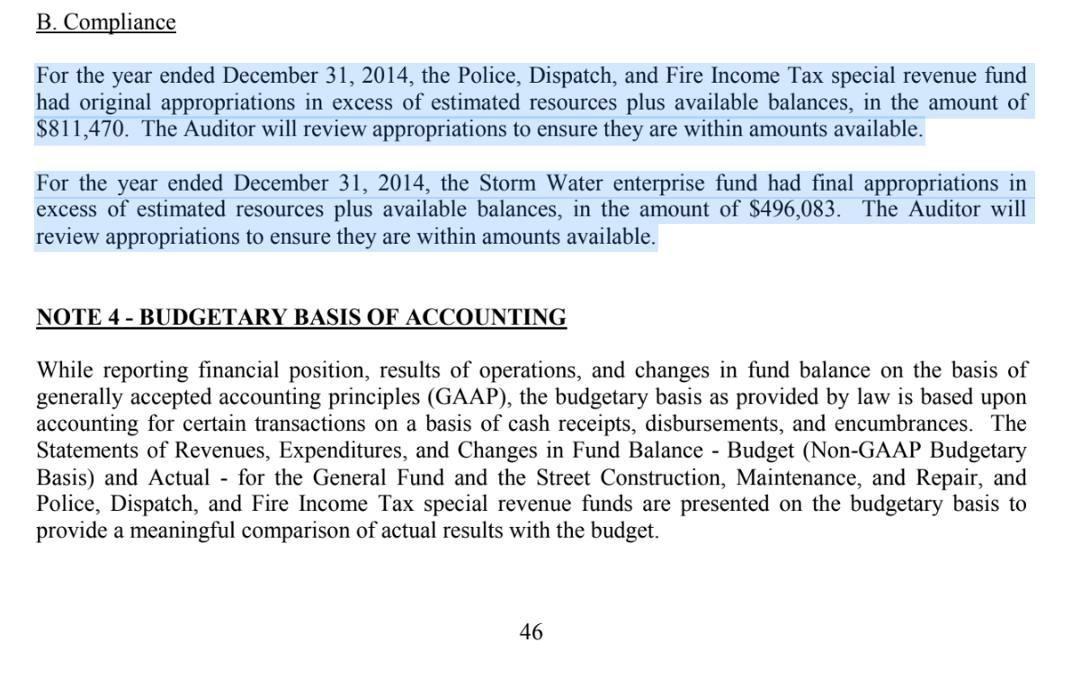
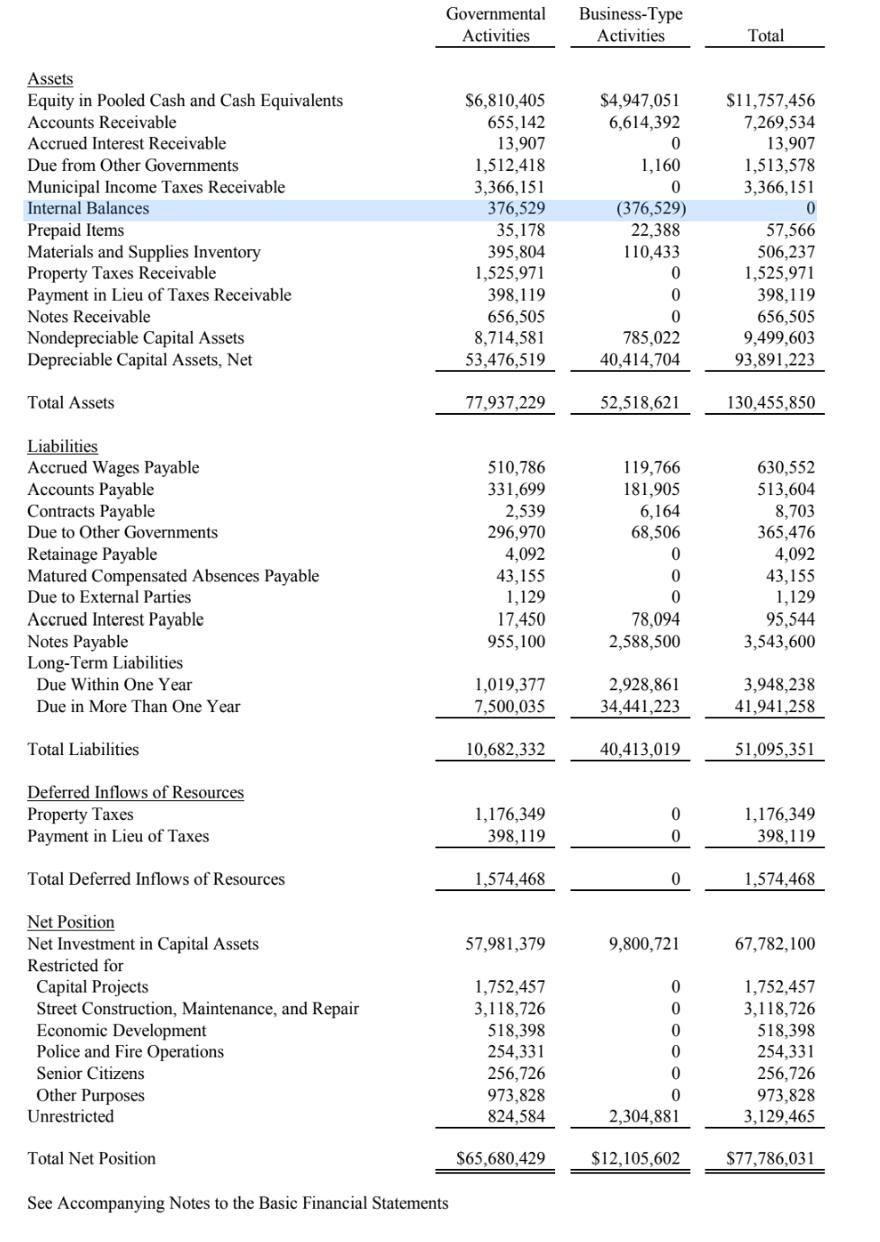
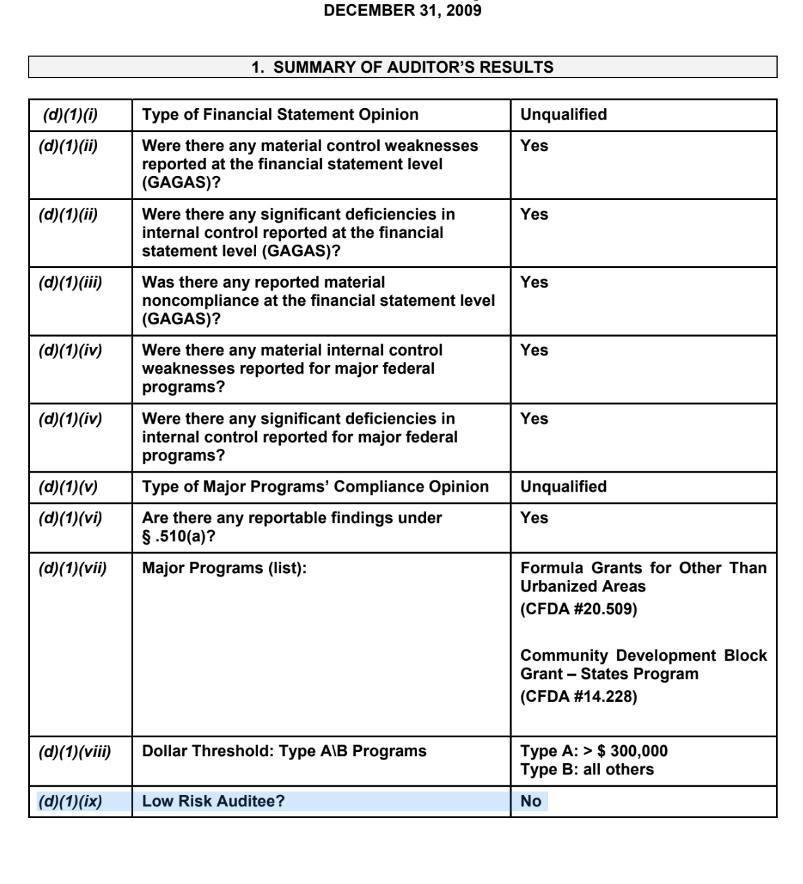
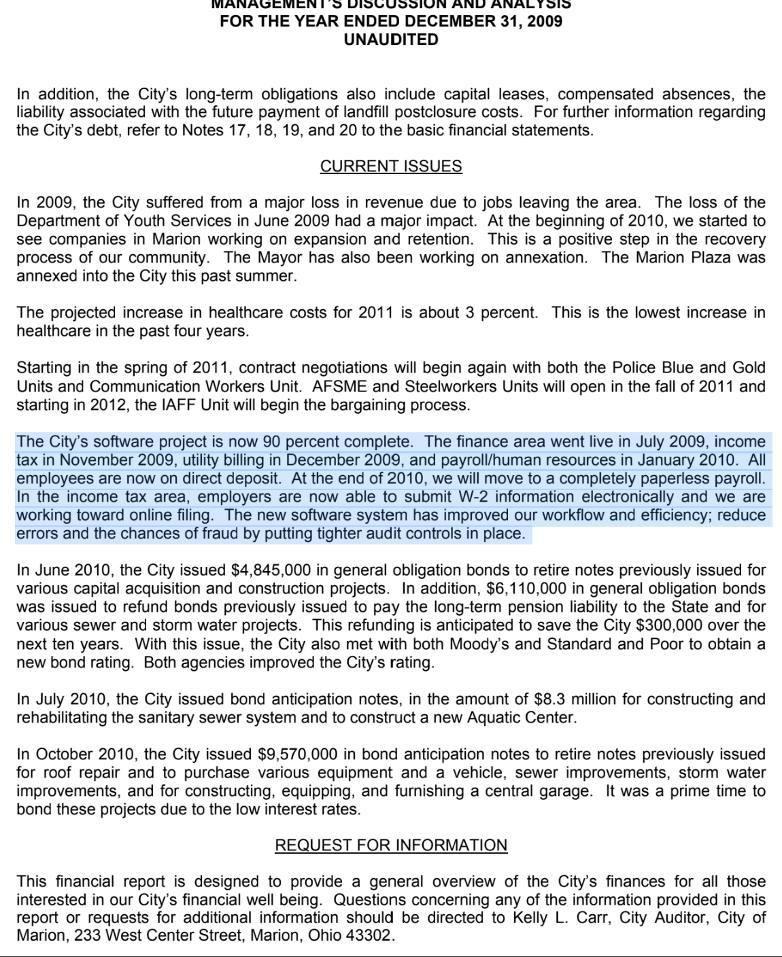
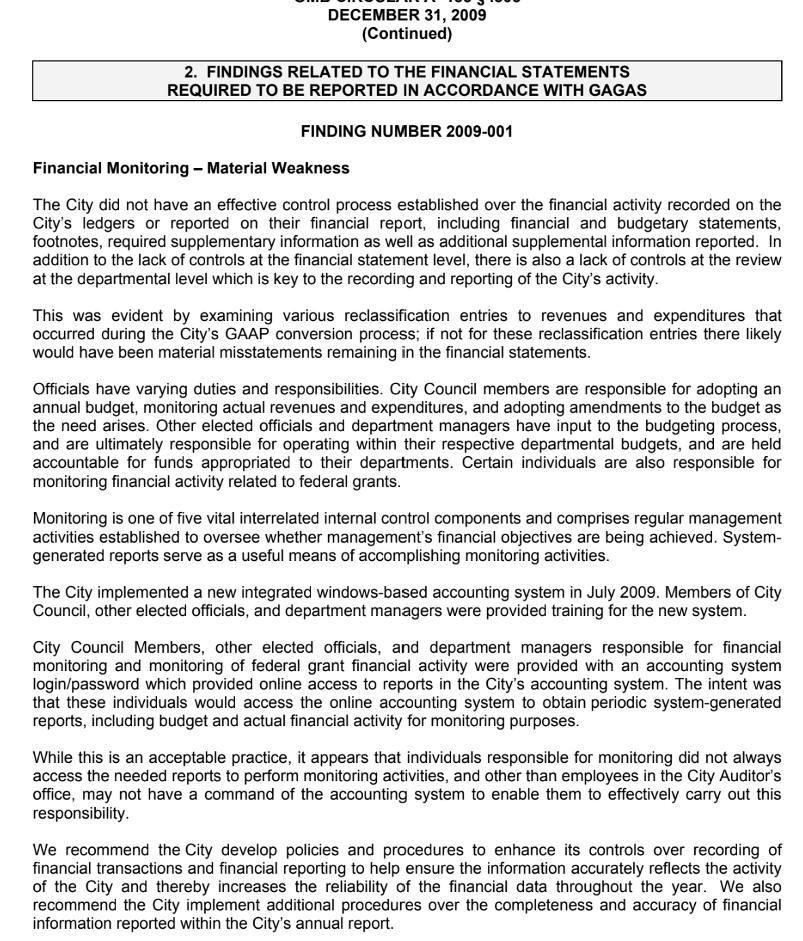
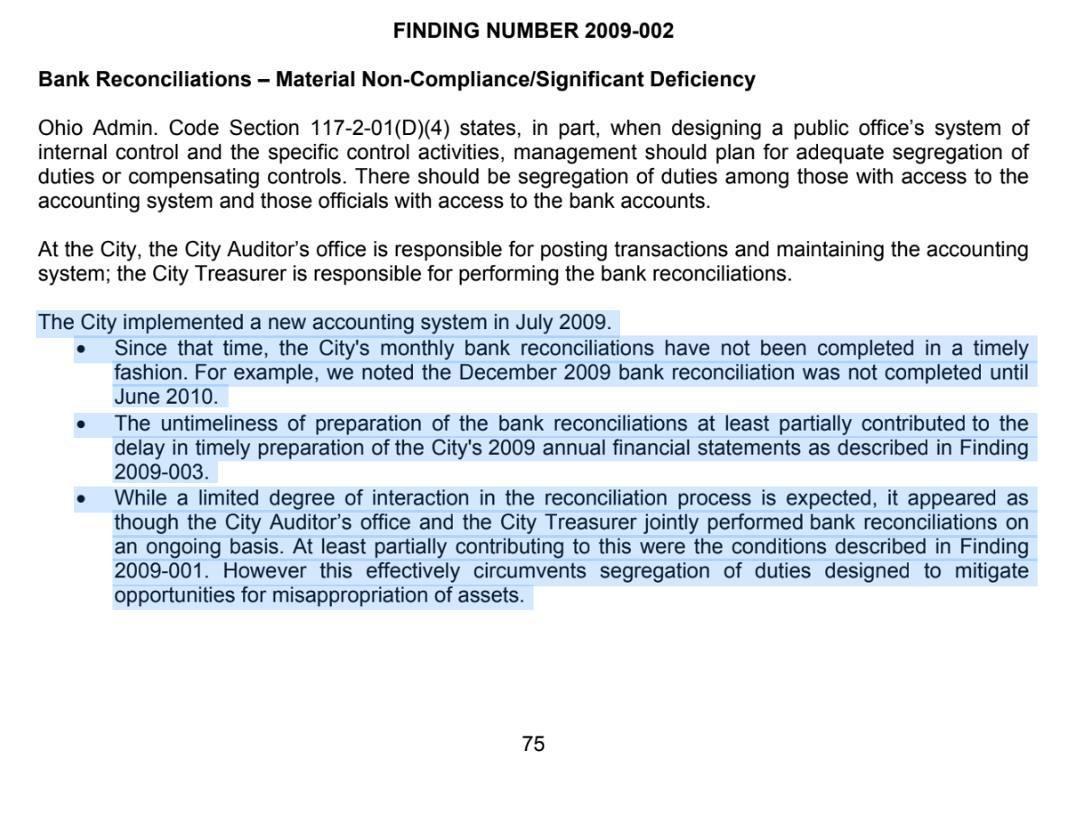
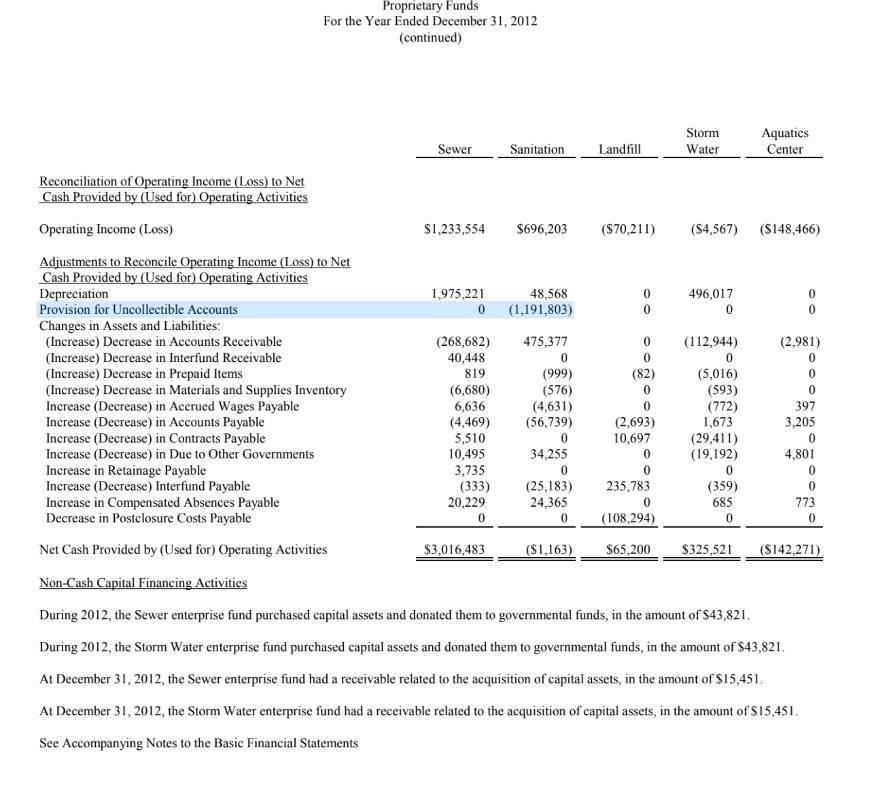
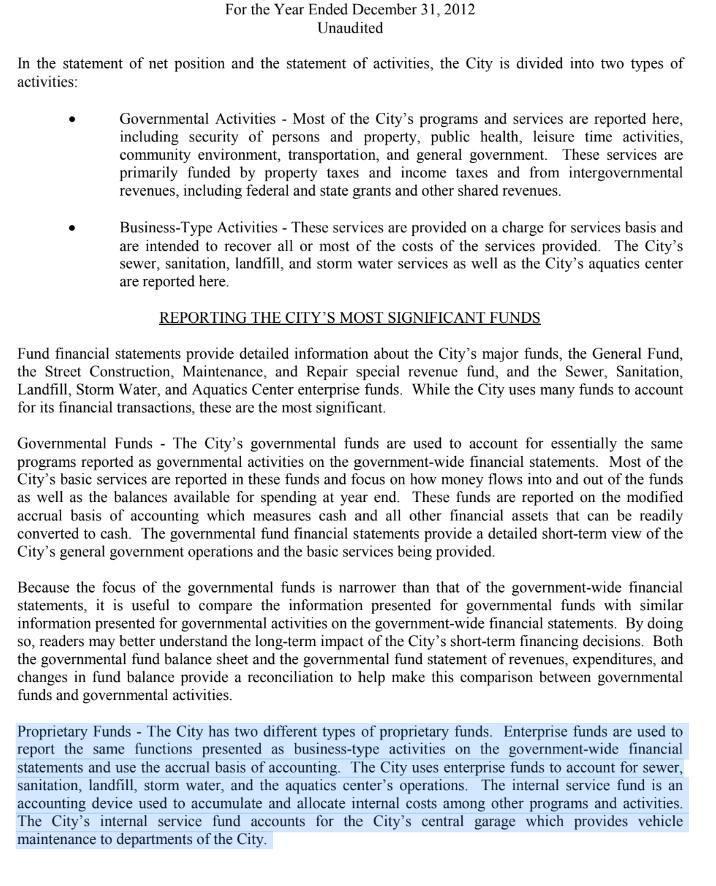
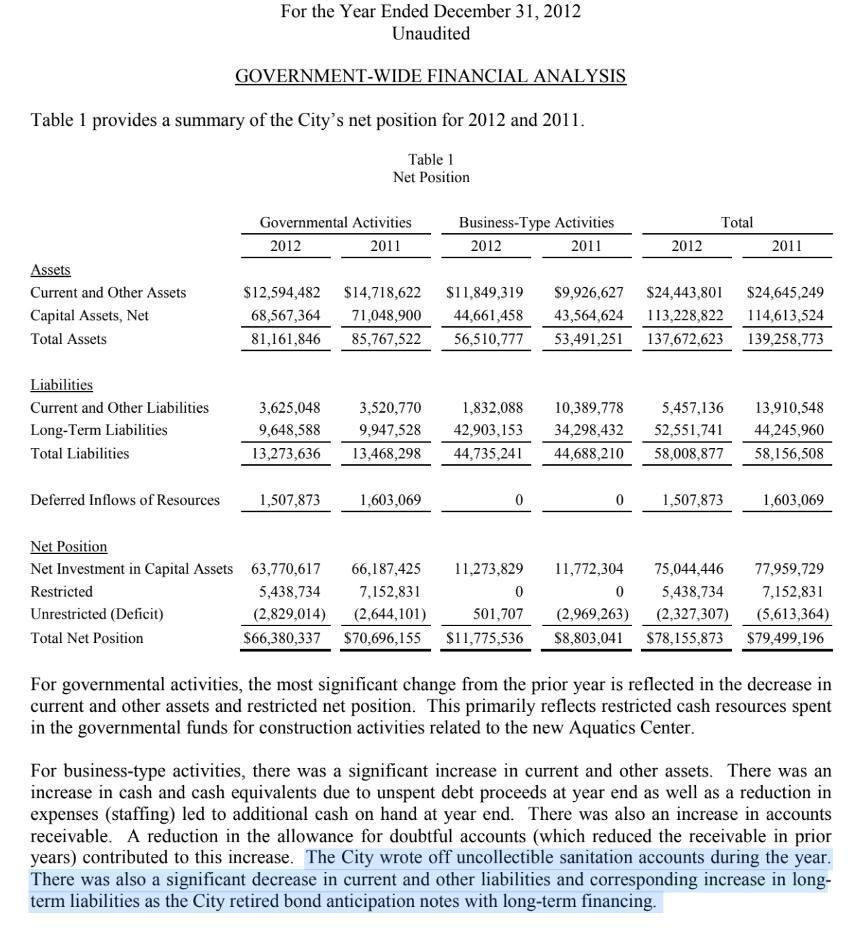
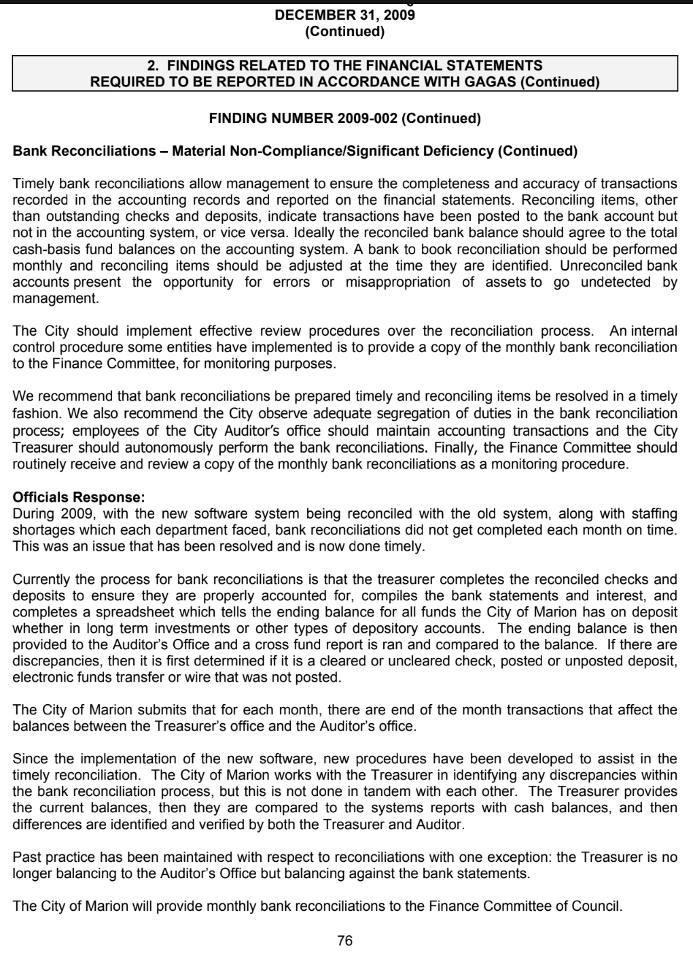
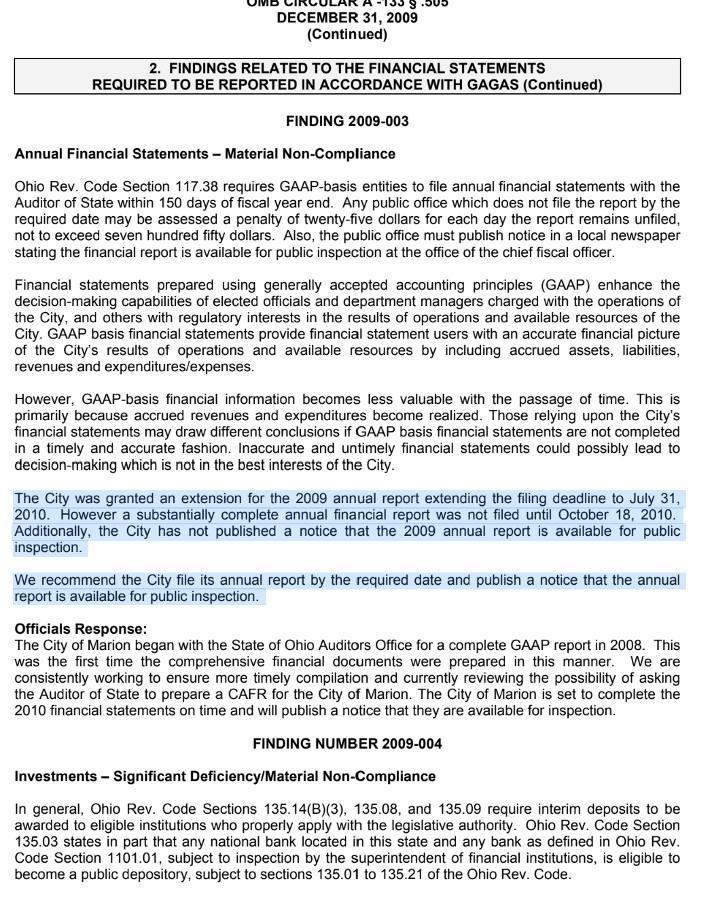
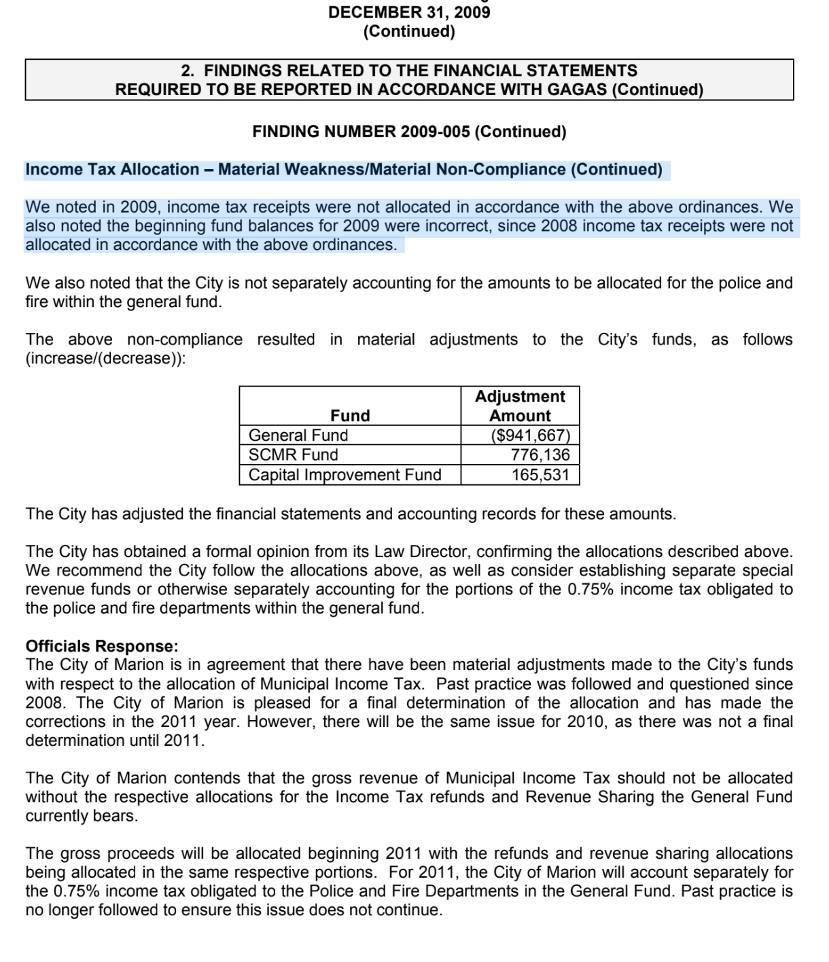
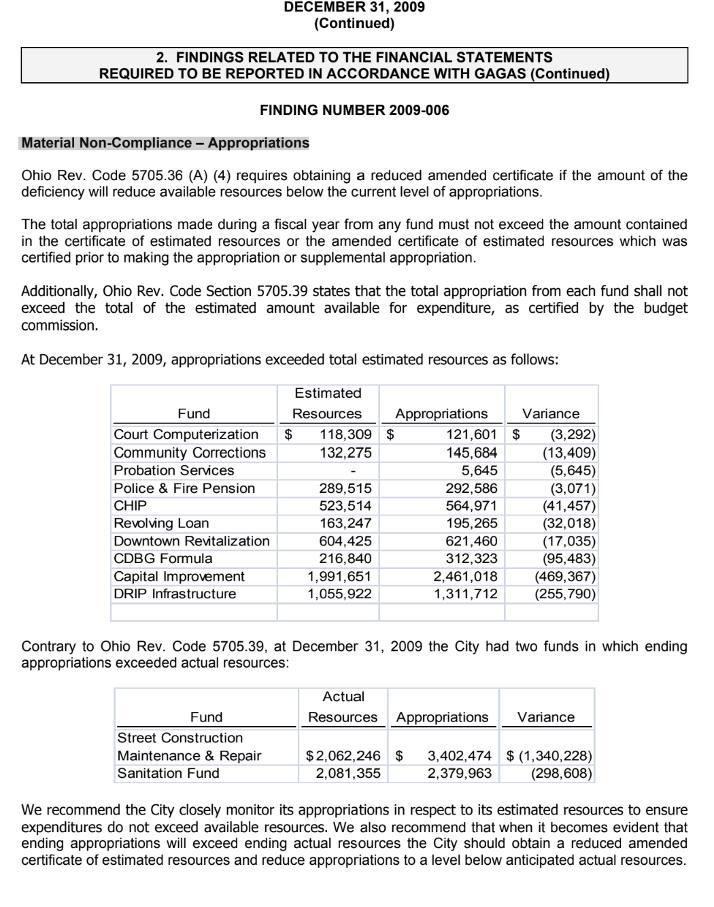
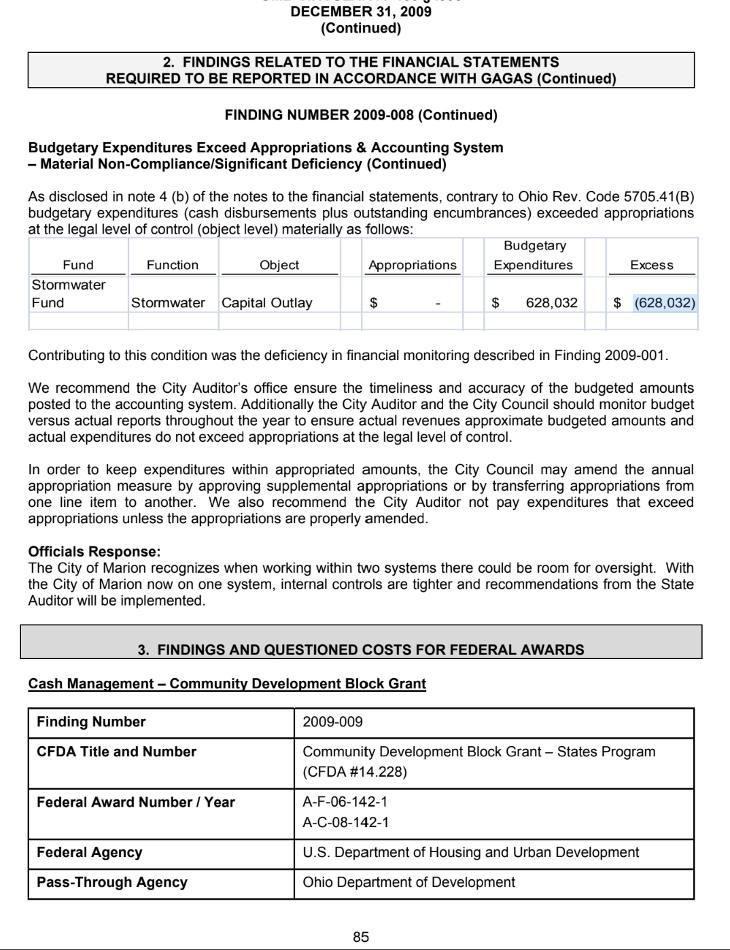
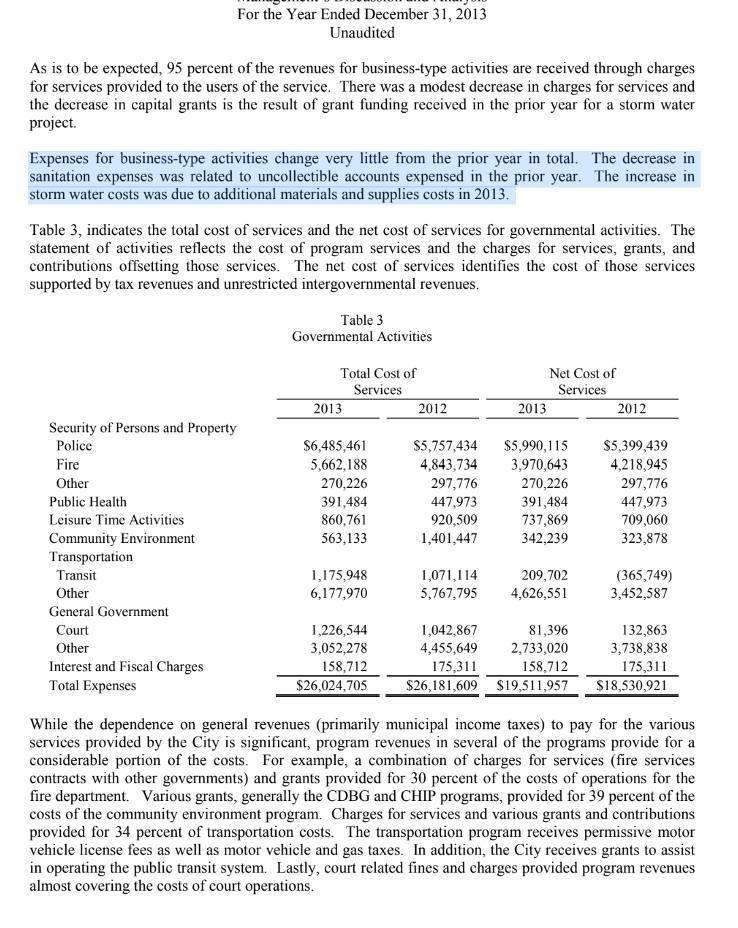
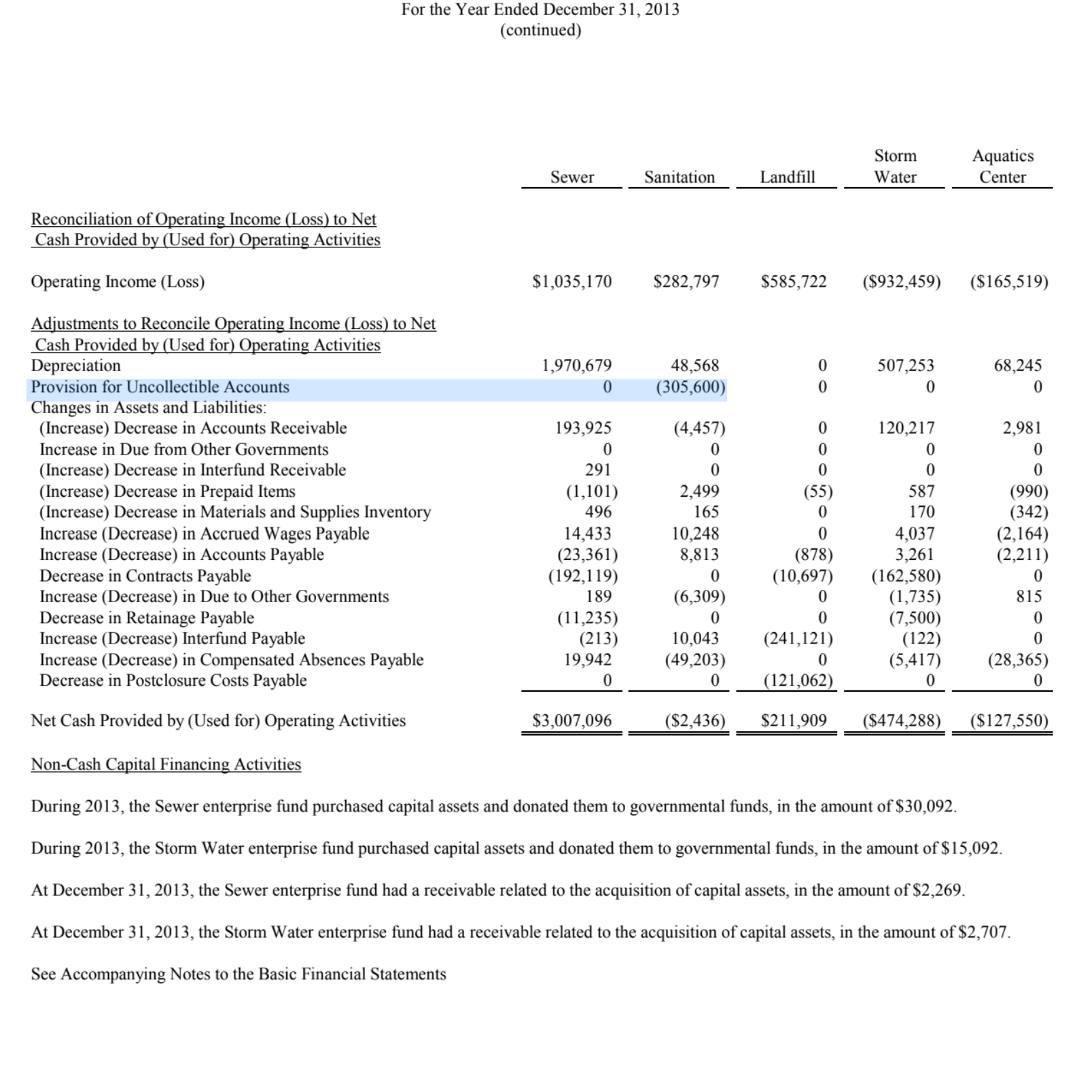
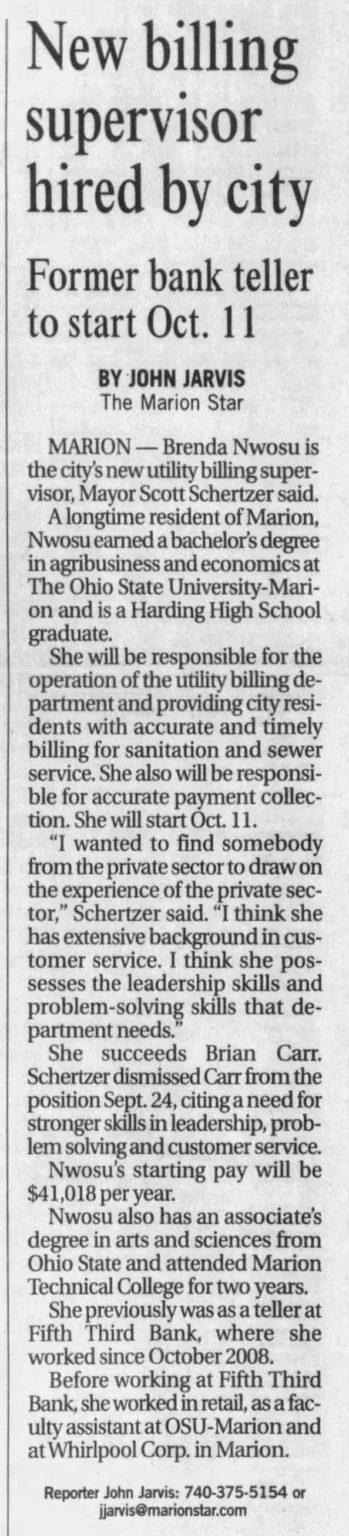

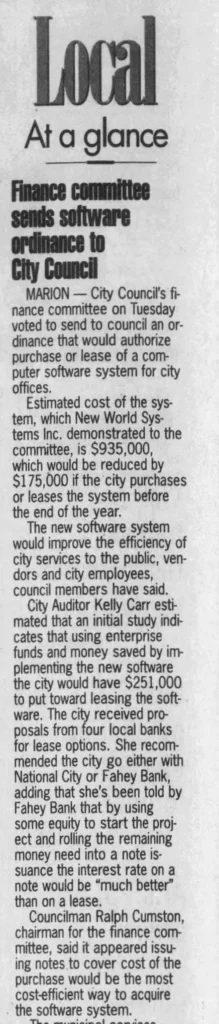
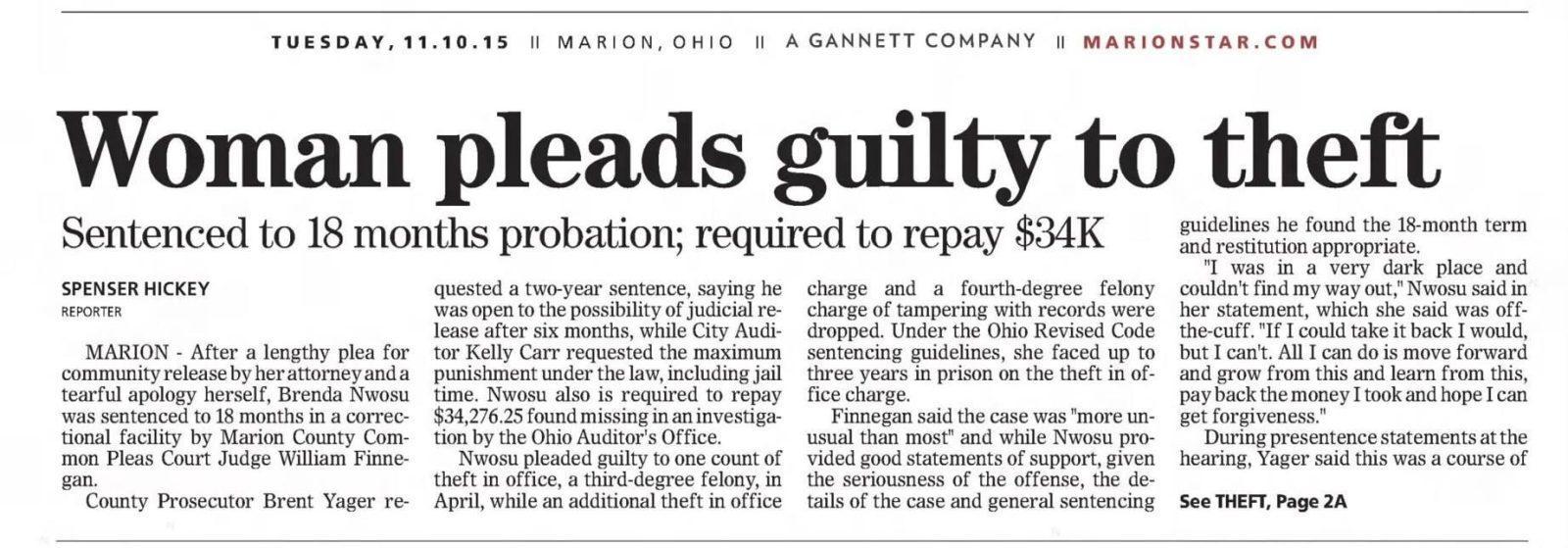
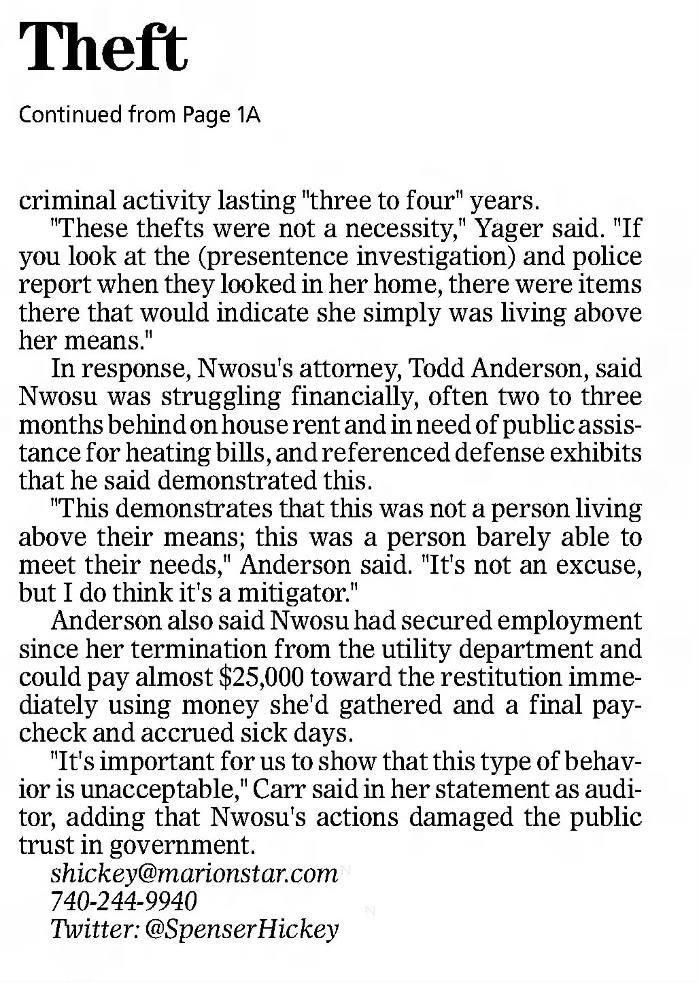
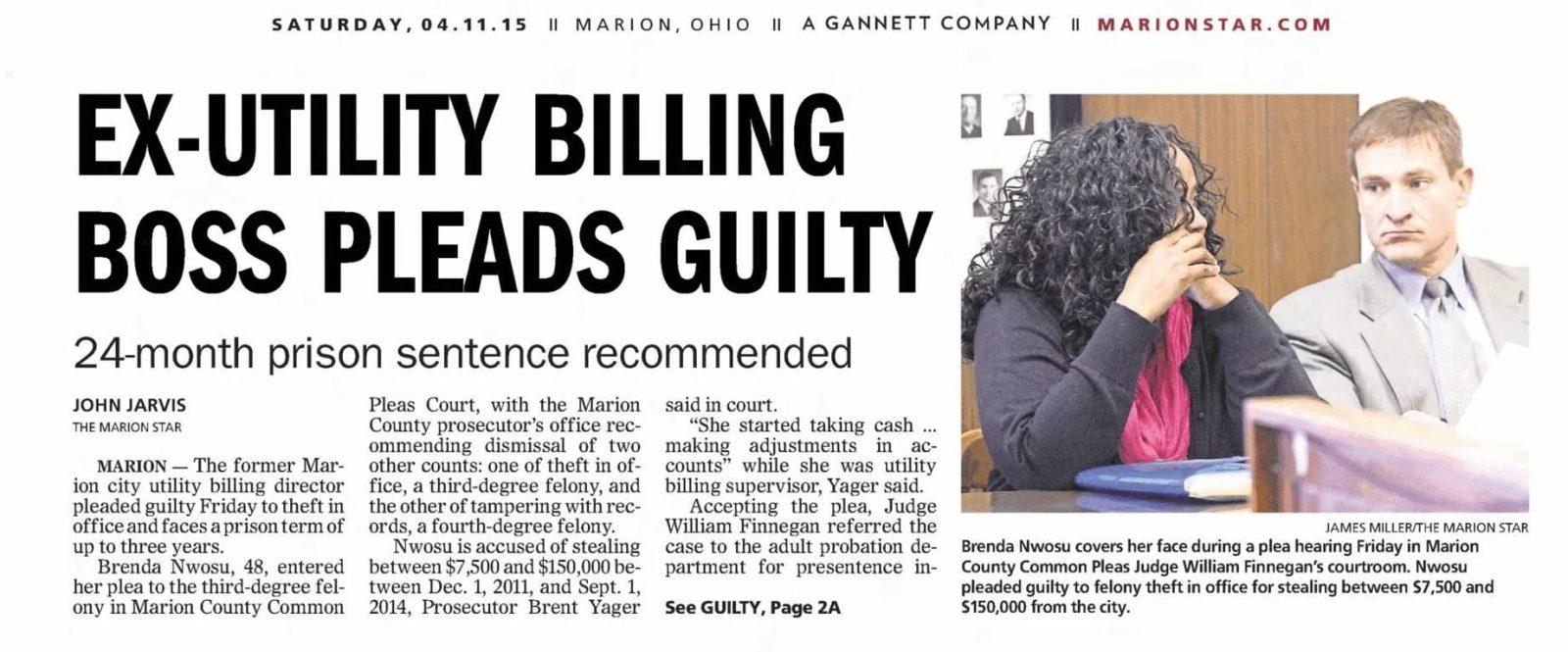
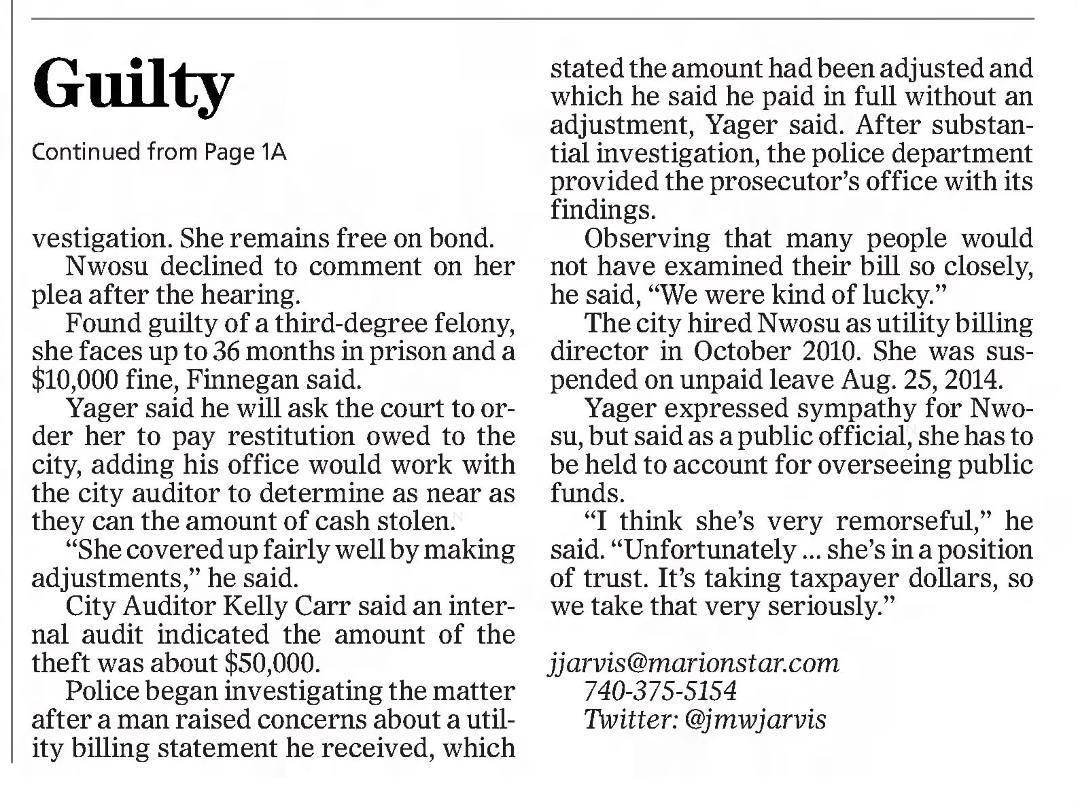
LITTLE CHICAGO GOES DIGITAL? THE 2015 AUDIT AND MARION’S 40-YEAR BLUEPRINT FOR SABOTAGE
ALWAYS REMEMBER: Marion Watch does not always publish everything we know. At least not immediately ;-)!!
Since assuming the responsibility of this calling in 2009 and moving to the street level back in early 2014, moving into the political arena in 2016, we have quietly documented the systemic IT, financial, and other failures that others desperately tried to bury.
Today, we are again publishing what we have long known, BUT NOBODY WOULD LISTEN TO!
To understand how the City of Marion’s finances completely collapsed in 2015, we must first establish a historical baseline.
We will be taking a look at examples from the 1980s and 1990s—historical state audits and records that we at Marion Watch affectionately refer to as “the scrolls.”
While we have included several key examples in this report, the full directory can be seen in our public archives here:
**(Please note that these records were compiled by Marion Watch Citizen Action Network member Tina Culwell-Frye from the State of Ohio Historical Society MICROFILM and may not be labeled strictly by year.)
For years, the excuse for Marion, Ohio’s money issues and corrupted data has relied on a convenient, recycled narrative: “The New World software was bad. It just had glitches,” or “it all started in 2020.” To a trained enterprise IT systems administrator, and financial professionals reviewing the technical failures and history, that is a well-crafted narrative with absolutely zero factual substance.
The software didn’t fail.
The forensic evidence indicates it operated exactly as it was configured to.
THE IT DOCTRINE: THE LAWS THEY IGNORED
To understand the explosive 2010 – 2015 Audits, you must first understand that multi-user electronic environments have existed since the Vietnam era.
This is why Ralph Smith (WHO SERVED IN VIETNAM AS IT WITH HIGH LEVEL CLEARANCE) wanted to immediately escalate to the FBI – Federal Bureau of Investigation once Marion Watch showed him our data in early 2025.
The fundamental IT doctrines of logical access controls and segregated systems have largely remained the same since their inception.
More importantly, it was the law.
In 1974, the American Institute of Certified Public Accountants (AICPA) formally issued Statement on Auditing Standards (SAS) No. 3, which explicitly codified IT internal controls—legally mandating the segregation of duties in computerized ledgers for financial audits. Despite these stringent digital safeguards being globally available and legally required for audits since the 1970s, Marion officials actively refused to invest in them until well into the 1990s, choosing instead to maintain a fully compromised system.
LEGISLATED FORGIVENESS: A PARLIAMENTARY COVER-UP?
This deviance wasn’t just tolerated; it was legally protected.
When state auditors exposed a shortage of funds in the Sewage Treatment plant records and the Recreation Department’s team funds in the early 1980s, the administration under Mayor Ronald L. Malone didn’t tighten controls.
The official council minutes for Ordinance No. 1982-84 reveal exactly how this cover-up was executed on the council floor.
• Law Director Fred Zeigler asked the Mayor to place the item on the agenda, stating that because the books revealed a shortage of funds without explicit evidence of fraud or theft, he felt it was simply a “mishandling of funds,” and the individuals should not be liable.
• What followed set a permanent, fatal baseline for Marion’s governance. Immediately, Councilman Hamburg—seconded by Councilman Jack Kellogg (who would later become Mayor in the 1990s)—made a motion to suspend the rule requiring an ordinance to receive three separate readings on three occasions. The vote to suspend the rules passed unanimously.
• Immediately after, Hamburg and Kellogg moved to adopt the ordinance.
• The yea and nay vote was recorded for the historical record:
Yeas – Ward, Ratliff, R. Brown, Combs, Kellogg, Hamburg, Pearson, DeWolfe, M. Brown. Nays -None.
• On its very first reading, the President declared the ordinance adopted, legally absolving Service Director Robert Malone and Recreation Director Gary N. Fenton from personal liability on the findings for recovery.
When a City Council uses procedural loopholes to officially “forgive” missing public funds in a single night, they establish a permanent culture: Accountability is optional, and consequences can simply be voted away in the dark.
Of course, this may have happened more often in the distant past but the early 80s are the earliest Ohio Auditor of State audits we have in our possession.
However, we do have Marion Ohio City Council Summaries downloaded, dating back to the early 1900’s, and they are quite interesting too!
Are there real tangible reasons this town was always called “Little Chicago?”
THE GHOST COMMITTEE & WEAPONIZING “GOD MODE”
This culture of rushing blind fixes resurfaced decades later.
By 2008, state auditors were dropping the hammer on the city for manually executing massive, undocumented write-offs to hide their bleeding funds.
The analog illusion could no longer hold.
Using the exact same parliamentary playbook from 1982, the administration bypassed standard scrutiny. They rushed the $935,000 New World software purchase as an “emergency” measure, completely bypassing the city’s Information Systems Committee—a ghost committee that held no substantial recorded meetings for 19 consecutive years.
Once the New World system went live, the administration deliberately engineered it to run blind, digitizing the exact same crimes they had been committing since 1981:
• DISABLED MODULES & SAFETY CONTROLS:
It has been confirmed that 70-80 percent of New World modules were disabled and/or severely misconfigured likely from installation forward based on the forensic IT observations. Module costs went from $174k down to just $74k in a City of Marion City Council meeting.
EXAMPLES INCLUDE:
• DISABLED RECONCILIATIONS:
The automated bank reconciliation module was ignored.
• THE GL OVERRIDE:
Budgetary “Hard Stops” were manually disabled. Users were granted the power to execute General Ledger (GL) overrides, allowing accounts to be spent massively into the negative.
• “GOD MODE”AND INAPPROPRIATE ACCESS:
Unauthorized personnel retained “GOD MODE” administrative access across departments, others had access to the system that was not justified by business need, destroying the natural approval hierarchy.
THE HAWTHORNE EFFECT & THE 2015 AUDIT EXPLOSION
How did the administration survive the audits between 2010 and 2013?
It is critical to understand exactly HOW the Ohio Auditor of State (AOS) gets their data. State auditors do not just plug into a city’s live database and hunt for raw, hidden transactions. The city’s administration must export the financial reports—like the trial balance and general ledgers—and hand them over to the AOS.
They used the software to generate the illusion of compliance, executing massive, unverified “Bad Debt” purges to force-balance the books.
But in 2014, the massive write-offs abruptly plummeted.
Why the sudden plunge?
It is a textbook manifestation of the Hawthorne Effect—a behavioral psychology and auditing principle where individuals drastically alter their behavior when they realize they are being observed.
Years ago, mental health and financial experts educated Marion Watch on this exact phenomenon, and the data from this timeframe is a perfect match.
The moment criminal investigators began pulling utility data in 2014 to build an embezzlement case, the individuals driving the manual purges panicked.
They slammed the brakes on the multi-million-dollar ledger dumps to avoid exposing their disabled IT system to law enforcement.
**Former and current administrators and employees from that era have explicitly stated for years (and as currently as the past week) to Marion Watch that this exact timeframe has always been highly suspicious to them. They always saw the clear, undeniable connection: the criminal embezzlement investigation and the sudden plunge in the massive “Bad Debt” write-offs happened hand-in-hand. According to these sources, this timeline is something that needs to be looked at extensively alongside the forensic IT audit, one stating “no stone should remain unturned.” When the 2015 Single Audit was finally released, the digitally unsecured environment was exposed for what it was: perfect camouflage for an inside job.
• FINDING 2015-001 (THE EMBEZZLEMENT):
Because the New World approval workflows were inactive or drastically misconfigured, and other safety controls were not functional or drastically misconfigured, Utility Supervisor Brenda Nwosu exploited the gap to embezzle funds from January 2011 through August 2014. She failed to post $17,375 across 71 customer accounts and misapplied 25 Sheriff sales checks totaling $16,901 to unrelated accounts. To conceal the theft, manual adjustments were actively made to reduce the account balances.
She pleaded guilty to theft in office, and the state issued a formal Finding for Recovery for the unpaid balance of the stolen $34,276.
• FINDING 2015-002 (FEDERAL GRANT FAILURE):
The Fire Department received a Material Weakness for failing to file three quarterly Hiring Performance Reports for the federal SAFER grant by their required deadlines, risking the “delay or withholding of Federal funds.”
THE SHELL GAME: HIJACKING THE INCOME TAX?
With the criminal investigation paralyzing their ability to quietly purge millions in utility debt, the administration had to find a new way to hide the city’s insolvency.
They shifted tactics, and the state auditors caught them in the footnotes.
Buried in Note 12 of the 2015 audit is a massive shell game.
The city’s General Fund was caught holding a staggering $1,025,066 that legally belonged to the Street Construction, Maintenance, and Repair Fund.
The city’s official excuse? It was simply “misallocated income tax revenue.”
You do not accidentally misallocate $1.24 million in restricted tax revenue.
The administration was using restricted street repair dollars to artificially prop up a failing General Fund.
The ultimate admission of insolvency immediately followed in the footnote: The city explicitly confessed to the state that “None of this amount is expected to be received within one year.”
They had already burned through the street repair money.
THE ULTIMATE CONFESSION: THE “HONOR SYSTEM” ALIBI
More proof of the “Silent Sabotage” is buried in the city’s own Corrective Action Plan at the very end of the 2015 audit.
• Cornered by the fallout of the embezzlement, the administration formally confessed to the State of Ohio how they planned to fix the vulnerability: “Adjustments must include detailed information added to the notes in the system. If it is still not clear as to why the adjustment is being made, additional documentation must to be provided.”
• Read between the lines: The city not only openly admitted that users had been quietly executing mass adjustments to accounts for years without supporting documentation—they inadvertently confessed that the software’s automated safety alarms were completely deactivated.
• In a Tier-1 enterprise system, you do not prevent theft by asking an employee to type a memo.
• You prevent it by activating the Approval Workflow Engine, which physically locks a suspicious transaction and sends a hard-coded electronic alarm to a supervisor.
• By telling the state that their “fix” was an honor-system of manually typed notes—which any user with administrative access could easily forge or bypass—the administration admitted they were still actively refusing to turn on the software’s native security controls.
THE VERDICT
The software did not break Marion’s finances.
It was procured in the dark, deliberately crippled from Day 1, and to maintain a 40-year tradition of zero accountability.
It wasn’t a software glitch. It was Silent Sabotage. The SYSTEM was the SABOTAGE!
BUT WAIT, THERE’S MORE, MUCH MUCH MORE…
If you think the chaos started with the software, look at the historical timeline. The 2015 audit is just the digital evolution of an analog culture that had been festering for decades.
An exhaustive, forensic extraction of “the scrolls” spanning from the early1980’s to 1998 reveals a terrifying, multi-decade breakdown of every basic financial and technological internal control known to the industry.
We are dumping the full ledger of Marion’s historical citations right here. Leave nothing out:
THE 1981–1983 BASELINE AUDIT PERIOD:
• LOGICAL SYSTEM OVEREXPOSURE:
Access to the primary computer terminal in the Sewer and Sanitation Department was completely open to all employees rather than restricted, inviting unauthorized data entries.
• SYSTEMIC CONTROL FAILURES:
Duties of billing, receiving cash, and posting ledger entries in Sewer and Sanitation were entirely centralized with no segregation of duties.
• UTILITY TRANSACTION TRAIL OMISSIONS:
Sanitation failed to preserve daily cash register tapes or use them to reconcile revenues. Customer stubs were unorganized, un-stamped, and out of numerical sequence.
• PHYSICAL PROPERTY LEDGER INEXISTENCE:
The city maintained absolutely no comprehensive listing, ledger, or inventory of property and equipment.
• DEPOSITORY COLLATERALIZATION DEFICIENCIES:
Funds at Bank One exceeded the total value of eligible pledged securities, violating ORC Section 135.18.
• ILLEGAL CASH DISBURSEMENTS:
The criminal branch of the Municipal Court systematically made disbursements in physical cash, bypassing internal controls and creating opportunities for manipulation.
• OFF-BOOK COURT CASH OPERATIONS:
The civil court handed over physical cash to reimburse employers for garnishment fees, leaving no recorded transaction trail.
• MISSING COURT RECORDS:
Daily deposits by the Municipal Court did not equal daily cash receipts, and the court failed to establish a permanent bond/bail record.
• INCOME TAX CONTROL GAPS:
The Income Tax Department had no control account for tracking tax delinquencies, and there was zero evidence that completed tax returns were ever reviewed. All employees had the authority to independently prepare and approve refunds without supervisory approval.
• EXPENDITURES EXCEEDING APPROPRIATIONS:
Eight different funds, including Senior Citizen, Federal Revenue Sharing, HUD, and multiple Hospital funds, made cash expenditures exceeding their legally authorized appropriations.
• NULL AND VOID PURCHASING:
The city routinely entered into contracts without the fiscal officer’s prior certification of funding, rendering them legally null and void under ORC 5705.41(D).
• WIC FUND ABSENCE:
The city failed to establish a separate, restricted special fund for Women, Infants, and Children (WIC) revenues, violating state law.
• OTHER WIDESPREAD NONCOMPLIANCE:
The city failed to certify total amounts available for expenditures to the county auditor, executed uncertified appropriation increases, left year-end expenditure carryovers unencumbered, violated banking quotas, failed to administer mandatory official oaths, filed deficient annual court reports, and failed to file a clerical surety bond for the Clerk of Court.
THE 1984 AUDIT PERIOD:
• WIDESPREAD NON-GAAP CASH BASIS DISTORTIONS:
The city prepared general-purpose financial statements strictly on cash receipts, ensuring long-term liabilities and accrued obligations were entirely omitted.
• EXTREME BUDGET VARIANCES:
Actual Enterprise fund receipts collapsed below budgeted expectations by a massive negative variance of $19,758,580, causing severe cash disruptions.
• EXCESS DISBURSEMENTS:
The Debt Service Fund exceeded its expenditure authority by $1,545,233, and the Trust fiduciary fund exceeded its appropriations by $136,163.
THE 1994 AUDIT PERIOD:
• MULTI-DEPARTMENT REVENUE WITHHOLDING:
Four distinct city departments failed to make timely deposits of public revenues, violating the ORC’s mandatory daily deposit timelines.
• CLERK OF COURTS SEGREGATION FAILURE:
A total lack of internal segregation was discovered in the Municipal Clerk of Courts, where the exact same personnel handled hands-on cash collection, electronic record-keeping, and bank reconciliations.
• BYPASSING COMPETITIVE BIDDING:
The city illegally awarded two public contracts over $10,000 without using mandatory competitive bidding workflows.
• CONTRACTUAL & PREVAILING WAGE TRANSGRESSIONS:
The city failed to establish mandatory escrow accounts for public contracts hitting 50% completion, failed to pay prevailing wage rates, and failed to monitor prevailing wage rates on public works projects.
• ILLEGAL INVESTMENT ACQUISITION:
The city held an unallowable, illegal investment within its municipal portfolio that violated ORC 135.14(B).
THE 1997 & 1998 AUDIT PERIODS:
• CATASTROPHIC UNCOLLATERALIZED BANK RISK (1998):
Out of a total year-end bank cash balance of $10,841,366, a staggering $10,241,366 was left entirely uninsured and uncollateralized by the local financial institution, exposing the city to a total loss of public funds.
• OMISSION OF Y2K SYSTEMS PLANNING (1997):
The city’s core electronic ledger environment lacked a verified Year 2000 backup, disaster recovery, or transactional continuity plan.
• SEVERE SYSTEMIC STRUCTURAL DEFICITS (1998):
The Harding Center Construction Capital Project Fund collapsed into a deep structural deficit of $2,100,000 due to the city repeatedly issuing short-term notes without secure long-term revenue offsets.
• ILLEGAL SPENDING OVER CERTIFIED RESOURCES (1998):
The City Council and Auditor were formally cited for repeatedly passing appropriation ordinances that directly exceeded the city’s certified estimated financial resources.
• FEDERAL PROGRAM QUESTIONED COSTS (1998):
Single Audit reviews uncovered material non-allowable spending errors in the COPS grant and the Title III-B older Americans assistance program.
• UNCORRECTED GENERAL FIXED ASSET LEDGER ABSENCES:
Despite nearly two decades of warnings, the administration still failed to implement a physical or digital general fixed asset ledger to verify the city’s multi-million dollar property inventory.
The deviance didn’t start in 2009.
The deviance is systemic.
OFFICIAL EXHIBITS & PRIMARY SOURCE RECORDS (2015 Overview: Little Chicago Goes Digital)
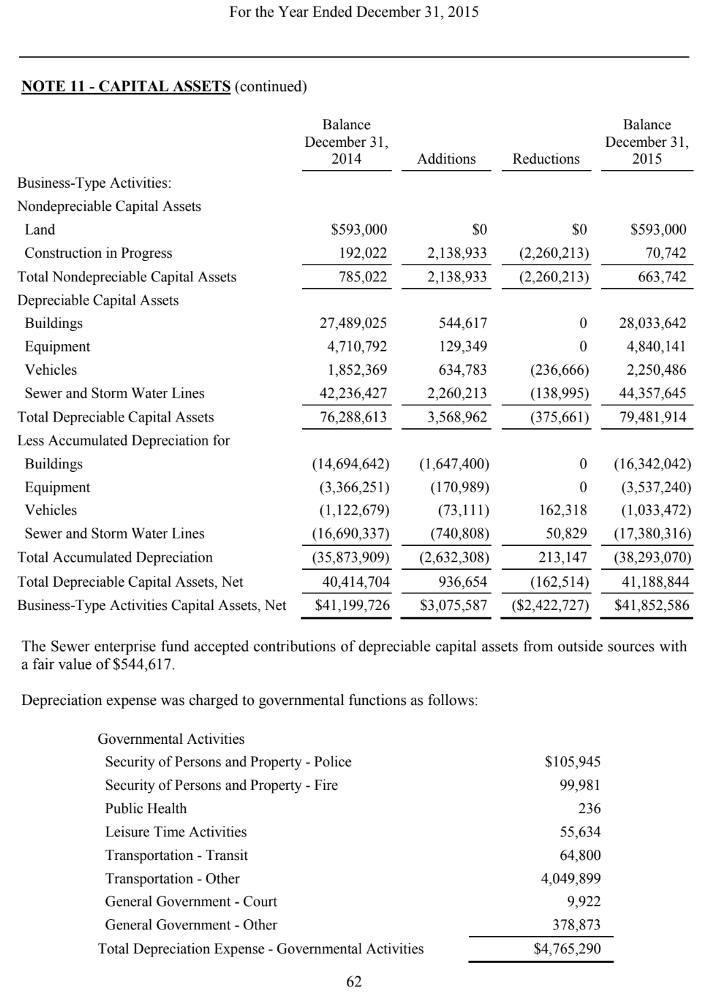
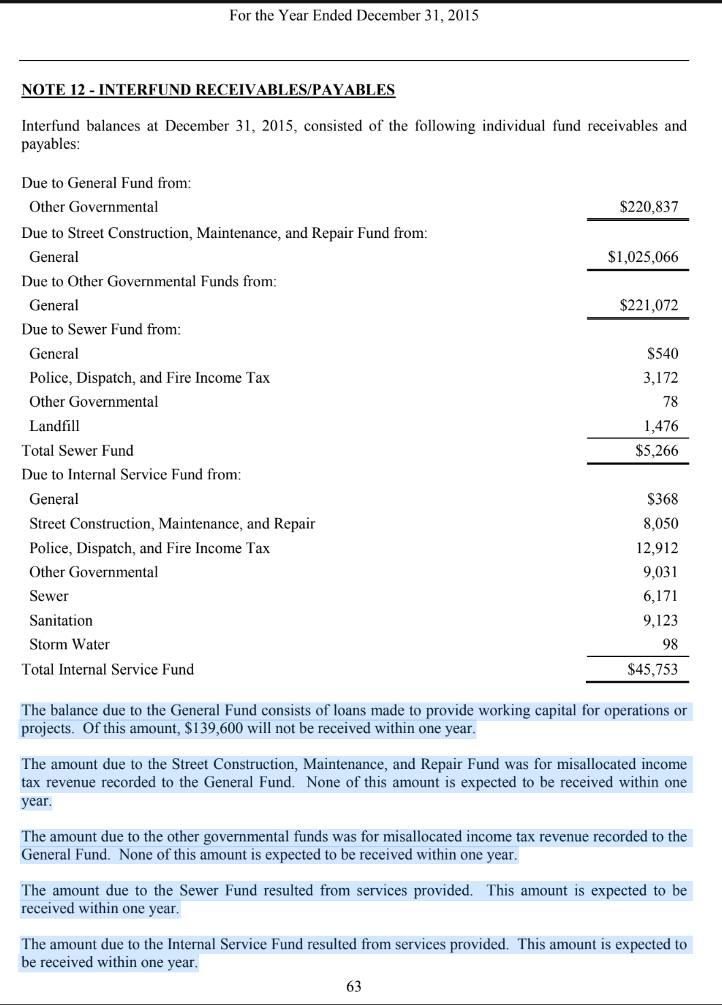
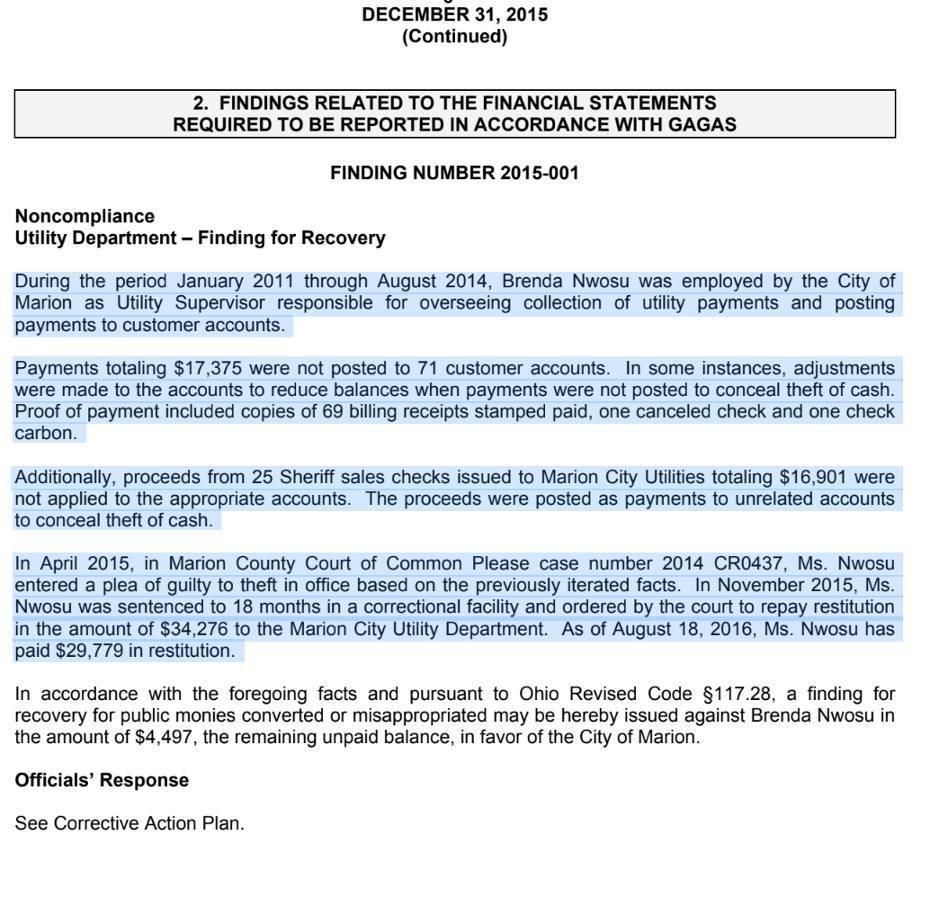
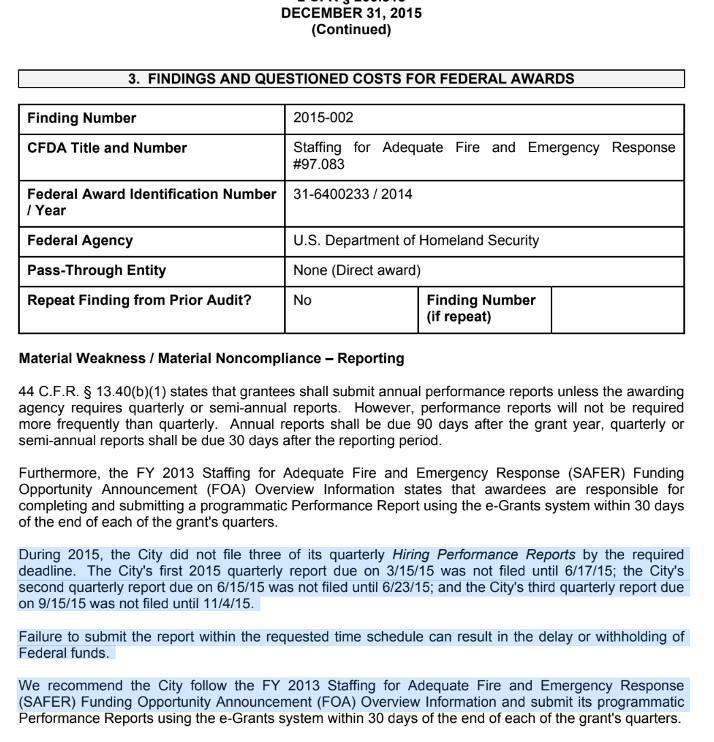
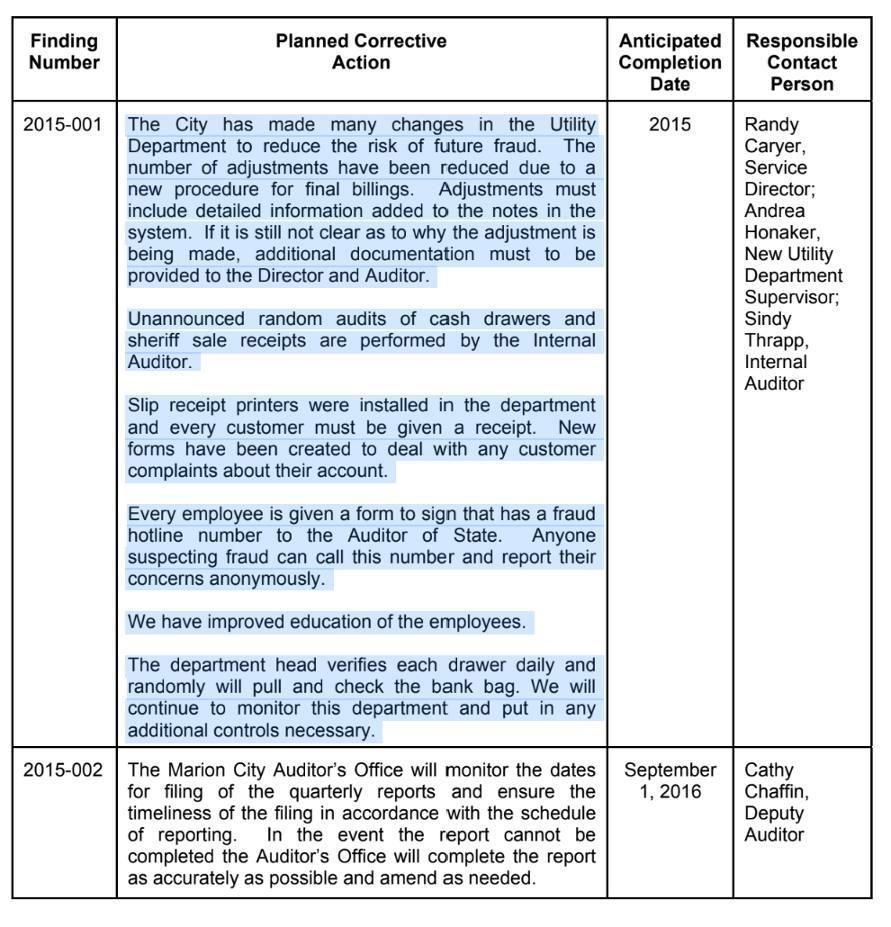
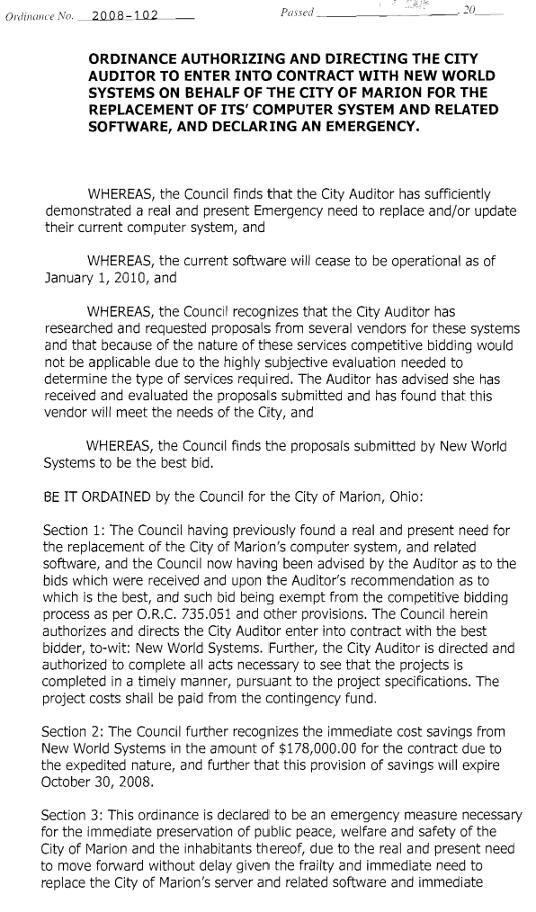
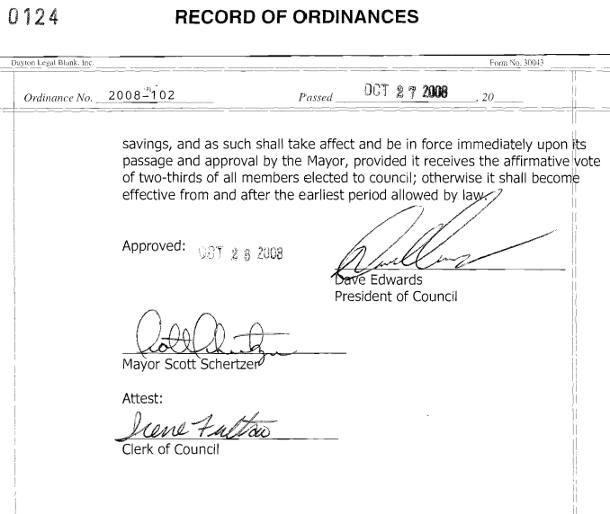
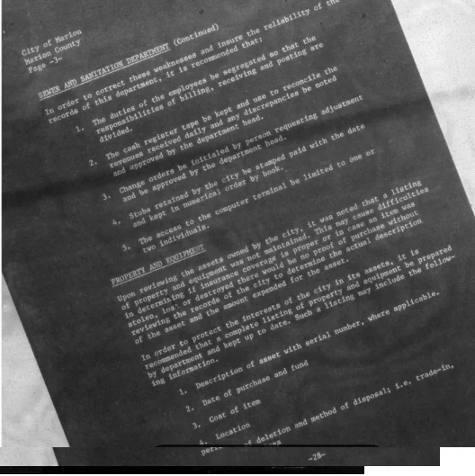
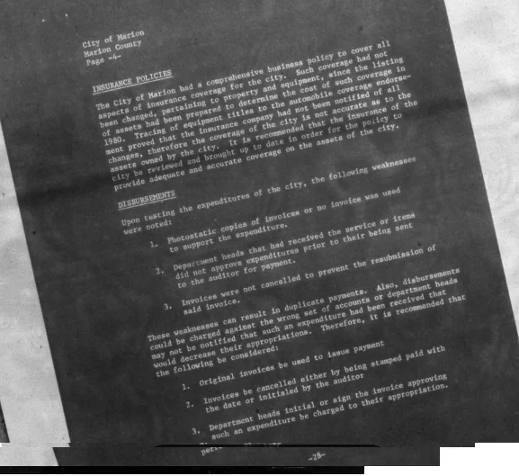
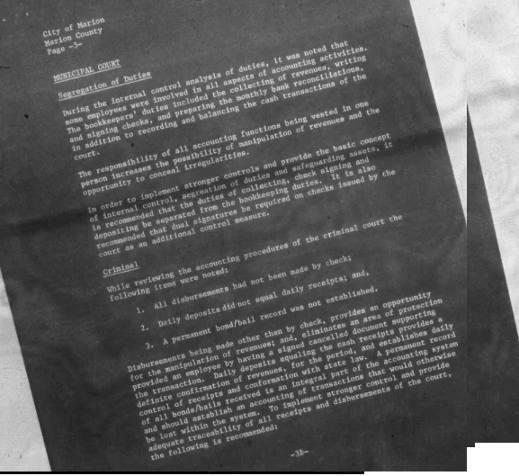
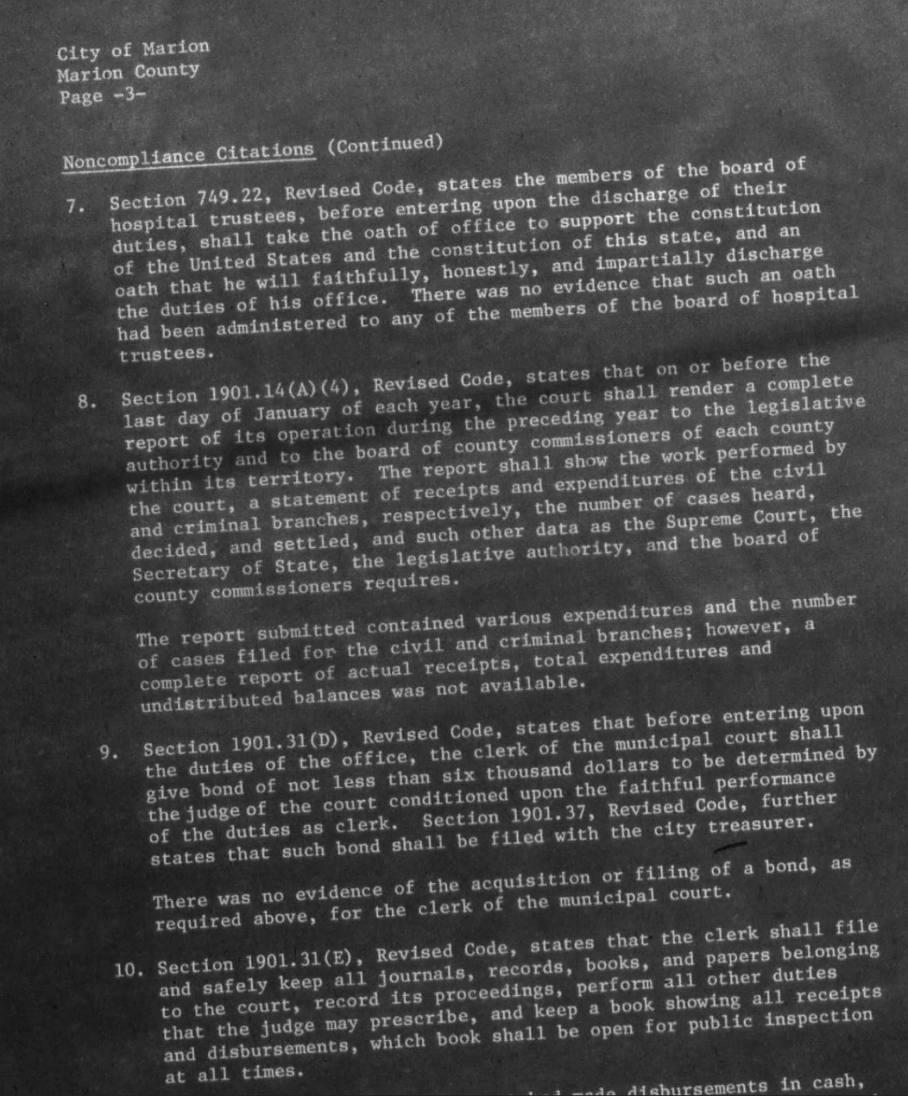
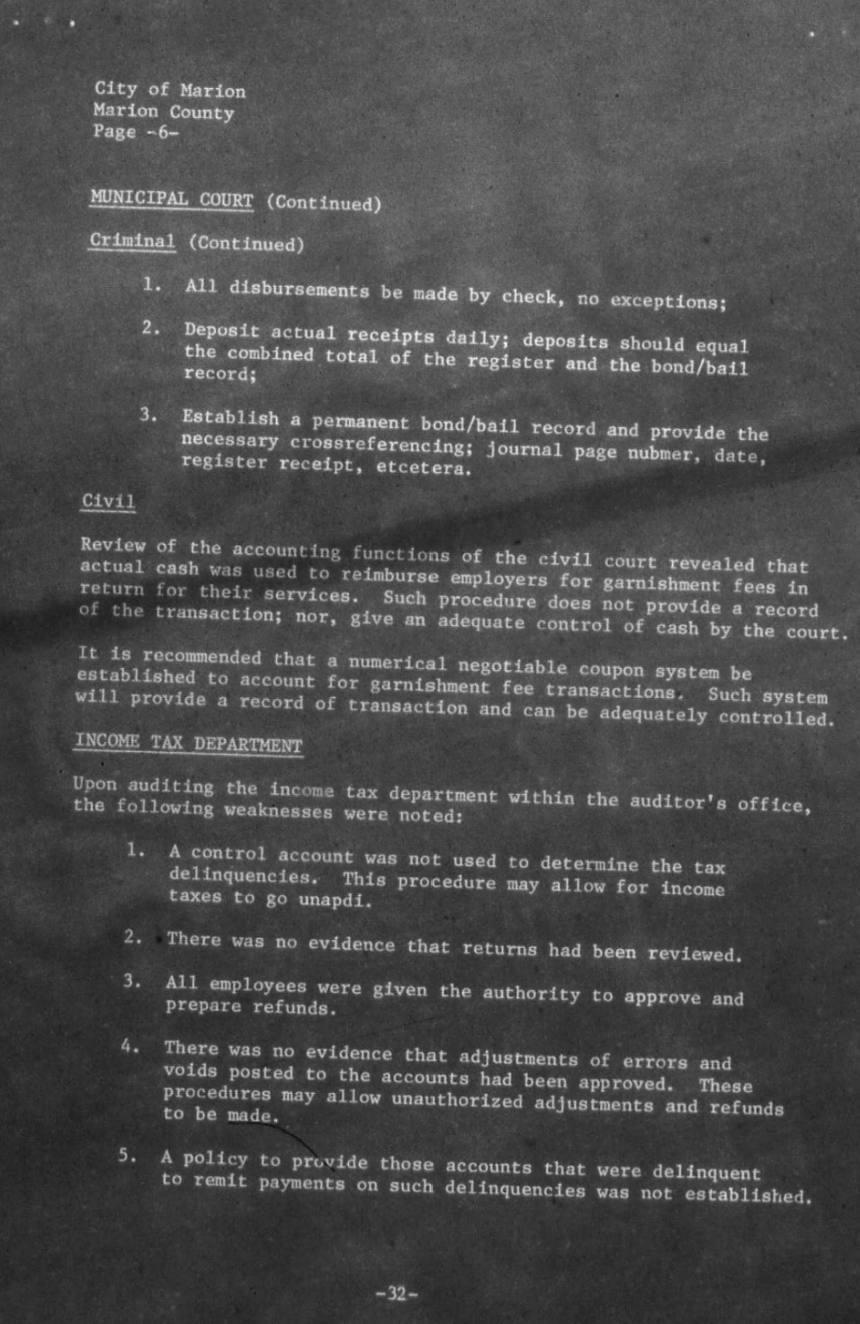
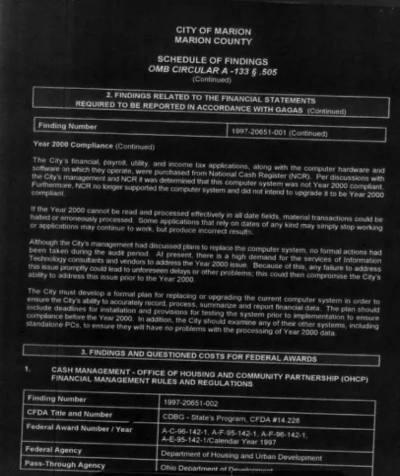
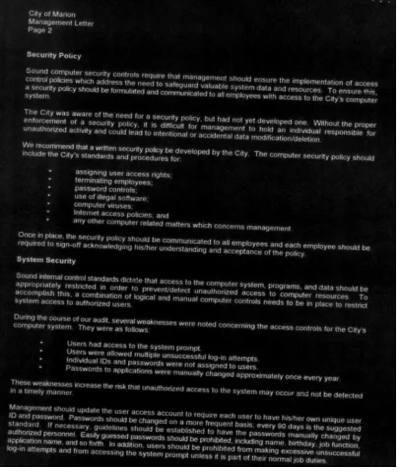
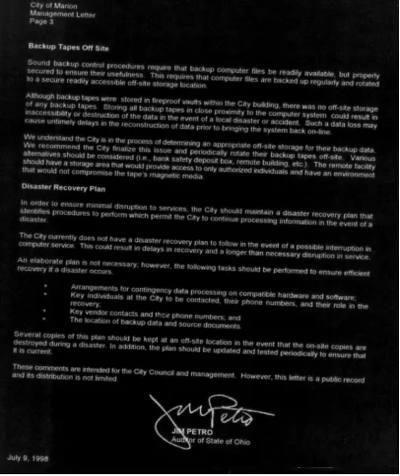
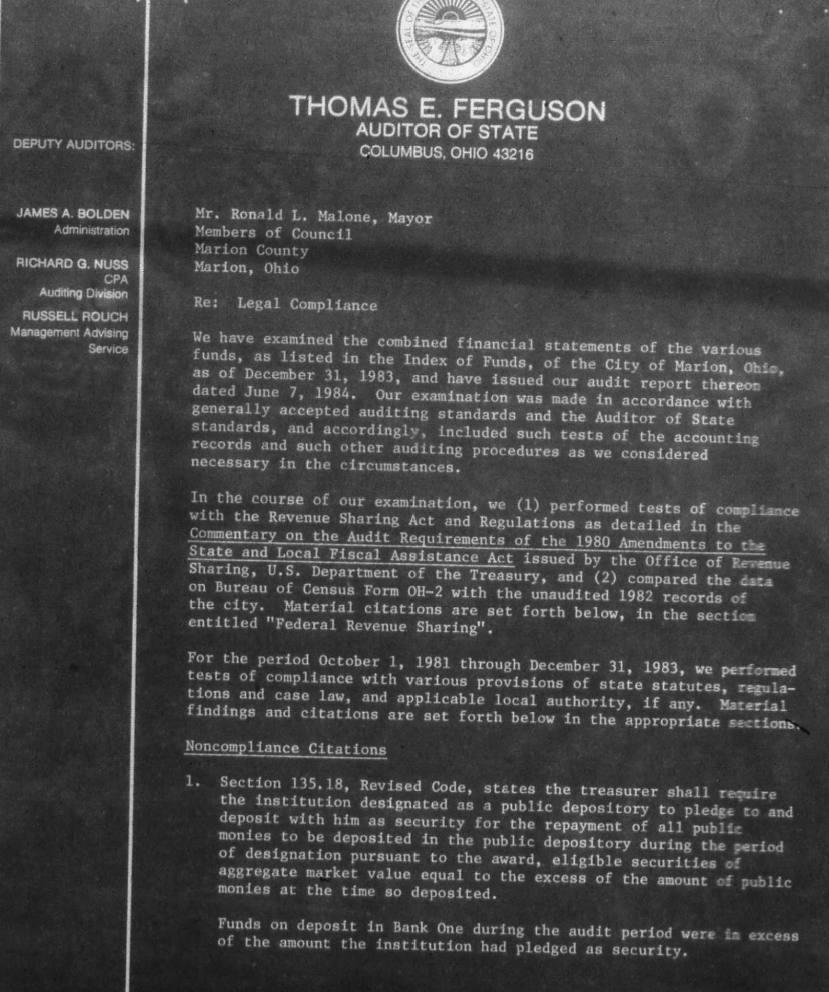

MARION WATCH INVESTIGATES: SILENT SABOTAGE SERIES
PART 4 — CHRONOLOGICAL OVERVIEW SERIES & SPECIAL REPORTS (2016–2026)
THE 2016-2017 AUDIT “LOW-RISK” LIE EXPOSED: MARION’S CAFR CON AND THE CONTINUANCE OF SILENT SABOTAGE
After the explosive 2015 Single Audit exposed an embezzlement, the public naturally expected a comprehensive, forensic crackdown.
Instead, the State of Ohio seems to have looked the other way.
To the public, the New World software was a standard, properly configured highly secure Tier-1 enterprise system.
But the administration kept the actual mechanics buried: safety controls were disabled, automated modules were bypassed, and internal permissions were left wide open.
THIS HAS ALL BEEN CONFIRMED!
By 2017, this marked the fifth consecutive year of these audits under the city’s Comprehensive Annual Financial Report (CAFR) format.
As we have explained in other articles, a CAFR is a self-reported financial package where the city administration compiles its own data and writes its own footnotes—effectively crafting their own alibis—before handing it over to the State Auditor to simply be seemingly rubber-stamped.
Over the many years that Marion Watch has been looking at this situation, we continually ask, “What is really going on here?”
We are not the only ones asking this, current and former officials, and employees have also asked this question, along with employees and officials from the Carr / Scherzer era!
While the Auditor of State (AOS) did not directly inspect the software’s backend operations, they cannot claim ignorance. Nor can the City of Marion, Ohioinformation technology department.
In the modern digital age, the forensic IT indicators of a compromised system manifest directly in the financial data.
Massive, unexplained swings in Accounts Receivable and unverified bad debt purges are textbook symptoms of failed logical access controls—symptoms recognized across the modern financial sector.
This is what caught the eye of Marion Watch team members who have decades of experience in enterprise information technology, as well as team members with financial experience many years ago. The citizen network, officials, and city employees from the era and beyond have all been highly suspicious of this situation and timeframe for many years.
The AOS didn’t need “God Mode” access to see if the system was broken; the mathematical anomalies in the exported ledgers proved it.
Yet, they rubber-stamped it anyway.
THE FORENSIC FAILURES & THE “CLEAN” ALIBI
Just one year after Marion’s financial ecosystem collapsed under the weight of manual ledger overrides and missing funds, the state auditors issued an unmodified opinion on the City’s financial statements for 2016.
• The official report declared no material weaknesses or significant deficiencies in internal control over financial reporting were identified.
• The 2015 utility embezzlement finding was listed as “Partially Corrected” simply because the convicted employee was ordered to pay restitution, and had paid back $33,180 of the stolen funds by May 2017.
Because the restitution check cleared, the state closed the book.
There is absolutely zero mention in the 2016 or 2017 audits regarding the reinstatement of the software’s safety alarms or the restriction of administrative access.
The AOS ignored the glaring forensic indicators embedded in the financial exports and treated a digital infrastructure crisis like a simple, closed embezzlement case.
A SMOKING CANNON: FALSIFYING FEDERAL OVERSIGHT
If ignoring forensic data wasn’t bad enough, the State of Ohio appears to have actively violated federal law to shield the City of Marion from heavier scrutiny.
The rules for federal Single Audits are governed by the Office of Management and Budget (OMB) under the Uniform Guidance (specifically 2 CFR § 200.520). To legally qualify as a “low-risk auditee,” a government entity must meet strict criteria for each of the preceding two audit periods. Specifically, the entity must have NO material weaknesses in internal control (GAGAS) and NO material-weakness findings on major (Type A) federal programs.
Functionally, this means if a city receives a Material Weakness on a major federal grant, it is legally disqualified from being a low-risk auditee until it completes two consecutive clean audit cycles.
In the 2015 audit, Marion received a massive Material Weakness regarding the federal SAFER grant for the Fire Department—a major Type A program. Because of this, Marion was legally blocked from “low-risk” status for both 2016 and 2017.
Look at what the State Auditor did anyway:
• In the 2016 audit, the State Auditor explicitly marks the question: “Low Risk Auditee under 2 CFR §200.520?” with a definitive “Yes”.
• Just one page later, on the 2016 Summary Schedule of Prior Audit Findings, the state openly acknowledges that the 2015 SAFER grant finding was a “Material Weakness/Non-Compliance”.
• They doubled down in 2017. In the 2017 audit, the State Auditor again marks “Low Risk Auditee” as “Yes”. They did this even though they cited the city for a Material Weakness on their federal CDBG grants in that exact same report.
This is a critical internal contradiction that completely undermines the legitimacy of the low-risk designation.
Why was this missed?
Under OMB rules, a “Low Risk” designation legally drops the federal testing threshold from 40% of total awards down to just 20%. By illegally checking that box, the state cut their own workload in half and actively shielded 20% of Marion’s federal grant money from forensic scrutiny.
THE SHELL GAME CONTINUES & THE ILLEGAL “ACCOUNTING TRICK”
With the state auditors running interference, the administration’s financial games continued.
Under Ohio law (specifically Ohio Revised Code Section 5705.10), all revenue derived from a specific tax levy must be credited to a special fund for that exact purpose and used ONLY for that purpose. Diverting restricted street repair funds to pay for the General Fund’s daily operations is a direct violation of state law.
The 2015 audit caught the administration artificially propping up the General Fund by “misallocating” over $1.24 million in restricted tax revenue, including $1,025,066 drained directly from the street repair fund. If you thought they stopped, look at Note 12 in the 2016 audit.
• The General Fund was caught holding another $334,487 owed to the Street Construction, Maintenance, and Repair Fund for “misallocated income tax revenue”.
In a Tier-1 system like New World, if properly configured, revenue doesn’t accidentally wander.
Tax distributions use hard-coded routing tables.
To “misallocate” $334,487, a user had to deliberately bypass those rules (if they were properly configured) to manually force restricted money into the General Fund.
To avoid an immediate audit citation for illegally transferring restricted funds, the administration used a paper trick: they recorded the diversion as an “Interfund Payable,” making it look like a temporary accounting accident. However, state guidelines dictate that interfund advances must be temporary and repaid quickly.
• By explicitly confessing in the audit notes that none of this misallocated money was expected to be received within one year, the city admitted this wasn’t a temporary mistake.
It was a long-term, unauthorized loan.
They forced the Street Fund to act as an unregulated, zero-interest bank to artificially prop up a failing General Fund, openly violating the legal restrictions placed on those tax dollars by the voters.
And once again, the state auditors let it slide.
THE BLOAT AND THE “MIRACLE” COLLECTIONS
To prove the Hawthorne Effect, you have to look at the baseline data from before the 2014 criminal investigation began. The administration was actively executing massive ledger dumps to force-balance the books.
• The 2012 audit reveals a staggering $1,191,803 “Provision for Uncollectible Accounts” purged strictly from the Sanitation Fund.
• The 2013 audit shows they purged another $305,600 from Sanitation.
• That is nearly $1.5 million quietly wiped from a single utility fund’s ledger in just 24 months.
When criminal investigators started pulling data in 2014, the administration panicked and slammed the brakes on these massive “Bad Debt” ledger write-offs. Because they stopped purging the ledgers, the uncollected utility bills artificially bloated over the next two years.
By the end of 2016, the city was carrying over $6.15 million in combined utility receivables ($2,213,370 in Sewer, $3,212,569 in Sanitation, and $732,606 in Storm Water).
Carrying over $6 million in uncollected utility bills is a massive red flag for insolvency.
By 2017, the administration had to start bringing those numbers down, but doing another massive purge all at once would trigger alarms.
INSTEAD, THE 2017 AUDIT SHOWS A HIGHLY SUSPICIOUS MATHEMATICAL CONTRADICTION
• In 2017, the Sewer Fund accounts receivable dropped by $325,104, and the Storm Water receivable dropped by $95,365. The administration casually explained away this massive $420,000+ drop by claiming it was “due, in part, to improved utility collections”.
• But while claiming “improved collections” for Sewer and Storm Water, the city officially established an “Allowance for Uncollectibles” totaling $161,804 strictly against the Sanitation Fund’s accounts receivable.
• The proprietary fund statements logged this exact $161,804 figure as a direct “Bad Debt” operating expense for Sanitation.
This is mathematically impossible.
Sewer, Sanitation, and Storm Water are usually bundled onto a single, unified municipal utility bill. When a resident pays, the system distributes the cash proportionally.
You cannot experience a miraculous wave of residents suddenly paying off $420,000 in Sewer and Storm Water bills while simultaneously triggering mass defaults strictly in Sanitation on the exact same invoices.
This proves the ledgers weren’t reflecting real customer payments.
The administration began purging the bloated ledgers again in 2017, confessing to the $161,804 write-off in Sanitation to look compliant, while masking the $420,000+ drop in the other funds as “improved collections” to avoid triggering the State Auditor’s attention.
REPEATING HISTORICAL CRIMES IN PLAIN SIGHT
If you dig past the clean opinions and look into the footnotes of these audits, you find the exact same financial deviance the city was cited for in the 1980s and 1990s—happening again right under the state’s nose.
• THE UNINSURED MILLIONS:
In 1998, auditors caught Marion leaving millions of public funds uninsured in local banks. In the 2016 audit, buried in Note 6, the city admits that $434,060 of the city’s bank balance was exposed to custodial credit risk because it was completely uninsured and uncollateralized.
• ILLEGAL OVERSPENDING:
In 1981, the city was cited for spending more money than legally appropriated. In 2017, Note 4 reveals the city illegally overspent its CDBG grant appropriations by $30,000.
• MASKING STRUCTURAL DEFICITS:
Several funds, including the transit system and drug court, operated with deep structural deficits. The city confessed in the notes that they delay transferring money to fix these deficits, choosing to only cover them “when cash is needed rather than when accruals occur,” actively masking the true financial bleeding.
• ROLLING SHORT-TERM DEBT:
In 1998, the Harding Center project collapsed into a $2.1 million deficit because the city repeatedly issued short-term notes without long-term revenue. In 2016 and 2017, the city did the exact same thing, rolling over $7.18 million and $7.68 million in short-term Bond Anticipation Notes year after year.
CHASING PENNIES IN THE DARK
To understand how completely the State Auditor missed the mark, look at what they DID aggressively flag.
• In 2017, the state issued a qualified opinion on a Community Development Block Grant because the city failed to spend a drawdown request below a $5,000 balance within a 30-day window.
• The state also cited the city for failing to follow small purchase procedures on a single expenditure that lacked proper price quotations.
The state auditors meticulously tracked a single missing price quote and a $5,000 cash management rule.
Meanwhile, they completely ignored a massive $657,856 growing deficit in the Aquatics Center, illegally lowered the city’s risk profile to bypass federal scrutiny, ignored nearly half a million dollars sitting uninsured in a bank account, and remained totally oblivious to the fact that the digital doors to the city’s entire enterprise financial system were still left wide open.
So, again we ask, what is really going on here?
OFFICIAL EXHIBITS & PRIMARY SOURCE RECORDS (2016–2017 Overview: The ‘Low-Risk’ Lie Exposed & CAFR Con)
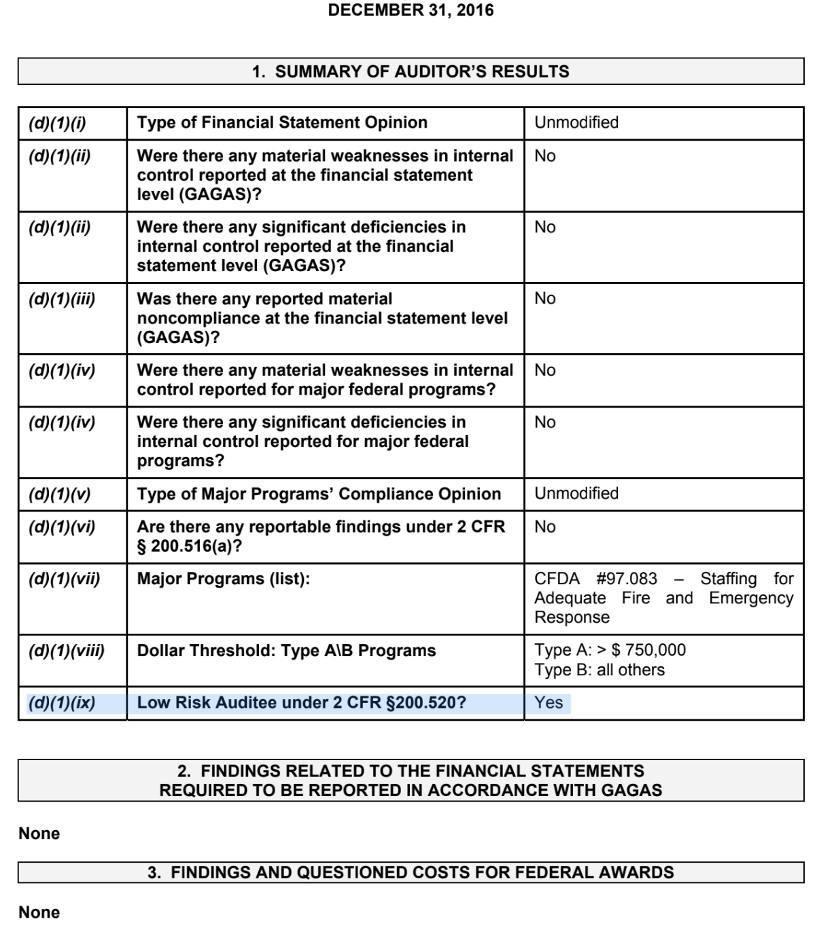
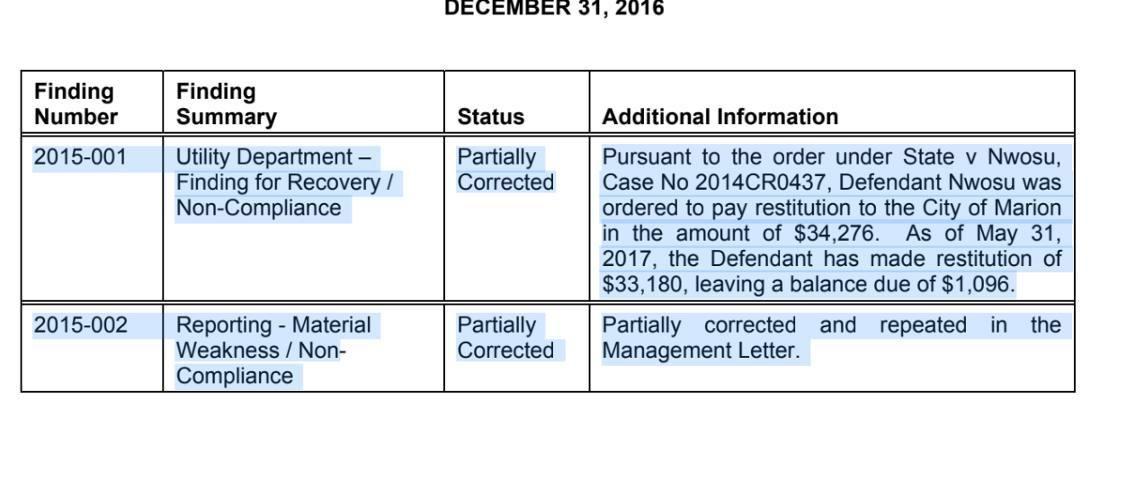
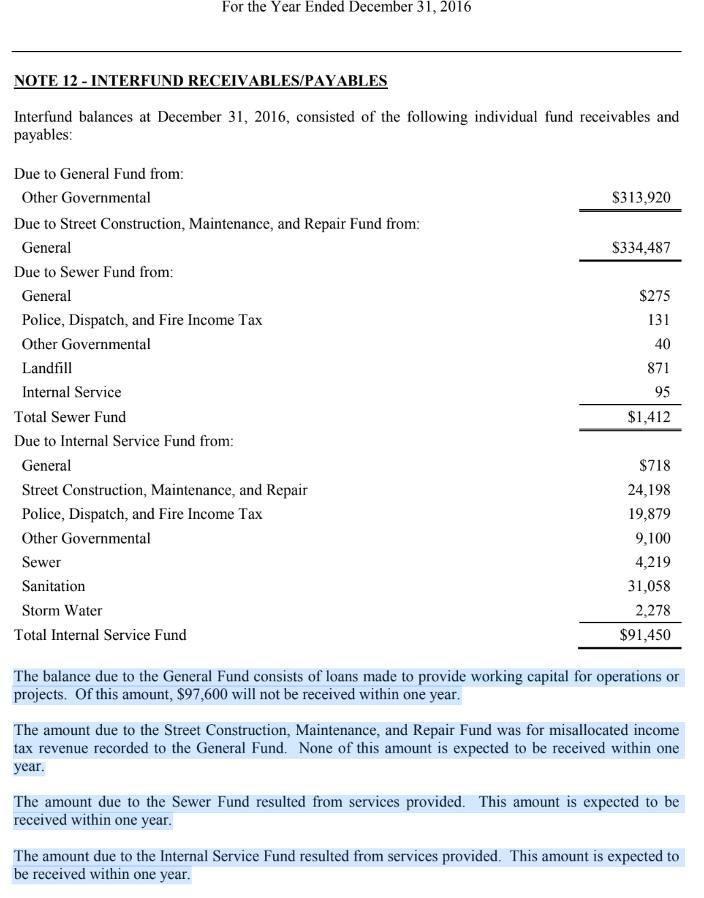
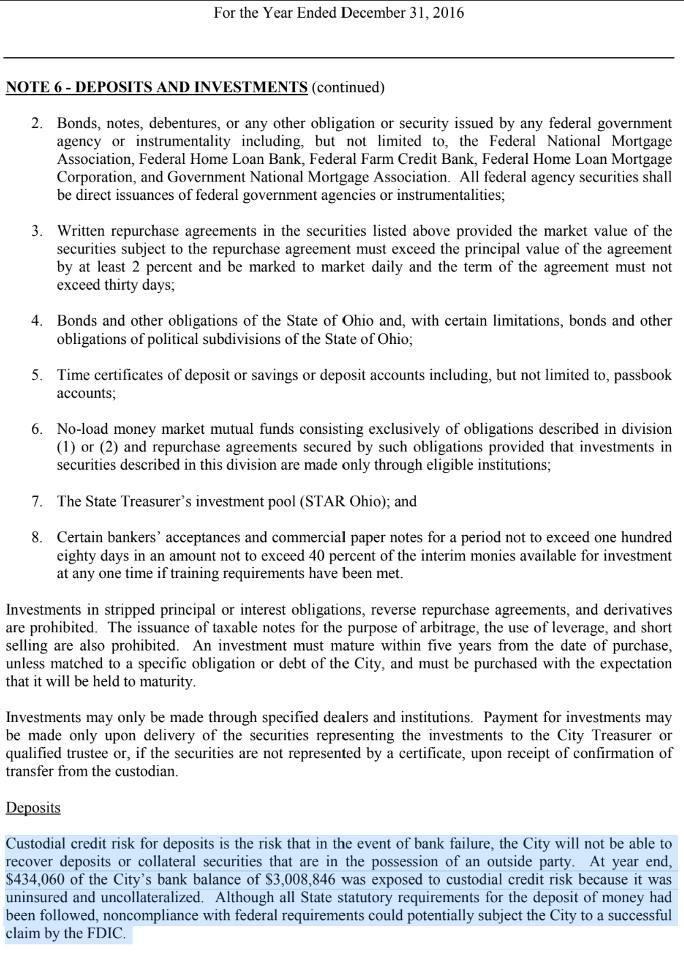
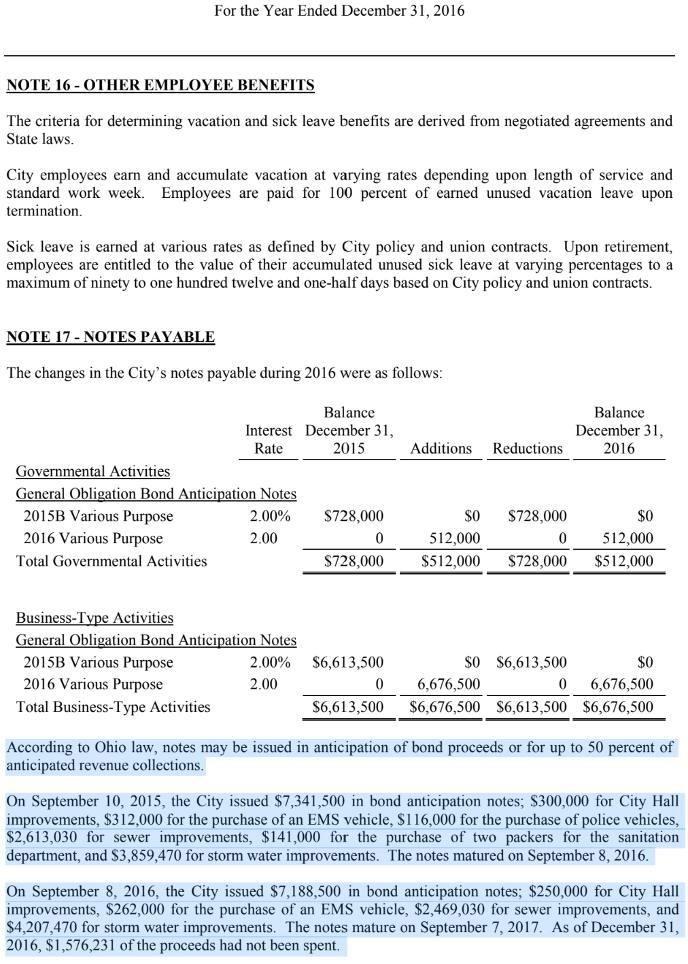
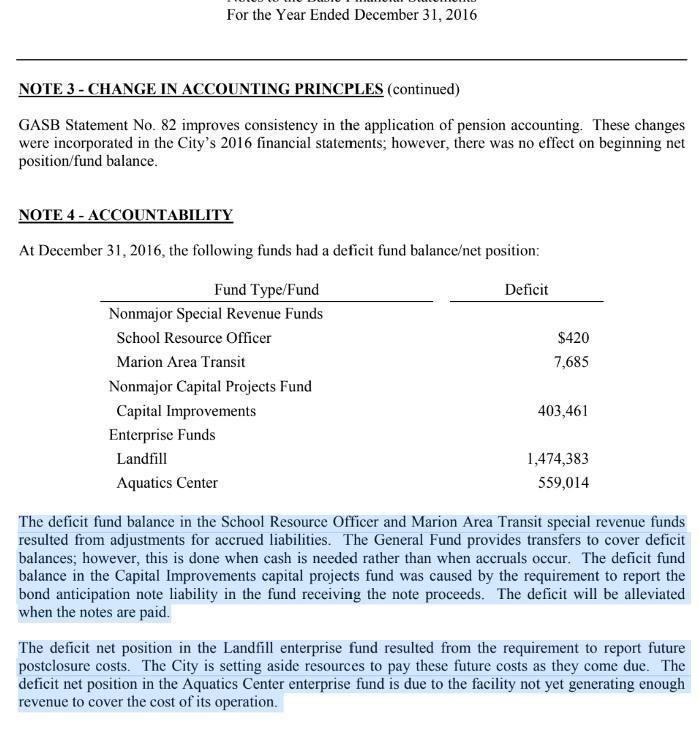
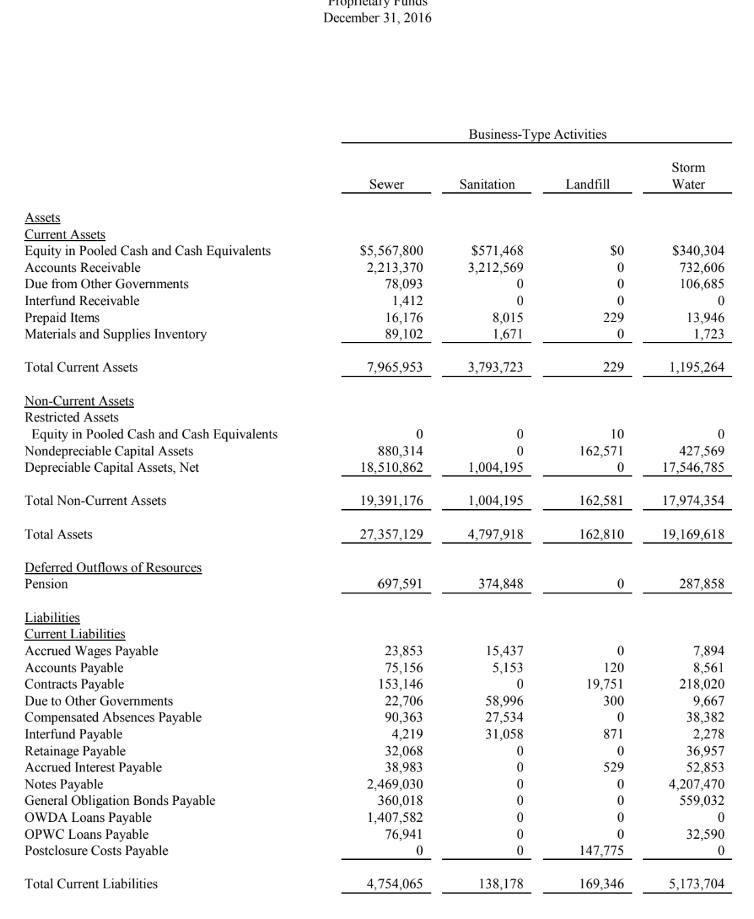
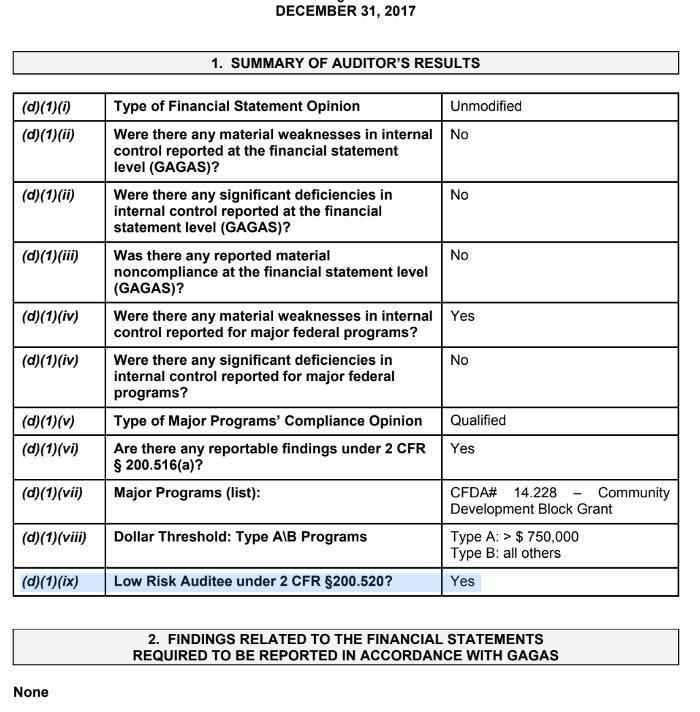
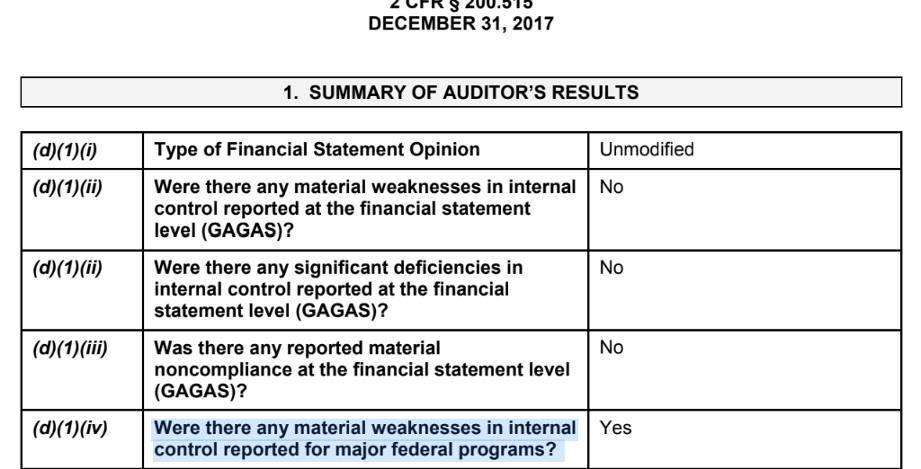
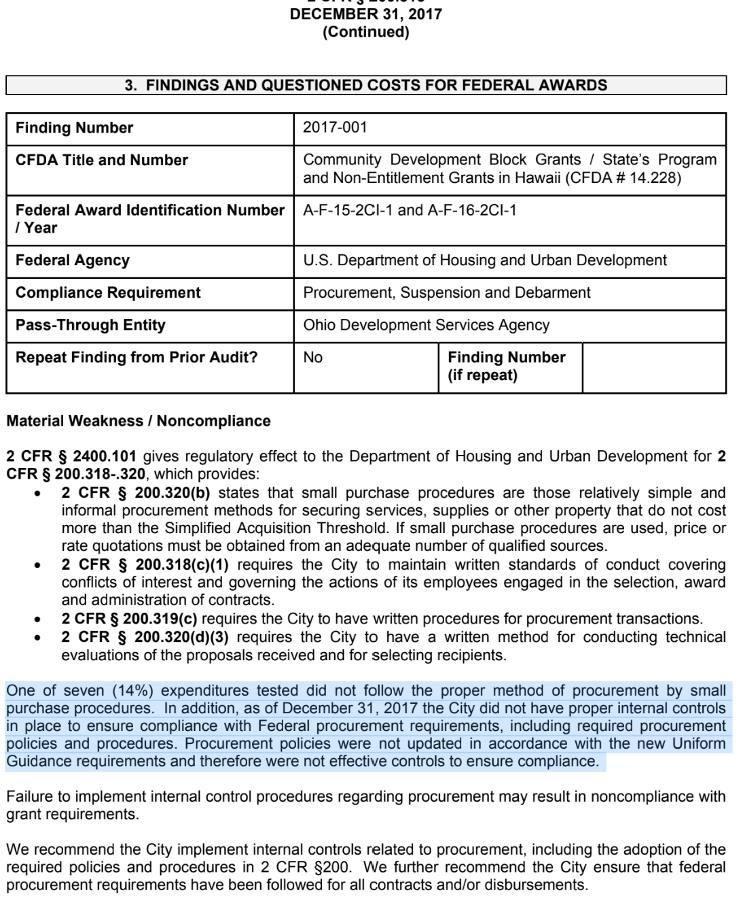
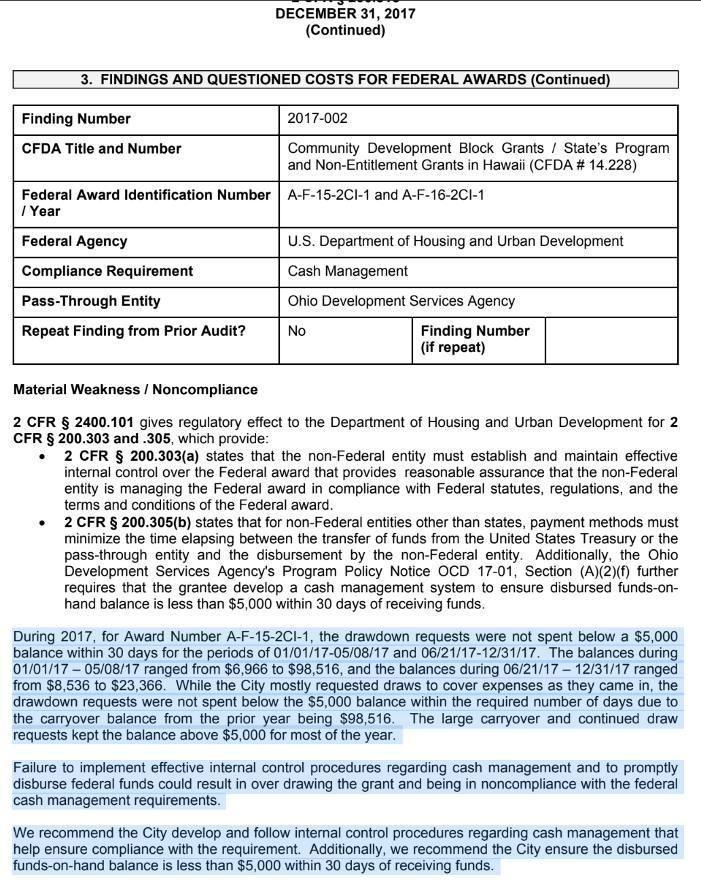
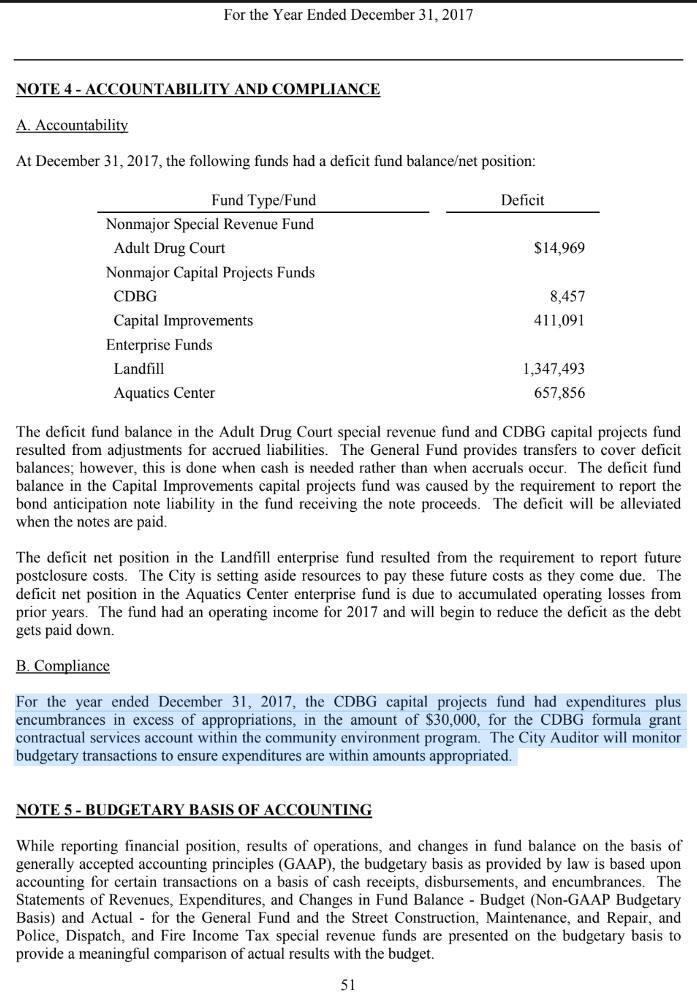
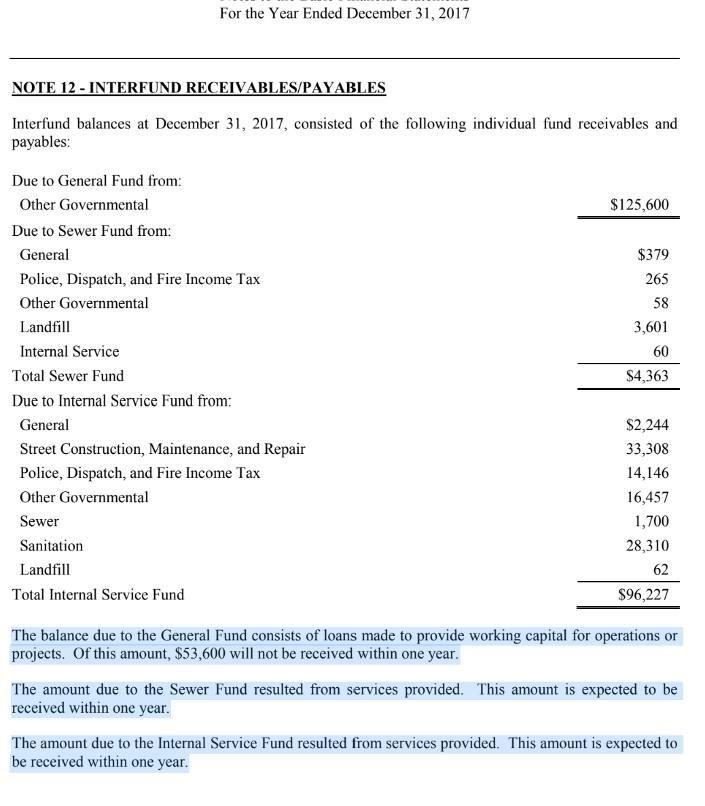
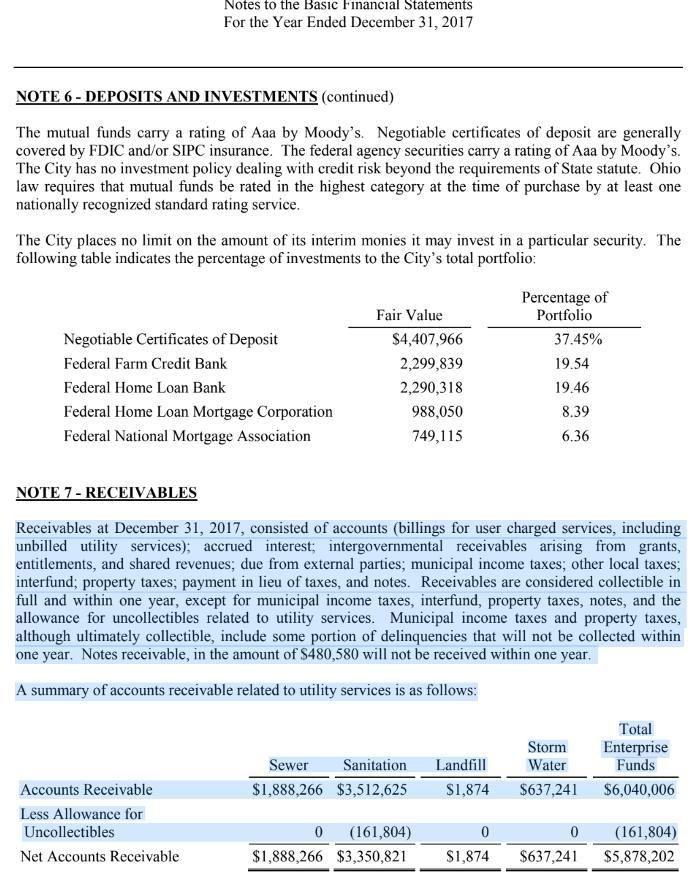
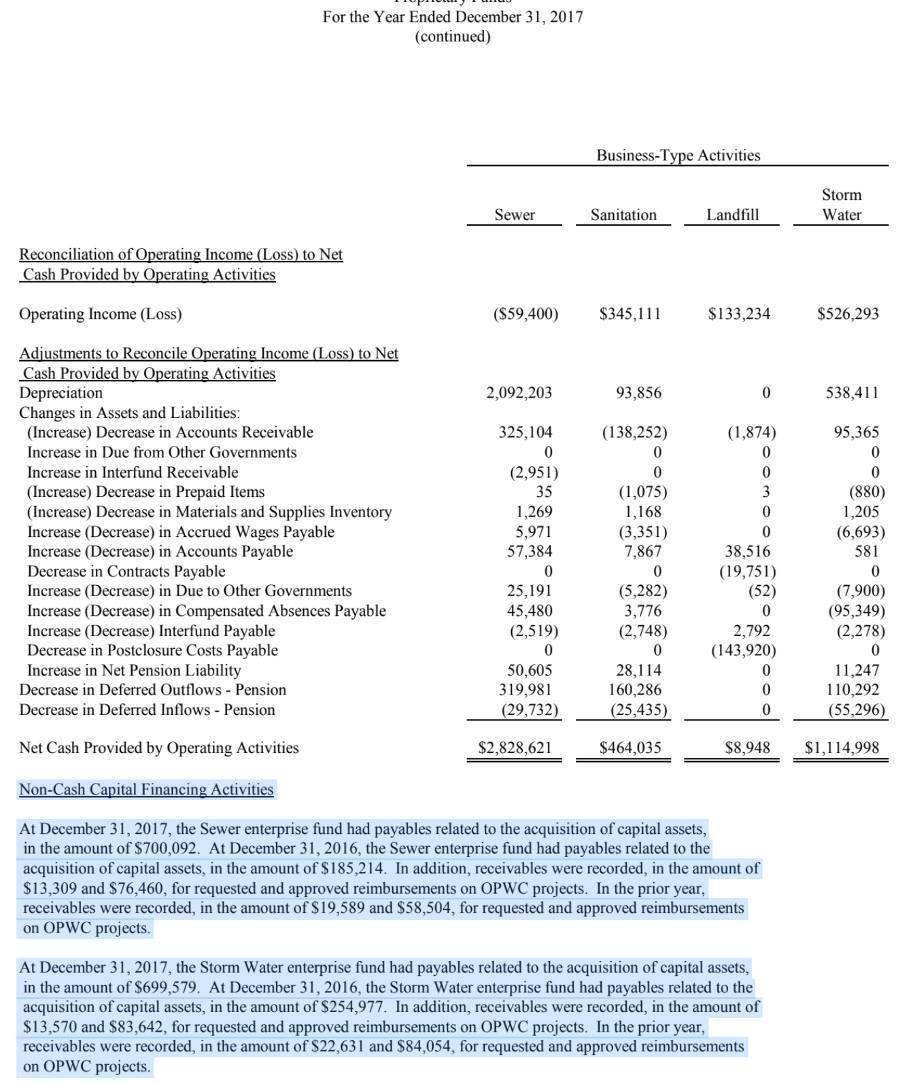
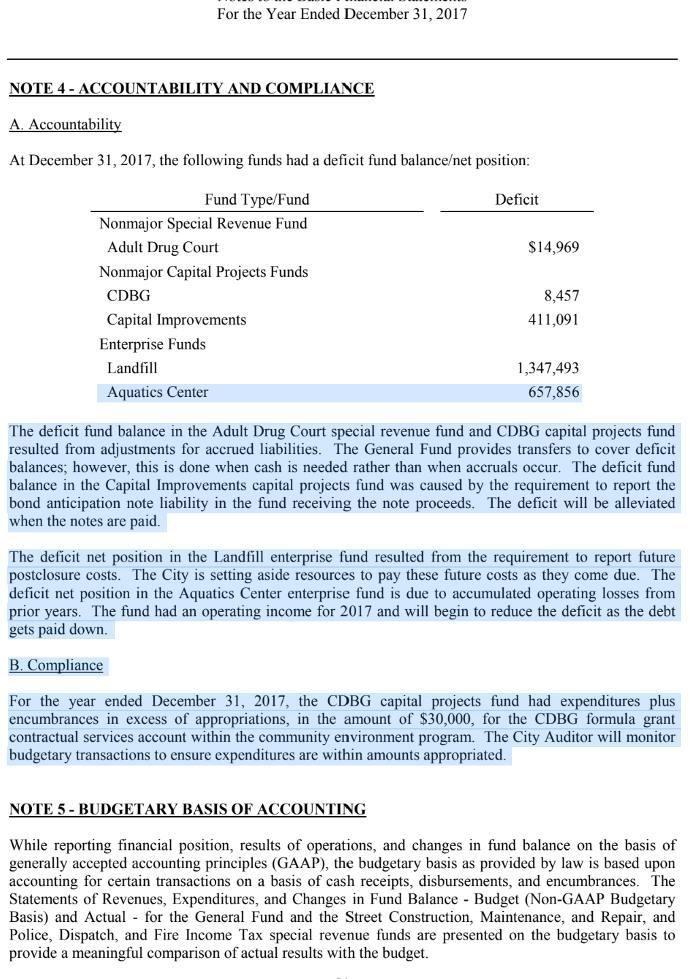
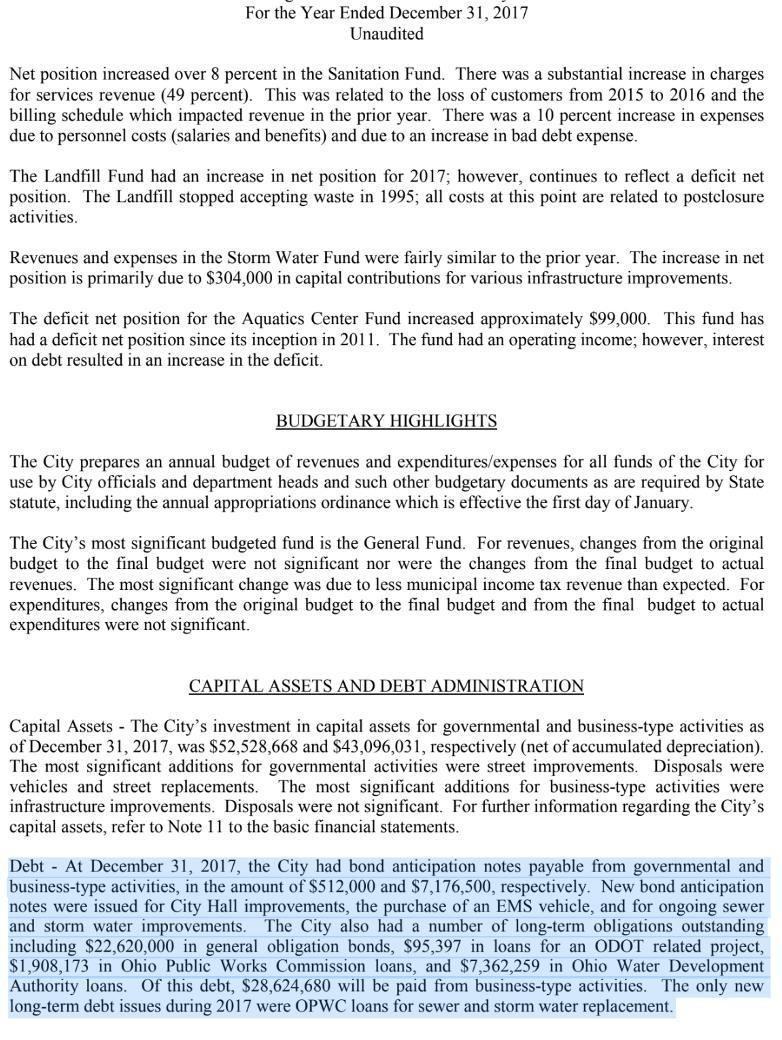
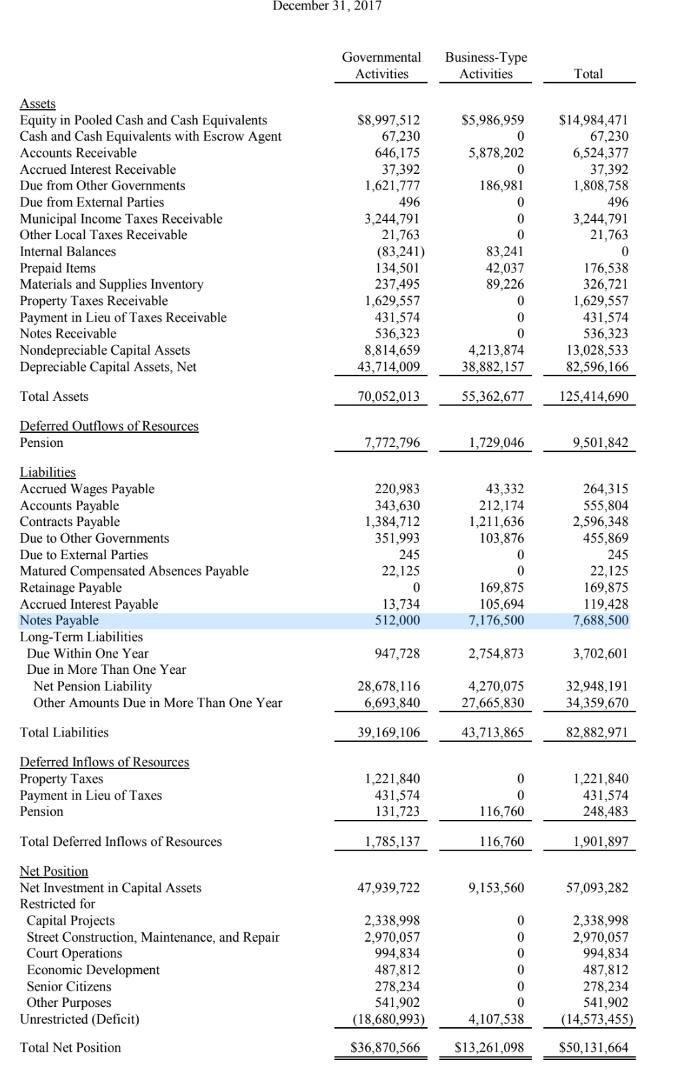
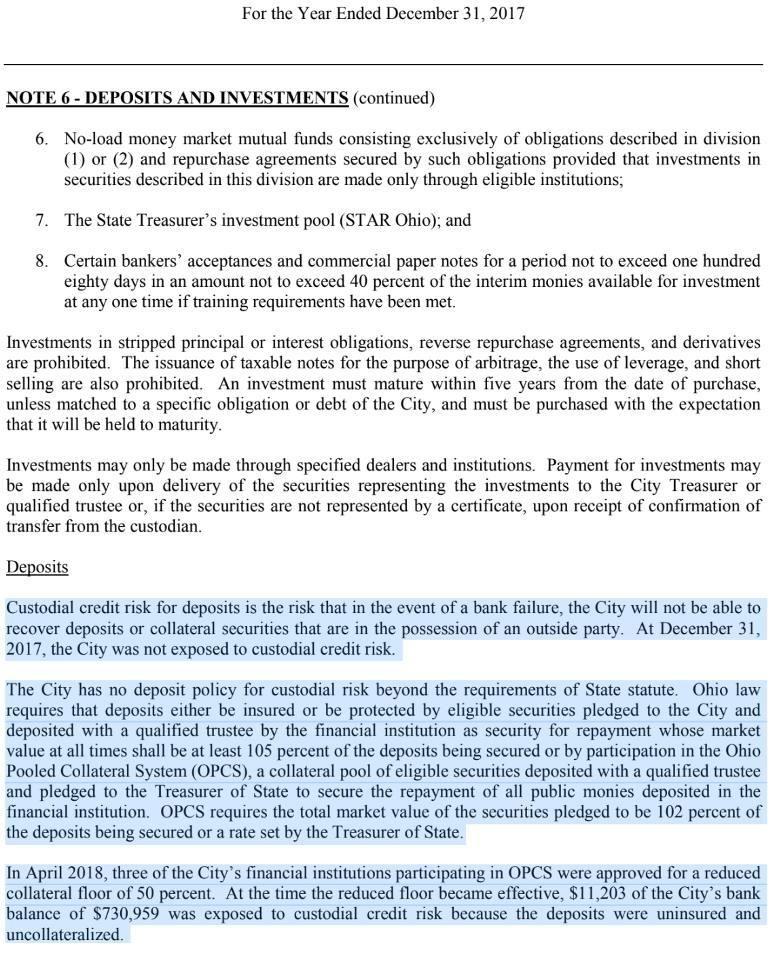
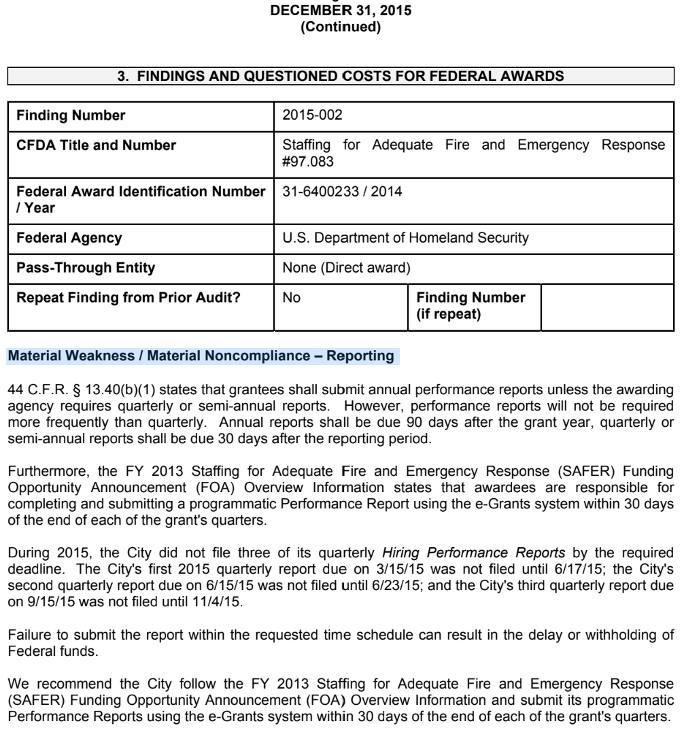
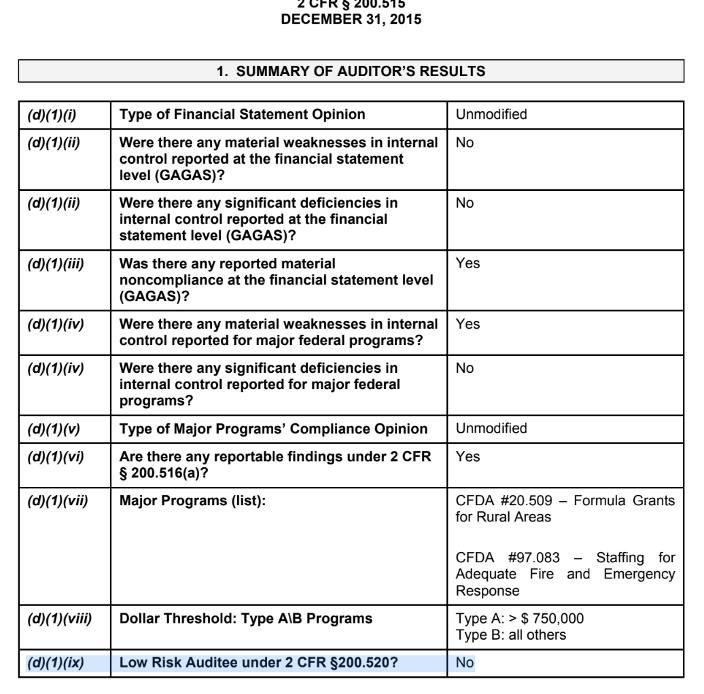
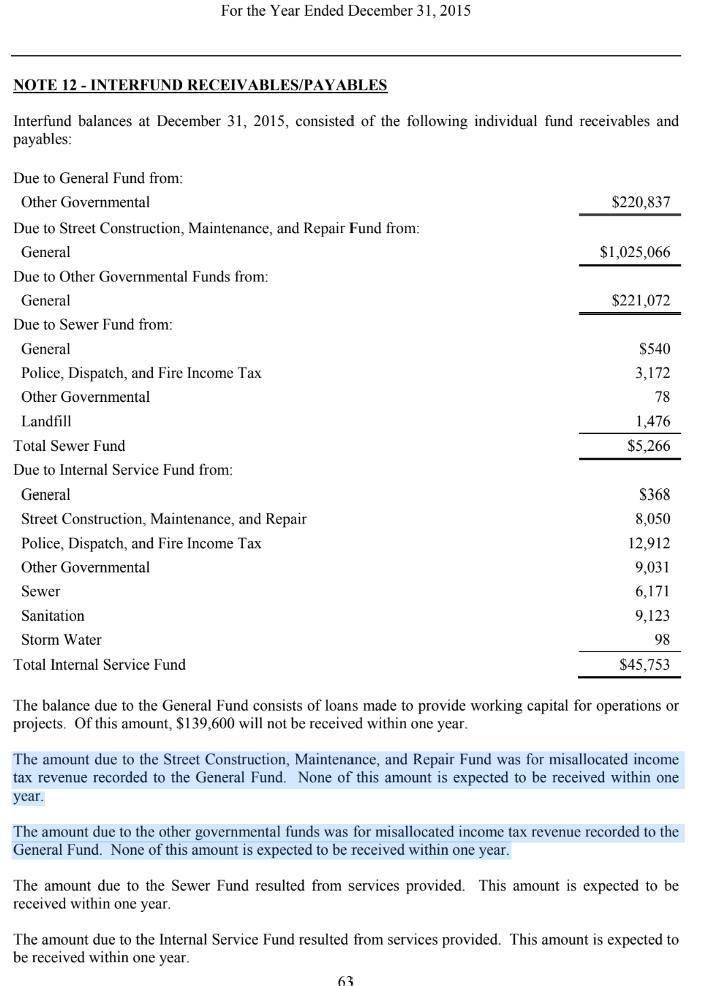
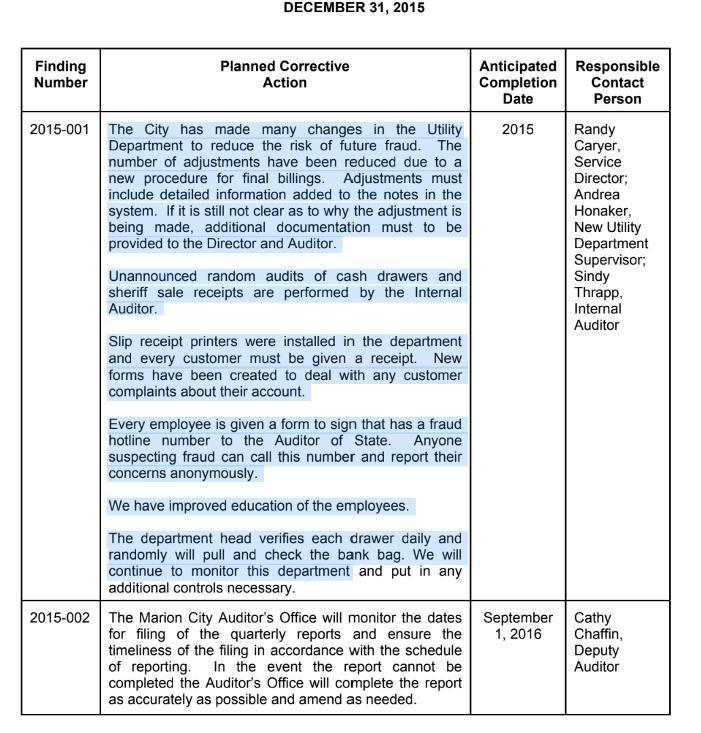
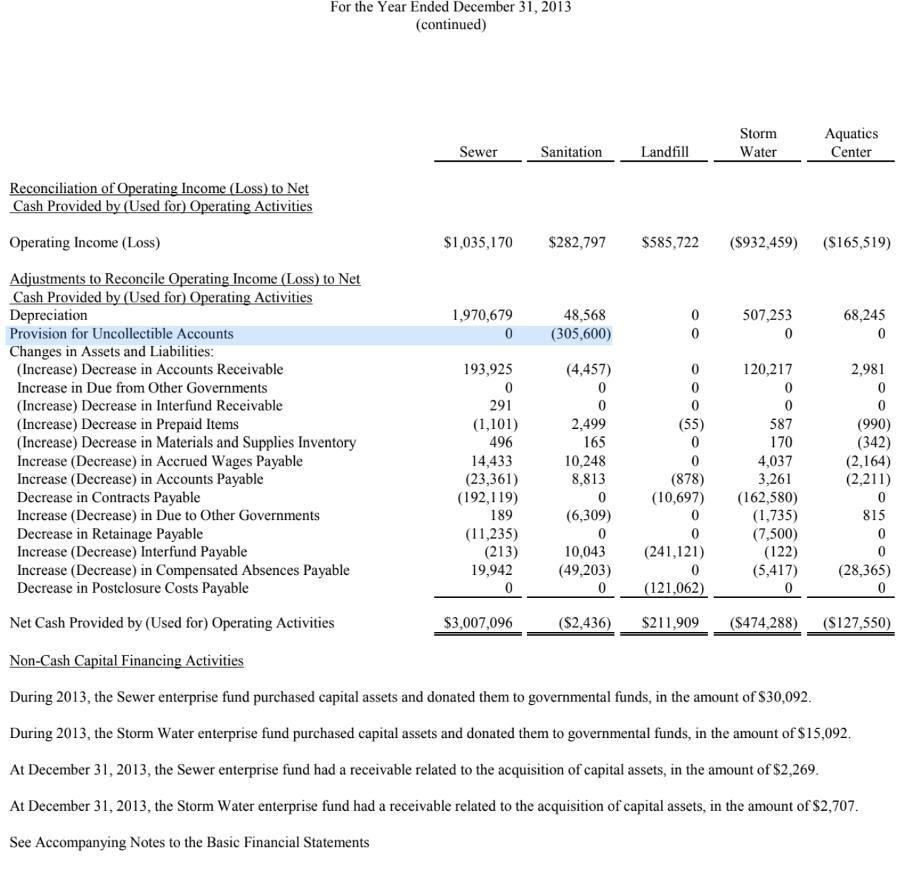
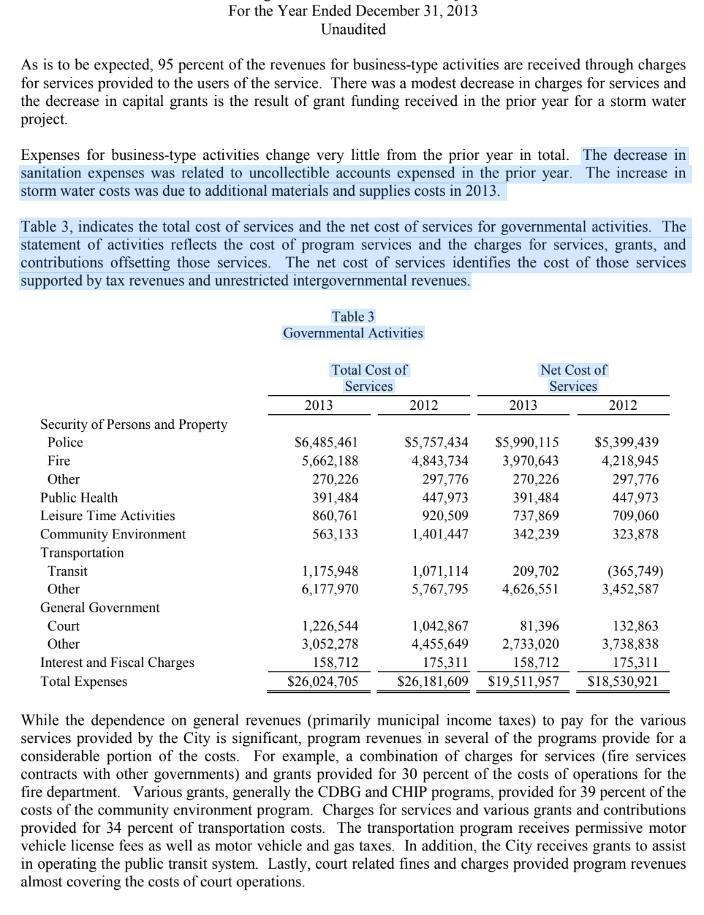
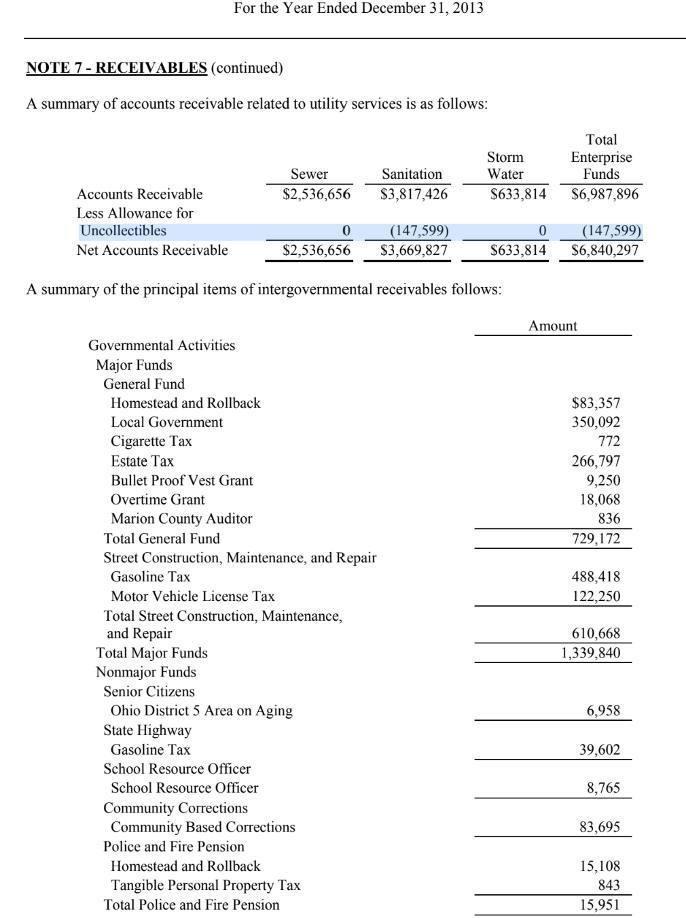
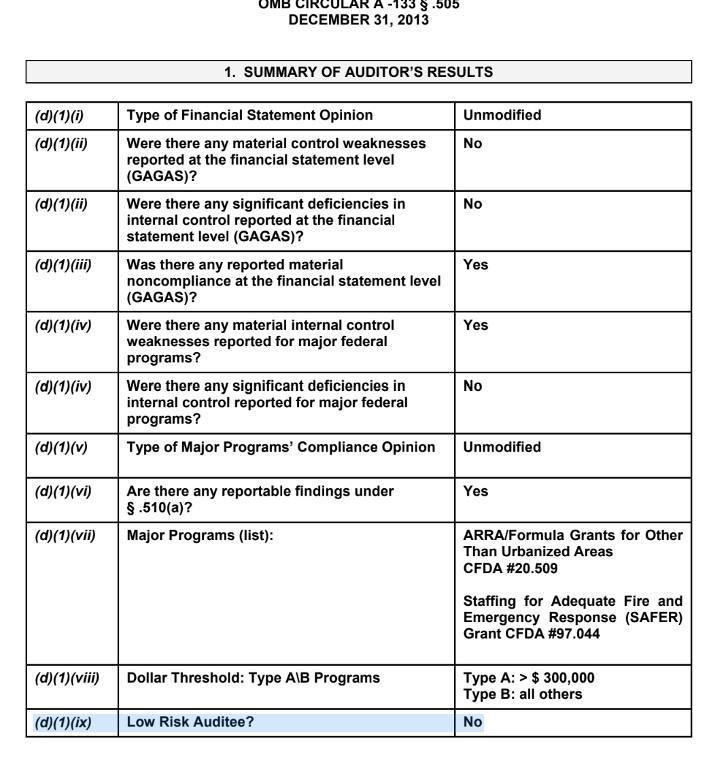
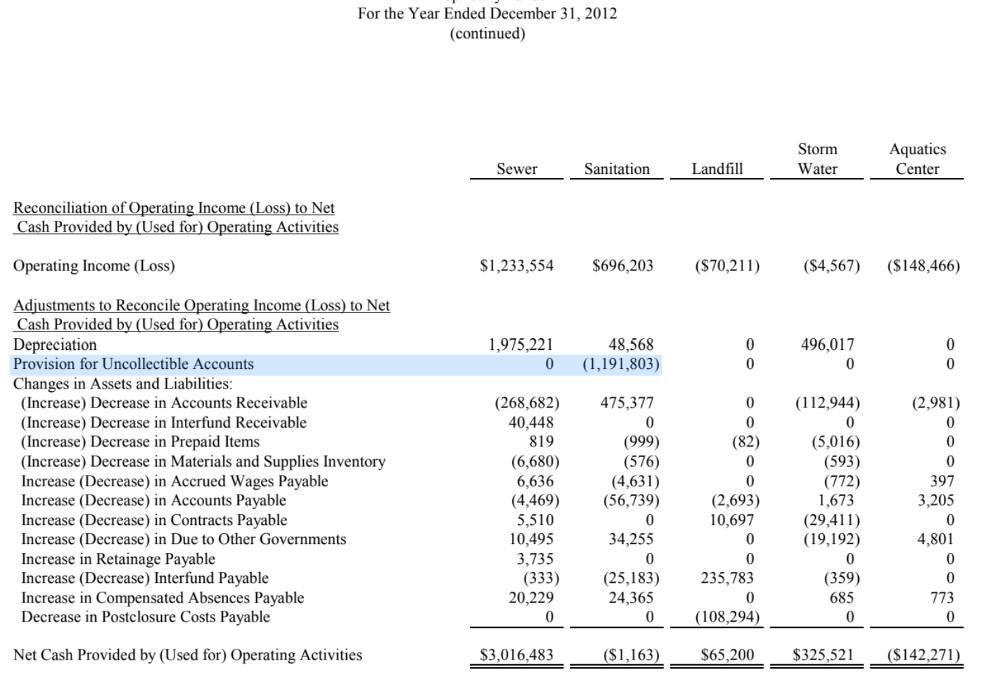
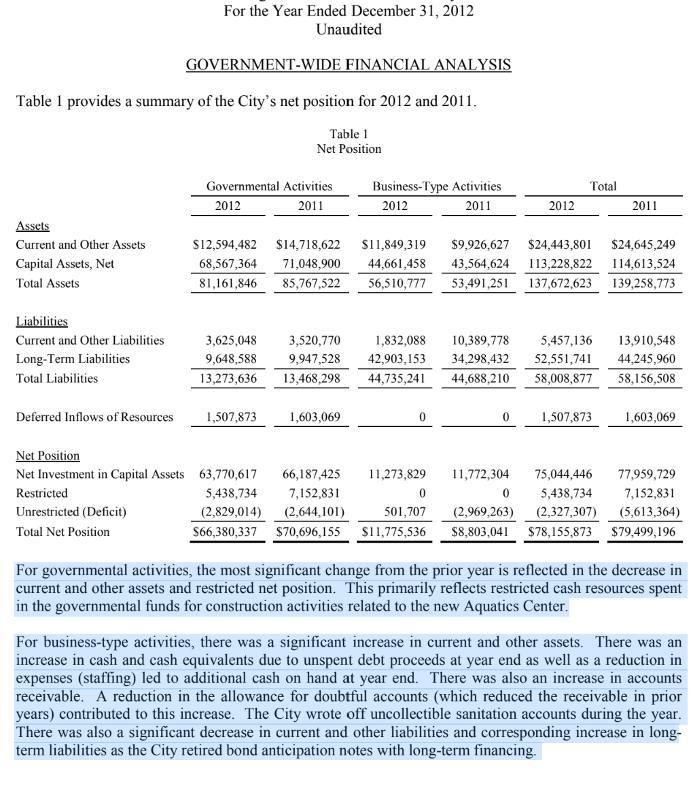
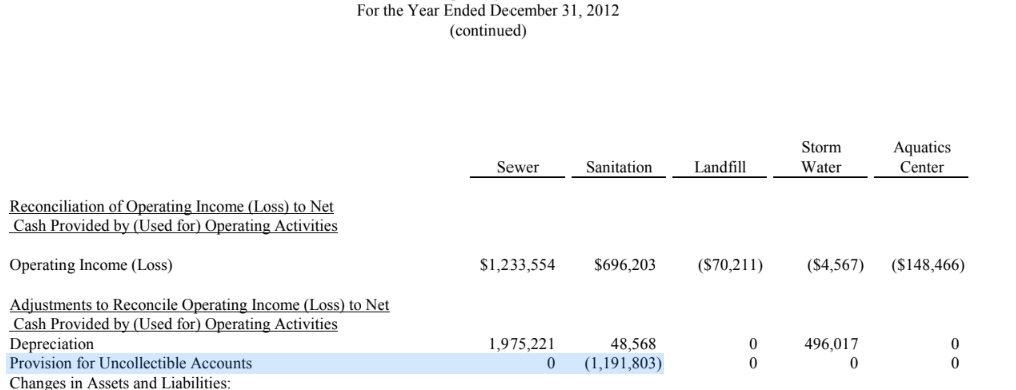
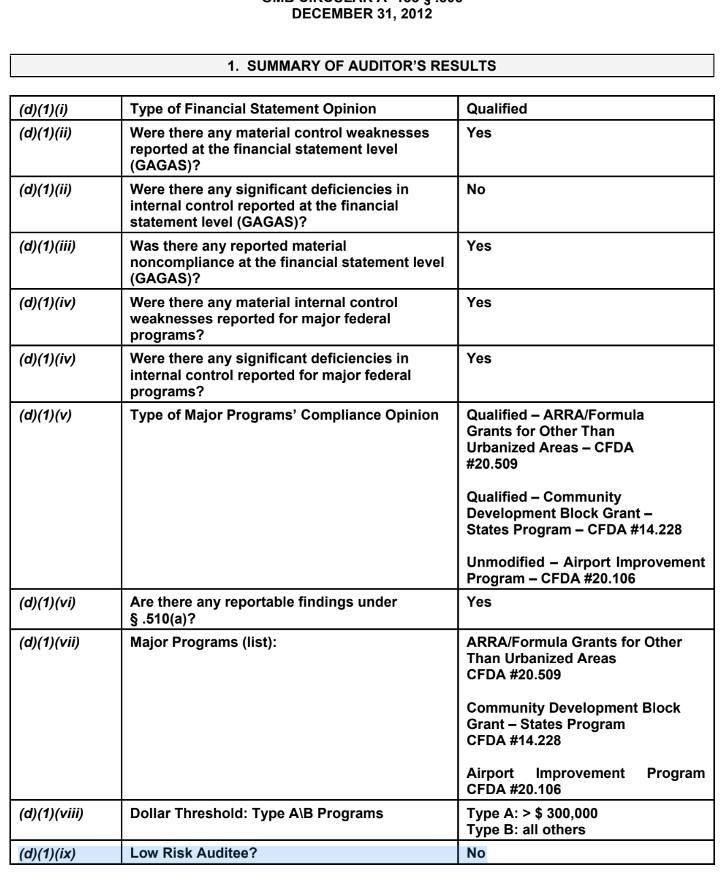
2018-2019 “AWARD-WINNING” AUDIT MYTH: HOW SILENT SABOTAGE BECAME STANDARD OPERATING PROCEDURE
When you spend decades building, managing, and securing enterprise IT environments, you know exactly what a compromised system looks like.
We recognized the catastrophic vulnerabilities in Marion’s financial infrastructure years ago, with suspicion beginning in 2016, because the forensic indicators were screaming.
This isn’t just about bad accounting.
This is an easy-to-understand explanation of what happens when a municipality runs Tier-1 enterprise software with the safety switches ripped out. As concise as possible to remain legally compliant and forensically accurate.
Marion’s fiscal emergency is the predictable outcome to drastically poor IT and financial hygiene, and governmental leadership under the former administration.
Due to the severity of the issues, and longstanding nature, along with the other serious issues with this system industry standards of IT and finance demand a non-negotiable forensic IT audit.
Additionally, the involvement of state and federal law enforcement is more than easily justified.
The former administration loved to tout their 2019 audit as “award-winning.”
But if you actually understand database logic and read the fine print, the 2018 and 2019 records prove that the “Silent Sabotage” wasn’t fixed—it was normalized.
Here is the verified, forensic reality of what was actually happening behind closed doors:
THE TOTAL COLLAPSE OF IT CONTROLS & “GOD MODE”
When a multi-million-dollar financial system is deliberately misconfigured, the software leaves a digital paper trail of the chaos.
• The Reconciliation Failure (“Unrecorded Activity”): An enterprise system relies on automated reconciliation modules to verify cash. If you bypass them, you get ghost money. In 2018, the administration was forced to use manual ledger plugs, including a negative $3,299 adjustment in the General Fund for “unrecorded activity”.
• By 2019, that failure exploded. The General Fund plugged a massive -$82,374. The Street Fund plugged -$8,873. The Police, Dispatch, and Fire Income Tax Fund plugged a staggering -$118,825.
• Over $210,000 moved through the city’s accounts entirely off the digital books in a single year. You do not get six-figure “unrecorded activity” lines unless the users are flying completely blind and forcing the math at year-end.
• Defeating the “Hard Stops”: Properly configured software freezes illegal spending. If a department exceeds its legal budget, the system initiates a “hard stop” and refuses to cut the check.
• Yet in 2018, the Capital Improvements fund successfully bypassed controls to overspend its limits by $5,127. Even worse, the Bond Retirement fund illegally appropriated $5,352 more than it actually had in available resources—literally authorizing the spending of money that did not exist.
• By 2019, the hard stops were defeated across the board:
the Police Department ($237), Capital Improvements fund ($9), Sewer fund ($957), and Storm Water fund (a massive $11,978) all successfully executed expenditures in excess of their legal appropriations. “God Mode” was actively overriding the guardrails.
• Ghost Assets & Missing Infrastructure:
You cannot track digital logic if you cannot track your physical hardware. In 2018, the State of Ohio issued a Material Weakness because the city had not performed a physical inventory of its capital assets in over two years, warning this could result in “loss, misappropriation, theft, or diversion of assets”.
• In 2019, the exact same Material Weakness was issued again. The 2019 audit explicitly lists the 2018 inventory failure as “Not Corrected”.
THE HUMAN ELEMENT: PAPER CHASING & SPREADING DEFICITS
Why were there six-figure “unrecorded activity” lines? City employees have independently confirmed to our investigative team that during this timeframe, staff were reduced to digging through paper files, and then manually forcing the budgets to work at year-end.
This manual override environment masked catastrophic hemorrhaging:
• The Police & Fire Bleed:
In 2018, the Police, Dispatch, and Fire Income Tax Fund generated $7.98 million in revenue but executed $13.87 million in expenditures. To prevent a total collapse, they forced a $5.95 million bailout transfer from the General Fund.
• In 2019, it happened again:
$8.16 million in revenue against $13.92 million in expenditures, requiring another $5.93 million bailout.
• The Spreading Deficits:
In 2018, the Adult Drug Court plunged into a deficit fund balance of $3,945. By 2019, the bleeding spread to the Municipal Court Docket Specialist fund ($1,035 deficit) and the Marion Area Transit fund ($1,576 deficit).
• Masking the Deficits (The Accounting Trick):
Just as they were caught doing in 2017, the 2019 audit reveals the city continued to mask these structural deficits by deliberately delaying transfers. The city confessed in the notes that they only transfer money to cover these deficits “when cash is needed rather than when accruals occur”—an accounting trick to hide the true financial bleeding at year-end.
• The Aquatics Center & Landfill Black Holes:
Legally, enterprise funds must be self-sustaining.
Yet in 2018, the Aquatics Center operated with a massive deficit net position of -$772,832, and the Landfill operated at -$1,196,546. In 2019, the Aquatics Center deficit remained at -$755,248, and the Landfill at -$979,282.
• Uninsured Cash: Financial management was so reckless in 2019 that $18,439 of the city’s bank balance was left completely exposed—entirely uninsured and uncollateralized.
THE CAPITAL BOND DRAIN: BURNING LONG-TERM DEBT
How did they survive while bleeding cash? They did the unthinkable in municipal finance: they took out 20-year infrastructure loans and blew the money on non-capitalized items to keep the city afloat.
• In 2018, they burned $425,040 from the 2010 Bonds, $837,731 from the 2012 Bonds, and $929,287 from the 2018 Bonds on items which were not capitalized. They also burned $1,205,392 from OWDA utility loans on non-capitalized items in the Sewer fund.
• In 2019, the raid continued: $326,800 (2010 Bonds), $827,731 (2012 Bonds), and $903,036 (2018 Bonds) were spent on non-capitalized items, alongside another $923,171 from OWDA Sewer loans.
They were saddling taxpayers with two decades of debt for expenses that vanished the same year they were paid.
THE SHIFTING SHELL GAMES: MASKING TOTAL INSOLVENCY
To avoid the political nightmare of rate hikes, the administration manipulated the utility accounts receivable to make the funds look solvent on paper. Aside from the fiscal emergency in 2016, the former administration had not evaluated them whatsoever.
• The Data-Erasure Era (2012-2013):
They quietly wiped out $1.19 million in 2012 and another $305,000 in 2013 to force the ledgers to balance.
• The Hawthorne Effect (2014):
The moment criminal investigators started pulling data in 2014, the administration panicked and slammed the brakes on these massive ledger dumps. The “Provision for Uncollectible Accounts” plummeted to $7,071. This drastic drop proves they knew they were being watched.
• The Bloat Era (2016):
Because they abruptly stopped manually purging the debt after 2014, the broken system’s uncollected receivables artificially ballooned to $6.15 million by 2016.
• The Contradiction (2017):
They claimed a magical $420,000 drop in Sewer/Storm Water due to “improved collections,” but simultaneously wrote off $161,000 in Sanitation bad debt. (A mathematical impossibility on a unified bill).
• The “Award-Winning” Reality (2018-2019):
By the end of 2018, combined utility accounts receivable climbed back to $5.86 million. By 2019, those receivables surpassed $6.08 million.
• They were actively hoarding over $6 million in “ghost revenue”:
to mask the underlying insolvency of the enterprise funds. Even with that phantom money, the Storm Water fund still carried an unrestricted deficit of over $925,000 in 2018 and $842,000 in 2019.
• The Illegal “Long-Term Loans”:
In 2016, they were caught making unauthorized long-term loans between funds. The 2018 audit proves they were still doing it, confessing in the footnotes to holding $26,600 in “loans made to provide working capital” that would “not be received within one year”.
• In total, by the end of 2018, the unrestricted net position for the city’s governmental activities was underwater by an apocalyptic $39.8 million.
THE FEDERAL “LOW-RISK” VIOLATIONS (THE TWO-YEAR PENALTY)
To keep this entire scheme hidden, the state had to look the other way. Under federal Uniform Guidance (2 CFR § 200.520), a municipality cannot legally claim “Low-Risk” status if it carries a Material Weakness on a major federal program in either of the two preceding years.
Look at the exact progression in the Auditor’s Results:
• 2015: Material Weakness? YES. Low Risk? NO.
• 2016: Material Weakness? NO. Low Risk? YES. (ILLEGAL: Disqualified until 2018 due to 2015 failure).
• 2017: Material Weakness? YES. Low Risk? YES. (ILLEGAL: The 2018 audit confirms 2017 had major federal failures in “Cash Management” and “Procurement”).
• 2018: Material Weakness? YES. Low Risk? YES. (ILLEGAL: Disqualified by 2017).
• 2019: Material Weakness? YES. Low Risk? YES. (ILLEGAL: Disqualified by 2017, 2018, AND 2019).
By formally receiving a Material Weakness in 2019, the City of Marion is legally disqualified from being a Low-Risk auditee until at least 2021.
Yet for years, the State of Ohio and the City of Marion illegally checked the “Yes” box. The city even admitted in both audits that their Schedule of Expenditures of Federal Awards (SEFA) was completely wrong—omitting grants in 2017 and improperly claiming Department of Justice money they shouldn’t have in 2017 and 2018.
THE BOTTOM LINE
They couldn’t track their cash, they couldn’t track their physical servers and equipment, they couldn’t accurately track their federal grants, and they were burning 20-year infrastructure loans to survive.
The disabled software settings, the bypassed reconciliation modules, the utility bloat, the massive deficits, and the falsified federal compliance checkmarks weren’t accidents.
They were engineered evasions designed to artificially suppress the federal testing threshold and shield the city from deep forensic scrutiny.
We have the records, we have the audits, we have interviewed current and former officials and employees, and we have the receipts. The digital doors to the city’s financial core were left wide open, and the system cannot be trusted.
What is really going on here?
Marion’s fiscal emergency is the predictable outcome to things that are now CONFIRMED, including but not limited to:
• Rushed installation with NO OVERSIGHT.
• No trouble ticketing system having ever existed in Marion’s IT department.
• 70-80% of New World modules missing or drastically misconfigured.
• Unshared, undocumented workarounds.
• Disabled audit trails.
• Manual adjustments over many years.
• Bypassed budgetary “Hard Stops,” (GL Override) allowing departments to routinely execute massive illegal expenditures in excess of their legal appropriations.
• Total collapse of the bank-to-book reconciliation process, due to unused modules, resulting in hundreds of thousands of dollars in unrecorded “ghost cash”.
• Chronic failure to track physical capital assets or conduct required hardware inventories for multiple consecutive years.
• Misdirection of federal payroll taxes and chronic failure to remit statutory withholdings. This resulted in massive late fees, interest, and personal Findings for Recovery.
• Siphoning long-term, 20-year infrastructure bonds and utility loans to illegally pay for short-term, non-capitalized operating expenses.
• Masking structural insolvency through utility ledger “shell games,” relying on massive, unverified bad debt purges and the artificial bloating of uncollected receivables.
• Falsifying federal oversight documents by repeatedly claiming “Low-Risk Auditee” status to illegally drop the federal testing threshold and shield grant money from forensic scrutiny.
• Disguising severe structural deficits by using illegal accounting tricks, such as deliberately delaying interfund transfers and forcing restricted funds to act as zero-interest banks for the General Fund.
• Leaving public funds completely uninsured, uncollateralized, and exposed to catastrophic custodial credit risk.
• The ultimate abandonment of Generally Accepted Accounting Principles (GAAP), retreating to basic cash-basis reporting out of sheer inability to accurately track the city’s finances.
OFFICIAL EXHIBITS & PRIMARY SOURCE RECORDS (2018–2019 Overview: The ‘Award-Winning’ Audit Myth)
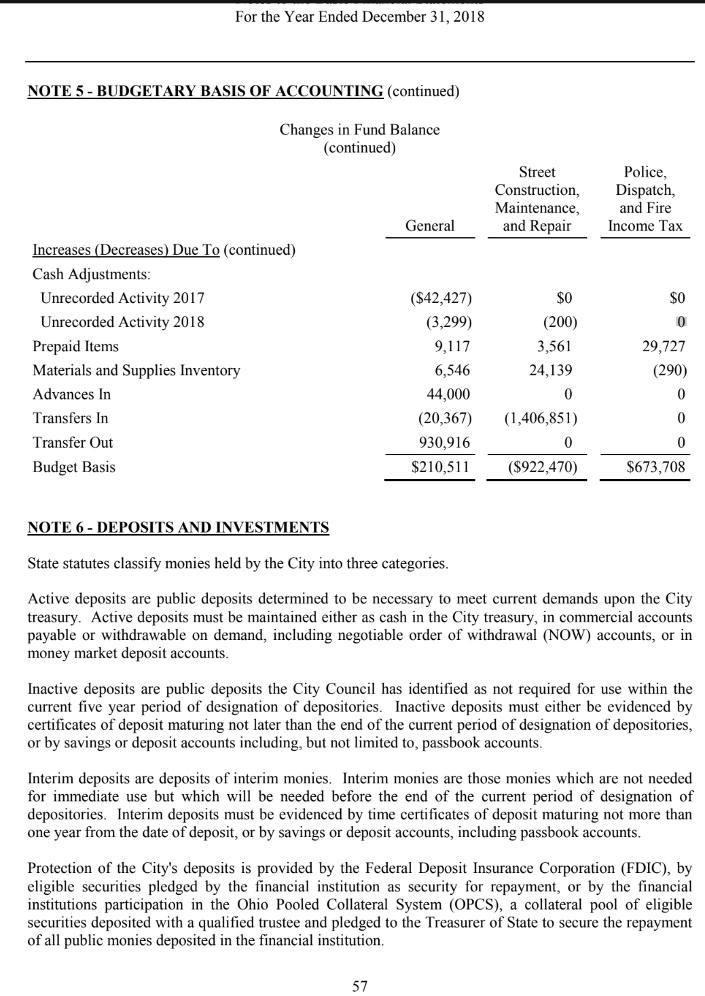
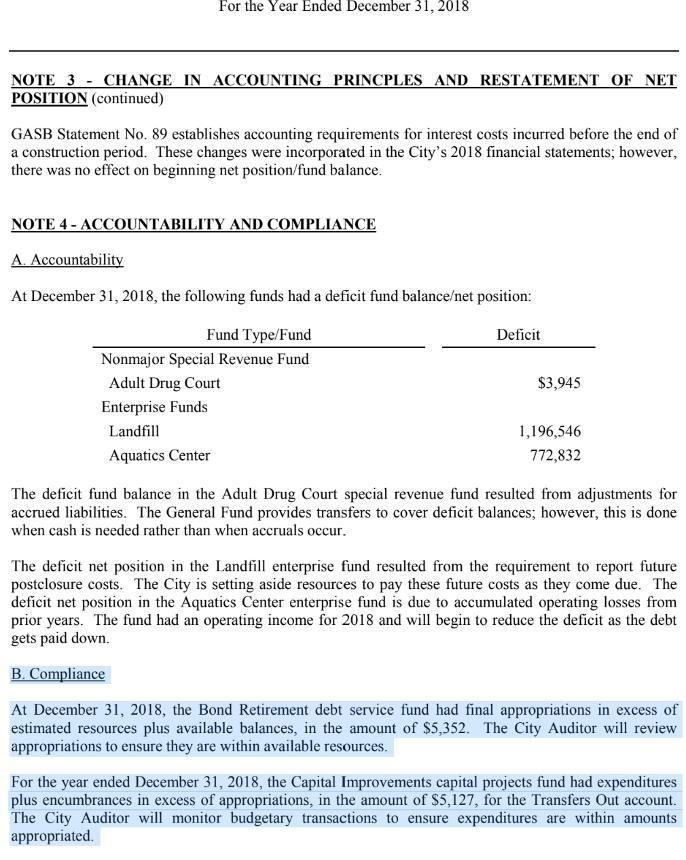
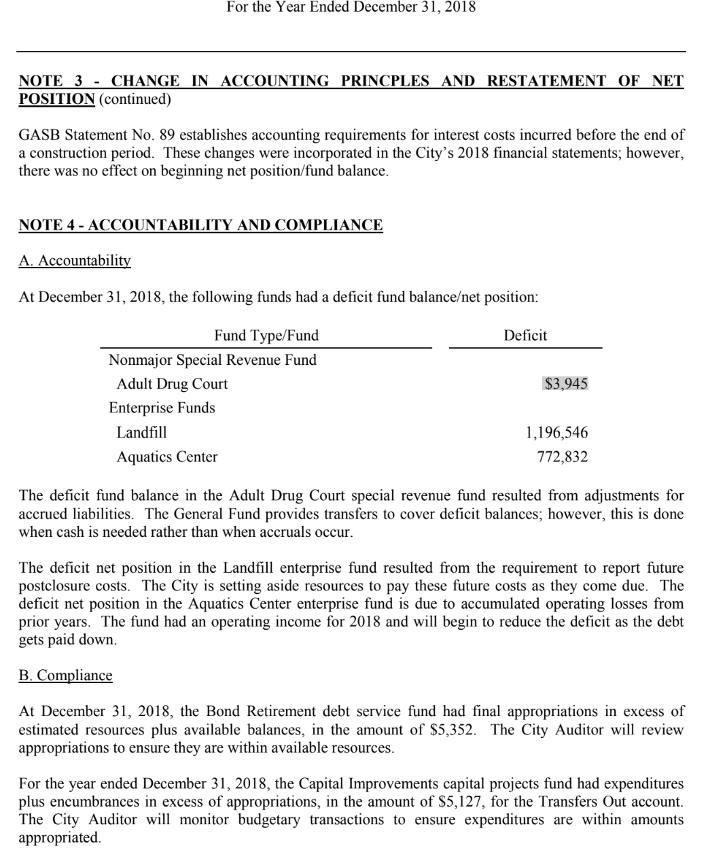
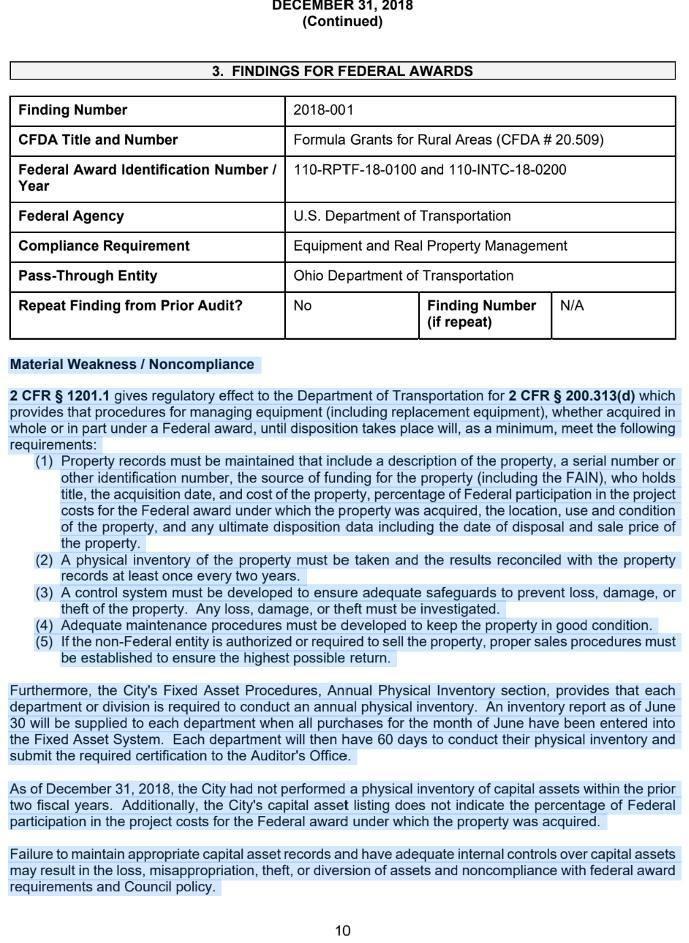
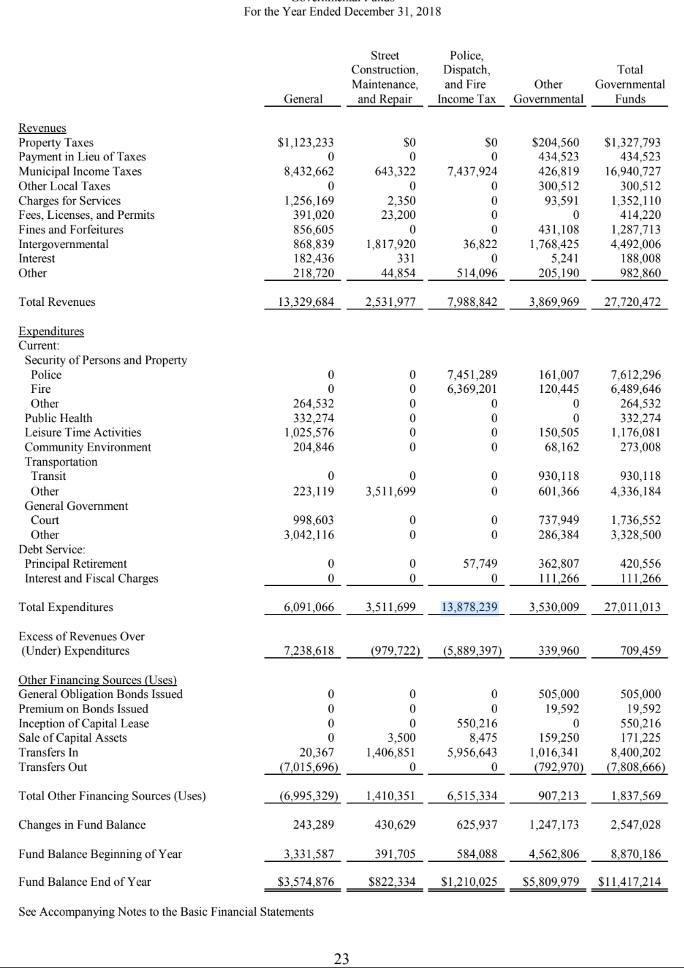
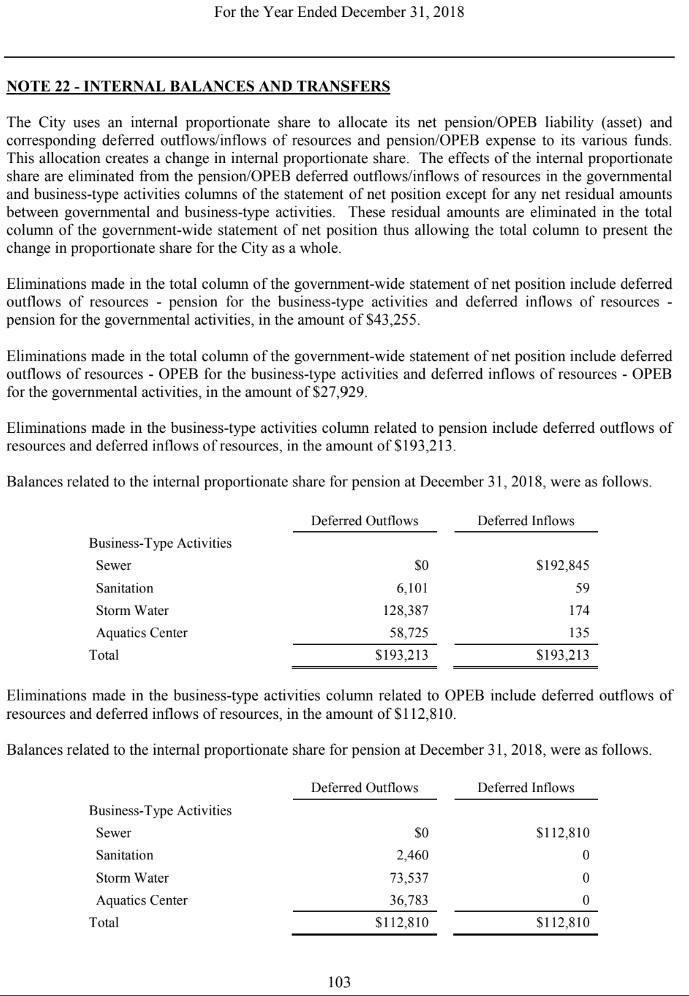
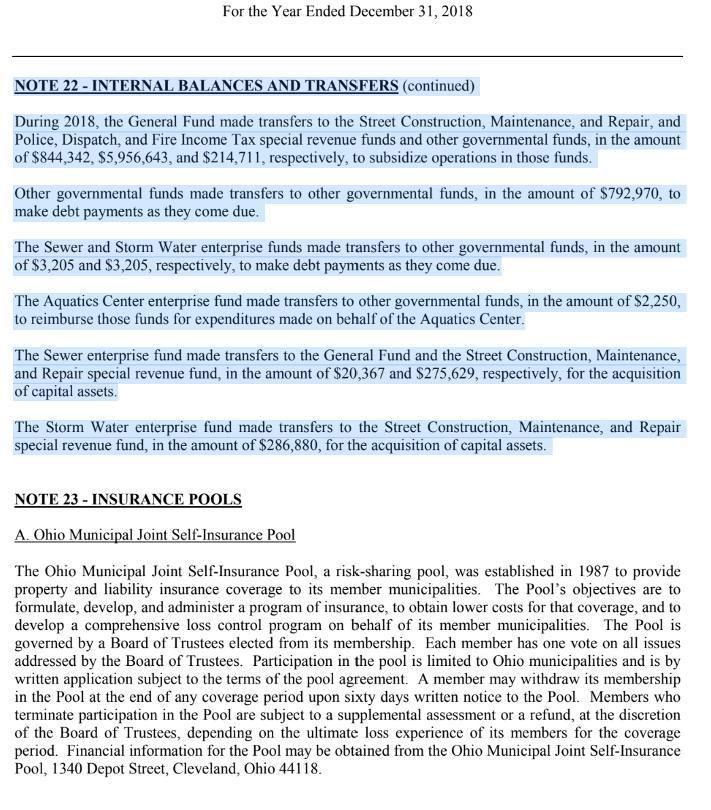
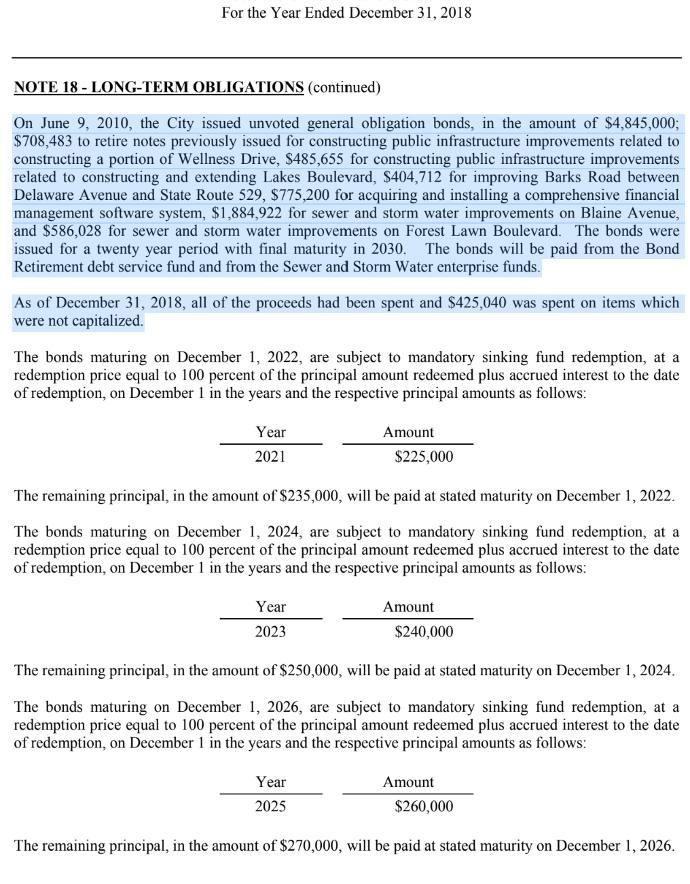
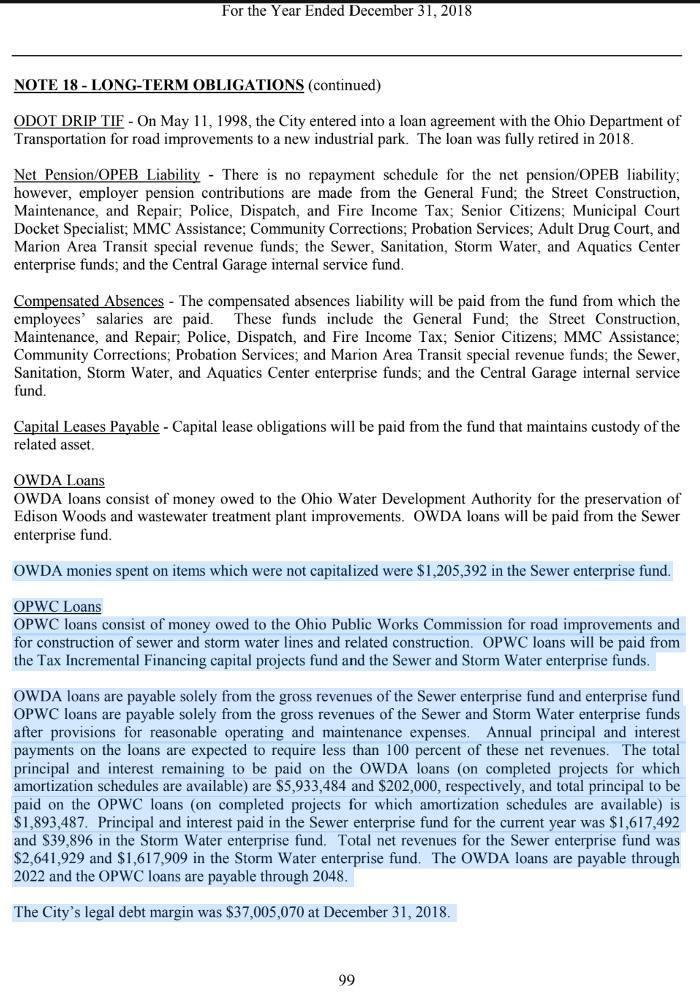
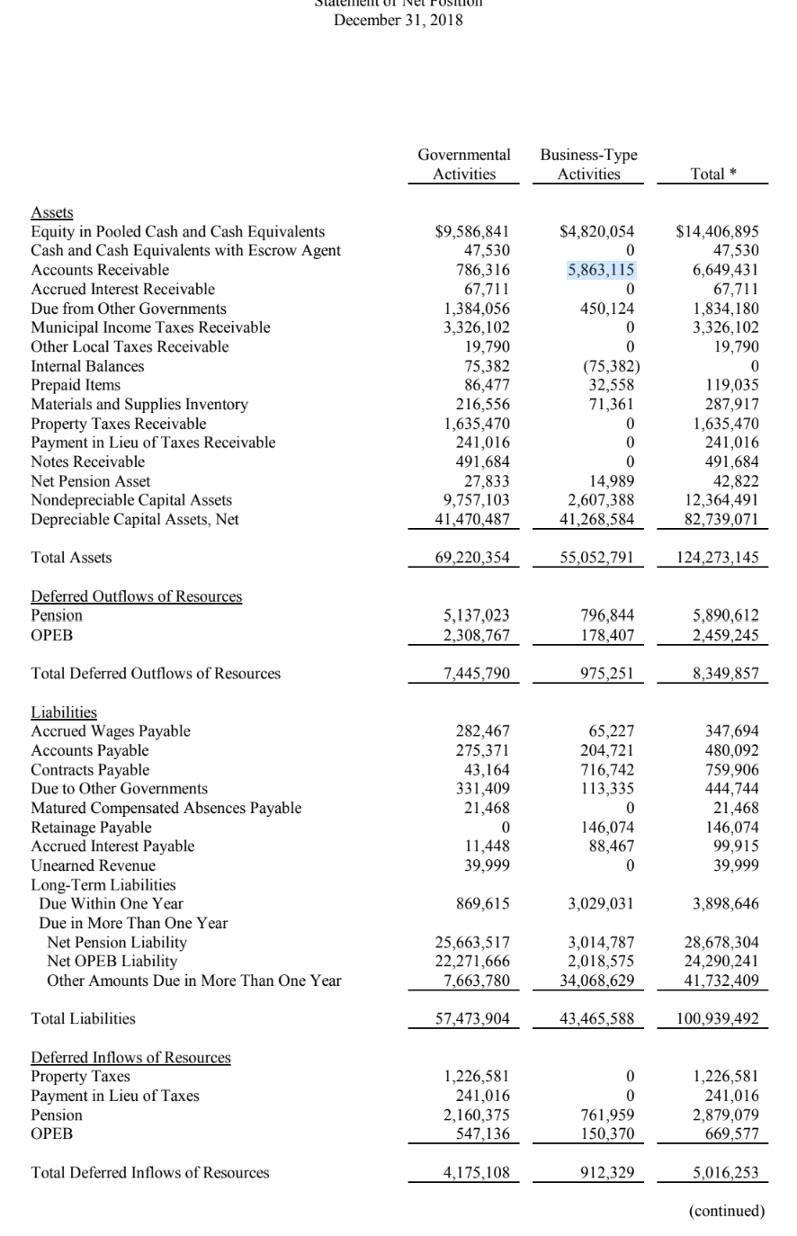
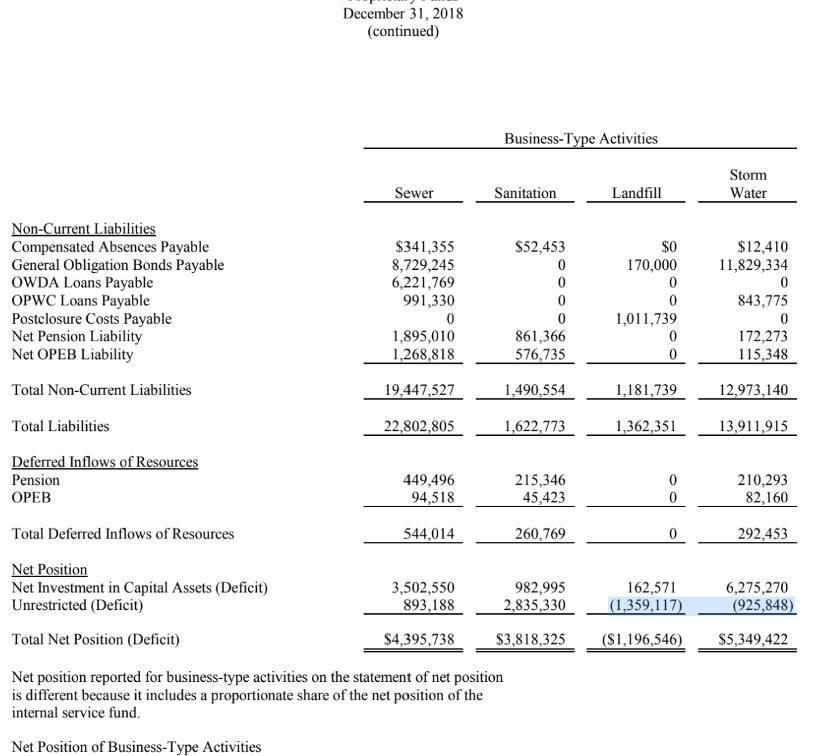
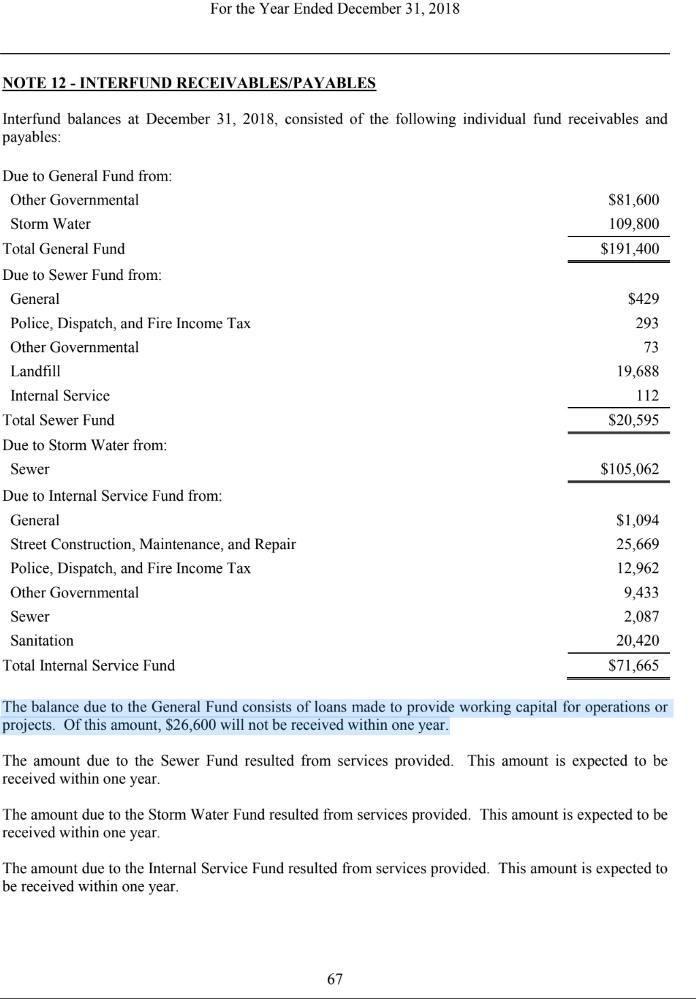
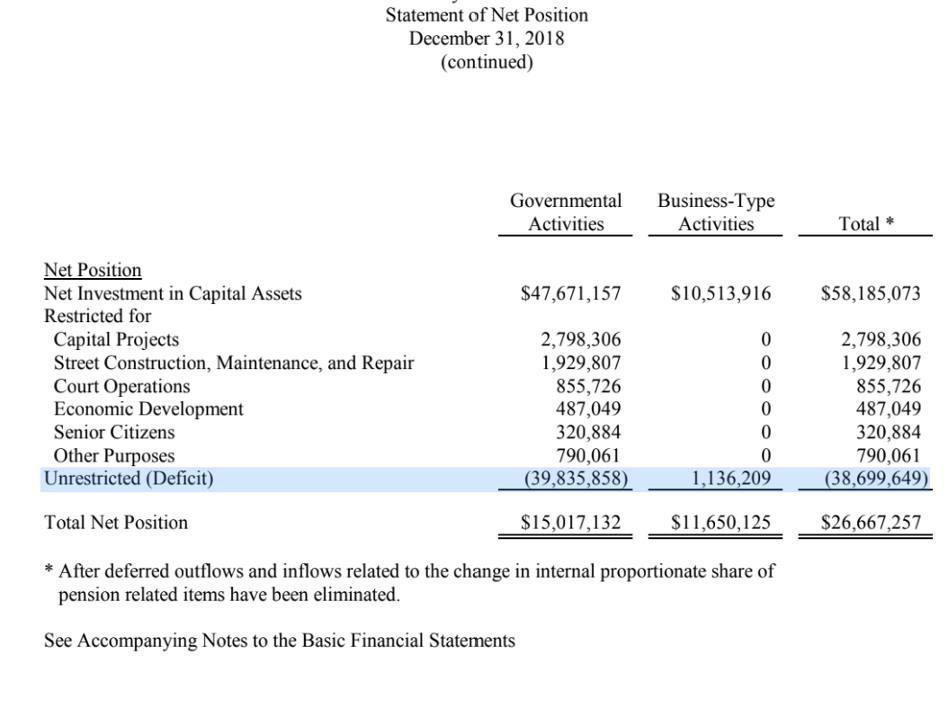
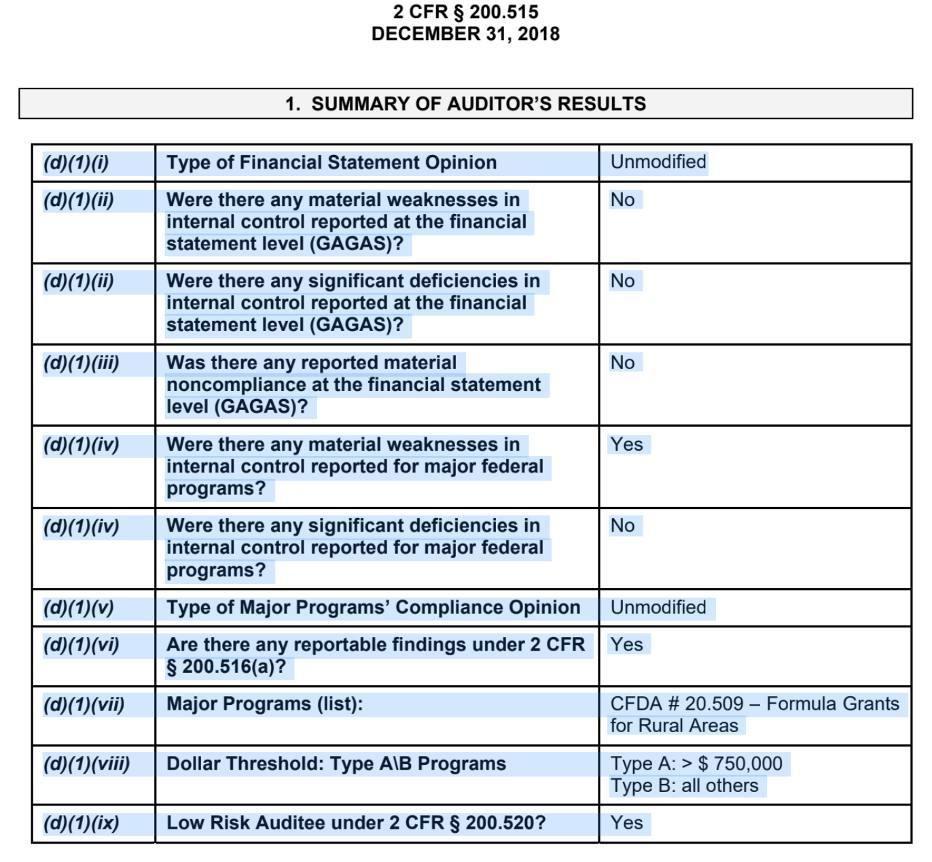
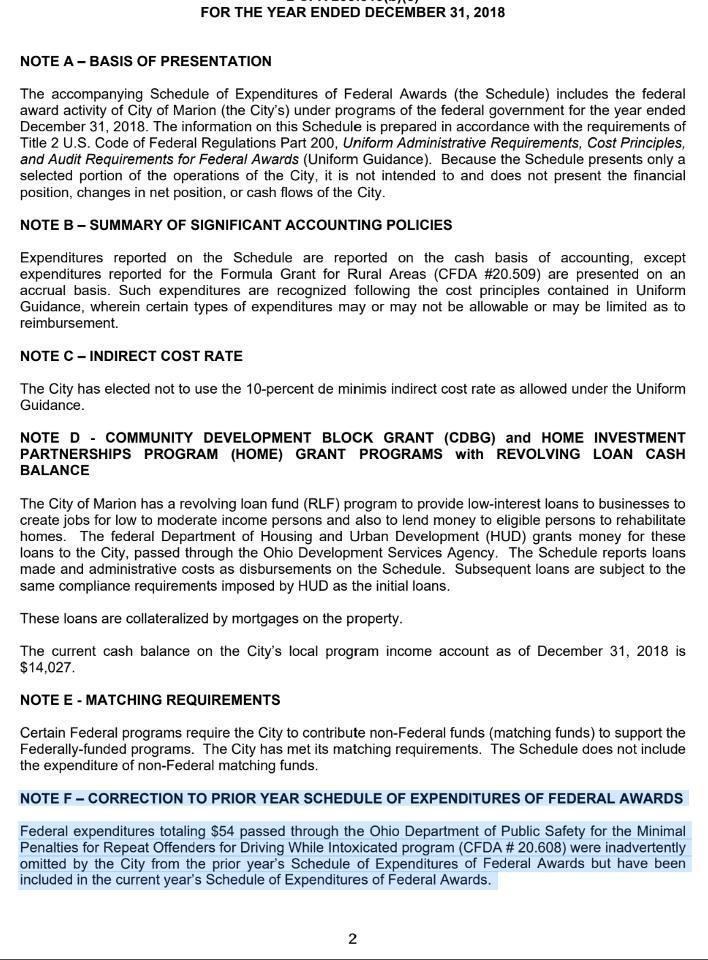
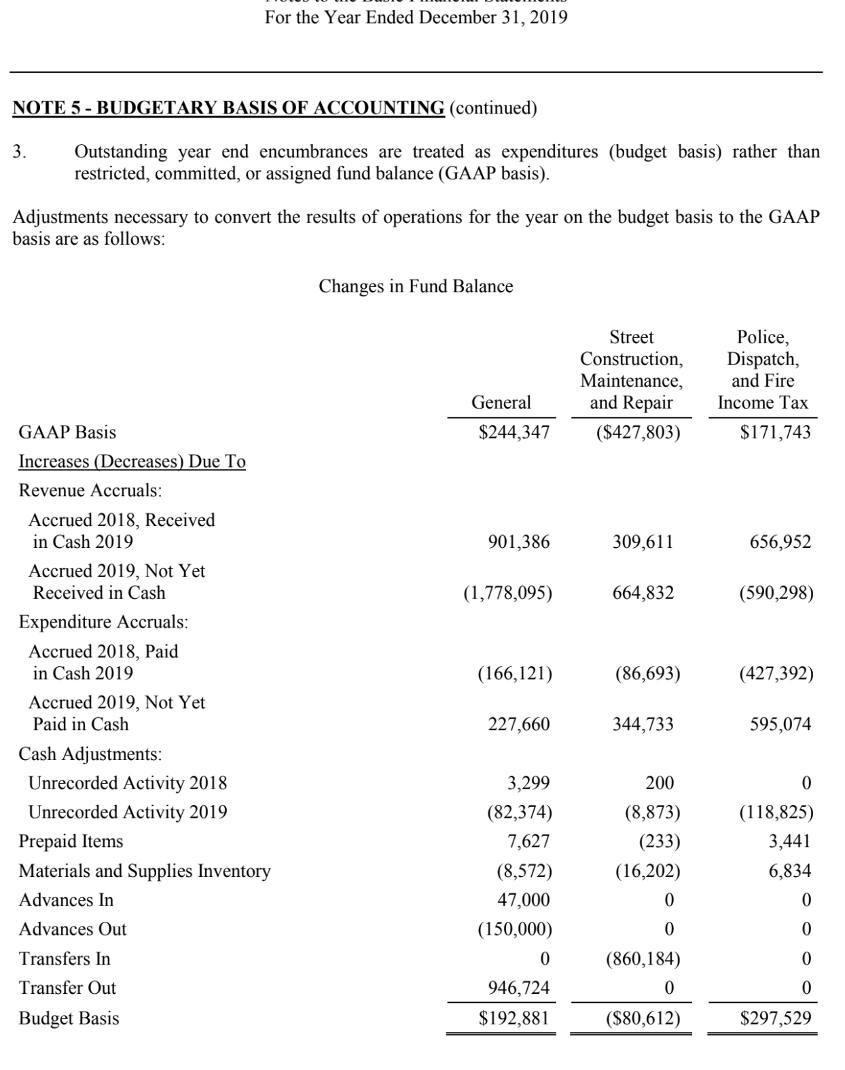
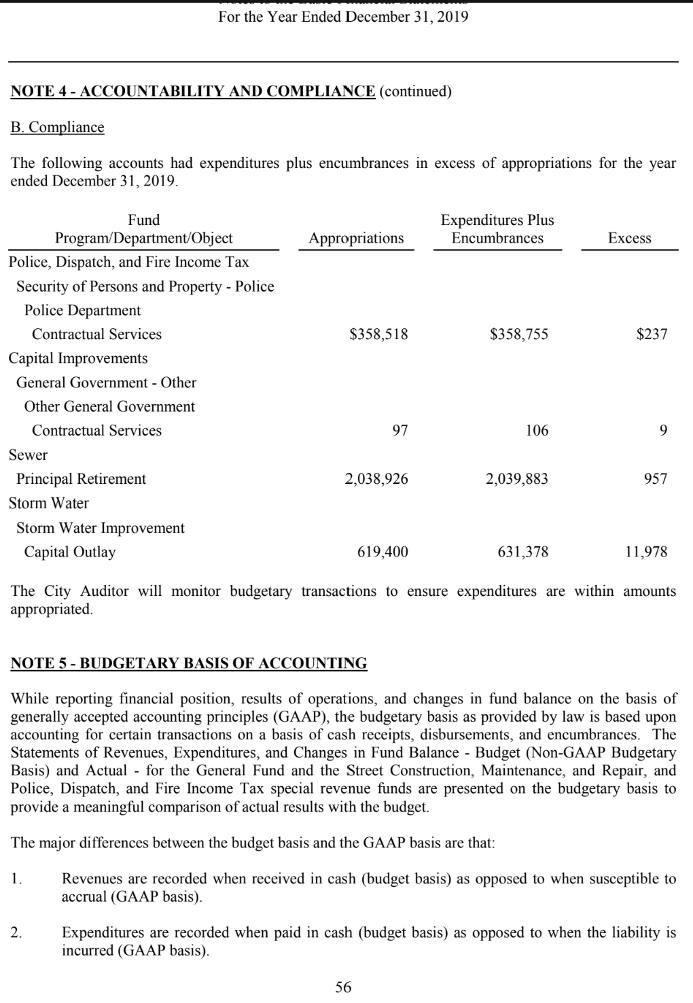
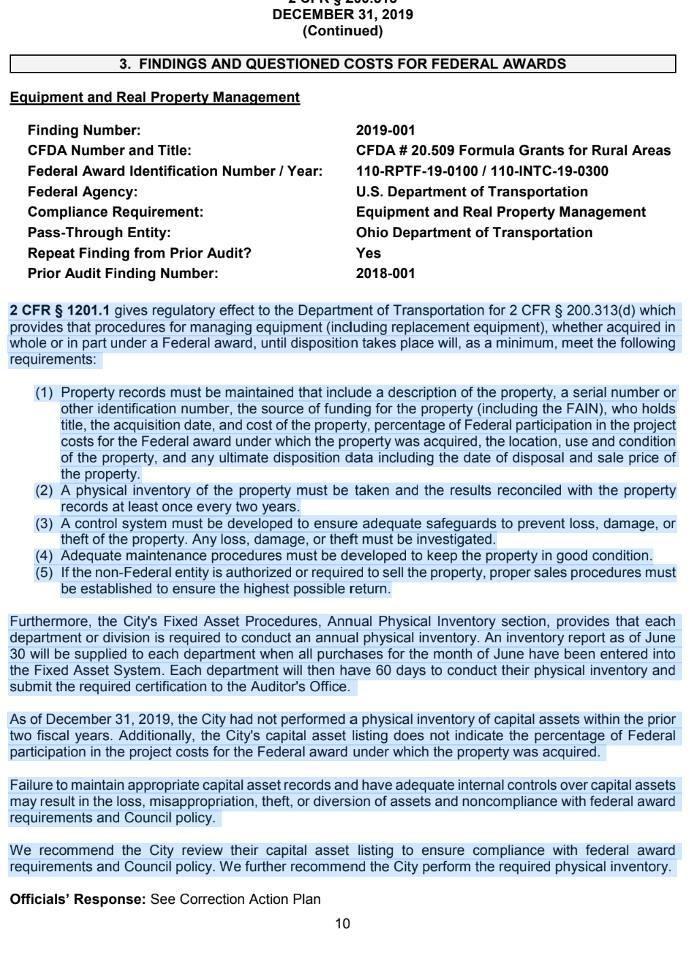
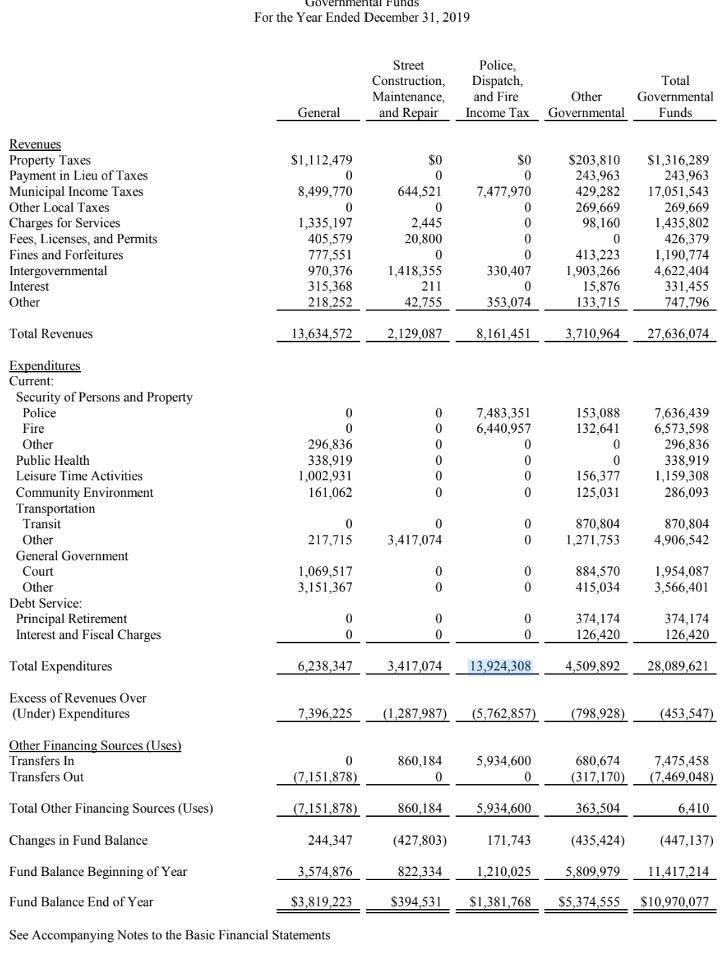
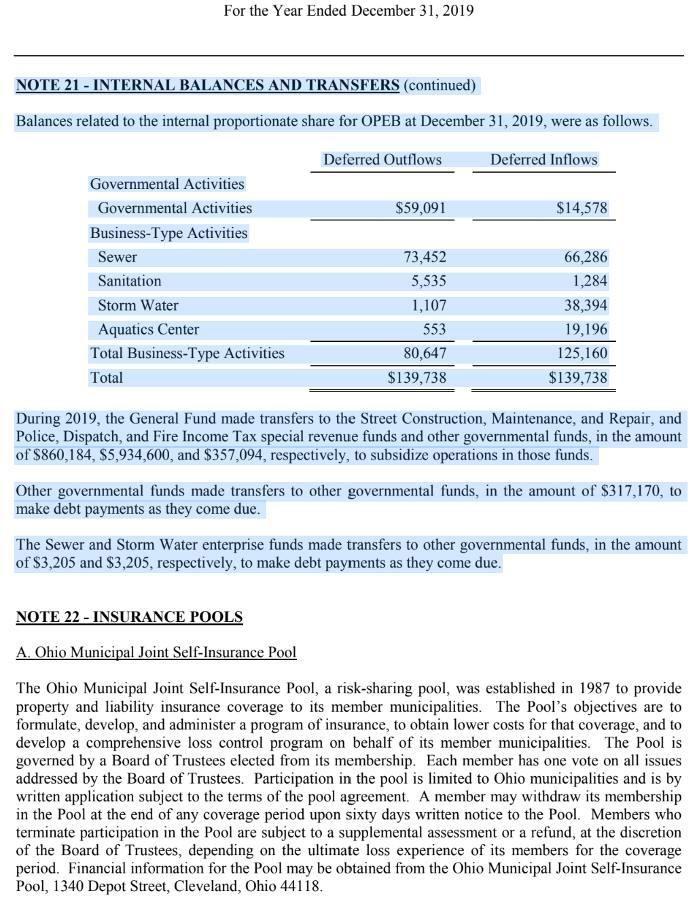
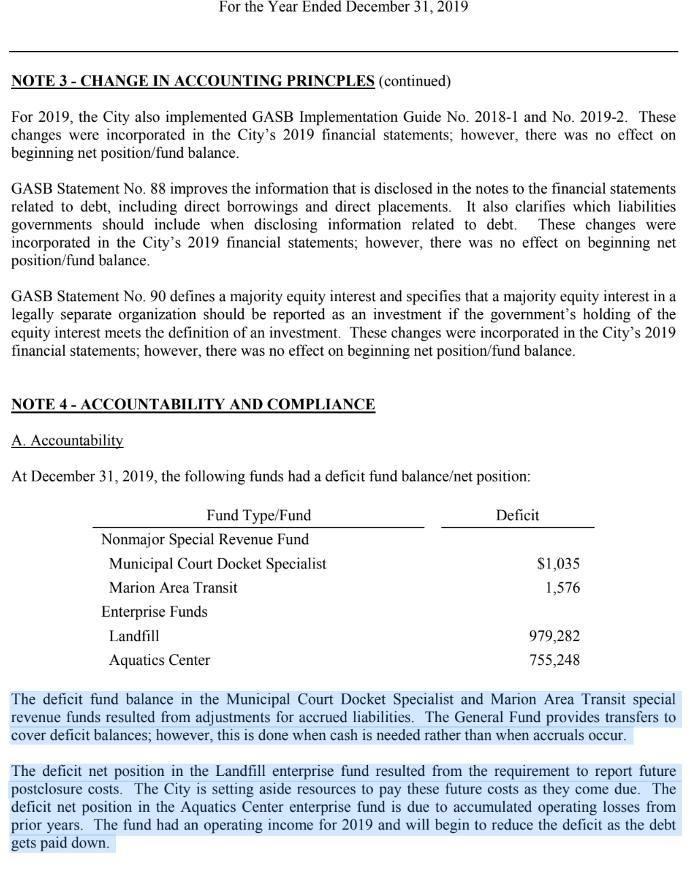
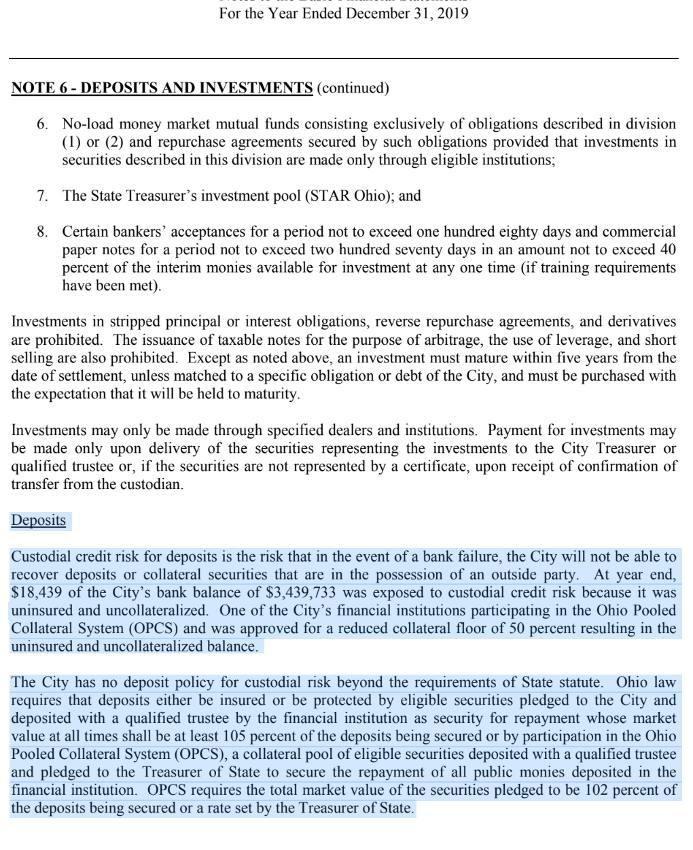
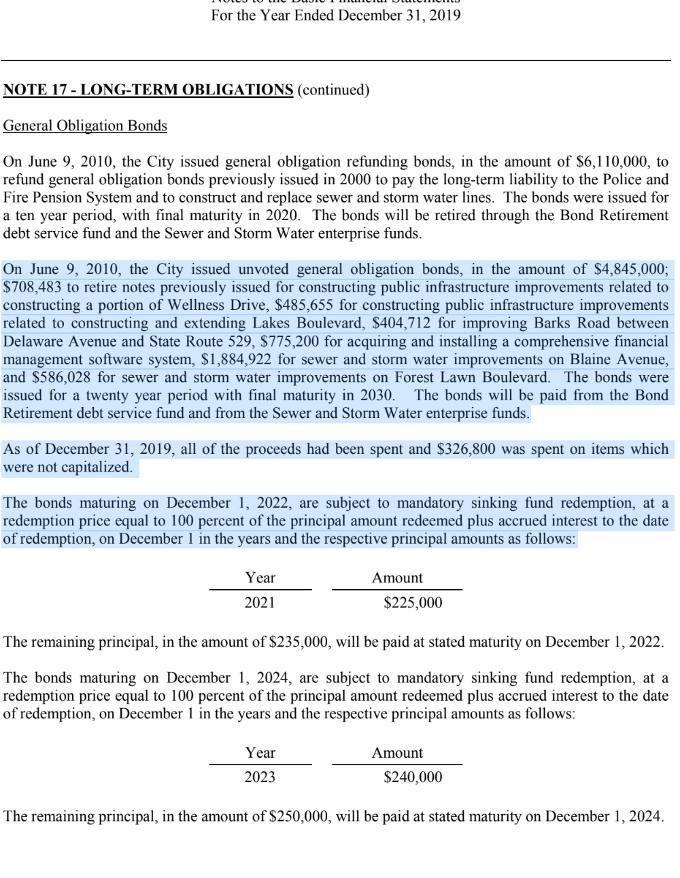
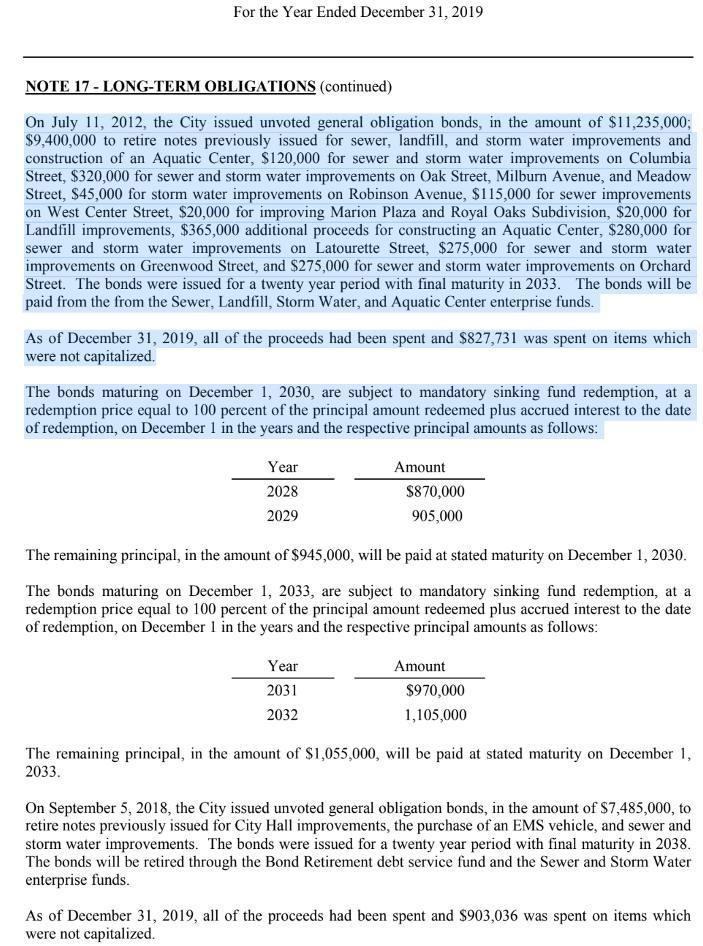
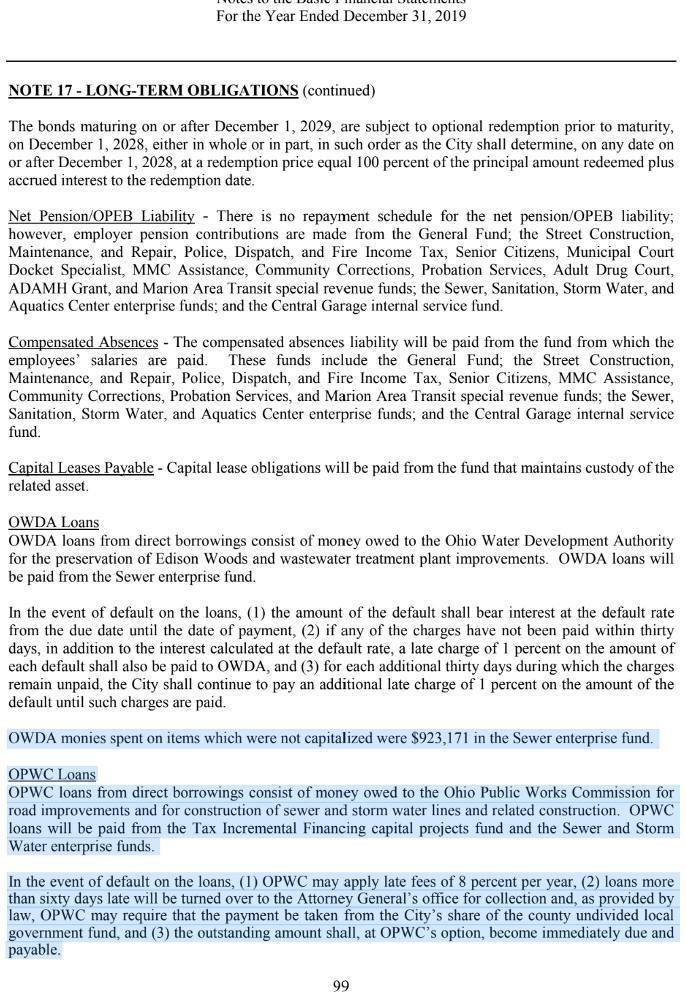
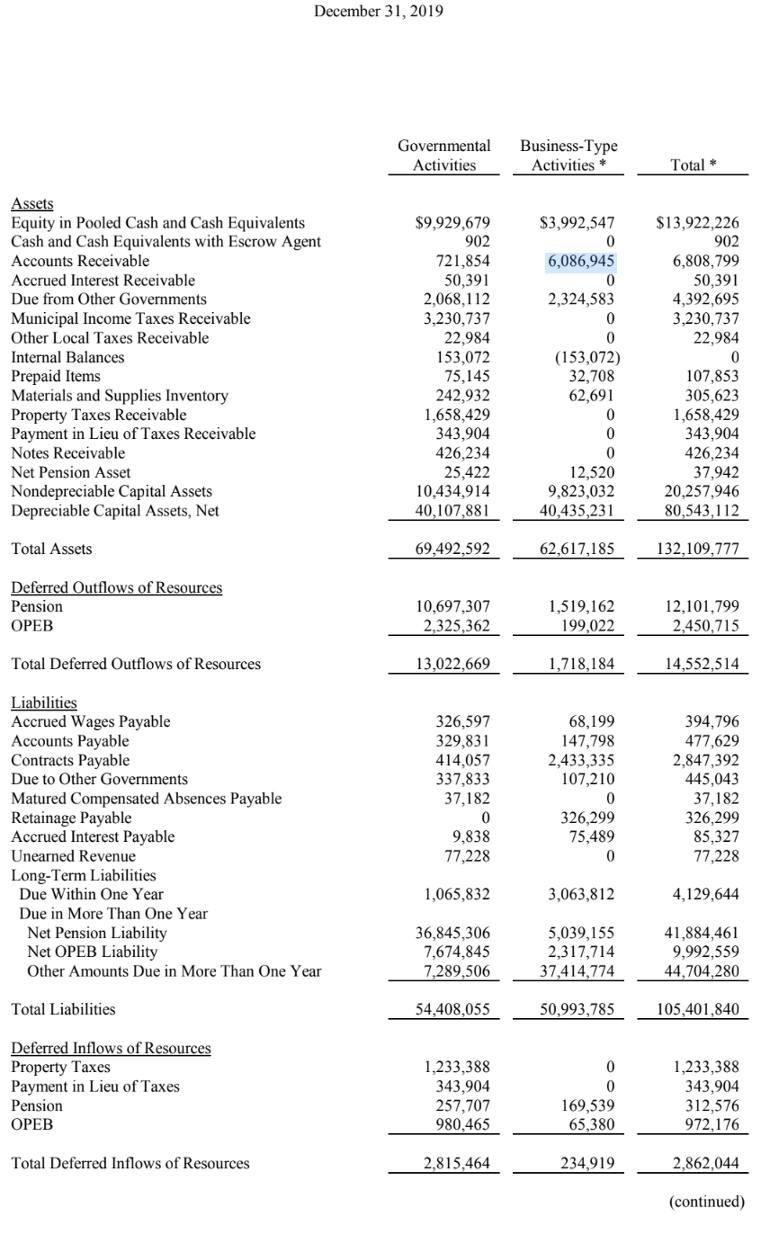
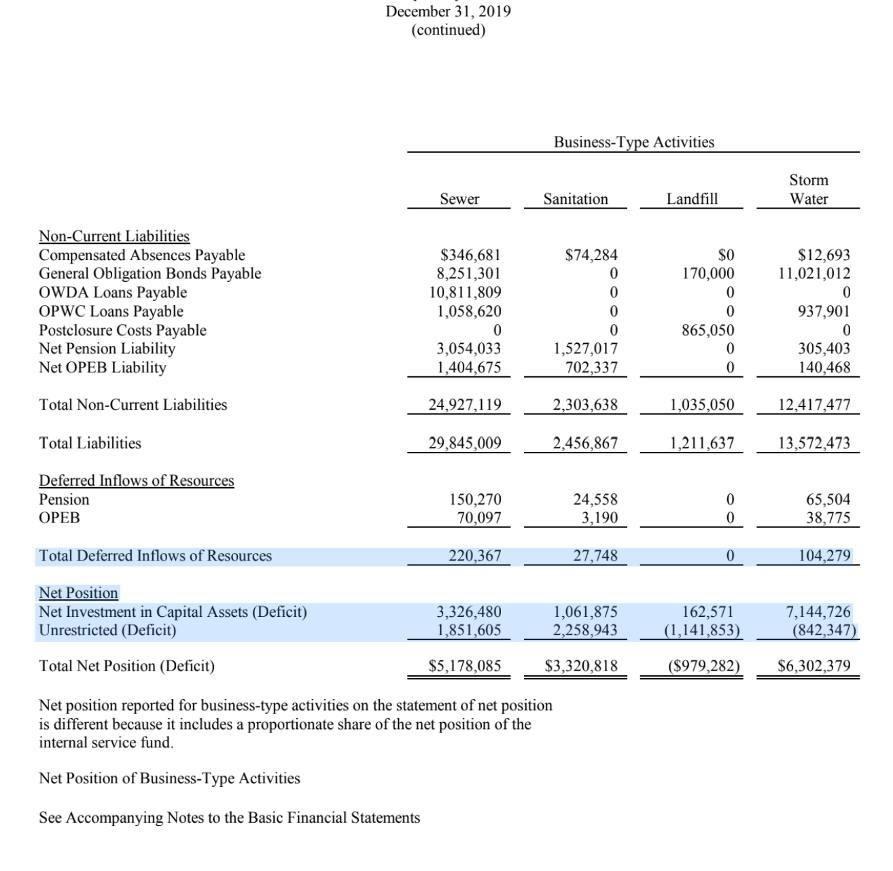
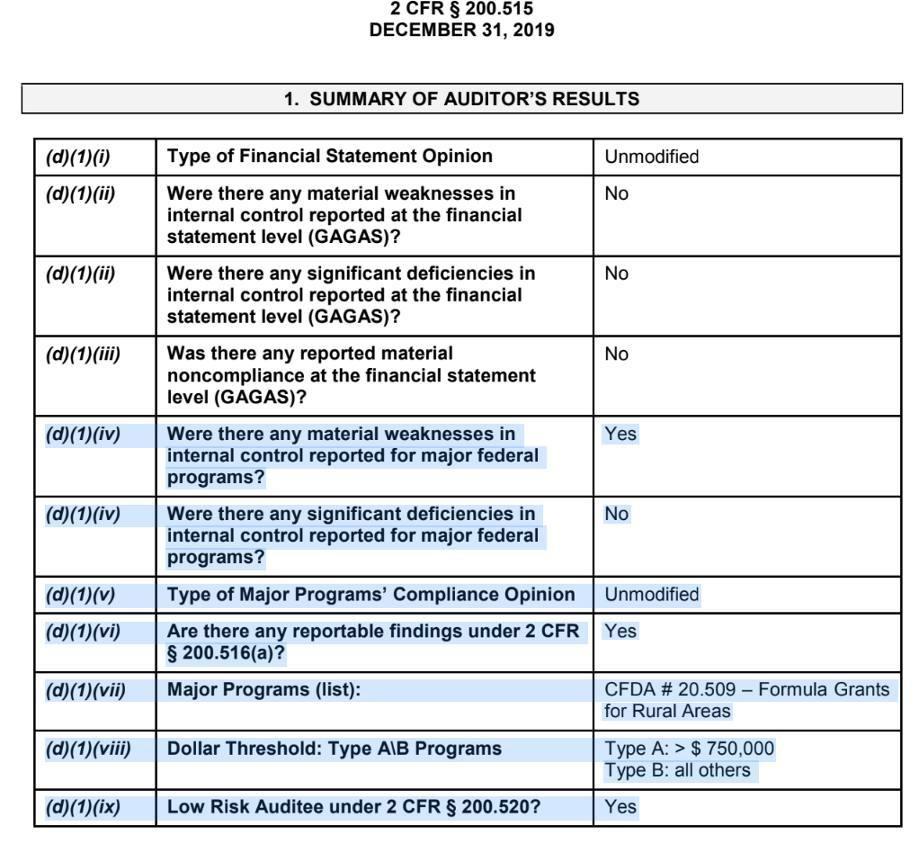
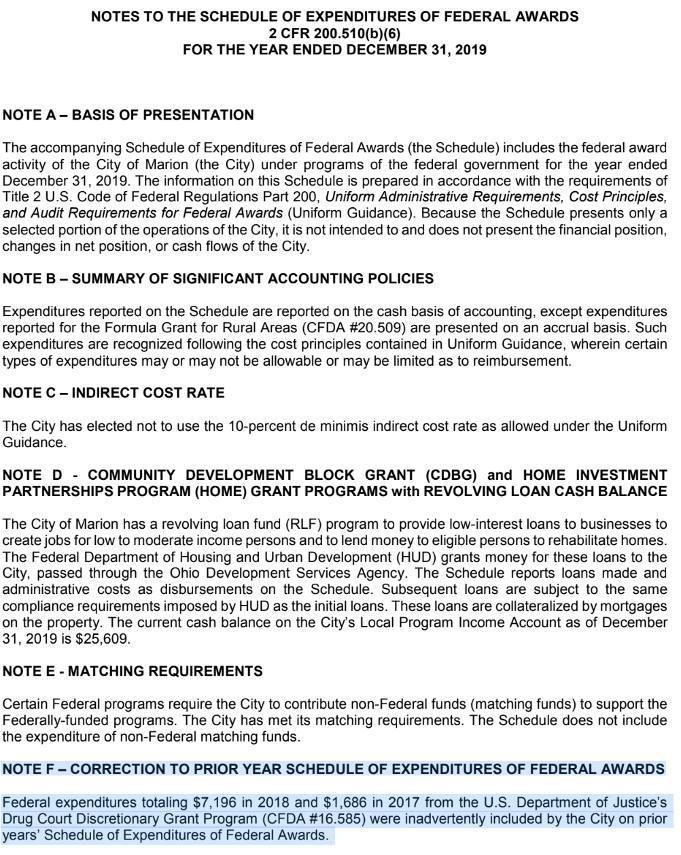
THE INCONVENIENT ARTIFACT: A TRIAL BALANCE FOUND IN 2020 EXPOSED MARION’S FINANCIAL COVER-UP?
Sometimes, a single document is all it takes to bring a house of cards crashing down.
A trial balance ledger found in September 2020, stands as one of the most out-of-place, inconvenient artifacts left over from the former Carr / Schertzer era.
Discovered and printed by then City of Marion, Ohio Auditor Robert Landon III to present to the finance committee, this ledger strips away the excuses and reveals the raw, unfiltered reality of Marion’s financial collapse.
Alongside testimonies like Kim H’s letter, revelation and confirmation of 80 percent of software modules and safety controls, unimpeded administrative access, access with no business justification, and many other issues, this artifact proves that the crisis was known, documented, and likely intentionally suppressed by the Schertzer administration.
Source Document:
The numbers on that ledger found in the September 2020 ledger are horrifying.
The city’s records officially collapsed, exposing a $16,192,124.15 cash gap and an impossible negative balance of ($104,642,158.06) in one cash account.
How does a municipality using modern enterprise financial software reach a hundred-million-dollar negative balance?
By intentionally bypassing the very safety controls designed to prevent it.
The most shocking revelation is the complete abandonment of the bank reconciliation module.
In any financial software, the reconciliation module is the ultimate fail-safe—the essential tool required to verify that the money in the bank actually matches the money on the books.
In Marion, this critical software tool was left broken and unused.
When you turn off or ignore the reconciliation module, you are effectively flying a commercial airliner blindfolded.
There are no checks, no balances, and no automated warnings when the system veers off course.
Because this vital safety control was bypassed, massive systemic errors went completely undetected.
It allowed critical mistakes—such as the failure to remit employee taxes—to fester until it triggered a $154,399 finding for IRS penalties.
The administration didn’t just ignore the software; they actively fought attempts to fix the damage.
When Landon suggested bringing in an outside firm to perform the missing reconciliations, the move was initially denied.
When Landon suggested the very software the city is now migrating to, it was denied.
Instead of restoring the software’s integrity and turning the control switches back on, the Schertzer administration suppressed these massive financial issues.
They relied on manual, undocumented workarounds rather than transparent, accountable municipal accounting.
This is never acceptable in the information technology sector.
This trial balance is one of the smoking cannons in a line of smoking cannons that demands a forensic IT audit.
It proves that the catastrophic deficits were not an overnight surprise or a simple clerical error.
They were the direct result of a culture that turned off the software’s safety switches, buried the evidence, and left the taxpayers to absorb the fallout.
OFFICIAL EXHIBITS & PRIMARY SOURCE RECORDS (2020 Artifact: The Trial Balance Found in September 2020)
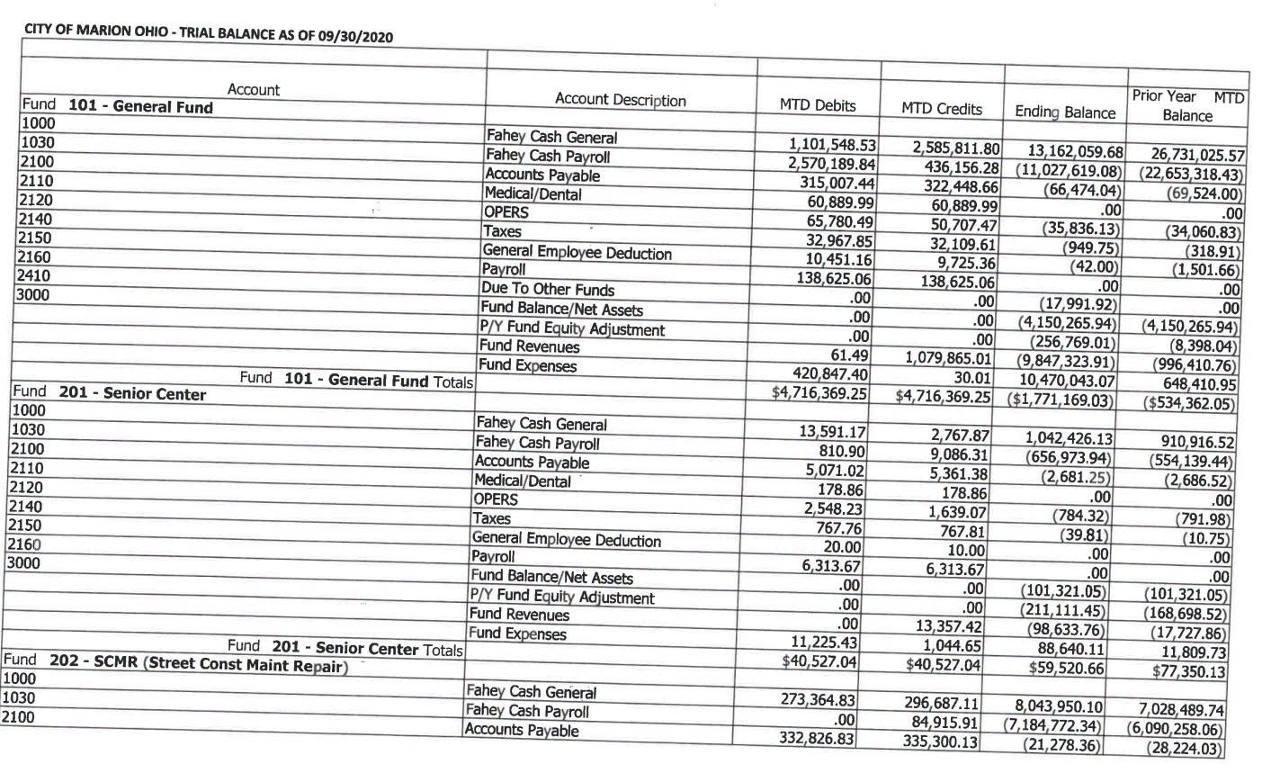
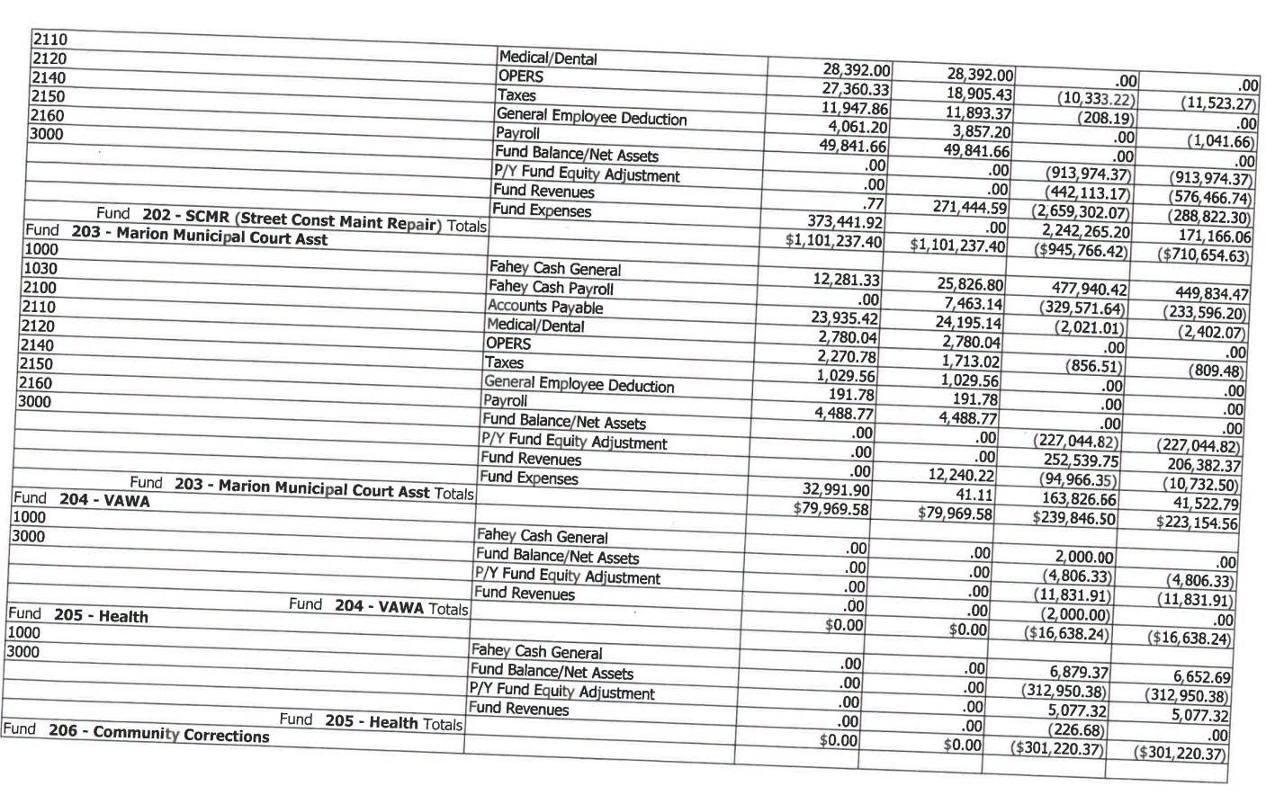
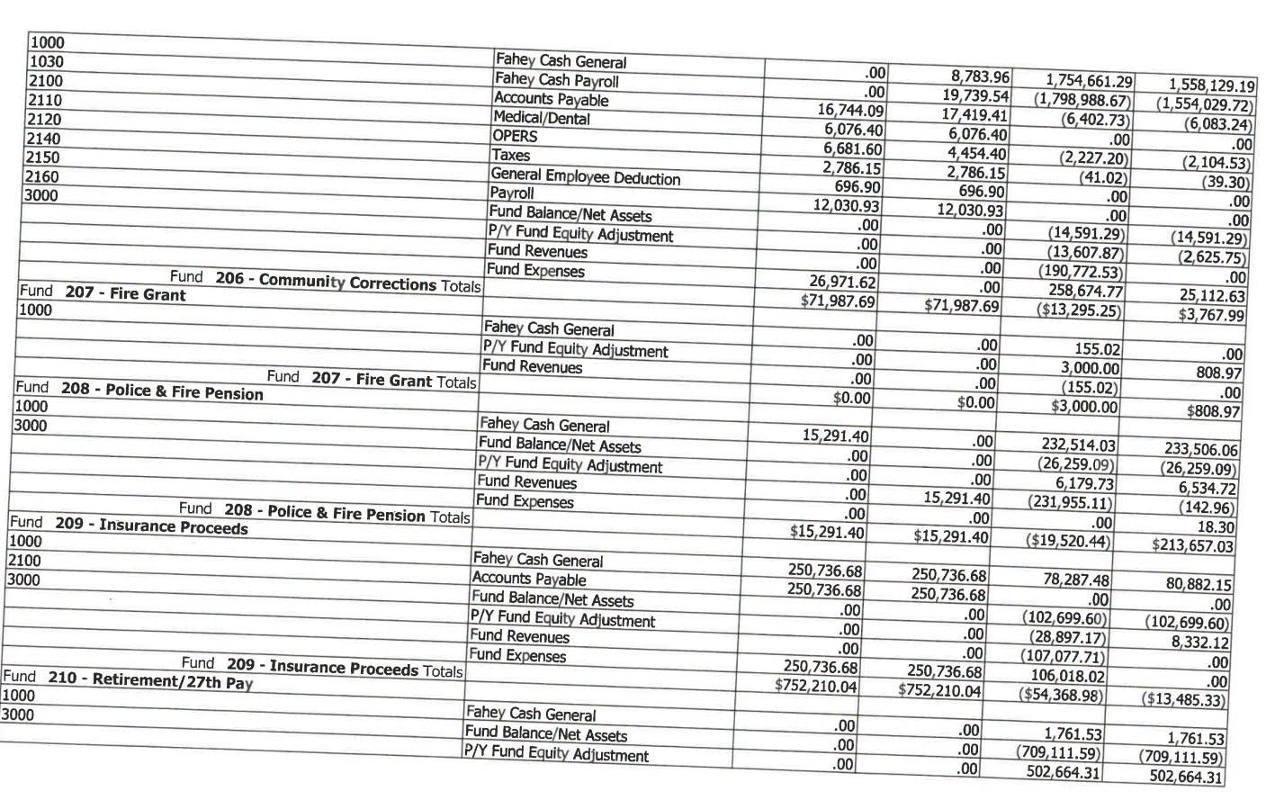
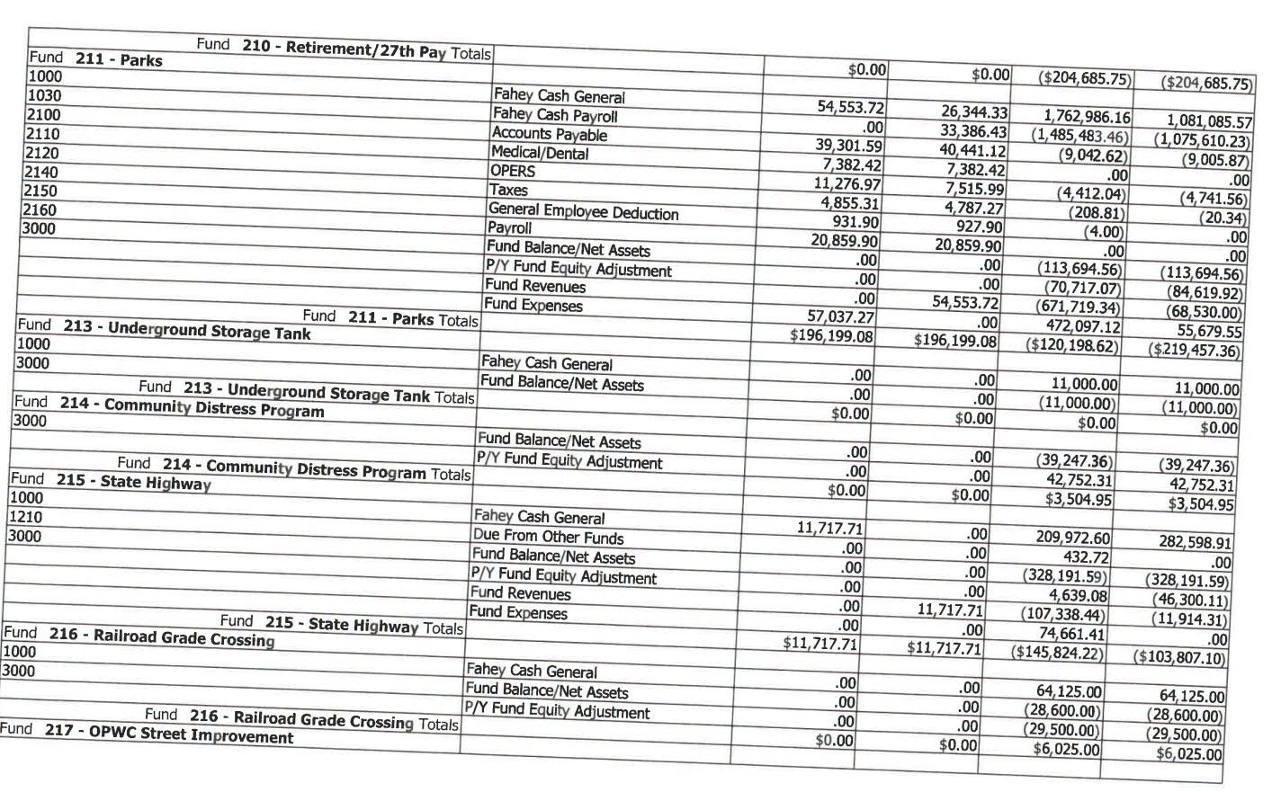
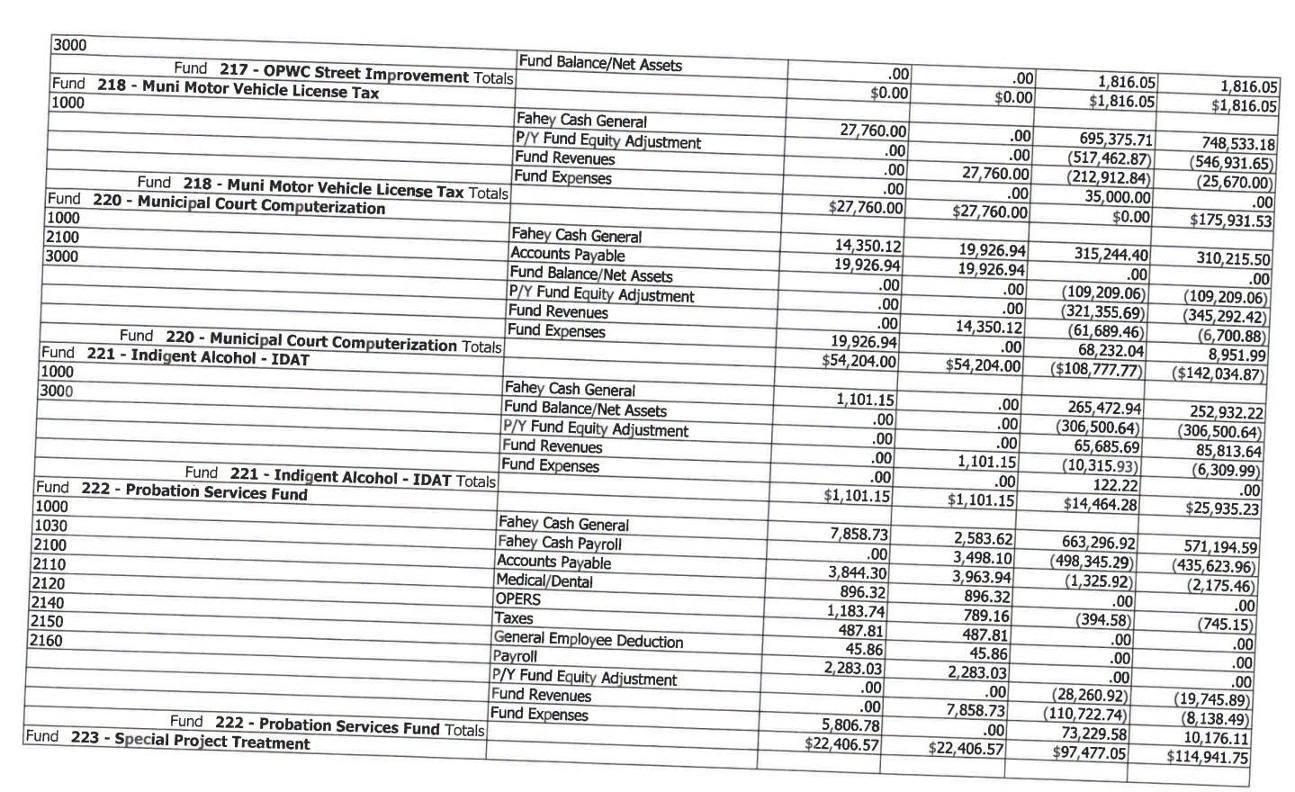
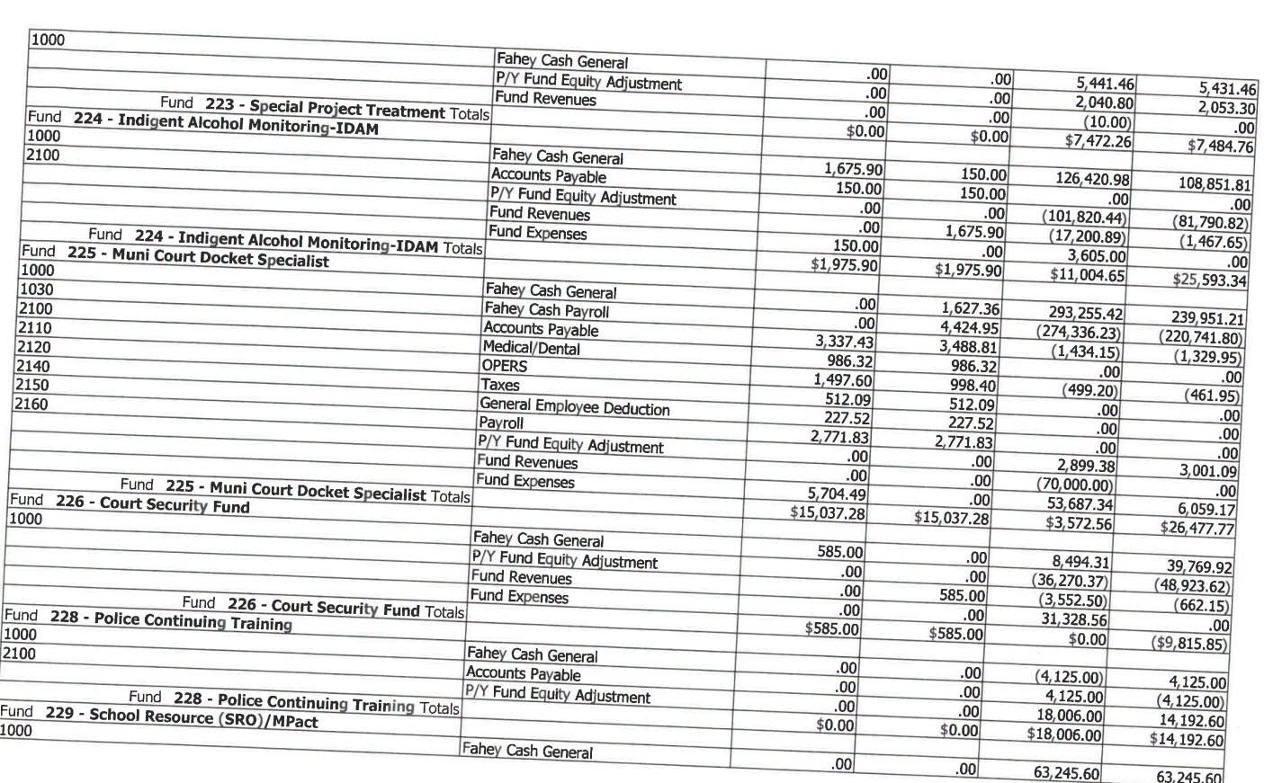
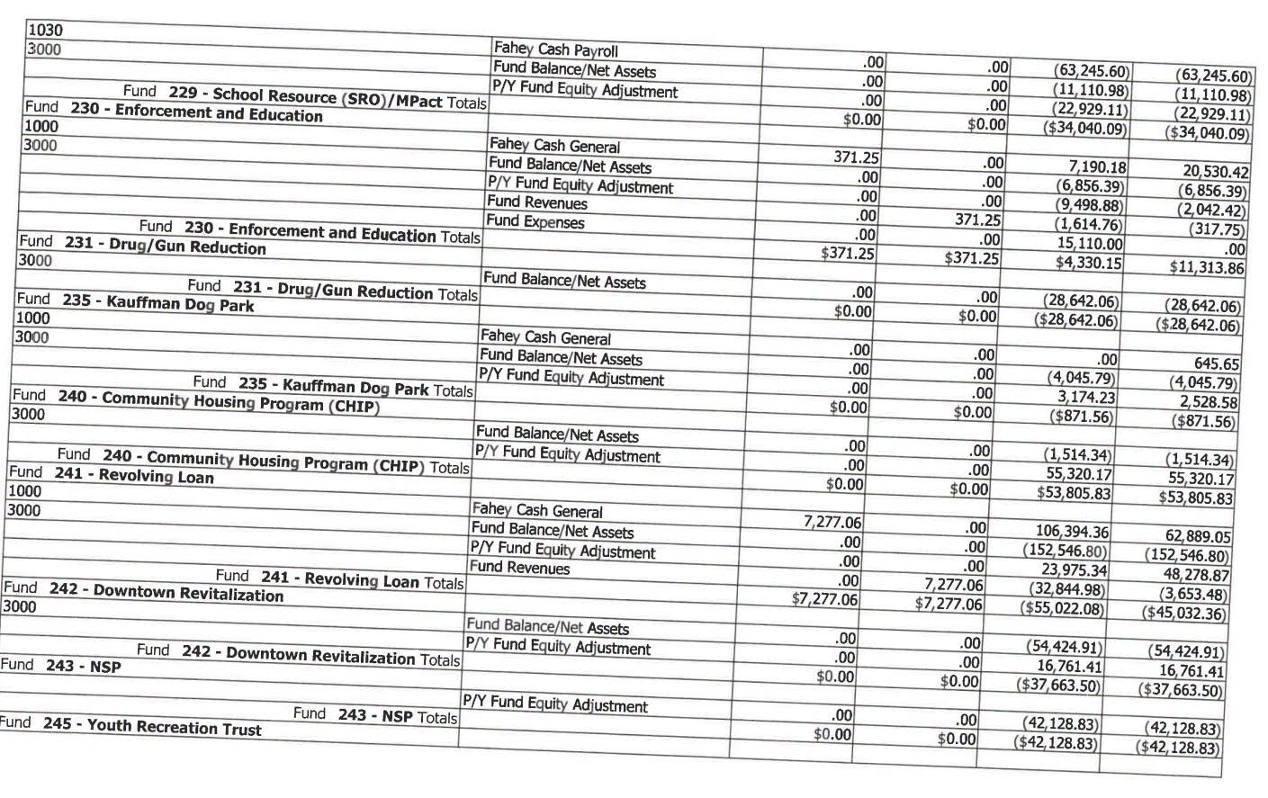
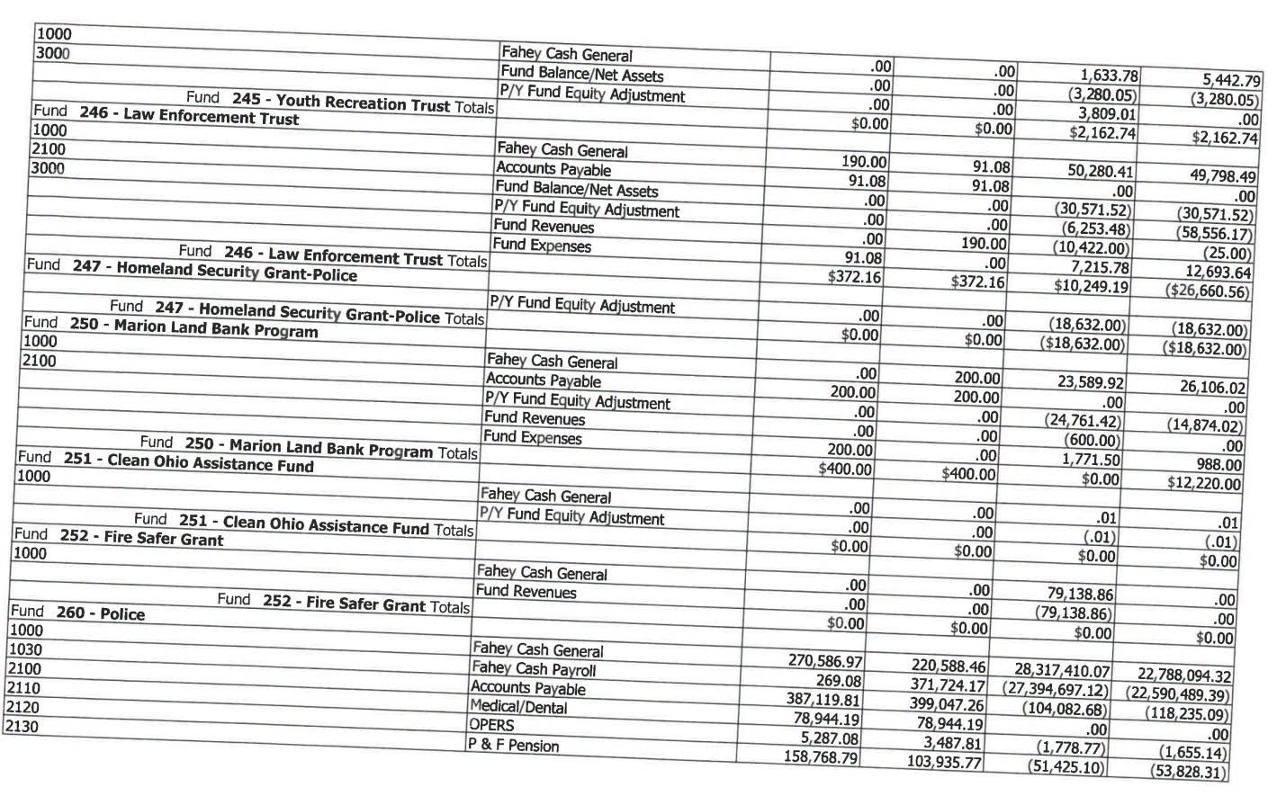
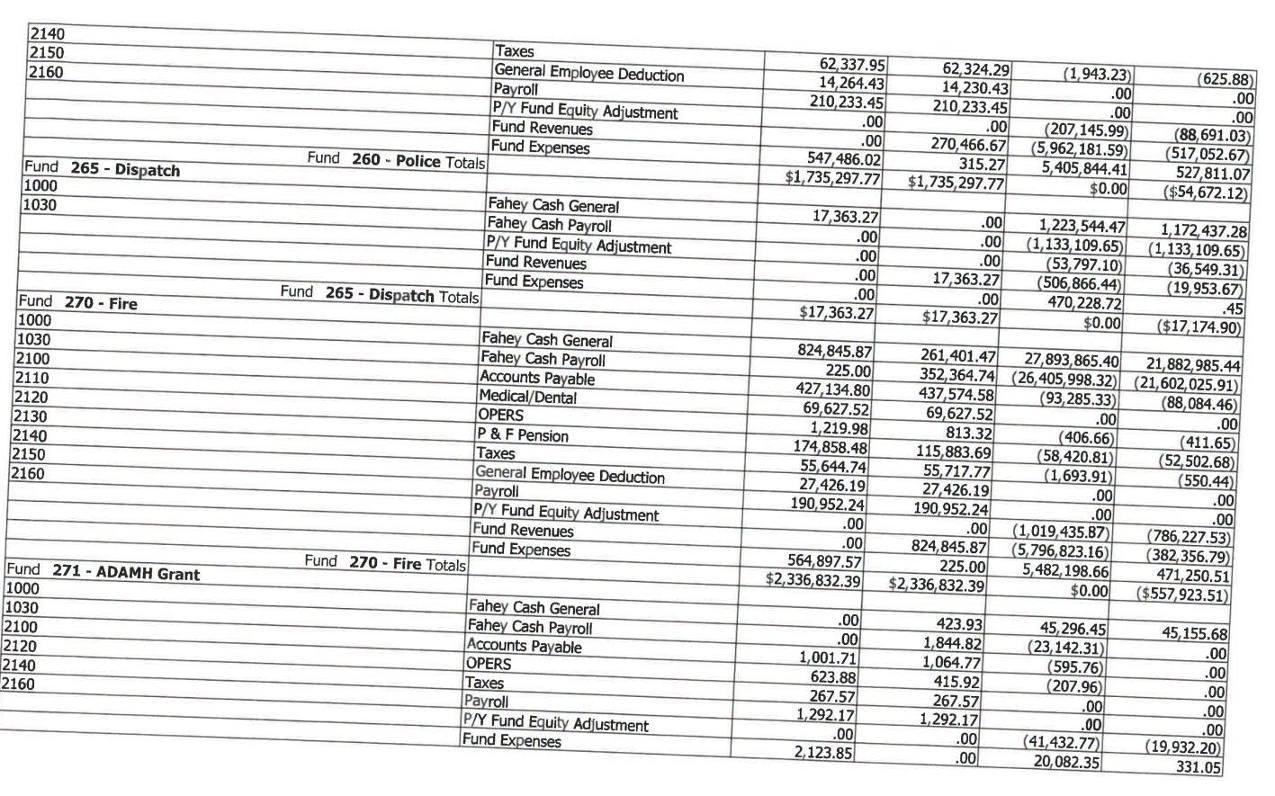
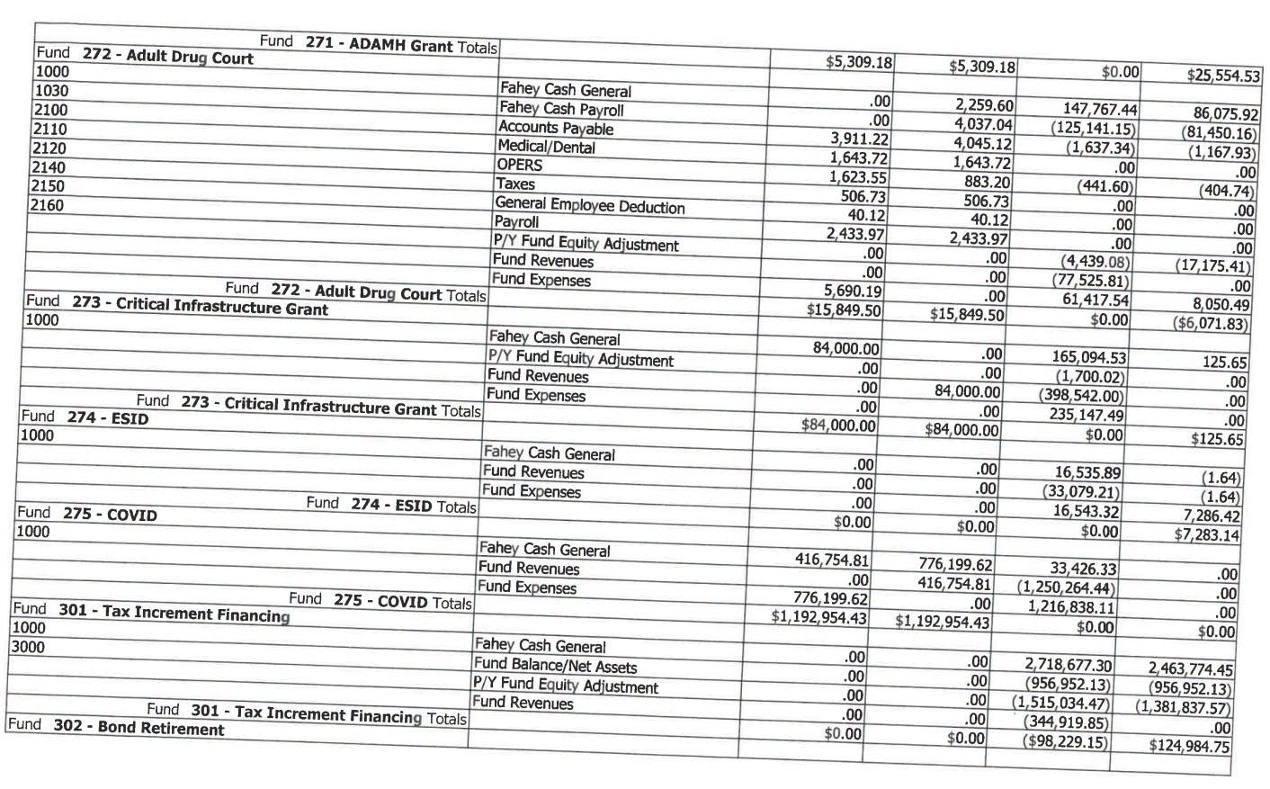
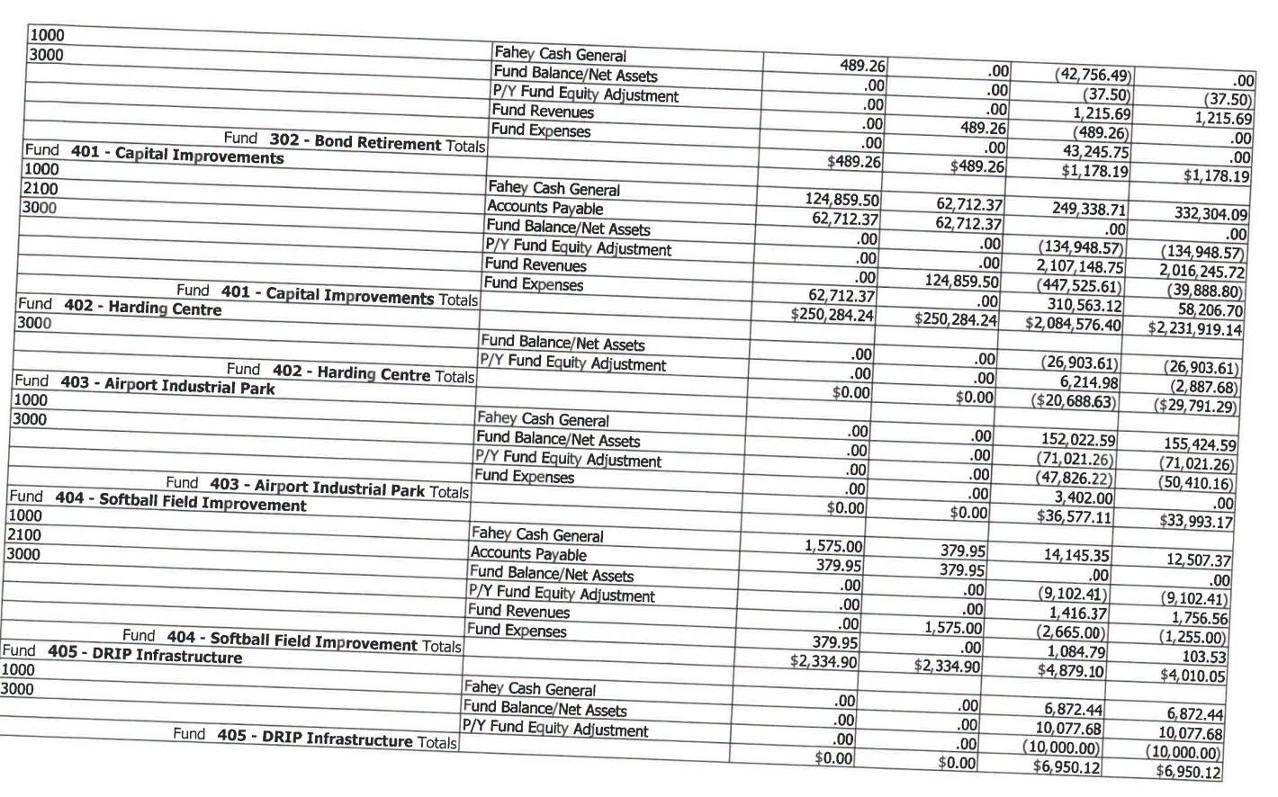
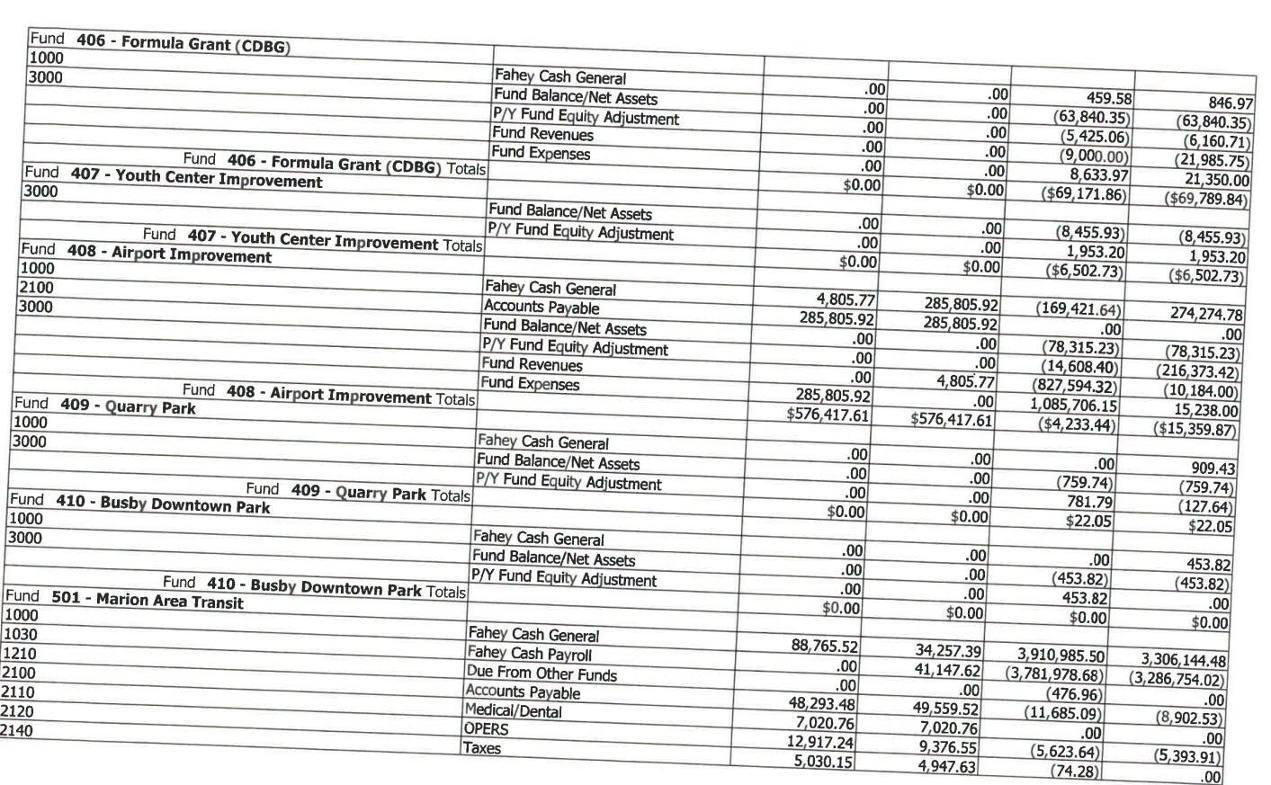
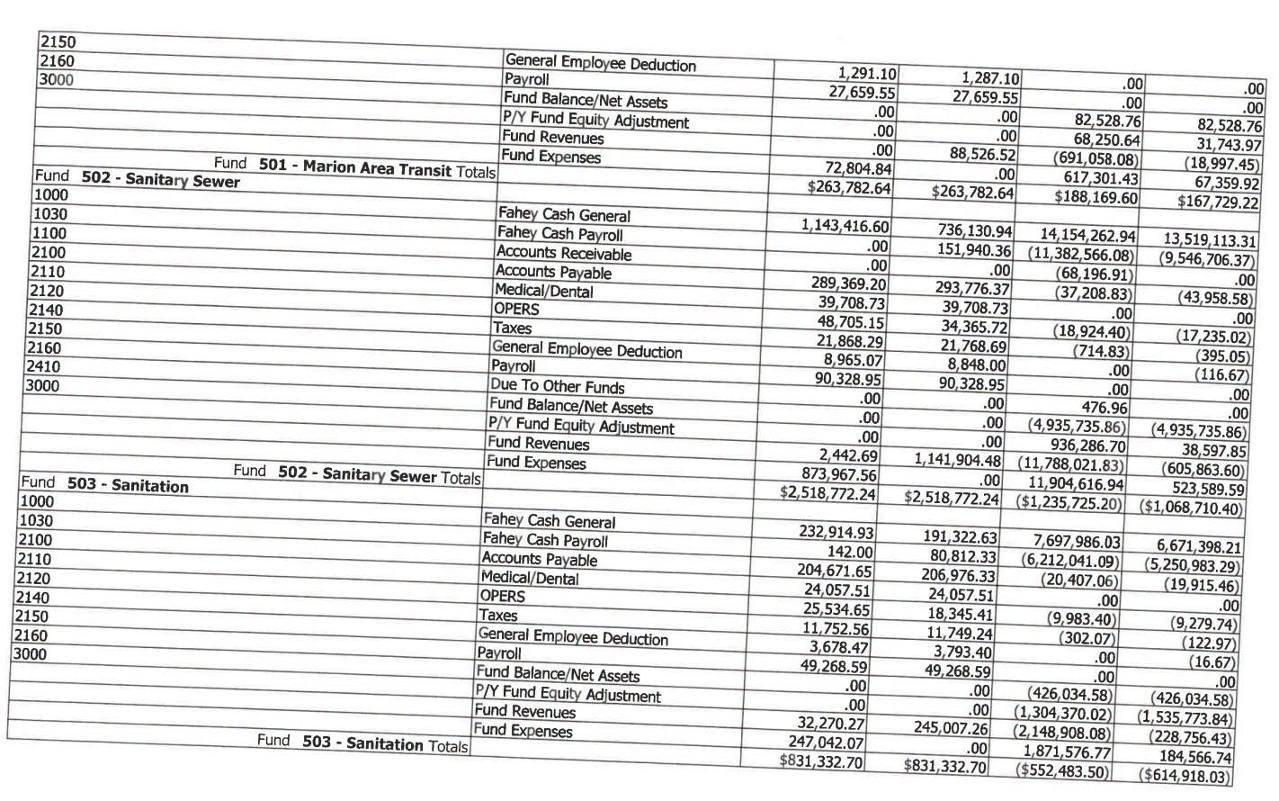
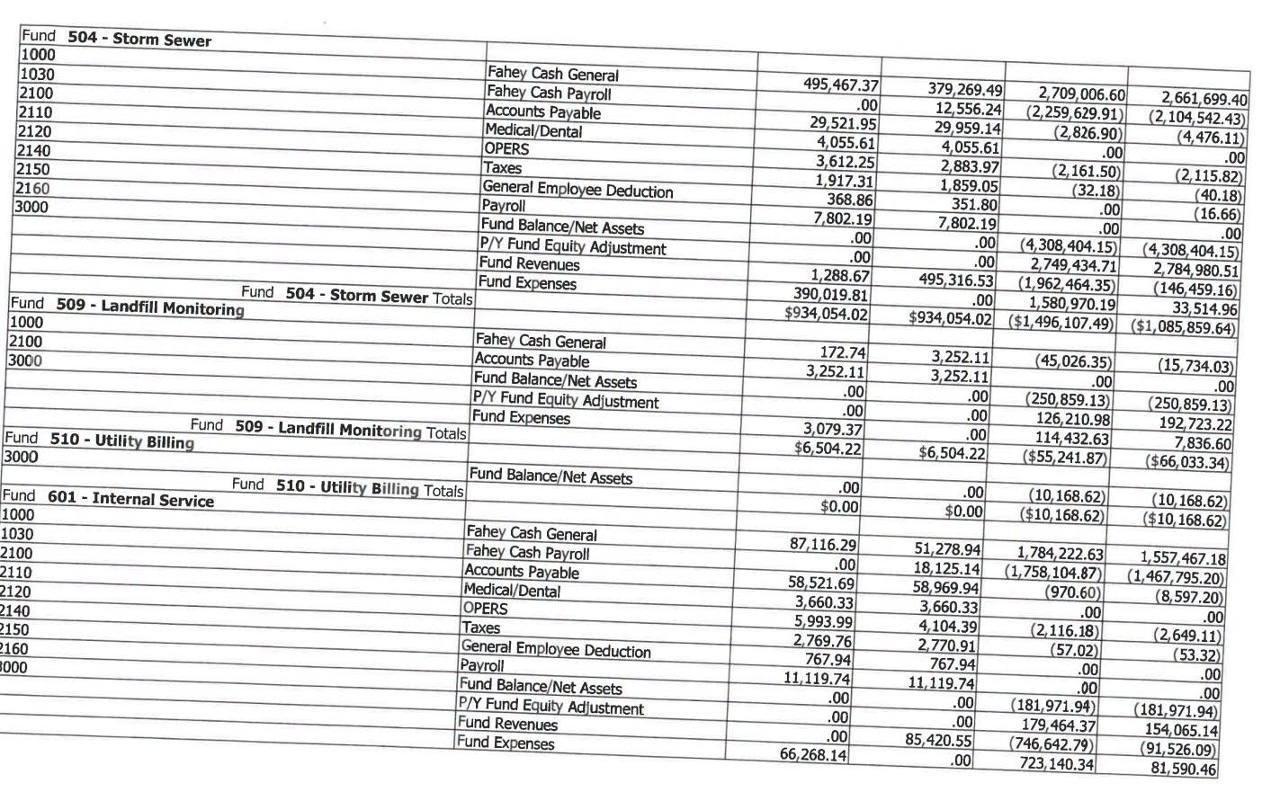
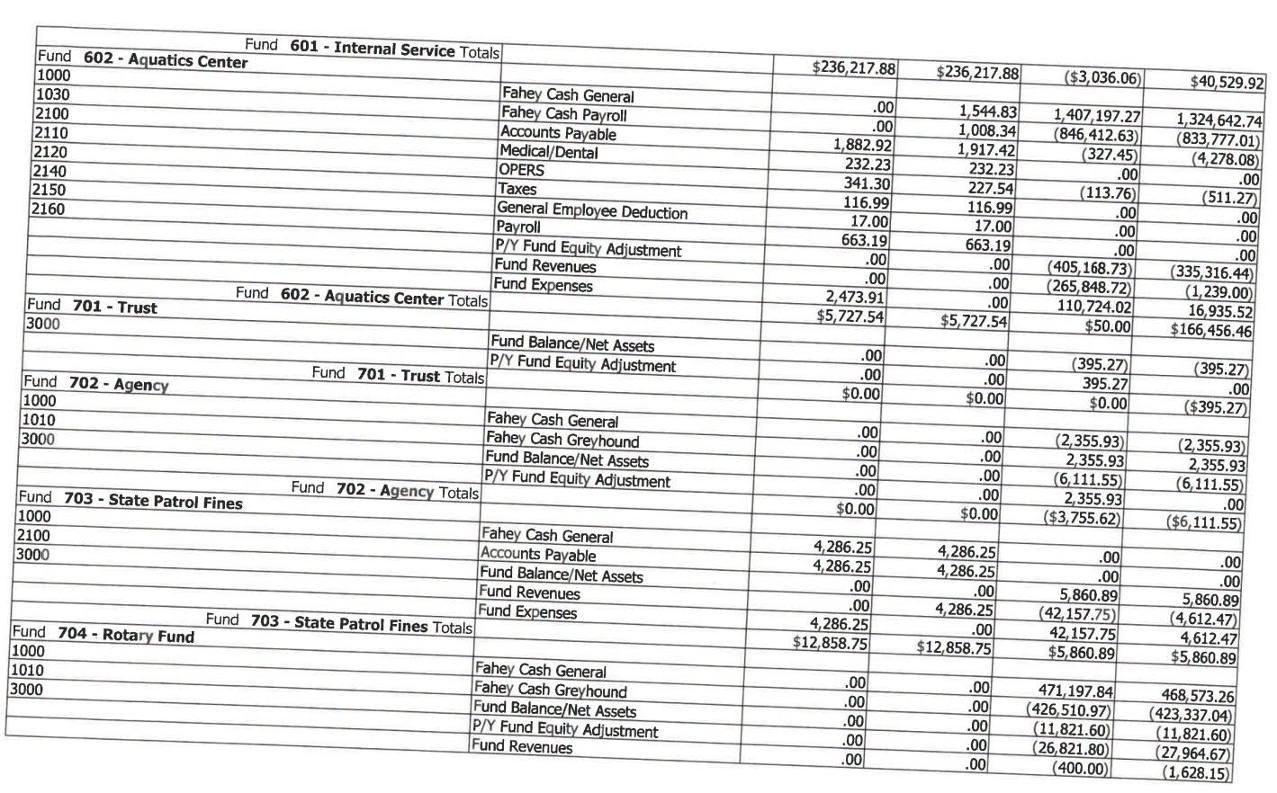
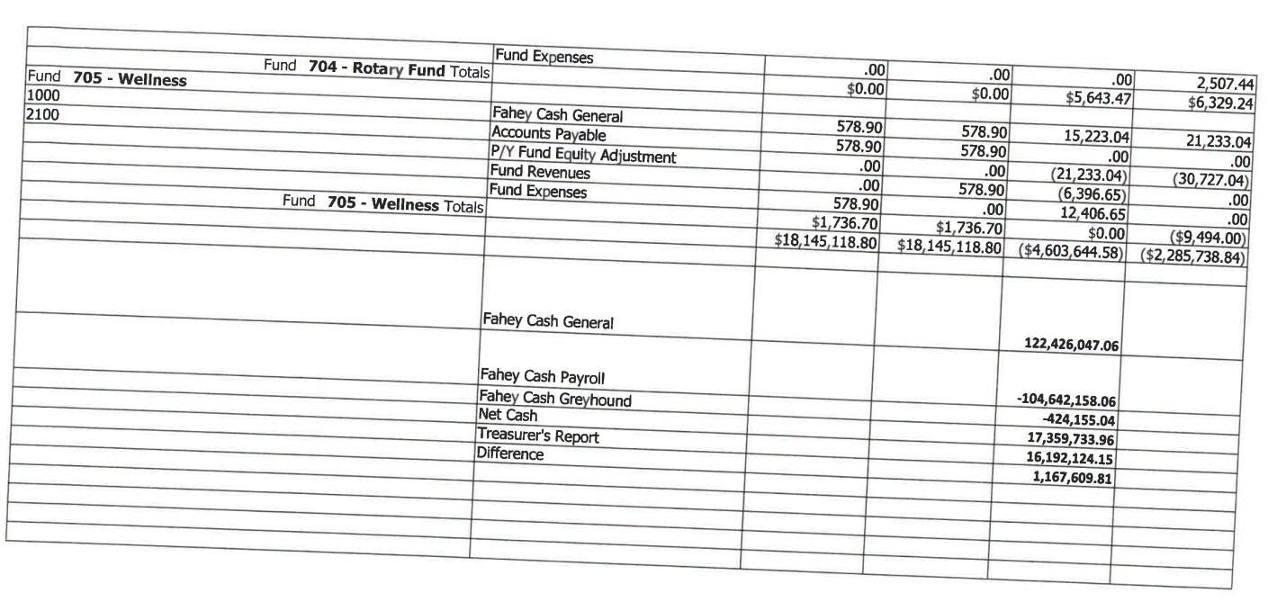
MARION TAX REMITTANCE ERROR AND THE $154,399 IRS PENALTIES: LOOKING CLOSER FROM THE PERSPECTIVE OF A QUALIFIED INFORMATION TECHNOLOGY SYSTEMS ADMINISTRATOR
The below series of events are yet another factor of our team’s insistence on a full forensic IT audit.
In 2023, the Ohio Auditor of State issued a formal Finding for Recovery against former Marion City Auditor Robert Landon III and his bonding company after determining that the City incurred $154,399 in IRS penalties and interest due to misdirected federal income tax withholdings.
The Auditor of State concluded that the City remitted federal taxes to the State of Ohio instead of the Internal Revenue Service and failed to reconcile its accounts in a timely manner.
The AOS stated that the City must “improve its internal control procedures over withholding remittances and related procedures to help ensure errors are identified in a timely manner.” The operational event that triggered this chain of failures was the June 26, 2020 payroll and tax remittance cycle described in the deposition of Kimberly S. Hutchison.
Her account documents how a single payroll processed inside a disabled control environment resulted in the deletion of the Federal Tax Payment account, the misconfiguration of its replacement, the insertion of a ghost employee, and the misdirection of federal tax funds.
Furthermore, it suggests that exact length and format configuration was not present. For example, if you try to enter the incorrect number of digits in a modern properly configured system, it will not advance.
Federal account numbers are 9 digits, state account numbers are 7 to 15 digits depending on the state.
The City’s failure to use the New World reconciliation module, combined with disabled audit logging and missing safety controls, allowed the error to remain undetected until the United States Treasury notified the City months later.
This report details Kimberly Hutchison’s deposition and then documents the information technology control failures, New World module misconfigurations, reconciliation breakdowns, ghost employee indicators, and safety control gaps that directly contributed to the AOS Finding for Recovery.
L👀KING CLOSER
The June 26, 2020 incident is the primary operational factor that led to the financial loss assessed against Auditor Landon.
On June 26, 2020, Kimberly Hutchison was preparing her second payroll ever and her first payroll solo.
The Payroll Specialist was off work for two payrolls in a row.
Her first payroll had been fully guided by a software vendor instructor.
This time she had no guidance.
During the June 26 payroll, she was notified that she uploaded an incorrect amount for Federal Tax Withholding because Lori Williams was inserted into the payroll even though she should not have been paid at all.
Lori Williams called in and said she received an email that she was getting paid.
Kimberly states that Lori was automatically inserted into the payroll and she did not understand how this occurred, especially since it did not happen during the previous payroll she prepared.
She questioned Debbie about this and Debbie said Lori was a part time employee used every now and then.
Kimberly later discovered Lori had not worked at all in the last year.
Kimberly notified her supervisors, Robert Landon and Marden Watts, and they requested a formal investigation.
The audit trail was “unknown and undetermined” because IT Director Jacob Boldin did not have audit logging turned on to track changes or access.
Kimberly also reported that Debbie Wolf was in the system at the same time she was performing payroll during off hours, nights, and weekends, and she did not know why.
Kimberly documented that Debbie was upset she was performing payroll duties.
Debbie stated, “Robert and you took it upon yourself to do the payroll wrong, instead of having Cathy Chaffin or Sindy Thrapp do it.” Cathy and Sindy said they could fix the payroll but would need to restart it entirely and employees would not be paid until the following week.
Robert and Kimberly decided to complete payroll on time and allow Debbie to correct any issues on the next payroll.
Kimberly attempted to delete the incorrect batch in Magic Writer but accidentally deleted the entire Federal Tax Payment account.
She immediately informed Landon and Watts.
Magic Writer walked her through recreating the account.
She had no reason to believe the instructions were incorrect.
The recreated account lacked the breakout between Medicare and Federal Tax Withholding.
Debbie confirmed it looked wrong but did not fix it.
Magic Writer said it should be okay to process.
Kimberly uploaded the payment. Debbie returned to work and Kimberly reminded her the account was not set up correctly.
Debbie did not fix it.
Kimberly was unaware of any issue until December 2020 when the United States Treasury notified the City that the June 26 payment of $8,525.80 was never received.
Kimberly states she always receives authentication notices but Debbie sends separate emails telling her who she is paying.
The authentication notices do not identify the payee.
Kimberly had no idea Debbie did not fix the breakdown in the system.
Kimberly Hutchison’s deposition documents a confirmed ghost employee event involving Lori Williams. Kimberly states that Lori “was automatically inserted into the payroll” even though Lori “didn’t work at all in the last year.” This is a classic ghost employee indicator and represents a severe information technology control failure.
The automatic insertion of an inactive employee into a live payroll batch demonstrates that New World / Magic Writer employee status controls, termination flags, and payroll eligibility settings were not configured or were manipulated.
Because audit logging was disabled, the system cannot determine whether this insertion was caused by misconfiguration, unauthorized access, or intentional interference.
This ghost employee event directly contributed to the incorrect federal withholding upload on June 26, 2020 and is part of the chain of failures that led to the Ohio Auditor of State’s Finding for Recovery against former Auditor Robert Landon.
If the reconciliation module and safety controls had been active, the presence of a ghost employee and the misdirected payment would have been detected promptly.
Untracked system access Audit logging was disabled.
No record exists of who accessed the system, who inserted Lori Williams, or who changed settings.
Unexplained concurrent access:
Kimberly observed Debbie in the system during off hours while she was performing payroll.
Automatic insertion of inactive employee:
Lori Williams had not worked in one year yet was automatically inserted into payroll.
Deletion of critical tax account without safeguards:
The system allowed deletion of the Federal Tax Payment account with a single click.
No role based access control:
Kimberly, performing her second payroll ever, had full access to tax account creation and deletion.
No validation of tax account configuration:
The recreated tax account lacked required breakout fields.
No automated detection of failed federal remittance:
The system did not alert the City that the June 26 federal payment failed.
Email based authentication without system detail:
Authentication notices lacked payee information.
No follow up on identified configuration errors:
Kimberly asked Debbie to investigate the incorrect setup. Debbie did not fix it.
Missing or unused modules:
Mayor Bill Collins confirmed that approximately 80 percent of New World modules were unused or never configured.
Reconciliation module unused:
The reconciliation module was not used during the incident.
Safety controls misconfigured:
The system allowed deletion of a federal tax account without any safeguard.
System would have caught the error if controls were functioning:
The missing modules and disabled safety controls directly enabled the failure.
The failures documented in this incident match the broader pattern identified in Silent Sabotage.
New World was installed, paid for, financed, maintained, and upgraded, but never configured.
Critical modules were unused.
Safety controls were disabled.
Audit logging was off.
The system was incapable of detecting manipulation or preventing financial errors.
OFFICIAL EXHIBITS & PRIMARY SOURCE RECORDS (2020–2023 Special Report: Tax Remittance Error & $154,399 IRS Penalties)
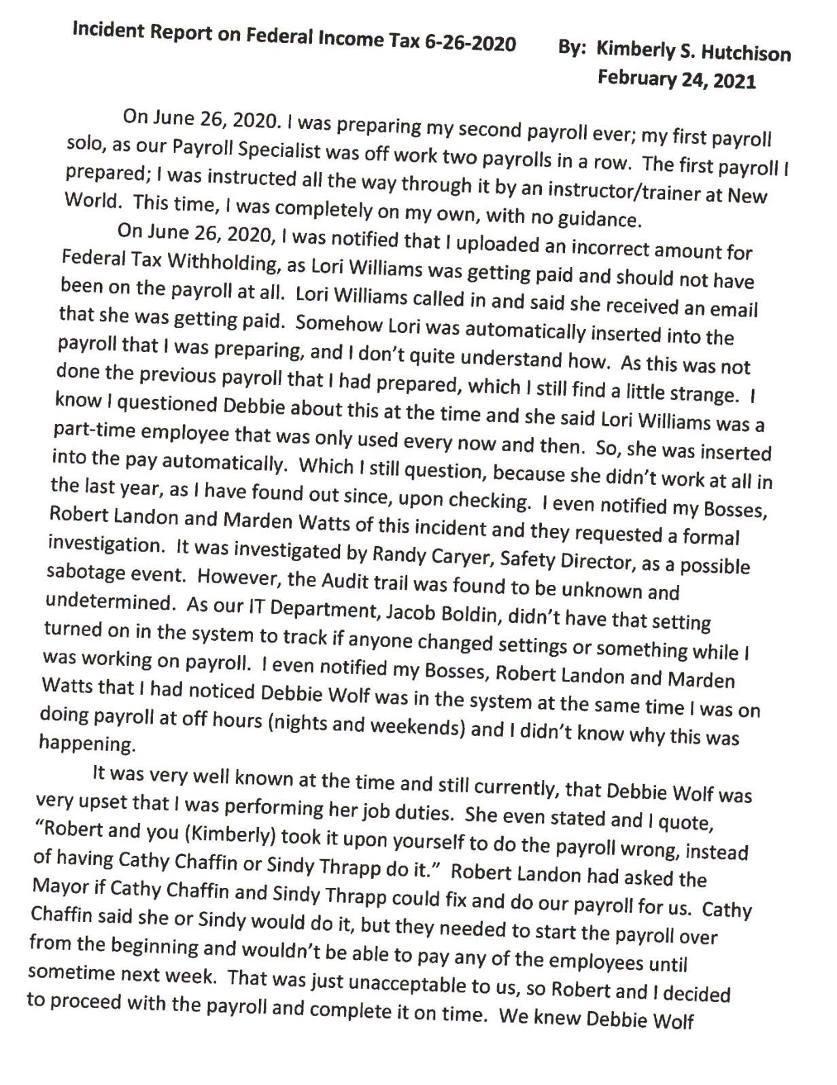
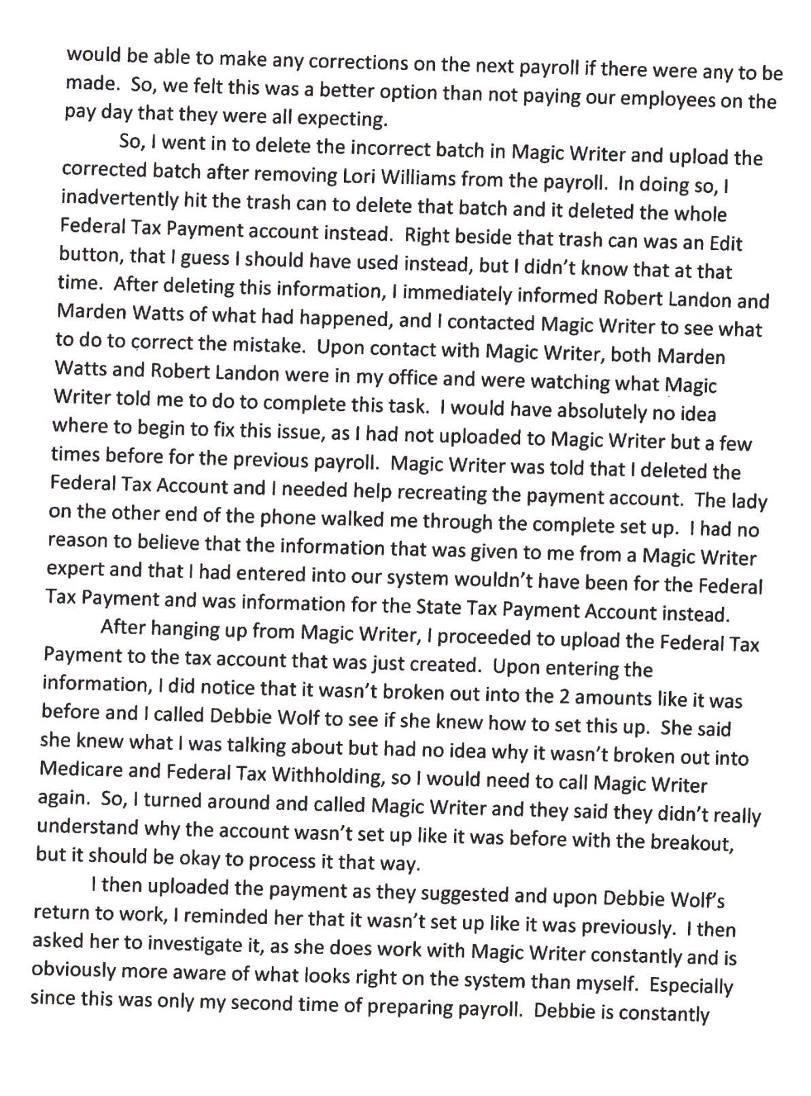
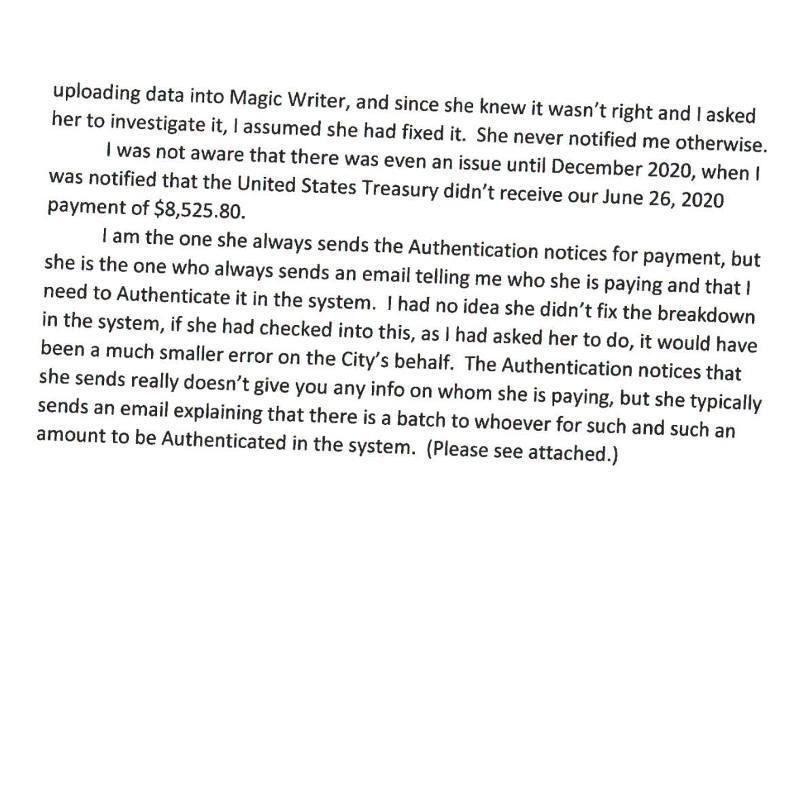
MARION’S FINANCIAL COLLAPSE: “GOD MODE,” GHOST DATA FROM AN IT SYSADMIN & FINANCE PERSPECTIVE
ALWAYS REMEMBER: Marion Watch does not always publish everything we know. At least not immediately ;-)!!
We are now moving into the future.
Since taking this investigation to the street level back in early 2014 and learning about the red flags associated with the utility billing theft around late 2015 into 2016, we have quietly documented the systemic IT and financial failures that others desperately tried to bury.
Today, we are publishing what we have long known, BUT NOBODY WOULD LISTEN TO!
These facts have finally become a matter of undeniable public record, corroborated by outside contractors in official city records who simply could not be silenced.
We have kept this overview as concise as possible while remaining strictly legally compliant and forensically airtight.
We strongly encourage you to read this entire document, which has been meticulously compiled by financial professionals with decades of experience, full-stack IT professionals with over two decades of enterprise infrastructure experience, and other relevant professional fields over many years.
For years, the excuse for Marion, Ohio’s missing money and corrupted data has relied on a convenient, recycled narrative:
“The New World software was bad. It just had glitches.”
Or, more recently, the narrative pivoted to:
“Everything started in 2020.”
To a trained systems administrator analyzing the actual configurations, and forensic IT indicators, those are well-crafted narratives with absolutely zero factual substance.
The software didn’t fail.
The forensic evidence indicates it operated exactly as it was configured to.
When critical financial safety switches are deactivated, when system audit logs are turned off, and when cross-departmental “God Mode” permissions are actively maintained long after an employee vacates the finance department, it ceases to be a simple administrative oversight.
It becomes a documented, architectural circumvention of digital security and statutory frameworks.
By definition, the city’s enterprise system is fundamentally compromised.
A comprehensive forensic IT audit is not just a recommendation—it is a mandatory requirement.
The documented evidence of bypassed internal controls, shadow ledgers, and unauthorized, highly privileged system access provides more than enough probable cause for immediate intervention and investigation by state and federal law enforcement.
THE PRECEDENT FOR FEDERAL INTERVENTION
History clearly demonstrates what happens when municipalities exhibit these exact same systemic red flags.
When local controls collapse to this degree, federal authorities routinely step in, bringing specialized assets like the FBI’s Computer Analysis Response Team (CART) and Forensic Accountant Unit (FAU) to conduct criminal IT audits at no cost to the local taxpayer.
The parallels to Marion are undeniable:
Dixon, Illinois:
City Comptroller Rita Crundwell embezzled $53 million over two decades. Like the situation in Marion, she operated as the sole controller of finances, completely bypassed the segregation of duties, disabled internal controls, and utilized shadow ledgers to hide the reality of the city’s accounts.
Washington, D.C.:
Harriette Walters embezzled nearly $50 million from the Office of Tax and Revenue by exploiting automated financial systems, bypassing workflow approvals, and utilizing ghost vendors. The FBI and IRS-Criminal Investigation division were required to untangle the digital footprint.
Detroit Public Schools:
A systemic collapse of internal controls, bypassed standard procurement software, and the appearance of “ghost employees” draining payroll led to massive FBI – Federal Bureau of Investigation investigations and federal indictments.
The $154,399 Magic-Wrighter ACH failure in Marion (which misdirected federal tax payments), combined with the appearance of ghost employees, a $104 million negative balance, corrupted data, and a long list of other documented issues provide a textbook foundation for federal law enforcement to deploy CART, FAU, or other relevant entities.
*THIS FORENSIC IT AUDIT SHOULD HAPPEN BEFORE OR DURING ANY SOFTWARE TRANSITION TO PREVENT A GARBAGE IN GARBAGE OUT SCENARIO. *
LET’S LOOK CLOSER from the perspective of a trained IT administrator, with input from financial professionals and others.
THE “ORIGINAL SIN” & A FATALLY FLAWED INSTALLATION
The digital blind spot began immediately when the city migrated to the New World system in July 2009.
In any standard government IT rollout, months of “parallel testing” are required, but Marion largely skipped this step.
Furthermore, the ghost IT Oversight committee failed to oversee the implementation and ensure strict, globally accepted IT and financial controls were in place and working.
Council minutes from November 8, 2021, reveal exactly how broken this initial rollout was.
Councilwoman Fosnaugh stated on the record that the software’s 2008 installation was “not consistent” and was inappropriately “mixed between accrual and cash”.
She confirmed the system “has never worked correctly since 2008” and that reports for cash basis or accrual basis could not be pulled accurately because utility billing was inconsistent with the whole system.
Because the baseline installation was completely mangled, the system required constant manual “workarounds,” which Fosnaugh noted opened the door to “a lot of mistakes”.
This has been repeated by current officials including Ralph Smith, Twila Laing, and several others.
Under the former administration the scope of the software was gutted.
In a direct email to Marion Watch, the Collins administration explicitly admitted that an estimated 80 percent of the software’s capabilities were left sitting on the shelf by the former administration.
It was confirmed.
Module costs went from $174k down to just $74k in a City of Marion, Ohio council meeting.
EXAMPLES:
This staggering waste is quantified in Tyler Technologies Invoice No. 045-496026, which billed the city $145,825.78 for the 2025-2026 cycle. Page 1 of this invoice explicitly lists a charge for the “Bank Rec” module, providing direct proof that the city was paying for native reconciliation architecture while it remained disabled.
In a July 2026 email, Mayor Collins admitted the city demanded a bill audit in early 2026 regarding these unused modules, but the vendor ignored the request until inquiring about payment months later, leading to a last-minute meeting on July 14, 2026—just days before the city’s financial collapse.
THE 70 PERCENT VULNERABILITY: CUTTING THE FAILSAFES
What makes up the 70 to 80 percent of an enterprise system that gets left in the box?
The failsafe’s.
According to official documents, the administration operated with three critical accountability modules disabled:
The Budgetary “Hard Stop”: Ohio Revised Code § 5705.41(B) prohibits spending unappropriated money.
New World has a “Hard Stop” (The GL Override) setting that physically prevents a check from printing if funds are insufficient, but this was manually disabled. Because this lock was deactivated, the city illegally overspent for years, culminating in the 2021 audit where the General Fund was overspent by $1,150,886, the Fire Fund by $625,738, and the Police Fund by $567,688. This was not corrected until the AOS ordered it corrected in 2025.
Auditor Meginness confirmed on March 25, 2024, that there was “no stop for appropriate expenditures” other than manual supervisory approval.
When questioned on how accounts could be spent in the negative, she noted there was a “warning that pops up,” but admitted she “did not get into the day-to-day stuff and did not know the details of the internal controls of these issues”.
Automated Bank Reconciliation: Immediately after “going live” in 2009, the city entered a six-month blackout period where reconciliations simply stopped, forcing staff to rely on manual spreadsheets.
The Approval Workflow (The Invisible Theft): Because the Approval Workflow engine was inactive, Utility Supervisor Brenda Nwosu exploited the gap to steal $34,276 between 2011 and 2014 by manually adjusting customer bills to zero without triggering a manager approval request.
QUICKBOOKS, SHADOW LEDGERS & THE AOS BLIND SPOT
If the main ERP was crippled, how did they track the money? They used QuickBooks.
Under the tenure of the Schertzer administration, Auditor Kelly Carr, and Deputy Auditor Cathy Chaffin, the city resorted to running funds through QuickBooks—an off-the-shelf program completely disconnected from the New World database. By moving the numbers offline, they bypassed the strict audit trails of a Tier-1 ERP.
State audits do not happen in real-time; they are retroactive reviews of past fiscal years. When the Ohio Auditor of State (AOS) officially caught and cited the city for the use of this disconnected software, it meant QuickBooks had been operating as a long-term “bandaid”.
Forced to abandon their shadow ledger, the administration was trapped.
They had to return to operating exclusively inside the New World system they had already structurally compromised.
This raises a massive red flag.
To any IT systems administrator, these missing controls, and other severe issues regarding permissions are elementary, entry-level failures that should have triggered immediate alarms.
But financial auditors are not IT architects.
For years, the AOS conducted paper “spot-check” audits, saw that the manual spreadsheets mathematically tied out, and walked away.
They failed to look under the hood.
Now, the AOS blames the “complexity of hybrid accounting” to sidestep a highly uncomfortable truth: their basic financial audits completely missed a decade of catastrophic, structural IT rot.
THE TICKING TIME BOMB: WHO BUILT IT?
When forensic accountants from Veritas Solutions Group were finally brought in to untangle the wreckage in 2022, their findings proved the systemic vulnerabilities started long before Auditor Robert Landon took office in 2020.
Veritas discovered that “previous administrations” had structurally aggregated nine distinct cash and investment bank accounts into one single software account—an architectural move that blocked the deployment of built-in automated matching tools.
Official records and Veritas confirmed that evidence of systemic reconciliation issues predates 2019.
However, Veritas was walled off from auditing this underlying data because the city restricted their contract strictly to the 2020 and 2021 books.
Because they were blocked from investigating the root cause, Veritas reported that the historical data was so corrupted they could not even calculate a definitive beginning adjustment for FY 2019.
Furthermore, they were not permitted to look at the utility billing system.
So, without QuickBooks and without the New World failsafes, how did the city hide this massive financial rot prior to 2020?
Manual manipulation.
As Veritas Managing Director Greg Blate revealed to City Council, the terrifying reality was that in FY 2019, the books only balanced because a “single former deputy auditor [Chaffin] possessed the specialized historical knowledge required to manually override, tie together, and force-balance the flawed software transactions”.
She was manually holding the corrupted system together.
When she vacated the Deputy Auditor position in January 2020 to become the Service Director, the house of cards began to collapse.
By the time Veritas arrived to begin their forensic investigation in 2022, she was no longer employed by the city entirely.
GHOST EMPLOYEES, ACH FAILURES & THE “MAGIC” DEFENSE
When the Landon administration took over, they inherited a blinded system. This perfectly explains the terrifying reality exposed by an official incident report filed by employee Kimberly Hutchison.
Because the “Vendor Validation” and “Input Masks” modules were disabled, the system’s Magic-Wrighter ACH payment gateway failed to flag mismatched routing numbers.
As a result, the city routed federal tax payments to the State of Ohio and it was not caught for about six months, resulting in a staggering $154,399 finding for recovery.
Hutchison’s incident report revealed a complete collapse of IT security during this time:
Audit Logging Disabled: IT Administrator Jacob Boldin failed to turn on the system’s audit trail, meaning the city could not track who was changing settings during payroll processing.
Ghost Employees & Off-Hours Lurking: Hutchison reported that an inactive employee (Lori Williams) who “didn’t work at all in the last year” was automatically inserted into an active payroll batch.
Simultaneously, former payroll specialist Debbie Wolf was found to be logged into the system during “off hours (nights and weekends)” while the new user was trying to process the payroll.
THE 2021 LOGS: THE PERMISSIONS WARS
Before examining who held these permissions, it must be established that the level of access we are about to discuss is fundamentally inappropriate for any official—even the sitting Auditor.
This level of access violates every known standard of segregation of duties, whether held by a sitting official or a former official.
It allows a single user to override payroll, alter cash accounts, modify General Ledger entries, change employee financial data, bypass reconciliation controls, alter audit trails, create or modify other user accounts, and access protected personal information.
NO MUNICIPAL FINANCIAL SYSTEM CAN BE CONSIDERED TRUSTWORTHY UNDER SUCH CONDITIONS.
No municipal financial system can be considered trustworthy under such conditions.
Standard IT rules mandate that once Cathy Chaffin transferred to the Service Department in January 2020, her executive financial access should have been revoked immediately. A Service Director’s role is to ensure a safe work environment, not manage city finances.
Yet, internal Tyler Technologies system logs from March 8, 2021, prove she retained absolute IT clearance fourteen months after leaving the Auditor’s office.
According to the screenshots (unredacted version has the cryptographic URL):
Executive Override: Despite working in a completely different city department, she retained checkmarks for “Department Entry,” “Director,” and “Auditor/Council”—allowing her to singlehandedly bypass the natural approval hierarchy.
“God Mode”: She had “Full” access to add, change, and delete user security profiles and view system security violations.
Custom Built: The system explicitly flags her profile as “User specific” and “Template overridden”. This includes enabling and disabling modules and settings in the core functionality.
When questioned about these “magically changing” security breaches, the software vendor claimed they could see the high-level access existed but couldn’t tell who granted it.
However, the vendor also confirmed these permissions must be deliberately granted by a “super administrator,” indicating a purposeful administrative action rather than an error.
Former Auditor Landon later corroborated the chaos, confirming he witnessed “permission wars” and demands for shared passwords during his time in office. Other officials and former city employees both before and after Robert Landon’s tenure have advised of shared credentials and other serious issues.
THE GHOST CASH LOOP & THE ERP DEFENSE
To untangle the wreckage left by this cross-administration cover-up, Veritas had to review over 600,000 lines of transactions inside New World and 25,000 transactions across 18 distinct municipal bank accounts.
Because of the disabled failsafes, shadow ledgers, and manual overrides, reports that logically should have matched yielded unexplained discrepancies of upwards of $600,000.
The crisis deepened during the FY 2021 processing cycle when the automated Cross Fund Report stopped matching the standard Cash Report, producing a massive reporting gap between $2.4 million and $2.5 million.
The root of this massive variance was a “ghost cash loop” hidden within a mismanaged accounting method.
According to January 22, 2024, council minutes, the Utility Billing module was operating on a “modified cash basis”.
This catastrophic configuration caused the system to make adjustments to cash balances even when the transactions did not involve the actual receipt or distribution of cash.
The administration and the AOS attempted to blame the software for this hybrid accounting complexity, claiming New World wasn’t capable of handling it.
That excuse fails entirely.
When confronted, Tyler Technologies (New World) explicitly defended their software, stating it was “operating the way that it is designed”.
The vendor pointed the finger directly back at the city’s flawed setup.
New World representatives noted they could not understand why the city was forcing “cash transactions (rather than a utility receivable account)” for these adjustments.
Enterprise Resource Planning (ERP) systems are explicitly designed and mandated by law to handle hybrid accounting, combining cash and accrual components within the same operational infrastructure.
Municipalities across the country successfully utilize this exact software to seamlessly manage utility billing on a cash basis while maintaining distinct accrual ledgers for other departments.
The inability to make this function correctly in Marion was not a vendor design flaw.
It was a severe configuration error. Because it was set up incorrectly, the system perpetually overwrote cash balances without triggering warnings, locking the database in a permanent imbalance.
This would be very difficult if not impossible to fix in a live environment that has been operating in this manner for about 15 years.
Veritas confirmed the depth of the city’s ignorance regarding this setup on January 22, 2024.
Greg Blate stated, “He does not believe that there is one person in the city who understands utility billing accounting from beginning to end,” a fact Auditor Meginness directly confirmed.
THE $104 MILLION COLLAPSE & FISCAL EMERGENCY
The city’s financial records officially collapsed, revealing a $16.1 million cash gap, a $543,079 unreconciled variance (money the city supposedly had in the bank but could not account for on its books), and a horrifying negative balance of $104,642,158.06.
Ultimately, Veritas had to execute 90 massive journal entries—correcting over $20 million in gross historical adjustments, including a single correcting entry of $99,717,000—just to force the broken ledgers back into mathematical reality.
On November 25, 2025, the Ohio Auditor of State officially placed Marion in Fiscal Caution, citing unauditable records and 13 funds showing deficit balances totaling over $8.8 million.
On July 21, 2026, the City of Marion officially enters a state-mandated Fiscal Emergency, turning over financial authority to a state-appointed commission. State observers have officially recommended that the New World ERP system be entirely replaced.
A $99 million journal entry does not happen because of a glitch. You cannot aggregate nine bank accounts into one, misdirect federal tax payments for six months in Magic-Wrighter, prop up a broken system with a QuickBooks shadow ledger, or execute million-dollar write-offs in New World unless the digital security cameras are turned off.
The system functioned exactly as it was configured to function.
OFFICIAL EXHIBITS & PRIMARY SOURCE RECORDS (2009–2024 Synthesis: ‘God Mode’ & Ghost Data (IT SysAdmin & Finance Perspective))
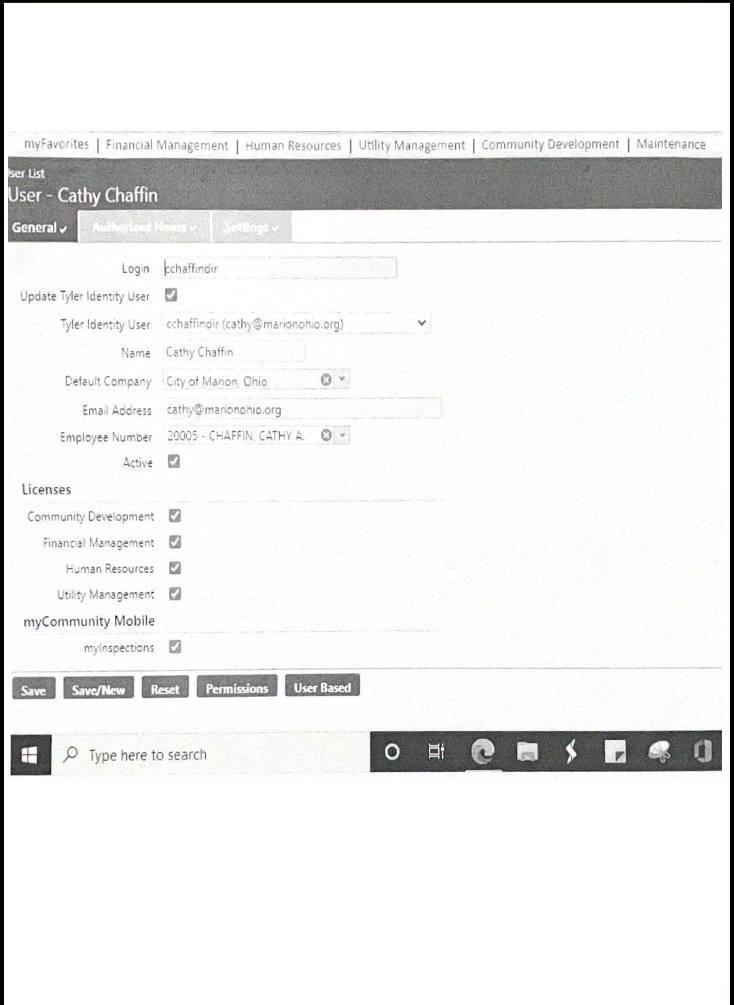
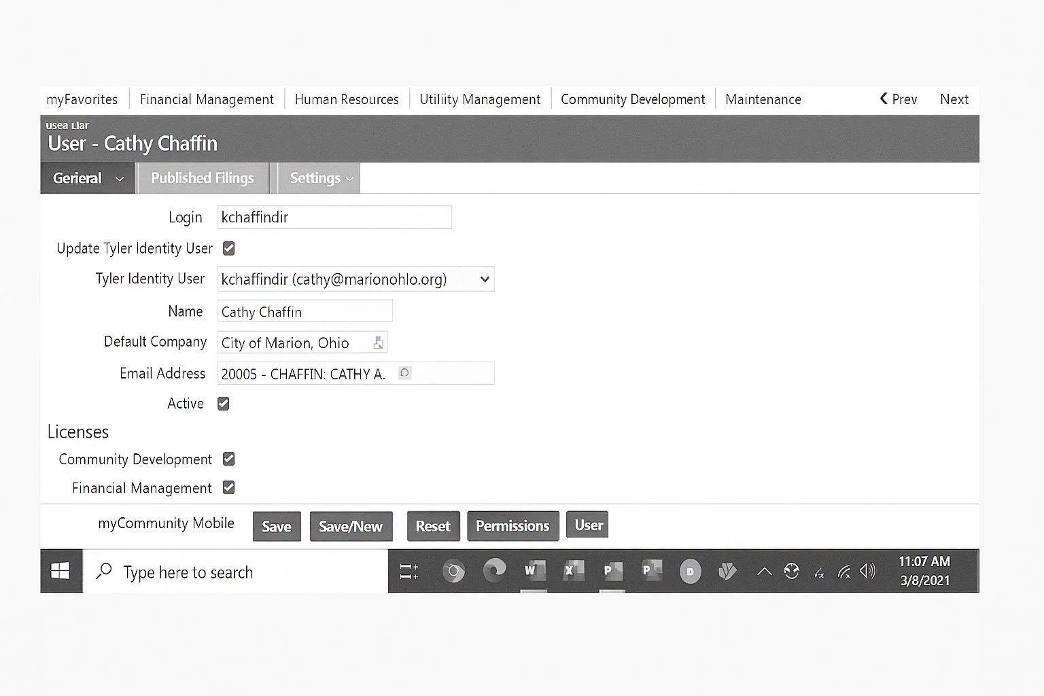
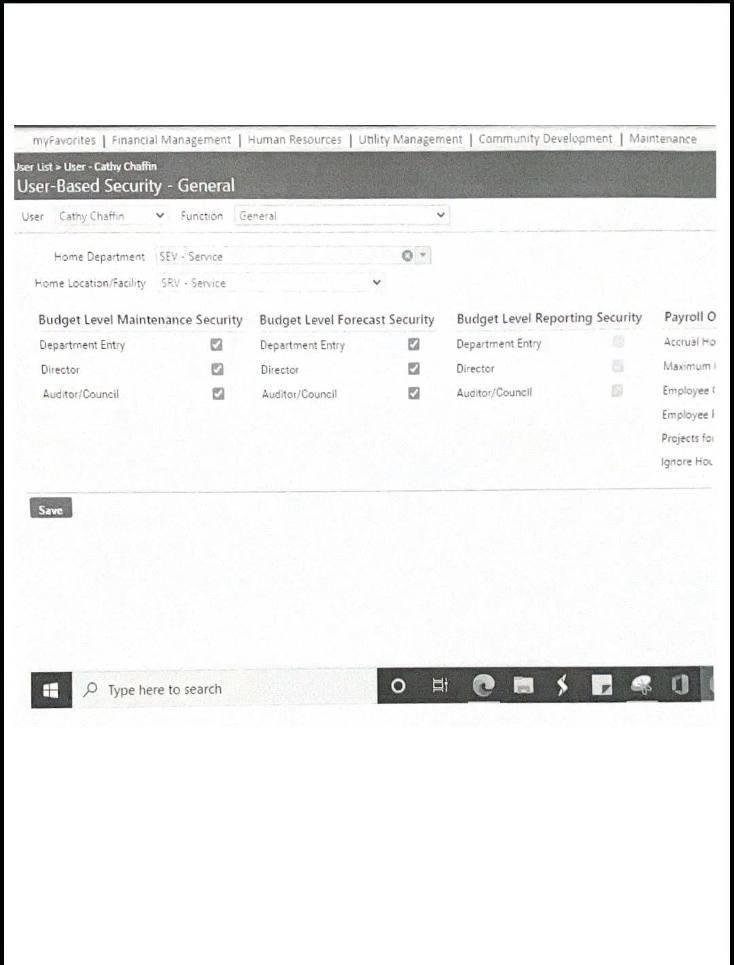
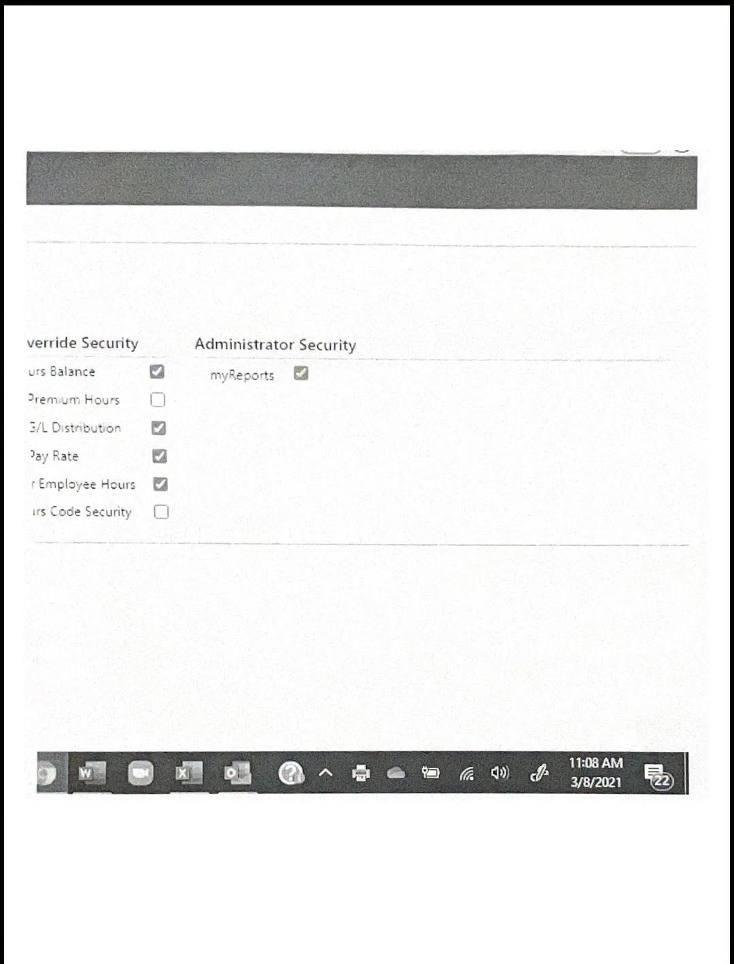
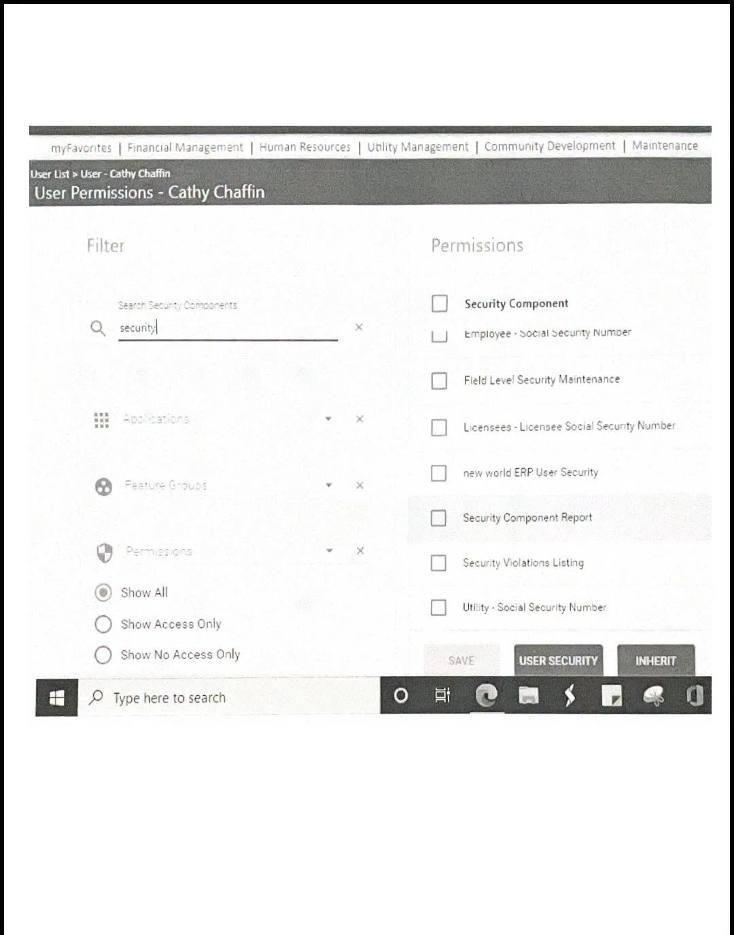
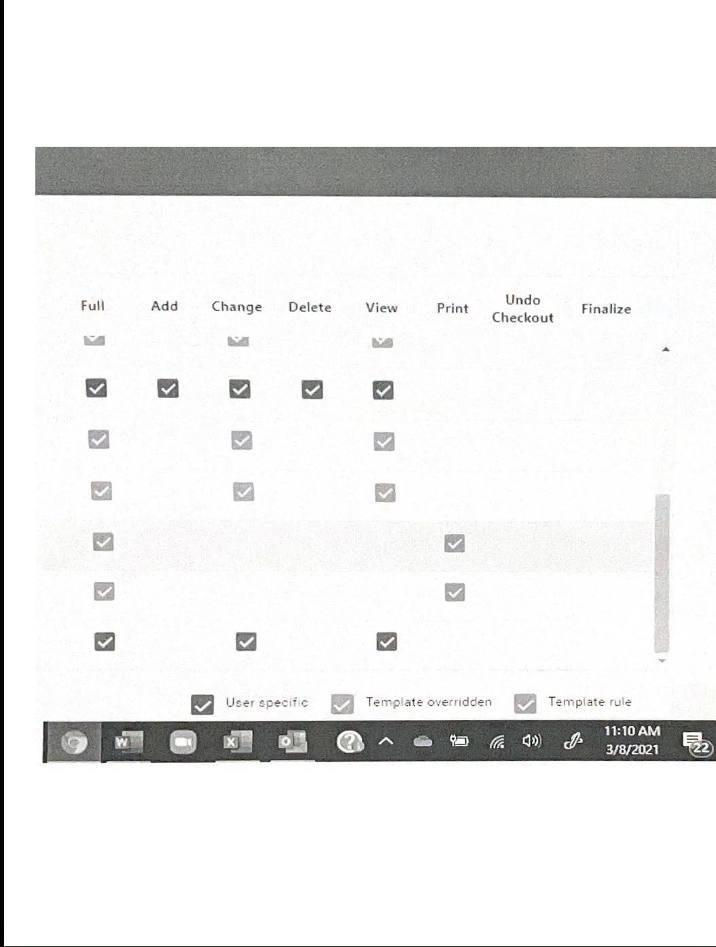
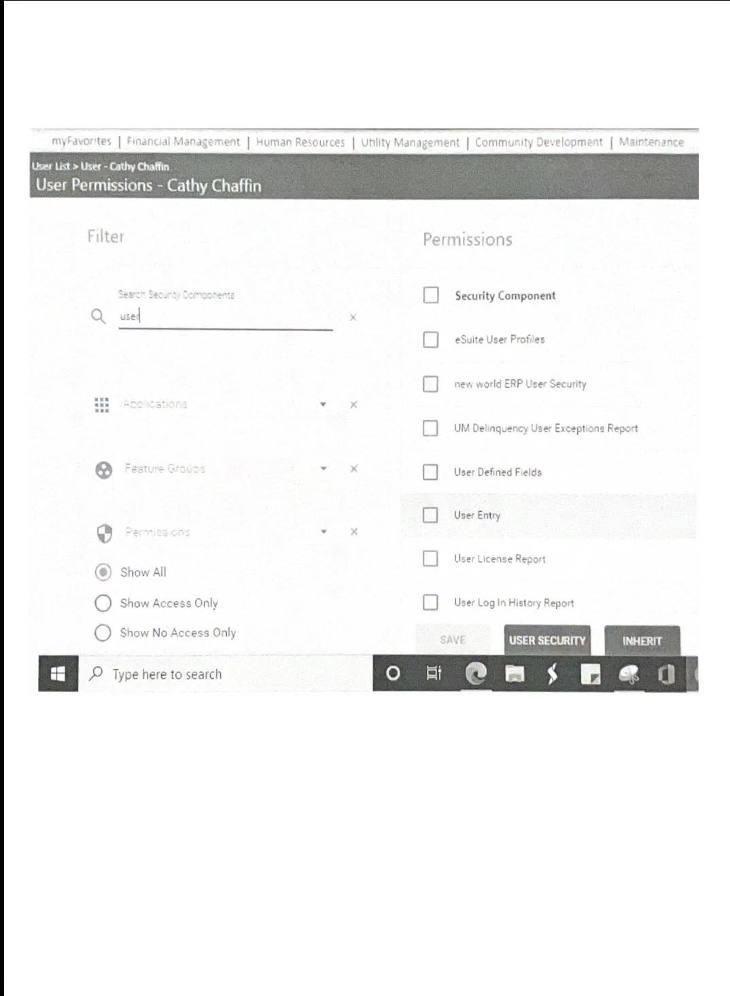
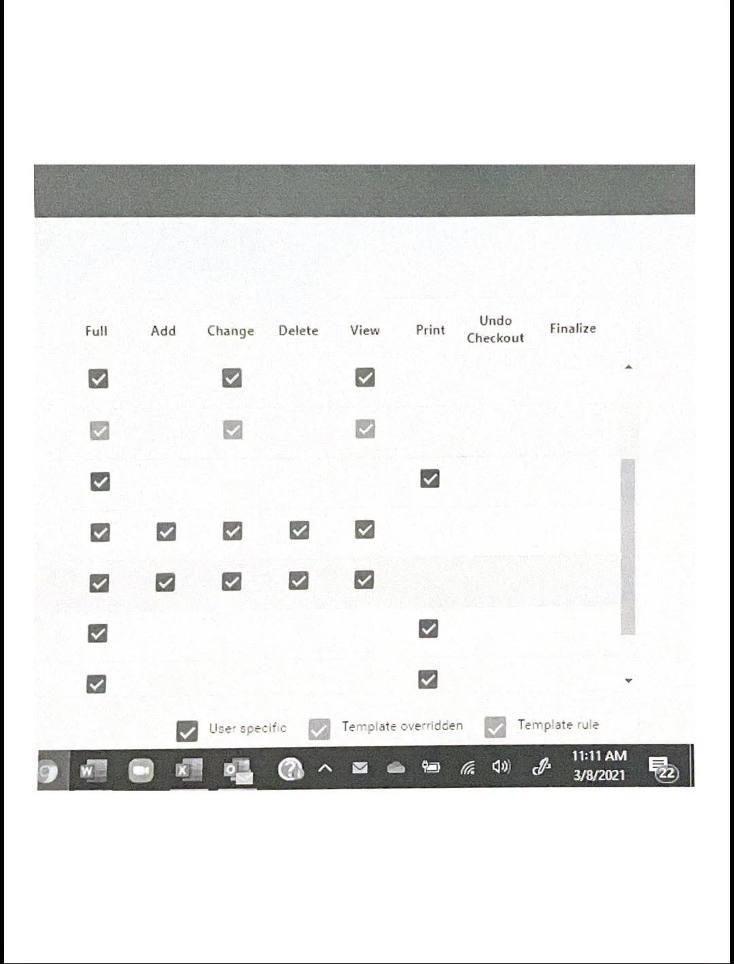
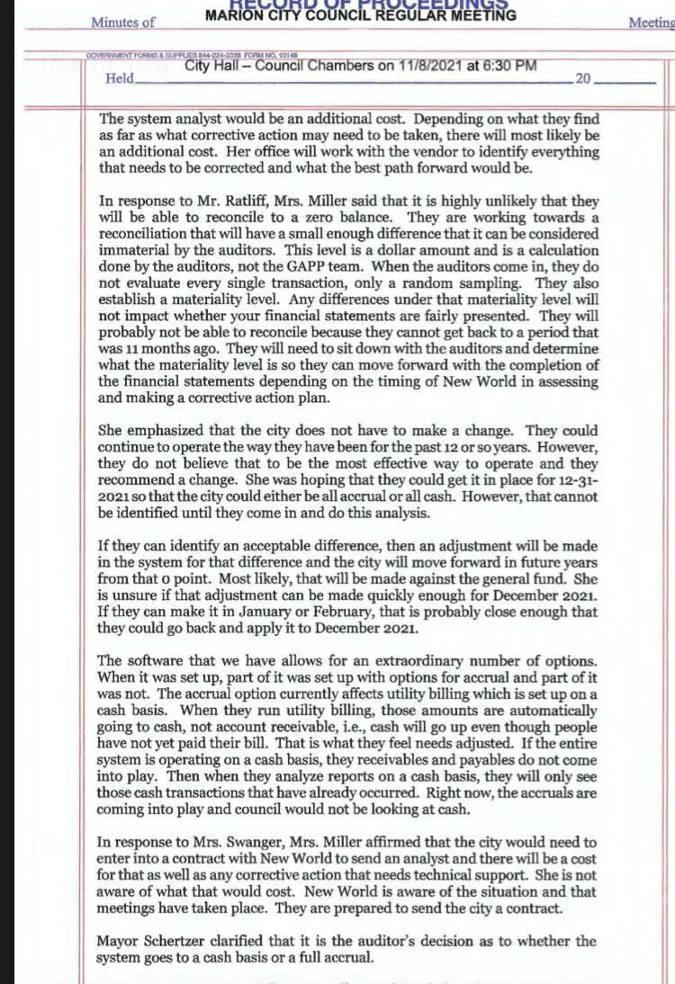
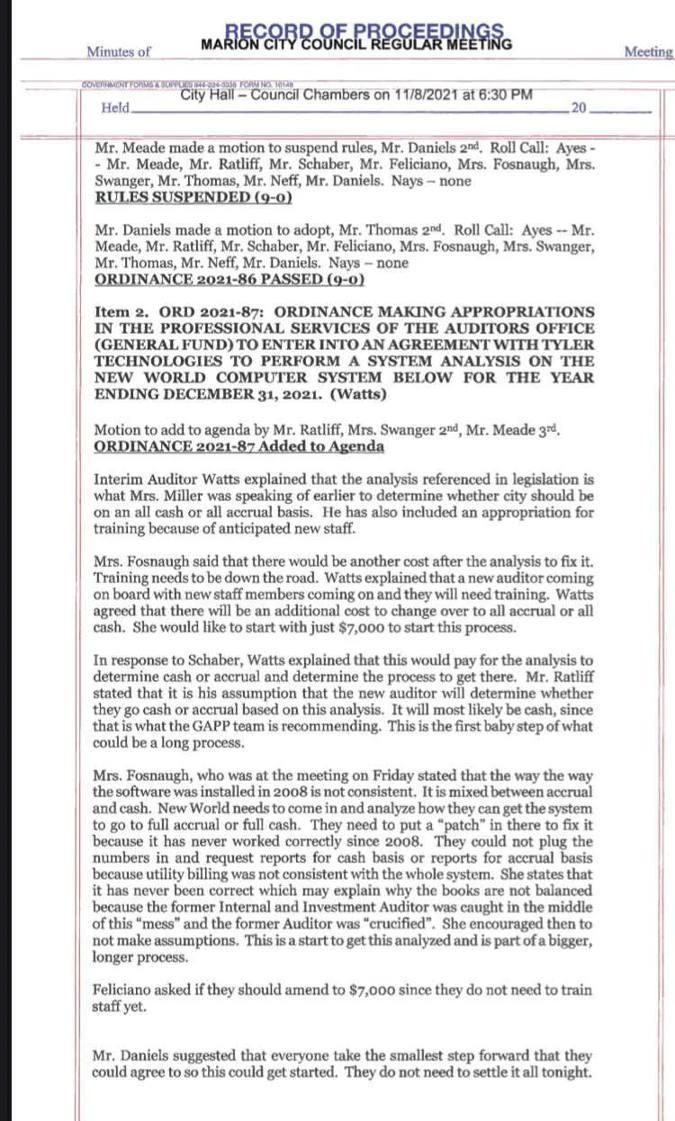
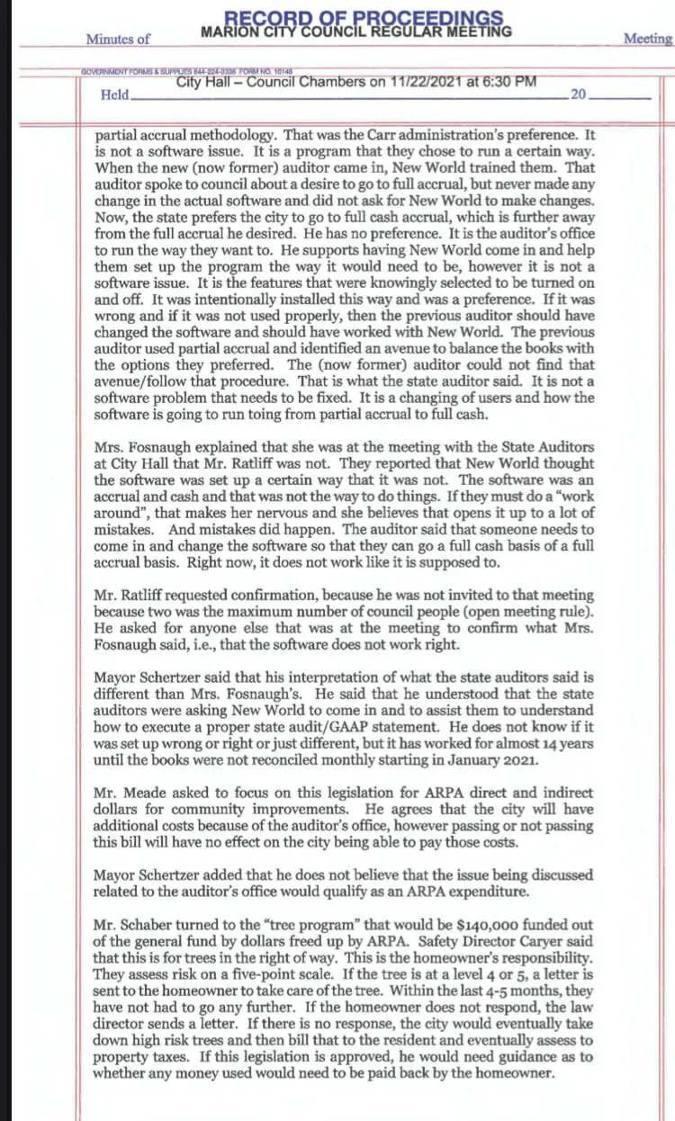
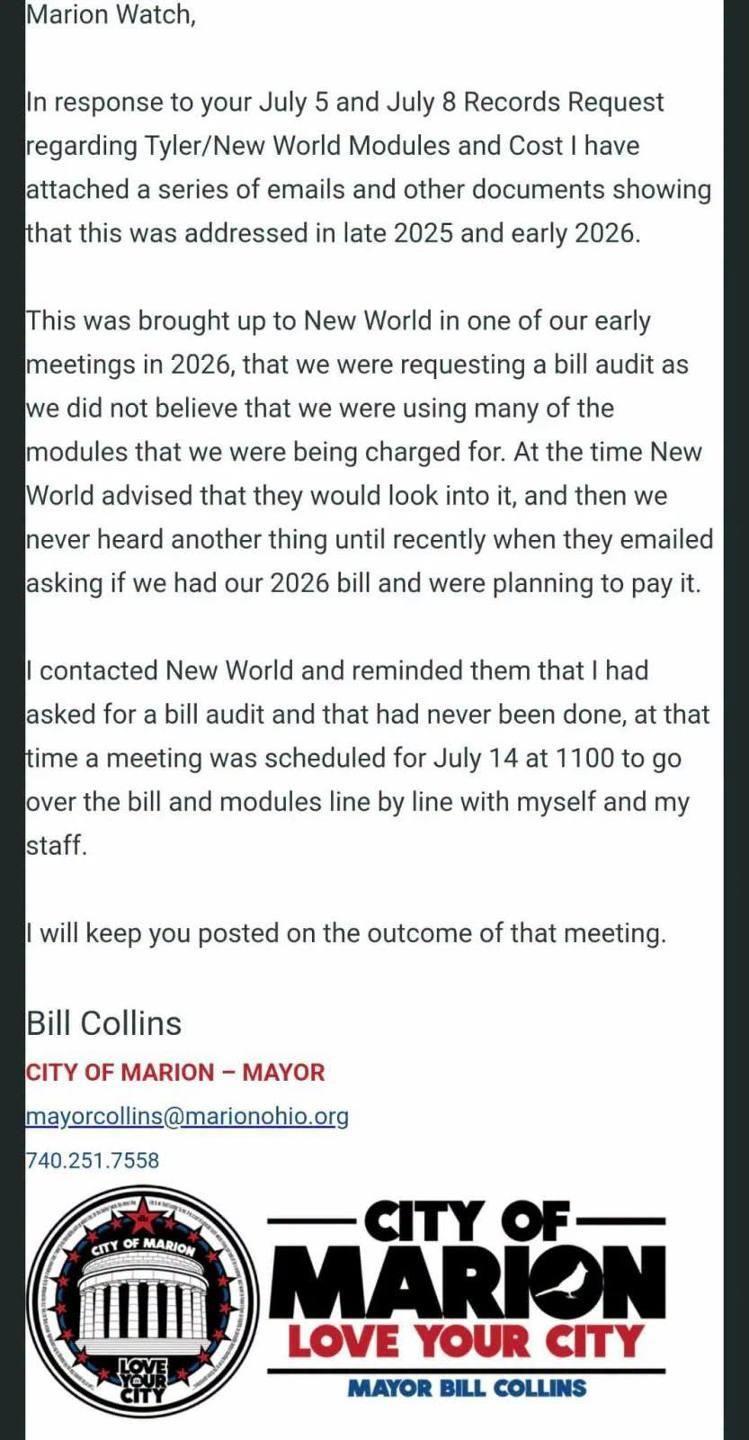
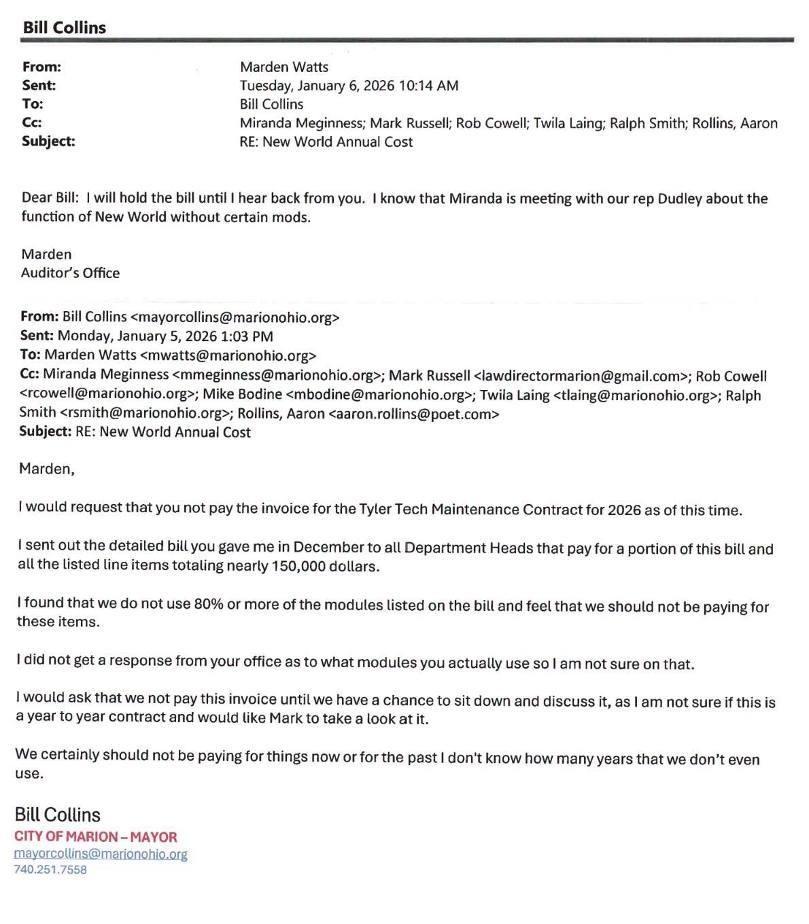
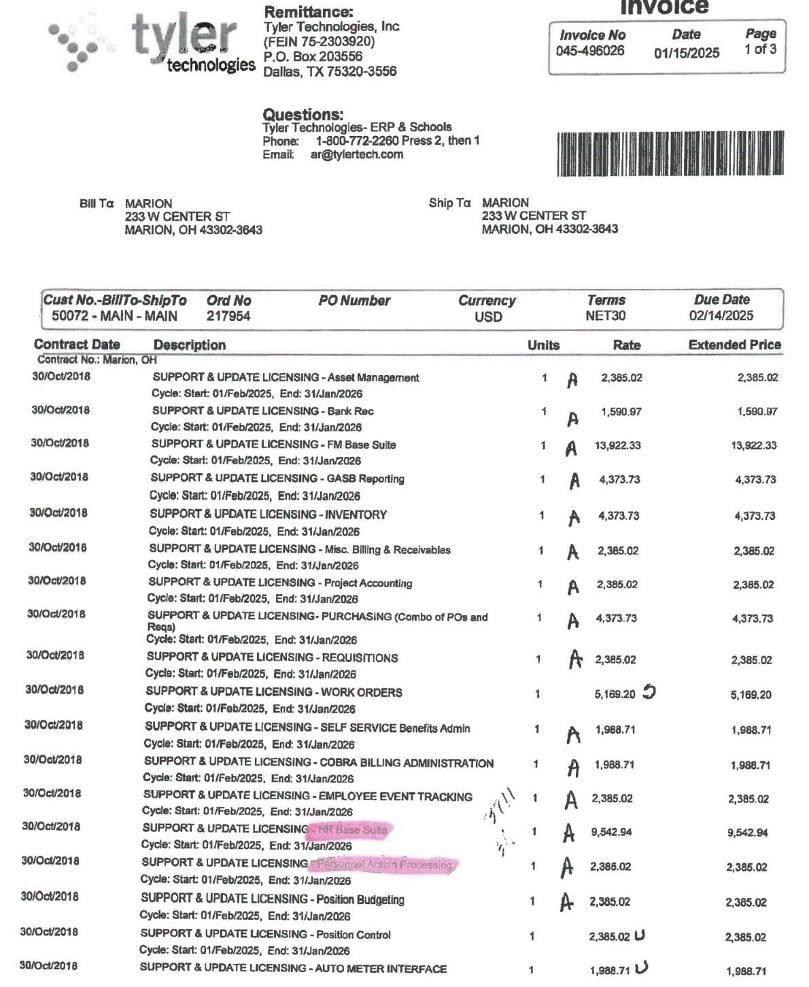
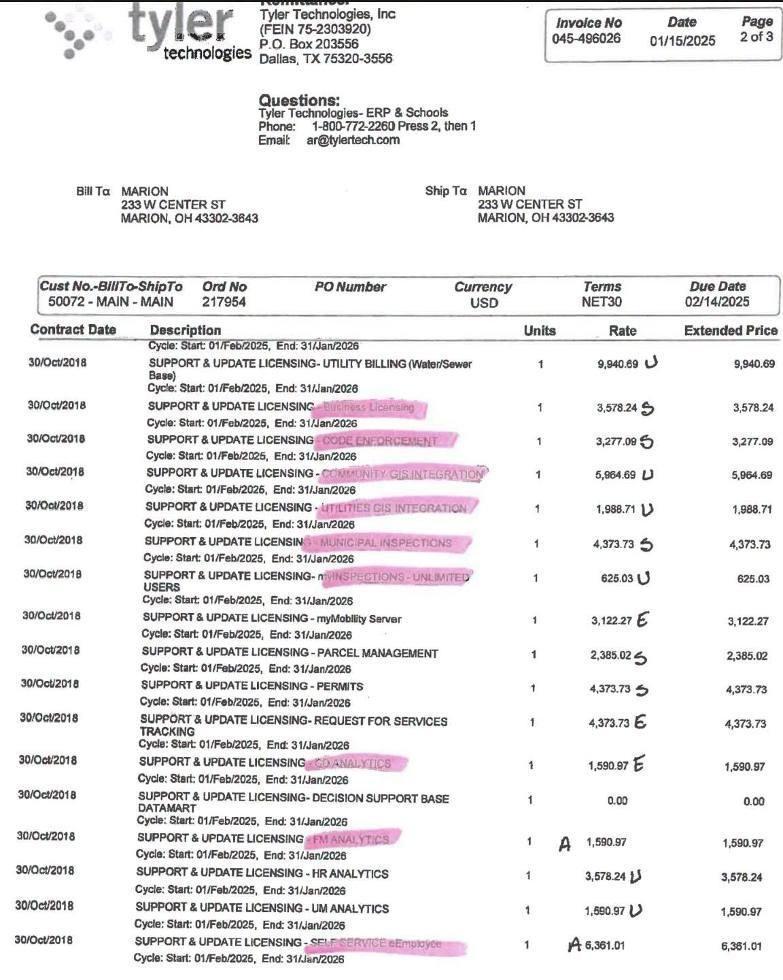
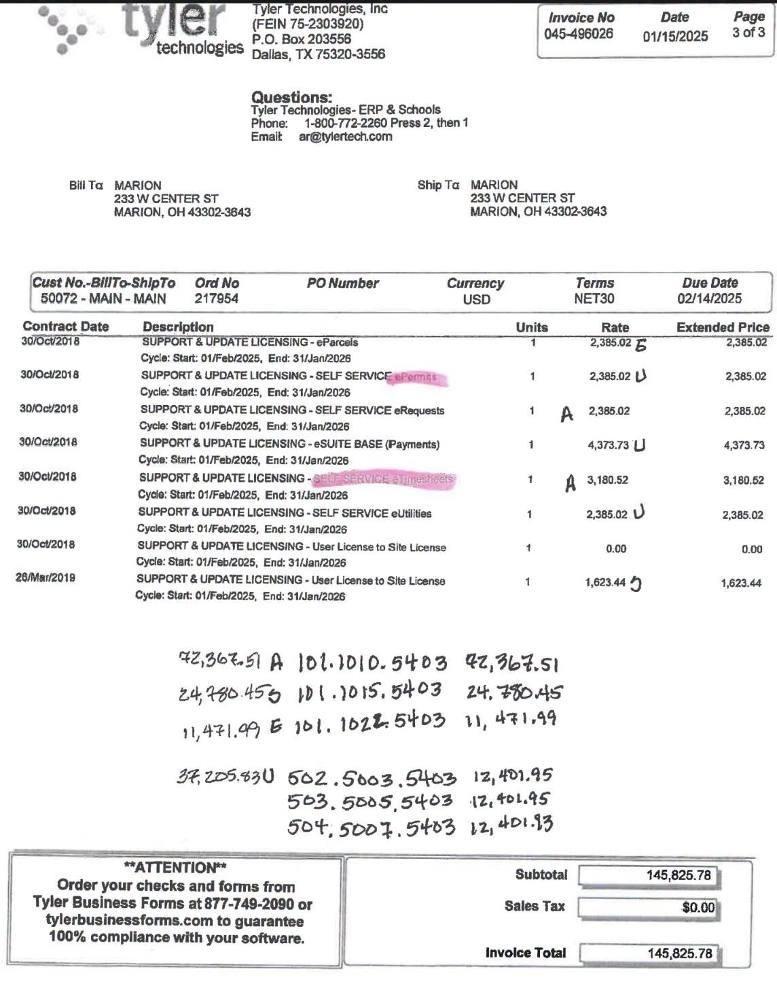
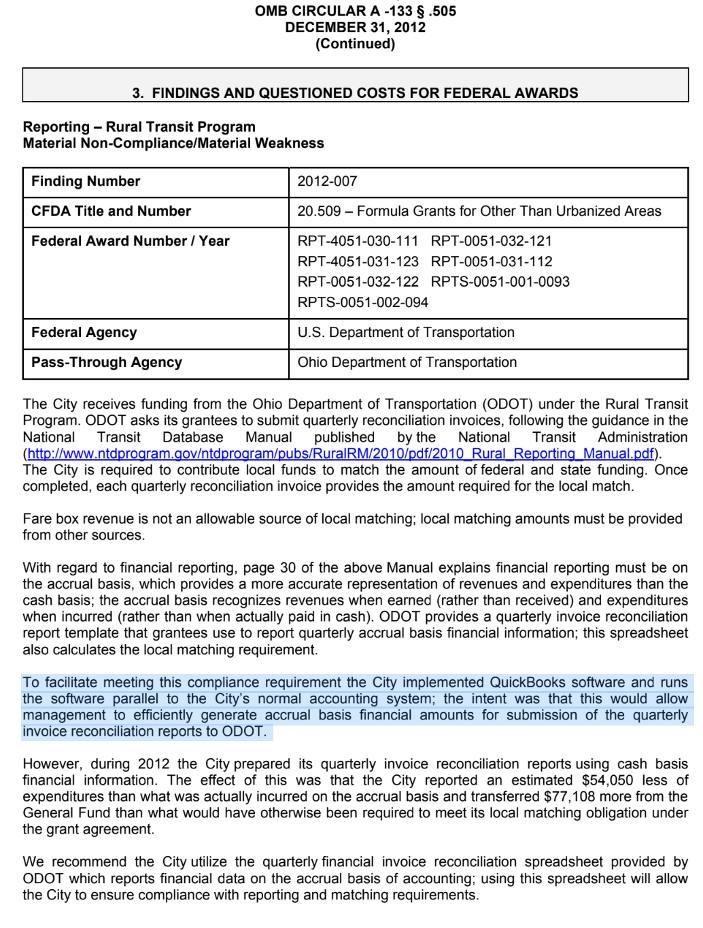
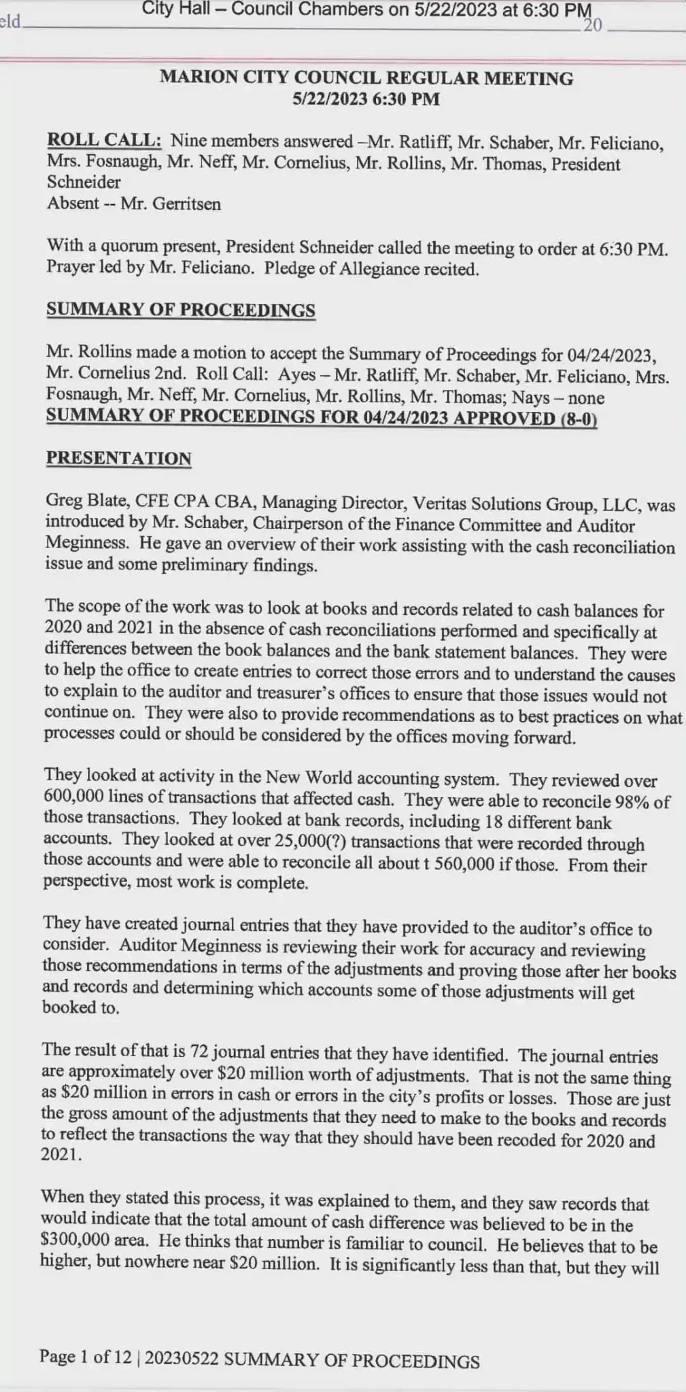
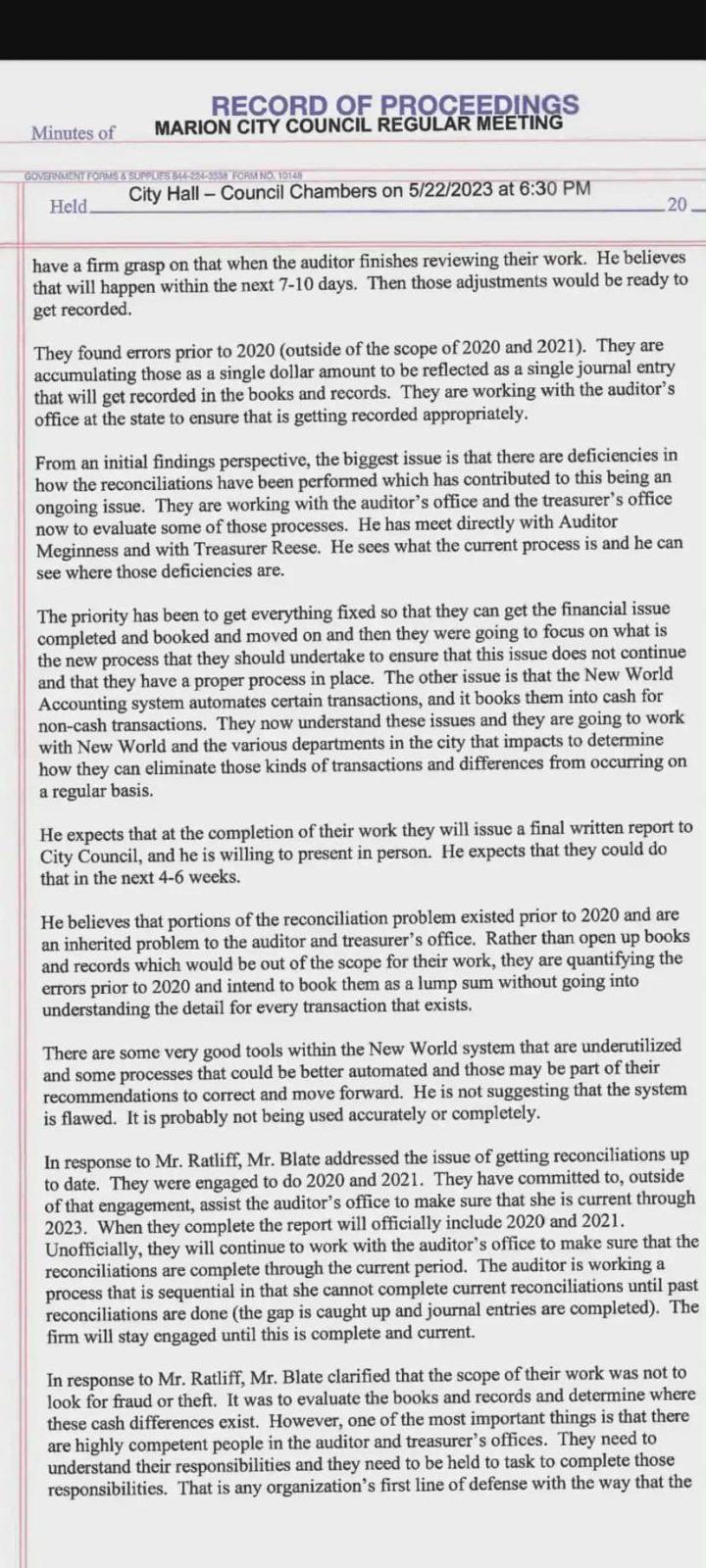
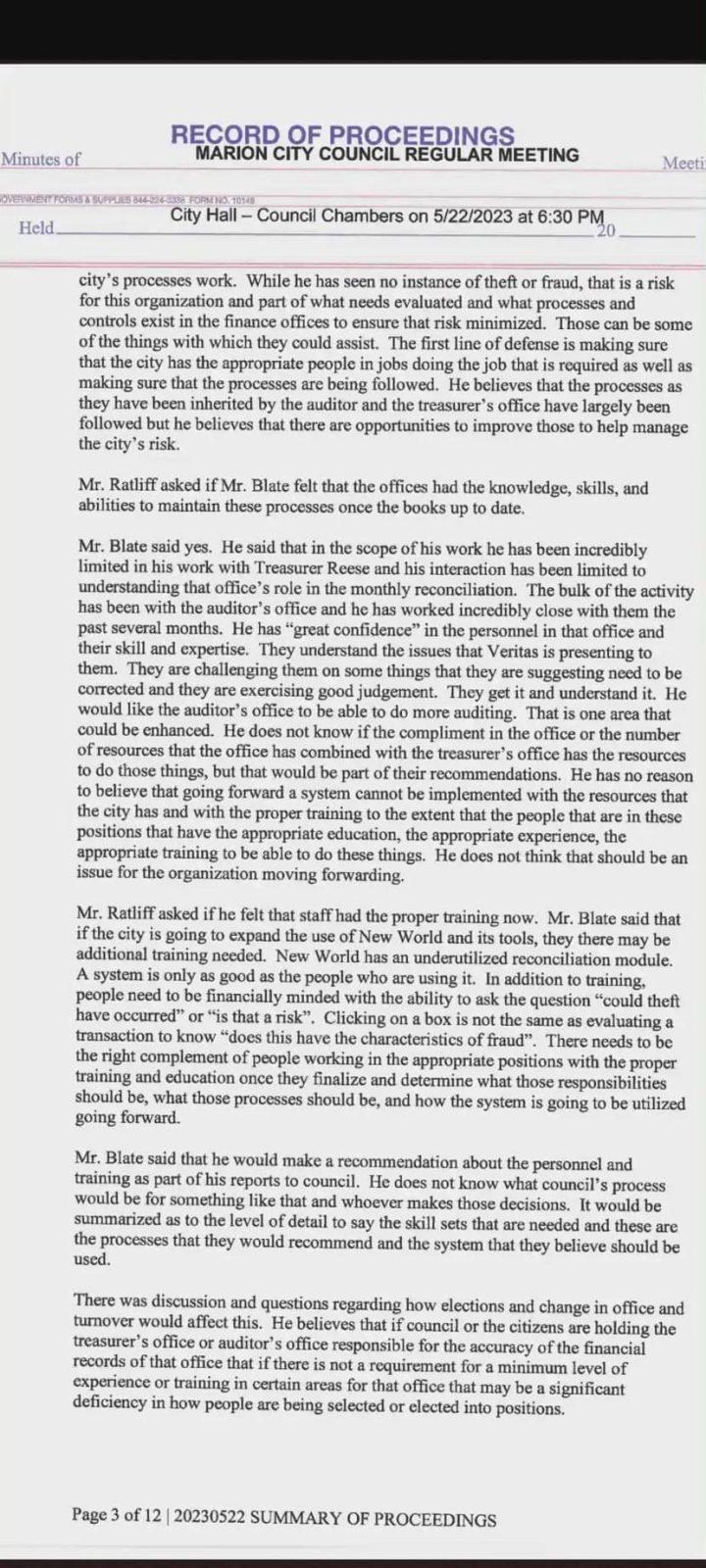
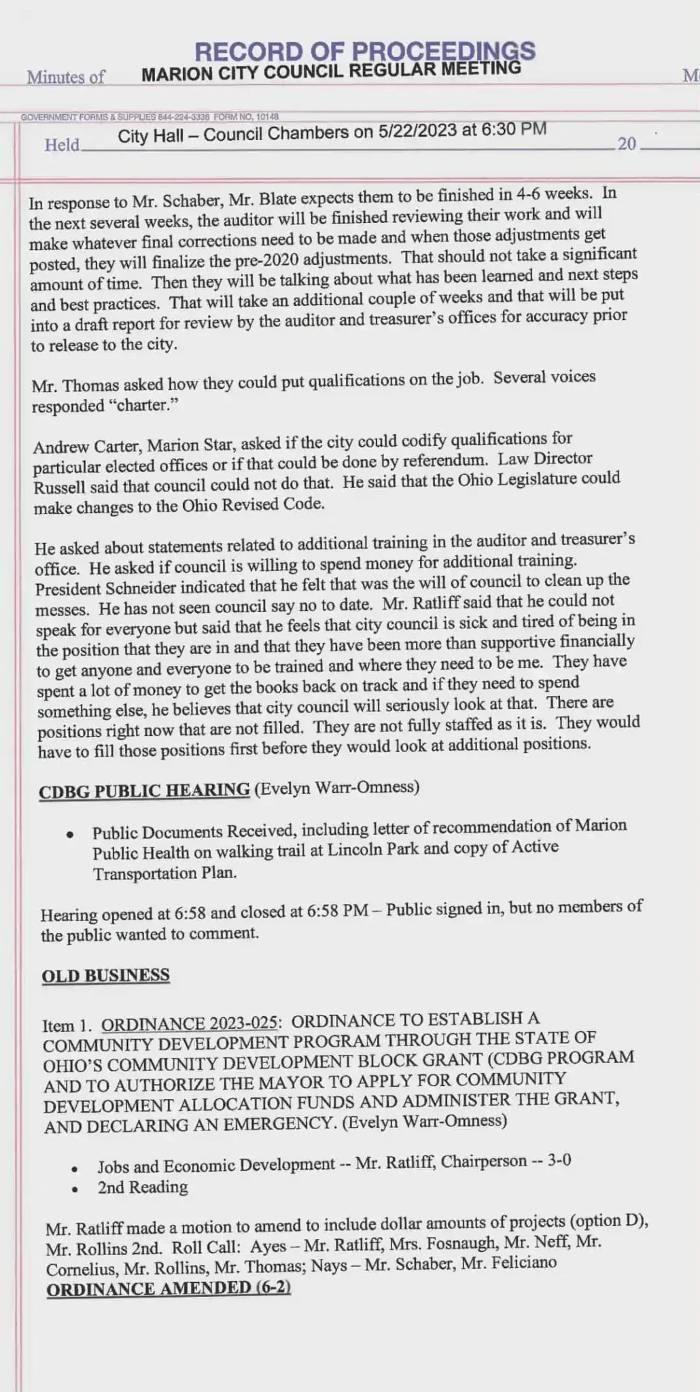
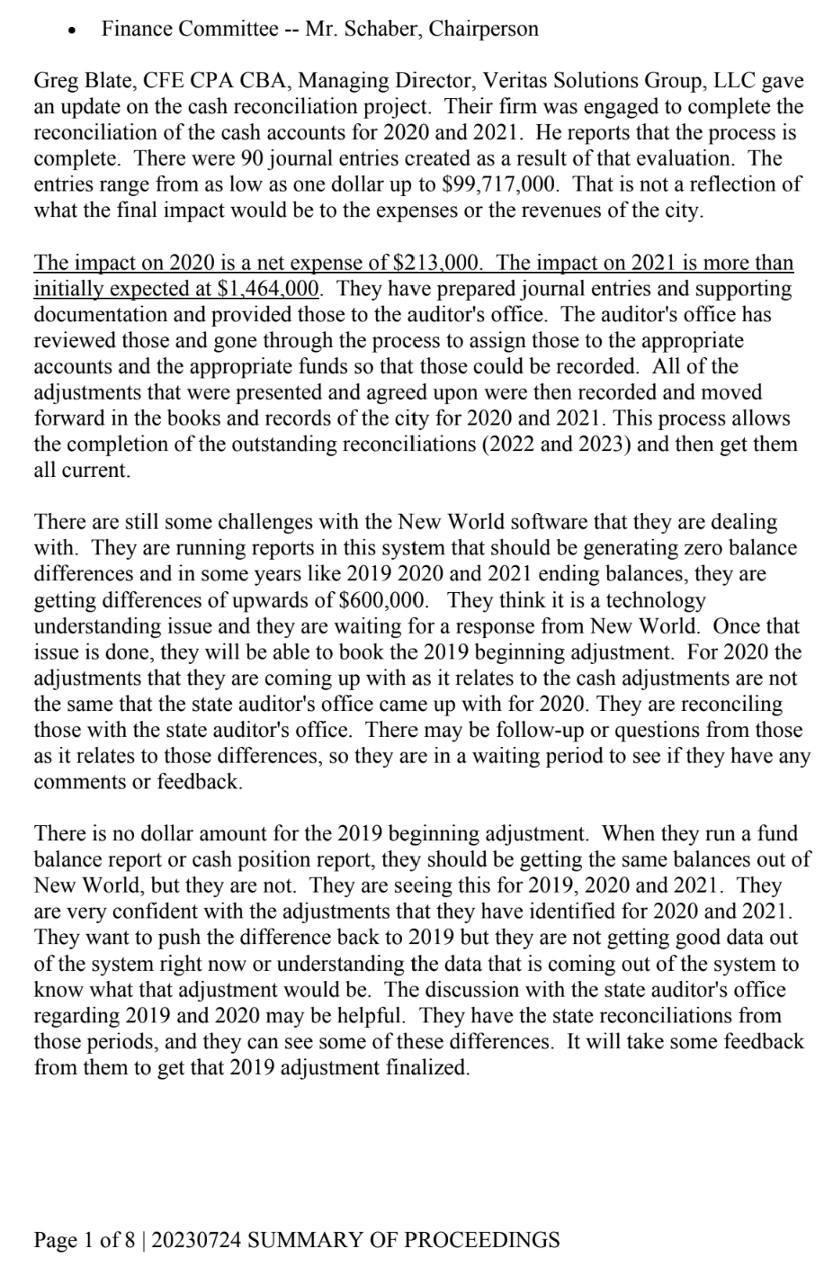
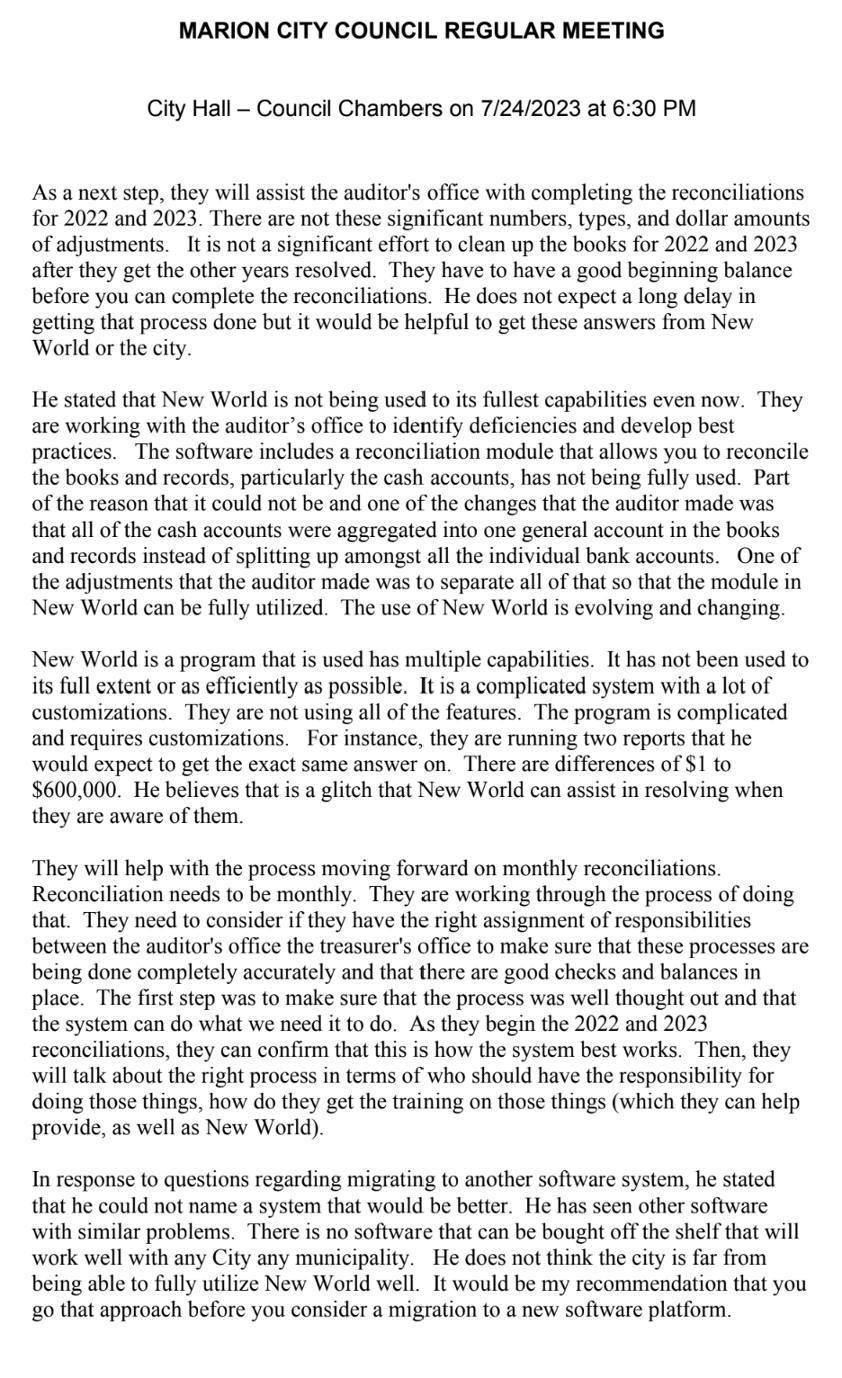
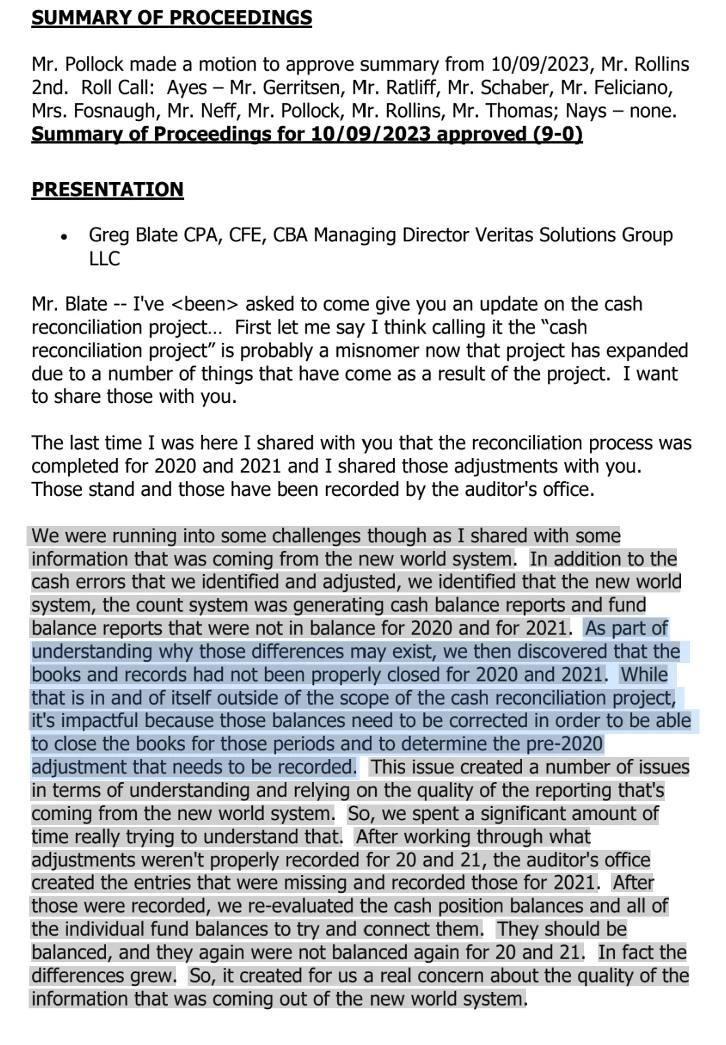
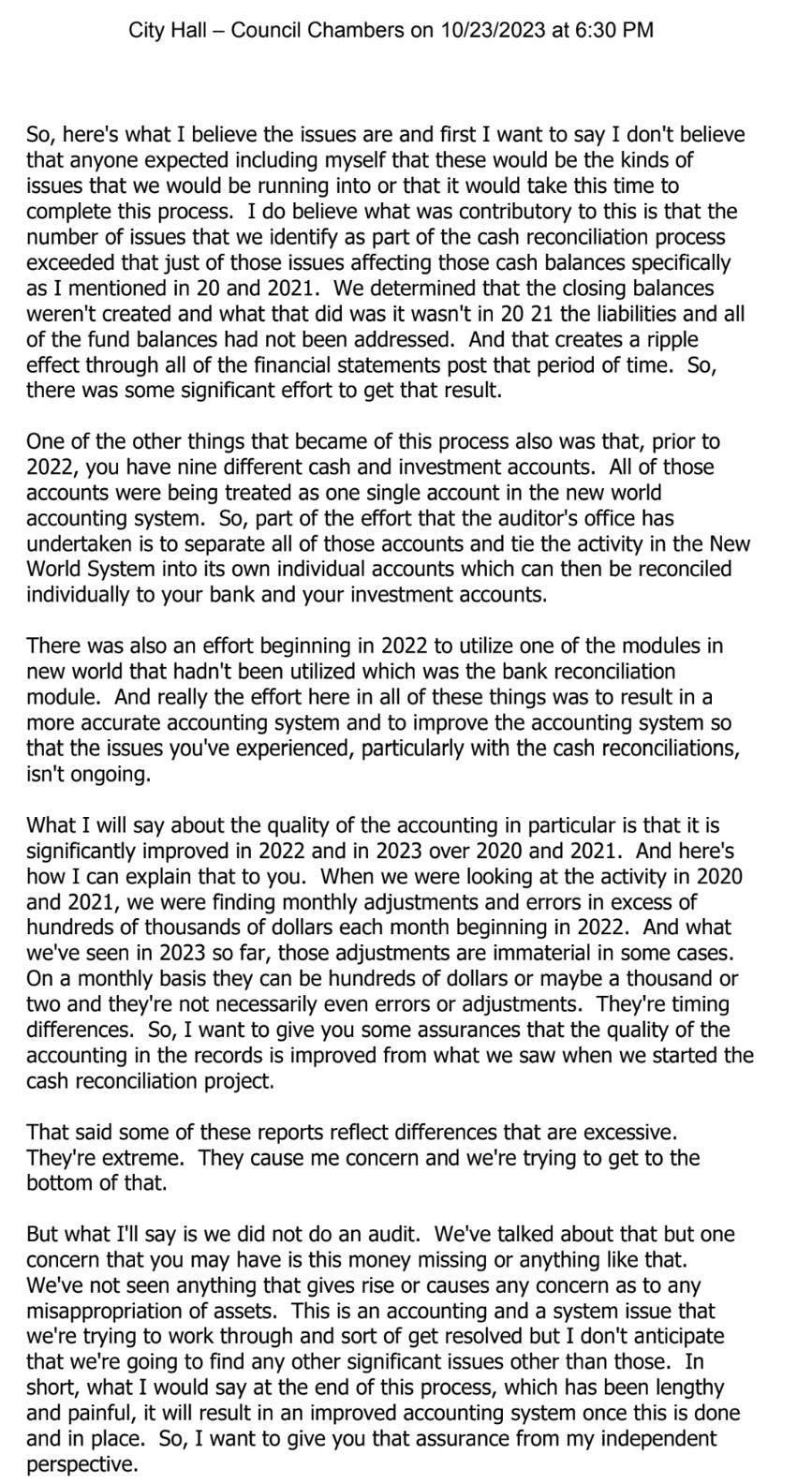
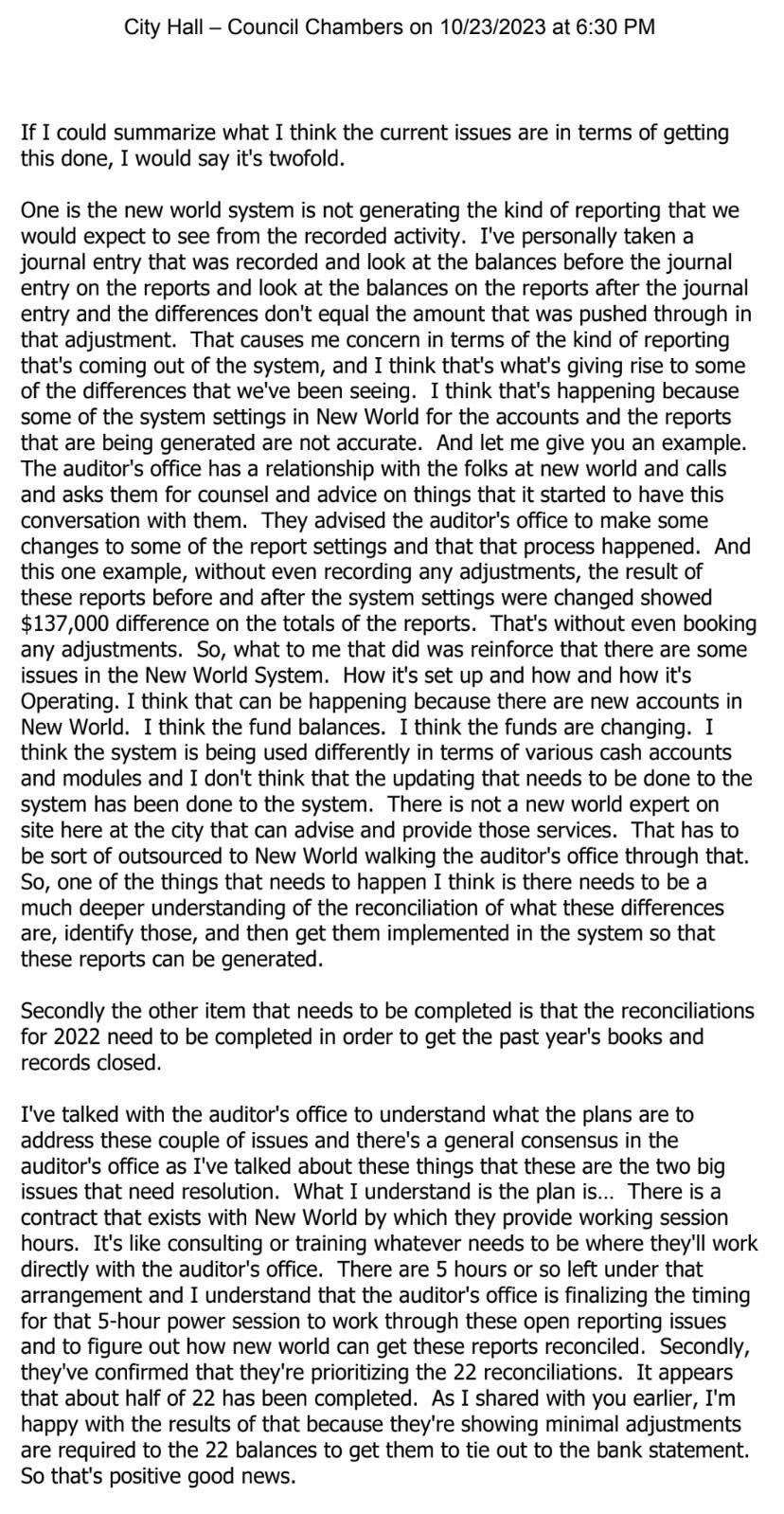
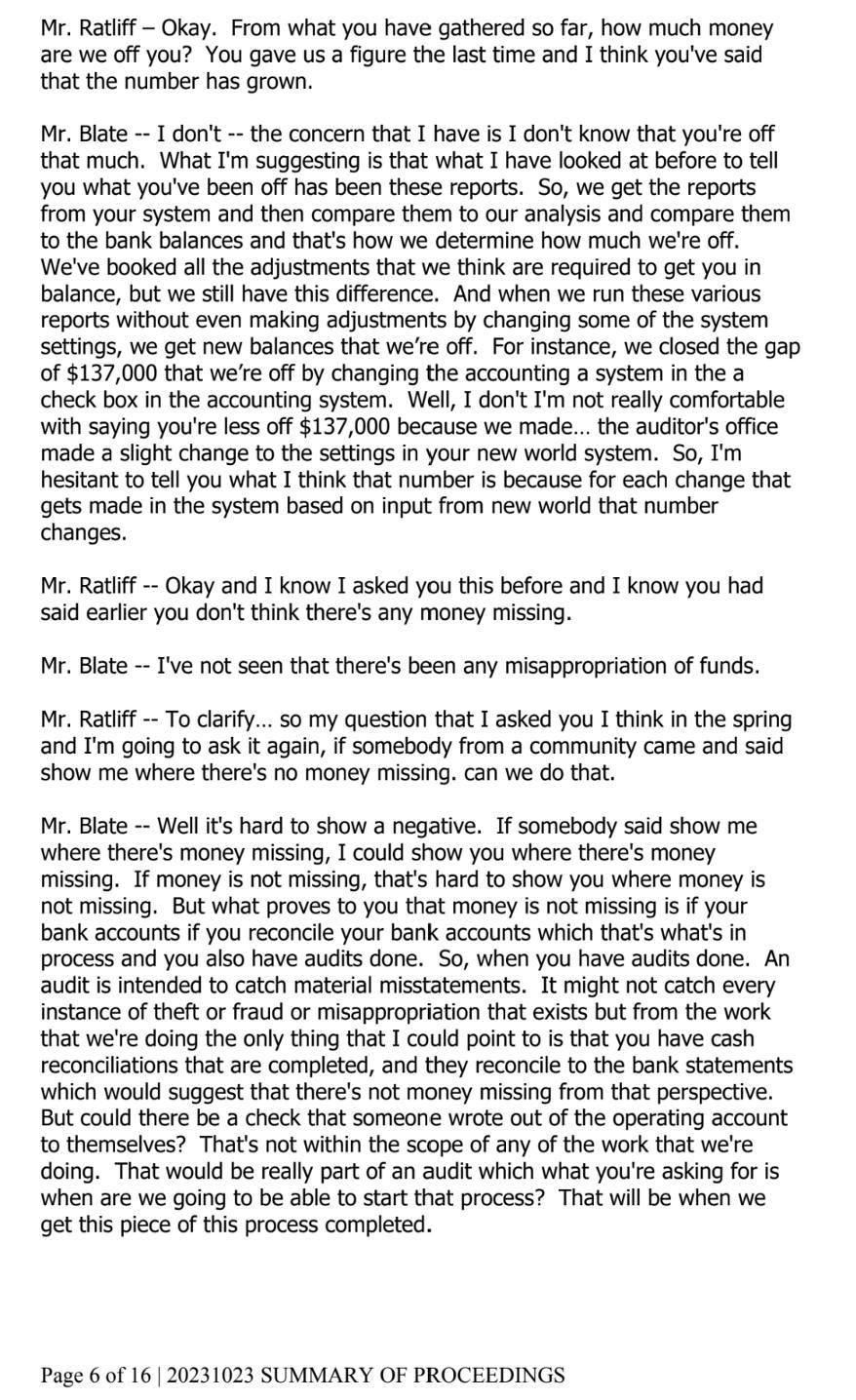
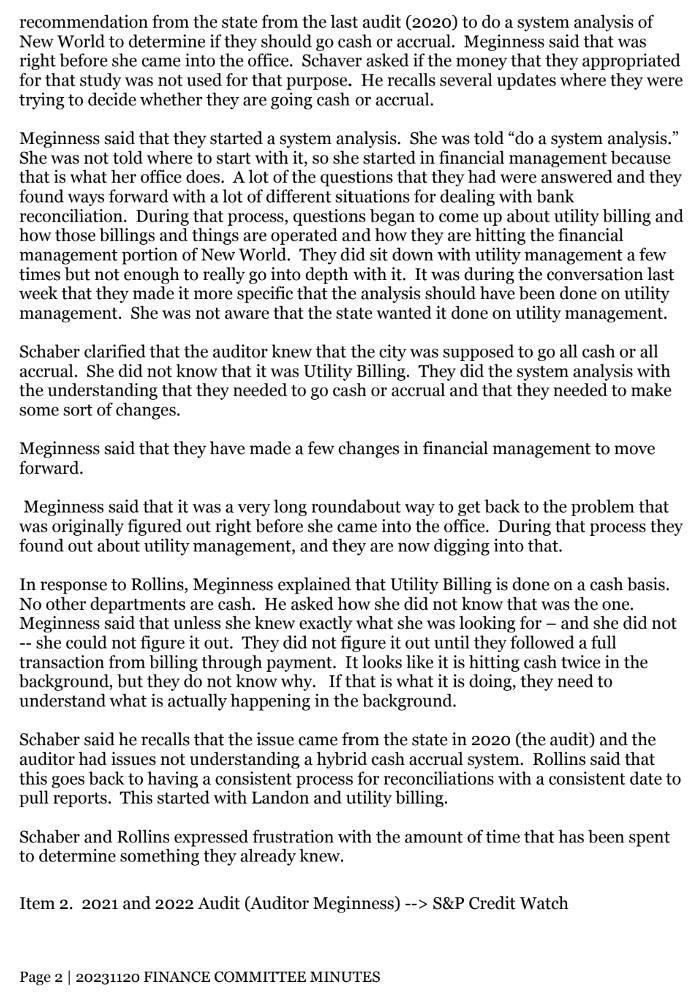
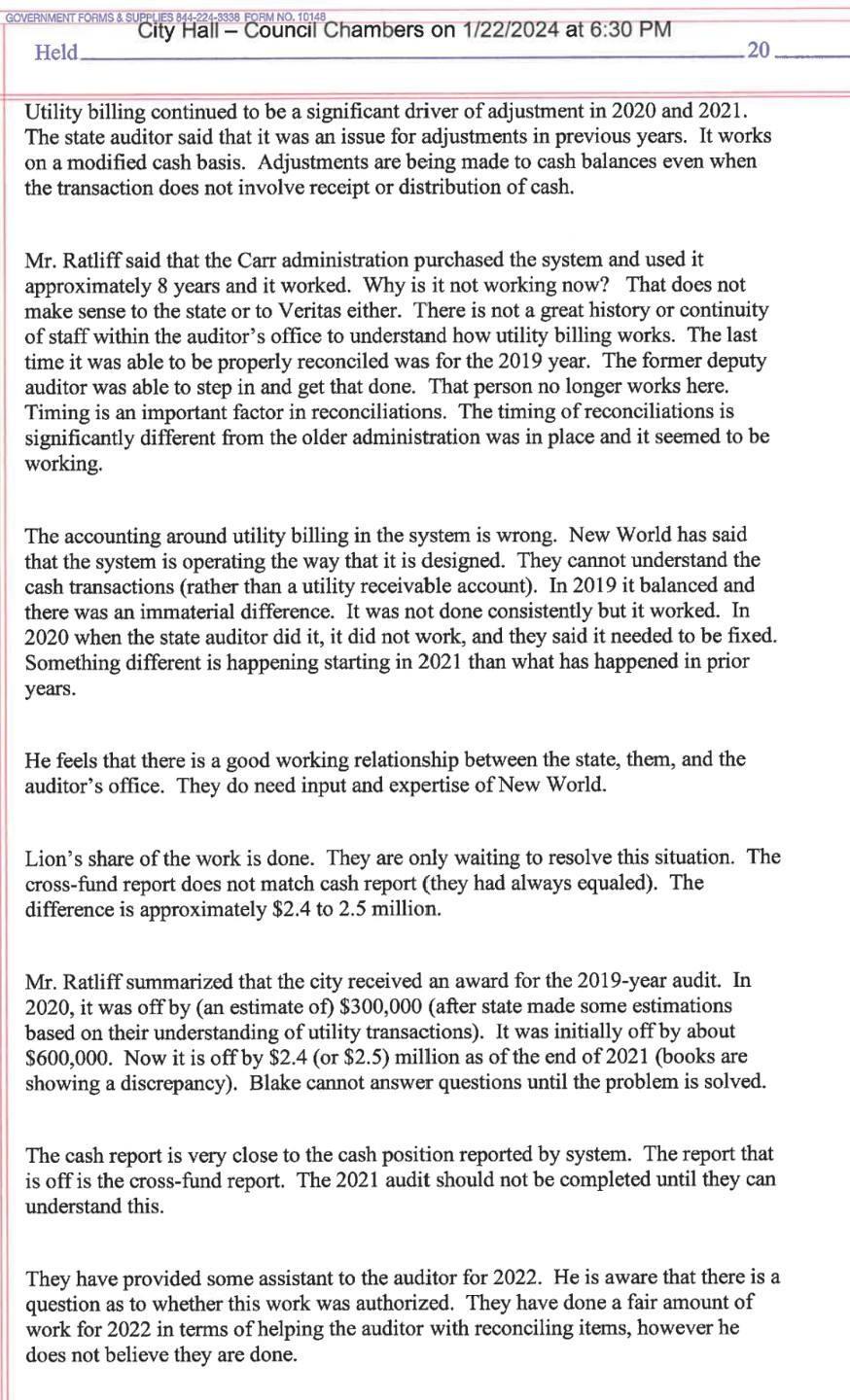
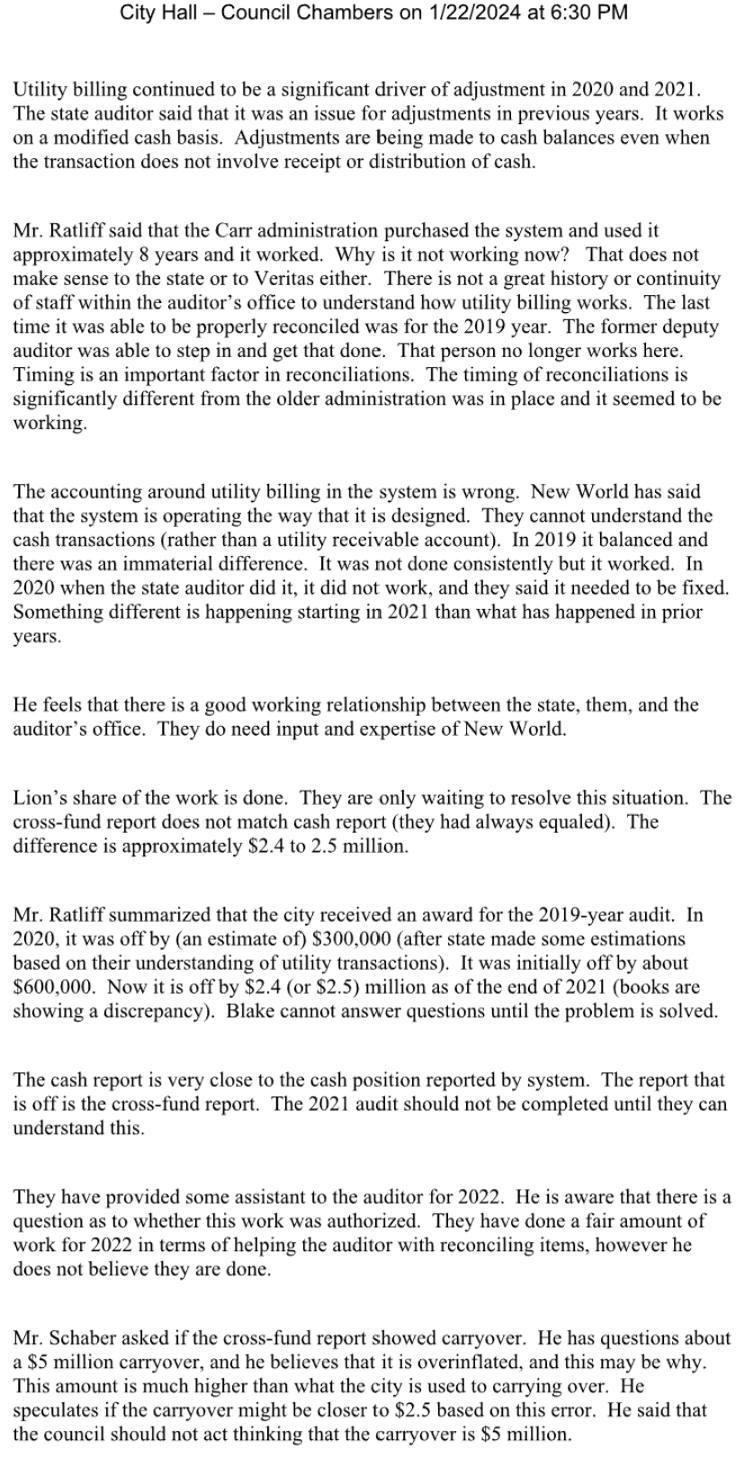
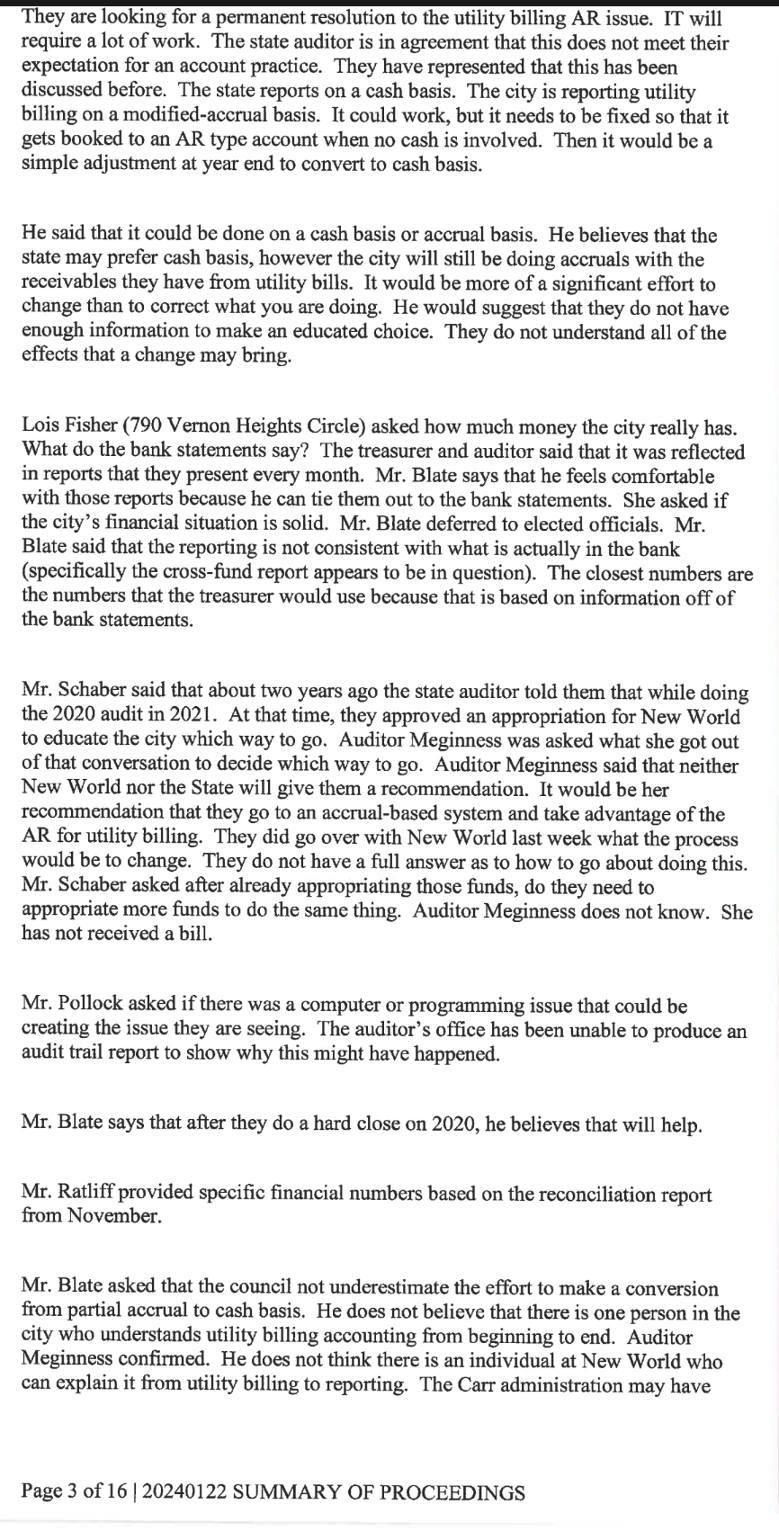
3/25/24
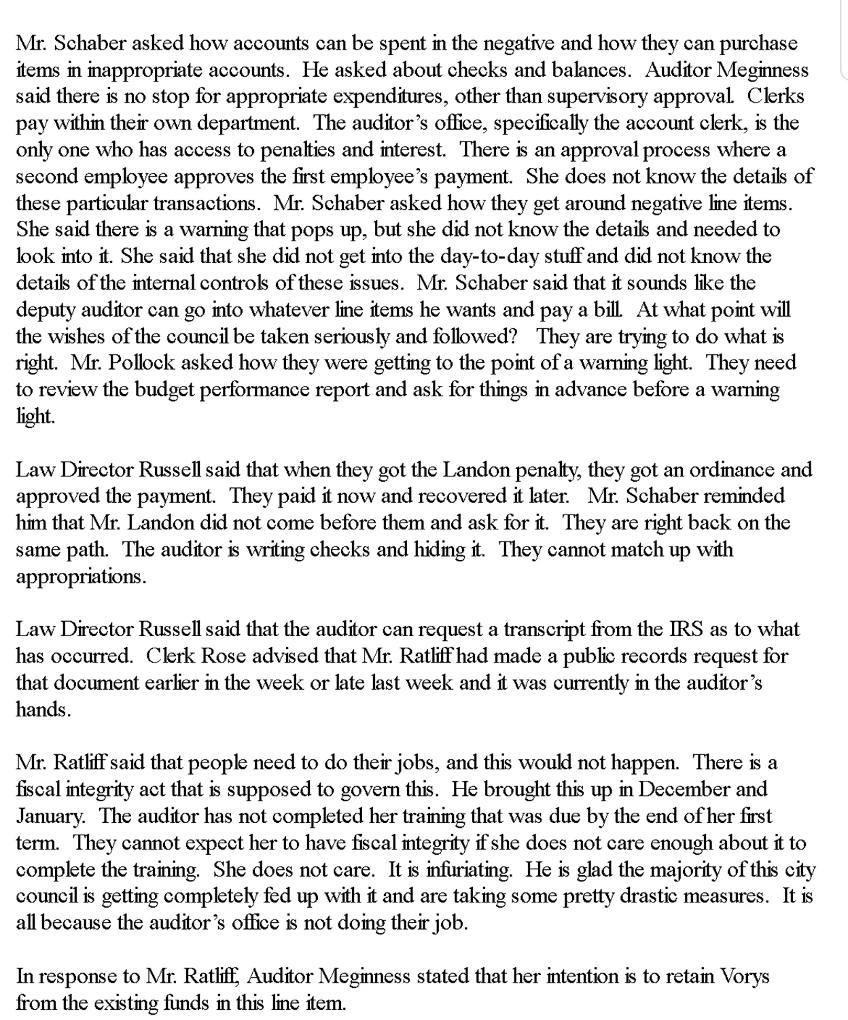
THE (GL) OVERRIDE THAT BROKE MARION
Marion Watch began meeting with officials in early 2025 and showed them previous research and industry standards in information technology that were not followed, as well as the telltale signs of a misconfigured and compromised system based on Ohio Auditor of State Audits.
IT Oversight Committee Chairman Ralph Smith for Marion City Council was the first IT qualified official to take notice of these grave failures, especially the unimpeded administrative access and forensic signs of disabled software safety controls.
These are failures that demand a full forensic IT audit of all financial systems, back to the root cause. This is considered non-negotiable.
Failure to do so will leave the citizens asking “what is really going on here” forever. The recent fiscal emergency declaration is yet another confirmation of our warnings.
Nobody was talking about this when we came back online in late 2024, remember that!
Spending over appropriations continued from installation forward. Here are a few examples of this pattern.
The Auditor’s Admission of Control Failure:
During a March 25, 2025, council meeting, Auditor Meginness was asked “how accounts can be spent in the negative and how they can purchase items in inappropriate accounts.” Auditor Meginness replied that there is “no stop for [in]appropriate expenditures, other than supervisory approval.” Although she did not know the particular details, she did know that clerks pay within their own departments. When asked how they get around negative line items, she said that “there is a warning that pops up, but she did not know the details,” she “did not get into the day-to-day stuff,” and “did not know the internal controls of these issues”. This admission confirms a fundamental lack of understanding of the system’s security controls at the highest level of the office. This specific “internal control permission” was finally corrected on October 27, 2025, at the demand of state auditors.
Disabled Safety “Switches” (Confirmed by Administration):
Beyond the reconciliation module, Marion Watch predicted—and the current Collins administration has verified—that “other legally mandated software safety controls were also misconfigured” or disabled. These controls were “being disabled long before officials recently confirmed it,” effectively neutralizing the software’s policing capabilities for years.
Other Issues Include Widespread Access Without Business Need:
Research documents that “users having administrator access to every financial system” was a known issue dating back decades.
The “Switched-Off” Reconciliation Module:
The software module designed to catch theft (Bank Reconciliation) was “switched-off or missing” or “broken” from the moment of installation in 2009 until at least 2024. This created a 15-year blind spot where cash discrepancies could not be traced.
FIRST YEAR AFTER INSTALLATION YEAR ENDING 2010 (22 CITATIONS IN THE AUDIT ARE ALSO NOTED IN THE NEXT YEAR AUDIT):
Final Appropriations Exceeding Certified Estimated Resources These represent funds where passed annual budgets legally exceeded the total estimated revenue plus available balances certified by the budget commission:
Capital Improvement:
$469,367
DRIP Infrastructure:
$255,790
CDBG Formula:
$95,483
CHIP:
$41,457
Revolving Loan:
$32,018
Downtown Revitalization:
$17,035
Community Corrections:
$13,409
Probation Services:
$5,645
Court Computerization:
$3,292
Police & Fire Pension:
$3,071
Final Appropriations Exceeding Ending Actual Resources
These represent funds where the City failed to reduce its certified spending limits after actual collections fell significantly short of expectations:
Sanitation Fund:
$298,608
Street Construction Maintenance & Repair:
$1,340,228
AOS Recommendations:
The AOS commanded that the City Auditor and City Council rigorously monitor budget-to-actual reports, request reduced amended certificates from the budget commission when revenue shortfalls occur, and refuse to pay expenditures that exceed legal line-item limits.
AUDIT YEAR ENDING 2010:
Based on Finding 2010-003 and Finding 2010-004 in the audit report, here is the full list of all statutory over-appropriation variances and actual over-expenditures broken down by fund and dollar amount.
Final Appropriations Exceeding Estimated Resources These amounts represent funds where the final approved spending authority exceeded the officially certified estimated resources plus available balances:
Capital Improvement Fund:
$2,473,605
Street Construction Maintenance & Repair Fund:
$718,248
Sanitation Fund:
$233,217
American Recovery & Reinvestment Act Fund:
$101,097
Parks Fund:
$71,715
Neighborhood Stabilization Fund:
$68,257
Community Corrections Fund:
$8,851
Court Computerization Fund:
$6,818
Final Appropriations Exceeding Actual Resources
These amounts represent funds where the final approved spending authority exceeded the actual revenue collected at year-end:
Capital Improvement Fund: $1,741,562 General Fund:
$1,196,527
Street Construction, Maintenance and Repair Fund:
$754,876
Neighborhood Stabilization Fund:
$523,815
Sanitation Fund:
$477,857
CDBG Formula Grant Fund:
$140,131
Parks Fund:
$78,554
CHIP Grant Fund:
$73,997
State Highway Fund:
$52,093
Court Computerization Fund:
$6,818
Actual Budgetary Expenditures Exceeding Appropriations
These amounts represent instances where actual cash disbursements plus outstanding encumbrances physically exceeded the legal level of control approved by the City Council:
Stormwater Fund (Debt Service – Payment to Refunded Bond Escrow Agent):
$3,403,120
Sewer Fund (Debt Service – Payment to Refunded Bond Escrow Agent):
$1,883,870
Sewer Fund (Sanitary Sewer Improvement – Capital Outlay):
$1,588,229
Stormwater Fund (Storm Sewer – Capital Outlay):
$682,750
Sewer Fund (Debt Service – Principal Retirement):
$3,665,250
Stormwater Fund (Debt Service – Principal Retirement):
$790,010
AUDIT YEAR ENDING 2011:
Based on the city audit, several funds had expenditures plus encumbrances that exceeded their authorized appropriations for the year ended December 31, 2011. The details of these instances are structured below:
General Fund City Auditor (Other General Government):
Contractual services exceeded appropriations by $718 (with $25,403 in expenditures/encumbrances against $24,685 appropriated).
Airport (Other Transportation):
Materials and supplies exceeded appropriations by $4,584 (with $5,740 in expenditures/encumbrances against $1,156 appropriated).
Special Revenue Funds Clean Ohio Grant (Community Environment):
Contractual services exceeded appropriations by $611,023 (with $1,636,835 in expenditures/encumbrances against $1,025,812 appropriated).
Clean Ohio Grant (Debt Service):
Interest and fiscal charges exceeded appropriations by $31 (with $70,793 in expenditures/encumbrances against $70,762 appropriated).
Enterprise Funds Sewer Fund (Sewer Revenue):
Contractual services exceeded appropriations by $58 (with $681,796 in expenditures/encumbrances against $681,738 appropriated).
Sewer Fund (Debt Service):
Principal retirement exceeded appropriations by $1,233,853 (with $6,208,959 in expenditures/encumbrances against $4,975,106 appropriated).
Sanitation Fund (Sanitation):
Contractual services exceeded appropriations by $58 (with $767,515 in expenditures/encumbrances against $767,457 appropriated).
Sanitation Fund (Sanitation):
Other expenses exceeded appropriations by $859 (with $23 in expenditures/encumbrances against a negative $836 appropriated).
Landfill Fund (Debt Service):
Principal retirement exceeded appropriations by $131,156 (with $448,328 in expenditures/encumbrances against $317,172 appropriated).
Storm Water Fund (Storm Water Utility):
Contractual services exceeded appropriations by $58 (with $124,400 in expenditures/encumbrances against $124,342 appropriated).
Storm Water Fund (Debt Service):
Principal retirement exceeded appropriations by $703,176 (with $3,820,940 in expenditures/encumbrances against $3,117,764 appropriated).
AUDIT YEAR ENDING 2020
The spending above appropriations continued until the Ohio Auditor of State ordered the GL Override to be fixed in 2025. Below are the findings from the most recent audit available as of publication.
Overview of the Finding Legal Violation: Ohio law prohibits any subdivision or taxing authority unit from making expenditures of money unless it has been properly appropriated.
Cause: The over-appropriations were attributed to inadequate policies and procedures regarding the approval and review of budget-versus-actual information.
Risk: Failing to have adequate appropriations in place at the time expenditures are made can cause spending to exceed available resources, resulting in deficit spending practices.
Specific Funds and Account Allocations Over-Spent General Fund — Transfers Out:
Exceeded appropriations by $1,150,886
Fire Fund — Security of Persons and Property (Fire):
Exceeded appropriations by $625,738
Police Fund — Security of Persons and Property (Police):
Exceeded appropriations by $567,688
Street Construction, Maintenance, and Repair Fund — Transportation (Street Maintenance and Repair):
Exceeded appropriations by $71,291
General Fund — General Government (Judicial):
Exceeded appropriations by $44,905 General Fund —
Leisure Time Activities:
Exceeded appropriations by $20,722
Auditor Recommendations Council Monitoring:
The City Council is advised to closely monitor expenditures and appropriations, passing necessary appropriation amendments to reduce the likelihood of over-spending.
Payment Denials: The City Auditor should actively deny any payment requests that exceed available appropriations.
Planned Corrective Actions System Restrictions: Budget override permissions have been revoked for all users within the New World software system, leaving the City Auditor as the only individual with override authority.
OFFICIAL EXHIBITS & PRIMARY SOURCE RECORDS (2009–2025 Special Report: The (GL) Override That Broke Marion)
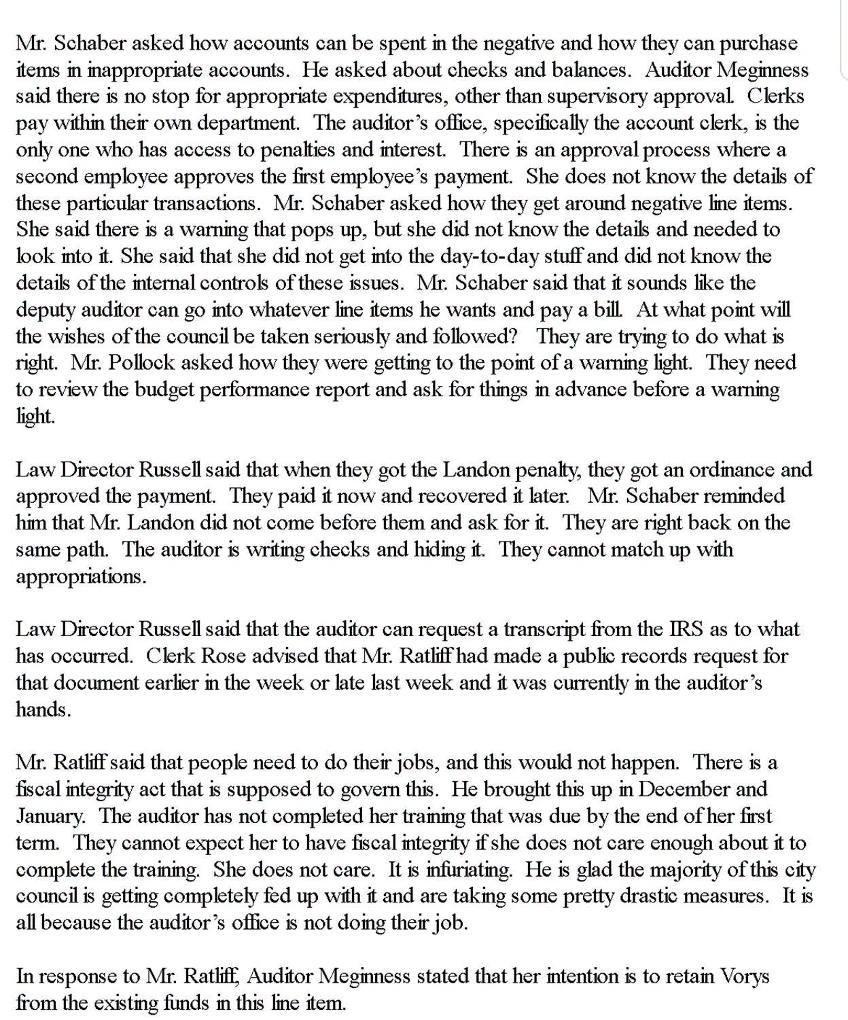
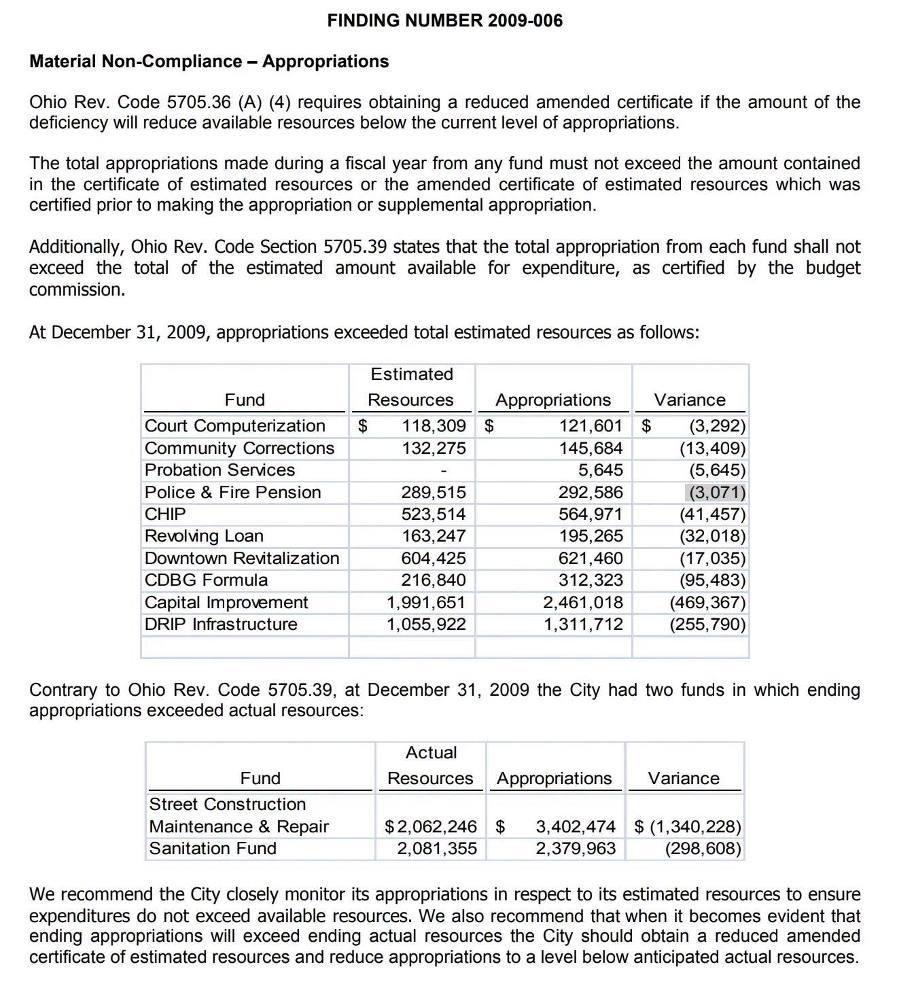
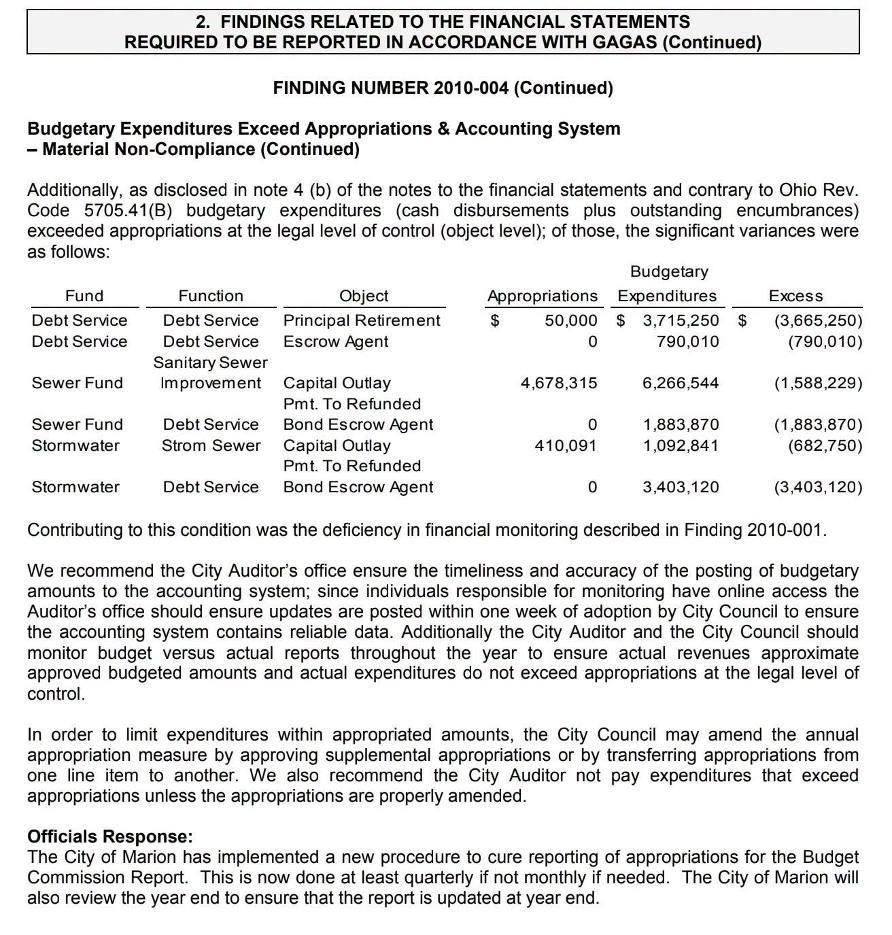
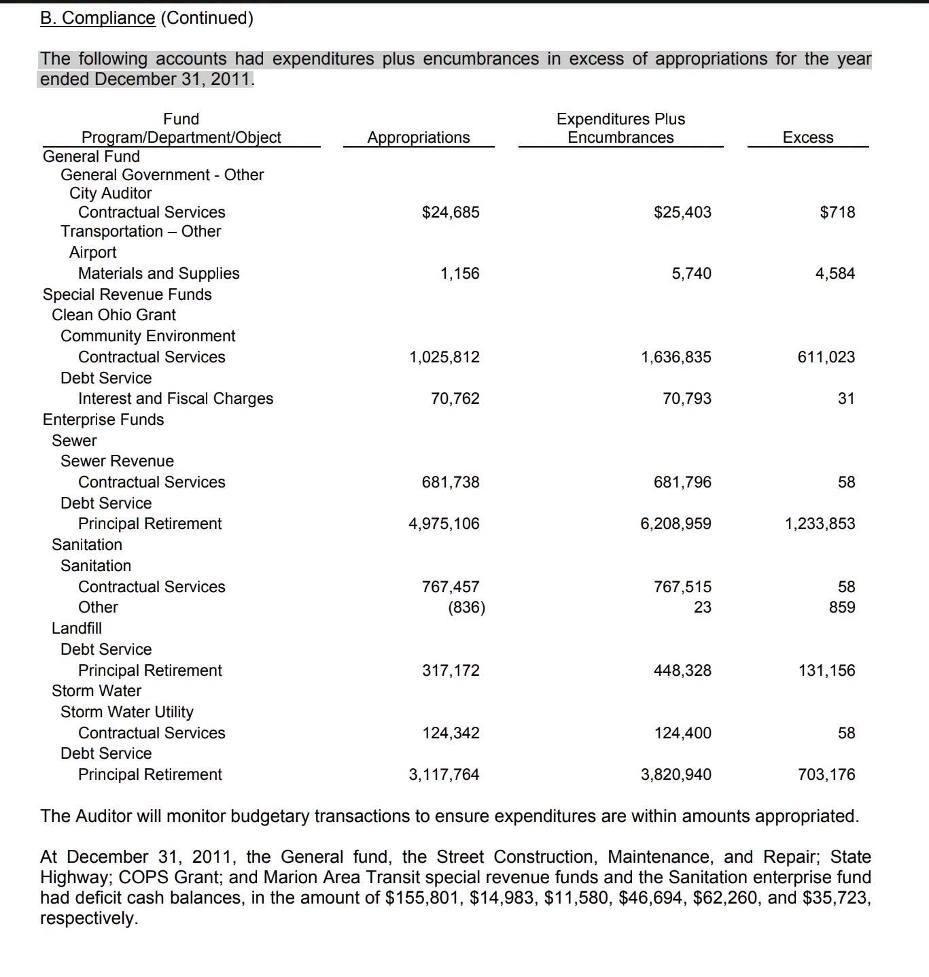
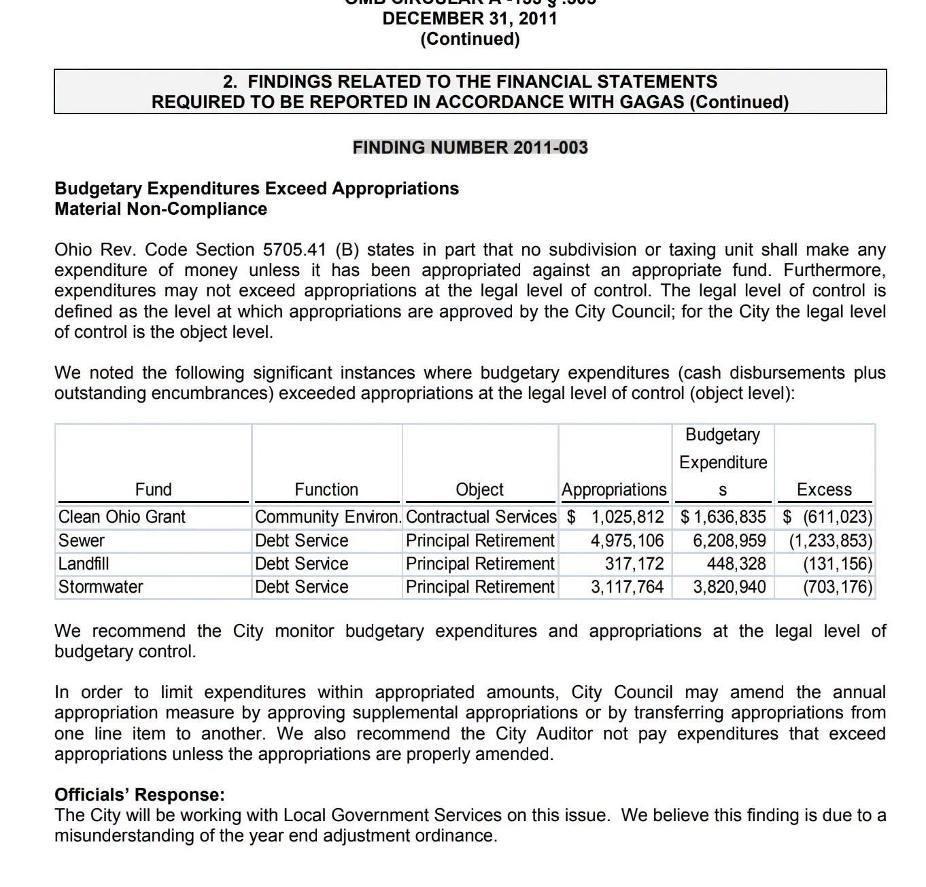
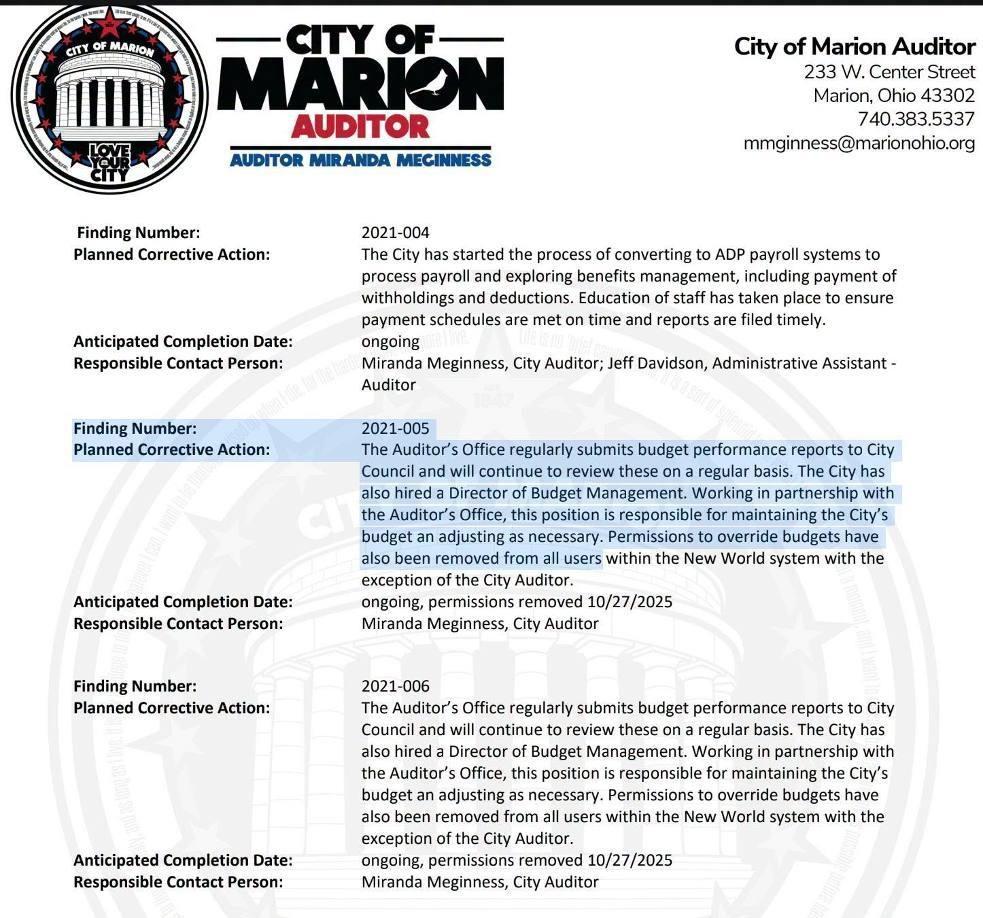
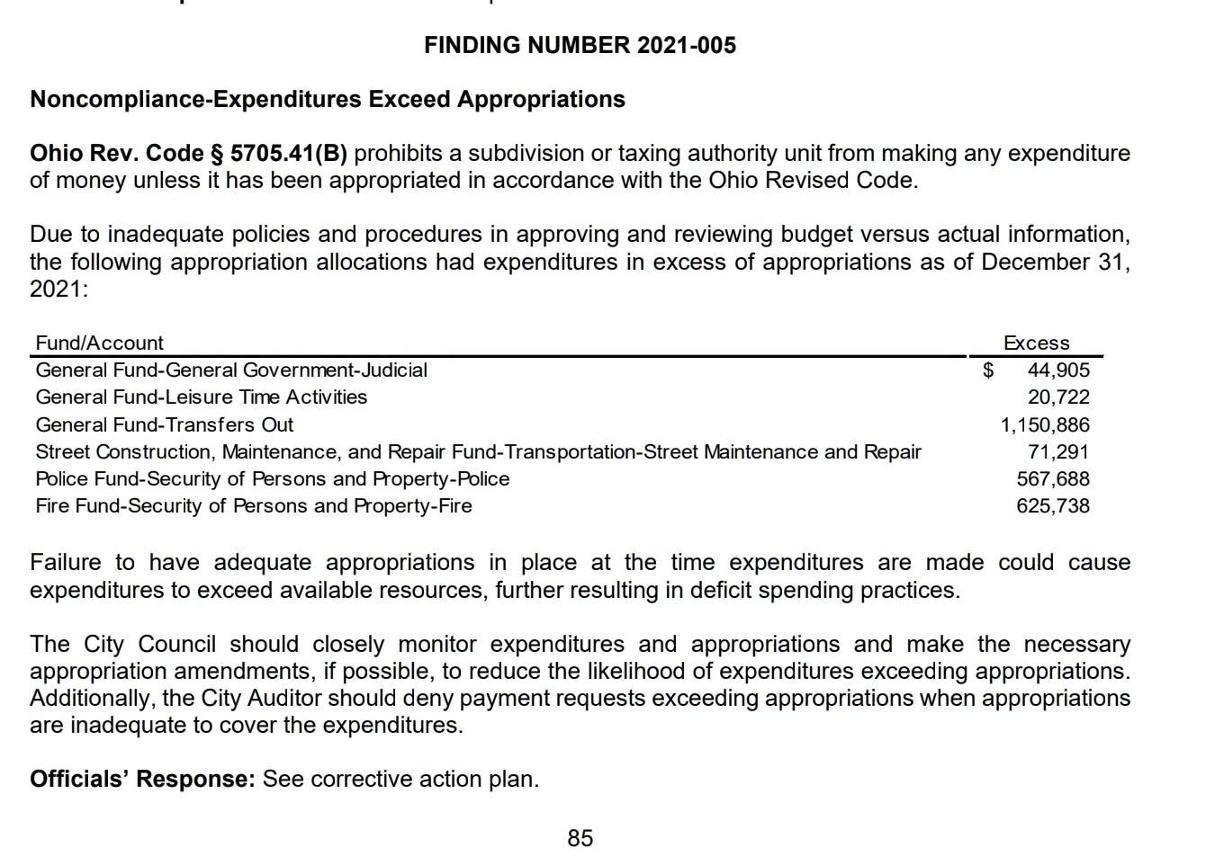
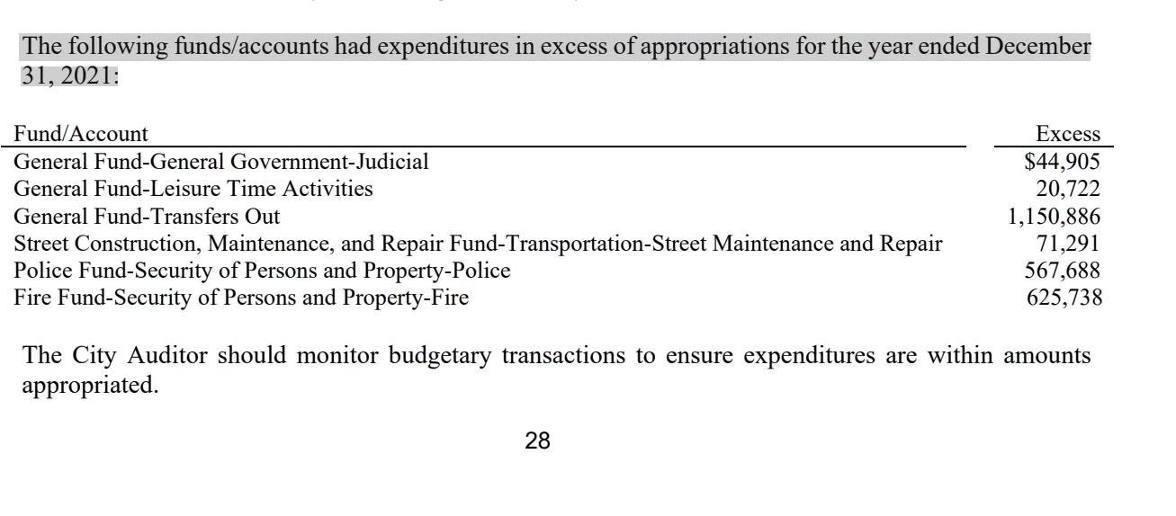
CONFESSION VS. COVER-UP: COLLINS’ 70% DORMANT SOFTWARE CONFIRMED WHILE I.T. HIDES THE LOGS
As we continue the special overview series regarding the New World ERP system and the municipal financial catastrophe in Marion, Ohio, and before we get to the 2020 and 2021 audits, which provide yet more undeniable facts, it is critical to ensure this is included in the official receipts.
It is important!
I.T. Director Jacob Boldin wants you to believe the “Silent Sabotage” of Marion’s New World financial software never happened.
But it did, under his watch!
When we demanded the operational permission grids and configuration logs for the broken New World ERP system, Boldin went rogue.
Bypassing the City Law Director, he issued an illegal blanket denial on his own accord, claiming “security reasons”.
Keep in mind that this blanket denial was about 7 months after the initial request for the information.
**(Note: I.T. Oversight Committee Chairman Ralph Smith simply forwarded this email to us and did not issue the denial).** The underlying message from Boldin’s unilateral stonewalling was clear: he wanted the public to believe that the system vulnerabilities we exposed were a myth.
But there are massive problems with that narrative:
• We know exactly what a compromised system looks like.
• We know exactly what is public record.
• The administration itself has already confessed to the sabotage on the public record.
The Cost of Ghost Modules and Password Sharing:
During recent City Council meetings, the staggering financial waste and mismanagement of the legacy software was laid bare:
• The Cost of Ghost Modules:
Mayor Bill Collins admitted the city had been paying “$154,000” annually for “40-some modules” in the New World system, but recently dropped “28 or so modules” to lower the invoice to “$74,900”.
• The 70% Dormancy Rate:
This confirms the city was paying exorbitant fees for a system where roughly 70 percent of the expensive ERP system’s capabilities were left entirely dormant.
• The Collapse of Internal Controls:
During the meeting, officials openly acknowledged the catastrophic breakdown of I.T. controls, confirming on the record that “password sharing has happened in our history as well”.
This completely validates the WBNS 10TV investigative report, where Mayor Collins publicly acknowledged the historical manipulation of the software via manual “workarounds,” and the software manufacturer (Tyler Technologies) explicitly confirmed that the system configurations and internal controls were managed entirely by the city.
During a 2025 council meeting, Mayor Collins clarified that a $5,000 request was for a forensic IT audit. This is a massive disconnect from the reality of the situation.
At a later and more recent 2026 meeting, a more accurate estimate for a true forensic I.T. audit came from I.T. Oversight Committee Chairman Ralph Smith. He explicitly noted that a real third-party forensic I.T. audit—which involves “digging into the system and making sure that our security… had not been breached”—would cost between “$1 million to a million and a half dollars”.
The administration has historically relied on the Auditor of State (AOS) for oversight, but the AOS only performs inferior general controls audits.
These standard state audits completely failed to detect the severe, longstanding structural issues, disabled safety modules, and GL overrides within the New World system.
There are various reasons a general controls audit may not have caught the issues in Marion’s system, but if we publish on this subject, it will need to be in it’s own article. With confirmed inappropriate user permissions, disabled safety controls, physical access issues, and other catastrophic issues the list is extensive.
I.T. Caught Gaslighting City Council:
This cover-up has been actively pushed by the I.T. department for nearly a year, although it was finally admitted that the city does not and has never had a trouble ticketing system, which is a catastrophic breach of globally recognized best practices.
During a council meeting, a citizen asked, “If we’re being hacked… shouldn’t we have like some legal cases going if we’re all of this sabotage is going on?”. I.T. Director Jacob Boldin used this citizen’s question as an opportunity to actively gaslight the council:
• The Strawman Deflection:
Boldin used the “hacking” question to dismiss the actual, documented systemic vulnerabilities entirely. He stated, “the stuff that they say is going on isn’t going on” and claimed the “only real thing we have to really worry about is fishing [phishing] attempts”.
• The Reality of Internal Sabotage:
We never claimed the system was externally “hacked.” The data proves that the internal controls and legally mandated safety modules were dormant, not installed, or severely misconfigured from installation. The evidence is in official state and city records, and seems to have been widely known for many years. The sabotage IS THE SYSTEM
AND HOW IT WAS CONFIGURED!
• The Statistics:
Modern 2025 and 2026 cybersecurity data from industry leaders confirms that up to 75 percent of enterprise data exposures and breaches stem directly from internal misconfigurations, human error, and privilege misuse—not sophisticated external hackers.
• Fabricated Audit Trails:
Boldin boldly claimed on the record, “Everything is tracked. Everything is audited. Everything is managed”. This is a blatant contradiction of verified reality. As clearly established in Kimberly Hutchison’s deposition regarding the Landon-era tax remittance errors, audit trails in the Magic Writer financial software were explicitly not enabled.
You cannot admit on the public record that your financial software was running with 70 percent of its modules dormant, confirm widespread password sharing, inappropriate administrative level access, and then have your I.T. Director unilaterally hide the digital footprint while falsely claiming the system is perfectly secure.
The Legal Reality of Public Data:
Across Ohio and the nation, municipalities are increasingly attempting to dodge accountability by rebranding administrative incompetence as a highly classified cybersecurity threat.
But this tactic is legally bankrupt:
• The Law Requires Redaction, Not Denial:
Under Ohio Revised Code 149.43, blanket denials are illegal. Agencies can redact true security assets like passwords and encryption keys, but they cannot hide the operational accountability records that prove how the internal controls failed.
• The Courts Have Spoken:
High courts have explicitly ruled that operational system metadata, software parameters, and user access logs are public records, repeatedly penalizing agencies for over-redacting them.
History proves that when local governments stonewall the media and the public to hide I.T.
failures, routine audits are eventually replaced by law enforcement raids:
• Opa-locka, Florida:
The city manipulated utility ledgers to hide structural deficits and aggressively stonewalled journalists demanding access to internal data. The outcome?
Whistleblowers inside the government stepped forward, and the FBI raided City Hall, physically seizing servers and hard drives to execute a forensic I.T. audit of their billing software. It led to a declared State of Financial Emergency and federal prison sentences.
• Crystal City, Texas:
City officials and administrators stonewalled the media and locked down public records to hide systemic corruption and manipulated city infrastructure contracts. The outcome? Other city officials blew the whistle, prompting the FBI to raid City Hall, seize the municipal servers, and conduct a full forensic I.T. extraction. Almost the entire city government was federally indicted.
Now, the council has authorized an approximately $270,000 contract with Software Solutions (SSI) to overhaul the systems.
However, porting unchecked historical databases from a compromised environment directly into a new system guarantees a “garbage in, garbage out” scenario during the upcoming transition.
A full forensic I.T. assessment and audit is urgently required before or alongside the software transition.
When a cornered administration chooses a blanket denial over legal compliance, they do not stall transparency—they guarantee escalation.
The data belongs to the public, the courts require its release. Yet, the City of Marion has yet to provide these logs to Marion Watch-Operation Marion Watchmen.
Whats really going on here?
OFFICIAL EXHIBITS & PRIMARY SOURCE RECORDS (2025–2026 Special Report: Collins’ 70% Dormant Software Confirmed While IT Hides Logs)