

 Written by
 Galion’s Infrastructure and the Transparency Gap
As the City of Galion prepares to launch a comprehensive sewer smoke-testing initiative on June 10, 2026, the project has prompted local scrutiny regarding municipal priorities and infrastructure stability. While the city identifies these tests as a necessary step to mitigate “Inflow and Infiltration” (I&I)—the process where storm water and groundwater enter sanitary sewer lines—community members and industry professionals have raised critical questions regarding the testing scope, safety protocols, and the city’s broader capital improvement strategy.
Council Deliberations on Smoke Testing
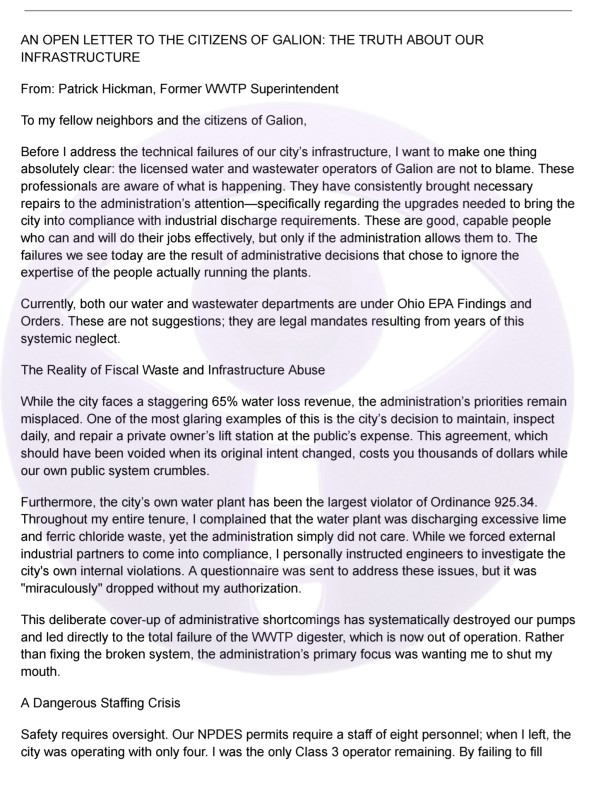
During the June 2, 2026, Utility Committee meeting, city officials confirmed that a sewer smoke-testing project is scheduled to commence on June 10, 2026. The committee outlined a public outreach strategy that includes social media notifications and the distribution of door hangers. While the council presented these as standard procedural steps, local industry professionals have voiced concerns that without more comprehensive public education, the project could lead to unnecessary public alarm and potential safety risks.
A Community Burden: The Renter-Owner Divide
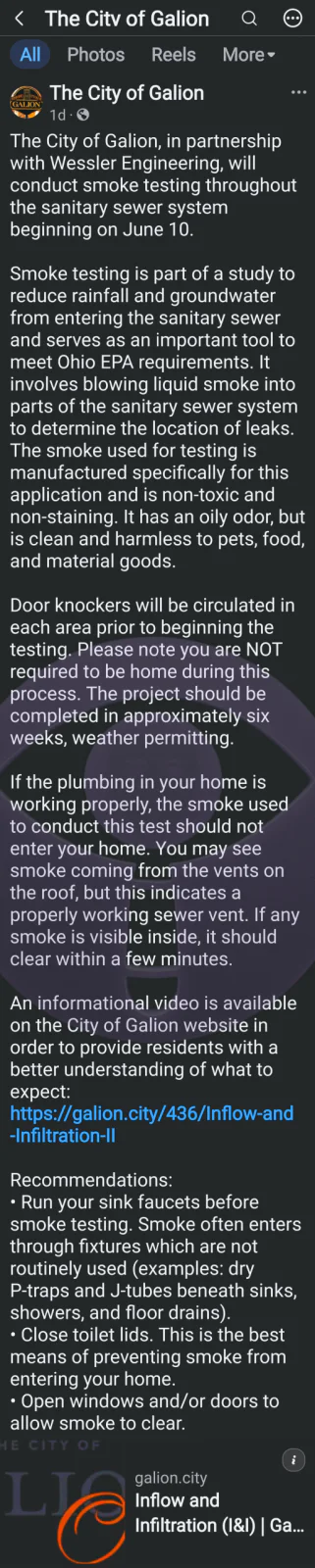
Statistical data highlights a complex housing landscape in Galion, which informs local apprehension regarding the upcoming smoke-testing project. With a homeownership rate of 58.6% and over 41% of housing units being non-owner-occupied, residents are expressing concerns about how potential repair mandates will be managed.
Community discourse, such as that captured in social media comments and citizen interviews reflects a significant fear that the financial burden of plumbing repairs may fall on property owners, potentially impacting housing affordability and stability for tenants if out-of-town landlords delay necessary maintenance.
Systemic Vulnerabilities: Illegal Hookups and Infrastructure Stress
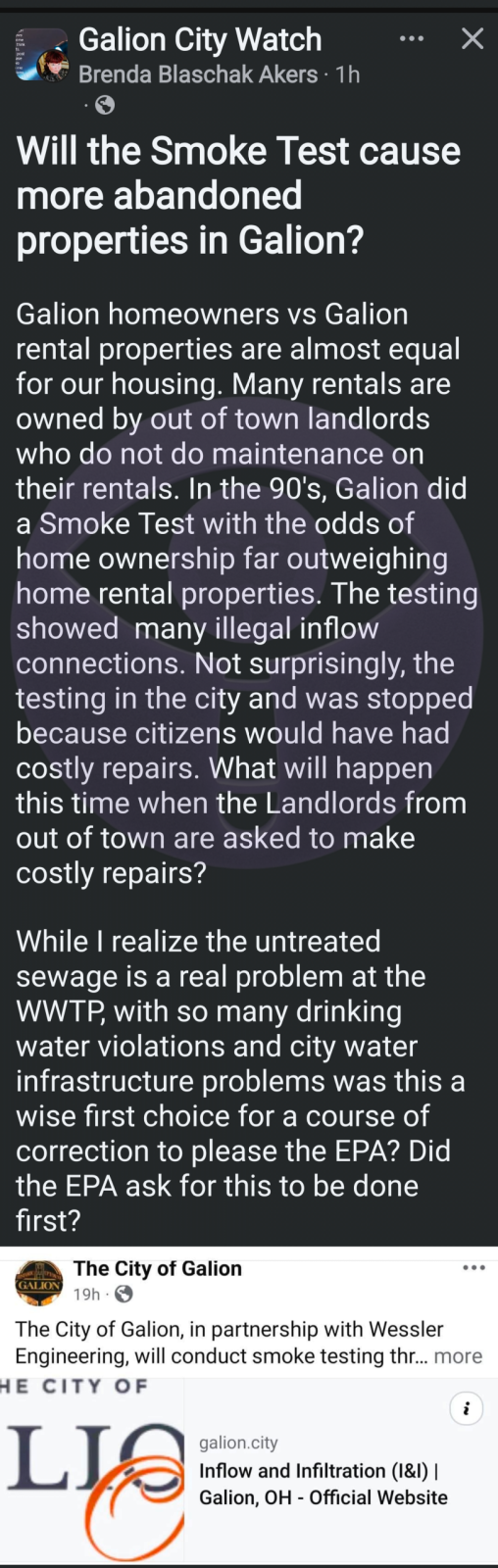
Local professionals and residents familiar with the city’s infrastructure history have noted that the intermingling of storm and sanitary systems—largely due to historical improper connections like sump pumps and downspouts—remains a core, long-standing issue.
- Illegality of Connections: Under municipal and environmental standards, connecting non-sanitary drainage systems—such as roof gutters, downspouts, or sump pumps—to a sanitary sewer line is an illicit discharge. These connections are strictly prohibited because they introduce excess water that overwhelms treatment capacity, creates public health hazards, and violates environmental regulations.
- Systemic “Open Secret”: There is a prevailing sentiment among those tracking local utility operations that these illegal hookups have historically contributed to capacity overloads that force the wastewater treatment plant (WWTP) to process millions of gallons of excess rainwater during heavy storms.
- Equipment Failure and Chemical Impacts: Industry experts and internal reports link this persistent hydraulic overloading to accelerated mechanical wear on critical components. Furthermore, whistleblower accounts indicate that the improper handling of industrial chemicals, specifically lime and ferric chloride, has contributed to the destruction of pumps.
- Status of Anaerobic Digesters: According to insiders familiar with the WWTP, the facility’s two anaerobic digesters are in a state of critical failure: one has been deemed irreparable, while the second is reported to be in poor condition.
- Regulatory Redundancy Requirements: Wastewater design guidelines, enforced by state and federal authorities, require operational redundancy to ensure consistent performance during equipment failure or high-loading events. The absence of functional primary and backup digesters poses a direct challenge to these regulatory expectations.
- Prioritization Concerns: Insiders familiar with the WWTP have noted that deferring maintenance on core infrastructure—such as these essential digesters—in favor of smoke testing, risks further destabilizing the facility.
A Pattern of Systemic Neglect
The current focus on smoke testing occurs against the backdrop of years of reporting by Galion City Watch, and investigative reporting by Marion Watch beginning in January 2026.
Our past investigative series have consistently documented recurring issues with infrastructure integrity—ranging from overlooked maintenance on critical wastewater components to questions surrounding the historical management of utility funds.
By analyzing previous municipal reports and corroborated whistleblower accounts, it becomes clear that the current challenges are not isolated events but rather the cumulative result of a long-term approach to infrastructure that has consistently deferred essential, costly repairs in favor of temporary fixes.
This article and our upcoming records requests are a continuation of our mission to provide the public with the verified data necessary to evaluate the long-term sustainability of Galion’s utilities.
Safety Standards, Public Notice, and Performance Grading
Smoke testing requires rigorous adherence to technical protocols to ensure safety, as established by industry bodies such as the National Association of Sewer Service Companies (NASSCO). Forcing smoke into sewer lines can lead to infiltration into residential structures if plumbing “traps” are dry or improperly vented.
Evaluation of Galion’s Testing Outreach:
- Proactive Preparation: The city has provided some guidance, including recommending that residents fill dry P-traps and keep toilet lids closed. However, industry best practices—such as those promoted by municipal water management guidelines—suggest that notification should be extensive and continue up to the day of testing to ensure maximum compliance.
- Public Awareness: The Environmental Protection Agency (EPA) emphasizes community planning and public education as essential pillars for decentralized wastewater management; consequently, there are concerns regarding whether the city’s reliance on social media and door hangers is sufficient for notifying residents, especially vulnerable residents—such as those with asthma or emphysema—who may require more comprehensive preparation or notice.
- Operational Requirements: Industry standards, supported by organizations like NASSCO, dictate that crews must coordinate with local fire departments to prevent panic and maintain proper ventilation, which are non-negotiable safety steps.
Moving Toward Transparency
Marion Watch is moving forward with a series of targeted records requests to foster clarity regarding municipal operations. Our investigation seeks to examine:
- Operational Integrity: Documentation regarding internal maintenance of electrical safety protocols, staffing levels, and past equipment failure reports, which remain points of concern for industry observers.
- Fiscal Oversight: Verification that utility funds are managed in accordance with state laws that restrict these resources to utility-specific usage.
- Strategic Planning: Clarification on the decision-making process behind infrastructure projects to ensure they address the most urgent system failures, such as plant digester functionality and the impact of industrial chemical handling, rather than secondary concerns.
As the city proceeds with its testing, Marion Watch remains committed to providing residents with a transparent assessment of municipal operations, in alignment with industry standards and with the cooperation of current and former professionals, to ensure the safety and well-being of the Galion community.