

 Written by
Ground Zero in a Residential Neighborhood
The story of the Galion Wastewater Treatment Plant is not merely a tale of aging municipal infrastructure; it is a documented, empirical chronicle of absolute negligence in repair, upkeep, workplace safety, and public health.
To fully grasp the severity of this crisis, one must first understand the geographical reality of the facility. As clearly documented in aerial site maps, the Galion WWTP does not sit in an isolated industrial zone. It is nestled directly within a densely populated residential and commercial area. The facility is flanked by family homes on Glade Avenue and McCloskey Avenue to the west, the Buttermilk Drive and Snowmass Drive subdivisions to the southeast, and directly borders the Galion Meadows Skilled Nursing and Rehab facility to the east.
The plant is also bisected by, and at the headwaters of, the Olentangy River, a critical regional waterway.
Because of this extreme proximity, the catastrophic failures documented in the GPD Group engineering report are not abstract environmental concepts—they are immediate, life-threatening hazards to the surrounding public.
*GPD GROUP WWTP ASSESSMENT
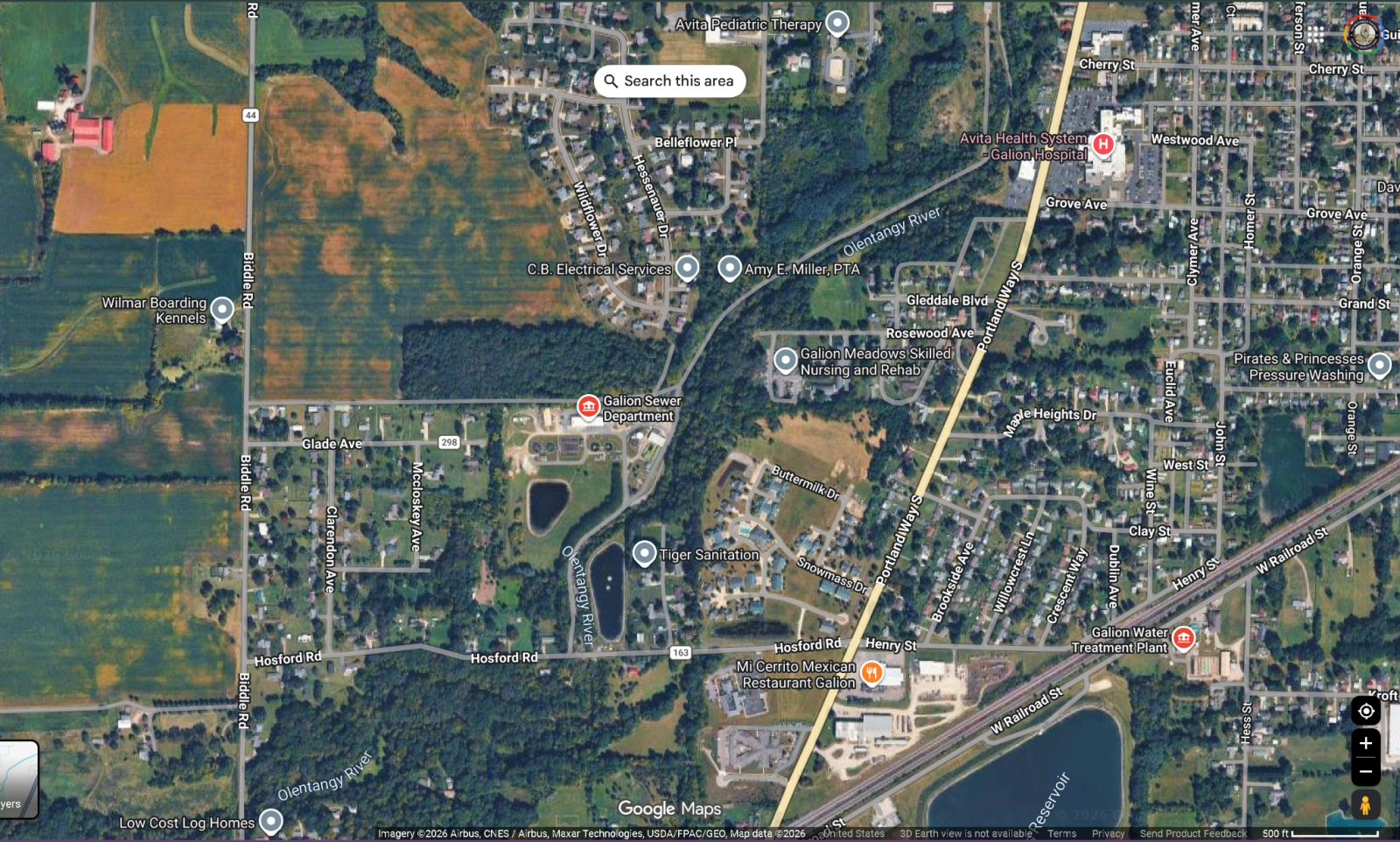
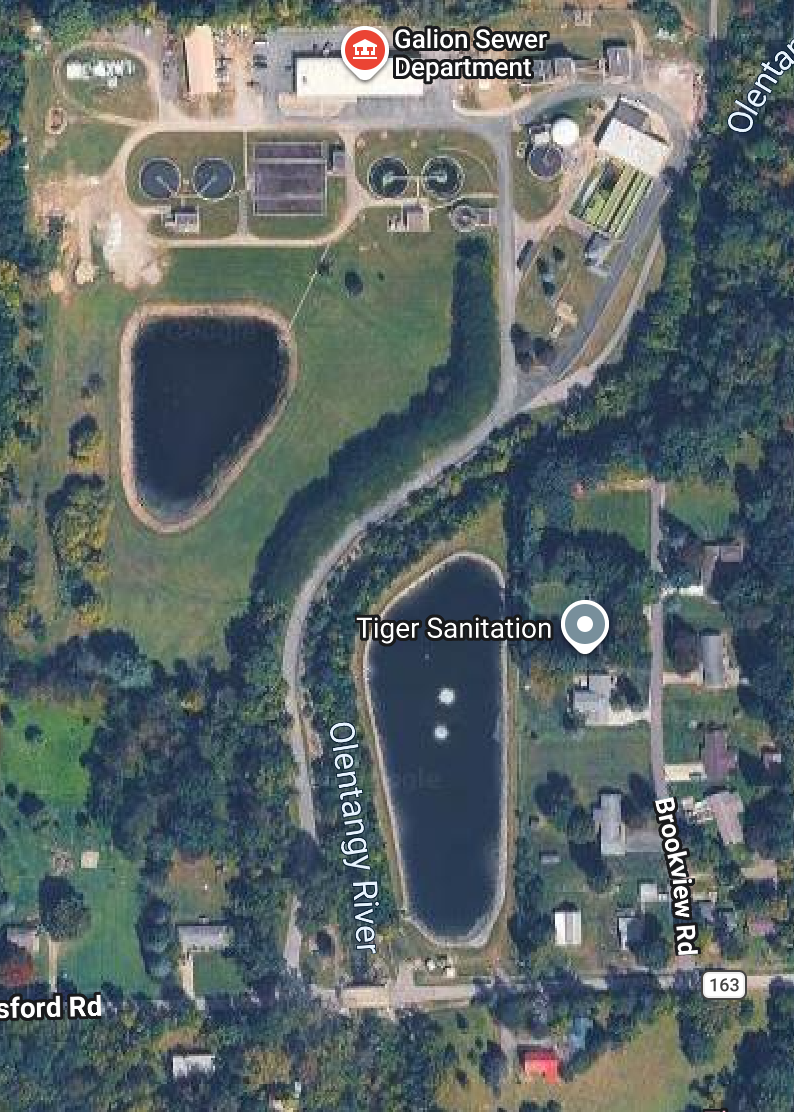
*Google Maps 2026
When the engineering audit details rotting 1954 digesters venting explosive methane, the potential blast radius and carcinogenic vapor plumes directly threaten adjacent families and vulnerable nursing home residents. When the report confirms that the plant’s aeration basin walls are bowing and actively leaching untreated sewage into the soil, it presents a highly plausible and severe risk of contaminating the local groundwater aquifers that feed residential systems, as well as poisoning the adjacent Olentangy River. Furthermore, the documented destruction of critical ventilation systems in the high-capacity toxic chlorine storage building creates the conditions for a lethal gas cloud that would immediately drift into these surrounding neighborhoods.
This catastrophic collapse did not happen overnight. These staggering levels of mechanical abandonment, severe worker endangerment, and environmental noncompliance festered for decades before state regulators were ultimately forced into formal intervention.
Part I Recap: The “Regulatory Shield” & State Complicity
Compounding this localized negligence is the direct complicity of state regulators. As exposed in Part I of this investigative series, the Ohio EPA functioned as an administrative shield rather than an environmental enforcer.
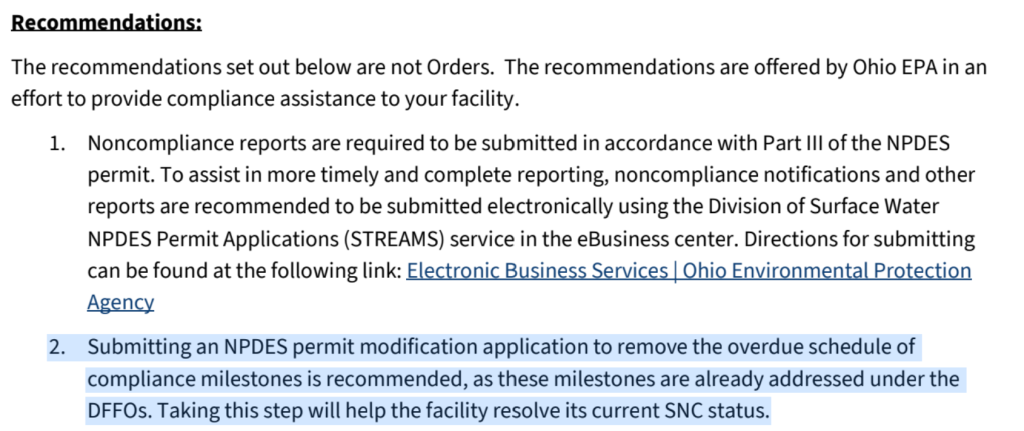
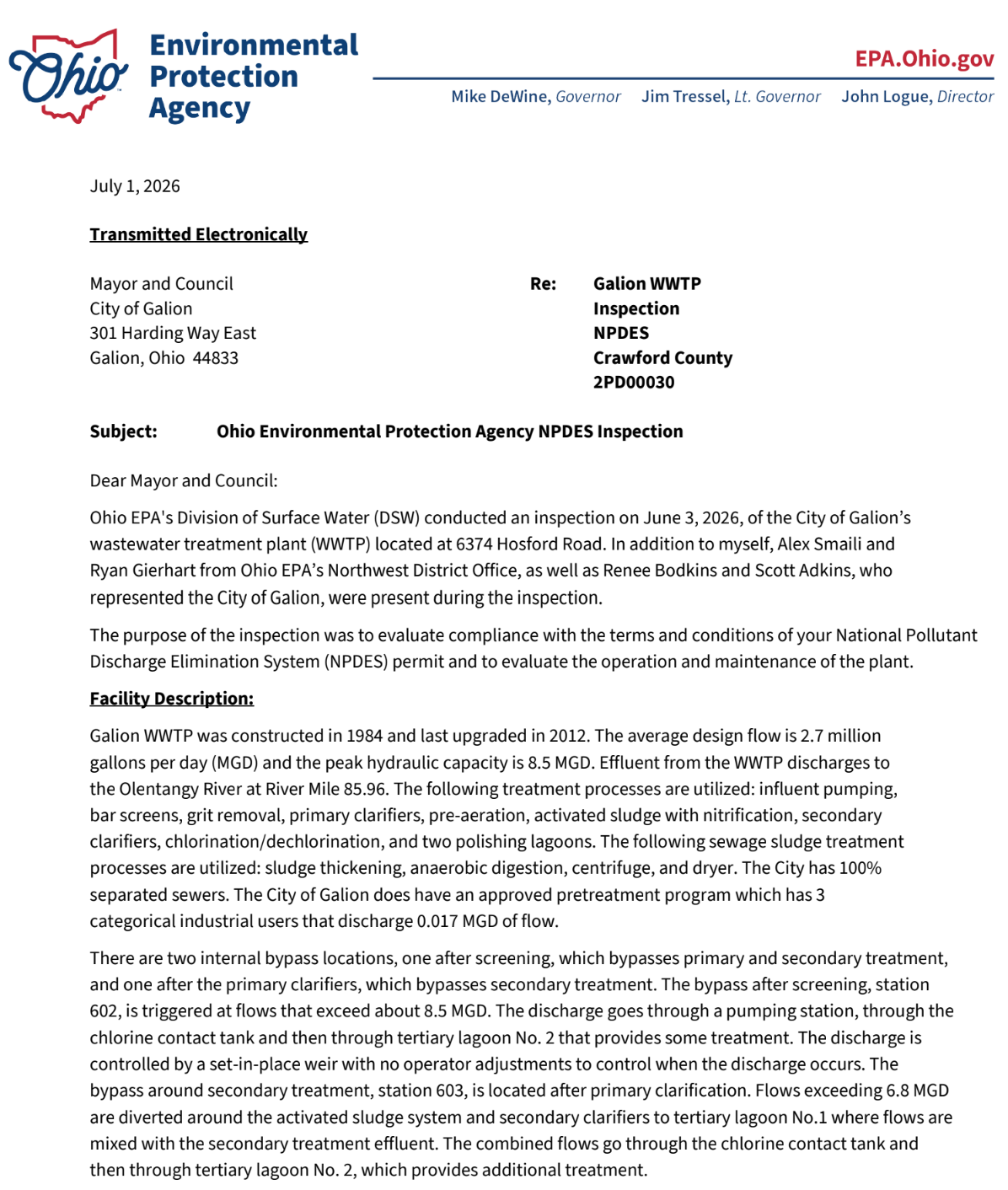
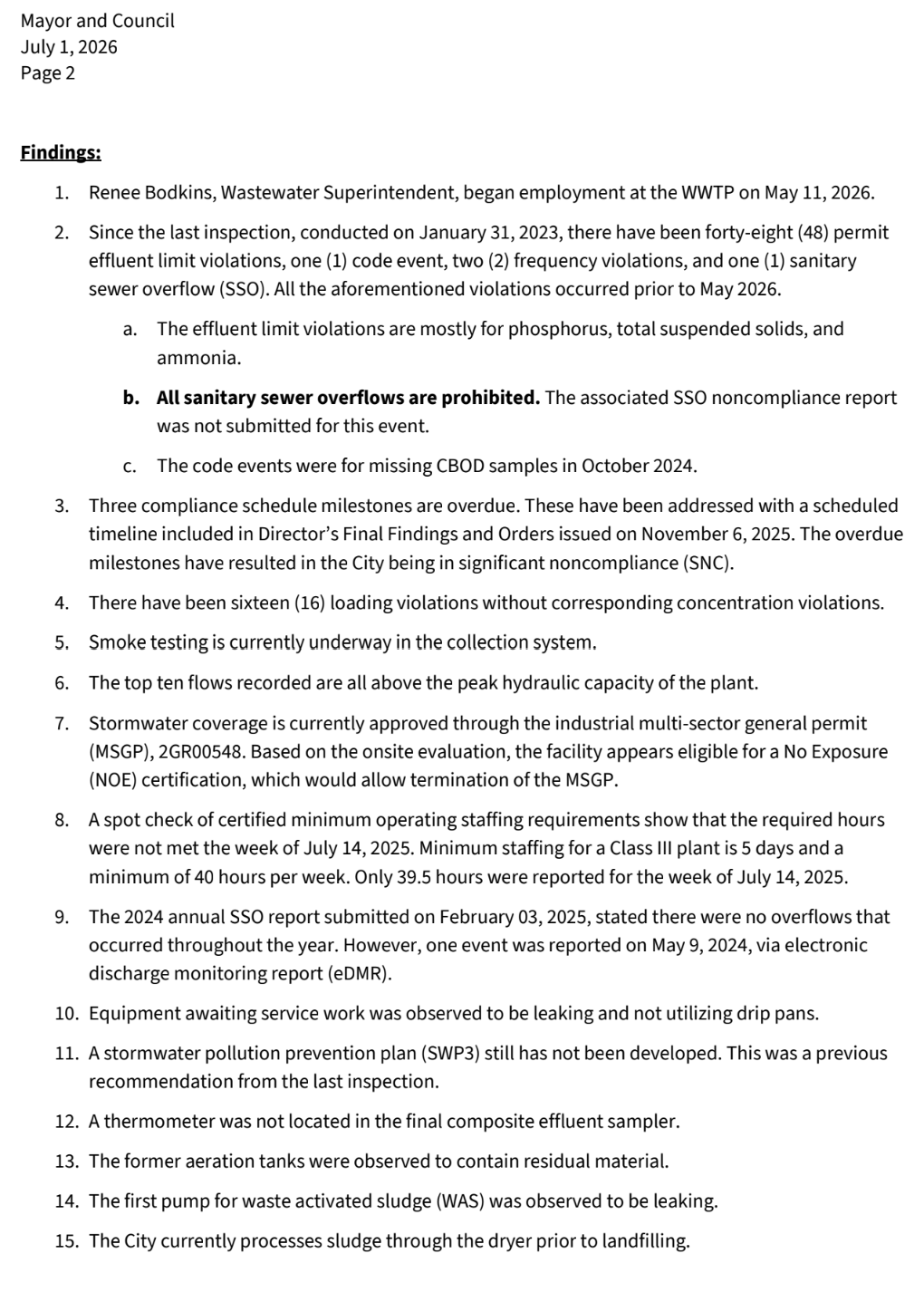
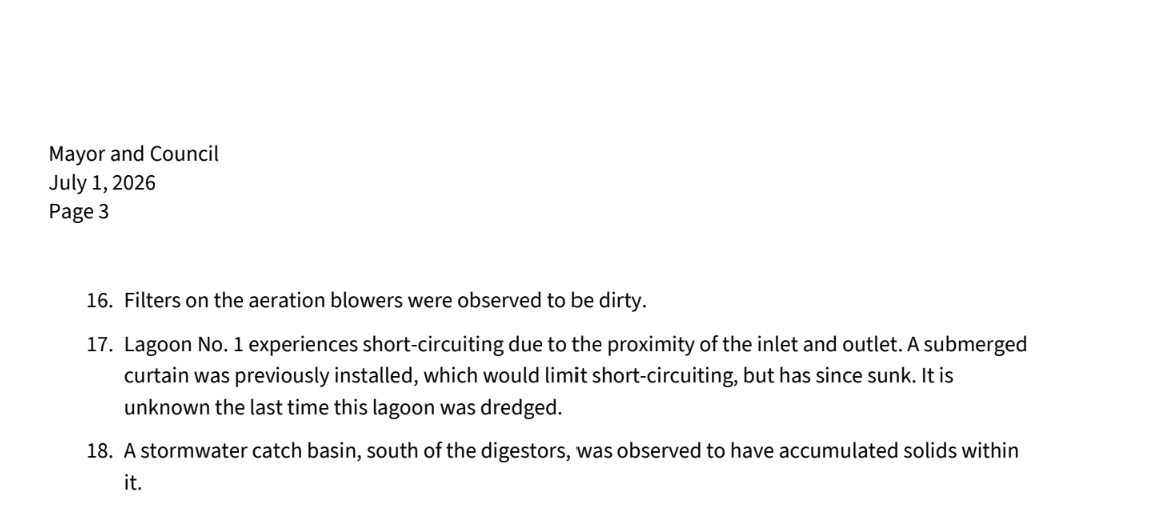
State regulators actively coached Galion officials on how to navigate and evade their Severe Non-Compliance (SNC) status. By advising the city to alter its National Pollutant Discharge Elimination System (NPDES) permit—specifically targeting the removal and delay of mandatory No Feasible Alternatives (NFA) bypass elimination schedules—state regulators engineered a deliberate administrative workaround.
Rather than holding the city accountable for unpermitted raw sewage discharges, and other severe non-complaince, this maneuvering effectively erased the federal SNC flag. The Ohio EPA’s actions insulated municipal leadership from immediate statutory penalties and made the underlying infrastructure collapse significantly harder for the public to independently investigate and, if necessary, prosecute.
Let’s Look Closer at the Engineering Proof
To understand the sheer magnitude of this $41.63 million collapse, we must dive deep into the empirical evidence. While Galion’s infrastructure crisis is all-inclusive—spanning water treatment, storm sewer collection networks, and municipal enterprise accounting—Part II of our report focuses exclusively on the Wastewater Treatment Plant due to the massive volume of records obtained from the City of Galion. An ongoing, comprehensive public record upload is currently in progress.
Validating the Investigation: Connecting the Dots
This painstakingly detailed 153-page engineering assessment inextricably links the physical rot of the Hosford Road facility to the broader municipal failures tracked by our investigative network over the past several years.
Validating Whistleblower Claims & Severe Safety Threats
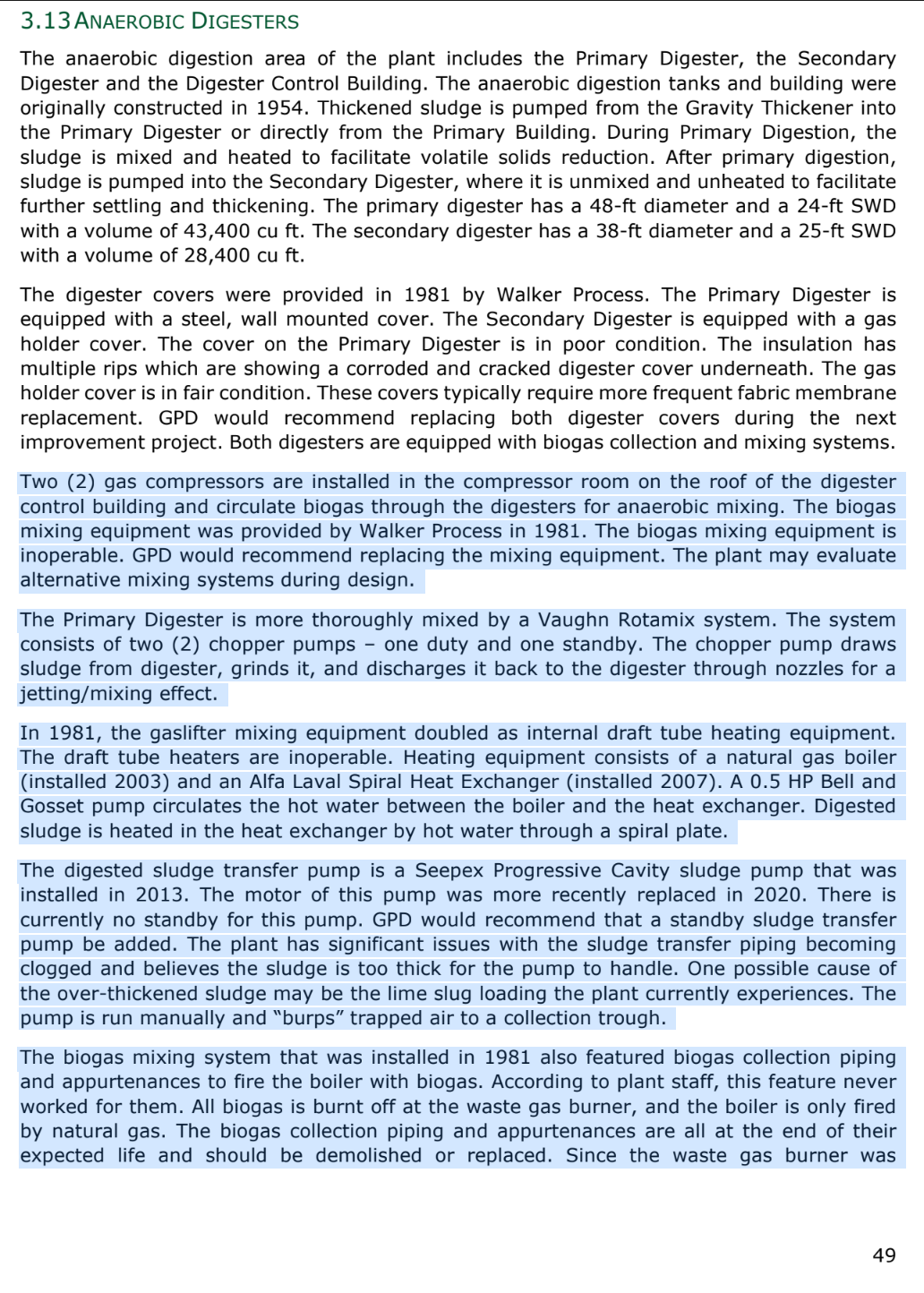
The operational demand for unredacted logs is entirely justified by the catastrophic internal conditions hidden from the public. Claims that operators were forced to work in hazardous conditions with dead digesters, explosive gas buildups, bypassed emergency shutoffs, improperly wired high-voltage gear, and leaking pumps are explicitly confirmed by GPD’s documentation of dead gas compressors, broken seal pumps draped in plastic sheets, and tied-up emergency shower pull-chains.
The report seems to also confirm that one of the digesters was failing, and whistleblowers and those familiar with the facility opertaions have said this digester has since failed completely and is not repairable.
Whistleblower Claims Confirmation From GPD Report
(ARTICLE CONTINUES AFTER PHOTOS)



Summary WHISTLEBLOWER ACCOUNTS: A Lethal Workplace
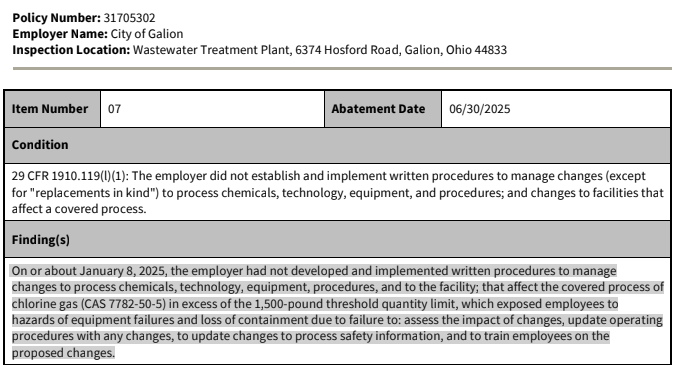
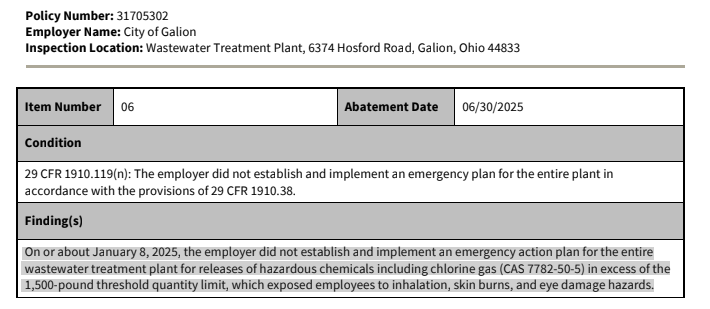
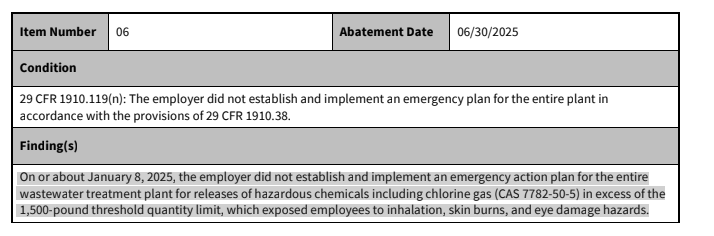
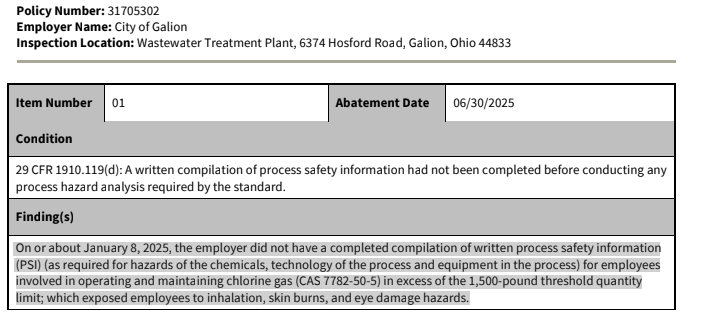
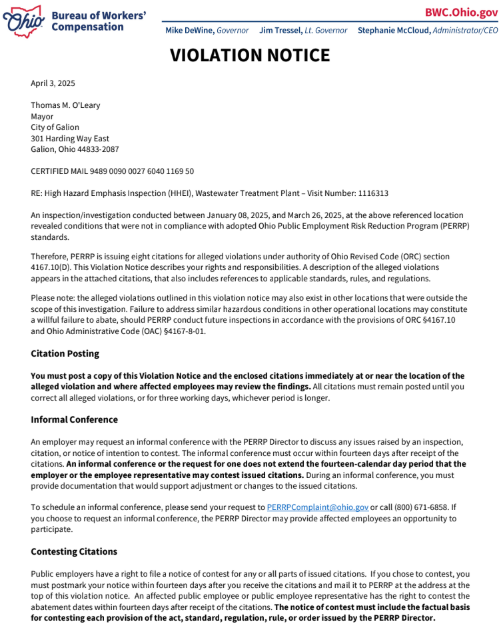
While the city debates roughly $1.2 million in future Wastewater Treatment Plant (WWTP) repairs, administrative failures have severely endangered municipal workers. An early 2025 state safety inspection resulted in eight major citations against the facility:
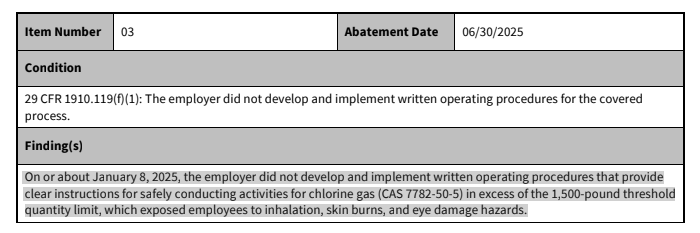
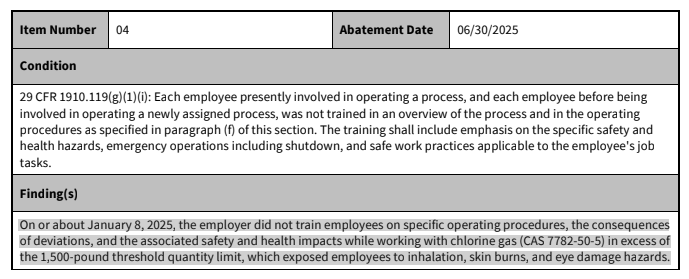
- Lethal Chemical Exposure (7 citations): Gross mishandling of chlorine gas stored above threshold limits. The city lacked hazard analyses, basic safety procedures, employee training, and emergency plans, exposing workers to severe burns and inhalation risks.
- Confined Space Hazards (1 citation): Employees were ordered into dangerous tanks and basins without a required safety permit program, risking drowning, entrapment, and exposure to toxic atmospheric conditions.
In short, the same administrative oversight causing financial strain has created a highly dangerous environment for the plant’s workforce.
CLICK PHOTOS TO ENLARGE
Contextualizing System Overflows & Council Data
During the June 9, 2026, Galion City Council meeting, data regarding severe wet-weather flows and hydraulic overloading was presented. GPD’s finding that the WWTP is structurally unable to process flows, combined with the missing 14-inch influent flow meter, perfectly contextualizes why the system cannot handle storm surges without triggering unpermitted raw sewage bypasses directly into the Olentangy River.
(ARTICLE CONTINUES AFTER PHOTOS)


Industrial Discharge & Pretreatment Failures
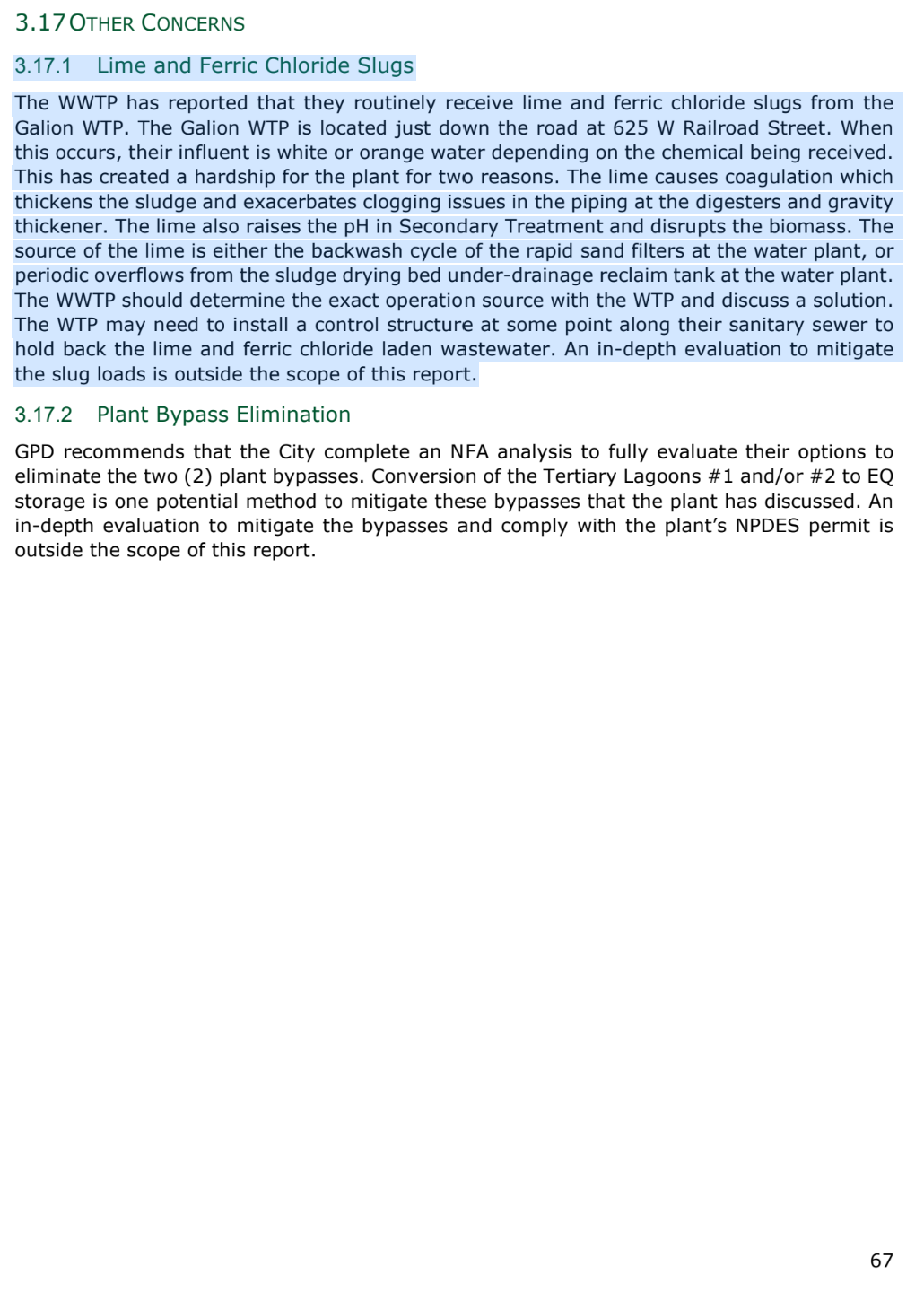
Citizen reports of localized chemical drainage and industrial discharge tracking align perfectly with GPD’s explicit warnings that heavy municipal lime and ferric chloride “slugs” from the Galion Water Treatment Plant are entering the sanitary grid, thick-clogging the facility’s sludge transfer pipes, and destroying the biological biomass.
Explaining Financial Insolvency: The $41.63 million baseline repair estimate—necessitated by decades of deferred maintenance on infrastructure dating back to 1954 and 1981—explains the underlying insolvency that has forced the municipal government to repeatedly siphon millions of dollars from the General Fund to keep the failing utility infrastructure afloat.
The physical rot cataloged in this engineering assessment is the undeniable root cause of the financial hemorrhage bleeding the city’s ledgers.
Process Flow Failures, Residential Endangerment, & Specific Pathological Risks
To understand the cascading effect of these failures, we must review the facility’s inability to process influent without hazardous bypassing.
As depicted in the provided process flow schematic, structural breakdown forces raw sewage out of the primary biological treatment path and directly into surrounding waterways.
The Breakdown of the Primary Treatment Path:
- Raw Sewage Influent enters via Lift Station “C” (Ductile Iron Piping Severely Corroded).
- Flow moves to Bar Screens & Headworks(Gates Corroded; Grit Company Defunct).
- CRITICAL FAILURE ROUTE: Flows exceeding 8.5 MGD trigger BYPASS #1. This routes raw sewage directly to Lift Station “A” (Suction Pumps Failed), resulting in a DIRECT UNPERMITTED OVERFLOW STRAIGHT TO THE OLENTANGY RIVER.
- CRITICAL FAILURE ROUTE: Flows exceeding 8.5 MGD trigger BYPASS #1. This routes raw sewage directly to Lift Station “A” (Suction Pumps Failed), resulting in a DIRECT UNPERMITTED OVERFLOW STRAIGHT TO THE OLENTANGY RIVER.
- Remaining flow moves to Screw Pumps.
- Flow enters Pre-Aeration & Metering (Diffusers Fouled; 14″ MAG METER MISSING.
- Flow moves to Primary Clarifiers(Bridges Corroded).
- CRITICAL FAILURE ROUTE: Flows exceeding 6.8 MGD trigger BYPASS #2. This routes partially settled sewage to Tertiary Lagoon #1 (Control Gates Inoperable), through the Rapid Mix & Chlorine (Ventilation Removed; Gates Frozen), and out to Tertiary Lagoon #2.
- CRITICAL FAILURE ROUTE: Flows exceeding 6.8 MGD trigger BYPASS #2. This routes partially settled sewage to Tertiary Lagoon #1 (Control Gates Inoperable), through the Rapid Mix & Chlorine (Ventilation Removed; Gates Frozen), and out to Tertiary Lagoon #2.
- Remaining flow enters CMU Block Aeration Basins (Walls Bowing & Leaching; 2,280 Diffusers Fouled).
The GPD assessment explicitly details catastrophic hardware abandonments that trigger severe environmental health threats.
These failures are scientifically documented disease and cancer risks that directly endanger the adjacent public.
The 1954 Anaerobic Digester Collapse & Lethal Explosion Danger ($6,730,000 Rehabilitation Cost)
The primary solids-handling core of the facility dates back to 1954. The 1981 steel wall-mounted cover on the Primary Digester is failing rapidly. As discussed previously, it is reported that one is currently not functional and cannot be repaired.
“The insulation has multiple rips which are showing a corroded and cracked digester cover underneath.”
The systems designed to safely capture, compress, and mix highly explosive methane biogas failed entirely. The two 1981 Walker Process gas compressors installed on the roof to circulate biogas are dead, as are the internal draft tube gaslifter heaters . A design feature meant to fire the primary heating boiler using captured methane biogas was completely abandoned:
“According to plant staff, this feature never worked for them. All biogas is burnt off at the waste gas burner, and the boiler is only fired by natural gas… Since the waste gas burner was constructed in 1954 and is deteriorating, GPD recommends replacing it as well…”
- Public Health, Cancer, & Severe Explosion Risk: Unmanaged, volatile methane biogas venting from ripped digester covers and rotting 1954 burners poses an immediate, catastrophic explosion hazard. Given the plant’s location, a catastrophic failure or ignition event places the homes on Glade Ave and the Galion Meadows Skilled Nursing facility within the immediate blast zone. Furthermore, raw biogas venting from anaerobic digestion contains not only explosive methane and highly toxic hydrogen sulfide (H2S), but also carcinogenic Volatile Organic Compounds (VOCs) such as benzene and formaldehyde. Chronic inhalation exposure to these unmanaged exhaust gases drifting into adjacent neighborhoods presents a severe, scientifically documented risk of leukemia and respiratory cancers to the public.
Aeration Basins & Groundwater Leaching Threats ($1,050,000 Structural / $1,305,000 Blowers)
The plant’s four biological aeration basins were constructed using Concrete Masonry Units (CMU block) rather than poured cast-in-place concrete. GPD documented active structural failure and wall bowing.:
“The Aeration Tanks are constructed of masonry block and the exterior walls are showing signs of bowing. GPD recommends that these masonry block walls be demolished and replaced with watertight precast concrete tank walls.”
- Public Health & Groundwater Leaching Risk: CMU block walls are not watertight containment structures. Bowing, non-watertight masonry joints holding hundreds of thousands of gallons of actively aerating, pathogen-rich sewage are actively leaching untreated wastewater directly into the surrounding soil. Because the facility is situated adjacent to the Olentangy River and bounded by residential streets, this structural failure creates a highly plausible risk of contaminating the local groundwater aquifers feeding residential systems. This leaching threatens public well water integrity and risks systemic bacterial outbreaks (such as Leptospirosis) in the surrounding residential soil.
Water Plant Chemical Sabotage & Biomass Destruction
The facility’s single Seepex progressive cavity sludge transfer pump routinely clogs due to extreme sludge over-thickening, forcing operators to manually run the pump and “burp trapped air to a collection trough”. GPD confirmed this is directly caused by heavy municipal chemical “slugs” discharged into the sanitary grid by the Galion Water Treatment Plant:
“The WWTP has reported that they routinely receive lime and ferric chloride slugs from the Galion WTP… When this occurs, their influent is white or orange water depending on the chemical being received. This has created a hardship for the plant… The lime causes coagulation which thickens the sludge and exacerbates clogging issues in the piping at the digesters and gravity thickener. The lime also raises the pH in Secondary Treatment and disrupts the biomass.”
- Public Health Risk: While municipal lime and ferric chloride are corrosive agents, their uncontrolled presence in the sanitary grid artificially spikes pH levels and completely destroys the WWTP’s biological biomass. The destruction of this biomass eliminates the plant’s natural ability to digest toxic raw sewage, allowing dangerous pathogens, industrial carcinogens, and unmitigated ammonia to pass fully untreated into the Olentangy River, posing acute gastroenteritis and toxicity risks to downstream water users.
Unmetered Bypasses & Carcinogenic Chlorination Byproducts
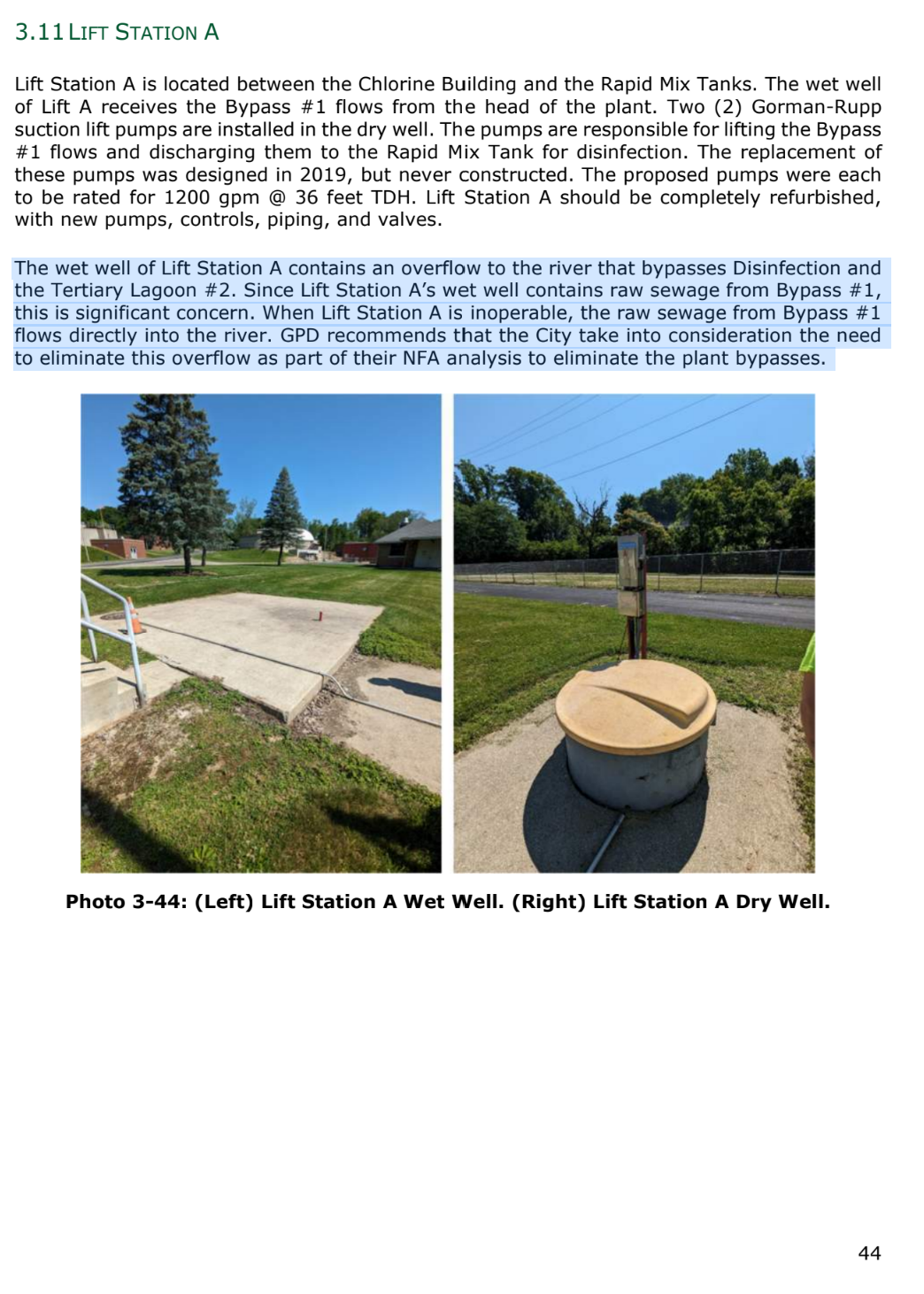
At Lift Station “A”, which receives raw sewage from Bypass #1, GPD identified an unpermitted direct river discharge route:
“The wet well of Lift Station A contains an overflow to the river that bypasses Disinfection and the Tertiary Lagoon #2. Since Lift Station A’s wet well contains raw sewage from Bypass #1, this is significant concern. When Lift Station A is inoperable, the raw sewage from Bypass #1 flows directly into the river.”
Compounding this issue, the 14-inch magnetic influent flow meter is completely uninstalled and missing, leaving the facility unable to accurately measure incoming volumes or track how much sewage is bypassing the plant.
- Specific Carcinogenic Disinfection Risk: When raw, unmetered sewage (loaded with high organic matter) bypasses proper biological treatment and hits the active chlorination stage, it triggers a highly dangerous chemical reaction. This reaction forms Trihalomethanes (THMs)—highly carcinogenic disinfection byproducts such as chloroform and bromoform. Consumption of or exposure to THM-loaded water is a known, probable human carcinogen strongly linked to elevated risks of bladder cancer, colorectal cancer, and endometrial cancer for downstream communities.
Heavy Metal Contamination in Biosolids: A Carcinogenic Threat
While the 2008 centrifuge and thermal dryer successfully produce Class A biosolids, the final dried product is heavily contaminated:
“Unfortunately, the biosolids produced are too high in heavy metals to be land applied. This is why the plant is required to dispose of the solids at the landfill.”
- Specific Carcinogenic & Neurological Health Risks: Heavy metals commonly found in municipal sludge overages—specifically Cadmium, Chromium (Cr+6), and Lead—are highly destructive to human health. Cadmium is classified as a Group 1 human carcinogen associated with lung, prostate, pancreatic, and kidney cancers. Lead accumulation causes severe neurological disorders, immune system suppression, gastrointestinal damage, and the rapid progression of neurodegenerative diseases such as Alzheimer’s.
Secondary Building Pump Leaks & “Sewage Worker’s Syndrome” ($325,000 Replacement Cost)
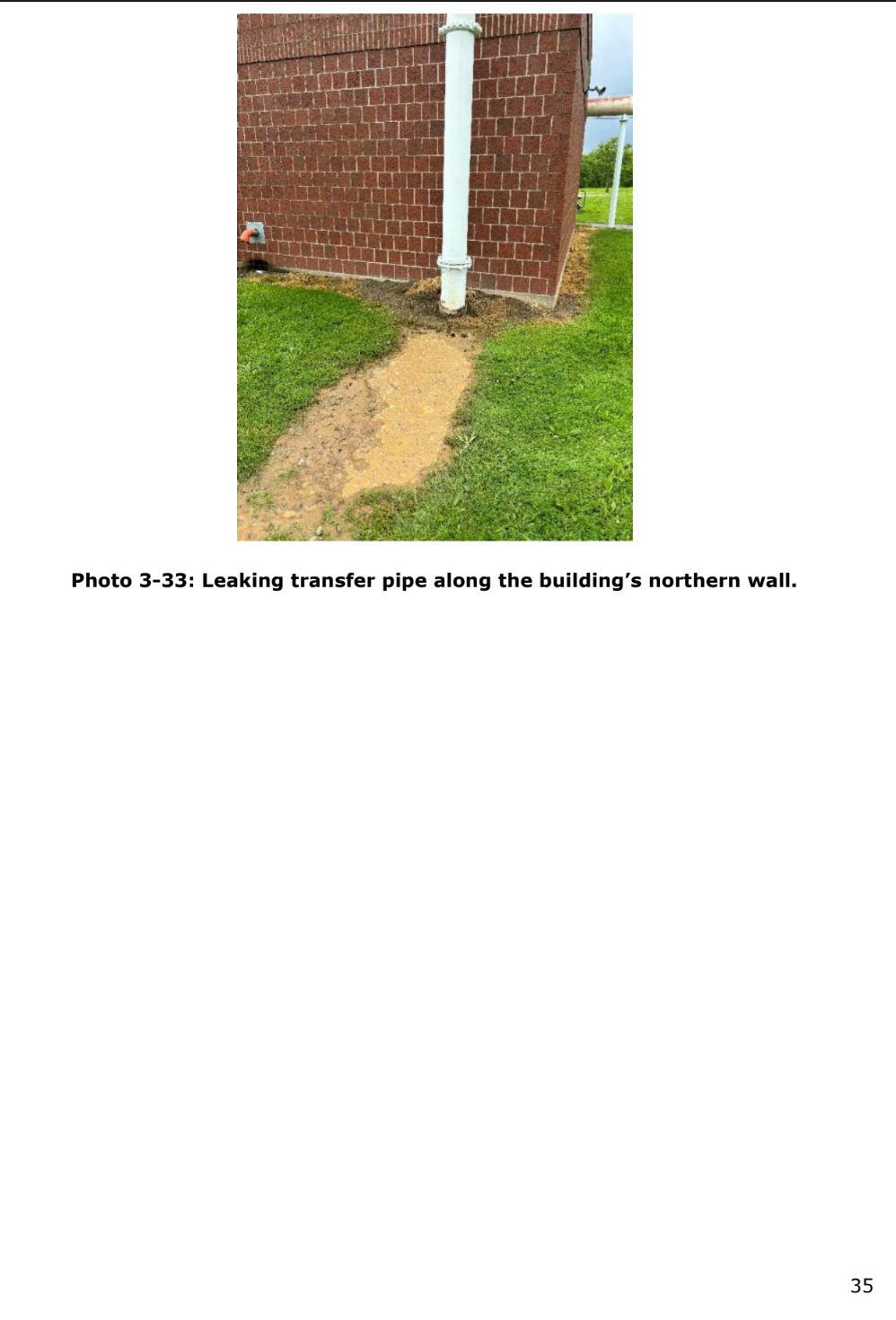
In the Secondary Building basement, two original 1981 Worthington pumps experienced complete mechanical seal failure. GPD inspectors discovered that operators resorted to makeshift plastic sheet deflectors to manage the spraying sewage:
“Both of the old Worthington pumps showed mechanical seal failure during the inspection. The leakage from these pumps is severe to the point that plastic covers have been laid over the pumps to divert the leak downward towards the floor drains. The leakage has deteriorated the pump bodies, equipment pads, and floor.”
- Specific Worker Health & Safety Risks: Spraying raw return-activated sludge creates a severe bioaerosol inhalation hazard. Aerosolized wastewater contains highly concentrated, dangerous airborne pathogens. Operating in poorly ventilated basements filled with aerosolized sewage puts facility workers at extreme risk of contracting E. coli, Salmonella, Cryptosporidium, and Legionella. This continuous exposure leads to an occupational hazard clinically known as “Sewage Worker’s Syndrome,” characterized by acute gastroenteritis, chronic diarrhea, and severe cardiovascular and respiratory infections.
Electrical Hazards, Imminent Explosion Risks, & Bypassed Emergency Shutoffs
The physical decay cataloged throughout the GPD engineering assessment reveals extreme workplace hazards where explosive methane biogas, toxic compressed chlorine, high-voltage electrical distribution equipment, and disabled safety controls directly collide.
Electrical Arc Flash & Explosive Methane Ignition Hazards
As noted above, the facility handles volatile, highly flammable methane biogas produced during anaerobic digestion. High-voltage electrical infrastructure is currently operating in a state of severe physical decay directly adjacent to these failing biogas zones:
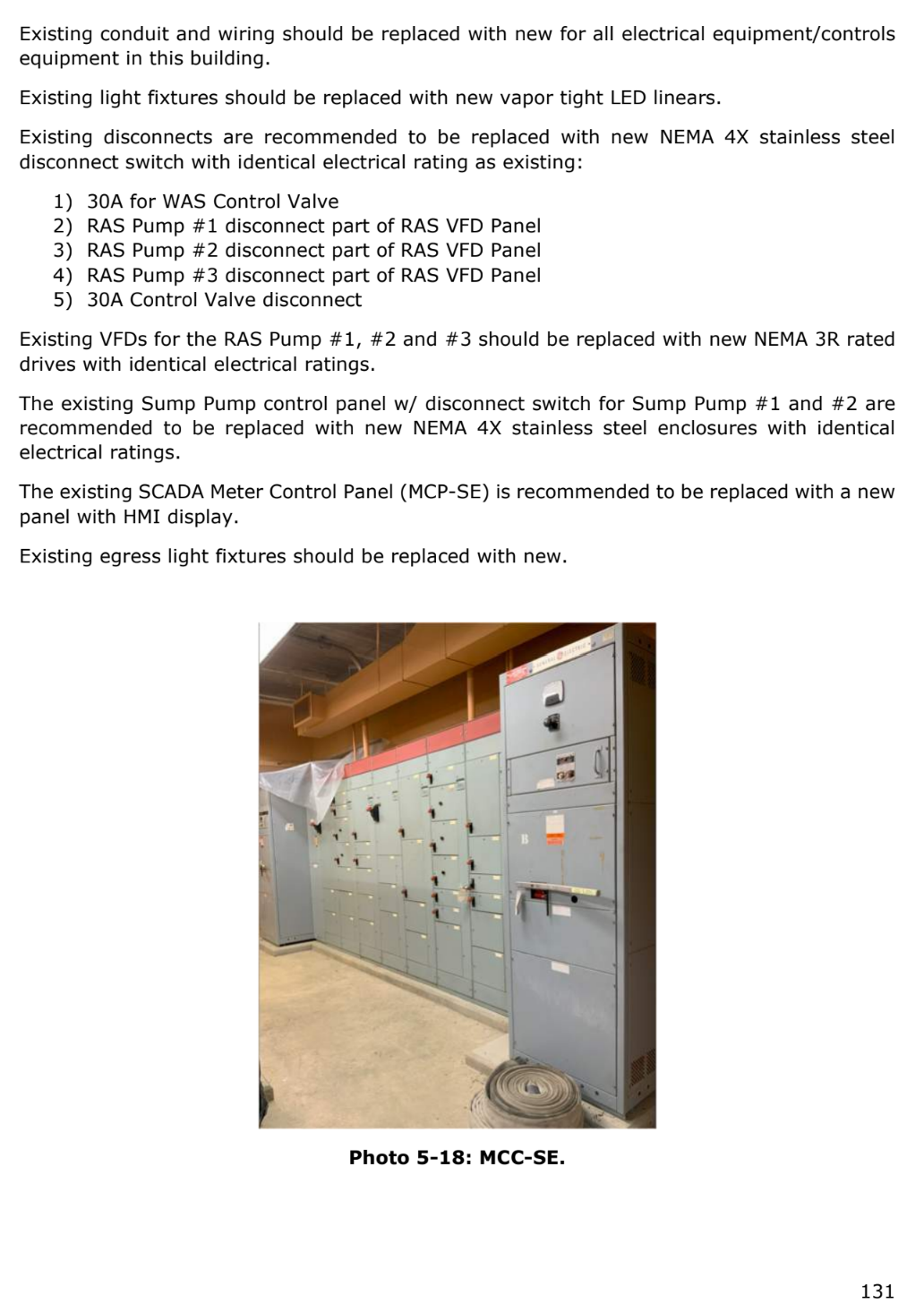
- Corroded 480V Distribution Equipment in Explosive Zones: In the Digester Building—where methane biogas is actively generated and where GPD noted ripped insulation and cracked digester covers—the primary 480V Motor Control Center (MCC-DI) and sub-panels (IPP-DI/LPDI) are in poor condition with visible rust on all panels. Operating degraded 480V electrical switches and across-the-line motor starters (which are documented as in poor condition) in proximity to unmanaged, venting methane creates a lethal arc-flash and electrical spark ignition hazard, putting the entire facility at risk of a catastrophic explosion. Such an explosion would devastate the immediate residential area surrounding the plant.
Improper Ducting & Lethal Chlorine Gas Traps
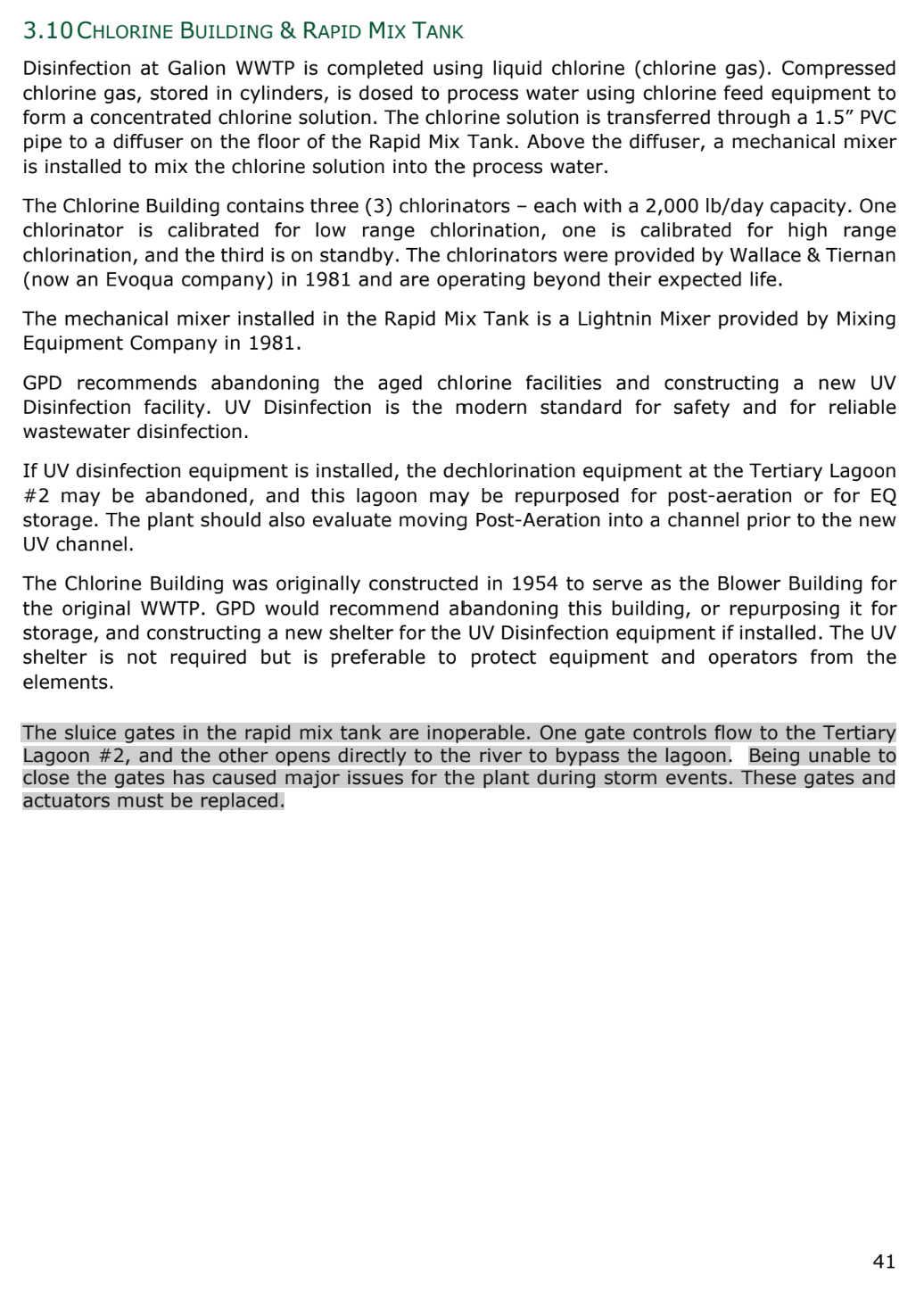
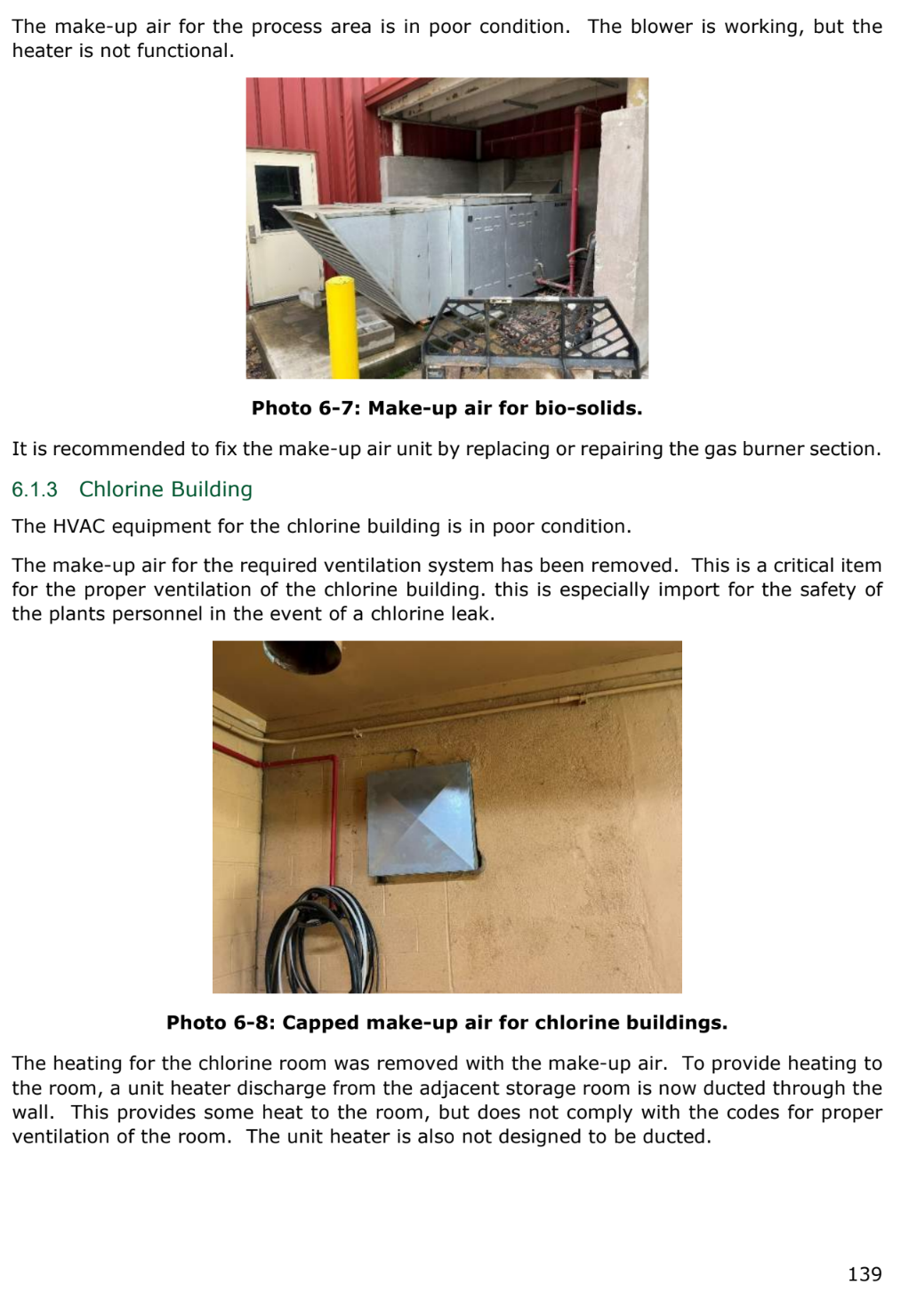
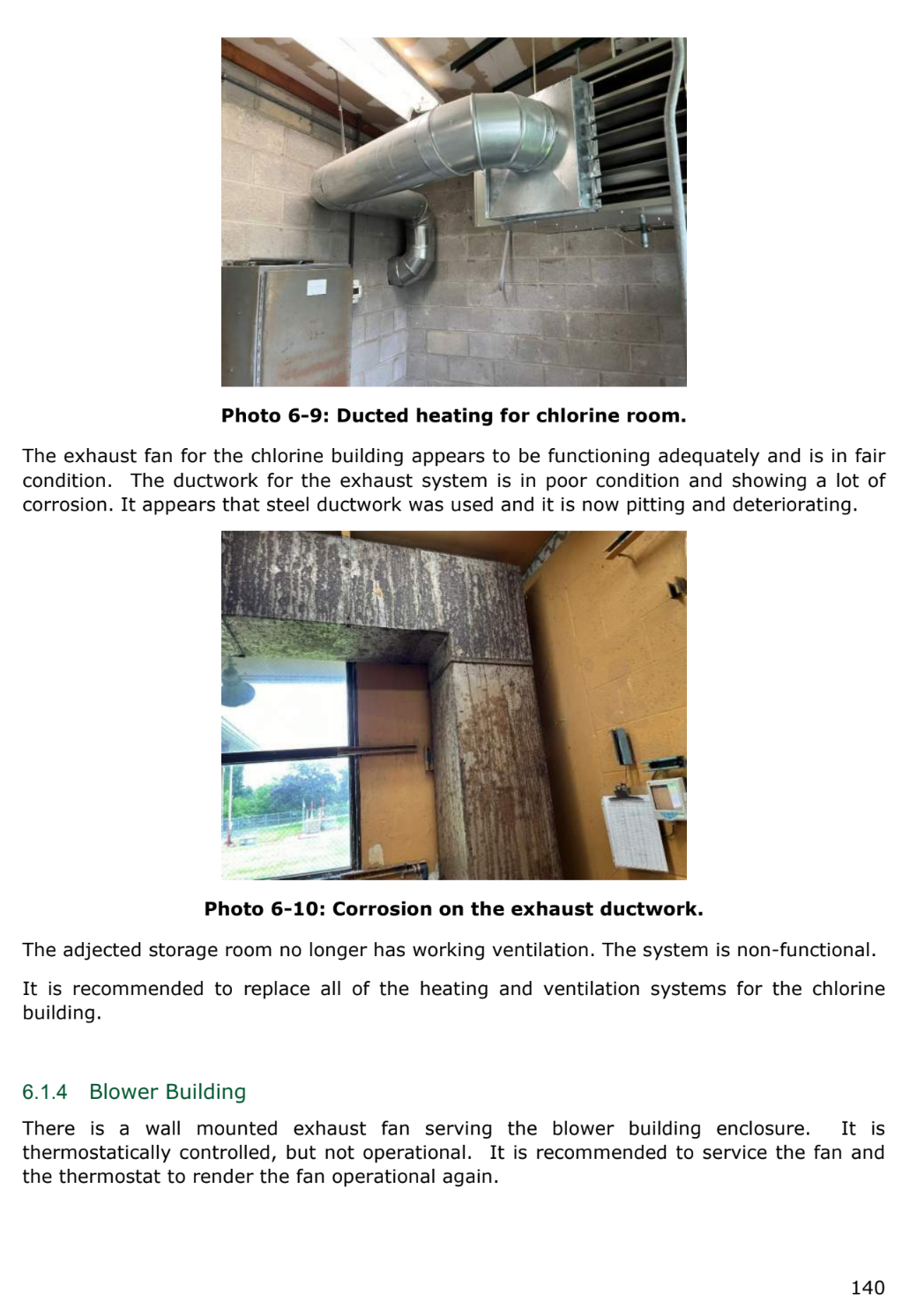
In the Chlorine Building—which stores compressed, highly toxic chlorine gas—the required emergency makeup air ventilation system was removed. To heat the chemical room after removing the HVAC system, operators cut a hole through a wall and ducted a unit heater from an adjacent storage room.
GPD notes: “To provide heating to the room, a unit heater discharge from the adjacent storage room is now ducted through the wall… The unit heater is also not designed to be ducted”.
- Lethal Gas Threat to Neighborhoods: Ducting an unapproved unit heater through wall penetrations into an unventilated chlorine storage environment violates codes and creates a lethal toxic gas trap for workers. Inhalation of trapped chlorine gas causes acute pulmonary edema, severe lung tissue burns, and death within minutes. Given the proximity of the facility to residential homes on Hosford Road and the Galion Meadows Skilled Nursing facility, a major, uncontained chlorine gas leak would rapidly form a deadly, heavier-than-air toxic cloud that would suffocate the immediate neighborhood before an evacuation could be mobilized
Bypassed Emergency Shutoffs & Disabled Physical Safety Equipment
GPD inspectors documented severe electrical compliance breaches where required safety shutoffs were bypassed, missing, or improperly modified:
- Missing Local Emergency Disconnects: In the Digester Building, the centrifuge sludge feed pump was installed without any local electrical disconnect switch. GPD explicitly mandated: “The Centrifuge Sludge Pump fed from Digester Building lacks a local disconnect. A disconnect should be provided”. In an emergency, workers cannot quickly isolate power at the equipment, violating fundamental safety mandates.
- Deteriorating Local Emergency Controls: Across the Secondary Building, Primary Building, and Screw Pump Structure, local Hand-Off-Auto (HOA) control switches and local 30A disconnects for raw sludge pumps, grease pumps, and control valves are in poor condition.
- Tied-Up Safety Shower Pull-Chains: In the Administration Building, emergency shower pull-chains were intentionally tied up to the ceiling. GPD notes: “The emergency showers are inaccessible. The pull chains have been tied up to the ceiling and would not be easily reached in the case of an emergency. This was done because the shower is located in the middle of the room and the pull chain was in the way of day to day operations”.
- Abandoned Secondary Building Eyewash Stations: In the Secondary Building basement, where corrosive chemicals and raw return sludge are actively handled, no emergency shower exists, and the single portable eyewash station was found abandoned, empty, and non-operational.
Comprehensive Structural & Mechanical Assessment Findings
Beyond the primary process and electrical hazards, GPD Group’s multidisciplinary engineering inspection cataloged extensive structural and plumbing disrepair:
- Structural Failures: Screening Building concrete stair landings are spalled where handrails core into concrete. The Screw Pump structure is showing significant cracking on the southern face. The Sludge Holding Tank walls are in poor condition with severe deterioration across all observable surfaces.
- Mechanical & Plumbing Neglect: Make-up air units are missing outside air filters; roof-mounted make-up air units and exhaust fans are non-functional across the Screen Building and Screw Pump Building.
- Backflow Prevention: Critical incoming water service lines lack backflow prevention devices in the Primary Building, Administration Building, Digester Building, and Secondary Building.
- Hot Water Supply: The Administration Building’s single 40-gallon water heater is severely undersized for handling emergency shower capacity, which requires a minimum volume of 75 gallons.
Engineer’s Opinion of Probable Construction Cost (EOPCC)
GPD Group prepared a Class 4 Estimate (AACE classification with a 30% estimating contingency) to maintain and rehabilitate the existing facility without expanding capacity. Basically, this means to fix or replace existing infrastructure not to upgrade it.
Below is the exact cost summary output generated by GPD Group on page 153 of the report:
Cost Category / Line Item | Estimated Cost (USD) |
|---|---|
SUBTOTAL (Base Construction Items) | $24,126,000 |
ELECTRICAL AND MECHANICAL (HVAC) ALLOWANCE (15%) | $3,618,900 |
ESTIMATING CONTINGENCY (30%) | $7,237,800 |
SUBTOTAL (Estimated Construction Cost) | $34,983,000 |
CONSTRUCTION MANAGEMENT AND INSPECTION (8%) | $2,798,640 |
TECHNICAL PROJECT REPRESENTATION DURING CONSTRUCTION (5%) | $1,749,150 |
ENGINEERING DESIGN FEES (6%) | $2,098,980 |
TOTAL ESTIMATED CAPITAL COST | $41,630,000 |
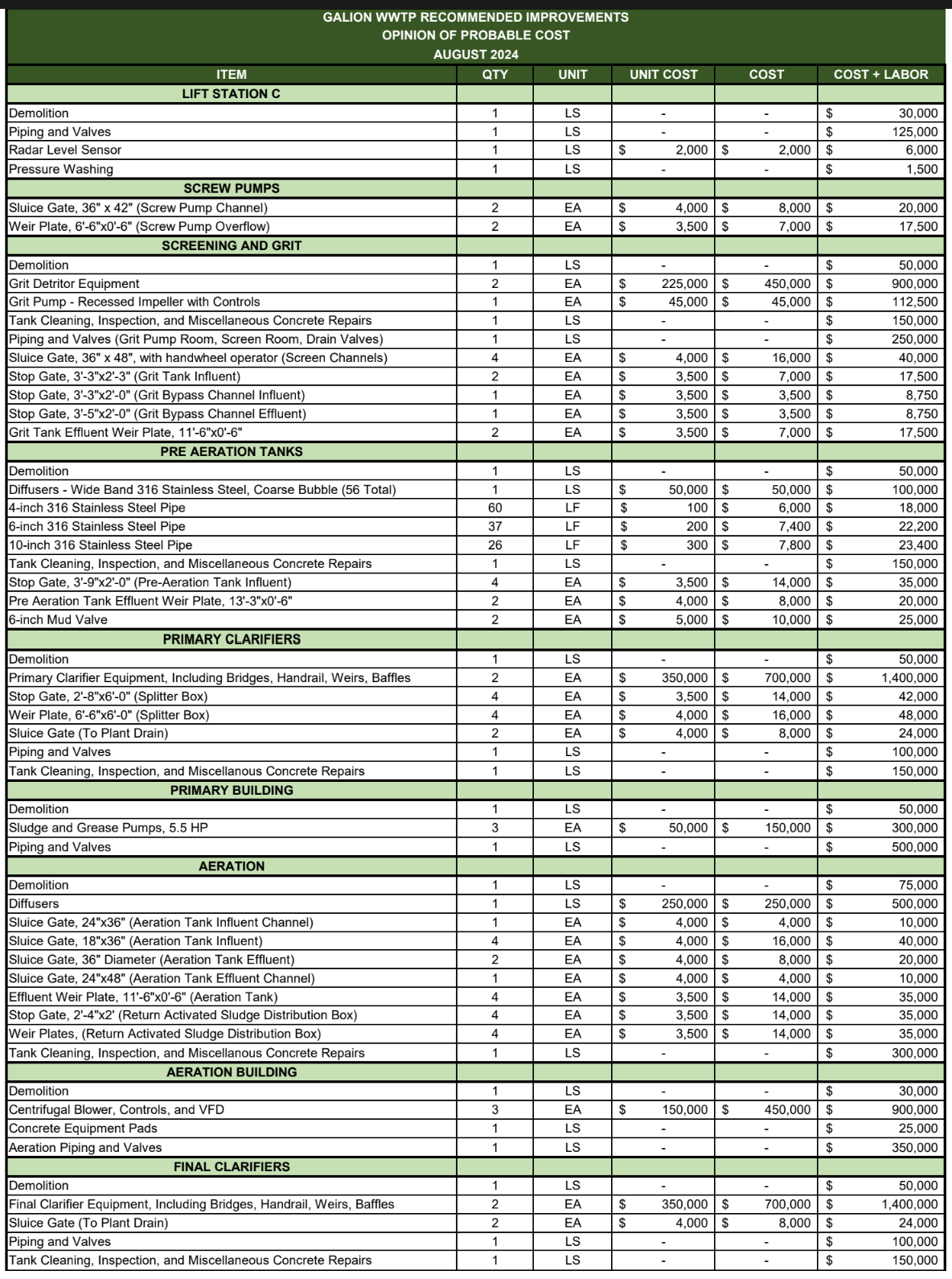


* GPD Facility Assessment Report, PDF Page 153
Investigative Conclusion & Path to Accountability
The August 2024 GPD Group Condition Assessment Report establishes an undeniable truth: the City of Galion is operating an active environmental, public health, and explosive hazard disguised as a municipal utility.
The convergence of dead 1954 digesters venting explosive and carcinogenic biogas, bowing CMU aeration walls leaching into groundwater tables, unmetered sewage bypasses spawning cancer-causing chlorination byproducts, direct raw river overflows at Lift Station “A”, bypassed emergency shutoffs, rotting electrical grids in methane zones, and illegal HVAC modifications in toxic chlorine storage rooms represents a staggering level of municipal negligence. These failures present an immediate danger to the vulnerable residential populations surrounding the facility, and they cannot be solved through minor repairs or administrative delays.
For years, local leadership relied on the “Regulatory Shield”—utilizing administrative accommodations and Ohio EPA-suggested permit modifications to push compliance deadlines down the road while the facility physically decayed. Meanwhile, the city’s General Fund continues to be drained to bail out insolvent enterprise funds that cannot generate sufficient revenue to cover a $41.63 million repair backlog.
Our investigative network will continue to process, audit, and publicly upload the ongoing stream of municipal records obtained from the City of Galion. The public record is set, the engineering proof is indisputable, and the era of administrative cover-ups is over.
Looking Closer at the Engineering Report (Photos WITH MAIN ASSESMENT SUMMARY)
The below section details issues found in the report, with full sized photos. There are multiple sections.
Process Area | Construction / Upgrade Era | Operational Status & Engineering Findings (GPD Report) |
|---|---|---|
Influent Screw Pumps | 1981 / 2017 | 1 of 2 primary 66-inch inclined screw pumps INOPERABLE due to a failed hydraulic lubrication pump; plant operating with zero standby capacity. |

Process Area | Construction / Upgrade Era | Operational Status & Engineering Findings (GPD Report) |
|---|---|---|
Grit Detritors | 1981 (National Hydro) | Manufacturer out of business since the 1990s; 1 of 3 grit slurry pumps (original 1981 Morris pump) DEAD; slurry piping severely corroded. |


Process Area | Construction / Upgrade Era | Operational Status & Engineering Findings (GPD Report) |
|---|---|---|
Aeration Basins | 1981 | Constructed with CMU BLOCK instead of poured concrete; exterior walls bowing outward and leaching; 2,280 ceramic diffusers severely fouled. |


Process Area | Construction / Upgrade Era | Operational Status & Engineering Findings (GPD Report) |
|---|---|---|
Aeration Building | 1981 |
|

Process Area | Construction / Upgrade Era | Operational Status & Engineering Findings (GPD Report) |
|---|---|---|
Secondary Building | 1981 (Worthington) | Original 1981 Worthington RAS/WAS pumps suffering CATASTROPHIC mechanical seal leaks; plastic sheets placed over pumps to deflect spraying sewage. |


Process Area | Construction / Upgrade Era | Operational Status & Engineering Findings (GPD Report) |
|---|---|---|
Influent Flow Meter | N/A | 14-inch magnetic flow meter UNINSTALLED AND MISSING; influent volumes and bypass ratios cannot be accurately measured. |

/
Process Area | Construction / Upgrade Era | Operational Status & Engineering Findings (GPD Report) |
|---|---|---|
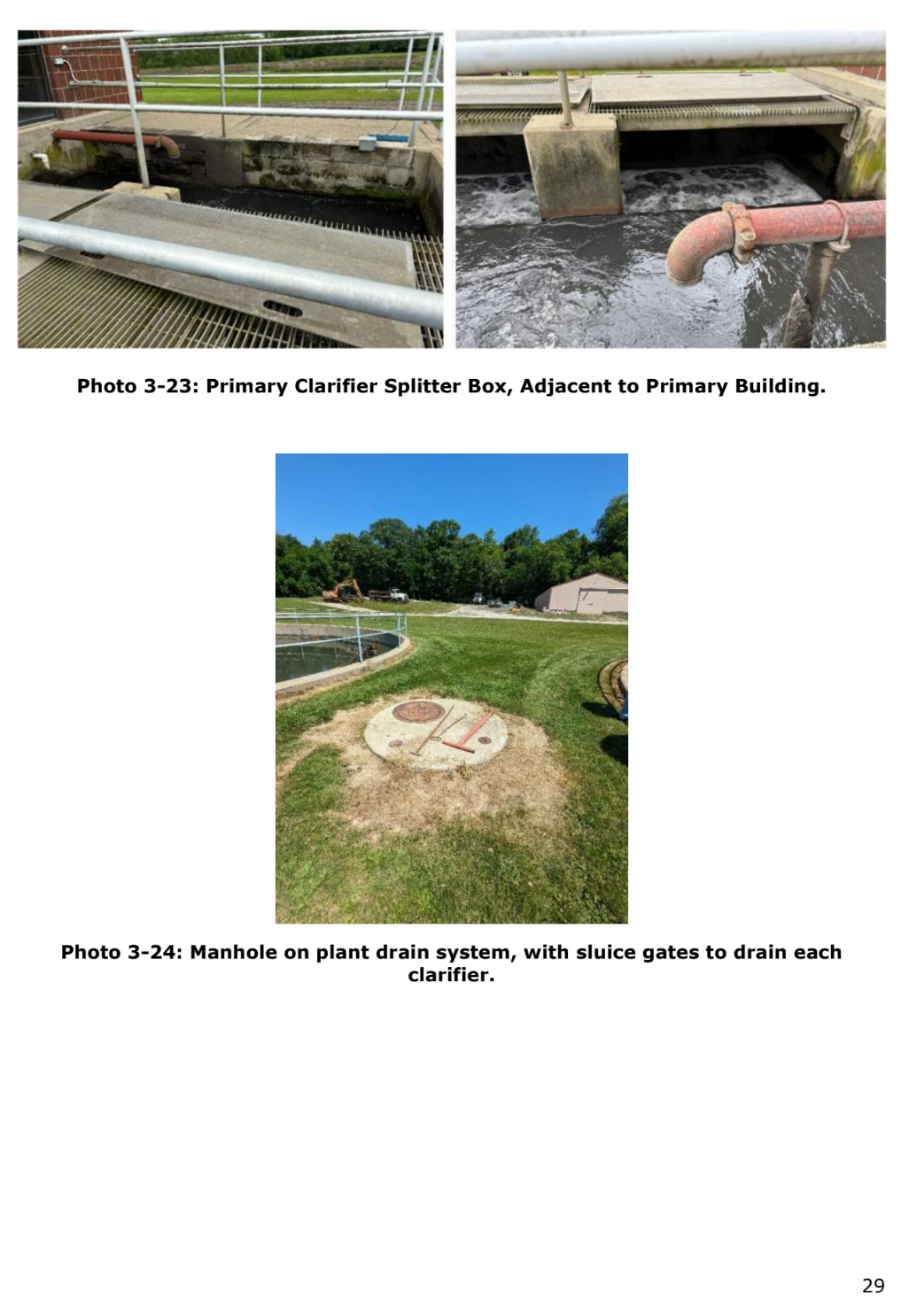
Primary Clarifiers | 1981 (National Hydro) | Equipment past useful life; severe corrosion on walkways and bridges creating structural safety hazards; splitter box weirs/gates failing. |

Process Area | Construction / Upgrade Era | Operational Status & Engineering Findings (GPD Report) |
|---|---|---|
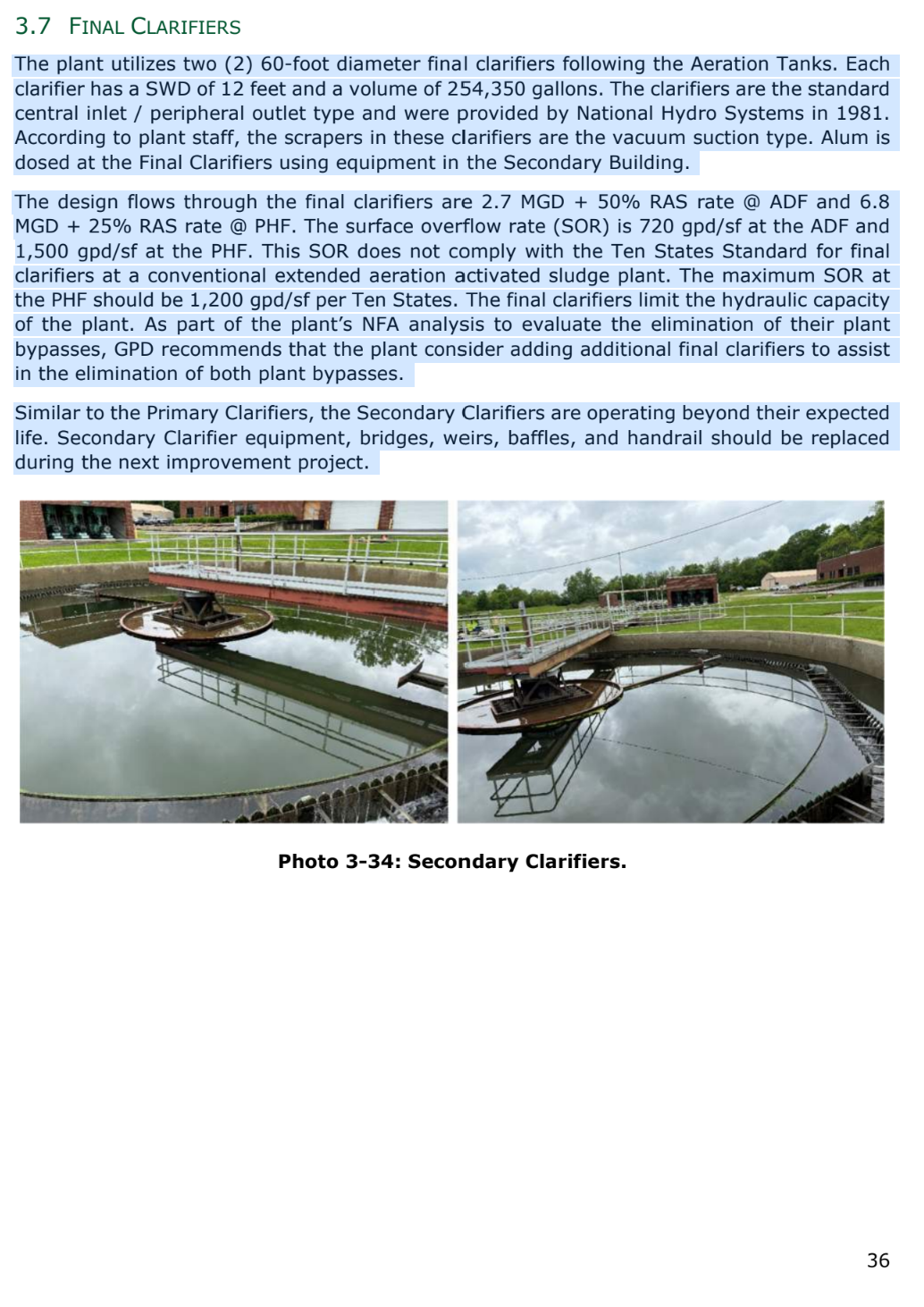
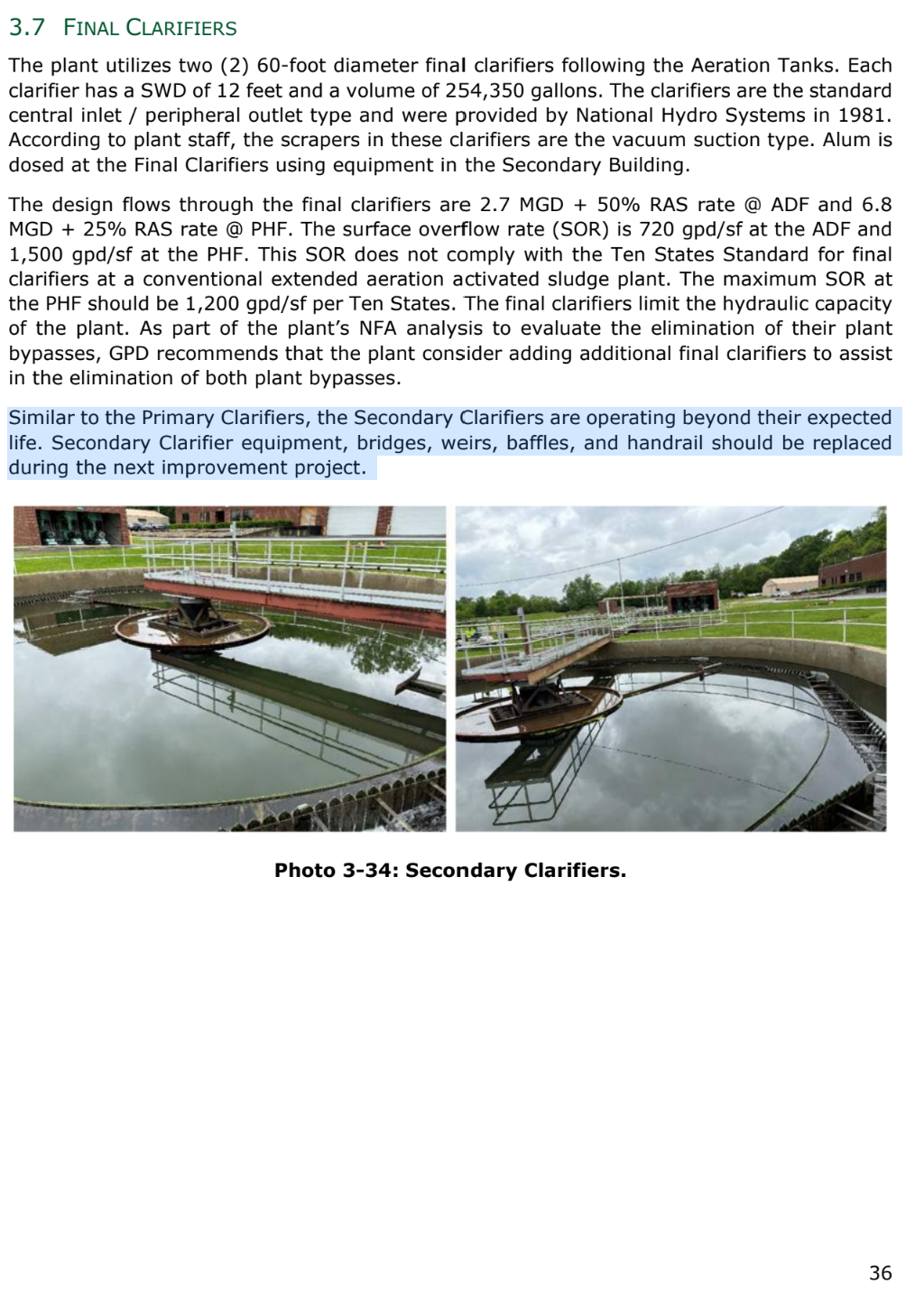
Final Clarifiers | 1981 (National Hydro) | Peak hour surface overflow rate (1,500 gpd/sf) VIOLATES Ten States Standards maximum limit of 1,200 gpd/sf. |
Process Area | Construction / Upgrade Era | Operational Status & Engineering Findings (GPD Report) |
|---|---|---|
Chlorine Building | 1954 / 1981 | Liquid chlorine feed equipment operating past useful life; rapid mix sluice gates frozen/inoperable; makeup air ventilation completely removed. |




Process Area | Construction / Upgrade Era | Operational Status & Engineering Findings (GPD Report) |
|---|---|---|
Lift Station “A” | 1981 | A: Handles Bypass #1 flows; suction lift pumps failed; wet well contains UNPERMITTED DIRECT OVERFLOW PIPE to Olentangy River. |

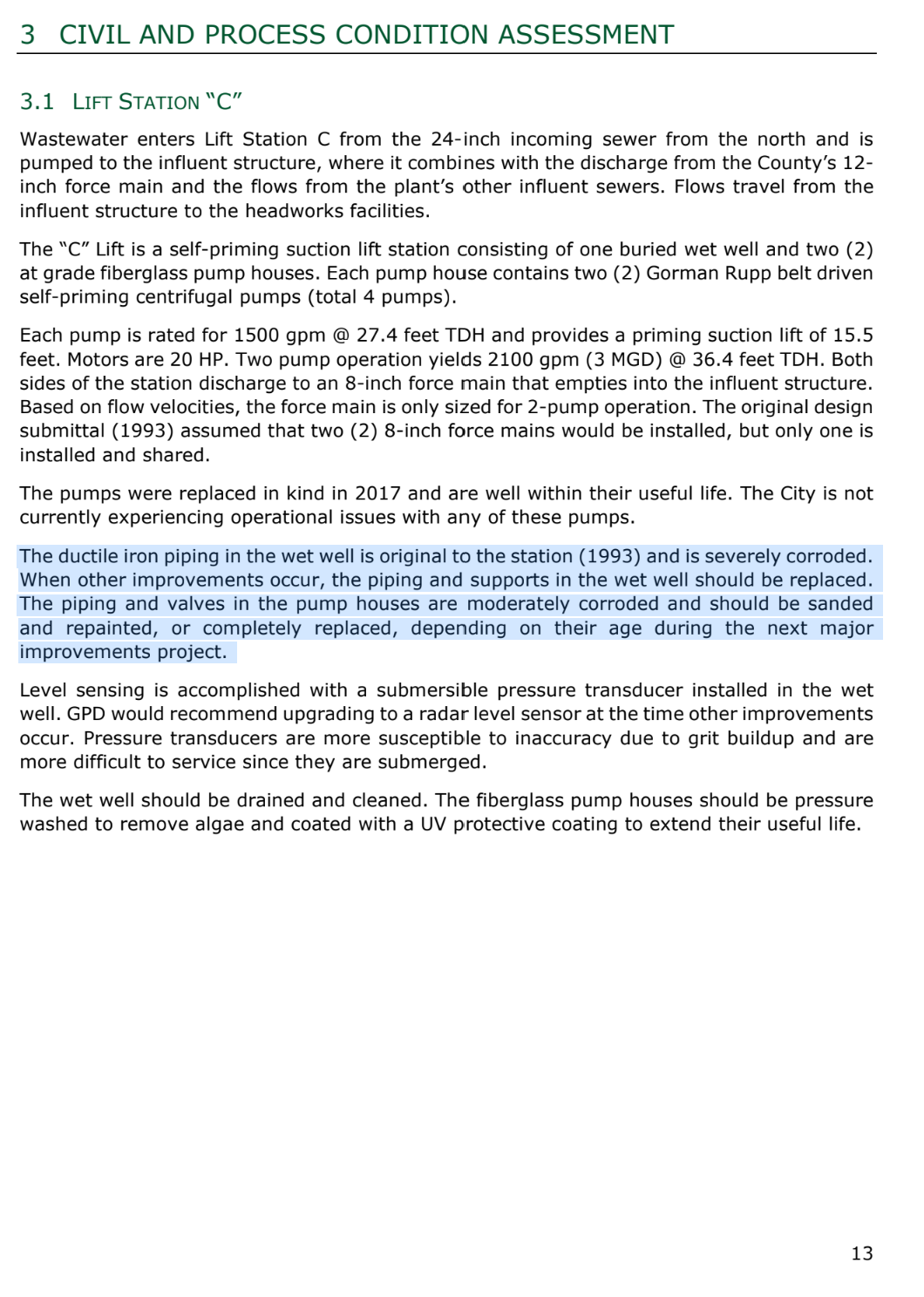
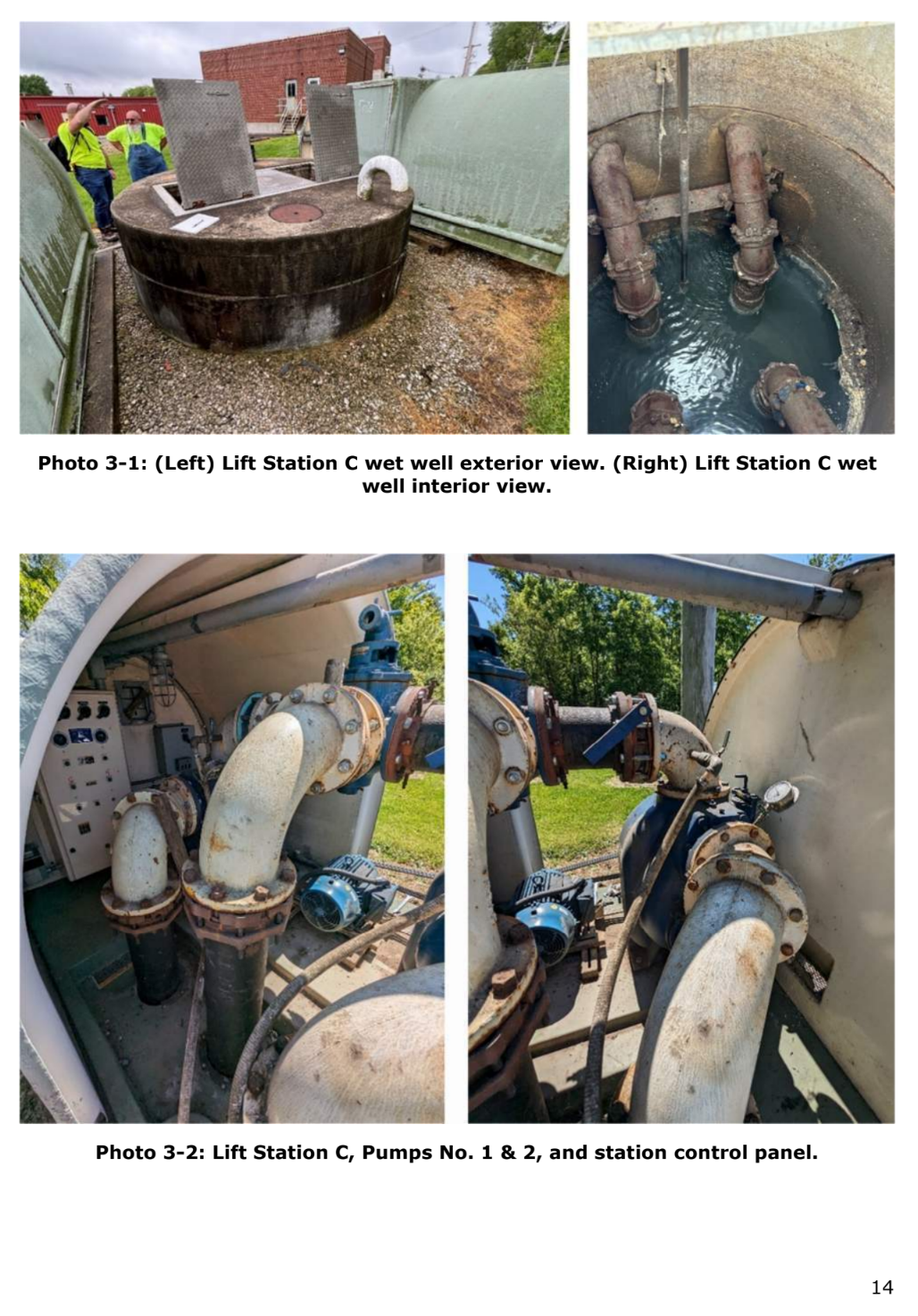

Process Area | Construction / Upgrade Era | Operational Status & Engineering Findings (GPD Report) |
|---|---|---|
Biosolids Building | 2008 | Produces Class A biosolids, but sludge EXCEEDS legal heavy metal limits; cannot land apply, forced to landfill. |


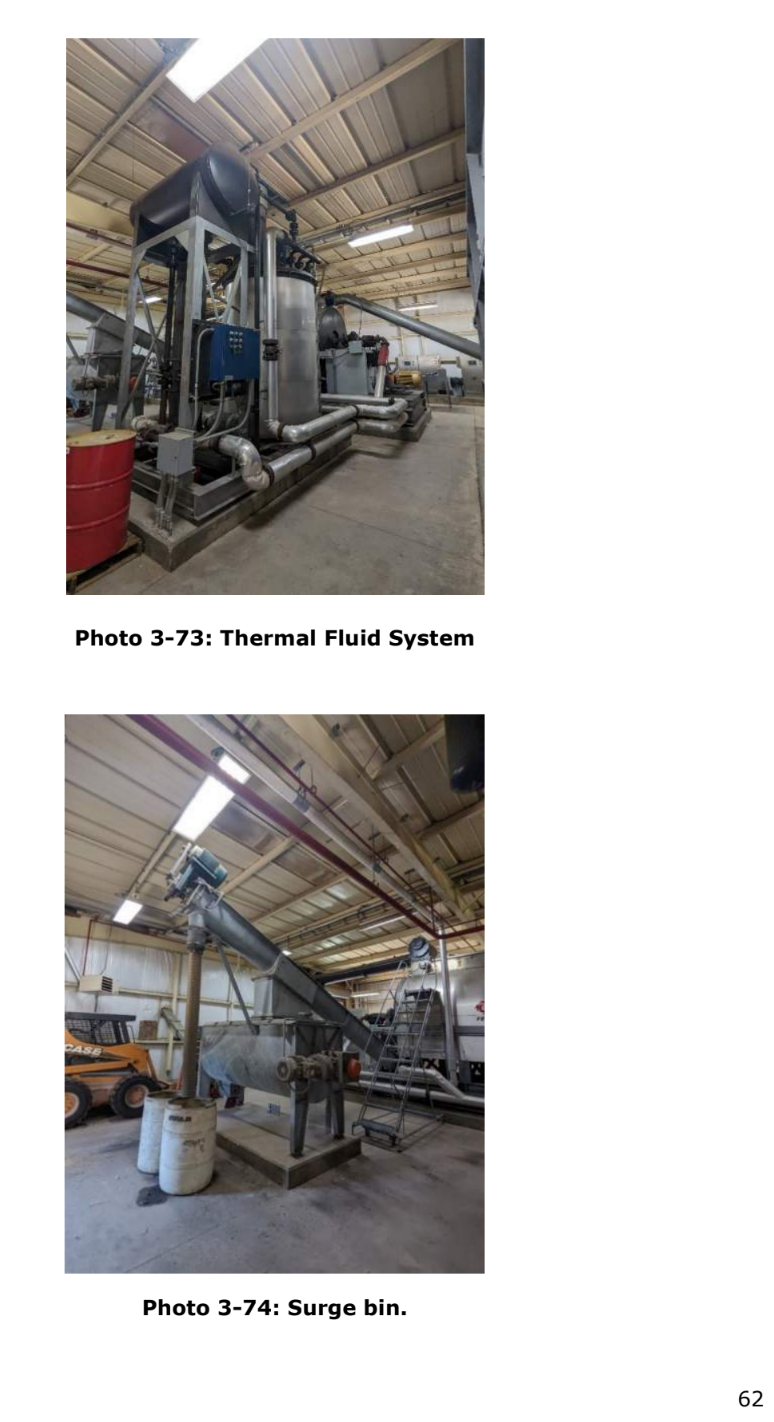
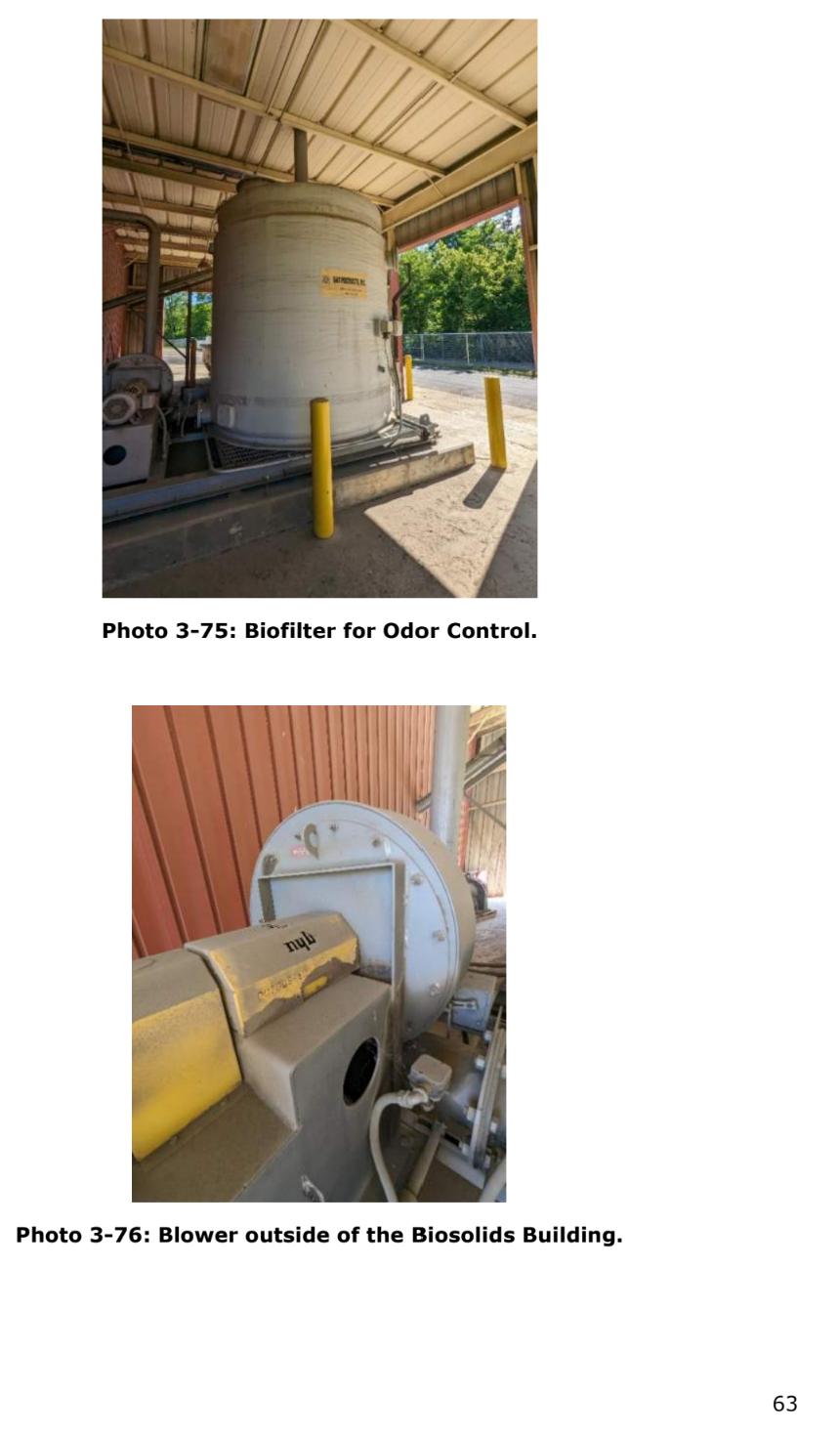
Process Area | Construction / Upgrade Era | Operational Status & Engineering Findings (GPD Report) |
|---|---|---|
Tertiary Lagoon #1 & #2 | 1973 / 1981 | 2.8 MG un-aerated storage and 6.2 MG polishing lagoon; floating surface aerators at end of useful life; control structure gates and actuators corroded and inoperable. |


