

 Written by
As the first installment in “The Magic Box” series—an ongoing investigation into the myriad “side explosions” of mismanagement and unchecked authority under the former Schertzer administration—a disturbing pattern of alleged protocol violations and unilateral decision-making has emerged surrounding former Service Director Cathy Chaffin, senior administration, and council.
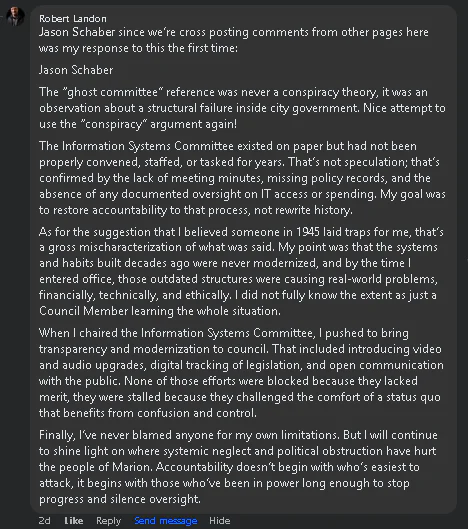
To fully grasp how these localized failures occurred, they must be viewed through the lens of the broader “Silent Sabotage” investigation. As Marion Watch Investigates has previously documented, “Silent Sabotage” exposed a decades-long systemic failure in the city’s financial and IT controls. This included intentional software misconfigurations, disabled safety measures, shared credentials, and the existence of “Ghost Committees.”
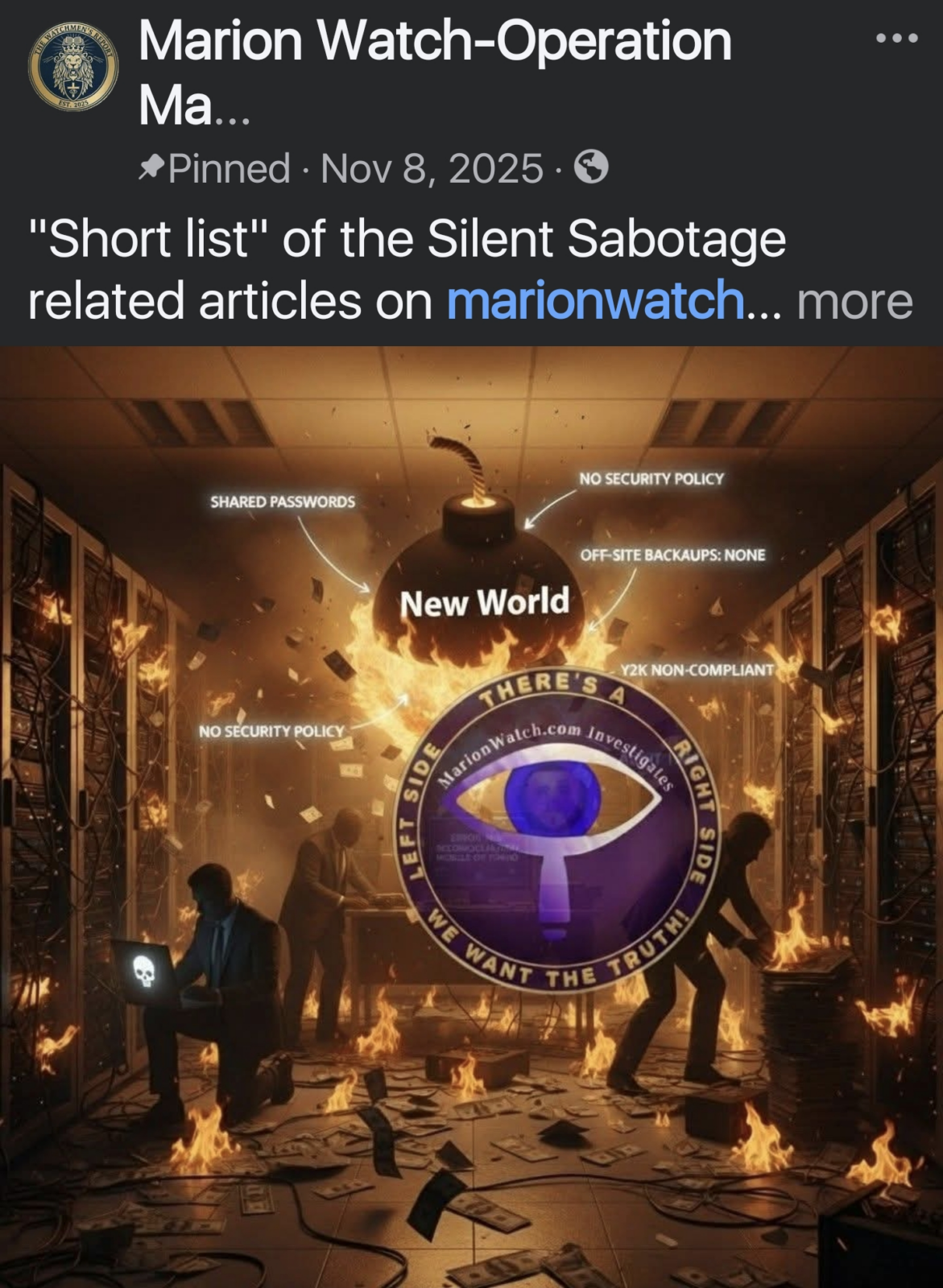
Crucially, it was within this environment of dismantled oversight that Chaffin, having previously served as Deputy Auditor, retained unimpeded, high-level administrative access across financial modules and physical server areas long after transitioning to her role as Service Director. These facts are proven by screenshots, records, and eye witness on the record accounts.
We cannot document when or if this high-level New World access ended.
We are digging deep into our nearly 2.5 terabytes of archival data, which began in 2009, to uncover the rot, political games, and expose it to the light!
It is the way, and what we have and will continue to do!
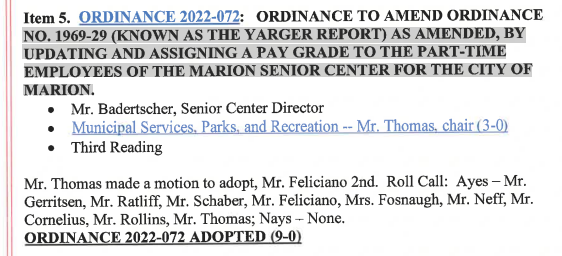
The Forensic DNA: The Yarger Report
The Yarger Report serves as the forensic cornerstone of this specific investigation. It provides the “receipts” that transform anecdotal complaints into a documented administrative hostile takeover. The report proves that Chaffin utilized her persistent “Ghost Access”—a primary tactic exposed in the Silent Sabotage series—to functionally bypass the Senior Center’s Board of Directors and its internal leadership.
By pulling the levers of the city’s treasury from behind the scenes, Chaffin created a vacuum of accountability, allowing for unauthorized “side explosions” of spending without a single digital check or balance to stop the flow of taxpayer funds.
The Council Showdown: Renick vs. The Administration
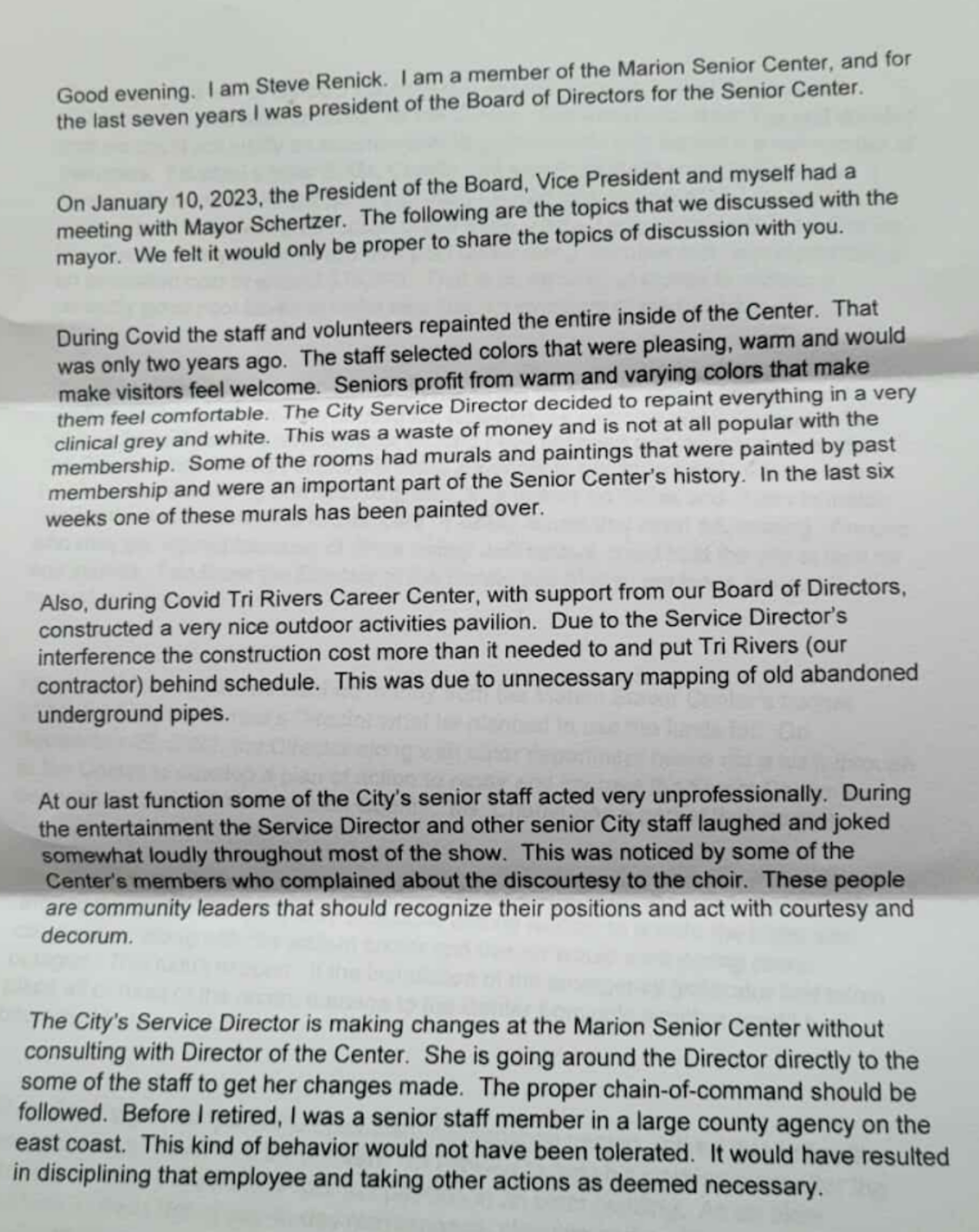
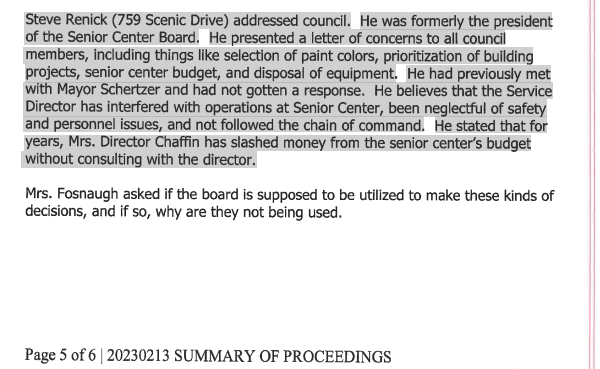
The simmering tensions surrounding Chaffin’s alleged interference boiled over into the public record during a February 13, 2023, City Council meeting. Steve Renick, former President of the Board of Directors, formally addressed the council to present a letter of deep concern.
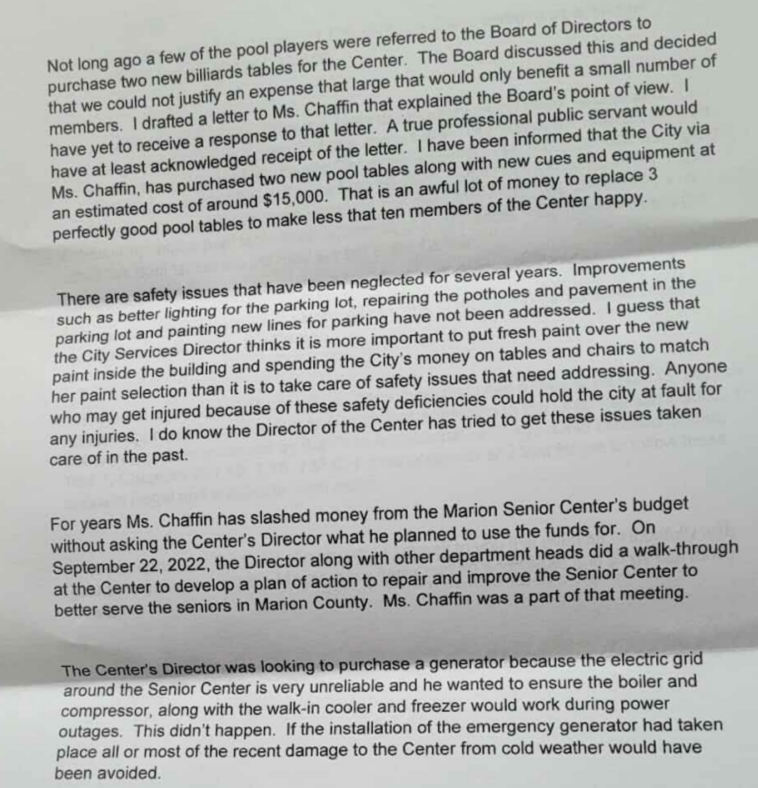
Renick testified that Service Director Chaffin had “interfered with operations, been neglectful of safety and personnel issues, and not followed the chain of command.” He further alleged a multi-year pattern of financial overreach, stating Chaffin had “slashed money from the budget without consulting with the director,” highlighting a deliberate administrative breakdown that mirrors the same deceptive financial maneuvers seen throughout our investigation into the Schertzer-era Auditor’s office and broader administration. Mr. Renick also states that this behavior would not have been tolerated, drawing on his experience in a similar agency on the east coast stating, “this behavior would not have been tolerated,” and that such actions “would have resulted in “disciplining that employee or taking other actions as deemed necessary”
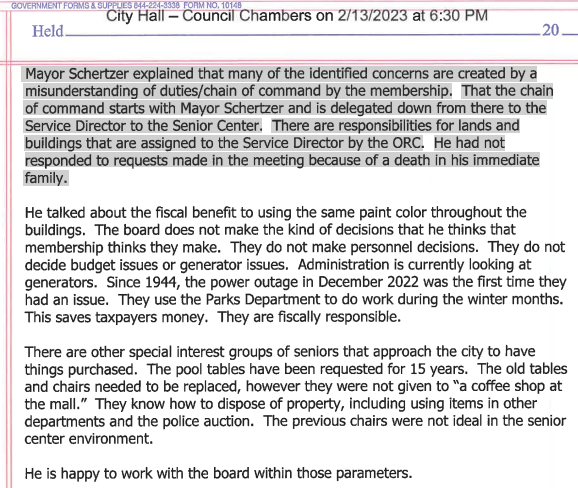
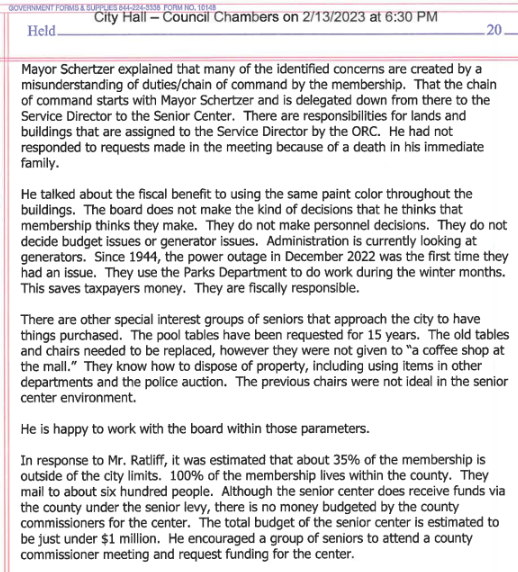
The Mayor’s Defense: Despite the severity of these claims, Mayor Schertzer personally intervened to shield Chaffin from accountability. During a February meeting, Schertzer argued that the Board does not have decision-making authority over building budgets, effectively justifying Chaffin’s unilateral control and dismissing the Board’s role as irrelevant.
This move signaled a total centralization of power, stripping the community-led board of its legal oversight function.
The Legislative “Cleaning Crew”: Dissolving IT Oversight
Following Renick’s whistleblowing, the administration moved with surgical precision to fund Chaffin’s projects and silence any further inquiry. Jason Schaber, serving as the Finance Committee Chair, was the primary architect of this operation, utilizing familiar and similar tactics to the “emergency” rush seen in the 2009 New World procurement—a purchase also pushed through to bypass normal legal and legislative channels, completely contrary to globally recognized IT standards. Software and hardware have plainly stated “end of support” dates which are announced years beforehand.
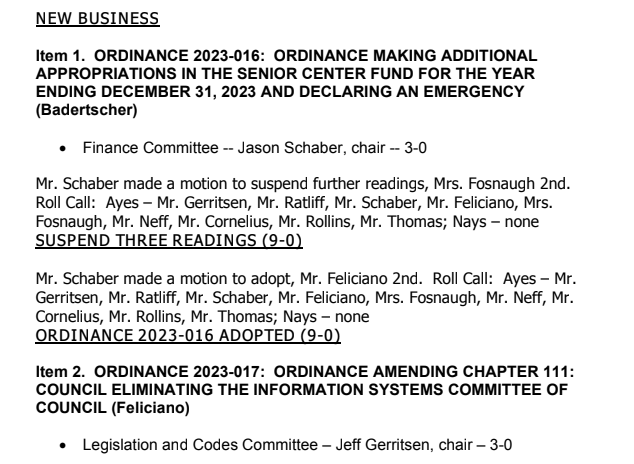
March 27, 2023—just weeks after the public testimony—Schaber moved to suspend the rules and adopt Ordinance 2023-016, fast-tracking emergency funds to the department.
However, the most calculated act of concealment occurred that same evening with the passage of Ordinance 2023-017.
This ordinance officially eliminated the Information Systems Committee of Council. By dissolving the very committee responsible for IT oversight and software security, the administration successfully closed the door on any further legislative inquiry into Chaffin’s persistent technical access. They didn’t just ignore the oversight; they legislated it out of existence at the exact moment it was most needed to audit the “Ghost Access.”
Aesthetics Over Safety: The “Clinical Grey” Deception
One of the most visible points of contention raised by Renick was the interior renovation. Chaffin unilaterally directed a repainting during the COVID-19 pandemic, replacing warm, historical murals with a “clinical grey and white” scheme—a move Renick characterized as a “waste of money” that erased the heritage of the center’s members.
The Mayor’s Cover:
Schertzer defended this waste as a “cost-saving measure” because the city used the same paint color elsewhere. However, the fiscal reality exposed the deception:
- Emergency Power Denied: While money was found for grey paint, a request for a backup generator—critical for the facility’s boiler and freezer—was denied.
- The Fallout: Subsequent cold weather caused significant physical damage to the boiler and storage areas that a generator would have prevented.
- The Stall Tactics: Schertzer claimed the administration was “looking into generators” in early 2023. However, legislative records show that an ordinance for a generator was ultimately defeated on its third reading on October 9, 2023, proving the administration’s public claims were mere stall tactics.
The $15,000 Pool Tables and Missing Furniture
Even more serious are the allegations regarding the potentially illegal disposal of city property. Renick testified that the Board explicitly voted against purchasing two new billiards tables, yet Chaffin allegedly ignored the vote and spent an estimated $15,000 anyway. Mayor Schertzer defended this as well stating that the pool tables had been requested for 15 years.
The Illegal Disposal Claims:
Renick raised the alarm on missing city assets, stating he was told tables and chairs were “given to a coffee shop in the Marion Centre Mall” and a pool table to an “employee of a contractor.”
The Legal Conflict
Gifting public property to private entities violates ORC Title 7 (Chapters 721.15 and 735.051), which mandate public auction for the disposal of assets. Mayor Schertzer categorically denied these rumors, asserting that “the city knows how to dispose of property.”
However, no auction records or certificates of disposal have ever been produced to verify the legal transfer of the mezzanine furniture described by Renick. Marion Watch was unable to locate these documents, and many officials have advised us that they do not exist.
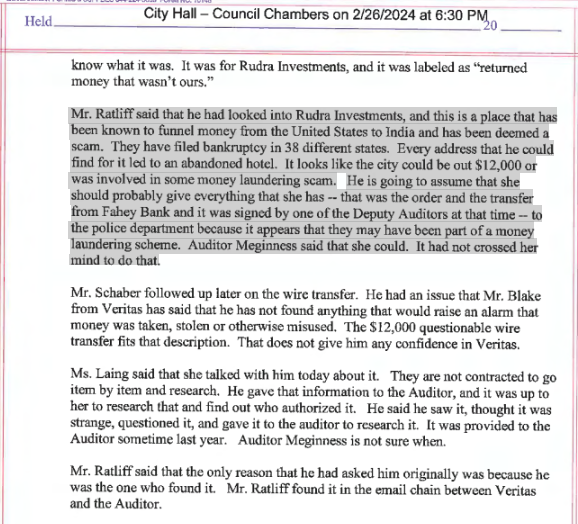
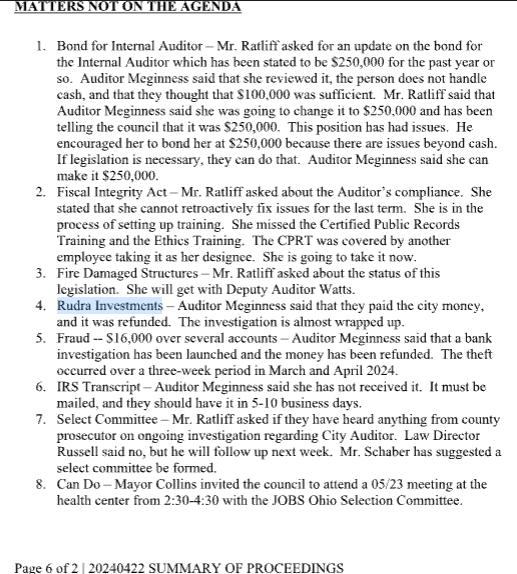
During our inquiries into this issue and the “Silent Sabotage” investigation, Collins administration officials mentioned other issues that were highly suspicious and or showed gross neglect which we may dive into at a later time. For example, a 2024 Council meeting in which members questioned a $12,000 wire transfer from 2020 to “Rudra Investments” that Veritas flagged as strange, but council members expressed concern that it could be related to a scam or money laundering. This was traced and it was apparently a payment sent in error and refunded. However, this draws sharp attention by Marion Watch due to the surrounding circumstances.
The Paper Trail and The Smoking Gun
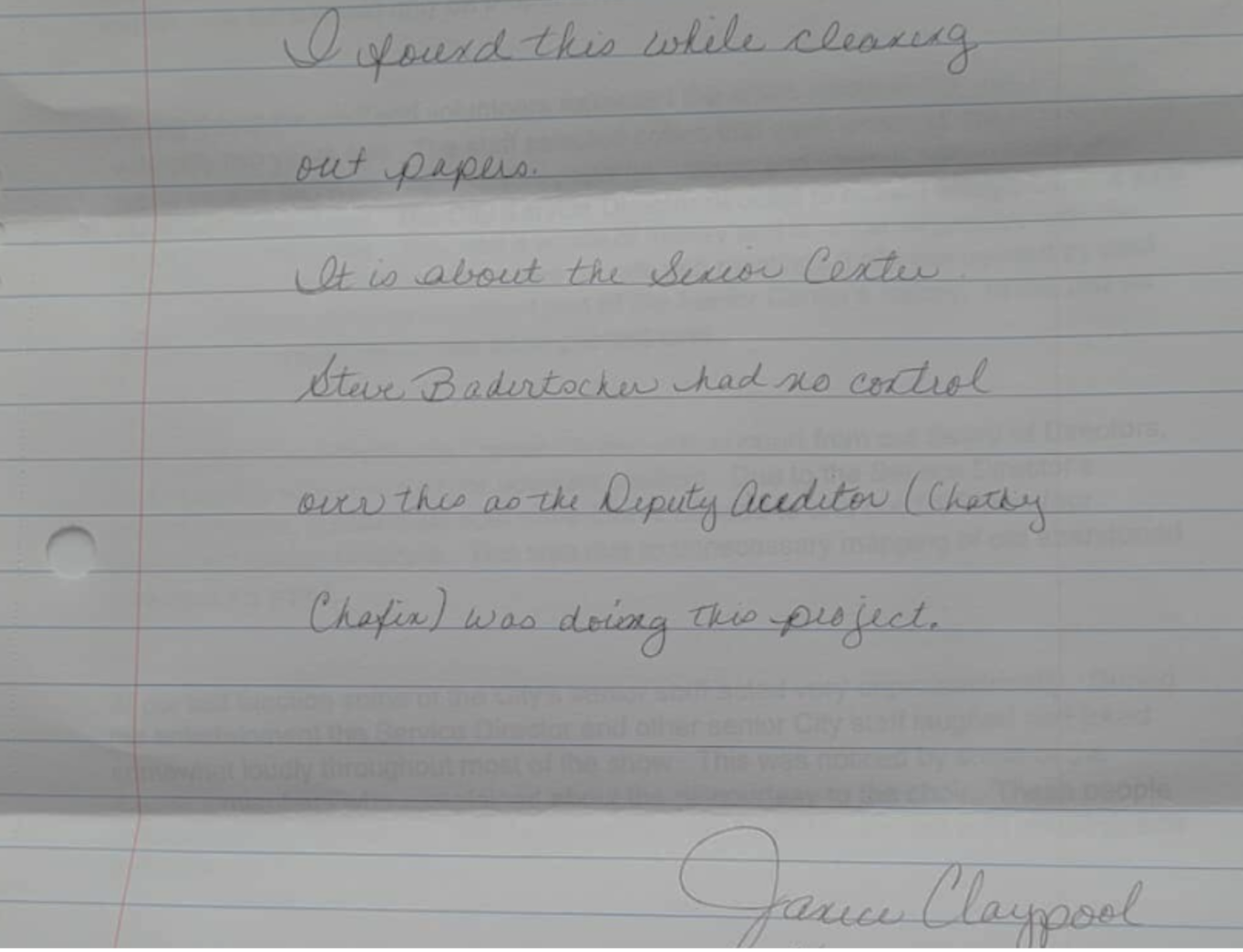
To validate this unilateral spending, the administration frequently utilized ORC 735.051 to bypass competitive bidding under “emergency” declarations. Perhaps the most damning evidence of this shadow management comes from a handwritten letter by volunteer Janice Claypool, confirmed to have been sent to a city official:
“Steve Badertscher had no control over this… Cathy (Chaffin) was doing this project.”
The Reckoning
The Yarger Report didn’t just find technical errors; it found a blueprint for shadow governance. When you combine Chaffin’s “Ghost Access,” Schertzer’s public cover-fire, and Schaber’s legislative maneuvering to dissolve the Information Systems Committee, the “Magic Box” isn’t just about a building—it’s about a city government that operated as if the law was merely a suggestion.
The legacy of the Schertzer administration is not found in the “clinical grey” paint applied to the walls, but in the layers of transparency it sought to cover up. The shadows are finally receding, and the “emergency” excuses are finally running out of time.
The first part of truth is out of the box, and we have the receipts, and we will continue.
Works Cited: (Click Here)
- City Council Meeting (2.23): Testimony regarding administrative interference.
- Ordinance 2023-016 (3.23): Emergency appropriations for Service Department.
- Ordinance 2023-017 (3.23): Elimination of the Information Systems Committee of Council.
- Council Legislative History (10.23): Defeat of the Generator Ordinance.
- The Yarger Report
- Emergency action for New World Software: https://news.marionwatch.com/wp-content/uploads/2025/11/Ordinance-2008-102-PDF.pdf
- Rudra Investments 4.24: Suspicious transaction