

 Written by
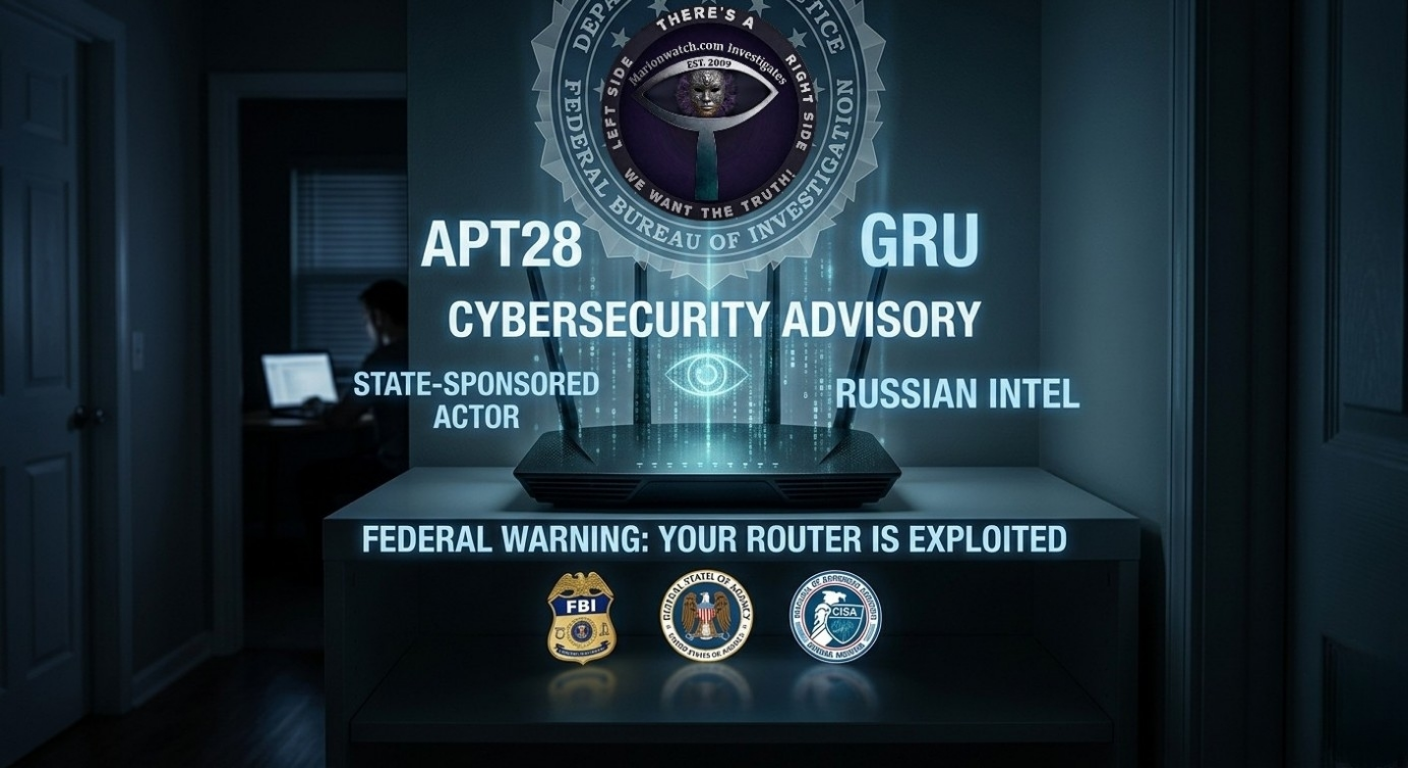
If you have a router at home or in your small office, the FBI, NSA, and CISA have issued a clear warning: your everyday Wi‑Fi device may be the weakest link in your cybersecurity chain, and Russian military intelligence is actively exploiting that weakness.
According to a joint cybersecurity advisory from the FBI, NSA, and CISA, Russian state‑sponsored actors—specifically the GRU‑linked group APT28 (Fancy Bear)—have been compromising consumer‑grade routers to intercept traffic, harvest credentials, and route U.S. communications through infrastructure they control.
This is not theoretical. Federal agencies have documented active campaigns targeting outdated or misconfigured routers across the United States.
How the Attack Works (Technical Overview)
Federal investigators report that APT28 is exploiting routers with:
• Outdated firmware
• Default or weak administrative credentials
• Exposed remote‑management interfaces
• Unpatched vulnerabilities in older hardware
Once inside, the attackers deploy DNS manipulation techniques—specifically DNS Hijacking and DNS Redirection—to silently reroute traffic.
DNS (Domain Name System) functions as the internet’s addressing protocol. When compromised, the attacker can modify the router’s DNS resolver settings to point to malicious GRU‑controlled DNS servers, allowing them to:
• Harvest Credentials: Intercept login data for email, VPNs, and cloud services.
• Capture Email Metadata and Content: Federal agencies have confirmed that APT28 has used router‑level access to collect email traffic from connected devices.
• Monitor Browsing Activity: Track which sites are accessed, when, and from which device.
• Build Botnets: Compromised routers are often chained together to create distributed infrastructure for further attacks, including spear‑phishing and credential‑stuffing campaigns.
Who Is Being Targeted?
The joint advisory notes that APT28 prioritizes individuals affiliated with:
• U.S. government agencies
• Defense contractors
• Critical infrastructure sectors (energy, water, transportation, healthcare)
• Research institutions
However, the initial compromise is broad and automated. Attackers scan the internet for vulnerable routers, compromise them in bulk, and later sift through the data to identify high‑value targets.
Even if you are not a government or infrastructure employee, your router can still be weaponized as part of a larger GRU operation.
How to Protect Your Home or Office Router (Federal Guidance)
The FBI, NSA, and CISA recommend the following immediate actions:
• Change Default Credentials: Replace factory‑set usernames and passwords. Attackers maintain databases of default logins for every major router model.
• Update Firmware: Install the latest firmware from your router manufacturer. Devices older than 5–7 years often reach “end‑of‑life” and no longer receive security patches—federal agencies recommend replacing them.
• Disable Remote Management: Unless explicitly required, turn off WAN‑side administrative access. This setting is one of the most common entry points exploited by APT28.
• Reboot Weekly: The FBI notes that many router‑based malware strains used by foreign intelligence services are non‑persistent and are cleared from memory during a reboot.
• Check DNS Settings: Ensure your router is using your ISP’s DNS or a trusted resolver. Unexpected DNS entries are a red flag for compromise.
• Enable Automatic Updates (If Supported): Newer routers can auto‑patch critical vulnerabilities.
The Bottom Line
Your router is not just a convenience device—it is the security perimeter for every phone, laptop, and smart device in your home or office.
Federal agencies warn that securing your router is now a matter of national resilience. By taking a few minutes to update settings and apply patches, you are not only protecting your own accounts—you are helping disrupt a global intelligence operation targeting U.S. networks.
If you believe your router or network may have been compromised, the FBI recommends reporting suspicious activity to the Internet Crime Complaint Center (IC3).
Further Reading:
1Alert: I-260407-PSA | 07 APRIL 2026 Russian GRU Exploiting Vulnerable …. https://media.defense.gov/2026/Apr/07/2003907743/-1/-1/0/I-260407-PSA.PDF
2NSA Supports FBI in Highlighting Russian GRU Threats Against Routers. https://www.nsa.gov/Press-Room/Press-Releases-Statements/Press-Release-View/Article/4453919/nsa-supports-fbi-in-highlighting-russian-gru-threats-against-routers/
3Russian GRU Exploiting Vulnerable Routers to Steal Sensitive Information. https://www.ic3.gov/PSA/2026/PSA260407