

 Written by
The Cost of Culture and the Price of Revolution
For years, a frustrating double standard has been pushed on the American people. We are constantly expected to celebrate, accommodate, and champion every other culture on the globe, yet we are routinely told to step back, apologize for, or diminish our own. If we suggest this mindset is destructive, we are immediately met with harsh labels and accusations.
History, however, is loudly warning us.
When you look back through the centuries, the world is littered with the ruins of nations that allowed themselves to be fractured and overtaken by cultures of war and destruction:
- The Byzantine Empire: For over a thousand years, this empire was the cultural and spiritual anchor of what is now Eastern Europe and the Mediterranean. But through internal division, a loss of cultural conviction, and the gradual encroachment of hostile forces, it was completely overtaken in 1453. The invading armies did not assimilate; they conquered, permanently erasing the empire’s foundational culture.
- The Western Roman Empire: Rome ruled long before the modern nations of Europe existed. But the empire made a fatal error: it allowed massive, unchecked migrations of warring Germanic tribes across its borders. Rome stopped demanding that these newcomers assimilate into Roman culture, law, and values. The result? The fractured empire collapsed from within, sacked by the very cultures it had allowed inside.
- Ancient Egypt: Going back even further, Egypt’s Middle Kingdom fell when it permitted the Hyksos—a foreign, militaristic culture—to settle within its borders. Without cultural unity, the Hyksos grew in power, violently overthrowing the native rulers and subjugating the Egyptian people.
Recent examples are available as well, proving that this is not just an ancient phenomenon:
- France: For more than a decade, French leaders have warned of districts in major cities where police face violent resistance from radicalized extremist networks. Multiple large-scale terror attacks have led to fierce national debates about assimilation, cultural identity, and the erosion of traditional French values.
- Sweden: Once considered one of Europe’s safest nations, Sweden has experienced a sharp rise in gang violence, bombings, and shootings linked to radicalized criminal networks within migrant populations. Swedish officials publicly acknowledge the formation of parallel societies where Swedish law and cultural norms are no longer respected.
- Germany & Belgium: Intelligence agencies in both nations have repeatedly warned about extremist cells and hotspots for radicalization. Cities have reported profound cultural clashes and rising crime in areas where assimilation has failed, prompting leaders to state that they face a long-term struggle to maintain social cohesion.
These are not distant warnings. These are modern nations—advanced, wealthy, and once culturally unified—now struggling to maintain the very identity that held them together for generations. When a society stops demanding assimilation and starts apologizing for its own existence, it falls.
This reality gets right to the heart of what so many in our community are quietly feeling:
AMERICA FIRST. AMERICA ALWAYS.
Click on any Image to View Full Resolution
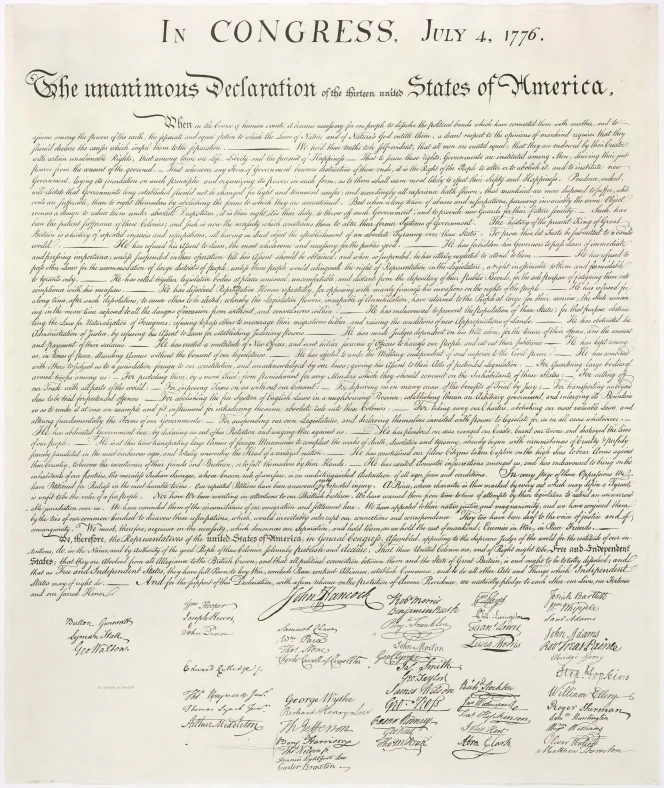
This unapologetic defense of our foundation brings us to the true, harrowing cost of our nation’s birth. When we light off fireworks, fire up the grill, and wave our flags on the 4th of July, how often do we actually stop and think about the bloody, chaotic reality of what it took to forge this American identity?
The American Revolution was not a polite political disagreement. It was a gritty, brutal, and seemingly unwinnable conflict fought against the greatest, most heavily armed global empire of its time. We didn’t defeat the British Empire simply by standing in straight lines in open fields. We won through unmatched grit, guerilla tactics, extreme intelligence gathering, and the sheer endurance of the veterans who eventually marched west to carve states like Ohio out of the frontier.
Winning the Unwinnable: The Shadows and the Spies
General George Washington knew early on that he couldn’t beat the British on sheer manpower or funding. To survive, he built a shadow network.
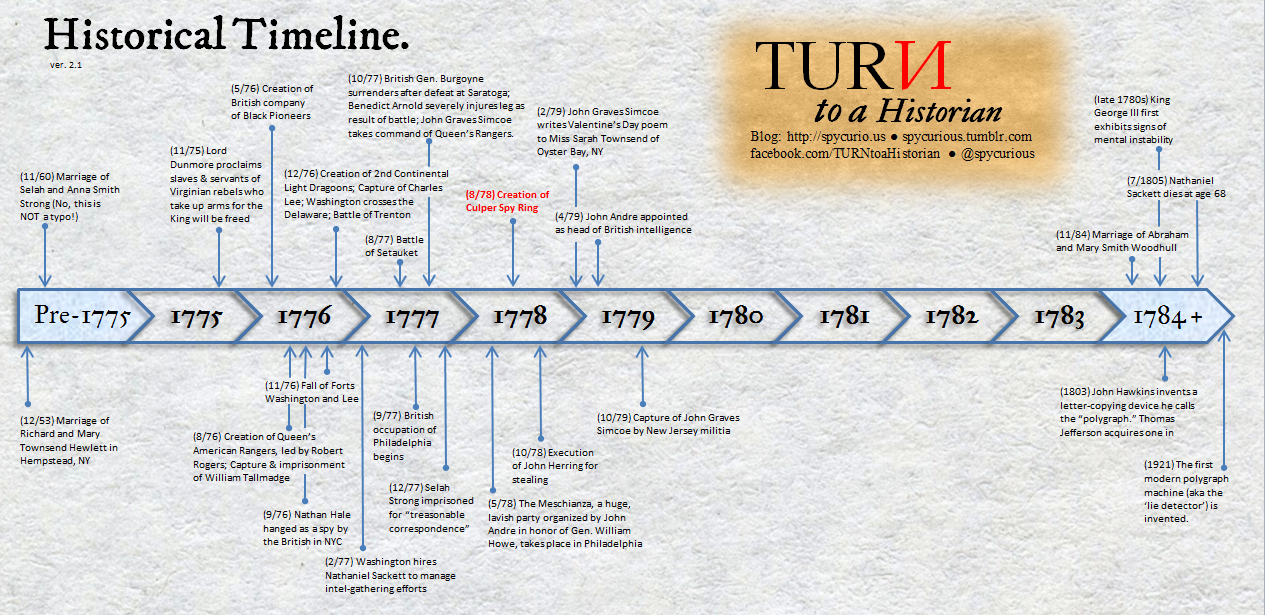
Enter the Culper Spy Ring. This is where the reality of the Revolution gets incredibly dark. This was not a clean fight; it was a vicious covert civil war that turned friend against friend, neighbor against neighbor, and sometimes, husband against wife. Trust was nonexistent, and communities and households were completely fractured by their divided loyalties to the Crown versus the colonies.
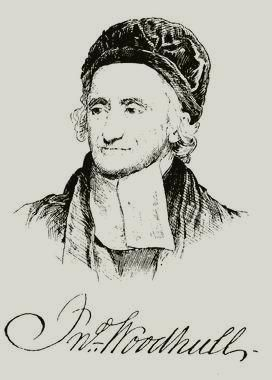
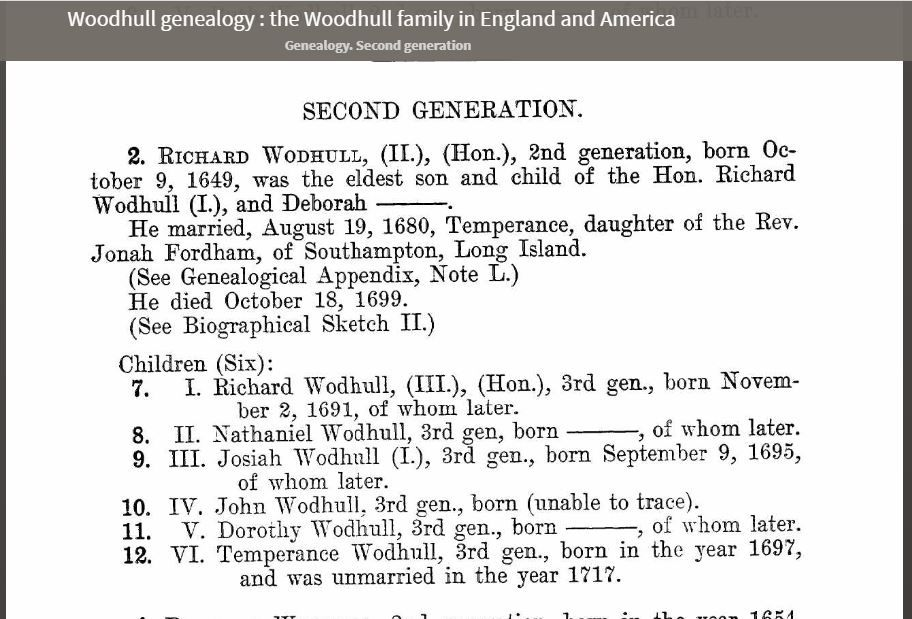
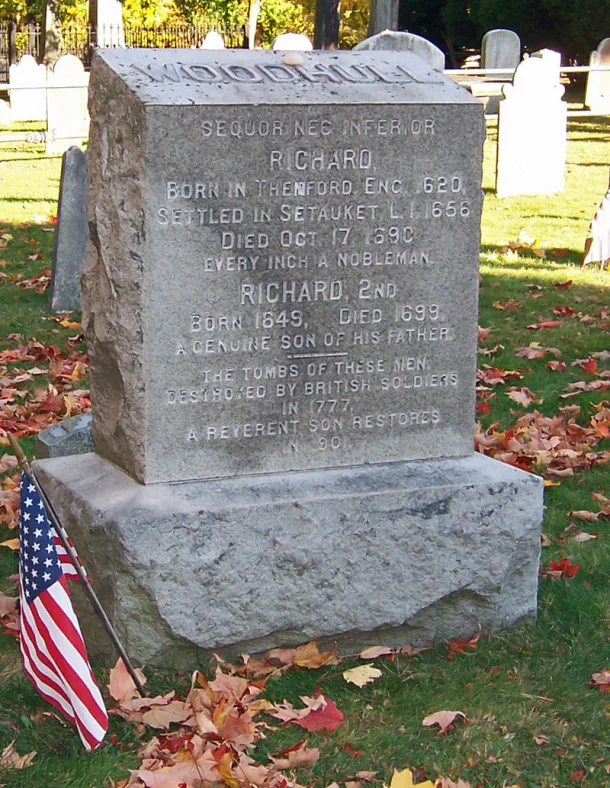
Take Abraham Woodhull, for example. Born in 1750, he served briefly in the Suffolk County militia in 1775 before returning to his farm following the 1773 death of his older brother, Richard. Operating under the alias “Samuel Culper Sr.,” Woodhull was an ordinary farmer in Setauket, New York. He lived in a town absolutely crawling with British soldiers and Loyalist neighbors. The danger was incredibly close to home—his own father, Judge Richard Woodhull, was a prominent local magistrate whose judicial position under British authority tied him directly to the Loyalist establishment.
Abraham was pushed to the breaking point after his cousin, Brigadier General Nathaniel Woodhull, was captured on August 29, 1776, and suffered an agonizing death weeks later from sword and bayonet cuts. Every single day after joining the spy ring, Abraham risked the hangman’s noose. He traveled into Manhattan under the guise of visiting his sister, using his civilian status to spy on the very forces occupying his home. He sent his first intelligence report on October 29, 1778, and by November 23, he was already providing Washington with exact numbers and dispositions on 8,500 British troops stationed in Manhattan.
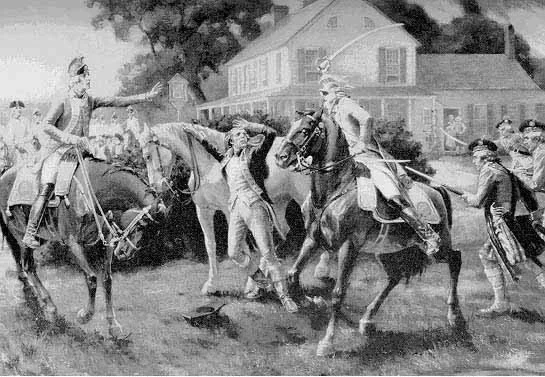
In an environment where a single misplaced word could mean execution, Woodhull knew he couldn’t trust strangers.
To ensure absolute trust, he built his ring by recruiting almost exclusively from his most precious childhood friends and their deeply vetted networks.
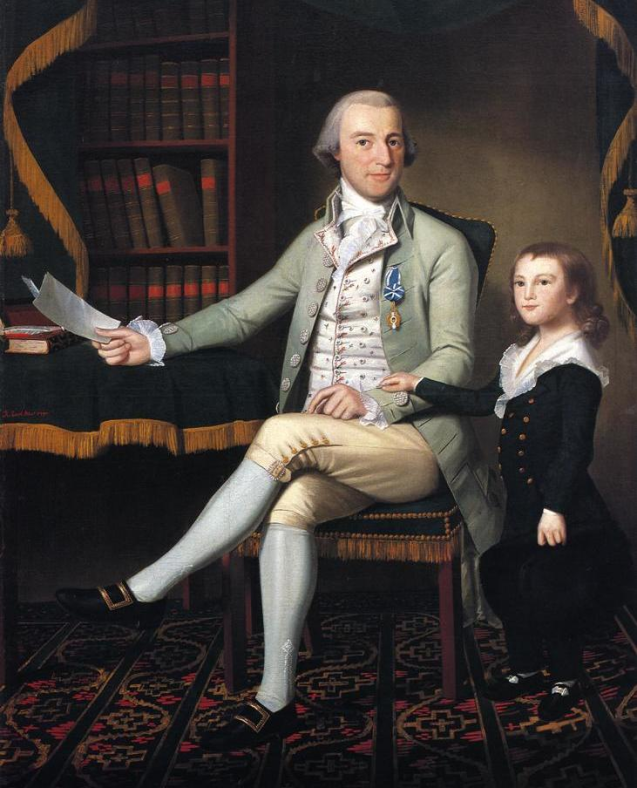
The entire operation was overseen by Washington’s spymaster, Major Benjamin Tallmadge—Woodhull’s childhood friend from Setauket. Woodhull brought in another childhood companion, the daring whaleboat captain Caleb Brewster, to smuggle dispatches across the treacherous Long Island Sound. He recruited Austin Roe, a trusted neighbor and lifelong friend, to act as the primary courier, riding a grueling 55-mile route from Setauket straight into the heart of Manhattan. To deepen their reach, this tight-knit network eventually recruited Robert Townsend (alias “Culper Jr.”), a carefully vetted merchant who operated right under the noses of British command.
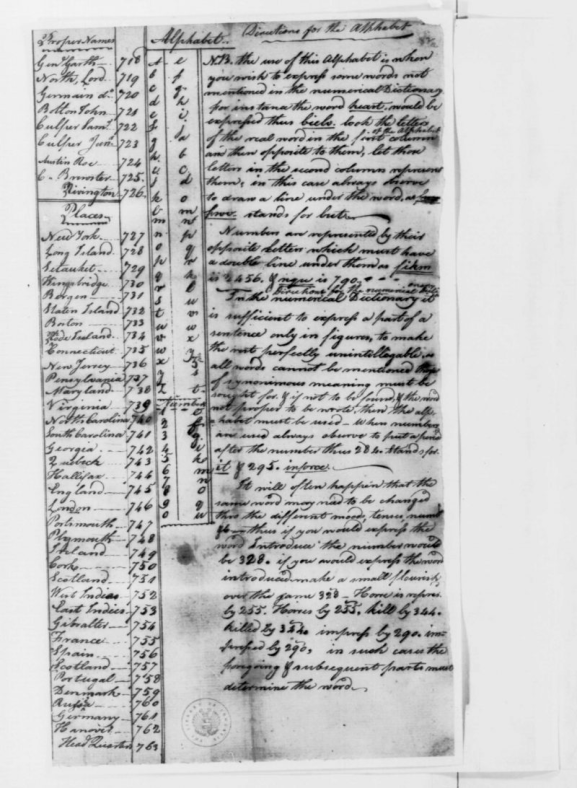
Using invisible ink, numerical ciphers, and a network of dead drops—including messages buried in a local pasture and clothesline signals managed by his neighbor, Anna Strong, who used a black petticoat and white handkerchiefs to signal which of six hidden coves courier Caleb Brewster was waiting in—Woodhull smuggled out vital intelligence. Without everyday civilians risking their lives in the shadows alongside their oldest friends, Washington’s army would have been flying blind. But it carried heavy risks: on June 5, 1779, a captured privateer named John Wolsey tipped off the British, leading the notorious Colonel John Graves Simcoe to raid Setauket and violently assault Woodhull’s father.
Ohio’s Deep Roots: The Nightmare at Fort Laurens
Out west, in what would become Ohio, the war was just as desperate, characterized by extreme isolation and brutal proxy warfare. While Ohio wasn’t a state until 1803, the Northwest Territory was a critical and unforgiving battleground.
In November 1778, General Lachlan McIntosh marched 1,200 men—primarily from the 13th Virginia and 8th Pennsylvania Regiments—to the Tuscarawas River to build Fort Laurens. It was the only American fort built within the modern-day boundaries of Ohio during the war. Planned as a staging ground to strike the British in Detroit, the fort quickly became a death trap when McIntosh withdrew his main force, leaving just 150 ill-supplied men behind under Colonel John Gibson.
In January 1779, the notorious Loyalist Simon Girty successfully ambushed an American supply column commanded by Captain John Clark. During a horrific winter siege that officially began on February 22, 1779, led by British Captain Henry Bird and his Native American allies, the American soldiers were completely cut off.
The very next day, 17 Americans were killed and scalped on a wood-gathering detail just outside the walls. Starvation set in immediately. The men were reduced to subsisting on half a biscuit a day. When that ran out, Captain Benjamin Biggs recorded that the men resorted to boiling their own moccasins and roasting strips of dried ox-hides just to survive.
Though the siege was eventually lifted around March 20, the fort was deemed too remote to defend and was permanently abandoned on August 2, 1779, leaving 21 Continental soldiers behind in mass graves—a grim reminder of the unwinnable conditions of the western frontier.
The Economics of Victory and the March West
When the war finally ended, the young United States faced a massive crisis: the country was completely broke and couldn’t pay its soldiers. Instead of cash, the government paid its veterans in land bounties.
This policy triggered a massive migration. Thousands of battle-hardened veterans migrated west to cash in their warrants. Veteran officers like General Rufus Putnam—who was born in Sutton, Massachusetts, in 1738, and became a self-taught engineer after receiving almost no formal education—formed the Ohio Company at the Bunch-of-Grapes Tavern in Boston in March 1786.
They successfully lobbied Congress to purchase 1.5 million acres covering the 8th through 16th survey ranges. This led to the Northwest Ordinance of 1787, a historic piece of legislation that did something incredible for the time: it permanently banned slavery and prioritized public education in the new territory, setting the Midwest on a fundamentally different path than the American South.
On April 7, 1788, Putnam led an initial contingent of 48 veterans to establish Marietta, named in honor of the French Queen Marie Antoinette. This aggressive expansion sparked the Northwest Indian War, which raged until Major General Anthony Wayne decisively defeated the Northwestern Confederacy at the Battle of Fallen Timbers on August 20, 1794. The resulting Treaty of Greenville on August 3, 1795, forced the cession of the southern two-thirds of Ohio for $20,000 in goods and a $9,500 annual annuity, finally clearing the path for veteran settlement and Ohio statehood.
The African American Patriot: Henry Hill
For some veterans, the fight for liberty was deeply personal and tragically paradoxical. Approximately 5,000 men of African descent fought in the Continental Army for a country that still codified their subjugation.
Henry Hill was an African American patriot born in Orange County, Virginia, in 1753. He enlisted in 1777 and reenlisted in 1780 under Colonel Richard Campbell, surviving three severe wounds at the brutal Battle of Eutaw Springs in September 1781. But when he was discharged in January 1782 and returned home to Virginia, he faced oppressive state laws that required free Black men to pay heavy taxes and register annually just to exist outside of chains.
Refusing a culture of submission, Hill is believed to have used his military land bounty to secure his wife’s freedom, ensuring their five children would not inherit enslaved status under Virginia law. Seeking a landscape unburdened by legal enslavement, Hill moved his family to Ohio, settling in Ross County by 1803. There, he helped found an anti-slavery church, operated a tannery on the Scioto River, and successfully claimed his federal military pension (application S41639) in Franklin County on May 10, 1818. His legacy of freedom extended for generations; his descendant, John Henry Hill, born in 1852, served in the 10th Cavalry during the Apache Wars before becoming Maine’s second African American lawyer.
The Swamp Fox: The Guerilla Father of Marion County
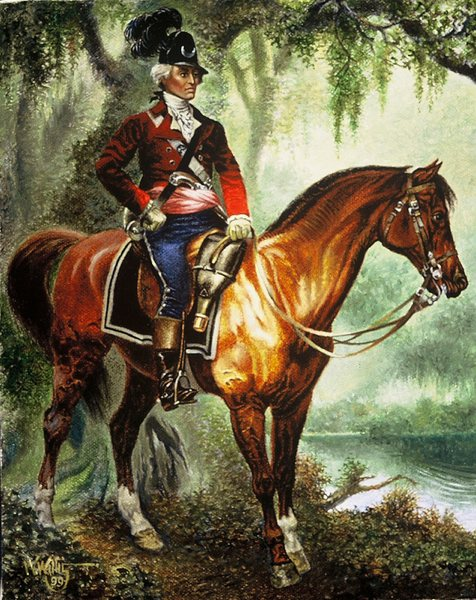
Before we dive into the veterans who settled this area, we have to look at the man our county is actually named after: General Francis “Swamp Fox” Marion. Established by the state of Ohio on February 20, 1820, Marion County proudly took its name from this legendary South Carolinian officer who practically authored the playbook on American guerrilla warfare.
After the British captured Charleston in 1780, the Patriot cause in the South was on the brink of total collapse. General Marion didn’t have a professional field army. Instead, he built a ragtag militia from local farmers, hunters, and tradesmen and took to the backwoods. Operating out of the unforgiving South Carolina swamps, Marion’s men used the terrain as a weapon, employing tactics he had learned fighting alongside and against Native Americans during the French and Indian War.
Marion would launch lightning-fast, brutal ambushes against British supply lines and Loyalist encampments, and then vanish into the cypress and reeds like ghosts before the enemy could organize a counterattack. He famously infuriated the ruthless British Lieutenant Colonel Banastre Tarleton, who aggressively chased Marion for 26 miles through a murky morass before finally giving up and cursing that the devil himself couldn’t catch “this damned old fox”. Without men like the Swamp Fox utilizing these ruthless, unconventional tactics, the war would have likely been lost. His spirit of gritty defiance is exactly why the founders of this region chose his name for our county.
Our Local Heroes: The Marion County Vanguard
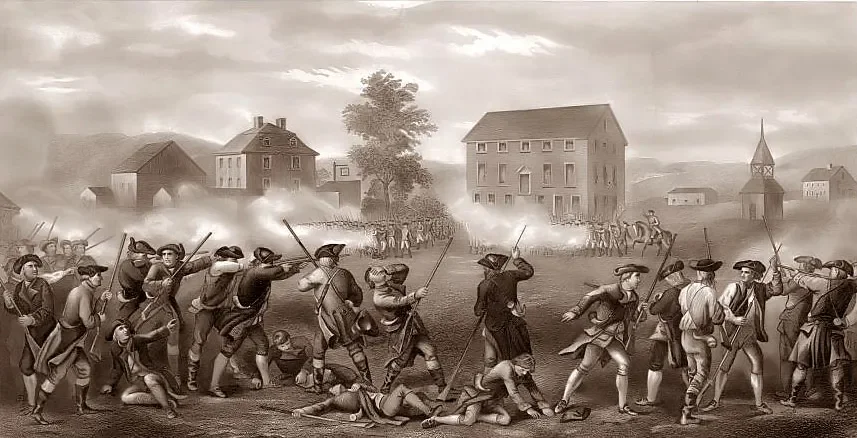
Right here in Marion County, the echoes of the Revolution are loud. The area became a prominent haven for veterans looking to start over, and they brought incredible wartime experiences with them:
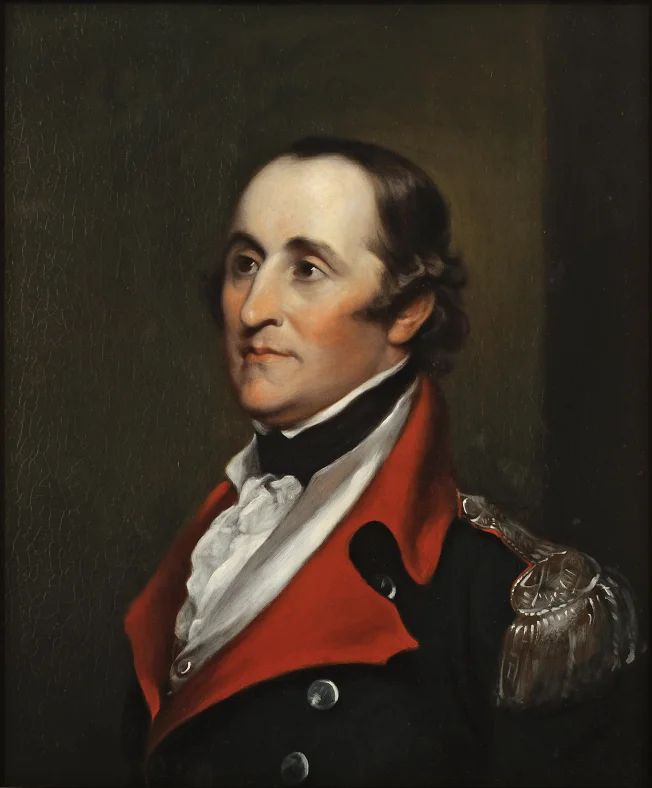
- Surgeon Ebenezer Ballentine: Born on July 14, 1756, in Hampden, Massachusetts, this 1777 Yale graduate served as a Surgeon’s Mate in the 6th Massachusetts Regiment and treated George Washington’s freezing, dying men during the horrific winter at Valley Forge. He married Mary Osborn in 1793 and moved his family to Marion in 1822 seeking a new start, but the frontier remained perilous. Ballentine, his wife, and two of his sons tragically died in a severe local epidemic the very next year, with Ebenezer passing on October 17, 1823.
- Frazier Gray (no portrait available): Born in Essex County, Delaware, around 1760, Gray fought with the famously fierce Delaware Continentals—the “Blue Hen’s Chickens”. Against all odds, he served the entire war without taking a single wound. Gray was part of the detail that guarded the infamous British spy Major John André before his execution, and he even shared a personal conversation with George Washington while foraging for chestnuts. He migrated to Scott Town in 1839 to join his sons—including George, who was born in 1806—and lived to the robust age of 89, passing away in 1849.
- Lieutenant John Cotton (no portrait available): Born January 10, 1746, to Colonel Theophilus Cotton in Plymouth, Massachusetts, John’s story proves that redemption is possible. He was actually court-martialed by Washington himself in 1775 for defrauding military provisions, for which he was fined exactly £14, 6s, 4d. Instead of deserting, Cotton took his punishment, rehabilitated his record, worked his way up to Ensign in January 1776 and Lieutenant in January 1777, and fought valiantly at the Battle of Saratoga. He formally applied for his pension in Trumbull County on February 10, 1821, at the age of 75.
- Joshua Van Fleet (no portrait available): Enlisting in the New York Militia at just 14 years old, Van Fleet survived the war and later entered the New York Legislature, where he helped draft the bill that abolished slavery in that state. He moved to Big Island Township in 1832 and died on January 8, 1849, at the age of 84.
A Legacy We Must Preserve
The physical memory of these incredible men lives on at the 150-acre Historic Marion Cemetery. Built in 1887 using a public tax levy, the Soldiers and Sailors Memorial Chapel houses the names of over 2,800 local men who fought in the Revolutionary War, the War of 1812, and the Civil War.
In a post-war era defined by deep national division and rigid segregation, this chapel did something historically extraordinary: it intentionally honored white soldiers, Black soldiers, Native Americans, Union, and Confederate veterans with absolute equality. It stands as an architectural testament to the belief that military service transcends our divides. It shares the grounds with the 5,200-pound Merchant Revolving Ball and a massive World War II Memorial dedicated in 2001, which features 5,896 names under a gilded bronze eagle cast in 1945.
Today, this history requires our vigilant protection. In recent years, the chapel was forced to close due to severe water damage and mold infestations that began physically erasing the names etched into its stone walls. Fortunately, local officials and Cemetery Superintendent Angie Yazel have initiated extensive restoration efforts.
We cannot let the memory of these foundational veterans rot away.
The men who won the unwinnable war in the east became the pioneers who cleared the forests, survived the epidemics, and built the infrastructure of Ohio. Their story is our story. It is a reminder of the immense, multi-generational grit required to forge a resilient nation—and a reminder that we must fiercely defend the legacy they left behind.
Works Cited (Click Here)
- Campos, Jose. “Francis Marion: How the ‘Swamp Fox’ Mastered Guerrilla Warfare.” Soldier of Fortune Magazine.
- Daughters of the American Revolution (DAR) Records, Captain William Hendricks Chapter: Roster of Ohio Revolutionary War Soldiers.
- Federal Military Pension Applications: S41639 (Henry Hill); Lieutenant John Cotton.
- Historic Marion Cemetery and The Soldiers and Sailors Memorial Chapel Archives (Marion, Ohio).
- National Archives and Records Administration: The Northwest Ordinance of 1787.
- Ohio History Connection & Fort Laurens Museum: Historical Records on the Siege of Fort Laurens and the Ohio Company of Associates.
- Rose, Alexander. Washington’s Spies: The Story of America’s First Spy Ring (Contextual background on Abraham Woodhull and the Culper Ring).
- The Liberty Trail: History and Biographies, “Francis Marion – The Swamp Fox.”