


 Written by
 Allow me to preface this headline by pointing out that the actual budget expense figures for 2025 come from the most recent budget worksheet that has been published on the city’s website. I assume that those figures have been finalized but given the city’s situation with reconciliation and overall accounting, it may not be safe to assume.
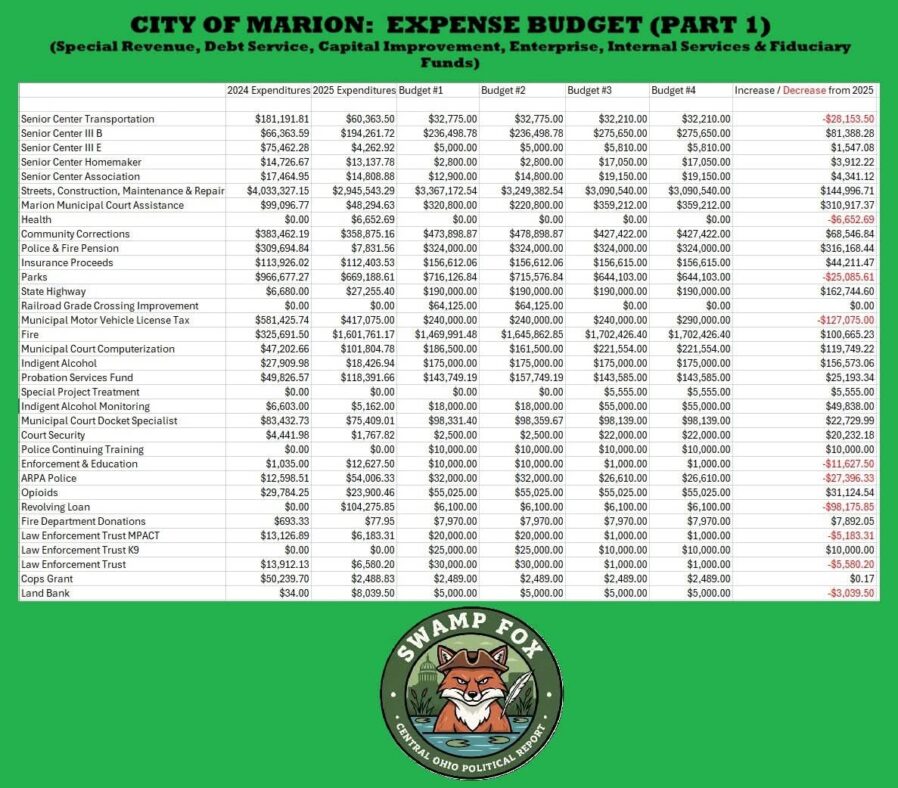
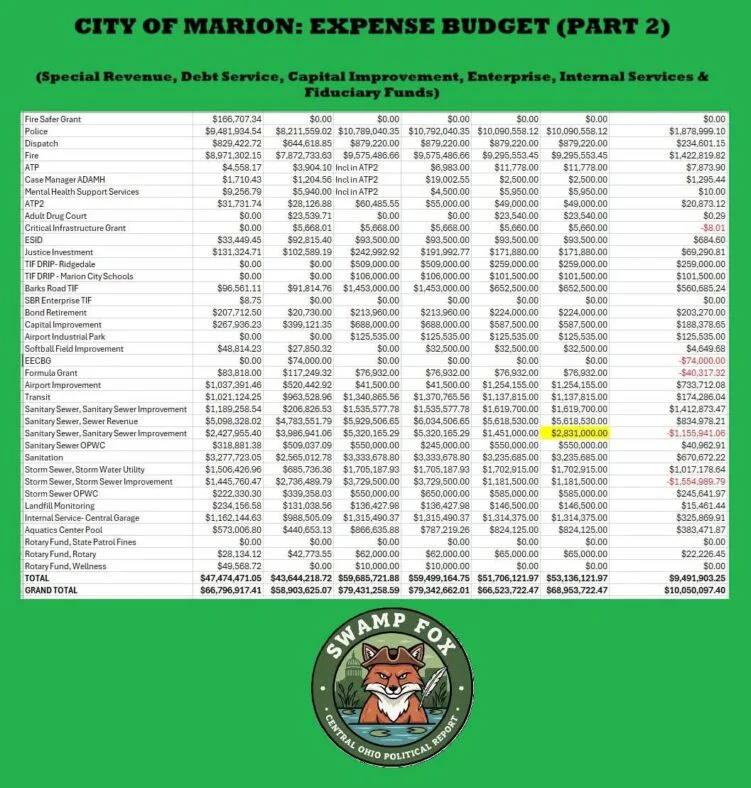
With that being said, the 2024 figures are finalized and the figures for the various proposals for 2026’s expense budget come straight from the various proposed budget ordinances.
As you can see, the cuts that were made to these funds after the city announced its fiscal distress status were made to the first version of the proposed budget for 2026, which was $16 million over 2025 and $12 million over 2024.
Admittedly, it was trimmed down, but it’s still more than either 2024 or 2025.
The police budget was increased by nearly $1.9 million over 2025.
The fire budget was increased by more than $1.4 million over 2025.
Sanitary sewer improvement was increased by a little over $1.4 million, while storm water utility jumped by more than $1 million.
Although Chelsea Troiano, the city’s Director of Budget & Finance stated tonight during the Finance Committee meeting that the difference between 2026 budget proposal #3 and 2026 budget proposal #4 is that $1 million was transferred out of the General Fund and redistributed to the Police and Fire departments, the figures included in the ordinance show that those funds were sent to Sanitary Sewer Improvement, along with an additional $380,000.
Again, I’m just going off of what’s published in the ordinance. If this money is in fact going from the General Fund to Police and Fire, then the ordinance will need to be corrected. Either that or Ms. Troiano misspoke.
But that’s neither here nor there.
The bigger question is why haven’t substantive cuts been made?
It would be like you reviewing your household budget and determining that you spent $10,000 on some annually occurring expense.
When you budget for next year, you first plan to spend $15,000 on that same expense, but then realize that’s too much, so you drop it down to $12,500.
When your spouse asks you if you cut the budget, you tell him or her that you did indeed cut the budget. In your mind, you cut it $2,500–but in reality, you increased it by $2,500.
That seems to be what the city has done.
For the General Fund data, check out the article that I posted earlier today.