


 Written by
“An evil man will burn his own nation to the ground to rule over the ashes” -Sun Tzu
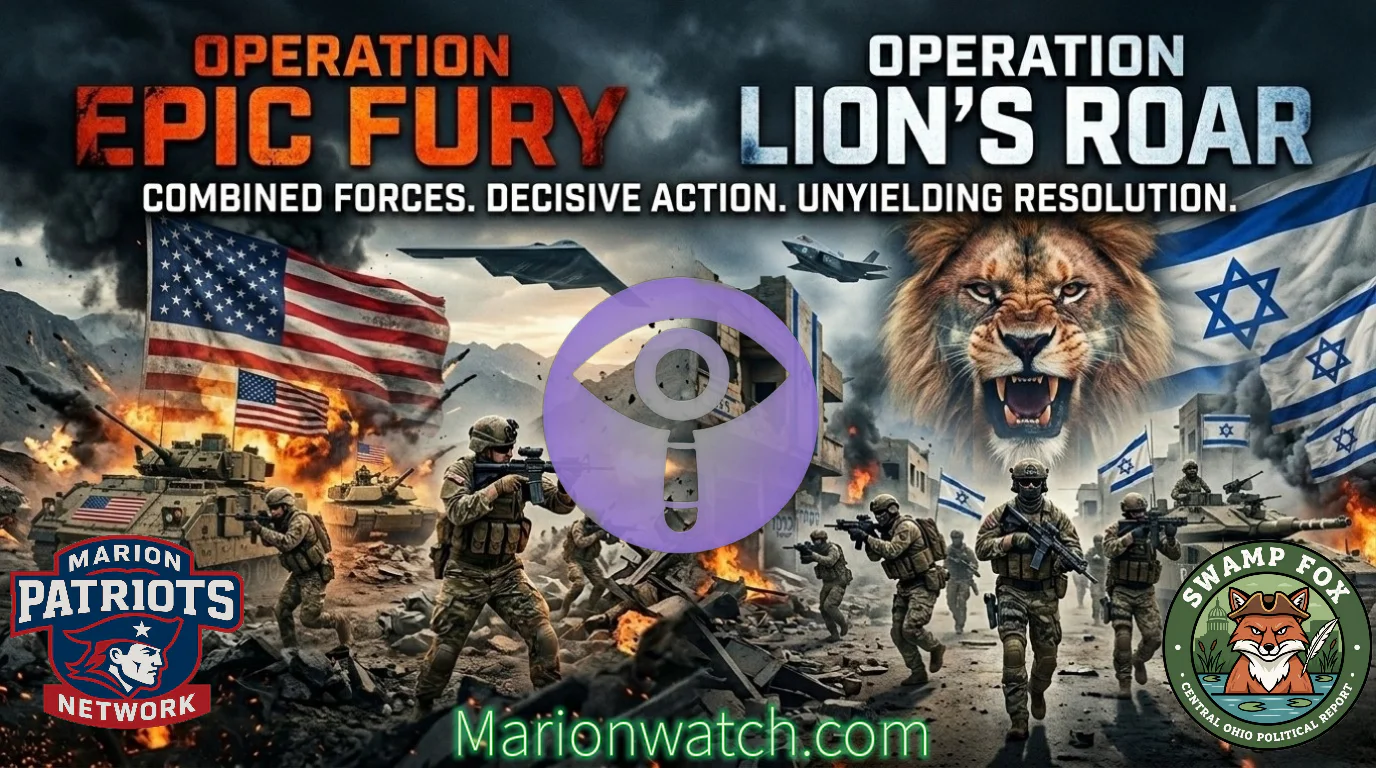
The long-standing geopolitical stalemate in the Middle East reached a violent and definitive conclusion on February 28, 2026. In a coordinated military operation of unprecedented scale, designated Operation Epic Fury and Operation Roaring Lion, the United States and Israeli forces conducted a series of decapitation strikes against the leadership of the Islamic Republic of Iran. By the evening of that day, senior Israeli officials confirmed that the Supreme Leader, Ayatollah Ali Khamenei, had been killed in an airstrike targeting his secure compound in Tehran. This event, described by Prime Minister Benjamin Netanyahu as a “once-in-a-generation opportunity” for the Iranian people, marks the end of a thirty-seven-year reign that fundamentally transformed Iran from a burgeoning regional power into a state defined by economic isolation, internal repression, and systemic decline.
The strike on Khamenei’s compound was the centerpiece of a broader campaign aimed at toppling the revolutionary regime. The operation targeted the de facto head of state and his inner circle of military and security advisors, effectively dismantling the command-and-control apparatus that had governed Iran since 1989. While the Iranian state media initially attempted to project a sense of continuity, reports of Khamenei’s death were corroborated by satellite imagery showing the complete destruction of his residence and subsequent reports of his body being recovered from the rubble. The death of the 86-year-old cleric, who was the Middle East’s longest-serving head of state, precipitates only the second leadership change since the 1979 revolution and presents a critical juncture for a nation reeling from decades of structural decay.
The Immediate Impact of Operation Epic Fury
The military campaign launched on February 28 was not a mere punitive strike but a “regime disruption campaign” designed to exploit the profound internal vulnerabilities of the Islamic Republic. The strikes successfully eliminated the top tier of the Iranian defense and security establishment, leaving a massive power vacuum at a moment of extreme national crisis.
Casualties of the Iranian Leadership: February 28, 2026
| Official Name | Position | Status |
|---|---|---|
| Ali Khamenei | Supreme Leader | Deceased |
| Amir Nasirzadeh | Defence Minister | Deceased |
| Mohammad Pakpour | IRGC Ground Forces Commander | Deceased |
| Ali Shamkhani | Defence Council Secretary | Deceased |
| Mohammad Kazemi | IRGC Intelligence Chief | Deceased |
| Masoud Pezeshkian | President | Alive |
| Ali Larijani | SNSC Secretary |
The tactical success of these strikes followed months of escalating tension, including a massive buildup of U.S. carrier strike groups and long-range aircraft in the region. The collapse of nuclear negotiations in Geneva earlier in February served as the immediate catalyst, reflecting the Trump administration’s “Maximum Pressure 2.0” doctrine, which prioritized regime change over diplomatic containment. In the hours following the assassination, the Iranian capital was characterized by a “rare mix of jubilation, fear, and expectation,” with videos emerging of residents cheering and car horns honking in celebration, despite a near-total internet blackout imposed by the remaining security forces.
The Legacy of Ali Khamenei: Consolidation and Stagnation
To understand the decline of Iranian progress under Ali Khamenei, one must examine the mechanisms by which he consolidated power after succeeding Ruhollah Khomeini in 1989. Khamenei’s ascension was not a foregone conclusion; he was initially seen as a compromise candidate who lacked the religious standing of a “marja” (grand ayatollah). To secure his position, the Assembly of Experts had to modify the constitution, a move that alienated many senior clerics but allowed Khamenei to begin a decades-long project of institutionalizing his authority through the Islamic Revolutionary Guard Corps (IRGC).
Khamenei’s contribution to Iran’s decline was rooted in his ideological commitment to “Velayat-e Faqih” (Guardianship of the Jurist) and his deep-seated suspicion of the West. Unlike his predecessor, who led with charismatic revolutionary fervor, Khamenei built a bureaucratic autocracy. He utilized his constitutional authority under Article 110 to control every vital organ of the state, from the judiciary and the state media to the armed forces and the massive parastatal foundations known as “bonyads”. This structure ensured that no president, whether a reformist like Mohammad Khatami or a moderate like Masoud Pezeshkian, could enact meaningful change without his explicit consent.
The Great Divergence: Pre-Regime Progress vs. Post-Regime Stagnation
The most stark indictment of Khamenei’s reign is the comparison between Iran’s developmental trajectory before the 1979 revolution and its performance in the subsequent decades. In the 1960s and 1970s, under the Pahlavi monarchy, Iran was a regional powerhouse with an economy that was rapidly modernizing and integrating into the global market.
Economic Indicators: A Global Comparison
In 1977, the last “normal” year before the revolution, Iran’s economy was 26 percent larger than Turkey’s and 65 percent larger than South Korea’s. The country had climbed to become the 18th largest economy in the world, driven by massive oil revenues and a state-led modernization program known as the White Revolution.
| Country | 1977 World GDP Rank | 2017 World GDP Rank | Economic Trajectory |
|---|---|---|---|
| Iran | 18th | 27th | Relative Decline |
| Turkey | 20th | 18th | Improvement |
| South Korea | 28th | 13th | Massive Growth |
| Vietnam | Below 100th | 45th | Rapid Ascent |
The divergence is particularly visible when comparing Iran to South Korea. While both nations were at similar stages of development in the mid-1970s, South Korea embraced global trade and technological innovation, eventually becoming the 13th largest economy. In contrast, under Khamenei’s “Resistance Economy,” Iran prioritized ideological insulation, leading to a steady decline in its global standing. In real terms, Iran’s per capita income grew by a factor of 3.2 in the three decades before the revolution, but only doubled in the four decades following it.
Social Progress and the Developmental Paradox
The Islamic Republic’s supporters often point to improvements in literacy and rural infrastructure as evidence of the regime’s success. It is true that the post-1979 government significantly expanded access to electricity, clean water, and roads in rural areas that had been neglected by the Shah’s elite-centered policies.
| Social Indicator | Pre-1979 | Post-Khamenei (2020s) |
|---|---|---|
| Adult Literacy (15+) | ~40% | ~85-97% |
| Rural Poverty Rate | ~25% | <10% (2014) |
| Female University Enrollment | Minority | >50% |
| University Unemployment | Near Zero | 30% (Men) / 50% (Women) |
However, this progress created a “socio-economic paradox.” The regime successfully educated a generation of Iranians, particularly women, but failed to create a productive economy to employ them. Under Khamenei, the job market stagnated due to corruption and state monopolies. Consequently, unemployment among university-educated youth surged to 30% for men and 50% for women, leading to one of the highest rates of “brain drain” in the world.
The Pillars of Economic Decay: The Nuclear and Proxy Drain
The decline of Iranian progress was accelerated by Khamenei’s pursuit of regional hegemony and a nuclear deterrent. These two pillars of his “Resistance” doctrine drained the national treasury and invited devastating international sanctions.
The Nuclear Option: A $100 Billion Burden
Khamenei personally drove the expansion of Iran’s uranium enrichment capabilities, viewing the nuclear program as a guarantor of regime survival. However, the total economic burden of this pursuit—including direct investment in hardened facilities and the indirect costs of sanctions—is estimated to exceed $100 billion. Rather than delivering security, the program triggered successive rounds of isolation, decimated the value of the Iranian Rial, and crippled the country’s oil exports.
The Architecture of Proxy War
Billions more were diverted to the “Axis of Resistance,” a network of proxy militias across Lebanon, Syria, Iraq, Yemen, and Gaza. While Khamenei viewed this as “strategic depth,” it became a massive financial drain. The state prioritized funding for groups like Hezbollah and the Houthis even as domestic infrastructure, such as the power grid and water systems, began to fail. By 2026, the cost of these regional adventures had left the Iranian economy in ruins, unable to meet the basic needs of its 89 million citizens.
The Clerical Economy: Plunder and Monopolies
Central to Khamenei’s control was his oversight of an opaque economic empire that functioned outside the national budget and legislative oversight. This “clerical economy” was built on the seizure of assets from the Iranian people and served as a financial engine for the IRGC and the ruling elite.
The Empire of Setad (EIKO)
The most prominent of these entities is the “Headquarters for Executing the Order of the Imam,” or Setad. Originally established to manage abandoned properties after the revolution, Setad morphed under Khamenei into a business juggernaut with assets estimated at $95 billion to $200 billion. A Reuters investigation found that Setad built its fortune through the systematic seizure of properties belonging to religious minorities, political dissidents, and Iranians living abroad.
Major Parastatal Entities Under Khamenei’s Control
| Organization | Primary Function | Estimated Asset Value |
|---|---|---|
| Setad (EIKO) | Real Estate, Oil, Finance | $95B – $200B |
| Bonyad Mostazafan | Industrial Conglomerate | $20B+ |
| Astan-e Qods-e Razavi | Religious Endowment | $20B+ |
| Khatam al-Anbiya | IRGC Construction Arm | Tens of Billions |
These organizations enjoyed tax-exempt status and held monopolies over critical sectors such as telecommunications, pharmaceuticals, and construction. In 2005, a “privatization” initiative further entrenched this power, as state assets were transferred not to a genuine private sector, but to companies linked to the IRGC and foundations answering directly to Khamenei. This structure blocked all meaningful economic reform and ensured that any financial gain, such as that following the 2015 JCPOA nuclear deal, primarily benefited the authoritarian state rather than the public.

The Academic and Professional Flight: A Generation Lost
The final decade of Khamenei’s rule was characterized by the “purification” of Iranian intellectual life. Viewing universities as centers of “sedition,” the regime implemented a systematic campaign to purge faculty and students who were not ideologically aligned with the state.
The “Wound” on the Universities
The impact of these purges has been catastrophic for Iran’s technological and scientific progress. Between 2015 and 2025, Iran lost 12,000 university professors to emigration, with 60 percent of them leaving in the final four years of the decade. At leading institutions like the Sharif University of Technology, a quarter of the engineering faculty emigrated within a five-year window. These professionals were often pushed out by security vetting procedures that disqualified them for personal lifestyle choices or for signing petitions calling for basic freedoms.
This “wound” extended to the medical sector, where thousands of doctors and nurses fled to the United Arab Emirates and Oman, seeking relief from political pressure and a collapsing health system. By 2026, the shortage of skilled professionals had become so acute that officials authorized the police to monitor “elite migration” in a desperate attempt to stop the exodus.

The January 2026 Uprising and the Massacre in the Dark
The decline of progress under Khamenei culminated in the most brutal domestic crackdown since the founding of the Islamic Republic. In late December 2025, a rapid collapse of the Iranian Rial sparked nationwide protests that quickly evolved from economic grievances into a political movement demanding the overthrow of the theocracy.
The Anatomy of a Massacre
Khamenei responded to the uprising with a “shoot-to-kill” order. On January 8, 2026, the regime imposed a total internet blackout to conceal the scale of the atrocities being committed by the IRGC and foreign Shia militias imported from the “Axis of Resistance”. Human Rights Watch and Amnesty International documented mass killings in cities like Tehran, Shiraz, and Rasht.
- Verified Deaths: Human Rights Activists in Iran confirmed at least 7,015 deaths, though some estimates placed the toll as high as 36,500.
- The Kahrizak Morgue: At a forensic center south of Tehran, researchers verified videos of hundreds of body bags piled up in an open-air morgue for families to identify their loved ones.
- Mass Arrests: Over 53,000 people were detained, with many subjected to torture, enforced disappearance, and summary executions.
This unprecedented level of violence destroyed the regime’s remaining social legitimacy. For the millions of Iranians who joined the protests, the collapse of the currency and the rising hunger were no longer market fluctuations, but tangible proof of the regime’s total ineptitude and corruption.

Postulating a Post-Khamenei Iran: The Path to Restoration
The elimination of Ali Khamenei by Allied forces on February 28, 2026, removed the single greatest obstacle to Iranian progress. While the situation remains volatile, the “decapitation” of the revolutionary leadership offers several pathways for the improvement of life for the Iranian people.
Economic Stabilization and Reintegration
The primary benefit of a transition away from Khamenei’s ideology is the potential for reintegration into the global economy. By abandoning the “Resistance Economy” and the nuclear program, a successor government could secure the lifting of international sanctions. This would allow for:
- Currency Stabilization: A move to restore the Rial’s value and tame the 40% inflation that decimated purchasing power.
- Infrastructure Investment: Diverting the billions of dollars previously spent on proxy militias and nuclear facilities into the power grid, water systems, and transportation networks.
- Private Sector Growth: Breaking up the parastatal monopolies of Setad and the IRGC would allow for a genuine entrepreneurial class to emerge, creating jobs for the millions of unemployed university graduates.
Restoration of Civil Liberties and Social Norms
The end of the theocracy would likely result in the immediate removal of the mandatory veiling laws and the “Noor Plan” crackdown that treated women as second-class citizens. The restoration of the 1975-style Family Protection Laws, which were repealed by the clerics, would provide women with rights in marriage, divorce, and child custody that have been denied for nearly half a century. Furthermore, an end to political vetting in universities would allow the thousands of exiled academics and professionals to return, jumpstarting the nation’s stalled scientific and technological progress.
The Risk of Military Continuity: “IRGCistan”
A critical challenge for the post-Khamenei era is the deep entrenchment of the IRGC in the nation’s economy and security apparatus. Analysts warn that even without Khamenei, the IRGC could attempt to establish a military-controlled state—”IRGCistan”—to protect its multi-billion dollar business interests. However, without the unifying religious authority of a Supreme Leader, the IRGC faces potential fragmentation and a lack of legitimacy, providing an opening for the Iranian people and the organized diaspora—led by figures such as Reza Pahlavi—to demand a transition to a secular democracy.
The death of Ali Khamenei concludes a chapter of Iranian history defined by a tragic divorce between a nation’s immense natural and human potential and its leadership’s ideological stubborness. For the Iranian people, the “Operation Epic Fury” of February 2026 may serve not as the end, but as the beginning of a long-delayed return to the path of progress.
Works Cited (Click Here)
- Iran Update Special Report: US and Israeli Strikes | February 28, 2026 | Details of the military operations “Operation Epic Fury” and “Operation Roaring Lion.” | Link
- Iran Strike Scenarios: Retaliation, Transition, and the Path Forward | 2026 | Analysis of potential geopolitical shifts following leadership strikes. | Link
- Israeli official says Khamenei killed; Trump: Regime really didn’t want a deal | February 28, 2026 | Real-time reporting on the confirmed death of the Supreme Leader. | Link
- Ali Khamenei assassinated in Iran, Israeli officials told | February 28, 2026 | Coverage of the airstrike on the Tehran secure compound. | Link
- Leadership Transition in Iran | 2026 | Assessment of the power vacuum and constitutional implications. | Link
- Live Updates: Netanyahu says there are “many signs” Iran’s supreme leader is “gone” | February 28, 2026 | Official Israeli statements regarding the success of the strikes. | Link
- From Iran Supreme Leader Khamenei to top commanders: Who were the targets | February 28, 2026 | Breakdown of the deceased military and security leadership. | Link
- Khamenei’s compound destroyed by Israeli strike | February 28, 2026 | Satellite imagery and ground reports of the residence destruction. | Link
- Experts react: The US and Israel just unleashed a major attack on Iran | February 28, 2026 | Strategic analysis of the “regime disruption campaign.” | Link
- Q&A: Iran and the US are back on the edge of war | February 2026 | Context on the collapse of nuclear negotiations in Geneva. | Link
- US and Israel launch a major attack on Iran | February 28, 2026 | Report on the Trump administration’s “Maximum Pressure 2.0.” | Link
- Iranians face war with fear, joy and hope | February 28, 2026 | Domestic Iranian reactions and the internet blackout status. | Link
- Ali Khamenei | 2026 | Biographical data on the 86-year-old cleric’s 37-year reign. | Link
- Despite denials, Khamenei drives Iran’s economy | March 22, 2025 | Analysis of the Supreme Leader’s control over state organs. | Link
- How Khamenei’s Economic Empire Seized Telecom and Pensions | 2025 | Investigation into parastatal monopolies and EIKO. | Link
- Iran’s economic performance since the 1979 Revolution | 2026 | Data comparing Pahlavi-era growth vs. post-revolutionary decline. | Link
- Iranian Revolution (1979) Summary | 2024 | Historical context for the establishment of the Islamic Republic. | Link
- Can Multipolar Blocs Offer Iran a Way Out of Isolation? | 2025 | Discussion on the “Resistance Economy” and global trade. | Link
- The Islamic Revolution at 40 | 2019 | Analysis of the long-term structural decay of the regime. | Link
- Did the Iranian revolution fulfill its promises? | 2019 | Socio-economic paradoxes regarding literacy vs. employment. | Link
- Confront or concede: Iran’s brinkmanship reaches its limits | February 25, 2026 | The immediate lead-up to the February military strikes. | Link
- Iran: revolt crushed but crisis unresolved | 2026 | Context for the January 2026 uprisings. | Link
- Elections offer no chance of change in clerical economy | 2024 | Study of the “clerical economy” and IRGC business interests. | Link
- Building An Empire On Property Seizures | 2023 | Detailed report on Setad (EIKO) and asset seizures. | Link
- Purification of the Higher Education System | 2024 | Context for the ideological purging of Iranian universities. | Link
- Iran loses 12,000 professors in decade-long academic exodus | November 14, 2025 | Statistics on “brain drain” and professional emigration. | Link
- Iran loses 1,500 top university professors in five years | October 20, 2025 | Impact of security vetting on scientific progress. | Link
- 2025–2026 Iranian protests | 2026 | History of the Rial collapse and subsequent civil unrest. | Link
- 2026 Iran massacres | 2026 | Documentation of the IRGC “shoot-to-kill” crackdown in January. | Link
- Iran: Human Rights Situation Spirals Deeper into Crisis | February 4, 2026 | Reports on mass arrests and summary executions. | Link
- ‘I saw kids being shot’: how a massacre unfolded in Rasht | February 6, 2026 | Eyewitness accounts of the January crackdown atrocities. | Link
- Iran: Growing Evidence of Countrywide Massacres | January 16, 2026 | Preliminary human rights findings during the internet blackout. | Link
- Iran’s Machinery of Repression Escalates | February 2026 | Details on the Kahrizak morgue and 53,000+ detainees. | Link
- Economy of Iran | 2026 | Data on inflation, Rial value, and the “Resistance” doctrine. | Link
- Women’s rights in Iran | 2026 | History of mandatory veiling laws and the “Noor Plan.” | Link
- Human rights in Iran – Amnesty International | 2026 | Annual reporting on political repression under Khamenei. | Link
- The struggle for freedom, justice, and equality | 2023 | Long-term history of the Iranian women’s rights movement. | Link
- Women’s Citizenship Rights in Iran between Two Revolutions | 2024 | Comparison of 1975 Family Protection Laws vs. theocracy. | Link
- The Iran Uprising Explained | February 2026 | Q&A on the transition from economic protest to regime change. | Link
- US and Israel attack Iran: Early Analysis | February 2026 | Expert insights on the potential for “IRGCistan” post-Khamenei. | Link
- 2026 Iranian diaspora protests | 2026 | Role of the organized diaspora and figures like Reza Pahlavi. | Link