


 Written by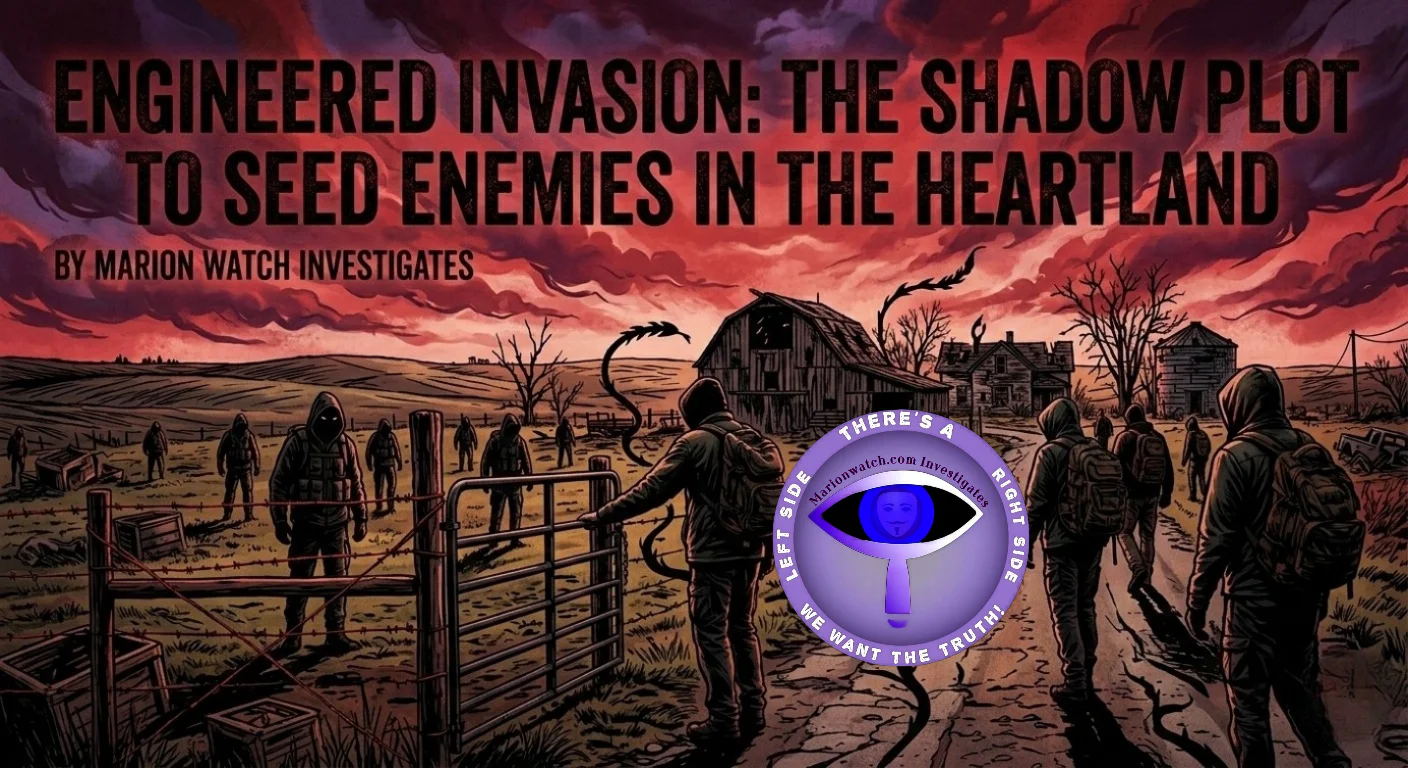
The utilization of human movement as a strategic instrument of conflict has undergone a profound transformation since the beginning of 2020.
Traditionally, the mass migration of people across borders was viewed by the international community as a humanitarian challenge or an economic phenomenon. However, recent evidence and historical precedent suggest that adversarial state and non-state actors are increasingly employing “engineered migration” as a weapon.
This investigative report examines the hypothesis that the unprecedented surge in illegal immigration toward the United States and Europe since 2020 is not a random byproduct of global instability, but rather a deliberate orchestration designed to seed internal disruptors, overwhelm security infrastructures, and create the foundations for non-traditional military forces within target nations.
The Evolution of Demographic Weaponization
The conceptual framework for understanding the strategic use of migrants is rooted in the academic and military recognition of “Weapons of Mass Migration.” This strategy involves the manipulation of population movements as an operational and strategic means to achieve political and military ends. Since early 2020, the global landscape has shifted in a way that allows modern autocrats to refine this instrument. Using what was once a favorite strategy of leaders like Fidel Castro, contemporary regimes in Russia, Belarus, and Nicaragua have been accused of employing irregular migration to distract Western governments, instigate political turmoil, and force massive reallocations of defense spending.
At the heart of this strategy is the exploitation of the target state’s strengths—its humanitarian norms, legal requirements, and democratic processes—against its own security. When a target state is forced to prioritize the processing of millions of individuals, its ability to identify and neutralize specific threats is compromised. This “denial-of-service” effect on border security provides the perfect cover for the seeding of assets who do not fit the traditional profile of an invading soldier.
The American Crisis: Analysis of the 2020-2025 Surge
The demographic data concerning immigration into the United States since 2020 reveals a statistical anomaly that suggests a coordinated shift in global movement patterns. Net International Migration (NIM) into the United States reached a historic peak of 2.7 million in 2024, representing a massive influx that coincided with a period of heightened global geopolitical tension. Between 2020 and 2025, more than 11 million immigrants arrived in the United States, including a record-breaking 3 million in 2023 alone.
| Year | Net International Migration (NIM) | Total Foreign-Born Population |
|---|---|---|
| 2021 | 337,000 | 45.3 Million |
| 2022 | Natural Increase Offset by NIM | 46.2 Million (est.) |
| 2023 | 3,000,000 | 48.2 Million (est.) |
| 2024 | 2,700,000 | 51.0 Million (est.) |
| 2025 | 1,300,000 (as of July 1) | 51.9 Million |
Source: Compiled from Census Bureau and Pew Research Center data.
The sheer volume of these encounters is only part of the security equation. The methodology of entry has shifted toward mass parole programs and the use of mobile applications like “CBP One,” which critics argue serve as a “shell game” to move the visible crisis from the border to the interior without addressing the underlying vetting gaps. Since the start of fiscal year 2021, Customs and Border Protection (CBP) has recorded more than 10.3 million encounters of inadmissible aliens nationwide.
The Rise of the “Gotaway” Demographic
The most significant evidence of potential seeding lies in the population of “known gotaways”—individuals who are detected by sensors or cameras but evade capture by border agents. Experts estimate that nearly 2 million individuals have successfully evaded arrest and are now living within the United States without any vetting of their backgrounds, intentions, or affiliations. This population is distinct from those who turn themselves in to claim asylum; it is composed of individuals who explicitly do not want to be identified by the state. The existence of a 2-million-person internal population with unknown backgrounds creates a massive “shadow army” of potential disruptors that can be activated in the event of a conflict with an external adversary.
Special Interest Aliens and High-Risk Nationalities
A critical component of the seeding hypothesis is the demographic composition of the new arrivals. The term “Special Interest Alien” (SIA) refers to non-U.S. persons who, based on travel patterns and points of origin, potentially pose a national security risk. Since 2020, there has been an unprecedented increase in SIAs from countries with adversarial relationships with the United States, including China, Iran, and Russia.
The Chinese National Influx
The most startling trend is the surge in Chinese nationals apprehended at the southwest border. In fiscal year 2021, only 342 Chinese nationals were caught. By fiscal year 2024, that number had exploded to 37,976—a nearly 11,000% increase. Between 2021 and 2024, the total number of Chinese national apprehensions exceeded 60,000.
| Fiscal Year | Chinese National Apprehensions |
|---|---|
| 2021 | 342 |
| 2022 | 1,987 (est.) |
| 2023 | 24,000 (est.) |
| 2024 | 37,976 |
Source: U.S. Border Patrol and House Committee on Homeland Security.
Legislative testimony has raised concerns that many of these foreign nationals may operate as military assets or conduct espionage under the cover of irregular migration. The profile of these arrivals—often single, military-aged males who possess significant financial resources to complete the journey—contrasts sharply with the traditional profile of impoverished refugees seeking economic opportunity.
Iranian and Middle Eastern Threats
The threat from Iran and its proxies is equally concerning. From fiscal year 2021 through 2024, approximately 1,504 Iranian nationals were caught crossing the border illegally, and nearly half of them (729) were released into the United States. This occurred during a period where FBI Director Christopher Wray testified that the terror threat facing the United States reached “unprecedented levels” and warned of potential Iranian-backed “sleeper cells” on U.S. soil.
Furthermore, the Department of Homeland Security identified over 400 illegal aliens from Central Asian countries who entered the U.S. via an ISIS-affiliated human smuggling network. These figures represent the identified risks; the number of high-risk individuals within the 2 million “gotaways” remains a matter of urgent speculation among security analysts.
Historical Lineage: Ancient and Medieval Parallels
The tactic of using mass movement to infiltrate and destroy an adversary from within is a strategy with a multi-generational history. By looking back at ancient and early modern examples, one can see the evolution of the “seeding” technique.
The Goths and the Fall of the Roman Empire
The collapse of the Western Roman Empire provides a foundational example of how a superpower can be undermined by the internal presence of a non-integrated, military-capable population. In the 4th century, the Goths, fleeing the Huns, petitioned the Emperor Valens for entry into the Empire. The Romans viewed the Goths as a potential labor force and a source of recruits for the army. However, the Romans failed to adequately vet, supply, or integrate the hundreds of thousands of arrivals.
This created a “state within a state.” The Goths retained their tribal leadership and military structure while living inside Roman borders. When tensions eventually boiled over, this “seeded” population transformed into an internal army that decimated Roman forces at the Battle of Adrianople and eventually sacked Rome in 410 AD. This historical case demonstrates that when a nation allows the entry of large blocks of individuals who maintain allegiance to external leaders, it risks the creation of a “fifth column” that can be activated for total war.
Nomadic Infiltration of Settled Civilizations
Historical analysis of nomadic societies shows that the “flow” of populations between the steppes and settled cities was often a weaponized process. Nomadic leaders would send tribes to settle in “spare spaces” or near city hinterlands. These populations would grow over generations, often serving as scouts or internal support for later nomadic invasions. By the time a formal military campaign began, the nomadic confederation already had members installed as local rulers or integrated into the fabric of the target city, allowing them to “run rings around” the infantry-heavy forces of the sedentary people.
The Soviet Model: The Fifth Column and Preemptive Terror
The term “fifth column” originated during the Spanish Civil War, but its most ruthless application was refined by the Soviet Union under Joseph Stalin. During the Great Purge of 1937–1938, the NKVD (the predecessor to the KGB) conducted massive “national operations” targeting ethnic minorities such as Poles, Germans, and Finns who lived within the Soviet Union.
Stalin’s justification for these purges was the “preventive elimination” of potential recruits for a “mythical fifth column of wreckers, terrorists and spies”. While many of the victims were innocent, the Soviet leadership operated on a military doctrine that viewed diaspora populations as inherently weaponizable by foreign powers. The “Polish Operation,” for instance, resulted in over 111,000 executions based on the suspicion that ethnic Poles were “agents” of the Polish state who would assist an invasion. This illustrates a historical period where the state viewed demographic groups not as individuals, but as dormant military assets.
Case Study: The North Vietnamese Model of “Legal” Infiltration
Perhaps the most technically sophisticated historical example of seeding an internal army occurred during the Vietnam War. The North Vietnamese (DRV) and the National Liberation Front (NLF) utilized a strategy called dau tranh (the struggle), which integrated political and military efforts into a single, seamless campaign.
The “Legal” Personnel Strategy
Declassified CIA documents from 1969 provide a detailed look at how the Viet Cong seeded assets within the South Vietnamese (GVN) territory. These assets were known as “legal” personnel because they possessed the proper government documentation required to live and work openly in the South.
| Category of Agent | Definition and Role |
|---|---|
| Fifth Columnists | Highly trained and dedicated agents within the GVN military and security agencies. |
| Sympathizers | Less reliable personnel used for logistics, intelligence, and low-level agitation. |
| Proselytizing Agents | Personnel tasked with recruiting GVN soldiers and officials to the revolutionary cause. |
In early 1969, there were an estimated 20,000 military proselytizing agents operating within the South Vietnamese armed forces and security agencies. These agents held key posts, including:
- Signal corps personnel who could disrupt communications.
- Intelligence officers within District Intelligence and Operations Coordinating Centers.
- Drivers for ARVN (Army of the Republic of Vietnam) majors.
- Sergeants at the Da Lat Military Academy.
Activation and the General Offensive
These “seeded” assets remained dormant for years, performing their daily jobs while awaiting orders. During the 1975 spring offensive, these “legal” agents were activated to facilitate the rapid collapse of South Vietnamese defenses. In Da Nang, for instance, thousands of new recruits undergoing training revolted and joined the revolution, guided by cadres who had been “carrying out special activities in the city or working in enemy organs” for many years. These internal forces supplied vital information and led the way for regular North Vietnamese troops to capture enemy positions. This model represents the “gold standard” for seeding an army within a civilian population and successfully using it to overthrow a government.
Contemporary Hybrid Operations: Belarus and Nicaragua
In the modern era, the use of migration as a weapon is categorized as “New Generation Warfare.” This doctrine, primarily utilized by Russia and its allies, seeks to enact “controlled chaos” through non-kinetic means before or during a kinetic conflict.
The Belarusian “Humanitarian” Siege
Since late 2021, Belarus has been accused of conducting a “hybrid operation” against the European Union. In coordination with Russian authorities, the Lukashenko regime facilitated the movement of thousands of migrants from the Middle East to the borders of Poland and the Baltics.
Evidence of the orchestrated nature of this movement includes:
- The registration of new companies in Poland to request work permits for migrants as a front for their entry.
- Belarusian border officials providing migrants with bicycles and tools to cut fences and bypass border posts.
- The use of state-owned transportation to shuttle migrants from the Minsk airport directly to the “front lines” of the border.
This operation was designed to polarize European society and force the reallocation of military resources. Lithuania, for example, sought 120 million euros in damages from Belarus just to cover the cost of new barbed-wire infrastructure and increased border patrols. By using people as a weapons system, Russia and Belarus have successfully created a “soft underbelly” in NATO’s eastern flank.
Nicaragua as a Strategic Gateway
While Cuba and Venezuela have long used migration as a tool to extract concessions from the United States, Nicaragua has emerged since 2021 as a primary “agent provocateur” in the seeding of international assets toward the U.S. border.
Unlike neighboring countries that participate in regional migration management, the Ortega administration has systematically removed visa requirements for citizens of adversarial states. In 2021, Nicaragua opened its borders to Cubans; in 2023, to Belarusians; and in 2024, to citizens of Angola and Qatar. This has turned Nicaragua into a “springboard” for “ultra-marathoners of human smuggling”—Special Interest Aliens who travel from Africa, the Middle East, and Asia to landing zones in Nicaragua before moving toward the U.S. southwest border. This strategic facilitation provides a clear, state-sponsored path for the entry of potential “seeded” assets.
The Infrastructure of Infiltration: Smuggling and Vetting Gaps
The success of a seeding operation depends on the availability of infrastructure that can move people across the globe while maintaining their anonymity. In the period since 2020, this infrastructure has been provided by a combination of transnational criminal organizations and state-sponsored networks.
Human Smuggling as a Military Capability
Transnational human smuggling organizations (THSOs) are now capable of transporting terrorist travelers to every U.S. border. These organizations focus on “extreme-distance” smuggling, moving SIAs from 35 “countries of interest” through Latin America. While these networks operate for profit, their capability to move high-risk individuals into the interior of a target nation is a strategic asset for any adversary.
| Metric of Smuggling Capability | Significance |
|---|---|
| Routing | Migration flows from Middle East/Africa to initial landings in Latin America. |
| Duration | “Ultra-marathoners” can remain in transit for months, blending into humanitarian flows. |
| Vulnerability | Vetting is episodic; many SIAs are never detected until they reach the border. |
The “Sleeper Cell” Phenomenon
The concept of a “sleeper cell” involves individuals who lie low within a population until a specific moment of activation. Since 2020, there has been a growing concern among intelligence officials regarding the potential for these cells to be seeded via the southern border. FBI Director Wray’s 2023-2024 testimony highlighted that the “terror threat has reached unprecedented levels” and that the risk of internal attacks has surged following global events in 2023.
Examples of sleeper cells and their activation can be found in various contexts:
- ISIS in Syria/Iraq: As ISIS lost territory, it transitioned into a global covert network of sleeper cells that “melt back into the local population” to wait for the next phase of conflict.
- Hezbollah in the TBA: Hezbollah receives $700 million annually from Iran to establish sleeper cells and recruit sympathizers within Shia communities in South America, which then serve as a pipeline for operations in the north.
- The 764 Network: A decentralized network of nihilistic extremists that lures and grooms youth to commit violent acts as “ideological labor” to erode social norms.
Institutional Vulnerabilities and Internal Radicalization
A seeded army does not necessarily have to arrive as a fully formed military unit. It can also grow through the radicalization of individuals who are already within the target state’s borders. Since 2020, the vulnerability of American institutions to this type of internal growth has been a primary concern for counter-terrorism officials.
Prison Radicalization and JIS
The case of Jam’iyyat Ul-Islam Is-Saheed (JIS) at California State Prison-Sacramento serves as a warning for how terrorist groups can infiltrate and recruit within the walls of a state. This group, which transitioned into an operational terrorist cell that sought al-Qaeda’s blessing for domestic attacks, demonstrates that “American correctional institutions are indeed vulnerable to prisoner radicalization and terrorist groups that infiltrate, recruit, and operate inside”. If an adversary can seed a small number of charismatic leaders within the migrant population, they can potentially recruit a larger “army” from within the disaffected and unvetted segments of the foreign-born population.
Social and Political Polarization
The presence of a massive, unvetted population is also a weapon of social destabilization. Kelly Greenhill’s research found that in 50% of historical cases of weaponized migration, the political objectives of the weaponizing country were met. By driving migrants into the West, adversaries like Vladimir Putin aim to polarize Western society, foment chaos, and “expose NATO’s soft underbelly”. This polarization reduces the target state’s ability to respond decisively to traditional military threats, as its internal politics are consumed by the management of the migration crisis.
Strategic Responses and Legislative Oversight
The recognition of the seeding threat has led to a shift in U.S. policy and legislative efforts beginning in late 2024 and early 2025. The “Special Interest Alien Reporting Act of 2025” was introduced to force transparency on the number and origin of SIAs entering the country.
Policy Shifts and Deportations
Following the 2024 election, the U.S. government began a more aggressive approach to identifying and removing potential security threats. In May 2025, DHS Secretary Kristi Noem testified that the administration had deported over 250 known terrorists who had been allowed into the country under previous parole and release programs. This single statistic confirms that “known terrorists” were indeed living within the American interior as part of the 2020-2024 surge.
The Role of Transparency
Congressional leaders have argued that for years, the true number of Special Interest Aliens and individuals on the terrorist watchlist was “kept in the dark” to convince the public that there was no threat at the border. Former Chief Patrol Agent Aaron Heitke testified that he was “prevented from talking about the increase in these threats” and that his administration was trying to “convince the public that there was no threat”. The shift toward mandatory monthly reporting of SIA encounters is designed to prevent the clandestine seeding of assets by making their presence a matter of public record.
Conclusion: The New Frontier of National Defense
The investigation into mass migration from the beginning of 2020 through 2025 reveals a multifaceted strategy by adversarial nations to use human movement as a tool of irregular warfare. The evidence suggests that “seeding” an army is not a conspiracy theory but a documented military tactic with a history spanning from the Goths of Rome to the Viet Cong of the 20th century.
The combination of 2 million “known gotaways,” a 10,000% increase in military-aged Chinese nationals, and the release of hundreds of Iranian and Central Asian nationals with ties to terrorist networks creates a credible threat of an internal “fifth column.” These individuals, whether operating as dormant sleeper cells or as active agents of influence, provide a capability for “controlled chaos” that can be activated to undermine national security during a global crisis.
To address this threat, the target nations must move beyond viewing migration through a purely humanitarian lens. The modern “front line” is no longer just at the physical border; it is within the communities where unvetted assets have been allowed to reside. Protecting the sovereign state in the age of engineered migration requires a rigorous commitment to vetting, a refusal to be manipulated by manufactured humanitarian crises, and a strategic understanding that population movement is now a weapons system that can be aimed at the very heart of a democratic society.
Works Cited (Click Here)
- Weaponized Mass Migration — 10 February 2026
https://www.fdd.org/analysis/2026/02/10/weaponized-mass-migration/
Relevance: Provides analysis of how states can deliberately manipulate migration flows as a strategic instrument, supporting the report’s framing of migration as a weapon. - Domestic debate, global strategy: Revisiting immigration in U.S. foreign policy — (date not specified)
https://www.niskanencenter.org/domestic-debate-global-strategy-revisiting-immigration-in-u-s-foreign-policy/
Relevance: Examines the intersection of immigration policy and foreign policy, useful for contextualizing political responses to engineered migration. - People as a Weapons System: Moscow and Minsk’s Continued Attempts to Weaponize Migration — (date not specified)
https://irregularwarfare.org/articles/people-as-a-weapons-system-moscow-and-minsks-continued-attempts-to-weaponize-migration/
Relevance: Case studies of Belarus/Russia hybrid operations that mirror tactics described in the attached investigation. - New Population Estimates Show Decline in Net International Migration — January 2026
https://www.census.gov/newsroom/blogs/random-samplings/2026/01/historic-decline-in-net-international-migration.html
Relevance: Official Census Bureau population estimates used to verify and contrast the report’s migration statistics and trends. - What the data says about immigrants in the U.S. — 21 August 2025
https://www.pewresearch.org/short-reads/2025/08/21/key-findings-about-us-immigrants/
Relevance: Summarizes demographic and socioeconomic data on immigrants that inform assessments of population composition and risk. - Frequently Requested Statistics on Immigrants and Immigration in the United States — (date not specified)
https://www.migrationpolicy.org/article/frequently-requested-statistics-immigrants-and-immigration-united-states-202
Relevance: Repository of migration statistics used to cross-check figures cited in the investigation. - Demographics of the United States — (Wikipedia entry; last updated date varies)
https://en.wikipedia.org/wiki/Demographics_of_the_United_States
Relevance: General demographic background for the U.S.; used for broad population context and historical comparisons. - HOW BIDEN‑HARRIS’ OPEN‑BORDERS POLICIES HAVE UNDERMINED OUR SAFETY AND SECURITY — (Congressional hearing transcript)
https://www.govinfo.gov/content/pkg/CHRG-118hhrg59863/html/CHRG-118hhrg59863.htm
Relevance: Congressional testimony and statements cited in the report regarding border policy and security concerns. - “Biden‑Harris Administration Has Intentionally Left Us Vulnerable”: Pfluger, Higgins Deliver Opening Statements in Hearing on Terror Threats From the Border — 19 September 2024
https://homeland.house.gov/2024/09/19/biden-harris-administration-has-intentionally-left-us-vulnerable-pfluger-higgins-deliver-opening-statements-in-hearing-on-terror-threats-from-the-border/
Relevance: Source of committee statements referenced in the investigation about perceived threats and oversight claims. - Homeland Republicans Applaud House Passage of Rep. Greene’s Special Interest Alien Reporting Act — 26 June 2025
https://homeland.house.gov/2025/06/26/homeland-republicans-applaud-house-passage-of-rep-greenes-special-interest-alien-reporting-act/
Relevance: Legislative action cited in the report that addresses reporting and transparency for Special Interest Aliens. - Terrorism (tag page) — (date not specified)
https://www.fox5ny.com/tag/crime-publicsafety/terrorism
Relevance: Media coverage and local reporting referenced for incidents and public-facing narratives about terrorism and public safety. - How did nomadic societies gain the numbers (population‑wise) needed to compete with settled city‑dwelling civilizations militarily? — (Quora thread; date not specified)
https://www.quora.com/How-did-nomadic-societies-gain-the-numbers-population-wise-needed-to-compete-with-settled-city-dwelling-civilizations-militarily
Relevance: Historical discussion used to support the report’s ancient/medieval parallels on demographic seeding and military impact. - Great Purge — (Wikipedia entry; last updated date varies)
https://en.wikipedia.org/wiki/Great_Purge
Relevance: Background on Soviet-era internal security practices cited in the report’s historical lineage section. - NLF and PAVN strategy, organization and structure — (Wikipedia entry; last updated date varies)
https://en.wikipedia.org/wiki/NLF_and_PAVN_strategy,_organization_and_structure
Relevance: Context for the Viet Cong/North Vietnamese seeding strategies discussed in the case study. - COMMUNIST SUBVERSION IN THE SOUTH VIETNAMESE … — (declassified CIA document) 1969 (declassified release)
https://www.cia.gov/readingroom/docs/CIA-RDP80R01720R000100020003-2.pdf
Relevance: Primary-source CIA material documenting North Vietnamese infiltration methods that the report cites as precedent. - INTELLIGENCE AND SECURITY[16510121].pdf — (CIA document; declassification date varies)
https://www.cia.gov/readingroom/docs/INTELLIGENCE%20AND%20SECURITY%5B16510121%5D.pdf
Relevance: Additional CIA archival material supporting historical analysis of infiltration and intelligence operations. - Weaponized migration — (Wikipedia entry; last updated date varies)
https://en.wikipedia.org/wiki/Weaponized_migration
Relevance: Conceptual overview of migration used as a tool of statecraft; frames the theoretical basis for the investigation. - The Ultra‑Marathoners of Human Smuggling: How to Combat the Dark Networks that Can Move Terrorists over American Land Borders — (Homeland Security Affairs) (date not specified)
https://www.hsaj.org/articles/10568
Relevance: Scholarly analysis of long‑distance smuggling networks cited for the report’s discussion of transnational smuggling capabilities. - S/2018/705 — Security Council — 2018 (UN document)
https://docs.un.org/en/s/2018/705
Relevance: United Nations reporting on migration and security referenced for international legal and policy context. - Snakes in the Shadows: Hezbollah’s Threat Slithers Past U.S. Security Radar — 2025 (Army University Press online exclusive)
https://www.armyupress.army.mil/Portals/7/military-review/Archives/English/Online-Exclusive/2025/Snakes%20in%20the%20Shadows/Snakes%20in%20the%20Shadows-UA.pdf
Relevance: Analysis of Hezbollah’s networks and regional pipelines used to illustrate proxy and sleeper‑cell risks cited in the report. - Snakes in the Shadows — 2025 (Army University Press)
https://www.armyupress.army.mil/Journals/Military-Review/Online-Exclusive/2025-OLE/Snakes-in-the-Shadows/
Relevance: Companion online article providing additional detail on Hezbollah and regional threat networks. - Currently listed entities — (Public Safety Canada; date not specified)
https://www.publicsafety.gc.ca/cnt/ntnl-scrt/cntr-trrrsm/lstd-ntts/crrnt-lstd-ntts-en.aspx
Relevance: Official list of designated entities used to corroborate references to transnational extremist organizations. - Terrorist Recruitment in American Correctional Institutions: An Exploratory Study of Non‑Traditional Faith Groups — (Office of Justice Programs; report date not specified)
https://www.ojp.gov/pdffiles1/nij/grants/220957.pdf
Relevance: Empirical study cited in the report’s section on prison radicalization and institutional vulnerabilities. - Thursday, June 26, 2025 — House live — 26 June 2025
https://live.house.gov/?date=2025-06-26
Relevance: Live congressional hearing record referenced for testimony and oversight proceedings cited in the investigation.