

 Written by
 A Special Report Marion Watch Investigates “There’s a Left Side, a Right Side—We Want the Truth!”
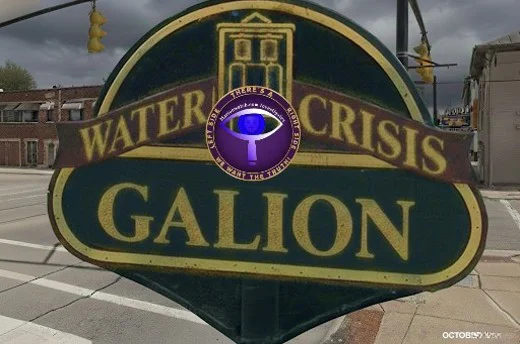
Galion, Ohio’s public water system serves approximately 10,089 residents through 4,916 service connections.
The system draws from surface water sources: the Rocky Fork of the Olentangy River and Amman’s Reservoir. Over the past four decades, the city has moved from industrial contamination and a troubling health cluster in the 1980s to watershed impairment in the 1990s, a fiscal emergency in the 2000s, and a cascade of equipment failures, regulatory violations, and administrative breakdowns in the 2020s.
State enforcement has required a multi-phase General Plan to repair treatment and distribution systems. New compliance tasks continue to arrive: on December 22, 2025, the Ohio EPA sent Galion an Asbestos Monitoring Waiver Questionnaire that must be returned by January 23, 2026.
Independent assessments by SimpleLabs conducted in 2024 corroborate the presence of several contaminants in concentrations that exceed permissible regulatory standards
This article collects and explains the full record in plain language so residents and officials can see what happened, what remains to be done, and what to watch next.
Galion’s Water Crisis in Chronological Order
1980s: Industry, Heavy Metals, and a Health Alarm
In the 1980s, Galion hosted several major manufacturers, including Peabody Galion and ITT PowerSystems. Industrial waste repeatedly entered the municipal sewage system and the Olentangy River. Between 1982 and 1985, public health investigators documented an unusually high cluster of 30 to 40 cases of Multiple Sclerosis (MS) and other demyelinating syndromes among residents.
Investigators focused on elevated levels of cadmium, chromium, and copper in sewage and river water.
Cadmium was singled out because it persists in the environment and accumulates in soil and water; long-term exposure is linked to kidney and lung damage. Regulatory enforcement followed. Records show a battery-casing reclaiming operation in 1982 that contaminated soils and groundwater. On April 1, 1988, the Ohio Attorney General filed a complaint against South Side Plating for illegal treatment, storage, and disposal of hazardous wastes without a permit.
At the same time, the city built its current wastewater plant in 1984. Financially, the city began capitalizing its electric fund in 1986, but water and sewer funds were not formally capitalized until 1995, a delay that later constrained maintenance.
1990s: Watershed Stress and Nutrient Problems
Ohio adopted numeric biological criteria in 1990, shifting attention to the river’s ecological health.
Monitoring at Hosford Road recorded nitrate and nitrite levels at 10.78 mg/L, exceeding the human-health limit of 10.0 mg/L. Agricultural runoff and treated municipal effluent were the primary contributors. By 1999, the Olentangy River watershed was placed on Ohio’s list of impaired waters, signaling the need for a major recovery study. In 1993, the city installed a dechlorination system to neutralize chlorine residuals before discharge to protect aquatic life.
2000s: Fiscal Emergency and Deferred Maintenance
The city’s finances collapsed in the mid-2000s. In 2005, the finance director admitted to embezzling about $87,000; audits revealed roughly $11 million in debt and the State Auditor declared Galion in fiscal emergency.
This emergency forced deep cuts, postponed infrastructure projects, and created a long-term “maintenance debt.” Meanwhile, the Ohio EPA’s 2003 Source Water Assessment had already identified the surface water intake as highly susceptible to contamination from agriculture, industry, and transportation spills.
On June 28, 2006, the Ohio EPA approved Galion’s lead and copper corrosion control plan, setting strict requirements for pH, orthophosphate, and total alkalinity. These obligations later became a major compliance pressure point.


Example Social Media Discussions on Galion Water.
Source: Galion Talks (Facebook) / Community Activists.
2011–2023: TTHM Crisis, Staffing Gaps, and State Enforcement
After a wastewater plant upgrade in 2012, the drinking water system developed a persistent problem with Total Trihalomethanes (TTHMs)—disinfection byproducts formed when chlorine reacts with organic matter in surface water.
Galion’s readings moved from occasional spikes to repeated exceedances in 2021–2023.
Official monitoring showed three consecutive quarters above the legal limit in 2021 and 2022. The Ohio EPA also documented administrative failures: missed samples, late or missing public notices for violations, and staffing shortfalls where the system failed to maintain the required Class III operator presence.
Those problems culminated in formal enforcement.
On August 31, 2023, the Ohio EPA issued Director’s Final Findings and Orders (DFFO). The DFFO conditioned Galion’s 2023 License to Operate, imposed an $8,400 civil penalty, and required a strict, phased General Plan:
- Phase 1A: Immediate clarifier rehabilitation to improve cleaning.
- Phase 1B: Media and underdrain replacement for the filtration system.
- Phase 2: Installation of mixing systems in elevated storage tanks to prevent water stagnation.
- Phase 3: Comprehensive clearwell improvements, including replacement of seized sluice gates.
2023 Ohio EPA Findings and Orders. Source: Community Activist, EPA.
2024–2025: Pretreatment Collapse and Reporting Failures
In February 2024, the Ohio EPA discovered “white wastewater” (likely containing lime) being batch-discharged into the city’s treatment plant. This discharge disrupted biological treatment, damaged concrete and metal structures, and caused solids to block sewer lines. The source remained unidentified at the time of inspection.
The investigation found that the city had effectively stopped enforcing its industrial oversight program.
Several Significant Industrial Users (SIUs) were operating without oversight or with expired permits:
- Carter Machine Co.: Last inspected in 2020; permit expired Jan 2024; no toxic organic sampling.
- A&G Manufacturing: No reports submitted in three years; the city took no enforcement action.
- Galion LLC: Not inspected recently; permit expired in 2022.
- Galion Water Treatment Plant: The city’s own plant was discharging into the sewer without a permit.
In May 2024, a sanitary survey documented further engineering errors and failures. For example, Clarifier #1 was repaired incorrectly with drain holes that bypassed cleaning weirs (fixed by Oct 3, 2024), and Filter #3 was taken out of service due to an inoperable valve.
Administrative problems continued into 2025. On September 3, 2025, the Ohio EPA issued a Notice of Violation because Galion failed to report water quality data on time for the January–June period. This “Tier 3” violation highlighted persistent reporting and staffing weaknesses.
2024 Ohio EPA Findings Partial Resolution of Violation. Source: Community Activist, EPA.
New Compliance Task: Asbestos Monitoring Waiver (Dec 22, 2025)
On December 22, 2025, the Ohio EPA sent Galion an Asbestos Monitoring Waiver Questionnaire. The state requires systems with asbestos-cement (AC or “transite”) pipe in their distribution system to collect asbestos samples. This type of pipe was popular from the 1930s through the 1980s. Galion must complete and return the questionnaire by January 23, 2026. If the city cannot verify the absence of AC pipe, it will be forced to perform expensive sampling between 2029 and 2031.

Where Things Stand and What to Watch
Galion has completed some short-term fixes—plugging clarifier holes and repairing one reservoir pump motor—but major projects remain in progress with deadlines stretching into 2027.
| Project / Requirement | Deadline |
|---|---|
| Asbestos Waiver Questionnaire Due | January 23, 2026 |
| Dawsett Tank Riser Repair & Recoating | July 12, 2025 (Pending) |
| High Service Pump #3 Repair | Jan 1, 2025 (Pending) |
| Amicks West Pump Repair | Jan 12, 2025 |
| Amann Raw Water Pump Station Plans | July 12, 2025 |
| Backflow Program Restoration | Jan 12, 2026 |
| Filter #3 Replacement & Rehabilitation | April 28, 2026 |
| Amann Pump Station Construction Complete | July 12, 2027 |
| Clearwell Debris Removal | Dec 15, 2027 |
Real-World Impact: Tap Testing and the Health Guideline Gap
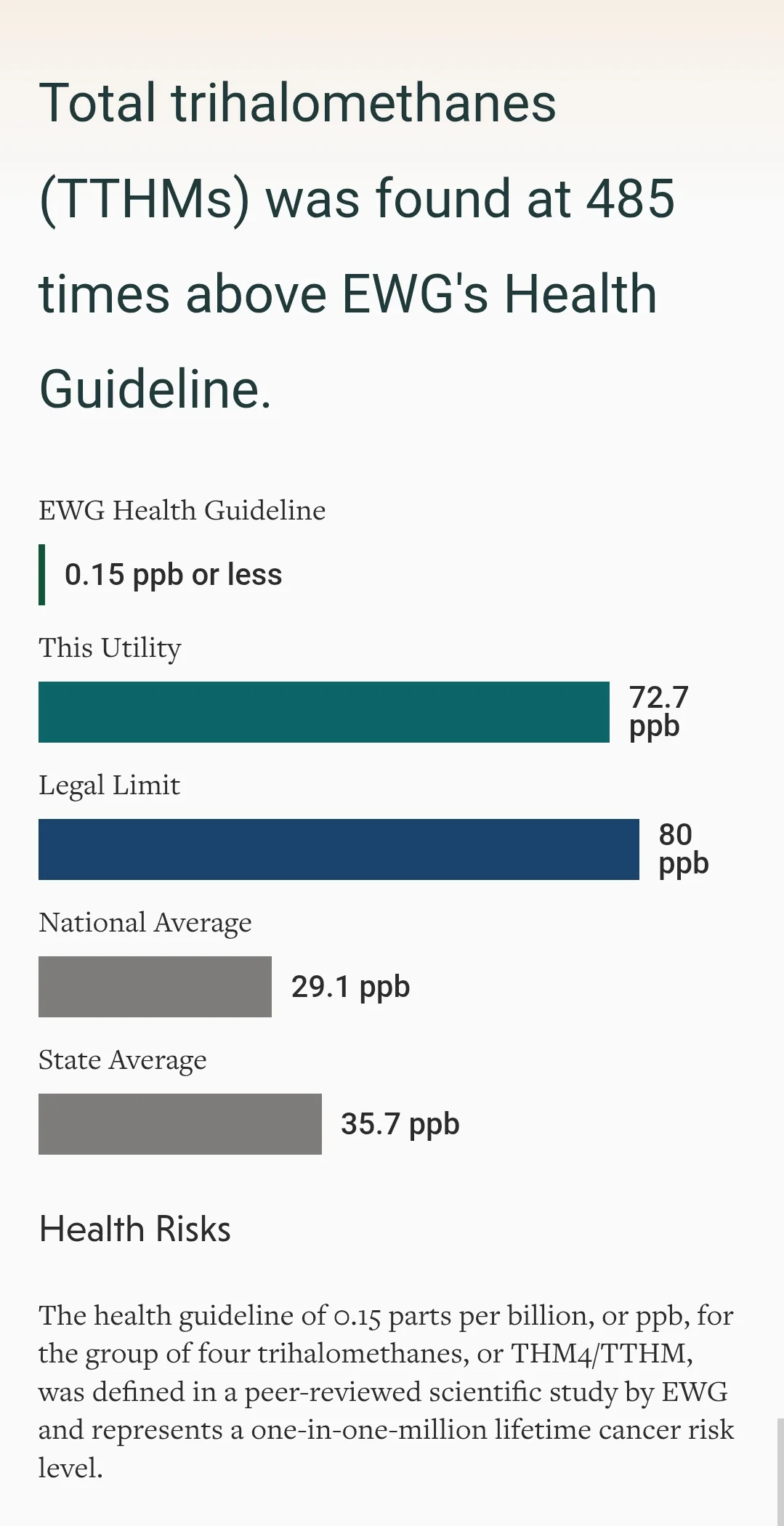
A residential water test conducted on April 3, 2024, in Galion, Ohio provides a stark example of how these systemic issues affect individual homes. The lab report for this residence revealed Total Trihalomethanes (TTHMs) at 88.28 parts per billion, which is officially above the federal legal limit of 80 parts per billion.
The testing identified high concentrations of Chloroform and Bromodichloromethane as the primary causes of this exceedance. This specific finding from a kitchen sink proves that the equipment failures and treatment issues documented by the state are resulting in actual contamination at the tap for Galion residents.
SimpleLab Test Results Glaion, Ohio 2024.
What the Health Guidelines Say vs. The Legal Limits
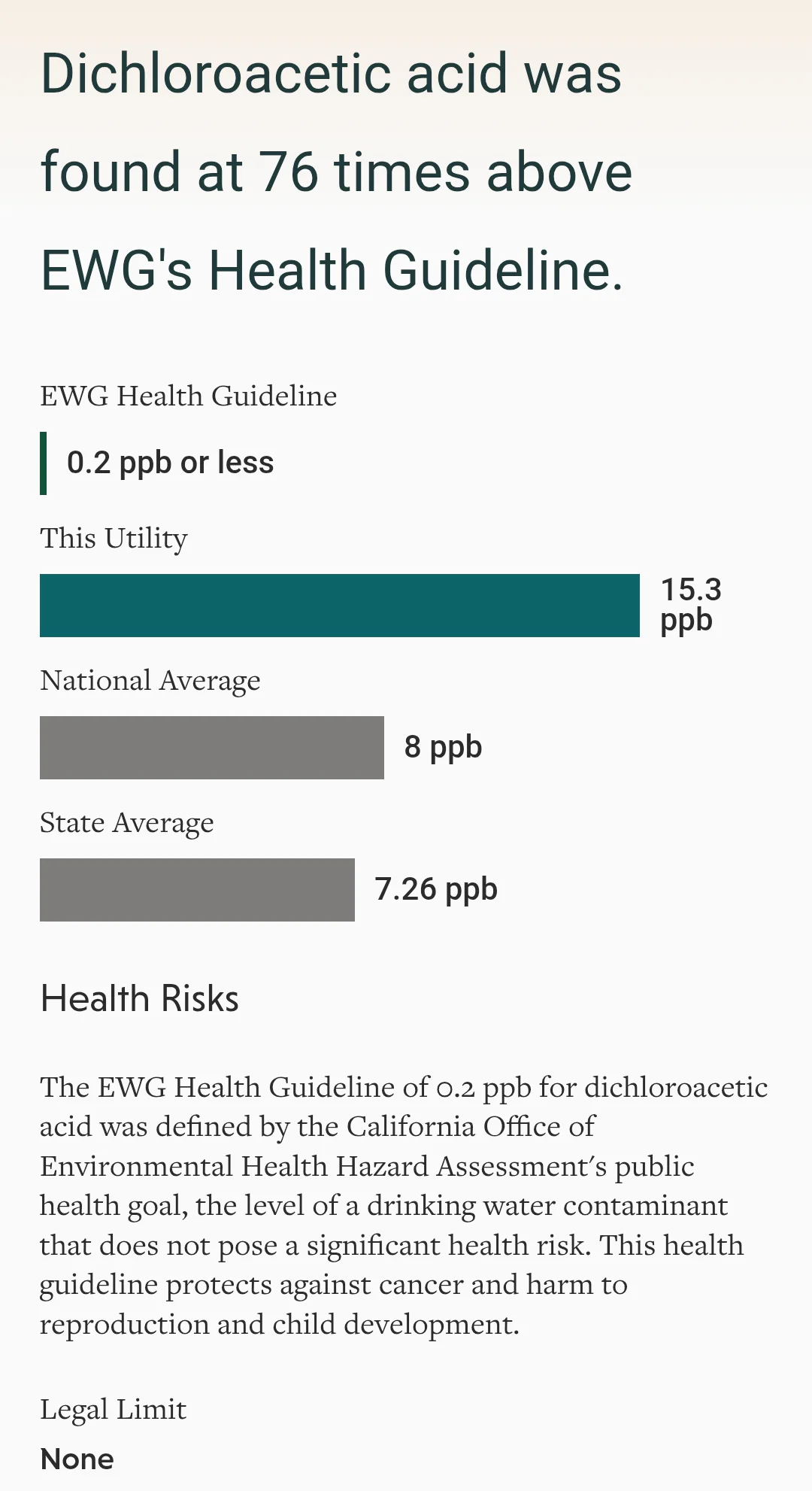
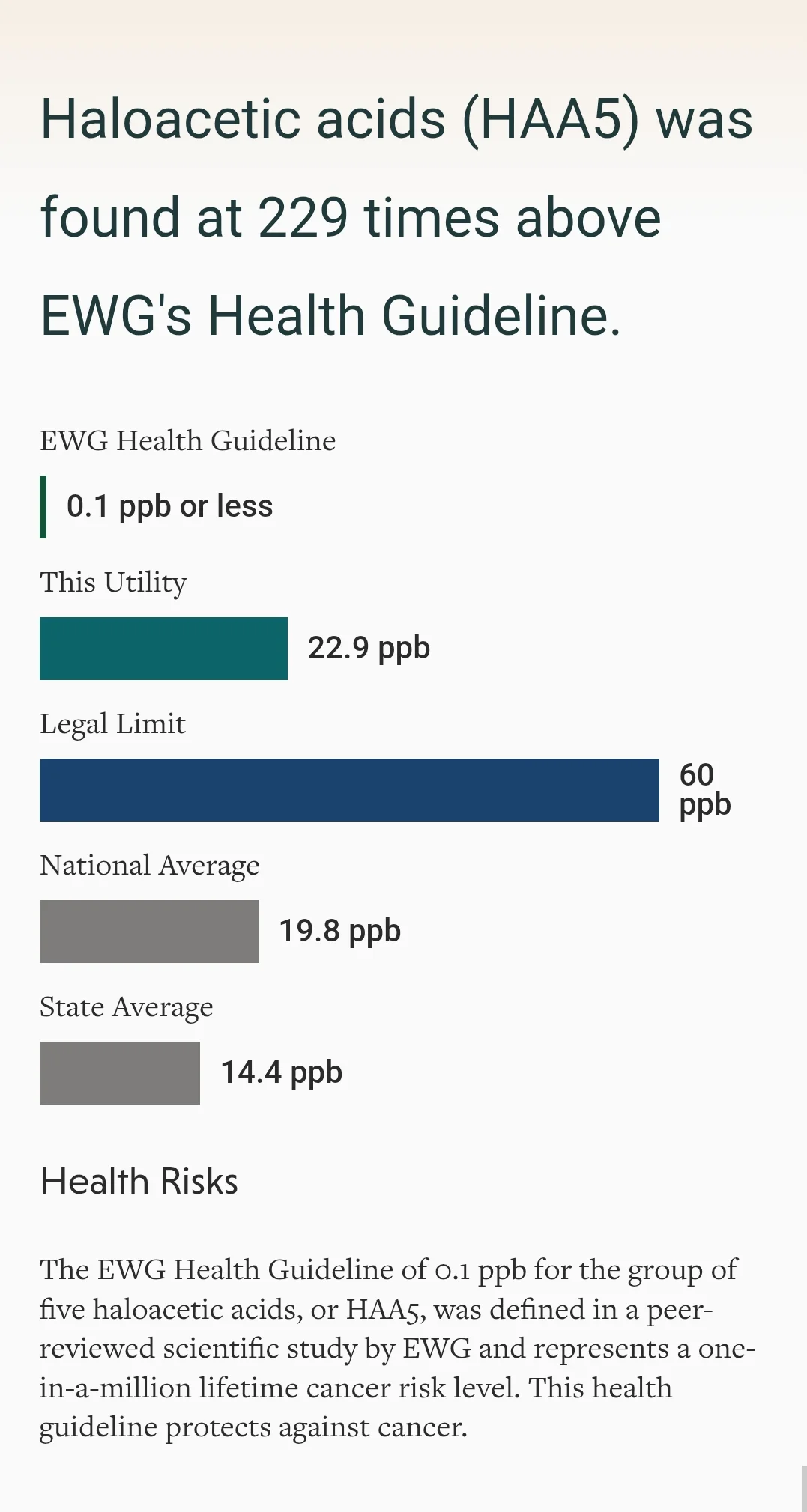
In Galion, just because the water meets “legal” standards doesn’t mean it is considered safe by environmental health experts. While the city focuses on avoiding state fines, scientific data from 2014 to 2023 shows that 11 different contaminants in Galion’s water are significantly higher than recommended health guidelines.
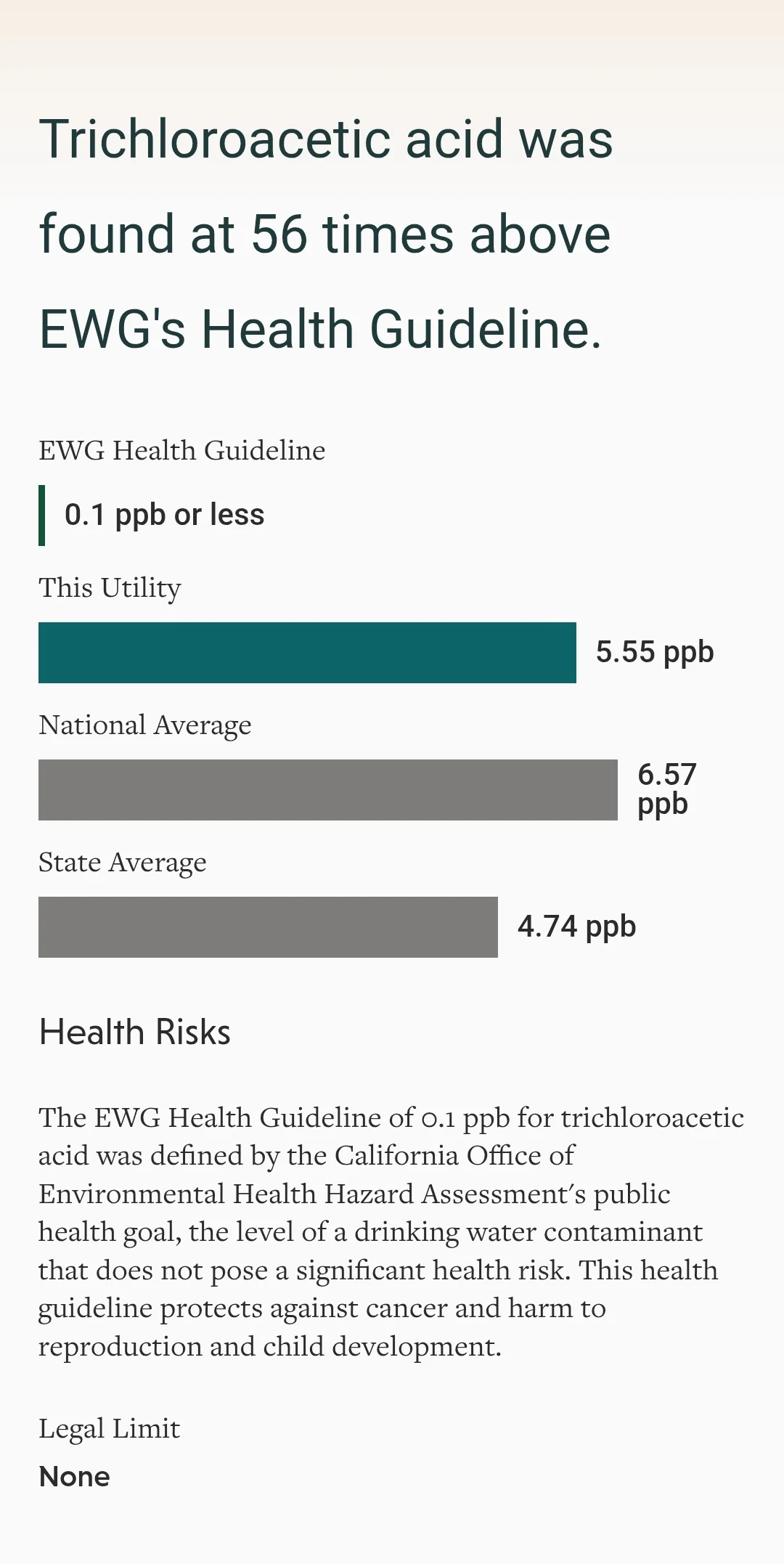
For instance, Trichloroacetic acid—a chemical linked to cancer and harm to child development—was recently found at 5.55 ppb. While there is no current federal legal limit for this specific chemical, that amount is 56 times higher than the health goal of 0.1 ppb set by experts to protect the public.
Other chemicals like Chloroform and Bromodichloromethane were found at levels hundreds of times higher than health goals. These health guidelines are specifically designed to protect the most vulnerable, including developing fetuses and growing children. The gap between what is “legal” and what scientists consider “safe” is one of the most important issues for Galion residents to understand.

Source: EWG Water Database
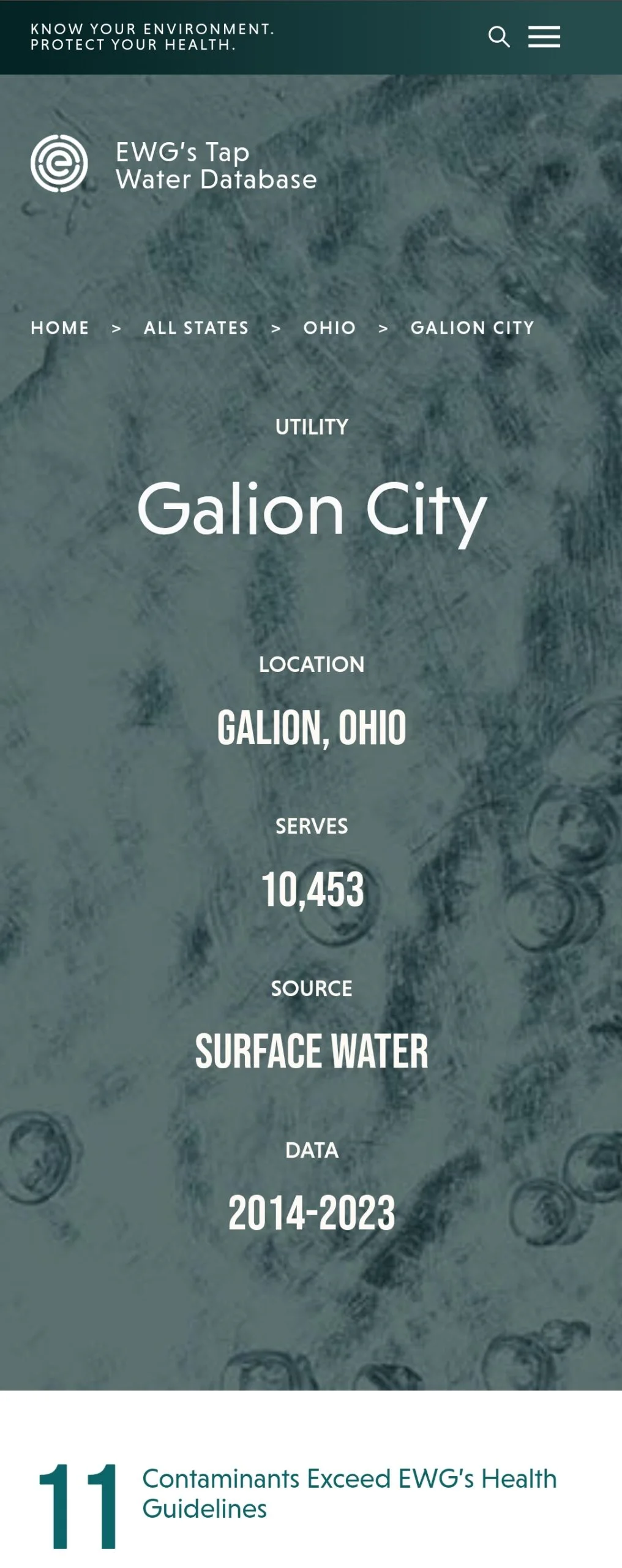
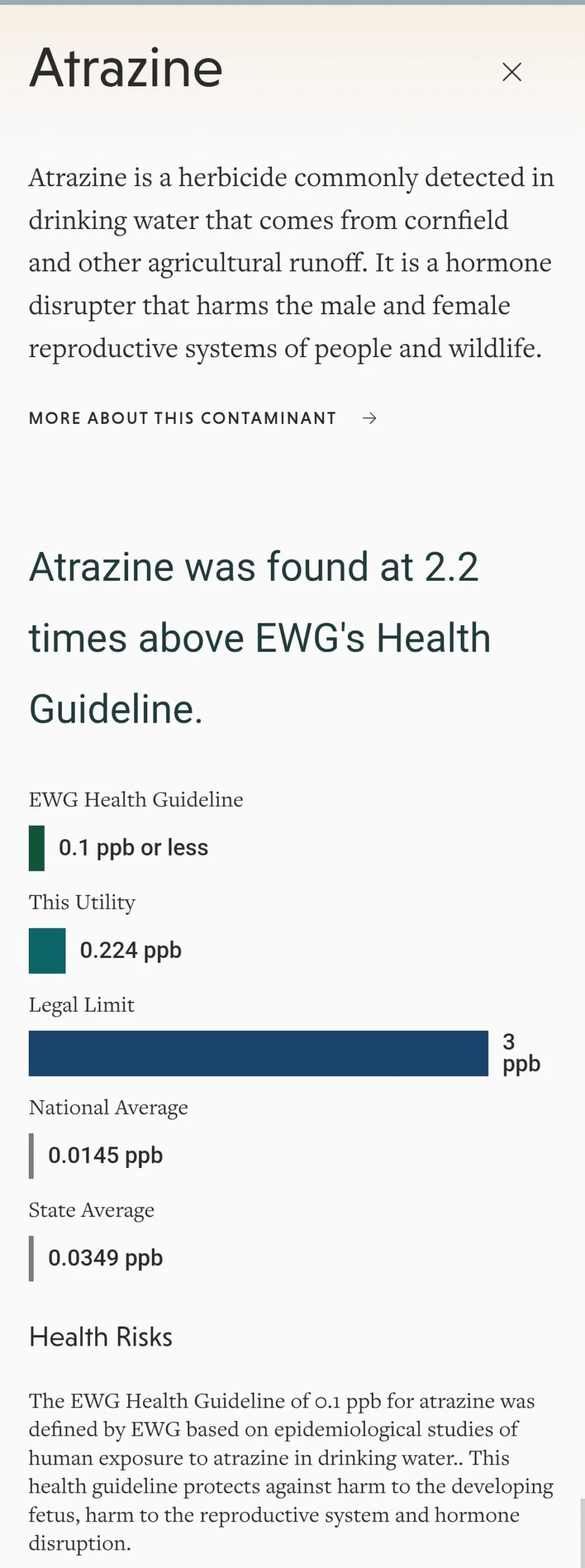
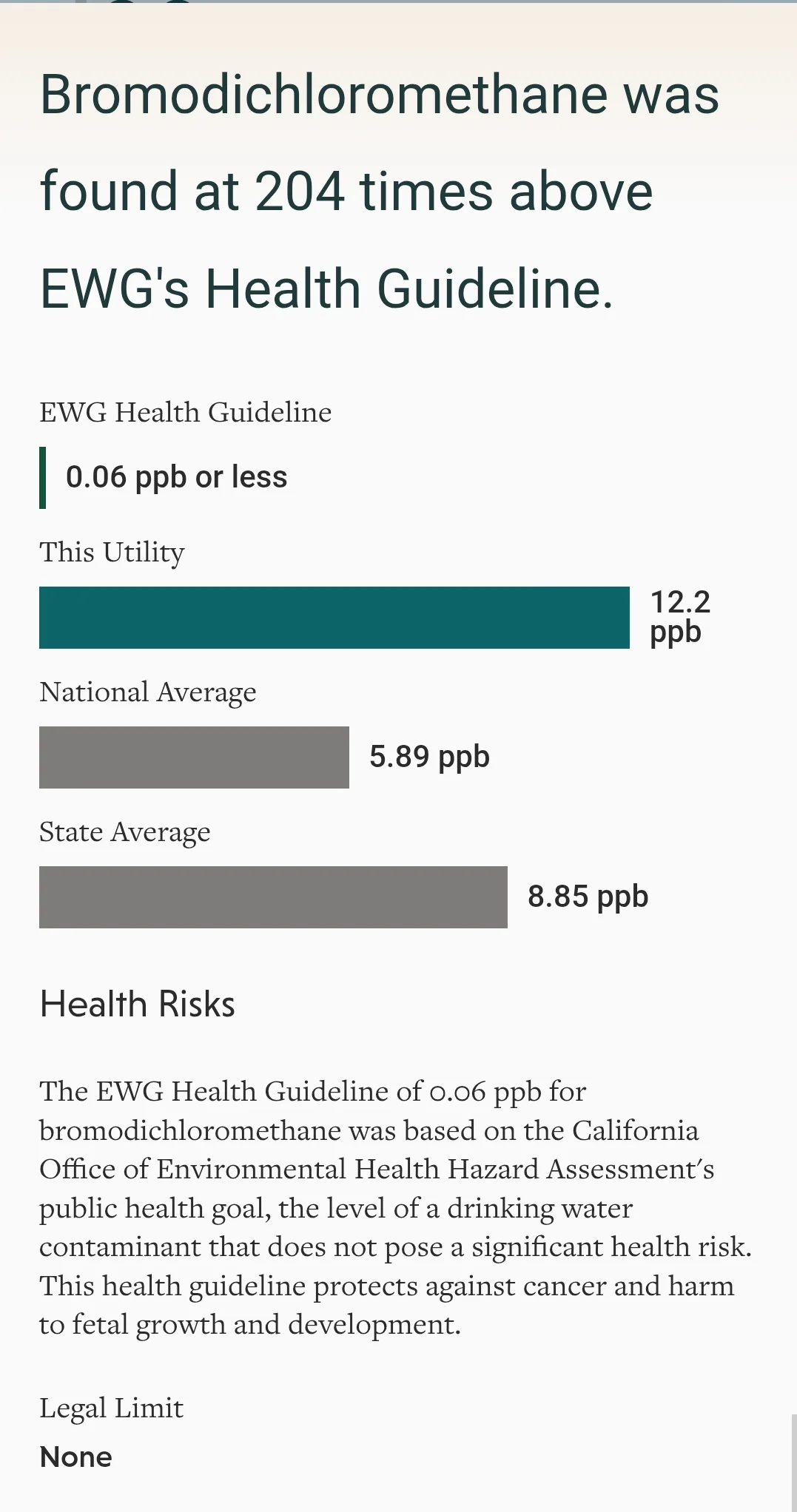
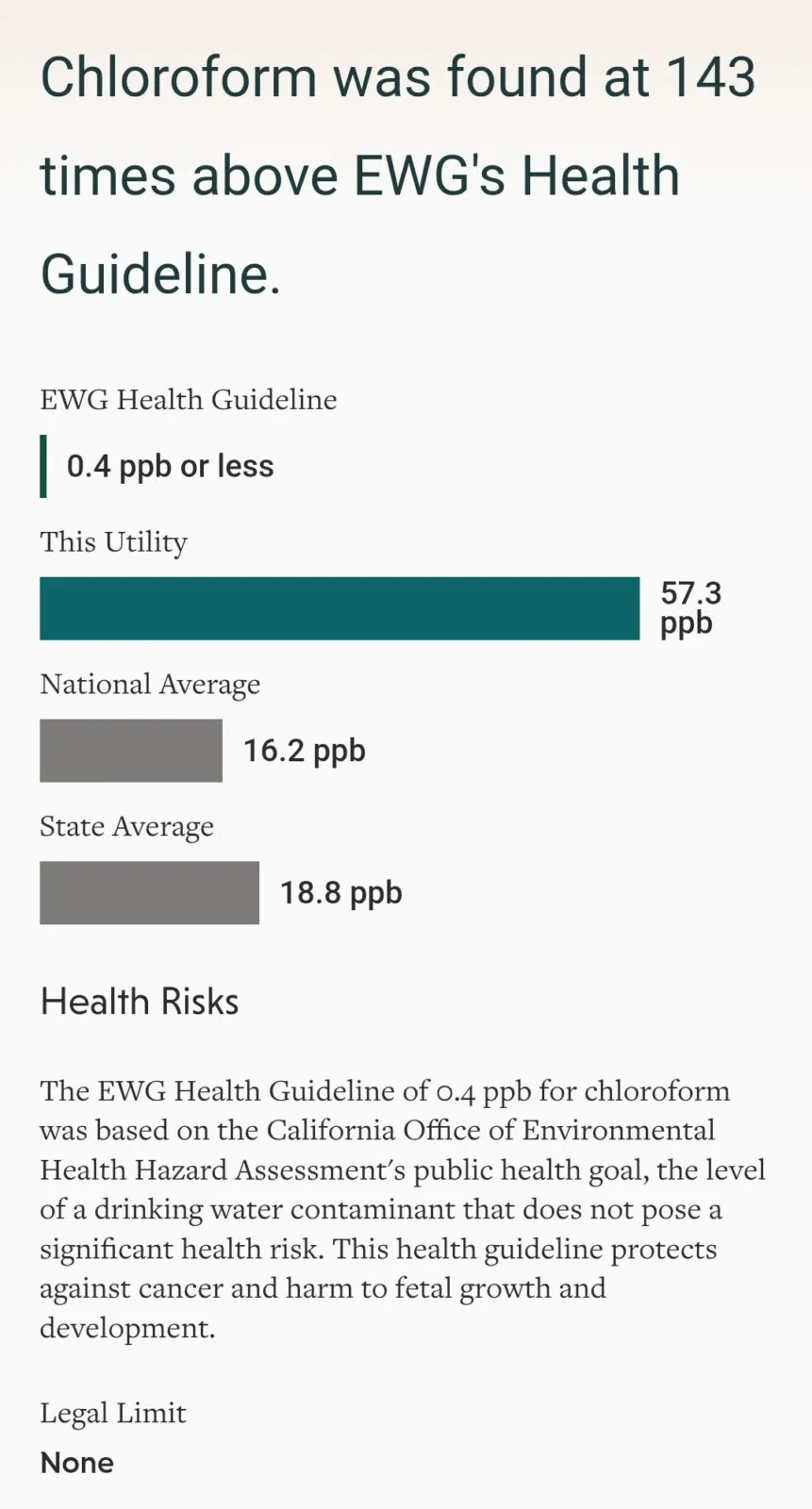
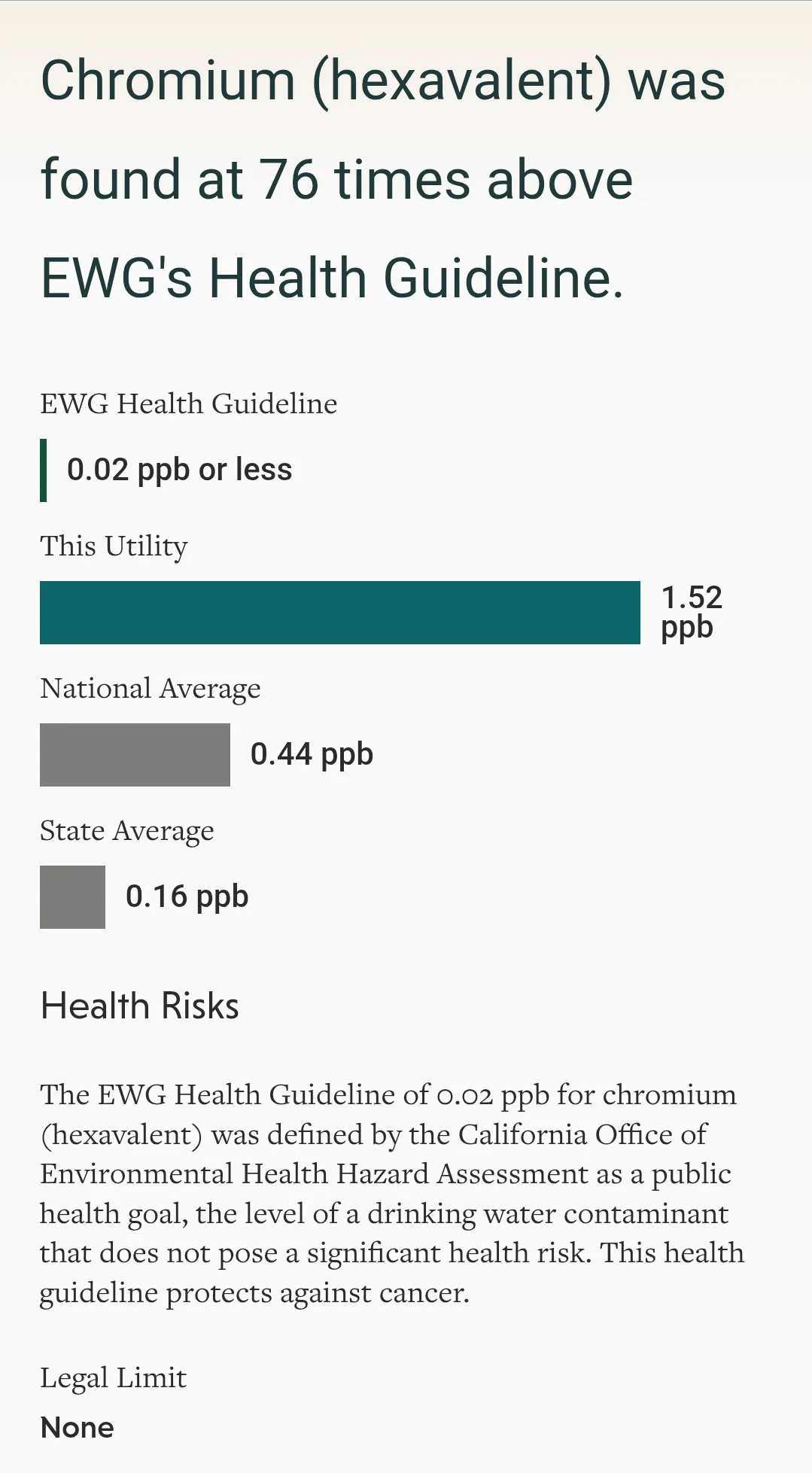
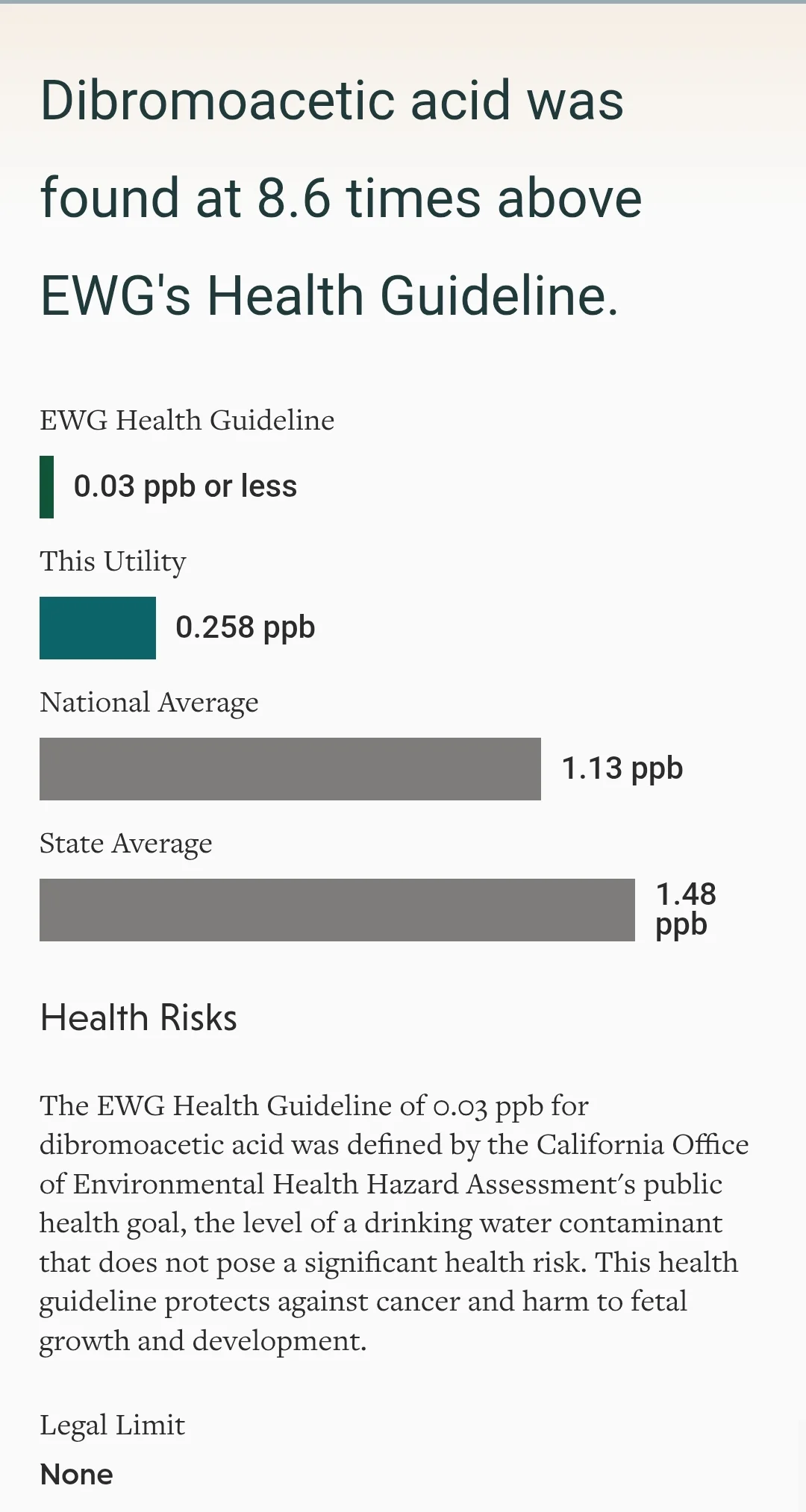
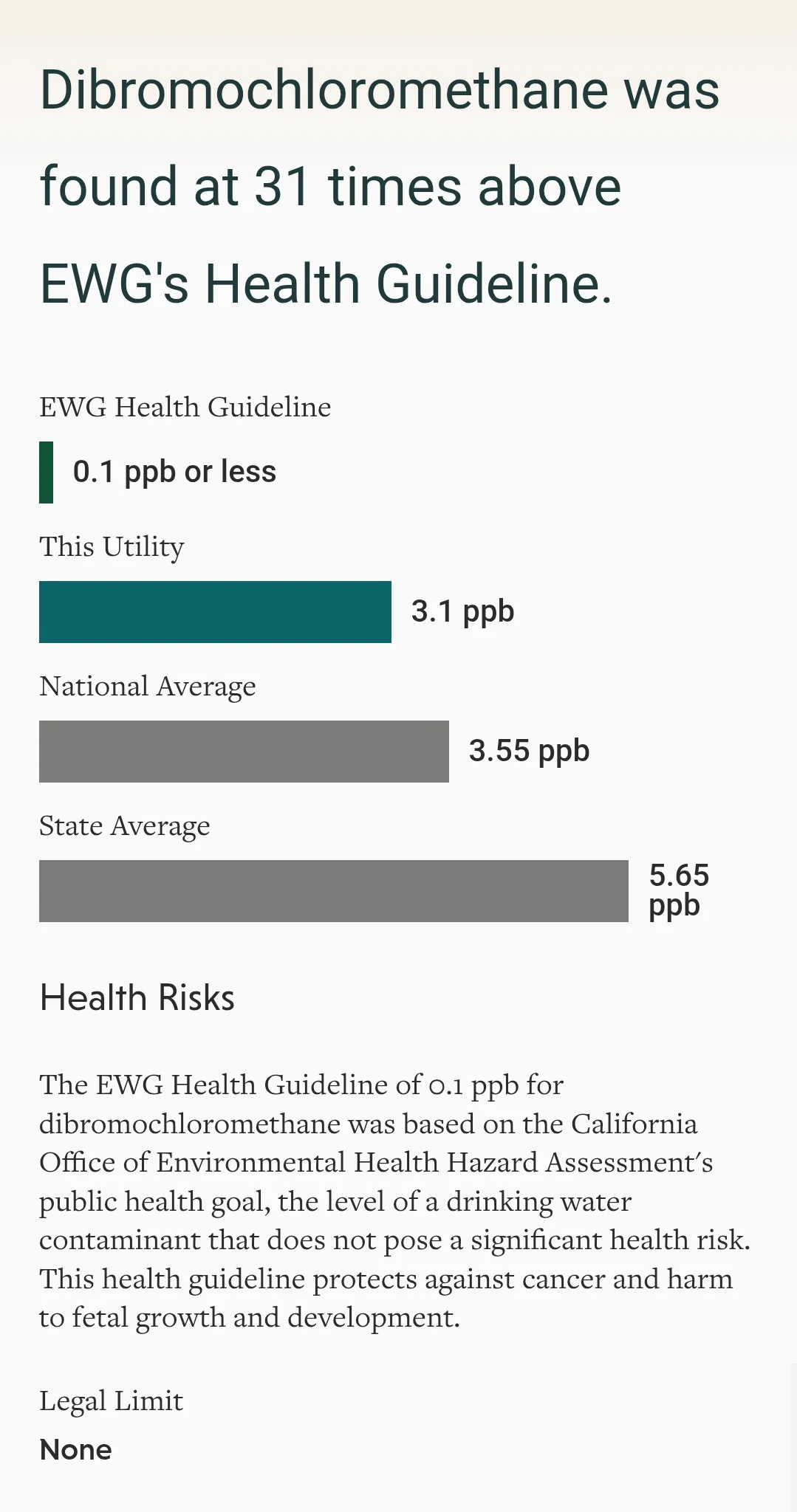
Source: EWG Water Database
Why This Matters: Health, Environment, and Trust
Galion’s water story is about more than just pipes. Chronic exposure to TTHM is associated with liver and kidney damage and increased cancer risk. Historical heavy-metal contamination remains a concern for long-term community health.
Repeated administrative failures—missed sampling, late reporting, and expired industrial permits—have eroded the trust between the city and its residents.
To move forward, Galion needs to stabilize its finances, restore full staffing with a dedicated Class III operator and a pretreatment coordinator, and finish the engineering work required by the state on time.
Marion Watch Investigates will continue to track the city’s progress on these milestones. We want the truth for the residents of Galion.
Works cited (Click Here)
- City of Galion Water Treatment — 2024 Consumer Confidence Report. 2024. https://www.galion.city/DocumentCenter/View/1531/2024-Consumer-Confidence-Report
Relevance: Official municipal water quality data, public notices, and system statistics used throughout the article. - City of Galion — 2016 Consumer Confidence Report. 2016. https://www.galion.city/DocumentCenter/View/803/2016-Consumer-Confidence-Report
Relevance: Historical water quality and compliance context referenced for long‑term trends. - Ohio EPA — Director’s Final Findings and Orders for Galion City (DFFO). Effective August 31, 2023. (Document provided in attachments; official Ohio EPA journal entry and conditioned License to Operate.)
Relevance: Primary enforcement document that set the General Plan phases, deadlines, and civil penalty. - Ohio EPA — Pretreatment Compliance Inspection (PCI) transmittal to Mayor and Council, Galion City. Transmitted Feb 26, 2024. https://newspack-richlandsource.s3.amazonaws.com/wp-content/uploads/2024/02/GalionIUEPA.pdf
Relevance: Documents the “white wastewater” discovery and the collapse of the pretreatment program. - Ohio EPA — Biological and Water Quality Study of the Upper Olentangy River and Selected Tributaries. 1994. https://dam.assets.ohio.gov/image/upload/epa.ohio.gov/Portals/35/documents/olen94.pdf
Relevance: Watershed study used to document historical nutrient and habitat impacts in the Olentangy River. - Ohio EPA — Sanitary Survey and Partial Resolution of Violation correspondence (PROV). 2023–2024 (Oct 23, 2024 PROV letter and related PROV letters). (State enforcement records reviewed in attachments and edocpub.) https://edocpub.epa.ohio.gov/publicportal/ViewDocument.aspx?docid=3726710
Relevance: Details equipment failures, clarifier and filter issues, tank and pump deficiencies, and required corrective schedules. - Ohio EPA — Notice of Violation (NOV) for late reporting. Sept 3, 2025. (Document reviewed in attachments.)
Relevance: Documents the Tier 3 violation for late reporting of orthophosphate, alkalinity, and pH results for Jan–Jun 2025. - Ohio EPA — Asbestos Monitoring Waiver Questionnaire letter to Galion City. Dec 22, 2025. (Document reviewed in attachments.)
Relevance: New compliance requirement; questionnaire due Jan 23, 2026; explains asbestos monitoring rules under OAC 3745‑81‑23. - Declaration / Decision Document — Former South Side Plating Facility, Galion, Ohio (OHD064102). (Ohio EPA decision document.) https://dam.assets.ohio.gov/image/upload/epa.ohio.gov/Portals/30/Southside%20Decision%20Document.pdf
Relevance: Official state decision document supporting the report’s account of 1988 hazardous waste enforcement. - Toxicological Profile for Cadmium (ATSDR). 1999 (document origin). https://www.atsdr.cdc.gov/toxprofiles/tp5.pdf (or archived copy)
Relevance: Authoritative toxicology reference for cadmium health effects cited in the heavy‑metal contamination discussion. - Superfund Record of Decision Amendment: United Scrap Lead Co., Inc., Troy, OH. 27 Jun 1997. https://nepis.epa.gov/Exe/ZyPURL.cgi?Dockey=9100OY26.TXT
Relevance: Example Superfund remediation precedent used for regulatory context. - City of Galion audited financial statements and auditor’s report. 2001 (audit covering prior years). https://ohioauditor.gov/auditsearch/Reports/2001/city_of_galion_99-crawford.pdf
Relevance: Financial audit used to document fiscal conditions and the lead‑up to the 2005 fiscal emergency. - Galion City — EWG Tap Water Database (PWS OH1700211). n.d. https://www.ewg.org/tapwater/system.php?pws=OH1700211
Relevance: Independent summary of contaminant detections and consumer‑oriented risk information used to supplement public data. - Local reporting and public commentary — Richland Source: “Galion residents deserve safe water” (Letter to the Editor). 29 Feb 2024. https://www.richlandsource.com/2024/02/29/letter-to-the-editor-galion-residents-deserve-safe-water/
Relevance: Local public reaction and community concern used to illustrate trust issues. - Ohio Emergency Management Agency — Risk Analysis guidance. n.d. https://ema.ohio.gov/mitigation-plan/risk-analysis
Relevance: State guidance referenced for hazard and vulnerability framing in the strategic analysis.